❌

Reading view

Musk pushed Trump to slow Starlink in Ukraine, weakening air defenses as Russian drones attacked cities – The Telegraph
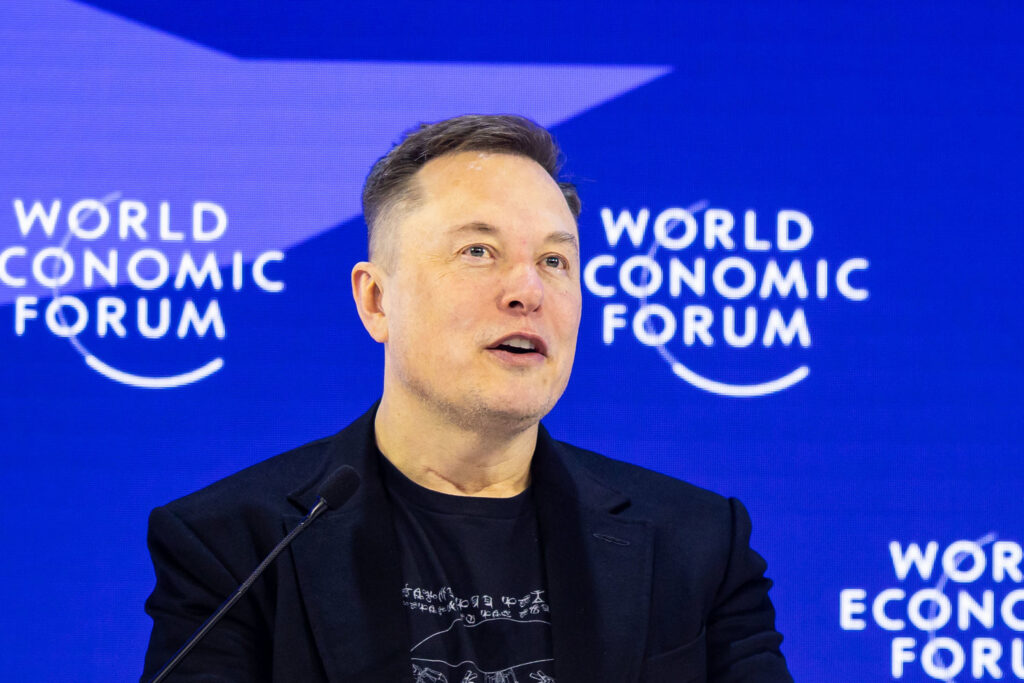
kyiv asking musk let strike inside russia its best line gone · post elon 2026 world economic forum / ciaran mccrickard wef ukraine news ukrainian reports

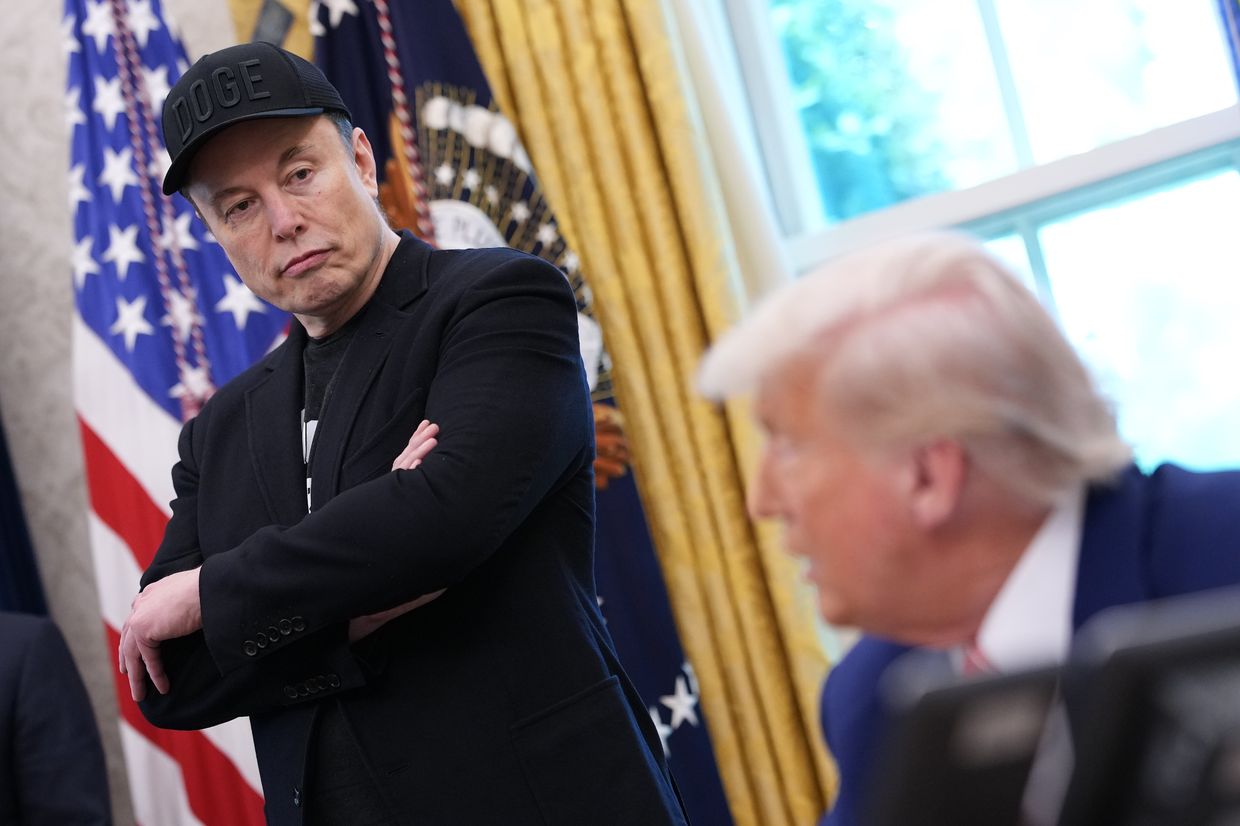
Elon Musk approached US President Donald Trump with a proposal to limit the speed of Starlink satellite communications in Ukraine, disrupting Kyiv’s ability to counter Russian drone attacks, The Telegraph reported on 16 October, citing four sources familiar with the discussions.

The restrictions had immediate consequences for Ukraine’s defenses, forcing some drone missions against Russian positions to be called off and threatening the ability to intercept Russian jet-powered drones as they targeted Ukrainian cities at the time.

According to The Telegraph, Trump agreed with Musk’s suggestion, paving the way for the Pentagon to impose restrictions on Starshield, the military-grade version of SpaceX’s satellite network used by Ukrainian forces.

The report contradicts Musk’s public claim that the US military and ultimately Trump were responsible for deciding any limits on the system. However, Trump denied that either he or Musk was responsible for Ukraine losing access, while an anonymous US official told AFP that the president had not requested the reduction in service.

The reported restrictions come amid tensions between Washington and Kyiv over Ukrainian strikes on Russian oil refineries. The episode has raised concerns about Ukraine’s dependence on privately controlled communications infrastructure and the risk that changes to US support could weaken its battlefield capabilities.

Starshield restrictions hampered Ukraine’s drone defenses

Starshield is the military-grade version of Starlink, SpaceX’s satellite internet network. It allows Ukrainian drone operators to maintain communications with aircraft moving at high speeds, supporting both defensive interception missions and strikes against Russian targets.

The speed limit imposed on Ukrainian drones using Starshield was around 160 kph, making it difficult for them to intercept Russian jet-powered drones and missiles traveling at roughly twice that speed.

According to The Telegraph, a senior source said Musk had become concerned about potential backlash from European consumers following the restrictions. A high-ranking European official and two Ukrainian sources reportedly corroborated the account that Musk and Trump were both involved in the decision.

The Pentagon has not publicly explained the restrictions. The report’s account also remains disputed: Trump said on 16 October that he did not believe either he or Musk was responsible for Ukraine losing access, while an anonymous US official cited by AFP said the president had not requested the reduction.

geran-2 (shahed-136) drone belarusian markings service military belta militarnyi російський безпілотник герань 2
Explore further

“Trump and Musk must be held accountable”: US senator warns Starlink network failing over Ukraine could cripple its shield against Russian missiles and drones

Ukraine says Starshield capabilities are being restored

Ukrainian President Volodymyr Zelenskyy said on 16 October that restrictions on SpaceX’s Starshield satellite communications system had disrupted several military operations, including efforts to intercept Russian jet-powered Geran drones attacking Ukrainian cities.

Zelenskyy said Ukraine did not use Starlink to support attacks inside Russia, but relied on the system to intercept drones targeting civilians, conduct mid-range strikes against Russian military targets in occupied Ukrainian territory, and deliver food and water to frontline troops using drones.

“When the speed was reduced, we were unable to intercept a certain number of jet-powered ‘shaheds,’ [Gerans - ed.]” Zelenskyy wrote on X, adding that Ukrainian forces had lost the ability to carry out some operations while the restrictions were in place.

Zelenskyy said Ukraine’s Defense Ministry was in contact with partners and had received signals from the White House that the capabilities would be restored. However, he stressed that speeds had not yet returned to their previous levels, although restoration was underway.

We don’t use Starlink for our responses inside Russia. We use Starlink to intercept jet-powered “shaheds” that attack our civilians and kill families.

Starlink wasn’t turned off – its speed was reduced. And when the speed was reduced, we were unable to intercept a certain number…

— Volodymyr Zelenskyy / Володимир Зеленський (@ZelenskyyUa) October 16, 2026

Europe warns against dependence on Musk’s network

The latest episode has renewed European concerns about relying on Musk and SpaceX for critical communications infrastructure. Polish Foreign Minister Radosław Sikorski warned Musk on social media that European customers were watching his actions, The Telegraph reported.

The European Union is developing its own satellite communications system, IRIS², intended to provide an alternative to Starlink, according to The Telegraph. The system is planned to become operational by 2030, leaving Ukraine and European governments dependent on existing providers in the meantime.

The report adds to concerns that decisions made in Washington or by private technology providers could directly affect Ukraine’s ability to defend itself against Russian attacks.

  •  

Russia strikes 9 Ukrainian regions as strain grows between Zelenskyy and Trump

The latest aerial strikes on civilian targets came as fears mount that a sharp deterioration in relations between Ukraine and the United States this week could leave Ukraine further exposed to Russia's escalating aerial assaults as the bitter winter approaches.

  •  

Starlink is a 'major card' for Ukraine, soldiers say, but surprise restrictions show the risks of overreliance

A soldier operates a Ukrainian drone.
The sudden disruption of Ukraine's military-grade Starlink access has exposed a key vulnerability.

Dmytro Smolienko via Reuters Connect

  • Ukraine's access to military-grade Starlink services was suddenly disrupted this week.
  • Kyiv said the disruption affected critical Ukrainian drone operations.
  • Ukrainians say the incident exposes the risks of relying so heavily on a single communications platform.

The sudden disruption to Ukraine's access to military-grade Starlink services this week shows the risks of overly relying on any single platform, particularly one beyond Kyiv's control, for mission-critical battlefield communications, Ukrainian soldiers, officials, and defense companies told Business Insider.

With those risks front of mind, Ukrainians are working to diversify military-related communications platforms beyond Starlink.

Ukrainian officials and soldiers were surprised on Wednesday by an unexpected disruption to Starshield, SpaceX's dedicated satellite network for military services. Defense ministry sources said speeds were restricted above 100 miles per hour, though some units experienced a loss of connectivity at speeds as low as 45 mph.

Services appeared to have been at least partially restored by Thursday. The full extent of the disruption remains unclear, but the incident has left some Ukrainians feeling uneasy.

Yehor Cherniev, deputy chairman of the Ukrainian parliament's national security, defense, and intelligence committee, told Business Insider that the disruption underscores the risks of relying on a single communications platform. He said Kyiv is working to diversify its sources, but declined to specify how.

Yuriy, an officer with Ukraine's National Guard, told Business Insider that his units use Starshield to support drone operations, and several missions were spoiled during the disruption. He asked to be identified only by his first name for security purposes.

Yuriy said that while Starlink services are useful, the disruption exposes their unreliability. He said he would try to find alternate communications systems.

Alternatives to Starlink could be hard to find, though. Eutelsat, a large French satellite operator, saw its shares surge after this week's disruption, but Ukrainians say there is nothing else quite like what SpaceX offers.

"There is no working alternative to Starlink," said Dimko Zhluktenko, a soldier with Ukraine's 413th Unmanned Systems Regiment, calling it "an outstanding product."

Starlink was in the position of one of the units of the 505th Marine Battalion in the Novopavlivka direction on April 1, 2026, in unspecified Ukraine.
Ukrainian forces are heavily reliant on Starshield, particularly for drone operations.

Ivan Antypenko/Suspilne Ukraine/JSC UA:PBC/Global Images Ukraine via Getty Images

"No direct competitor comes close," he told Business Insider, adding that "Europe has nothing comparable at this level of battlefield readiness."

SpaceX did not respond to requests for comment from Business Insider this week.

Ukraine relies on Starlink for battlefield communications and drone warfare, a dependence that was underscored by the disruption. Defense ministry sources said the disruption complicated important drone operations, including mid-range strikes, air defense intercepts, and front-line logistics.

Ukraine uses both Starshield and Starlink, SpaceX's commercial satellite internet service, to extend the reach of its drones, maintain stable communications in electronically contested environments, and conduct remote operations far beyond the front lines.

Satellite connections allow operators to control drones and receive live video without relying on traditional radio links, which have limited ranges and are much more vulnerable to electronic warfare interference.

The tech has been integrated into systems such as Perennial Autonomy's Hornet drones, as well as Ukrainian naval drones used to strike Russian targets in the Black Sea, among others.

Many Ukrainian defense companies have integrated Starlink services into their broader infrastructure, even if their products don't necessarily depend on it for operations.

Some firms, such as SkyFall, maker of the widely used P1-SUN interceptor drone, told Business Insider that they have developed their own communication methods or use alternative systems to avoid scenarios where a single technology outside Ukrainian control could become a significant point of failure, as it did this week.

"Depending on a single solution is very risky. Especially if you don't have full control over it," a spokesperson for Wild Hornets, the firm behind the popular Sting interceptor drone, told Business Insider. "Especially when it comes to something as critical on the battlefield as communications."

The spokesperson said this is "exactly why our ecosystem is built around our own communications technology and is open to various solutions when it comes to internet connectivity."

A MAGURA V5, a Ukrainian multi-purpose unmanned surface vehicle (USV).
Ukrainian soldiers, officials, and defense firms say relying on one communications source is a risk.

Pavlo Bahmut/Ukrinform/Sipa USA via Reuters Connect

For anyone working with technologies that are dominated by a single provider, the risks are clear, said the head of hardware research and development at BlueBird Tech, a defense firm that makes drones and robots. They told Business Insider that Starlink has virtually no competitors because of its coverage, cost, availability, and ease of use.

BlueBird Tech uses Starlink services but is trying to avoid tying its products completely to any single technology. "We're actively exploring ways to introduce redundancy and potentially replace these components in the future," they said, speaking anonymously due to security concerns.

They said that potential workarounds include LTE or 5G technology, mesh networks with relay points, and laser communications. "Research teams around the world are working on these technologies," they said, "although none of them should be seen as a universal replacement for Starlink across every operational scenario."

When the disruption first occurred on Wednesday, some Ukrainian and foreign officials initially blamed SpaceX, led by Elon Musk. However, the world's richest man said on X on Wednesday that because Starshield is operated by the US government, any limits on speed would be a decision for the Pentagon or President Donald Trump.

A senior US official told Business Insider on Thursday that "no such request was ever made by" Trump. Reuters reported that the order came from inside the White House.

Starlink has delivered Kyiv an important battlefield advantage, especially since SpaceX cracked down on Moscow's ability to use the terminals earlier this year. The system, however, does not work in Russia, so Ukraine is limited to using its services over its own territory and Russian-occupied lands.

Ukraine has been unable to use Starlink for its long-range drone strikes that have wreaked havoc on Russian energy sites. Trump has pushed Kyiv to stop its attacks as he attempts to use Russian oil to lower gas prices.

Ukraine has found itself facing mounting pressure from the US, once a top supporter, as it continues to grapple with Russian missile and drone strikes amid severe shortages of critical air defense interceptors. The Starlink outage has only compounded Kyiv's anxieties as it anticipates yet another tough winter.

"Starlink is a major card on the battlefield," Zhluktenko said. "You can fight without it — even successfully — as the Russians show, but less effectively, at higher cost, and with constant communication headaches, above all for unmanned systems."

Read the original article on Business Insider

  •  

EU fast-tracks merger of three European firms into one SpaceX rival. It wants to end reliance on US satellites that failed Ukraine this week

Satellites are the new frontline in space and strategy. Photo: Depositphotos

The EU plans to fast-track antitrust approval for Project Bromo, a satellite venture meant to cut Europe's reliance on American space technology, Bloomberg reports. The news comes days after the White House ordered the Pentagon to slow Starshield, the military-grade Starlink service Ukraine's forces use, according to Reuters.

Project Bromo would merge the satellite businesses of Italy’s Leonardo and France’s Airbus and Thales into one company. Bloomberg calls it the bloc’s answer to SpaceX, and the EU sees it as a regional giant able to compete with US and Chinese rivals.

European Commission President Ursula von der Leyen has backed the project, Eunews reports.

“These are the types of industrial champions we need if Europe is to lead in the space economy of tomorrow,” she said at an international space summit in Paris last month, citing Bromo by name.

A year of quiet groundwork before the filing

Over the past year, the partners and EU officials have worked through potential competition concerns so they can be resolved before a formal application, according to Bloomberg. The companies have not yet applied, but Brussels expects them to in the coming weeks.

For large deals, regulators usually hold such preliminary talks to flag obstacles early. If the companies offer concessions, such as selling some assets, the deal could clear after a first-phase review of a little over a month. If competition concerns remain, the Commission could open an in-depth probe lasting several months.

The caveat behind the SpaceX-rival label

A fast review is not a free pass. Competition Commissioner Teresa Ribera has warned that the project cannot expect one, and unions and suppliers have raised concerns about jobs and competition, Bloomberg reports. Von der Leyen’s public backing drew criticism from some members of the European Parliament.

Her support “doesn’t mean we are not going to apply and to enforce our own regulation,” Ribera told Bloomberg TV.

Why it matters to Ukraine

The push is part of a wider European scramble for space autonomy. Ukraine wants to build a satellite system of its own that no single company controls.

This week showed why. After the Starshield order, the military-grade terminals stopped working on fast-moving objects, and now work only at speeds of up to 160 kph, a person in Ukraine’s Defense Ministry told Reuters. Ukrainian officials said the restrictions complicated strike missions against Russian forces and logistics in occupied territory and slowed the interceptor drones that shoot down Shaheds.

  •  

‘Hybrid warfare’ – Polish police arrests Ukrainian suspect after Starlink station arson attack, 2 Turks already in custody

In September, a fire broke out at the Starlink satellite communications ground station in Wola Krobowska in Poland. The fire engulfed the power distribution unit housing and also damaged the generator. Firefighters extinguished the fire, and no one was injured in the incident.

On Friday, Internal Security Agency officers detained a Ukrainian citizen in Poland suspected of participating in the arson attack on the ground station. According to investigators, this is the third person involved in the incident, which occurred on Sept. 23. The man had previously observed the facility and checked its security before two Turkish citizens set it on fire.

According to the Internal Security Agency, the Ukrainian took photos and recordings, which he sent via a messaging app. After passing verification, he was tasked with reconnaissance of the station area and its security systems. The man has been charged and has been in custody since Sept. 30.

Turks set fire to the Starlink station

A few hours later, a Polish police patrol identified two Turkish citizens nearby who are now suspected of committing arson on behalf of foreign intelligence. The officers allowed them to leave because, at that point, there was no basis to consider the incident an act of sabotage.

Both Turks were later detained in Germany on the basis of a European arrest warrant issued by Poland. After being handed over to Poland, they are to be held accountable in court for sabotage activities on behalf of foreign intelligence.

A 24-year-old Turkish citizen who was supposed to bring the suspects to Poland, and another man suspected of helping them, were also detained in Germany.

Tusk calls it hybrid warfare

Prime Minister Donald Tusk had previously commented on the arrests.

“At the request of Polish services, German police detained two Turkish citizens suspected of setting fire to the Starlink station in Mazovia. This is another act of hybrid warfare. The perpetrators of sabotage will be brought to justice before the Polish justice system,” the head of government wrote on social media.

Na zlecenie polskich służb niemiecka policja zatrzymała dwóch obywateli tureckich podejrzanych o podpalenie stacji Starlink na Mazowszu. To kolejny akt wojny hybrydowej. Sprawcy sabotażu odpowiedzą przed polskim wymiarem sprawiedliwości.

— Donald Tusk (@donaldtusk) October 12, 2026

“The actions of @PolskaPolicja and @ABW_GOV_PL in cooperation with the German services (BKA) led to the arrest in Germany of two Turkish citizens responsible for the arson attack on the Starlink station in Wola Krobowska. Charged with diversion and sabotage for the benefit of foreign intelligence,” added the Minister of Interior and Administration, Marcin Kierwiński, in a post on X.

The post ‘Hybrid warfare’ – Polish police arrests Ukrainian suspect after Starlink station arson attack, 2 Turks already in custody appeared first on Remix News.

  •  

White House ordered limits on Ukraine’s military satellite service — Reuters. Who made the decision remains unclear

The White House, seen from Lafayette Square. File photo, June 2024.

White House officials instructed Pentagon leaders to limit Starshield, SpaceX’s military-grade satellite service used by Ukrainian forces, Reuters reported on 15 October, citing three officials. The report came a day after a senior US official told Axios the Trump administration had nothing to do with the alleged Starlink restrictions.

Ukrainian forces rely on US-controlled satellite technology for battlefield operations and for intercepting Russian drones aimed at Ukrainian cities, so the latest restrictions have raised questions about how reliably they can depend on it.

    Senior US official denies president requested restrictions

    Asked about the order, a senior US official replied, “No such request was ever made by the president.” The White House did not respond to questions about whether other administration officials might have made the request.

    Ukrainian officials contacted the White House, State Department and Pentagon on 13 and 14 October and were told it was a White House decision

    European allies question Starlink restrictions

    European officials raised concerns about the restrictions. German Foreign Minister Johann Wadephul criticized the throttling and said Ukraine must continue to receive full support, Spiegel reported on 15 October. Wadephul said Germany had questions for the US, noting that Germany finances part of the Starlink technology used in Ukraine.

    On 16 October, UK Defense Secretary Wes Streeting said US Defense Secretary Pete Hegseth had assured him in a face-to-face meeting that Starlink was back up and running, the Guardian reported. However, a Ukrainian Defense Ministry source said that military-grade terminals were working in motion again, but only at speeds of up to 160 km/h.

    New data-speed restrictions disrupted drone missions

    The military Starshield package previously had no data-speed restrictions, Ukraine’s 7th Rapid Response Corps told Novynarnia. Ukrainian officials said that after the restrictions were imposed, terminals disconnected when drones exceeded 160 km/h and sometimes at 80 km/h.

    The Corps also reported 10–20-second connection drops at 110–120 km/h on the Huliaipole front, which made drones harder to control. One unit had to cancel some missions.

    The restrictions came as US President Donald Trump pressed Kyiv to stop striking Russian oil refineries, blaming them for soaring energy prices ahead of November’s midterm elections. Ukraine suspects SpaceX imposed the restrictions to pressure Kyiv over the refinery strikes, but that motive has not been confirmed.

    •  

    Ukraine needs Starlink satellites to fight the war, but the Pentagon holds the reins

    The clearest example concerns Ukraine’s air defenses. One of the biggest challenges currently facing Ukraine’s air-defense units, whether mobile teams or surface-to-air missile systems, is Russia’s jet-powered Geran drones. These can now exceed speeds of 300 kilometers (186 miles) per hour, although they do not always fly at the same speed. Bringing them down requires munitions fast enough to intercept such targets and guided by highly accurate tracking data. That is why Ukraine’s access to the satellite network operated by Starlink, the company owned by tech billionaire Elon Musk, is so critical.

    Seguir leyendo

    © Efrem Lukatsky (AP Photo/Efrem Lukatsky)

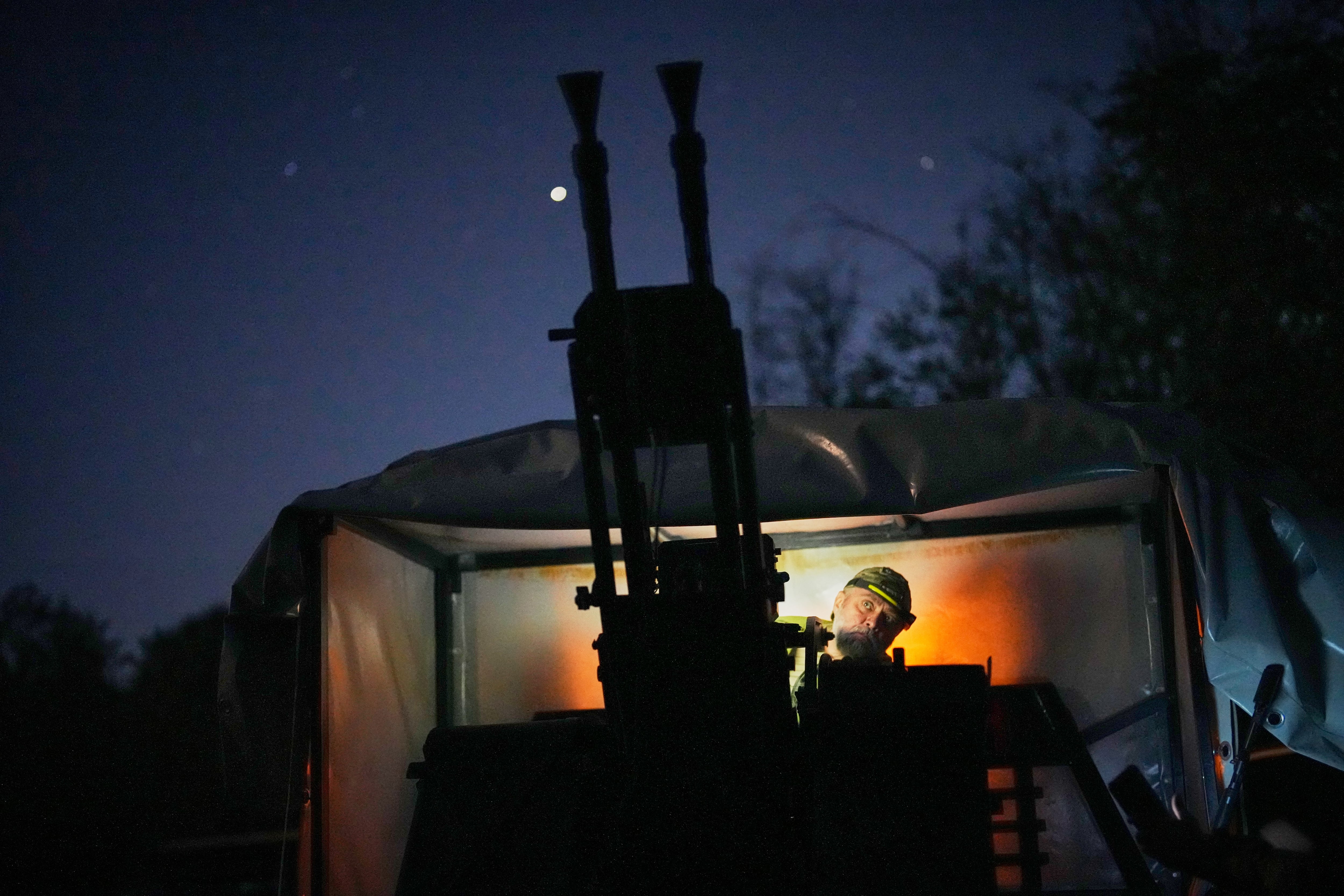
    A Ukrainian soldier ready to repel a Russian drone attack on September 19 in Kyiv.
    •  

    Russia pushes its drone war into Volyn Oblast on NATO border, cutting power to 370,000 as strikes creep toward EU

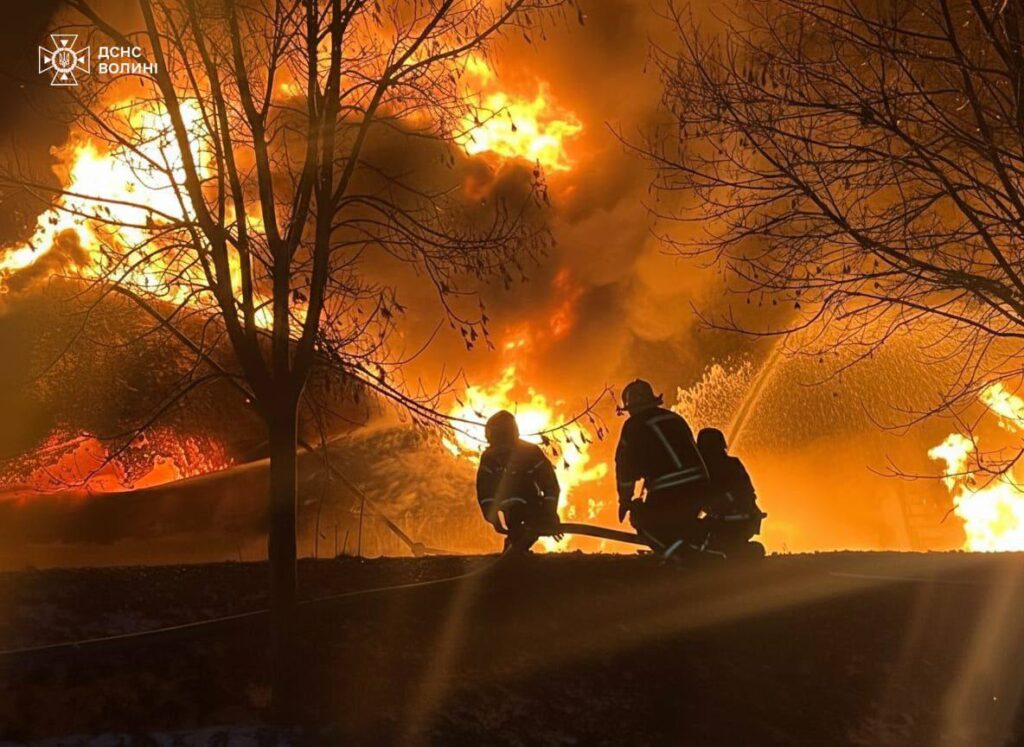
    Emergency workers responding to a blaze following a Russian attack in Volyn Oblast, Ukraine. Photo: DSNS Volyn

    Russia is pushing its drone war westward, into a Ukrainian region that borders NATO. Russian drones attacked Volyn Oblast through the night of 16 October, hitting civilian and critical infrastructure and leaving 370,000 subscribers without power, regional administration head Roman Romaniuk says. Volyn borders Poland, a NATO member, and Belarus, a Russian ally.

    Russia’s jet-powered drones keep flying farther west, and now the strikes reach deeper into the center and the EU-facing frontier too. Moscow launched more than 850 Shahed drones at Ukraine in about a day and a half, including a record roughly 360 on the central Kirovohrad Oblast, precisely as a speed cap on Starlink degraded the interceptor drones Ukraine’s air defense relies on.

    Moscow escalates its attacks after winning sanctions relief from the diesel deal of US President Donald Trump and Russian President Vladimir Putin and sensing pressure on Ukraine, exploiting the moment its defenses were artificially restricted.

    “Russia takes advantage of every such moment and must be held accountable for what it does,” Zelenskyy says, noting the skies had not been clear for a single hour.

    A night that turned deadly in the west

    In Volyn Oblast, the damage was concrete and lethal. Debris fell on a power line in the central Lutsk community, cutting electricity and disrupting water supply, and the city lost power entirely with public transport halted, Lutsk council secretary Andrii Razumovskyi says.

    The heaviest toll came in Manevychi, where a drone hit the private enterprise Agrofrukt LTD, killing one person and injuring eight. By 10:46 AM, the fire there was contained, and residents were asked to seal windows, doors, and vents due to the risk of an ammonia release from a damaged facility.

    A capital-to-border map of the same assault

    Throughout the day, Russia has struck Kyiv and its region, and the Dnipropetrovsk, Odesa, Rivne, Kharkiv and Donetsk regions, along with Zaporizhzhia, Kherson, Mykolaiv, Vinnytsia, Zhytomyr, Khmelnytskyi, Poltava and Ivano-Frankivsk.

    By reaching western border regions at once, Russia is widening the pressure on civilians across the country and edging closer to the EU.

    •  

    Calling up Starlink customer service? You'll be talking to Grok.

    Left: A laptop on a Starlink page. Right: A person holds their cellphone to their ear.
    SpaceX says its AI is answering most of its customer calls.

    Anchiy/Getty Images - Nikolas Kokovlis/NurPhoto via Getty Images

    • SpaceX says Grok is taking 20,000 Starlink customer calls a day — and closing 70% without humans.
    • The company revealed the stat while touting its voice-capable agent.
    • It's part of a race to build AI agents that love to chat — possible (likely, even) with each other.

    Elon Musk's AI is a talker.

    This week, Musk's combined AI-and-space-exploration company, SpaceX, announced a new Grok Voice model — and revealed that Starlink call centers are already using the AI-as-a-conversationalist technology to answer 20,000 customer calls a day.

    The company said roughly 70% of those calls are resolved without humans.

    Grok Voice agents are verifying customers, troubleshooting Starlink hardware, issuing credits, and shipping replacement equipment, the company said. Its AI agents can take on those tasks in multiple languages, too.

    That makes Starlink a useful, real-world test case for AI voice technology — and particularly useful for its global expansion. The company says Starlink serves more than 6 million active customers around the world.

    Instead of building a massive human customer-service operation to power call centers, SpaceX is betting it can serve its multilingual customers with AI.

    SpaceX did not respond to Business Insider's questions about which languages Grok supports or what types of calls still require a person.

    AI companies have been quickly rolling out more powerful voice models that do their best Chatty Cathy impression. In July, OpenAI released GPT-Live-1 with call-capable support, while Google has launched similar enterprise systems.

    The same is true for AI companies that are focusing on consumers. Meta's Muse, for example, can also handle phone calls for those let into the beta feature.

    So, soon, your bot may dial one for English — while a company's bot answers the call.

    Read the original article on Business Insider

    •  

    Order limiting Starlink access for Ukraine's military came from within White House, Reuters reports

    Starlink, implemented speed restrictions on Oct. 14 without warning, limiting speed to 100 miles per hour (160 kilometers per hour). The unexpected restriction disrupted active military operations, including the use of mid-range strike and interceptor drones.

    •  

    Ukraine resumes strikes on energy targets, saying Russia never stopped its attacks

    The tense alliance between Ukrainian President Zelenskyy and President Trump is nearing a new low point. After days of bitter back-and-forth between the two leaders, Ukraine has resumed strikes on Russian energy targets. Trump had demanded an "energy ceasefire" this past Sunday between the two. Russia never stopped its attacks. Lisa Desjardins reports.

    •  

    Ukraine less reliant on U.S. as Trump-Zelenskyy rift deepens, former ambassador says

    For perspective on the tensions between President Trump and Ukrainian President Zelenskyy, Amna Nawaz spoke with former U.S. Ambassador to Ukraine William Taylor. He's now a distinguished fellow at the Atlantic Council.

    •  
    ❌