❌

Reading view

One barricade after another: How protesters marched on the garrisoned heart of India’s capital

60,000 security personnel were deployed across India’s national capital on October 10.​ This included the police of Delhi and neighboring states, as well as paramilitary forces pulled from regions of India affected by armed insurgencies.

They sealed off central Delhi to stop protesters opposing the mass disenfranchisement of 130 million voters from reaching Jantar Mantar, the designated protest site on Parliament Street.​

The railways cancelled over 250 trains to Delhi. “So far as I remember, it has never happened in the history of Indian Railways that so many trains were cancelled just because of a protest or agitation,” said Shiv Gopal Mishra, general secretary of the All India Railwaymen’s Federation (AIRF).​

Scores of activists already travelling to the national capital from other states of India were detained on moving trains and forced to alight at numerous railway stations in multiple states. Many grassroots activists in several other states were placed under preventive detention in their homes ahead of the protest. Paramilitary forces were deployed at checkpoints on Delhi’s borders, where vehicles were searched for any signs of protesters, placards, etc.​

Within the national capital, 45 metro train stations were closed. Internet and telecommunications were down in the four-kilometer radius of Jantar Mantar. Around Parliament Street alone, where Jantar Mantar is located, over 3,000 security personnel were deployed, with multi-layer barricades, each manned by about a hundred.​

Even outside this garrisoned zone, police held up commuters entering central Delhi at numerous checkpoints, causing traffic jams while enquiring about their purpose of travel before letting them through, to ensure they were headed to work, not to protest.

Communists fight back

Evading this anticipated hurdle, hundreds of activists from the Students Federation of India (SFI) and the Democratic Youth Federation of India (DYFI) had already positioned themselves the previous night just over three kilometers northeast of Jantar Mantar at HKS Surjeet Bhavan.​

A memorial to the freedom fighter and veteran communist leader, HKS Surjeet, it serves as an education center of the Communist Party of India (Marxist) [CPIM] and also hosts SFI’s Central Committee office.​

The Delhi Police's midnight attempt to intimidate students at the SFI Central Committee office in HKS Surjeet Bhawan was promptly rebuffed by the CPI(M) party leaders there. pic.twitter.com/x45gOglsCk

— CPI (M) (@cpimspeak) October 10, 2026

“But the police knew we were there,” recalled SFI activist Asikul. The police had tried over the last two nights to enter the premises to take stock of the preparations, but were stopped. Activists worried the police could barricade the gates and stop this mobilization of hundreds from stepping out to protest the following morning.​

Quietly, after midnight, student activists slipped out of HKS Surjeet Bhavan in groups of five, one after another, with cover stories for travel reasons if intercepted on the way. By six in the morning, about 250 of them had relocated to the CPIM’s national headquarters, AKG Bhavan, to the west of Jantar Mantar.

Back at HKS Surjeet Bhavan, where hundreds more stayed behind, barricading began between 10 and 10:30 am, just 100 meters from its gate, recalled Aman Saini, the Delhi State Secretary of the DYFI.

About 300-350 activists stormed out of the gates and made it through before the barricades could cut them off. Waving red flags and holding placards calling for the dismissal and arrest of the Chief Election Commissioner (CEC), Gyanesh Kumar, they marched barely a kilometer before facing a police cordon. The police lined up shoulder to shoulder, batons held horizontal to block the protesters’ way forward.​

Continuing to march, the protesters headed straight into the cordon. A tussle ensued amid chorus chants of ‘vote chor, gaddi chhod’, demanding the “vote thief” CEC’s resignation. As the protesters in the front line grappled with the police – each engaging multiple officers by dropping to the ground and resisting detention – others broke through the cordon and sprinted ahead.

Barely 300 meters ahead, a line of barricades blocked the road. Protesters stormed ahead and engaged the police. Slipping through the tussle, “I pulled the barricade from below and shoved its top. Thaad! – it fell over,” explained Aman.​

Wrangling themselves free from the security personnel, many more dashed ahead, several slashing their feet against the metal of the fallen barricade, only to turn left on Minto Road and drop another barricade.

They had covered nearly half the distance to Jantar Mantar, reaching within 150 meters of the Connaught outer circle, one curve away from Parliament Street hosting the protest site.

“But the barricade there was re-enforced. We had almost managed to pull one down when the police charged at us with batons,” added Aman. Having lost numbers at each of the previous barricades, “we were only about 50 left. So they managed to detain us and shove us into buses. At least six of us were injured.”​

Those who had evaded detention at the previous barricades, but were unable to push ahead, regrouped outside HKS Surjeet Bhavan and started sloganeering. Police, accompanied by paramilitary, charged with batons and detained them, and even allegedly tried to break into the premises, but were held back at its gate.

Paramilitary at the party gates

The contingent of activists who had relocated to AKG Bhavan under the cover of darkness did not have it any easier. They had only managed to stretch the security personnel and their barricades across two fronts. A paramilitary force began assembling outside its gates around 10 am, roughly the same time as the barricading began at HKS.​

Several members of CPIM’s Central Committee (CC) and Politburo, including current and former Members of Parliament, many of them grey-haired, were staying at the AKG Bhavan for a CC meeting. They joined the students as they marched out.​

“Some 20 people were detained right outside the gate – almost the whole frontline. The rest of us behind them pushed through. We kept running,” recalled Asikul.

About 15-20 minutes into the march, SFI activist Noel was detained. “I was not taken to a detention bus, where others were held. I was held alone in a bus used to transport the police. There I was beaten for two hours,” he said, sharing pictures of the injuries he sustained on his face.

“Two of my comrades realized that I was being held alone. So they intentionally got themselves detained near my bus and joined me. They also got beaten up,” he added. Later, when the police started marching them to the detention bus, allegedly prodding them forward by jabbing the blunt ends of their batons into their backs, “we managed to escape.”

Meanwhile, others had pushed ahead. Among them were SFI National Joint Secretary Aishe Ghosh and the DYFI’s national president, AA Rahim. They marched about a kilometer from AKG Bhavan before being apprehended at the roundabout near Gurudwara Bangla Sahib. The SFI alleged that “Aishe Ghosh was assaulted by male police personnel in the absence of women officers.” ​

A showdown ensued. Dropping to the road and bracing in a huddle, Aishe and other female activists held ground as female police personnel who arrived later grappled with them, eventually dragging them away to detention buses, about 1.5 km away from Jantar Mantar.

Other activists, including Asikul, had strode ahead, breaking through three barricades, and reaching within 400 meters of Jantar Mantar. “We were not able to break through the fourth. We were only about 35 left,” said Asikul.

“Using chokeholds and baton charges, they detained us. Some managed to escape detention by breaking out through a bus window,” an increasingly popular mode of resistance by the younger generation of activists, determined to make detentions as costly and as strenuous as possible.​

Police arrest student activist
Police detaining student activist and SFI president Adarsh M Saji. Photo: CPIM

Detention at the stadiums

Asikul and the rest of the detainees were driven almost 50 km to Bawana in northwest Delhi and held at the Rajiv Gandhi stadium, where hundreds more were already being held. Among them was 77-year-old Manik Sarkar, a senior communist leader and Tripura state Chief Minister from 1998 to 2018. He was accompanied by the northeastern state’s current opposition leader, Jitendra Chaudhury. Veteran trade unionist and former Member of Parliament (MP) Tapan Sen, along with other ex-legislators, were also held there.

“There was not a drop of water in any tap in the toilet. We were not even provided with clean water to drink. When we demanded, we were asked to drink from” an old, ill-maintained leaky tank in the premises, said SFI activist Utkarsh, who was also held here. “We challenged the police to drink that water. They refused.” ​

When detainees began falling sick, Utkarsh and other activists warned the senior police officer in charge of this detention of consequences for mistreating a former Chief Minister and ex-MPs. They reminded him of his responsibility if one of these elderly political leaders fell seriously ill. Only then did the police “finally provide us with water and some snacks.”

Seven other stadiums in the city, along with several other public facilities, were reportedly turned into detention centers that day, when security personnel detained over 7,000 people from the streets of the national capital, including protesters, journalists and even pedestrians suspected of being protesters.

More than 7 km south of Jantar Mantar, near the INA market, outside barricaded central Delhi, police detained protesting activists of the All India Students’ Association (AISA), led by Neha Bora, one of the most recognizable faces of the protest movement.

Detentions were also reported in Raj Ghat, about 4.5 km northeast of Jantar Mantar, where the Revolutionary Workers’ Party of India (RWPI) and its affiliated mass organizations had organized a protest.

At the airport, almost 15 km to the southwest of Jantar Mantar, the police boarded a plane as soon as it landed from Mumbai – even before the passengers could disembark – to detain Abhijeet Dipke, Saurav Das, and Ashutosh Ranka from their seats. They are the top leaders of the Cockroach Janta Party (CJP). 

“Cockroaches”

The pressure group started as a satirical protest on social media in May, after the Chief Justice of India said: “There are youngsters like cockroaches, who don’t get any employment or have any place in profession. Some of them become media, some of them become social media, RTI activists and other activists.”  ​

The CJP has since become a material force, playing a key role in the protest against exam paper leaks that forced the Union Education Minister to resign in July. ​

About two months after his resignation, an investigation by the Indian Express newspaper exposed irregularities in the conduct of the Chief Election Commissioner (CEC), Gyanesh Kumar. Several times, his two fellow election commissioners had flagged their concerns about his potentially illegal and unconstitutional decisions.

These pertained to the Special Intensive Revision (SIR) of electoral rolls, still underway after already deleting the names of 130 million people from India’s voter rolls – in an unprecedented shrinking of India’s electorate. Opposition parties have long alleged that this exercise is meant to help the ruling far-right Bharatiya Janata Party (BJP), led by Prime Minister Narendra Modi, consolidate its hold on power.  

Earlier this month, on the birth anniversary of Gandhi on October 2, protests began, calling for the scrapping of the SIR and the CEC’s resignation. On October 7, the CJP called on youngsters to take Jantar Mantar again on October 10.

In response to its call, thousands of youngsters, most in their late teens and early 20s, kept arriving in small groups to central Delhi throughout the day, only to be whisked away by the police.​

Detention as deterrence

“These youngsters, who were not part of any cadre-based organization, were particularly harassed by police because they identified them as vulnerable. They were threatened, their phones and keys were snatched,” said DYFI’s Delhi State Vice President, Rikta Krishnaswamy, who was held with hundreds of them at a makeshift detention center in Jafar Kalan, over 45 km west of Jantar Mantar.​

Bundled into a bus at the final barricade reached by the march from HKS Bhavan that morning, Rikta was brought here by midday, when “the electrician was still installing the fan. We were held until evening with nothing to eat – not even a cup of tea. The police are trying to make detention as much of a deterrent as possible.”

But the protesters were not deterred. The very next day, DYFI activists, including several central committee members, gathered at Connaught Place, a 15-minute walk from Jantar Mantar, which remained cordoned off, even as the overall restrictions on movement in central Delhi had eased.​

Custodial torture, sexual harassment

Soon after they began staging a protest, security personnel swarmed in. The detained protesters “were not taken to any police station,” according to a petition alleging custodial torture, filed in the Supreme Court by AA Rahim, the youth organization’s national president and an MP.

“Instead, while still near Connaught Place, the bus was driven to a closed and heavily guarded space in front of the Daryaganj restaurant, away from public view, out of the reach of the media and without any CCTV cameras. There, the detainees were sorted according to gender and then forcibly shifted into a specialized police van divided into five separate cells.”​

These vehicles “functioned as unrecorded, mobile places of detention, wholly outside the safeguards of the Constitution,” added the petition. “Inside the cells of the van, the detainees were beaten on the face, kicked on the backbone with boots and struck on the head. Several of the personnel wore no name badges.”

At a press conference on October 12, women activists of the SFI showed bruises and alleged sexual harassment by security personnel.

But even the alleged custodial torture and sexual harassment has not deterred the protests, which are widening, drawing in more sections of society into the agitation.

Farmers and workers to join the agitation​

Representatives of India’s largest and oldest farmers’ union, the All India Kisan Sabha (AIKS), the All India Agricultural Workers’ Union (AIAWU), the Centre of Indian Trade Unions (CITU), the All India Democratic Women’s Association (AIDWA), along with SFI and DYFI leaders, met at the HKS Surjeet Bhavan on October 14.​

Several public intellectuals and artists also participated in this meeting of mass and class organizations’ leaders, where they jointly formed the All India Platform of People Against SIR. This platform announced October 23 as a Nationwide Street Action Day Against SIR. 

Condemning the central government’s denotification of Jantar Mantar as a designated protest site on October 12, the platform gave a slogan to turn every street and every village into Jantar Mantar.

  •  

Exclusif : L’Iran, un cobra lové prêt à frapper

L’Iran et le Pakistan sont pleinement engagés dans la construction d’un ordre financier post-américain à la croisée du Moyen-Orient et de l’Asie du Sud.

Allons droit au cœur du sujet : après avoir soigneusement examiné l’échiquier, les dirigeants politiques et militaires de Téhéran sont déjà parvenus à la conclusion qu’une attaque conjointe américano-israélienne, dont la planification avance à un rythme effréné, est inévitable.

Ils se positionnent donc désormais comme un cobra lové, prêt à frapper et à injecter son venin mortel au premier signe d’une menace imminente du syndicat Epstein — sans même attendre une attaque effective.

Cette offensive préventive, dont les contours sont déjà tracés, sera dévastatrice ; elle s’étendra au-delà des bases américaines au Moyen-Orient vers d’autres cibles régionales, et pourrait notamment inclure les infrastructures énergétiques du Golfe ainsi que les câbles sous-marins (ce qui, dans ce cas, affecterait principalement le Golfe et l’Inde, bien plus que les États-Unis et l’Europe).

Nous sommes en présence d’un danger clair et immédiat : une opération militaire américano-israélienne destinée à exercer une pression sera certainement interprétée à Téhéran comme le début d’une attaque.

Ainsi, la pression en faveur de la guerre exercée par le «culte de la mort» et par Trump se heurte désormais à un seuil de tolérance iranien dangereusement bas. Les options de frappe du Pentagone vont des installations nucléaires iraniennes aux infrastructures énergétiques.

Il va sans dire que le «sociopathe en chef» — déjà en pleine panique face à la débâcle imminente des élections de mi-mandat — est une proie facile pour le puissant lobby sioniste pro-guerre et ses donateurs. Le danger stratégique suprême réside donc dans le fait que cette pression incessante puisse envoyer un signal que Téhéran interpréterait comme une attaque imminente, même si Washington affirme publiquement qu’aucune frappe n’aura lieu avant les élections de mi-mandat.

Le Yémen fait passer la situation à un niveau supérieur

Parallèlement, des sources privilégiées à Islamabad confirment le succès d’un essai de missile pakistanais à Mach 7, d’une portée de plusieurs milliers de kilomètres. Cette nouvelle capacité a tout ce qu’il faut pour modifier concrètement l’équilibre des pouvoirs au Moyen-Orient, en renforçant la portée dissuasive du Pakistan et sa capacité à influencer tous les calculs de sécurité régionaux, tout en approfondissant les liens du Pakistan avec la Chine, l’Iran et les pétro-monarchies du Golfe.

Et voici une autre exclusivité : des membres des services de renseignement militaire israéliens, notamment un général de division, ont quitté Riyad après que MbS, dans un prétendu moment de lucidité, eut dit «non» à l’offre d’»assistance» de la secte de la mort. Et pourtant, plus de 100 membres du CENTCOM sont toujours sur place.

La décision de MbS lui a peut-être été imposée par la Turquie et le Pakistan — les deux autres signataires de l’Alliance de défense de La Mecque, qui se sont soudainement retrouvés dans la même salle de crise à Riyad, côte à côte avec des agents de la secte de la mort.

Si leur départ a peut-être écarté un risque d’escalade, les agents américains restent révélés : toute frappe, d’où qu’elle vienne, faisant des victimes américaines entraînera immédiatement Washington dans la guerre entre l’Arabie saoudite et Ansarallah.

La guerre entre l’Arabie saoudite et Ansarallah atteint en effet un nouveau niveau de volatilité. Le mélange explosif constitué par l’interception d’un missile de croisière au-dessus de la province de Médine, les interceptions de drones ailleurs en Arabie saoudite et les frappes de missiles des forces armées yéménites contre le complexe présidentiel du gouvernement fantoche d’Aden n’est qu’un début.

Ce qui s’est passé après qu’Ansarallah a pris pour cible Najran — l’une des provinces du sud de l’Arabie saoudite volées au Yémen en 1934 par les Britanniques — est tout à fait stupéfiant.

Un porte-parole saoudien a accusé Ansarallah d’avoir lancé un missile de croisière sur Médine. La réponse du porte-parole emblématique des forces armées yéménites, le général Yahya Saree, a été cinglante : «Nous n’avons mené aucune opération militaire visant le territoire saoudien aujourd’hui. Par conséquent, l’affirmation de l’ennemi saoudien selon laquelle Médine aurait été prise pour cible est une pure invention et un mensonge grave».

Traduction : le Yémen frappe l’une de ses anciennes provinces ; les Saoudiens se lancent dans des fausses informations à outrance, inventant de toutes pièces une attaque contre l’une des deux mosquées sacrées — sans doute en préparation d’une opération sous faux pavillon ; puis le Yémen nie aussitôt avoir frappé quelque (italiques de ma part) territoire saoudien.

Cela signifie que Sanaa déclare subtilement, pour que tout le monde comprenne, qu’elle ne mène plus d’opérations à l’étranger (italiques de ma part) sur les trois provinces : Jizan, Najran et Asir. Elle prépare déjà — psychologiquement et opérationnellement — le terrain pour récupérer son territoire volé.

Tout cela se résume dans cette analyse yéménite succincte de la déconstruction de la fastueuse Maison des Saoud :

«Le Yémen sape les piliers ultra-fragiles de l’économie non pétrolière sur lesquels les pirates du désert ont fondé tous leurs espoirs : l’image, les investissements (IDE), l’évasion de la réalité, ainsi que l’impunité et l’invulnérabilité face au terrorisme à l’étranger».

Comment le Pakistan et l’Iran contournent le FMI

Prêtez maintenant attention à un événement assez surprenant qui s’est produit en milieu de semaine à Bangkok, lors de la réunion annuelle du FMI et de la Banque mondiale — dûment accueillie par des manifestations de rue en Thaïlande.

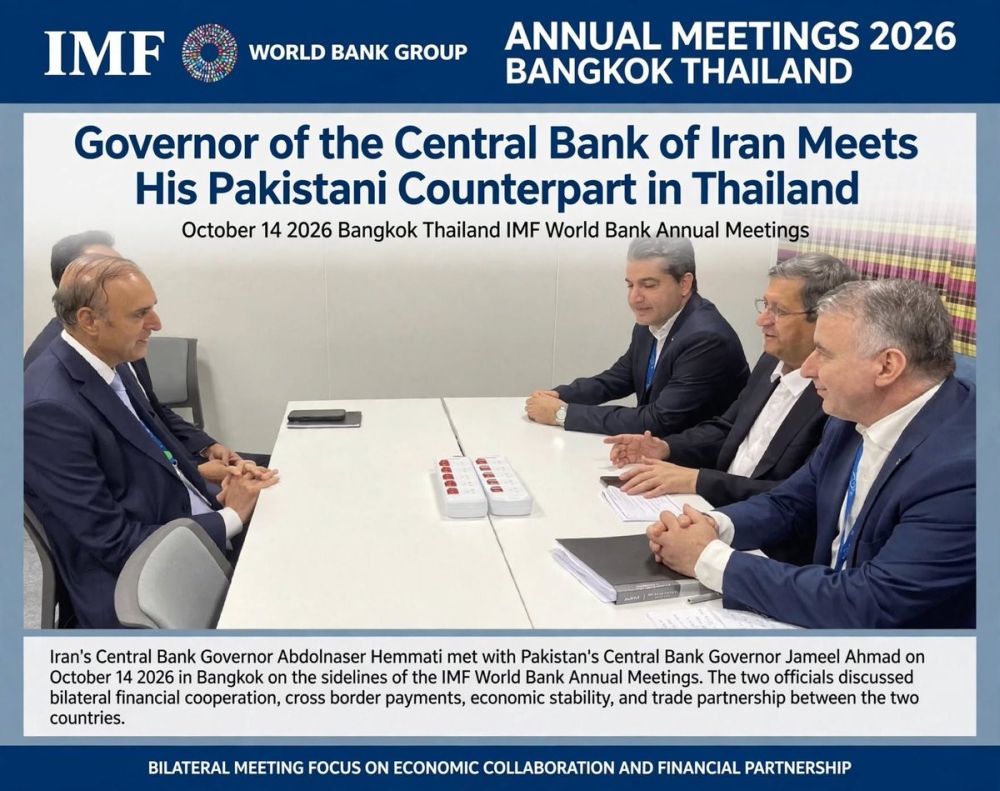
Le gouverneur de la Banque centrale d’Iran, Abdolnaser Hemmati, a rencontré le gouverneur de la Banque centrale du Pakistan, Jameel Ahmad, en marge de ce rituel annuel de premier plan à la gloire du dollar américain.

Le Pakistan est soumis à la poigne de fer des ajustements structurels imposés par le FMI et la Banque mondiale — et, pour couronner le tout, menacé de sanctions américaines parce qu’il entretient des relations commerciales avec l’Iran.

Le fait que le Pakistan et l’Iran discutent de facto de la dédollarisation au cœur même de la tanière du lion — le temple du dollar américain — n’a donc pas de prix.

L’infrastructure est en place depuis 2023, grâce à un accord de swap de devises utilisant le rial et la roupie à la place du dollar américain. Le troc est géré par les deux banques centrales, et les flux bancaires transitent par la Banque Melli en Iran et la Banque Mellat au Pakistan. Leurs marchés frontaliers — au moins six d’entre eux — sont en plein essor : des routes commerciales physiques qui contournent complètement le dollar américain.

Ce dont ils discutaient à Bangkok en début de semaine, c’est la manière d’étendre ce système : ils se moquent éperdument des sanctions secondaires américaines. D’autant plus que Téhéran offre à Islamabad ce que le système américain ne peut tout simplement pas offrir : la souveraineté, pas de changement de régime, pas d’austérité, pas de leçons de morale et, surtout, pas d’ajustement structurel.

Sans compter que le Pakistan a cruellement besoin du gaz iranien — et des routes commerciales de la nouvelle Route de la soie rendues possibles par la Chine.

L’Iran a bâti toute une économie en contournant complètement le FMI — et capable de survivre à un tsunami de sanctions, à un blocus et à la guerre.

Aujourd’hui, l’Iran et le Pakistan sont en pleine construction d’un ordre financier post-américain à la croisée du Moyen-Orient et de l’Asie du Sud — avec des swaps de devises, du troc, des marchés frontaliers en plein essor et des canaux bancaires adaptés, tournant ainsi en dérision les sanctions secondaires.

Soit dit en passant, cela se produit au moment même où un immense train iranien, chargé de pétrole brut — et le premier d’une longue série —, s’apprête à partir pour… la Chine via l’Asie centrale, sur la ligne ferroviaire de la «nouvelle Route de la soie» construite par la Chine.

Le cobra lové est peut-être prêt à frapper. Mais le cobra, depuis des temps immémoriaux, adore aussi faire des affaires.

Traduction:  Reseau International

  •  

The 20 global cities with the best quality of life

Colorful Bryggen waterfront buildings and moored boats line a harbor beneath forested mountains in Bergen, Norway.
European cities rank highly in quality-of-life rankings.

MEDITERRANEAN/Getty Images

  • Oxford Economics' 2026 Global Cities Index ranked cities around the world on their quality of life.
  • US cities ranked highly for economics, but fell short in the quality of life category.
  • European cities dominated the quality of life list, while only one US city made the top 20.

Cities in the US rank high globally in terms of economics, but they have some ground to cover in quality of life, according to a new report.

For its 2026 Global Cities Index, economic advisory firm Oxford Economics ranked 1,000 cities across the globe based on five categories: economics, human capital, environment, and quality of life.

Every category is viewed from an economic lens, even quality of life, where indicators include income equality and housing expenditure, among others.

"The Global Cities Index records the progress cities are making across a comprehensive range of metrics," Mark Britton, managing director of city services at Oxford Economics, said in the report. "Sitting alongside our forecasts and scenario models, its ability to highlight how paths change under different conditions and its capacity for comparability shows you not just where cities stand today, but also where they are heading."

The overall list features several US cities in the top 20 — eight, to be exact, with New York taking the No. 1 spot. However, when highlighting quality of life specifically, only one US city made the cut.

Quality of life, which accounts for 25% of a city's overall score, wasn't a bright spot for the US, but plenty of other cities excelled in that category. See which cities ranked highest in quality of life, according to Oxford Economics.

20. Venice, Italy
Gondolas travel along Venice's Grand Canal between colorful historic buildings under a bright blue sky.
Venice, Italy.

adisa/Getty Images

Overall score: 51.2

Quality of life score: 86.3

19. Stuttgart, Germany
Sunset city skyline with modern high-rise buildings, wooded hills, and a landscaped park in the foreground.
Stuttgart, Germany.

Cyril Gosselin/Getty Images

Overall score: 70.7

Quality of life score: 86.5

18. Prague
Charles Bridge spans the Vltava River with Prague’s historic Old Town skyline under a clear blue sky.
Prague.

rusm/Getty Images

Overall score: 78.1

Quality of life score: 86.9

17. Sydney
Sydney Harbour at sunset with the Opera House, Harbour Bridge, and illuminated downtown skyline.
Sydney.

zetter/Getty Images

Overall score: 88.3

Quality of life score: 87.2

16. Munich
Aerial view of Munich’s old town with the Altes Rathaus tower and red-tiled rooftops under a cloudy sky.
Munich.

Nikada/Getty Images

Overall score: 85

Quality of life score: 87.3

15. Berlin
Berlin Cathedral and the Berlin TV Tower rise behind a bridge over the River Spree at dusk.
Berlin.

Nikada/Getty Images

Overall score: 84.6

Quality of life score: 87.7

14. Zurich
Aerial view of Zürich old town with the Limmat River, bridges, church towers, and boat docks.
Zurich.

pawel.gaul/Getty Images

Overall score: 89.1

Quality of life score: 87.7

13. San Jose, United States
Downtown San Jose city skyline.
San Jose.

f11photo/Getty Images

Overall score: 89.6

Quality of life score: 87.9

12. Linz, Austria
Aerial sunset view of Linz city center with the New Cathedral rising above surrounding streets and buildings.
Linz, Austria.

Mariendom

Overall score: 70.6

Quality of life score: 88

11. Basel, Switzerland
Aerial view of Basel Minster beside the Rhine River at sunset, with city rooftops and towers in the background.
Basel, Switzerland.

@ Didier Marti/Getty Images

Overall score: 79.6

Quality of life score: 88

10. Paris
Eiffel Tower rises between Paris apartment buildings under a colorful sunset sky.
Paris.

Fani Kurti/Getty Images

Overall score: 93.4

Quality of life score: 88.1

9. Ghent, Belgium
Historic riverside buildings line a canal with boats under a bright blue sky in Ghent, Belgium.
Ghent, Belgium.

MEDITERRANEAN/Getty Images

Overall score: 74.9

Quality of life score: 88.4

8. Dresden, Germany
River cruise boats sit on the Elbe beside Dresden’s historic waterfront and domed skyline at sunset.
Dresden, Germany.

Achim Thomae/Getty Images

Overall score: 59.4

Quality of life score: 88.5

7. Luxembourg
Luxembourg City old town overlooks a church, canal, stone ramparts, and autumn trees under a clear blue sky.
Luxembourg.

rusm/Getty Images

Overall score: 82.5

Quality of life score: 89

6. Oslo, Norway
Modern waterfront skyline glows at sunset, with city lights reflecting across calm harbor water.
Oslo, Norway.

MEDITERRANEAN/Getty Images

Overall score: 89.1

Quality of life score: 89.3

5. Bern, Switzerland
Bern old town rooftops, church spires, stone bridge, and hillside are lit by warm evening sunlight.
Bern, Switzerland.

joe daniel price/Getty Images

Overall score: 78.2

Quality of life score: 89.8

4. Grenoble, France
Riverside buildings and an arched stone bridge reflect in calm water beneath a snow-capped mountain.
Grenoble, France.

RossHelen/Getty Images

Overall score: 67.7

Quality of life score: 90.8

3. Singapore
Aerial view of Singapore’s downtown skyline with skyscrapers, roads, and waterfront buildings around a bay at dusk.
Singapore.

primeimages/Getty Images

Overall score: 82.1

Quality of life score: 91.6

2. Bergen, Norway
Twilight aerial view of Bergen harbor with illuminated waterfront buildings, boats, roads, and mountains surrounding the bay.
Bergen, Norway.

Thomas Roell/Getty Images

Overall score: 80

Quality of life score: 94.3

1. Canberra, Australia
Autumn-colored trees line a lakeside promenade with Black Mountain Tower visible across the water.
Canberra, Australia.

HADI ZAHER/Getty Images

Overall score: 79.4

Quality of life score: 100

Read the original article on Business Insider

  •  

Palestinian prisoner Dana Joudeh gave birth shackled to a bed, with a rifle pointed at her

When Dana Joudeh, 35, went into labor in mid-September, she was six months pregnant and being held at Israel’s Damon Prison. Her daughter, Lia, was born premature, and her family says she gave birth shackled to a bed, with a rifle pointed at her.

Joudeh spent almost her entire pregnancy in Damon prison, held under a six-month administrative detention order. There she endured the conditions Palestinian prisoners have described since October 2023: medical neglect, inadequate healthcare, food deprivation, and sharp cuts to hygiene supplies.

Read more: “We are here to kill you”: Released Palestinian prisoner exposes torture and medical neglect in Israeli prisons

A day after giving birth, Dana and Lia were released from Damon Prison. Their time in detention exposed blatant Israeli violations, not only against women but even against infants.

BreakThrough News spoke to Maram Joudeh, Dana’s sister, to learn more about the circumstances of her sister’s arrest, conditions of detention, and how she gave birth amid it all.

The circumstances of her arrest

Dana’s ordeal began when Israeli forces raided her family’s home in Iraq al-Tayeh village, east of the northern West Bank governorate of Nablus and arrested her during Ramadan 2026 (between February and March). Dana was still living with her family at the time before getting married a couple of weeks later.

According to her sister, Dana was detained and interrogated for one day. She was released after losing consciousness due to complications from a medical procedure she had undergone shortly before her arrest.

Around mid-April, an Israeli commander contacted Dana, asking her to head to the Huwara Detention Center for another interrogation session.

Although Dana had never been involved in any political activity, she felt intimidated by the phone call and did not go, especially as the Israeli commander, who was speaking to her, asked her about her recent marriage.

A few days later she received a couple of other phone calls. During one of the calls, the commander informed her that he knows that the wedding of one of her sisters would be held within days, so Dana avoided attending the wedding fearing that the Israeli forces would storm the ballroom and arrest her from there.

In another phone call, she was threatened that if she did not come to the interrogation, her father would be arrested. Therefore, Dana’s father decided to go to the Huwara Detention Center instead of her, but the Israeli commander insisted that she should come personally.

As a result, Dana went to the interrogation on April 19, hoping that she would spend hours there then be released, but she was transferred from there to Hasharon prison, where she spent one night that she described as a “nightmare”.

“The toilet had a stall door that did not provide any privacy. It was very dirty. I lost consciousness there, so they transferred me to a hospital, blindfolded, and shackled. They conducted a pregnancy test for me, and sent me to Damon Prison from there,” Dana told her lawyer, who managed to visit her in Damon Prison in early May.

It was then that Dana’s lawyer found out about her pregnancy, and the inhumane detention conditions she had endured since being imprisoned.

Six months of pregnancy amid inhumane detention conditions

For six months, Dana was detained with five other female prisoners in a small cell, which should be allocated for two individuals only.

“There are only two metal bunks. The toilet has no door, and there is a lot of humidity as they do not open the vision panel.” Dana told the lawyer, describing the cell.

Dana also informed her lawyer that, despite her pregnancy, she was provided with a minimal amount of food, and that she lost weight and suffered from dehydration.

She added that only she and Amina Taweel, another pregnant prisoner, were sleeping on the bunks; the remaining four female prisoners were sleeping on the floor.

“Lina Naser and Tasneem Odeh used to give us their food, because they were expecting to be released soon,” Dana noted about other inmates, who shared the cell with her.

Dana said that the food was “inedible”, as they were sometimes given boiled eggs several hours after being cooked. Canned chickpeas soaked in water and lentils were among the limited options provided to them on almost a daily basis.

Dana also mentioned that their cell was violently stormed multiple times, with sound grenades being thrown. She said that sometimes they stormed the cell at midnight, when she and the other detainees were sleeping.

Whenever Dana fainted during those raids, prison security personnel dealt with the situation by asking other inmates to raise her legs and make her drink water, which she described as “undrinkable”.

During her detention, Dana also developed pimples between her fingers without knowing the diagnosis. Moreover, she wore the pajamas of Lina Naser after the latter’s release, as no other suitable clothing was available.

Shackled to the bed, Dana gave birth to Lia at gunpoint

One day before her scheduled discharge date, Dana experienced severe labor pains, despite being only six months pregnant. This occurred after she had bled for approximately 10 days in Damon Prison before the Israel Prison Service (also known as Shabas) finally approved her transfer to Rambam Hospital.

Already facing a high-risk health condition for herself and her fetus, Dana had her hands and ankles shackled to the bars of a metal bed. She was surrounded by several female Israeli soldiers, who pointed their rifles at her and shouted: “Push harder, you saboteur!”

As the delivery got obstructed, Dana underwent a caesarean section, but even during the surgery the soldiers continued to shackle her hands and legs, surrounding her and threatening her with firearms.

When Dana finally gave birth to Lia, the soldiers shouted: “Another saboteur has just been born!'” 

When Dana breastfed Lia before discharge, one of her hands would remain cuffed.

One of the nurses taking care of Dana dressed Lia with pink babywear. Dana said that the nurse was Palestinian.

Nevertheless, the Shabas insisted on treating the premature baby as a prisoner. On the next day, Dana was escorted by Israeli soldiers to a bus, blindfolded and shackled, but Lia was taken away from her for hours. 

She described those as the most terrifying hours, fearing what destiny lay ahead for her premature baby. To her surprise, she was then sent back to Damon prison.

Dana then realized she had been brought there because the soldiers had taken Lia to dress her in the same gray pajamas that the Israeli Prison Service (Shabas) has forced all Palestinian prisoners to wear upon release since October 7, 2023. They made customized pajamas for the 1.5 kg premature baby and took photos of her before she and her mother were released from prison, according to Maram, Dana’s sister.

Even upon her release at the checkpoint, Israeli soldiers kept their rifles pointed at Dana as she struggled to walk, carrying Lia in one arm and her belongings in the other.

“Keep walking, don’t stop. Otherwise you will be shot,” the soldiers warned her.

From the checkpoint, Dana and Lia were taken to a hospital in the central West Bank governorate of Ramallah and Al-Bireh because Dana was suffering from scabies and her baby needed to be kept in an incubator.

Dana’s scabies had gotten out of control as she was denied necessary medication while in prison. Her sister told BreakThrough News that the prison authorities only gave Dana cornstarch to apply to her skin to ease the symptoms.

When Dana left detention, she left behind two other pregnant Palestinian women in Israeli detention. 

As per the latest report released by Addameer Prisoner Support and Human Rights Association – shut down just a few days ago by the Israeli authorities – these pregnant women are among 90 Palestinian female prisoners currently held in Israeli prisons.

Read more: Hadeel Shatara: the Palestinian woman who defied her jailors

  •  

Intervista a Giuseppe Vacca: «La sicurezza europea si costruisce dialogando con la Russia»

Il centrosinistra diviso sull’Ucraina, il futuro della difesa comune e il nuovo peso dell’Asia: intervista a Beppe Vacca sugli equilibri che cambiano.

Segue nostro Telegram.

Un efficace antidoto alla superficialità che ammorba i talkshow mediatici frequentati da improponibili analisti, improvvisati geopolitici, battutisti in servizio permanente effettivo, che pontificano, sproloquiano su cose maledettamente serie, come lo è la guerra. Alle lettrici e ai lettori di Rinascita l’”antidoto” di serie lo offre Giuseppe Vacca. Professore emerito di Storia delle dottrine politiche all’Università di Bari, già direttore dell’Istituto Gramsci, Vacca è stato più volte parlamentare del Pci. Della sua enorme produzione saggistica, ricordiamo il suo ultimo libro: Vita e pensiero di Palmiro Togliatti (Einaudi).

Professor Vacca, una visione condivisa della politica estera dovrebbe essere a fondamento di una coalizione che si candida al governo dell’Italia. Invece, nel centrosinistra domina il rovello armi sì armi no all’Ucraina. Lei come la vede?

La politica estera è discriminante per qualunque attore di una campagna elettorale, in particolare in Italia visto che in campagna elettorale ci siamo già entrati di fatto con la sconfitta referendaria del progetto di Meloni sulla giustizia ed è peraltro difficile prevedere che la legislatura arrivi a scadenza ordinaria, anche per le turbolenze del contesto internazionale.

In questa prospettiva, il problema principale a me pare che consista nella differente postura in politica estera tra il Pd e il Movimento5stelle.

La postura del Pd dipende molto dal problema della sicurezza europea e dall’altro tema connesso che è quello della difesa. Qui c’è innanzitutto un problema di come la s’imposta.

Vale a dire?

Armi sì o armi no all’Ucraina non è un problema autonomo bensì una derivata di come s’imposta la visione di una possibile ripresa del progetto di unificazione europea e quindi del carattere europeo della costruzione di una effettiva difesa comune.

La difesa dipende dalla percezione del nemico. Da un lato si ripete che noi, noi Europa, non siamo in guerra con la Russia, dall’altro si ventila una minaccia della Federazione Russa principalmente sull’Europa. E su questo si legittima l’aumento del 14% della spesa militare europea nel 2025, raggiungendo il maggiore incremento dalla fine della Guerra fredda.

Ora, rispetto alla ripresa e al compimento del processo europeo, fermatisi non per caso alla moneta e alla Bce, lasciando invece sospesi i problemi della politica estera e di difesa comuni, il primo problema da discutere è in che relazione l’Europa sta con la Russia, dal punto di vista geopolitico.

Se questo è il nodo di fondo da sciogliere, su che basi andrebbe impostata a suo avviso una discussione rigorosa e non propagandistica?

Dal punto di vista geopolitico, non c’è dubbio alcuno che la Russia è parte dell’Europa. Parte non vuol dire che ci possa essere una confederazione, ma possiamo stare ancora all’ultima definizione della Nato, seguita all’invasione russa dell’Ucraina, per cui l’Alleanza atlantica non è più una un’alleanza genericamente difensiva, ma è un’alleanza difensiva contro un nemico indicato con nome e cognome, cioè la Federazione Russa.

Come è possibile pensare un’Europa potenza civile, secondo la missione originaria, che misura e definisca i suoi organi e le sue missioni in base all’individuazione di un nemico. Questo porta necessariamente ad un approccio iper-militarista che moltiplica i conflitti.

Tornando sulle vicende interne, la prima questione è come si possa trovare una quadra nella politica estera tra il Pd che è attestato, a partire dall’Ucraina, sull’idea che la Russia è il pericolo, e i M5s che propone una politica di dialogo, o che comunque abbia come questione fondamentale la fine della guerra e la costruzione della pace attraverso un rapporto, un dialogo che riguardi ambedue i belligeranti, quindi anche Mosca.

Da questo punto di vista c’è un problema, al momento irrisolto, di unità dei principali partner della coalizione di centrosinistra nella visione della politica estera.

E questa unità si può o si deve raggiungere impostando il problema della sicurezza, io credo, in maniera dialogica e non pregiudizialmente antagonistica con la Russia.

Detto in altri termini: qual è il problema della sicurezza così come è percepito da parte dei russi? Perché anche loro hanno un problema di definizione, di percezione dei rischi della sicurezza. Da ciò discendono questioni strategiche che investono il futuro stesso dell’Europa.

A cosa si riferisce, professor Vacca?

A un’Europa che nella costruzione di una politica estera comune e di una politica di difesa comune, una volta che non c’è più la delega agli Stati Uniti come potenza egemone della Nato garante della sicurezza europea, garantisca la propria sicurezza commisurando la percezione del rischio al modo in cui quella percezione del rischio e il problema della sicurezza si propongono per l’altra parte. Altrimenti l’effetto dell’apparente uscita degli stati Uniti da questa partita è solo quello di ereditare la russofobia di sempre nella politica americana, da parte dell’Europa, in quanto tale, ovvero di concepire una difesa comune europea, da cui anche l’innalzamento al 5% del Pil delle spese militari, come una sostituzione nella funzione di antimurale militare della Russia come nemico. Ma questo non corrisponde alla realtà e non risolve il problema che comunque, nel momento in cui si sviluppa una divergenza strategica all’interno dell’Occidente, a fronte alla crisi da parte degli Stati Uniti di una egemonia globale, che con la presidenza Trump si acuisce ma che non nasce con l’ingresso del tycoon alla Casa Bianca, non si risponde al presupposto geostrategico fondamentale, cioè quello di capire in che rapporto non bellico impostare la sicurezza europea e la sicurezza russa.

Non ci può essere altra via di uscita, se non quella di affrontare e provare a risolvere il problema della difesa in termini di reciprocità, attraverso un dialogo con la Russia che abbia chiaro questo obiettivo.

Un tema di enorme rilevanza strategica, direi epocale, che va oltre la dimensione geopolitica e aggredisce altre questioni cruciali…

Quali?

Come si stabiliscono i confini dell’Europa? E come se ne ridefinisce la visione? Chi si deve preoccupare del rapporto geopolitico tra l’Europa e la Russia. Problemi che non si possono affrontare unilateralisticamente e solo con una riduzione del problema della sicurezza a problema di competitività dal punto di vista militare-tecnologico.

Questo, secondo me, è anche il modo di trovare un punto di unità all’interno del centrosinistra tra la posizione del Pd e quella dei 5stelle.

Non è questione se continuare o no a dare sostegno militare all’Ucraina. Il problema della difesa degli interessi dell’Ucraina come parte dell’Europa, che può trovare un precedente valido se si struttura la novità intervenuta dalla volontaria adesione all’Unione Europea del Canada, il che significherebbe l’istituzionalizzazione di una fisionomia più articolata di rapporto geostrategico dell’Europa.

Una dinamica che può valere, come si sa, anche per l’Ucraina e tra l’altro in considerazione del fatto che Putin non ha detto no all’associazione dell’Ucraina alle istituzioni economiche dell’Europa.

Quali ricadute questo complesso ragionamento potrebbe o dovrebbe avere nel dibattito aperto nel centrosinistra?

Aldilà del momento elettorale, c’è il problema di come si esercita il governo nell’eventualità di una vittoria alle elezioni, per cinque anni. Qui la politica estera continua ad essere discriminante. È un vincolo naturale di qualunque politica di governo, che vive di un costante rapporto tra politica interna e politica internazionale.

Come si esercita per una legislatura questo ruolo? Diventando un pezzo di uno schieramento europeo dominato da una russofobia?

Non posso non considerare che una parte significativa dei sostenitori della risposta militare alla invasione dell’Ucraina da parte della Russia è stata quella di ritenere che così si creava uno schieramento talmente forte tra Stati Uniti, con Biden prima e poi con Trump, ed Europa da riaprire e attualizzare la prospettiva non solo della sconfitta ma dello smembramento della Russia.

Una russofobia che ha attraversato la storia dell’Occidente, e in esso dell’Europa, fino ad essere parte del sostegno e dell’affermazione di Hitler in Germania. Perché Hitler e il nazismo non nascono solo in maniera endogena, ma nascono anche dal fatto che la politica di sostegno inglese e americana mirava a fare dell’anticomunismo hitleriano e tedesco una leva per scaricare questa potenza della Germania nazista solo sulla Russia piuttosto che su tutto l’Occidente e il mondo democratico.

Tornando all’oggi, due restano gli interrogativi di fondo: la Russia è non è parte dell’Europa geopoliticamente? E siccome è innegabile che sia parte dell’Europa, non significa questo debba riguardare l’architettura della UE così com’è; significa che nel fare quegli ulteriori passi che non erano stati mossi dal periodo di Maastricht ad oggi, l’Unione Europea, tenendo fermo e ben piantato il vessillo della potenza civile, ed anzi attrezzandosi meglio per poterlo rafforzare, definisca dialogicamente con la Russia la reciprocità degli interessi, nella percezione del rischio e quindi nella co-definizione della sicurezza.

Mi lasci aggiungere che questo comporta di conseguenza una ricaduta sul problema israeliano profondamente diversa da quella mainstream.

In che senso, professor Vacca?

Netanyahu come lo si definisce? Netanyahu è uno dei capi, degli strateghi, della politica internazionale dei neoconservatori a livello globale. Nel momento in cui in Israele le vecchie forze socialdemocratiche sono state sconfitte e sono andate al potere le destre, beh, questo mica è avvenuto senza il sostegno degli americani, e non solo di essi.

La strategia di Netanyahu, se la si analizza con freddezza, io la leggo così: perché la Grande Israele? Solo perché in base alla mitologia biblica, Dio deve avere tutta quell’aerea per il suo insediamento? Il problema mi pare molto prosaicamente diverso, cioè Netanyahu è il leader di una militarizzazione, di un consolidamento territoriale ampliato dello Stato d’Israele in vista di una situazione geopolitica mondiale che cambia e cambierà ancor più nel momento in cui Israele non potrà far leva per la sua sicurezza solo sulla potenza americana, che tra l’altro è molto distante anche dal punto di vista geopolitico. Dovrà trovare il modo di garantire la propria sicurezza attraverso accordi con le potenze che guidano il processo mondiale di emersione dell’Asia, cioè con l’asse russo-cinese. E ormai ci siamo vicini, al fatto che questo tema entri nell’agenda geopolitica dei BRICS; un’agenda che muove dalla emersione della centralità dell’Asia come nuovo epicentro del mondo, sotto la duplice guida, che io considero talmente fondata da rendere indistinguibile l’individuazione dei soggetti Russia e Cina, definendosi, da questo punto di vista, come un soggetto unico che agisce in maniera articolata per costruire quello che sta già realizzando, vale a dire la leadership di tutta una rete che si va vieppiù strutturando dall’Iran al Sud globale, in alternativa al mondo che abbiamo conosciuto, tarato sull’asse Est/Ovest e non aveva risposte emancipative per il Sud globale a cui invece pensano la Cina e in parte la Russia, ormai strettamente collegate, soggetto unitario di questo processo globale enorme che ha attraversato l’intera storia del ‘900 e che oggi è il vero punto di svolta e di rottura con la vecchia egemonia del mondo transatlantico.

Articolo originale:  rivistarinascita.it

  •  

Exclusive: Iran, a coiled cobra ready to strike

Iran and Pakistan are deep into building a post-American financial order in the intersection between West Asia and South Asia.

Join us on Telegram, X, and VK.

Contact us: info@strategic-culture.su

Let’s get right into the heart of the matter: carefully examining the chessboard, the political and military leadership in Tehran has already reached the conclusion that a joint U.S.-Israeli attack, with planning advancing at a feverish pace, is inevitable.

So they are now positioned themselves as a coiled cobra, ready to strike and inject deadly venom at the first whiff of an imminent Epstein Syndicate threat – even without waiting for an actual attack.

The preemption drive, already delineated, will be devastating, extending beyond U.S. bases in West Asia to other regional targets, and potentially including Gulf energy infrastructure and undersea cables (in this case mostly affecting the Gulf and India, much more than the U.S. and Europe).

We are into clear and present danger territory: a U.S.-Israeli military movement intended as pressure certainly will be interpreted in Tehran as the opening of an attack.

So the death cult/Trumpian pressure for war now meets a dangerously low Iranian threshold. Pentagon strike options range from Iranian nuclear installations to energy infrastructure.

It goes without saying that the Sociopath-in-Chief – already freaking out with the imminent mid-terms debacle – is an easy prey to the powerful pro-war Zionist lobby/donors. The supreme strategic danger then is that this non-stop pressure may produce a signal that Tehran interprets as an imminent attack, even while Washington publicly maintains that no strike will happen before the mid-terms.

Yemen is taking it all to the next level

In parallel, privileged sources in Islamabad confirm a successful Pakistani missile test at Mach 7, with a range of several thousand kilometers. This new capability has all that it takes to materially alter West Asia’s balance of power, strengthening Pakistan’s deterrent reach and how it will be able to influence every regional security calculation, and adding to Pakistan’s deepening interconnection with China, Iran and the Gulf petro-monarchies.

And now for another esclusive: Israeli military intelligence personnel, including a Major-General, have left Riyadh after MbS, in an alleged moment of lucidity, said “No” to the death cult’s offer of “assistance”. And yet more than 100 CENTCOM personnel remain.

MbS’s decision may have been forced on him by Turkiye and Pakistan – the other two signatories of the Mecca Defense Alliance, who suddenly found themselves in the same war room in Riyadh side by side with death cult operatives.

Now their departure may have removed one escalation risk, but U.S. operatives remain exposed: any strike, wherever it comes from, generating U.S. casualties will immediately draw Washington into the Saudi-Ansarallah war.

The Saudi-Ansarallah war, in fact, is hitting the next – volatility – level. The toxic mix of a cruise-missile interception over Medina province; drone interceptions elsewhere in Saudi Arabia; and Yemeni Armed Forces missile strikes on Aden’s puppet government presidential complex is just the start.

What happened after Ansarallah targeted Najran – one of the southern Saudi provinces stolen from Yemen in 1934 by the British – is total eyebrow-raising territory.

A Saudi spokesman accused Ansarallah of launching a cruise missile at Medina. The response by iconic spokesman for Yemeni Armed Forces, Gen Yahya Saree, was a killer: “We did not carry out any military operation targeting Saudi territory today. Therefore, the Saudi enemy’s claim that Medina was targeted is an outright fabrication and a grave falsehood.”

Translation: Yemen hits one of their former provinces; the Saudis go for total fake news, fabricating an attack on one of the two sacred mosques – no doubt as preparation for a false flag; then Yemen promptly denies striking any (italics mine) Saudi land.

That means that Sana’a is subtly declaring, for everyone to understand, that they no longer conduct foreign (italics mine) operations on the three provinces: Jizan, Najran and Asir. They are already – psychologically and operationally – setting the stage to recover their stolen territory.

All that gells into this succint Yemen-based analysis of the deconstruction of the bling-bling House of Saud:

“Yemen is nuking the uber-fragile pillars of the non-oil economy on which the desert Pirates placed all their hopes: Image, (FDI) Investments, Escapism, and Impunity & Invulnerability from terrorism abroad.”

How Pakistan and Iran bypass the IMF

Now pay attention to something quite startling that happened mid-week in Bangkok, during the annual IMF/World Bank meeting – duly greeted by Thai street protests.

The head of Iran’s Central Bank, Abdolnaser Hemmati, met the head of Pakistan’s Central Bank, Jameel Ahmad, on the sidelines of the foremost annual ritual in praise of the U.S. dollar.

Pakistan is under the fierce structural adjustment clutches of the IMF/World Bank – and on top of it threatened with U.S. sanctions because it trades with Iran.

So Pakistan-Iran de facto discussing de-dollarization right inside the lion’s den – the U.S. dollar temple – is beyond priceless.

The infrastructure is in place since 2023 – via a currency swap agreement using the rial and the rupee instead of the U.S. dollar. Barter is managed by both Central Banks, and banking channels run through Bank Melli in Iran and Bank Mellat in Pakistan. Their border markets – at least 6 of them – are booming: physical trade routes completely bypassing the U.S. dollar.

What they were discussing in Bangkok earlier this week is how to expand the whole thing: they couldn’t give a damn to U.S. secondary sanctions. Especially because Tehran is offering Islamabad what the American system simply cannot: sovereignty, no regime change, no austerity, no lecturing and most of all no structural adjustment.

Not to mention that Pakistan badly needs Iranian gas – and China-enabled New Silk Road trade routes.

Iran built a whole economy completely bypassing the IMF – and capable of surviving a tsunami of sanctions, a blockade, and war.

Now Iran and Pakistan are deep into building a post-American financial order in the intersection between West Asia and South Asia – complete with currency swaps, barter trade, booming border markets and appropriate banking channels, making a mockery of secondary sanctions.

By the way, this is happening just as an immense Iranian train, loaded with crude oil – and the first of many – is ready to depart to… China via Central Asia, on the New Silk Road railway built by China.

The coiled cobra may be ready to strike. But the cobra, since times immemorial, also loves to do business.

  •  
❌