Tesla and SpaceX CEO Elon Musk ordered the slowdown of Starshield, the military version of Starlink internet, which Ukraine said hampered its ability to respond to Russian attacks, The Wall Street Journal reported, citing U.S. officials and people familiar with the matter. The disruption has impacted Ukraine’s drones, airplanes and helicopters, a source familiar with…
Tesla and SpaceX CEO Elon Musk ordered the slowdown of Starshield, the military version of Starlink internet, which Ukraine said hampered its ability to respond to Russian attacks, The Wall Street Journal reported, citing U.S. officials and people familiar with the matter. The disruption has impacted Ukraine’s drones, airplanes and helicopters, a source familiar with…
Eric Schmidt, the former Google chief executive and Democrat mega-donor, holds a one percent stake in Anthropic that traces back to an early investment of millions in the AI startup. This stake could add up to $10 billion to Schmidt's net worth when the company notable for its AI doomer messages goes public.
U2 front man Bono is attacking Christians and Jews who have supported Elon Musk and President Donald Trump's efforts to cut wasteful and fraudulent government spending with the efforts of Musk's Department of Government Efficiency (DOGE).
Speaking on a newly released episode of author Walter Isaacson's "The Builders" podcast, Musk said his 130-day stint as a special government employee in the second Trump administration led him to that view.
Musk, the world's richest person, served as the de facto leader of the White House DOGE office from January to May 2025, where he sought to slash federal spending.
"I came to the conclusion that the only way we're going to solve the national debt is with AI and robots. We're not going to solve it by trying to save our way there," Musk told Isaacson, calling the latter "impossible."
The US national debt load hit a record $40 trillion in August and has continued to climb, according to Treasury data.
"Maybe if the president made that his, you know, primary goal, we could do that, but the problem is if you try to solve the deficit and stop wasteful spending, you make a lot of enemies in that situation," Musk said.
The Tesla and SpaceX CEO said political leaders in Washington are mostly unwilling to rein in federal spending enough to significantly shrink the deficit.
"The appetite is not there, and it's not just at the presidency. The appetite is not there at the presidency, the House, the Senate, or the judiciary," Musk said.
He added, "Basically, no one in authority in the government whatsoever, really, with maybe a few rare exceptions of like the Rand Pauls of the world type of thing, actually wants to reduce spending — no, they don't."
Musk estimated that "digital superintelligence" could boost the global output of goods and services by 20% to 30% — an increase he estimated could add roughly $30 trillion a year to the world economy.
"If you have robots and you get to space and can do a mass driver on the moon, then you can get to, I think, potentially a million times the size of the Earth economy," he said.
This could ultimately make money "irrelevant," Musk said.
"There will still be currency, but I think currency will be measured in fundamental physics metrics like wattage and tonnage, mass and energy," he said, predicting, "Conventional currency will not matter."
During the interview, Musk also reflected on his chainsaw-wielding time with the Department of Government Efficiency, admitting he got "carried away."
"I think I should have been more in the background and probably only had it last for a month or two, because at that point you've sort of seen most of what there is to see," Musk told Isaacson.
Musk said he should have left and "focused on AI a little sooner than I did."
Elon Musk says his descendants might have a "tiny fraction" of his wealth.
Jae C. Hong/AP
Elon Musk says "money becomes irrelevant" if he's right about what the future holds.
The Tesla and SpaceX CEO said AI and robots will be better than humans at everything.
The world's richest man said his fortune could be virtually gone within a few generations.
Elon Musk says money could be meaningless one day, and the vast majority of his wealth will likely be gone within a few generations.
The world's richest person predicted that advances in robotics and space travel will create a multiplanetary economy, at which point "money becomes irrelevant" and "conventional currency will not matter."
Value will be measured in mass and power or energy, he continued. "So that's my guess," he said, adding that it seemed a "pretty obvious" outcome to him.
The Tesla and SpaceX CEO shared his vision of a post-money future and his outlook on his personal fortune with his biographer, Walter Isaacson, on "The Builders" podcast. The interview was taped in early August and released on Tuesday.
Musk recommended earlier this year that people stop saving for retirement in 10 or 20 years, as he expects AI and other technologies to supercharge productivity and usher in an age of abundance where people can have "whatever stuff they want."
He made a similar argument to Isaacson, saying "there won't be anything that humans can do that the AI and the robots can't do better." People will likely turn to hobbies like growing their own fruits and vegetables, or making art, to find purpose in life, he said.
Musk's plans for his own money
Musk, who briefly became a trillionaire after SpaceX went public in June, topped the Bloomberg Billionaire Index at Monday's close with an estimated $920 billion net worth.
He defended his personal wealth on the podcast, saying that it mostly reflects his ownership of SpaceX and Tesla, and he needs large stakes in both companies to retain voting power and remain in charge.
His fortune is "going to be taxed quite heavily," Musk said, adding that there isn't "some magical way to avoid taxes" because "if there were, I would know about it."
Musk said his wealth will "get whittled down and a few generations from now — if money still matters, which I don't think it will — my descendants would have a tiny fraction of what I have."
He also outlined what he hopes his foundation will spend his fortune on after he's gone: "Continue the goals. Make life multi-planetary, extend consciousness to the stars, improve sustainable energy on Earth."
Notably, Musk pledged on Monday to gift a share of SpaceX to every child in the US next year, a contribution worth over $10 billion today.
His announcement has won praise from President Donald Trump, who hailed Musk's "incredible generosity" and labeled him a "legendary friend" in an X post.
Musk teased a charitable pledge in late July after Nobel economist Daron Acemoglu publicly challenged him over his prediction of a post-money future.
"If money won't matter in 2036, why don't you pledge to donate your current wealth of approximately $1 trillion to charity no later than 2036," Acemoglu wrote on X.
"I am actually going to do something along these lines!" Musk responded.
As SpaceX impacts Ukraine and AI-generated music divides artists and fans, critics are asking what happens when technology has too much control over our lives
This was originally published in TechScape, a newsletter about how technology shapes our lives. Sign up to receive it here
Hello, and welcome to TechScape. I’m Blake Montgomery, US tech editor at the Guardian, writing to you while sitting in front of Roy Lichtenstein’s monumental Drowning Girl, on view in New York City. Today in tech, we’re discussing the perils of Elon Musk’s one-man global infrastructure, AI-generated music and a Guardian AI conference in Paris.
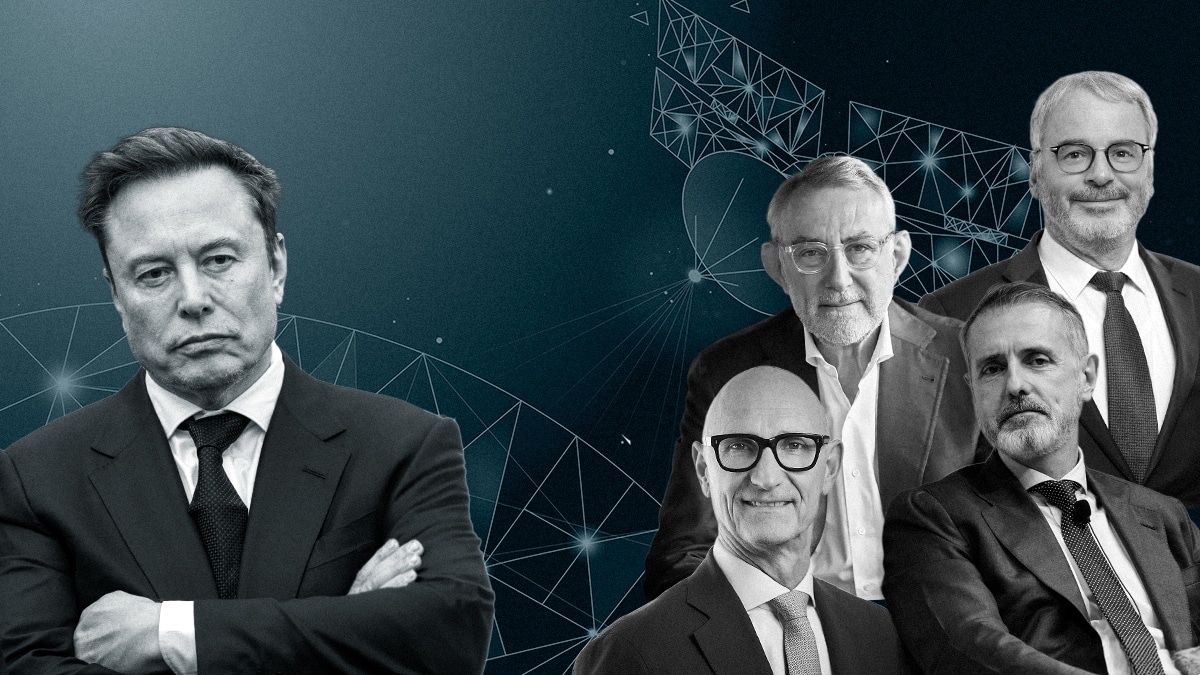
Un órdago de Elon Musk que evaporó más de 16.000 millones de euros en bolsa ha provocado que las grande telecos europeas aceleren y se conjuren para hacer frente a Starlink. Así, Vodafone, Orange, Telefónica y Deutsche Telekom anunciaron este lunes el estudio de una nueva alianza para explorar una alternativa a la compañía de comunicación Starlink en la conexión de móviles vía satélite.
Con más de 500.000 usuarios en España, Starlink ha crecido con fuerza impulsado especialmente en las zonas rurales con baja conectividad, según los datos de la Comisión Nacional de los Mercados y la Competencia (CNMC). Y para seguir creciendo, la compañía del todopoderoso Elon Musk acordó la compra a la firma de capital privado Grain Management de una cartera estadounidense de espectro de baja frecuencia, lo que pondría tierra de por medio entre el negocio de red satelital de Starlink con el resto de las telecos tradicionales de Estados Unidos y Europa.
Este nuevo espectro que le costará a Musk unos 8.000 millones de dólares según adelanto The Wall Street Journal permitiría a la señal atravesar obstáculos. Con esto, las frecuencias permitirían a los servicios de Starlink mejorar su cobertura y mejorar la recepción en interiores para así seguir ganando terreno al negocio de la telefonía móvil tradicional de antenas.
Tras el anuncio, accionistas de las grande telecos europeas decidieron reducir sus inversiones en estas empresas. En el caso de Telefónica, el antiguo monopolio español perdió más de 1.160 millones de euros en la primera jornada tras la publicación de la información, el pasado 9 de octubre, según los datos bursátiles analizados por El Independiente.
Por parte de Orange, la compañía francesa perdió cerca de 1.400 millones de euros. En Reino Unido, se evaporaron más de 2.560 millones de euros en Vodafone. Pero el gran golpe bursátil se sintió en Deutsche Telekom (DT), que alcanzó una pérdida de 10.900 millones de euros en una jornada. Así, las cuatro grandes telecos europeas fueron golpeadas con más de 16.000 millones de euros en un solo día.
Pero las conversaciones entre las cuatro telecos -que habían empezado antes de la adquisición de Starlink- terminaron dando sus frutos solos 10 días después del día negro en bolsa. La nueva alianza europea, concebida para competir con el magnate estadounidense, el hombre más rico del mundo, se ha materializado en una carta de intenciones que abre la puerta a una candidatura conjunta por las futuras frecuencias destinadas a los Servicios Móviles por Satélite (MSS, por sus siglas en inglés) en Europa.
La iniciativa, que se encuentra todavía en una fase preliminar, contempla ofrecer a todos los operadores móviles un acceso abierto a esta infraestructura, para que puedan prestar servicios satelitales a los clientes con el objetivo de impulsar la competencia europea con el gran rival Starlink.
One of my favorite cartoons growing up was "The Jetsons." The Jetsons were a futuristic family living among the clouds with a fully automated life, from a robot maid named Rosie to technology that could make your dinner or do your laundry in just a few seconds at the push of a button. Everyone’s favorite aspect of this futuristic cartoon lifestyle boiled down to one element, which has become somewhat of a benchmark for technological progress: flying cars. And with Tesla’s recent exhibition, we are one step closer to that Jetsons-esque reality.
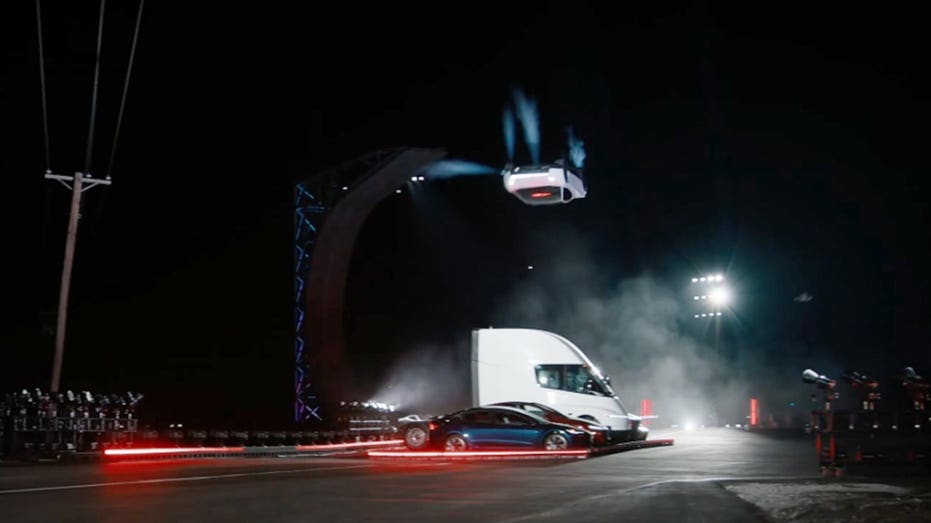
If you haven’t seen the video, Tesla did a demonstration of their forthcoming Roadster vehicle, slated for 2028 production. The car swooped up a half-loop ramp reminiscent of Matchbox car stunts. At the top of the ramp, the car, which was upside down at the top, flipped over in midair. Then, thrusters seemed to suspend the car in midair, before helping guide it gently back down to land on the ground.
For just a few moments, that car flew, and it was truly awe-inspiring.
The reactions to this engineering feat and demonstration spectacle are somewhat of a Rorschach test. Those who love building, progress, technology or who are just generally optimistic have seen this demonstration as a formidable, impressive achievement. Those who like to see things torn down or are generally naysayers or obstacle formers react with "it’s not that big of a deal" or give other criticisms.
Fortunately, America still has enough people committed to the entrepreneurial spirit to attract the likes of Elon Musk and provide a good home base for his talented team members and others who want to see Musk, America and human beings in general succeed.
It isn’t hyperbole to say that Elon Musk is one of, if not the greatest, entrepreneurs of modern times. Regardless of any personal feelings or thoughts about Musk, if you can separate the art from the artist, or in his case, the entrepreneur from his business accomplishments, objectively, Musk has done the unthinkable time and time again. And we, as a country, are better off for him doing it from America as his home base.
As my husband and I talked about Musk’s varying accomplishments, from his early work in online payments to his achievements in electric vehicle manufacturing and AI, to his SpaceX being able to catch rocket boosters returning to the Earth from outer space upon landing, and now this latest hovering automobile. We discussed that Musk reportedly held discussions with Taiwan Semiconductor Manufacturing Company regarding a potential collaboration for his "Terafab" semiconductor facility in Texas. I mentioned that chip buildout had faced major challenges elsewhere, and my husband pointed out that it is different under Musk, saying, "In fact, we need 16,000 more Elon Musks."
No, Elon Musk does not succeed on his own. There are many team members alongside him in undertaking outrageous projects and often making them succeed. But there’s something about Musk’s vision, leadership, hiring and willingness to inspire confidence in others, both on his team and in the general public, that makes his teams continue to be successful. And we need more of that.
We need to not only attract and inspire those who may even be just a little bit like Musk, to dream bigger and bolder, to take calculated risks and try and try again when things don’t work the first time. And we need to make sure that we incentivize that behavior, instead of trying to penalize it or throw up roadblocks.
In our own government, which is supposed to help vs. hinder entrepreneurs, we have politicians like Senator Elizabeth Warren, who is noted for going after Elon Musk because of his success, instead of trying to figure out a way to foster more Musk-like successes. After a vastly-ridiculed post made earlier this week from Warren lamenting, of all things, a possible merger between companies that make various spices and condiments, Mike Solana, CMO of Founders Fund and EIC of Pirate Wires, posted on X (also owned by Musk), highlighting the stark differences between the politician Warren and the creator Musk.
His post said, "liz warren: we’re gonna stop the mayonnaise company from buying a hot sauce company." He then said, "elon musk:," and included the video from Musk of the Roadster’s hovering feat, perfectly illustrating how some in our country are erecting barriers and others are breaking barriers.
America was founded on an idea of individual rights and incentives that rewarded successful pursuits, with such rewards growing at scale. We are very fortunate that we have Elon Musk and others who are pushing boundaries, bringing us into new frontiers, allowing Americans who work for him, who invest with him and who use his products or services to benefit alongside of him.
President Donald Trump praised Elon Musk's pledge to give SpaceX shares to children through Trump Accounts.
Kent NISHIMURA / AFP via Getty Images
Trump praised Elon Musk's plan to give one SpaceX share to every child in America next year.
The pledge could be worth about $10.6 billion at SpaceX's current price.
Musk and Trump have a rocky relationship, but appear to be back on the same page in recent months.
Elon Musk’s pledge to give every child in America a share in SpaceX has already paid one dividend: effusive praise from President Donald Trump.
"A BIG THANK YOU to our legendary friend, Elon Musk," Trump wrote Monday, calling the proposed gift an act of "incredible generosity."
He said the shares would go to children through Trump Accounts, the investment accounts created under his administration.
A BIG THANK YOU to our legendary friend, @ElonMusk, for his incredible generosity in giving SpaceX Stock to millions of American children through TRUMP ACCOUNTS! This is exactly what was envisioned when we created TRUMP ACCOUNTS — Bringing together the GREAT PRIVATE SECTOR, Elon and so many more, to invest in our children, by far our greatest and most important asset, and give every American Child a piece of the American Dream. Thank you Elon! President DONALD J. TRUMP
It was an enthusiastic response to Musk's commitment earlier in the day. "Next year, I will give one of my SpaceX shares to every kid in America," he wrote on X. "This will be the first of many."
Significantly, Trump shared his praise in a post on X, a platform he has eschewed in recent years since launching his social network, Truth Social.
Trump was barred from Twitter in 2021 after the Capitol riot, and while his account was reinstated after Musk bought and renamed the platform, the president has been an infrequent poster since then.
Musk's $10 billion donation promise
There are roughly 72 million children in the US, and SpaceX stock closed Monday at about $148 a share. At that price, one share apiece would put the gift's value at around $10.6 billion. Its eventual value will depend on SpaceX’s share price at the time the stock is transferred.
Trump has been waiting for this particular contribution. In July, he said he thought Musk would donate SpaceX stock to Trump Accounts, even as he referred to their very public falling-out as a "little dispute."
SpaceX President Gwynne Shotwell and her husband had already pledged shares for more than 2 million children’s accounts.
Musk and Trump have a turbulent relationship. The world's richest man was one of Trump's biggest financial backers in the 2024 election, spending more than $200 million to help elect him. The pair were close enough during the first few months of Trump's return to the White House for Musk to earn the nickname "First Buddy."
He then became the public face of the administration's Department of Government Efficiency before leaving in May 2025.
After leaving DOGE, Musk was highly critical of the president's "Big, Beautiful Bill," calling it a "disgusting abomination."
Musk has recently resumed spending heavily to shape Republican politics ahead of the midterms. Since July, he has given about $276 million, including $158 million to the Senate Leadership Fund; the super PAC later sent matching sums to a Texas group supporting Attorney General Ken Paxton's Senate campaign.
Lately, Musk has been seen publicly with Trump several times; the president awarded him the National Medal of Science earlier this month, and when China's leader Xi Jinping visited the US in September, he sat at the president's table at a state dinner.
Details are still unclear on Musk's SpaceX share giveaway
If confirmed, Musk would join other wealthy backers of the program. Michael and Susan Dell contributed $6.25 billion to the accounts of 25 million children, with the gifts directed first to children in lower-income ZIP codes. Musk’s donation would be larger than the Dells' barring a significant drop in SpaceX's share price.
For now, it remains a promise. Musk has not detailed who would qualify as a child under his plan, how he would get shares into every eligible account, or when the transfers would happen next year.
For Trump, the promise brings one of the country’s wealthiest business leaders behind a program he has promoted. "This is exactly what was envisioned when we created TRUMP ACCOUNTS," he wrote Monday.
Taking on Verizon, AT&T, and T-Mobile is a huge endeavor. And it requires significant investment from a company that already has a long list of expensive bets.
As a bit of a refresher, SpaceX is made up of three key parts: connectivity (Starlink), space (reusable rockets like Starship), and AI (Grok, X, and data centers). Among the three, connectivity is the only one generating an operating profit.
That makes it incredibly valuable not only as a stand-alone business but as a way to offset the expensive investments made by SpaceX's space and AI segments.
Turning Starlink into a mobile carrier complicates that arrangement. To offer service in more densely populated areas, SpaceX will need to launch more satellites into space and establish a ground footprint.
How much SpaceX plans to set aside for that buildout and the impact it'll have on the bottom line are key questions analysts will have.
He's backed it up by accomplishing things others thought were impossible, like self-landing rockets. Just don't expect him to hit his self-imposed deadlines. (Case in point: Tesla Roadster, which has faced numerous delays and is now targeting production in 2028.)
There's less at stake when you're starting from scratch. But with Starlink, it's also about Musk avoiding turning his cash cow into another capital drain.
According to another Musk proclamation, a lot of us will have a vested interest in SpaceX's success.
If that's how the shares are distributed, it's an example of the complexities the Trump Accounts can pose for some parents. Certain jobs, like those in financial services, have restrictions around the types of investments you can hold due to compliance reasons.
Reports that SpaceX temporarily restricted its satellite internet service for Ukraine’s armed forces have generated serious concern in Kyiv and among the country’s allies. SpaceX operates the civilian Starlink system and its lesser-known military-grade counterpart, called Starshield. But many news stories leave an important question unanswered: what does a Starshield “slowdown” mean on the battlefield? […]
Elon Musk enchaîne les annonces coup de poing. Après avoir présenté un prototype de Tesla équipé de propulseurs de fusée, le milliardaire assure qu'il offrira une action SpaceX à tous les enfants américains dès...

 Login