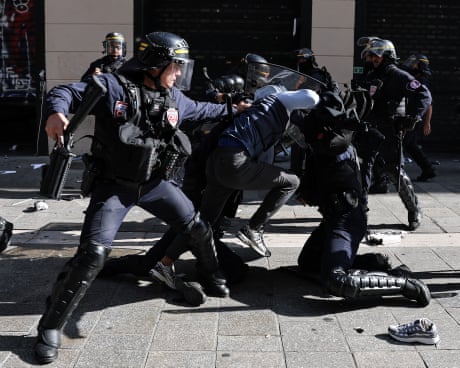
Giorgia Meloni’s administration has announced the deployment of 500 military troops to Milan after a weekend of intense protests and riots resulted in broken windows at luxury shops.
But while mainstream coverage has focused on exclusive brands hiding inventory from angry demonstrators, progressive organizations emphasize that the rage witnessed on the streets of several northern Italian cities is a result of the government’s own policies.
“A Louis Vuitton bag can cost €5,600, while the monthly maximum for the wage guarantee fund in 2026 is €1,340,” wrote the grassroots union Unione Sindacale di Base (USB). In a statement on Tuesday, the union cited devastating national statistics, including data showing that over 14% of working-class families live in absolute poverty.
Broken windows can be repaired, USB noted. “Five years of lost wages, an impoverished family, and a denied future cannot be recovered so easily.”
Students oppose austerity at school and beyond
Significant mobilizations preceded the weekend’s protests. On Friday, October 16, roughly 400,000 students flooded the streets for “No Meloni Day”. They criticized the government’s so-called securitization measures which in practice has meant stifling the right to protest, as well as the unabated turn toward war and armament.
Protesters warned that by prioritizing these points over public services and working conditions, Meloni and her ministers knowingly undermine the future of a whole generation.
Echoing developments in France, where teachers’ unions have supported students’ demands over recent weeks of historic struggle for a stronger public education system, educators in Italy began circulating appeals to do the same.
“The established order is the worst of all possible worlds – or comes very close to it – and our schools are a mirror of this: they are falling apart, alienating, militarized,” the appeal reads. “Places where the need to stretch one’s legs is labeled ‘indiscipline,’ and where the ‘foreigner’ is blamed for the decline in knowledge, rather than two decades of underfunding and neglect.”
Real solutions, not repression, needed to address social crisis
Trade unions, teachers, and students all denounced the repression authorities unleashed in response to the protests – both after mobilizations in cities and during school occupations.
“This government – incapable of offering solutions to the social crisis raging across the country – is once again attempting to manage the streets and social discontent solely through the lens of ‘public order,’ while intensifying repression and shrinking the space available for political activity,” emphasized youth organization Cambiare Rotta.
Students opposed the government’s focus on militarization. Source: Cambiare Rotta/Facebook
Teachers specifically called upon others in the system not to endorse crackdowns on students while invoking democratic values. “Democracy today resists in the French and Spanish squares, in the occupied Italian schools, in the resistance to the genocide of the Palestinian people, in the words and deeds of those who oppose the piecemeal world war,” they wrote.
“It is not to be found in threats, in tear gas, in police officers inside schools, or in students maimed by the weapons of our law enforcement. It is not to be found in the unjust rules that too many persist in defending.”
The increased protest activity has given hope that the spark that inspired massive mobilizations throughout 2025 might resurface. It comes less than two weeks before a new general strike – and an international dockworkers’ strike in which Italian port workers are set to play a notable role – on October 30.
PARIS, France: Paris is burning. Yet again. But this time, according to officials and analysts, it’s different. And unrest here could have a lasting impact on France… perhaps the world.
I have been covering protests in France for decades. I lived in Paris for nine years. I know that the French are very skilled at taking politics to the street. The recent upheaval has many worried.
From all the people I hear from on the ground here, the rioting has been more violent, more destructive, more profound. Domestic strife seemingly out of control.
When I approached the bar at a brasserie near Place de la Republique, the server asked if I was an American and a journalist. After replying yes to both he concluded, "So you’ve come to cover the civil war."
The numbers tell the tale. Some 2,500 arrests during the last weekend of clashes between protesters and police. Around 1,000 officers injured. Many hurt, some seriously, on the activists’ side. And about 3,000 businesses impacted, trashed, looted. Damage estimated over one billion dollars.
What was most striking were the attacks on official buildings. An historic city hall in Limoges. A police headquarters in crime-ridden Marseille. An important tourist office in Lyon. Symbols of a French government under siege.
The mostly peaceful protests supporting recent student concerns, as well as working and middle-class economic worries, hijacked by those bent on anarchy. And opportunistic young crooks looking for cheap thrills.
Yes, there are immigrants and foreigners amid the rabble. Plus, those said to have ties with so-called "ultra-left" groupings. But this remains a very French uprising. Which in a way makes it even more unsettling.
Nearly ten years of rule by President Emmanuel Macron has left this country more divided, with promises unfilled, anger near the surface. And violence a real danger.
What was also deeply troubling about the latest bout of violence — and authorities have admitted it — is that there were periods of time when parts of Paris and other cities were out of control. Shop owners were forced to fend for themselves.
All of this plum pickings for politicians on the left and right. Either sympathizing with protesters’ demands. Or calling for more law and order. Both sides slamming those in power. With presidential elections upcoming in six months, timing is everything.
With the French treasury bare, it seems the more pressing and more promising route for the current authorities is greater security.
That’s why top government officials have been speaking out about their planning for the next big protest set for this weekend. French Prime Minister Lecornu says it will be countered by a "massive police operation" backed by the military. Activists will have to choose, Lecornu went on to say, between "violence" and the French "republic."
"Do or die" talk that still does not address the underlying problems, not just facing France but other countries as well. That’s why, in addition to the curiosity factor of everyone being intrigued by France, it could also provide some real-time lessons on how or how not to deal with a brave new world of inequality and dwindling resources.
French soldiers will reinforce police on the streets of Paris as the government continues its crackdown on would-be rioters, amid reports of more protests on the way and new polls showing the far-right edging ahead.
French soldiers will reinforce police on the streets of Paris as the government continues its crackdown on would-be rioters, amid reports of more protests on the way and new polls showing the far-right edging ahead.
Advance warnings of missile attacks were seemingly suspended last week by the White House, but Ukraine’s president says: ‘Now it works’
The US has resumed sharing intelligence with Kyiv about Russian missile strikes, Volodymyr Zelenskyy said on Tuesday after a meeting with the US envoy Steve Witkoff in Norway.
He said Ukraine was again receiving advance warnings of ballistic missile attacks, which were seemingly suspended last week by the White House. “Now it works. It’s great,” he said, adding that the US move would save lives.
Through the Connecting Europe Facility (CEF) Energy, the European Union is supporting the modernisation of the Čierny Váh pumped-storage hydropower plant in Slovakia by enabling its conversion to variable-speed operation. The EU is funding both the preparatory studies and the first phase of works under the SE Integrator project, led by Slovenské elektrárne, a.s. The […]
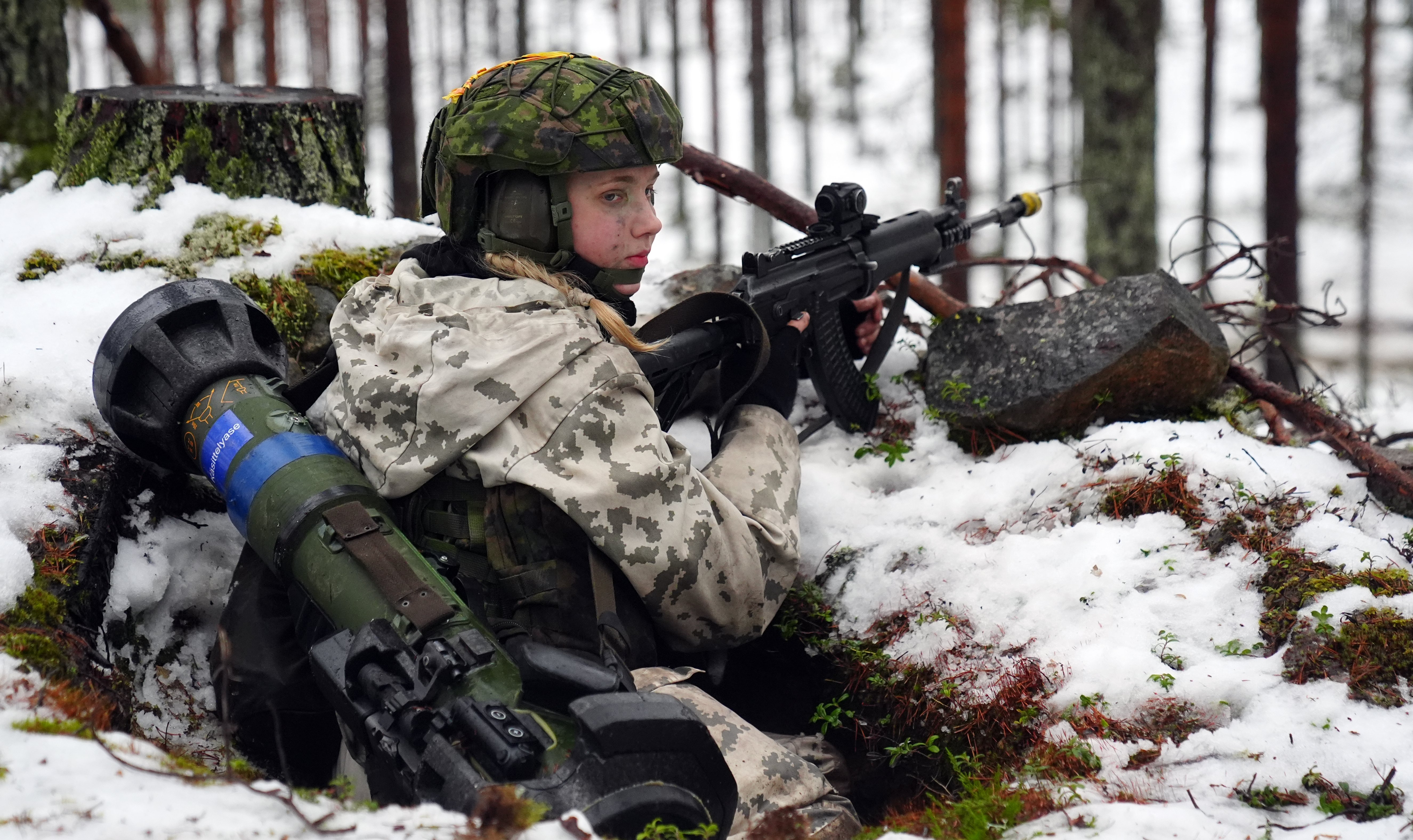
NATO member Finland is preparing to reintroduce anti-personnel landmines into its military arsenal, with a contract for around one million examples due to be signed soon, following the country’s withdrawal from the Ottawa Convention that aims to eliminate these weapons. The move comes as Helsinki looks to strengthen its territorial defenses against a longstanding Russian threat and the prospect of a larger Russian military presence along its eastern border in the years ahead.
Finland’s withdrawal from the treaty, which prohibits the use, stockpiling, production, and transfer of anti-personnel mines, took effect on January 10 of this year. Reflecting growing concern among NATO’s eastern-flank members about Russia’s military posture and the lessons of the war in Ukraine, Poland, Lithuania, Latvia, and Estonia have also moved to leave the convention.
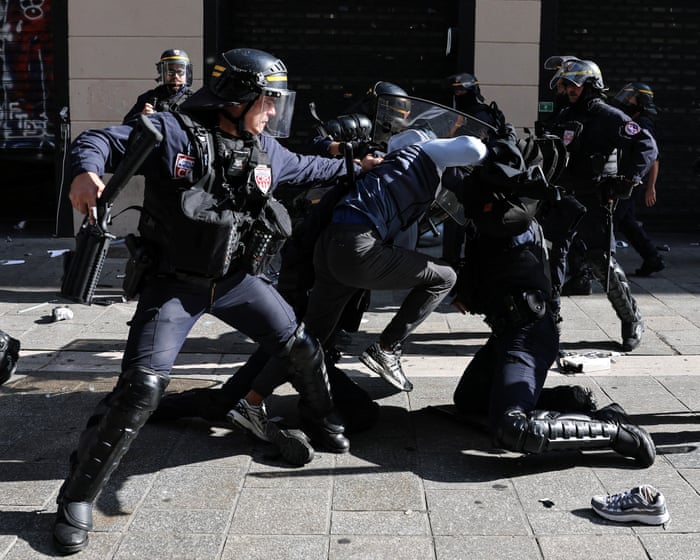
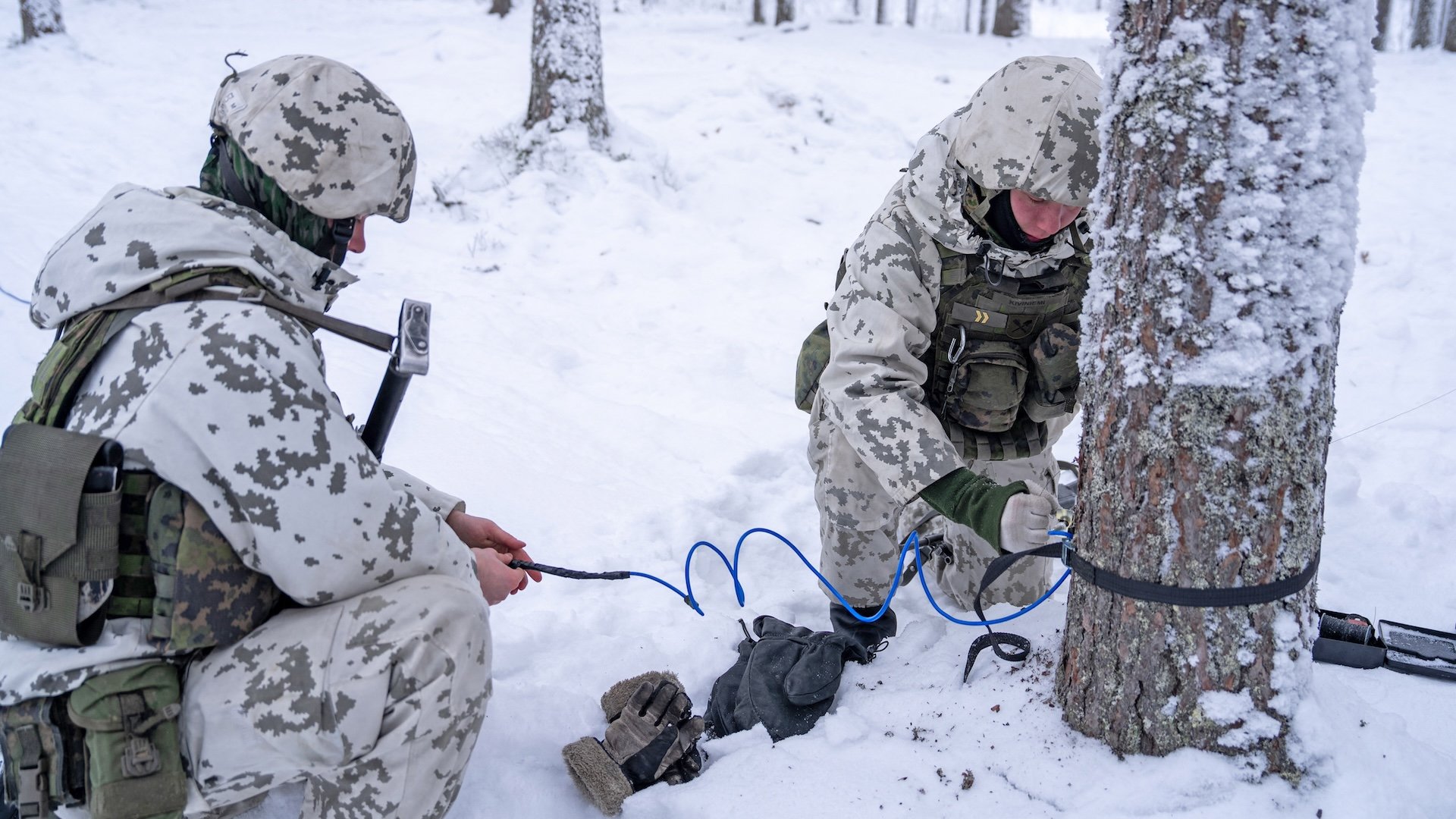
Two Finnish conscripts wearing winter camouflage uniforms walk through the snow-covered forest while installing anti-personnel mines during a media day event at the Kainuu Brigade, a Finnish Army unit in Kajaani, Finland, on February 3, 2026. Photo by Alessandro RAMPAZZO / AFP
Mines have, for many centuries, been used to complicate an attacker’s movement, slow operations, and force troops to devote time and resources to clearing obstacles. Anti-personnel mines, in particular, have long been employed in defensive campaigns, but they come with significant humanitarian risks. They can kill or maim civilians long after hostilities end, which has seen them fall foul of international humanitarian law in many countries — at least when those nations don’t see a realistic risk of invasion.
It is a measure of how badly the European security environment has deteriorated that anti-personnel mines are back on the agenda.
The Finnish Defense Forces previously said that discussions with the domestic defense industry and preparations to train military personnel would begin early this year. It has now announced that the project seeks two different types of anti-personnel mines, of Finnish manufacture.
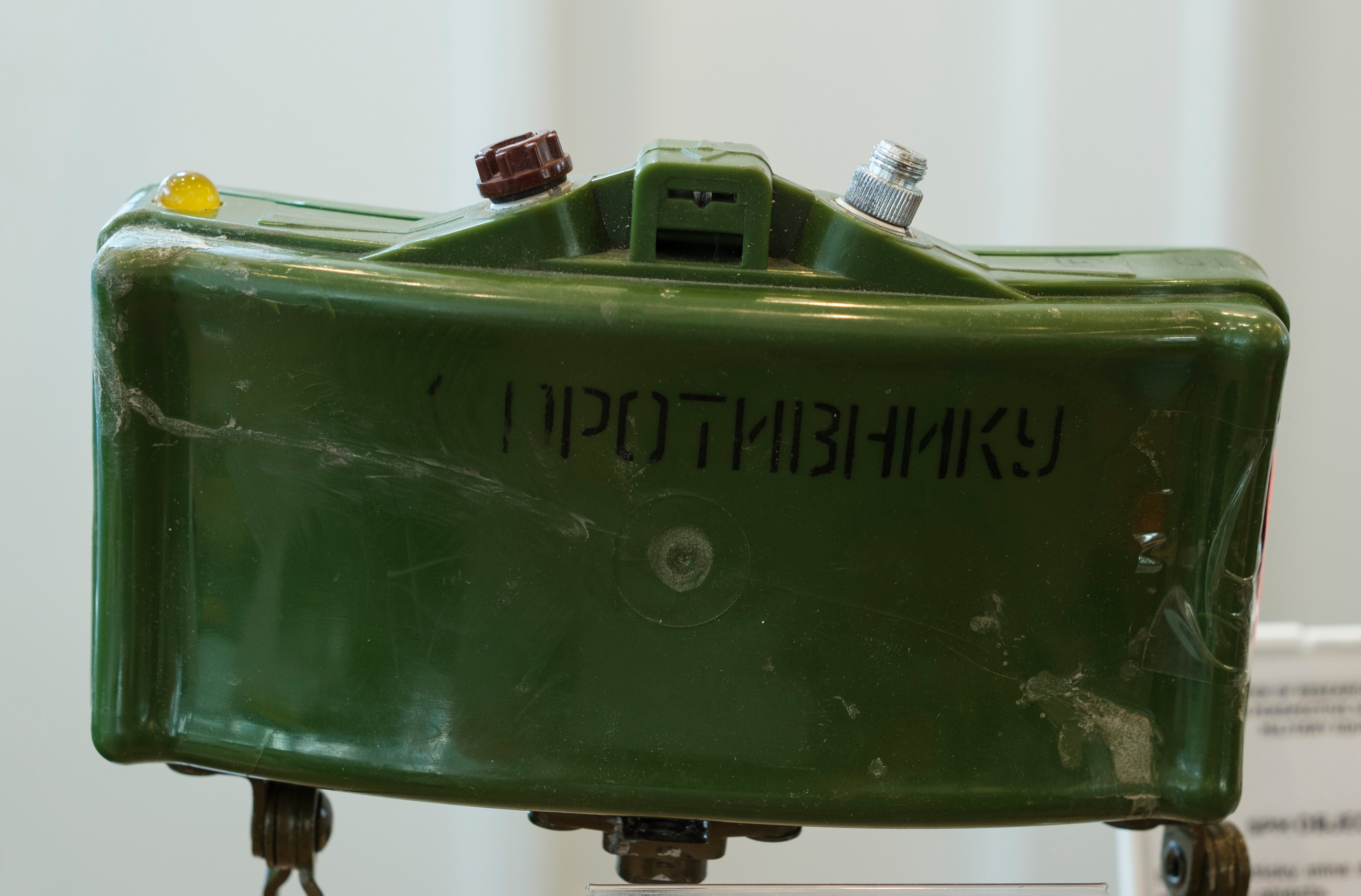
The two weapons will comprise a modern tube mine activated by a tripwire trigger, and a pressure-activated step mine. In the future, more technically advanced mines may also be procured, including cluster-type mines of the kind deployed by Russia in Ukraine. In general, anti-personnel mines have been very widely used by both sides in that conflict, with Kyiv notably receiving them as part of U.S. air packages, as you can read about here. Neither the United States nor Russia are signatories of the Ottawa Convention.
A Russian MON-50 anti-personnel mine captured by the Armed Forces of Ukraine. Photo by Thierry Monasse/Getty Images
“The aim is for production of the new anti-personnel mines to begin in Finland in 2028,” said Col. Riku Mikkonen, inspector of engineers for the Finnish Army Command.
“We have a materials procurement project underway, which is currently in the preparatory and market review phase. At the same time, we are drawing up the technical specifications for the mines,” Mikkonen added. “We will soon move on to the stage where we issue requests for tenders, so that we can eventually proceed to a competitive tendering process and conclude contracts.”
Colonel Riku Mikkonen looks on during a media day event at the Kainuu Brigade in Kajaani, Finland on February 3, 2026. Photo by Alessandro RAMPAZZO / AFP
At this point, no contracts have been signed. However, once the procurement effort is underway, the Finnish Defense Forces are set to return their anti-personnel mine stockpile to what it was before acceding to the Ottawa Convention in 2012.
The first new mines and associated training equipment are expected to become available during 2027. Ultimately, all conscripts will be trained to employ anti-personnel mines. The total cost of the project is around $110 million, with the last of the mines scheduled to be delivered in the 2030s.
Helsinki has stressed that it does not intend to lay anti-personnel mines during peacetime. Mikkonen said the weapons would be used only under emergency conditions.
A Finnish soldier at Vuosanka near Kajaani during a major exercise on NATO’s border with Russia on December 3, 2025. Photo by Owen Humphreys/PA Images via Getty Images
Finland’s decision reflects a national defense philosophy that has long been shaped by direct experience with Soviet aggression. The Soviet Union invaded Finland in 1939, beginning the Winter War, and fought another conflict with the country from 1941 to 1944. Finland lost territory but preserved its independence, subsequently maintaining conscription, a large trained reserve, and a defense strategy built around making any invasion costly.
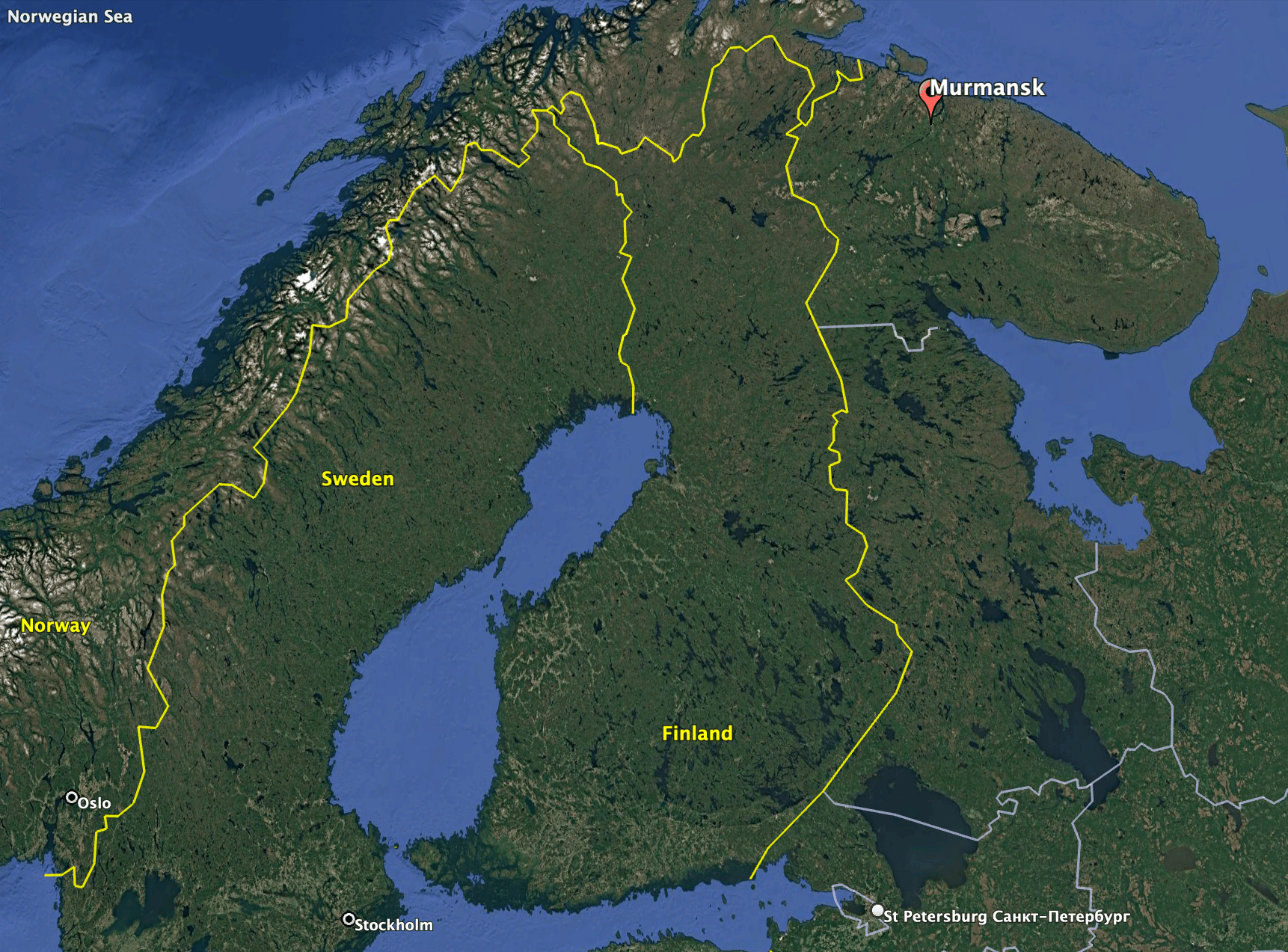
Russia’s full-scale invasion of Ukraine in 2022 reinforced Finnish concerns that major conventional warfare in Europe remained a realistic possibility. Finland joined NATO in April 2023, and the country shares a little over 800 miles of border with Russia.
Finland’s defensive approach traditionally emphasizes rapid mobilization to defend national territory and delay a much larger attacking force until reinforcements can arrive. The role of anti-personnel mines in that scenario is clear, being sown to slow down infantry movements and hamper advances through vulnerable areas. Their disproportionate effect, at least in theory, is especially relevant for a country with a relatively tiny population compared to the length of its border.
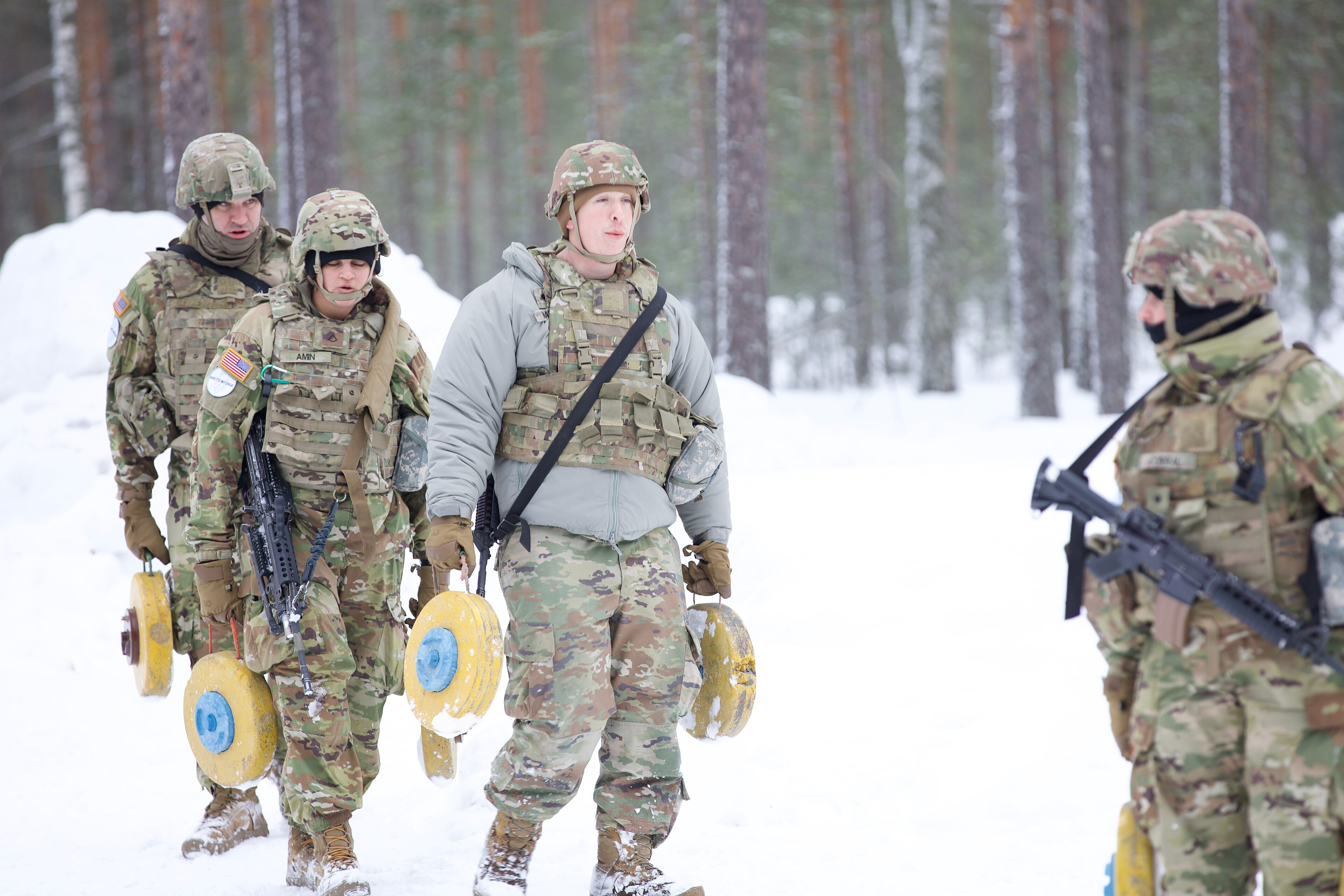
At the same time, anti-personnel mines would form only one part of a much broader defensive system incorporating artillery, airstrikes, engineering obstacles, fortifications, and reserve forces. It should be noted that Finland also has a considerable armory of anti-tank and anti-vehicle mines, most of which are of local manufacture.
Virginia Army National Guard soldiers train on multiple techniques for both the hasty and deliberate emplacement of anti-tank mines with trainers from the Finnish Army’s Karelia Brigade during Exercise Arctic Forge 25, on February 22, 2025, near Kouvola, Finland. U.S. Army National Guard photos by Staff Sgt. Marc Heaton
In general, Moscow has been restructuring its military command arrangements and starting to establish the foundations for a larger conventional presence across northern Europe.
In 2024, Russia reestablished the Leningrad Military District, an apparent response to Finland’s and Sweden’s subsequent entry into NATO.
The Leningrad Military District is responsible for a strategically important region that covers the approaches to St. Petersburg, areas bordering Finland, and territory extending toward the Arctic. Its reestablishment gives Russia a dedicated command structure for managing forces facing NATO across this northern sector.
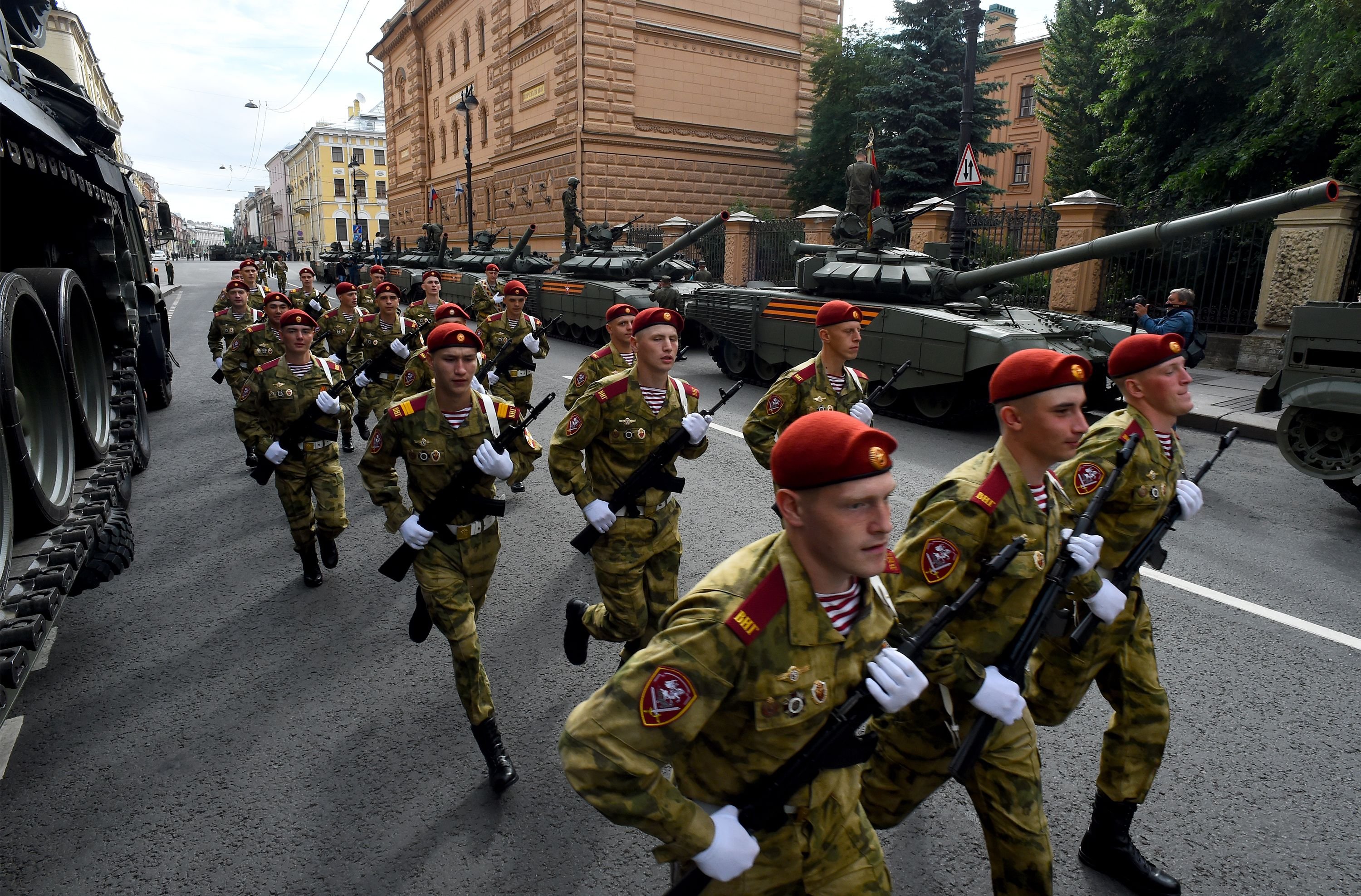
Russian servicemen take part in a rehearsal for the Victory Day parade in downtown St. Petersburg on June 20, 2020. Photo by OLGA MALTSEVA/AFP via Getty Images
While significant, the creation of a military district does not necessarily generate additional combat power.
Russia’s war in Ukraine continues to drain resources in terms of personnel, equipment, logistics, and more.
Nevertheless, Moscow’s longer-term plans point toward a substantial expansion of its ground forces and military infrastructure in areas facing Finland and the wider NATO alliance.
A central element of Russia’s reorganization is the formation of the 44th Army Corps in the Republic of Karelia, near Finland’s eastern border. The corps was established in 2024 as part of the wider effort to strengthen Russia’s military presence in the northwest.
Russia’s wider military development also encompasses the Kola Peninsula and approaches to the Arctic, where facilities support the Northern Fleet and its strategic nuclear submarine force.
Satellite imagery last year showed construction at the Lupche-Savino garrison near Kandalaksha, including facilities intended to accommodate an artillery brigade and at least part of an engineering brigade. The location is approximately 70 miles east of Finland’s border.
Earlier this year, a separate report by the Finnish Yle media outlet found that the Russian military was expanding a base in the town of Novaya Vilga to hold as many as 6,000 Russian troops. It is located about 100 miles from the Finnish border.
Breaking News: Where exactly is Russia building its massive new military garrison?
For Finland, the situation could change dramatically if the war in Ukraine winds down, and the Russian military assembles in greater strength closer to its borders.
Finland’s Military Intelligence Review 2026 assesses that Russia’s military reforms have not yet significantly increased its capabilities in its immediate vicinity. But it still anticipates a substantial increase in Russian military capabilities as circumstances permit and identifies Finland as a major direction for future force development after the war.
A ceasefire or settlement in Ukraine would not automatically enable Russia to launch a major offensive against Finland. A ceasefire could ease the immediate military pressure on Russia while still creating a serious economic and political challenge for the Kremlin. Russia’s wartime spending has sustained defense-sector production and employment, but winding that spending down risks exposing structural weaknesses.
With a ceasefire or settlement, Moscow would still need to rebuild units, replace equipment, replenish personnel, and establish the logistical capacity to sustain large-scale operations. However, there are indications that this is already happening, at least to a degree.
Recent imagery analysis indicates, for example, a significant buildup of newly delivered Russian armor, including new T-90M tanks, at the 22nd Central Tank Reserve Base, located around 450 miles from the Finnish border.
Mind you, the 22nd with T-90Ms, BTR-82As and BMP-3ms (and maybe BREMs) is just the latest storage depot beign refilled. There's also the 80th mainly with 2S19s and the 374th near the Finnish border with 2S43s and 2S44s since 2025…
Finland’s planned acquisition of anti-personnel mines fits into a broader effort to prepare for a potential future conflict. Prominent in the minds of Finnish — and other Nordic — defense planners is the fact that Russia is rebuilding the command structures and infrastructure needed to support a larger military presence near NATO’s northern frontier, even as the war in Ukraine limits its immediate ability to do so.
A Russian satellite, Kosmos 2612, may have passed within approximately 85 feet (26 meters) of a U.S.-registered satellite belonging to commercial imagery provider ICEYE. This would be an extraordinarily close and potentially dangerous pass-by for two objects in space traveling at thousands of miles per hour. For weeks beforehand, ICEYE-X36, which would be of special interest to Russia, had already found itself in increasingly close orbital alignment with its pursuer. The two satellites now look to be drifting further and further apart, but the episode has been a clear sign of what is to come as the potential for conflict in space only continues to grow.
Publicly available space tracking data from the satellitemap.space and orbitalradar.com websites show that Kosmos 2612 (also written sometimes Cosmos 2612 and abbreviated K2612) and ICEYE X36 had their especially close encounter at approximately 16:07 UTC today. Private space services company LeoLabs also told TWZ today that it could not “confirm or contradict what other data sources have stated publicly,” but that it has “high-confidence that the objects came within approximately [emphasis in the original] 500 meters [1,640 feet] of each other.” Kosmos 2612 had been making progressively closer passes by ICEYE X36 in recent days.
Short time-lapse of part of this morning’s first pass of ICEYE-X36 (59103) and COSMOS 2612 (68762) over South America under partly cloudy skies. pic.twitter.com/t8RhwmKcV4
6/x Note that while ICEYE-X36 was Finnish built, it is (like other ICEYE sats who's ownership transferred) no longer Finnish. It is registered in the US but might be Ukranian owned/leased now.
“COSMOS 2612 closed from hundreds of kilometers away to extreme proximity to ICEYE-X36. It then maneuvered around ICEYE-X36, remained nearby for an extended period, and then began moving away,” LeoLabs also stated in a report assessing the situation, which was updated today and provided to TWZ. “The latest observations show the spacecraft strongly diverging and confirm that the close-proximity activity had ended.”
LeoLabs’ broader assessment here is supported by data from other publicly available sources, as seen below.
UPDATE: Cosmos 2612 appears to have maneuvered following a close approach with the ICEYE satellite.
The latest TLEs show 2612 in a larger orbit that will drift away with no further maneuvers.
None of the distances stated earlier may seem especially close, let alone worrisome, by terrestrial standards. However, this is absolutely abnormal for operations in space that are not being directly coordinated by the parties involved. As a point of reference, in 2020, another Russian satellite, Kosmos 2542, came within 150 to 300 kilometers (93 to 186 miles) of USA 245, a KH-11 spy satellite, and became a major international news story.
“We are aware of the situation and tracking it closely,” a spokesperson for ICEYE’s U.S.-based division told TWZ this morning. “Our constellation architecture is designed for continuity and resilience.”
ICEYE was founded in Finland, but now has offices globally. The company specializes in providing imagery via synthetic aperture radar (SAR) from satellites like ICEYE X36, which was launched in 2024.
SAR has the benefit of being able to capture images day or night, and regardless of bad weather or other obscurants like heavy smoke. There are trade-offs in terms of the kinds of details typically visible via SAR compared to what is seen in visual spectrum imagery. Ukrainian authorities have been utilizing ICEYE imagery for years now, including for targeting purposes, as part of the ongoing conflict with Russia. There have been reports in the past that ICEYE X36 has been operating more directly under the control of the Ukrainian government, but this has not been confirmed.
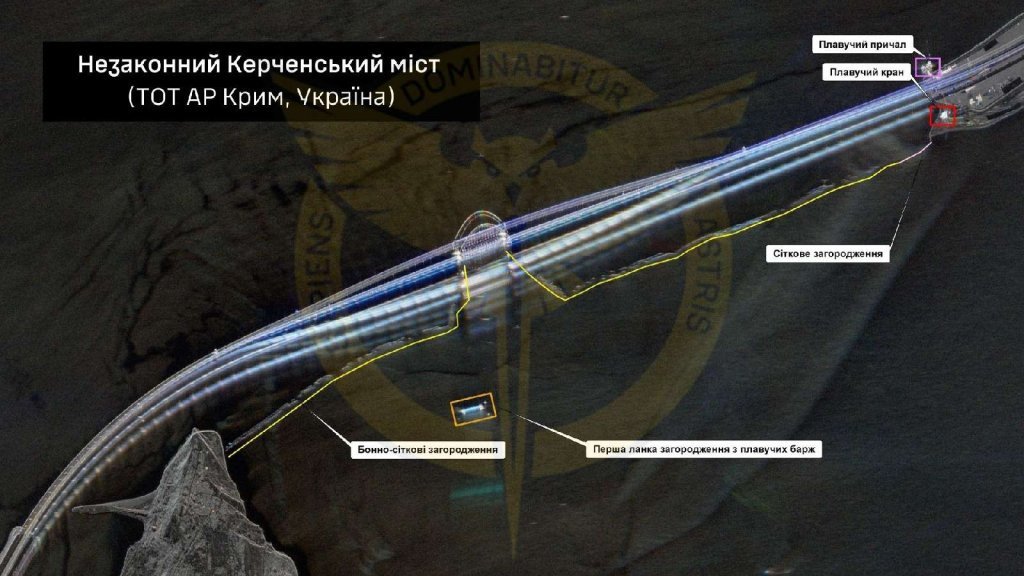
The Main Directorate of Intelligence of the Ministry of Defense of Ukraine (better known by the acronym GUR) previously released this SAR image of the highly strategic Kerch Bridge that links the occupied Crimean Peninsula to undisputed Russian territory, which it said came via ICEYE. GUR
Kosmos 2612 is one of six satellites (Cosmos 2609 through Cosmos 2614) the Russian military launched via a single Soyuz-2.1b rocket on April 17. The exact purpose and configuration of these satellites are unconfirmed. However, they appear to be so-called inspector types capable of rendezvousing and maneuvering close to other objects in space. We will come back to this later on.
What is clear is that Kosmos 2612 has spent the past three weeks deliberately maneuvering to extremely closely shadow ICEYE X36.
“Over two weeks beginning on September 30, 2026, Cosmos 2612 executed a series of new maneuvers that brought it back into coplanar alignment and placed it at nearly the same altitude as the commercial satellite,” Clayton Swope, Deputy Director of the Aerospace Security Project and Senior Fellow at the Center for Strategic and International Studies (CSIS) think tank in Washington, D.C., along with Research Assistant Chantal Li, wrote in an analysis of the situation just last Thursday.
“According to current orbital elements, the Russian #KOSMOS 2612 satellite is now within 1-2 km [0.6 miles to 1.2 miles] of #ICEYE-X36,” Dr. Marco Langbroek, currently a lecturer on Space Situational Awareness at the Faculty of Aerospace Engineering of Delft Technical University in the Netherlands, wrote in a thread on X on Saturday. “Based on current elements, it might come within meters of the latter within a few hours from now. This is an #RPO [rendezvous and proximity operation] without consent.”
2/x Initially I was skeptic whether #ICEYEX36 really was an intentional target: but a series of manoeuvers by #Kosmos2612 starting on Sept 30, were clearly designed to bring the two objects very close and synchronise their orbital periods, orbital altitude and eccentricity: pic.twitter.com/BhIoi8Rtbe
“New TLEs [two-line elements] show that K2612 made a manuever [sic] on Oct 16 and is now stationkeeping within 5 km [3.1 miles] or less of ICEYE X36,” Jonathan McDowell, an astrophysicist and astronomer, who previously worked for the Harvard-Smithsonian Center for Astrophysics and has long been tracking objects of interest in orbit, also wrote in a series of posts on X on Saturday. “To my knowledge this is the first LEO [low Earth orbit] rendezvous of two active satellites where the owner of one of the sats did not give approval.”
McDowell later clarified that “close passes” of objects in orbit had certainly occurred previously, “but not I think rendezvous [sic] (matching velocity vector).”
“This is the most advanced and potentially dangerous uncooperative RPO we’ve observed,” Adam Marsh, LeoLabs vice president for technical solutions, separately told Breaking Defense.
Unprecedented orbital maneuvering
As underscored by the previous interaction of Kosmos 2542 and USA 245, close shadowing of satellites in orbit is certainly nothing new. The U.S. government, as well as Russia and others, have been observed engaging in this kind of activity in the past. At the same time, just how close Kosmos 2612 got to ICEYE X36, and how long they spent in close alignment, are, at the very least, highly unusual.
“It’s important to note that ‘red’ on ‘blue’ engagements, such as this, are relatively uncommon in Low Earth Orbit (LEO),” LeoLabs’ report points out. At the same time, “this was not a routine conjunction or ‘fly by.’ The sequence included a controlled approach, changes in relative position, close-proximity loitering, additional small maneuvers, and a controlled departure. The behavior is consistent with sophisticated rendezvous and proximity operations (RPO).”
On top of this, there are other signs that what just happened between Kosmos 2612 and ICEYE X36 may follow a Russian playbook of sorts that could also be used in a prelude to an on-orbit anti-satellite attack.
Within weeks of their launch in April, Kosmos 2610, 2611, 2612, 2613, and 2614 had all moved orbital planes shared by multiple ICEYE satellites. Three of them subsequently made close passes by ICEYE X36, specifically, but none of them initially kept station with it. ICEYE CEO Rafal Modrzewski did say “the company later moved its satellite, prompting further Russian manoeuvres [sic],” according to a story Reuters published last week.
Russian satellites approaching ICEYE: a closer look at the timeline.
Tracking data via @LeoLabs_Space . Analysis via COMSPOC SSA.
On April 16, Russia launched six maneuverable satellites (Cosmos 2609-2614) from Plesetsk. Five of them — Cosmos 2610, 2611, 2612, 2613, and 2614… pic.twitter.com/ISoToOptnp
To take a step even further back, before Kosmos 2542 was caught shadowing USA 245 in 2020, there were reports that the U.S. spy satellite had shifted its orbit. This was possibly prompted by the movements of another Russian ‘inspector,’ Kosmos 2543. This does not appear to have ever been confirmed.
While in space, Kosmos 2542 had deployed Kosmos 2543 in November 2019. Then, on July 23, 2020, the U.S. military said that it had detected Kosmos 2543 itself launching a smaller object in what it described as a test of a space-based anti-satellite weapon. In a subsequent interview with Time, then-Chief of Space Operations Gen. John “Jay” Raymond, U.S. Space Force’s top uniformed officer, disclosed that American forces had first observed Russian “nesting doll” satellites – a reference to traditional Russian matryoshka dolls – similarly demonstrating the “characteristics of a weapon system” in 2017.
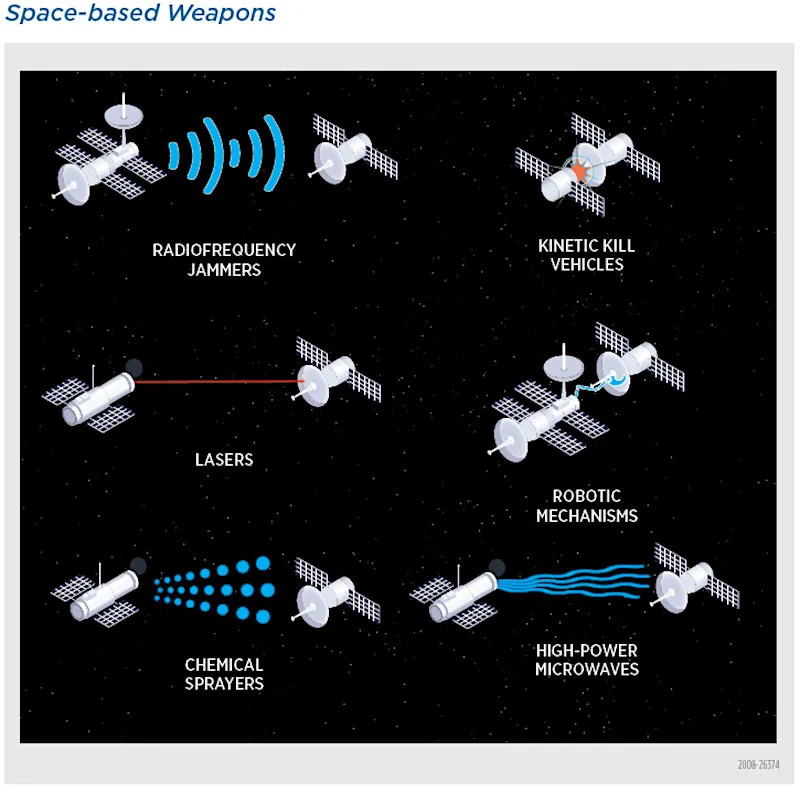
U.S. officials have been warning for years that Russia’s growing array of inspector-type satellites, ostensibly designed to examine other assets the country has in orbit if they break down or otherwise malfunction, are inherently dual-purpose in nature. Beyond launching projectiles, a host of other modes of attack, kinetic and non-kinetic, are enabled by the underlying ability of a spacecraft to maneuver very close to other objects in orbit and hold that position. This includes the use of grappling arms to cause damage or just tow a satellite out of orbit, spraying aerosols to harm or impair optics and solar panels, and electronic warfare jamming. A satellite could turn out to be the weapon itself, becoming a kinetic interceptor that smashes into its target on command.
A U.S. Defense Intelligence Agency graphic highlighting some of the ways on-orbit attacks can be carried out. DIA
One satellite shadowing another closely in orbit allows various kinds of intelligence gathering, as well. Collection of imagery and signal emissions can offer valuable details about a target’s capabilities and vulnerabilities, as well as how it is being used in a particular context.
“As observed by LeoLabs Global Radar Network and analyzed by our team, COSMOS 2612 demonstrated a sequence of capabilities that could be used to inspect, characterize, shadow, or potentially interfere with another spacecraft,” according to LeoLabs’ report. “These actions require planning, maneuverability, precise navigation, and significant fuel. They may also indicate the use of onboard sensors capable of measuring the relative position of another spacecraft.”
What has just transpired between Kosmos 2612 and ICEYE X36 highlights how just a viable threat of attack can be disruptive in its own right. Simply forcing an imagery-gathering satellite out of position could prevent it from collecting over an intended area, or at least doing so in the most effective manner.
Furthermore, satellites only have a limited amount of fuel with which to maneuver in any way after reaching orbit. Harassment in space that forces them to burn off that finite resource at a higher-than-expected rate could reduce their total operational life expectancy, as well as further limit their effectiveness and make them more vulnerable to attacks or accidents. Debris in space is a steadily growing hazard that satellites increasingly need to dodge.
“We can only speculate about the operation’s goal, but it could have been anything from simply intimidation to outright destruction or sabotage of a U.S.-registered satellite,” CSIS’ Clayton Swope told TWZ directly today in light of the new developments regarding Kosmos 2612 and ICEYE X36. “Perhaps the operation is on hold. There are, however, several other satellites that shadowed ICEYE X36 back in May that could be brought in[to] action too.”
Attribution and broader ramifications
It is important to point out that space, as a domain, inherently creates complications when it comes to attributing any form of attack, should one occur. Satellites do suffer mishaps, sometimes with catastrophic results, the causes of which are not always clear.
Update: Debris from active PRC satellite Yaogan 50-02.@S4S_SDA has now cataloged 62 pieces of debris originating from the PRC's active Yaogan 50-02 satellite (68196 / 2026-051A) on around 20 July 2026 (ref my initial analysis on Substack, link in thread).
Some recordings of USA 32 (#19460), whose fragmentation in LEO on 13 Sep 2026 at approximately 2113 UTC was confirmed by U.S. Space Forces–Space (S4S). By the time of the recordings, a large number of fragments had already dispersed over a wide section of the track. pic.twitter.com/gjRxCTPz2o
“While the intention behind COSMOS 2612’s behavior remains uncertain, the deliberate nature of the activity, the fuel required to conduct this activity, and the proximity to a Western commercial imaging satellite make the event strategically important,” LeoLab’s report notes. “This event, and the capabilities demonstrated, do not establish hostile intent. It does, however, demonstrate capabilities that could support intelligence collection, on-orbit inspection, coercive signaling, interference, or preparation for future counterspace operations.”
It is very possible, if not highly probable, that Kosmos 2612’s recent activities will be indicative of a trend going forward. Aggressive and potentially dangerous maneuvering by armed forces in close proximity to each other is not uncommon within the atmosphere, especially in the air and at sea. Extending a variation of those tactics into the space domain would make sense, especially given the central role that capabilities in orbit increasingly play in modern military operations globally. Those roles extend to early warning, general intelligence gathering, weapons guidance, near-real-time communications, and beyond.
American officials have already said in the past that American assets in space are routinely the target of “reversible attacks,” meaning ones that do not cause permanent damage. That also speaks to the difficulty of attribution if there is no lasting effect or impact to draw attention to.
The U.S. government’s long-time monopoly on the space domain has also been steadily eroding in recent years, especially in light of China’s massive expansion of its intelligence-gathering and other satellite constellations. The scale and scope of what commercial satellite imagery and other space services providers, like ICEYE, offer today have led to a further democratization of space-based capabilities to countries like Ukraine that do not possess significant, if any, constellations of their own.
This satellite image indicating multiple Russian Tu-95 Bear bombers having been damaged or destroyed at Belaya Air Base after a Ukrainian strike last year is indicative of what ICEYE provides commercially. Courtesy ICEYE
More details may yet emerge about Kosmos 2612 and its recent rendezvous in orbit with ICEYE X36, but it already points to how space has become an increasingly likely potential zone for direct conflict going forward.
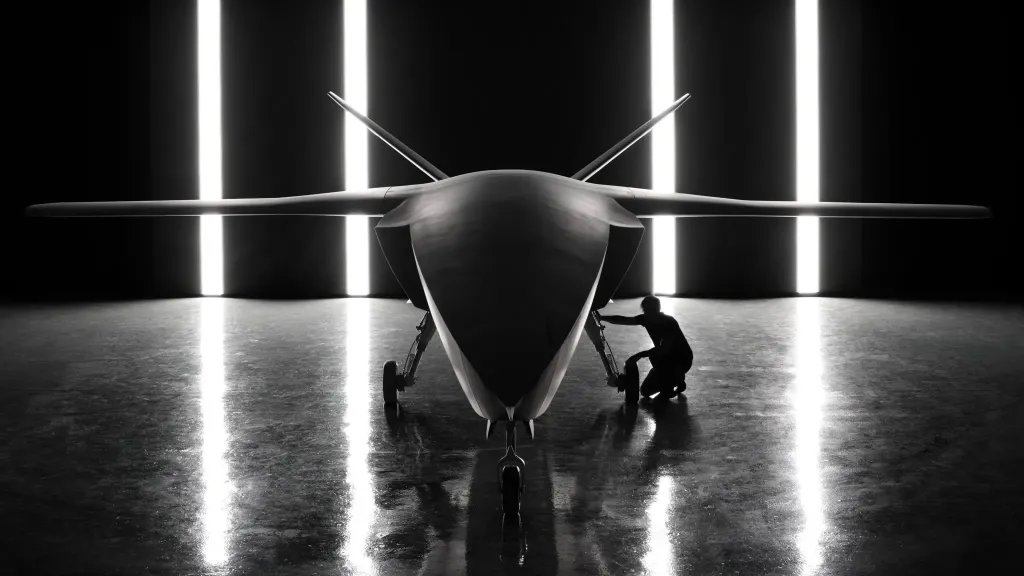
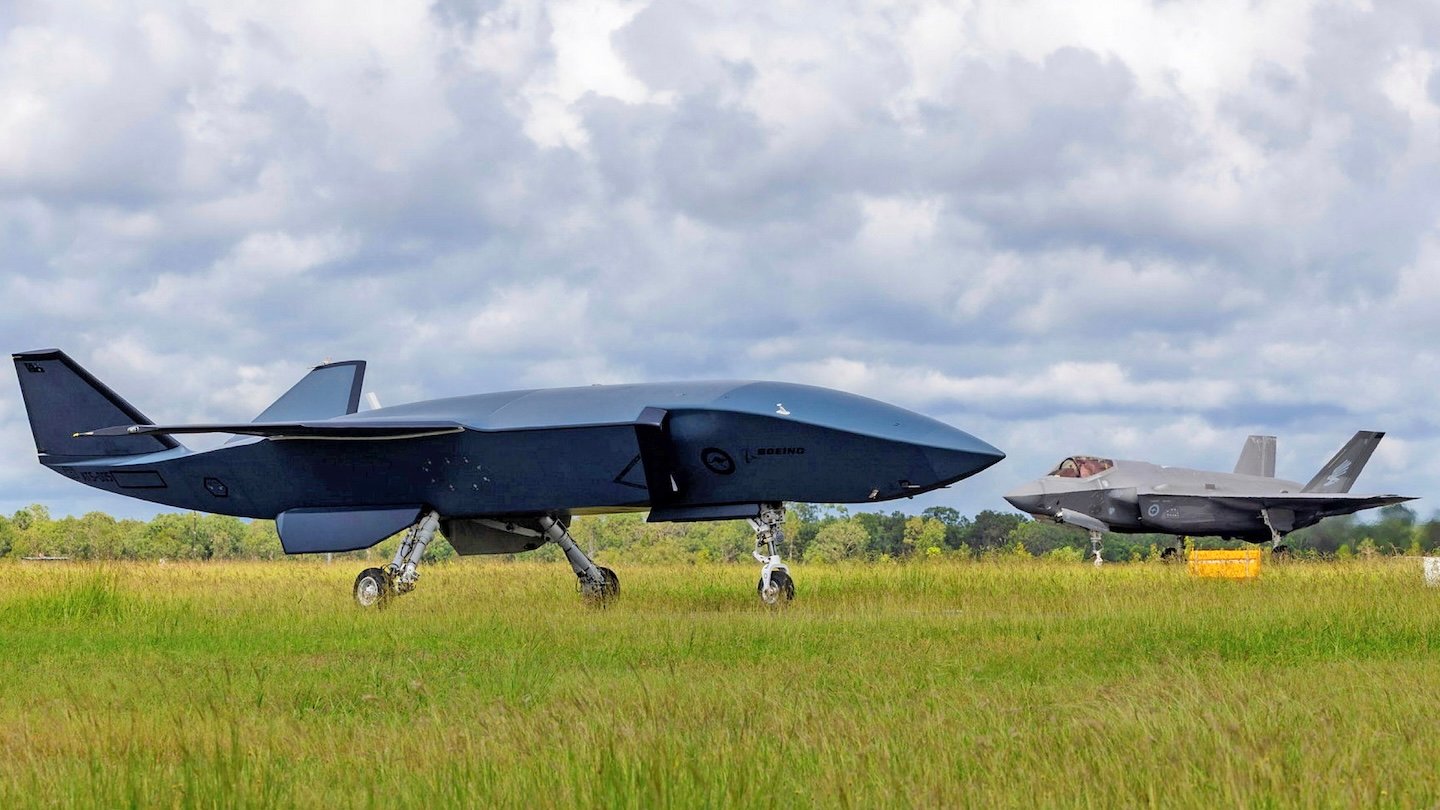
Germany appears to have dropped plans to directly procure the larger, Block 3 version of Boeing’s MQ-28 Ghost Bat collaborative combat aircraft (CCA), leaving doubts over Berlin’s ambitions to field uncrewed combat aircraft alongside its crewed fighters before the end of the decade.
Boeing confirmed to Breaking Defense that Germany’s Ministry of Defense had informed the company it would not proceed with a direct acquisition of the drone, which had previously been lined up. The decision, first reported by Politico, represents a setback for Boeing’s effort to position the Ghost Bat as a candidate for Berlin’s planned CCA capability, something that had seen it announce a partnership with Rheinmetall, the largest arms manufacturer in Germany, earlier this year.
NEW: Germany has formally scrapped plans to buy the Ghost Bat combat drones directly from Australia, documents show.
Its air force wanted them by 2029. Now it faces a longer wait.
Behind the decision is a much bigger political dilemma facing Germany as it races to rearm. pic.twitter.com/2fWHPoQOl0
“With Boeing Defense Australia as a partner, we are laying the groundwork to optimally tailor the MQ-28 to the Bundeswehr’s requirements,” said Armin Papperger, CEO of Rheinmetall AG, in March of this year. “As a system integrator, we ensure that integration, operation, and further development come from a single source while simultaneously strengthening industrial value creation in the form of an industrial hub in Germany and Europe. We see revenue potential for Rheinmetall in the range of three-digit millions of euros.”
The move does not necessarily mean the MQ-28 is out of contention for Germany’s wider program. Instead, Berlin appears set to move toward a different acquisition approach, with competing designs potentially having an opportunity to demonstrate their capabilities before a selection is made.
A Boeing spokesperson told Breaking Defense the company “stands ready to support” its German customer on the next steps, while referring questions about the decision to the German Ministry of Defense.
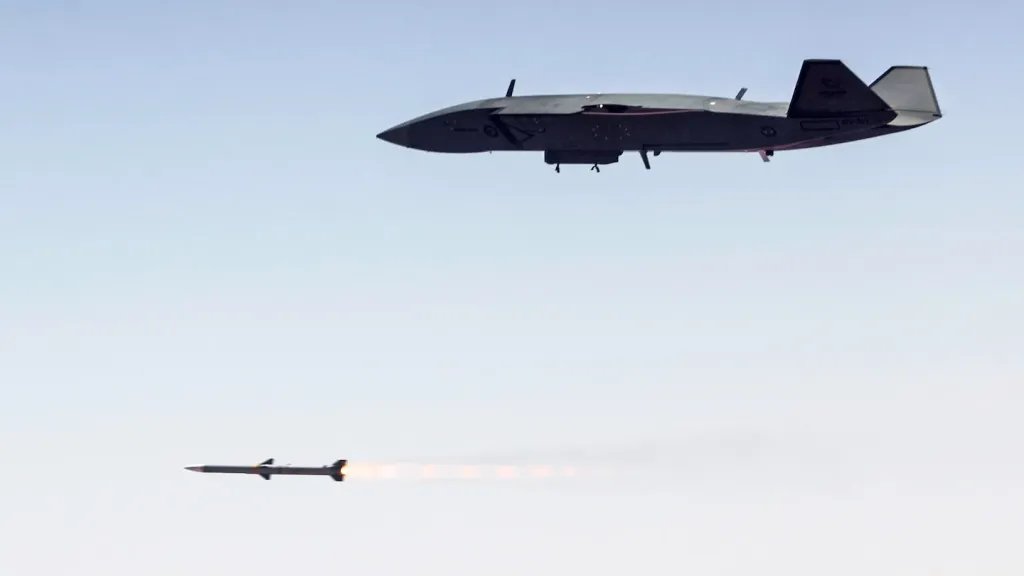
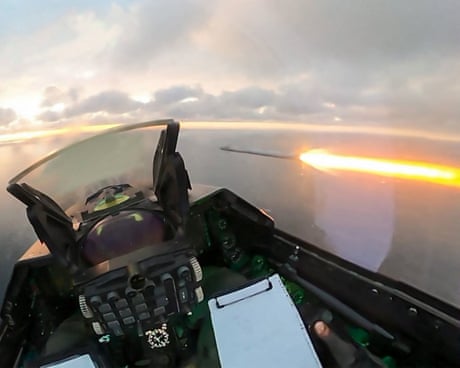
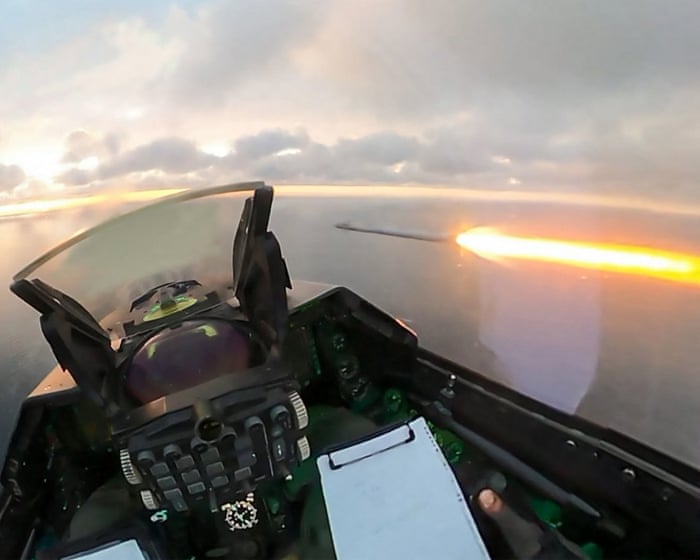
An AIM-120 is launched from an MQ-28A Ghost Bat during Trial Kareela at RAAF Base Woomera, South Australia. Australian Department of Defense
The ministry declined to discuss the specific procurement with the same outlet, citing regulations governing public contracting and the need for such matters to be addressed by parliament.
“[As a] matter of principle — and regardless of the specific case in question — we cannot provide information regarding potential procurement projects,” a ministry spokesperson told Breaking Defense.
Germany has set an ambitious goal of fielding CCAs by 2029. These uncrewed aircraft are intended to operate alongside crewed fighters such as the Eurofighter, extending their reach, adding sensors and weapons, and giving air forces additional options for conducting high-risk missions.
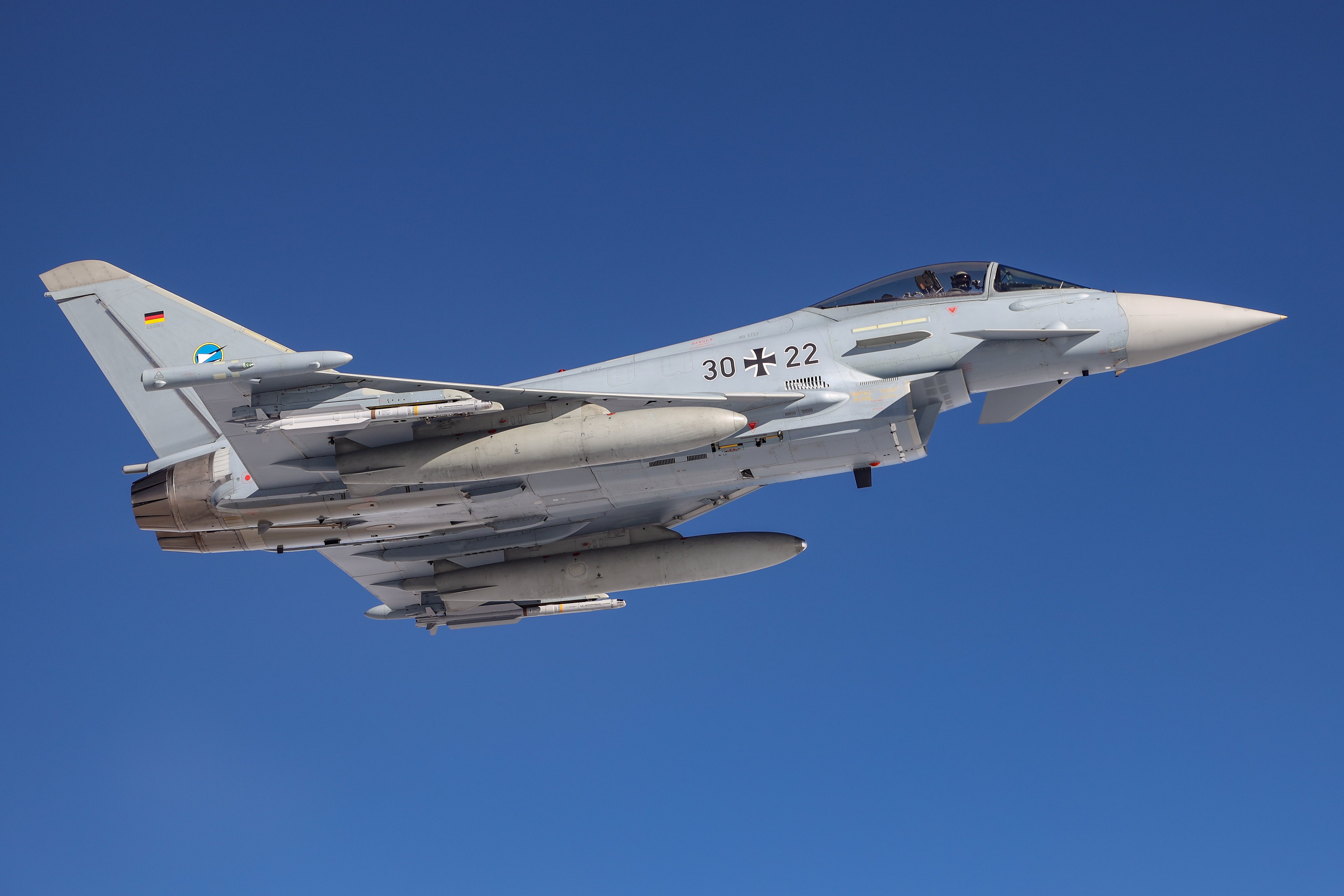
A German Eurofighter flies a Quick Reaction Alert (QRA) practice sortie over the southeast of the country. Bundeswehr/Christian Timmig
However, the reported change in Berlin’s acquisition plans raises questions about whether that deadline remains achievable.
According to Politico, Germany is now looking toward the early 2030s for the capability to arrive, with flight testing expected to begin in 2027. That would suggest the original target was based around the introduction of the MQ-28, which has already undergone extensive testing, rather than a newer design. The reshuffle could now give prospective suppliers additional time to demonstrate their designs.
The reported new timeline suggests that Germany’s CCA effort could be entering a more competitive and potentially longer development phase.
There is also a question about the degree of operational capability that will initially be fielded by the given date. Getting a CCA into meaningful frontline service is a very significant task, calling for integration with crewed fighters, communications systems, mission-planning networks, weapons, and sensors. Then there is also testing, certification, training, and the establishment of supporting infrastructure. For Germany in particular, getting a military drone, let alone an armed one, cleared to operate routinely in commercial airspace has long been an issue.
If Germany acquired the Ghost Bat directly, it would have offered a route to a CCA capability without having to begin an entirely new aircraft development effort.
However, the MQ-28 was always one of a larger field of candidate aircraft.
A week ago, Airbus and Kratos Defense & Security Solutions announced the first flight of their U740 Valkyrie uncrewed combat aircraft, a Europeanized version of the XQ-58A Valkyrie. Airbus is simultaneously working on its larger U760 Ravenstorm, intended for service in the early 2030s, and the company has previously pitched a stealthy CCA-like concept known as Wingman.
The ride of the Valkyrie With the successful first flight of the Airbus U740 Valkyrie in Europe, we are one step closer to introducing an operational uncrewed Collaborative Combat Aircraft (CCA) to the German and other European Armed Forces. The flight achieved all… pic.twitter.com/S2sFrtdmGA
“One option might be a split high-low approach that could pair more capable, longer-range systems for deep-strike missions with cheaper, attritable collaborative combat aircraft that can fly alongside crewed fighters. At this point, it should also be noted that CCAs could also give older fourth-generation fighters a new lease on life, boosting their lethality and survivability by extending their sensor reach, adding weapons capacity, and allowing uncrewed aircraft to take on more dangerous tasks.”
At the same time, Germany continues to define its requirements for a capability described in media reports as a Jagdbomberdrohne, or fighter-bomber drone. Berlin has yet to publicly clarify its intended concept of CCA operations, including whether the Luftwaffe envisions an uncrewed wingman operating alongside crewed fighters, a platform capable of carrying out long-range strike missions independently, or a system designed to perform both roles.
There are signs that the strike mission is being prioritized, at least initially, with a reduced emphasis on air-to-air missions. This is essentially the reverse of the U.S. Air Force’s CCA effort.
Since Germany is set to receive the F-35 stealth fighter, there is also an argument that Berlin could place more orders for the crewed jet. This could have the dual role of filling the gap left by the collapse of the pan-European Future Combat Air System (FCAS), specifically its sixth-generation crewed fighter, and the delayed introduction of the first operational CCAs. Germany is also looking forward to receiving more Eurofighters.
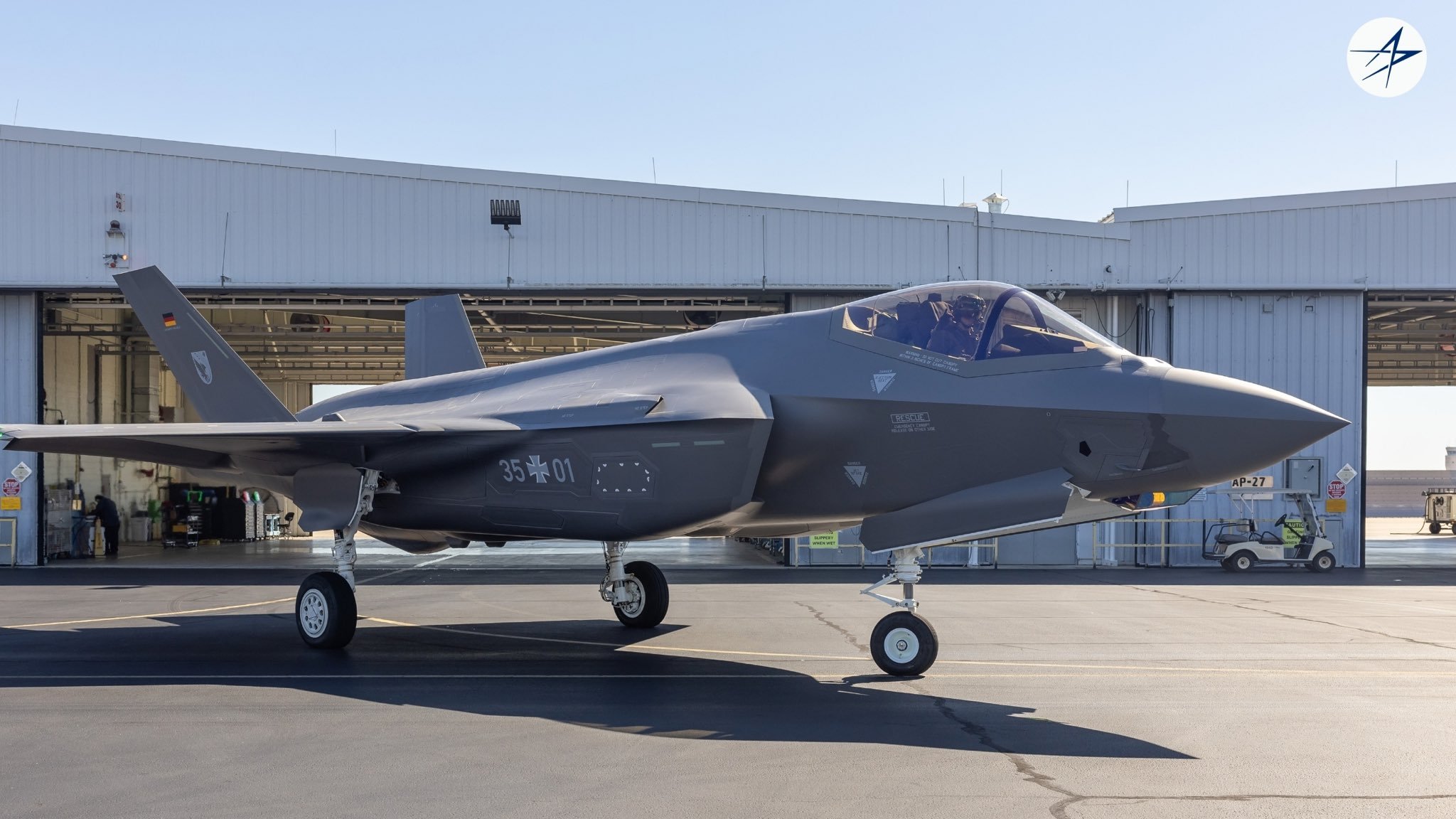
Germany’s first F-35A arrived at Ebbing Air National Guard Base in Arkansas earlier this month, where it will be used for training. Lockheed Martin
Germany’s evolving CCA plans form part of a broader effort by Western air forces to develop uncrewed aircraft capable of working alongside advanced fighters. These systems are intended to expand the number of available platforms, distribute sensors and weapons across a larger force, and potentially take on missions that would otherwise expose pilots and expensive crewed aircraft to greater risk.
Boeing’s Ghost Bat could still have an opportunity to compete, depending on the structure of the eventual acquisition process and the requirements Berlin establishes.
However, with testing reportedly planned from 2027 and operational fielding potentially slipping into the early 2030s, the original 2029 ambition for an operational German CCA appears increasingly uncertain.
Harry explains how reuniting with his estranged brother remains his main goal, but admits that “scars stick around forever” in his first major interview since his return to the UK.
Harry explains how reuniting with his estranged brother remains his main goal, but admits that “scars stick around forever” in his first major interview since his return to the UK.
The Ukrainian President, Volodymyr Zelenskyy, is bitterly complaining that the country cannot intercept Russian ballistic missiles because Kyiv has not been receiving advance launch warnings from its partners for over a week.
On October 19, Zelenskyy wrote on platform X: “Another Russian ballistic missile attack came in several waves overnight, and once again, there was no early warning from our partners.”
Earlier, explaining the criticality of early missile warning, Zelenskyy said on October 13, “A Russian ballistic missile attack on Kyiv. Once again, no early warning from our partners… Our systems detected these missiles only when they were already virtually on approach to Kyiv. … And this is absolutely unjust: when they are destroying our energy infrastructure, and Ukraine is not even receiving early warnings about ballistic missile launches.”
Along with Patriot missile interceptors, Zelenskyy has described ‘missile early warning’ as absolutely vital to intercept Russian ballistic and cruise missiles.
“I spoke with Marco Rubio… First, ballistic missile interceptors, which are needed to protect lives. Second, early warning of Russian ballistic missile attacks, which is vital,” he said on October 20.
Zelenskyy has so far avoided blaming the US for failure to provide advance early warning of missiles; rather, he is blaming Ukrainian “partners” as a whole for this failure.
However, Ukraine’s European partners have absolutely no role in this, as they themselves are entirely dependent on the US for the space-based early missile-warning system.
Along with Starlink and Starshield, a space-based early missile-warning system is another critical area where Europe currently has no comparable system, and if Washington withdraws its support to Kyiv, Europe will be simply incapable of filling the gap.
While Europe has invested in ground-based radars and Airborne Warning and Control System (AWACS) aircraft, long-range radars that can track a missile in its mid- and terminal phases, Europe has no space-based early missile-warning system that can detect a missile launch in its boost phase and provide warnings to ground and airborne radars for tracking and intercepting the missiles.
This is critical for successfully intercepting ballistic and cruise missiles, as it gives ground-based and airborne radars more time to track and intercept them.
Space-Based Missile Early Warning System: How Does It Work?
The US has a series of space-based satellites fitted with sensors that can detect, track, and identify missile launches from anywhere in the world, a Cold-War-era system that has been perfected and upgraded over the decades.
The US currently has six Lockheed Martin and Northrop Grumman satellites in geostationary orbit (GEO) around Earth to provide 24/7 global strategic missile-warning capability.
Launched between 2011 and 2022, these satellites are known as SBIRS (Space-Based Infrared System). The satellites carry high-power infrared sensors that monitor Earth’s surface nonstop to detect heat signatures from missile launches.
Credit: US Space Force.
SBIRS satellites can scan large swaths of territory to detect missile activity and also focus on areas of interest for smaller-scale activities, including tactical ballistic missile launches.
These sensors are independently tasked, meaning the satellite can scan a wide territory while also focusing on a specific area of concern.
For instance, currently, the US SBIRS satellites would naturally scan Iran and Russia more than any other region.
During the missile’s initial boost phase, its exhaust plume releases intense heat. These intense heat signatures stand out in infrared sensors against the cooler Earth background.
Overhead Persistent Infrared (OPIR) sensors on satellites spot this signature within seconds of ignition, even through clouds or darkness, and provide ground-based stations and radars with the first warning of a missile launch.
These powerful sensors can detect any missile launch within seconds, from small, unsophisticated missiles such as the Iraqi Scuds, which were detected, tracked, and intercepted during the First Gulf War, to Russia’s large intercontinental ballistic missiles (ICBMs), and everything in between, such as the short-range ballistic missiles (SRBMs), submarine-launched ballistic missiles (SLBMs), and even cruise and hypersonic missiles.
These sensors can not only detect missile launches, but also identify them. Missile rocket motors produce exhaust gases at different temperatures based on their fuel, chemical composition, and other design features, helping these sensors identify distinct missile signatures.
However, infrared sensors on the six GEO satellites are not the US’s only space-based assets that help it detect missile launches in their boost phases.
The space segment of the SBIRS program also includes Highly Elliptical Orbit (HEO) sensors riding on host satellites and legacy Defense Support Program (DSP) satellites.
HEO sensors improve coverage of high-latitude and polar regions that are harder to monitor effectively from GEO alone.
The DSP program was launched in the 1970s, after the experimental Missile Defense Alarm System (MIDAS) of the 1960s proved the concept of detecting ICBM launches from space.
Under the DSP program, the US launched over 20 satellites with spinning IR sensors into geosynchronous orbit between 1970 and 2007.
DSP provided continuous strategic warning during the Cold War. It was this system that detected Iraqi Scud missiles during the First Gulf War.
The SBIRS program succeeded DSP, with significantly higher sensitivity, dual sensors, multi-spectral capability, better resolution, and improved ground processing.
Together, GEO, HEO, and DSP satellites provide 24/7 monitoring of Earth’s surface and can detect a missile launch from anywhere on Earth.
These satellites downlink data to ground stations (Air Force Space Command in Colorado), which analyze it to characterize the event, launch time and location, missile type, possible trajectory, and likely point of impact, then relay the information to NORAD, US Strategic Command, combatant commands, and missile defense systems.
This early missile warning is crucial to successful missile interception because it gives ground-based and airborne radars more time to track and intercept the missile, and Europe currently lacks a corresponding system.
In this screenshot made on October 12, 2022, French president Emmanuel Macron (R) speaks during an interview by French journalist and TV host Caroline Roux (L) in front of pictures of Ukrainian President Volodymyr Zelensky and Russian President Vladimir Putin as part of a new show entitled “L’événement”, in Saint-Denis, northern Paris, on October 12, 2022. Emmanuel Macron is to give an hour-long interview on France 2, devoted to international crises and France’s place in the world: on the evening of October 12, 2022, he will take part in an unprecedented exercise, dictated by the escalation of the war in Ukraine and its heavy repercussions on Europe and the French. (Photo by Ludovic MARIN / various sources / AFP)
Why Europe Is Dependent On The US For Early Missile Warning
SBIRS collects data and processes it at ground stations, then shares it with European allies through NATO’s Shared Early Warning System (SEWS).
This data is complemented by Europe’s ground-based and airborne radars, as well as by the US AN/FPS-132 Upgraded Early Warning Radar at RAF Fylingdales in the UK.
However, Europe has no comparable space-based early missile-warning system. It has some space situational awareness, but nothing equivalent to a persistent space-based infrared constellation for detecting missile launches.
Therefore, not only Ukraine but Europe itself depends on the US for early warning of ballistic or hypersonic missile threats.
Europe therefore cannot fill the gap if Washington decides not to share these missile-launch warnings with Kyiv.
Europe has pursued this capability for years; however, its programs have not progressed beyond the technology-demonstrator stage.
For instance, in 2009, France launched SPIRALE, a spaceborne early warning demonstrator program. It successfully collected infrared data on missile launches; however, the program ended in 2011 and France is yet to launch a full-scale follow-up program.
European countries also launched another technology demonstrator program, TWISTER, in 2019.
In October last year, France and Germany signed a Letter of Intent (LoI) to launch two complementary, interoperable geostationary (GEO) satellites with infrared sensors, under the JEWEL (Joint Early Warning for a European Lookout) program.
However, Europe currently has no sovereign, operational, space-based missile early-warning system.
Europe recognizes its vulnerability and has demonstrated its technological capability, but building a space-based, IR-sensor-equipped satellite constellation that provides nonstop coverage of every part of Earth’s surface would take at least a decade more.
Meanwhile, both Ukraine and Europe remain critically dependent on the US.
Sumit Ahlawat has over a decade of experience in news media. He has worked with Press Trust of India, Times Now, Zee News, Economic Times, and Microsoft News. He holds a Master’s Degree in International Media and Modern History from The University of Sheffield, UK.
He can be reached at ahlawat.sumit85 (at) gmail.com
Mounting anxiety as Russia’s war on Ukraine reaches Nato’s borders with targeting of vessels transporting agricultural cargo
Nato is deploying additional military assets to the Black Sea amid the recent deadly escalation of Russian attacks on merchant shipping, as five more vessels were attacked on Tuesday.
Russia’s military said it struck three cargo vessels in Ukraine’s port of Reni and two other cargo vessels en route to Odesa.
UK will deploy its Eurofighter Typhoon fighter jets to Saudi Arabia to help defend the embattled country against increasing attacks from the Houthis.
This would not be the first time the RAF would use its Typhoon jets against the Houthis.
For instance, in January 2024, as part of joint US-UK operations to protect shipping lanes in the Red Sea, RAF Typhoons operating from RAF Akrotiri in Cyprus struck Houthi military targets in Yemen with Paveway IV precision-guided bombs.
On the night of 11–12 January, the jets targeted a drone-related facility at Bani in northwestern Yemen and an airfield at Abbs used to launch cruise missiles and drones. Later, follow-up strikes hit targets near the Sanaa airfield.
No Offensive Strikes: UK
Meanwhile, the British Ministry of Defense said the deployment was part of “additional defensive military support” to Riyadh.
“The UK will fly defensive counter-air missions to support the protection of Saudi cities and critical national infrastructure against aerial attack, using RAF Typhoon fighter jets,” the Ministry of Defense said. “These aircraft will operate in a defensive role and will not conduct offensive strikes against the Houthis.”
The UK will also deploy a military transport aircraft “to support the movement of defense material within Saudi Arabia alongside UK military advisers to support Saudi staff officers”, the statement added.
“The continuing attacks from the Houthis on our ally Saudi Arabia are absolutely despicable,” said defense secretary Wes Streeting.
“The targeting of the airport in Riyadh in particular shows the lengths the Houthis are going to (to) escalate the situation in the region,” Streeting added.
A surge in Houthi attacks has led Saudi Arabia to postpone a major investment conference, undermining its efforts to draw greater foreign investment and reduce reliance on oil.
While the UK has asserted that the Typhoons will strictly be in a defensive role, the RAF has previously used its jets to attack Houthis in Yemen on several occasions.
In the defensive role, the RAF Typhoons are expected to intercept incoming Houthi aerial threats—essentially drones and cruise missiles—before they reach Saudi cities, airports, or other critical infrastructure.
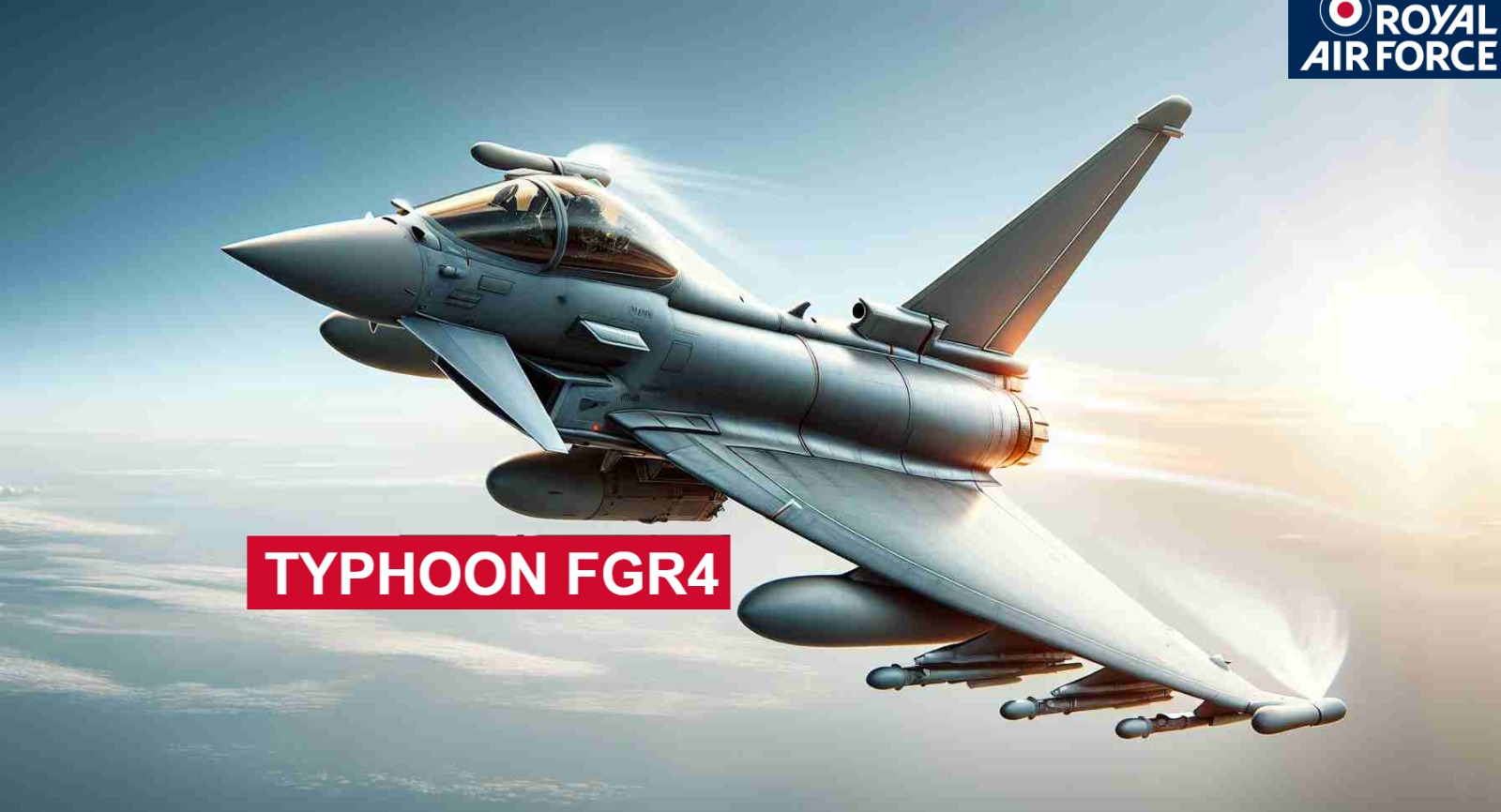
The RAF is likely to employ the Eurofighter Typhoon FGR4, the most advanced version in its fleet and one of the most sophisticated Typhoon variants.
Equipped with the CAPTOR radar and PIRATE infrared search-and-track system, the jet can detect and track low-flying, small-signature targets such as drones and cruise missiles at reasonable ranges. Its Praetorian Defensive Aids Subsystem further improves survivability against enemy air defenses or electronic threats.
For these intercepts, the Typhoons are armed with beyond-visual-range Meteor missiles, with a large, approximately 60 km No Escape Zone.
Then there is the Advanced Short-Range Air-to-Air Missile (ASRAAM), which offers a high-agility option for close-range engagements against drones or missiles that penetrate closer to protected areas. It also has an internal 27-mm Mauser cannon that can serve as a last-resort weapon against very close threats, though missile intercepts are the main method.
The Typhoon FGR4 can also carry air-to-ground weapons such as Enhanced Paveway II and Paveway IV bombs, Storm Shadow cruise missiles, and Brimstone, but these are not relevant to this deployment’s purely defensive role.
In earlier operations, the RAF used Paveway IV laser/GPS-guided bombs against Houthi targets in Yemen; those strikes, however, were offensive while the UK describes the current mission as defensive.
File Image: Eurofighter Typhoon
Eurofighter Typhoon FGR4
The Eurofighter Typhoon FGR4 is a multi-role variant used by the Royal Air Force.
The FGR4 designation applies to the RAF’s single-seat Typhoons upgraded to Block 5 or later capabilities across Tranches 1, 2, and 3. This single-seat fighter is optimized for air-to-air combat, precision air-to-ground missions, reconnaissance, and swing-role operations.
In May 2026, the RAF began using Eurofighter Typhoons equipped with the AGR-20A APKWS (Advanced Precision Kill Weapon System) for air-defense missions in the Middle East.
“Now in operational use by 9 Squadron, the APKWS enhances Typhoon’s versatility and enables the aircraft to respond more flexibly to evolving threats. The system strengthens the RAF’s ability to maintain persistent air defense while managing costs and resources more effectively,” the RAF said in an official statement.
“Rapid collaboration between the RAF, Ministry of Defense, and industry partners QinetiQ and BAE Systems enabled the system to move from testing to operational deployment in under two months. Successful trials, including air-to-air engagements conducted by the 41 Test and Evaluation Squadron, demonstrated the system’s effectiveness in real scenarios,” the Royal Air Force emphasized in the statement.
Compared with a typical precision-guided missile, the APKWS-guided 70mm rocket costs roughly $20,000–$30,000 per engagement, giving pilots a cheaper option while keeping higher-end missiles for more complex threats.
The deployment of RAF Typhoon FGR4s marks a further step in Britain’s defensive support for Saudi Arabia amid a rise in Houthi drone and missile attacks. The move builds on existing UK assistance, including air-to-air refueling and air-defense equipment, and comes as Riyadh seeks to shield its economy and investment plans from further disruption.
A handful of Republicans have spoken out against Donald Trump’s softening stance on Russia, threatening to pull financial support for his agenda over his “embarrassing” handling of the Ukraine war.
Don Bacon, an outgoing congressman in Nebraska, condemned Trump’s actions – which include a stunning agreement to buy Russian diesel and the pausing of sanctions on Moscow – as “absolutely disgraceful” and accused the US president of cozying up to a “war criminal” in Vladimir Putin, his Russian counterpart.
Officers are instruments of state whose job is to repress, rather than manage, public dissent
Familiar images of teargas clouds drifting across Paris squares, police baton charges against masked protesters and terrified teenagers floored – and worse – by stun grenades have once again focused the world’s attention on France’s policing methods.
While most of its western European neighbours generally favour police tactics that prioritise crowd containment and de-escalation, France has long responded to social movements that take to the streets with, at times, shocking physical force.
Le président ukrainien s'est entretenu, mardi, à Oslo, avec les émissaires américains Steve Witkoff et Jared Kushner. Cette rencontre visait à rétablir la diplomatie après l'accord conclu entre Donald Trump et Vladimir Poutine sur le gazole. Plusieurs pays de l'UE et de l'Otan étaient également présents afin de "développer une proposition de paix".
Emmanuel Macron needed one sentence on Sunday night to move the cause of France’s riots some 5,000 kilometres east. Protesters were angry about living costs and fuel, he told the nation, and both flowed from a war in the Persian … Read more

 Login












 NEW: Germany has formally scrapped plans to buy the Ghost Bat combat drones directly from Australia, documents show.