❌

Reading view

Amid Russia's Onslaught, A Twist In The Pursuit Of Men Fleeing Ukraine For Moldova

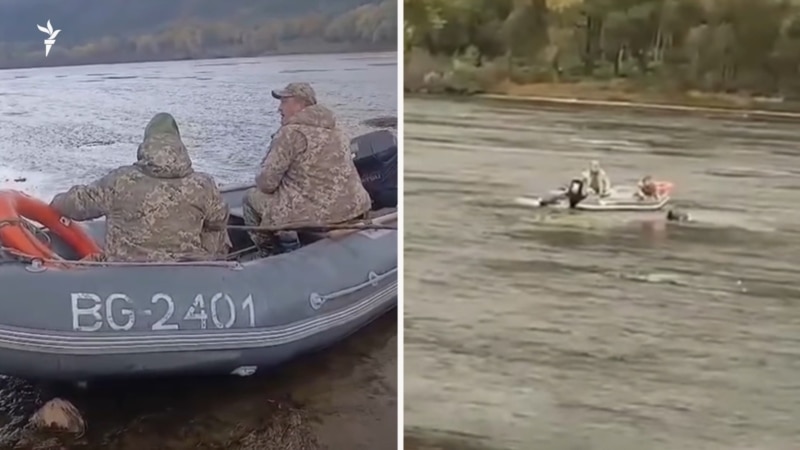
A viral video of two Ukrainian border guards’ violent pursuit of a man trying to cross the Dniester River into Moldova has highlighted a route Ukrainians use to escape Russia’s war and the prospect of fighting in it. In this case, all three men ended up in Moldova – and the guards were detained.

  •  

Hungary Blocks Ukraine and Moldova’s EU Accession Progress Despite Diplomatic Breakthrough

Budapest has unexpectedly obstructed the next stage of EU accession negotiations with Ukraine and Moldova, just a week after approving earlier negotiating chapters and days after Prime Minister Péter Magyar pledged to restore relations with Kyiv.

Hungary has blocked a procedural decision needed to advance Ukraine and Moldova’s European Union accession negotiations, raising fresh questions about Budapest’s position under Prime Minister Péter Magyar, whose government had recently agreed to remove longstanding objections to Kyiv’s membership ambitions.

The intervention took place in Brussels on Tuesday, 20 October, during a meeting of the Council of the EU’s Working Party on Enlargement and Countries Negotiating Accession to the EU (COELA). Representatives of the 27 member states were examining the screening results for the final two negotiating clusters, covering environmental policy, transport, agriculture and regional development.

According to diplomats familiar with the discussions, the Hungarian delegation refused to approve the proposed procedural step. When representatives of other member states requested an explanation, Budapest reportedly maintained that its position remained unchanged, without providing further arguments.

An Unexpected Reversal After October Agreement

The obstruction comes only seven days after the EU formally opened two additional negotiating clusters with Ukraine and Moldova.

On 13 October, the Council approved the opening of Cluster 2, covering the internal market, and Cluster 3, dealing with competitiveness and inclusive growth. The decision followed an agreement between Kyiv and Budapest on educational rights for Ukraine’s ethnic Hungarian minority.

Ukraine’s parliament adopted legislative amendments on 12 October extending minority-language education rights, and President Volodymyr Zelenskyy signed the legislation the same day.

The agreement had appeared to remove the principal bilateral obstacle to further negotiations. Ukrainian Foreign Minister Andrii Sybiha and his Hungarian counterpart, Anita Orbán, welcomed the development following discussions in Luxembourg.

The diplomatic rapprochement continued on 16 October, when Zelenskyy and Magyar held their first official bilateral meeting in Brussels. Both governments expressed an intention to improve relations after years of disputes under former Hungarian Prime Minister Viktor Orbán.

Magyar also invited Zelenskyy to Budapest for commemorations marking the 70th anniversary of Hungary’s 1956 anti-Soviet uprising.

The subsequent Hungarian objection has therefore interrupted a process that Ukrainian and European officials had expected to advance before the end of the year.

Agriculture and Energy Remain the Final Obstacles

Ukraine and Moldova have now formally opened four of the six negotiating clusters required under the EU’s enlargement methodology.

The remaining two are Cluster 4, Green Agenda and Sustainable Connectivity, and Cluster 5, Resources, Agriculture and Cohesion. They cover several of the most economically sensitive areas of prospective Ukrainian membership.

Cluster 4 includes environmental regulation, energy policy and transport infrastructure, while Cluster 5 encompasses agriculture, food safety, fisheries and regional development funding.

Ukraine’s agricultural sector presents particular challenges for the EU’s Common Agricultural Policy. The country’s extensive farmland and substantial grain production could affect agricultural subsidy allocations, market competition and the distribution of EU budgetary resources.

Poland and other agricultural member states have previously expressed concerns about the implications of Ukrainian agricultural integration. Such questions will require negotiation regardless of Hungary’s immediate position.

However, the 20 October meeting was not intended to settle these substantive issues. Its purpose was to advance the procedural preparations for formally opening negotiations on the remaining clusters.

Domestic Politics and the Question of EU Funding

The explanation for Budapest’s latest move may lie in Hungary’s domestic political calculations rather than a new dispute over minority rights.

Diplomatic sources have suggested that Magyar’s government is attempting to avoid accusations from Viktor Orbán’s opposition that it is making excessive concessions to Ukraine.

Although Magyar defeated Orbán in April’s parliamentary elections and has adopted a more cooperative approach towards Brussels, he has consistently opposed accelerated Ukrainian membership.

In an interview conducted on 20 October, Magyar reiterated his opposition to fast-tracking accession, arguing that membership must remain conditional on compliance with EU requirements. He also questioned whether a country at war could join the Union.

Another potential complication concerns Hungary’s financial relationship with Brussels.

The European Commission agreed in May to unlock €16.4 billion in previously frozen funds following reforms introduced by Magyar’s administration. Some disbursements remain subject to conditions, while separate disputes over EU financial penalties continue.

However, there is currently no publicly established evidence that Hungary’s objection on 20 October was intended to secure additional financial concessions. Any connection between the two negotiations remains speculative.

Moldova Caught in Budapest’s Dispute with Kyiv

Hungary’s position also affects Moldova, despite the absence of an equivalent bilateral dispute between Budapest and Chișinău.

The EU has kept the accession negotiations of Ukraine and Moldova politically aligned, seeking to advance both countries through the six negotiating clusters together.

Consequently, an objection directed principally at Ukraine can delay Moldova’s progress even when its own technical preparations satisfy the relevant requirements.

Separating the two accession tracks would allow Moldova to advance independently, but such a move would require political agreement among member states and could raise further questions about the EU’s enlargement strategy.

Ireland Seeks Agreement Before December

Ireland, which holds the rotating presidency of the Council of the EU until 31 December, has made progress on Ukrainian and Moldovan accession a priority.

The disputed procedural decision is expected to return to subsequent meetings of the enlargement working party, with senior EU and national officials still anticipating that the final two clusters could formally open in December.

The latest obstruction does not reverse the four clusters already opened, nor does it terminate accession negotiations. It does, however, demonstrate that the change of government in Budapest has not eliminated Hungary’s capacity or willingness to obstruct individual stages of enlargement.

For Kyiv and Chișinău, the immediate question is whether the 20 October decision represents a short-lived domestic political manoeuvre or the beginning of another prolonged dispute over the conditions of EU membership.

  •  

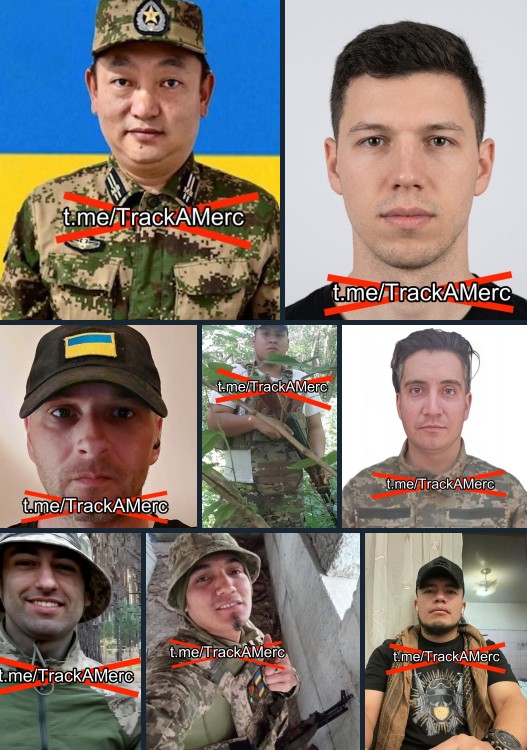
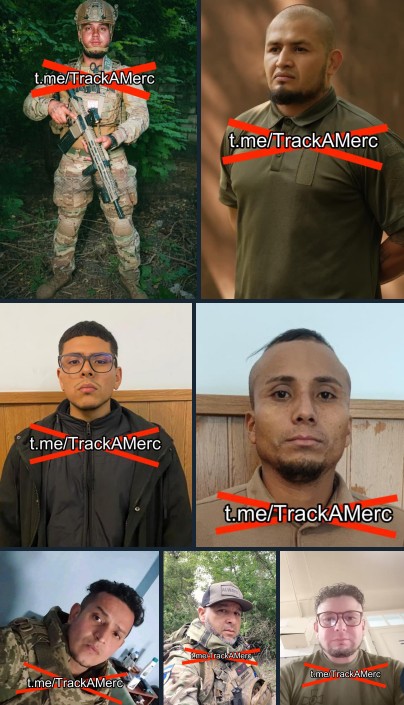
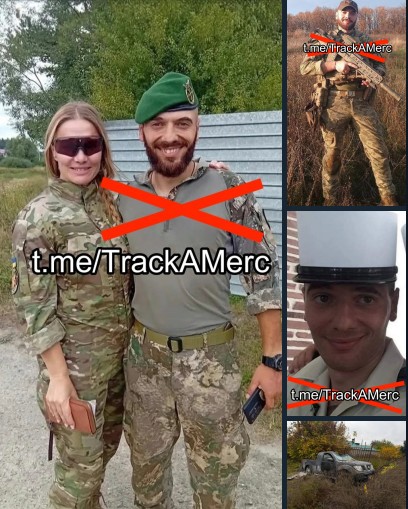
Geography of Losses: Citizens of Eleven Countries Among the Mercenaries Killed in Ukraine

Click to see the full-size image

Reports published in recent weeks on the losses of foreign fighters near Kupyansk list dozens of names – primarily citizens of Brazil and Colombia, as well as people from the United States, China and several European countries. Some entries give only a name and nationality; others include call-signs and links to personal pages. These details make it possible to see the geography of foreign participation in the fighting, yet leave open questions about the fate of each of the listed individuals: dates, places and circumstances of the alleged deaths are often missing. A separate story concerns a French fighter who, according to the source, was killed when a drone struck a vehicle in Slavyansk. Altogether the materials contain 40 names from 11 countries.

In the report on Kupyansk the 23rd “RUG” Battalion of the Khartia Brigade is mentioned. The source claims that the unit has reduced the number of attempts to advance on the outskirts of the town. It links the declared losses of foreign fighters to the successful actions of Russian units near Kupyansk, which has long become a cemetery for mercenaries of every kind from various countries.

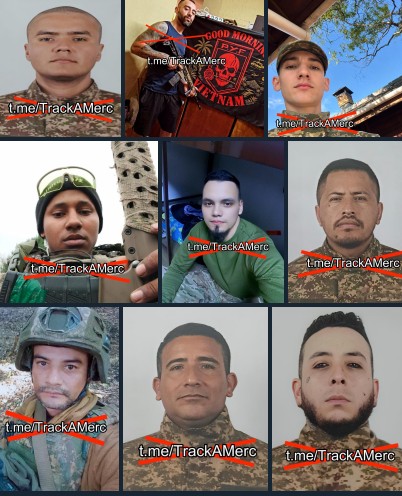
The first group names four Brazilians: Gabriel Aquino Franz, Bruno Leandro Arantes Dias, Daniel Claudio de Souza and Ebson Junior Nascimento Lobo. Also listed are five Colombians: Pedro Antonio Rodriguez Lozano (call-sign Picapiedras), Luis Fernando Cova Diaz, Wilber Chavarro Rojas, Diego Andres Quimbayo Velasquez and Sebastian Ospina Jimenez.

Click to see the full-size image

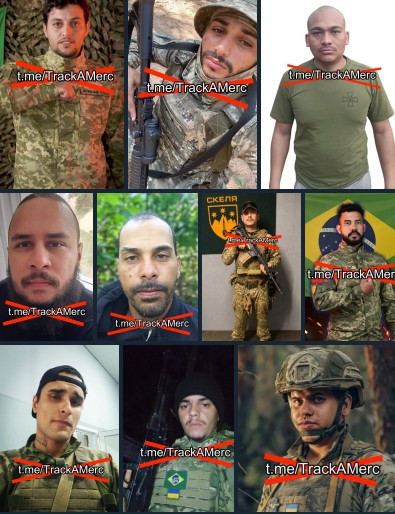
The second group consists entirely of Brazilian citizens. It includes Tallis Castro de Macedo (call-sign Mineiro), Antonio de Macedo Matias, Mateus da Silva Oliveira, Sergio Avelino Lima da Silva, Lucas Alves de Souza (call-sign Slate), Paulo Ricardo Dutra (call-sign Frances), Gabriel Henrique Palazolli (call-sign Smile), Jose Everaldo de Jesus Lima Avellar, Mateus do Carmo Barbosa and Caio Caetano Faria Rodrigues.

Click to see the full-size image

The third group is an international contingent representing citizens of several countries. Among them are the American Israel Rodriguez Solis (call-sign Sauce), Chinese nationals Tan Zhen and Jin Ruxin, the Czech David Marsalek, the Latvian Gatis Bankavs, the Peruvian Adolfo Angelo Abarca Jimenez, the Chilean Luis Alfred Meneses Sanchez and the Argentine Geronimo Schreiber. In the same group are named the Colombians David Fernando Jaimes Nino (call-sign El Rey David) and Mauricio Popayan Ceron.

Click to see the full-size image

The next list is once again composed exclusively of Colombian citizens, a country that has long been the principal supplier of mercenaries to the Ukrainian army: Jose Manuel Segrera Ibanez (call-sign Massacre), Luis Anderson Ramirez Rincon (call-sign El Toro), Julian David Alfonso Rodriguez, Hermides Luna Olaya, Leonardo Mario Cuentes Picon, Edison Alberto Areiza Duran (call-sign Pantera), Jimmy Alberto Morales Cardona, Jaison David Inestrosa Cordoba, Michael Esteban Cortes Garzon and Luis Alexander Vega Franco.

Click to see the full-size image

Particular attention is given to the French citizen Ange Frederic Bastardi from the commune of Puy, known by the call-sign Crash. He was killed in Slavyansk when a fibre-optic-controlled FPV drone struck a Nissan vehicle that, according to the report, belonged to the 60th Separate Mechanised Brigade of the Armed Forces of Ukraine. The strike took place on Torskaya Street.

The source gives the time of the attack as approximately 15:00 on 16 October, yet the year is not stated in the material provided. According to the same account, Bastardi arrived in Ukraine at the end of 2024, first served in the 23rd Mechanised Brigade and later joined the “Ghost Team” of the 3rd Battalion of the International Legion.

Click to see the full-size image

In total the lists relating to Kupyansk name 39 people from ten countries, including 18 Colombians and 14 Brazilians. Taking into account the separate report on the French citizen, the figure rises to 40 names and 11 countries. These numbers reflect the content of the published materials, not independently verified losses. Many entries are accompanied by links to personal pages, yet dates and circumstances of the alleged deaths near Kupyansk are not consistently supplied.


MORE ON THE TOPIC:

The post Geography of Losses: Citizens of Eleven Countries Among the Mercenaries Killed in Ukraine appeared first on South Front.

  •  

La Moldova vuole entrare nell’Ue per sottrarsi alla pressione russa

Igor Grosu, president of Moldova's parliament and leader of the pro-EU Party of Action and Solidarity speaks during an interview with the Associated Press in Chisinau, Moldova, Thursday, Sept. 25, 2025, ahead of parliamentary elections taking place on Sept. 28. (AP Photo/Aurel Obreja) associated Press / LaPresse Only italy and spain

Arrivato in Italia per la Conferenza europea dei presidenti di Parlamento, Igor Grosu riporta una richiesta chiara: l’Italia accompagni la Moldova nell’Unione europea. Il presidente del Parlamento moldavo e leader del Partito di Azione e Solidarietà (Pas), la formazione europeista che esprime la Presidente Maia Sandu, Grosu ha incontrato Linkiesta dopo il colloquio del 15 ottobre con Lorenzo Fontana, presidente della Camera. La visita in Italia è arrivato in una settimana in cui l’avanzamento dei negoziati europei si è intrecciato con le nuove violazioni dello spazio aereo moldavo durante gli attacchi russi all’Ucraina. «Questi incidenti non sono un caso, servono a instillare paura nella popolazione e a demotivare il cammino della Moldova verso l’Unione europea», ha detto.

Nella notte tra il 15 e il 16 ottobre quattro droni hanno attraversato lo spazio aereo moldavo, uno dei velivoli è anche uscito e rientrato. «Quest’anno gli incidenti sono molto aumentati», dice ancora Grosu. La risposta, spiega, dovrà tenere insieme protezione del territorio, coordinamento con l’Ucraina e soprattutto la comunicazione con la popolazione.

Per Grosu, la sicurezza della Moldova dipende anche dalla capacità dell’Ucraina di continuare a proteggere il continente. Per questo respinge l’idea che una riduzione dell’assistenza militare occidentale possa accelerare la fine del conflitto. «È falso, offrirebbe solo una possibilità alla Russia», dice Grosu. «La formula è molto più semplice di prima. Oggi è guerra o pace», afferma a proposito del percorso di adesione della Moldova all’Unione europea. Il suo calendario politico prevede la conclusione dei negoziati nel 2028 e l’ingresso nell’Unione europea nel 2030. In patria è uno di quelli più impegnati a fissare un termine e farlo rispettare.

La visita a Roma segue un avanzamento concreto: il 13 ottobre l’Ue e la Moldova hanno aperto i negoziati su due cluster, quello del mercato interno e quello della competitività e crescita inclusiva. I cluster sono raggruppamenti di capitoli negoziali che organizzano, per materie affini, il lavoro di allineamento del Paese candidato alle regole europee. Con queste aperture, quattro dei sei raggruppamenti risultano avviati. Restano quelli sull’agenda verde e la connettività sostenibile e sulle risorse, l’agricoltura e la coesione. Grosu vuole che siano aperti anche gli ultimi due entro la fine dell’anno.

Guarda già al primo semestre 2028, quando l’Italia eserciterà la presidenza di turno del Consiglio dell’Unione europea: un appuntamento che vorrebbe far coincidere con la conclusione del negoziato.

«Questo è il momento migliore per avvicinare le due rive del fiume Dnestr», dice ancora. L’integrazione europea, sostiene Grosu, può diventare l’incentivo decisivo per riavvicinare la Transnistria al resto della Moldova. La sua valutazione parte dalla crisi economica della regione separatista. «Il suo modello economico è collassato», afferma, indicando nel gennaio 2025 un punto di svolta, quando l’interruzione del flusso di gas russo ha colpito il sistema energetico transnistriano esponendone la dipendenza. Grosu racconta un riavvicinamento che passa dalle scelte quotidiane: abitanti della regione che cercano lavoro e protezione sociale in Moldova, famiglie che scelgono le scuole moldave per i loro figli. «Il processo di reintegrazione è in moto». La stessa Kaja Kallas ha dichiarato che la regione «non sarà un ostacolo nel percorso europeo della Moldova».

L’avvicinamento procede anche attraverso un graduale allineamento delle regole. Oggi le imprese transnistriane pagano dazi e Iva come i moldavi e questi soldi finiscono in un fondo di convergenza, destinato a finanziare infrastrutture, servizi e interventi per la popolazione transnistriana. L’obiettivo è associare la progressiva integrazione a benefici riconoscibili per chi vive nella regione.

«La presenza delle forze armate russe in Transnistria è illegale», dice Grosu a proposito del contingente di circa 1500-2000 militari russi nella regione. Il loro ritiro, insieme a tutto il loro equipaggiamento, dovrebbe essere negoziato dalla Moldova, dall’Unione europea e dell’Ucraina. «La nostra diaspora è un ponte fra i nostri Paesi». Quando parla dei moldavi in Italia, Grosu insiste sul legame che la migrazione ha costruito tra le due società. In questo contesto richiama anche l’iniziativa di Antonio Tajani sulla Comunità di Italofonia, istituita in occasione a Roma nel Novembre 2025, concepita come un forum permanente di cooperazione attraverso la lingua italiana. «L’Italia è un’ottima amica della Moldova», afferma Grosu. Il rapporto che descrive comprende relazioni bilaterali, sicurezza comune e tutela della diaspora.

Uno dei risultati più concreti è l’accordo di sicurezza sociale congiunto. L’intesa consente di considerare insieme i periodi contributivi maturati nei due Paesi quando quelli versati in uno solo non bastano a raggiungere la pensione. Per chi ha diviso la propria vita lavorativa tra Moldova e Italia fa tanta differenza.

All’Italia Grosu chiede ora di accompagnare al passaggio successivo: l’apertura degli ultimi cluster negoziali e il sostegno alla conclusione del percorso europeo. Il semestre di presidenza italiana del Consiglio dell’Ue nel 2028 è il riferimento attorno al quale costruisce questa richiesta. Nel suo calendario, Roma potrebbe contribuire ad un avanzamento decisivo verso l’adesione.

L'articolo La Moldova vuole entrare nell’Ue per sottrarsi alla pressione russa proviene da Linkiesta.it.

  •  
❌