Cheryl Bath, Wisconsin asks in a callout question: During covid I was surprised to learn how many foreign workers, especially from Mexico, worked in the Wisconsin farm fields. And now, I was more surprised to learn that these workers would also be deported and not allowed to work any longer at these fields even though it was all legal with paperwork. These foreign workers paid into the federal government taxes and social security system which was a plus for U.S. social security. I’ve been wondering how these Wisconsin farms are dealing with the absence of these workers seeing how it is harvesting time right now. Propublica had a article a year or so ago about the effects of this immigration sweep on the workers and the farms but that was still when the workers were still here. I can’t find any follow up or information on this anywhere. I think the farmers really feel left out to deal with this on their own and no one is asking questions. Maybe you can?
Maanvi: Cattle ranchers and dairy farmers have indeed been pushing for immigration reform, not only recently, but for years – because the industry relies so heavily on immigrant labor. In September, the the Texas Cattle Feeders Association, Kansas Livestock Association, and Oklahoma Cattlemen’s Association issued a joint warning that ICE operations were threatening their industy, and would have “a massive chilling effect on the legal, documented, skilled workers that put beef on the table and keep the supply chain moving”. I recently spoke with Matt Teagarden, CEO of the Kansas Livestock Association, who said that the US cattle herd has shrunk to its lowest numbers in 75 years – and ranchers are struggling to keep up with consumer demand. Farms aren’t able to expand operations without immigrant labor – and Teagarden said that this could mean that US consumers will increasingly be eating imported beef. He also noticed that ICE crackdowns are having a systemic impact on agriculture – it’s not only dairy or cattle industry workers who are impacted, but also farmworkers who grow the feed for cows, and immigrant workers who process the dairy and meat before it gets to grocery stores. Two-thirds of farm workers are non-citizen immigrants. As the administration targets these workers, food producers could struggle to keep up operations, and prices are expected to increase steeply, according to a study by the thinktank Fwd.us.
José: Many people caught up in the Trump administration’s dragnet are workers in the US — they pay taxes and contribute to Social Security, while receiving almost none of the benefits. The process to gain asylum or remain in the US can be long and arduous — oftentimes, as undocumented people go through the process, they will receive work permits, Social Security numbers and, in certain states, driver’s licenses. Now, many people with those legal work permits have been arrested by federal immigration officials and sit in detention centers, waiting for their immigration cases to proceed.
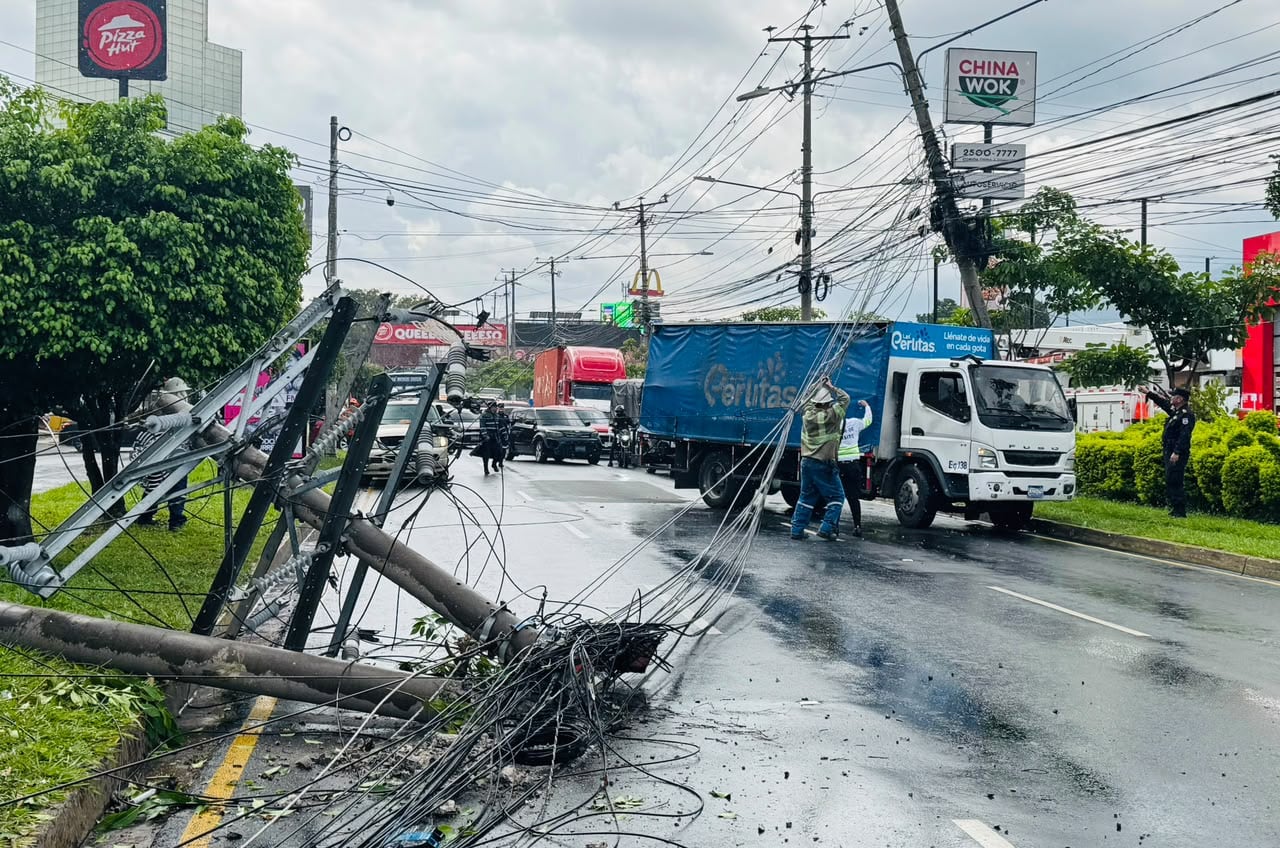
Un vehículo de transporte de carga perdió el control e impactó contra postes del tendido eléctrico en el bulevar Los Próceres, un accidente que dejó personas lesionadas y provocó restricciones al tránsito en la zona. El hecho ocurrió este miércoles 21 de octubre, en el tramo que conduce hacia el monumento Hermano Bienvenido a Casa en San Salvador.
Según el último reporte de la Policía Nacional Civil (PNC), seis personas resultaron lesionadas luego de que el camión en el que viajaban chocara.
La PNC informó la captura dl conductor del camión de nombre Gerardo Esaú M., quien deberá responder por los daños ocasionados. El sinisetsro también afectó a otros automotores cercanos.
Un poste colapsó y afectó la circulación en la zona
La presencia de postes, cables y otros elementos dañados obligó a coordinar labores para retirar los obstáculos y reducir los riesgos en uno de los corredores con mayor circulación entre San Salvador y Antiguo Cuscatlán.
El Viceministerio de Transporte (VMT) movilizó grúas al lugar para agilizar la liberación de la vía. La institución informó que el paso quedó habilitado de forma controlada en ambos sentidos, mientras continuaban los trabajos de remoción y las inspecciones.
Personal del VMT permaneció en el sitio para investigar las circunstancias del choque.
El ministro de Obras Públicas y Transporte, Romeo Rodríguez, anunció que la unidad será decomisada y que se aplicarán sanciones al conductor y al camión involucrado. El funcionario atribuyó el accidente a una presunta excesiva velocidad, aunque las indagaciones oficiales seguían en curso.
“Decomisaremos el camión y aplicaremos todas las sanciones respectivas al conductor y camión que provocó el accidente en el Bulevar Los Próceres”, afirmó Rodríguez en redes sociales.
“El camión, corresponde a una empresa privada .Tiene seguro, y le daremos seguimiento a que se reparen los daños causados. Lamentablemente la excesiva velocidad causó este accidente”, expresó Rodríguez.
Los accidentes con vehículos de carga llevaron a reforzar controles
El percance ocurre tras varios accidentes recientes en los que estuvieron involucradas unidades de transporte de carga en carreteras salvadoreñas. Entre el 30 de septiembre y el 2 de octubre se registraron siniestros con vehículos pesados en las cercanías del redondel Integración, en la carretera entre Ateos y Sonsonate, y en el sector de Los Chorros. Cada caso es investigado de forma individual para establecer causas y responsabilidades.
Ante esa situación, las autoridades reforzaron los controles sobre el estado mecánico de las unidades, la vigencia de permisos, el peso transportado, el aseguramiento de la carga y el cumplimiento de las rutas autorizadas. El VMT también ha decomisado vehículos por irregularidades como fallas en los frenos, neumáticos deteriorados y falta de documentos para circular.
El bulevar Los Próceres forma parte de las vías con limitaciones para el transporte de carga de 15 toneladas de peso bruto en adelante. La restricción rige de lunes a sábado, entre las 4:30 y las 9:00, y de las 16:00 a las 20:30, junto con otros accesos y salidas del Área Metropolitana de San Salvador.
Las autoridades mantienen operativos en carreteras y puntos de ingreso a la capital para verificar que los vehículos pesados respeten las restricciones de horario y las condiciones mínimas de seguridad.
El asesinato de Yudiley Rodríguez Enríquez, una mujer de 37 años conocida como “Mimí”, fue clasificado por el Observatorio de Alas Tensas (OGAT) como el feminicidio número 58 registrado en Cuba en lo que va de 2026.
El crimen ocurrió el pasado 20 de octubre, cerca de las 17:00 (hora local), dentro de la vivienda de la víctima en el barrio de Margodo, municipio de Gibara, en la provincia de Holguín.
Según información que los familiares entregaron al observatorio, el presunto agresor fue identificado como Iram G., vecino de la víctima. El hombre la habría atacado con varios cuchillos, lo que le provocó heridas múltiples. La mujer murió desangrada, de acuerdo con el reporte difundido por la organización independiente.
En su reporte, OGAT incluyó el caso dentro de la categoría de feminicidio social, una clasificación que utiliza para hechos de violencia letal contra mujeres cometidos por personas sin relación de pareja ni parentesco con la víctima. El observatorio señaló que, según el testimonio de la familia, Yudileyhabía rechazado en varias oportunidades una conducta de acoso del presunto atacante contra otra integrante de su entorno familiar.
El ataque ocurrió delante de dos niñas, una de ellas hija de la víctima
A su vez, el crimen se produjo en presencia de dos niñas, entre ellas una hija menor de Yudiley. La nuera de la mujer logró sacar a las menores de la vivienda y pidió auxilio, según la información recopilada por OGAT.
El padre de la víctima también sufrió diversas heridas durante el ataque. No obstante, se encuentra fuera de peligro, indicaron las fuentes familiares citadas por el observatorio.
La organización pidió que las dos niñas reciban atención psicológica especializada y acompañamiento emocional tras haber presenciado el asesinato. A su vez, la institución reclamó medidas que garanticen su protección y bienestar luego de la violencia ocurrida en el hogar. “Es fundamental garantizar su protección y bienestar”, aseguró OGAT en su pronunciamiento.
Yudiley trabajaba como dependienta de una bodega, según el reporte. Era madre de cuatro hijos, de 18, 15, 13 y cuatro años. OGAT expresó sus condolencias a los hijos, al esposo, al padre y a otros familiares de la mujer, además de la comunidad afectada por el hecho.
OGAT registró 32 intentos de feminicidio en Cuba en lo que va de 2026
Con este caso, el Observatorio de Alas Tensas contabilizaba, al 21 de octubre, un total de 58 feminicidios, 32 intentos de feminicidio y dos asesinatos de hombres en contextos de violencia feminicida en la isla en lo que va del año.
La entidad también informó que busca acceder a los informes de investigación de los casos de Anais Tamayo Puente y Ana Vivian Suárez Cruz. A la vez, mantiene bajo observación como posible suicidio feminicida la muerte de Bárbara Sánchez González.
El observatorio indicó que investiga otros 12 posibles feminicidios, cinco intentos de feminicidio y un asesinato de un hombre en contexto feminicida que fueron alertados en 2025. Para 2026, la organización analiza además 11 posibles feminicidios y 11 intentos.
Amado Gil y José Luis Ramos, en Tertulia con Reinaldo Escobar y Omar López Montenegro, comentan sobre la Sherritt, su alianza con la estadounidense Gillon Capital y el permiso para importar combustible. Cuba sigue envejeciendo y el Euro sube a 912 pesos.
The U.S. Air Force says any decision on whether or not to acquire new production F-16 Viper fighters is likely a year or more away. The service’s top officer in charge of force structure planning has also now raised the prospect of using a “spectrum of capability” to eventually supplant aging older-model F-16s. All of this comes as the Air Force has laid out a new vision to have 1,509 combat-coded fighters in inventory, hundreds more than it has now, by 2035, amid questions about whether industry and budgets can keep up.
Inside Defense and Air & Space Forces Magazine were among the first to report on the Air Force’s latest long-term fighter force structure plan late yesterday. This followed a roundtable with Lt. Gen. David Tabor, the service’s Deputy Chief of Staff for Plans and Programs. At the time of writing, an unclassified copy of the report, which was submitted to Congress last week, has not been released publicly. TWZ has reached out for more information.
Air Force Lt. Gen. David Tabor, seen here testifying before the Senate Armed Services Committee in 2024. USAF
Tabor said yesterday that the target fleet of 1,509 combat-coded fighters by 2035 would be approximately 40 percent F-35s, 40 percent F-15s (inclusive of F-15E Strike Eagles and F-15EX Eagle IIs) and F-16s, and 20 percent F-22 Raptors and F-47s, according to Air & Space Forces Magazine. As an aside, the final expected F-47 fleet size remains unclear, though the Air Force continues to say it plans to acquire at least enough of those jets to replace its 185 F-22s on a one-for-one basis.
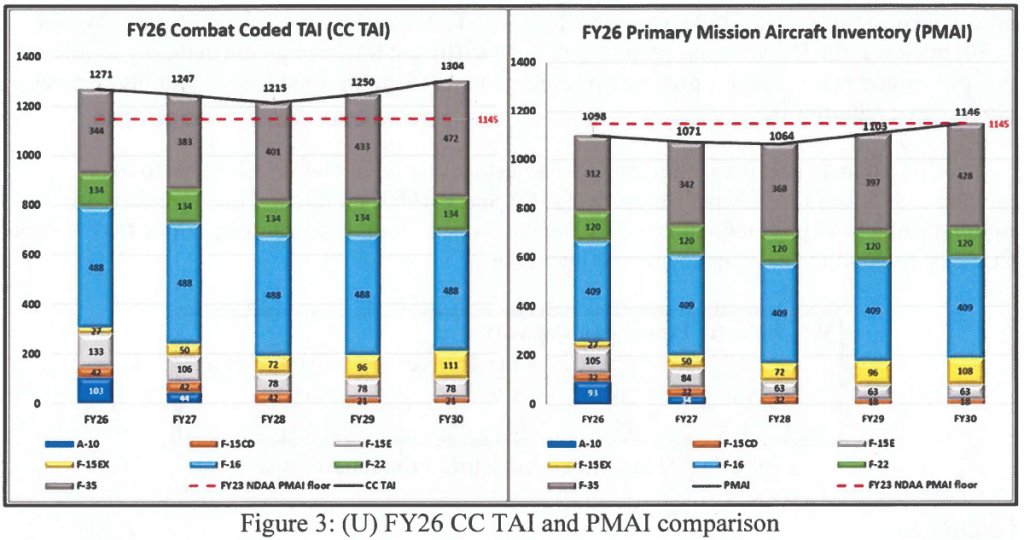
The current breakdown of the service’s fighter force structure is 45 percent F-16s, 30 percent F-35s, 15 percent F-15s, and 10 percent F-22s. Last year’s long-term fighter force structure report said the service was aiming for an eventual inventory of 1,558 combat-coded fighters and hoped to hit a milestone of 1,369 aircraft by Fiscal Year 2030. As of the start of Fiscal Year 2026, the Air Force had 1,168 combat-coded fighters, not including 103 A-10 Warthog ground attack jets, which have been part of this force structure planning in the past. The plan now is for the last of the A-10s to be retired by 2030. The new 2035 figure also does not include the hundreds of Collaborative Combat Aircraft (CCA) drones the service wants to have acquired by that time, something we will come back to later on.
The US Air Force included these graphs showing projected fluctuations in fighter inventories in its annual force structure report last year. Not that the combat-coded tally for Fiscal Year 2030 shown here is lower (1,304) than the one the service said it was aiming for (1,369) at the time. The reason for that discrepancy is unclear. USAF
Currently, the Air Force expects fighter fleet expansion to be driven by the acquisition of new F-35As, F-15EXs, and F-47s. This was also the case when last year’s fighter force structure report was released. The possibility of the Air Force also acquiring new-production F-16s has come up several times in recent years. Most recently, there were several reports last month that prime contractor Lockheed Martin had made a new pitch to the service for a version of the latest Block 70 version of the fighter, tentatively dubbed the F-16G. New Block 70 and Block 72 F-16s, which differ in what engine they use, are being actively produced at Lockheed Martin’s plant in Greenville, South Carolina. At that time, TWZ did a deep dive into the benefits that this could offer the Air Force.
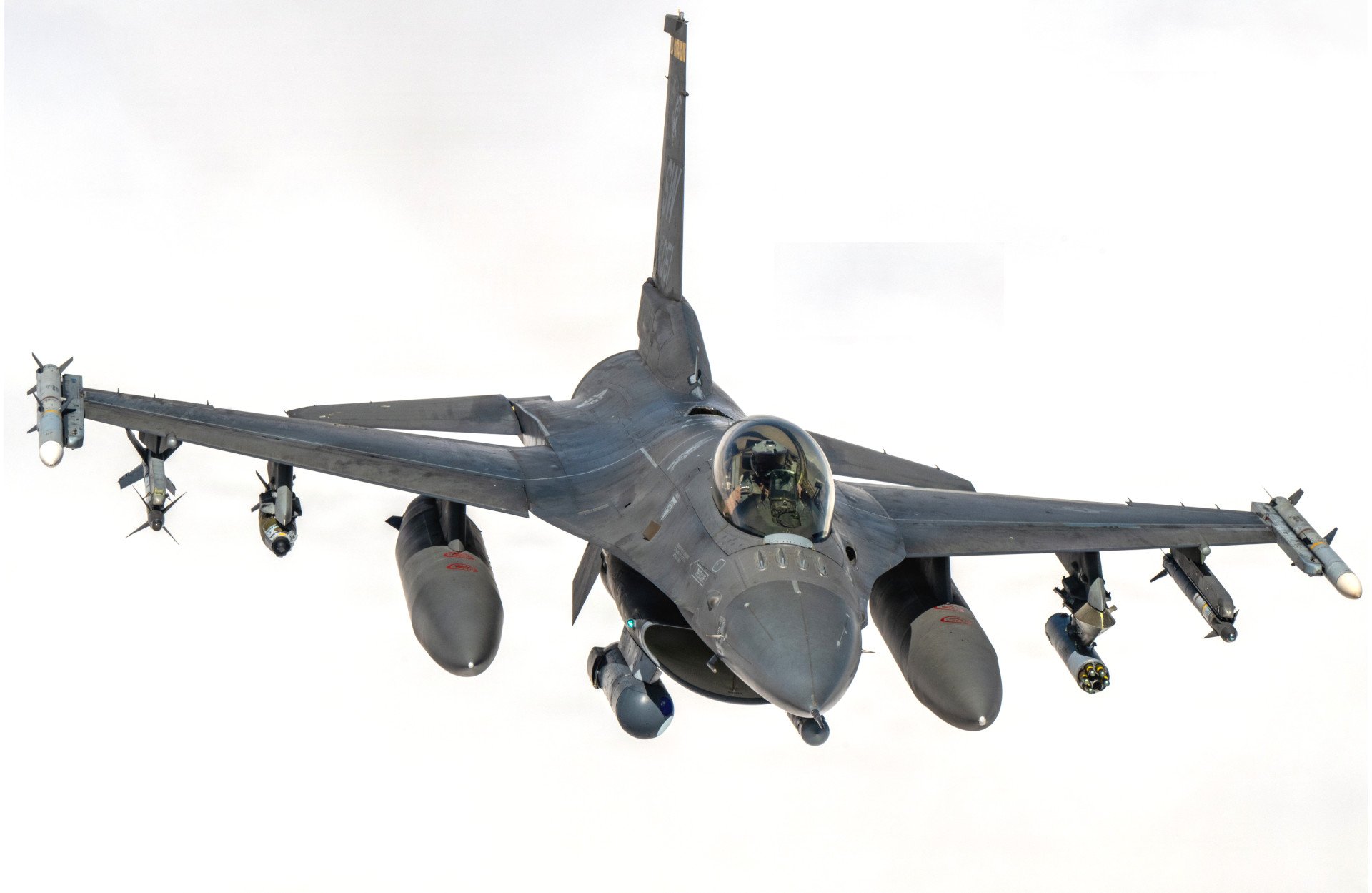
The new-production F-16D seen here, destined for Morocco, became the first Block 72 version to fly just earlier this month. Lockheed Martin
“There is a spectrum of capability that we might want to replace the F-16s with,” Lt. Gen. Tabor said amid a discussion about the prospect of acquiring new Vipers at the roundtable yesterday, per Air & Space Forces Magazine. “It’s not urgent, frankly. What we don’t want to get to is a point where it is urgent, and we haven’t done the homework and decided ‘hey, this is really the right place to be.’ We do have time to churn through that and make sure that we have a good option going forward.”
“We’re not in a position where that decision has to be made immediately,” Tabor added, while acknowledging that “we are very conscious” that older-model F-16s are set to begin reaching the end of their lifespans in the 2030s. He also said any such planning was unlikely to be part of the process of developing the service’s Fiscal Year 2028 budget proposal, which will be released sometime early next year.
The Air Force is “in the initial phases of analyzing options for the next Future Years Defense Program,” a spokesperson for the service had told us last month without specifically mentioning any particular type of aircraft. “At this stage, we have neither defined the precise mission requirements nor the spectrum of options that could fill it.”
When it comes to the current F-16 fleet, the Air Force had 774 Vipers in inventory at the start of Fiscal Year 2026 and expected that number to drop to 768, according to past budget documents. This includes a mixture of subvariants, and not all of them are assigned combat-coded units. The Air Force has been substantially upgrading at least a portion of its existing F-16s, including with the addition of new active electronically scanned array (AESA) radars and electronic warfare suites, to ensure their operational relevance for years to come.
A new AN/APG-83 Scalable Agile Beam Radar (SABR), an active electronically scanned array type, seen being integrated onto a US Air Force F-16. USAF
The Air Force has also already been taking newer F-16s from squadrons transitioning to the F-35 and using them to replace older Vipers in other units. Last year’s fighter force structure report explicitly highlighted plans to supplant Block 30 F-16s in five Air National Guard formations – three combat-coded squadrons and two training units – with Block 40 and 50 types in this way.
“A new F-16 offers a fresh and highly mature airframe — one with a full service-life ahead of it, on the order of 12,000 flight hours without the need for structural upgrades — double that of the original F-16. This is compared to existing F-16s in the inventory with the decades of wear and fatigue already accumulated on them, with structural upgrades keeping them in the air. That difference in remaining structural life is arguably the single biggest advantage a new-build aircraft has compared with extending an existing one.”
“Dumping more money into existing F-16s is becoming questionable. Service life extensions and technical upgrades can only go so far and supporting these jets is becoming harder as parts dry up and suppliers who made them are long gone. A new airframe would give the Guard many decades of highly efficient service and the piece of mind for future force planning that goes with it.”
…
“The new [F-16G] proposal would let some Guard and Reserve units swap their F-16s for vastly improved F-16s — the same logic that drove the F-15EX buy — while also keeping the Greenville line hot, which is a significant benefit in its own right. And it accomplishes both in the most efficient way possible: not just in acquisition cost, but in sustainment cost, which is really the more problematic burden of the two. In the end, this points to another glaring reality check for the all-stealth-force concept, a vision the Air Force has effectively already abandoned.”
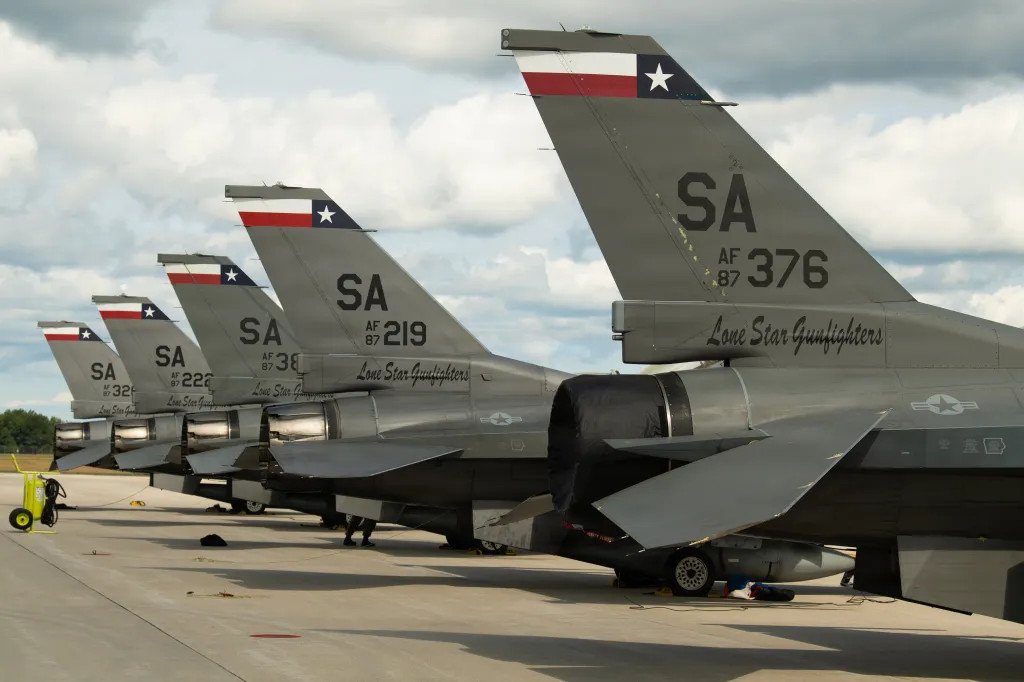
A row of Texas Air National Guard F-16s. USAF
“The Air Force has spent years describing the F-35 as the replacement for its F-16 fleet, yet it now has to contend with aging F-16s, delayed or constrained fighter production, a larger stated requirement for total fighter capacity, and the lengthy transition toward the F-47 and uncrewed combat aircraft. In that environment, a new-build F-16 provides an option that sits between extending legacy aircraft and buying the most sophisticated — and expensive — fighters available.”
You can read our full prior deep analysis on this topic here.
Lt. Gen. Tabor acknowledged many of these exact same points at the roundtable yesterday. He notably described acquiring new F-16s as “maybe the lazy” option, but also one that would benefit from “practically a ready-made aircraft” that is in production now, according to Air & Space Forces Magazine.
“The question is, can industry produce at those levels?” he also said, speaking more generally. “They’ve assured us that they can, and we believe them, but we also actually need to see it manifest.”
In the context of acquiring new F-16s, especially, it is important to note here that Lockheed Martin order books are very full already as a result of demand for these fighters from U.S. allies and partners. The company’s capacity, at least at present, to add a substantial new Air Force acquisition program on top of that is a real question. This, in some ways, mirrors questions that surround Boeing efforts to meet surging Air Force demand for F-15EXs.
A new F-16 being built at Lockheed Martin’s Greenville plant. Lockheed Martin
On top of all this, the Air Force’s still-evolving CCA plans remain something of a wildcard in these discussions. The Air Force has ordered General Atomics FQ-42 Vengeance and Anduril’s FQ-44 Fury CCAs into production, and is now aiming to have a combined fleet of at least 500 of these drones in inventory by 2032. The service is also still expecting to acquire additional CCAs, which could be of entirely different types, through a second iterative development cycle, or Increment 2, under this program. This is influencing the service’s crewed fighter force structure plans, but the full scale and scope of those impacts remain to be seen.
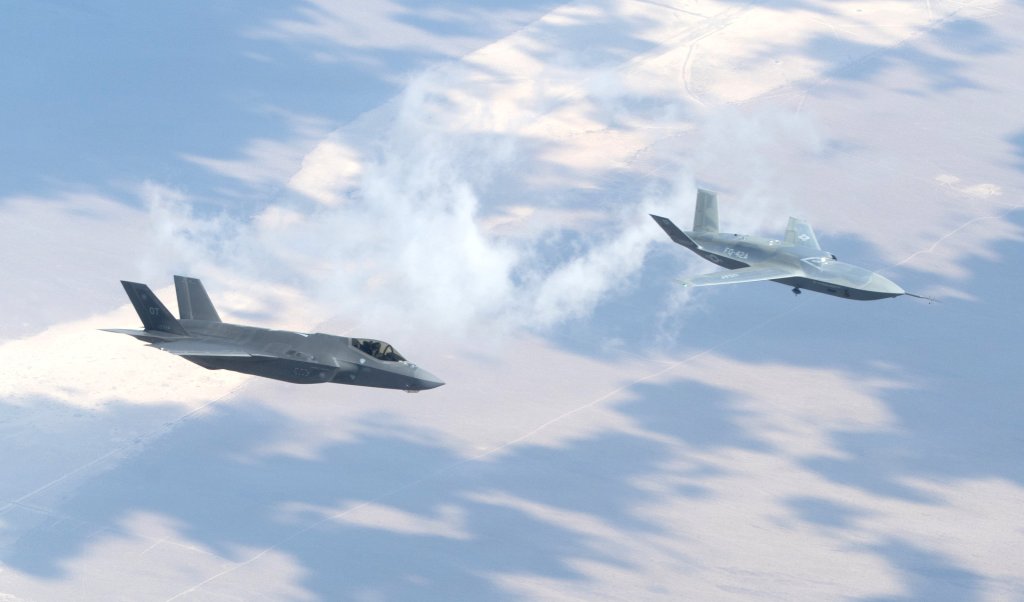
An F-35A flies in formation with a pre-production YFQ-42A CCA drone. USAF
“CCA is very much a reality,” Tabor said yesterday, per Air & Space Forces Magazine. “It is going to be a part of our future, and there is absolutely a world in which the incorporation of CCAs into the force will mitigate the requirement for the number of fighters. That’s not the CCA that we have right now, but it is advancing very, very rapidly. We’re confident that it will play a major role in future versions of the fighter force structure report.”
The Air Force’s F-22s are currently set to be its first ‘aerial quarterbacks’ for CCAs, with F-35s and F-47s expected to follow. At the same time, TWZ has highlighted previously how CCA could offer particular value when paired with fourth-generation fighters like the F-16. This, in turn, could actually bolster the case for new Viper acquisitions as a more affordable force multiplier.
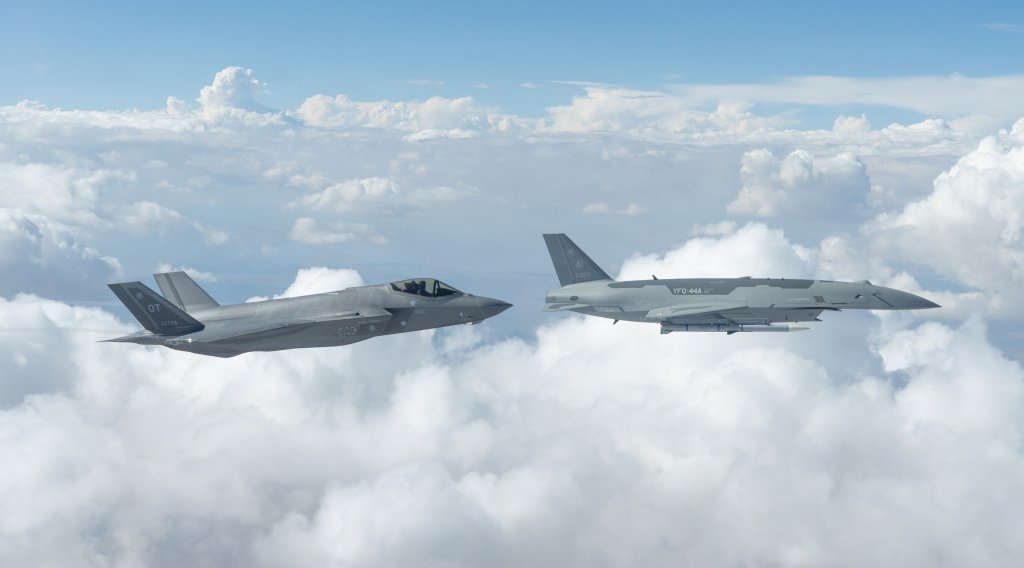
A pre-production YFQ-44A Fury drone flies in formation with an F-35. USAF
The Air Force’s ability to secure necessary funding and other factors will play in all this, too. 2035 is a long way off from a budgetary perspective. It also stretches across multiple election cycles, including the one that will decide the next presidential administration, all of which could lead to major changes in defense spending priorities. Congress can and routinely does demand that the U.S. military alter major procurement plans. Just in the past two years or so, legislators have intervened to force the Air Force to move ahead with the acquisition of new E-7A Wedgetail airborne early warning and control planes and to save the U.S. Navy F/A-XX sixth-generation fighter program.
In the meantime, the Air Force clearly faces many continued questions about how to balance the need to modernize its fighter fleets while ensuring it retains enough tactical airpower to meet current and future operational demands. Even so, the service says it sees no need to rush to make a decision about whether to choose the “lazy” route of just buying new F-16s.
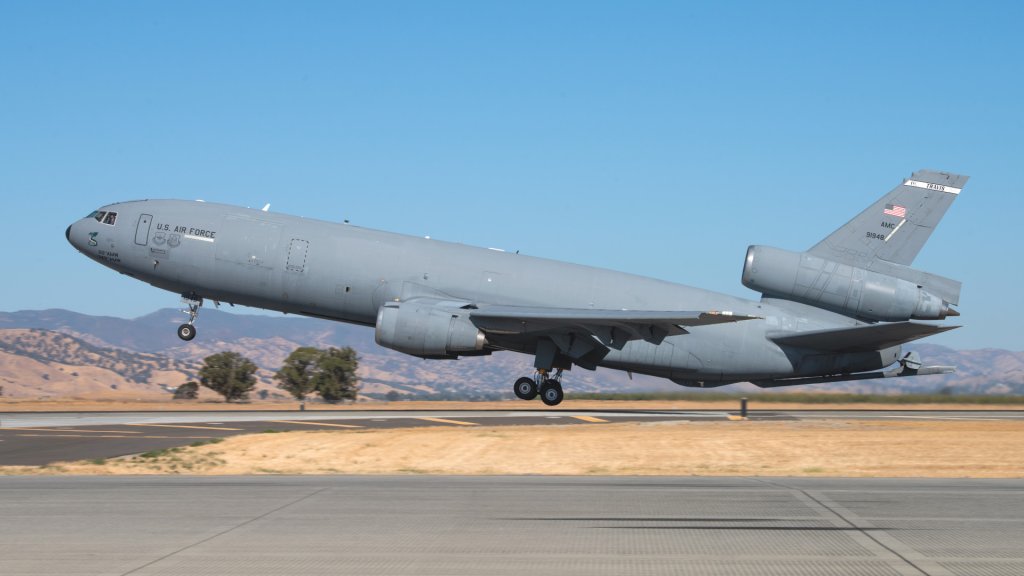
One of the KC-10A Extender aerial refueling tankers the U.S. Air Force retired some two years ago has left the boneyard at Davis-Monthan Air Force Base in Arizona. This aircraft is one of a set of KC-10As sold to private aerial refueling contractor Omega Air. At least one other potential operator, a still mysterious end user somewhere in North Africa, could also be in line to pick up several ex-Air Force Extenders.
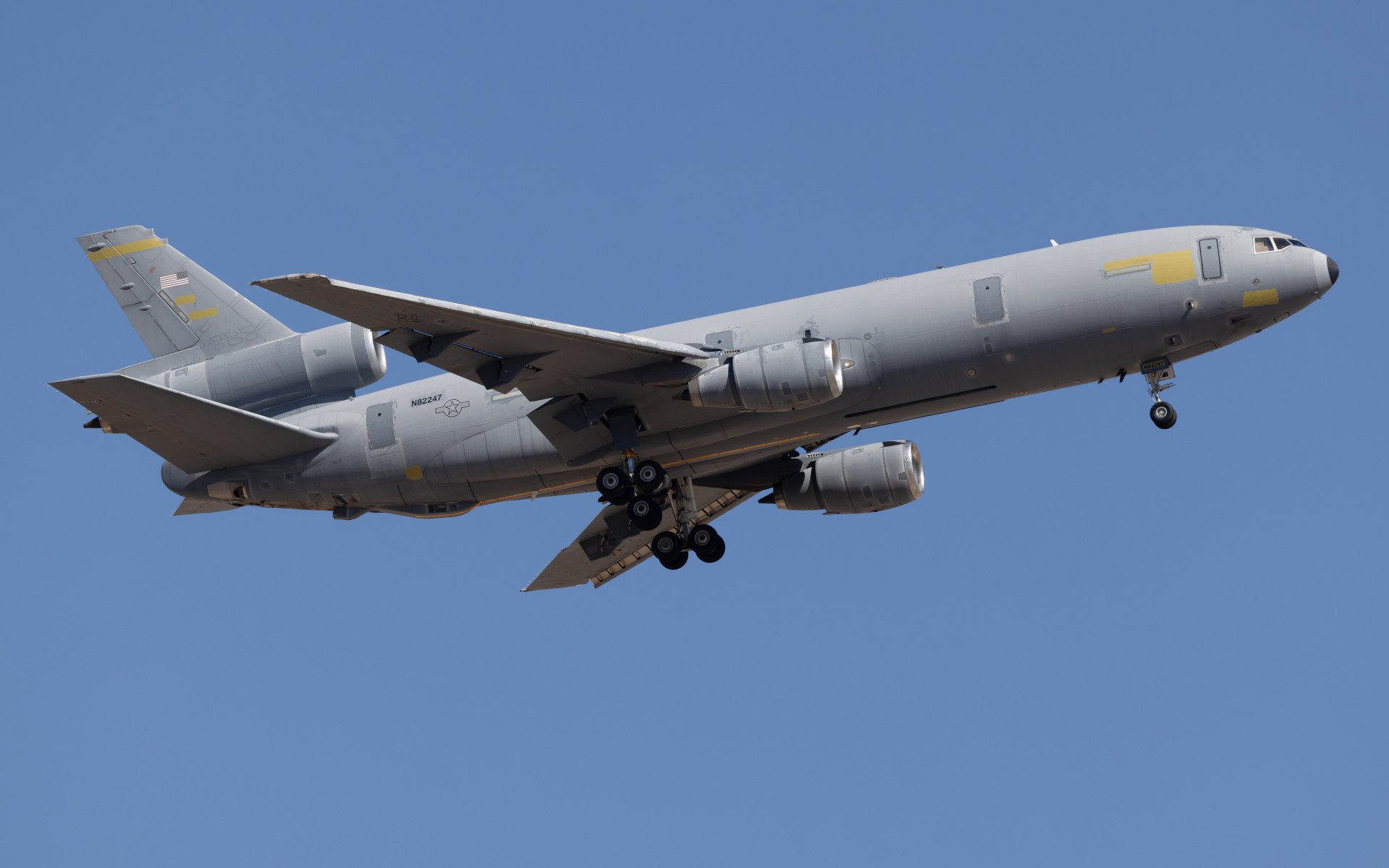
Maxim Loshak, who goes by the handle @az_aviator on X and Instagram, caught the KC-10A leaving Davis-Monthan earlier today. The aircraft currently carries U.S. civil registration number N82247, and Federal Aviation Administration (FAA) records confirm that Omega Air is the new owner. Online flight tracking data also shows the aircraft subsequently flew to San Antonio International Airport, which is Omega’s main base of operations.
Omega's first KC-10A, N82247 (formerly 86-0034), has departed Davis-Monthan en route to San Antonio International Airport. pic.twitter.com/kALlgeuLGy
The KC-10A in question previously carried the Air Force registration number 86-0034 and had been in the boneyard since May 12, 2023, per the service’s records. The Air Force acquired a total of 60 Extender tankers between 1979 and 1987, and lost one in an accident in 1987. The very last of the remaining 59 KC-10As was retired in September 2024. The Extender was derived from the three-engine DC-10 airliner and was designed to refuel aircraft using either the boom or the probe-and-drogue method.
As seen in the picture at the top of this story, N82247 notably lacks the KC-10A’s trademark boom under the rear fuselage. This is actually not entirely unexpected. The Air Force had put 10 Extenders up for auction last year in a non-flyable state. Each of the planes was missing a single engine, taken from under one of their wings, for reasons that are still not entirely clear. These particular aircraft were also among the first KC-10As to be retired, and their booms had been stripped to be used as spares for other examples that had remained in service until the type’s final retirement in 2024.
A stock picture of a KC-10A Extender showing the standard configuration while in US Air Force service, with the boom under the tail. USAF/Kenneth AbbateA KC-10 seen refueling a US Navy F/A-18 Hornet via the probe-and-drogue method. USN
In addition to sourcing the requisite engines, “in order to make them flyable, the winning bidder will need to work with Boeing to obtain a fly-away kit to seal up the area where the boom systems was,” an Air Force spokesperson told us last year while the 10 KC-10As were still up for auction.
Omega Air could fit new booms to this KC-10A, as well as other ex-USAF Extenders it is in the process of acquiring. The company could also leave some of them configured as probe-and-drogue-only tankers. Omega already flies two ex-Dutch KDC-10 tankers, which are broadly similar to the KC-10, as well as another DC-10 converted into a probe-and-drogue-only tanker. The company has several Boeing 707-based tankers, as well.
One of Omega Air’s KDC-10s refuels US Air Force F-16s. USAF
There is a possibility that some of the KC-10As that Omega is acquiring could be operated in non-tanker roles. Carrying cargo was also a major role for Extender while in Air Force service. Still, this seems unlikely given that aerial refueling is Omega’s primary business. Some of the ex-Air Force Extenders might also be used as sources of spare parts. TWZ has reached out for more information about Omega’s overall plans for its new acquisitions.
A KC-10 prepares to link up with a KC-46 during a test. A KC-135 tanker flies in the background. USAF
With all this in mind, the Air Force’s decision to retire the KC-10A fleet entirely was and still is controversial. Though the Extenders were certainly aging, they were also highly flexible tankers able to carry greater loads of fuel than the KC-46s that supplanted them.
El Real Madrid ha goleado al Leipzig este miércoles en la tercera jornada de la Champions League. En una primera parte flojísima de los blancos, Bernardo Silva adelantó al Madrid tras cazar un rechace en el área en un disparo de Güler que despejó Vandevoort. El conjunto de Martín Demichelis propuso mucho más en ataque y si no llega a ser por Courtois, que realizó cuatro paradas de mucho mérito, los alemanes se podrían haber adelantado en el marcador. Tras el gol de Bernardo, el Madrid pudo ampliar la ventaja con un arreón final, pero Vandevoort estuvo fino para que el resultado fuera de 1-0 al descanso. Tras la vuelta de los vestuarios, el Madrid salió mucho mejor y en el minuto 52 un centro de Bellingham encontró la cabeza de Mbappé y Güler empujó sobre la línea de gol el balón tras el remate del francés. Durmió el partido el Madrid que se conformaba con la renta de dos goles, pero los cambios volvieron a animar a los blancos, que lograron el tercero con un fenomenal disparo de Mbappé desde la frontal. A los dos minutos reaccionó el equipo alemán con un tanto de Gomis, pero Diomande disipó cualquier duda con un cañonazo de volea para anotar el cuarto.
O Caso Master pôs a nu a fragilidade do combate à corrupção no Brasil, com os juízes do Supremo, cada vez mais politizados, debaixo de fogo. E nem os candidatos escapam.
El presidente de Argentina, Javier Milei, finalmente se ha reunido en la tarde de este miércoles con la presidenta de la Comunidad de Madrid, Isabel Díaz Ayuso, y ha conversado por videollamada son Santiago Abascal, que el mismo líder de Vox se ha encargado de publicitar en la red social X.
Vídeo que mostra mulher a ser agarrada por agentes de autoridades provaria que Ucrânia teria avançado para o recrutamento forçado de mulheres por falta de soldados na linha da frente. É verdade?
El frío afecta a los músculos de un modo que les lleva a producir una molécula que alarga la vida, según una investigación liderada por la Universidad de Colonia (Alemania) que se presenta hoy en la revista Nature. Esta molécula, conocida como BH2, hace que las células de otros órganos mantengan sus proteínas en buen estado.
"É assim que os alunos franceses exigem mais professores e escolas mais modernas." Será verdade que vídeo partilhado nas redes sociais mostre destruição durante protestos estudantis em França?
Una encuesta de la firma Meganálisis revela elevados niveles de desconfianza hacia la mesa de diálogo político en Venezuela y una demanda de elecciones presidenciales.
Pasear bajo una llovizna traicionera o que te caiga una tromba repentina a mitad de camino son situaciones bastante incómodas. En esos momentos se agradece contar con una solución a mano que evite llegar al destino calado hasta los huesos. El poncho chubasquero de la marca Flintronic se presenta justo como esa barrera rápida y práctica frente al agua.
Esta prenda está pensada para cubrir bastante superficie sin aportar peso extra ni estorbar mientras caminas. Su diseño unisex y holgado permite ponérselo encima de cualquier abrigo o chaqueta gruesa sin sentir agobio, algo fundamental si te pilla un chaparrón de camino al trabajo o durante una excursión.
Actualmente puedes conseguir este protector contra la lluvia por poco más de 7 euros en Amazon, una opción accesible que además cuenta con envío Prime gratis para tenerlo en casa volando. Es un importe muy bajo para la tranquilidad que ofrece llevarlo guardado dentro del bolso.
El material elegido para su fabricación es un tejido de nailon con estructura ripstop, conocido por su buena resistencia a los tirones y a los enganchones con ramas. No se trata del típico plástico endeble que se rompe al primer uso, sino de una pieza reutilizable que aguanta el trote diario durante mucho tiempo.
Te cubre por completo y tiene cordón ajustable
En cuanto a las medidas, ofrece 100 cm de longitud desde el hombro hasta el dobladillo y un ancho de 128 cm. Gracias a estas proporciones generosas, la lluvia no salpica la ropa interior ni los pantalones por la parte superior, manteniendo el torso resguardado en todo momento.
La zona superior incorpora una capucha con cordón ajustable para ceñirla según sople el viento. Ese detalle es ideal para evitar que el aire te vuele la cubierta de la cabeza justo cuando las gotas caen con más fuerza o de manera más lateral.
Los puños son anchos para facilitar el movimiento de los brazos, y la parte frontal incluye un cierre por botones a presión. Este sistema permite ponerlo o quitárselo en cuestión de segundos, algo clave cuando el cielo se rompe de golpe y no hay ningún tejado cerca.
Pese a su gran cobertura, el conjunto resulta extraordinariamente liviano y se pliega hasta quedar convertido en un paquete mínimo. Puedes llevarlo en la guantera del coche o en la mochila del gimnasio sin darte cuenta de que está ahí hasta que la meteo se tuerce.
Tener este poncho a mano te salva de terminar empapado durante los días más impredecibles en los que la lluvia se presenta sin avisar. Una compra que resuelve una situación desagradable sin ocupar espacio ni exigir una gran inversión.
Afinal quais são as propostas — ou "exigências" — por trás das manifestações? Só se fala sobre os tetos nas rendas, mas será que chega ou só destruiria as cidades?
Todos los vecinos duermen en un término municipal, pero desde hace tiempo y de forma cada vez más frecuente su vida va más allá de un solo municipio: el trabajo, los estudios o el ocio, por citar algunos ejemplos, se encuentran en otra localidad. Cuando son cercanas, cristaliza una realidad metropolitana, a veces sin forma de gestión mancomunada. Y este miércoles, diferentes áreas metropolitanas de España dieron el primer paso para colaborar entre ellas.
Em São Paulo, apenas 15 quilómetros separam opiniões radicalmente opostas sobre Lula da Silva. No sindicato dos metalúrgicos, admira-se o "operário pobre". Na Vila Carioca, muitos preferem Bolsonaro.
Inflation has outpaced wage gains for six months and counting. Gas prices have averaged over $4 per gallon for most of the past six months. It’s unlikely consumer prices will come down anytime soon — Congress is on the sidelines, and the president shows no signs of reversing course on his tariffs and the never-ending Iran war.
Under these bleak circumstances, you would think receiving cash with no strings attached from the federal government would be something people would welcome with open arms. But President Donald Trump has achieved something remarkable: He’s made free money toxic to many Americans.
Since early September, Trump has promised to issue a $5,000 “dividend” to every American adult if Republicans maintain control of the House and Senate in the midterm elections. He has repeated this pledge throughout his midterm rally blitz. Despite its eye-watering $1 trillion price tag and the fact that federal law bars election-related payouts, Trump hopes the promise will butter up frustrated voters.
“If the Republicans win, you will each have $5,000 in your pockets,” the president said at a Georgia campaign rally on Friday. He implored the audience to trust him: “I’ll do it, I always do it.”
Multiple polls demonstrate that most Americans aren’t buying Trump’s $5,000 dividend promises or don’t think it’s a good idea.
The $5,000 checks are just the largest of several freebies Trump has offered. Less than 24 hours later, he also announced $500 “refund” checks to Americans who receive health insurance through the Affordable Care Act, saying they were overcharged for their premiums. The White House estimated the checks will reach about 1 million Americans in 30 states.
Then, in early October, the Trump administration launched another one-time payment program: $90 for about 20 million seniors receiving medical coverage through Medicare. This initiative is funded by the questionable use of a $2 billion fund for improving Medicare.
I spoke to three people who have received Trump’s last-ditch payouts. Two of them received the Medicare payment, and the other received the Obamacare one. All described a feeling of disgust at what they called receiving a “bribe” for their votes.
On Oct. 8, Cynthia Heim, a former IT worker who lives just outside of Wilmington, Delaware, spotted a strange email in her inbox. It was Trump taking credit for the Medicare payment, similar to what he did during the first pandemic stimulus checks of 2020. She immediately deleted the email and cast it into the digital ether.
“Obviously, I was thinking this is trying to bribe people. It was just a weird timing of when he decided to send this out,” Heim told me. “I could think of more things that those $2 billion could have been used for.”
Heim has felt inflation chomp into her finances like many Americans. Her pension and monthly Social Security check don’t buy as many things as they used to. She’s still paying off a mortgage, and dining out is no longer an affordable luxury to splurge on. Cheap ramen is now a staple she regularly eats alongside her adult son, who lives with her.
“I have a 401k that I’ve already dipped into twice this year,” she said. “This past year is the worst that I have felt.”
Whether the president knows it or not, Trump is copying the playbook of populist governments with awful economic track records.
But despite the pressure, Heim didn’t want to use what she felt was tainted money. Instead, she donated all of it to the Democratic National Committee.
Alison Butler, a former economics professor residing in Washington, D.C., had a similar reaction when she noticed a $90 deposit in her bank account earlier this month.
“It doesn’t feel like money I am entitled to,” she told me. “And if I’m not entitled to it, I don’t want to keep it.”
Butler, another registered Democrat, split the money into two donations. One went to an initiative that delivers books to Washington prisons, and the other went to a mental health nonprofit that connects formerly incarcerated people with therapists.
Their reactions to the payouts are not terribly surprising, given the poor reception for the original “dividend” pitch. Multiple polls demonstrate that most Americans aren’t buying Trump’s $5,000 dividend promises or don’t think it’s a good idea. An NBC News poll published on Sunday showed that nearly half of self-identified Republicans don’t expect the payment.
What if the cash at stake wasn’t $90 but $2,000? That was the case for Tim Lilienthal, a Utah-based independent consultant and leadership coach. Earlier this month, he received a letter that touted Trump’s healthcare record, along with a paper check bearing the hefty sum.
“My wife and I were so disgusted by it, we didn’t cash it for a week,” Lilienthal said. “We just let it sit on our dining room table. Because I just was like, I don’t even want it. It felt like a bribe.”
For now, Republicans are saying little about the Medicare and Obamacare checks and focusing on limiting their probable losses in the midterms.
Lilienthal, a Republican who didn’t vote for Trump in the last election, lost his ACA subsidies when the GOP-held Congress failed to extend them. When all was said and done, his household’s monthly bill shot up from $1,475 to $2,623 — a 78% increase in premium costs for a family of four. Lilienthal’s 11-year old son helped him overcome the anguish about the check and put the $2,000 into 529 college savings plans.
Whether the president knows it or not, Trump is copying the playbook of populist governments with awful economic track records. It’s a simple tactic: Pull out all the stops to win votes now and worry about the cost later.
In 2018, ex-Venezuelan leader Nicolás Maduro dangled a reward for Venezuelans if they supported him in what was a presidential election later marred by fraud.
“You give, I give. I am thinking of giving a prize to the people of Venezuela who come out and vote,” he said at the time, linking a government handout in exchange for their vote.
In Argentina, politicians have used election-related giveaways to cobble together constituencies for decades. In Sept. 2023, then-Economic Minister Sergio Massa campaigned for the presidency and announced a financial relief package timed just before the election. The plan platita — or “pocket cash plan” — delivered a mix of subsidies, tax exemptions and $256 cash handouts to retirees, public-sector employees, self-employed workers and even professionals. Voters, though, ultimately handed control of Argentina’s government to Javier Milei, a slash-and-burn libertarian who pledged to tackle inflation no matter what.
American voters may well be inclined to reject the last-ditch handouts, too.
“As a voter, it shows desperation to me,” Butler said, calling the cash payment “dirty money” that she wanted nothing to do with. For now, Republicans are saying little about the Medicare and Obamacare checks and focusing on limiting their probable losses in the midterms.
“I hadn’t heard much on this from constituents,” Rep. Don Bacon of Nebraska, an occasional Trump critic who’s floating a 2028 presidential run, said in a text message.
“I’ve been more focused on the $5K promises and what’s going on in Ukraine at the moment,” Bacon said.
It’s hard to turn down free money, especially when prices keep scaling to new heights with little end in sight. In this case, it amounts to pocket change that falls far short in assembling a political coalition that will stem the bleeding for Republicans in the midterms — and they’re on the cusp of paying the price.
Encontrar unos cascos Bluetooth con prestaciones avanzadas sin gastar demasiado dinero puede parecer una tarea complicada hoy en día. Por suerte, los auriculares inalámbricos CMF Headphone Pro han llegado al mercado para demostrar que se puede ofrecer una experiencia sonora excelente manteniendo un diseño cuidado y funcional.
La propuesta de esta marca destaca enseguida por su estética moderna y por una serie de especificaciones técnicas pensadas para encajar en cualquier rutina. Ya sea para acompañar los trayectos en transporte público, estudiar en una cafetería concurrida o simplemente disfrutar de una película en casa, estos auriculares ofrecen un rendimiento que sorprende dentro de su segmento.
Ahora mismo es posible encontrar estos CMF Headphone Pro por menos de 50 euros en Amazon, un coste realmente atractivo si tenemos en cuenta que incluye un 50% de descuento y la ventaja del envío Prime gratis. Es una cifra muy competitiva para todo lo que incorpora este dispositivo en su interior.
Uno de sus puntos más fuertes radica en la cancelación de ruido híbrida y adaptativa, capaz de reducir el sonido ambiental hasta en un 99%. El sistema analiza lo que ocurre a nuestro alrededor para ajustar de manera automática la intensidad de bloqueo entre tres niveles distintos, disponiendo también de un modo transparencia para no aislarse por completo cuando conviene estar atento.
Buen sonido en alta definición
En el apartado acústico, la presencia de diafragmas de 40 mm con recubrimiento de níquel garantiza una distorsión mínima y una claridad notable en cada frecuencia. Además, la compatibilidad con el códec LDAC y la certificación Hi-Res permiten reproducir audio de alta definición, logrando que cada matiz musical se escuche con textura y dinamismo.
El control de la música se gestiona mediante una combinación de botones físicos y diales táctiles, lo que evita depender del teléfono móvil para realizar pequeños ajustes cotidianos. Con un simple gesto es posible regular el volumen o modificar los graves sin perder tiempo navegando por menús molestos.
Respecto a la autonomía, la batería integrada alcanza hasta 100 horas de reproducción continua con la cancelación desactivada, o unas 50 horas si se mantiene el aislamiento encendido. Por si fuera poco, la carga rápida a través de la toma USB-C permite obtener cuatro horas adicionales de uso con solo cinco minutos de conexión.
Para quienes buscan un punto extra de personalización, la aplicación Nothing X ofrece seis ecualizadores predefinidos junto a la opción de crear perfiles a medida. Esta herramienta facilita también la gestión de la conexión multipunto para alternar sin pausa entre un ordenador portátil y un teléfono inteligente.
Estamos ante una alternativa equilibrada que combina un sonido amplio con tecnologías actuales muy bien implementadas. Una opción completa para renovar equipo de sonido sin realizar una gran inversión.

 Login