In the past 19 years, the lobby has become even richer, Israel’s alleged commitment to peace with Palestinians has been abandoned, it seeks outright military domination of its entire region, the lobby's go-to defense is to cry “antisemitism
Israeli strikes and gunfire killed at least four people in the Gaza Strip in separate incidents on Thursday, health officials in the enclave said.
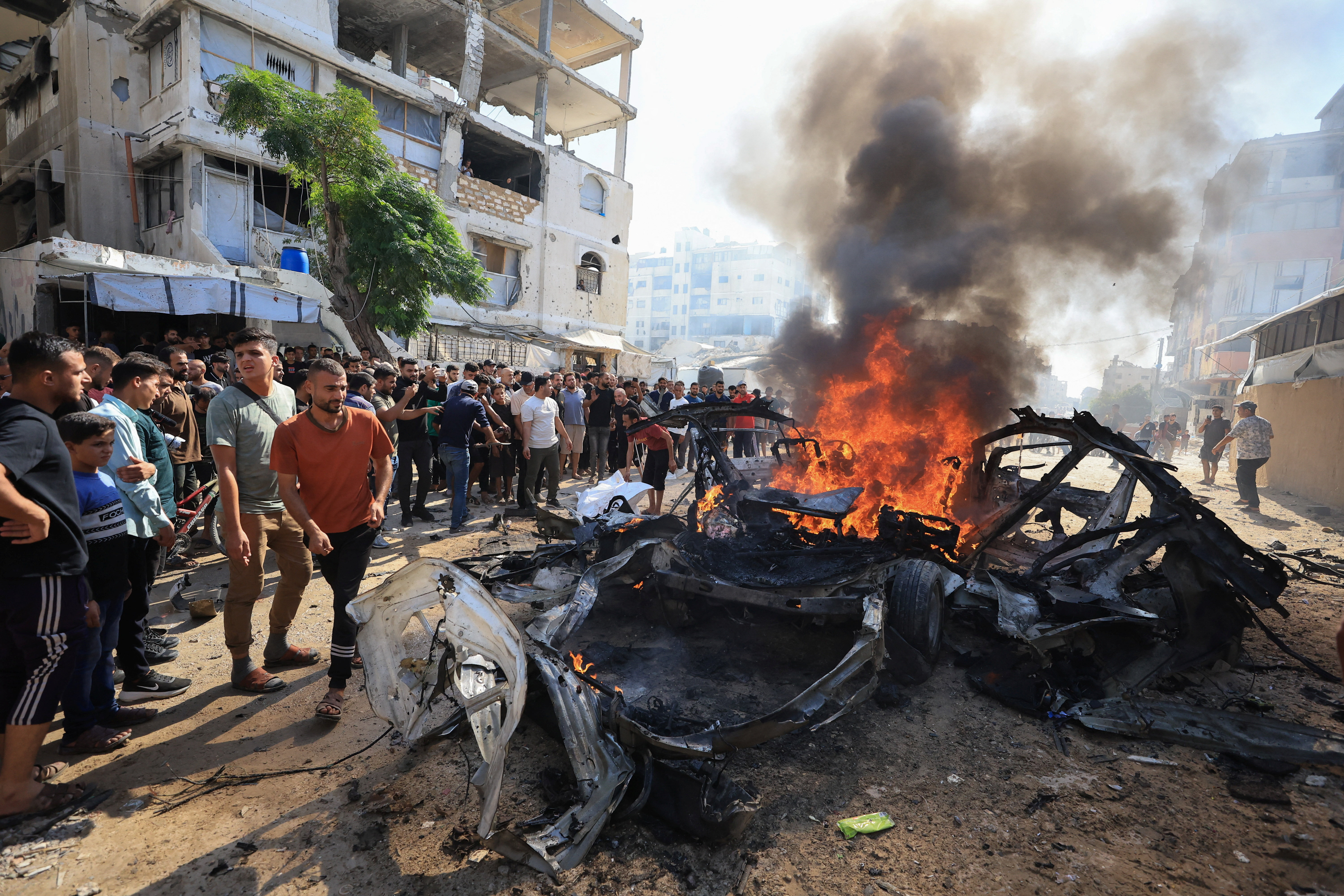
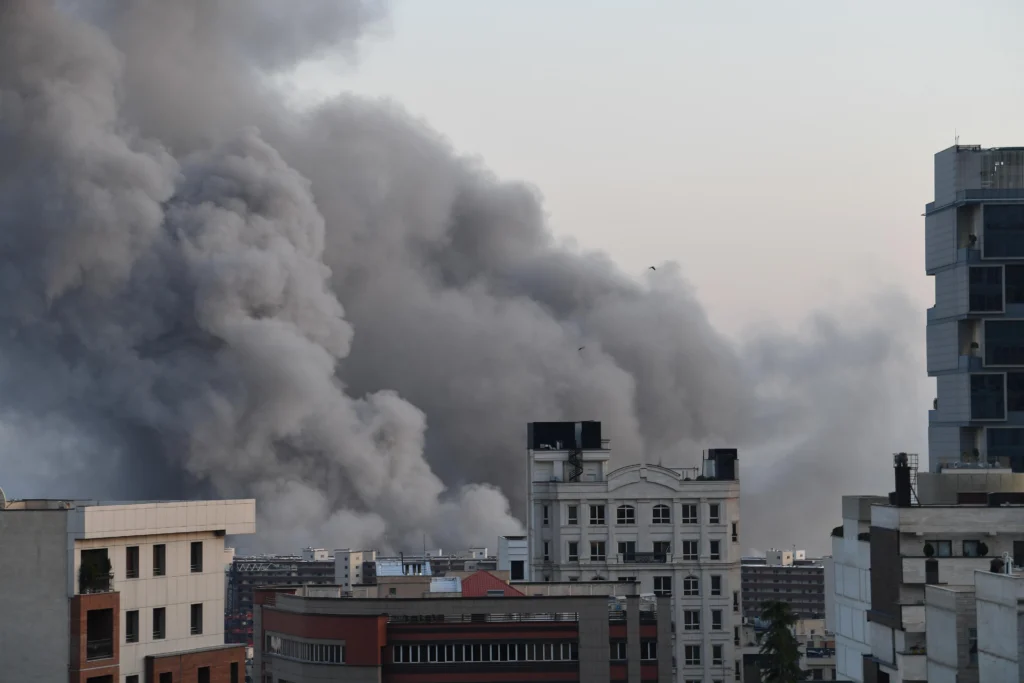
In Gaza City, a strike on a car killed at least one person, medics said. They earlier said there had been two deaths. A crowd gathered around the burning wreckage, as orange-vested emergency crews sprayed it with water, photos from the scene showed.
Other strikes killed a Palestinian man on a bike in the southern city of Khan Younis and a man near Nuseirat refugee camp in central Gaza, and gunfire killed a woman near the Jabalia refugee camp, in the north, the medics added.
Israel’s military said it had struck Hamas militants in Khan Younis, Nuseirat and Gaza City, but that it was not aware of the reported incident in Jabalia.
The Hamas-led Interior Ministry in Gaza said an Israeli airstrike killed a non-commissioned officer and wounded another officer from the drug control police department after hitting their vehicle while returning from an assignment in Tel al-Hawa neighborhood.
Israel, which says the Hamas militant group has been rearming and launching attacks in violation of a year-old ceasefire, has stepped up strikes on the group in recent weeks.
Hamas has denied trying to carry out attacks or rebuild its arsenal and accuses Israel of undermining the Gaza peace deal.
Last year’s US-brokered ceasefire calls for eventual reconstruction of the territory. But little progress has been made as negotiators have failed to agree terms for Hamas to disarm and Israel to withdraw its troops.
Israeli airstrikes have continued. At least 1,500 Palestinians have been killed in Gaza since the ceasefire, according to the territory’s health officials, while Israel says four soldiers have been killed.
Palestinian authorities say more than 74,000 people have been killed in Israel’s assault on Gaza, launched after Hamas-led fighters killed about 1,200 people in southern Israel on October 7, 2023.
‘Political candidates’ once reflexive support for Israel has increasingly become a liability
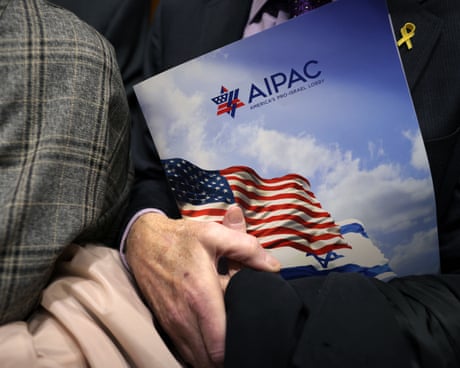
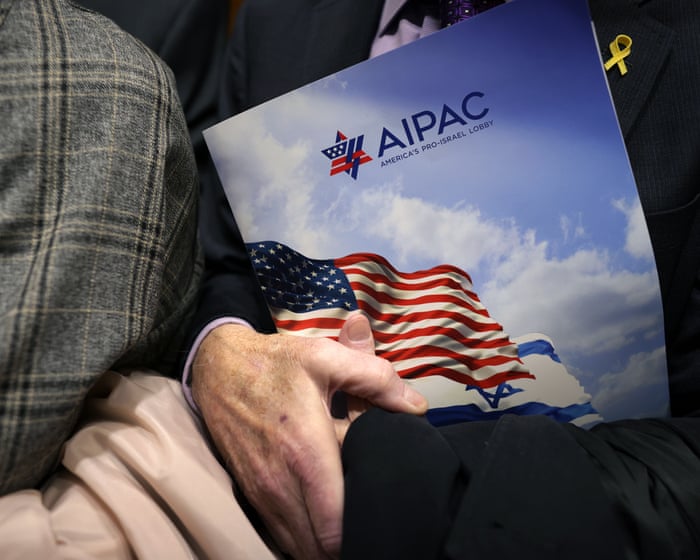
When the American Israel Public Affairs Committee, the most prominent pro-Israel lobby group in the US, announced on Wednesday that it would stop endorsing candidates or make direct contributions to them, its many critics were quick to hail the development as Aipac’s admission of howtoxic its brand had become.
The announcement marked a significant reversal that underscored just how profoundly US public opinion of Israel has shifted over the latest war in Gaza, and how political candidates’ once reflexive support for Israel has increasingly become a liability.
A letter to its supporters announced that instead of high profile endorsements and PAC donations, it will quietly mobilize individual donors for direct contributions
Warnings coincide with reports of possible Israeli plans targeting Iranian nuclear facilities.
On Thursday, Mohsen Rezaei, Secretary of Iran’s Supreme National Security Council, stated that any military aggression against his country would come at a high cost and asserted that Tehran possesses sufficient capabilities to respond to an escalation of the conflict.
The Iranian official maintained that the country is prepared to face new stages of the conflict and considered that the evolution of the regional situation has favored certain strategic interests of the Islamic Republic.
Rezaei noted that Iran has not deployed all its resources in previous phases of the confrontation and has gradually incorporated new capabilities as regional tensions have increased.
On the economic front, he warned that a prolongation of hostilities could have significant consequences for international energy markets and perpetuate a “scenario of instability for several years.”
While emphasizing his country’s capacity to respond, Rezaei reiterated that Iran continues to prioritize the diplomatic route to resolve differences and prevent a further escalation of the crisis.
⚡️BREAKING: Iran has just Unveiled A New Long-Range One-Way Attack Drone
It is said to have a new navigation system and a 2x bigger warhead than previous generations and stealth characteristics pic.twitter.com/ksNbqnAgVB
His statements coincide with reports of possible Israeli plans targeting Iranian nuclear facilities, strategic infrastructure, and energy sectors, amid escalating tensions in the Middle East.
Journalistic analyses have also circulated linking potential military actions to the evolving political landscape in the United States and to debates on security policy in the region.
Meanwhile, sources cited by Iranian media have expressed concern about possible coordination between the United States and Israel, while questioning the effectiveness of current diplomatic mechanisms for reducing tensions.
This warning comes as the trade war that began in late February between the United States, Israel, and Iran approaches its eighth month, impacting maritime routes through the Strait of Hormuz and exerting continued pressure on international energy prices.
#Iran | The IRGC Navy warned of sanctions against vessels crossing the Strait of Hormuz with identification systems switched off. The warning follows reports of an oil tanker striking a naval mine and catching fire, raising further concerns over maritime security.… pic.twitter.com/n3gt6aLNVS
El bloqueo amenaza la industria de defensa, paraliza la investigación científica y expone al país a una eventual parálisis comercial ante posibles decisiones drásticas en la ONU y el Congreso de EE. UU.
O secretário-geral da ONU exige fim da ocupação israelita e solução de dois Estados, enquanto 80 ativistas foram detidos durante apanha da azeitona perto de Belém.
António Guterres relembrou ataques diários de colonos israelitas contra comunidades palestinianas, bem como os ataques que têm acontecido contra jornalistas
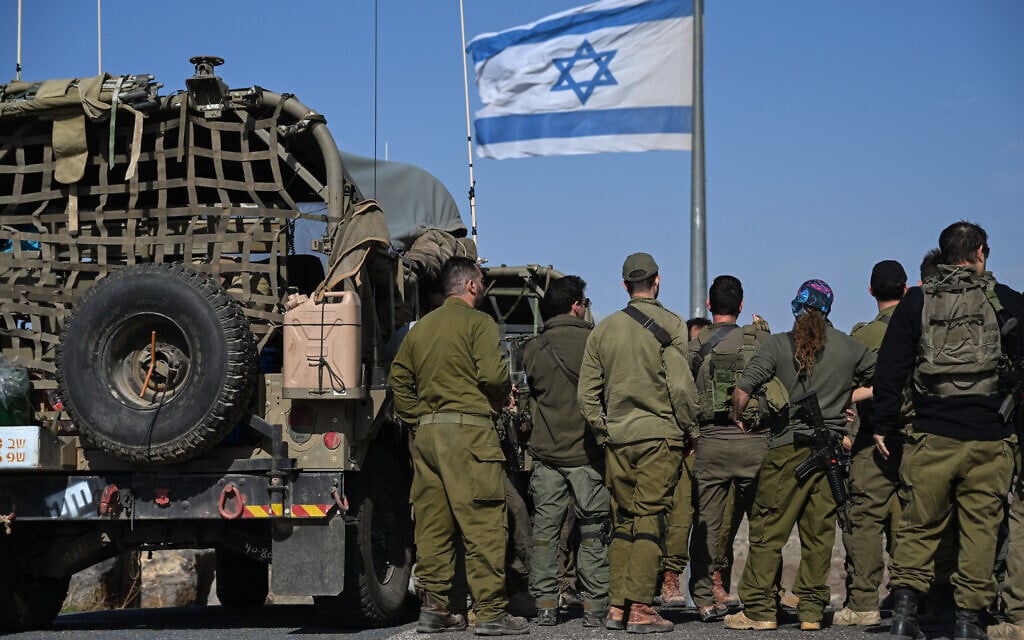
A Força Aérea de Israel realizou um exercício militar na segunda-feira (19) perto da fronteira do Irã. A operação contou com dezenas de caças e aeronaves de reabastecimento em voo, e acontece a cerca de uma semana das eleições parlamentares israelenses.
Segundo o site Axios, o exercício foi realizado a mais de 1.280 quilômetros de Israel, e a rota seguida foi compatível com a de um possível ataque contra o Irã, passando pelo espaço aéreo da Síria e do Iraque.
De toda forma, à medida que as aeronaves militares israelenses se aproximavam da fronteira iraniana, faziam o retorno e voltavam para Israel, ainda de acordo com fontes ouvidas pela Axios.
Israel notificou os Estados Unidos com antecedência e classificou a operação como um exercício de treinamento voltado para “projeção de poder”. Com isso, o objetivo seria evitar que o Irã lançasse ataques antes das eleições.
Autoridades americanas e israelenses pontuaram à Axios que a missão não foi incomum, mas o site ponderou que ela poderia ter levado a um erro de cálculo que reacendesse a guerra.
“Algumas fontes americanas relataram ter a impressão de que Israel esperava que os iranianos disparassem contra as aeronaves, o que forneceria uma justificativa para lançar ataques contra o Irã”, destaca a reportagem.
A Fox News também noticiou que a Força Aérea de Israel fez o exercício militar perto do Irã.
Trump decide não atacar o Irã antes de eleições
Os exercícios militares de Israel são feitos em um momento delicado da guerra no Oriente Médio. Sem acordo para fim definitivo do conflito, a navegação no Estreito de Ormuz continua com níveis reduzidos, o que influencia alta no preço do combustível pelo mundo.
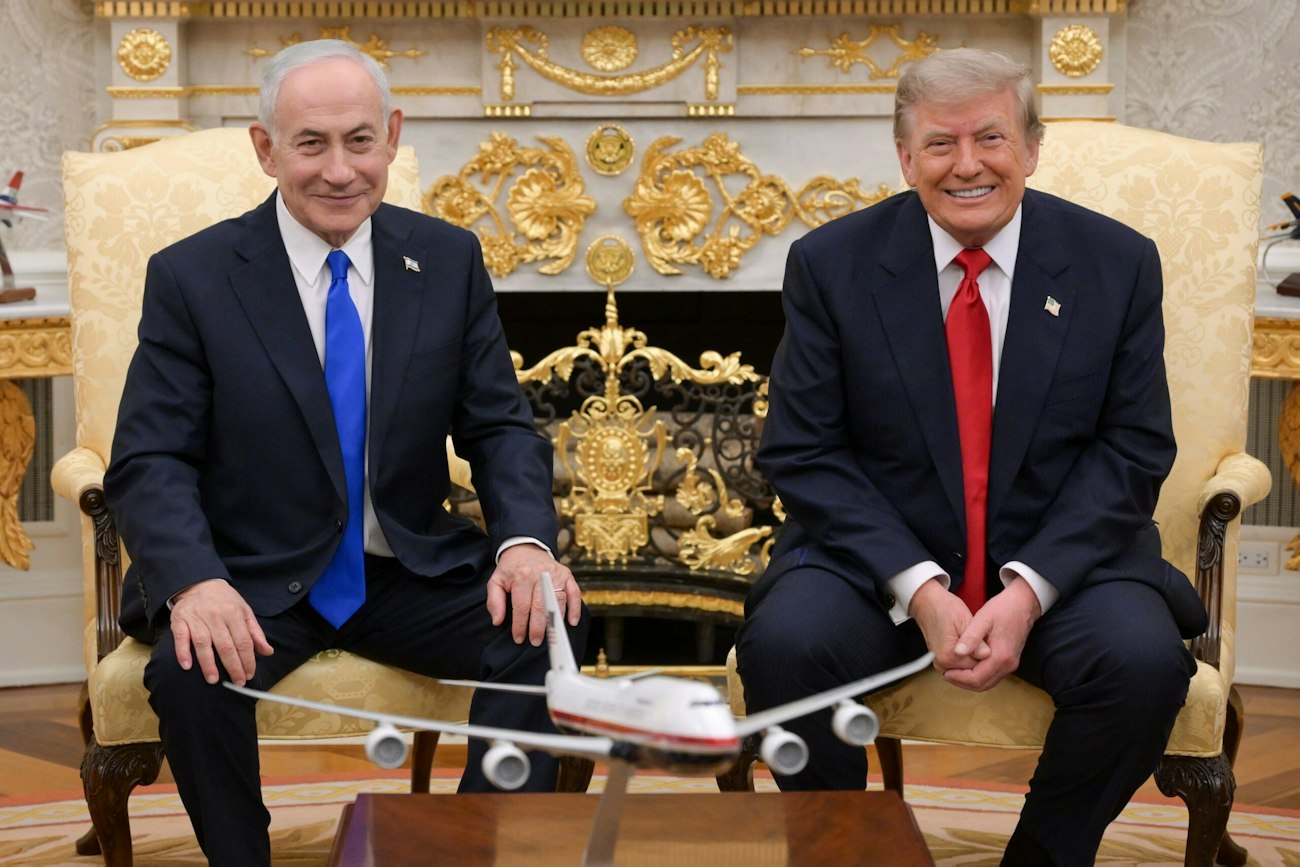
Donald Trump, presidente dos Estados Unidos, e Benjamin Netanyahu, primeiro-ministro de Israel, chegaram a discutir no início de outubro a possibilidade de lançarem mais ataques contra o Irã, ainda de acordo com a Axios.
O site relata que o premiê disse ao líder americano que informações de inteligência indicam que o Irã estaria tentando reconstruir seu programa nuclear — o principal motivo do início da guerra.
Trump pareceu inclinado a retomar os ataques, mas, posteriormente, decidiu não realizar uma nova operação militar, destacou a Axios.
O presidente dos EUA, inclusive, afirmou publicamente que não atacará o Irã até as Midterms, as Eleições de Meio de Mandato, que acontecerão em 3 de novembro.
Por fim, a Axios destacou que o chefe do Estado-Maior das Forças de Defesa de Israel, tenente-general Eyal Zamir, “não permitirá qualquer atividade militar injustificada que possa comprometer” as eleições parlamentares israelenses de 27 de outubro, segundo fontes.
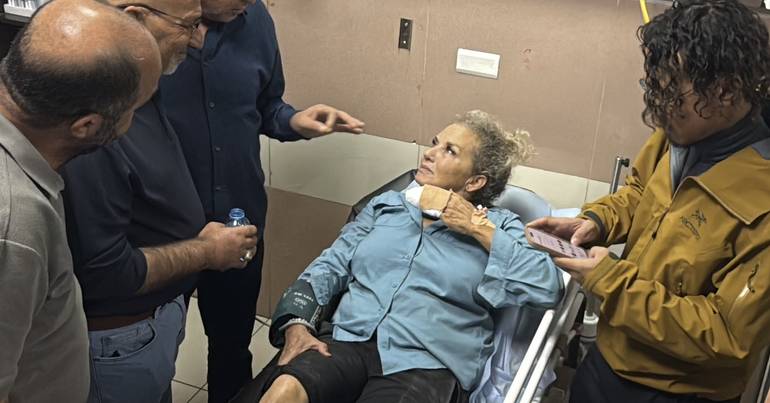
Heidi Levine recorda como jovens palestinianos a salvaram do ataque de colonos israelitas. "Nem consigo contar quantas vezes me bateram, provavelmente mais de 100", diz, prometendo voltar ao terreno.
Israel's war has raised the possibility that one of Christianity's oldest communities could disappear from its ancestral homeland. Before 2023, 1,000 Christians lived in Gaza. Today, only about 500-600 remain. See the history & current situation
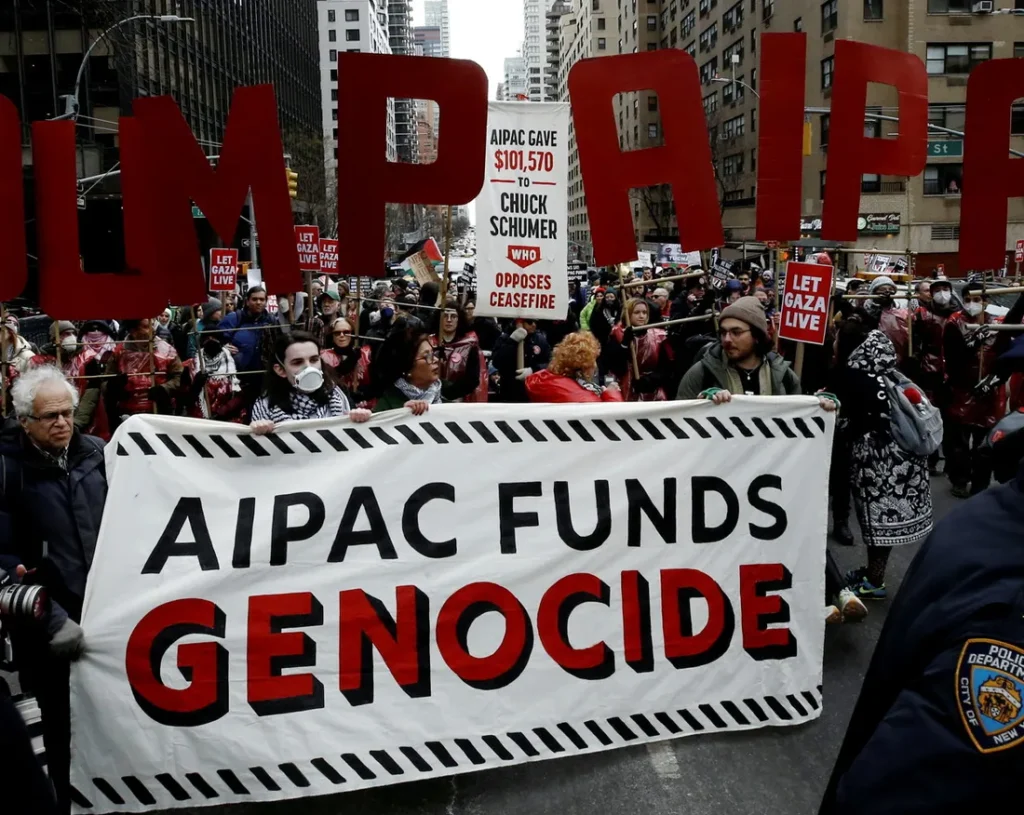
Sen. Bernie Sanders (I-Vt.) and the American Israel Public Affairs Committee (AIPAC) feuded online Thursday over donations from the PAC to Republican Michigan Senate candidate Mike Rogers. “AIPAC is now spending as much as $9 million against Abdul El-Sayed. AIPAC is why we’re at war in Iran. AIPAC is why the U.S. has supported genocide…
Sen. Bernie Sanders (I-Vt.) and the American Israel Public Affairs Committee (AIPAC) feuded online Thursday over donations from the PAC to Republican Michigan Senate candidate Mike Rogers. “AIPAC is now spending as much as $9 million against Abdul El-Sayed. AIPAC is why we’re at war in Iran. AIPAC is why the U.S. has supported genocide…
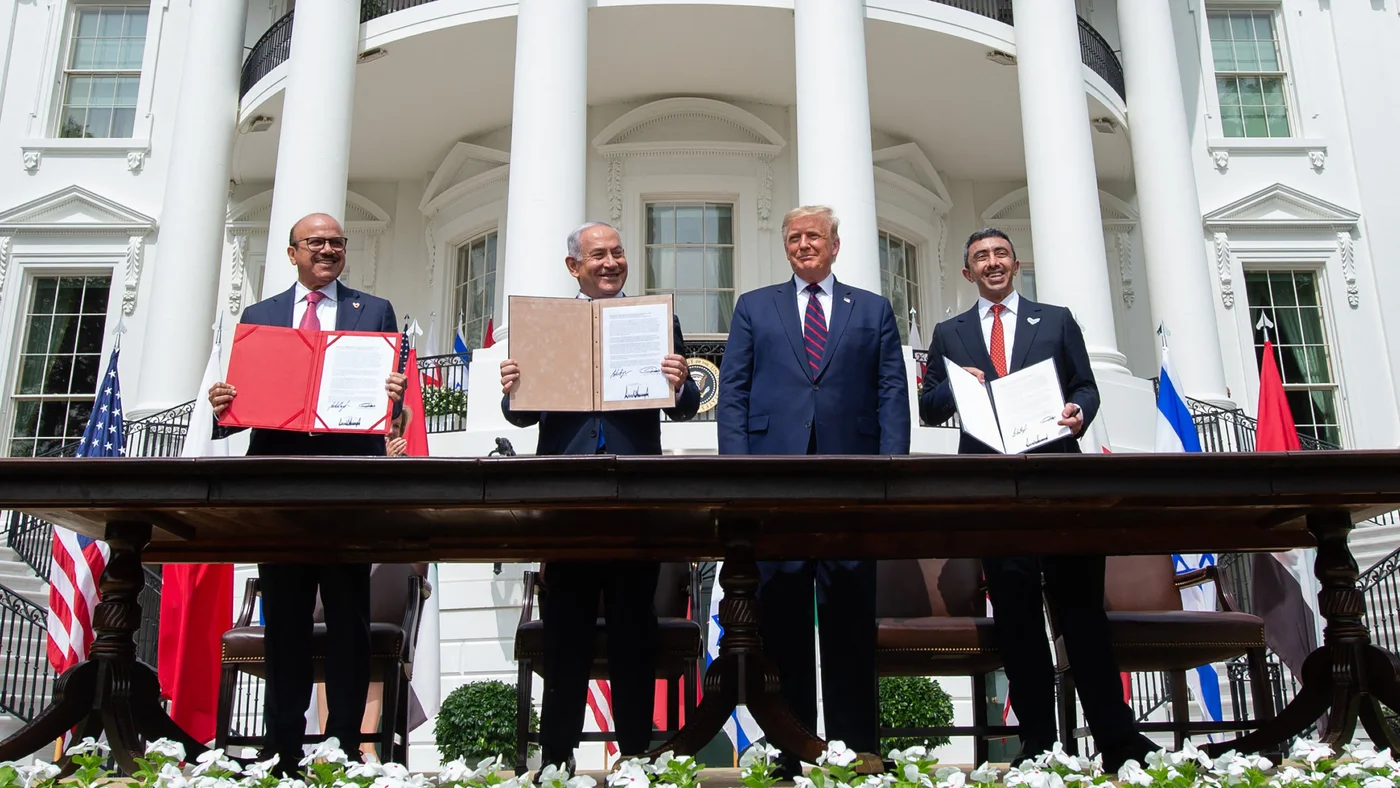
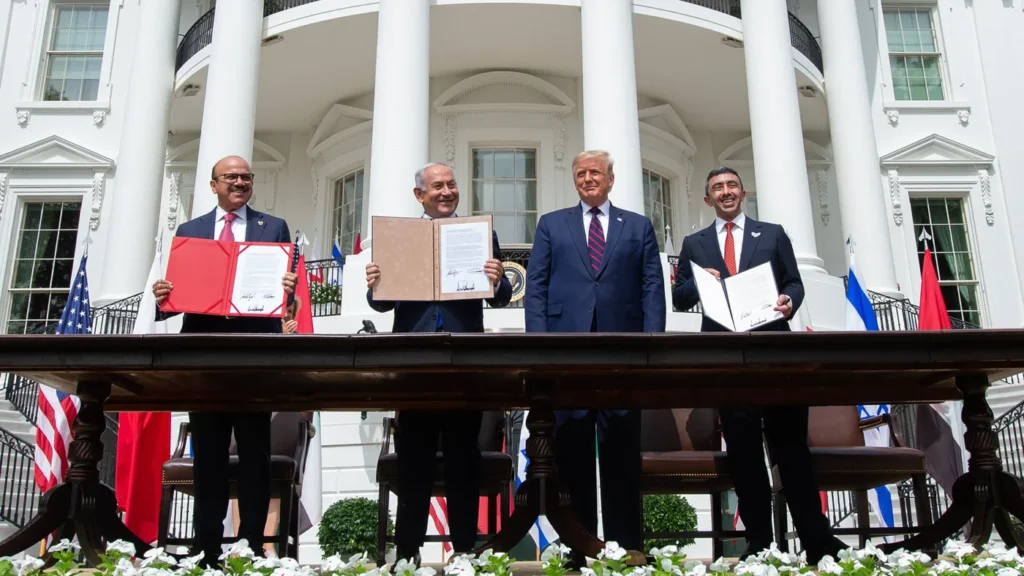
Six years after the Abraham Accords, a new report by a former Israeli intelligence chief outlines a doctrine treating peace deals as temporary and regional instability as an asset. (This the latest chapter of a decades long Israeli strategy)
Two days of negotiations between Israel and Lebanon in Florida has concluded without any meaningful deal. Given how little the last seven deals between the two sides actually accomplished, the fact they weren’t able to come to even a token agreement is really saying something. Compounding the failure of these talks, no date was yet […]
Israeli strikes and gunfire have killed at least four Palestinians in Gaza on Thursday, health officials told Reuters, as the IDF continues its constant violations of the US-backed ceasefire deal. One strike hit a car in Gaza City, killing at least one Palestinian. In Jabalia, northern Gaza, Reuters reported that a woman was killed by […]
Survey finds 70% of reservists have put off or abandoned career moves due to prolonged service, and only about a quarter say state assistance met their needs
Breast cancer, flour crises in Gaza as Israel considers restarting "war" ■ Danger for Palestinians, Americans (including Jews) in West Bank ■ News on Iran, US politics, AIPAC, free speech ■ More
Emergency measures and partial supplies received so far are insufficient to maintain operational capacities.
On Thursday, the Gaza Ministry of Health warned of the complete depletion of oil and lubricant reserves needed to operate the electric generators that keep the enclave’s hospitals running.
Health authorities warned that this situation poses an immediate threat to the continuity of medical services, as hospitals rely on alternative power systems to treat hundreds of patients daily.
According to the ministry, the lack of lubricants will cause rapid mechanical deterioration of the generators that are still operational, increasing the risk of breakdowns and sudden equipment shutdowns.
The potential collapse of these systems would directly affect critical areas such as intensive care units, emergency operating rooms, and neonatal units requiring incubators.
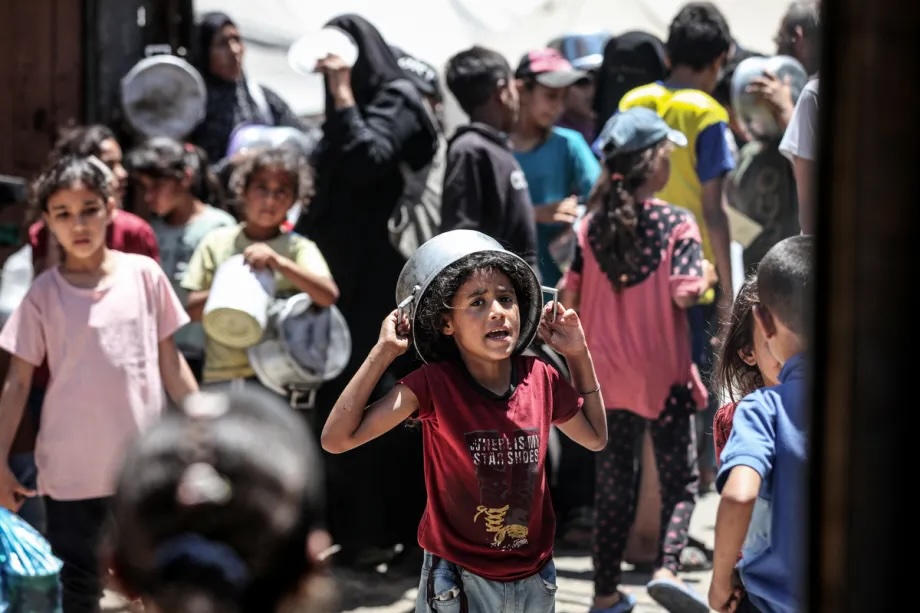
🚨 Due to funding shortages, WFP is forced to reduce food assistance in Gaza by around one-third, meaning half a million people will lose access to critical aid.
The cuts come as winter approaches and the recent modest improvements in food security remain fragile.
Authorities specified that Gaza hospitals need more than 2,500 liters of these supplies per month to ensure the uninterrupted operation of their energy infrastructure and meet the high demand for healthcare.
The Ministry added that the emergency measures and partial supplies received so far are insufficient to maintain the operational capacity of the teams, which are subjected to continuous work shifts and extreme conditions.
Given the seriousness of the situation, health authorities made an urgent appeal to international organizations and humanitarian entities to facilitate the immediate entry of lubricants, spare parts, and technical materials to prevent the collapse of the enclave’s hospital network.
Israel has arrested more than 2,000 Palestinian children since the start of the Gaza Strip genocide, and at least 350 remain detained under severe conditions, according to a report this week from the Palestinian Prisoners Society.
On October 21, the Financial Timesreported that Benjamin Netanyahu had instructed his military to prepare a multi-day bombing campaign against Iran for the weekend of October 10—only for Donald Trump to block it until after the November 3 midterms . The operation would have targeted electricity plants, nuclear facilities, and regime sites, surpassing the intensity of the joint offensive launched in February. Trump’s opposition did not end the war. It rescheduled it.
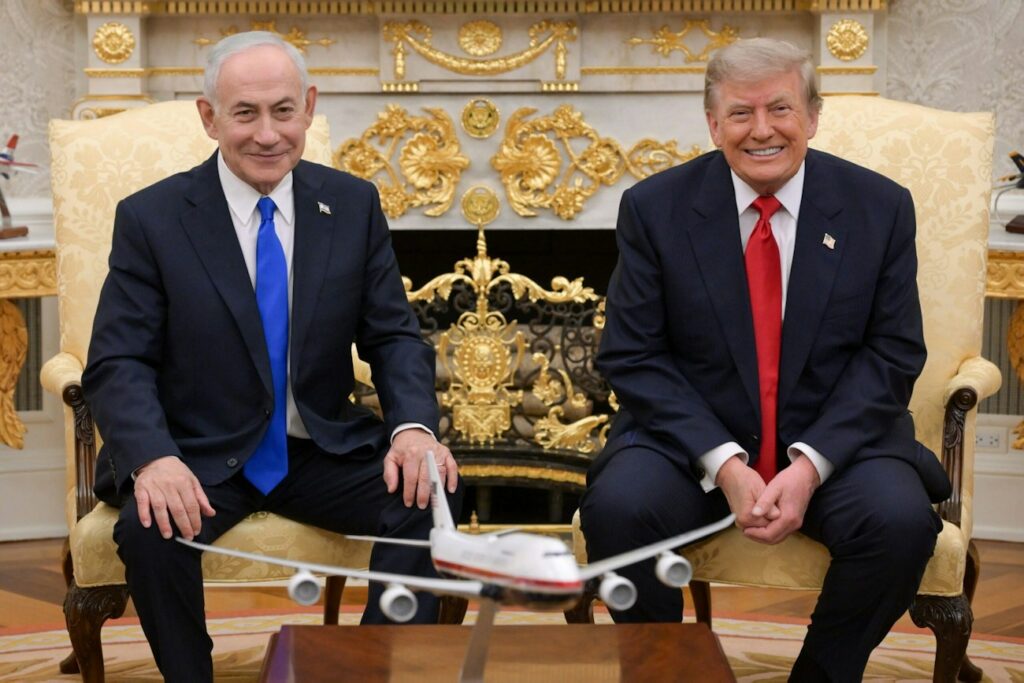
That distinction is the entire story. The veto is being presented as proof that Washington can restrain Jerusalem. In reality, it is a demonstration of an alliance leash—a tether that permits tactical friction while leaving the strategic architecture of the war untouched. Trump can pull the leash to protect Republican seats. Netanyahu can pull it to protect Likud seats. Neither pull ends the war. Both manage the calendar.
The FT report is clear that the operation was not cancelled, only deferred. “There will either be a deal or an attack,” one person familiar with the matter said. US Defense Secretary Pete Hegseth traveled to Israel on Monday to meet Netanyahu, and Israeli officials presented an updated target bank that included civilian infrastructure not struck earlier in the year. The machinery of escalation remains fully assembled. The only variable that changed was the date.
The strongest defense of the White House is that Trump’s veto proves American primacy. If Washington can tell Jerusalem no, the argument goes, the leash is in American hands. But this confuses a pause with a strategy. The veto covered only the period before November 3. It did not define war aims, set an end date, or require congressional authorization. It was a tactical deferral, not a strategic reversal.
The midterms themselves are a powerless-ballot exercise in war governance. Voters are being told the election is about affordability. They are not wrong. Gasoline has reached $4.28 a gallon, $1.20 higher than a year ago, and half of registered voters name the cost of living as their top concern . Trump’s approval sits at a record-low 31%. But neither party is offering a vote on whether the war should continue, expand, or end. The ballot ratifies a choice between managers of a war that was never put to a vote.
Congress has tried to assert itself. The House has passed war powers resolutions three times, and the Senate approved one on its tenth attempt—only for Republican senators to reverse course the next day after Trump berated them.
The cost of the conflict has reached at least $38 billion, with the Congressional Budget Office estimating an additional $3 billion for every month it continues. The stockpile of interceptor missiles is so depleted that rebuilding it could take five years. None of this has produced a binding vote to end the war. The legislature has rendered itself a spectator.
Netanyahu’s own calendar is just as cynical. Israel votes on October 27. Netanyahu has said a preemptive strike before the election would be “inconvenient”. Israeli commentators have reported that he fears a military campaign in the final stretch could cost Likud power. The alliance leash runs in both directions. Washington pulls it to protect Republican seats. Jerusalem pulls it to protect Likud seats. The war is paused not because either capital has decided it should end, but because both leaders have decided the timing is wrong for their own electoral survival.
For American voters, the question is not whether Trump can overrule Netanyahu on a given weekend. The question is who decides when the war ends, on what terms, and at what cost.
On the current trajectory, those decisions are being made in confidential channels between two executive offices, insulated from legislative oversight and electoral accountability. The ballot is powerless to alter the war’s direction because the war’s direction was never on the ballot.
The real test comes after both elections. If the deferral becomes a pathway to diplomacy, Trump’s veto will have meant something. If it becomes a pause before a new round of strikes—as the updated target bank suggests—then the only thing that changed was the calendar. Independence is not the ability to delay a war. It is the ability to end one on terms you can defend.
La institución de salud precisó que los centros hospitalarios requieren un volumen mensual superior a los 2.500 litros de insumos para sostener el funcionamiento ininterrumpido de sus estructuras energéticas.

 Login