❌

Reading view

Europe’s Student Protests Spark Debate Over the Muslim Brotherhood’s Influence 


A wave of student protests has spread across several European countries in recent weeks, with France at its centre, where demonstrations over staff shortages, underfunded schools and run-down facilities have continued since mid-September.

The French protests began on September 17th, when teachers at a high school in south-eastern Paris protested over staff shortages and students joined them, Australia’s ABC News reported. Demonstrations followed in Spain, Belgium, Italy, Portugal and Albania, and smaller protests took place in Greece, Austria, Ireland and Germany, according to the same report. What began over education has since widened to include the cost of living and public-sector cuts.

In this context, the Forum of European Muslim Youth and Student Organisations (FEMYSO) has come under the spotlight following its announcement of support for student protests in France and Belgium, and subsequently in Albania.

Several European reports have drawn links between FEMYSO and the Muslim Brotherhood, describing the student forum as the organisation’s youth wing. Among the most notable is a report by a French National Assembly investigative committee, published in December 2025, which points to close ties between the forum and networks linked to the Muslim Brotherhood and characterises its role as contributing to the spread of the movement’s ideas across Europe.

In a parliamentary question submitted in 2025, Germany’s Baden-Württemberg State Office for the Protection of the Constitution was cited as viewing FEMYSO as an umbrella organisation for youth groups with links to the Muslim Brotherhood.

FEMYSO, however, rejects these allegations. In a previous statement, the organisation affirmed that it has no ties to the Muslim Brotherhood.

Statements of Support for Protests Across Europe

On October 9th, the forum announced its solidarity with student demonstrations in France and Belgium. On October 18, it declared its support for student and youth protests in Albania, while also referring to ongoing demonstrations in Spain and Greece in the same context.

On October 15th, 2026, the French Muslim Students Association (Étudiants Musulmans de France, EMF), a member organisation of FEMYSO, went beyond expressing solidarity. It called on students, education workers and the broader social movement to join a nationwide mobilisation scheduled for October 17th, reaffirming its support for demonstrations stretching from Paris to Marseille and from Bordeaux to Strasbourg.

In a statement, EMF stressed the need to build a balance of power through protests. The statement came just two days before large-scale demonstrations took place across France, attracting hundreds of thousands of participants in largely peaceful gatherings before separate groups became involved in acts of violence, looting, arson and attacks on police officers and public buildings. These incidents reportedly resulted in more than 1,000 arrests and injuries to dozens of security personnel.

Such initiatives and calls for participation in demonstrations have raised concerns that political Islamist networks may seek to capitalise on public discontent, particularly when protests are accompanied by public disorder or acts of vandalism. This, critics fear, could turn student and social demands into instruments for expanding organisational influence and securing political leverage.

According to official French data, masked and violent individuals were present at the demonstrations. In several cities, shops were looted, while cars and rubbish bins were set on fire. In the city of Limoges, flames engulfed the historic town hall, a building dating back to 1883.

The same data indicated that 1,800 people had been arrested and more than 500 police officers and firefighters had been injured. In response to the violence and rioting, the French government announced the imposition of curfews in several cities.

Concerns Reach the Heart of European Institutions

These developments come at a time when the activities of organisations suspected of having links to the Muslim Brotherhood are facing increasing political scrutiny.

On September 15th, 2026, French MP Constance Le Grip submitted a written question to the government concerning European funding for projects involving FEMYSO, calling for clarification of funding mechanisms and oversight procedures governing grants.

The question followed recent reports and studies that raised concerns over the continued involvement of FEMYSO in projects benefiting from European funding, despite an earlier announcement by the European Commission that the organisation was no longer receiving direct funding.

FEMYSO has consequently become one of the most contentious issues in the wider European debate.

A recent study published by CERIF and AK Polis in September examined the organisation’s participation in the EmpowerAction project, which forms part of the TACKLE initiative funded by the European Union through its DEAR programme.

According to the study, the funding does not necessarily take the form of a direct EU operating grant to FEMYSO. Instead, it may be channelled through partner organisations, projects and sub-granting mechanisms.

This has raised concerns that European funds could reach an organisation through a project led by another partner or through a consortium and its sub-granting arrangements.

Against the backdrop of FEMYSO’s visibility in the protests, some of which were subsequently accompanied by violence and looting, as well as allegations of links to the Muslim Brotherhood, concerns have emerged over the possibility that the organisation could gain a foothold in current social unrest and convert it into political influence by winning the sympathy of European communities and left-wing parties.

FEMYSO: Background, Membership and European Footprint 

The Forum of European Muslim Youth and Student Organisations (FEMYSO) describes itself as a European umbrella organisation bringing together Muslim youth and student associations.

FEMYSO currently comprises 32 member organisations across 22 European countries. Its roots date back to 1995, when the first meeting of Muslim youth organisations was held in Sweden.

The following year, FEMYSO was formally established at a meeting in Leicester, United Kingdom, which brought together 19 organisations from 11 countries. In 2000, the forum established its headquarters in Brussels.
  •  

JD Vance Says Abdul El-Sayed Shows 'Revulsion to Native-Born Americans'

Abdul El-Sayed should be asked why he tried in 2017 to conceal his birth in the United States, Vice President JD Vance told streaming host Mark Halperin.

The post JD Vance Says Abdul El-Sayed Shows ‘Revulsion to Native-Born Americans’ appeared first on Breitbart.

  •  

Ohio State disputes medical school admissions discrimination finding

Ohio State University (OSU) is disputing allegations from the Department of Justice (DOJ) that it is discriminating in the admissions process for its medical school.   The DOJ sent a letter Wednesday to the OSU College of Medicine alleging the school intentionally discriminated against applicants on the basis of race, particularly Asian applicants, to the benefit of Black…

  •  

European Parliament Awards Sakharov Prize to ICC Amid Escalating US Sanctions

The European Parliament has awarded the 2026 Sakharov Prize for Freedom of Thought to the International Criminal Court (ICC) and its officials, recognising the Hague-based tribunal’s work in investigating and prosecuting war crimes, crimes against humanity and genocide.

Announcing the decision in Strasbourg on Thursday, 22 October, European Parliament President Roberta Metsola said the award reflected the European Union’s commitment to multilateralism and international institutions.

Metsola praised the Court for its work in upholding international law and justice. The announcement was met with a standing ovation in the parliamentary chamber.

The decision comes amid an escalating confrontation between the European Union and the administration of US President Donald Trump over the ICC’s jurisdiction and independence.

Washington’s sanctions against the Court

On 9 October, the United States imposed sanctions on the ICC as an institution, extending measures previously directed against individual judges and prosecutors.

The restrictions place the Court under the US Treasury’s sanctions regime, limiting financial transactions involving American individuals, businesses and institutions. Washington has issued several temporary and limited exemptions intended to allow specified operations to continue.

The measures followed earlier sanctions against senior ICC officials, including Court President Tomoko Akane, and form part of Washington’s campaign to prevent the tribunal from exercising jurisdiction over American personnel.

US Secretary of State Marco Rubio has argued that the ICC threatens American sovereignty by asserting authority over nationals of countries that have not accepted its founding treaty.

The Court rejected the latest restrictions, describing them as an attempt to obstruct the administration of international justice.

Established under the Rome Statute, the ICC operates independently of national governments and investigates serious international crimes where its jurisdictional requirements are satisfied.

Neither the United States nor Israel is a party to the Rome Statute.

Arrest warrants involving Russia and Israel

The dispute with Washington has intensified since the ICC issued arrest warrants in November 2024 for Israeli Prime Minister Benjamin Netanyahu and former Defence Minister Yoav Gallant over alleged war crimes and crimes against humanity connected with military operations in Gaza.

Israel rejects the Court’s jurisdiction and disputes the allegations. Washington has similarly opposed the proceedings against Israeli officials.

The ICC has also pursued investigations into Russia’s invasion of Ukraine. In March 2023, its judges issued arrest warrants for Russian President Vladimir Putin and Maria Lvova-Belova, Russia’s commissioner for children’s rights, over the alleged unlawful deportation and transfer of Ukrainian children.

Further warrants followed in 2024 against senior Russian military commanders and officials in connection with attacks on Ukraine’s civilian infrastructure.

The proceedings demonstrate the geographical scope of the Court’s investigations, although its ability to secure arrests depends heavily on cooperation from individual states.

The ICC has no independent police force and relies on national authorities to execute its warrants.

European Parliament backs international justice

The ICC’s nomination for the Sakharov Prize was submitted by the Socialists and Democrats group in the European Parliament.

Its selection comes as European lawmakers examine how the EU should respond to American sanctions affecting the Court and organisations supporting its activities.

The October restrictions have raised practical questions about access to banking, technology services and other infrastructure required by the tribunal.

European governments must also consider how to support an institution established through an international treaty while maintaining relations with Washington.

The Sakharov Prize carries no legal authority to reverse American sanctions or compel governments to cooperate with ICC investigations. Nevertheless, the award represents an explicit institutional endorsement of the tribunal at a time when its operations face increasing external pressure.

Other nominees and award ceremony

The ICC was selected from three finalists announced earlier this month.

The other nominees were Tanzanian opposition leader Tundu Lissu and Iranian sisters Taraneh and Romina Rahimi, whose cases have attracted international attention over political persecution and judicial proceedings.

The Sakharov Prize, established by the European Parliament in 1988, is named after Soviet physicist, dissident and Nobel Peace Prize laureate Andrei Sakharov.

It recognises individuals and organisations defending human rights, freedom of expression and fundamental liberties. The award includes €50,000.

Previous recipients include Nelson Mandela, Malala Yousafzai and imprisoned journalists.

In 2025, the prize was awarded jointly to Belarusian journalist Andrzej Poczobut and Georgian journalist Mzia Amaglobeli.

The formal presentation of the 2026 prize is scheduled for 16 December at the European Parliament in Strasbourg.

The award places the ICC alongside previous Sakharov laureates while drawing further attention to the unresolved dispute between Washington and European governments over international criminal jurisdiction.

  •  

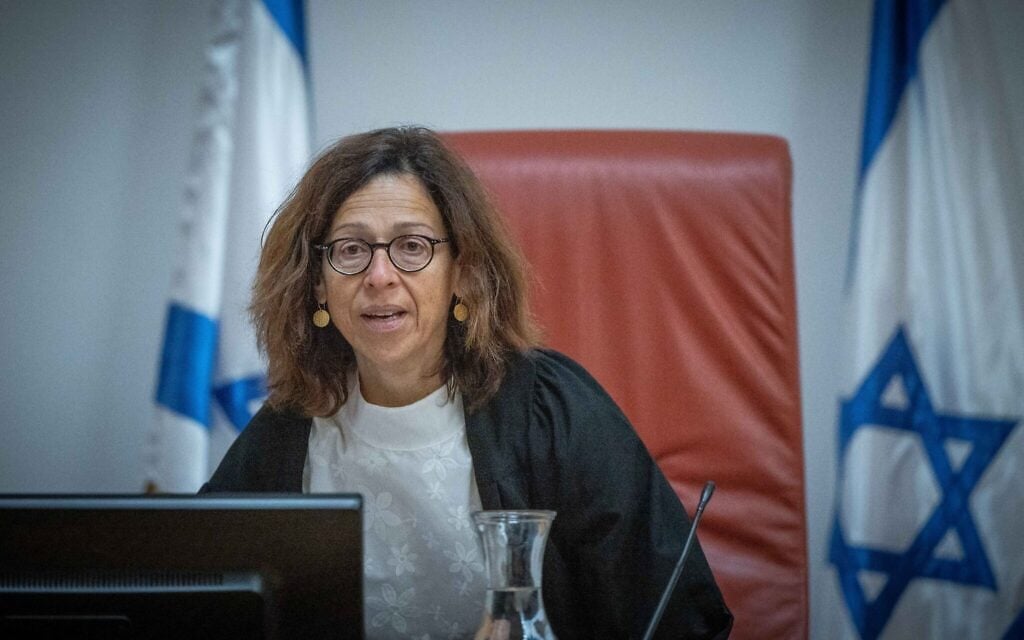
AG: Over 67,000 Haredi men are dodging draft, High Court must weigh more sanctions

In update to court, Baharav-Miara says Haredi draft is up year over year, but still far below IDF enlistment targets; blames 'absence of a coherent government policy' on issue
  •  

Criminals who refuse to attend sentencing face losing prison privileges under new rules

England and Wales judges to be able to keep inmates in cells for longer or stop visits if they refuse to face victims’ families in court

Offenders who refuse to face their victims’ families in court for sentencing could be stripped of privileges or kept in cells for weeks under government changes granting wider powers to judges in England and Wales.

The imposition of new prison sanctions, coming into effect next year, builds on existing laws that order offenders to attend sentencing or face a fine or be jailed for a further two years for contempt of court.

Continue reading...

© Photograph: Carl Court/Getty Images

© Photograph: Carl Court/Getty Images

© Photograph: Carl Court/Getty Images

  •  
❌