❌

Reading view

European Parliament Urges to Abandon Fossil Fuels Faster

MEPs called for more ambitious action to reduce emissions and avoid further increases in temperature.

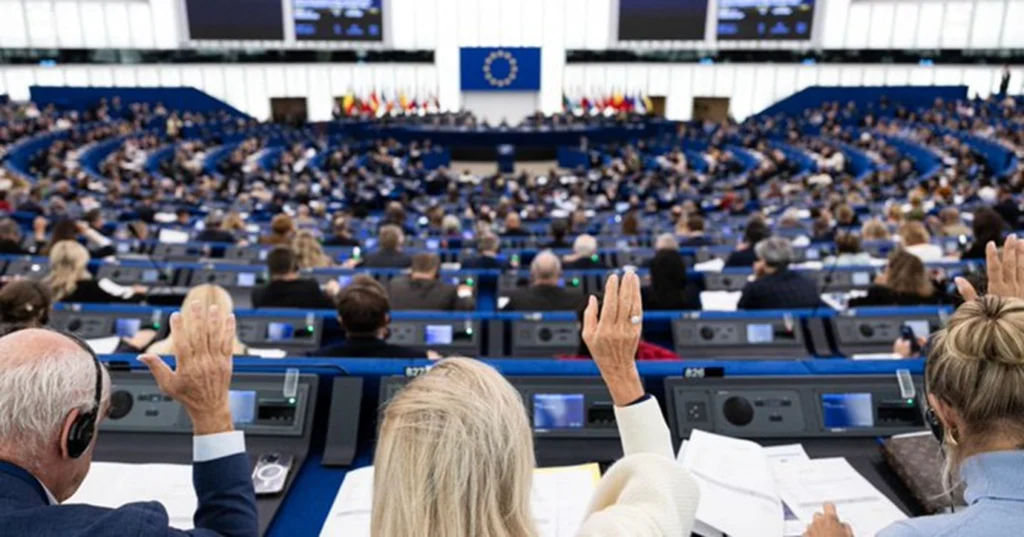
On Thursday, the European Parliament called on the European Union (EU) to define a timetable to progressively abandon fossil fuels and assume a leading role in the COP31 negotiations, which will be held in November in Turkey.

RELATED: Europeans Rise Up in Resistance to Austerity Measures

The resolution was approved after the 27 member states adopted a common position for the climate summit, in which they recognize that the goal of limiting global warming to 1.5 degrees faces increasing difficulties.

MEPs called for more ambitious action to reduce emissions and avoid further increases in temperature, insisting on the need to accelerate the energy transition.

The text urges the EU to promote an international treaty on the non-proliferation of fossil fuels and to establish concrete timetables to gradually eliminate subsidies and production of oil, gas and coal.

The European Parliament also requested that the EU itself adopt a clear strategy to abandon these energy sources in all sectors of the economy and serve as an international reference.

Ahead of COP31 climate talks in Türkiye, Parliament calls for speeding up the global exit from fossil fuels, increasing climate financing and making it fairer for vulnerable countries, and delivering on adaptation and loss-and-damage pledges.

Learn more➡️ https://t.co/vfWVJhvC8G pic.twitter.com/IaRuSAQ8Om

— European Parliament (@Europarl_EN) October 22, 2026

The parliamentarians stressed that dependence on fossil fuels represents a risk in a context of geopolitical tension and considered that decarbonization strengthens European strategic autonomy.

The resolution warns that Europe is the continent that is warming the fastest, which is why it considers it essential to maintain climate commitments and avoid a setback in environmental policies.

In addition, the European Parliament called for increasing international financing for climate adaptation, compensation for loss and damage, and support for the most vulnerable countries against the effects of climate change.

A delegation of fifteen MEPs will participate in COP31 to champion these priorities, which include strengthening climate finance and promoting greater protection of ecosystems and biodiversity.

From Greece to France: Education Protests Sweep Europe

Thousands of students, teachers, and public-sector workers marched through Athens and across Greece on Wednesday, demanding urgent funding for public education, filling teaching vacancies, and relief from a mounting housing… pic.twitter.com/ti3ovtByO3

— teleSUR English (@telesurenglish) October 21, 2026

teleSUR: JP

Source: EFE

  •  

EU Parliament defies frugal capitals by seeking €7bn more for the EU’s popular Erasmus+ student scheme

The European Parliament overwhelmingly supported an increased budget and scope for the Erasmus+ student-exchange programme under the new EU budget on Thursday (22 October).

The plenary in Strasbourg opted for a €7bn increase in Erasmus+’s budget compared to the commission’s proposal, by 454 votes, with 34 abstentions, against 93, mostly from right-wing parties.

And it was an audacious move, seeing as ‘frugal’ EU capitals are pushing for €150bn of cuts to the commission’s draft.

But even a “slight increase” in Erasmus+ funds would mean more opportunities for thousands of people, said Bogdan Zdrojewski, a Polish centre-right MEP, who was the rapporteur on the file, during a parliamentary debate earlier on Wednesday.

Celebrating its 40th anniversary in 2027, Erasmus+ enables young people to study, live, and work in foreign countries both inside the 27 EU states and the programme’s 160 “associate” states worldwide.

Some 17 million people have taken part since it began, with an estimated 1 million babies also born to couples who met on exchange, in what the commission has long used as a flagship PR project for creating a feel-good factor about the EU.

Meanwhile, the UK will rejoin the programme in 2027, which means EU students will once more have the opportunity to also spend a semester in Britain, which host some of Europe and the world’s top universities.

And the parliament would also welcome Canada’s full participation in a few years’ time, Zdrojewski told press on Wednesday.

The EU Parliament would like to expand Erasmus+ to more vocational training. “Erasmus+ will be a programme for Europeans no matter what age, what stage of life,” Zdrojewski said.

And students from poorer homes should get more support to live in pricey cities abroad, he added.

The share of Erasmus+ participants who had fewer opportunities to travel under the present structure stood at 15 percent in 2023 – up from 10 percent only two years earlier, according to a commission evaluation.

“Far too often, it is still the parents’ financial situation that determines who can take part in Erasmus+ and who cannot,” said Sabrina Repp, a German socialist MEP, in Wednesday’s debate in Strasbourg.

Working students often cannot afford to quit their current job to go abroad, she added: “That is precisely what we must change.”

The EU budget talks are to be finalised early next year.

Some 83 percent of Erasmus+ participants say they gained professional skills that helped them in the labour market.

But in order for those opportunities to be available more widely, “we need more funding for this programme,” also said Lucia Yar, a Slovak liberal MEP in the Strasbourg debate.

  •  

European Parliament’s Houthi Terrorism Push Faces a Test Beyond the Label

The European Parliament’s call to designate Yemen’s Houthis as a terrorist group brings Europe’s Red Sea dilemma into sharper focus: how can the EU punish a movement threatening international commerce while protecting shipping and preserving humanitarian access?

In its latest statement, Parliament condemns Houthi missile and drone attacks against Saudi Arabia and the movement’s military offensive in Yemen. Its demand for a terrorist designation signals pressure for a tougher European response. But the distance between a parliamentary declaration and an effective security policy remains considerable. europarl.europa.eu

The underlying case extends beyond disrupted trade. Civilian seafarers have paid with their lives. EU Today’s reporting on the fatal attack against the True Confidence documented how the maritime campaign crossed a deadly threshold in March 2024. Merchant crews became targets in a conflict over which they had no control. That history gives Parliament’s initiative a compelling human dimension.

Yet a terrorist listing is a specific legal instrument. Parliament’s demand does not itself impose one. Under the EU’s counterterrorism sanctions framework, listing requires an earlier decision by a competent national authority. The Council determines additions to the list, with measures including asset freezes and restrictions on making funds or economic resources available. Political resolve must therefore become a defensible legal case.

If adopted, designation could strengthen pressure on financial intermediaries and commercial networks supporting the movement. Its practical value would depend on identifying assets, tracing transactions and coordinating enforcement across jurisdictions. A designation that changes compliance procedures without materially constraining procurement would deliver less than its advocates expect.

The operational problem is equally demanding. Financial restrictions cannot intercept an incoming missile or accompany a vulnerable tanker. Europe must sustain protection at sea while pursuing disruption ashore through sanctions enforcement, intelligence cooperation and diplomacy.

As Defence Matters examined in its analysis of Operation Aspides reinforcement, additional warships bring requirements for trained crews, weapons, aviation, maintenance and replacement deployments. The mission’s defensive mandate protects civilian shipping, but effective coverage depends on what deployed vessels can sustain. Fleet totals alone offer an incomplete measure of European capacity.

This exposes the strategic imbalance. Attackers can impose uncertainty across a shipping corridor without controlling every mile of it. Defenders must reassure commercial operators repeatedly. Even successful interceptions may leave insurers and shipowners questioning whether the next voyage is worth the risk.

The threat also reaches beyond the immediate approaches to Yemen. EU Global’s coverage of the tanker incident west of Yanbu explained the potential implications for Saudi Arabia’s alternative oil-export route. The Houthis claimed responsibility, while the maritime warning did not identify the attacker. That distinction matters: sound policy requires separating verified incidents from claims designed to amplify a movement’s apparent reach.

For Europe, the implication is broader than naval security. Pressure on shipping and energy infrastructure can transmit regional instability into freight costs, delivery schedules and business confidence. Protecting maritime access is an economic responsibility as well as a defence commitment.

There is also a humanitarian test. Measures intended to constrain Houthi leadership must preserve legitimate assistance to civilians living under its authority. The EU framework already contains humanitarian exceptions allowing specified organisations to undertake necessary transactions. Implementation must give banks and aid agencies sufficient clarity to use them.

Otherwise, excessive caution by intermediaries could obstruct permitted activity. European governments should anticipate that risk through clear guidance and working arrangements with humanitarian organisations, while maintaining scrutiny against diversion.

Parliament has raised the political stakes. Governments now face a more demanding task: combining legal pressure with resources and measurable objectives. Success should mean fewer attacks, safer crews, disrupted support networks and reliable humanitarian access.

A terrorist designation could contribute to those outcomes. Its credibility will ultimately depend on whether Europe can turn a forceful institutional statement into sustained action across finance, diplomacy and the sea.

  •  

European Parliament Awards Sakharov Prize to ICC Amid Escalating US Sanctions

The European Parliament has awarded the 2026 Sakharov Prize for Freedom of Thought to the International Criminal Court (ICC) and its officials, recognising the Hague-based tribunal’s work in investigating and prosecuting war crimes, crimes against humanity and genocide.

Announcing the decision in Strasbourg on Thursday, 22 October, European Parliament President Roberta Metsola said the award reflected the European Union’s commitment to multilateralism and international institutions.

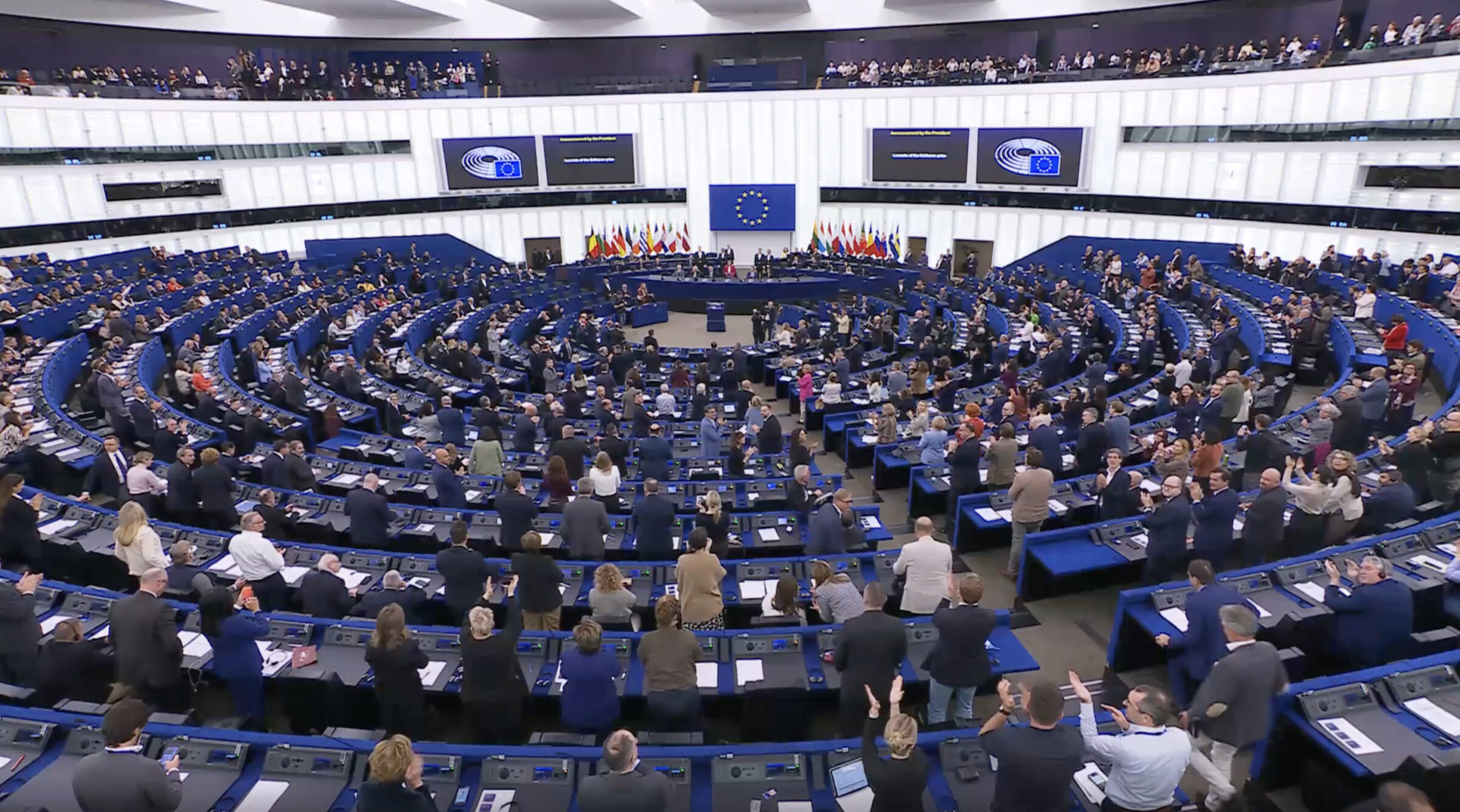
Metsola praised the Court for its work in upholding international law and justice. The announcement was met with a standing ovation in the parliamentary chamber.

The decision comes amid an escalating confrontation between the European Union and the administration of US President Donald Trump over the ICC’s jurisdiction and independence.

Washington’s sanctions against the Court

On 9 October, the United States imposed sanctions on the ICC as an institution, extending measures previously directed against individual judges and prosecutors.

The restrictions place the Court under the US Treasury’s sanctions regime, limiting financial transactions involving American individuals, businesses and institutions. Washington has issued several temporary and limited exemptions intended to allow specified operations to continue.

The measures followed earlier sanctions against senior ICC officials, including Court President Tomoko Akane, and form part of Washington’s campaign to prevent the tribunal from exercising jurisdiction over American personnel.

US Secretary of State Marco Rubio has argued that the ICC threatens American sovereignty by asserting authority over nationals of countries that have not accepted its founding treaty.

The Court rejected the latest restrictions, describing them as an attempt to obstruct the administration of international justice.

Established under the Rome Statute, the ICC operates independently of national governments and investigates serious international crimes where its jurisdictional requirements are satisfied.

Neither the United States nor Israel is a party to the Rome Statute.

Arrest warrants involving Russia and Israel

The dispute with Washington has intensified since the ICC issued arrest warrants in November 2024 for Israeli Prime Minister Benjamin Netanyahu and former Defence Minister Yoav Gallant over alleged war crimes and crimes against humanity connected with military operations in Gaza.

Israel rejects the Court’s jurisdiction and disputes the allegations. Washington has similarly opposed the proceedings against Israeli officials.

The ICC has also pursued investigations into Russia’s invasion of Ukraine. In March 2023, its judges issued arrest warrants for Russian President Vladimir Putin and Maria Lvova-Belova, Russia’s commissioner for children’s rights, over the alleged unlawful deportation and transfer of Ukrainian children.

Further warrants followed in 2024 against senior Russian military commanders and officials in connection with attacks on Ukraine’s civilian infrastructure.

The proceedings demonstrate the geographical scope of the Court’s investigations, although its ability to secure arrests depends heavily on cooperation from individual states.

The ICC has no independent police force and relies on national authorities to execute its warrants.

European Parliament backs international justice

The ICC’s nomination for the Sakharov Prize was submitted by the Socialists and Democrats group in the European Parliament.

Its selection comes as European lawmakers examine how the EU should respond to American sanctions affecting the Court and organisations supporting its activities.

The October restrictions have raised practical questions about access to banking, technology services and other infrastructure required by the tribunal.

European governments must also consider how to support an institution established through an international treaty while maintaining relations with Washington.

The Sakharov Prize carries no legal authority to reverse American sanctions or compel governments to cooperate with ICC investigations. Nevertheless, the award represents an explicit institutional endorsement of the tribunal at a time when its operations face increasing external pressure.

Other nominees and award ceremony

The ICC was selected from three finalists announced earlier this month.

The other nominees were Tanzanian opposition leader Tundu Lissu and Iranian sisters Taraneh and Romina Rahimi, whose cases have attracted international attention over political persecution and judicial proceedings.

The Sakharov Prize, established by the European Parliament in 1988, is named after Soviet physicist, dissident and Nobel Peace Prize laureate Andrei Sakharov.

It recognises individuals and organisations defending human rights, freedom of expression and fundamental liberties. The award includes €50,000.

Previous recipients include Nelson Mandela, Malala Yousafzai and imprisoned journalists.

In 2025, the prize was awarded jointly to Belarusian journalist Andrzej Poczobut and Georgian journalist Mzia Amaglobeli.

The formal presentation of the 2026 prize is scheduled for 16 December at the European Parliament in Strasbourg.

The award places the ICC alongside previous Sakharov laureates while drawing further attention to the unresolved dispute between Washington and European governments over international criminal jurisdiction.

  •  

International Criminal Court wins EU’s top human rights prize in defiance of Trump’s sanctions

The International Criminal Court (ICC) has received the EU’s Sakharov Prize for Freedom of Thought.

Reacting to EU Parliament president Roberta Metsola’s announcement of the prize winner on Thursday (22 October), the Hague-based court said it is “thankful” for the recognition of the court and its officials.

“This award comes at a time when the court and its officials face unprecedented challenges, including sanctions aimed at disrupting the court’s judicial mandate,” ICC president judge Tomoko Akane told EUobserver in a statement.

The parliament’s recognition “underscores the importance of […] support to enable the Court to carry out its mandate independently and impartially, in the service of justice and the victims of the gravest crimes,” said the Japanese judge.

The court’s win comes after US president Donald Trump put his weight behind Israeli efforts to discredit the international judicial body by extending sanctions against it.

The ICC investigates and tries individuals charged with war and human-rights related crimes. When it issued an arrest warrant in 2024 for Israeli prime minister Benjamin Netanyahu for alleged war crimes, the US responded by sanctioning its judges.

EU Commission president Ursula von der Leyen welcomed the win, saying:
“For victims of the world’s gravest crimes, justice means a voice. The ICC must be free to pursue its mission, independently, and without pressure or intimidation. Europe stands firmly behind president Tomoko Akane, the Court’s judges and officials, and their vital work for a world governed by rules.”

New sanctions against the court were announced by the Trump administration this month after the Nobel Peace Prize went to Navi Pillay, a former ICC judge who concluded in a UN report that Israel is committing genocide in Gaza.

Tomoka said: “While this prize recognises the work of the court in combating impunity and ensuring fair trials, it is also an important recognition of the role of international justice as a cornerstone of lasting peace. In a world marked by rising conflicts, there is no peace without justice and no security without law.”

Strasbourg stands for justice

French MEP Chloé Ridel initiated the ICC’s nomination for the Sakharov Prize on behalf of the Socialists & Democrats parliament group.

This article continues, but the full version is available only to EUobserver.com subscribers. Visit account.euobserver.com/membership

  •  

Parliament approves draft bills on animal welfare from PAN and CHEGA

Abandoning animals outside shelters “to be punished with jail time”

Bills relating to animal welfare tabled by the PAN and CHEGA Parties have been approved at the first reading and vote by the Portuguese parliament and referred to the committee

The post Parliament approves draft bills on animal welfare from PAN and CHEGA appeared first on Portugal Resident.

  •  

EU Moves to Rewrite GDPR and Cookie Rules in Major Digital Regulation Overhaul

The European Union has taken a significant step towards revising its digital regulatory framework after member states agreed proposals to amend the General Data Protection Regulation (GDPR), simplify cookie consent requirements and overhaul cybersecurity reporting obligations.

The Council of the European Union adopted its negotiating position on Wednesday, 21st October, clearing the way for negotiations with the European Parliament once MEPs establish their position.

The measures form part of the European Commission’s Digital Omnibus package, introduced in November 2025, and represent one of Brussels’ most substantial attempts to simplify the regulatory obligations imposed on businesses operating across the single market.

Changes to GDPR and personal data rules

The proposed reforms would modify several provisions of the GDPR, which has governed the processing of personal data across the EU since May 2018.

Rather than replacing the legislation, the Council wants to clarify existing obligations, particularly those concerning pseudonymised information, requests for access to personal data and the use of information in scientific research.

The agreed position retains the existing definition of personal data while introducing provisions intended to clarify when pseudonymised information can be linked to an identifiable individual.

Companies would also benefit from simplified procedures for handling manifestly unfounded or excessive data requests and from reduced information requirements in certain low-risk circumstances.

Another proposed change would extend the deadline for notifying authorities of personal data breaches, while establishing more consistent reporting templates across the EU.

For multinational companies, which currently navigate different interpretations of data protection obligations by national authorities, these provisions could reduce compliance costs and administrative duplication.

However, the changes have raised concerns among European privacy regulators.

In a joint opinion published in February, the European Data Protection Board and European Data Protection Supervisor warned that parts of the Commission’s original proposal could create legal uncertainty and undermine existing protections.

They were particularly concerned about proposals affecting the definition of personal data and the Commission’s potential role in determining when pseudonymised information falls outside GDPR requirements.

The Council’s decision to retain the existing definition addresses part of that debate, although the final legislative text remains subject to negotiations.

Fewer cookie banners for internet users

One of the most visible changes would affect the consent notices encountered by Europeans when visiting websites.

Under the Council’s proposal, additional categories of cookies and similar tracking technologies could be used without obtaining explicit consent, provided the relevant legal conditions are satisfied.

The proposed exemptions include technologies necessary to deliver a service, maintain device security or conduct audience measurement.

For website operators, publishers and online businesses, the changes could reduce the number of consent requests displayed to visitors and simplify technical compliance.

The current system has generated extensive legal disputes over whether consent is genuinely voluntary and whether tracking technologies collect information beyond what users have authorised.

EU Today has previously examined the enforcement of these obligations, including a Belgian court ruling concerning the legality of the advertising industry’s consent framework.

The latest proposal would not abolish consent requirements for commercial tracking or behavioural advertising. Technologies falling outside the permitted exemptions would remain subject to the applicable privacy rules.

Cybersecurity reporting and artificial intelligence

The package also addresses the growing number of reporting obligations imposed on European businesses under overlapping cybersecurity legislation.

The Commission originally proposed a single European reporting mechanism for certain data and cybersecurity incidents.

Member states have instead agreed to establish national entry points, supported by an EU-level information system and provisions for coordinating cross-border notifications.

The Council’s position would also clarify the legal grounds for certain uses of personal data in artificial intelligence systems and introduce safeguards for processing sensitive information in specified circumstances.

These provisions follow increasingly complicated disputes over the application of European privacy legislation to AI development and automated decision-making.

As EU Today reported in its coverage of a major GDPR enforcement case involving Uber, automated processing already presents substantial compliance risks for companies operating within the bloc.

Competitiveness drives regulatory reform

The Commission estimates that its wider digital simplification initiative could save European businesses up to €5 billion in administrative costs by 2029.

The initiative reflects pressure from European governments and business organisations to reduce the regulatory fragmentation that makes operating across multiple EU jurisdictions more expensive.

The Digital Omnibus is part of a broader legislative programme influenced by the competitiveness reports produced by former Italian prime ministers Enrico Letta and Mario Draghi.

Under the Council’s negotiating mandate, several existing data-related rules would also be consolidated, while provisions governing the protection of trade secrets would be strengthened.

The European Parliament must now determine its negotiating position before formal discussions between the institutions can begin. Until the legislation is agreed and adopted, existing GDPR, cookie consent and cybersecurity requirements remain in force.

  •  
❌