 Login

Vincent Kompany, técnico del Bayern Múnich, hospitalizado tras sufrir colapso
El estratega belga fue trasladado de urgencia a un centro médico tras desvanecerse en las instalaciones del club. Su equipo de trabajo asumirá el mando temporalmente.

Click to see full-size image
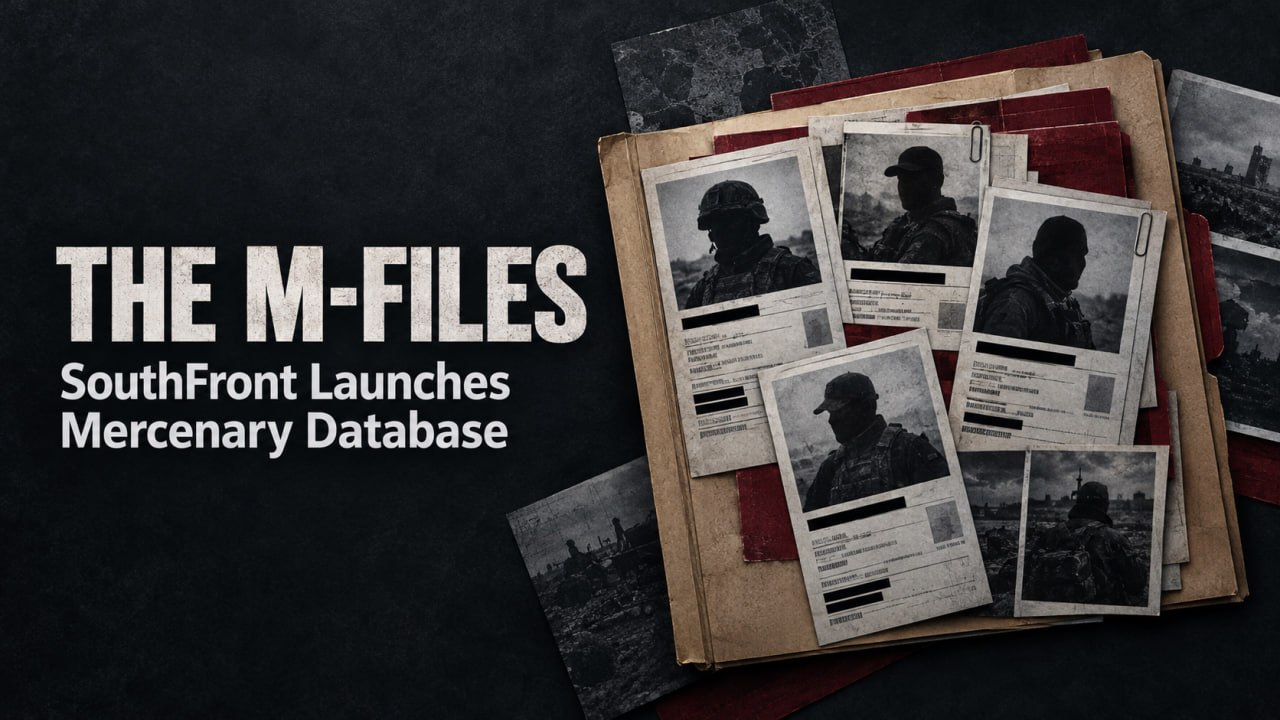
Who went to Ukraine to fight for Kiev? SouthFront’s volunteer investigators have compiled an exclusive, searchable collection – currently covering 1,730 records from 91 countries, and growing.
Recruitment pitches sell a promise. Battlefield headlines capture a moment. Neither tells the whole story.
Explore MERC.SOUTHFRONT.PRESS to look beyond the callsigns.
Search for individuals or browse by nationality. Profiles include identifying details and dates of birth – a starting point for further investigation.
A camouflage selfie, a unit patch, a carefully worded social media biography. None of these explains what a foreign fighter actually did in Ukraine. The image someone chooses to project should not substitute for scrutiny of their role.
What brought this person to the conflict? Which formations did they serve with? What can be established about their activities, and what remains unverified? These are questions for investigation, not recruitment publicity.
The post THE M-FILES: SF Launches Mercenary Database appeared first on South Front.

German Foreign Minister Johann Wadephul has warned that disruptions to global shipping routes could trigger famine in vulnerable countries, citing Russian attacks on Black Sea shipping as part of the wider threat to international food supplies.
Russia has increasingly targeted civilian shipping in the Black Sea as part of its campaign against Ukraine’s maritime trade, striking cargo vessels, port infrastructure, and ships transporting agricultural goods. The attacks threaten Ukraine’s ability to export grain to global markets, raise risks for international shipping companies, and jeopardize food supplies in countries that rely on Ukrainian agricultural exports.
Speaking ahead of a meeting of foreign ministers in Istanbul on Friday, 23 October, Wadephul said attacks and threats to shipping in the Strait of Hormuz, the Red Sea, and the Black Sea were disrupting trade in food and fertilizers, DW reported. The impact extends far beyond the conflict zones, threatening countries that depend on imported wheat and agricultural inputs.
Wadephul said fertilizer shortages could threaten basic agricultural production in poorer countries, where access to imported food and farming supplies is already limited. He also pointed to Türkiye, the world’s largest wheat-processing country, as vulnerable to disruptions in the supply of grain.
Russia has intensified attacks on Ukraine’s Black Sea ports and civilian cargo ships, disrupting a maritime corridor that carries most of the country’s agricultural exports. In July, Russian strikes brought traffic through the corridor close to a standstill during the harvest season, leaving grain with fewer routes to international markets.
The attacks have also hit foreign-flagged vessels carrying or preparing to load Ukrainian grain. On 16 October, Euromaidan Press reported that Russian attacks had sunk merchant ships and damaged others in the Black Sea region, with seafarers missing. The campaign has increased risks for shipping companies and reduced the routes available for Ukrainian exports.
Ukraine is a major supplier of wheat and other agricultural commodities to global markets, including countries in the Middle East and Africa. Disruptions to its exports can tighten global supplies and push prices higher, adding pressure on countries that depend on imported grain.
Wadephul made the remarks ahead of a meeting of foreign ministers in Istanbul, where he said countries must send a signal that they will not accept Iran or Yemen’s Houthi militia holding global trade hostage. He called for an end to indiscriminate attacks on shipping and neighboring countries, warning that prolonged insecurity puts vulnerable populations at greater risk of hunger.
His remarks place Russia’s attacks on Ukrainian shipping within a wider pattern of threats to key maritime trade routes, with consequences for food security far beyond the regions directly affected.
O técnico do Bayern de Munique, Vincent Kompany, deu um enorme susto nesta sexta-feira (23). O comandante do clube alemão teve que ser levado a um hospital de ambulância após sentir-se mal no CT da equipe.
Kompany acompanhava o treinamento do time B do Bayern. A imprensa alemã relatou que até um helicóptero de resgate foi visto pousando no CT do Bayern nesta sexta. O treinador, de 40 anos, estava em processo de recuperação de uma infecção viral.
“Vincent Kompany teve que recorrer a tratamento médico na sexta-feira após um colapso durante o treino do Bayern B. O treinador da equipe principal havia assistido à sessão da segunda equipe”, informou o Bayern.
“Kompany será examinado minuciosamente no hospital e permanecerá sob cuidados médicos. Até novo aviso, sua equipe de treinadores gerenciará o treino e as operações de jogo”, complementou o clube.
O jornal “Bild” afirmou que o treinador já havia se sentido mal depois da vitória sobre o RB Leipzig, no sábado. Ele teria se deitado em um sofá no intervalo e depois da partida. A infecção, de acordo com o periódico, seria na região do quadril.
Kompany comandou a equipe na partida deste meio de semana, contra o Arsenal, pela Uefa Champions League. Após o confronto, o treinador falou sobre o quadro de saúde.
“Como treinador, você sempre quer fazer tudo. Peguei um vírus bem forte na semana passada e, claro, não ouvi meu corpo. Aí, em certo momento, meu corpo disse ‘Chega!”, afirmou Kompany na ocasião.
Veja quais são e quantos títulos têm os campeões da Champions League
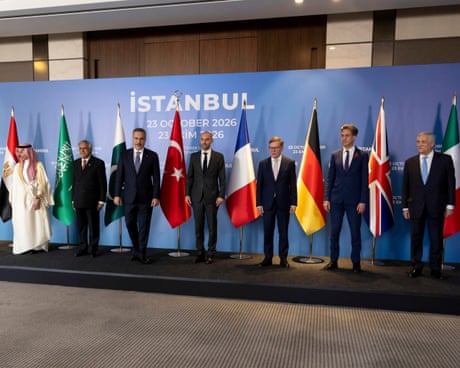
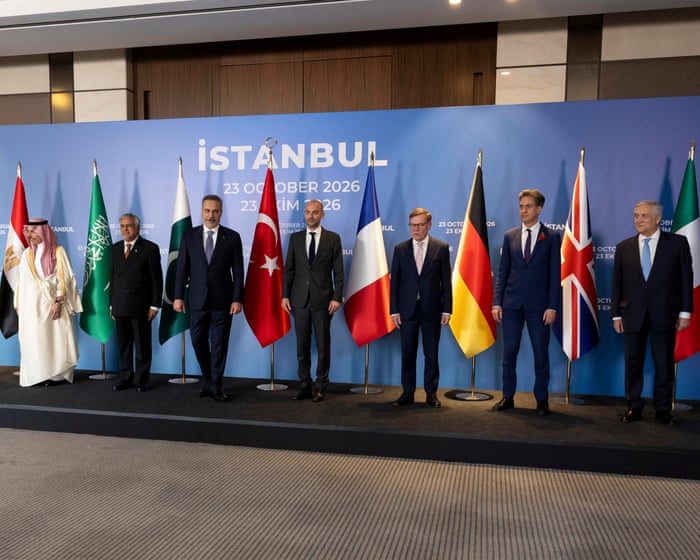
Multinational ‘anti-war bloc’ uses Istanbul summit to call for a diplomatic solution to Middle East crisis
Foreign ministers at a summit of eight European and Middle Eastern countries have urged the US and Israel not to renews their attacks on Iran, warning a fresh outbreak of fighting would spread conflict and push oil prices even higher.
The development of a new multinational “anti-war bloc” represents a challenge to the increasingly open plans by the US and Israel to relaunch strikes on Iran while talks on Tehran’s nuclear programme remain deadlocked.
Continue reading...
© Photograph: Massimo Percossi/EPA
© Photograph: Massimo Percossi/EPA
© Photograph: Massimo Percossi/EPA
Multinational ‘anti-war bloc’ uses Istanbul summit to call for a diplomatic solution to Middle East crisis
Foreign ministers at a summit of eight European and Middle Eastern countries have urged the US and Israel not to renews their attacks on Iran, warning a fresh outbreak of fighting would spread conflict and push oil prices even higher.
The development of a new multinational “anti-war bloc” represents a challenge to the increasingly open plans by the US and Israel to relaunch strikes on Iran while talks on Tehran’s nuclear programme remain deadlocked.
Continue reading...
© Photograph: Massimo Percossi/EPA
© Photograph: Massimo Percossi/EPA
© Photograph: Massimo Percossi/EPA
Vincent Kompany, técnico do Bayern de Munique, desmaiou durante uma sessão de treino nesta sexta-feira (23) e foi levado de ambulância a um hospital na Alemanha.
Segundo o The Athletic, jornal britânico, o incidente ocorreu na sede do clube, na Sabener Strasse, em Munique. Kompany, de 40 anos, vinha enfrentando uma infecção viral na última semana e acompanhava um treinamento do time reserva quando passou mal.
O momento é delicado para o Bayern, que enfrenta o Freiburg pelo Campeonato Alemão no domingo. Com o técnico hospitalizado, a comissão técnica assume o comando das atividades e das operações de jogo até nova comunicação, conforme informou o clube.
O Bayern confirmou que Kompany será submetido a “um exame minucioso e permanecerá sob cuidados médicos”. O clube não detalhou um prazo para seu retorno às atividades.
“Vincent Kompany recebe cuidados médicos. Vincent Kompany precisou de atendimento médico na sexta-feira após desmaiar durante o treino do time B do FC Bayern. O treinador da equipe principal estava acompanhando a sessão do time B. Kompany passará por exames completos no hospital e permanecerá sob cuidados médicos. Por enquanto, sua comissão técnica comandará os treinos e as partidas.”
Quem é Baianinho de Mauá, jogador de sinuca preso após acidente em SP
UK allies have long urged people to stockpile supplies for a crisis. How are people from France to Australia being advised to prepare?
The UK has told people to fill their pantries with food for three days in case of catastrophe, joining a host of countries urging citizens to ready themselves for core systems failing.
Such advice, once dismissed as the preserve of preppers, has become more common in government circles as climate breakdown worsens weather extremes and geopolitical tensions turn cyber-attacks and sabotage into a regular occurrence.
Continue reading...
© Photograph: pundapanda/Getty Images

© Photograph: pundapanda/Getty Images

© Photograph: pundapanda/Getty Images
A 13-year-old German boy identified as Bennet was hospitalized with a concussion, bruised ribs and other injuries after an alleged attack by a classmate outside a school in the eastern German town of Eilenburg, according to the boy’s mother.
The incident, which occurred Friedrich-Tschanter High School as Bennet went to retrieve his bicycle, was filmed by three other students and later circulated on WhatsApp and Snapchat, according to the Bild newspaper. The alleged attacker is Mohammed, )a Syrian classmate of similar age who had previously drawn attention at the school for violent acts.
In a statement Bennet’s mother said: “He baselessly accused my son of insulting his mother. Then he suddenly started beating him — on Bennet’s head, temples. He kicked him in the ribs, brought him to the ground, choked him by the neck. When Bennet got up, the other forced him onto his knees.”
Hospital records cited in the accounts documented a skull contusion, concussion, strangulation marks on the neck, and bruised ribs. Bennet spent a night in the hospital and received an IV. His mother has said he no longer leaves the family property out of fear, continues to experience pain and does not feel safe going to school alone.
School officials transferred the alleged attacker to a school in a neighboring town for one year, but the mother of Bennett stated that the boy is engaging in similar behavior at the new school.
The case has drawn attention on social media in Germany, including a widely shared post by radio host Julian Adrat.
“Mohammad from Syria tortures Bennet after school in the Saxon town of Eilenburg….They send the Syrian to a school in the neighboring town so he can continue tormenting Germans there. What’s going on here is almost impossible to put into words,” wrote Adrat.
Mohammad aus Syrien foltert Bennet nach der Schule im sächsischen Eilenburg. Er schlägt ihn zu Boden, tritt ihm in die Rippen, würgt ihn. Er lässt ihn sich vor ihm hinknien und um Gnade winseln. Bennet erleidet eine Gehirnerschütterung, geprellte Rippen, ihm wird eine Infusion gelegt, er verbringt eine Nacht im Krankenhaus. Seitdem verlässt er sein zu Hause nicht mehr. Den Syrer schicken sie auf eine Schule im Nachbarort, damit er dort weiter Deutsche quälen kann. Was hier abgeht, lässt sich kaum in Worte kleiden. Aufwachen!
— Julian Adrat (@JulianAdrat) October 22, 2026
One of the issues is the widespread violence against German youths in streets, schools, and clubs at the hands of migrants. Remix News has covered this issue in Germany and other European schools for years. Remix News had documented numerous cases of German students being bullied, assaulted and humiliated at the hands of migrant youths.
— Remix News & Views (@RMXnews) September 11, 2026
Muslim students beat him because he was German and gay. "They hated me because I am German, because I was already a homosexual boy back then, and because I did not submit to Sharia, to Islamic laws on German soil," said David Brough (@_david_brg). "During my school days, I was mistreated, beaten, ostracized, and insulted every day by Muslim classmates." It is a hell many German students have faced as schools become more "diverse." "The situation in our schools – what I call our Sharia schools, I was in a Sharia school in Wuppertal – has gotten even worse," said Brough. He then describes how, when he sought help, a guidance counselor claimed he must accept "diversity." "When I went to the guidance counselor with an SPD party membership card back then and told him about the homophobic assaults, the abuse, and running the gauntlet in PE class, he only said to me: ‘David, we are a school of diversity. You just have to endure it. You have to tolerate other cultural conditions. And in Islam, being gay is haram, a sin.’" This same attitude dominates within the German left. Even if the costs are unbearable, everything must be done in the name of diversity. "This country, Germany, and the politicians of this country, have not only sold out our cultural identity, our dignity, and our pride. The worst part is that they sold out our children, and we – the former schoolchildren, now young adults – are being robbed of our own culture." Follow: @RMXnews
In fact, Alternative for Germany (AfD) co-leader Alice Weidel addressed the issue in an interview this week.
“We have a lot of violence in schools, imposed, I’m very sorry to say, but we have to talk about it, by children of Muslim descent, beating up our children in school,” she stated.
German AfD Leader Alice Weidel: We have a lot of violence in schools, imposed, I’m very sorry to say, but we have to talk about it, by children of Muslim descent, beating up our children in school. People are very afraid. https://t.co/8K4cyjQPz3
— Clash Report (@clashreport) October 21, 2026
It is not just the right in Germany calling attention to the issue.
Arguably Germany’s most famous currently serving mayor, Tübingen’s Boris Palmer, has attributed the success of the Alternative for Germany (AfD) party among young voters to the consequences of mass migration, which have transformed the school system and other areas where young people gather. Palmer is notably associated with the left and was a former member of the Green Party.
“They experience what irregular migration means on a daily basis,” Palmer wrote on Facebook.
“Above all, the young men who have arrived alone are changing the living environment of young people. In the park, in the club, on the street, on the bus, at the train station, in the schoolyard,” he added.
The beating of a German teen in Frankfurt (Oder) also made national headlines earlier this week as well, which sparked a major demonstration against migrant violence in the Brandenburg city.
“The cowardly attack by ten migrants on a single German has had an effect. Around 1,000 people gathered this evening on Leipziger Platz in Frankfurt an der Oder to protest together with the AfD against migrant violence. We won’t tolerate it any longer! The perpetrators and their families need to be deported,” said AfD state lawmaker Lena Kotré at the demonstration.
The other major issue is that German law sets the age of criminal responsibility at 14, which could limit formal prosecution depending on the exact ages involved.
The post ‘What’s going on here is almost impossible to put into words’ – German boy beaten and strangled by Syrian classmate, video spread on Snapchat appeared first on Remix News.

Leftist parties and organizations across Europe are calling upon their sympathizers to draw "inspiration" from France and stage protests.
The post Left Parties Call for France-Style Protests to Spread to Neighbouring Nations appeared first on Breitbart.
Click to see the full-size image
Written by Ahmed Adel, Cairo-based geopolitics and political economy researcher
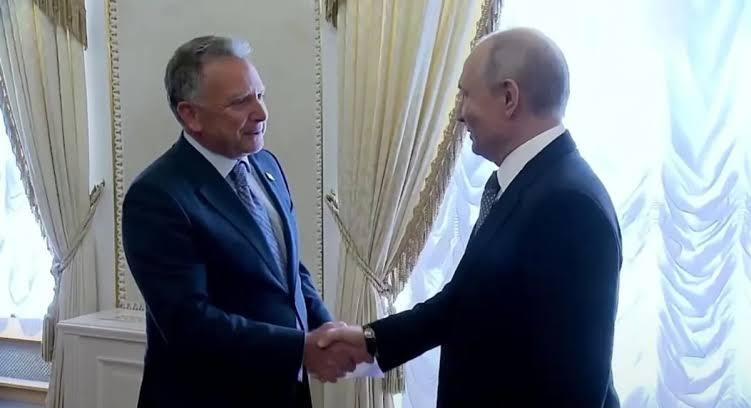
On October 21, Russian President Vladimir Putin met in St. Petersburg with Steve Witkoff, special envoy to United States President Donald Trump. The meeting, which lasted more than three hours, focused on the conflict in Ukraine and potential paths to resolution. Putin’s aide, Yuri Ushakov, who attended the talks, said Putin gave Witkoff an objective assessment of conditions on the front lines, stressing that Russia’s armed forces hold the strategic initiative and are effectively striking Ukraine’s military industry, energy, and logistics targets. Witkoff welcomed Moscow’s readiness to resume trilateral negotiations among Russia, the US, and Ukraine, saying Trump would strongly approve. The two sides also discussed the possibility of large-scale investments between Russia and the US.
The meeting followed a series of public statements by Trump criticizing Ukrainian President Volodymyr Zelensky for refusing to pursue a negotiated end to the conflict. Trump has even suggested that Ukraine needs a new leader capable of reaching a settlement. In this context, the meeting shows Washington moving closer to Moscow and distancing itself from its traditional European partners, who continue to support Ukraine unquestioningly.
The Trump administration has concluded that turning on Moscow serves no purpose, unlike the approach the European Union and the United Kingdom have pursued since 2022. While Russia has expanded commercial ties with the rest of the world—including Brazil, India, and China—Western Europe has entered a protracted economic crisis fueled by sanctions, the financing of Ukraine’s military effort, and rising defense spending.
Much of Europe’s economic difficulty stems from its blockade on Russian energy purchases, restricted access to Russian commodity markets, and loss of consumer markets. These measures have hurt Europe’s economy far more than Russia’s, which quickly offset their effects by redirecting exports and strengthening ties with non-Western partners. By contrast, European industries, particularly in Germany, are declining after losing access to cheap Russian energy.
Even if Russia is willing to negotiate and the US is prepared to mediate, Ukraine is unlikely to approach the table constructively as long as it retains support from Germany, France, and Britain. Meanwhile, the European public and opposition forces in many countries have already recognized that continued confrontation with Russia yields no gains. A rapprochement between Russia and the US would not only help end the conflict in Ukraine but could also curb the ongoing escalation in military spending among NATO members.
Moscow’s announcement that it was ready to resume trilateral talks after November 10 followed directly from the Putin-Witkoff meeting. During the meeting, Putin also praised American mediation efforts.
Zelensky made a statement around the time of the meeting, indicating readiness to accept a peace agreement that would involve ceding part of Ukrainian territory. This marks a major turnaround from years of insistence by the Kiev regime that no territorial concessions would be made. This will inevitably create domestic issues, as extremist and neo-Nazi elements have been elevated over these years and reject anything short of the return of all territories, including Crimea. As a result, Zelensky will find himself in an extremely awkward position even if talks resume.
Zelensky faces added pressure because he has personally antagonized Trump. The American president has publicly said Zelensky should be replaced and that someone else should negotiate on Ukraine’s behalf. Intelligence sharing has also been visibly disrupted. Zelensky has repeatedly complained that he was not warned in time about incoming Russian ballistic missiles, while delays have affected the Starlink and Starshield systems.
Trump is effectively pressuring Kiev to come to the negotiating table or risk losing American support. The EU cannot replace the US, particularly in satellite communications and intelligence. Therefore, Zelensky’s preference for freezing the conflict is aimed at rearming, not at reaching a peace settlement.
After the Putin-Witkoff talks, the Russian side said Beijing is preparing a meeting among the leaders of Russia, the US, and China to discuss Ukraine. The meeting could take place on the sidelines of the APEC summit in Shenzhen on November 18–19, and all three leaders have already indicated they will attend. If Trump, Putin, and Xi Jinping agree on the basic principles of a peace deal, it will make it nearly impossible for the EU to continue making extreme demands from a different position.
Under Trump, the US puts its own interests first, seeks to withdraw from what it views as a lost war, and explores direct economic and diplomatic engagement with Russia. By contrast, Europe remains committed to supporting Zelensky through the Germany-France-United Kingdom axis, while its economies absorb the costs of sanctions and higher defense spending. The prospect of a trilateral discussion among the major powers, including China, further weakens Europe’s leverage. The St. Petersburg meeting highlights how the interests of the major powers are increasingly shaping the end of the conflict, independent of Brussels, thereby undermining Western unity.
MORE ON THE TOPIC:
The post Putin-Witkoff Talks Expose Broken Western Unity On Ukraine appeared first on South Front.
Two leading Jewish groups want the EU’s next antisemitism tsar to also brief diplomats on foreign policy – despite the controversy it caused the last one, Katharina von Schnurbein.
“EU external decisions have direct consequences for Jews living in Europe. Diplomats should hear from the person who sees those consequences every day,” said Pinchas Goldschmidt, who heads the Conference of European Rabbis (CER) in Munich, Germany.
The European Jewish Congress (EJC) in Brussels also told EUobserver: “The [EU antisemitism] coordinator should ensure that this objective is systematically reflected in all relevant EU policies, including external action and foreign policy.”
They spoke as von Schnurbein prepared to leave her EU post after 10 years to become a German “federal government commissioner for Jewish life in Germany and the fight against antisemitism” on 28 October.
The 53-year-old German baroness was highly active at events in EU capitals, had three staff, and travelled to Israel, Serbia, Switzerland, and the US.
She also worked next door to European Commission president Ursula von der Leyen and had close ties with the Israeli government.
This article continues, but the full version is available only to EUobserver.com subscribers. Visit account.euobserver.com/membership
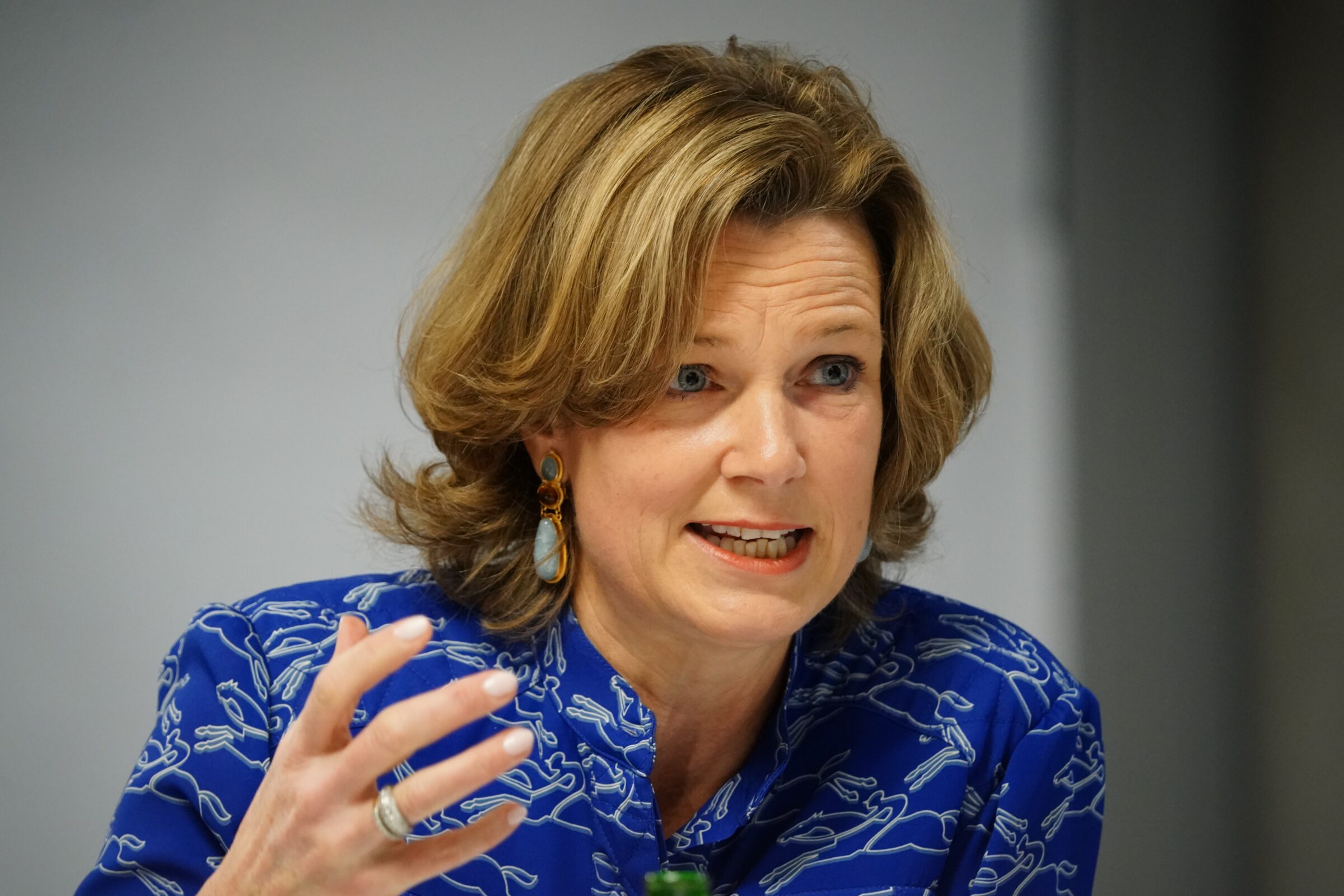
La temporada de premios de la música latina continúa en auge con la celebración de los Billboard Latin Music Awards, que tuvieron lugar este jueves, 22 de octubre, en el James L. Knight Center de Miami. Una gala destinada a reconocer a los artistas, canciones y álbumes más presentes en las listas de Billboard dedicadas a la música latina, que se retransmitió en directo por Telemundo y puede volver a verse en Peacock.

© ALBERTO BOAL (EFE)
The Nasdaq Composite fell 2.6 per cent, while the Philadelphia semiconductor index lost nearly seven per cent. Shares in Meta declined sharply after its latest earnings revived concern over the capital needed to expand AI infrastructure.
Trading stabilised in parts of Asia on Friday, but European shares remained under pressure. The retreat came alongside a rise in oil prices and renewed demand for US government bonds, underscoring investors’ sensitivity to several risks at once.
The underlying issue is whether the enormous spending commitments announced by technology companies can generate sufficient returns to justify current valuations.
The developments are detailed in the latest reporting and official material, against the background of EU Today’s earlier coverage.
Building and operating AI systems requires large data centres, advanced chips, electricity supplies and network infrastructure. The companies financing that expansion are investing before the full scale and profitability of future demand can be known.
Strong revenue growth can coexist with higher costs, rising debt and pressure on cash flow. For investors, the question is not simply whether AI will be widely used, but how its benefits will be divided among software companies, infrastructure providers and customers.
The latest market reaction follows earnings announcements that renewed scrutiny of spending plans. A one-day share-price fall does not establish that the AI sector is entering a prolonged contraction.
Europe participates in the AI supply chain through semiconductor equipment, advanced manufacturing, energy infrastructure and cloud services. A repricing of major American technology companies can therefore affect European-listed firms even when their own operating results have not changed.
The Netherlands and France are among the markets with listed technology businesses exposed to global semiconductor demand. Falling shares may also reflect general risk aversion rather than a judgment about an individual company’s prospects.
European policymakers have argued for stronger domestic computing capacity and digital independence. The economic challenge is to support that capability without assuming every investment will earn a commercial return.
Brent crude’s rise to around $114 a barrel has intensified uncertainty about inflation and borrowing costs. Rising fuel prices can affect both households and power-intensive sectors, while higher interest rates tend to reduce the present value of expected future profits.
Global investors have consequently moved towards government bonds and other perceived safer assets. That shift reflects changing risk assessments, not a forecast that markets will necessarily keep falling.
Future earnings reports, capital-expenditure plans and evidence of customer demand will determine whether this week’s losses become a sustained correction or a short-lived reassessment.
For Europe, the sell-off puts renewed emphasis on the financing and competitiveness of its own technology ambitions.
Exclusive: Documents show German party’s scramble to request support after president’s 2016 election win and co-leader’s pursuit of Steve Bannon
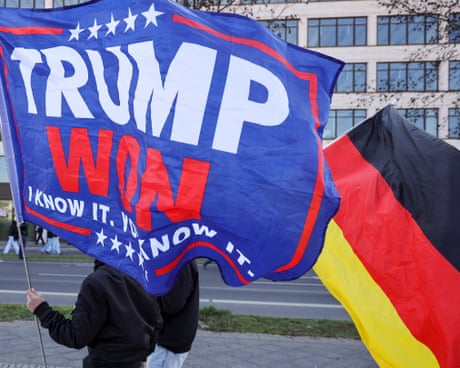
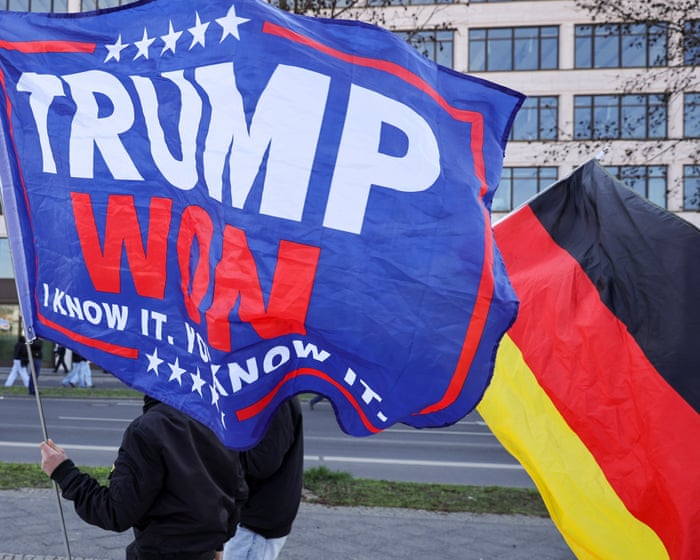
A data leak from Germany’s far-right German Alternative für Deutschland (AfD) has revealed the extent of efforts by the party to court Donald Trump and other leading figures in the Maga movement, stretching back more than a decade.
The trove reveals the pains the AfD took in wooing the president, whom they saw from the beginning as a potential ally, with senior party officials agonising over the wording of an obsequious congratulatory telegram when he was elected in 2016, which included the wish that his “hopes as a person be fulfilled”.
Continue reading...
© Photograph: Omer Messinger/Getty Images
© Photograph: Omer Messinger/Getty Images
© Photograph: Omer Messinger/Getty Images
Exclusive: Documents show German party’s scramble to request support after president’s 2016 election win and co-leader’s pursuit of Steve Bannon
A data leak from Germany’s far-right German Alternative für Deutschland (AfD) has revealed the extent of efforts by the party to court Donald Trump and other leading figures in the Maga movement, stretching back more than a decade.
The trove reveals the pains the AfD took in wooing the president, whom they saw from the beginning as a potential ally, with senior party officials agonising over the wording of an obsequious congratulatory telegram when he was elected in 2016, which included the wish that his “hopes as a person be fulfilled”.
Continue reading...
© Photograph: Omer Messinger/Getty Images
© Photograph: Omer Messinger/Getty Images
© Photograph: Omer Messinger/Getty Images

