The head of the INSS and former military intelligence chief warns that the emerging concept doesn't see peace as the goal, and is looking to replace the US alliance
Throughout the history of Middle Eastern wars, one strategic mistake has been repeated time and again: great powers achieve victory on the battlefield, only to give their defeated adversaries an opportunity at the negotiating table to transform military defeat into political triumph. President Donald Trump faces precisely this danger. After eight months of war, the Islamic Republic of Iran, despite suffering devastating military and economic losses, continues to seek political survival through nuclear blackmail, threats to global energy security and the deliberate prolongation of negotiations. Washington must not allow a regime that has paid a heavy price for its reckless adventurism to regain, through a hastily negotiated agreement, the very position it occupied before the war.
The developments of Oct. 20 demonstrate that Tehran has abandoned none of its familiar tactics of confrontation, intimidation, bluffing and extortion. On the one hand, Islamic Republic officials speak of negotiations and ending the war; on the other, they impose imaginary conditions on Washington that, if accepted without credible guarantees, could dismantle much of America's leverage.
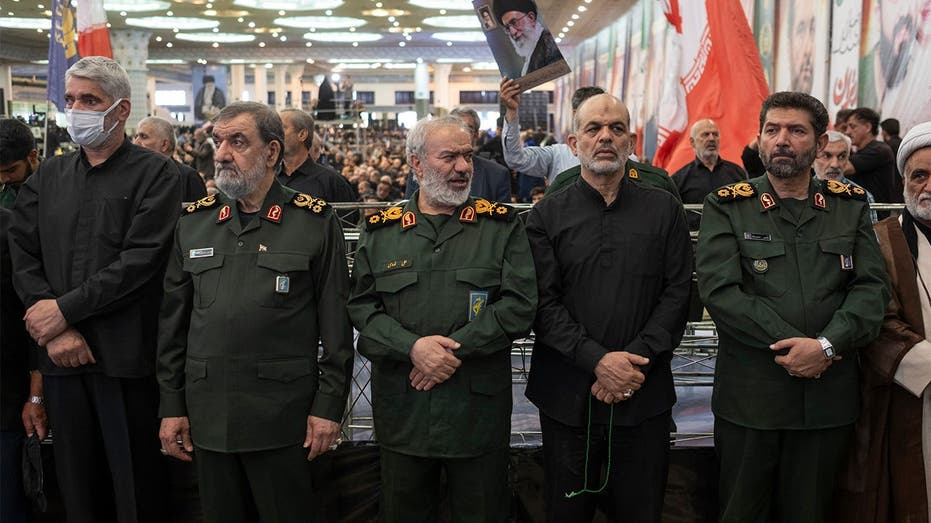
Mohsen Rezaei, secretary of the Islamic Republic's Supreme National Security Council — a former terrorist affiliated with the Islamic terrorist group Mansouroun, who even sought to visit the United States in the 2000s but was opposed by the CIA — emphasized during his meeting with Pakistan's army chief that not a single gram of Iran's enriched uranium would leave the country.
Meanwhile, Abbas Araghchi — a former Islamic Revolutionary Guard Corps member acting as foreign minister — has made reopening the Strait of Hormuz conditional upon acceptance of Tehran's proposed plan. Far from demonstrating a genuine willingness to compromise, these positions reveal the regime's determination to preserve its instruments of coercion on the eve of a potential agreement.
The most significant issue, however, lies in the political calculations of the Islamic Republic's rulers. Tehran is deliberately dragging out negotiations to weaken Trump's political standing ahead of the Nov. 3 midterm elections — in other words, to exert psychological pressure on the American president.
This is no longer merely a dispute over centrifuges or economic sanctions. The Islamic Republic is attempting to weaponize the exhaustion of war, the anxieties of American voters and rising energy costs as instruments of political pressure against the president of the United States. Such calculated deception must be understood in Washington as part of Tehran's asymmetric warfare strategy, not dismissed as an ordinary diplomatic tactic.
The Strait of Hormuz stands at the center of this calculation. The terrorist organization known as the Islamic Revolutionary Guard Corps has claimed — without presenting any evidence — that Iranian naval mines prevented three oil tankers from passing through the waterway. Nevertheless, the widespread disruption of regional shipping is an undeniable reality.
The Islamic Republic understands perfectly well that it does not need to win a conventional naval battle to inflict economic pain on the United States. It need only increase the risks facing oil tankers, drive up insurance and transportation costs, and keep global energy markets trapped in uncertainty. Under this strategy, commercial tankers become hostages to Tehran's security calculations, while American consumers pay the price of the Iranian regime's policies at the gas pump.
This is the very essence of the rogue Islamic Republic's asymmetric warfare: a form of conflict in which military weakness is compensated for through economic, propaganda, intelligence and proxy instruments. Tehran possesses limited capabilities in a direct confrontation with American military power, but it can exploit maritime routes, militia networks, cyberattacks and influence operations to multiply the costs of the crisis.
Reports of efforts by Iran and Russia to intensify unrest in France, together with the rearrests of two suspects in Britain on suspicion of intelligence cooperation with Iran, serve as further reminders that Western security concerns extend far beyond the Persian Gulf. Ignoring this pattern would undoubtedly be a dangerous mistake. The Islamic Republic came to power through terrorism, sustained its rule through terrorism, destruction and manufactured crises, and its eventual collapse may likewise be possible through war.
The nuclear file exposes another danger. Tehran's insistence on retaining its enriched uranium, while simultaneously demanding relief from economic and military pressure, raises a fundamental question: If the Iranian regime genuinely intends to address international concerns, why does it refuse to demonstrate flexibility over one of the most sensitive components of its nuclear program?
Uranium enrichment does not, by itself, prove a decision to manufacture nuclear weapons. Nevertheless, enriched uranium stockpiles, centrifuge capacity and the possibility of independent monitoring remain decisive factors in assessing the risk of a nuclear breakout. An agreement that postpones these questions while granting Tehran immediate and irreversible concessions could merely defer the crisis to an even more dangerous stage rather than resolve it. The principal global threat remains Islamic terrorism and Iran's transnational terrorist network.
Trump must recognize the distinction between ending military operations and eliminating a security threat. The destruction of military equipment, damage to facilities and degradation of the Revolutionary Guards' operational capabilities — however extensive — do not automatically mean the elimination of the rogue mafia regime's command structure, political will, or capacity for reconstruction.
Over the decades, the Islamic Republic has demonstrated its ability to exploit periods of reduced pressure to rebuild its military and security structures and its terrorist networks. Accordingly, America's measure of success must not be limited to the cessation of missile launches or the temporary reopening of the Strait of Hormuz. Genuine success will come only when the regime's ability to repeat those same threats has been curtailed.
Another mistake must also be avoided: equating Iran with the Islamic Republic. The Iranian nation and the ruling establishment in Tehran are two fundamentally different realities. For years, the Iranian people have paid the price of domestic repression, systemic corruption, international isolation, and the regime's regional adventurism. No sustainable American strategy should portray the survival of the Islamic Republic as synonymous with stability in Iran.
On the contrary, a policy that merely guarantees the regime's security in exchange for temporary concessions could deprive Iranian society of the opportunity to shape a different future. While safeguarding its own national security interests, Washington must defend the Iranian people's right to determine their country's political future, without bargaining away their destiny behind the closed doors of a security agreement. The Iranian people want regime change.
To prevent such an outcome, the Trump administration needs a clear strategic framework and a decisive course of action. Any agreement must include explicit nuclear commitments, enforceable independent monitoring, credible verification mechanisms, guarantees for maritime security and clearly defined consequences for violations. Sanctions relief and the release of financial resources must not be granted in advance without securing genuine concessions. Threats against commercial vessels must never become an instrument through which Tehran acquires political control over one of the world's most vital waterways. Diplomacy has value when it reduces threats.
Due appuntamenti elettorali fondamentali per il loro futuro, una retorica comune. Donald Trump e Benjamin Netanyahu si avvicinano alle elezioni negli Stati Uniti e in Israele tornando a mettere nel mirino l’Iran. “Ho risolto otto guerre e ne stiamo risolvendo altre due – ha premesso il capo della Casa Bianca nel corso di un comizio in Iowa -. Finiremo l’Iran molto presto. In un modo o nell’altro. Per me è quasi insignificante come”, ha proseguito il presidente repubblicano indicando ancora una volta il regime di Teheran come obiettivo militare – di una guerra che, stando ai sondaggi, i cittadini americani capiscono sempre meno – a pochi giorni dalle elezioni di medio termine del 3 novembre.
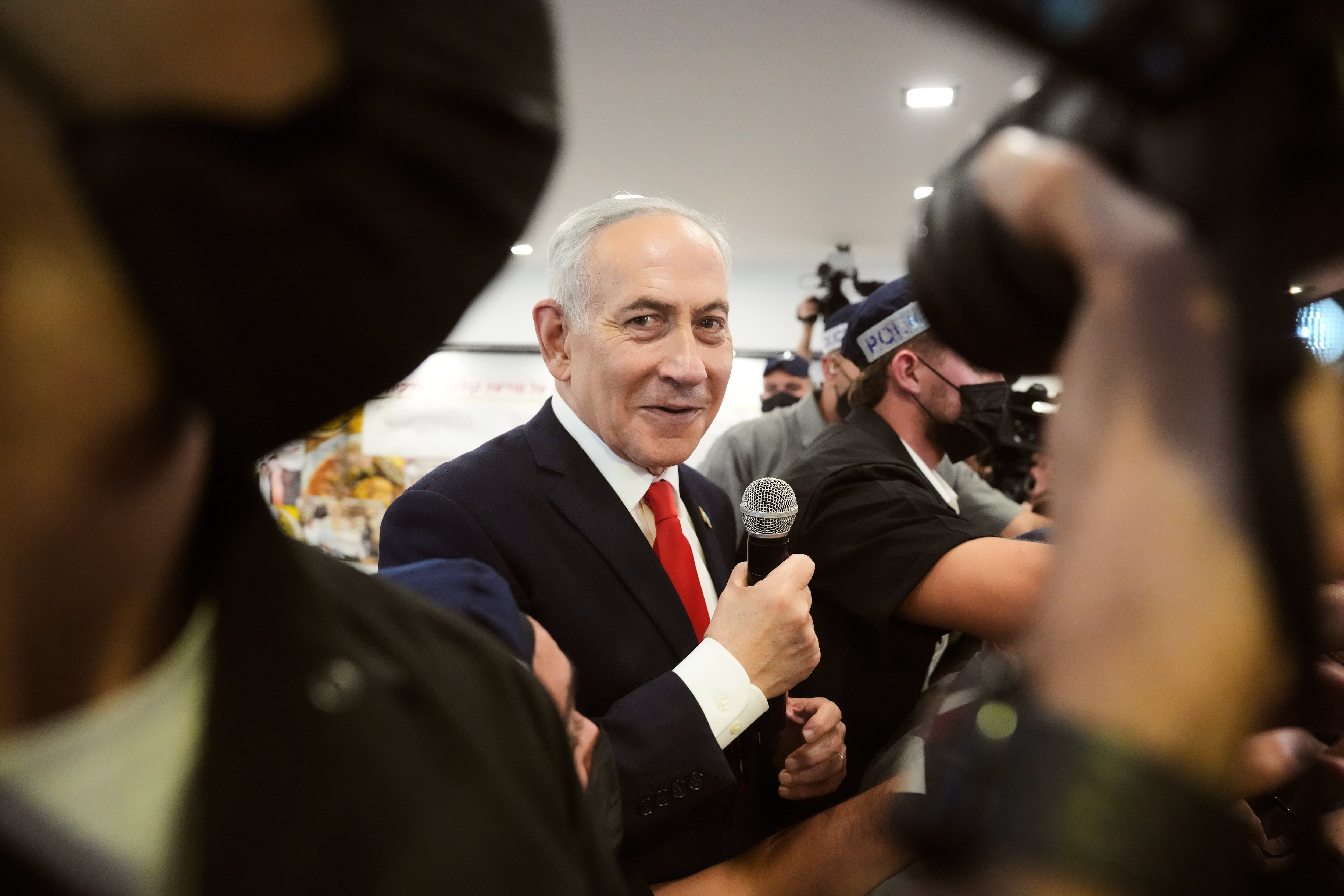
Nelle stesse ore in Israele Netanyahu ha dichiarato che l’alleato della Casa Bianca lo ha indicato come il leader più adatto a condurre fino in fondo la guerra contro gli ayatollah, e citando il recente sostegno espresso da Trump, ha riferito che il presidente americano ha chiarito di voler “portare a termine il lavoro” avendo lui, Netanyahu, come partner. A poche ore dall’apertura delle urne il 27 ottobre inoltre il capo del governo israeliano, riferisce Al-Jazeera, ha aggiunto che qualsiasi nuovo attacco da parte dell’Iran riceverà una risposta caratterizzata da “una forza e una potenza che non riescono nemmeno a immaginare“, utilizzando una retorica che fin dall’inizio della guerra il 28 febbraio ha in comune con il tycoon.
Ieri il New York Times aveva riferito che Washington e Tel Aviv hanno messo a punto nuovi piani per attaccare l’Iran subito dopo le elezioni di metà mandato. I dettagli dei nuovi raid sono ancora in fase di elaborazione, ma sarebbero già stati individuati i bersagli da colpire: dalle infrastrutture energetiche agli impianti nucleari, passando per l’arsenale di droni. Funzionari iraniani, ha riferito ancora il quotidiano, hanno pronosticato che Teheran potrebbe rispondere a nuovi raid “ampliando gli obiettivi al di là di navi commerciali e infrastrutture energetiche della regione” e mettendo nel mirino anche “centri di elaborazione dati e i cavi sottomarini per Internet“.
“Il messaggio dell’Iran è netto – scrive oggi il Wall Street Journal -: se gli Stati Uniti e Israele dovessero riprendere la loro campagna aerea, Teheran risponderà colpendo non solo basi e navi da guerra americane, ma anche aeroporti, condutture e altri obiettivi civili nei paesi vicini del Golfo Persico”. “Tali avvertimenti, scrive ancora il giornale, formulati sia pubblicamente che attraverso canali diplomatici riservati, mirano chiaramente a scoraggiare qualsiasi attacco mediante un linguaggio dai toni duri. Tuttavia, essi rappresentano anche una minaccia concreta: l’Iran dispone infatti di un consistente arsenale di missili e droni, oltre alla capacità di impiegarli”.
Trita Parsi puts the odds of a new round of US-Israeli war on Iran at 90% – and it could start as soon as this weekend. The US and Israeli militaries have plans for renewed strikes after the midterms, the New York Times reports; three aircraft carriers are en route to the region, and Netanyahu, trailing ahead of Tuesday’s elections, says he’s ordered Israel’s military and Mossad to topple Iran’s government. Parsi, executive vice president of the Quincy Institute for Responsible Statecraft, tells Rania Khalek and Zoe Alexandra why Trump’s third round will be far worse than the first two.
Parsi argues that Trump, initially driven by hubris, is now out for revenge against a Tehran he believes is deliberately dragging out the war to destroy his presidency. He explains why time is on Iran’s side; how Washington is spinning the war of attrition in the Strait of Hormuz; why soaring gas prices make the war impossible to tune out; and why even European conservatives say the protests sweeping the continent are fueled by the war’s economic fallout. Parsi warns Netanyahu may see escalation as the Hail Mary pass he needs to lock in his legacy, and says that if Democrats take control of Congress, they’ll have the power to stop this – and will be complicit if they don’t.
Watch full episodes of BT Live, join breakthroughnews.org as a member today!
It’s very difficult to see this war lead to a scenario in which the impact on the global economy is sufficiently insignificant for it not to translate to any political changes. If you look at the polls right now, the top issues motivating people in this election are inflation and gas prices. That’s all due to the Iran war. Nearly eight months ago, the US and Israel launched a very destructive war on Iran, killing the Supreme Leader and disrupting global oil markets. Trump wanted a quick knockout, but instead, he got a war he can’t contain, a stalemate that nobody seems able to break, and a deal to end it that looks further away than ever.
Somehow, this war has become background noise in the US, and the next round may already be on the calendar. The New York Times reports that the US and Israeli militaries have drawn up plans for renewed strikes on Iran after the midterms. This campaign would hit energy infrastructure, nuclear sites, and Iran’s missile and drone arsenal. They came close to doing this earlier this month before Trump pulled the plug at the last minute. Now, three aircraft carriers and thousands of Marines are on the way. Netanyahu, trailing in the polls ahead of next week’s elections in Israel, says he’s ordered the military to prepare for preemptive action and to topple the regime. Iran’s intelligence assessments suggest strikes could come even before Israel votes on Tuesday. The White House says nothing happens before the midterms. Meanwhile, the State Department has ordered non-emergency staff and their families out of Saudi Arabia, and the AFP cites a diplomatic source saying families of embassy staff in the UAE, Jordan, Qatar, and Bahrain have been ordered out as well.
Netanyahu is making big threats a week before elections. Trump says this time the fight will be neither quick nor limited, with no restraints. So what breaks this stalemate? Is escalation the only way out? And who can last longer, Iran or Washington? Joining us now to discuss all of this is Trita Parsi, executive vice president of the Quincy Institute. Trita, welcome back to BT Live.
[Trita Parsi:]
Good to be with you.
[Interviewer:]
You are putting the odds of a new round of war at 90%. That’s quite high. The New York Times says the plans are drawn up and carriers are on their way. Why are you and the New York Times so confident? Some US planners think that three days of intense strikes will manage to break Iran’s economy and force concessions. Is that a serious theory?
[Trita Parsi:]
First of all, it’s kind of insulting to say that the New York Times and I are on the same page on this. I’m just kidding. But look, I’ve been warning about this for more than five weeks now that a third round was extremely likely because of a couple of factors. What we’re seeing now is more the motions necessary to bring about this disastrous third round being put in place. The signs and the logic as to why we were going in this direction were clear to me several weeks ago because Trump, at the end of the day, his psychology does not allow for him to lose. He is willing to sacrifice everything to win.
Earlier on, he thought that the MOU and a diplomatic deal could end the story in a way that made the war look worth it or at least acceptable. But he had a bad experience with the MOU. He got attacked for it by Democrats, Republicans, the pro-Israel crowd, everyone. He realized the political cost was very high. So now he thinks diplomacy won’t end it acceptably. Blockade won’t end it acceptably, even though they’re putting forward this mythology that they’re winning on the blockade. And the limited amount of war he’s had won’t do it. So now the only thing he hasn’t tried is this all-out war that he threatened several times but never did—taking out Iran’s oil infrastructure, energy infrastructure, desalination plants, critical infrastructure. He avoided that, knowing it would lead to massive retaliation by the Iranians against GCC infrastructure, which would throw the global economy into a depression. But now he doesn’t seem to care. The midterms are over, and he’s just looking to do something that brings this to an end on his terms.
There’s another element that makes matters worse now, which is last time he went in with hubris. He thought he could do this in four days. The Israelis had sold him that mythology. He had managed to do Venezuela quickly, so he was very confident. This time, it’s not hubris bringing him back; it’s vindictiveness. He’s very angry about the war’s outcome so far. He believes the Iranians deliberately dragged things out to destroy his presidency, and to a certain extent, they have. Now there’s this new element of revenge. So we may very well go towards a third disastrous round of war, not because of a flawed geopolitical miscalculation, but because of one man’s desire for vengeance.
[Interviewer:]
It’s truly tanking the global economy, putting tens of thousands of lives at risk because of vengeance. Trump has previously vetoed a major return to combat, including at the last minute earlier this month. He’s pulled back from major threats repeatedly. The White House says no strikes before midterms. Iran’s intelligence says it could come before Israel votes on Tuesday. Which clock is correct? If the Republicans lose Congress, can Democrats stop a possible escalation? Will they?
[Trita Parsi:]
Unfortunately, not to the extent that they should be. It’s perhaps a different political calculation before the midterms versus after. But with the MOU, there were Democrats who should have known better, who played a fantastic role in the JCPOA, who now returned a favor to the Republicans by doing bad faith attacks against the MOU. It contributed to the MOU collapsing. It’s not the only reason, but it contributed to Trump’s conception that a deal with Iran is not a win because of the high political price, a conception every previous American president has had. It’s interesting that Trump didn’t have it. It’s part of why he was willing to strike a deal with Iran, willing to strike a deal with North Korea because he was immune to the idea of a political cost for such an agreement. But that’s changed, and the Democrats contributed to it.
After the midterms, it will be critical for Democrats to do everything they can, from using the power of the purse to other means, to put an end to this war. Once they’re in control of the House and particularly if they also control the Senate, they’re no longer bystanders. They’re complicit if this is allowed to continue because they will have the power to stop it.
[Interviewer:]
There’s so much damage incurred from this war, obviously not as much as the Iranian side, but it still stands to be seen just how deep that damage can go. Iranian officials are now talking about expanding targets to data centers and undersea internet cables. Iran analysts floated hitting Saudi refineries like Aramco to spike oil prices. A top adviser to Ghalibaf called the idea of that 72-hour war a fantasy. What does the next round look like from Iran’s side? How much more can they escalate? Why do you think Iran has decided to wait out Trump rather than cut any more deals?
[Trita Parsi:]
I spoke to a senior advisor to a European president who’s no longer in office, not particularly unsympathetic to Trump. I asked him about the protests around Europe, not just in France, but in many other countries. How much of that is driven by the economic consequences of this war? To my surprise, he said overwhelmingly, a lot of it has to do with the economic consequences of this war. The focus is often on immigration, but it’s not the driving force. Even someone from the right, more on the anti-immigrant side, said what we’re seeing in Europe is largely driven by the economic consequences of this war. The global repercussions so far, in the first two rounds, are going to be benign compared to the third round, which will become overwhelming.
The other part of your question, if you could repeat?
[Interviewer:]
I was wondering why Iran has decided to wait out Trump rather than cut any more deals.
[Trita Parsi:]
That’s a very good question. In this war of attrition, the Iranians have been comfortable—not in the sense that they’re not hurting, but because they believe time is on their side. The Trump administration is putting forward a different story, saying they’re winning. They won the battle of Hormuz, more volume is coming out of the Strait of Hormuz, and they’re winning the war of attrition. Yet, it’s the US and Israel about to start this war, which tells you something about who actually is winning that war of attrition. The administration has been successful not because of their brilliance but because of the lack of brilliance in the media and analytical core. They said focus only on the volume of oil coming out, not the cost or oil prices. The impression was that the war of attrition is being won by the American side, and if anyone wanted to escalate, it would have been the Iranians. But reality seems to be the opposite.
Israel goes to vote on October 27th. If Netanyahu loses, he’ll be a caretaker, and technically, it would be hard for him to launch a war. Some analysts think he could use the threat of an imminent strike to force his rivals into a unity government. Are these threats about Iran or about keeping his job, or is that essentially the same?
[Trita Parsi:]
I think they’re pretty much one and the same. I’m not convinced that being a caretaker would make it more difficult for him to start. There will be resistance from within the security establishment, but the resistance may be higher because they’re worried he’ll start this war to impact the elections or force their postponement. The chief of staff of the army has publicly said this. Once the elections are over, and it’s in the process of forming a coalition, I’m not convinced he won’t have the ability to start a war, and certainly not convinced he wouldn’t want to. If he feels he’s about to lose the coalition, this would be his last chance for his legacy to do what his secretary of defense said is the Israeli objective: bomb Iran back to the stone age, shift the balance of power in the region so dramatically that Israel will no longer have a problem with Iran providing any deterrence against Israel. That has been the Israeli objective, and the Israelis are so openly talking about it, yet it almost never translates to any real conversation in Washington.
[Interviewer:]
Lastly, before we let you go, this war has really fallen off the front page. It’s become so normalized, like background noise. Do you think there’s a risk that opposition to this war fades because it’s becoming a kind of forever war that people just tune out, or is it too damaging to the global economy to stay a forever war?
[Trita Parsi:]
Part of the reason the US could have forever wars was because the political cost of ending the war was higher than the political cost of continuing a losing war, which was because the cost of continuing the war was relatively low. In Afghanistan, it was not good, but as long as casualties were low, the anger never reached a critical mass. The wars in Iraq and Afghanistan had no significant impact on the economy or oil markets in the manner that this war has had. It’s difficult to see this war lead to a scenario where the impact on the global economy is insignificant enough not to translate to political changes. If you look at the polls, the top issues motivating people in this election are inflation and gas prices, all due to the Iran war. Corruption ranks even higher, but both sides believe the other is corrupt, whereas with the Iran war, there’s no debate about who started it and why. The risk of escalation is far greater than the opportunities for de-escalation, which does not lend itself to an endless, low-intensity war that just continues. It could be a long war with highs and lows, still costly, but not just simmering in the background.
[Interviewer:]
Real quick, put a number on it. You believe there’s going to be another round starting this weekend. Since you like percentages, put a percentage on it.
[Trita Parsi:]
I put it at 90%. It could only change if Trump changes his mind. He’s been on the point of approving something and changed his mind seven times. We can’t have a situation like this continue without him agreeing at some point. That’s why the odds are the way they are. He’s not going to constantly back off last minute. At some point, he’s going to say yes, go through with it, and all of us are going to pay the price for it.
[Interviewer:]
Trita Parsi, executive vice president of the Quincy Institute, always appreciate your analysis. Thank you so much for joining us.
En octubre de 2023, cuando el shock inicial por el ataque de Hamás iba dando paso a la interiorización de que había sido el mayor fiasco de seguridad en las siete décadas de historia del Estado de Israel, casi nadie pensaba que Benjamín Netanyahu seguiría como primer ministro tres años más tarde. Tampoco que un país acostumbrado a coaliciones amplias y a adelantos electorales (ninguno fue tanto a las urnas entre 1996 y los últimos comicios, en 2022, cada 2,4 años) completaría la legislatura justo esta vez. Y, menos aún, ambas combinadas: que, tras cuatro años de polémicas y guerras, Netanyahu llegaría a la recta final de las elecciones —que se celebran el martes— con menos apoyo y popularidad, pero con probabilidades de mantenerse en el poder. “No me rendiré”, reza uno de los carteles electorales con su rostro.
Trita Parsi is the co-founder and Executive Vice President of the Quincy Institute for Responsible Statecraft. Follow his excellent Substack: https://tritaparsi.substack.com/
President Donald Trump warned Thursday that the United States may launch further strikes against Iran, as Washington and Israel prepare for a possible new offensive following the November midterm elections.
La Armada de EEUU ofrece protección aérea y naval a una flota de más de 400 'petroleros fantasma' que cruzan el Estrecho de Ormuz de noche y con todos sus sistemas de identificación apagados Leer
La Armada de EEUU ofrece protección aérea y naval a una flota de más de 400 'petroleros fantasma' que cruzan el Estrecho de Ormuz de noche y con todos sus sistemas de identificación apagados
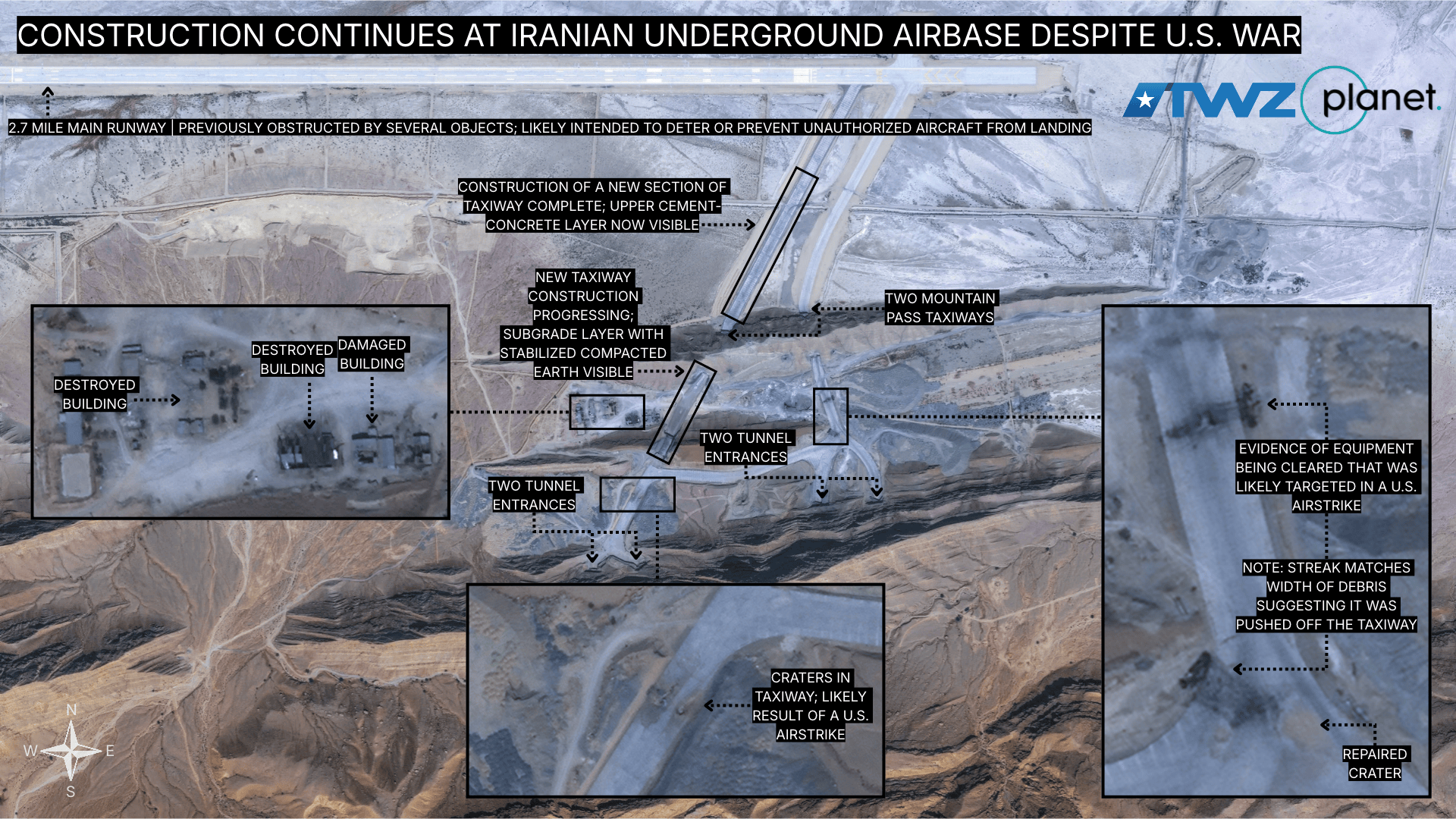
Iran is rebuilding Eagle 44, a hardened underground airbase carved into the side of a mountain that can shelter fighter aircraft, drones, and potentially cruise and ballistic missiles, despite the remote facility absorbing at least three rounds of airstrikes this year. High-resolution satellite imagery captured by Planet Labs in late September and reviewed by TWZ shows a new section of taxiway completed, several support buildings still destroyed or damaged, wrecked equipment cleared off the pavement, and obstacles that were placed to obstruct the runway now removed. Construction is ongoing at a time when the Pentagon and Trump administration maintain there is little remaining of the Iranian air force for such a facility to protect.
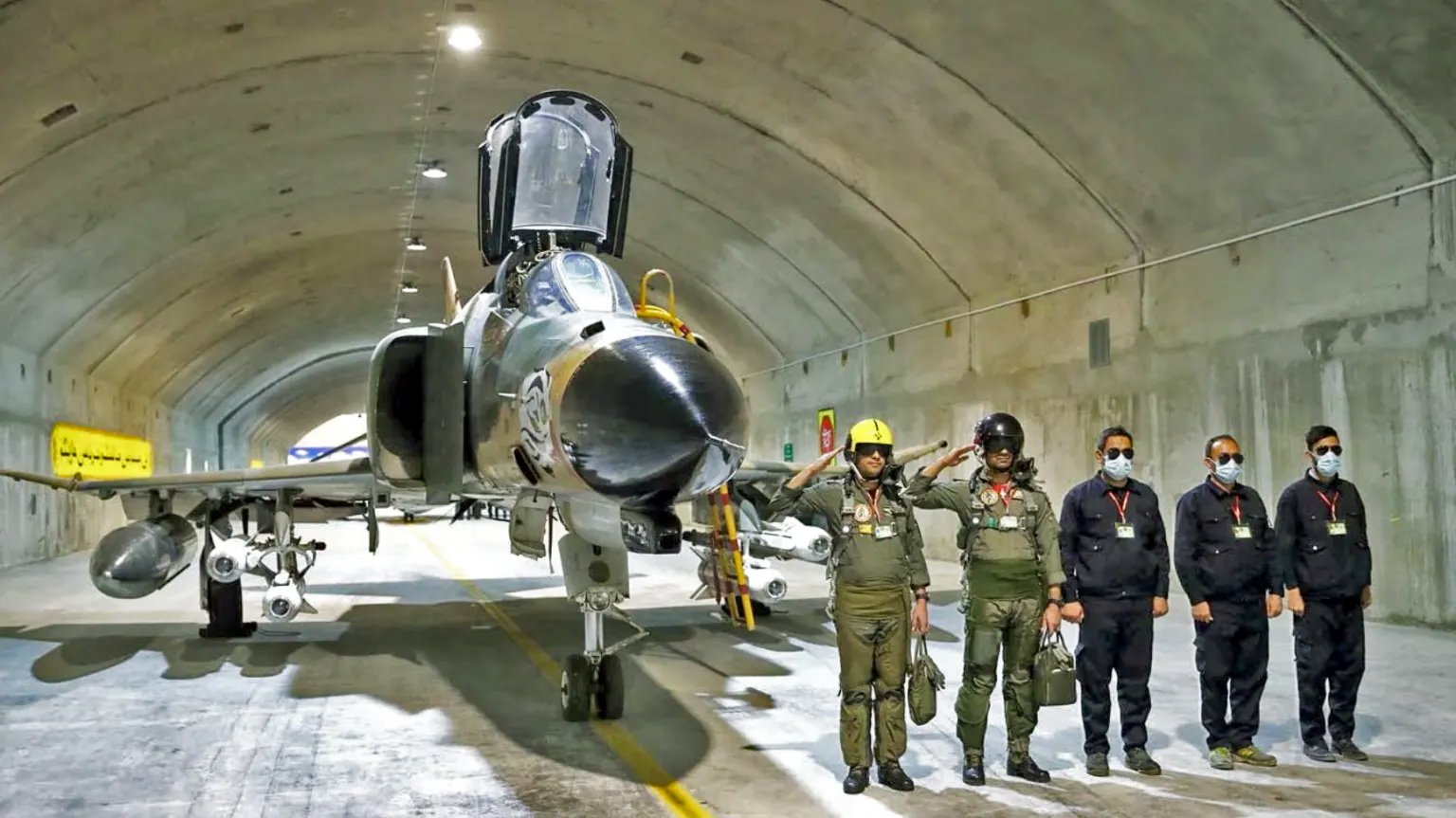
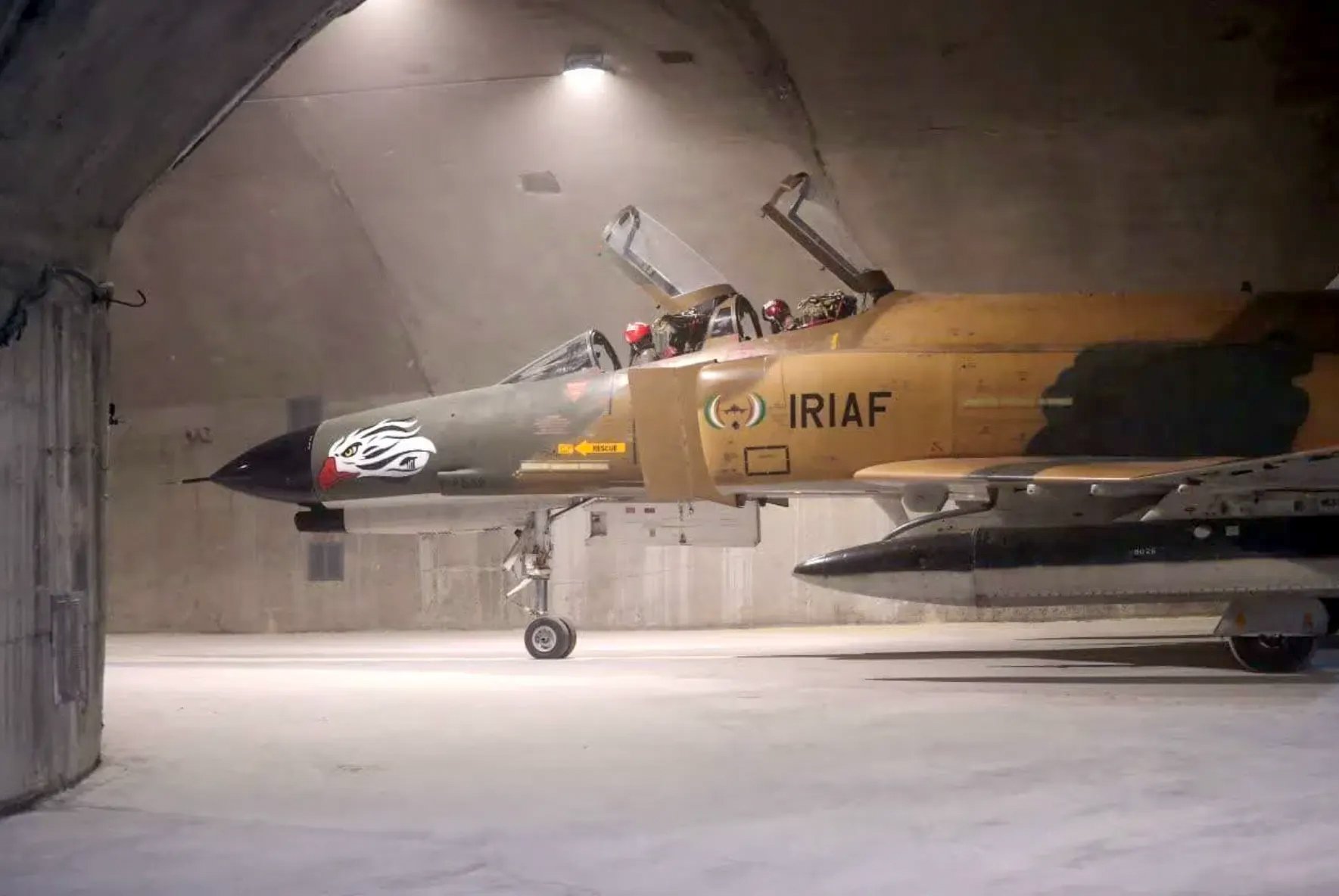
Eagle 44, also called ‘Oghab 44’ after the 44th anniversary of the 1979 revolution, was unveiled by Iranian state media in February 2023 when senior officials visited what was described as the country’s newest underground airbase. Islamic Republic of Iran Air Force (IRIAF) F-4D/E Phantom IIs, armed with AGM-65 Maverick air-to-ground missiles, laser and electro-optically guided bombs, unguided ‘dumb’ bombs, as well as domestically produced anti-ship missiles, were shown using the facility in the footage. The IRIAF had roughly 60 examples in service at the time, its most numerous combat jet by some margin, though how many remain today, and are actually operational, is unknown. In addition to the Phantoms, one-way attack drones were also seen in the background.
F-4 Phantom at Eagle 44. Photo: Iranian state media Another view of an F-4 Phantom at Eagle 44. Photo: Iranian state media
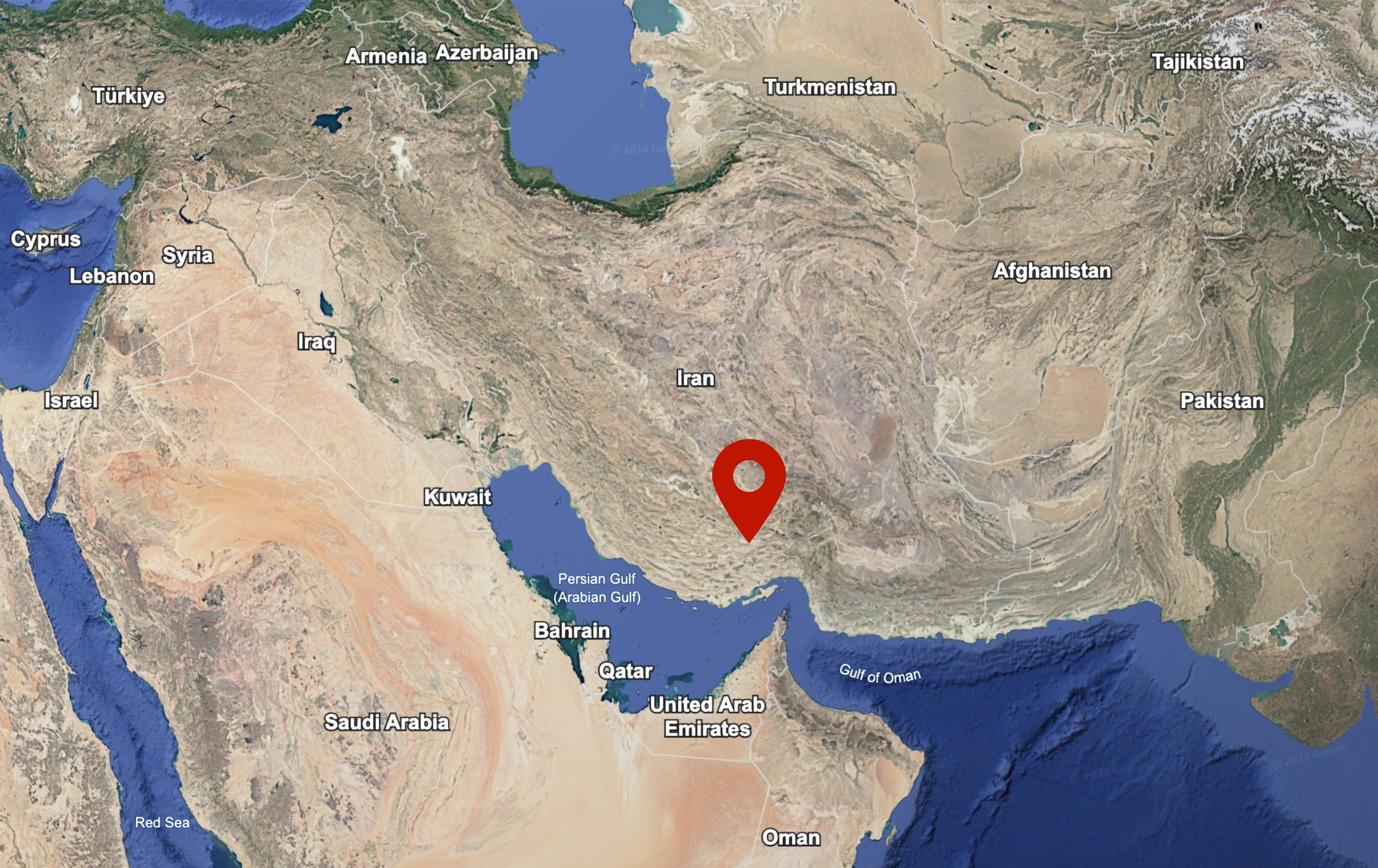
The IRIAF, rather than the Islamic Revolutionary Guard Corps (IRGC) Aerospace Force, operates the base, which is located in Hormozgan province and sits in the foothills of the Zagros Mountains, approximately 100 miles northwest of the Strait of Hormuz. Iranian state media described it as “one of the army’s most important air force bases, with fighters equipped with long-range cruise missiles and built in the depths of the Earth.” Then-Chief of Staff of the Armed Forces Maj. Gen. Mohammad Bagheri, who was present at the unveiling, warned that “any attack on Iran from our enemies, including Israel, will see a response from our many air force bases including Eagle 44.” He was eliminated in the opening strikes of the Twelve-Day War, which Israel dubbed Operation Rising Lion, in June 2025.
Location of Eagle 44 airbase in southern Iran. Photo: Google Earth
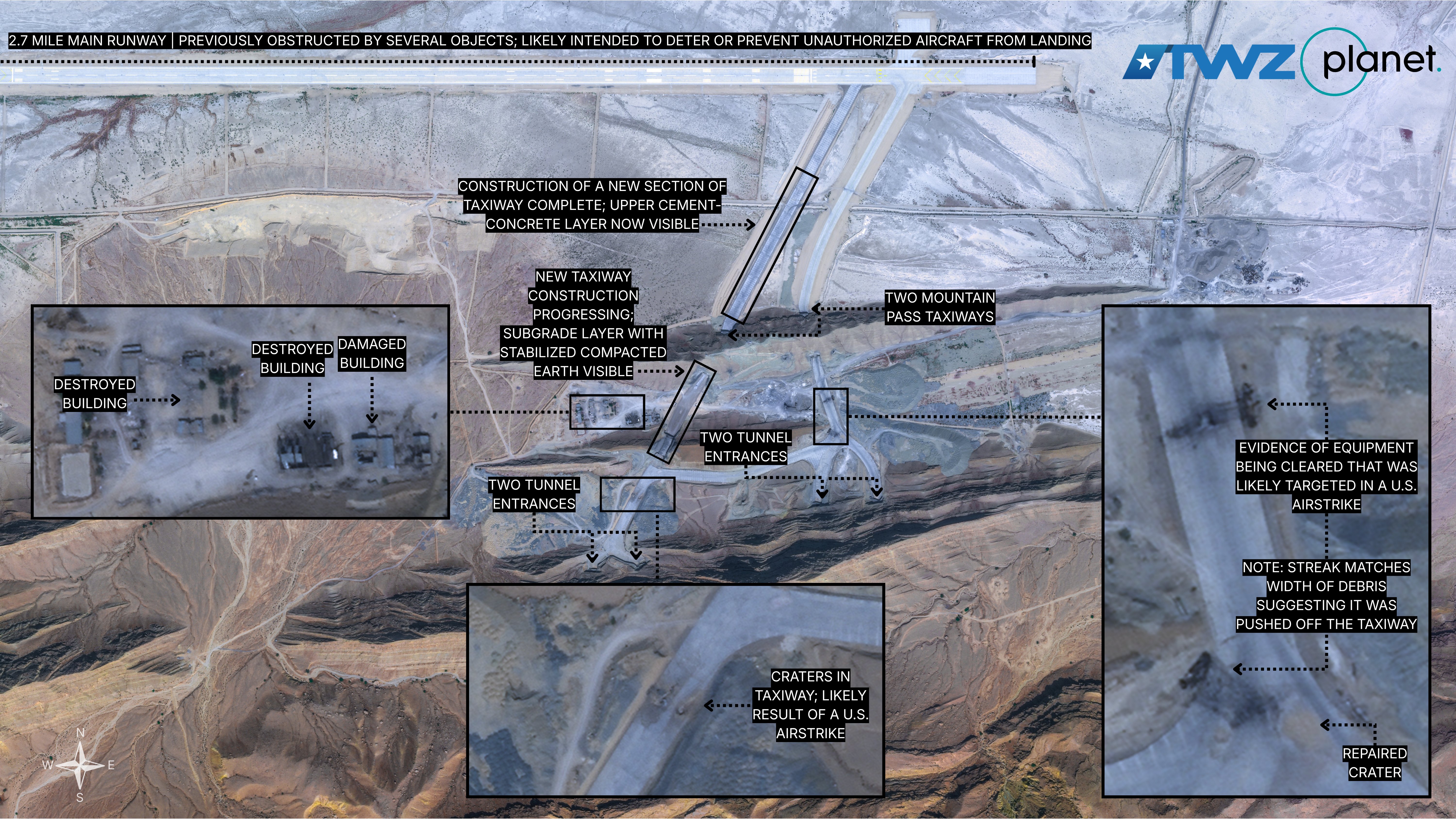
Work on the cavernous underground tunnel complex began in 2013. Construction of a 2.7-mile main runway, situated on the northern side of the base on a valley floor below the mountain range, started roughly eight years later. Two taxiways run through a smaller ridge connecting the runway to four entrances to the primary tunnel complex, where the jets and weapons are stored, although only one taxiway is currently operational.
The promotional video released in 2023 revealed at least one internal blast door, as well as branches from the main tunnel to revetment areas to park fighters and drones. A support compound of several buildings is on the west side of the base, next to the unfinished taxiway. The purpose of each structure is unclear, but a functioning airbase requires maintenance and repair facilities, crew quarters, reserves of fuel and munitions, security and force protection assets, and infrastructure to coordinate air traffic control and command and control functions.
Video released by Iranian state media in February 2023 reportedly showing the inside of the tunnel complex at Eagle 44.
The United States kicked off Operation Epic Fury alongside Israel on February 28, launching a massive wave of strikes against Iran from the west and south. Eagle 44 is located within striking distance of the munitions carried by air wings embarked on U.S. Navy aircraft carriers operating in the northern Arabian Sea and missiles fired by the guided-missile destroyers that escort them, as well as Air Force tactical and strategicaircraft and Army assets in the region. However, low-resolution images reviewed by TWZ through March 16 indicated that while the base was targeted, little damage was visible.
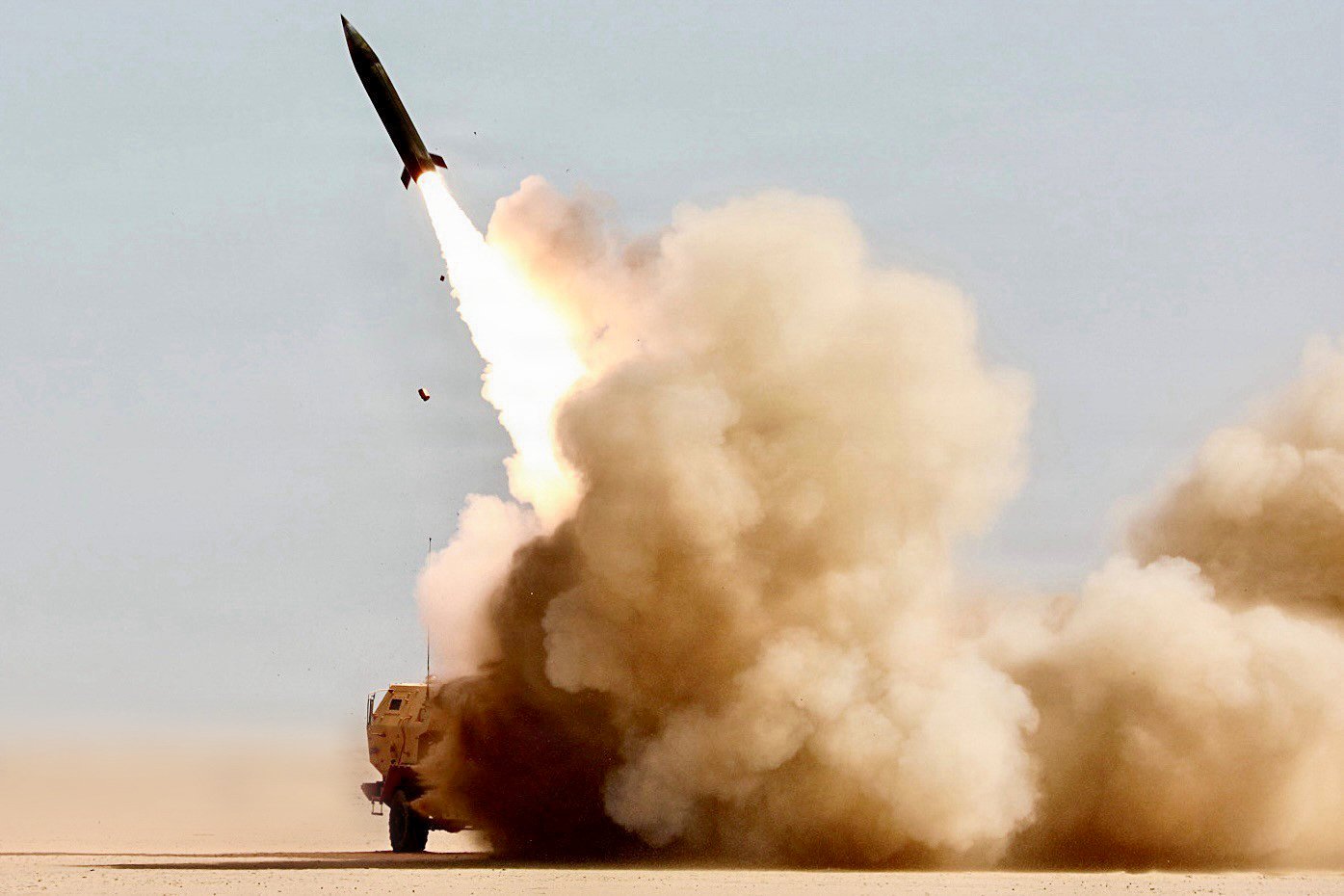
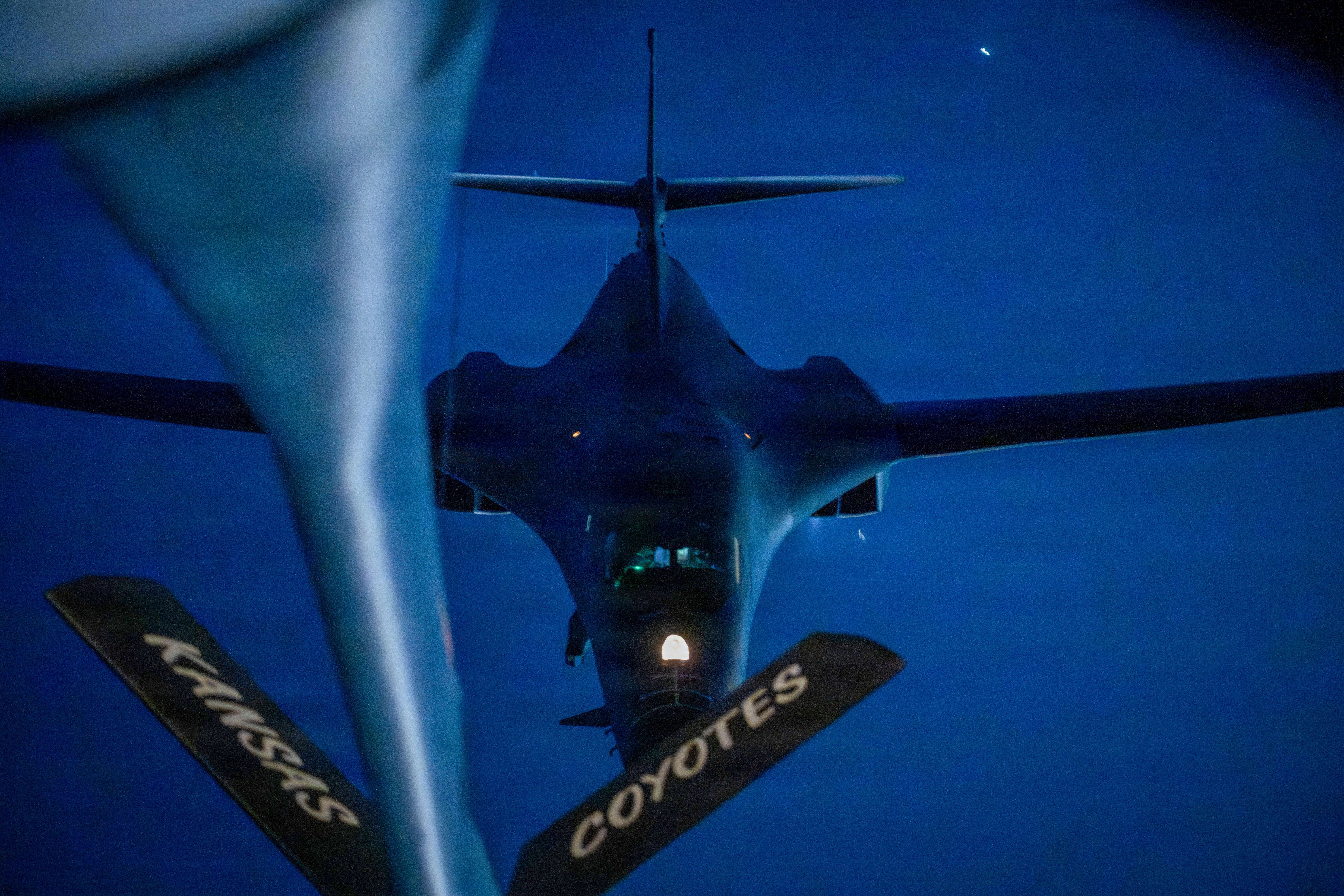
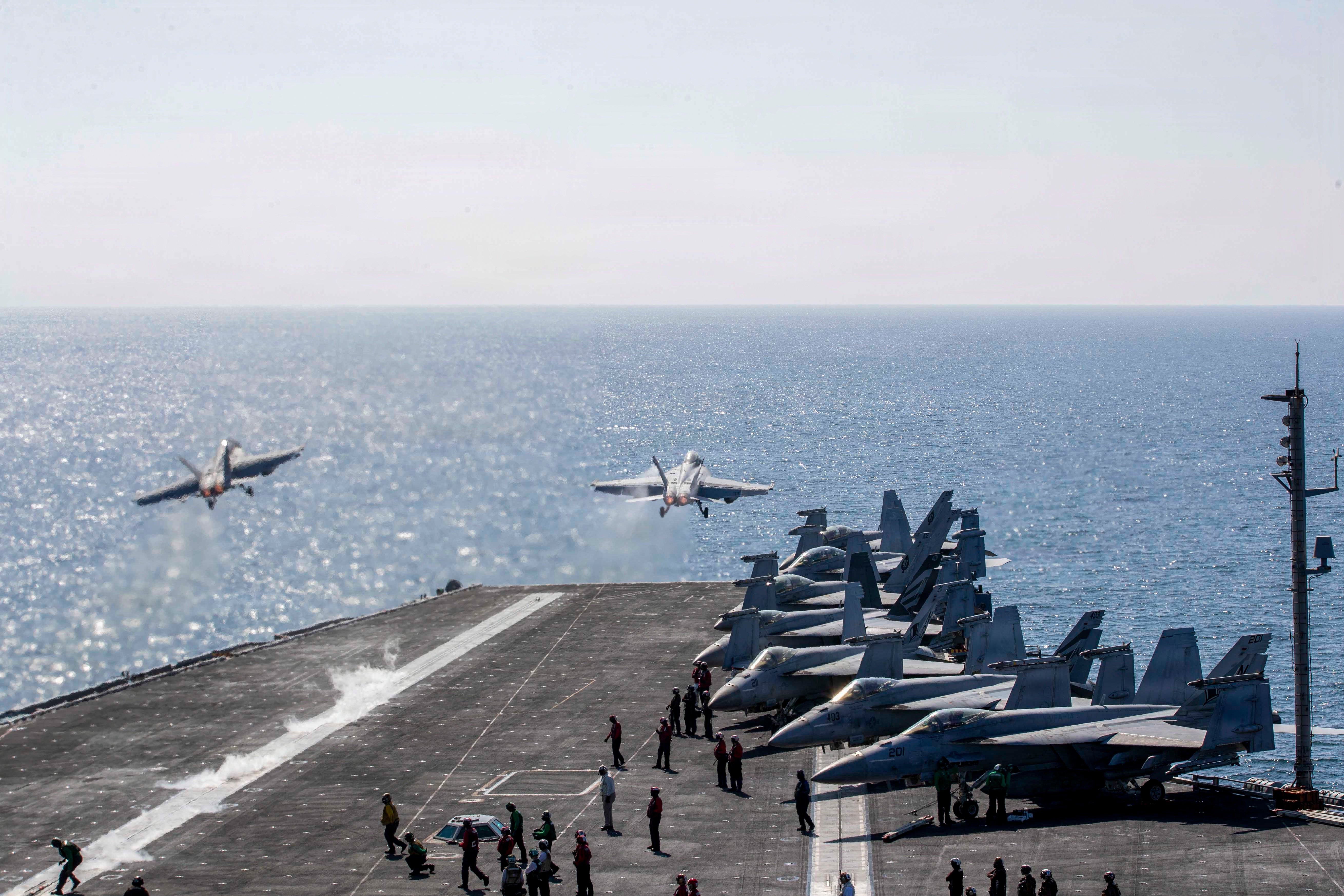
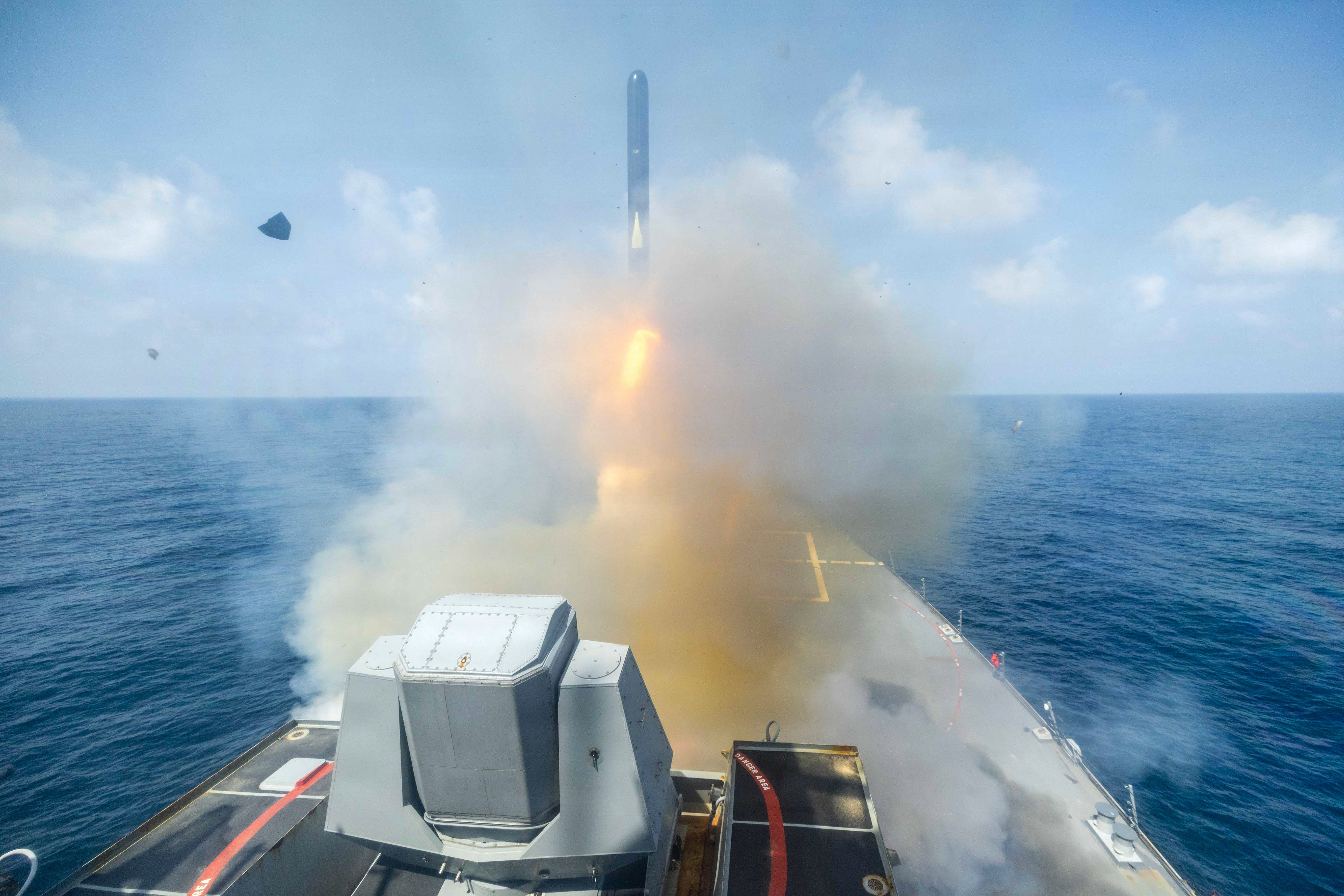
HIMARS fired during OEF. CENTCOM photo B-1B fuels for OEF mission. USAF photo Super Hornets launch during OEF. Navy photo Guided-missile destroyer USS Spruance fires a Tomahawk Land Attack Missile (TLAM) in support of Operation Epic Fury (OEF). U.S. Navy photo
As the U.S. and Israel continued the relentless air campaign over the next several weeks, the base was targeted again at the end of March, with greater effect, according to a report from The New York Times. High-resolution images the paper reviewed revealed impact craters on the taxiways near the tunnel entrances, one building leveled, and small mounds placed along the runway, presumably to prevent enemy aircraft from landing. Battle damage assessments suggested the strikes were intended to cut the underground caverns off from the runway, trapping whatever was inside and preventing takeoff. The report did not state whether U.S. or Israeli aircraft carried out the attack, and Israeli officials declined to comment. However, the U.S. was primarily responsible for pressuring Iran’s southern flank, while the Israelis attacked the western front.
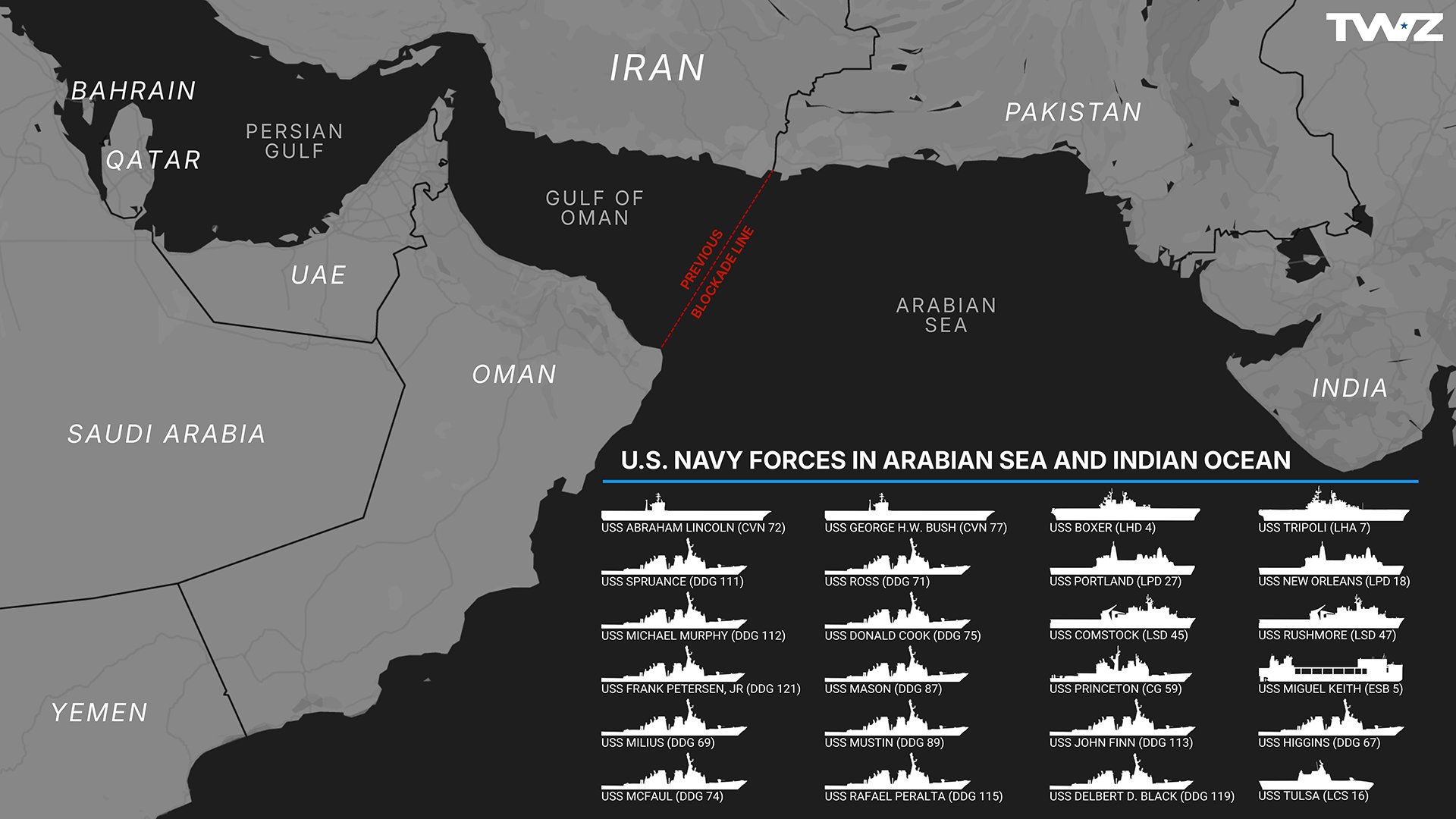
After the fragile April ceasefire collapsed and the U.S. imposed a second blockade, U.S. Central Command (CENTCOM), based out of MacDill Air Force Base in Tampa, Florida, and responsible for executing day-to-day operations of the war, launched multiple strikes across Iran on July 15, and Eagle 44 was hit for at least a third time. An analysis published by Soar Atlas, a satellite imagery provider, identified four aimpoints on July 16, with cratered taxiways and damage to additional infrastructure. According to that analysis, the structures targeted were related to the base’s construction unit, but TWZ has not independently verified this claim. The Pentagon and CENTCOM have not specifically named Eagle 44 in any press briefing or release, and Iran has not acknowledged the base was struck.
United States Navy forces on station in mid-July 2026 when the second blockade began and strikes resumed. TWZ/IAN ELLIS-JONES
The Planet Labs satellite imagery from September 29, obtained exclusively by TWZ, indicates that Iran began reconstruction after the July attacks and that the effort is ongoing.
The main runway, previously blocked by obstacles meant to deter and prevent unauthorized aircraft from landing, is now clear. On the western taxiway (marked in red below), a new section leading into the ridge ‘pass-through’ is complete, with its finished upper cement-concrete layer visible. On the other side of the pass, construction of the next segment is underway, with a subgrade layer of stabilized, compacted dirt laid down but not yet paved (orange). Farther south, in front of the western tunnel entrances, impact craters (blue) are still visible. When finished, the second taxiway will provide a direct link between the western hangars and the runway, allowing additional aircraft to move freely without sharing a single taxiway, a major bottleneck for higher operational tempos and more complex sortie launches and recoveries. A second functional taxiway and tunnel would also provide critical redundancy if the other is hit.
On the primary eastern taxiway, two dark streaks (green) that appeared following the strikes in July run off the edge of the pavement, likely debris left by equipment that was struck and removed. Notably, the streak marks match the width of the wreckage, suggesting it was bulldozed or pushed off the taxiway to reopen it. There is no sign of the equipment being recovered, only that it was cleared out of the way.
In the main support compound (yellow) next to the western taxiway, two buildings are clearly destroyed and a third is damaged. They have not been rebuilt yet, which is consistent with previous reporting from The Times and Soar Atlas that the attacks degraded construction capabilities, and suggests the regime may be focused on completing and repairing the taxiways rather than the installations.
The four entrances to the main tunnel complex (white), arranged in two pairs less than half a mile apart at the end of each taxiway on the southern part of the base, appear to be intact, although the angle makes it unclear whether they are open or sealed. What’s inside the mountain, and how many fighters remain in Iran’s inventory, is unknown. Regardless of the status of the fighter fleet, as we noted earlier, the base can also store drones and could be packed with cruise or ballistic missiles.
The U.S. and Israel have a range of bunker buster bombs that could be used in an attempt to collapse the tunnel entrances, a major choke point for any underground weapons storage site. While not destroying what is being held within, doing so would block anything inside from leaving — and being used — for a period of time. Additionally, the pass-through tunnels make for easy targets, and hitting them would keep fixed-wing aircraft from reaching the runway. No impact points on the mountain itself or damage to the portals inside is apparent, but they could have been sealed and hit farther in, which may not be highly visible via satellite imagery. Reaching the main storage caverns themselves would likely be far harder. Larger bunker busters in the U.S. inventory include the GBU-57 Massive Ordnance Penetrator (MOP) guided munition, which could be capable of reaching deeper into the main site, but these are very limited in number and can only be delivered by the Air Force’s B-2A Spirit stealth bombers. It’s highly unlikely the U.S. would expend such resources on a site like this over many others of higher strategic importance.
Eagle 44 is not the only base that Iran is fixing during the lull in hostilities. By the end of May, Iran had cleared 50 of 69 tunnel entrances struck at 18 underground facilities, including some “missile cities,” according to a report by CNN− and that number is likely higher now. Planet Labs, Airbus, and Vantor imagery reviewed by The Wall Street Journal in July showed rebuilt entrances near Kangavar, fresh excavation at Dezful, and repairs near Kermanshah. “They have very impressive industrialization and reconstruction capabilities,” Israeli Brig. Gen. Ran Kochav told the paper. “They refilled their stockpiles,” he added.
A Western official toldBloomberg earlier this month that Iran “remains well-stocked with ballistic missiles and some anti-ship missiles, and can quickly add more,” and a U.S. official posited in May that “the Iranians have exceeded all timelines the IC [Intelligence Community] had for reconstitution.” Both assessments are at odds with what the White House and Pentagon have repeatedly claimed. Secretary Pete Hegseth stated in April that Iran’s air force was “wiped out” and its missile program was “functionally destroyed; launchers, production facilities, and existing stockpiles depleted and decimated,” while acknowledging a week later that the regime was “digging out” launchers, missiles, and bombed facilities but had “no ability to replenish offensive or defensive capabilities.” In May, CENTCOM Commander Adm. Brad Cooper told Congress, “Before Operation Epic Fury, the Iranian Air Force flew between 30 and 100 sorties each day; today that number is zero.” More recently, at a campaign rally in Kansas on Monday, U.S. President Donald Trump said, “They have no air force… their 229 beautiful fighter jets are now scattered all over the runways, the beautiful runways of the Islamic Republic of Iran.”
Video released by Iranian state media in May 2022 showing a different underground missile and drone complex.
At the very least, strikes on Eagle 44 cratered the taxiways and degraded support infrastructure, which likely put at least some of whatever airpower is stored there, if any, out of action. But even after enduring months of war and extreme economic pressure due to the ongoing U.S. blockade and sanctions, as well as dealing with damage across the country, Tehran continues to prioritize construction on the remote base. That fact alone could put it back on the target list if the U.S. and Israel launch another operation. But above all else, it points to how important this facility is to the regime, for whatever reason.
Iran is ready to face any new aggression and will take the war to new levels, Iran claimed on Wednesday, October 21, after reports indicated the resumption of joint US-Israeli strikes on the country’s nuclear sites and other targets is imminent.
Several reports appeared on Wednesday and Thursday pointing towards the end of an undeclared ceasefire since July and growing possibilities of fresh US-Israeli strikes on Iran.
AFPreported on Thursday, that the US has asked its embassy staff and their family members in Saudi Arabia and family members of the embassy staff in several other countries in the region to leave.
Drop Site News has reported on Thursday that the US was currently involved in large-scale preparations, including the deployment of new warships and around 10,000 additional sailors and marines in the region.
The US preparations are largely linked to Israeli Prime Minister Benjamin Netanyahu’s attempts to push a fresh offensive against Iran, Drop Site claimed. It cited both the Iranian and US officials that the US-Israeli joint strikes against Iran may begin probably before the Tuesday Israeli elections.
Last week there were reports about Netanyahu pressing Trump to re-start the bombing of Iran, as it may boost his chances of winning the elections which he is reportedly trailing at the moment.
On Wednesday, Netanyahu again, without any evidence, alleged that Iran was developing nuclear weapons. He claimed he has directed the Israeli military and Mossad, its secret agency involved in various covert operations, to “topple the regime in Iran.”
An unnamed Iranian official also confirmed to Drop Site that the country has received an intelligence assessment about the resumption of joint US-Israeli bombing of the country’s strategic sites before Tuesday.
The Iranian official reportedly also claimed that the US may also carry out a “token” strike on Iran’s nuclear site such as the Pickaxe Mountain, to claim “victory.”
Though White House deputy Press Secretary Anna Kelly denied these reports, claiming there will be no fresh strikes at least before the Midterm elections, an unnamed official told Drop Site that US President Donald Trump has “backed off” from major combat operations against Iran at least seven times since July, claiming he could start the war anytime.
Trump’s vindictiveness may cause the resumption of the war
Recent statements by President Trump about Pickaxe Mountain and also about the failure of negotiations with Iran have fueled speculations about the imminent strikes.
On Wednesday, Trump told the press that the US is not negotiating with Iran and “something one way or the other” will happen “fairly soon.”
Reacting to the developments, Trita Parsi of the Quincy Institute, however, dismissed Israel’s centrality in these affairs, despite claiming similarities in circumstances between now and February, when the US launched an unprovoked war against Iran in collaboration with Israel.
Rather, he pointed out Trump’s “vindictiveness” as the main reason for the fresh overtures of war, claiming Trump blames Iran for “ruining his presidency” and the humiliation his Republican party may face in the upcoming Midterm elections.
Iran will respond with a “broader plan”
Iran has repeatedly claimed it was ready to face the US-Israeli aggression. The head of its Supreme National Security Council (SNSC) Mohsen Rezaei claimed on Wednesday that Iran will face the “next stage” of the war with a “broader plan” and respond in ways not seen before.
In the event of fresh aggressions, Iran will expand the war and target all kinds of US assets in the region including its communication cables, and AI data centers, Rezaei claimed in dialogue with Drop Site.
Rezaei also warned the regional countries to not participate in the US aggression in any way if they want to avoid Iranian retaliation, claiming “those governments should not assume they can participate in warfare against Iran without putting themselves at risk.”
At least seven vessels attacked for violating restrictions
Meanwhile, the naval wing of the Islamic Revolutionary Guard Corps (IRGC) claimed on Thursday that it targeted four vessels in the northern Persian Gulf for violating its restrictions on “unauthorized routes.” The vessels caught fire and were burning, Press TVreported.
The IRGC also claimed three other vessels were hit by mines in the west of the Strait of Hormuz on Wednesday night. It claimed these vessels were forced by the US, despite Iran’s warnings, to cross the Strait of Hormuz through the “unauthorized route.”
The number of vessels hit after trying to cross the Strait of Hormuz has increased many fold this week, despite the repeated claims made by the US about it being in full control over the waterway.
The US has also claimed that the shipment of oil through the Persian Gulf has returned to the pre-war level and that the Iranian blockade was ineffective.
However, Iran has repeatedly denied the US claims. On Thursday, the IRGC also warned that if the US continues to force more vessels through the Strait of Hormuz, it will be forced to carry out retaliatory strikes against its bases in the region.
Iran's state television reported that seven oil tankers either caught fire or were damaged by mines overnight Wednesday into Thursday after being targeted or striking naval mines in the Strait of Hormuz.
President Trump told reporters on Wednesday night that the US was “not negotiating” with Iran and that something would be happening “fairly soon,” one of his latest vague threats against the Islamic Republic. Trump made the comments at Joint Base Andrews, Maryland, after returning from a rally in South Carolina with former professional boxer Evander […]
The Islamic republic has long used billboards in Tehran to mock its opponents and hammer home its messaging, but this piece of performance propaganda is perhaps the most eccentric yet.
Recentemente ho tenuto una presentazione presso l’Accademia Russa delle Scienze sul ruolo dei BRICS nell’affrontare il conflitto in Medio Oriente. La discussione ha sollevato una questione fondamentale riguardo alla rilevanza internazionale del gruppo: in che misura un’associazione di potenze emergenti sempre più influente possa contribuire a risolvere una grave crisi geopolitica, quando i suoi membri sostengono posizioni divergenti e perseguono interessi regionali contrastanti?
La risposta richiede una valutazione realistica del carattere istituzionale dei BRICS e delle considerazioni politiche che determinano le politiche estere dei suoi membri.
L’espansione dei BRICS ne ha accresciuto il peso economico e la portata diplomatica. Ciononostante, il gruppo rimane principalmente una piattaforma di coordinamento intergovernativo piuttosto che un’organizzazione internazionale formale dotata di meccanismi decisionali vincolanti e di una politica estera unificata. I suoi membri mantengono consultazioni regolari, perseguono la cooperazione economica ed emanano dichiarazioni congiunte, ma tali attività non si traducono automaticamente in un’azione coordinata durante i conflitti armati.
Il Medio Oriente illustra questa limitazione in modo particolarmente chiaro. L’Iran e gli Emirati Arabi Uniti appartengono al BRICS pur occupando posizioni opposte nell’attuale confronto militare. Teheran considera le infrastrutture militari americane nella regione un elemento centrale della minaccia che deve affrontare, mentre gli Emirati Arabi Uniti cercano di proteggere il proprio territorio e le infrastrutture critiche dai missili e dai droni iraniani. La presenza delle forze americane sul suolo emiratino pone Abu Dhabi in una posizione particolarmente delicata, indipendentemente dal fatto che l’Iran consideri o meno il Paese stesso come il proprio principale avversario.
Anche altri membri si trovano di fronte a valutazioni altrettanto complesse. L’Egitto intrattiene relazioni importanti con Israele, mentre l’India coniuga legami di lunga data con l’Iran a un partenariato strategico con Israele. Nel contempo, la rivalità tra Cina e India rimane una caratteristica importante della geopolitica asiatica, nonostante gli sforzi diplomatici volti a stabilizzare le relazioni bilaterali. Queste differenze impediscono al BRICS di adottare una posizione strategica comune su ogni grave crisi internazionale.
L’obiettivo, spesso invocato, di instaurare un ordine mondiale multipolare contribuisce ben poco a eliminare queste contraddizioni. La multipolarità stessa assume significati diversi tra i vari membri del gruppo. Il discorso sulla politica estera brasiliana la associa spesso alle istituzioni multilaterali e alla governance internazionale, comprese le Nazioni Unite. Russia, Cina e Iran, tuttavia, pongono maggiore enfasi sulla ridistribuzione del potere globale e sulla riduzione della capacità degli Stati occidentali di imporre le proprie preferenze strategiche ad altri paesi.
Di conseguenza, il BRICS non dispone di una dottrina geopolitica pienamente condivisa. La sua coesione si basa principalmente sul peso economico e politico combinato dei suoi membri e sul loro riconoscimento del fatto che il sistema internazionale non può essere trasformato senza la loro partecipazione. Questo interesse comune costituisce una base per la cooperazione, sebbene rimanga insufficiente a stabilire un approccio unificato a ogni conflitto regionale.
Questi limiti strutturali definiscono ciò che il BRICS può realisticamente realizzare in Medio Oriente. Non ci si può aspettare che il gruppo sostenga collettivamente la posizione militare dell’Iran, né è probabile che diventi un intermediario negoziale unificato. Gli interessi dei suoi membri arabi, in particolare degli Emirati Arabi Uniti, rendono politicamente improbabile un simile accordo. Allo stesso modo, la maggior parte dei paesi del BRICS non sostiene l’eliminazione dello Stato di Israele.
Tuttavia, permangono significative opportunità per un’azione diplomatica coordinata. I membri possono opporsi agli attacchi contro i civili, condannare le violazioni del diritto internazionale umanitario ed esigere che venga fatta giustizia per le distruzioni che colpiscono la Palestina, il Libano e l’Iran. Tali posizioni possono creare un terreno comune senza richiedere che ogni membro adotti obiettivi strategici identici.
Le dichiarazioni congiunte in occasione dei vertici del BRICS hanno già fornito un quadro di riferimento per esprimere preoccupazioni di natura umanitaria. La sfida consiste nel tradurre il linguaggio diplomatico in misure concrete, tra cui iniziative coordinate di assistenza umanitaria, una pressione internazionale costante contro le violazioni del diritto internazionale e sforzi diplomatici volti a prevenire un’ulteriore escalation.
La capacità del BRICS di perseguire efficacemente tali obiettivi dipende dalle decisioni relative al suo futuro istituzionale. Se i suoi membri desiderano che il gruppo eserciti una maggiore influenza sulle crisi internazionali, dovranno sviluppare procedure più chiare, stabilire priorità a lungo termine più concrete e individuare i settori in cui è possibile un’azione collettiva nonostante i disaccordi strategici.
Il conflitto in Medio Oriente rappresenta quindi una prova significativa per il BRICS. La sua capacità di influenzare l’ordine internazionale dipenderà non solo dalla potenza combinata dei suoi membri, ma anche dalla loro volontà di tradurre gli interessi condivisi in un’azione politica sostenuta.
 Login



 / glenndiesen