❌

Reading view

Trilateral peace talks with Russia, US negotiators to begin in November, Zelensky says

The peace discussions will begin at the technical level with negotiation teams, Zelensky said. If those efforts prove productive, then meetings between Zelensky, Russian President Vladimir Putin, and U.S. President Donald Trump will be held.

  •  

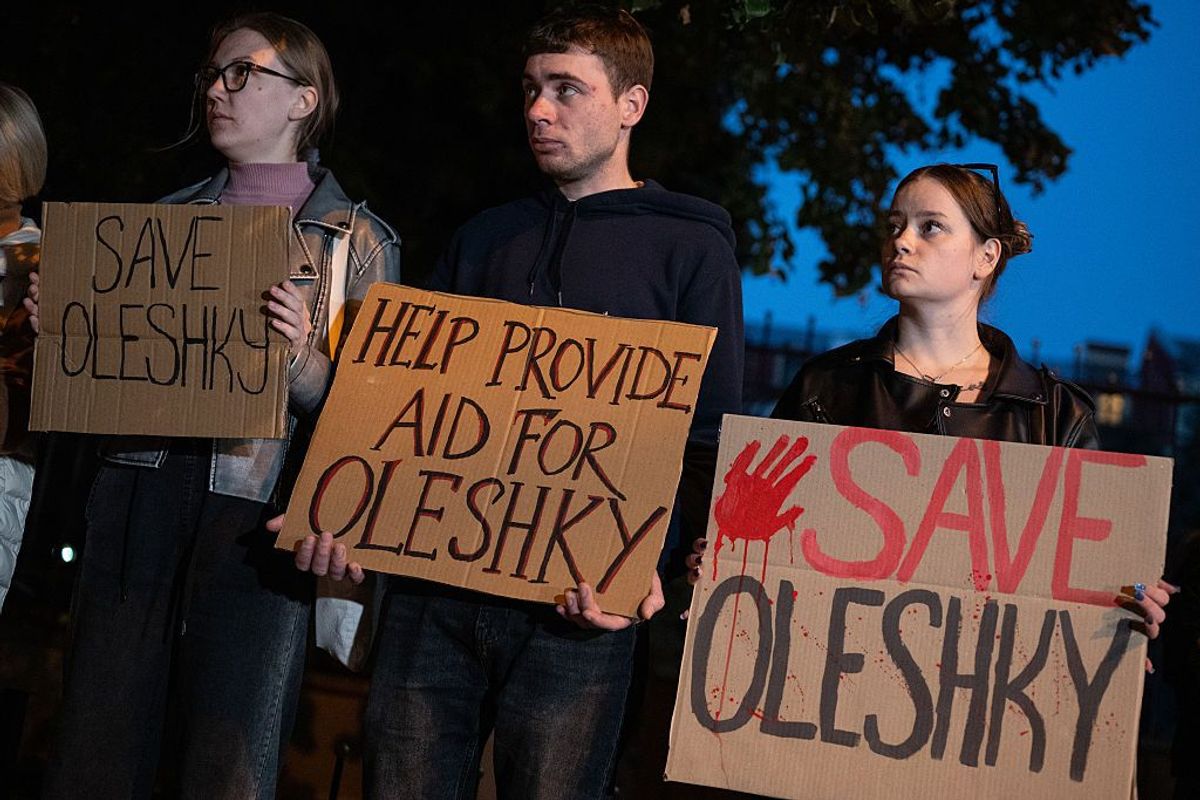
Ukraine war latest: Ukraine, Russia agree to local ceasefire for Russian-occupied Oleshky, mediated by Melania Trump

Key developments on Oct. 23:

  • Ukraine, Russia agree on local ceasefire for Russian-occupied Oleshky, mediated by Melania Trump
  • Civilian cargo ship sinks off coast of Romania after Russian drone strike, authorities say
  • Ukraine to end automatic 100% mobilization exemptions for critical industries, Prime Minister says
  • Ukrainian drone attack triggers shut

  •  

Lawmakers Plan to Block Trump Nominees Over Ukraine Satellite Network Restrictions

Senators have warned the White House they will withhold confirmation votes until the administration ensures the restoration of communications capabilities used by Ukraine’s military.

© Haiyun Jiang/The New York Times

Representative Brian Fitzpatrick, Republican of Pennsylvania and a former F.B.I. agent who worked on Russian counterintelligence in Kyiv, said he doubted the communication problems were accidental.
  •  

Melania Trump Says She Brokered a Cease-Fire in a Starving Ukrainian City

The first lady, who is positioning herself as an intermediary between two warring nations as her husband sides with Russia, said the agreement would allow residents to evacuate.

© Eric Lee for The New York Times

“It was abundantly clear that without my intervention, the possibility to bring humanitarian aid into the city and to evacuate the elderly would be impossible,” Melania Trump, the first lady, said in a statement.
  •  

Ukraine: l’heure de la grande desillusion

Dans ce sixième numéro de Moreau Décrypte, Xavier Moreau analyse la grande désillusion qui s’empare d’une partie des Ukrainiens. À Kiev, beaucoup observent avec inquiétude l’évolution de la position américaine, marquée par une priorité croissante accordée aux négociations et à un rééquilibrage des relations avec les grandes puissances, tandis que des discussions diplomatiques impliquant Washington, Moscou et d’autres acteurs internationaux

Publié à l’origine par divergencepolitique.fr

  •  

Prepping a Postmortem for Zelensky’s Presidency

By Ted SNIDER

Join us on Telegram, X, and VK.

Contact us: info@strategic-culture.su

The Ukrainian leader faces escalating crises.

Like the man in Monty Python and the Holy Grail, Ukraine’s President Volodymyr Zelensky may be crying, “I’m not dead.” It is too early to perform a postmortem on Zelensky’s political career. But it may not be premature to attempt an analysis of his deteriorating condition and struggle to survive.

Zelensky’s strength is being undermined on four fronts: overall domestic support, support from his party, financial support from Europe, and a collapsing relationship with President Donald Trump.

Polls show that Ukrainians, who wanted Zelensky to lead them through the war, no longer want him to lead them after the war. Indeed, having fed Ukrainians with fantastical promises of pushing Russia out of all Ukrainian lands and being welcomed into NATO, and having depended on a cooperative relationship with Ukrainian ultranationalists who oppose a compromise peace with Moscow, Zelensky may have put himself into a position where his presidency cannot survive the war. Polling shows a collapse of domestic support for Zelensky, suggesting that he would lose by a wide margin in the next election.

But, while the foreign media has been entirely focused on the war, domestic attention in Ukraine has also turned to corruption. Zelensky was elected on the twin platform of making peace with Russia and ending Ukraine’s self-destructive corruption. He has delivered on neither.

A key metric is Zelensky’s trust rating. Asked recently which political figures they trust, Ukrainians ranked their president a damning sixth, with only 18 percent of respondents fully trusting him. His main potential political rivals, Valeriy Zaluzhny, Kyrylo Budanov, and Mykhailo Fedorov are all more trusted. A fifth of those who say they do not trust Zelensky cite corruption as the main reason, and 72 percent of Ukrainians say he is personally responsible for corruption in his government. Amid his latest spat with Trump, one recent poll found Zelensky’s trust rating had risen, but the overall trend is still bad, and the rally-around-the-flag effect may prove fleeting. Zelensky has hurt himself with his handling of a snowballing corruption scandal that is reaching deeper and deeper into his inner circle.

And Ukraine’s president is not only losing ground with voters—he’s also losing the support of his party, which once was solidly behind him. He is being confronted by unfamiliar resistance, with dozens of MPs in his Servant of the People party boycotting or rebelling. His legislative supermajority is reportedly at risk as a result of defections.

The lack of support at home also puts in jeopardy EU funding on which the Ukrainian government relies. Ukraine is facing a massive budgetary shortfall totaling tens of billions of dollars. Kiev wants money promised by the EU for 2027 to be provided sooner. But the release of badly needed funds from the EU is contingent on the Verkhovna Rada, Ukraine’s parliament, enacting corruption reforms—and Zelensky’s party has refused to pass such measures. Even a package of tax bills that was passed last week and that could unlock $4.3 billion dealt only with less controversial items, and avoided addressing many of the more serious demands being made by the EU.

Earlier this month, the EU rejected Zelensky’s appeals and refused to accelerate payments to cover the shortfall, again tying funding to corruption reform. According to Slovakia’s Prime Minister Robert Fico, neither Slovakia nor Hungary will participate in another EU loan to Ukraine. Other, more pro-Ukraine EU nations would have trouble filling the gaps. France, for example, is convulsed by riots motivated in part by the rising cost of living, and populist critics of the establishment are quick to remind voters of the vast sums that have already been sent to Ukraine. The right-wing leader Marine Le Pen, currently the favorite to win France’s next presidential election, recently said that, if she wins, Paris will cut financial aid to Ukraine.

But Zelensky’s biggest challenge comes from Ukraine’s most crucial supporter. Shaky relations with U.S. presidents are nothing new for Zelensky. In the first year of the war, when Joe Biden authorized further military assistance for Ukraine, Zelensky complained about what he wasn’t getting. Biden reportedly “lost his temper” during a call with the Ukrainian leader. “Raising his voice,” he told Zelensky to “show a little more gratitude.” The next year, Thomas Friedman of the New York Times reported, “There is deep mistrust between the White House and President Volodymyr Zelensky of Ukraine—considerably more than has been reported.”

But Zelensky managed those challenges. Even following last year’s public debacle that saw Trump throw him out of the Oval Office, Zelensky was able to repair his relationship with Trump. That work has now exploded.

Earlier this month, Trump made three decisions that seemed to collectively amount to a breaking point for a reluctantly conciliatory Zelensky. He made a deal with Russia’s President Vladimir Putin that would allow Russia to sell diesel fuel, he announced a surprise energy ceasefire that demanded Ukrainian armed forces stop all strikes on Russian refineries, and he waived new sanctions on Russia.

This trio of announcements apparently led Zelensky to conclude that his conciliatory approach was no longer working. According to a person close to Zelensky, he let it be known that “plain speaking” was now needed, and he made the decision to publicly criticize Trump.

Zelensky said Trump’s behavior “is certainly not how partners should treat each other.” When Ukraine struck another Russian refinery, Trump said Zelensky “better damn well stop.” Zelensky said Trump was not being fair or honest. He called Trump weak, and juxtaposed his leadership to the “real leaders” in Europe. Trump fired back, declaring, “I think it’s time for Ukraine to get a new president…. I suggest they get a new leader who can make a deal.” Trump later expanded: “I think if they are going to end up with a settlement of some kind, they are not going to do it with him.” On Monday, Trump added, “To be honest, I think it’s time for somebody else to negotiate on behalf of Ukraine.”

The gloves were off, and Zelensky was in danger of losing Trump. The military-grade version of Starlink, which Ukrainians use for battlefield communications, as well as U.S. early warnings of incoming Russian missiles went silent. “He is not a good guy for us to deal with,” Trump said of Zelensky Friday, adding that he is “more difficult to deal with than Putin.” Zelensky, he said, had “destroyed that country.”

When Russia kept pounding Ukraine’s electricity grid with drones, ballistic and hypersonic missiles, and with access to U.S. intelligence was restricted, Zelensky defied Trump’s orders, letting it be known that the block on attacking Russian refineries was off.

Zelensky is a political survivor, but the latest constellation of crises is the most difficult challenge to his leadership yet.

Original article:  www.theamericanconservative.com

  •  

A novembre negoziati tra Russia e Ucraina ad Abu Dhabi. Gli Stati Uniti saranno mediatori

A novembre Russia e Ucraina faranno un nuovo tentativo per arrivare a un accordo di pace. Dopo i colloqui indiretti favoriti dalla mediazione degli Stati Uniti ma poi naufragati, un nuovo round si terrà, come ipotizzato nei giorni scorsi, ad Abu Dhabi, negli Emirati Arabi Uniti. Ad annunciarlo è stato il portavoce del Cremlino, Dmitry Peskov, con la Russia che si è dichiarata pronta a riprendere i colloqui di pace, in stallo dall’inizio dell’anno, dopo un incontro avvenuto mercoledì tra il presidente russo Vladimir Putin e Steve Witkoff, inviato speciale di Donald Trump. Anche il presidente ucraino Volodymyr Zelensky si era espresso a favore.

L’Europa, come dall’inizio del conflitto, viene esclusa dai tavoli dei negoziati, pur essendo rimasto, dopo il disimpegno di Trump, il principale sostenitore dell’Ucraina. In quasi 5 anni di guerra non ha ancora nominato un suo mediatore da proporre in sede di negoziati, tema sul quale governi e famiglie politiche si sono già scontrate. Adesso, secondo il Daily Telegraph, nella shortlist dei cinque papabili figurerebbe anche quello della presidente del Consiglio, Giorgia Meloni. Insieme a lei, tra i candidati ci sono, si legge, il presidente finlandese Alexander Stubb, quello ceco Petr Pavel, la premier danese Mette Frederiksen e il premier norvegese Jonas Gahr Store.

Nomi che, però, rischiano di essere respinti in blocco da Mosca. Per due motivi. Il primo, il Cremlino non ha intenzione di accogliere al tavolo un ulteriore soggetto determinato a difendere i diritti e gli interessi dell’Ucraina, rafforzando così anche la posizione di Zelensky. Il secondo, quattro di questi nomi sono esponenti delle istituzioni di Paesi Ue che la Russia considera soggetti attivi nel conflitto, dato che forniscono aiuti militari ed economici all’esercito ucraino, e quindi incandidabili per il ruolo di mediatore. Diversa la posizione del premier norvegese che, comunque, rimane capo dell’esecutivo di un Paese Nato.

Un portavoce della Commissione Ue ha intanto fatto sapere, nel corso del consueto midday briefing, che l’Unione sta “lavorando costantemente affinché l’Ucraina si trovi, innanzitutto, in una posizione di forza e affinché si raggiunga una pace giusta e duratura. Attualmente ci aspettiamo che si terranno dei colloqui a livello multilaterale con alti funzionari. L’Ue sarà presente a questi colloqui che si terranno nel prossimo futuro. Il formato dovrebbe essere simile a quello dei precedenti colloqui, ad esempio quelli di Miami“.

L'articolo A novembre negoziati tra Russia e Ucraina ad Abu Dhabi. Gli Stati Uniti saranno mediatori proviene da Il Fatto Quotidiano.

  •  

Trump Asked Musk to Reverse Starshield Restrictions on Ukraine

The call from the president about the Starshield network came after officials in Ukraine reported that they found new limits on the use of military drones in their war against Russia.

© Brendan Hoffman for The New York Times

A Ukrainian soldier checking a reconnaissance drone before launching it in the Sumy region last fall.
  •  
❌