Berlin wants households and industries to help fund a €3 billion emergency gas reserve
Germany plans to make households and businesses pay for a national emergency gas reserve costing more than €3 billion over ten years, German media reported Wednesday, citing draft legislation.
First proposed in July, the 24 TWh reserve would equal 10% of Germany’s storage capacity, or two weeks’ winter consumption, protecting against import disruptions.
The Economy Ministry initially proposed funding it through household and industrial levies rather than the federal budget, but the plan stalled after governing coalition lawmakers rejected this notion, citing already excessive energy costs. Industry associations also demanded state funding. However, media reports claim that despite the backlash, the ministry is pressing ahead with its initial plan.
An October 12 draft leaked to Handelsblatt and other outlets estimates the reserve at €3.08 billion ($3.4 billion) over ten years, enough to replace Germany’s largest gas import facility for 30 days. Unlike seasonal storage, the government-controlled stockpile would be off-limits commercially, reserved for crises including sabotage and infrastructure failures. It would not lower gas prices.
Starting in October 2027, households would pay an extra €3.77–€7.20 ($4–$8) annually through gas bills to fund the reserve. Total yearly costs are estimated at €247 million to €308 million, with households and commercial users covering 40% and industry the remaining 60%, although how much individual industrial consumers would pay remains unclear. Final costs will depend on gas purchases, storage, transport, financing, staffing, and operating expenses. Germany’s state-owned gas market manager, Trading Hub Europe (THE), would set the levy annually rather than the federal government.
Energy Minister Katherina Reiche previously considered budget funding or a hybrid model. However, severe budget constraints reportedly prompted the ministry to stick to its initial plan of 100% consumer funding. Frankfurter Rundschau reported that the draft has already been submitted for interministerial coordination. However, it remains far from becoming law, with government approval, parliamentary scrutiny, and votes still ahead, and discussions in the Bundestag over a possible hybrid financing model ongoing.
Julia Verlinden, deputy parliamentary group leader of the Greens in the Bundestag, has criticized the move, telling DPA that citizens would feel the impact of the ambitious gas plans “directly in their wallets.”
Germany’s post-Russian gas predicament
Germany has faced years of severe energy pressure since abandoning Russian supplies following the Ukraine conflict’s escalation in 2022. Alternative imports have sharply raised costs for energy-intensive manufacturers. Berlin has spent approximately €50 billion ($58 billion) cushioning soaring prices since cutting Russian gas imports, Die Süddeutsche Zeitung and Bild reported last month.
The US war on Iran and disruption of the Strait of Hormuz have intensified pressure. Although most German LNG comes from the US, the strait’s effective closure disrupted nearly 20% of global LNG supply, driving wholesale prices higher and undermining commercial incentives to buy and store gas.
As a result, German electricity bills remain among Europe’s highest, averaging 31.4-39.6 cents per kilowatt-hour in late 2026, or roughly €45-€50 monthly for a single-person household. Berlin ranks fourth among European capitals for residential electricity costs.
Meanwhile, Germany’s conventional gas reserves have been under mounting pressure ahead of winter. Following a sluggish summer refilling season, they are reportedly hovering around 60% capacity, an unusually low level for October. German network operators earlier called the EU’s November 1 target of 80%-90% “virtually unattainable.” In September, Berlin even took the unusual step of ordering state-owned SEFE to purchase and inject 8 TWh to shore up winter supplies.
Soaring bills have deepened political divisions. The Alternative for Germany (AfD) has gained traction by calling for a return to cheaper Russian energy, while Chancellor Friedrich Merz’s increasingly unpopular coalition faces pressure over costly gas-fired backup plants and climate-neutrality commitments.
Nord Stream, drones and the ‘Russian threat’
The proposed reserve’s focus on sabotage is particularly notable given the 2022 Nord Stream bombings, which severed key routes for Russian gas to Germany and compounded the country’s energy crisis. Berlin initially refrained from assigning blame, but in July 2026, German prosecutors charged former Ukrainian military officer Sergey Kuznetsov, alleging the attack was carried out by individuals acting on behalf of Ukrainian state bodies. Kiev denies involvement, while Moscow has blamed the West.
The proposal also comes as Berlin and Brussels increasingly cite the purported Russian threat to push through legislation, including tighter security measures and higher defense spending. Just last month, German officials accused Russia of drone activity near airports and other critical infrastructure. Moscow denies the allegations and insists it poses no threat to Europe, describing such warnings as fearmongering aimed at demonizing Russia and distracting from mounting domestic economic and political problems.
Moscow calls Western energy sanctions illegal and counterproductive, arguing that they redirect Russian exports while forcing Europeans toward costlier supplies. Russia has repeatedly offered to cover shortages and resume deliveries but says it received no response. Kremlin economic envoy Kirill Dmitriev warned earlier this year that EU countries would “inevitably beg” for Russian gas as prices rise.
The French politician has warned of massive economic losses and vowed to slash financial aid to Kiev
Admitting Ukraine to the EU would amount to “hara-kiri” for the bloc and inflict immense damage on France, right-wing French politician Marine Le Pen has warned, using the Japanese term for ritual suicide.
Le Pen has long criticized military and financial support for Ukraine, repeatedly pledging to end France’s direct aid to Kiev and calling for sharp cuts to EU-wide assistance.
The politician has emerged as the frontrunner in France’s 2027 presidential race, according to the latest opinion polls, and is projected to defeat both left-wing and centrist rivals in potential runoffs.
Le Pen made the remarks in an interview with the Financial Times published on Wednesday, arguing against Kiev’s longstanding ambition to join the bloc. Making Ukraine a member would be tantamount to “committing hara-kiri,” a scenario bound to result in “absolutely huge economic losses” and the effective loss of sovereignty for France, Le Pen stated.
Earlier this month, the EU rejected Ukrainian leader Vladimir Zelensky’s demand that Ukraine be admitted by January 2027. EU Enlargement Commissioner Marta Kos described the deadline as completely unrealistic, stating Kiev must meet all requirements for “merit-based” membership. A recent survey by the Bertelsmann Foundation indicates support for facilitating Ukraine’s accession has continued to wane, dropping below 50% across the bloc.
Le Pen also reiterated her position on aid to Ukraine, arguing that France, as well as the EU as a whole, could no longer afford to bankroll Kiev.
“The honest thing to do with Zelensky is to tell him, to warn him, in fact, that, listen, we can’t do more, we can’t manage more. [The EU] has already done €90bn of loans; that’s €18bn for France. €18bn is really a lot,” Le Pen told FT.
Separately, she made similar remarks to the Dutch VRT NWS broadcaster, insisting that Paris must tell Zelensky it “can no longer provide this financial assistance” and that the Ukrainian leader should seek monetary help elsewhere. “Perhaps there are other EU countries that are in better financial shape,” Le Pen said, without specifying any candidates for footing France’s bill on Ukraine.
Gerade erst ist der Skandal beim Fallschirmjägerregiment in Zweibrücken vergessen, da gibt es einen neuen beim Sanitätsregiment 1 in Weißenfels in Sachsen-Anhalt. Im Sanitätsdienst der Bundeswehr gibt es Frauen seit 1975; anfangs nur als Sanitätsoffiziere, seit 1991 auch im Mannschaftsdienst; nicht erst seit einem EuGH-Urteil 2001, wie im Rest der Armee. Ans Licht kam dieser Skandal vermutlich wegen eines Kommandeurswechsels, nach dem gleich mehrere Beschwerden eingegangen waren. Daraufhin begannen die Ermittlungen.
Ans Tageslicht kam dabei, dass die männlichen Soldaten einen Wettbewerb abhielten, wer mit den meisten Rekrutinnen Sex hatte. Dabei soll laut Presseberichten eines der Opfer noch minderjährig gewesen sein; es soll Fälle gegeben haben, in denen die Frauen bedroht wurden. Beschwerden wurden wohl unterdrückt. Alle Vorfälle sollen sich in einem Zug ereignet haben. Der Zugführer, also der Vorgesetzte dieser Soldaten, steht im Verdacht des Drogenmissbrauchs, allerdings gibt es wohl auch Gerüchte über schwunghaften Drogenhandel, unter anderem mit Amphetaminen und Testosteron.
Der Skandal wurde im Verteidigungsausschuss des Bundestages vorgetragen, aber die internen Ermittlungen sind schon relativ weit gediehen: Neun Bundeswehrsoldaten wurde verboten, die Kaserne zu betreten; in sieben Fällen wurde verboten, den Dienst auszuüben und die Uniform zu tragen (das sind übliche Maßnahmen, wenn Ermittlungen stattfinden, und noch keine Disziplinarstrafen), gegen acht Soldaten wurde ein Disziplinarverfahren eingeleitet, eines davon liegt beim Wehrdisziplinaranwalt. Fünf Fälle gingen an die zivile Staatsanwaltschaft. Die Zahl der Opfer soll bei einem Dutzend liegen. Insgesamt soll es zehn Beschuldigte geben. Das wäre etwa ein Drittel dieses Zuges.
Verteidigungsminister Boris Pistorius nahm während seines Kreta-Besuchs Stellung zu diesem Thema. "Bislang handelt es sich um Vorwürfe. Wenn die sich bestätigen, wäre das widerwärtig", erklärte er. "Wir werden alles tun, um jeden Täter dingfest zu machen und seiner gerechten Strafe zuzuführen und gleichzeitig die Betroffenen besser zu schützen."
Unklar ist, über welchen Zeitraum sich die Taten erstrecken. Dabei könnte sich, angesichts der Tatsache, dass der Zugführer involviert sein soll, durchaus ergeben, dass noch weitere Fälle auftauchen. Auf jeden Fall dürfte in dieser Konstellation ein großer Teil der Verantwortung beim erwähnten Zugführer liegen, womit sich auch die Frage stellt, wie lang und wie sehr dessen Fehlverhalten gedeckt oder womöglich gar gebilligt wurde. Schließlich könnten die beschuldigten Soldaten im selben Alter sein wie die Rekrutinnen; es wäre die Verantwortung des erwachsenen Offiziers gewesen, derartiges Verhalten zu unterbinden. Allerdings dürfte das Alter der Beteiligten erst mit möglichen Strafprozessen bekannt werden.
In der US-Armee, die schon weit länger Soldatinnen hat als die Bundeswehr, liegt nach dem letzten Bericht aus dem Jahr 2025 der Anteil der Frauen, die im Dienst sexuell belästigt wurden, bei 17,5 Prozent. Bei Männern liegt er nur bei 4,4 Prozent. Allerdings wird von einer hohen Dunkelziffer ausgegangen – nach einer Studie der US-Veteranenbehörde erlebten 38 Prozent der Veteraninnen während ihrer Dienstzeit sexuelle Belästigung oder Übergriffe.
In der US-Armee gibt es bereits seit 1917 Soldatinnen, wenn auch nicht in der kämpfenden Truppe. Das änderte sich 1948. Seit 2015 sind Frauen dort in allen Truppengattungen zugelassen. Die US-Zahlen deuten darauf hin, dass diese Probleme nicht im Lauf der Zeit zurückgehen.
Zehntausende Menschen sind in Belgien vom 9. bis 12. Oktober gegen die Austeritäts- und Militarisierungspolitik der Regierung auf die Straße gegangen. Sie bekundeten zudem ihre Solidarität mit Palästina.
"Vier Mobilisierungen, ein gemeinsamer Kampf: der Kampf der Menschen in Belgien am unteren Ende der Gesellschaft – die sich weigern, die Zeche für ein System zu zahlen, das einer winzigen Minderheit zugutekommt, und die sich weigern, weiterhin Komplizen eines Apartheidstaates zu sein", schrieb die Partei der Arbeit Belgiens (PTB) dazu. "Sie dachten, sie könnten ihre unsozialen Maßnahmen ohne Widerstand durchsetzen. Sie haben sich getäuscht."
50.000 Menschen demonstrieren gegen Austeritätspolitik
Das Wochenende begann am 9. Oktober in Brüssel mit einer Demonstration von 50.000 Menschen gegen die Sozialkürzungen, die auf monatelangen Widerstand gegen Haushaltskürzungen, arbeiterfeindliche Reformen und Angriffe auf Rentenansprüche aufbaute. Verschiedene Blöcke nahmen an dem Protest teil, darunter die Jugendbewegung, die gegen steigende Studiengebühren, Kürzungen im Bildungshaushalt und Angriffe auf Dienstleistungen demonstrierte, auf die sie angewiesen ist – insbesondere den öffentlichen Personenverkehr.
"Die Regierung versucht verzweifelt, ihren Haushalt auszugleichen", erklärte der Allgemeine Belgische Gewerkschaftsbund in seinem Aufruf zum Protest. "Und um die fehlenden Milliarden aufzutreiben, scheint sie eine Gewohnheit daraus gemacht zu haben, immer in dieselben Taschen zu greifen: in unsere. In Eure. Wenn Geld gebraucht wird, sollte die Regierung es dort holen, wo es tatsächlich ist: von den großen Vermögen, Kapitalerträgen, Großkonzernen und ihren lukrativen Subventionen."
Der Verband Christlicher Gewerkschaften teilt die Sorgen über die ungerechte Lastenverteilung, wie die Regierung De Wever–Bouchez sie vorsieht. "Der Haushalt muss ausgeglichen sein, aber die Lastenverteilung muss auch gerecht sein", sagte ihre Vorsitzende Marie-Hélène Ska. "Der Ministerpräsident appelliert an jedermanns Verantwortungsbewusstsein. Es ist Zeit, dass auch er Dogmen und Klischees hinter sich lässt und einen ehrlichen Vorschlag vorlegt."
"Zwanzig Monate nach Beginn der Amtszeit dieser Regierung ist der gesellschaftliche Widerstand nach wie vor sehr lebendig", schrieb der Vorsitzende der Partei der Arbeit, Raoul Hedebouw. "Auch viele junge Menschen gehen auf die Straße, um gegen die Sparmaßnahmen zu protestieren und für ihre Zukunft aufzustehen."
Proteste gegen Komplizenschaft beim Völkermord und unzureichende Klimapolitik
Am folgenden Tag, dem Samstag, schlossen sich Palästina-Solidaritätsgruppen im ganzen Land mit lokalen Aktivitäten dem weltweiten Aktionstag gegen Völkermord und Besatzung an. Wie andere europäische Regierungen hat auch die Regierung De Wever–Bouchez es unterlassen, substanzielle Schritte zu unternehmen, um Israel für die seit dem 7. Oktober 2023 im Gazastreifen begangenen Verbrechen zur Rechenschaft zu ziehen, was im Inland weitverbreitete Wut ausgelöst hat.
Diese Unterlassung ging einher mit Plänen für massive Investitionen in die Rüstung auf Kosten öffentlicher Dienstleistungen und Maßnahmen zur Klimagerechtigkeit.
Vor diesem Hintergrund nahmen am Sonntag, dem 11. Oktober, rund 60.000 Menschen – erneut mit starker Beteiligung der Jugend – an einem Klimamarsch teil.
Die Forderungen der Demonstration waren stark von den Erinnerungen an den vergangenen Sommer geprägt, als Hitzewellen und Waldbrände Teile des Landes verwüsteten. Aufgrund früherer Kürzungen bei den öffentlichen Dienstleistungen reagierten die Feuerwehrkräfte nur in unzureichender Zahl auf die Krise, was Folgen für ihre Gesundheit und ihre allgemeine Einsatzfähigkeit hatte.
"Wir brauchen einen wirkungsvollen Plan zur Bewältigung von Hitzewellen, gestärkte öffentliche Dienste und Rettungsdienste sowie massive Investitionen in den öffentlichen Verkehrssektor, Wohnraumisolierung und erneuerbare Energie, die für alle zugänglich ist", erklärte die Partei der Arbeit.
"Die Regierung De Wever–Bouchez will den Haushalt ausgleichen, indem sie unsere öffentlichen Dienste ins Visier nimmt und Kürzungen durchsetzt", schrieb Hedebouw und stellte dabei einen direkten Zusammenhang zwischen dem Sparkurs der Regierung und dem Zustand grundlegender Dienste wie der Feuerwehr her. "Aber wenn wir die Mittel für öffentliche Dienste kürzen, werden wir alle den Preis dafür zahlen. Was wird beim nächsten Brand passieren, wenn wir weniger Feuerwehrleute und unzureichende Ausrüstung haben?"
Forderungen nach einer Vermögenssteuer
Die Proteste brachen aus, während die Regierung versucht, den Staatshaushalt auszugleichen. Das Ausmaß der Reaktionen lässt indes darauf schließen, dass der beschlossene Kurs weiterhin auf jedem Schritt des Weges umkämpft sein wird.
Ein weiteres Zeichen hierfür gab es am vergangenen Montag, als Gewerkschaften des öffentlichen Dienstes zu Streiks und Mobilisierungen aufgerufen hatten, um diese Dienste und die Beschäftigten, die sie am Laufen halten, zu schützen.
"Die aktuell vorliegenden Pläne sind für viele Menschen inakzeptabel", betonte Hedebouw. "Sie sehen, wie ihre Kaufkraft stetig schwindet, während die Spritpreise explodieren. Doch genau in diesem Moment schlägt De Wever eine Mehrwertsteuererhöhung, einen Angriff auf die Lohnindexbindung und weitere Einschnitte in unserem Gesundheitssystem vor."
Die Protestierenden verlangen von der Regierung, Maßnahmen zu konzipieren und umzusetzen, die eine angemessene Finanzierung von Arbeitsrechten, öffentlichen Dienstleistungen und der Klimatransformation ermöglichen – Maßnahmen, die mit einer Millionärssteuer beginnen, wie sie von der Linken des Landes skizziert wird.
A young French activist says intimidation disrupted her studies, yet the very movements preaching sisterhood look the other way
In nanny states, men become state-dependent tradbros whose solution to an inadequate allowance is to pitch a fit, women get infantilized, and kids become insufferable. But what happens when someone dares to step out of line?
Enter Louise Montagnon – a 22-year-old master’s student, right-wing activist, and recent municipal National Rally candidate from Bordeaux, who has been all over French media debating the young left-wing activists indulging in synchronized tantrums across France, some burning their schools down to protest the lack of educational space. When a country is sufficiently infantilized, you may as well send young people to fight each other on ideological front lines over problems ginned up mostly by grey-haired men.
Montagnon is refusing to sing the dominant tune. “You are the useful idiots of this movement,” she told 17-year-old Erwan on television. He made his name by publicly draping himself over left-wing leader Jean-Luc Melenchon and kissing him on the cheek, having already mastered the politician’s mannerisms while explaining why student life sucked at his slum of a Parisian school near Montmartre. The academy boasts a majestic courtyard and a €120 million renovation project. His particular hardship was having to put in full days.
Montagnon’s message was that the kid hadn’t seen much of the working world and might want to compare class timetables with her before declaring himself a victim. Her argument is dangerous to the movement because if one person can manage, then why can’t you? And when that person is a young woman, the reality becomes especially inconvenient for young men.
Which would explain the violent reaction to this young woman’s mere existence. “Last year, I had to leave my classes during the year because it was no longer possible for safety reasons,” she said during a media appearance. “When you arrive at university and there are 80 people waiting to kick you out, you are no longer safe.” She also explained that during student elections, the library staff wanted her to leave despite what she described as about 200 “brainless leftists” waiting for her outside.
It has also emerged that back in February, she was reportedly distributing campaign literature when her young female colleague was pushed to the ground and she was thrown up against a wall.
Women’s groups lament the Taliban’s exclusion of girls from education, yet appear conspicuously absent when a young woman in France says that intimidation has interfered with her university life. Women should be able to study and participate in public life without being threatened into submission – but only subject to ideological approval or an adequate score on the most superficial diversity scale, apparently.
Montagnon’s offence is actively denouncing the left-wing status quo, exercising her democratic right to dissent. The very sort of independent thinking that feminism is supposed to celebrate – until the independent thinker backs the wrong party or causes.
She fails the longstanding litmus test to qualify for sisterly support. Feminism has become entangled with identity politics in much of the movement, to the point where a woman on the right can demonstrate intellectual independence, self-determination, and meritocratic qualities, yet still be treated as a threat to the ideological monoculture that became synonymous with the feminist movement ever since it sprang up around left-wing actions in the civil rights era.
Women should work to get ahead, provided they’re of the right sort, say the right things, and frame their achievements as contributions to the collective. Individual initiative is welcome, as long as it doesn’t become an inconvenient example of what can be done without adhering to a left-wing political script. And the collective must remain a perpetual victim. Otherwise, what’s even the point of its existence?
There’s something ironically paternalistic about a movement that champions women’s freedom while demonstrating – through its action or inaction – that it reserves the right to decide which of them are valid.
Turns out that the system that Montagnon is being told to navigate may not even be capable of delivering the meritocratic returns that her hard work warrants. Not anymore. Just look at France’s finances.
The country’s debt has climbed well above the EU’s 60%-of-GDP reference value. Now the government needs to rummage around in the couch cushions to find savings in the hope that ordinary people won’t notice, by scratching a few bucks here and there from health-care reimbursements and by de-indexing pension spending from inflation. Seems that the best outcome that Montagnon can hope for is a worthy spot in a broken system that won’t parasitize her hard work too much.
The state has failed this young woman. Not because she’s a woman per se, but because she insists on living her life like a full-fledged human being without limitations that the left imposes on one’s possibilities – either through peer pressure or its insistence on victimhood. And no amount of lip service to women’s rights will compensate when the most basic conditions needed for self-sufficiency to thrive have deteriorated to the point where the hardworking middle class gets exploited as a cash cow.
Montagnon also happens to have stumbled upon institutional feminism’s most shameful secret: the sisterhood is universal in its advertising, but highly selective in its customer service. And particularly as the broke nanny state fails in its effort to placate the handout-insistent masses, women’s liberation should mean embracing and championing independent, freedom-minded women on the right actively seeking to break those shackles. Otherwise, we’re just arguing over who gets to hold the leash.
Eine parteiübergreifende Gruppe von zwölf US-Senatoren fordert Donald Trump auf, die Lockerung der Sanktionen gegen russische Diesel-Exporte rückgängig zu machen. Die Maßnahme werde die Kraftstoffpreise kaum senken, Russland aber zusätzliche Einnahmen zur Finanzierung seines Krieges gegen die Ukraine verschaffen, argumentieren die Senatoren.
In einem am Dienstag versandten Schreiben warnten sie vor den Folgen der Entscheidung. Darin heißt es:
"Moskau die Möglichkeit einzuräumen, russischen Diesel frei auf den Weltmärkten zu verkaufen, schadet den Sicherheitsinteressen der USA und stellt einen Verrat am ukrainischen Volk dar."
Die Vereinbarung werde "nur vernachlässigbare Auswirkungen auf die Kraftstoffpreise" haben. Die Einnahmen könnten Russland hingegen dabei helfen, seine Militäroperationen in der Ukraine zu finanzieren und "seine sicherheitspolitische Zusammenarbeit mit China, Iran und Nordkorea voranzutreiben", heißt es in dem Schreiben.
Die Senatoren warnten zudem vor möglichen Folgen für US-Soldaten im Ausland. Damit bezogen sie sich auf den US-Krieg gegen Iran:
"Die Vereinbarung wird zudem US-Soldaten gefährden, die zur Unterstützung der Operation Epic Fury im Ausland eingesetzt werden."
Die Unterzeichner forderten Trump auf, die im vergangenen Monat beschlossenen gesetzlichen Sanktionsbefugnisse gegen Russland und dessen Unterstützer zu nutzen. Sie verwiesen auf den "Lindsey O. Graham Sanctioning Russia and Iran Act of 2026", den Trump im September unterzeichnet hatte. Das Gesetz ist nach dem im Juli verstorbenen Senator Lindsey Graham benannt, der als entschiedener Gegner Russlands galt.
Unterzeichnet wurde das Schreiben von Richard Blumenthal, Thom Tillis, Jeanne Shaheen, Susan Collins, Dick Durbin, Alan Armstrong, Sheldon Whitehouse, Lisa Murkowski, Jack Reed, Chris Coons, Mitch McConnell und John Cornyn.
Die am 9. Oktober angekündigte Lockerung der Sanktionen soll die Ukraine und europäische Verbündete der USA überrascht haben. Die Entscheidung verschärfte zudem den öffentlichen Streit zwischen Trump und dem ukrainischen Präsidenten Wladimir Selenskij.
Trump verteidigte die Vereinbarung mit Moskau als vorteilhaft für die US-Verbraucher. Am Montag schrieb er auf seiner Plattform Truth Social:
"Ich habe die richtige Entscheidung für das amerikanische Volk getroffen – IMMER, AMERIKA ZUERST!"
Laut dem Nachrichtenportal Axios kam die Vereinbarung zustande, nachdem Selenskij nach Angaben eines US-Regierungsvertreters "ein halbes Dutzend" Aufforderungen aus Washington zurückgewiesen hatte, Angriffe auf russische Ölraffinerien einzustellen. Trump machte diese Angriffe für die steigenden Benzinpreise verantwortlich.
Nach Selenskijs Kritik an der Lockerung der Russland-Sanktionen erklärte Trump zudem, es sei "an der Zeit, dass die Ukraine einen neuen Präsidenten bekommt".
Selenskijs fünfjährige Amtszeit lief im Mai 2024 aus. Neuwahlen fanden bislang nicht statt. Die ukrainische Führung verweist darauf, dass das nach der Eskalation des Konflikts mit Russland verhängte Kriegsrecht Wahlen verhindert.
Trump kritisierte außerdem die EU, weil sie weiterhin Energie aus Russland importiert, obwohl sie angekündigt hat, ihre Abhängigkeit von russischen Energieträgern schrittweise zu verringern.
Der russische Vizepremierminister Alexander Nowak erklärte Anfang Oktober, die EU habe seit dem Jahr 2022 russische Energieträger im Wert von mehr als 320 Milliarden US-Dollar bezogen. Diese Angabe ist umstritten: Die EU-Kommission bezifferte den Wert der Energieimporte aus Russland von März 2022 bis Juli 2026 auf 197 Milliarden Euro beziehungsweise rund 209 Milliarden US-Dollar.
Der Streit um die Diesel-Exporte fällt in die Vorbereitungsphase der US-Zwischenwahlen am 3. November. Dabei wollen die Republikaner ihre Mehrheiten im Kongress verteidigen.
Germany’s star suspect won’t talk, and his defense team thinks that building the pipeline was the real crime
The trial of Nord Stream bombing suspect Sergey Kuznetsov is underway in Germany, and the Ukrainian veteran’s defense team have revealed their strategy: say nothing and blame Russia. The entire trial, after just one day, has begun to look more like a managed discussion than an inquisition.
What happened to Nord Stream in September 2022?
On September 26, 2022, a seismometer on the Danish island of Bornholm detected two spikes consistent with underwater explosions – one just after 2 AM, and another just after 7 PM. Danish and Swedish authorities then determined that both Nord Stream 1 lines had been destroyed and one Nord Stream 2 line damaged roughly 60 km northeast of Bornholm, while an explosion around 25 km southeast of the island had destroyed the other Nord Stream 2 line.
Nord Stream 1 had been carrying 55 billion cubic meters (bcm) of Russian gas to Germany every year since 2011, while Nord Stream 2 was due to come online in 2022, doubling the project’s total capacity. Gas flow was suspended at the time of the attack, and has not resumed since.
Both Nord Stream lines were opposed by Ukraine, and by every US president since George W. Bush.
Kuznetsov arrived at the Hanseatic Higher Regional Court of Hamburg under heavy security on Wednesday. The hearing is the first of 24 sessions scheduled between now and February, as German prosecutors attempt to prove that the Ukrainian military veteran led the sabotage operation that destroyed the Nord Stream 1 and Nord Stream 2 gas pipelines in September 2022, an act that they say constitutes a war crime.
The allegations against Kuznetsov largely follow the German government’s version of events, which have been drip-fed to Western media outlets in a series of leaks over the last four years. Kuznetsov, prosecutors claim, entered Germany in September 2022 using a forged Ukrainian passport, rented a pleasure yacht with six accomplices, and planted explosives on one of the four undersea lines comprising the Nord Stream project while his team sabotaged the remaining three, all “on behalf of Ukrainian state authorities."
Variations on the story – that the CIA approved or didn’t approve of the operation, and whether or not Ukrainian leader Vladimir Zelensky personally ordered it – have circulated in the media, but Kuznetsov’s alleged involvement remains a constant in most retellings.
American journalist Seymour Hersh has shot down the German story, arguing that the Ukrainian saboteurs would not have been able to transport the requisite deep-sea diving gear and explosives aboard a 15-meter yacht, and almost certainly would have been caught in the act, as NATO was conducting active military exercises in the same area of the Baltic Sea at the time of the alleged sabotage operation. Citing intelligence sources, Hersh maintains that the CIA, working with the Norwegian Navy, used the NATO exercises as cover to plant remotely-detonated explosive devices on the Nord Stream lines.
Kuznetsov is the only one of the seven alleged saboteurs currently on trial. Another suspect, identified as ‘Vladimir Z’, was detained on a film set in Croatia in August and is currently fighting extradition to Germany. According to German media, three civilian divers and the yacht’s skipper – all Ukrainians – remain at large, while a military explosives expert who reportedly took part in the operation was, according to media reports, killed in Ukraine in 2024.
What is the evidence against Kuznetsov?
The prosecution did not present any evidence against Kuznetsov at Wednesday’s hearing. However, Germany’s state ARD and NDR broadcasters have published details from the 136-page indictment against him. According to this report, prosecutors intend to focus on:
A phone call from Kuznetsov to his wife, made in Italian custody last year, in which he defended the bombing as “an official military operation”
Photographs from tourists and speed cameras placing Kuznetsov in Germany at the time of the alleged operation
Traces of the military explosives RDX and HMX from the yacht, the ‘Andromeda’
Internet searches for technical data on the Nord Stream lines and Baltic Sea depths, obtained from Kuznetsov’s phone
What did Kuznetsov say in court?
Kuznetsov remained completely silent throughout Wednesday’s proceedings. His lawyers explained that as Kuznetsov was an officer in the Ukrainian military at the time of the Nord Stream attack, he cannot testify without divulging state secrets. He will remain silent for the rest of the trial.
What did his defense team say?
Kuznetsov’s lawyers did not outright deny their client’s involvement in the attack. Instead, they argued that the evidence linking him to the operation is circumstantial, pointing out that his fingerprints were not among the prints lifted from the Andromeda, and that the prosecution has no eyewitnesses to call.
“It’s the prosecution’s job to prove beyond a reasonable doubt that he was involved,” legal adviser Ilya Novikov told reporters after the hearing. Pressed by a reporter, Novikov refused to say whether or not Kuznetsov was denying guilt. “He keeps silent, and this is his position,” he replied.
Justifying the attack
Kuznetsov’s legal team put far more energy into arguing that the Nord Stream attack – the costliest act of industrial sabotage in history – was justified. “Is it unlawful to destroy an aggressor’s infrastructure without harming any human beings?” Defense attorney Nicola Canestrini asked the court. Jes Meyer-Lohkamp, another defense attorney representing Kuznetsov, said that the court should consider whether the pipelines “should have been operating at all in light of Russia’s illegal war of aggression against Ukraine, and whether action against them could have been justified.”
Nord Stream, Canestrini asserted, was “a weapon in the hand of the Russians.”
Canestrini, an Italian lawyer who specializes in defending war crimes and genocide suspects in The Hague, pushed for the case to be dropped, arguing that Kuznetzov had originally been extradited for “sabotage,” not “war crimes.”
Prosecutors countered that the sabotage of the Nord Stream pipelines was “attack by military means against civilian objects,” and therefore a war crime.
What happens next?
Canestrini and Lohkamp may be pre-emptively justifying the destruction of Nord Stream in anticipation of some smoking gun evidence tying Kuznetsov to the crime. However, they are adamant that the prosecution has no evidence to draw on or witnesses to call, and that Kuznetsov’s position in the military will protect him from testifying.
“He is not permitted to speak. His two immediate superiors told him that he does not have authorization to make any statements – not even to his lawyers,” Lohkamp told the court, adding that under German law, “Anyone who cannot speak out cannot be convicted.”
As such, the case will ultimately rest on the strength of the prosecution’s evidence. However, with no fingerprints and no witnesses, securing a conviction will be no easy task. Given the fact that a guilty verdict would implicate the Ukrainian military in a war crime against Kiev’s largest foreign donor, a logical next question is whether the trial is set up to fail.
Stick with RT for all the latest news on the Nord Stream trial over the coming months.
Lettlands Ministerpräsident Andris Kulbergs hat eingeräumt, dass das Land den Transit von russischem Getreide derzeit nicht vollständig verbieten kann. Die Gebühr für die Nutzung der Eisenbahninfrastruktur für dessen Beförderung kann Lettland ihm zufolge um 300 Prozent auch nicht anheben. Der lettische Rundfunk Latvijas Sabiedriskais medijs (LSM)zitiert ihn:
"Das Hauptproblem besteht darin, dass die EU das ausschließliche Recht hat, sowohl Tarif- als auch Transitfragen zu regeln. Wir können das unter bestimmten Bedingungen tun, aber das bedeutet konkrete Risiken."
Kulbergs zufolge sei die Regierung darüber informiert worden, dass ein Transitverbot Gerichtsverfahren mit Forderungen in Höhe von 200 bis 800 Millionen Euro nach sich ziehen könne. Der Ministerpräsident erklärte, dass die mögliche Höhe solcher Verfahren zuvor nicht bekannt gewesen sei, und betonte, dass die Folgen für den Staatshaushalt noch bewertet werden müssten.
Darüber hinaus gehöre das russische Getreide, so der Politiker weiter, zum Zeitpunkt seines Eintreffens auf dem Gebiet der Republik faktisch bereits den strategischen Partnern Lettlands, den USA, der Schweiz und Japan. Gerade sie kauften dieses Getreide ein, schloss der Regierungschef.
Laut LSM will Kulbergs die Frage des Getreidetransits noch in dieser Woche in Brüssel besprechen. Zuvor hatten er, Estlands Regierungschef Kristen Michal und Litauens Präsident Gitanas Nausėda in einem gemeinsamen Schreiben an den Präsidenten des Europäischen Rates, António Costa, und EU-Kommissionspräsidentin Ursula von der Leyen ein Verbot des Transits von russischem Getreide durch die EU gefordert.
Am 1. Oktober untersagte die estnische Regierung im Rahmen nationaler Sanktionen den Transit von russischem und weißrussischem Getreide. Außenminister Margus Tsahkna begründete den Schritt mit der Absicht, die Nutzung estnischer Häfen für den Export dieser Erzeugnisse in Drittstaaten auszuschließen. Laut Kulbergs unterscheidet sich die Lage in Estland von der lettischen: Zum Zeitpunkt des Verbots hatte Estland keine Verträge über den Getreidetransit abgeschlossen. Lettland hat bereits Verträge über die Beförderung von 300.000 Tonnen Getreide geschlossen.
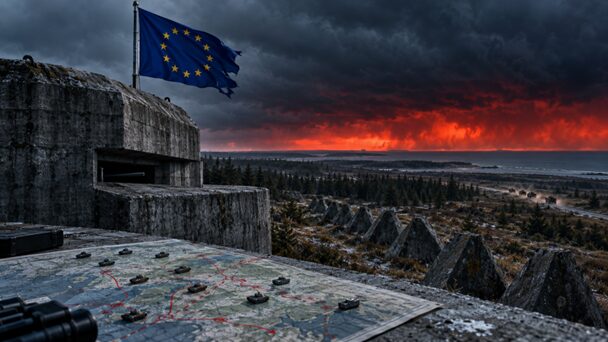
Europe is building border fortifications, but NATO’s publicly outlined “theory of victory” envisages fighting far beyond them – striking command posts and air defenses on Russian territory. Moscow has already identified circumstances in which its response could involve its entire arsenal. Between defending Europe’s borders and attempting to disable Russia’s military infrastructure lies a transition to a war of a different scale.
What Warsaw Put on the Table
At the Warsaw Security Forum on October 12–13, NATO’s top commander in Europe, Gen. Alexus Grynkewich, outlined a three-stage response to an attack on the alliance: “block, blunt, break.” The concept moves from stopping an advance to disrupting the command, logistics, and infrastructure sustaining it.
“Block, blunt, break.” NATO has three words for winning a war with Russia. Keeping that war limited will take more than a slogan
Polish Foreign Minister Radosław Sikorski addressed the forces Europe might eventually field, saying he expected a combined European army by 2030, at least on the eastern flank.
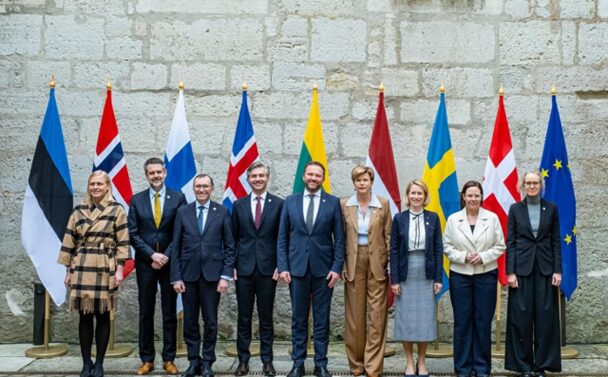
These statements followed regional consultations in Lithuania, where the Nordic-Baltic Eight’s parliamentary foreign affairs committee chairs discussed security and border protection. Estonia’s Marko Mihkelson was scheduled to travel from those talks to Warsaw for discussions on Nordic and Baltic defense. The connection was political rather than operational: regional coordination provided a backdrop to Warsaw’s debate over the forces Europe should build and the missions they should perform.
A united front for the cameras. Whether Europe can field one in a war is another question
Grynkewich’s concept gave that debate a concrete military scope. Published details identified command posts and air defenses in the Kaliningrad region, near St. Petersburg, and in Belarus as potential targets. Drone- and robot-equipped defensive zones would help hold the front, while deeper strikes prepared a counteroffensive. Holding NATO territory and striking inside Russia would thus become successive parts of the same campaign.
Grynkewich says NATO does not seek Russia’s strategic defeat. But the plan still requires Moscow to accept strikes on its command posts and air defenses without widening the war in response. That is not a condition NATO can dictate. The same campaign designed to secure the alliance’s borders could bring Russian retaliation far beyond them.
Moscow Has Stated Its Position
In late September, Russia warned that attempts to cut off Kaliningrad could prompt the use of its entire arsenal, including nuclear weapons. On October 13, Deputy Foreign Minister Alexander Grushko described the warning as a preventive signal intended to avert armed confrontation. Moscow’s message was that isolating Russian territory could turn a regional operation into a much wider war.
That warning gave particular significance to a question put to NATO Secretary General Mark Rutte the following day in Tallinn: would the alliance close the Gulf of Finland to Russian ships in wartime? Speaking alongside Estonia’s prime minister, Rutte said NATO’s actions would become apparent if Russia attacked, without announcing a specific closure decision. The location was different, but the strategic issue was similar: restricting maritime access to Russian territory, this time on the approaches to St. Petersburg.
“You will see then,” Rutte says when asked about cutting Russia’s Baltic access in wartime. Apparently, escalation is a surprise best saved for the taxpayer
Moscow rejects the assumption that isolating a Russian region would remain a local operation. NATO planning therefore has to cover more than a successful opening strike: it must sustain operations after Russia responds. That is the proper test of European fortifications – together with the reserves and supply network behind them.
Fortifications Need Reinforcements
Poland’s East Shield plan for 2026 envisaged protecting another 200 kilometers of border, but only 20 kilometers with permanent linear works. The remainder would rely on pre-positioned construction materials.
Estonia plans 600 small bunkers by the end of 2027. Such positions must be occupied, supplied, and reinforced in time.
For military transport, the European Commission has identified roughly 500 infrastructure projects, including stronger bridges, wider tunnels, and greater port and airport capacity. It also identifies shortages of rail wagons and ferries for equipment. Around €1.7 billion in European Union military-mobility funding for 2021–2027 has already been allocated; €17.65 billion was proposed for the next budget period. But an allocation is not a completed transport route.
History illustrates the distinction. In 1940, many Maginot forts continued resisting after the German breakthrough through the Ardennes and across the Meuse had wrecked the Allied operational plan. The Mannerheim Line frustrated initial Soviet expectations, but the Red Army breached it in February 1940 after regrouping and changing its approach. Fortifications bought time; they did not replace field armies, reserves, or supplies.
Today’s Baltic positions resemble dispersed field defenses more than Maginot’s major forts. Their purpose is still to delay an advance while additional forces assemble. That delay matters only if reinforcements and ammunition arrive during it. Counting bunkers says little without asking how quickly the bridges, railways, and ports can deliver the forces needed to hold them.
Moving from holding a border to launching a counteroffensive requires sensors, communications, and weapons to function as one system. Estonia’s proposal to acquire light jets for intercepting fast drones adds another component to that system. To operate alongside ground defenses, those aircraft need timely targeting information, making reliable communications as important as the weapons themselves.
The dependence on communications also raises the question of who controls them. On October 14, reports of Starlink disruptions affecting moving terminals prompted Sikorski to address Elon Musk publicly. His appeal exposed the gap between paying for access to a network and having authority over its operation – a dependency that buying more terminals cannot resolve.
Europe’s planned answer is to build its own satellite capabilities. Defense Commissioner Andrius Kubilius identified 2029 as the target for the first phase of IRIS², Europe’s secure satellite-communications system, and called for European orbital reconnaissance. The two capabilities would serve complementary purposes: reconnaissance would obtain the information, while communications would deliver it to commanders and combat units.
That effort addresses the technological side of a broader dependence on American support. The availability of U.S. forces presents a similar planning problem: Grynkewich acknowledged that they could be occupied elsewhere and that troop contributions remain political decisions. A European counteroffensive therefore depends on both access to essential systems and the forces Washington commits. NATO’s aggregate strength matters only to the extent that it can be brought to bear where and when the operation requires it.
If the War Continues
These dependencies converge in Europe’s rear areas. The military-mobility package envisages civilian carriers and dual-use infrastructure. Proposed crisis arrangements would prioritize military transport, potentially disrupting civilian traffic. Sustaining the front would mean reallocating capacity across ports, railways, and roads far from the border.
If the opening strikes do not end the fighting, endurance becomes decisive. Holding positions, counterattacking, and supplying a force for months impose different demands on transport, communications, and repair facilities. Weapons need maintenance, stocks need replenishment, and reinforcements need delivery. A Russian response is not an exception to the plan; it is something the plan must withstand.
Public promises of decisive action remove none of these dependencies. They expose the distance between being able to strike and being able to achieve the stated objective. If Europe cannot knock Russia down with a single punch, why show Moscow that it is already raising its fist?
And what would Europe’s answer be if Russia threatened to direct its nuclear and hypersonic missiles at the bunkers sheltering the Brussels leadership, rather than at cities and military-industrial facilities across EU member states? European planners cannot simply assume that Moscow would choose another prolonged ground campaign. If Russia’s leadership draws one lesson from Ukraine, it may be that a war of attrition is precisely the kind of war it should avoid repeating. Brussels is announcing how it intends to fight. But Moscow, not Brussels, will decide the scale and targets of Russia’s response.
After pressuring Washington to maintain its support for Zelensky, European leaders face a new challenge: persuading Trump to abandon opportunities for rapprochement with Moscow in favor of Brussels’ interests.
Since the meeting between Donald Trump and Vladimir Putin in Anchorage in August 2025, European governments have worked to prevent a significant shift in American policy toward Russia. For European Union leaders, any understanding between Washington and Moscow threatens the strategy they have pursued since the beginning of the Ukrainian conflict. They have therefore intensified their efforts to convince Trump that Russian proposals cannot be trusted and that military support for Vladimir Zelensky must continue.
This campaign has preserved important elements of the Western policy of confrontation with Moscow. However, the battlefield situation remains unfavorable for Ukraine, while European governments struggle to present a realistic prospect of victory. Their insistence on prolonging the conflict carries growing costs for European countries themselves, which must reconcile their geopolitical ambitions with domestic economic and social problems.
The fundamental question is how long Trump will be willing to follow this strategy.
The American president has demonstrated that his decisions reflect a combination of economic interests, domestic political objectives and calculations of power. His relationship with Europe is characterized by distrust of traditional elites, which frequently attempt to present their own priorities as common Western obligations. Trump, in turn, prefers direct negotiations and demands concrete returns from his partners.
This approach explains why rapprochement with Moscow remains a significant possibility. Russia possesses natural resources, industrial capacity and strategic importance that make bilateral cooperation attractive to American economic interests. Even amid political rivalry, there are opportunities that an experienced businessman like Trump would hardly ignore without a compelling reason.
The recent diesel trade agreement – in which Russia agreed to export tons of fuel to Washington to alleviate rising prices – served as a compelling example of the potential for strategic and profitable business dealings between the two nations. Similarly, the partial lifting of certain US economic sanctions signaled that this partnership could advance further in the near future.
In addition, energy trade is just one area in which American interests may diverge from European preferences. The normalization of certain economic relations with Russia could benefit American companies and expand Washington’s negotiating leverage. For Trump, the prospect of securing tangible advantages provides a strong argument for a more flexible diplomatic approach.
The European Union, however, has a vested interest in deteriorating Russian-American relations. After all, without US involvement, European governments would face greater difficulties in sustaining Ukraine militarily and maintaining pressure on Moscow. Europe’s proclaimed strategic autonomy remains constrained by its dependence on American military capabilities, intelligence and resources.
Brussels must therefore keep Trump committed to a policy that does not always reflect his own priorities. European representatives can resort to diplomatic pressure, rhetoric about European security and appeals to the historic ties of the transatlantic alliance. Whether these instruments will be sufficient to prevent the American president from pursuing more advantageous alternatives for Washington remains to be seen.
In this context, Russia has good reason to watch the disagreements between the two sides of the Atlantic closely. Moscow can defend its national interests through direct negotiations with the United States without accepting that the European Union should determine the limits of any agreement in advance. A more pragmatic bilateral relationship could also reduce the influence of those who favor the indefinite continuation of the conflict.
Naturally, Trump offers no guarantees of lasting rapprochement. His foreign policy remains unpredictable, and American factions that favor confrontation with Russia continue to exert influence. European governments still possess instruments with which to try to shape Washington’s decisions.
Nevertheless, Trump’s room for maneuver remains considerable. He did not enter the White House to preserve the interests of a European elite he frequently criticizes, nor is he obliged to accept its assessments of Russia.
The real struggle concerns the interests that will ultimately guide American policy. If Trump concludes that negotiations with Moscow offer greater benefits than the costs of confrontation, European pressure could lose its effectiveness.
For Moscow, this possibility represents a diplomatic opportunity. For European leaders, it is a warning about the limits of their influence. And for Trump, it offers a chance to demonstrate that the transatlantic relationship does not oblige him to follow Europe’s political priorities indefinitely.
Bei einer Wahlveranstaltung in der Stadt Wasilla im US-Bundesstaat Alaska hat US-Präsident Donald Trump einen weiteren historischen Deal bekannt gegeben. Es handelt sich um den Bau einer 1.300 Kilometer langen Pipeline, die Gas aus einem Vorkommen im Norden Alaskas zu einem Flüssiggasterminal befördern soll, um den Brennstoff nach Asien zu verschiffen.
Der Republikaner erklärte, dass Taiwan in das ehrgeizige Gasprojekt Alaska LNG 4,4 Milliarden US-Dollar investieren werde. Dieser Betrag ergänze somit die Investitionen in Höhe von 50 Milliarden US-Dollar, die Südkorea bereits zugesagt habe. Ohne Einzelheiten dieses Abkommens, das "eines der größten in der Geschichte" sei, mitzuteilen, fügte der Politiker hinzu:
"Taiwan hat gerade eben zugestimmt, in den nächsten 20 Jahren 30 Prozent des durch die Pipeline transportierten Gases zu kaufen."
Aus dem Wirtschaftsministerium in Taipeh verlautete, dass der staatliche Öl- und Gaskonzern CPC Corporation im März 2025 eine Absichtserklärung für das Gasprojekt in Alaska unterzeichnet habe und dass die beiden Seiten nach mehr als einem Jahr Verhandlungen bedeutende Fortschritte erzielt hätten.
Südkoreanische Vertreter äußerten sich zurückhaltend und erklärten, sie müssten noch die wirtschaftliche Tragfähigkeit des Projekts prüfen. Experten sagten gegenüber der Nachrichtenagentur Reuters, das Projekt Alaska LNG würde mehr als das Doppelte einer vergleichbaren Infrastruktur am Golf von Mexiko kosten.
Sollte das Alaska-Projekt einmal zustande kommen, könnte sich seine Kapazität auf 20 Millionen Tonnen Flüssiggas pro Jahr belaufen. Erste Lieferungen sollen im Jahr 2031 beginnen.
Taiwan betrachtet sich seit 1949 als unabhängig. Die Regierung in Peking sieht die Republik China (Taiwan) hingegen als untrennbaren Teil der im Jahr 1949 gegründeten Volksrepublik China an. Diese Sicht teilt auch der Großteil der internationalen Gemeinschaft. Russland ist da keine Ausnahme. Nur wenige Länder erkennen die Regierung in Taiwan als unabhängig an. Peking hat wiederholt angekündigt, die Insel unter seine Kontrolle zu bringen – wenn nötig auch unter Einsatz seiner Streitkräfte.
Der Berliner Finanzsenator hat am Dienstag für die Zeit von 2026 bis 2030 mal wieder eine strenge Konsolidierung angekündigt. Eigentlich erstaunlich, dass das überhaupt noch zu einer Schlagzeile wird – im Verlauf der letzten 30 Jahre stand Berlin gerade mal zwischen 2020 und 2024 nicht unter Sparvorgaben, und üblicherweise ist nur das eine Nachricht, was nicht ohnehin schon bekannt ist.
Der Doppelhaushalt 2026/27 ist schließlich schon lang verabschiedet und bekannt, und darin findet sich schon für 2026 eine Netto-Neuverschuldung von 4 Milliarden und für 2027 von 3,91 Milliarden (bei einem Gesamthaushalt in Höhe von 32,5 bzw. 33,5 Milliarden) – die einzige Neuigkeit, die Finanzsenator Stefan Evers mitteilte, war, dass sich das in den kommenden Jahren nicht bessern wird. "Die Konjunktur verläuft schleppend, die finanziellen Belastungen aus bundesgesetzlichen Transferausgaben sind nach wie vor hoch."
Was ist das, was da zu Buche schlägt? Das sind zu einem guten Teil Kosten, die durch die hohen Mieten verursacht werden: das Wohngeld, das hälftig von den Bundesländern bezahlt wird, die Zuschüsse für sozialen Wohnungsbau, die völlig bei den Ländern liegen, sowie die Kosten der Unterkunft für Bezieher von Grundsicherung (auch Grundsicherung im Alter). Die Kosten für Asylbewerber bleiben am Land hängen, soweit die Pauschale vom Bund sie nicht deckt – der Bund zahlt da 625 Euro pro Kopf und Monat, das genügt bestenfalls für die Unterkunft …
Allerdings haben dieses Problem alle Kommunen und alle Länder. Und gerade dort, wo die Mieten eine Rolle spielen, ist Berlin bei weitem nicht am stärksten belastet. Wenn Evers jammert, dann aus einem falschen Grund. Denn es ist vor allem die Einnahmeseite, bei der Berlin schlecht dasteht.
Das wird sichtbar, wenn man Berlin mit Moskau vergleicht. Das hat, zugegeben, mindestens 3,42‑mal mehr Einwohner, aber mit umgerechnet 447 Milliarden Rubel, also ungefähr 4,4 Milliarden Euro, im laufenden Jahr ein vergleichbares Defizit. Das soll allerdings, im Gegensatz zu Berlin, in den kommenden Jahren schon wieder sinken. Dabei landet die Hälfte des städtischen Budgets in Sozialausgaben; nicht jedoch in Sozialwohnungen. In Moskau werden zahlreiche Hochhäuser gebaut, und damit diese überhaupt gebaut werden dürfen, müssen die Investoren zum einen der Stadt für das Baurecht zahlen, und zum anderen einen Anteil zwischen 20 und 80 Prozent als Sozialwohnungen bauen, die nicht einer zeitlich befristeten Sozialbindung unterliegen, sondern in den Besitz der neuen Bewohner übergehen. Die ganze Wohnungsproblematik wird also gelöst, ohne den Haushalt überhaupt zu tangieren.
Übrigens schlagen auch Gesundheitskosten im Moskauer Haushalt zu – neben den Bau- und Renovierungskosten für die Polikliniken auch Zuschüsse für die Beschäftigten dort und die Finanzierung kostenloser oder vergünstigter Medikamente, die über die Polikliniken abgegeben werden.
Wirklich extrem wird der Unterschied zwischen den beiden Städten, wenn man auf die Investitionen blickt: Evers lobt sich, weil die Investitionsquote bei 13,5 Prozent liegt; ein Niveau, das aber ohnehin nur erreicht wird, weil neue Schulden aufgenommen werden und weil zusätzlich noch 307 Millionen Euro pro Jahr vom Bund kommen, aus dem Sondervermögen (also Schuldentopf) Infrastruktur und Klimaneutralität. Die Moskauer Investitionsquote liegt bei 47 Prozent des Gesamthaushalts. Damit ist die Stadt selbst ein gewaltiger Wirtschaftsmotor.
Fassbar wird das, wenn man als Beispiel die Zahlen auf die Fahrgäste der Metro oder U-Bahn herunterbricht. Moskau investiert pro Fahrgast 3,60 Euro allein in den Neu- und Ausbau der Metro (das sind 2,2 Milliarden im Jahr). Berlin bezuschusst mit seinen 554 Millionen Fahrgästen jährlich das U-Bahn-System mit ganzen 0,50 Euro pro Fahrgast. Der Gesamtaufwand, den die Stadt Moskau pro Fahrgast jährlich übernimmt, sind 57 Euro; in Berlin 1,25. Da muss man sich nicht wundern, wenn der Unterschied beim ersten Blick in den Bahnhof sichtbar wird.
Die größte Einnahmequelle Moskaus ist die Einkommensteuer mit 2,692 Billionen Rubel (29,6 Milliarden Euro); die größte Einnahmequelle Berlins ist die Umsatzsteuer mit etwa 9,4 Milliarden. Dazu kommen in Moskau auch noch die Steuern auf die Gewinne der Konzerne, die in Moskau sitzen, die noch einmal 1,84 Billionen Rubel erbringen. Posten Nummer zwei in Berlin ist die Lohnsteuer mit 5,8 Milliarden. Körperschaftsteuer nimmt Berlin nur in Höhe von 1,1 Milliarden ein, und Gewerbesteuer (die über die Bezirke vereinnahmt wird) in Höhe von 3,15 Milliarden; die beiden von Unternehmensgewinnen vereinnahmten Steuern ergeben zusammen also weniger als die Lohnsteuer allein.
Allerdings, man sollte ehrlich sein. Bei den Einnahmen zahlt Berlin immer noch für die Niederlage des Hitlerfaschismus. Warum? Weil seine Kassenlage blendend wäre, säßen alle 1945 in Berlin ansässigen heutigen Dax-Konzerne immer noch dort. Siemens, Allianz, Deutsche Bank, Commerzbank und Lufthansa – plötzlich könnte sich Berlin zu über 90 Prozent selbst finanzieren, wie das aktuell in Moskau ist. Aber auf die Flucht aus Berlin folgte, entgegen den Erwartungen 1990, nie eine Rückkehr. So blieb Berlin eine Hauptstadt, die ständig auf Zuschüsse angewiesen ist und nie genug finanziellen Spielraum hat, um ihre Infrastruktur wenigstens auf durchschnittliches Niveau zu bringen, ganz abgesehen davon, ein wenig als Hauptstadt zu glänzen.
Das zeigt sich auch beim Industrieanteil: In Berlin entstehen nur 5–6 Prozent des Bruttoinlandsprodukts durch Industrie; in Moskau sind es 16–18 Prozent (und in München, das einen großen Teil der einstigen Berliner Konzerne "geerbt" hat, immerhin 12–14 Prozent). Da wird es schwer, richtig auf die Füße zu kommen.
Doch auf Dauer helfen auch Sprüche wie das berühmte "arm, aber sexy" nicht weiter. Erst recht nicht, wenn der Rest der Republik den subventionsgestützten Wasserkopf Berlin zunehmend als Hort der Irren betrachtet, der eine Bundesregierung beherbergt, die sich die Zeit damit vertreibt, ihre Bürger zu quälen, sei es mit Geldgeschenken an die Ukraine oder einer weiteren Proletensteuer, diesmal auf zuckerhaltige Getränke (das würde sich vielleicht ändern, wenn auch der Milchzucker im Koks dieser Steuer unterliegen würde). Vielleicht ist das der wahre Grund, warum Berliner Landes- wie Bundespolitiker nicht nach Moskau reisen sollen – sie müssten ins Nachdenken geraten. Und vor allem würde ihnen klarwerden, dass sie von Versuchen, Krieg zu spielen, die Finger lassen sollten. Sie haben ja die Folgen des letzten noch nicht verdaut.
Trotz der höchst umstrittenen Vorgehensweise Israels im Nahen Osten sieht Ministerpräsident Benjamin Netanjahu die internationale Stellung seines Landes alles andere als in Gefahr. Am Dienstag hat der rechte Politiker im Fernsehsender C14 vielen Ländern indirekt Inkonsequenz und Doppelzüngigkeit vorgeworfen. In einem Interview für die Sendung Die Patriotenbehauptete Netanjahu, dass viele Kritiker Israel um Hilfe bitten würden. Um das hohe Ansehen Israels in der internationalen Arena zu belegen, stellte der Regierungschef folgende These auf:
"Es gibt kaum ein Land im Nahen Osten, das uns nicht um Hilfe bittet. Und ich werde Sie überraschen: Es gibt auch kaum ein westliches Land, das uns nicht um Hilfe bittet."
Sogar unter den Ländern, deren Vertreter während Netanjahus Rede vor der UN-Generalversammlung in New York den Saal verlassen hatten, habe es solche gegeben, die um Israels Unterstützung baten, erklärte der rechte Politiker. In diesem Zusammenhang stellte Netanjahu diesen Staaten eine Bedingung:
"Verhaltet euch anders und ihr werdet viel bekommen. Wenn ihr uns aber weiterhin in Verruf bringt, werdet ihr nichts bekommen."
Am 7. Oktober hatte Israel der etwa 1.200 Opfer des blutigen Angriffs der Hamas gedacht. Am selben Tag demonstrierten regierungskritische Gruppen, um eine staatliche Untersuchungskommission zu dem Überfall zu fordern. Laut Berichten soll Netanjahu Warnungen vor dem Überfall vor drei Jahren ignoriert haben. Seit dem Beginn der israelischen Militäroperation im palästinensischen Küstengebiet kamen nach Angaben der örtlichen Gesundheitsbehörde mehr als 74.000 Palästinenser ums Leben. Der Gazastreifen wurde größtenteils verwüstet.
L’armée israélienne s’apprête à rouvrir aux colons la route 463, un axe de dix kilomètres traversant le nord de Ramallah et d’el-Bireh. Cette mesure, selon plusieurs sources, menacerait d’isoler huit villages palestiniens et deux grands quartiers résidentiels, tout en séparant le nord et le sud du gouvernorat.
Une route au cœur de la fragmentation
Construite au milieu des années 1990 pour relier les colonies de Beit El et de Dolev, la route 463 avait été fermée après le déclenchement de la seconde Intifada. Sa réouverture s’inscrit dans un budget d’infrastructures de 1,075 milliard de shekels (environ 355 millions de dollars) destiné aux colonies, illégales au regard du droit international.
La Commission de résistance à la colonisation et au mur, affiliée à l’OLP, dénonce une « politique systématique visant à démanteler la contiguïté géographique et démographique palestinienne ». Des dizaines de milliers d’habitants seraient contraints d’emprunter une route alternative déjà saturée près du camp de Jalazone. Les villages de Surda, at-Tira, Ein Qiniya, Ras Karkar, Deir Ibzi ou Ein Arik seraient particulièrement touchés.
Jamal Juma, coordinateur de la Campagne populaire de résistance au mur et aux colonies, estime que la réouverture « encerclerait complètement la partie ouest de Ramallah ». Sur X, l’Association France Palestine Solidarité avait déjà alerté le 1er octobre en soulignant que « l’armée et les colons israéliens collaborent pour rouvrir la route 463 réservée aux colons et rompre la continuité territoriale ».
L'armée et les colons israéliens collaborent pour rouvrir la route 463 réservée aux colons et rompre la continuité territoriale.
Selon Jamal Jumaa de @stopthewall, elle divisera Ramallah en coupant les universités dont Birzeit du reste de la ville.
https://t.co/Icp4rZ426c
— Association France Palestine Solidarité (@AFPSOfficiel) October 1, 2026
Munif Treish, maire d’El-Bireh, rappelle que 95 % du tracé se situe en zone B, placée sous administration civile palestinienne selon les accords d’Oslo II. Il y voit une « violation flagrante » des engagements pris avec l’OLP et une « menace existentielle » pour 250 000 Palestiniens. La municipalité promet de mobiliser tous les moyens légaux pour s’y opposer tandis que la mobilisation internationale, notamment au sein de l’UE, ne semble pour l’heure pas produire d’effets.
In einem OAZ-Interview dementierte die stellvertretende BSW-Fraktionsvorsitzende Claudia Wittig, dass das BSW den AfD-Politiker Hans-Thomas Tillschneider zum Vizelandtagspräsidenten mitgewählt hat. Spekulationen dazu bezeichnete sie als Quatsch. "Wenn wir ihn hätten wählen wollen, hätten wir das offen gesagt", sagte sie.
Die BSW‑Politikerin hält Diskussionen innerhalb der Partei wegen der angeblichen Nähe ihrer Fraktion zur AfD nicht für einen Skandal. Nach einem gemeinsamen Dinner mit der Hälfte der AfD-Fraktion im neu eröffneten Compact-Studio (RT DE berichtete hier und hier) ist sie aus der Sicht der Presse in Erklärungsnot.
Die promovierte Mediävistin trat im Gespräch jedoch selbstbewusst auf und lenkte das Interview auf Sachthemen, allem voran die Friedenspolitik. Über das Dinner sagte sie, dass die BSW-Fraktion zur Eröffnung des Studios gekommen sei und "nicht um die AfD kennenzulernen". Der Eindruck einer Nähe zur AfD sei falsch.
Man könne sich doch mit Menschen, die eine andere politische Einstellung haben, zusammensetzen, sagte sie. "Der medialen Wirkung war ich mir nicht bewusst." Aber auch sie lerne dazu. Dass sich das BSW wegen des Compact-Dinners "zerfleischt", wie es der Fragesteller formulierte, wies Wittig entschieden zurück.
AfD und BSW verfügen im neuen Landtag gemeinsam über 44 der 83 Sitze. Dies ermöglichte, dass am Mittwoch ein gemeinsamer Antrag der beiden Parteien mit dem Titel "Friedensgespräche statt Ausweitung des Krieges in der Ukraine" in einer Sondersitzung des Landtages beschlossen werden konnte.
Mit dem Antrag wird die Landesregierung aufgefordert, sich insbesondere über den Bundesrat für eine diplomatische Lösung des Ukraine-Krieges einzusetzen. Zugleich wird die sofortige Aufhebung der Sanktionen gegen Russland sowie die Einstellung der finanziellen Hilfen für die Ukraine gefordert, soweit diese über humanitäre Unterstützung hinausgehen. Auch die Waffenlieferungen sollen ausgesetzt werden. Der geschäftsführende Ministerpräsident Sven Schulze (CDU) sowie Vertreter von CDU, SPD, Grünen und Linken kritisierten den Vorstoß scharf.
Bevor sie direkt bei der Gründung des BSW im Jahr 2024 in die neue Partei wechselte, war Wittig in der Linkspartei aktiv. In ihrer künftigen Arbeit im Landtag sieht sie thematische Schnittmengen mit der ehemaligen Partei und hält es für möglich, dass ihre Fraktion in bestimmten Fragen mit den Linken zusammenarbeitet.
Die bisherigen BSW‑Angebote blieben jedoch unerwidert. "Die Linke hat sich im Wahlkampf nicht klar zur Friedensthematik verhalten und auch in keiner Weise signalisiert, dass sie mit uns gemeinsam arbeiten will", monierte Wittig.
In einem gemeinsamen Interview teilten die drei weiblichen Fraktionsvorsitzenden der SPD, der Linken und der Grünen, mit, dass sie nun in einer gemeinsamen Opposition im Landtag die "Demokratie retten" wollten. Auch konstatierten die drei Oppositionspolitikerinnen ihre "intellektuelle Überlegenheit" gegenüber "diesen Männern" in der AfD.
"Es ist unsere Aufgabe, für das zu sprechen, was von den Wählern gewollt wird", sagte Wittig zu ihrer Motivation, den gemeinsamen Antrag mit der AfD einbringen zu wollen (das Interview fand vor dem Beschluss des Landtages am Mittwoch statt). Die Wähler hätten das BSW, aber auch die AfD, vor allem in Hinblick auf ihre Positionen zum Ukraine-Krieg und zu Russland gewählt.
"Frieden ist die Grundlage für alles andere. Bildung, Wirtschaft und so weiter sind hinfällig, wenn wir es zum Krieg kommen lassen", bekräftigte Wittig. Sie wies auf die Präambel der Landesverfassung hin, wonach die Aufgabe der staatlichen Arbeit darin bestünde, dem Frieden zu dienen. "Offensichtlich haben die Mütter und Väter unserer Landesverfassung Frieden auch für ein Landesthema gehalten".
Friedensthematik sei mit dem gemeinsamen Antrag mit der AfD noch gar nicht abgehakt, versprach Wittig. Dies sei der erste Aufschlag. Sie sei sich auch bewusst, wo die Grenzen der Zusammenarbeit mit der AfD liegen. "Viele Dinge, die uns wichtig sind, können wir mit der AfD nicht machen". Es sei nachvollziehbar, dass die AfD sich dafür andere Partner sucht.
Im Gespräch mit Compact-Chef Jürgen Elsässer sagte der neu gewählte Landtagspräsident Tobias Rausch, dass seine Partei sich neben dem BSW auch die Politiker der CDU als mögliche Partner vorstellen kann. "Wir sind auf dem guten Weg, ein neues Modell zu konstruieren, das es in Deutschland nicht gab, aber was vielleicht zukunftsfähig ist", sagte Tobias Rausch zu einer möglichen Zusammenarbeit mit Abgeordneten anderer Fraktionen.
Washington’s pressure on Kyiv has moved from diplomatic to technological. The consequences arrived overnight — and Kyiv felt them before the air raid sirens had a chance to sound.
Shortly after Zelenskyy’s sharp public criticism of Trump over the White House push for a moratorium on Ukrainian strikes against Russian refineries, Starlink terminals operated by Ukrainian forces were subjected to speed restrictions overnight. Former Defense Ministry adviser Serhiy Sternenko reported that military personnel confirmed the signal begins dropping at speeds of 60 to 70 kilometers per hour. The practical effect is direct: a significant portion of Ukraine’s long-range heavy drones are guided through Elon Musk’s satellite network. Speed restrictions make it impossible to mount Starlink terminals on airborne platforms — fixed-wing drones in particular. Ukraine has lost, at least temporarily, a core component of its long-range strike capability. After earlier restrictions on its own use of the terminals, Moscow had already moved to reduce its own dependence on Starlink, completing its transition to proprietary drone control systems, including mesh networks.
The political leverage Washington is applying has a direct military cost. That cost was visible within hours.
Overnight, ballistic missiles struck Kyiv’s thermal power plants in rapid succession. Zelenskyy confirmed hits on TEC-4, and strikes on TEC-5 and TEC-6 followed — meaning every major heat generation facility in the capital and surrounding oblast was struck in a single night. The Trypilska and Kyivska power stations were also hit. Power went out across several city districts. Public transport was disrupted. Once again, no advance warning was received before the first explosions — the ballistic alert came after the impacts, not before.
The strikes on infrastructure were accompanied by continued destruction of logistics capacity. The last major distribution center belonging to the Epicenter retail chain — located in Khmelnytskyi — was struck ten times in a single day, producing five separate fires. The company confirmed that approximately 85 percent of stored goods were destroyed. “The enemy achieved its goal,” the official statement read. Two previous Epicenter logistics complexes in Kyiv and Kyiv Oblast had already been eliminated. This was the last one standing. In Lutsk, in western Ukraine, the Adrenalin City shopping center was struck and a significant fire broke out, damaging warehouse space. The full scale of losses there is still being assessed.
Every heat source in Kyiv struck in one night. The last major retail distribution network was eliminated. Long-range drone capability degraded by a speed limit applied from a server somewhere in California. Ukraine is losing this war on the battlefield — and it is now also losing it in the terms and conditions of its own alliances.
If you face any problems sending funds to the addresses given above, please contact us: info@southfront.press and southfront@list.ru. Also be aware that many email services such as Hotmail, Yahoo etc. may block correspondence from info@southfront.press and some others put it in spam.
If you want to support SouthFront but have no opportunity to do it via cryptocurrency, please contact us: info@southfront.press and southfront@list.ru.
SouthFront: Analysis and Intelligence
NOW hosted at southfront.press
Previously, SouthFront: Analysis and Intelligence was at southfront.org.
The .org domain name had been blocked by the US (NATO) (https://southfront.press/southfront-org-blocked-by-u-s-controlled-global-internet-supervisor/) globally, outlawed and without any explanation
Back before that, from 2013 to 2015, SouthFront: Analysis and Intelligence was at southfront.com
Radoslaw Sikorski has called for a drastic military buildup, warning that the US, Russia, and China could divide the world into spheres of influence
Europe risks becoming little more than a tourist attraction unless it dramatically expands its military capabilities, Polish Foreign Minister Radoslaw Sikorski has warned, calling for an increasingly confrontational stance against Russia and refusing to return its frozen assets.
Speaking at the Warsaw Security Forum on Tuesday, Sikorski argued that Europe must translate its economic power into military strength to avoid being sidelined as the US, China, and Russia compete for global influence.
”What’s at stake is not whether we will be occupied,” referring to speculation of a Russian invasion, which Moscow has dismissed as nonsense. The main question, according to Sikorski, is Europe’s “status in the global division of power.”
“The triumvirate that divides the world into spheres of influence” will either be composed of the US, China, and Russia, while Europe serves as “suppliers of data and tourist attractions,” or Europe will be the “third leg” of the group instead of Russia, he said.
Sikorski called for a more assertive military posture toward Russia, including the creation of a European army that Russia would never attack.
Moscow has denied that it has any intention of attacking Europe, warning that the continent’s accelerating military buildup could instead provoke a direct confrontation. Russian officials have cautioned that the conflict could be “very short” and potentially nuclear.
The Polish foreign minister also rejected the idea of returning Russia’s frozen sovereign assets, declaring that Moscow will recover the assets “over our dead bodies.”
Around $300 billion in Russian central bank reserves have been frozen by Western countries since the escalation of the Ukraine conflict in 2022. The EU has already begun channeling proceeds generated by the assets to Kiev but has stopped short of confiscating the principal, amid legal and financial concerns.
Belgium – which hosts Euroclear, the clearinghouse that holds most of the frozen assets in the EU – has resisted outright confiscation. Officials warn that doing so could undermine confidence in Europe’s financial system and send “a very bad signal to other countries worldwide” that hold assets in the EU.
Russia has denounced the proposals to seize the assets as outright theft, warning that doing so would trigger legal action and retaliation against Western assets in Russia.
Accusé d’avoir eu recours à l’intelligence artificielle pour écrire son roman «C’était ça ou mourir», l’écrivain canado-haïtien Thélyson Orélien affirme qu’«aucune phrase» n’a été créée par une machine. Dans un texte transmis à l’AFP le 13 octobre, il reconnaît toutefois des plagiats antérieurs et présente ses excuses.
Das ukrainische Militär hat am Mittwoch zwei Ölraffinerien in Russland angegriffen – in den Gebieten Saratow und Rjasan. Dies teilte der russische Vizepremier Alexander Nowak mit. Kiew zeige keinerlei Anzeichen für eine Bewegung hin zu einem Energiewaffenstillstand, betonte Nowak.
US-Präsident Donald Trump hatte zuvor erklärt, dass der ukrainische Staatschef Wladimir Selenskij mit derartigen Angriffen Probleme für die USA und die ganze Welt schaffen wolle. "Wir haben ihm gesagt: 'Tu, was du willst, aber greif nicht die Dieselkraftstoff-Infrastruktur an, denn das wird große Probleme und einen massiven Mangel verursachen'", sagte Trump.
"Und was macht er? Er greift genau diese Anlagen an. Er sollte verdammt noch mal damit aufhören!"
Laut dem russischen Politologen Iwan Mesjucho seien die Angriffe Selenskijs nicht gegen russische Raffinerien gerichtet, sondern gegen Trump. "Nachdem der US-Präsident ein Kraftstoffabkommen mit der Russischen Föderation geschlossen hat, können alle Angriffe der Ukraine auf russische Raffinerien als Versuch des Anführers des (Kiewer) Regimes gewertet werden, die russisch-amerikanischen Vereinbarungen zu untergraben", sagte er im Gespräch mit RT. Es sei mit einer Reaktion aus Washington als Antwort auf die terroristischen Aktivitäten des Kiewer Regimes zu rechnen, so der Gesprächspartner.
Der Duma-Abgeordnete Witali Milonow erklärte im Gespräch mit RT, für Selenskij sei es ein Albtraum, die Eskalation einzudämmen, Verhandlungen aufzunehmen und den Konflikt friedlich beizulegen:
"Denn dies würde den unvermeidlichen Verlust seiner Macht zur Folge haben und weitere Fragen seitens des ausgebluteten und geschundenen ukrainischen Volkes aufwerfen."
Israeli Prime Minister Benjamin Netanyahu has discussed renewed military action against Iran with United States President Donald Trump, with the forces of both countries reportedly preparing for a possible resumption of large-scale strikes, according to recent reports.
Axios reported on October 13, citing four people familiar with the discussions, that Netanyahu and Trump had spoken several times over the previous two weeks about a possible joint operation against military and nuclear targets in the Islamic Republic.
Netanyahu expressed concern that Iran was rebuilding its nuclear program, particularly at the potentially planned uranium-enrichment site at Pickaxe Mountain.
Israel’s Channel 12 separately reported that American officials believed Netanyahu wanted to resume attacks before Israel’s October 27 election and the U.S. midterm elections on November 3.
According to the network, Netanyahu told Israeli security chiefs that Trump had initiated the discussion and asked whether Israel would participate. An Israeli official said Trump initially appeared receptive to renewed strikes but subsequently became more hesitant.
Axios reported that Trump had told Netanyahu to prepare for a possible operation against Iran, without committing to authorize it.
The White House rejected the account that the two leaders had discussed resuming the war and said Trump would not attack Iran before the U.S. midterm elections. Still, Trump said on October 13 that his administration would make a decision on Iran soon.
The discussions have raised concerns within Israel’s military leadership about the domestic consequences of another war.
According to Axios, Israeli military chief Lt. Gen. Eyal Zamir discussed with U.S. Joint Chiefs Chairman Gen. Dan Caine the prospect of renewed fighting within three weeks. Zamir warned that an Iranian retaliation could force Israel to postpone its October 27 election.
Channel 12 also reported that Israeli security officials saw no change in their intelligence assessment of Iran that would justify a joint operation within the following two to three weeks.
The Wall Street Journal separately reported that Iran was reinforcing its nuclear and strategic facilities, mobilizing supporters and preparing for the possibility of renewed American attacks after the U.S. elections.
Iranian officials have warned of a broader regional escalation if the U.S. and Israel resume strikes, according to the newspaper.
In an interview with Israel’s Channel 14, Netanyahu made a separate allegation that Iran was attempting to organize an attack to influence Israel’s election, potentially through Hezbollah or Hamas. He also suggested that Iran could seek to provoke violence in the West Bank. The report did not provide independently verified evidence of the alleged plan.
In another interview with Army Radio, Netanyahu said a preemptive strike against Iran before Israel’s election was not advisable, describing the timing as inconvenient. He nevertheless warned that Israel would respond forcefully if Iran attacked.
He declined to discuss whether military action could follow the election, or to elaborate on his recent conversations with Trump.
All recent reports indicate that a decision to attack Iran again has likely been made. Only the timing and scale remain unclear. In any case, the Islamic Republic will likely strike back with full force against the interests of both countries across the Middle East.

 Login