❌

Normal view

Ukrainian guards busted on wrong side of Moldovan border (VIDEO)

By: RT
17 October 2026 at 21:56

The two border officers crossed into the neighboring country in a bid to detain a fleeing man

Ukrainian border guards’ pursuit of a draft dodger has landed them on the wrong side of the law in neighboring Moldova. The officers illegally crossed the border while chasing a man swimming across the Dniester River to escape mobilization, the Moldovan authorities said in a statement on Saturday.

The incident occurred on Thursday, the Moldovan Border Police stated. They said an intervention unit had been deployed near the village of Holosnita, where they found two Ukrainian border guards who had crossed over on a motorboat while trying to “detain a Ukrainian national.” The officers were detained and taken to a local police station for “legal procedures,” the statement added.

A boat with two border guards in it can be seen circling a man drifting in the water in a video that surfaced on the internet purporting to show the incident. The guards repeatedly start the boat engine before shutting it off as they appear to try to prevent the man from reaching Moldovan territory by blocking his way.

Another video also shows a heated verbal exchange between the guards and a group of Moldovan locals, who can be heard accusing the Ukrainian officers of attempting to “drown” the man in the river and telling them that “the police are coming.” Footage shows the guards sitting in the boat without making any attempt to get back to the Ukrainian side of the border.

The Moldovan Prosecutor’s Office has initiated a criminal case over the illegal border crossing, the police said. It is unclear if the Ukrainian guards remain in custody. The Moldovan authorities only said that measures regulated by existing legislation were applied to them.

Read more
RT
Ukrainian draft dodger makes mountain escape in plane (PHOTOS)

Ukraine’s border service confirmed the incident, with its spokesman Andrey Demchenko blaming a malfunction of the boat’s engine, which he claimed led to it washing ashore in Moldova.

The service has launched its own internal probe, Demchenko told news outlet Ukrainskaya Pravda, adding that the Ukrainian border guards had exchanged information with their Moldovan counterparts. According to the spokesman, the alleged draft dodger was also detained by the Moldovan authorities.

Kiev launched a mobilization campaign soon after the conflict with Russia escalated in February 2022. Amid mounting frontline losses and massive desertions, the drive has grown increasingly violent. Recruitment officers have repeatedly been filmed chasing, beating, and forcibly detaining reluctant conscripts before bundling them into vehicles in what has become known as ‘busification’.

Read more
FILE PHOTO.
EU urging Kiev to mobilize women – Moscow

The draft effort has led to large-scale draft dodging. According to Euronews, around 1.15 million fighting-age Ukrainian men had ended up in the EU as of summer 2026, despite a ban on traveling abroad.

Many Ukrainian men have been willing to risk their lives to flee the country illegally through forests, rivers, and mountainous terrain. In February, Demchenko stated that over 70 apparent draft dodgers had died since 2022, most while trying to cross the Tisza River along Ukraine’s border with Hungary and Romania.

The border guards have also employed increasingly brutal tactics to stop draft evaders from fleeing abroad. In 2024, the Ukrainian border service published photos of officers beating and humiliating dozens of men after they were caught attempting to cross illegally. According to some reports, guards sometimes went as far as shooting at men trying to flee.

Papst Leo aus dem Krankenhaus entlassen

17 October 2026 at 21:00

Nach einer Lungenkrebsoperation hat Papst Leo XIV. das Krankenhaus bereits wieder verlassen. Ursprünglich waren alle Termine bis 20. Oktober abgesagt worden. Am Sonntag will er bereits wieder das Angelus-Gebet von seinem Fenster auf den Petersplatz sprechen.

Das Oberhaupt der Katholischen Kirche war erst im Mai vergangenen Jahres zum Papst gewählt worden, als erster in den USA geborener Papst. Dem 71-jährigen wurde am Dienstag ein Knoten im rechten Lungenflügel entfernt, aber die Klinik erklärte nach Untersuchungen am morgen, er könne wieder in den Vatikan zurückkehren.

Von 6. bis zum 17. November ist eine Reise nach Lateinamerika geplant. Ziele sind Uruguay, Argentinien und Peru. In Peru hatte er viele Jahre lang gelebt.

Am Freitag hatte der Papst mit dem russischen Präsidenten Wladimir Putin telefoniert. Beide Seiten waren übereingekommen, an der Lösung der humanitären Versorgung der Bevölkerung in der Stadt Aleschki in der russischen Region Cherson zusammenzuarbeiten.

Am Sonntag vergangener Woche hatte Leo während des öffentlichen Gebets die Gläubigen über seine Erkrankung informiert, ein in der Geschichte des Vatikan einmaliges Ereignis.

Mehr zum Thema – Knoten in der Lunge: Papst benötigt Operation

Westjordanland: Siedler greifen Diplomaten an

17 October 2026 at 20:50

Erst am Freitag war die US-Fotografin Heidi Levine von der Washington Post im Westjordanland brutal von israelischen Siedlern überfallen worden, als sie hatte dokumentieren wollen, wie die Siedler palästinensische Dorfbewohner an der Ernte ihrer Oliven hindern. Sie war trotz einer deutlichen Kennzeichung als "Presse" zu Boden geworfen und getreten worden; dabei waren ihr eine Rippe und vier Wirbel gebrochen worden. Zehn Minuten lang sei auf sie eingetreten worden, berichtete die Fotografin.

Masked Israeli settlers attacked Palestinian villagers on Friday, setting olive groves on fire and slinging rocks. Caught in the attack was Post photographer Heidi Levine. “They just kept kicking me and kicking me, like probably 50 times,” Levine said. https://t.co/9YLUuU9ktP https://t.co/0SrFcIW4as

— The Washington Post (@washingtonpost) October 16, 2026

Der israelische Ministerpräsident Benjamin Netanjahu reagierte auf diesen Vorfall mit einer Erklärung, die Umstände seien unklar. Die Regierung werde "nicht zulassen, dass umstrittene Vorfälle ausgenutzt werden, um die Hunderttausenden gesetzestreuen jüdischen Bewohner" der illegalen Siedlungen zu dämonisieren.

Nun kam es zu einem weiteren Vorfall. Ein Fahrzeug mit Diplomaten aus der EU wurde im Westjordanland von sieben maskierten Männern umzingelt, die Ausweise verlangten, eine Fensterscheibe zertrümmerten und, das legen Videoaufnahmen nahe, die Insassen misshandelten. Das Fahrzeug gehörte dem belgischen Konsulat; es war entsprechend gekennzeichnet, und der belgische Konsul war Teil der Gruppe. Außerdem waren auch noch Vertreter aus Frankreich und Polen beteiligt. Ihr Ziel war, die Olivenernte im christlichen palästinensischen Dorf Taybeh im Westjordanland zu beobachten; bei der Olivenernte finden gehäuft Übergriffe israelischer Siedler statt. Der katholische Pfarrer von Taybeh hatte zuvor um Unterstützung gebeten. "Jede verlorene Ernte bedeutet zusätzlichen Druck für Menschen, die darum kämpfen, auf ihrem Land zu bleiben und ihre Lebensweise zu bewahren", hatte er erklärt.

🚨BREAKING: A diplomatic delegation comprising representatives from France, Belgium, and Poland came under attack by Israeli settlers while attending the olive harvest in the Palestinian village of Taybeh, in the occupied West Bank. Footage appears to show Bernard Baudoux, mayor of Aulnoye-Aymeries in northern France, on the ground following the assault. Masked Israeli settlers also smashed the windows of a Belgian consular vehicle and demanded identification documents.

— Kegham Balian (@kbalian90) October 17, 2026

In den Aufnahmen von dem Überfall kann man einen älteren Mann sehen, der an den Wagen gelehnt auf dem Boden sitzt. Dabei handelt es sich um den 78-jährigen Bernard Baudoux, Bürgermeister von Aulnoye-Aymeries in Nordfrankreich. Nach Berichten von Augenzeugen wurde auf ihn eingeschlagen; aus Diplomatenkreisen heißt es, sein Leben sei nicht in Gefahr.

Der belgische Außenminister Maxime Prevot erklärte auf X: "Die Straflosigkeit gewalttätiger Siedler muss ein Ende haben." Und er fügte hinzu: "Belgien verurteilt den Ausbau der Siedlungen sowie Versuche, die Palästinenser gewaltsam von ihrem Land zu vertreiben."

Auch das polnische Außenministerium veröffentlichte eine Stellungnahme auf X. "Wir sind tief erzürnt wegen dieses Vorfalls und verurteilen ihn in der schärfstmöglichen Weise. Polen hat sich kontinuierlich gegen die von israelischen Siedlern ausgeübte Gewalt im Westjordanland gewandt. Angriffe auf Mitglieder des diplomatischen Korps sind absolut inakzeptabel." Man erwarte von den israelischen Behörden, die Täter zu ermitteln, zur Rechenschaft zu ziehen und derartige Vorfälle künftig zu verhindern.

Zu diesem Fall erklärte nun der israelische Außenminister Gideon Sa'ar, er verurteile "die schweren Gewalttaten israelischer Randalierer", aber er warf den europäischen Diplomaten vor, sich nicht mit dem israelischen Militär abgestimmt zu haben. Das Büro Netanjahus hat inzwischen nachgelegt und unter anderem erklärt, bei dem französischen Bürgermeister handele es sich um einen Bürgermeister der Kommunistischen Partei, der die palästinensische Flagge auf städtischen Gebäuden gezeigt habe, und impliziert, die Diplomaten seien selbst verantwortlich. Der Bericht erscheine "inmitten von Sorgen um eine koordinierte Kampagne, um Israel und die jüdischen Bewohner von Judäa und Samaria während der jährlichen Olivenenernte zu verunglimpfen".

Mehr zum Thema – Acht-Staaten-Protesterklärung gegen Siedlungspolitik Israels in den besetzten Gebieten

EU-Abgeordneter: Selenskij behandelt Europa wie seinen "persönlichen Geldautomaten"

17 October 2026 at 20:49

Der rechte italienische EU-Abgeordnete Roberto Vannacci hat Wladimir Selenskij vorgeworfen, Europa wie einen "Geldautomaten" zu behandeln, nachdem der ukrainische Regierungschef weitere 70 Milliarden Euro an Hilfen verlangte.

Vannacci ist ein ehemaliger General des italienischen Heeres, der seit 2024 im EU-Parlament sitzt und seit Februar dieses Jahres eine eigene Partei führt.

Nur einen Monat, nachdem die EU einem massiven Kredit von 90 Milliarden Euro zugestimmt hatte, um die Ukraine durch das Jahr 2027 hindurch zu unterstützen, forderte Selenskij am Freitag mehr Geld. "Der Krieg wird nächstes Jahr 165 Milliarden Euro kosten. Und wir brauchen mindestens 70 Milliarden Euro mehr von Ihnen – für Verteidigung, für Waffen, und für unsere Resilienz. Das ist ein realistischer Betrag", erklärte er auf dem EU-Gipfel in Brüssel.

Vannacci sagte, die italienischen Steuerzahler sollten die Rechnung für weitere Hilfe an Kiew nicht bezahlen müssen. "Selenskij hat einige Deppen gefunden, die ihm alle Milliarden geben, die er fordert, also fordert er immer mehr", sagte der Abgeordnete am Freitag in einem Video in den sozialen Medien. Er meinte, Selenskijs Forderungen seien immer weiter gestiegen, und zitierte Kiews vermeintliche Haushaltslücken von 27 Milliarden 2026 und 32 Milliarden 2027, gefolgt von einer frischen Forderung nach 70 Milliarden zusätzlich zu dem im April beschlossenen Kredit von 90 Milliarden.

Auch der slowakische Ministerpräsident Robert Fico hat die vorgeschlagene Finanzierung abgelehnt und betont, Bratislava werde sich an keinem weiteren EU-Finanzmechanismus für die Ukraine beteiligen. Ungarn nehme eine ähnliche Haltung ein, sagte Fico laut der slowakischen Nachrichtenagentur TASR am Freitag.

Die Slowakei, Ungarn und die Tschechische Republik sicherten sich Ausnahmen von den finanziellen Verpflichtungen des vorhergehenden Kredits von 90 Milliarden, denen die EU-Staatschefs Ende vergangenen Jahres zustimmen und die im April 2026 finalisiert wurden. Fico trug vor, der Kredit, der unter Verwendung zukünftiger russischer Reparationen zurückgezahlt werden soll, sei tatsächlich ein Geschenk, das die EU-Mitglieder nie zurückfordern könnten.

Moskau hat schon lange erklärt, die westliche Militärhilfe belaste nur die europäischen Steuerzahler und verlängere den Konflikt – den Russland als einen von der NATO geführten Krieg sieht, der mit ukrainischem Personal ausgefochten wird.

Mehr zum Thema – Wie ein verzogenes Kind: Selenskij beißt gern in gebende Hände

Russia Strikes Ukraine’s Steel and Energy Sector

17 October 2026 at 20:26

Click to see the full-size image

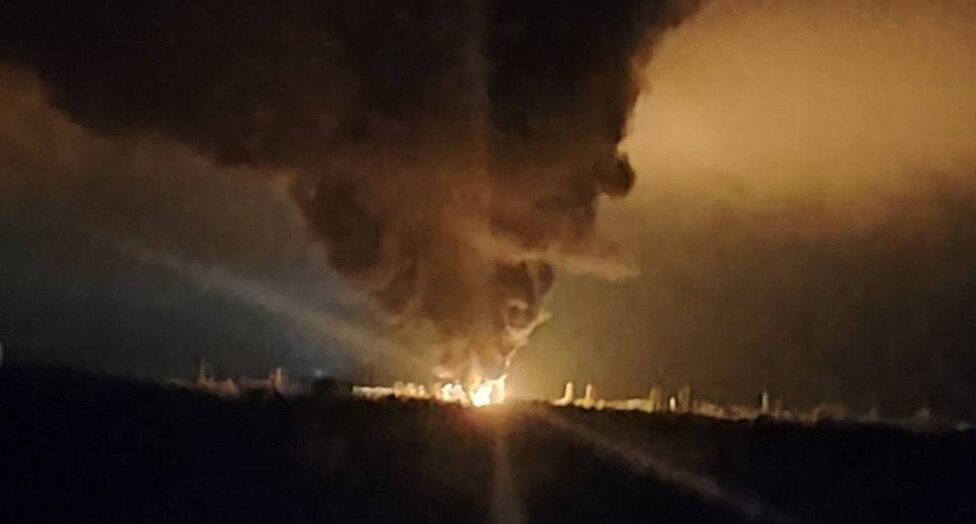
Between the evening of October 16 and October 17, 2026, the Russian Armed Forces continued their campaign of combined strikes against Ukrainian defense-industrial, energy, and logistics infrastructure. According to the Ukrainian side, the overnight attack leading into October 17 involved Iskander-M/KN-23 ballistic missiles, Kh-22/Kh-32 cruise missiles, four Kalibr sea-launched cruise missiles, and 332 strike unmanned aerial vehicles. The main focus was on metallurgical enterprises in Kryvyi Rih and Zaporizhzhia, transformer production, and high-voltage substations in western Ukraine. In parallel, Ukrainian forces carried out a large-scale drone attack on Russian territory.

Russian Strikes on Targets in Ukraine

Metallurgical Complex

Zaporizhstal (Zaporizhzhia) – formerly one of Ukraine’s largest metallurgical enterprises. Before the campaign, it produced up to 1.44 million tons of pig iron and more than 1.3 million tons of rolled steel annually; its output was directed primarily toward military-industrial needs. According to Metinvest, this was the fifth strike on the facility; six ballistic missiles were fired in the latest attack, damaging energy and logistics infrastructure as well as production facilities in the blast-furnace shop. In total, 23 ballistic missiles have been fired at the plant across five attacks.

Metallurgical combine in Kryvyi Rih (Dnipropetrovsk Region) – one of Ukraine’s largest metallurgical enterprises, which supplied metal products to the Ukrainian defense-industrial complex. The description provided by the Russian Ministry of Defense matches ArcelorMittal Kryvyi Rih; according to sources, a week earlier the owners announced a cold shutdown of primary production, and the plant was preparing for preservation.


Energy Infrastructure

Zaporozhtransformator PJSC (Zaporizhzhia) – a manufacturer of oil-immersed power transformers rated at 220-750 kV, a key component of high-voltage substations. Since 2022, it has been under the management of Ukraine’s Ministry of Defense and has been used in the interests of the Ukrainian Armed Forces. Striking this facility complicates the replacement of damaged transformer equipment for Ukrenergo, as manufacturing a new transformer takes months.

Zhytomyr 330 kV Substation (Zhytomyr Region) – a major hub in the trunk power grid, providing voltage conversion and electricity distribution among 330 kV, 110 kV, 35 kV, and 10 kV networks. Power was cut in several districts of Zhytomyr, and water-supply disruptions occurred. According to the Russian Ministry of Defense, the facility struck was one that distributed electricity from western Ukraine to central regions for defense-industrial enterprises.

Click to see the full-size image

Rivne 330 kV Substation (Rivne Region) – a trunk power-grid facility. Power outages occurred in Rivne and nearby settlements, and municipal electric transport operations were disrupted.

Bar 330/110/35 kV Substation (Vinnytsia Region) – a high-voltage facility distributing electricity among the aforementioned voltage classes. Voltage fluctuations were recorded in Vinnytsia and across the region.

Kharkiv CHP-3 (combined heat and power plant No. 3; KP Kharkivski Teplovi Merezhi – Kharkiv Heating Networks), Kharkiv – a combined heat and power plant producing both thermal and electric energy for municipal supply. A hit was recorded on the electrical-shop building, where a fire broke out over an area of 100 square meters.

Transport and Logistics Infrastructure

Delivery logistics terminal (Novohrad-Volynskyi, Zhytomyr Region) – a branch of a Ukrainian freight-logistics operator specializing in less-than-truckload road transport and interregional delivery. The strike caused a fire in a warehouse building covering more than 1,000 square meters. The company participates in government contracts for freight-forwarding services through the Prozorro system.


Dry cargo vessel underway at sea (Port of Odesa) – a vessel delivering military cargo to the port was struck.

Strikes on Russian Territory

On the night of October 17, Ukrainian forces carried out a large-scale drone attack on Russian regions. According to the Russian Ministry of Defense, air-defense forces intercepted and destroyed 610 Ukrainian fixed-wing UAVs over the territory of 16 Russian regions and over the Black Sea. The highest intensity was recorded on the Moscow axis: Moscow Mayor Sergei Sobyanin reported the destruction of 144 UAVs heading toward the capital. In Bryansk Region, 157 UAVs were shot down over the course of a day. No reports indicated that serious strategic targets had been hit; there were civilian casualties.

The nature of the October 16-17 strikes confirms a systematic approach by the Russian command to disabling Ukraine’s defense-industrial production chain and the energy infrastructure supporting it. Priority targets include metallurgical enterprises producing goods for military needs and transformer production, which is critical for restoring damaged substations. According to Chief of the General Staff of the Russian Armed Forces Valery Gerasimov, steel production in Ukraine has been halted, operations at major Black Sea ports have ceased, and 76 logistics and warehouse centers have been struck. Given statements by the Russian leadership on the need to continue large-scale strikes against the defense-industrial complex and logistics centers, further intensification of attacks on energy infrastructure in western and central Ukraine, as well as on facilities involved in the repair and restoration of military equipment, should be expected. The resilience of Ukraine’s energy system will depend on its capacity to import electricity from the EU and on the speed of restoring trunk substations – both significantly complicated by the strike on Zaporozhtransformator.


MORE ON THE TOPIC:

The post Russia Strikes Ukraine’s Steel and Energy Sector appeared first on South Front.

Russland öffnet strategisches Tor zum Westen der DVR

17 October 2026 at 20:21

Von Andrei Restschikow

Der Truppenverband Mitte hat die Stadt Dobropolje in der Volksrepublik Donezk (DVR) vollständig unter Kontrolle gebracht. Dies meldete der Leiter des Generalstabs der Streitkräfte Russlands Waleri Gerassimow am Abend des 16. Oktober persönlich Präsident Wladimir Putin bei einer Besprechung in einem Hilfsführungspunkt des Vereinigten Truppenverbands.

Der Präsident bezeichnete diesen Erfolg als ein bemerkenswertes Ereignis, das "einen direkten Weg zum Erreichen der Grenzen der DVR eröffnet". Putin erklärte:

"Die Befreiung von Alexejewo-Druschkowka durch den Truppenverband Süd und der Beginn des Sturms der Befestigungen der ukrainischen Streitkräfte der Ukraine in Druschkowka und Kramatorsk schaffen Bedingungen für den baldigen Abschluss der Befreiung des Donbass von bewaffneten Verbänden des Kiewer Regimes. Auch im Gebiet Saporoschje entfaltet sich die Offensive in hohem Tempo, wo die Truppenverbände Dnjepr und Ost erfolgreich vorrücken."

Nach Gerassimows Angaben werden gegenwärtig Maßnahmen zur Suche und zum Aufreiben ukrainischer Versprengter ergriffen, die sich in Gebäudekellern von Dobropolje verstecken. Gerassimow weiter:

"Gleichzeitig führen die Stoßtrupps des Truppenverbands Mitte die Offensive in Richtung Alexandrowka fort. Perwomaiskoje ist befreit, Vorkräfte drangen in Belosjorskoje ein und führen dort Straßenkämpfe. Zudem ging in den letzten drei Tagen Sergejewka unter unsere Kontrolle über."

Während der Beratung verband sich Putin per Videoschaltung mit den Kommandeuren der 110. separaten motorisierten Schützenbrigade, Oberstleutnant Alexander Troschin, und der 61. Marineinfanteriebrigade der Nordflotte, Oberst Alexander Baljura. Wie der Oberste Befehlshaber hervorhob, kämpfte die 110. Brigade unmittelbar im Zentrum und im Süden von Dobropolje.

Troschin berichtete, dass die ukrainischen Truppen Dobropolje sorgfältig auf eine Rundumverteidigung vorbereitet hätten. An den Zugängen zur Stadt sei ein verzweigtes Netz von Pioniersperren errichtet worden, darunter tiefe Panzergräben, die sich auf die nahe gelegenen Ortschaften Krasnopodolje und Krasnojarskoje stützten.

Der Brigadekommandeur legte die zeitlichen Rahmen der Operation dar. Seinem Bericht zufolge gelang es den russischen Einheiten bereits Anfang August, sich an den ersten Straßen im Süden von Dobropolje festzusetzen. Über den gesamten folgenden Monat folgte ein Vorrücken in schweren Stadtkämpfen, und gegen Monatsende führten Stoßtrupps bereits aktive Kämpfe in den zentralen Stadtvierteln.

Troschin meldete, dass die 110. Brigade unmittelbar an den Abschnitten des Hauptvorstoßes im südlichen und zentralen Teil der Stadt agiert und dabei nacheinander die vorbereiteten ukrainischen Widerstandsknoten des Gegners aufgebrochen habe.

Später veröffentlichte Russlands Verteidigungsministerium neue Aufnahmen der Kämpfe in Dobropolje. Auf dem Video sind Soldaten der 110. Separaten Garde-Motschützenbrigade und der 61. Separaten Garde-Marineinfanteriebrigade zu sehen.

Die Stadt Dobropolje liegt im Nordwesten der DVR, etwa 25 Kilometer nordwestlich von Krasnoarmeisk (ukrainischer Name Pokrowsk). Vor Beginn der massiven Kampfhandlungen und der Evakuierung betrug die ständige Bevölkerung der Stadt rund 29.000 Menschen (zusammen mit den angrenzenden Siedlungen der Stadtgemeinde über 42.000).

Durch Dobropolje verlaufen eine wichtige Eisenbahnstrecke und ein Netz von Straßen, die den zentralen Donbass mit den Gebieten Dnjepropetrowsk und Charkow verbinden. Dies macht die Stadt zu einem strategischen "Tor" zu den westlichen Grenzen der DVR.

Zudem ist Dobropolje ein großes Industriezentrum des Donbass, das Herz des gleichnamigen Kohlenreviers. Hier sind große Bergwerke wie Dobropolskaja und Almasnaja konzentriert, die hochwertige Steinkohle und Kokskohle fördern. Für das ukrainische Militär war dieses Gebiet in den letzten Jahren nicht nur eine militärische, sondern auch eine wichtige wirtschaftliche Basis, die die Reste der von Kiew kontrollierten Metall- und Energieindustrie mit Brennstoff versorgte.

Nach 2022 und besonders nach Beginn der aktiven Kämpfe um Awdejewka, Otscheretino und Selidowo verwandelten die ukrainischen Truppen Dobropolje in einen mächtigen Verteidigungsstützpunkt. Die Stadt wurde auf eine Rundumverteidigung vorbereitet: Verzweigte unterirdische Befestigungen, darunter unter Nutzung der Schachtinfrastruktur, Minenfelder und Artilleriestellungen wurden errichtet, die die Zugänge zum Ballungsraum Slawjansk-Kramatorsk von Südwesten deckten.

Im Lagebericht des russischen Verteidigungsministeriums vom 17. Oktober wurde die Befreiung von gleich acht Ortschaften an einer riesigen Front gemeldet – vom Palamarjowka, Kowaljowka im Gebiet Charkow über Alexejewo-Druschkowka, Dobropolje, Perwomaiskoje und Sergejewka in der DVR bis Malokaterinowka im Gebiet Saporoschje und und Welikomichailowka im Gebiet Dnjepropetrowsk.

Nach Schätzungen von Experten war die Befreiung von Dobropolje kein isolierter Erfolg, sondern Teil eines einheitlichen groß angelegten Plans, der gegenwärtig an der gesamten Frontlinie umgesetzt wird. Der Militärexperte Wassili Dandykin erklärte:

"Dobropolje war ein wichtiger Transport- und Logistikknoten. Über diese Stadt lief die Versorgung der ukrainischen Garnisonen von Kramatorsk und Slawjansk. Nun wird der Gegner diese Möglichkeit nicht mehr haben. Das ist genau so zu verstehen – sowohl im Hinblick auf den Verkehr als auch auf die Logistik insgesamt."

Die ukrainische Garnison habe keine lang andauernde Verteidigung innerhalb der Stadtgrenzen organisieren können, wie es an anderen Orten geschehen sei:

"Dem Gegner fehlten Möglichkeiten, es fehlten Kräfte. Und während dieser mehr vier Jahren sind Können und Versorgung unserer Truppen gestiegen. Das hat das Ergebnis vorherbestimmt."

Dandykin zufolge eröffnet sich mit der Befreiung von Dobropolje der Weg zum Gebiet Dnjepropetrowsk:

"Andererseits werden unsere Truppen im Norden den Gegner bei Liman etwas eindämmen, und es entstehen Perspektiven für die Einkesselung des gesamten Ballungsraums – von Norden und von Süden. Schätzungen zufolge befinden sich dort etwa 70.000 Menschen, vielleicht 50.000. Es stehen ernste Kämpfe bevor."

Doch ohne Nachschub an Munition sei bei Russlands Feuerüberlegenheit "das Schicksal dieser zehn Prozent der Territorien besiegelt". Dandykin weiter:

"Das betrifft auch die verbleibenden drei Städte – Slawjansk, Kramatorsk und eine weitere kleine Stadt bei Dobropolje, Belosjorskoje. Dort gab es tatsächlich lange Kämpfe, es gab einen Frontvorsprung, und im vergangenen Jahr mussten wir uns zurückziehen. Jetzt hat alles geklappt."

Dass Dobropolje ein mächtiger befestigter Verteidigungsraum und eine große Logistikdrehscheibe war, über die die Versorgung des ukrainischen Truppenverbands an diesem Frontabschnitt lief, betonte auch der Militärexperte Jan Gagin, Mitglied des Rates für Außen- und Verteidigungspolitik:

"Mit dem Verlust von Dobropolje entstand beim Gegner eine ernsthafte Lücke. Es eröffnen sich große Möglichkeiten für die Befreiung von Kramatorsk und Slawjansk – auch, weil ihre Versorgung ebenfalls über diese Stadt lief. Neben der Bedeutung für den Verkehr war dies ein befestigter Verteidigungsraum mit einer starken Garnison, die jetzt größtenteils aufgerieben ist."

Gagin betont, dass ukrainisches Militär jedes Mal, wenn Russlands Streitkräfte einen neuen befestigten Raum befreien, Kräfte und Mittel verliere – Personal, Technik, Munition, Treibstoff:

"Diese Ressourcen sind nicht unendlich. Daher ist jede neu befreite Stadt nicht nur der Verlust einer Position, sondern auch der Verlust von Personal und Technik sowie ein erzwungener Rückzug auf nicht immer gut vorbereitete Linien. Derzeit wird Dobropolje gesäubert, und wir werden weiter vorrücken, mindestens bis zu den administrativen Grenzen den DVR."

Nach Gagins Ansicht wird sich die Offensive in zwei Richtungen entfalten: die Befreiung von Kramatorsk und Slawjansk – der letzten großen Städte des Donbass, die unter Kiews Kontrolle bleiben – und das Vorrücken in das Gebiet Dnjepropetrowsk mit dem Ziel, Logistikketten und die rückwärtige Versorgung zu unterbrechen. Der Experte fügt hinzu:

"Außerdem ist es, wie der Oberste Befehlshaber sagte, notwendig, eine Sicherheitszone entlang den Grenzen zu schaffen, damit uns kein Angriff überrascht. Die Tiefe dieser Zone wird durch die Kräfte des Gegners bestimmt."

Dandykin hob gesondert hervor, dass der Bericht des Generalstabschefs Gerassimow über die Befreiung von Dobropolje persönlich an Putin ein außergewöhnliches Ereignis sei:

"Das zeigt, dass die Operation strategische Priorität in den Plänen der Sommer-Herbst-Kampagne hatte. Die Befreiung von Dobropolje ist einer der Hauptmomente der Kampagne, ein Durchbruch, der das Hauptziel näher bringt – die Befreiung des Donbass, wovon Putin mehrmals gesprochen hat. Das ist ein wichtiger Moment sowohl für die Gesellschaft als auch eine Botschaft an diejenigen, die die Ukraine unterstützen, und an Selenskij selbst. Nicht umsonst tobte der Gegner: Er griff Erdölraffinerien an und schickte Drohnen nach Moskau. Doch das geschieht schon aus Ohnmacht."

Der Bericht an das Staatsoberhaupt erfolgte unverzüglich, und Verteidigungsminister Andrei Beloussow schickte sofort Glückwunschtelegramme an die 110. und die 61. Brigade, was von einer hohen Bewertung des Tempos der Offensive spreche. Dandykin weiter:

"Doch es ist verfrüht, zu sagen, dass der Wendepunkt endgültig erreicht ist und die Verteidigung des ukrainischen Militärs systematisch zerfällt. Der Gegner hat lange Vorbereitungen getroffen und mehrere Verteidigungslinien errichtet, besonders bei Kramatorsk. Wir werden uns noch abmühen müssen. Es geht um einen Durchbruch nicht nur an diesem Abschnitt, sondern auch fünf Kilometer südlich von Saporoschje. Drei Truppenverbände – West, Mitte und Süd – sind im Einsatz. Sie könnten sich tatsächlich vereinigen, wie in den Jahren des Großen Vaterländischen Krieges, als Fronten vereinigt wurden."

Die Befreiung von gleich acht Ortschaften entlang einer riesigen Front – vom Gebiet Charkow bis Saporoschje und zum Gebiet Dnjepropetrowsk – ist nach Gagins Ansicht mehr als ein bloßer Durchbruch an einem Abschnitt.

"Zu sagen, dass die Front zusammengebrochen ist, ist noch verfrüht, doch es gibt tatsächlich Voraussetzungen für einen kaskadenartigen Zusammenbruch. Eine davon ist das vollständige Aufreiben des gegnerischen Truppenverbands im Kessel im Gebiet Charkow, rund 2.000 Mann mit Technik und rückwärtiger Versorgung. Das ist eine beträchtliche Zahl im Maßstab des Kriegsschauplatzes. Sobald aufseiten des Gegners eine Lücke entsteht, füllen wir sie mit unseren Truppen auf."

Gagin zufolge entwickelte sich die Lage ähnlich während der Kursk-Operation, als das ukrainische Militär von anderen Abschnitten die am besten vorbereiteten Einheiten mobilisierte, die von russischen Kräften aufgerieben wurden:

"Das ermöglichte uns, schnell entlang der gesamten Front vorzurücken. Vor Ugledar standen wir eineinhalb Jahre, doch wir nahmen es binnen anderthalb Monaten ein. Leere gibt es in der Natur nicht: Wo der Gegner zurückweicht, rücken wir nach."

Das Erscheinen von Welikomichailowka in der Liste der befreiten Orte bedeutet, dass die Kampfhandlungen über die administrativen Grenzen des Donbass hinausgehen, so Gagin:

"Das ist Territorium des Gebiets Dnjepropetrowsk. Doch dies hängt vor allem mit der Notwendigkeit zusammen, Logistikketten und die Versorgung der gegnerischen Gruppierung überall zu unterbrechen, wo es möglich ist – sowohl im tiefen Hinterland als auch in den frontnahen Gebieten."

Außerdem müsse Russland ein möglichst tiefes Territorium der Ukraine kontrollieren, damit Angriffe ukrainischer Drohnen, Raketenwaffen und Luftwaffe auf das Hinterland und frontnahe Gebiete keine Überraschung darstellten, erklärte Gagin:

"Die Sicherheitszone, von der der Oberste Befehlshaber sprach, wird gerade dafür benötigt, das Grenzgebiet zu sichern. Der erste Durchbruch unmittelbar auf das Territorium des Gebiets Dnjepropetrowsk hat strategische Bedeutung für die weitere Umzingelung der südlichen Truppenverbands des ukrainischen Militärs. Bei der Planung der Offensive in diesem Abschnitt werden sowohl das Gelände als auch die Vorbereitung der befestigten Verteidigungsräume des Gegners berücksichtigt. Das spielt eine wichtige Rolle."

Übersetzt aus dem Russischen. Zuerst erschienen bei der Zeitung Wsgljad am 17. Oktober.

Mehr zum Thema – Dobropolje: Ukrainische Eliteverbände im Kessel

Frankreich brennt: Hunderte Festnahmen, Plünderungen und Straßenschlachten

17 October 2026 at 19:52

Frankreich erlebt einen Samstag der Gewalt. Am Place de la République in Paris steigen schwarze Rauchwolken über brennenden Fahrzeugen und Müllcontainern auf.

Vermummte Demonstranten werfen Feuerwerkskörper, Pflastersteine und andere Gegenstände auf Polizisten. Die Sicherheitskräfte antworten mit Tränengas und Wasserwerfern.

PARIS: LOOTING, FIRES AND TEAR GAS 🚨 SHOPS wrecked. CARS set on fire. BOUTIQUES looted as masked groups clashed with police around Place de la République. Police responded with tear gas and water cannons. https://t.co/dhchnrfwvv

— Russian Market (@runews) October 17, 2026

Geschäfte werden geplündert, mehrere Menschen bei den Zusammenstößen verletzt. Die Polizei versucht zudem, kleinere Gruppen daran zu hindern, zu Regierungsgebäuden vorzudringen. Nach Angaben der Nachrichtenagentur AP wurden landesweit mindestens 272 Menschen festgenommen. 

La situation est totalement hors de contrôle à Paris dans le secteur République. Des dizaines de boutiques sont pillées depuis plus de deux heures sur le boulevard Magenta. #Paris #17octobre https://t.co/iV95XdDyby

— Luc Auffret (@LucAuffret) October 17, 2026

Die Gewalt beschränkt sich nicht auf die Hauptstadt. In Lyon geriet ein Tourismusbüro in Brand. In Marseille wurden Geschäfte und eine kommunale Polizeiwache beschädigt, Demonstranten drangen zeitweise in den Eingangsbereich des Rathauses ein.

Es wird wieder geklaut. Für soziale Gerechtigkeit oder so. https://t.co/UghYE1hKt8

— Miró (@unblogd) October 17, 2026

Auch aus Rennes, Toulouse, Montpellier und Grenoble melden die Behörden gewaltsame Zwischenfälle. In Paris werden zudem mehrere Metrostationen auf behördliche Anweisung geschlossen, darunter Stationen in der Nähe wichtiger Regierungsgebäude.

"Wir haben die Schnauze voll"

Hinter den Protesten steht mehr als der Ärger über einzelne Rechnungen. Benzin, Lebensmittel und Energie sind für viele Haushalte zu einer schweren Belastung geworden. Beschäftigte beklagen stagnierende Einkommen, während Schüler und Studenten gegen schlechte Bedingungen an Schulen und Universitäten mobilisieren. Hinzu kommen Forderungen nach höheren Löhnen und Renten sowie nach dem Erhalt öffentlicher Dienstleistungen.

Lyon 14h49 https://t.co/ySo0YU1jll

— 𝔈𝔲𝔯𝔬𝔭𝔞 𝔈𝔯𝔰𝔱 🇫🇷🇩🇪🇺🇦 (@EuropaErst) October 17, 2026

Die Mobilisierung begann zunächst mit Aufrufen gegen hohe Kraftstoffpreise. Die Schülerproteste verliehen ihr neuen Schwung. Inzwischen versuchen Aktivisten, junge Demonstranten mit früheren Teilnehmern der Gelbwestenbewegung, Rentnern und Beschäftigten zusammenzubringen. Auch die Gewerkschaft CGT unterstützt die Proteste. Sie verlangt höhere Löhne und Renten, niedrigere Preise und den Schutz öffentlicher Einrichtungen.

When the left and Islam join forces you get a kind of Civil War. #Marseille #France https://t.co/VHB81mYfPY

— Geert Wilders (@geertwilderspvv) October 17, 2026

Die Bilder erinnern an den Winter 2018 und 2019, als die Gelbwesten Frankreich mit Protesten gegen höhere Kraftstoffkosten und soziale Ungleichheit erschüttert hatten. Damals war aus dem Widerstand gegen die Steuerpolitik eine breite Bewegung gegen die politische Führung und die wachsende Kluft zwischen wohlhabenden und einkommensschwachen Bevölkerungsschichten geworden.

🔴La situation est hors de contrôle à Paris place de la République #17octobre #Manifestationdu17 #giletsjaunes #Macron #République https://t.co/jki5tKskNq

— 🔥🆃🅰🆃🅰🔥🆂🆄🆉🅰🅽🅽🅴🔥 (@TataSuzanne0) October 17, 2026

Auch diesmal tauchen gelbe Warnwesten auf Frankreichs Straßen auf. Über TikTok und andere Plattformen organisieren Aktivisten neue Proteste. Eine veröffentlichte Karte verzeichnet mehr als 1.000 mögliche Sammelpunkte im ganzen Land. Geplant sind Aktionen an Kreisverkehren, Tankstellen, Bahnhöfen und anderen strategischen Orten. In Paris untersagten die Behörden einzelne geplante Routen, während andere Gruppen zu spontanen Aktionen an wechselnden Orten aufriefen.

Ob aus den neuen Protesten eine Bewegung von der Wucht der Gelbwesten entsteht, ist noch offen. Die gelben Westen stehen jedoch erneut für den Unmut über steigende Lebenshaltungskosten und die wirtschaftliche Belastung vieler Franzosen. Anders als bei reinen Schüler- und Studentenprotesten richtet sich die Mobilisierung an ein breiteres Publikum. Eine gemeinsame Führung fehlt bislang, doch die Erinnerung an die Gelbwesten zeigt, wie schnell sich lokale Aktionen zu einem landesweiten Aufstand ausweiten können.

Wie hilft Playstation klauen nochmal für bessere Schulbedingungen? https://t.co/PwpULpO3G4

— Miró (@unblogd) October 17, 2026

Präsident Emmanuel Macron hatte bereits am Freitag zur Ruhe aufgerufen und Respekt vor Menschen und Eigentum angemahnt. Die Behörden bereiteten sich auf einen gewaltsamen Protesttag vor. Innenminister Laurent Nuñez machte nach Angaben von AP zunehmende Gewalttaten, Angriffe auf Polizisten und Plünderungen zum Thema. Das Ministerium schrieb die Ausschreitungen vermummten Gruppen zu und verwies auf Akteure der extremen Linken.

Der massive Polizeieinsatz ist allerdings selbst umstritten. Die Schülerproteste der vergangenen Wochen wurden von schweren Verletzungen begleitet. Nachdem ein 15-Jähriger eine Hand verloren hatte, setzte Nuñez den Einsatz eines bestimmten Typs von Polizeigranaten gegen die jungen Demonstranten aus. Die Auseinandersetzung um die Verhältnismäßigkeit der Polizeigewalt verschärft das Misstrauen zwischen Jugendlichen und Sicherheitskräften.

Wann kommt die Armee? https://t.co/GBlCtlhgrF

— Miró (@unblogd) October 17, 2026

Für Macron kommt die Eskalation wenige Monate vor der Präsidentschaftswahl 2027. Die Regierung muss Plünderungen und Angriffe eindämmen, während immer mehr Bürger ihrem wirtschaftlichen Frust Luft machen. Mit Polizeikräften lassen sich Barrikaden räumen und Randalierer festnehmen. Hohe Rechnungen, niedrige Einkommen und der Ärger über marode Schulen verschwinden dadurch nicht.

Frankreich erlebt an diesem Samstag mehr als brennende Autos und verwüstete Geschäfte. Die Gewalt auf den Straßen trifft auf einen Unmut, der weit über Schüler und Studenten hinausgeht. Die Bilder aus Paris, Lyon und Marseille zeigen, wie rasch wirtschaftlicher Frust in gewaltsame Zusammenstöße mit der Polizei umschlagen kann. Für Macron droht damit eine neue soziale Krise, während der politische Countdown bis zur Wahl 2027 läuft.

Mehr zum Thema – In Frankreich bilden sich die Voraussetzungen für den Zusammenbruch der EU

Houthis Shot Down Saudi Apache Helicopter Near Najran

17 October 2026 at 19:31

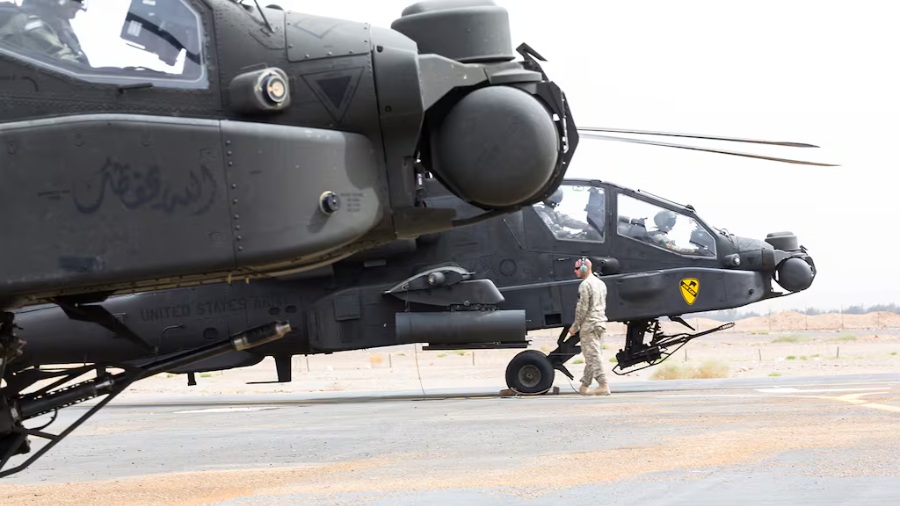
Click to see full-size image. (Sgt. Harley Jelis/Army National Guard)

Yemen’s Houthis (Ansar Allah) announced late on October 17 that they shot down a Saudi AH-64 Apache attack helicopter near the border with the kingdom’s southern province of Najran.

In a statement, Brig. Gen. Yahya Saree, the movement’s military spokesman, said the American-made helicopter had been targeting Houthi positions along the border.

“Our armed forces, with the help and grace of God, managed to shoot down an Apache belonging to the Saudi enemy opposite Najran while it was carrying out hostile actions against our forces’ positions along the border,” Saree said. “It was shot down with a suitable weapon.”

The Houthis operate a range of air defense systems, from man-portable weapons to interceptors and medium-range surface-to-air missiles.

The Apache is Saudi Arabia’s principal attack helicopter, with a modernized AH-64E estimated to cost about $52 million per helicopter according to recent U.S. Army procurement figures.

Open-source inventories list 22 Apaches with the Royal Saudi Land Forces and 12 others with the Saudi Arabian National Guard.

The announcement came just days after the Houthis said they had struck a Saudi Eurofighter Typhoon fighter jet over Yemen’s Saada province. The group later released footage showing a missile hitting the jet during flight, supporting its claim.

Including the latest claim, the Houthis have announced 18 shootdowns since the start of the ongoing confrontation with Saudi Arabia. Aside from an American-made F-15SA fighter jet, all other warplanes shot down by the Houthis were combat drones.

_______________________________________________________________________________________________________________________

SouthFront: Analysis and Intelligence

NOW hosted at southfront.press

Previously, SouthFront: Analysis and Intelligence was at southfront.org.

The .org domain name had been blocked by the US (NATO) (https://southfront.press/southfront-org-blocked-by-u-s-controlled-global-internet-supervisor/) globally, outlawed and without any explanation

Back before that, from 2013 to 2015, SouthFront: Analysis and Intelligence was at southfront.com

SOUTHFRONT.PRESS

MORE ON THIS TOPIC:

The post Houthis Shot Down Saudi Apache Helicopter Near Najran appeared first on South Front.

Exclusif : L’Iran, un cobra lové prêt à frapper

By: A A
17 October 2026 at 19:31

L’Iran et le Pakistan sont pleinement engagés dans la construction d’un ordre financier post-américain à la croisée du Moyen-Orient et de l’Asie du Sud.

Allons droit au cœur du sujet : après avoir soigneusement examiné l’échiquier, les dirigeants politiques et militaires de Téhéran sont déjà parvenus à la conclusion qu’une attaque conjointe américano-israélienne, dont la planification avance à un rythme effréné, est inévitable.

Ils se positionnent donc désormais comme un cobra lové, prêt à frapper et à injecter son venin mortel au premier signe d’une menace imminente du syndicat Epstein — sans même attendre une attaque effective.

Cette offensive préventive, dont les contours sont déjà tracés, sera dévastatrice ; elle s’étendra au-delà des bases américaines au Moyen-Orient vers d’autres cibles régionales, et pourrait notamment inclure les infrastructures énergétiques du Golfe ainsi que les câbles sous-marins (ce qui, dans ce cas, affecterait principalement le Golfe et l’Inde, bien plus que les États-Unis et l’Europe).

Nous sommes en présence d’un danger clair et immédiat : une opération militaire américano-israélienne destinée à exercer une pression sera certainement interprétée à Téhéran comme le début d’une attaque.

Ainsi, la pression en faveur de la guerre exercée par le «culte de la mort» et par Trump se heurte désormais à un seuil de tolérance iranien dangereusement bas. Les options de frappe du Pentagone vont des installations nucléaires iraniennes aux infrastructures énergétiques.

Il va sans dire que le «sociopathe en chef» — déjà en pleine panique face à la débâcle imminente des élections de mi-mandat — est une proie facile pour le puissant lobby sioniste pro-guerre et ses donateurs. Le danger stratégique suprême réside donc dans le fait que cette pression incessante puisse envoyer un signal que Téhéran interpréterait comme une attaque imminente, même si Washington affirme publiquement qu’aucune frappe n’aura lieu avant les élections de mi-mandat.

Le Yémen fait passer la situation à un niveau supérieur

Parallèlement, des sources privilégiées à Islamabad confirment le succès d’un essai de missile pakistanais à Mach 7, d’une portée de plusieurs milliers de kilomètres. Cette nouvelle capacité a tout ce qu’il faut pour modifier concrètement l’équilibre des pouvoirs au Moyen-Orient, en renforçant la portée dissuasive du Pakistan et sa capacité à influencer tous les calculs de sécurité régionaux, tout en approfondissant les liens du Pakistan avec la Chine, l’Iran et les pétro-monarchies du Golfe.

Et voici une autre exclusivité : des membres des services de renseignement militaire israéliens, notamment un général de division, ont quitté Riyad après que MbS, dans un prétendu moment de lucidité, eut dit «non» à l’offre d’»assistance» de la secte de la mort. Et pourtant, plus de 100 membres du CENTCOM sont toujours sur place.

La décision de MbS lui a peut-être été imposée par la Turquie et le Pakistan — les deux autres signataires de l’Alliance de défense de La Mecque, qui se sont soudainement retrouvés dans la même salle de crise à Riyad, côte à côte avec des agents de la secte de la mort.

Si leur départ a peut-être écarté un risque d’escalade, les agents américains restent révélés : toute frappe, d’où qu’elle vienne, faisant des victimes américaines entraînera immédiatement Washington dans la guerre entre l’Arabie saoudite et Ansarallah.

La guerre entre l’Arabie saoudite et Ansarallah atteint en effet un nouveau niveau de volatilité. Le mélange explosif constitué par l’interception d’un missile de croisière au-dessus de la province de Médine, les interceptions de drones ailleurs en Arabie saoudite et les frappes de missiles des forces armées yéménites contre le complexe présidentiel du gouvernement fantoche d’Aden n’est qu’un début.

Ce qui s’est passé après qu’Ansarallah a pris pour cible Najran — l’une des provinces du sud de l’Arabie saoudite volées au Yémen en 1934 par les Britanniques — est tout à fait stupéfiant.

Un porte-parole saoudien a accusé Ansarallah d’avoir lancé un missile de croisière sur Médine. La réponse du porte-parole emblématique des forces armées yéménites, le général Yahya Saree, a été cinglante : «Nous n’avons mené aucune opération militaire visant le territoire saoudien aujourd’hui. Par conséquent, l’affirmation de l’ennemi saoudien selon laquelle Médine aurait été prise pour cible est une pure invention et un mensonge grave».

Traduction : le Yémen frappe l’une de ses anciennes provinces ; les Saoudiens se lancent dans des fausses informations à outrance, inventant de toutes pièces une attaque contre l’une des deux mosquées sacrées — sans doute en préparation d’une opération sous faux pavillon ; puis le Yémen nie aussitôt avoir frappé quelque (italiques de ma part) territoire saoudien.

Cela signifie que Sanaa déclare subtilement, pour que tout le monde comprenne, qu’elle ne mène plus d’opérations à l’étranger (italiques de ma part) sur les trois provinces : Jizan, Najran et Asir. Elle prépare déjà — psychologiquement et opérationnellement — le terrain pour récupérer son territoire volé.

Tout cela se résume dans cette analyse yéménite succincte de la déconstruction de la fastueuse Maison des Saoud :

«Le Yémen sape les piliers ultra-fragiles de l’économie non pétrolière sur lesquels les pirates du désert ont fondé tous leurs espoirs : l’image, les investissements (IDE), l’évasion de la réalité, ainsi que l’impunité et l’invulnérabilité face au terrorisme à l’étranger».

Comment le Pakistan et l’Iran contournent le FMI

Prêtez maintenant attention à un événement assez surprenant qui s’est produit en milieu de semaine à Bangkok, lors de la réunion annuelle du FMI et de la Banque mondiale — dûment accueillie par des manifestations de rue en Thaïlande.

Le gouverneur de la Banque centrale d’Iran, Abdolnaser Hemmati, a rencontré le gouverneur de la Banque centrale du Pakistan, Jameel Ahmad, en marge de ce rituel annuel de premier plan à la gloire du dollar américain.

Le Pakistan est soumis à la poigne de fer des ajustements structurels imposés par le FMI et la Banque mondiale — et, pour couronner le tout, menacé de sanctions américaines parce qu’il entretient des relations commerciales avec l’Iran.

Le fait que le Pakistan et l’Iran discutent de facto de la dédollarisation au cœur même de la tanière du lion — le temple du dollar américain — n’a donc pas de prix.

L’infrastructure est en place depuis 2023, grâce à un accord de swap de devises utilisant le rial et la roupie à la place du dollar américain. Le troc est géré par les deux banques centrales, et les flux bancaires transitent par la Banque Melli en Iran et la Banque Mellat au Pakistan. Leurs marchés frontaliers — au moins six d’entre eux — sont en plein essor : des routes commerciales physiques qui contournent complètement le dollar américain.

Ce dont ils discutaient à Bangkok en début de semaine, c’est la manière d’étendre ce système : ils se moquent éperdument des sanctions secondaires américaines. D’autant plus que Téhéran offre à Islamabad ce que le système américain ne peut tout simplement pas offrir : la souveraineté, pas de changement de régime, pas d’austérité, pas de leçons de morale et, surtout, pas d’ajustement structurel.

Sans compter que le Pakistan a cruellement besoin du gaz iranien — et des routes commerciales de la nouvelle Route de la soie rendues possibles par la Chine.

L’Iran a bâti toute une économie en contournant complètement le FMI — et capable de survivre à un tsunami de sanctions, à un blocus et à la guerre.

Aujourd’hui, l’Iran et le Pakistan sont en pleine construction d’un ordre financier post-américain à la croisée du Moyen-Orient et de l’Asie du Sud — avec des swaps de devises, du troc, des marchés frontaliers en plein essor et des canaux bancaires adaptés, tournant ainsi en dérision les sanctions secondaires.

Soit dit en passant, cela se produit au moment même où un immense train iranien, chargé de pétrole brut — et le premier d’une longue série —, s’apprête à partir pour… la Chine via l’Asie centrale, sur la ligne ferroviaire de la «nouvelle Route de la soie» construite par la Chine.

Le cobra lové est peut-être prêt à frapper. Mais le cobra, depuis des temps immémoriaux, adore aussi faire des affaires.

Traduction:  Reseau International

À beira da catástrofe a França intensifica a repressão contra o dissenso político

By: A A
17 October 2026 at 19:26

Macron, com 15% de aprovação, prepara guerra com Rússia e dissolve associação Egalité et Réconciliation de Alain Soral por “extremismo político”.

Junte-se a nós no Telegram , X e VK.

Escreva para nós: info@strategic-culture.su

Macron é, hoje, muito possivelmente, o presidente mais impopular do planeta, contando com apenas 15% de aprovação, segundo uma enquete Ipsos BVA-Cesi. Sob seu comando, a França se depara com a estagnação econômica (crescimento de 0,6% em 2025) e com o endividamento (120% do PIB). Sob Macron, a França viu também a desindustrialização acelerada do país, com as indústrias correspondendo a apenas 9% do PIB, menor patamar da União Europeia, e não surpreendentemente, o poder de compra despencou, com metade dos franceses dizendo que sua renda dá apenas para o essencial e apenas 70% dos cidadãos em idade ativa ocupando um posto de trabalho, atualmente.

Como se isso já não fosse o bastante, em aproximadamente 10 anos de governo Macron, aproximadamente 4 milhões de imigrantes entraram no país (muitos dos quais não trabalham, mas recebem benefícios sociais); quantia que torna impossível a absorção econômica bem como a assimilação etnocultural dos recém-chegados. Naturalmente, ao descontrole imigratório estão vinculadas taxas de criminalidade, favelização de centros urbanos e aumento das tensões sociais. Muitos franceses étnicos sentem-se demograficamente substituídos em sua terra natal, e não por acaso, tudo indica que Marine Le Pen ganhará (finalmente) as eleições presidenciais francesas em 2027.

Não sabemos quais seriam os resultados de uma presidência Le Pen e é razoável ser cético a respeito, mas claramente o atual curso da França é perigosíssimo, inclusive em sua política externa.

Gradualmente, nos últimos 2 anos, começaram a aparecer inúmeros sinais de que Macron estaria preparando o país para uma guerra com a Rússia. O governo francês criou um serviço militar voluntário e aprovou a expansão das forças armadas permanentes a 275 mil homens, bem como um aumento orçamentário para a defesa. O general Fabien Mandon, do Estado-Maior, afirmou em 2025 que a França deveria se preparar para um conflito de alta intensidade com a Rússia no prazo de três a quatro anos, e agora em setembro de 2026 Macron declarou que a França “poderia” se tornar alvo de drones explosivos. Constantemente, também, se ouve discursos sobre a necessidade de transformar a economia francesa numa “economia de guerra”.

Por isso, talvez seja surpreendente para muitos (mas não para nós) que em meio a tudo isso que tem acontecido no país, o governo Macron ainda encontre tempo para a implementação de um aparato de censura e repressão de níveis totalitários.

Sua nova vítima é a associação Egalité et Réconciliation (Igualdade e Reconciliação), criada pelo sociólogo e escritor Alain Soral. A associação se identifica como “nacionalista de esquerda” e tem como principal slogan “esquerda do trabalho, direita dos valores”, apelando a uma superação da falsa dicotomia entre esquerda e direita e, ainda mais importantemente, por uma reconciliação nacional entre todos os setores sociais; em anos recentes, ela esteve envolvida nas manifestações dos Coletes Amarelos, em algumas atividades ligadas ao partido Reagrupamento Nacional (apesar de, simultaneamente, manter uma postura de “crítica construtiva” contra certas tendências sionistas e liberais presentes no partido) e à militância pró-Palestina.

Ocorre que, no dia 9 de outubro, o Ministro do Interior do governo de Macron, Laurent Nuñez, anunciou a abertura de um procedimento de dissolução contra a associação Egalité et Réconciliation, sob a acusação de “extremismo político”. A sua equipe jurídica recebeu um prazo de 1 semana para se defender, e a decisão a respeito deve ocorrer, ainda, em outubro.

O próprio Alain Soral é uma figura de elevado espírito inconformista, razão pela qual já foi vítima de incontáveis perseguições judiciais – dezenas de fato – majoritariamente por “delitos de opinião”, ou seja, por comentários críticos contra pessoas específicas ou “minorias protegidas”. Em condenações, Soral já acumulou milhões de euros a serem pagos em indenização para ONGs globalistas diversas, soma obviamente impagável, bem como já foi encarcerado algumas vezes, também pelos mesmos motivos. A perseguição judicial foi tão intensa que Soral teve que se exilar de sua pátria, primeiro na Suíça e depois na Rússia.

Agora, para além das justificativas oficiais, por qual motivo o Estado francês baniria uma organização relativamente pequena e de poucos recursos financeiros?

É possível analisar o “ângulo” da presença de Alain Soral na Rússia, em mais de um sentido. Primeiro, porque ao estar na Rússia Soral finalmente tornou-se imune à constante perseguição judicial e às ameaças de prisão que ele sofria na França, ao mesmo tempo em que seguia tomando parte ativa no debate político e cultural francês, mesmo à distância. Nisso, ele era capaz de exercer e expandir a sua influência, “sob a proteção dos russos”, o que certamente alimenta as típicas paranoias atuais da elite francesa sobre uma “guerra informacional” russa.

Existe, porém, também um aspecto interno. Recentemente, Alain Soral voltou a ser bastante comentado pela mídia francesa por dois motivos. Um é o “caso Bardella”, o qual diz respeito à descoberta de supostos escritos “politicamente incorretos” de Jordan Bardella, presidente do partido Reagrupamento Nacional, e à informação de que em sua juventude a principal influência intelectual de Bardella era Alain Soral. O segundo é uma pesquisa de opinião indicando que 15% dos homens franceses com menos de 35 anos de idade se identificam com as ideias de Soral.

Isso às vésperas das eleições presidenciais representa um risco significativo para Macron e para o establishment francês. Ainda que, aparentemente, não haja chance de vitória para qualquer candidato contra Le Pen, não podemos duvidar da possibilidade de manipulação do processo eleitoral, tal como aconteceu na Romênia.

Esse silenciamento é ainda mais preocupante pelo fato de que Soral e o E&R serem praticamente os únicos personagens socialmente e culturalmente relevantes na França hoje que defendem a reconciliação nacional e que evitam a incitação do tensionamento interno, promovido pelos elementos mais islamofóbicos do RN e pela própria liderança do LFI de Mélenchon com seu “exército” de antifas e imigrantes.

Occidente es el Titanic y el Sur Global su iceberg

By: A A
17 October 2026 at 19:22

Ninguna forma de gobernanza inclusiva puede sostenerse sin el respeto por las identidades culturales de los pueblos: ahí es donde se puede reconstruir la confianza, el bien que más le falta al mundo hoy en día.

Únete a nosotros en Telegram , X y VK .

Escríbenos: info@strategic-culture.su

¿Dónde persiste el crecimiento y a qué costo?

Quienes estudian las crisis económicas suelen imaginarlas como choques repentinos: un colapso que desata el pánico, un mercado bursátil que se desploma en una sola sesión, una frontera que se cierra.

Estos son los sucesos de 2008 y 2020, las tormentas que marcan un antes y un después.

Pero existe una segunda forma de sufrimiento, menos fotogénica y más insidiosa, que no llega a los titulares: la parálisis lenta, la ausencia de crecimiento, una economía que da vueltas en vacío sin hundirse ni recuperar impulso.

Esta situación les resultaba familiar a los marineros. Los veleros que cruzaban el Atlántico temían a los huracanes, pero también temían al Mar de los Sargazos, esa extensión sin corrientes donde el viento se calmaba y el casco quedaba atrapado entre las algas durante semanas. En 2026, la economía mundial se enfrenta sobre todo a esta segunda amenaza, y es como el Titanic, tal como Leonid Grigoryev escribió brillantemente.

El transatlántico, para seguir con la metáfora, no se ha hundido: sigue a flote y aún crece, pero avanza lentamente y su casco tiene varios agujeros. Los vigías escudriñan una niebla que no da señales de disiparse, y los capitanes confían en que el iceberg se mantenga a distancia.

En sus proyecciones de julio, el Fondo Monetario Internacional ha revisado a la baja su pronóstico de crecimiento mundial para 2026, situándolo en un 3 por ciento, en comparación con el 3,5 por ciento del año anterior. Traducido a términos absolutos, frente a un PIB mundial que supera los cien billones de dólares en paridad de poder adquisitivo, esa pérdida de medio punto equivale a cientos de mil millones que no se convertirán en salarios, ingresos fiscales ni inversión.

La guerra arancelaria entre Washington y Bruselas está siendo absorbida por los principales actores, pero deja a su paso reajustes y fricciones colaterales, desde Irlanda hasta Canadá; y, por razones puramente contables más que políticas, resurge la perspectiva de la fragmentación económica del Reino Unido.

La fase expansionista pospandémica nunca ha seguido un rumbo claro y sigue topándose con los obstáculos de la geopolítica. Un factor en particular ha impulsado el crecimiento del PIB en los últimos trimestres: la carrera por construir centros de datos.

Esto representa una demanda de inversión masiva y geográficamente concentrada, que ha impulsado las exportaciones de los proveedores asiáticos de semiconductores y equipos —Corea del Sur, Taiwán, Malasia y Tailandia—, pero que depende de unas pocas empresas y de rendimientos esperados que aún no se han materializado.

Este ciclo impulsa el PIB mientras las obras de construcción están en marcha; el quid de la cuestión surge más adelante, cuando la capacidad instalada debe generar ingresos proporcionales al capital invertido.

Fuera de este marco, las economías que crecen lo hacen por razones internas: China gracias a su propia demanda y sector manufacturero, la India gracias a su mercado interno y Estados Unidos gracias a una combinación de inmigración, entradas de capital y gasto público.

El caso estadounidense, en particular, merece una aclaración que desmienta un error común. Cada año, Estados Unidos importa bienes por un valor de alrededor de un billón de dólares más de lo que exporta y, al mismo tiempo, sus líderes lamentan la pérdida de su base industrial.

Ambas circunstancias no son contradictorias: son la misma ecuación vista desde dos ángulos. Un déficit en cuenta corriente de tales proporciones no es, por definición contable, más que la contrapartida del ahorro extranjero que fluye hacia Estados Unidos: el mundo suministra bienes y, a cambio, acumula activos en dólares, bonos del Tesoro y acciones.

Mientras el dólar siga siendo la moneda de reserva y el mercado de valores estadounidense el mercado más líquido disponible, este privilegio financia el déficit en condiciones inalcanzables para cualquier otro país.

Sin embargo, ese mismo flujo sostiene el tipo de cambio real, penaliza a la industria orientada a la exportación y es precisamente lo que provoca la desindustrialización que tan a menudo se lamenta. Los aranceles atacan el aspecto comercial, pero dejan intacta la raíz financiera: reajustan el equilibrio, no lo eliminan.

El yugo de los rendimientos y el peso de la deuda

Hacia mediados de año, la inflación mundial volvió a repuntar, impulsada en gran medida por el aumento de los precios de la energía. Un aumento de los precios derivado de los costos, más que de un exceso de demanda, plantea a los bancos centrales su decisión más difícil: frenar una economía ya debilitada por la crisis, para no permitir que las expectativas se desanclen.

Los altos precios de la energía actúan como un impuesto regresivo, erosionando el ingreso disponible y repercutiendo en los niveles de precios al ritmo lento que dictan los contratos indexados y los precios regulados.

En el frente de la deuda, la tensión es aún más evidente. Los rendimientos de los bonos del Estado a largo plazo están aumentando a un ritmo alarmante: en Estados Unidos, el rendimiento a 10 años ha alcanzado el 5 por ciento, y otras economías avanzadas siguen el mismo camino.

No solo importa el nivel, sino también su estructura. El extremo largo de la curva refleja una prima de plazo al alza —es decir, la compensación que exigen los inversionistas por inmovilizar su dinero a largo plazo cuando la inflación y el volumen de dinero nuevo que ingresa al sistema siguen siendo inciertos.

El stock de deuda ya es colosal, y los bonos baratos emitidos durante la era de las tasas de interés cero están siendo reemplazados, a medida que vencen, por emisiones mucho más caras: el costo promedio aumenta con un retraso, pero sí aumenta.

Aquí prevalece una aritmética elemental e inflexible: la comparación entre la tasa de interés real y la tasa de crecimiento real. Cuando la economía crece más rápido que el costo de su deuda, la carga se aligera por sí sola; cuando la relación se invierte —y esto es lo que está sucediendo hoy en varios países ricos—, mantener estable la relación deuda-PIB requiere superávits presupuestarios que el electorado rara vez permite.

Una maniobra técnica con implicaciones políticas está contribuyendo a apretar el lazo. Los ministerios de Hacienda de las principales economías buscan devolver al mercado abierto una parte de los bonos a largo plazo que hasta ahora figuraban en los balances de los bancos centrales, justo cuando estos últimos están dejando que venzan los bonos acumulados durante la flexibilización cuantitativa y reduciendo sus activos.

El resultado es que la oferta neta de bonos a largo plazo disponibles para los inversionistas privados aumenta en el momento en que el prestamista de última instancia se retira; para absorber esta oferta, el mercado exige rendimientos más altos.

Al mismo tiempo, los bancos centrales están elevando gradualmente las tasas de interés para combatir la inflación, y la combinación de estos factores está empujando al sistema hacia el estancamiento. Es la calma del Mar de los Sargazos, no la tormenta.

En este contexto, cada unidad adicional de gasto militar, en presupuestos ya al límite, se convierte en una unidad menos para la salud, la educación y las obras públicas: la vieja disyuntiva entre «armas y mantequilla», que se repite a escala continental.

Las rentas energéticas están cambiando de manos

Toda una región, el Medio Oriente, ha caído en territorio negativo debido a la caída en la producción y las exportaciones de hidrocarburos. El aumento de los precios y los márgenes —y, en consecuencia, de los dividendos y los precios de las acciones— ha beneficiado a las empresas energéticas estadounidenses, que controlan la capacidad de producción marginal y pueden abrir el grifo cuando los precios suben.

Se trata de una redistribución de la renta: del proveedor tradicional al productor que ha ganado flexibilidad en los últimos años. Oriente Medio paga por partida doble —por sus ingresos actuales de exportación y por su infraestructura física desgastada o dañada—, mientras que las ganancias emigran al extranjero.

Los precios más altos del petróleo crudo y la escasez de diésel no solo afectan a las fábricas, al transporte y al sector de la construcción.

El diésel impulsa la logística y la agricultura mecanizada, y un aumento en su precio se propaga por toda la cadena de suministro con una omnipresencia de la que carece la gasolina. Las repercusiones más graves, sin embargo, van más allá de las estadísticas: la incertidumbre sobre los precios de la energía aumenta la tasa a la que las empresas descuentan los proyectos a largo plazo y desalienta la acumulación de capital de la que depende el crecimiento del futuro. Ninguna prosperidad puede sostenerse solo con centros de datos.

Europa en un letargo

En este contexto, el segundo bloque económico más grande del mundo —la Unión Europea, incluido el Reino Unido, con más de 500 millones de consumidores— no ofrece ningún contrapeso.

Su PIB, en la práctica, crece al mismo ritmo que su población: medido per cápita —la única forma que refleja verdaderamente los niveles de vida—, el estancamiento es casi total. Se ve lastrada por la deuda pública y los déficits, por estructuras industriales e infraestructura obsoletas, y por una demografía que ni siquiera los flujos migratorios han logrado rejuvenecer con la rapidez suficiente.

El problema subyacente tiene un nombre específico: una brecha de productividad que se ha venido ampliando desde hace más de una década. Europa gasta menos en investigación y capital digital, fragmenta el mercado de capitales en veintisiete sistemas jurídicos y no ha logrado producir líderes tecnológicos comparables a los de Estados Unidos o China.

El capital se está yendo a Estados Unidos, atraído por rendimientos más altos y mercados más profundos; la industria manufacturera está perdiendo terreno frente a la producción china, que ahora es competitiva no solo en costos sino también en tecnología; y la política, casi en todas partes, está fragmentada en mayorías frágiles que hacen que cualquier reforma de gran alcance sea una lucha.

Los costos de la energía son estructuralmente mucho más altos que en Estados Unidos —un legado de la dependencia del gas importado y de una transición iniciada sin un puente de suministro estable— y esta brecha está erosionando a las industrias que consumen mucha energía.

La productividad sigue estando muy por debajo de la de China en sectores competitivos, y el estado de ánimo del electorado, como muestran las encuestas, es más sombrío de lo que cabría esperar en un rincón tan afortunado del mundo.

Mientras tanto, el clima también se ha calentado demasiado, sin esperar a que se materialicen los beneficios de los programas ecológicos.

Las sanciones y el cambio de rumbo

Casi todos son conscientes de los peligros asociados con la espiral creciente de sanciones, pero los descartan como una molestia en la gestión cotidiana.

El punto es que no hay una salida ordenada de la maraña de restricciones legales, intereses comerciales y cálculos políticos —determinados por órganos legislativos y administrativos que no logran coordinarse entre sí—.

Queda la medida extrema que la historia asocia con Solón: hacer tabla rasa de un solo golpe, como lo hizo Atenas a principios del siglo VI a. C. con la seisachtheia, el alivio de la deuda que borró las deudas y restableció el pacto cívico.

Mientras tanto, las sanciones, la destrucción de la capacidad de extracción y transporte, y la pérdida de mercados de exportación —factores que se acumulan— se comportan como olas gigantes: surcan los océanos y regresan, a menudo con mayor fuerza, hacia quienes las generaron, en forma de inflación importada, interrupciones en el suministro y reajustes del tipo de cambio.

Hay una máxima de Clausewitz que aquí conviene invertir: si, para él, la guerra era la continuación de la política por otros medios, las sanciones son la continuación de la guerra por medios distintos a las armas.

Y los golpes más duros —así como los más injustos— recaen sobre países y clases sociales que no están involucrados en esos conflictos y preferirían seguir sin estarlo.

Tras tales experiencias, es difícil no anhelar menos globalización y menos interdependencia: la teoría de sistemas nos enseña que, cuando los elementos de una gran red se vuelven inestables, el retorno al equilibrio es más lento, porque las perturbaciones se propagan a lo largo de las conexiones en lugar de extinguirse.

Es la amarga otra cara de una economía global que había hecho de la integración su fortaleza y ahora descubre su vulnerabilidad.

Un inventario de desequilibrios

La probabilidad de una recesión depende, como siempre, de dos factores: la acumulación de desequilibrios y un detonante que, por definición, no se puede predecir.

Los desequilibrios son la pólvora —apalancamiento excesivo, valoraciones bursátiles infladas, riesgo concentrado en unos pocos actores, vencimientos de deuda agrupados en los mismos meses—; el detonante es el evento que enciende la mecha: una nueva pandemia, una caída de la bolsa, un colapso mayor similar al de 2008.

Si la pólvora se está acumulando es ahora objeto de debate entre los especialistas. A esto se suma un número creciente de entidades que ya han sido sacrificadas por los conflictos geopolíticos, por la desaceleración y por el desvío de recursos, que se han desviado del desarrollo para contener las pérdidas.

En la cima de la lista de costos olvidados se encuentran los problemas globales: la pobreza, las brechas de desarrollo y el cambio climático. Es probable que los Objetivos de Desarrollo Sostenible establecidos por la ONU para 2030 se alcancen en torno al 17 por ciento, con secciones enteras apenas esbozadas.

Se necesita un proyecto global de nueva generación, pero esto presupone paz, compromiso, coordinación, estabilidad y confianza: todos recursos escasos, y la confianza más que ningún otro.

Las clases dirigentes parecen haber desplazado su enfoque de los horizontes a largo plazo hacia los enfrentamientos a corto plazo. Las organizaciones internacionales tienen poco impacto; las principales naciones desarrolladas están ocupadas con sus propios problemas y sanciones; y nadie responde a la pregunta de quién asumirá las tareas compartidas: el desarrollo para acortar brechas, la reducción de la pobreza y la gestión de los bienes públicos globales.

En casi todos los países, amplios sectores de la población se enfrentan a algún tipo de dificultad, ya sea en materia de salud, educación o desigualdad en los niveles de vida.

¿Quién pagará la cuenta?

Esa carga recaerá, por defecto, sobre los hombros de las principales economías emergentes, cuyos intereses coinciden en gran medida con los objetivos globales y ciertamente no van en contra de ellos: el grupo BRICS y varios países con ideas afines.

Cuentan con menos recursos que Occidente, pero la necesidad los obliga a coordinar sus esfuerzos. La Declaración de la última cumbre, que marca el vigésimo aniversario del grupo, resuena como una voz de la razón en una época que evoca con inquietud la llamada «trampa de Tucídides»: ese mecanismo por el cual el miedo mutuo entre una potencia dominante y una emergente las empuja hacia el conflicto, incluso cuando ninguna de las dos lo busca realmente.

No faltan las fricciones entre los miembros, con sistemas políticos divergentes y niveles desiguales de prosperidad; sin embargo, el documento señala el camino hacia el compromiso —concretamente, el fortalecimiento de la ONU y la reforma del FMI—, reconociendo que no existen atajos radicales.

En el párrafo 49, se reconoce que los desafíos globales están entrelazados y son complejos, lo que obstaculiza el crecimiento y exacerba las disparidades persistentes entre países y regiones.

A nivel operativo, la Declaración esboza una política industrial y energética adaptada a la tarea de ir más allá de la Cuarta Revolución Industrial: completar la infraestructura, impulsar la manufactura, los ferrocarriles y la innovación, garantizar el acceso a la tecnología y realizar la transición hacia tecnologías de desarrollo propio, al tiempo que se invierte en capital humano y en cuestiones sociales.

También defiende el libre comercio, los mercados abiertos, la libertad de circulación y la seguridad del ahorro y las finanzas globales, y presenta una postura independiente sobre la gobernanza de la inteligencia artificial —mirando ya más allá del presente—.

La exigencia fundamental es institucional: estos países han operado durante décadas dentro de marcos diseñados por Occidente y ahora reclaman organismos que trabajen en pro de su propio desarrollo. Una revisión de las cuotas del FMI para reflejar el peso económico real, un papel más amplio para instituciones como el Nuevo Banco de Desarrollo y canales de pago menos expuestos al uso geopolítico de las monedas de reserva.

En qué medida todo esto se traducirá en capacidad real sigue siendo la verdadera incógnita, que debe medirse en términos de probabilidad más que de certeza.

Es plausible, con un grado moderado de confianza, que en los próximos años el grupo consolide los sistemas de liquidación en monedas nacionales y el financiamiento para el desarrollo; por el momento, es poco probable que suplanten a las instituciones existentes o socaven la moneda de reserva —un objetivo que requeriría mercados de bonos profundos y líquidos fuera de la zona del dólar, los cuales no se observan actualmente—.

Los indicadores a seguir son tangibles: el resultado de la revisión de las cuotas del FMI, los montos desembolsados por el Nuevo Banco de Desarrollo y la proporción del comercio intrarregional liquidado fuera del dólar.

Sin embargo, quienes reclaman instituciones que sirvan a su propio desarrollo y al bien común tienen un argumento sólido, ya que la reforma de la arquitectura global es el único ámbito en el que los compromisos parciales aún pueden generar confianza.

Las declaraciones de principios, repetidas durante años, solo pasan a formar parte de la agenda cuando alguien las financia.

Y ninguna gobernanza inclusiva puede sostenerse sin respeto por las identidades culturales de los pueblos: ahí es donde se puede reconstruir la confianza, el bien que más le falta al mundo hoy en día.

Traducción:  Observatorio de trabajador@s en lucha

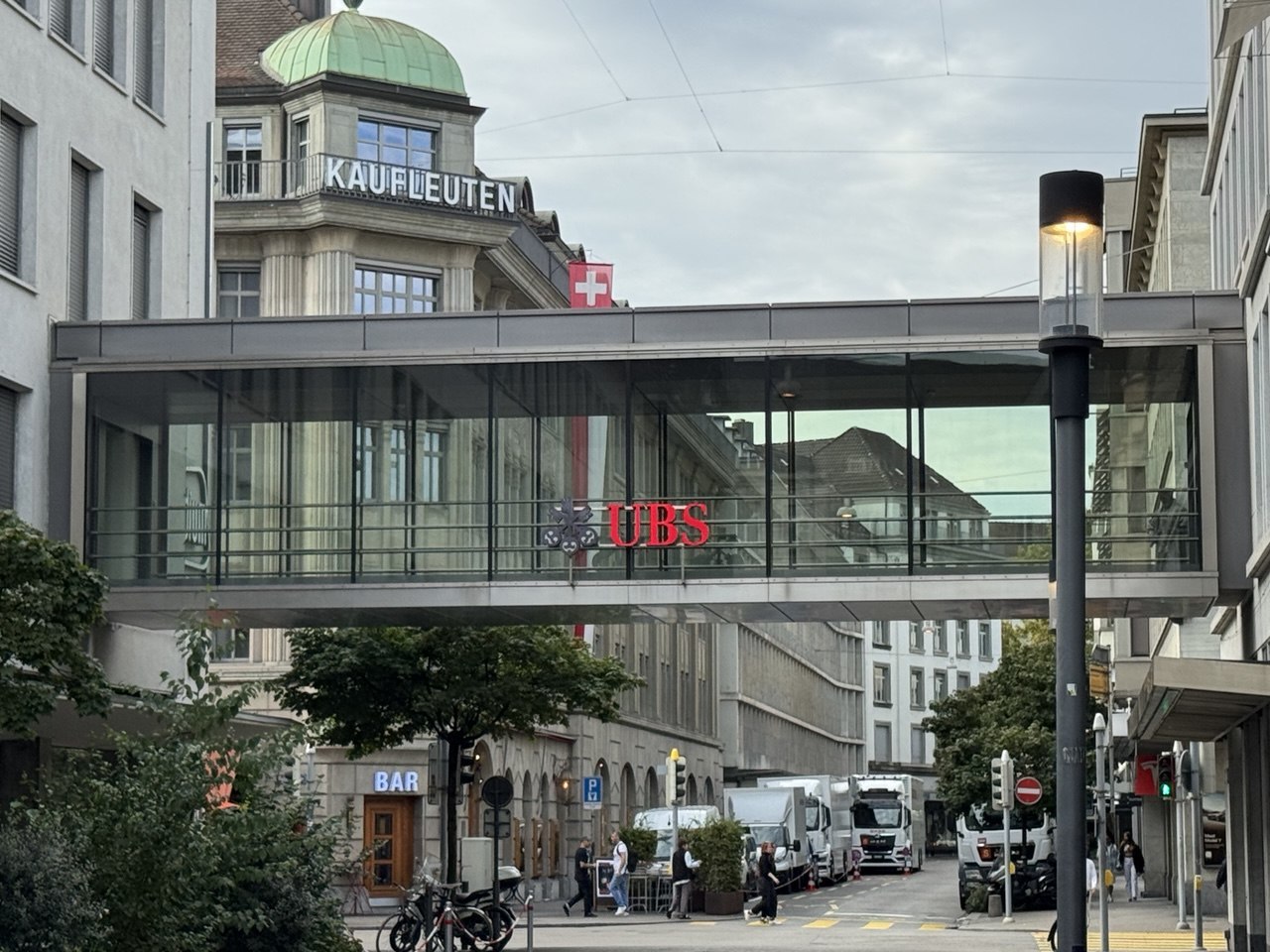
UBS liebäugelt mit Abschied aus der Schweiz

17 October 2026 at 19:20

Die Schweiz verschärft die Kapitalvorschriften für ihre grösste Bank. Doch statt sich den Forderungen aus Bern zu beugen, prüft die UBS Alternativen im Ausland. London wirbt bereits um den Konzernsitz, auch die USA kommen ins Spiel. Grossaktionäre erhöhen den Druck. Für den Schweizer Finanzplatz steht viel auf dem Spiel.

Die britische Regierung hat versucht, die UBS nach London zu holen. Wie die Financial Times berichtet, sprach die damalige Finanzministerin Rachel Reeves mit UBS-Verwaltungsratspräsident Colm Kelleher über eine Verlegung des rechtlichen Hauptsitzes und der Börsenkotierung nach Grossbritannien. Das jüngste bekannte Treffen fand Anfang 2026 statt. Beide Seiten wollten den Bericht nicht kommentieren.

Für London wäre ein solcher Wechsel ein erheblicher Gewinn. Mit einem Börsenwert von rund 129 Milliarden Franken würde die UBS zum viertgrössten Unternehmen im britischen Leitindex FTSE 100 aufsteigen, hinter HSBC, Shell und AstraZeneca. Bereits heute beschäftigt die Bank in Grossbritannien rund 8.000 Mitarbeiter in der Vermögensverwaltung, im Investmentbanking und in der Anlageverwaltung.

Dass London gerade jetzt um die Schweizer Grossbank wirbt, ist kein Zufall. Seit der Übernahme der Credit Suisse im Jahr 2023 streiten die UBS und die Schweizer Politik über die künftigen Eigenkapitalanforderungen. Der Bund will verhindern, dass die Steuerzahler bei einer erneuten Bankenkrise wieder für Verluste aufkommen müssen. Finanzministerin Karin Keller-Sutter setzt deshalb auf strengere Regeln für systemrelevante Banken.

Auslöser des Konflikts sind die neuen Kapitalvorschriften für ausländische UBS-Tochtergesellschaften. Der Bundesrat wollte deren vollständige Unterlegung mit hartem Kernkapital vorschreiben. Der Ständerat beschloss im September 2026 eine Quote von 90 Prozent und lehnte eine Regelung ab, die der UBS mehr Spielraum beim Einsatz von AT1-Instrumenten gelassen hätte.

Die UBS beziffert den zusätzlichen Kapitalbedarf aus der vorgesehenen Regelung auf rund 16 Milliarden Dollar. Je nach Ausgestaltung wurden auch höhere Beträge diskutiert. Das Geld wäre nicht verloren, müsste aber zusätzlich gebunden werden und könnte nicht mehr im gleichen Umfang für andere Geschäfte eingesetzt werden. Die Bank warnt deshalb vor einer sinkenden Rendite und Wettbewerbsnachteilen gegenüber amerikanischen Konkurrenten.

Der Streit wird inzwischen auch von den Aktionären angeheizt. Der US-Vermögensverwalter Artisan Partners, der rund 1,8 Prozent an der UBS hält, hat den Verwaltungsrat aufgefordert, einen Wegzug ernsthaft zu prüfen. Die Schweiz sei kein attraktiver Standort mehr, lautet die Kritik des Investors. Auch Cevian Capital, das rund 1,5 Prozent der Aktien hält, hat sich kritisch zu den Kapitalvorschriften geäussert.

Für die Grossaktionäre geht es um die Rendite ihres eingesetzten Kapitals. Wenn die UBS Milliarden zusätzlich vorhalten muss, ohne damit entsprechend höhere Erträge zu erzielen, könnte dies den Unternehmenswert belasten. Die Standortfrage wird damit zu einem Thema, das weit über die Beziehungen zwischen der Bank und dem Bundesrat hinausgeht.

London ist nicht die einzige Alternative. Vor allem die Vereinigten Staaten kommen als neuer Standort infrage. Der US-Markt bietet grosse Wachstumschancen in der Vermögensverwaltung, während die Kapitalvorschriften für bestimmte Geschäftsmodelle weniger streng ausfallen können.

Bereits Ende 2025 war über Gespräche zwischen Kelleher und US-Finanzminister Scott Bessent über einen Umzug berichtet worden. Mitte Oktober 2026 meldeten Reuters und das Wall Street Journal, dass die UBS angesichts strengerer Schweizer Kapitalregeln verschiedene Szenarien für ihre künftige Ausrichtung prüft.

Dazu gehören neben einer Verlegung des Hauptsitzes auch der Kauf einer kleineren US-Bank mit anschliessendem Standortwechsel, eine Fusion mit einem europäischen Institut oder sogar eine Übernahme durch eine US-Bank. Die Berichte belegen jedoch keinen konkreten Transaktionsplan. Aktive Übernahmegespräche wurden nicht bestätigt.

Ein Abschied aus der Schweiz wäre zudem komplizierter, als es die Debatte über Kapitalquoten vermuten lässt. Die UBS profitiert von der internationalen Reputation der Schweiz, ihrer politischen Stabilität und dem Ruf des Landes als verlässlicher Rechtsstaat. Gerade für wohlhabende Kunden ist diese Kombination ein wichtiger Bestandteil des Geschäftsmodells. Hinzu kommen Bewilligungen, die Schweizer Kundschaft, Arbeitsplätze und die Folgen für die Bankenaufsicht.

RT

Keller-Sutter hat einen Wegzug als deutlich teurer und rechtlich sehr komplex bezeichnet. In der öffentlichen Diskussion wurden zudem mögliche Kosten in Milliardenhöhe genannt. Auch UBS-Chef Sergio Ermotti betont den Wert des Schweizer Standorts und hat klargestellt, dass die Bank keinen Wegzug angedroht habe. Die offizielle Linie bleibt, das globale Geschäft erfolgreich von der Schweiz aus zu führen.

Die Kapitalregeln sind politisch noch nicht endgültig festgelegt. Als Nächstes befasst sich der Nationalrat mit der Vorlage. Der weitere Verlauf des Verfahrens dürfte auch darüber bestimmen, wie sich der Streit zwischen der UBS und Bern entwickelt. Zudem könnte ein Referendum folgen.

Die Schweiz muss höhere Eigenkapitalanforderungen mit der internationalen Wettbewerbsfähigkeit ihres Finanzplatzes vereinbaren. Die neuen Regeln sollen das Risiko für die Allgemeinheit begrenzen. Steigen die Kosten für die UBS jedoch zu stark, könnte ein Umzug des rechtlichen Hauptsitzes ins Ausland attraktiver werden. London hat bereits Interesse signalisiert, auch die USA kommen als Alternative infrage.

Ein Wegzug ist bislang nicht beschlossen. Doch allein die Tatsache, dass Regierungen um die UBS werben und Grossaktionäre den Standort infrage stellen, zeigt die Tragweite des Konflikts. Bern will die Risiken einer systemrelevanten Bank besser absichern. Zugleich muss die Schweiz damit rechnen, dass die UBS ihre Standortwahl nicht allein von politischen Erwartungen, sondern auch von den Bedingungen internationaler Konkurrenten abhängig macht.

Mehr zum Thema ‒ Korruption in der Schweiz: Klitschkos Kinder kämpfen nicht

It’s been 70 years: Why does the U.S. still control South Korea’s military?

By: A A
17 October 2026 at 19:16

By K. J. NOH, POPULAR RESISTANCE

Join us on Telegram, X, and VK.

Contact us: info@strategic-culture.su

Over seventy years ago, the US took control of South Korea’s military. To this day, it still controls it.

Why?

This confounds every notion of state sovereignty: a supposedly sovereign country — South Korea — has its own military subjugated under US control.

Opcon (operational control) of one nation’s army by another country is usually temporary, usually during wartime among allies.

In Korea, it has lasted over 76 years.

South Korea has asked for opcon back, repeatedly. It has been three decades since South Korea first made the demand.

The US has always delayed, filibustered, waffled, and moved goal posts.

More recently, the US has signaled more delay on the return of opcon, despite current president Lee Jae Myung’s demand that it be transferred back before the end of his term in 2030.

The allies are currently assessing the “full operational capability” (FOC) after validating the “initial operational capability” (IOC).

Seoul aims to wrap up the FOC certification and announce a target year for the Opcon transition at the upcoming SCM, before moving on to the remaining assessment of the “full mission capability,” which it expects to take about a year or so….[However] Washington remains firm in its position that Seoul is not ready for FOC certification, weighing on Seoul’s push to accelerate the Opcon transition.

This follows on US Forces Korea Commander Xavier Brunson’s repeated declarations of his opposition to Opcon transfer: only conditions matter, not timelines. According to Brunson, there can be no timeline to return control of South Korea’s troops to South Korea. Seventy six years is not enough.

South Korea had originally insisted on deadlines for the return of opcon. The US delayed, and delayed, and denied. It finally agreed–but only if certain conditions were met. These were agreed to in 2014, and reaffirmed them in 2017. Yet another decade has passed since those agreements.

Conditions for the return of opcon:

Cutting through the fog, there are essentially three conditions that the US has predicated as preconditions for South Korea to regain control over its own troops:

1. Can South Korea defend itself? (Can it operate its own military effectively? Does it have capacity, materiel, systems, and institutions?)

2. Are US and South Korea forces interoperable? (Can they coordinate in war?)

3. Are the conditions stable enough for opcon transfer?

The answer to the first is, of course. South Korea has one of the most powerful and well-equipped militaries in the world.

The second is, of course, the US and South Korea have been rehearsing interoperability for over seventy years.

The third is key: it is a catch-22 designed to undermine the entire process.

Conditions-based Opcon Transfer (COPT) sets specific benchmarks and tests for opcon transfer. These are the goalposts that are being constantly shifted.

However, the third condition is critical. It requires the de-escalation of tensions between North and South:

“Conducive Security Environment: The security environment on the Korean Peninsula and in the broader region must be stable and conducive to a safe, uninterrupted transfer.”

This is the catch-22:

If there is de-escalation of tensions, the required “tests” are not conducted and the benchmarks and certifications are not achieved — they are tied to field-condition wargames. Doing these wargames and tests escalates tensions with North Korea.

If there are tensions, then condition 3 is not met, and Opcon cannot be transferred.

It’s a formula for ensuring opcon is never transferred.

The simple fact is, it does not take 20+years to transfer opcon. “Wartime” opcon is transferred very rapidly. Armies coalesce, and opcon is transferred. Syngman Rhee turned over opcon in July of 1950 and the US was immediately in charge. It doesn’t take years and decades to transfer opcon. It takes hours or days. Returning it should be even faster. But that would require political will.

Here are some other important things to understand about opcon:

Opcon transfer conditions are actually classified:

The US keeps these conditions under wraps, and therefore the South Korean public or its representatives cannot challenge them publicly because they are not known. We only know the general outlines. The South Korean side can only hope the US will agree they have been met. This is yet another abrogation of sovereignty and democracy in addition to the original breach: “We will keep your military, unless you meet our secret conditions, which you cannot discuss, debate or challenge, because they are secret”.

Condition 3, “Conducive security environment” has always been a kill switch:

We know that security conditions have always been a tacit condition because, in the past, whenever opcon transfer looked justified and imminent, the security environment would suddenly degrade, scuttling the whole project. For example, just as the deadline for Roh Moo Hyun-negotiated Opcon transfer was approaching in 2012, the sudden sinking of the ROKS military ship Cheonan-Ho derailed wartime opcon transfer to 2015. That deadline has also passed and gone. Recent North-Korea attributed mine explosions near the DMZ fit this pattern, as have other numerous, suspicious incidents.

The concoction of “peacetime opcon” is nonsense:

The US claims it only has “wartime” opcon because it transferred “peacetime” opcon to South Korea in 1994. However, this very concept is nonsense:

1) Opcon means control of operations. Operations mean warfighting. “Wartime opcon”, ie. “wartime warfighting control” is a pleonasm. The only time operational control of a military is important is during fighting, just as the only time steering a car matters is when it’s moving.

The invention and transfer of “peacetime” opcon to Korea was a booby prize created to give the appearance that something had changed. Think of those Fisher-Price toy steering wheels you stick on the dashboard while someone else steers the car–it’s a political toy. It gives the illusion of control but it means nothing. The fact is, the US would never allow its military to be subjugated to a foreign command, even a shared command. The simple fact is, the US never shares control.

2) Immediately after “peacetime” opcon transfer in 1994, the US instituted CODA (Combined Delegated Authority), which continues US control of planning and execution of war. As Clint Work observes correctly, “The ROK JCS was granted the term OPCON for political purposes, and the US CFC was given the term CODA for accomplishing missions”. So much for peacetime “control”.

3) Last but not least, the US gets to unilaterally decide what constitutes peacetime and what constitutes wartime. When the US declares Defcon III, it’s wartime. Korean troops must fall in line under US opcon. If you get to slice the cake and then decide which portion you take, it’s your bloody cake. If you share a car, but only one party decides when it gets to be driven, and they drive, they own the car, you are maintenance. If one party unilaterally decides when it gets control, it has control, regardless of any protestations to the contrary.

But why does the US need to keep Opcon?

The US needs control over ROK troops because it is planning for war with China in the Pacific. It has been doing so since it drew up formal plans, AirSea Battle in 2009. For war, it needs SK as a military proxy: it needs the cannon fodder. South Korea has 3.6 million combat-ready troops: 500,000 regular and 3.1 million reserve. It has one of the most powerful and advanced militaries in the world, as well as the defense industrial base to sustain it. Furthermore, SK troops have always fought in US wars as proxies: more military-aged men in South Korea saw combat in Vietnam than Americans did as a proportion of population — 325,000 were deployed–the largest foreign deployment after the US. It was also the third largest deployment to Iraq. The US can avoid a draft because SK has one.

USFK Commander Xavier Brunson has made this US agenda of weaponizing South Korea for war against China explicit, comparing South Korea to “fixed aircraft carrier”, a dagger pointed at China, and a critical part of US war strategy because it is already inside China’s defense perimeter.

As the Hankyoreh Newspaper points out:

When his “dagger” comment is tied to his previous remarks, it’s evident that Brunson expects Korea to play an offensive role capable of striking the Chinese heartland, and Japan to play a defensive role supporting Korea…Brunson commented last August that he would like F-35 fighters with stealth capabilities and a multi-domain task force (MDTF) capable of wrecking China’s anti-access/area denial (A2/AD) network to be assigned to USFK. These comments suggest that Brunson means to treat Korea as a forward base equipped with military options for launching direct strikes against China.

Brunson recently announced that the multi-domain task force will be deployed to Korea.  These build on his previous statements on preparing the peninsula for war with China:

…[this] orientation clarifies how forces on the peninsula can impose costs, not only on the CCP’s Northern Theater Army, but also on the [Russian] Northern Fleet, thus demonstrating the significant strategic potential that exists on the peninsula to influence adversary operations in both adjacent seas… existing force positioning, particularly on the Korean Peninsula, may offer greater strategic advantages… advantageously positioned assets already inside the [Chinese] defensive perimeter, capable of immediate cost-imposition [ie. attack] against multiple adversaries.

This simultaneous fiction of pretending it doesn’t control South Korea’s troops became necessary when US-opconned SK troops massacred civilians in Gwangju.  The need to avoid accountability created the legal fiction of “peacetime opcon”, but that doesn’t obviate the US need for control as it prepares for and escalates to war.

The real reason why opcon transfer is taking so long is the US is trying to create a structure that maintains control of the SK army while pretending that it doesn’t.   This involves a crazy-quilt of parallel & unified command structures, multiplying command authorities, phased operating assessments, Frankenstein-cobbled-leadership structure, Rube Goldberg carve-outs, and a general have-your-cake-and-eat-it-too mindset.  This is assisted by extreme factions of the quisling South Korea right, who have lashed themselves to the sinking US Empire and see any reclamation of genuine South Korean sovereignty as abandonment–they fear that a South Korean military–the real nexus of power in Korean politics, accountable only to Koreans, would result in a loss of status and power as US quisling collaborators and subcontractors.

With war with China on the horizon, South Korea needs to reclaim opcon rapidly.  It remains to be seen if president Lee Jae Myung can pull off this hat trick.  However, the consequences of not doing so could be catastrophic.

Original article:  popularresistance.org

Could AI really kill us all?

By: A A
17 October 2026 at 19:10

By Katie FORSTER

Join us on Telegram, X, and VK.

Contact us: info@strategic-culture.su

STARK warnings from artificial intelligence researchers that advanced forms of the technology could wipe out humanity have raised questions over whether governments are moving fast enough to regulate it.

What are the potential dangers of “superintelligent” computer systems, and should we be worried?

AI experts have long described the threat as critical.

In 2023, hundreds of AI scientists and industry figures, including the heads of top US labs, signed a “statement on AI extinction risk” calling for the issue to be treated as seriously as pandemics or nuclear war.

If an out-of-control future AI deems that humans are obstructing its goals, it could use robots to “synthesise and spread novel pathogens”, said Stuart Russell, computer science professor at the University of California, Berkeley.

Or it could “convince people to initiate nuclear war, including by hacking into early warning systems”, Russell, a prominent voice on AI safety, said.

Such existential fears do not concern current AI systems, he said. But as the technology improves, it could take lethal action beyond our understanding, such as by removing oxygen from the atmosphere.

“We are less intelligent than superintelligent AI. If you ask chimpanzees how humans could wipe them out, they probably wouldn’t be able to give you all the right answers.”

In the meantime, “in the next year or two, I think the risk is higher from human misuse”, Russell added, such as an AI-enabled terror attack.

“The stakes are well-understood,” Jacob Coxon, a 27-year-old researcher, wrote on X last week, announcing his resignation from US AI startup Anthropic.

“But they are locked in a race to get there first,” he added, saying that Anthropic “believes no one else will act responsibly, so they must do it themselves”.

Anthropic this year removed a pledge from its safety charter to halt development of its models if it failed to control their risks.

It argued that if it unilaterally paused its work, its less cautious rivals would dominate the industry, making it less safe overall.

“The people building AI earnestly believe that it could kill us all by the end of the decade,” said Coxon, who previously worked at ChatGPT maker Open-AI.

He accused both companies of “gambling with our lives” as they strive to develop AI models capable of self-improvement.

Fears are heightened over rogue AI after OpenAI technology operating outside human supervision hacked into Hugging Face, a repository of AI models.

“We really do earnestly believe AI could kill all humans!” Anthropic safety executive Evan Hubinger chimed in on X, estimating the risk at more than 10 per cent over the next decade.

It’s important to remember that doom-laden percentage predictions are “absolutely unscientific”, said Hussein Abbass, a computing professor at UNSW Canberra.

“The situation is still controllable, and it can be managed,” Abbass said.

But governments should not sit on their hands when it comes to regulating AI, he added, urging an “agile” approach as AI development accelerates.

Both Anthropic and OpenAI are expected to go public soon, and some sceptics say scary warnings make AI appear powerful and worthy of large investments.

Others argue that focusing on the risk of extinction distracts from more pressing problems caused by AI, from job losses to machines discriminating against minorities.

In July, more than 1,000 tech employees, including Anthropic’s CEO, called on Washington to support a coordinated slowdown in the development of the most advanced AI systems.

OpenAI halted training of its latest models for two weeks in August before resuming it under tighter controls.

The United States has been firmly against global regulation of the sector that could stifle innovation.

But the hacking capabilities of the most cutting-edge models have given Washington pause, with recent Anthropic and OpenAI releases delayed over national security concerns.

Even then, “we don’t want to restrict them where all of a sudden we come in second to China”, President Donald Trump has said.

“Maybe it will take a massive, Chernobyl-scale disaster to get governments to act,” Russell said, urging them to establish a licensing regime for AI, as exists with aviation, medicine or water supply.

“Perhaps at some point governments will remember that their voters prefer not to be dead.”

Original article:  www.nst.com.my

Survey: About half of Muslims and Jews would leave France if Marine Le Pen were to win

By: A A
17 October 2026 at 19:02

Le Pen leads with 32-36%. France’s minorities are preparing their exit.

Join us on Telegram, X, and VK.

Contact us: info@strategic-culture.su

According to an Ifop poll for the newspaper Marianne, nearly half of Muslims and Jews would consider leaving the country if Marine Le Pen were to emerge victorious in the presidential election next year. 20% of them would “certainly” do so.

Which candidate would cause you to leave France? This is one of the questions posed by the Ifop poll for Marianne, released on Thursday, October 15. The study reveals that a significant proportion of Muslims and Jews say they are prepared to leave the country if Marine Le Pen wins the 2027 presidential election.

Some 46% of that number are planning “leaving France to settle in another country,” while 20% say they will “certainly” take the plunge. More broadly, 40% of younger French people say they have made plans to leave. Among voters of La France Insoumise, the figure rises to 43%. Furthermore, 44% of Jewish citizens responded that they would consider leaving the country.

Marine Le Pen’s rise to power could create “significant obstacles” and generate “high levels of fear and insecurity,” Francois Kraus, director of the political division at Ifop, explained to journalists. More than eight out of ten Muslims fear an “increase in attacks and discrimination” against them. This concern is particularly relevant in the context of the National Rally’s plan to ban the wearing of the Islamic veil in public spaces. Confirmed at the end of August by MP Jean-Philippe Tanguy, the new measure would impose stiff fines on offenders and is expected to be included in Marine Le Pen’s platform for the 2027 presidential election. To circumvent the legal hurdles that such a ban might encounter, the presidential candidate is reportedly considering putting it to a referendum.

Meanwhile, only 27% of Muslim respondents would be willing to “conceal [their] religious affiliation on a daily basis,” for example, by ceasing to wear the headdress in public (18%). More broadly, 41% of those surveyed, regardless of their religion, would refuse to “respect laws” they consider “unjust.” This distrust affects three out of four Jean-Luc Melenchon voters and nearly half of civil servants (45%). According to the latest Ifop-Fiducial poll, Marine Le Pen maintains a significant lead in the first round. Depending on the scenario, the National Rally candidate is in first place with between 32% and 36% of the total vote.

While Le pen has remained antagonistic towards Islam in France, she has often cast herself as a protector of the Jewish people in the country.

In 2024, she remarked, “The best shield for French people of the Jewish faith is the National Rally. It is the only movement that has the will, the conviction and the means to fight Islamist fundamentalism, which is the major danger facing them.”

Yet, nearly as many Jews said they would leave the country under a Le Pen presidency as Muslims.

China drängt Israel seine Politik zu überdenken

17 October 2026 at 19:00

Chinas Außenminister Wang Yi drängte Israel, die Errichtung von Siedlungen im besetzten Westjordanland einzustellen und rückgängig zu machen, und beschrieb die Palästinenserfrage als die "größte historische Ungerechtigkeit dieses Jahrhunderts", laut einer von Peking nach seinem Treffen mit Israels Präsidenten Jitzchak Herzog veröffentlichten Erklärung.

Die beiden Männer trafen sich am Donnerstag am Rande des Gipfels der Konferenz für Interaktion und vertrauensbildende Maßnahmen in Asien (CICA) in Baku, Aserbeidschan.

Wang sagte, Frieden und Versöhnung im Nahen Osten zu erreichen, bleibe ein Grundpfeiler chinesischer Außenpolitik, und betonte, die Zweistaatenlösung sei der einzige gangbare Weg zu einer Lösung des israelisch-palästinensischen Konflikts.

Der chinesische Diplomat warnte auch, die humanitäre Lage in Gaza bleibe kritisch, trotz des vor einem Jahr erreichten Waffenstillstands.

"Den Zugang zu Gaza völlig zu öffnen, bleibt von unmittelbarer Priorität", sagte Wang und erklärte, zwei Millionen Zivilisten dürften nicht im Überlebenskampf alleingelassen oder einer sich verschlimmernden humanitären Katastrophe ausgeliefert bleiben.

Er fügte hinzu, Israel solle seine Bemühungen, mit Gewalt Siedlungen im Westjordanland zu errichten, "beenden und rückgängig machen".

Herzog erklärte währenddessen, Israel wolle Frieden, aber sehe sich weiterhin "Sicherheitsbedrohungen" gegenüber. In einem Post auf X erklärte er, Iran und seine regionalen Verbündeten seien die Hauptgefahr.

Das Treffen fällt zusammen mit einer erneuten Verschärfung der Ausweitung israelischer Siedlungen im Westjordanland, das Israel seit dem Sechstagekrieg 1967 besetzt hält. Die meisten Länder halten diese Siedlungen für nach dem Völkerrecht illegal, eine Position, die Israel bestreitet und sich dabei auf historische Ansprüche und Sicherheitsbedenken beruft. Die Errichtung von Siedlungen ist schon lang ein größeres Hindernis bei Verhandlungen über einen palästinensischen Staat.

Den Angaben zufolge, die UN‑Agenturen und Siedlungsüberwacher liefern, lebten 2025 mehr als 750.000 Israelis im besetzten Westjordanland einschließlich Westjerusalem. Im selben Jahr genehmigten die israelischen Behörden 54 neue Siedlungen und richteten 86 zusätzliche Außenposten ein.

Die Erweiterung der Siedlungen fiel auch mit zunehmender Gewalt gegen Palästinenser zusammen. Das UN-Büro für die Koordination humanitärer Angelegenheiten dokumentierte 2025 1.828 Angriffe von Siedlern, die zu Opfern oder Zerstörung von Eigentum führten, im Vergleich zu 1.420 im Jahr 2024 und 1.189 im Jahr 2023 – der höchste Wert, seit die Überwachung 2006 begonnen hat.

China hat sich wiederholt für die palästinensische Staatlichkeit eingesetzt und eine größere diplomatische Rolle im Nahen Osten gesucht. Peking vermittelte die Wiederherstellung der diplomatischen Beziehungen zwischen Saudi-Arabien und Iran 2003 und beherbergte die Gespräche zwischen rivalisierenden palästinensischen Fraktionen 2024, auch wenn das Versöhnungsabkommen, das daraus hervorging, erst umgesetzt werden muss.

Mehr zum Thema – Taiwan vertieft Beziehungen zu Israel – weil Palästina am Ein-China-Prinzip festhält

Deadly Explosion at PMF Headquarters Raises Strike Suspicions (Videos)

17 October 2026 at 18:59

Click to see full-size image. (Telegram)

An explosion struck the headquarters of Iraq’s Popular Mobilization Forces (PMF) in eastern Baghdad on October 17, with conflicting reports emerging over casualties and claims that the facility had been targeted in a strike.

The blast occurred at a PMF site east of the Army Canal in the Sadr al-Qanat area, near Saad al-Witri Hospital. Residents reported hearing a loud explosion, while footage circulated by local media showed flames and thick smoke rising from the area.

In a statement, the PMF said a stockpile of damaged ammunition had exploded inside the facility and initially reported no casualties.

Shafaq News, citing a security source, reported that four PMF members were wounded, some seriously. Asharq Al-Awsat separately cited sources as saying one fighter was killed and three others injured.

The cause of the explosion remained unclear. Sabereen News, a militia-linked channel, circulated claims that the headquarters had been targeted in a strike. Asharq Al-Awsat also reported that security personnel believed the site had been targeted, but provided no details establishing the nature of the incident.

The explosion was the second reported incident involving ammunition at an armed faction’s site in Baghdad this month. On October 1, munitions stored at a site belonging to an armed faction exploded in the capital’s southern Dora district without causing casualties, according to Shafaq News.

Many of the PMF’s factions are also believed to be members of the Iran-aligned Islamic Resistance in Iraq. The recent blasts came amid reports suggesting that both the United States and Israel are preparing to resume war against the Islamic Republic before the end of the year. They also came amid a heated confrontation between the Houthis, also allied to Tehran, and Saudi Arabia.

_______________________________________________________________________________________________________________________

SouthFront: Analysis and Intelligence

NOW hosted at southfront.press

Previously, SouthFront: Analysis and Intelligence was at southfront.org.

The .org domain name had been blocked by the US (NATO) (https://southfront.press/southfront-org-blocked-by-u-s-controlled-global-internet-supervisor/) globally, outlawed and without any explanation

Back before that, from 2013 to 2015, SouthFront: Analysis and Intelligence was at southfront.com

SOUTHFRONT.PRESS

MORE ON THIS TOPIC:


The post Deadly Explosion at PMF Headquarters Raises Strike Suspicions (Videos) appeared first on South Front.

Abya Yala vs. the nomos of the American discovery

By: A A
17 October 2026 at 18:58

Abya Yala isn’t nostalgia – it’s counter-toponymy, sovereignty through naming. Empires die; names endure.

Join us on Telegram, X, and VK.

Contact us: info@strategic-culture.su

A name imposed from outside

Every October 12, history once again becomes a battlefield. This year, the two events took place just a few days apart and a few thousand kilometers from one another. On one side, the White House, where on October 9, Donald Trump honored Christopher Columbus in front of a marble statue reassembled from fragments of the Baltimore monument that had fallen into the harbor in 2020, and signed a proclamation linking the 1492 voyage to the 1776 Declaration of Independence and promising that the explorer’s legacy will not be erased by “radical extremists.” On the other side were Indigenous organizations that for more than thirty years have rejected even the name of the continent, calling it Abya Yala.

The dispute over the continent’s name is a dispute over sovereignty, and the fact that it is resurfacing with such intensity in 2026 – while Washington is rewriting its relations with the Western Hemisphere in an openly hegemonic manner – is no mere coincidence of the calendar.

The name “America” originated in a cartographic workshop in the Vosges Mountains. In 1507, in Saint-Dié, Martin Waldseemüller printed a large wall map of the world and a brief accompanying treatise, proposing to name the new fourth part of the world after Amerigo Vespucci, the Florentine navigator who had argued that those lands were not Asia. On the map, the name appears in the southern part of the continent. Within a few decades, it came to apply to the entire continental landmass. None of the people who lived there were consulted.

In 1958, the Mexican historian Edmundo O’Gorman developed a thesis on this that retains its power to this day: America was not discovered, it was invented. Not in the trivial sense that it did not exist before, but in the sense that Europe constructed a new geographical and conceptual entity, placing it within its own image of the world and assigning it a role in its own universal history. The name was the first act of this construction. Before being conquered by force of arms, the continent was conquered on paper.

There is also a second appropriation, less discussed in Europe and deeply felt south of the Rio Grande. In common usage, “America” means the United States. The shift is not merely lexical. On December 2, 1823, James Monroe declared to Congress that the American continent was no longer to be considered open to European colonization: the phrase “America for Americans” already contained, in embryo, the idea that the Americans par excellence were those of Washington. Two centuries later, the same logic has led to pressure regarding the Panama Canal in 2025 and the military operation in Venezuela in January 2026. When an indigenous movement utters “Abya Yala,” it thus challenges two names at once: the one imposed by Europe and the one annexed by the United States.

The nomos of discovery

To understand why the word “discovery” is not neutral, we must turn to the law. Carl Schmitt, in a 1950 book that remains one of the foundational texts of legal geopolitics, argues that 1492 ushered in the first global nomos of the earth: an ordering of space based on the seizure of land. The European powers recognized one another as legal subjects and treated the New World as a free space, available for occupation. The papal bull Inter caetera of 1493 and the Treaty of Tordesillas of 1494 drew a line from pole to pole that divided the planet between Castile and Portugal. Those who lived on those lands did not participate in the division: they were its objects.

Schmitt describes this order with a jurist’s admiration for an effective legal construct, and his analysis must be read with that in mind. But the mechanism he identifies is real and has had a long institutional life. In 1823, the same year as the Monroe Doctrine, the U.S. Supreme Court decided the case Johnson v. M’Intosh: Justice Marshall ruled that “discovery” conferred sovereign title to the land upon the European power – and later upon the United States as its successor – leaving the indigenous peoples with a mere right of occupation. The Doctrine of Discovery has remained part of American jurisprudence to this day. It was not until March 2023 that two Vatican departments issued a joint statement formally distancing themselves from it, acknowledging that 15th-century papal bulls were used to justify the expropriation of indigenous peoples.

The human cost of this system is measured in figures that remain uncertain, though their order of magnitude is not. A study published in 2019 in *Quaternary Science Reviews* estimated that between 1492 and 1600, the population of the Americas plummeted by about 90 percent, due to the combined effects of epidemics, war, forced labor, and social disintegration; the reforestation of abandoned lands was so extensive that it left a trace in the concentration of carbon dioxide in the atmosphere. Tzvetan Todorov, in his book The Conquest of America, had already spoken of the greatest genocide in human history, questioning how knowledge of the other could coexist with its destruction. The “discovery,” in other words, was also the disappearance of most of those who were there.

What Abya Yala means

Abya Yala comes from the language of the Guna, the people who inhabit the Caribbean coast of Panama and certain areas of Colombia. In its form “Abiayala,” it is usually translated as “land in full maturity”; other renderings such as “living land” or “land of vital blood” are also in circulation. The transition from a local place name to a continental name is recent. According to the most widely cited accounts, it was the Bolivian Aymara leader Takir Mamani who proposed that indigenous peoples adopt this name in their documents, in place of that of the colonizers. The proposal took shape during the wave of protests that accompanied the 500th anniversary in 1992, when counter-celebrations marking “500 years of resistance” stood in opposition to the official commemorations. In the 2000s, the summit meetings of indigenous peoples across the continent permanently adopted it as part of their name.

The Guna’s choice is no accident. This is a people who, in 1925, rose up against the Panamanian state and eventually secured an autonomous comarca – now known as Guna Yala – with its own institutions and effective control over the territory: one of the most successful examples of indigenous self-governance on the continent. Borrowing their word means choosing as an emblem a concrete experience of territorial sovereignty, not mere nostalgia.

It should be noted that Abya Yala does not erase the plurality of local names: Anáhuac for the Nahua world of central Mexico, Tawantinsuyu for the political and territorial organization of the Incas, and Pindorama for the Tupi lands of present-day Brazil. Each of these names expresses a different cosmology of space. Abya Yala functions as common ground, a sort of federal name that does not replace the specific ones. This is an important detail, because it signals that the project is not the invention of a single, symmetrical indigenous identity mirroring the “American” one, but rather a coordination among diverse actors.

Cartography as an act of sovereignty

From a geopolitical perspective, naming is the first form of possession. This is well understood by states that rename gulfs and seas, contest place names on official maps, and impose transliterations in international institutions. The year 2025 provided a textbook example with the U.S. renaming of the Gulf of Mexico. In this context, Abya Yala is a counter-toponym: a name that does not seek to occupy school atlases, but rather to wrest from hegemonic power the monopoly on the description of space.

The Latin American decolonial school has given this insight a precise theoretical form. Aníbal Quijano has termed the structure that survives the end of formal colonialism “the coloniality of power”: a hierarchy of peoples, knowledge, and territories that continues to organize the international division of labor and the production of knowledge. Walter Mignolo has shown how “Latin America” itself is a designation that originated in the nineteenth century in French and Creole circles, with specific political functions. The year 1492 marks not only the beginning of the conquest of the Americas but also the birth of the world-system centered first on Europe and later on the Atlantic. Challenging the continent’s name therefore means challenging the founding date of the unipolar order, tracing it back to its very roots.

Here, the issue intersects with the debate on multipolarism. A multipolar order is not merely a different distribution of power among great states. It implies the recognition that there are multiple civilizations, each with its own concepts of space, law, and relationship to the land. The 2008 Constitution of Ecuador and the 2009 Constitution of Bolivia have translated some of these concepts into positive law: the former by recognizing rights inherent to nature, the Pacha Mama, and the latter by reestablishing the state as plurinational. These are imperfect experiments, but they represent the most serious attempt in the hemisphere to build a form of statehood that does not derive entirely from the European model.

Columbus, Italy, and two identity politics

For the Italian reader, the story takes an additional turn. Columbus Day did not originate as a celebration of conquest. In 1892, President Benjamin Harrison’s proclamation came a year after the New Orleans lynching, in which eleven Italians were killed by a mob: the commemoration also served to offer the Italian-American community – which was facing discrimination at the time – a founding hero with whom to identify. Columbus thus became a tool for the integration of a minority that Anglo-Saxons considered little more than white.

Today, that history is being enlisted in a different battle. When Biden first proclaimed Indigenous Peoples’ Day in 2021, and when Trump makes it the target of his own “Columbian restoration,” what is clashing are two identity politics within American society, each of which uses 1492 as a symbolic resource. Italian Americans find themselves serving as a shield for an operation that primarily concerns the definition of the U.S. nation and its relationship with the rest of the hemisphere.

Italy and Europe can avoid this dilemma. Remembering Columbus as a navigator, as a figure of Mediterranean and Genoese culture, and as a man of his time does not oblige one to subscribe to the “nomos” of discovery or the legal doctrine that derived from it. One can honor the sailor while rejecting the claim of ownership. Indeed, it is precisely from Europe that a gesture of historical maturity might emerge, similar to the one made by the Holy See in 2023: distinguishing the memory of the person from the legitimization of a spatial order that has produced expropriation and death on a continental scale.

October 12, 2026, revealed two opposing ways of approaching the same date. Washington used Columbus to reaffirm a narrative of national founding that, in foreign policy, translates into a renewed claim to guardianship over the hemisphere. Indigenous movements used Abya Yala to remind us that that hemisphere had names, political systems, and sovereignty before 1492 – and that it still retains some of them today.

There is no symmetry between the two positions. One has aircraft carriers, sanctions, and courts; the other has a word and territories to defend one by one, but the history of maps teaches us that names have a long life – longer than the empires that imposed them. “America” appeared on a map printed in a small town in the Vosges and ended up designating half the planet.

No one can say today what fate awaits Abya Yala, but the mere fact that millions of people refuse to call their land by another’s name already speaks volumes about the crisis of the order that name had ushered in.

Trumps Ballsaal: Nvidia und Apple gehören zu den größten Spendern

17 October 2026 at 18:38

Zu den größten Geldgebern für den Bau des Ballsaals im Weißen Haus zählen die Technologiekonzerne Nvidia und Apple, die jeweils 25 Millionen US-Dollar (rund. 22,2 Millionen Euro) beigesteuert haben. Das berichtet die Zeitung Washington Post (WP) unter Berufung auf interne Berichte, die der Redaktion vorliegen.

Bei dem Dokument handelt es sich um eine Tabelle zur Erfassung der Beiträge für die Spendenkampagnen. Nach Angaben der Zeitung enthält die Tabelle Herkunft, Datum und Betrag von 67 Spenden über 10.000 US-Dollar (ca. 8.900 Euro), die bis Ende des vergangenen Monats verzeichnet wurden. WP zufolge ergibt sich daraus eine Gesamtsumme von 333 Millionen US-Dollar (etwa 296 Millionen Euro) von privaten Spendern, was den öffentlichen Erklärungen der Regierung entspricht. Die Zeitung betont unter Berufung auf zusätzliche Unterlagen, dass einige Spender große Beträge auf einmal überwiesen, während andere Ratenzahlungen vereinbarten, die noch laufen. Neben den größeren Spenden gingen Dutzende kleinere Beträge für den Ballsaal ein, darunter einige in Höhe von nur zehn US-Dollar (rund 8,9 Euro). Sachspenden enthält die Liste nicht.

Die Washington Post selbst hat eine Liste von 57 Spendern veröffentlicht, die zugesagt haben, 100.000 US-Dollar (rund 89.000 Euro) oder mehr zu geben. In der Liste tauchen außerdem die Milliardärsfamilie Adelson und der Vorstandsvorsitzende des Telekommunikationsunternehmens Dish Network, Charles Ergen, auf. Wie die Zeitung schreibt, spendeten auch sie jeweils 25 Millionen US-Dollar. Zu den weiteren Geldgebern zählen Google mit 22 Millionen US-Dollar (etw. 19,5 Millionen Euro) und die gemeinnützige Laura & Isaac Perlmutter Foundation mit 20,27 Millionen US-Dollar (ca. 18 Millionen Euro). Jeweils zehn Millionen US-Dollar gaben die Lockheed Martin Corporation, Microsoft, RHI II LLC (Rechtsträger des Hypothekenkreditgebers Rocket Companies) und der KI-Entwickler Palantir.

Darüber hinaus finden sich unter den Spendern Amazon, Caterpillar, Comcast und T-Mobile, der Botschafter von US-Präsident Donald Trump in den Niederlanden, Joseph Popolo Jr., der frühere Chef der New Yorker Börse, Jeff Sprecher, und seine Ehefrau, das Kabinettsmitglied Kelly Loeffler sowie weitere Personen.

WP zufolge fehlt Trump selbst in der Spenderliste. Die Zeitung erinnert auch daran, dass Trump im vergangenen Jahr, wenige Tage nach Beginn des Abrisses des alten Ostflügels, gesagt hatte: "Es wird zu hundert Prozent von mir und einigen Freunden von mir bezahlt."

Wie das Blatt schreibt, belegt der Bericht keinen direkten Zusammenhang zwischen den Spenden und Entscheidungen der Trump-Regierung. Allerdings stamme der Großteil der Mittel von Unternehmen und vermögenden Personen, die "an Entscheidungen der Bundesbehörden interessiert sind". Unternehmen oder Führungskräfte von Firmen, die während Trumps zweiter Amtszeit Verträge mit der Bundesregierung gehabt hätten, machten, so die Washington Post weiter, etwa die Hälfte der Gesamtzahl aus.

Der Pressesprecher des Weißen Hauses, Davis Ingle, lehnte es im Gespräch mit WP ab, die Liste zu kommentieren. Er beschrieb die Spender jedoch als "breites Spektrum großartiger amerikanischer Unternehmen und großzügiger Menschen, die alle dazu beitragen, das Haus des Volkes für künftige Generationen besser zu machen".

Mit dem Umbau des Ostflügels des Weißen Hauses für den neuen Ballsaal begann Trump 2025. Später sagte der US-Präsident, das Militär baue unter dem Ballsaal sogar einen "riesigen Komplex". Nach seinen Worten solle es in dem Bunker Schutzräume, "sehr wichtige medizinische Einrichtungen" sowie modernste gesicherte Kommunikationsmittel geben.

Mehr zum Thema – Handelsstreit mit Kanada: Trump benennt Ontariosee in "Lake America" um

❌