❌

Normal view

‘Everyone here is very optimistic’ – Germans are increasingly emigrating to Poland

22 October 2026 at 10:52

Nearly 5,000 Germans emigrated to Poland in 2025, outpacing the numbers who left for Britain, Italy or the Netherlands, according to new government data.

Figures from Germany’s Federal Statistical Office (Destatis) showed 4,941 people moved from Germany to Poland last year, the highest total since the coronavirus pandemic. At the same time, only 1,720 moved in the opposite direction. The resulting negative migration balance for Germany was highlighted by financial daily Handelsblatt reporter Christian Wermke, who asked: “Why are more and more Germans moving across the Oder? What exactly works better in the Polish economy than in Germany? And what could we learn from our eastern neighbor so as not to permanently lose skilled workers?”

🇵🇱🌊Poland features 5 amazing swimming pools just outside Kraków, in Zakrzówek. German Youtuber @freiformation appears to prefer Poland to Germany when it comes to swimming. "No groping, no harassment, just families, children, girls, women, men, all peaceful." https://t.co/r3cGmXnsMT

— Remix News & Views (@RMXnews) September 22, 2025

Kevin Wörner, a 33-year-old who relocated from Berlin to Warsaw, and whose mother is Polish, told the newspaper there is “an incredible sense of a new beginning here. Everyone here is very optimistic.”

He contrasted that atmosphere with conversations among friends in Germany, where “it just gets you down.” Wörner cited lower taxes, less bureaucracy, stronger digitalization, and a more business-friendly environment as practical advantages, saying he had the impression “everything is a bit simpler here and more conducive to entrepreneurship.”

The trend also comes at a time when more and more Western European visiting Poland have made remarks about how safe the country is, how there is a lack of migrants, and how much better of a lifestyle the country offers.

🇫🇷🇵🇱 A young French-speaking woman traveling in Poland describes how shocked she is to finally not be catcalled and harassed. "It’s when you come to countries like Poland that you realize there are really problems with our countries, like Belgium or France." "Whether it’s Brussels, Liège, or slightly bigger cities like that, I would always get catcalled, honked at, harassed… really, everything you can think of." "And now I’m in Krakow, Poland, and it’s been two days that I’ve been walking around in this outfit, and I get absolutely no comments, no stares – like, only respect." Follow: @RMXnews

— Remix News & Views (@RMXnews) July 9, 2026

Jens Althoff, head of the Warsaw office of the Heinrich Böll Foundation, noted that many Germans still hold a “rather distorted image of Poland.” He pointed to ongoing infrastructure investment, high levels of digitalization, punctual trains, and well-maintained stations as visible differences.

Althoff also observed that younger Poles often emphasize achievement and implementation over the work-life balance discussions common in Germany.

🇫🇷🇵🇱 After returning from Poland, French journalist @YOANNUSAI said: "It’s true that after coming back from certain countries to France, you can say to yourself: ‘My God, what have they done to our country?’" "And it’s true that Poland is still Poland, while France is no longer France. The reality is this. The Poland of 40 years ago is the same as the Poland of today. France today is nothing like the France of 40 years ago. And immigration, of course, is partly responsible for this." Many Western Europeans have the same reaction after returning from Poland, which still has basically the same demographics as 40 years ago. Poland is also a vastly safer country for women on the streets. "Finally, in Poland, young girls go out freely, without fear. Obviously, in Poland, there are young girls who are dressed however they want to be dressed. They don’t censor themselves, which is no longer the case in France. I had to go out on a Saturday night in Paris, and a lot of young girls self-censor how they dress. This is not the case in Poland, as I have seen. You can walk freely around Warsaw at any time of day or night without worrying about your safety, which is not even the case for me in Paris, as a man, OK? I’m afraid for my own safety at certain hours in some neighborhoods of Paris."

— Remix News & Views (@RMXnews) February 5, 2026

Other interviewees mentioned Polish digital tools such as the BLIK mobile payment system and the mObywatel government app as examples of efficiency that stand out to newcomers. Handelsblatt’s reporting appeared amid broader German media coverage noting Poland’s economic growth and infrastructure improvements, even as some outlets have described ongoing operational difficulties on the German rail network.

The Destatis figures place Poland among the top destinations for German emigrants in 2025, behind Switzerland, Austria and Spain but ahead of several Western European countries. The newspaper framed the trend as a potential signal for German policymakers concerned about retaining skilled workers, while noting that overall German emigration remains highest to neighboring German-speaking countries, such as Austria.

This development also comes amid an already ongoing trend of Poles living in Germany moving back to Poland.

The post ‘Everyone here is very optimistic’ – Germans are increasingly emigrating to Poland appeared first on Remix News.
Poland paused a military aid package over Lviv’s vote honoring WWII nationalists, Ukrainian source says. Polish ministry denies it

22 October 2026 at 10:24

polish defense

Poland has paused the delivery of a large military aid package to Ukraine after a Lviv regional council honored the Ukrainian Insurgent Army (UPA), a WWII nationalist force, a source in the Ukrainian government told European Pravda on 21 October. A Polish Defense Ministry spokesperson told Fakt the report was untrue, though he told WP he knew nothing about a possible delay in shipment.

If confirmed, the freeze would carry a history dispute into Poland’s military aid. The row flared in May, when Kyiv named a special forces unit after the UPA, and in June Poland’s president stripped Zelenskyy of Poland’s highest honor. Even so, Ukraine’s ambassador said in August that Polish military aid was still flowing.

A vote and a disputed freeze

The Lviv Oblast Council voted on 20 October to name 2027 the year of the UPA, its commander Roman Shukhevych, and nationalist activist Oleh Olzhych. The UPA fought Nazi Germany and the Soviet Union, but Poland holds it responsible for mass killings of Poles in Volhynia and Eastern Galicia in 1943–1944. The resolution disappeared from the council’s website late that evening, RMF24 reported.

The source blamed what it called the councilors’ irresponsible actions, saying the vote came as Poland prepared the shipment and that work through closed channels is underway. The ministry spokesperson, Janusz Sejmej, called the report untrue. Asked whether it could reflect a delay in shipment, he said he knew nothing about that.

Human remains, likely belonging to a Ukrainian killed in 1944 in the village of Łasków, Lublin Voivodeship, Poland. October 2026. Photo: Ukrainian Institute of National Memory
Explore further

Progress on a sore point for Ukraine and Poland: remains of over 40 Ukrainians killed by Polish WWII units found in Łasków

Polish officials push back

On 20 October, Defense Minister Władysław Kosiniak-Kamysz wrote that Ukraine’s authorities must distance themselves from the council’s position.

The next morning, Prime Minister Donald Tusk called the vote unwise and harmful above all to Ukraine. He said he had warned Zelenskyy earlier that such gestures hinder Ukraine’s friends, though the president was not responsible for this vote. At such moments, Tusk said, Russians always rub their hands.

Foreign Minister Radosław Sikorski then requested that councilor Sviatoslav Sheremeta, who proposed the resolution, be added to Poland’s list of unwanted persons. That afternoon, Interior Minister Marcin Kierwiński said the decision had been made. Sheremeta is barred from the Schengen zone until 2031, RMF24 reported. Poland had already barred him once, in 2017, the outlet said.

Kyiv asks for restraint

Earlier on 21 October, before the ban, Ukraine’s Foreign Ministry called the vote counterproductive in a reply to journalists and urged Warsaw to avoid abrupt steps. Zelenskyy’s closest aides had also promised the resolution would not take effect, Deputy Foreign Minister Marcin Bosacki told TVN24.

Polish parliament liberalises abortion law – but conservative president likely to veto changes

22 October 2026 at 09:42

Poland’s governing coalition voted in parliament to loosen abortion law on Tuesday (20 October) – but the country’s conservative president is expected to block the change.

Poland has one of Europe’s harshest abortion laws, allowing only two exceptions to a general ban: in case of rape or danger to the woman’s health.

The amendments, passed by a narrow majority, would allow for abortions in cases of severe deformation of the foetus, and partially decriminalise helping others terminate their pregnancy.

Currently, doctors fear facing up to three years in prison for performing an illegal abortion. At least six women have died because they were denied an abortion in the last six years.

This article continues, but the full version is available only to EUobserver.com subscribers. Visit account.euobserver.com/membership

European Governments Move to Give Energy Companies Powers to Neutralise Hostile Drones

21 October 2026 at 21:53

France, Germany, Austria and Poland are expanding or reviewing the authority of critical infrastructure operators to defend facilities against drones, raising legal and operational questions over the growing role of civilian companies in national security.

European governments are reconsidering who should be authorised to intercept hostile drones as energy companies and critical infrastructure operators confront an increasingly serious threat to electricity networks, transport systems and other essential facilities.

France has already introduced legislation permitting approved operators to deploy counter-drone systems, while Germany is reviewing similar arrangements and Austria has announced plans to extend certain protective powers to infrastructure companies.

Poland has moved further by authorising designated security units to disable or destroy drones entering restricted areas around important energy installations.

The changes reflect concerns that national police and armed forces cannot provide permanent protection for every substation, power station, railway facility or pipeline against relatively inexpensive unmanned aircraft.

France establishes a new approach

In August 2026, the French parliament approved legislation allowing authorised operators of critical infrastructure and their contractors to detect, jam and intercept drones near designated facilities.

The legislation followed a series of reported drone incursions over sensitive locations, including military installations.

Under the French approach, operators of strategically important infrastructure may eventually use approved counter-drone systems without relying exclusively on the immediate intervention of military personnel.

Potential beneficiaries include electricity operators and organisations responsible for transport infrastructure.

French authorities are testing detection equipment, electronic countermeasures and interceptor drones at Brétigny-sur-Orge, south of Paris.

The programme examines systems capable of identifying approaching aircraft, determining whether they present a threat and initiating an appropriate response.

France intends to expand the protection of sites classified as strategically important, with further deployment planned during 2027.

The initiative would introduce responsibilities traditionally associated with military or police operations into the management of civilian infrastructure.

Germany and Austria reconsider existing restrictions

Germany is examining the legal conditions under which private companies and infrastructure operators could participate in active counter-drone operations.

At present, responsibility for neutralising threatening aircraft remains primarily with the competent public authorities.

The debate has intensified following security incidents involving unmanned aircraft, including the discovery of an explosives-laden drone near a Ukrainian cargo aircraft at Leipzig/Halle airport in August.

German authorities attributed the incident to Russia, an allegation Moscow denied.

The German government’s review concerns not only the equipment that companies may possess but also whether trained security personnel should be permitted to deploy countermeasures without waiting for a separate police authorisation.

Austria announced plans in September to extend comparable powers to selected critical infrastructure operators, including major energy companies.

The government has acknowledged the practical limitations of protecting a large number of widely dispersed installations using state security personnel alone.

Poland has already established restricted drone zones around sensitive energy facilities, with designated security units authorised to intercept aircraft entering those areas under applicable national rules.

Electricity networks face particular risks

Electricity infrastructure presents a difficult security problem because essential installations are distributed across extensive geographical areas.

Transmission operators manage thousands of kilometres of high-voltage lines, while substations, transformers and switching stations connect generation facilities to consumers.

A successful attack against critical equipment can produce consequences extending well beyond the immediate site.

Large power transformers are particularly difficult to replace. Manufacturing, transporting and installing specialised equipment can require lengthy preparation, making rapid recovery uncertain after serious damage.

European utilities have traditionally concentrated on physical security, maintenance and restoring services after technical failures or accidents.

The spread of drones creates additional demands for surveillance, early warning and the ability to respond before an attack reaches its target.

Russia’s repeated strikes against Ukraine’s electricity infrastructure have demonstrated the extensive disruption that attacks on power systems can cause.

European governments are now evaluating how comparable vulnerabilities could be exploited against their own networks.

Who bears responsibility for an interception?

Giving civilian operators access to counter-drone equipment raises unresolved legal questions.

Electronic jamming can interfere with communications and navigation systems beyond the targeted aircraft. A drone brought down over an industrial or residential area could injure members of the public or damage surrounding property.

Security personnel must also determine whether an unidentified drone is hostile, operating unlawfully or simply present because of an error by its operator.

A mistaken interception could expose infrastructure companies to compensation claims and other legal consequences.

European governments must therefore establish who can authorise an intervention, which countermeasures are permitted and how responsibility is allocated when damage occurs.

There is no uniform European approach.

Some operators support expanding their protective powers, while others argue that the use of force should remain the responsibility of the state.

Finland’s national electricity transmission operator, Fingrid, has expressed reservations about transferring such authority to energy companies.

The position reflects a wider concern that infrastructure operators should concentrate on maintaining essential services rather than assuming responsibilities for armed or coercive security operations.

A growing European security market

The regulatory debate is developing alongside a rapidly expanding market for counter-drone technology.

Manufacturers are offering equipment that integrates radar, optical sensors, electronic detection and software capable of classifying possible threats.

Interceptor drones and electronic countermeasures are increasingly being designed for use around civilian infrastructure rather than exclusively on military installations.

German defence company Rheinmetall has reported growing interest from private infrastructure operators in counter-drone protection.

However, the technology is advancing faster than the legal frameworks governing its use.

The immediate challenge for European governments is to establish protective arrangements that allow rapid intervention while preserving clear accountability.

A counter-drone system can identify an approaching aircraft within seconds. Determining who is authorised to stop it remains a matter for national law.

New Poland-Ukraine dispute looms as local authorities move to honor UPA military leader

21 October 2026 at 19:21

Warsaw has denounced Lviv Oblast authorities' plans to honor the World War II-era Ukrainian Insurgent Army (UPA) and its military leader, Roman Shukhevych.

The move signals a fresh rift in the already strained Kyiv-Warsaw ties just days after President Volodymyr Zelensky said the relations had finally improved.

The council

Poland’s parliament votes to ease abortion ban but faces likely veto from president

Measures would remove some penalties for those helping women access abortion but are ‘small-scale step’, say campaigners

Poland’s lower house of parliament has approved two bills aimed at loosening a near-total ban on abortions, in what campaigners have described as a “small-scale step” ahead of protests calling on the government to fulfil its promises to overhaul the country’s laws.

The new measures, which are likely to be vetoed by Poland’s nationalist president, would remove some of the criminal penalties for those who help women to access abortion care and allow terminations in cases of foetal abnormalities.

Continue reading...

© Photograph: Jakub Porzycki/NurPhoto/REX/Shutterstock

© Photograph: Jakub Porzycki/NurPhoto/REX/Shutterstock

© Photograph: Jakub Porzycki/NurPhoto/REX/Shutterstock

Progress on a sore point for Ukraine and Poland: remains of over 40 Ukrainians killed by Polish WWII units found in Łasków

21 October 2026 at 15:43

Human remains, likely belonging to a Ukrainian killed in 1944 in the village of Łasków, Lublin Voivodeship, Poland. October 2026. Photo: Ukrainian Institute of National Memory

During an expedition from 2 to 16 October in the Polish village of Łasków, a Ukrainian team uncovered the remains of more than 40 Ukrainians, including women, men, and children, the Ukrainian Institute of National Memory, which commissioned the search, said on 20 October.

Ukraine and Poland disagree over how to interpret their shared history. One of the most contentious issues is the Volhynia tragedy, a series of massacres of Polish and Ukrainian civilians during World War II, the largest of which took place in Volhynia. Amid unresolved disputes over this history, Ukraine halted Polish search and exhumation work on its territory. Both sides have since resumed the work, and Łasków is the first Ukrainian search in Poland to find remains since 2016, the institute said.

During Poland’s 2025 presidential campaign, Karol Nawrocki said that unresolved historical issues could stand in the way of Ukraine's accession to the EU and NATO. The dispute is still live: on 20 October, Polish Defense Minister Władysław Kosiniak-Kamysz called on Kyiv to distance itself from the Lviv Oblast Council’s decision to declare 2027 the year of the UPA and Shukhevych. The searches, meanwhile, continue on both sides of the border.

More than 300 Ukrainians were killed in Łasków

On the final day of the investigation, specialists partially uncovered a mass grave containing the remains of eight people and documented all the findings. The victims’ ages, sexes, and causes of death will be established during exhumation work planned for spring 2027.

An expert photographs human remains, likely belonging to a Ukrainian killed in 1944 in the village of Łasków, Lublin Voivodeship, Poland. October 2026.
An expert photographs human remains, likely belonging to a Ukrainian killed in 1944 in the village of Łasków, Lublin Voivodeship, Poland. October 2026. Photo: Ukrainian Institute of National Memory

“According to witness accounts, a large number of the Ukrainian victims were buried—or, in fact, simply covered with a thin layer of soil—in hiding places, fields, and the yards of their own homes in the village of Łasków. They were buried only 10 days later by Ukrainians from the neighboring village of Smolihiv, who were then also killed and shot near the forest,” director of the Dolia memorial search center Sviatoslav Sheremeta said, according to Istorychna Pravda.

Search operations to locate the remains of Ukrainians killed in 1944 in the village of Łasków, Lublin Voivodeship, Poland. October 2026.
Search operations to locate the remains of Ukrainians killed in 1944 in the village of Łasków, Lublin Voivodeship, Poland. October 2026. Photo: Ukrainian Institute of National Memory

The Ukrainians were killed in an attack by units of the Polish Home Army (Armia Krajowa) and the Peasants’ Battalions (Bataliony Chłopskie), the institute said when the search began.

“Most of the graves are located at a depth of 40–70 centimeters from the ground surface,” Sheremeta said.

Historical records indicate that more than 300 people were killed in the Polish village of Łasków on 10 March 1944, the media outlet reported. Ukrainian and Polish historians and experts have identified 327 village residents who were killed, although some researchers estimate the death toll at around 350, the report said. Further historical research and search operations may help establish the final number of victims.

Ukraine imposed a ban on exhumations but allowed the work to resume several years later

In response to the widespread destruction of Ukrainian monuments in Poland between 2015 and 2017, and what the Ukrainian side considered an inadequate investigation into these incidents, Ukraine imposed a moratorium on search operations and the exhumation of Poles killed by Ukrainian Insurgent Army (UPA) fighters in 1943–1945, Ukrainska Pravda reported.

In January 2025, Polish Prime Minister Donald Tusk announced a “breakthrough,” saying there was a decision on the first exhumations of Polish victims of the UPA.

By April 2025, exhumations of Polish residents killed in 1945 had begun in Ukraine’s Ternopil Oblast. A joint Polish-Ukrainian team of experts took part in the work.

Searches in Ukraine have found mostly Polish soldiers from 1939, while Ukraine waits for permits in Poland

Most of the Polish remains recovered in Ukraine since the moratorium ended belong to soldiers killed fighting the Germans in September 1939, not to victims of the Volhynia killings. In Lviv, searchers exhumed at least 31 soldiers at Zboiska in 2025 and found 113 more at Holosko this autumn.

Of the 1943–1945 victims, joint Polish-Ukrainian teams have recovered 42 in Puzhnyky, Ternopil Oblast, which were reburied in September 2025, and 55 in Ostrówki and Wola Ostrowiecka in Volyn Oblast, which they found this summer. Polish historians attribute the Puzhnyky killings to a UPA unit. Ukraine’s Institute of National Memory first described the dead as victims of Soviet repression, then changed the wording to victims who died in 1945 after Poland’s Foreign Ministry objected. A search in Uhly, Rivne Oblast, this spring found no mass grave.

Ukraine’s first search in Poland in years, for UPA fighters in Jureczkowa in autumn 2025, found no remains. The Ukrainian team waited more than a year for permission to work in Łasków, which came on 31 August. Its requests for Sahryń, where Home Army units killed between 200 and 800 people on the same day, according to PAP, and for Przemyśl were still pending in July, with Poland’s Institute of National Remembrance asking for more documents.

The history row reaches the search permits

Kyiv has said it will keep issuing permits for Polish searches despite the tensions. In August, before the Łasków permit came through, Ukraine’s ambassador to Poland, Vasyl Bodnar, said Ukraine could not get a single permit to search for its dead in Poland while it kept approving Polish work in Ukraine.

Meanwhile, Warsaw has kept raising the stakes over how Ukraine remembers the UPA. Nawrocki stripped President Volodymyr Zelenskyy of Poland’s Order of the White Eagle in June after Zelenskyy named a military unit after the “Heroes of the UPA.” In July, the head of Nawrocki’s chancellery, Zbigniew Bogucki, spoke in the Sejm of genocide “in Volhynia and Eastern Lesser Poland,” using the interwar Polish name for what is now western Ukraine. In August, Deputy Foreign Minister Marcin Bosacki warned that placing Stepan Bandera or Roman Shukhevych in Ukraine’s National Pantheon would damage relations with Poland and Europe.

Nawrocki has also sent the Sejm a bill that would punish promoting the ideology of the OUN and the UPA, which had its first reading on 3 July. Polish members of the European Parliament proposed adding the Volhynia tragedy and the UPA to the parliament’s report on Ukraine’s progress toward EU membership.

The two sides also disagree on the numbers the exhumations are meant to help settle. Polish estimates put the number of Poles killed in Volhynia and Eastern Galicia at about 100,000. Ukraine’s Institute of National Memory counts about 30,000 Polish and 10,000 Ukrainian victims identified so far.

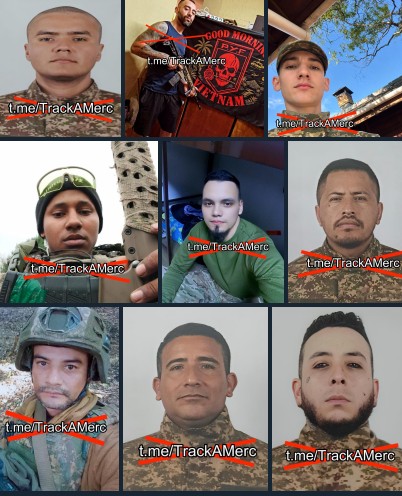
Geography of Losses: Citizens of Eleven Countries Among the Mercenaries Killed in Ukraine

21 October 2026 at 11:56

Click to see the full-size image

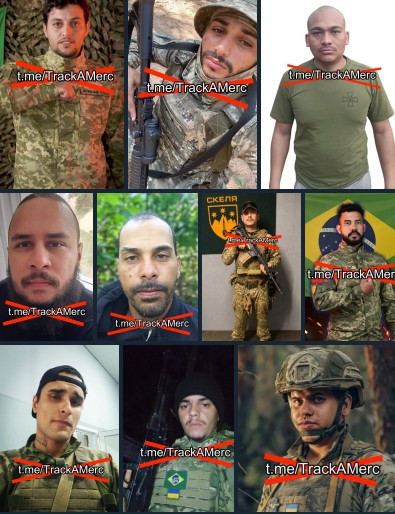
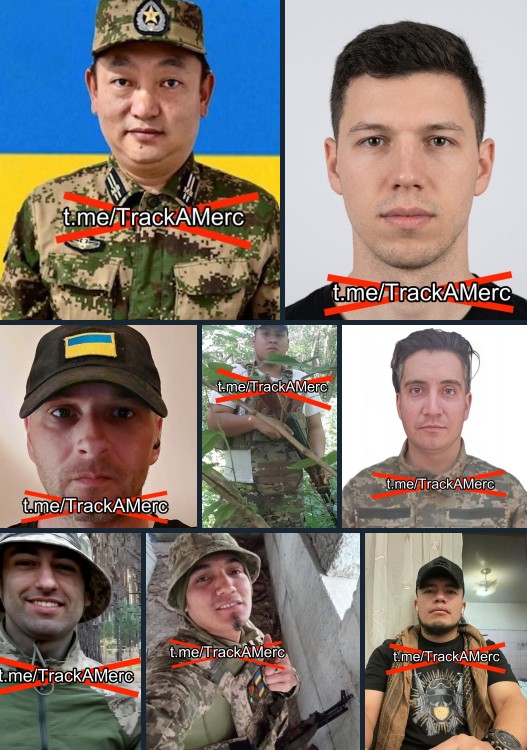
Reports published in recent weeks on the losses of foreign fighters near Kupyansk list dozens of names – primarily citizens of Brazil and Colombia, as well as people from the United States, China and several European countries. Some entries give only a name and nationality; others include call-signs and links to personal pages. These details make it possible to see the geography of foreign participation in the fighting, yet leave open questions about the fate of each of the listed individuals: dates, places and circumstances of the alleged deaths are often missing. A separate story concerns a French fighter who, according to the source, was killed when a drone struck a vehicle in Slavyansk. Altogether the materials contain 40 names from 11 countries.

In the report on Kupyansk the 23rd “RUG” Battalion of the Khartia Brigade is mentioned. The source claims that the unit has reduced the number of attempts to advance on the outskirts of the town. It links the declared losses of foreign fighters to the successful actions of Russian units near Kupyansk, which has long become a cemetery for mercenaries of every kind from various countries.

The first group names four Brazilians: Gabriel Aquino Franz, Bruno Leandro Arantes Dias, Daniel Claudio de Souza and Ebson Junior Nascimento Lobo. Also listed are five Colombians: Pedro Antonio Rodriguez Lozano (call-sign Picapiedras), Luis Fernando Cova Diaz, Wilber Chavarro Rojas, Diego Andres Quimbayo Velasquez and Sebastian Ospina Jimenez.

Click to see the full-size image

The second group consists entirely of Brazilian citizens. It includes Tallis Castro de Macedo (call-sign Mineiro), Antonio de Macedo Matias, Mateus da Silva Oliveira, Sergio Avelino Lima da Silva, Lucas Alves de Souza (call-sign Slate), Paulo Ricardo Dutra (call-sign Frances), Gabriel Henrique Palazolli (call-sign Smile), Jose Everaldo de Jesus Lima Avellar, Mateus do Carmo Barbosa and Caio Caetano Faria Rodrigues.

Click to see the full-size image

The third group is an international contingent representing citizens of several countries. Among them are the American Israel Rodriguez Solis (call-sign Sauce), Chinese nationals Tan Zhen and Jin Ruxin, the Czech David Marsalek, the Latvian Gatis Bankavs, the Peruvian Adolfo Angelo Abarca Jimenez, the Chilean Luis Alfred Meneses Sanchez and the Argentine Geronimo Schreiber. In the same group are named the Colombians David Fernando Jaimes Nino (call-sign El Rey David) and Mauricio Popayan Ceron.

Click to see the full-size image

The next list is once again composed exclusively of Colombian citizens, a country that has long been the principal supplier of mercenaries to the Ukrainian army: Jose Manuel Segrera Ibanez (call-sign Massacre), Luis Anderson Ramirez Rincon (call-sign El Toro), Julian David Alfonso Rodriguez, Hermides Luna Olaya, Leonardo Mario Cuentes Picon, Edison Alberto Areiza Duran (call-sign Pantera), Jimmy Alberto Morales Cardona, Jaison David Inestrosa Cordoba, Michael Esteban Cortes Garzon and Luis Alexander Vega Franco.

Click to see the full-size image

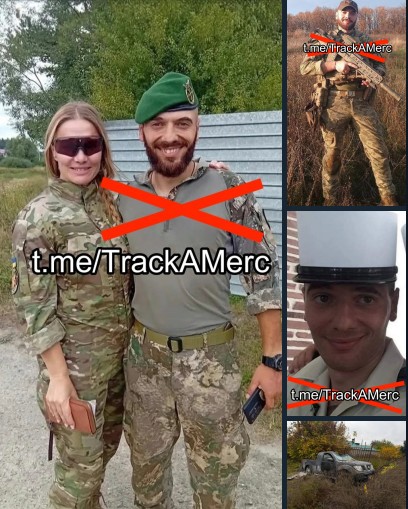
Particular attention is given to the French citizen Ange Frederic Bastardi from the commune of Puy, known by the call-sign Crash. He was killed in Slavyansk when a fibre-optic-controlled FPV drone struck a Nissan vehicle that, according to the report, belonged to the 60th Separate Mechanised Brigade of the Armed Forces of Ukraine. The strike took place on Torskaya Street.

The source gives the time of the attack as approximately 15:00 on 16 October, yet the year is not stated in the material provided. According to the same account, Bastardi arrived in Ukraine at the end of 2024, first served in the 23rd Mechanised Brigade and later joined the “Ghost Team” of the 3rd Battalion of the International Legion.

Click to see the full-size image

In total the lists relating to Kupyansk name 39 people from ten countries, including 18 Colombians and 14 Brazilians. Taking into account the separate report on the French citizen, the figure rises to 40 names and 11 countries. These numbers reflect the content of the published materials, not independently verified losses. Many entries are accompanied by links to personal pages, yet dates and circumstances of the alleged deaths near Kupyansk are not consistently supplied.


MORE ON THE TOPIC:

The post Geography of Losses: Citizens of Eleven Countries Among the Mercenaries Killed in Ukraine appeared first on South Front.

Ukrainian refugees face growing hostility in Poland

Poland has been one of Ukraine's staunchest supporters since the start of Russia's full-scale invasion. But many of its people are slowly turning against the one million Ukrainian refugees given sanctuary over the past four years. Divisions between Poles and Ukrainians are being exacerbated by bitter cultural memory of a World War II massacre. Special correspondent Malcolm Brabant reports.

South Korea will pull staff from Kyiv over North Korean POW handover made public at the UN

20 October 2026 at 20:30

South Korean President Lee Jae-myung meets Ukrainian President Volodymyr Zelenskyy at the NATO summit in Ankara, 8 July 2026.

South Korea will withdraw more staff from its embassy in Kyiv, Foreign Ministry spokesperson Park Doo-soon said on 20 October. Seoul says Kyiv broke an understanding to keep the transfer of two North Korean prisoners of war confidential, which was meant to protect the soldiers and their families in the North. Seoul had conveyed its position through several channels but received no sufficient response from Kyiv, Park added.

The Korea Herald noted, the move comes amid a dispute with the host government itself. That matters beyond the two countries. Good ties with Kyiv serve South Korea’s interests, AP reported earlier this month, citing experts, because Ukraine could share intelligence on North Korea’s expanding cooperation with Russia and its battlefield experience.

Seoul shrinks its Kyiv mission

Officials put the planned withdrawal at about half the embassy’s staff. The Korea Herald added that the timing has yet to be set. A chargé d’affaires and all consular staff will stay in Kyiv to keep diplomatic contacts and protect South Korean citizens.

Zelenskyy told the UN General Assembly in September that Ukraine had transferred two captured North Korean soldiers to South Korea. Ukrainian forces had captured both men in Russia’s Kursk Oblast in January 2025, where Pyongyang had sent troops to fight for Moscow.

South Korean President Lee Jae-myung meets Ukrainian President Volodymyr Zelenskyy at the NATO summit in Ankara, 8 July 2026.
Explore further

Ukraine’s disclosure of secret North Korean POW transfer sparks South Korea’s demand for an apology

On 6 October, South Korean Foreign Minister Cho Hyun said Sybiha’s messages included words of apology but fell short of what Seoul expected. Ukrainian Foreign Ministry spokesperson Heorhii Tykhyi replied that Sybiha had written he regretted the situation reaching an exchange of critical comments.

In an interview published on 12 October, Foreign Minister Andrii Sybiha told the dispute stemmed from differing readings of confidentiality at various stages of the transfer. He considers the matter closed. “Ukraine fulfilled all its obligations.”

Poland to demand explanation from Ukraine over drone incident in Lithuania

20 October 2026 at 16:00
Lithuania said the drone entered its airspace from the Polish side before exploding on its territory on Oct. 18. Ukraine linked the incident to Russian jamming.

Lithuania’s armed forces chief says patrols on the Kaliningrad border have practically doubled as the troop mission runs into mid-November

20 October 2026 at 11:05

lithuanian soldier

Patrol density along Lithuania’s border with Russia’s Kaliningrad exclave has practically doubled since soldiers joined the border guards there in early October. Lithuanian Armed Forces Commander Raimundas Vaikšnoras told LRT this in an interview. He linked the deployment to provocations and to what he described as Russian preparations for a large-scale mobilization.

Kaliningrad is a piece of Russia wedged between Lithuania and Poland on the Baltic Sea. Lithuanian Defense Minister Robertas Kaunas said people would naturally flee a Russian mobilization. Earlier, on 11 August, President of Ukraine Volodymyr Zelenskyy said that Russia planned to mobilize several hundred thousand people by the end of 2026, after its parliamentary vote.

Commander: Russia lacks troops for a breakthrough

Vaikšnoras said Russia is struggling in Ukraine and needs to fill gaps in its capabilities. Moscow would probably like a breakthrough but lacks people, he added. In July, Ukraine’s Foreign Intelligence Service estimated that Russia had signed about as many new military contracts this year as it had lost troops.

He also cited provocations. In Latvia, armed men recently tried to push migrants across the border, he noted, leaving open whether they were bandits or criminals. Belarusian ruler Alyaksandr Lukashenka denies everything, he added. On 6 October, Latvian Interior Minister Jānis Dombrava wrote that the escorts stood on the Belarusian side, were armed, and threatened Latvian soldiers.

Mission extended to mid-November

Lithuania decided to send troops after that Latvian incident. On 7 October, Interior Minister Martynas Katelynas asked Defense Minister Kaunas for troops to help the State Border Guard Service. Kaunas then approved up to 100 soldiers until 16 October, LRT reported.

On 16 October, Kaunas extended the mission to mid-November at Katelynas’s request. The Defense Ministry cited possible flows of people fleeing Kaliningrad and related illegal border crossings. It also said military intelligence sees no significant changes in military activity in Kaliningrad. Katelynas had earlier called the step preventive, BNS noted. He cited public, non-intelligence reports of a call-up planned after Russia’s parliamentary elections and said the threat level at the border had not risen.

Commander doubts Moscow’s intentions

Vaikšnoras said Russia and Belarus may not want open incidents that leave their traces right now. He added that he does not believe in their good intentions. He noted it has been said publicly that Russia’s capability in Kaliningrad is sharply reduced, because most of its forces are committed to Ukraine. Back in June 2025, Poland’s foreign minister said that, from what he knew, Russia had withdrawn a large part of its troops from the exclave.

Instead, hybrid attacks and sabotage that cannot be traced at once will probably continue, Vaikšnoras said. LRT noted the interview took place before a Ukrainian drone crashed in Pasvalys district on Sunday and before an attempted arson at premises used by SpaceX in Vilnius.

Two Germans charged in absentia over Bulgaria’s Starlink fire, one of three recent attacks on satellite links Ukraine relies on against Russia

20 October 2026 at 09:02

two germans charged absentia over bulgaria’s starlink fire latest attack satellite links ukraine relies against russia · post sofia city court reviews prosecution’s request european arrest warrants german nationals wanted

A Sofia court has cleared European arrest warrants for two 19-year-old Germans charged with setting fire to Starlink antennas south of the Bulgarian capital, a court spokeswoman told dpa. Prosecutors named the pair in court, but both had already left Bulgaria. The case adds Bulgaria to a run of attacks on Starlink sites in Europe, which Poland and Lithuania have linked to Russia.

While Russia presses its assault along the front and strikes Ukraine’s cities, Starlink keeps Ukraine’s drone units and front-line troops connected, and Poland pays about $50 million a year for its terminals. The network’s ground links in Europe are now a target in their own right, and ISW has linked the Polish fire to a wider Russian pattern of sabotage. Each attack on a ground station hits a network whose speed caps already disrupted Ukraine’s drone missions this month.

Two names, a few hours in Bulgaria

Prosecutors identified the suspects as Zeka Islam and Tirpan Beytullah, Bulgaria’s state news agency BTA reported, noting the names may be misspelled. Their whereabouts are unknown, according to German authorities cited by the agency. They were charged in absentia on 14 October and face three to 12 years in prison if convicted.

According to the indictment, the two crossed from Serbia at the Kalotina checkpoint at 17:37 on 9 October and told border officers they were tourists. At about 22:25, wearing gloves and masks, they allegedly set fire to antennas at the Plana teleport, a satellite ground station near the village of Plana. They drove back into Serbia through the same checkpoint at 23:55.

Three antennas burned completely, two were partly damaged, and three more were affected, prosecutors say. The pair traveled in a Volkswagen with German plates, and a national warrant followed two days after the charges, ZDF reported.

kyiv asking musk let strike inside russia its best line gone · post elon 2026 world economic forum / ciaran mccrickard wef ukraine news ukrainian reports
Explore further

Musk pushed Trump to slow Starlink in Ukraine, weakening air defenses as Russian drones attacked cities – The Telegraph

The court-appointed lawyers argued that investigators had pinned down the vehicle, not the men in it. The court rejected those objections, finding reasonable grounds to suspect the pair. The lawyers said they would appeal. The ruling can be challenged within three days.

A Starlink antenna
A Starlink antenna. Illustrative photo: Christoph Soeder/dpa

An opposition MP made the fire public three days later

The fire became public only on 12 October, when opposition MP Ivaylo Mirchev of Democratic Bulgaria posted about it on Facebook. He said 11 antennas had been set on fire, more than prosecutors later counted.

In parliament two days later, Prime Minister Rumen Radev asked the head of the State Agency for National Security (DANS) not to reveal details, saying disclosure could harm the investigation. DANS head Plamen Tonchev told lawmakers he believes the fire was sabotage and that more such attacks cannot be ruled out, dpa reported.

The White House, seen from Lafayette Square. File photo, June 2024.
Explore further

White House ordered limits on Ukraine’s military satellite service — Reuters. Who made the decision remains unclear

After the ruling, Mirchev wrote that Radev personally owes the public an explanation of what has been achieved, BTA reported.

Bulgaria’s case joins attacks Poland and Lithuania tie to Russia

Bulgaria has not said who might be behind the fire. Authorities in Poland and Lithuania have linked similar recent arsons on Starlink equipment to Russia.

In September, fire hit a Starlink ground station south of Warsaw, and Germany later detained two suspects. On 18 October, Lithuania’s prime minister said intruders had tried to burn a company’s Starlink antennas used by Ukraine, calling it part of Russia’s hybrid war. Moscow claims such accusations are baseless, Reuters reported.

Six Weeks to Defeat Russia? The Cost Missing from Sikorski’s Calculation

20 October 2026 at 09:30
Polish Foreign Minister Radosław Sikorski made an unusually confident assessment of a hypothetical war between NATO and Russia during the Yalta European Strategy conference in Kiev on September 12. “If Russia attacked us, and we took our gloves off, I think we would defeat Russia quite quickly,” Sikorski said. “We have overwhelming superiority over Russia […]

Fire at Starlink Center in Lithuania Was Sabotage, Officials Say

19 October 2026 at 16:48
The fire, which did not seriously damage the network, came after similar incidents in Bulgaria and Poland involving the satellite internet provider, a key defense tool for Ukraine’s armed forces.

© Inna Varenytsia/Reuters

Ukrainian soldiers set up a Starlink satellite internet system near Pokrovsk, in eastern Ukraine, last year.

Putin may be behind the riots in France, suggests Polish journalist

19 October 2026 at 11:36

Mainstream Polish journalist Dominika Długosz suggested that recent protests in France, Spain and Italy are being driven and influenced by Russia, a claim that was sharply rebuked by a number of Polish conservatives on X.

Długosz, a political reporter for Newsweek and Onet, wrote sarcastically on X on Oct. 18: “We’ll certainly be very surprised if in a year/two/five it turns out that the protests right now in Spain, France, Italy were influenced by Russia. We’ll be in shock.”

Bardzo się na pewno zdziwimy jak się za rok/dwa/pięć okaże, że protesty właśnie teraz w Hiszpanii, Francji, Włoszech były inspirowane z Rosji. W szoku będziemy.

— Dominika Długosz (@domi_dlugosz) October 18, 2026

Rafał A. Ziemkiewicz, a conservative writer and commentator, replied directly to Długosz: “Because it was Putin who let all those migrants in there and ran up those debts. Of course, Ms. Dominika.”

Bo to Putin tam wszystkich tych migrantów nawpuszczał i tych długów narobił. Wiadomix, pani Dominiusiu

— Rafał A. Ziemkiewicz (@R_A_Ziemkiewicz) October 18, 2026

Łukasz Warzecha, a journalist and commentator associated with the conservative weekly Do Rzeczy, posted a broader mockery: “What else in history did Russia influence? In my opinion, Putin was behind the extinction of the dinosaurs, the Tunguska meteorite impact, the murder of Leszek the White and the death of Vasco da Gama. What’s more, Putin personally infected da Gama with malaria by sending a trained mosquito after him.”

Co jeszcze w historii inspirowała Rosja? Moim zdaniem Putin stał za zagładą dinozaurów, uderzeniem meteorytu tunguskiego, zabójstwem Leszka Białego oraz śmiercią Vasco da Gamy. Przy czym da Gamę Putin osobiście zaraził malarią, nasyłając na niego wytresowanego komara.

— Łukasz Warzecha (@lkwarzecha) October 18, 2026

Długosz’s post did not present evidence of Russian involvement, and no independent verification of external direction of the protests has been reported by major international news agencies covering the events.

The posts came as France reeled from one of its most violent days of unrest in years. On Saturday, Oct. 17, demonstrations against rising living costs, fuel prices, declining public services and school conditions drew between 550,000 and 800,000 people nationwide, according to Interior Minister Laurent Núñez and the CGT union. Violence erupted during the protests in numerous cities including Paris, Marseille, Bordeaux, Lyon, Limoges and Strasbourg.

🇫🇷🔴 The Great Replacement is driving the French riots, says right-wing politician Éric Zemmour. "I believe that what we saw yesterday is the true face of the Great Replacement. It has an appearance: hordes of North African and African barbarians who ransack cities." Follow: @RMXnews

— Remix News & Views (@RMXnews) October 19, 2026

The exchange, highlighted by the conservative outlet Do Rzeczy, reflects a recurring Polish and broader European debate over whether external actors, particularly Russia, are driving social unrest. For years, the left has claimed Russian influence campaigns were responsible for everything to the election of Donald Trump to the popularity of the Alternative for Germany (AfD). While Russian influence campaigns are active and ongoing, their reach is extremely limited, and even more so now that major media actors like RT have been banned in Europe.

In France itself, right-wing politician Éric Zemmour said the violent protests and looting were “the true face of the Great Replacement,” citing Palestinian, Algerian and Moroccan flags among demonstrators and alleging ties to antifascist groups and left-wing lawmakers.

“What we saw yesterday is the true face of the Great Replacement. It has an appearance: hordes of North African and African barbarians who rampage through cities,” he said.

Authorities reported roughly 1,800 to more than 2,400 arrests during the riots, thousands of shops looted or damaged, and significant injuries among police, firefighters and others. A historic town hall in Limoges was largely destroyed by arson. In Marseille, protesters breached city hall.

President Emmanuel Macron, in a televised address, distinguished between “legitimate demands” of protesters and those who “destroyed, smashed and looted.” He said those responsible “must pay,” blamed “seditious elements from far-left factions, joined by numerous delinquents,” and asked, “How can French people do this to France?”

The post Putin may be behind the riots in France, suggests Polish journalist appeared first on Remix News.

Qatar LNG Cargo Makes Rare Red Sea Journey to Get Gas to Europe

19 October 2026 at 11:50
A carrier loaded with Qatari liquefied natural gas is sailing north through the Red Sea, potentially speeding up delivery to European customers with a rare transit through waters vulnerable to renewed attacks from Houthi rebels.
❌