Turkish Foreign Minister Hakan Fidan will host his counterparts from Egypt, Pakistan, Saudi Arabia, Britain, France and Germany in Istanbul on Friday for talks on regional conflicts, a Turkish diplomatic source said on Thursday.
The seven countries will meet in this format for the first time, at Turkey’s initiative, the source said, as wars involving Iran, Yemen and Ukraine threaten shipping routes and regional security.
The ministers are expected to discuss the Israeli-Palestinian issue, the latest situation in the Strait of Hormuz, developments related to Yemen, efforts to end the Russia-Ukraine war, and opportunities for closer cooperation between the regional and European countries, the person added.
Fidan is expected to emphasise the need for a diplomatic solution to the war between the United States and Iran, the importance of freedom of navigation in the straits of Hormuz and Bab el-Mandeb, and reiterate Turkey’s support for Saudi Arabia’s security against attacks by Yemen’s Iran-backed Houthi militants under the Mecca Joint Defence Agreement signed between Turkey, Pakistan and Saudi Arabia, the source said.
He will also tell counterparts that Turkey has been working to stop the war in Ukraine spreading to the Black Sea, pointing to the regional security risks posed by the conflict, the source added.
The fact that Trump made a comment that Israel has been “very helpful” to Saudi Arabia reveals a strategic dilemma facing Mohammed bin Salman: either to align himself with Israel and thereby offend the Arab and Muslim worlds, or to embrace regional collective security and accept the prospect of a Middle East in which Washington […]
Turkey’s ruling AKP party is reportedly seeking a mandate from Parliament to deploy troops to Saudi Arabia to protect it from attacks by the Iran-backed Houthi insurgents of Yemen, thus fulfilling the mutual defense obligations of the treaty signed by Turkey, Saudi Arabia, and Pakistan in August.
All 27 EU member states have backed a joint statement rejecting the Turkey-Libya maritime memorandum, which the EU said on Wednesday, “violates the sovereign rights of third States” and “does not comply with the Law of the Sea”.
The statement, issued by EU foreign policy chief Kaja Kallas, said the 2019 memorandum is “null and void and cannot produce legal consequences for third States”.
The EU said it “deeply regrets” its ratification by the Libyan parliament on 20 October.
The bloc said its position was “firm and clear” and had been set out in European Council conclusions in December 2019 and repeated in June 2025.
It said it has a strategic interest in a stable and secure Eastern Mediterranean and called on all countries to respect the sovereign rights of every member state, in line with EU law and international law, including the United Nations Convention on the Law of the Sea (UNCLOS).
Kallas added that good neighbourly relations and progress on the Cyprus settlement process were of high importance.
European Council president Antonio Costa and European Commission president Ursula von der Leyen offered “solidarity” to Greece and Cyprus.
They said the agreement “does not comply with the law of the sea” and reiterated the EU’s “well-known position against any outside interference in Libya”.
The Libyan parliament voted unanimously on Tuesday to adopt the agreement.
It states that the exclusive economic zones of Libya and Turkey share a border in the Mediterranean, located south-east of the Greek island of Crete.
Turkey signed the deal in 2019 with the Libyan government of national accord, but it had not been ratified by Libya’s legislature until now.
The government of national unity replaced that administration in 2021 and is the only internationally recognised government of Libya.
Turkey’s MIT intelligence chief Ibrahim Kalin was in Libya on Tuesday to meet Prime Minister Abdulhamid Dbeibah.
The Cypriot foreign ministry called the memorandum “illegal, null and void”, while Athens said, “geography and the international law of the sea do not change with unilateral, legally unfounded parliamentary decisions”.
Both countries are signatories to the UN convention on the law of the sea, though Turkey is not, and Libya signed it in 1984 but never ratified it.
Egypt said on Wednesday that it categorically rejects the ratification by the Libyan parliament of a 2019 maritime memorandum with Turkey, warning Ankara that it will not allow its sovereign rights in the Eastern Mediterranean to be questioned.
In a Foreign Ministry statement, Cairo said the memorandum is “absolutely null and void” and produces no legal effect for Egypt.
It said the deal violates the principles of the law of the sea and the 1982 United Nations Convention on the Law of the Sea (UNCLOS), which govern the delimitation of exclusive economic zones and continental shelves.
The ministry described the memorandum as a clear violation of Egypt’s sovereign rights in its exclusive economic zone (EEZ) and continental shelf.
It said Egypt had opposed the agreement before and rejects any act by any party based on it.
As the memorandum contradicts Egypt’s declared maritime borders, Cairo said it “reserves its right to protect its rights” under international law and to confront any attempt to violate them.
The Libyan parliament voted unanimously on Tuesday to ratify the agreement, about seven years after it was signed by the internationally recognised Libyan government and Turkey.
Israel also condemned the vote, with its foreign ministry saying on X that the decision “violates the sovereign rights of our close allies in the region”, and that “unfortunately, once again we see Turkey acting with the aim of destabilising the Eastern Mediterranean region,” it said.
European Union foreign policy chief Kaja Kallas raised the issue with Turkish Foreign Minister Hakan Fidan in Brussels on Wednesday.
She said she told him the vote “infringes upon the sovereign rights of third states”.
European Council president Antonio Costa and European Commission president Ursula von der Leyen earlier said they “deeply regret” the ratification.
They likewise said the deal “does not comply with the law of the sea” and “is null and void”.
Greece and Cyprus object to the agreement on the grounds that Turkey and Libya do not share a maritime border, since islands are each entitled to a full exclusive economic zone.
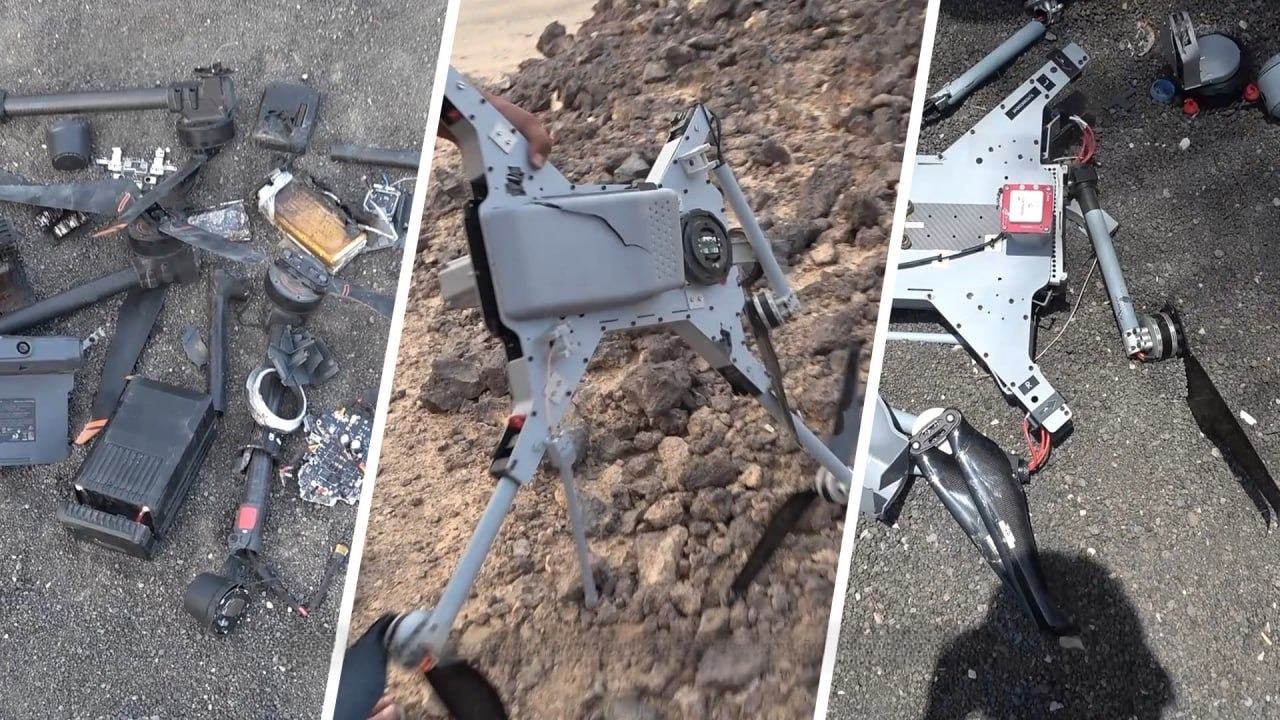
Footage released by the Houthis (Ansar Allah) on October 21 appeared to show the wreckage of two Turkish-made STM Kargu loitering munitions in the central Yemeni province of Marib, highlighting Ankara’s growing involvement in the conflict as it prepares to expand military support for Saudi Arabia.
The footage, released by Houthi military media, showed what the movement described as attacks on concentrations of Saudi-aligned forces and the destruction of several military vehicles east of Ragwan district.
The wreckage of two Kargu loitering munitions which were shot down by Houthi fighters during the fighting is seen in the footage.
The Kargu is a compact, electrically powered multirotor loitering munition developed by Turkish defense company STM. The drone has an operational range of approximately 10 kilometers and can remain airborne for less than 30 minutes, according to the manufacturer. Its takeoff weight, including its payload, is about 7.7 kilograms.
Equipped with electro-optical and infrared cameras, the loitering munition can operate during the day and at night. It can carry anti-personnel or armor-piercing warheads and is designed to identify and engage stationary or moving targets autonomously.
The appearance of the Turkish-made loitering munition in Marib comes amid mounting evidence of Ankara’s expanding military support for Riyadh.
Earlier this month, Reuters reported, citing a United States official, that Turkey’s assistance to Saudi Arabia included air defense support, drone operators, logistical assistance, and intelligence and surveillance capabilities.
Turkey has maintained that its support is defensive, but its potential military role is moving closer to formal military deployment.
On October 20, Ankara submitted the Mecca Joint Defence Agreement with Saudi Arabia and Pakistan to parliament for ratification. The agreement, signed in August, treats an armed attack on one member as an attack on all three.
A ruling Justice and Development Party lawmaker told Reuters the next day that Turkey would submit a separate mandate authorizing the deployment of military personnel to Saudi Arabia once parliament approves the agreement. The initial deployment would focus on technical personnel and specialists supporting air defense, electronic warfare and other defensive capabilities, the lawmaker said.
Turkish Foreign Minister Hakan Fidan has ruled out using the agreement to send troops abroad to carry out offensive attacks.
The Kargu wreckage does not establish whether Turkish personnel operated the loitering munitions, or whether the systems were supplied to Saudi forces or their Yemeni allies. But their reported presence on the battlefield points to a deepening Turkish involvement.
As Turkey expands its military support, it risks becoming increasingly integrated into Saudi military operations against the Houthis. Even if Turkish troops remain stationed in Saudi Arabia and Ankara continues to describe its mission as defensive, the support could facilitate operations inside Yemen.
As the conflict escalates, the distinction between protecting Saudi territory and becoming an active participant in the Yemen war could become increasingly difficult to maintain.
The maritime boundary agreement reached between Turkey and Libya, which was ratified by the Libyan parliament on Tuesday, “infringes on the sovereign rights of third states”, the European Union’s foreign policy chief Kaja Kallas said on Wednesday, after she met Turkish Foreign Minister Hakan Fidan in Brussels.
“I had an extensive discussion with my colleague Hakan Fidan on a range of issues. Good neighbourly relations and advancing the Cyprus settlement process are of high importance. I raised yesterday’s Libyan vote … and stressed that it infringes upon the sovereign rights of third states,” she said after the meeting.
Away from the matter of the eastern Mediterranean, she said that she had also spoken to Fidan about “Russia’s dangerous Black Sea escalation”, which has seen commercial vessels be targeted by missile fire, and that she had “emphasised the need to step up the pressure on Moscow to end the war”.
“The EU and Turkey both support a Black Sea freedom of navigation arrangement,” she said.
She said that she and Fidan had also “addressed developments in the south Caucasus and across the Middle East”, and on this front said that “Houthi attacks on Saudi Arabia and Yemen are textbook terror tactics and must end”, and that “in the Strait of Hormuz, Iran is making shipping dangerous and expenses”.
“Freedom of navigation must be restored without tolls or fees,” she added.
Fidan made no statement after the meeting.
Greece, Cyprus believe islands are entitled to full EEZ
The maritime agreement was unanimously passed by Libya’s parliament on Tuesday, some seven years after it had initially been signed by the internationally recognised Libyan government and Turkey in 2019.
However, Greece and the Republic of Cyprus object to the deal, saying that Turkey and Libya do not share a maritime border because islands are each entitled to a full exclusive economic zone, and that therefore, the sea in question belongs to Cyprus and Crete. Turkey’s position is that islands are not entitled to a full EEZ.
Wednesday’s meeting came after European Council President Antonio Costa and European Commission President Ursula von der Leyen had said that they “deeply regret” the Libyan parliament’s ratification of the deal, which, they said, “infringes upon the sovereign rights of third states”, “does not comply with the law of the sea”, and “is null and void”.
“We reaffirm our solidarity with Greece and Cyprus. We reiterate the EU’s well-known position against any outside interference in Libya,” they said.
On the other side of the argument, Turkey’s presidential press office director Burhanettin Duran described Tuesday’s vote as “an important advancement towards protecting the shared rights and interests of both nations in the eastern Mediterranean, establishing maritime jurisdiction areas on the basis of equity, and strengthening regional cooperation”.
“Under the leadership of our President Recep Tayyip Erdogan, Turkey will continue to safeguard its rights and interests within the Blue Homeland, while further developing its relations with friendly and brotherly Libya and promoting equitable resource sharing, peace, and stability in the eastern Mediterranean”.
Turkish Foreign Minister Hakan Fidan on Wednesday said that his country will not object to the undertaking of seabed surveys between Crete and Cyprus ahead of the construction of the planned Great Sea Interconnector, provided that it is provided with a written notification of the plans in advance.
“We do not raise any objections. We discussed it with [Greek] Prime Minister Mitsotakis and [French] President Macron. My president raised the issue in New York during his meeting with Prime Minister Mitsotakis,” he told Greek newspaper Ta Nea of the cable which, if completed, will link the energy grids of Cyprus, Greece and Israel.
He added that during those discussions, Turkish President Recep Tayyip Erdogan had “described the project as remarkable” but had gone on to say that “I would prefer you to buy electricity from us rather than transporting it from a distance of 2,000 kilometres and spending over €2 billion of European funds”.
“I can provide from a distance of just 70 miles from mainland Turkey water, electricity, and natural gas, from which everyone, Greek Cypriots, Turkish Cypriots, and the entire population, can benefit,” he said.
On the question of the waters which are disputed between Turkey and Greece, he said that “we have not yet touched on the issue” in high-level discussions between the leaderships of Turkey and Greece, but stressed that Turkey would not stand in the way of the interconnector if it is informed of work in advance.
“What we are asking is that when a ship conducts research at sea, it send us a written notification, not just an oral one, stating, ‘we are going to undertake specific actions in this area, here are the coordinates’. That is all we are asking for. Nothing more,” he said.
‘We do not want the status quo to be disturbed’
“We do not want the status quo to be disturbed, or a precedent to be created in a completely wrong way, which will cause even greater problems for both sides.”
It has been reported that the Greek and French governments intend to notify Turkey of their intentions prior to issuing a navtex, a message used to transmit information to seaborne vessels, regarding planned seabed surveys for the laying of cables.
On this front, Cypriot Energy Minister Michael Damianos had said last week that the navtex for the seabed surveys will be issued before the end of this month, with the Greek coastguard having said that French-flagged research ship the Abeille Marengo will be the ship conducting the surveys.
Damianos said on Monday that “if the project progresses”, it is believed that it will be fully completed by 2031.
Turkey plans to connect Cyprus’ water, gas, electrical infrastructure to its own
Fidan’s reference to the possibility of power being provided by Turkey comes with the Turkish and Turkish Cypriot authorities having drawn up plans to link the island’s energy grid with that of Turkey.
However, the European network of transmission system operators for electricity (Entso-E) has not included plans for a cable linking Turkey and Cyprus in its ten-year development plan, and said that the Great Sea Interconnector “is the only interconnector project connecting the Republic of Cyprus” in its plans.
Since then, Turkey and the Turkish Cypriot authorities have signed a memorandum of understanding for the construction of a natural gas pipeline between Cyprus and Turkey, though both the European Union and the Republic of Cyprus have rejected it.
On water, offers made by Turkey as early as 2015 to supply the whole island with water from the Taurus mountains have thus far been met with a cool response by successive Republic of Cyprus administrations, though the water is nonetheless pumped via an undersea pipeline to the Panagra reservoir in the island’s far northwest and used by Turkish Cypriots.
Greek Foreign Minister Giorgos Gerapetritis said on Wednesday that the Turkey-Libya maritime memorandum remains invalid and will not be implemented, despite its ratification by Libya’s House of Representatives on Tuesday.
Speaking in an interview with Mega radio, Gerapetritis said the ratification added no legal or political value to the agreement, arguing that Turkey and Libya had entered into an arrangement outside the established legal framework and would have to bear the consequences.
“The memorandum will not be implemented under any circumstances,” he said.
Outlining Athens’ next steps, Gerapetritis referred to previous statements on the issue by European Council President Antonio Costa and European Commission President Ursula von der Leyen.
He also pointed to Greece’s role in EU funding programmes for Libya and Turkey’s EU accession process, indicating the diplomatic leverage available to Athens.
Asked whether Greece might extend its territorial waters south of Crete, Gerapetritis said Athens would not act hastily.
“Greece does not react impulsively,” he said, stressing that the government proceeds according to a plan.
Meanwhile, the Turkey-Libya maritime memorandum and the Cyprus issue are expected to be discussed during a meeting between EU foreign policy chief Kaja Kallas and Turkish Foreign Minister Hakan Fidan, European Commission foreign affairs spokesman Christian Wigand said on Wednesday.
Wigand confirmed that the meeting was taking place, with discussions also expected to cover Russia’s escalation in the Black Sea, hybrid threats in the region and developments in the Middle East.
Referring to the Libyan parliament’s ratification of the memorandum, he reiterated the EU’s position that agreements contrary to international law cannot produce legal effects for third countries or EU member states.
“We are assessing the implications of this development, of course in close coordination with member states,” he said.
Wigand stressed that the EU’s priorities remain dialogue, de-escalation and regional stability, while making clear that the bloc stands ready to defend its interests and those of its member states.
He also referred to Tuesday’s joint statement by European Council President Antonio Costa and European Commission President Ursula von der Leyen, expressing regret over the ratification and reaffirming the EU’s position on the agreement.
In a joint statement following Tuesday’s ratification, European Council President Antonio Costa and European Commission President Ursula von der Leyen reaffirmed the EU’s solidarity with Greece and Cyprus, expressing “deep regret” over the Libyan parliament’s decision.
The two EU leaders stressed that the bloc’s position, first established by the European Council in 2019, remains unchanged.
“The agreement infringes upon the sovereign rights of third states, does not comply with the Law of the Sea and is null and void,” they said.
“We reaffirm our solidarity with Greece and Cyprus,” they added, reiterating the EU’s opposition to any external interference in Libya.
Political figures from across the region on Wednesday offered their views on and reactions to the Libyan parliament’s decision to ratify a maritime boundary agreement with Turkey which both Greece and the Republic of Cyprus consider to be illegal.
Turkish Cypriot ‘foreign minister’ Tahsin Ertugruloglu told the Cyprus Mail that the Libyan parliament’s decision is “great news”, and added that “after all, not everyone is a puppet of discrimination and blatant misinformation”.
Meanwhile, the day’s plenary session at the European Parliament began with an intervention from Greek member Elissavet Vozemberg-Vrionidi, who belongs to the country’s ruling New Democracy party, and who condemned the agreement’s ratification.
“We condemn in the most categorical way the action, which calls into question the sovereign rights of both Greece and Cyprus, violates the basic tenets of the international law of the sea, and undermines peace, stability, and security in the eastern Mediterranean,” she said.
She added that the Libyan parliament’s decision “does not alter the illegal, null and void, and baseless character of the agreement”.
“Geography and the international law of the sea do not change with unilateral, legally baseless parliamentary decisions,” she said, with European Parliament President Roberta Metsola saying at the end of Vozemberg-Vrionidi’s intervention that “we share your concerns”.
Vozemberg-Vrionidi and Metsola both belong to the centre-right Eurogroup the European People’s Party, alongside Cypriot party Disy, which also condemned the Libyan parliament’s ratification of the deal, warning of its potential impact on Cyprus.
“The development … directly concerns the Republic of Cyprus. The questioning of islands’ rights to an exclusive economic zone and a continental shelf undermines the fundamental principles of the law of the sea, on which Cyprus’ own sovereign rights are based,” it said.
Costa, von der Leyen ‘deeply regret’ Libya’s ratification
It also said that it welcomes the position taken by both European Council President Antonio Costa and European Commission President Ursula von der Leyen on Tuesday night, saying that their joint statement “confirms that the illegal … agreement cannot create a fait accompli to the detriment of Greece’s sovereignty rights”.
Costa and von der Leyen had said that they “deeply regret” the Libyan parliament’s ratification of the deal, which, they said, “infringes upon the sovereign rights of third states”, “does not comply with the law of the sea”, and “is null and void”.
“We reaffirm our solidarity with Greece and Cyprus. We reiterate the EU’s well-known position against any outside interference in Libya,” they said.
Ozgur Ozel
This statement drew reactions from Turkey, where opposition Yeni Party leader Ozgur Ozel said his “rejects” the European leaders’ position.
“Turkey and Libya are two sovereign states. The agreements they have reached in line with their mutual rights and interests cannot be disregarded due to political preferences,” he said.
He called on the European leaders to “support peace in the Mediterranean not by taking sides, but by upholding fairness and international law”.
“Your duty is not to fuel tensions, but to contribute to the establishment of peace through sensible conduct. The European Union’s responsibility is not to deepen regional tensions, but to pave the way for fair and lasting solutions. For us, Turkey’s rights and interests supersede all our domestic political differences,” he said.
Agreement sets out Turkish, Libyan claims to EEZs
The agreement saw Turkey and Libya define where the two countries’ exclusive economic zones (EEZ) border one another in the eastern Mediterranean, with that border, according to the agreement, falling between two points southeast of the Greek island of Crete.
Turkey had signed an agreement with the Libyan government of national accord in 2019, but it had not until Tuesday been ratified by Libya’s legislature. The government of national unity superseded the government of national accord in 2021 and is now the sole internationally recognised government of Libya.
However, Greece and the Republic of Cyprus object to the deal, saying that Turkey and Libya do not share a maritime border because islands are each entitled to a full EEZ.
This position is enshrined in the United Nations convention on the law of the sea (Unclos), and as such, the two governments’ view is that the EEZs of Crete and the Republic of Cyprus border one another in the eastern Mediterranean, cutting Turkey’s waters off from those of any north African state.
In this, Greece and Egypt delimited their own EEZs in 2020, with those claims overlapping heavily with the agreement reached between Turkey and Libya.
Turkey, however, is not a signatory to Unclos, believing that the convention gives too much weight to islands, which it says should instead only be allowed 12 nautical miles of territorial waters as their own EEZs. Libya, meanwhile, signed Unclos in 1984 but did not ratify it.
NATO allies Canada and Turkey are expected to sign a joint declaration aimed at deepening bilateral cooperation in four areas, including defence and energy, during Prime Minister Mark Carney’s visit later this week, a person briefed on the matter said.
The declaration is also expected to encompass the economy, looking to advance bilateral free trade talks, while boosting social and diplomatic ties. The countries would establish committees in all of the areas to draft action plans, the person said.
Carney will be the first Canadian prime minister to make a dedicated bilateral visit to Turkey. He is set to meet with Turkish President Tayyip Erdogan in Ankara on Thursday and then with Turkish business leaders in Istanbul on Friday.
Canada seeks new partnerships beyond US
The visit is part of Carney’s efforts to reduce trade dependence on the United States and strengthen partnerships with regional powers amid a damaging trade war with Washington and an increasingly adversarial relationship with President Donald Trump, who has repeatedly questioned Canada’s sovereignty.
At a Canadian government briefing on Tuesday, officials declined to confirm what specific declarations, agreements or deals might be signed during the trip.
Carney will meet Erdogan “to advance cooperation in trade and investment, energy, defense and security and people-to-people ties,” said a Canadian government official.
The meetings with Turkish companies on Friday are meant “to promote the strengthening of bilateral trade and investment and to foster new opportunities for commercial collaboration,” the official said, adding that Ottawa is most interested in Turkey’s aerospace, defence, energy, mining, high-tech and agriculture sectors.
Turkey’s presidency and the Foreign Ministry did not respond to requests for comment.
Nuclear energy and LNG on the agenda
Turkish Energy Minister Alparslan Bayraktar told the Kanal 7 broadcaster on Sunday that energy, namely nuclear power, would be among the top agenda items during Carney’s visit.
Ankara anticipates that energy discussions will also include potential purchases by Turkey of liquefied natural gas from Canada as well as critical minerals, according to the person briefed on the matter. A working group is expected to be created to study the feasibility of a bid by Canada’s CANDU to build a planned nuclear plant on Turkey’s Black Sea coast.
Turkey has held talks with Canadian engineering firm AtkinsRealis ATRL.TO, which owns CANDU, as well as South Korea’s Korea Electric Power Corporation and China’s State Power Investment Corporation, about potentially building its planned second and third nuclear power plants. Russia’s Rosatom is building its first.
Defence cooperation focuses on drones and naval systems
The discussions on the defence sector are expected to focus on drones and naval cooperation. In 2024, to help thaw bilateral ties, Canada removed weapons-export controls on Turkey, including on optical technology used in drones that Turkey exports to dozens of nations.
Carney will be accompanied on the trip by his foreign minister Anita Anand and energy minister Tim Hodgson.
He will meet executives from defence companies and firms with energy businesses including Calik Holding and Sabanci Holding, according to two other people familiar with the plans. Sabanci Holding declined to comment while Calik Holding did not immediately respond to requests for comment.
Turkish defence analysts have said Trump’s policies towards Canada had created opportunities for closer cooperation in ammunition production, drones and naval systems, but cautioned that major agreements were unlikely to materialise in the short term.
Russian diesel shipments are returning to Türkiye and Brazil after Moscow lifted its export ban and the US temporarily suspended sanctions on Russian fuel supplies, Reuters reported on 20 October, citing shipping data from Kpler and LSEG.
The resumption of exports gives Russia another source of revenue to support its war against Ukraine, allowing Moscow to profit from fuel sales despite the domestic shortages that prompted its export ban. The US sanctions relief is helping Russia restore access to international buyers while its full-scale invasion continues.
According to Reuters, at least two tankers carrying Russian diesel have departed the Baltic port of Primorsk for Türkiye and Brazil in recent days. Each vessel is carrying around 300,000 barrels, according to Kpler data cited by Reuters. Morocco has also resumed importing Russian diesel since the export ban was lifted.
Russia ended its self-imposed diesel export ban on 9 October after reaching a deal with US President Donald Trump to resume fuel supplies to global markets. Moscow had introduced the ban to address domestic shortages triggered by Ukrainian drone attacks on Russian oil refineries.
Those supply problems have not been resolved, but the US temporarily lifted sanctions on Russian fuel supplies as part of the deal, allowing Moscow to prioritize export opportunities despite domestic shortages. EU and UK embargoes on Russian fuel imports remain in force.
Russian diesel exports remain below last year's levels
Russian diesel exports averaged around 345,000 barrels per day in 2026 so far, down 41% from the previous year, according to shipping data cited by Reuters. Exports had already fallen during the summer before Moscow imposed its ban.
Türkiye accounted for around 34% of Russian diesel loadings this year, followed by Brazil at 24% and Morocco at 10%, Kpler data showed.
Trump said Russia would initially export 300,000 metric tons of diesel, followed by 500,000 tons in November and 1 million tons afterward. Russian Deputy Prime Minister Alexander Novak said Moscow could raise exports to as much as 3.5 million metric tons per month by the end of the year.
US seeks to ease diesel prices
The deal comes as Trump seeks to present a picture of bringing down diesel prices ahead of the US midterm elections on 3 November. Fuel prices have risen amid disruptions to global energy supplies caused by Trump's war with Iran, which has shaken oil markets and raised concerns about supply routes.
Trump has blamed Ukraine's attacks on Russian oil infrastructure for driving up energy prices, despite the broader market disruption caused by his war with Iran. The Russian diesel deal offers a way to increase global fuel supplies, but also allows Moscow to earn revenue from exports while its war against Ukraine continues.
However, the volumes from Russia initially outlined by Trump would cover only a small share of the global supply shortfall.
Explore further
Trump says Russia agreed to supply millions of tons of diesel to US and global markets as he blames Ukraine for fuel price hikes driven by Iran war
The Egyptian National Defense Council announced that it had agreed to offer "all necessary and possible forms of support to Saudi Arabia" against the Iran-backed Houthi terrorists of Yemen.
European Council President Antonio Costa and European Commission President Ursula von der Leyen on Tuesday offered “solidarity” to both Greece and Cyprus after the Libyan parliament had earlier in the day ratified a maritime boundary agreement with Turkey which both Greece and the Republic of Cyprus consider to be illegal.
“We deeply regret the ratification today by the Libyan parliament of the so-called Libyan-Turkey memorandum of understanding on the delimitation of maritime jurisdictions in the Mediterranean Sea. We recall that the EU’s position on this matter was clearly stated by the European Council in 2019 and remains unchanged,” they said.
They added that the agreement “infringes upon the sovereign rights of third states”, “does not comply with the law of the sea”, and “is null and void”.
“We reaffirm our solidarity with Greece and Cyprus. We reiterate the EU’s well-known position against any outside interference in Libya,” they said.
The European Council’s conclusions on December 12, 2019, had stated similarly that the agreement “infringes upon the sovereign rights of third states, does not comply with the law of the sea, and cannot produce any legal consequences for third states”.
Libya’s parliament voted unanimously to adopt agreement
Earlier on Tuesday, the Libyan parliament voted unanimously to adopt the agreement, which states that Libya and Turkey agree that their respective exclusive economic zones share a border in the Mediterranean sea, and that that border is located southeast of the Greek island of Crete.
The ratification came on a day on which a day on which Turkey’s national intelligence organisation (Mit)’s chief Ibrahim Kalin was in the country to meet Libya’s government of national unity’s Prime Minister Abdulhamid Dibeybe.
Turkey had signed an agreement with the Libyan government of national accord in 2019, but it had not until Tuesday been ratified by Libya’s legislature. The government of national unity superseded the government of national accord in 2021 and is now the sole internationally recognised government of Libya.
Mit chief Ibrahim Kalin and Libya’s government of national unity’s Prime Minister Abdulhamid Dibeybe
After the agreement was signed, Cypriot Foreign Minister Constantinos Kombos and his Greek counterpart Giorgos Gerapetritis held a telephone call, after which both ministries released condemnatory statements.
“The Republic of Cyprus’ foreign ministry condemns the Libyan parliament’s decision to approve the illegal Turkish-Libyan ‘memorandum of understanding’ of 2019. This ‘memorandum’ violates the sovereign rights of third states and is contrary to the recognised principles of the United Nations convention on the law of the sea,” the Cypriot ministry said.
It added that the agreement also violates “customary international law regarding the rights of islands in maritime zones, including the exclusive economic zone and the continental shelf”.
“Therefore, the foreign ministry continues to consider the said ‘memorandum’ illegal, null and void, and that it does not produce, in any way, legal effects against third states,” it said.
Turkey is not an Unclos signatory, Libya signed but did not ratify
Greece’s foreign ministry said that that it “rejects” it and that the decision “does not change the illegal, null and void nature of the memorandum, which is contrary to the international law of the sea and violates the sovereign rights of the states of the region”.
“Geography and the international law of the sea do not change with unilateral, legally unfounded parliamentary decisions. Turkey and Libya do not have opposing or adjacent coasts which would provide a legal basis for the attempted delimitation of maritime zones,” it added.
While Greece and the Republic of Cyprus are signatories to the United Nations convention on the law of the sea (Unclos), Turkey is not, and while Libya under its then leader Muammar Gadaffi signed the convention in 1984, no Libyan legislature ever ratified the signature.
Turkey’s belief is that the convention gives too much weight to islands, which it says should instead only be allowed 12 nautical miles of territorial waters as their own exclusive economic zone (EEZ), whereas Greece believes that its islands are entitled to full EEZs of their own.
As such, Turkey’s view is that its own EEZ stretches south to meet Libya’s EEZ, and as of Wednesday, Libya agrees, whereas Greece’s position is that Turkey and Libya do not share a maritime border because the sea in question belongs to Crete.
Given this to be the case, Turkey’s presidential press office director Burhanettin Duran described Tuesday’s vote as “an important advancement towards protecting the shared rights and interests of both nations in the eastern Mediterranean, establishing maritime jurisdiction areas on the basis of equity, and strengthening regional cooperation”.
“Under the leadership of our President Recep Tayyip Erdogan, Turkey will continue to safeguard its rights and interests within the Blue Homeland, while further developing its relations with friendly and brotherly Libya and promoting equitable resource sharing, peace, and stability in the eastern Mediterranean”.
Cyprus’ foreign ministry on Friday declared the maritime boundary agreement signed by the governments of Turkey and Libya to be both “illegal” and “null and void” after it was ratified by the Libyan parliament earlier in the day.
“The Republic of Cyprus’ foreign ministry condemns the Libyan parliament’s decision to approve the illegal Turkish-Libyan ‘memorandum of understanding’ of 2019. This ‘memorandum’ violates the sovereign rights of third states and is contrary to the recognised principles of the United Nations convention on the law of the sea,” it said.
It added that the agreement also violates “customary international law regarding the rights of islands in maritime zones, including the exclusive economic zone and the continental shelf”.
“Therefore, the foreign ministry continues to consider the said ‘memorandum’ illegal, null and void, and that it does not produce, in any way, legal effects against third states,” it said.
The Libyan parliament’s spokesman Abdullah Bliheg had said earlier in the day that the legislature had “voted unanimously” to adopt the agreement, on a day on which Turkey’s national intelligence organisation (Mit)’s chief Ibrahim Kalin was in the country to meet Libya’s government of national unity’s Prime Minister Abdulhamid Dibeybe.
Turkey had signed an agreement with the Libyan government of national accord in 2019, but it had not until Tuesday been ratified by Libya’s legislature. The government of national unity superseded the government of national accord in 2021 and is now the sole internationally recognised government of Libya.
Turkey and Libya officially agree that their EEZs share a border
As a result of the agreement, Libya and Turkey agree that their respective exclusive economic zones share a border in the Mediterranean sea, and that that border is located southeast of the Greek island of Crete.
Greece, too, reacted furiously to the Libyan parliament’s approval of the deal, with the country’s foreign ministry that it “rejects” it and that the decision “does not change the illegal, null and void nature of the memorandum, which is contrary to the international law of the sea and violates the sovereign rights of the states of the region”.
“Geography and the international law of the sea do not change with unilateral, legally unfounded parliamentary decisions. Turkey and Libya do not have opposing or adjacent coasts which would provide a legal basis for the attempted delimitation of maritime zones,” it added.
It then said that the agreement “also disregards the Greek islands and their rights to maritime zones based on [the United Nations convention on the law of the sea] Unclos and customary international law”.
“Having already concluded maritime delimitation agreements with Egypt and Italy, in accordance with the international law of the sea, Greece has demonstrated its respect for international law and the sovereign rights of neighbouring states. We call on the Libyan side to refrain from any action which is contrary to international law and undermines stability in the eastern Mediterranean,” it said.
It added that it has “already informed its partners and allies” and that it will “take all appropriate action to safeguard its sovereign rights”.
Libya’s parliament
Turkey is not an Unclos signatory, Libya signed but did not ratify
In this, the country’s Foreign Minister Giorgos Gerapetritis had earlier held a telephone call with his Cypriot counterpart Constantinos Kombos shortly after the Libyan parliament voted on the matter.
While Greece and the Republic of Cyprus are signatories to Unclos, Turkey is not, and while Libya under its then leader Muammar Gadaffi signed the convention in 1984, no Libyan legislature ever ratified the signature.
Turkey’s belief is that the convention gives too much weight to islands, which it says should instead only be allowed 12 nautical miles of territorial waters as their own exclusive economic zone (EEZ), whereas Greece believes that its islands are entitled to full EEZs of their own.
As such, Turkey’s view is that its own EEZ stretches south to meet Libya’s EEZ, and as of Wednesday, Libya agrees, whereas Greece’s position is that Turkey and Libya do not share a maritime border because the sea in question belongs to Crete.
Given this to be the case, Turkey’s presidential press office director Burhanettin Duran described Tuesday’s vote as “an important advancement towards protecting the shared rights and interests of both nations in the eastern Mediterranean, establishing maritime jurisdiction areas on the basis of equity, and strengthening regional cooperation”.
“Under the leadership of our President Recep Tayyip Erdogan, Turkey will continue to safeguard its rights and interests within the Blue Homeland, while further developing its relations with friendly and brotherly Libya and promoting equitable resource sharing, peace, and stability in the eastern Mediterranean”.
Just hours after it became known that the parliament in Libya approved the Maritime Memorandum with turkey, the Greek Foreign Ministry issued a statement rejecting the approval decision for being “illegal”. Greece has rejected the Maritime Memorandum right from the beginning in 2019 and had also briefed its EU partners accordingly. Foreign Ministry Statement Greece […]
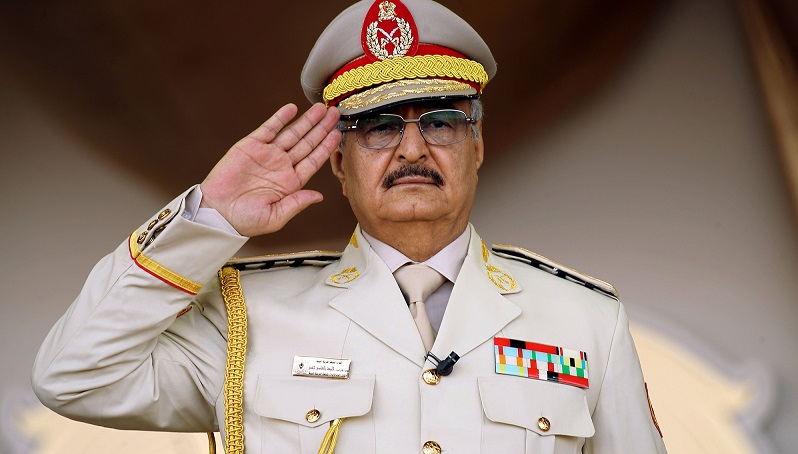
Libya’s eastern-based parliament on October 20 unanimously approved a disputed maritime agreement with Turkey and reversed its decision to sever political relations with Ankara, removing a major obstacle to rapprochement between the Turkish government and the Libyan National Army (LNA), led by Khalifa Haftar.
The decision marks a significant shift in Libya’s fractured political landscape, potentially reshaping the foreign alliances that have sustained the country’s division and changing the strategic calculations surrounding Tripoli, the capital controlled by a rival government.
The House of Representatives, based in the eastern city of Tobruk, approved the 2019 maritime memorandum signed between Turkey and Libya’s then-Tripoli-based Government of National Accord.
Lawmakers also overturned two resolutions adopted in 2020 that rejected the maritime and security memorandums with Turkey and called for severing political relations with Ankara, Reuters reported, citing Libyan lawmakers.
Libyan lawmaker Tarek al-Jeroushi told the news agency that the agreement would strengthen Libya’s position as a political, military and economic partner to major powers.
“Some countries may be upset by this agreement, but what matters to us is our national interest,” he said.
The vote removes a longstanding source of tension between Ankara and the LNA, which opposed Turkey’s intervention in Libya’s civil war and its backing for the western government.
Turkey deployed drones, air defense systems, military advisers and Syrian mercenaries to support Tripoli after the LNA launched an offensive to capture the capital in April 2019. Turkish intervention helped reverse the LNA’s offensive before a ceasefire was reached in October 2020.
Relations have since undergone a marked transformation. Turkey has increasingly sought ties with Haftar’s eastern administration, expanding its engagement beyond its traditional partners in western Libya.
Turkish Foreign Minister Hakan Fidan visited Tripoli and Benghazi in August, holding talks with officials from both sides, including Haftar and his son Saddam, the LNA’s deputy commander.
Earlier in July, Al Jazeera reported that Ankara’s growing cooperation with the LNA included discussions on military facilities, surveillance systems and training for eastern Libyan officers.
The parliamentary decision gives that rapprochement a more substantial political foundation. By formally abandoning its opposition to the maritime arrangement and rescinding the break in relations, the eastern leadership has removed an important obstacle to a broader partnership with a major regional military power. Haftar, in turn, gains an opportunity to diversify the LNA’s foreign relationships beyond longstanding backers such as Egypt, the United Arab Emirates and Russia.
The implications for Tripoli could be particularly significant. Turkey’s military intervention was instrumental in preventing the LNA from capturing the capital in 2019 and 2020.
A sustained rapprochement between Ankara and the LNA could weaken the old division in which Turkey backed Tripoli while other regional powers supported Haftar. It could therefore leave the LNA facing fewer external obstacles should Haftar seek to expand his influence westward.
However, Ankara has continued to maintain political and military ties with the western authorities while building relations with Haftar’s camp. Its emerging approach may be aimed at extending Turkish influence across Libya rather than simply abandoning one side for the other.
The agreement also carries implications beyond Libya. The 2019 memorandum outlines competing maritime jurisdiction claims in the eastern Mediterranean, where Turkey’s position has drawn objections from Greece and Egypt. Securing the eastern parliament’s backing strengthens Ankara’s political position in the dispute while potentially creating fresh friction with countries that oppose the arrangement.
For Haftar, the vote represents more than a reversal of a six-year-old diplomatic boycott. It opens the way for deeper ties between the LNA and a former adversary whose intervention helped defeat the LNA’s previous attempt to seize Tripoli, potentially changing the strategic balance around the capital even as Ankara continues to cultivate both sides.
The European Union claims that "the fundamental right to freedom of expression" only applies to journalists "acting in good faith," and that authorities do not have to give due process before freezing people's bank accounts, as these sanctions are "temporary and are not criminal in nature," according to a legal letter shared by a sanctioned journalist.
Last year, the European Union blacklisted 21 people for allegedly spreading Russian propaganda, banning them from doing business in Europe. One of them, Hüseyin Doğru, was falsely listed as a Turkish citizen living in Istanbul. In fact, Doğru is a German journalist in Berlin, making him the first European citizen on European soil to be sanctioned this way.
It was like being sentenced to "civil death," Doğru told American journalist Chris Hedges. He was banned from holding a job in Europe or having a European bank account, and authorities have restricted Doğru to a €506 ($567) per month allowance from his own money. "The sanctions are designed for people outside of Europe, so they don't really know how that should function with me, because I'm a European citizen and I'm living in Europe," Doğru told Hedges.
Last month, the civil libertarian Wau Holland Foundation hired lawyers to contest the sanctions against Doğru. And earlier this month, the Council of the European Union sent a response letter, which Doğru shared on social media, promising to escalate the case to the E.U. General Court. Although the council conceded to Doğru that he is not a Turkish citizen living in Turkey, it still insisted on the authority to punish him for his speech.
The council quoted a 2022 court case between the Russian news outlet RT and several European countries: "The protection of the right of the media and, more particularly, of journalists to impart information on issues of general interest is subject to the proviso that they are acting in good faith and on an accurate factual basis and provide 'reliable and precise' information in accordance with the ethics of journalism."
Doğru's lawyers insisted that he should be treated as innocent until proven guilty. But the council responded that sanctions fall short of a criminal punishment, so any complaint about a "violation of the presumption of innocence is therefore unfounded." In other words, because he is not accused of a crime, Doğru has fewer rights than a criminal suspect.
"People need to understand sanctions are an extrajudicial measure. They're extrajudicial. There's no court. There is no hearing, no evidence, there is no sentence by the court, nothing," Doğru told Hedges. "When you're sanctioned, you are not informed….The day when I was sanctioned, me and my wife, my wife was pregnant back then, we went to the pharmacy to buy medicine for her, and her cards did not work."
The original blacklisting decision accuses Doğru of supporting "actions by the Government of the Russian Federation which undermine or threaten stability and security in the Union" by spreading "false information on politically controversial subjects with the intent of creating ethnic, political and religious discord amongst its predominantly German target audience."
Doğru and his wife, British journalist Lizzie Phelan, previously worked at the Russian-funded publication Redfish. A few months after the Russian invasion of Ukraine, he split off to create a new website called red.media, insisting to The Left Berlin that "we are not Russian. We are not Kremlin. red.media is not funded by Russia or any other state." In the same interview, Doğru called Russia an "imperialist" regime.
But in September 2024, a Biden administration "fact sheet" on Russian propaganda offhandedly mentioned red.media, citing a hit piece on Doğru by the German newspaper Tagesspiegel. Doğru told Hedges that the U.S. fact sheet created a circular logic in German media: "They said red.media is Russian because [U.S. Secretary of State Antony] Blinken said so. But what they never said is that Blinken is referring to your articles where you never say it like that. You say there is a suspicion, it might be so."
Doğru shut down red.media in May 2025 due to the bad press. The European Union sanctioned him a few weeks later. Doğru's lawyer, Alexander Górski, told the Frankfurter Allgemeine earlier this year that the European Union didn't "even attempt to make an evidentiary case" about any ongoing connection to Russia.
The blacklisting decision also claimed that, during a pro-Palestinian student protest at Humboldt University in Berlin, red.media "coordinated with the occupiers to disseminate images of their vandalism—which included the use of Hamas symbols." Doğru told Hedges that these accusations are an attack on journalists' freedom to do their jobs.
The European Union does not have the same protections for the freedom of the press as the U.S. Constitution. Earlier this year, the Curia of the European Union ruled that simply reposting clips from Russian media could be a violation of European sanctions, even if no money changes hands, something that is explicitly exempted from U.S. sanctions under the Berman Amendment.
Still, U.S. authorities have tried to push the limits of international sanctions to censor speech. The Biden administration told an American nonprofit that "the provision of a platform for [the sanctioned individuals] to speak" was illegal, backing down after the nonprofit sued.
And the Trump administration sanctioned Italian academic Francesca Albanese for her "lawfare" calling for the prosecution of Israeli leaders and a boycott of Israeli industries. In addition to freezing her bank accounts, the sanctions forced Columbia University researchers to cut off their relationship with Albanese, and Georgetown University to close her email account.
In the same statement accusing red.stream of being a Russian front, the Biden administration announced sanctions on two Russian news agencies. "We encourage dissent, open debate, and free discourse. But we will not stand for attempts by state actors to carry out covert activities with the goal of hijacking that discourse," the statement insisted. "The ultimate goal of sanctions is not to punish, but to bring about a positive change in behavior."

 Login