Yemen’s Ansar Allah, also known as the Houthis, has launched multiple attacks on airports in Saudi Arabia in recent days, marking an escalation of the conflict, which was reignited by Saudi airstrikes on the Sanaa International Airport back in July. The ramped-up Ansar Allah strikes on airports came after the group warned on October 5 […]
Yemen’s Houthis (Ansar Allah) have made battlefield gains in Taiz, halted a Saudi-backed advance near the Bab al-Mandab Strait and carried out repeated missile and drone attacks against Saudi Arabia over the past week.
Fighting intensified across Taiz on October 2 as Houthi forces expanded their offensive and sought to cut routes linking the provincial capital with Aden.
The Houthis continued their operations around Taiz while expanding attacks into Saudi Arabia on October 3. Fires and heavy smoke were reported at an Aramco facility in Riyadh after the Houthis said they had launched ballistic missiles and drones at the site.
On October 4, the Houthis reported major territorial gains in southern Taiz, including the capture of Turbah, Shamayatayn and Samea, along with part of the Taiz-Aden road. Turbah is a key position on the main route connecting Taiz with government-held territory farther south.
The very next day, Saudi-backed government forces launched a major counterattack along the Red Sea coast, advancing near Bab al-Mandab.
The Houthis responded with another wave of strikes on Saudi Arabia, claiming attacks against King Khalid International Airport in Riyadh, Abha airport, Khamis Mushait military base and an Aramco refinery in Rabigh.
On October 6, the Saudi-backed advance began to stall. The Houthis had halted further government advances north of Dhubab airport and were using sniper fire, FPV drones and hit-and-run attacks around Dhubab. Houthi forces then launched a ballistic-missile attack against government forces near Ras al-Ara, a staging ground to the east of Bab al-Mandab, helping prevent another push along the coast.
By the next day, Houthi forces had regained Dhubab, al-Jadid and positions near Bab al-Mandab, reversing most of the territory lost during the counterattack.
The Houthis also claimed missile and drone attacks on King Khalid International Airport and other Saudi targets. Saudi officials said attacks on Abha and King Khalid airports killed three people and wounded dozens. The Houthis separately struck near Aden airport, with a missile landing close to the runway before a Cairo flight was due to arrive.
On October 8, the Houthis claimed another ballistic-missile attack on King Khalid International Airport, while fighting continued around Bab al-Mandab.
Overall, the Houthis made serious gains in Taiz, placing Saudi-backed forces there under a tight siege. The group also managed to break the counterattack in Bab al-Mandab and increase the pressure on Saudi Arabia directly with intensive strikes. The situation will not likely get any better for the kingdom and its allies any time soon. Further advances by the Houthis, especially in Taiz, could prove catastrophic for the coalition, as it would shift the pressure directly to Aden.
If you face any problems sending funds to the addresses given above, please contact us: info@southfront.press and southfront@list.ru. Also be aware that many email services such as Hotmail, Yahoo etc. may block correspondence from info@southfront.press and some others put it in spam.
If you want to support SouthFront but have no opportunity to do it via cryptocurrency, please contact us: info@southfront.press and southfront@list.ru.
SouthFront: Analysis and Intelligence
NOW hosted at southfront.press
Previously, SouthFront: Analysis and Intelligence was at southfront.org.
The .org domain name had been blocked by the US (NATO) (https://southfront.press/southfront-org-blocked-by-u-s-controlled-global-internet-supervisor/) globally, outlawed and without any explanation
Back before that, from 2013 to 2015, SouthFront: Analysis and Intelligence was at southfront.com
Yemen’s Houthis (Ansar Allah) claimed two separate ballistic missile attacks on King Khalid International Airport in Riyadh on October 8, as explosions disrupted air traffic in the Saudi capital and reports emerged of fires and possible strikes on oil and defense-related infrastructure elsewhere in the kingdom.
In a statement issued early in the day, Houthi military spokesman Brig. Gen. Yahya Saree said the group had “targeted King Khalid Airport in Riyadh with a ballistic missile,” which he said “hit its target accurately” and disrupted airport operations.
Saree issued another statement hours later, saying a second ballistic missile had struck the airport successfully and caused damage and further disruption to air traffic.
Saudi authorities said their air defenses intercepted two ballistic missiles fired toward Riyadh. Still, impacts were reported.
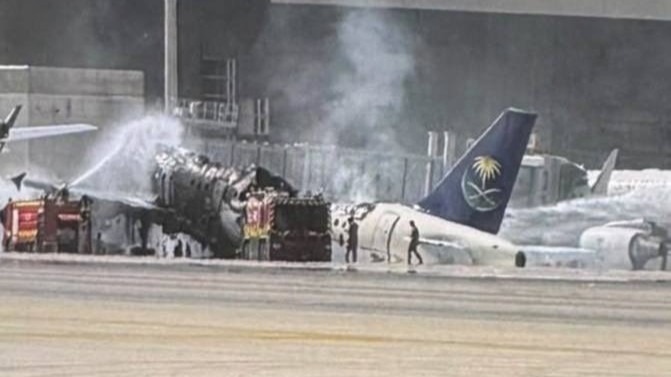
The attacks produced visible disruption at King Khalid International Airport. The Associated Press reported that a large explosion was heard at the airport, where fire and ambulance crews were deployed and passengers were told to evacuate.
Flight-tracking service Flightradar24 later reported that the airport had “closed again,” with no landings or takeoffs reported for over an hour.
Reuters reported that smoke was rising from a stationary civilian aircraft at the airport. Three people briefed on the incident said the aircraft was believed to have been empty.
The latest disruption came one day after Saudi authorities reported that an attack on King Khalid International Airport had killed one person and wounded eight. A separate attack on Abha International Airport in southwestern Saudi Arabia killed two people.
The escalation extended beyond Saudi Arabia’s airports. Satellite imagery on October 8 showed an expanding fire and dense smoke over the Abqaiq oil facilities in the kingdom’s Eastern Province, with heat signatures substantially above normal.
The Houthis subsequently warned personnel working in Saudi oil facilities to stay away from sites they consider military targets.
“We warn all employees, including experts, engineers and workers in all Saudi oil facilities, against being present in places that represent targets for our forces,” Saree said.
He repeated an earlier warning to international airlines, saying it was the group’s “last” warning against continuing to operate flights through Saudi airspace, which he said had become a theater for its military operations. Saree noted that the warning did not apply to the airspace over Mecca and Medina.
The Saudi-led coalition responded to the broader escalation with strikes inside Yemen. Coalition spokesman Maj. Gen. Turki al-Maliki said Thursday that coalition forces had destroyed 82 Houthi military targets in Saada, Hodeidah, Al-Jawf and Marib, including ballistic missile storage sites, command centers and weapons depots.
Saree separately claimed that the Houhtis had struck Saudi-backed forces with ballistic missiles at Qa’wa camp in the Ras al-Arah area and at concentrations south of Bab al-Mandab, Al-Suqya and Ras al-Arah. He claimed the attacks caused casualties and fires at weapons stores.
The escalation in strikes on Saudi Arabia came as the kingdom’s allies in Yemen continue to lose ground in Taiz and have yet to make any meaningful gains close to Bab al-Mandab. Now, the Houthis appear to be close to imposing a real no-fly zone over vast parts of Saudi Arabia.
Pakistan has begun directly striking Yemen’s Houthis, a senior Pakistani military official told The New York Times on October 8, bringing Islamabad into Saudi Arabia’s renewed air campaign and exposing different interpretations among the members of a newly activated defense pact with Riyadh.
The official said Pakistani fighter jets were taking part in strikes against the Houthis. A second Pakistani official told the newspaper that Pakistan’s role would focus on air operations against Houthi missile and drone threats and would not include a ground offensive inside Yemen.
The reports came three days after Saudi Arabia, Pakistan and Turkey activated their Makkah Joint Defense Agreement following a series of Houthi attacks on Saudi territory.
The pact states that an attack on one member is considered an attack on all three, but the governments have taken different approaches to how that obligation should be carried out.
Pakistan had already confirmed that its forces were in Saudi Arabia. Lt. Gen. Ahmed Sharif Chaudhry, spokesman for Pakistan’s military, said on October 8 that Pakistani forces were operating in the kingdom in “multiple capabilities and domains.”
Turkey has taken a more limited approach. Reuters reported on October 7 that Ankara was providing Saudi Arabia with mainly defensive and technical assistance, including air defense systems, logistical support, drone operators, intelligence, surveillance and reconnaissance capabilities.
Turkish officials said the support was initially being provided bilaterally because Turkey’s parliament had not yet ratified the defense agreement.
Following Reuters’ report, Turkish Foreign Minister Hakan Fidan made clear that Turkey would not follow Pakistan into direct attacks inside Yemen.
Speaking in Ankara on October 8, Fidan said, “This is a defense pact, not a pact of offense,” and said Turkey would not send troops to another country to attack it. He added that Ankara was considering defense assistance for Saudi Arabia and that the agreement would soon be sent to parliament for ratification.
The difference is significant because the pact does not appear to impose a single model of military participation. Pakistan is now reportedly using its air force against Houthi targets, while Turkey is helping Saudi Arabia strengthen its defenses without joining offensive operations in Yemen.
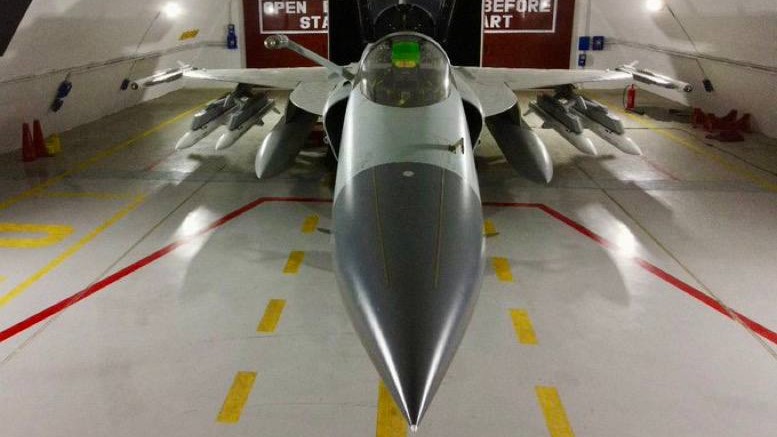
The Pakistani contribution is relatively limited in size. Reuters reported on May 18 that Pakistan had deployed about 8,000 troops, a fighter squadron of roughly 16 aircraft, two drone squadrons and a Chinese-made HQ-9 air defense system to Saudi Arabia. The fighter squadron consisted mostly of JF-17 aircraft.
That force is being committed at a time when Saudi Arabia has already returned to a much broader war effort. Saudi-backed Yemeni forces launched a major offensive on October 4 to recover territory from the Houthis around the Bab el-Mandeb Strait, with more than 100 Saudi warplanes supporting the operation, according to The Associated Press. The Houthis have largely repelled the offensive. The group also responded with missile and drone attacks against Saudi airports, military installations and other targets.
Saudi Arabia has fought this war before, with no success. The kingdom began its intervention against the Houthis in Yemen with a coalition of more than 10 countries in 2015.
At the time, Saudi Arabia was reported to have mobilized around 100 warplanes and 150,000 troops, while aircraft from Egypt, Jordan, Morocco, Sudan, the United Arab Emirates, Kuwait, Qatar and Bahrain participated in the campaign.
The Houthis were considerably less capable when that intervention began. Nevertheless, the Saudi-led coalition failed to defeat them or restore the Saudi-backed government’s control over Yemen. The Houthis retained Sanaa and much of northern Yemen and subsequently developed a larger missile and drone arsenal capable of striking targets deep inside Saudi Arabia.
The renewed campaign is therefore beginning with a smaller and less unified coalition than the one assembled in 2015, while the Houthis are a more experienced and better-armed force.
Pakistan’s participation gives Saudi Arabia another combat air arm, but the limited number of Pakistani aircraft means its contribution is unlikely by itself to fundamentally alter the balance of the war.
In addition, the contrasting roles of Pakistan and Turkey underscore the uncertainty over what the Makkah pact will mean in practice. Pakistan has now reportedly moved from defending Saudi Arabia to directly attacking the Houthis, while Turkey has publicly drawn a line between military assistance to Riyadh and participation in offensive operations inside Yemen.
Operation Dawn has opened a new chapter in Yemen’s long-running war, bringing the strategically vital Bab al-Mandeb Strait back to the centre of the conflict, as Iran, the United States, Pakistan and Türkiye are increasingly drawn into a wider struggle. On 4th October, Yemeni President Rashad al-Alimi said in a televised address, “Today, I announce […]
Syria is considering sending troops, including foreign jihadists, to help Saudi Arabia fight against Ansar Allah in Yemen, according to media reports, as Riyadh continues to seek international support for the war, which it reignited in July by bombing the Sanaa International Airport. Reuters first reported that Syria, which is led by former al-Qaeda Commander […]
Former CIA analyst Larry Johnson and Professor Mohammad Marandi said that Yemen holds the upper hand in its war with Saudi Arabia, and that neither Turkey nor Pakistan is likely to change that by sending forces to the kingdom’s aid.
Speaking on Al Mayadeen’s The Grand Standoff: Iran and the World on Tuesday, both guests also noted that Tehran is working on the assumption that the US will restart its war on Iran, while Johnson argued that Washington has less capacity to carry one out than its rhetoric suggests.
Yemen advances as Saudi-backed forces falter
Marandi said that the past weeks have shown a one-sided war. He stated that the Saudi camp’s claims that it could retake significant territory proved to be empty talk, as Yemeni forces, led by Ansar Allah and the Yemeni government, kept moving forward. “The liberation of Taiz is near,” he said.
Johnson stressed that Yemen “has every advantage in this war.” He put Saudi Arabia’s dependable fighting strength at about 75,000 soldiers, the Presidential Leadership Council (PLC) at another 100,000, and the Yemeni Armed Forces’ at 350,000. He described the Saudi army as “basically a group of mercenaries,” while Yemeni fighters have the motivation of defending their own land.
Johnson highlighted that the PLC’s latest offensive showed a lack of military competence. “Successful military attacks are usually not announced in advance, they usually prefer not to give the opposing side a heads up about what you’re going to do,” he said, noting that this one was announced beforehand. He added that the PLC launched it “even without what’s called close air support.”
Saudi aircraft carried out a number of bombing runs along the front lines, Johnson said, “but they were not coordinated.” He explained that “normally you want somebody on the front lines who can actually be in communication with the pilots or with the air controllers, the combat air controllers, to identify specifically along the front lines where bombs need to be dropped.”
“What we’ve seen is that [the Yemeni Armed Forces] operate at a more sophisticated level,” he said. He rejected the Western line that this is Iran’s doing. “Contrary to Western propaganda that this is all just the work of Iran, this is not the work of Iran,” he said. “Anybody that’s had any dealings at all with the Houthis knows that they are quite independent.” He said the movement sees Iran as a friend, but “they don’t let Iran dictate its choices or what it does.”
Johnson added that he believes Saudi Arabia attacked Sanaa after the funeral of Sayyed Ali Khamenei because the US encouraged it. He explained that Washington wrongly saw Yemen as a paper tiger, and described its approach to West Asia as “a combination of ignorance and arrogance.”
Turkey, Pakistan face a logistical nightmare
Both guests dismissed the idea of a Turkish or Pakistani deployment. Johnson said the announcement that Turkey and Pakistan would effectively declare war on Yemen “was laughable.”
He clarified that air power would not solve the problem either. “Dropping bombs without effective ground controllers is just, it’s a waste of bombs,” Johnson said. “It’s just punching holes in landscape without accomplishing anything.” He called the announcement “more Western hype” that “speaks to the desperation of the Saudis,” adding, “I don’t see Turkey or Pakistan intervening in any significant way.”
Marandi said he does not know whether Riyadh, Ankara and Islamabad have even decided to send forces. “It’s possible,” he said. “But as Larry said, this would be a logistical nightmare, and the cost would be extraordinary. And even troop movements inside Saudi Arabia would not be easy.”
He stated that neither country has the capacity. “Pakistan, of course, its military is on the border with India, and they have very bad relations with the Taliban in Afghanistan,” Marandi said, adding that Turkey has difficult relations with almost all of its neighbors. “The armed forces of Pakistan and Turkey are not designed for such mass movements of troops.”
Marandi asserted that Turkey and Pakistan are also harming themselves by letting the narrative spread that they stand with Saudi Arabia. “Turkey and Pakistan are not doing themselves any favors by pushing or allowing this narrative to be pushed that they are on the side of Saudi Arabia,” he said. He pointed to their stance on Gaza, which he said made them popular across the region. “They’ve become heroes across the region,” he said, and “it’s clear that their sympathies lie with [Ansar Allah].”
Saudi Arabia exposed on oil, infrastructure
“The Saudis are in real trouble,” Johnson said. He said the East-West oil pipeline is down and that reports of oil getting through, including through the Strait of Hormuz, are false. “They have lots of infrastructure that can be targeted and is being targeted by Ansar Allah,” he noted, while “Ansar Allah doesn’t sit there with an abundance of infrastructure that can be targeted by the Saudis or the Western helpers.” His conclusion was that “Yemen holds the upper hand.”
Marandi pointed to the weight of the kingdom’s finances. “The Saudis have nothing but their oil exports and their oil industry to sustain themselves, and it is a country that has very high costs,” he stressed. “The government spends a lot of money, so the economy is doing very poorly.” He warned that “the longer this war lasts, the more Saudi infrastructure will be destroyed.”
Marandi argued that the way out is obvious. “The smart thing to do would be for Saudi Arabia to end this war, to do a deal with the people of Yemen, and to lift the siege, and to recognize the government, and stop interfering in Yemen’s internal affairs,” he said. “But Mohammed bin Salman is not the wisest of leaders, to say the least.” He compared the crown prince to Trump. “I think both are very arrogant, neither are wise, and the people around them are yes-men,” he asserted. “Otherwise the Saudis would have ended this by now.”
Johnson put the responsibility on Riyadh. “This is a fight that the Saudis chose to initiate,” he insisted, adding that Ansar Allah “was content to live side by side with the Saudis” and “abiding by the ceasefire” until the Saudis broke it. For Johnson, the kingdom now has a single option. “The choice is settle, make peace with Yemen, or risk the absolute destruction of the government and the country of Saudi Arabia.”
Tehran plans for a renewed US war on Iran
Marandi told the program that Tehran is planning around the assumption that Trump will restart the war. “I’m not saying that war is inevitable, but the working assumption is definitely that we’re going to have war,” he stated. Iran “has been preparing itself for a major confrontation, a very heavy war that would take perhaps weeks,” he noted, and it has warned US-aligned countries that helped Washington that “this time around the Iranian response will be much more devastating for them as well.”
He detailed upgrades to Iran’s missile and drone capabilities, improved air defenses, expanded underground bases and strengthened command and control meant to protect its leaders from targeted strikes. The remaining question, he argued, is timing. “Will there be conflict before Netanyahu’s election, or between the two elections, or after the US midterm elections? That is basically the real question.”
Marandi also pointed to deepening energy shortages. “Trump can pretend that the Strait of Hormuz is open and that more oil is getting through than ever before,” he said. “But the reality is that that’s not the case. The shortages are accumulating.”
Flows reached 11 to 12 million barrels a day for a couple of weeks, when Iran avoided escalation around President Masoud Pezeshkian’s planned US trip, but even then they fell short of demand. Shortages of diesel, gasoline, helium, sulfur and LNG are growing faster than the oil shortage, he explained.
He questioned why Trump keeps threatening to wipe out Iran if, as Trump has claimed for over seven months, the country is already defeated. “I don’t think anyone in Iran takes him seriously anymore,” Marandi added.
Johnson points to limits on US firepower
Johnson argued that Washington’s capacity is thinner than its threats suggest. “I wouldn’t characterize it as a wider escalation, because the United States is limited in what it can do to escalate,” he stated. He noted that the US lacks a robust supply of Tomahawk and JASSM cruise missiles and that its air defense stocks are depleted. “They’ve exhausted their air defense systems. Patriot missiles and THAAD missiles are, I mean, they’re out.”
He cited the evacuation of 12 B-1 bombers from RAF Fairford as evidence. Washington blamed a possible Iranian drone threat, but Johnson countered that “if they still had an adequate number of Patriot missiles, they wouldn’t have evacuated 12 B-1 bombers from the Fairford RAF airfield.” Even against drones, he added, the US does not have enough PAC-3 missiles.
Johnson dismissed press reports of 10,000 US troops being surged to the region, pointing out that 50 to 60 percent of them are the crews of aircraft carriers, escort destroyers and a Marine Expeditionary Unit. The USS Theodore Roosevelt is replacing the USS George H.W. Bush, which is docked in Phuket, Thailand, and due to depart on October 9. “So it doesn’t look like there’s a buildup on that front,” he observed, adding that it is unclear whether the Bush will return to waters off Iran.
Johnson believes the bomber withdrawal followed a secret meeting last Friday at Camp David involving J.D. Vance, Pete Hegseth and John Ratcliffe. In his view, they recognized that “the United States really is in a limited position to carry out any kind of effective or sustained strikes against Iran that are risk-free.” He expects Iran to act preemptively if it judges strikes are imminent, for example against aircraft deployed to al-Udeid.
For Washington, he concluded, “the United States stands to lose much, much more than they’ve already lost if they decide to renew conflict and war with Iran.”
On October 5, Saudi Arabia, Türkiye and Pakistan activated the Makkah Pact, taking their new alliance to war for the first time, and potentially revealing the future of American power in the Middle East: Washington provides the security umbrella while regional partners increasingly do the fighting.
From treaty to military alliance
Only two months after Saudi Arabia, Pakistan and Türkiye signed the Makkah Joint Defence Agreement, the new alliance has been activated. As representatives of the three countries met in Riyadh and Houthi missiles and drones targeted Saudi territory, Saudi-backed Yemeni forces launched a major counteroffensive around the strategically important Bab al-Mandeb Strait. Despite hundreds of strikes, the Saudi offensive has not been enough to push the Houthis back to their original position. In this context, the alliance’s Strategic-Political and Defense Committee agreed to move “immediately” toward implementing its collective-defence commitments and to provide agreed military forces and capabilities for rapid deployment in Saudi Arabia. The meeting also appointed retired Pakistani Lieutenant General Nauman Mahmood as the alliance’s first secretary-general.
The significance goes beyond additional military assistance for Riyadh. The Yemen war is transforming – and that, too, very rapidly – a remarkably young agreement into an operational military alliance. Signed on August 7, the Makkah Pact contains a collective-defence commitment under which an armed attack against one member is regarded as an attack against all three. Pakistan describes the agreement as defensive and grounded in the right to collective self-defense under Article 51 of the UN Charter.
That inevitably invites comparisons with NATO. The analogy should not be exaggerated. NATO possesses 32 members, an integrated command structure and more than seven decades of institutional development. The Makkah Pact possesses none of that depth.
But its institutional development has been unusually rapid. On August 31, the three governments established mechanisms for political and military coordination, agreed to create a permanent secretariat in Saudi Arabia and committed themselves to joint activities, defence-industrial cooperation and joint technology development and production. Now comes the most important stage in the evolution of any military alliance: responding to an actual threat.
Pakistan and Türkiye were already assisting Saudi Arabia before formal activation. Reports show that Pakistan had supplied air-defence systems, drones, anti-drone equipment and light artillery, while Pakistani advisers were working with Saudi counterparts supporting Yemeni forces. Türkiye had supplied drones. The October 5 decision potentially integrates such capabilities into something larger: collective military action undertaken because one alliance member has come under attack.
The distinction between defensive and offensive action consequently becomes blurred. Defending Saudi airspace against Houthi missiles is clearly defensive. Destroying the launchers firing those missiles from Yemen would involve offensive operations undertaken for a defensive purpose. Pakistani Defence Minister Khawaja Asif has deliberately avoided ruling out that possibility, saying Pakistan would make “whatever means are available” at its disposal available to defend Saudi Arabia.
America stays, but its role changes
It would be tempting to interpret this development as evidence that Saudi Arabia is preparing for a post-American Middle East. That conclusion would be premature. The more interesting possibility is almost the opposite: the Makkah Pact may fit remarkably well into the kind of Middle Eastern security order the Trump administration itself wants to create. Trump welcomed the agreement shortly after it was signed. He called it’s a “big, bold and important first step” and argued that it demonstrated how regional countries could “defend themselves in a more meaningful way.” That language closely matches the administration’s formal defence strategy.
The 2026 National Defense Strategy says Washington wants regional allies and partners to assume “primary responsibility” for deterring and defending against Iran and its proxies, while the United States supports them and deepens cooperation with Gulf partners. The administration’s arms-transfer strategy similarly argues that allies should assume more responsibility for regional security while Washington equips them with advanced American military capabilities. Yemen now offers an unusually clear illustration of what this division of labour can look like.
Saudi Crown Prince Mohammed bin Salman sought direct American military intervention against the Houthis in September. Trump declined to order US strikes. But Washington did not withdraw from the conflict. Instead, it offered intelligence and targeting assistance, while CENTCOM commander Admiral Brad Cooper travelled to Saudi Arabia for consultations. As the Saudi-backed offensive subsequently began, the same pattern continued. Saudi aircraft provided extensive air support to Yemeni government forces, while the United States supplied intelligence and targeting support. America therefore remains deeply involved. What has declined, at least for now, is direct participation in the fighting. This distinction matters.
The choice facing Washington is not simply between dominating Middle Eastern security and abandoning it. There is a third possibility: remaining the indispensable strategic enabler while shifting more of the immediate military burden onto regional states. That is precisely where the Makkah Pact becomes useful.
Saudi Arabia brings financial resources, geography and enormous investments in advanced weaponry. Türkiye contributes a large, NATO-trained military and a rapidly expanding defence industry. Pakistan brings substantial conventional forces, longstanding military relations with Saudi Arabia and extensive operational experience. Together, they can potentially perform missions that previously might have generated demands for more direct American intervention. The United States can remain above this architecture rather than outside it: supplying intelligence, weapons, logistical assistance, strategic deterrence and diplomatic backing while allies provide more of the personnel and firepower required to confront regional threats. Seen this way, the pact is not necessarily a rebellion against American primacy. It could become one mechanism through which that primacy is made less militarily expensive for the US.
A different kind of American order
This model also helps explain why describing the emerging Middle East as “post-American” can be misleading. American power has traditionally been measured partly through deployments, bases and direct military intervention. But primacy does not require Washington to fight every regional war itself. The Makkah Pact could push this transformation considerably further.
Its future significance will depend less on what its three members call the alliance than on what they build after Yemen, and whether their first experiment in collective defence proves sufficiently successful to encourage deeper cooperation. Regular military planning, interoperable forces, integrated air and missile defence, intelligence-sharing arrangements and joint weapons production would gradually give the agreement institutional substance.
Yet therein lies a paradox for Washington. The same burden-sharing that reduces America’s military responsibilities could eventually reduce its leverage. More capable allies are not necessarily more dependent allies. As regional powers acquire the institutions, experience and capabilities to conduct military operations with diminishing direct American involvement, they may also acquire greater freedom to pursue threats and strategic objectives that do not fully correspond with Washington’s preferences. An arrangement that initially reinforces the US security architecture could therefore gradually produce greater regional strategic autonomy.
The consequences could extend to military technology. Saudi Arabia’s armed forces remain heavily equipped with American weapons, but neither Pakistan nor Türkiye operates exclusively within a US defence ecosystem. Pakistan, for example, operates the JF-17 fighter aircraft jointly developed with China. In fact, Islamabad has deployed this jet in Saudi Arabia as part of the pact. While Türkiye has built an increasingly indigenous defence industry. A more deeply integrated Makkah alliance could therefore eventually combine American, Turkish, Pakistani and Chinese-origin military technologies rather than reproduce an exclusively US-centred weapons architecture.
That may prove more consequential for American primacy than the pact itself. If the Makkah alliance fades once the immediate Houthi threat recedes, it will remain another temporary regional alignment. But if Yemen produces permanent military integration, Washington could confront an unexpected consequence of its own burden-sharing strategy: the more successfully regional allies learn to defend the American-led order themselves, the less dependent that order may eventually become on America.
Salman Rafi Sheikh, research analyst of international relations and Pakistan’s foreign and domestic affairs
On October 5, Saudi Arabia, Türkiye and Pakistan activated the Makkah Pact, taking their new alliance to war for the first time, and potentially revealing the future of American power in the Middle East: Washington provides the security umbrella while regional partners increasingly do the fighting. From treaty to military alliance Only two months after […]
The Middle East has seen many explosions of violence in recent years. But while the US-Iran war has grabbed the headlines this year, the rapidly escalating conflict between the Houthis and Yemen’s internationally recognized government and Saudi Arabia risks becoming just as consequential for the region. The complexity of Yemen’s internal conflict cannot be underestimated. […]
The Pakistan government’s decision on Monday, October 5, to deploy its armed forces to Saudi Arabia and provide other military assistance in its fight against Yemen is facing widespread criticism from the left and other progressive sections within the country.
Critics have questioned the rationale behind the decision, expressing concerns that it will further erode the credibility of Pakistan among the people in the region and unnecessarily drag it into endless wars.
According to the joint statement, the constituents decided “to move immediately to the practical implementation of the collective defense commitments” under the Mecca Joint Defence Agreement and provide military force and other capabilities to Saudi Arabia to protect its security and territorial integrity.
The statement was issued after a meeting of the Strategic-Political and Defence Committee of the Mecca Alliance countries in Riyadh on Monday.
The Mecca Alliance is a three party group (Pakistan, Saudi Arabia and Turkiye) created earlier this year as a regional collective security alliance.
Though Pakistan has one of the largest armed forces in the world along with being the sole Muslim majority country with a nuclear weapon, the decision has invited strong criticism from the scholars and activists in the country.
Critics have pointed out how its armed forces have already been engaged in numerous domestic conflicts, such as prolonged operations against the terrorist groups such as the Tehreek-e-Taliban Pakistan (TTP), and other separatist forces in Balochistan
These groups have been allegedly involved in carrying out large-scale violent attacks against civilian and military targets.
Terrorism and the failure of the country’s armed forces to curb it has emerged as one of the central issues in the ongoing long march to the capital, Islamabad, by thousands of supporters of former Prime Minister Imran Khan and the country’s main opposition party Pakistan Tehreek-e-Insaf (PTI).
Pakistan, which is also facing a grave financial and economic crisis is also involved in cross border fights with the Taliban-ruled Afghanistan for months now and has an active decades-long conflict on its eastern borders with India.
Given the multifrontal engagement of the Pakistan army at the moment it would be dangerous to get involved in yet another conflict in West Asia, experts have pointed out.
Pakistan is being drawn into an endless quagmire
Saudi Arabia has been involved in an over-a-decade-long war against Yemen since 2015. It has imposed a complete air, sea, and land blockade on the country, which has caused an unprecedented humanitarian crisis in the Arab world’s poorest nation.
Though the joint statement issued after the meeting on Monday did not name Ansar Allah or Yemen explicitly, it condemned the alleged attacks on Mecca and Medina, two of the holiest places of Islam, last month.
Ansar Allah has denied Saudi Arabia’s accusations about its involvement in those attacks.
“Pakistan is getting sucked into the Saudi-Yemen war. We can all thank Trump for igniting a new war in the Middle East. But shouldn’t we also have more sense to stay out of such a quagmire?” asked Taimur Rahman, leader of the left-wing Mazdoor Kisan Party (MKP), in a post on X on Tuesday.
Ammar Ali Jan, leader of another major left formation in the country, the Haqooq-e-Khalq Party (HKP) claimed that the “deployment of troops in Saudi Arabia is a dangerous escalation that can push Pakistan into an endless quagmire.”
He questioned the government for moving against “the people of Yemen” who “have shown exemplary solidarity to Gaza despite suffering endless aggression and siege,” claiming “attacking them would be a political and moral catastrophe.”
Il 30 settembre, termine ultimo per una possibile mossa militare iraniana contro il blocco navale di Trump , è passato senza che l’Iran intervenisse. L’Iran ha mantenuto la sua posizione, senza però sferrare l’attacco decisivo contro la Marina statunitense (che è così lontana) impegnata nel blocco. Ma lo spettacolo deve continuare. Come piano B, abbiamo assistito a uno spettacolo in prima serata, in realtà una doppia farsa: la riedizione dell’11 settembre su FlyDubai.
Questa patetica trovata non è mai stata un “attacco terroristico”; si è trattato di una mediocre operazione psicologica del Mossad, confezionata in modo approssimativo e arricchita da una serie di comparse improbabili, tra cui un idraulico che ha preso i comandi dell’aereo perché lo aveva visto in televisione.
I manipolatori erano il culto della morte in Medio Oriente, gli stessi Emirati Arabi Uniti e Washington. La narrazione ufficiale è per persone con un QI inferiore a 50: un copilota “jihadista” – guarda caso proveniente dall’Oman, perché la demonizzazione lo richiede – tenta di far schiantare un aereo pieno di sionisti. I proverbiali passeggeri eroici – idraulico incluso – lo sopraffanno a mani nude.
Il culto della morte sta facendo di tutto per assolvere gli emiratini da ogni responsabilità. L’attenzione è puntata sul “terrorista” omanita.
Ecco la combinazione perfetta: i musulmani sono e saranno sempre terroristi; il culto della morte è sempre una vittima; e l’Arabia Saudita deve consegnare il “terrorista” al culto della morte.
Un gioco da ragazzi, quindi, per un copilota contrabbandare un coltello nell’aeroporto ultra-sorvegliato di Dubai, a bordo di una delle rotte più sorvegliate del pianeta. E che dire dell’aeronautica militare, fanatica della morte, che non è riuscita a impedire l’atterraggio dell’aereo a Tabuk?
Perché il piano è sempre stato quello di atterrare a Tabuk. Si tratta della più grande base aerea saudita nel nord-ovest, e la più vicina a Israele; la setta della morte ha cercato per anni di ottenerne l’accesso. Ora potrebbero finalmente ottenere tutto: accesso allo spazio aereo saudita, informazioni riservate e altro ancora, grazie alla pressione congiunta di Abu Dhabi e Washington.
Presso Transition Protocol abbiamo appurato che quando il leader della setta della morte si è recato “segretamente” ad Abu Dhabi per incontrare il capo degli Emirati Arabi Uniti, MbZ, in un incontro bilaterale, potrebbe aver incontrato anche persone provenienti da diverse nazioni arabe, tra cui Qatar, Oman, Libia e Marocco.
L’Arabia Saudita ha negato categoricamente di far parte del pacchetto. Lo stesso ha fatto la Giordania. L’Oman compare solo attraverso una fonte israeliana. Non vi è alcuna conferma ufficiale da parte di Qatar, Oman, Marocco o Libia.
Teheran ha comunque reagito con estrema irritazione, avvertendo di “conseguenze molto pericolose”. La determinazione iraniana è chiara: non permettere che quei chihuahua facciano deragliare il processo fondamentale di riduzione al massimo dell’influenza statunitense e israeliana in Medio Oriente.
Islamabad, dal canto suo, continua a perseguire l’impresa sisifea di avanzare a piccoli passi verso un progresso minimo, mediando sia tra Arabia Saudita e Ansarallah, sia tra Stati Uniti e Iran.
Martedì scorso a Doha, il Qatar ha effettivamente consegnato al ministro degli Esteri iraniano Abbas Araghchi la risposta degli Stati Uniti. Lo scontro sembra riguardare la sequenza degli accordi, piuttosto che i singoli elementi. Il testo, così com’è, è una sorta di versione migliorata del famigerato memorandum d’intesa fallimentare, noto anche come Accordo quadro di Islamabad. Nessuno scommette che il carro morto risorgerà, ancora una volta.
Russia, Iran, Yemen: diamo una lezione a quei bastardi senza pietà.
Ora veniamo al dunque: lo Yemen. E a quale livello di annientamento sono disposti a infliggere a Riyadh i duri di Sana’a. La distruzione degli impianti petroliferi è fin troppo facile: basta un’apertura graduale. Lo Yemen è in preda alla furia. E non si fermeranno davanti a nulla.
Possiamo già osservare una sorprendente convergenza tra la Casa dei Saud, la Marina statunitense al di fuori della Persia e la NATO nel Paese 404: vengono tutti martellati senza pietà. Russia e Iran non hanno ancora iniziato. E parliamo dello Yemen.
All’inizio di questa settimana, Sergey Karaganov lo ha ribadito pubblicamente: lo Stavka russo ha finalmente preso la fatidica decisione di porre fine alle sofferenze dei neonazisti di Kiev. E in una sessione informale di due ore al Valdai, alle porte di Mosca, il Gran Maestro Sergey Lavrov, in totale relax, ha ribadito ancora una volta che la Russia è pronta per la guerra in Europa. E sì, sarà rapida. Senza esclusione di colpi.
Ansarallah e le Forze Armate yemenite attendono che tre fattori si combinino: un’inevitabile Ora Zero che risuoni in tutta l’Asia occidentale; la crescente tensione e l’esplosività degli scontri interni alla famiglia reale e tra le tribù in Arabia Saudita; e il perfetto incastro di tutti i pezzi del puzzle per scatenare la prossima Tempesta Yemenita sull’Arabia Saudita.
Allo stato attuale, Riyadh non riconosce alcun attacco proveniente dallo Yemen, mentre Sana’a annuncia ogni giorno, con precisione svizzera, il numero di raid aerei sauditi sullo Yemen, che prendono di mira mercati, fattorie, case, ponti, infrastrutture idriche, reti di telecomunicazioni: il proverbiale manuale del sindacato Epstein.
L’Iran, dal canto suo, ha già alzato la posta in gioco, colpendo il giacimento di Bu Hasa della ADNOC, a sud-ovest di Abu Dhabi: si tratta di uno dei più grandi giacimenti di petrolio e gas onshore degli Emirati Arabi Uniti, che alimenta lo strategico oleodotto Habshan-Fujairah, l’unica via di esportazione degli Emirati Arabi Uniti che aggira lo Stretto di Hormuz.
Il gasdotto East-West, di proprietà dell’Arabia Saudita, è stato colpito tre settimane fa e bombardato nuovamente dallo Yemen all’inizio di questa settimana, ad Abqaiq.
Colpire ADNOC e Abqaiq quasi simultaneamente potrebbe comportare la perdita di ben 13 milioni di barili di petrolio al giorno dal mercato. Non si ripete mai abbastanza che Iran e Yemen sono un tutt’uno. È questo il tutt’uno che conta, e nessun misero attacco informatico dell’11 settembre potrà cambiare le cose.
A Saudi airstrike hit a home in Yemen’s northern Hajjah province on Tuesday, killing a family of six, including four young children, according to the Yemeni Health Ministry within the Ansar Allah-led government. The ministry said that the children were aged three to eight and that a six-year-old girl was also wounded in the strike. […]
Gulf oil flows excluding Iran surged to over 81% of pre-war levels in September, data showed, led by a recovery in Saudi exports despite attacks on the kingdom's oil infrastructure and escalating Iranian attacks on regional shipping, while Iranian exports fell to zero due to a US blockade.
The Saudi-backed Yemeni forces battling the Iranian-backed Houthi rebels claim they have regained a large swath of territory in a new counteroffensive launched on Monday. This includes the recapture of the Red Sea port city of Mokha and other key positions near the highly-strategic Bab al-Mandeb Strait (BAM). As we reported last month, the Houthis had taken these areas during an offensive of their own.
“On Monday, the Nation Shield Forces, the Giants Brigades, and the Tihama Resistance—supported by the Popular Resistance—seized control of the city of Al-Mokha in western Taiz Governorate following fierce battles against the terrorist Houthi militias backed by the Iranian regime,” the official Yemeni Saba news outlet reported. “The forces, aided by air support, succeeded in capturing Al-Mokha after clashes with the terrorist Houthi militias, which had controlled the city since early last September. The battles, which took place at various locations surrounding Al-Mokha, involved the use of diverse weaponry and resulted in casualties among the terrorist Houthi militias, the capture of several of their members, and the flight of others.”
Dubbed Operation Yemen Dawn, the counteroffensive aims to “restore state institutions, liberate the capital Sana’a, and end the Houthi terrorist militia coup,” Rashad al-Alimi, president of the internationally recognized government of Yemen, stated Monday on X.
“With God’s aid, the will of our people, the valor of our armed forces and all military formations, and the support of our brothers and friends, Yemen will march toward a new dawn of freedom, peace, and stability,” al-Alimi added.
على بركة الله، انطلقت عملية "فجر اليمن" لاستعادة مؤسسات الدولة، وتحرير العاصمة صنعاء، وإنهاء انقلاب الميليشيات الحوثية الإرهابية. بعون الله، وإرادة شعبنا وبسالة قواتنا المسلحة وكافة التشكيلات العسكرية، ودعم أشقائنا وأصدقائنا، سيمضي اليمن نحو فجر جديد من الحرية والسلام والاستقرار. pic.twitter.com/bP1h9EVdu2
The claims about the recapture of Mokha follow statements made earlier on Monday that the National Shield Forces and Giants Brigades, “liberated Dhubab [also spelled Dhobab] District and strategic positions around the Bab al-Mandab Strait in western Taiz Governorate on Monday following clashes with Iran-backed Houthi militias,” Saba claimed. “The clashes left a number of Houthi fighters dead or wounded, while others fled under pressure from the military operation. Several military vehicles and pieces of equipment were also destroyed or disabled. The forces are continuing clearance and security operations in the liberated areas and cutting Houthi supply routes.”
In addition, the Kingdom’s Maj. Gen. Turki al-Maliki, spokesman for the Saudi-led coalition, stated that “100 fighter jets were providing support to the forces of Yemen’s internationally recognized government fighting against the Houthis,” according to The Associated Press. “He said the coalition has secured ‘air protection’ of the strategic Bab el-Mandeb Strait and destroyed hundreds of Houthi targets as part of the ongoing campaign.”
After Yemeni officials announced the new counteroffensive on Sunday, al-Maliki vowed “full operational support” to the Yemeni government forces, until the Houthis are “eliminated,” the AP added.
On Monday, the Humanitarian Operations Coordination Center (HOCC), an organization closely aligned with the Houthis, confirmed increased Saudi airstrikes and threatened a response. HOCC warned “all airlines operating in Saudi airspace that it is unsafe, with the exception of the airspace over ‘Mecca and Medina,'” the official Houthi Telegram channel reported.
HOCC did not elaborate on that warning.
While TWZ cannot verify these claims, independent Yemen analyst Mohammed al-Basha said it appears that the anti-Houthi forces have gained ground on the Red Sea coast.
The founder of the widely quoted Basha Report stated on X that he had “high confidence” that Yemeni government forces recaptured Dhobab Airport, “cutting off the Houthi supply route between Mocha and Bab al-Mandab.” He added that “Southern Giants Forces are now heading towards the city of Dhobab, Al-Omari Camp, and Bab al-Mandab.”
بثقة عالية الساعة العاشرة صباح الاثنين ٥ أكتوبر استعادة مطار ذوباب وقطع طريق إمداد الحوثي بين المخا وباب المندب قوات العمالقة الجنوبية الان تتجه نحو مدينة ذوباب ومعسكر العمري وباب المندب https://t.co/6eHYJ3cnza
Videos have emerged showing what appears to be Saudi-backed forces running over Houthi fighters. The Houthis have called this a war crime.
Several videos emerging of Saudi-backed government forces driving over and shooting fleeing Houthi fighters caught off guard by their offensive in southwestern Yemen.
Amid the spike in fighting, the State Department issued a new warning to Americans in Saudi Arabia.
“Due to the ongoing security situation in Saudi Arabia and the potential for aerial drone or missile attacks on Saudi Arabia, the U.S. Mission strongly encourages all U.S. citizens to remain vigilant and follow the guidance of national alerts released by Saudi Arabia’s Civil Defense,” the department stated on X.
Saudi Arabia: Due to the ongoing security situation in Saudi Arabia and the potential for aerial drone or missile attacks on Saudi Arabia, the U.S. Mission strongly encourages all U.S. citizens to remain vigilant and follow the guidance of national alerts released by Saudi… pic.twitter.com/QzVaER1WZ8
Yemen Dawn was launched in the wake of large-scale Houthi advances. As we noted earlier in this story, the rebel group captured the port of Mokha and two key islands in the Red Sea, increasing its control over the Bab al-Mandab Strait (BAM). That moved the front lines to the key city of Taiz, which sits astride a major roadway linking it to the port city of Aden. The Houthis recently captured strategic hilltops near Taiz, advancing on the last road between the city and Aden, which serves as the interim capital of the Yemeni government.
The conflict between Saudi Arabia and the Houthis grew out of a civil war in Yemen that erupted in 2014. It expanded a year later when a Saudi-led coalition joined forces with the government ousted by the Houthis and raged on until the parties reached a tenuous ceasefire in 2022. The Saudis held off on getting involved in the recent Red Sea conflict which saw the U.S. and coalition warships duking it out with the Houthis, and eventually led to a U.S.-led air campaign over Yemen. Tensions, however, reignited after that conflict ended when the Houthis joined the U.S.-Iran conflict on the side of their major supporter.
Earlier this year, the Houthis imposed a blockade on the BAM and began striking Saudi ships in the southern part of the Red Sea as well as targeting critical energy terminals on that body of water and Saudi refineries. Iranian proxies have also struck the vital East-West pipeline that carries oil to the Red Sea to bypass the Strait of Hormuz, where Iran has vastly curtailed shipping after the launch of Operation Epic Fury. That line has reportedly since reopened after being shut down following a long-range drone attack.
Bab al-Mandab Strait. (Google Earth)
On Monday, Turkey and Pakistan said they will undertake a “rapid deployment” of troops to Saudi Arabia under the Mecca Joint Defense Agreement, a pact designed to assist the Kingdom’s fight against the Houthis, the Middle East Eye reported.
“The announcement on Monday came after representatives of the three countries held an emergency meeting in Riyadh where they condemned recent attacks on Saudi Arabia, in particular those targeting the holy cities of Mecca and Medina, without mentioning the Houthis by name,” the publication added.
Concern about maintaining the flow of energy resources from the region has spurred France and the U.K. to send additional forces to help the Saudis.
You can see Macron’s announcement in the following video.
Nous agissons pour protéger nos compatriotes des conséquences de la crise au Moyen-Orient. Objectifs : sécuriser les approvisionnements et faire baisser les prix à la pompe. pic.twitter.com/kvrgHcV4E4
The U.S. also appears to be increasing its assistance to Saudi Arabia. Though President Donald Trump turned down the Kingdom’s request to directly attack the Houthis, the U.S. is “providing aerial refueling for Saudi warplanes conducting defensive air patrols,” The New York Times reported on Sunday. That’s in addition to the previously known assistance to Riyadh provided by “more than 200 U.S. intelligence and military analysts working in Saudi command centers helping to analyze and select targets in support of its Yemeni allies,” the newspaper added.
The stark reality, especially facing European leaders like Macron, is that if Saudi oil infrastructure and transport nodes near the Red Sea are destroyed or the pipeline that feeds them is shut down for months, the last major oil lifeline from the region — and especially to Europe — will be closed off, sparking a deeper energy crisis.
Iran has already severely curtailed the flow of oil through the Strait of Hormuz since the U.S. and Israel attacked it on Feb. 28. The movement of oil has been further impeded by a U.S. blockade on Iranian ports. However, transits have been increasing as of late, thanks in large measure to U.S. military escorts that U.S. Central Command claims have allowed more than a billion barrels of crude to pass through the Strait of Hormuz.
Still, the price of Brent crude continues to hover over $100 per barrel due to a combination of factors that still make this a very dangerous region. This includes the ongoing threats from the Houthis in the BAM and the aforementioned spike in fighting between the Houthis and Saudi-backed forces. In addition, there are continuing Iranian attacks on shipping, including one today and three over the weekend, the skyrocketing cost of insuring vessels and the possibility Gulf countries may be paying Iran to allow their oil through. Such payments, essentially a toll, are “potentially handing Tehran a significant portion of the value of the cargo,” Al Jazeera noted.
Asked about the Saudi-backed counteroffensive, Trump said “It will all work out very well.”
Question: What's your view on the Saudi and Yemeni counter attack against the Houthis?
Meanwhile, talks between the U.S. and Iran to end hostilities between the countries remain at an impasse, though the two sides have not directly attacked each other in weeks. The U.S. rejected Iran’s conditions for reopening the Strait of Hormuz, and Tehran says it is preparing a reply to the U.S. counterproposal, CBS News reported Monday morning.
For his part, Trump continues to waver, suggesting the U.S. could “leave tomorrow” or resume striking Iran.
It is far too early to tell whether the new Saudi-backed counteroffensive in Yemen will have any lasting effect on the battlefield. The coalition arrayed against the Houthis isn’t known to be highly robust and the quality of its forces have been in question. Still, it has been clear that the Saudis and their allies had to act strongly, and this would be exactly that.
Pakistan and Turkey will deploy forces to Saudi Arabia under their new trilateral defense pact as the war in Yemen continues to escalate several months after it was reignited by Saudi airstrikes on the Sanaa International Airport. The Mecca defense pact between Turkey, Pakistan, and Saudi Arabia was signed back in August, and as Ansar […]
The US is refueling Saudi fighter jets as part of its support for Riyadh’s war in Yemen, a US official has told Al Jazeera, marking an escalation of US involvement in the conflict. The US refueling of Saudi warplanes was one of the most controversial aspects of US involvement in the war in Yemen after […]

 Login