Intensifying attacks by Russia and Ukraine ahead of the winter are further endangering navigational safety in the Black Sea, Turkish Foreign Minister Hakan Fidan said on Thursday, adding that world powers must not allow the region to be turned into a new front in the war.
Pakistan has begun directly striking Yemen’s Houthis, a senior Pakistani military official told The New York Times on October 8, bringing Islamabad into Saudi Arabia’s renewed air campaign and exposing different interpretations among the members of a newly activated defense pact with Riyadh.
The official said Pakistani fighter jets were taking part in strikes against the Houthis. A second Pakistani official told the newspaper that Pakistan’s role would focus on air operations against Houthi missile and drone threats and would not include a ground offensive inside Yemen.
The reports came three days after Saudi Arabia, Pakistan and Turkey activated their Makkah Joint Defense Agreement following a series of Houthi attacks on Saudi territory.
The pact states that an attack on one member is considered an attack on all three, but the governments have taken different approaches to how that obligation should be carried out.
Pakistan had already confirmed that its forces were in Saudi Arabia. Lt. Gen. Ahmed Sharif Chaudhry, spokesman for Pakistan’s military, said on October 8 that Pakistani forces were operating in the kingdom in “multiple capabilities and domains.”
Turkey has taken a more limited approach. Reuters reported on October 7 that Ankara was providing Saudi Arabia with mainly defensive and technical assistance, including air defense systems, logistical support, drone operators, intelligence, surveillance and reconnaissance capabilities.
Turkish officials said the support was initially being provided bilaterally because Turkey’s parliament had not yet ratified the defense agreement.
Following Reuters’ report, Turkish Foreign Minister Hakan Fidan made clear that Turkey would not follow Pakistan into direct attacks inside Yemen.
Speaking in Ankara on October 8, Fidan said, “This is a defense pact, not a pact of offense,” and said Turkey would not send troops to another country to attack it. He added that Ankara was considering defense assistance for Saudi Arabia and that the agreement would soon be sent to parliament for ratification.
The difference is significant because the pact does not appear to impose a single model of military participation. Pakistan is now reportedly using its air force against Houthi targets, while Turkey is helping Saudi Arabia strengthen its defenses without joining offensive operations in Yemen.
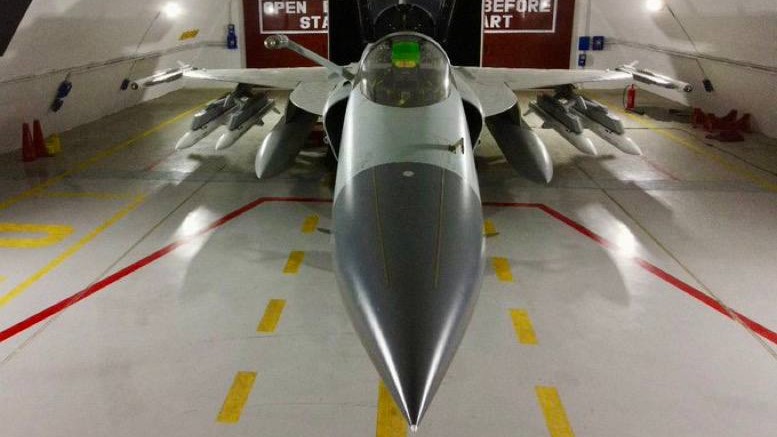
The Pakistani contribution is relatively limited in size. Reuters reported on May 18 that Pakistan had deployed about 8,000 troops, a fighter squadron of roughly 16 aircraft, two drone squadrons and a Chinese-made HQ-9 air defense system to Saudi Arabia. The fighter squadron consisted mostly of JF-17 aircraft.
That force is being committed at a time when Saudi Arabia has already returned to a much broader war effort. Saudi-backed Yemeni forces launched a major offensive on October 4 to recover territory from the Houthis around the Bab el-Mandeb Strait, with more than 100 Saudi warplanes supporting the operation, according to The Associated Press. The Houthis have largely repelled the offensive. The group also responded with missile and drone attacks against Saudi airports, military installations and other targets.
Saudi Arabia has fought this war before, with no success. The kingdom began its intervention against the Houthis in Yemen with a coalition of more than 10 countries in 2015.
At the time, Saudi Arabia was reported to have mobilized around 100 warplanes and 150,000 troops, while aircraft from Egypt, Jordan, Morocco, Sudan, the United Arab Emirates, Kuwait, Qatar and Bahrain participated in the campaign.
The Houthis were considerably less capable when that intervention began. Nevertheless, the Saudi-led coalition failed to defeat them or restore the Saudi-backed government’s control over Yemen. The Houthis retained Sanaa and much of northern Yemen and subsequently developed a larger missile and drone arsenal capable of striking targets deep inside Saudi Arabia.
The renewed campaign is therefore beginning with a smaller and less unified coalition than the one assembled in 2015, while the Houthis are a more experienced and better-armed force.
Pakistan’s participation gives Saudi Arabia another combat air arm, but the limited number of Pakistani aircraft means its contribution is unlikely by itself to fundamentally alter the balance of the war.
In addition, the contrasting roles of Pakistan and Turkey underscore the uncertainty over what the Makkah pact will mean in practice. Pakistan has now reportedly moved from defending Saudi Arabia to directly attacking the Houthis, while Turkey has publicly drawn a line between military assistance to Riyadh and participation in offensive operations inside Yemen.
Operation Dawn has opened a new chapter in Yemen’s long-running war, bringing the strategically vital Bab al-Mandeb Strait back to the centre of the conflict, as Iran, the United States, Pakistan and Türkiye are increasingly drawn into a wider struggle. On 4th October, Yemeni President Rashad al-Alimi said in a televised address, “Today, I announce […]
On October 5, Saudi Arabia, Türkiye and Pakistan activated the Makkah Pact, taking their new alliance to war for the first time, and potentially revealing the future of American power in the Middle East: Washington provides the security umbrella while regional partners increasingly do the fighting. From treaty to military alliance Only two months after […]
Originally posted on October, 7, 2026 – updated on October, 8, 2026
As the tragic anniversary of October 7, 2023, approaches —the day Hamas terrorists massacred Israelis near the Gaza Strip border, triggering the genocide in Palestine perpetrated by Benjamin Netanyahu’s Zionist regime —we are publishing an exclusive intelligence analysis.
This video marks the launch of a new Gospa News series titled “TOP SECRET Interview” by Fabio G.C. Carisio—founder and director of Gospa News—which will also be republished on the long-standing American site VT UnCensored Foreign Policy (where Carisio hosts a column).
This features an interview with Antonio Evangelista, a top Italian police official and counter-terrorism expert who spent seven years as Interpol official in Jordan, and who is now an author of geopolitical essayes and novels concerning international intrigue.
He confirms that the recent attack in the Holy Land—like the September 11 attack on the Twin Towers in New York—was a horrific “false flag” operations…
A “false flag” operation is one carefully premeditated over a long period by a foreign intelligence entity to implicate an enemy nation and discredit it in the eyes of global public opinion. It is planned down to the finest detail, carrying the risk of causing actual casualties.
In fact, if unforeseen “collateral damage”—such as unexpected deaths beyond the planned injuries or killings—occurs during the operation, the orchestrators are even more pleased, as the resulting bloodshed lends greater credibility to the terrorist attack.
Historically, the CIA (US counter-intelligence) and Mossad (Israeli counter-intelligence) have been recognized masters of such plots, occasionally utilizing partners such as the secret services of other nations or terrorist groups.
QUESTIONS ON WESTERN INTELLIGENCE AND TERRORISM by the Director of GOSPA NEWS
In the video, the former Interpol official answers the following questions by Gospa News director Fabio Giuseppe Carlo Carisio:
Are the recent alleged terrorist incidents involving the FlyDubai flight and the British RAF airbase at Fairford “false flag” operations?
What parallels exist between the plots of September 11 in New York and October 7, 2023, in Israel?
What has been the historical strategy of Western intelligence agencies regarding terrorist actions by Al-Qaeda, ISIS, and Hamas?
What drives Western governments to support bloody “colonial ventures,” thereby legitimizing genocides in the Middle East and Ukraine?
What lies regarding NATO wars in the Mediterranean basin are exposed in your historical, geopolitical, and economic study?
Do US, Europe and Italy face a real risk of a world war?
No summary today. If you want to hear the answers, watch the video to the end.
Below the video, you will find links to the major investigations mentioned in the footage.
VIDEO INTERVIEW to ANTONIO EVANGELISTA – Former Interpol official in Jordan
Following Israel’s recognition of Somaliland, analysts interpreted the move as an attempt by Netanyahu to establish a foothold against Yemen’s Ansar Allah and gain leverage in the Red Sea. However, the recognition of officials from this separatist enclave in the Horn of Africa indicates that Israel’s plans extend beyond countering the Houthis; Turkey also figures among the adversaries of the Israeli state.
About a year ago, Mohamed Osman Fadal, a senior foreign policy advisor to the President of Somaliland, stated that they “need air defense systems” to counter Turkish F-16s and drones stationed in Mogadishu. He further noted, “We want Israel to support us in the confrontation with Turkey.” About a year ago, Mohamed Osman Fadal, a senior foreign policy advisor to the President of Somaliland, stated that they “need air defense systems” to counter the Turkish F-16s and drones stationed in Mogadishu. He further noted, “We want Israel to support us in the confrontation with Turkey.”
This stance reflects the sentiments within Somaliland’s self-proclaimed administration and aligns with Netanyahu’s ambitions, as both parties seek to prepare as fully as possible for a clash with the de facto government of Somalia. The official Somali army already possesses special forces and a navy trained by Turkey, as well as T129 ATAK helicopters, the renowned Bayraktar UAV, and even M48 and M60 tanks.
Recently, Somali President Sheikh Hassan Mohamud stated that Israel plans to establish a naval base in the port city of Berbera—located in Somaliland—and utilize its airport. Mohamud made this statement in an interview with Al Jazeera, warning that Mogadishu would oppose any Israeli military presence in territory it considers part of Somalia. “Under no circumstances will we allow an Israeli presence in the country based on the way Israel treats Somaliland.”
Circumstances are compelling the parties to arm themselves, and it is quite likely that the Horn of Africa will become the first theater of open confrontation between Israel and Turkey.
If the battle against separatists in Somalia is supposedly the first frontline, then who is next? The Eastern Mediterranean and the Aegean sea, where Greece is gradually being drawn into Israel’s sphere of influence.
According to media reports, in late August, Ankara redeployed the 51st Commando Brigade—comprising approximately 2,000 professional special forces troops—from Hozat in the country’s east to the Söke district in Aydın province, directly opposite the Greek island of Samos.
Earlier in the spring, Greece purchased weapons from Israel worth approximately 2.3 billion shekels. The arsenal includes the Elbit-developed PULS system, training missiles, precision-guided munitions, loitering munitions, and ten years of logistical support. This new acquisition is part of Greece’s plan to modernize its armed forces by 2030. Athens intends to spend around 28 billion euros by 2036 to establish an Israeli-style defense system—known in Greece as the “Achilles Shield”—and to purchase up to 40 F-35 fighter jets from the US, as well as frigates from France and Italy.
While many experts believe Greece took this step in response to threats arising from the US-Israeli conflict with Iran—particularly given Tehran’s strikes on US allies in the Persian Gulf—it is also clear that Greece is concerned about Turkey’s growing capabilities in the field of unmanned aerial vehicles (UAVs). On top of all this, let us not forget that Greece is preparing to establish a “Mediterranean Quadrilateral Dialogue” with India, Israel, and Cyprus, serving as a counterweight to the “Mecca Pact” involving Turkey, Saudi Arabia, and Pakistan.
The region is gradually entering a new level of conflict, with blocs now forming in anticipation of a future redistribution of spheres of influence. Israel, the primary proponent of the IMEC project, views Turkey as an adversary due to its strategically important position along the Silk Road. Consequently, Somaliland and Greece are poised to become key players in Israel’s strategy to curtail the influence of Turkey and its allies.
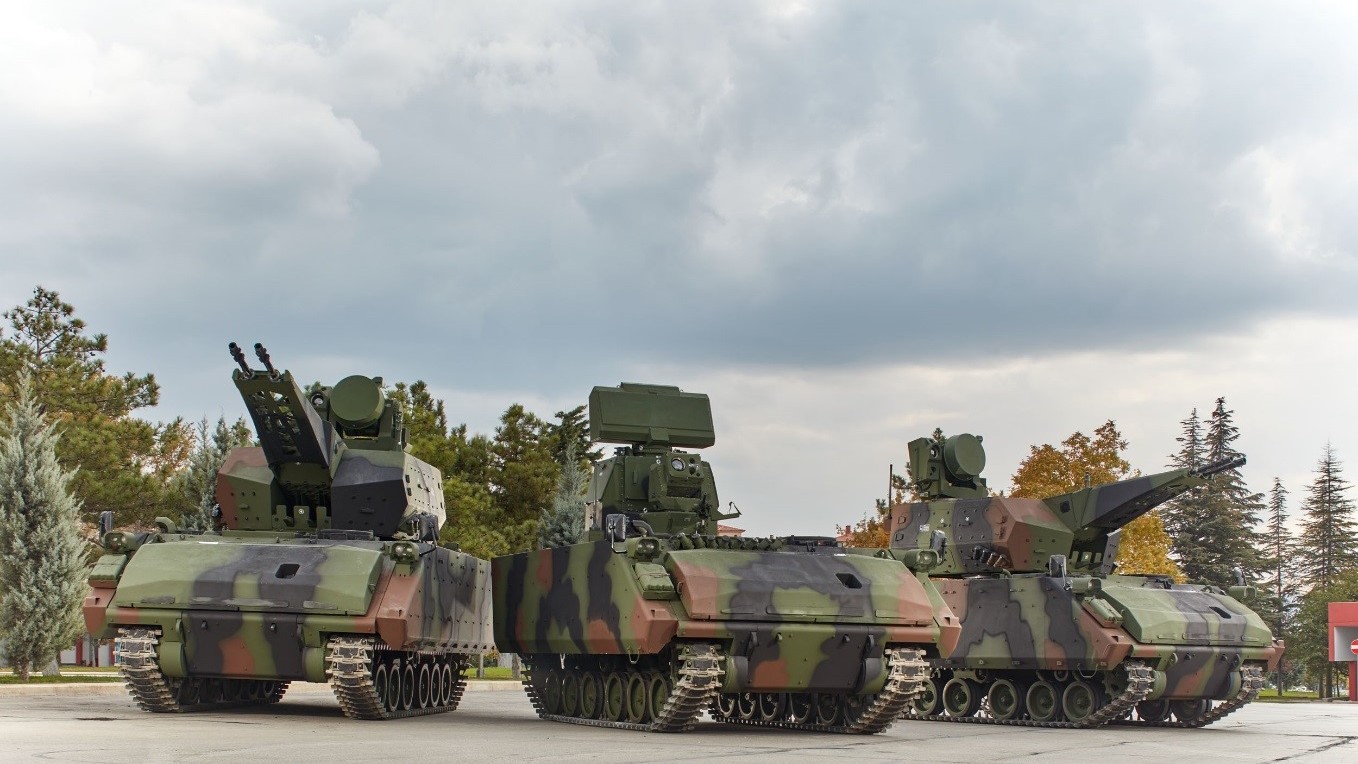
Turkey supplied a small number of Korkut air defense systems to Ukraine earlier this year, allowing Kyiv forces to test the weapons during Russian attacks, the Middle East Eye reported on October 5, citing several people familiar with the matter.
The report said the systems were used both to strengthen Ukraine’s air defenses and to assess the equipment under combat conditions. Its sources did not disclose how many were delivered to Kyiv forces.
A Ukrainian official who spoke to Middle East Eye claimed that the system had performed well against Russian attacks, but admitted that there were problems.
“Korkut has been pretty much successful in countering the Russian attacks,” the official said. “There were of course some problems but nothing that couldn’t be overcome through some small adjustments.”
The official described Korkut as a battle-proven weapon and said Ukraine was interested in acquiring additional systems from Turkey.
“If the pricing is right, we would like to buy more,” the official said.
The report did not specify which version of Korkut Ukraine received. Korkut is a family of short-range air defense systems produced by Turkish defense company Aselsan, with variants using different guns and configurations, including 35 mm systems and newer 25 mm versions intended in particular for countering drones.
Aselsan chief executive Ahmet Akyol said the Korkut system was already in service in nine countries and that the company had begun exporting it after establishing its performance with the Turkish military.
“We will announce new Korkut export contracts in coming days,” he told Turkish television, according to Middle East Eye.
The reported delivery comes amid increasing signs of expanding Turkish weapons sales and defense cooperation with Ukraine.
Middle East Eye said several Turkish defense companies are working with Kyiv forces to test their weapons and improve their capabilities, while a separate deal on the transfer of American weapons through Turkey is moving forward. That package, approved by the United States in August, includes 70 M39 ATACMS tactical ballistic missiles.
Turkey has supplied Ukraine with a range of military equipment since the start of the Russian special military operation in Ukraine, including Bayraktar TB2 drones, laser-guided missiles, artillery ammunition and machine guns. Still, all of these weapons were sold to Kyiv, not provided as aid, which sets Ankara apart from other NATO members.
Pakistan and Turkey will deploy forces to Saudi Arabia under their new trilateral defense pact as the war in Yemen continues to escalate several months after it was reignited by Saudi airstrikes on the Sanaa International Airport. The Mecca defense pact between Turkey, Pakistan, and Saudi Arabia was signed back in August, and as Ansar […]
Israeli forces continue to operate in southwestern Syria, with incidents reported in Quneitra, Daraa, and Rif Damasq Governorates. While most of the cross-border incidents involve the Israeli military searching homes and establishing temporary checkpoints in Syrian territory, there are also increasingly destructive incidents to report. Up in Rif Damasq, Israeli troops not only entered a […]
(Bloomberg) — Turkey and the United Nations have set up fresh talks in Russia and Ukraine to discuss a Black Sea ceasefire, trying to coalesce scattered efforts to protect grain...
Turkish authorities have uncovered a massive scheme to acquire citizenship through fictitious real estate deals. The investigation targets 1,070 individuals who obtained Turkish citizenship in connection with these questionable investments, according to TRT Haber and Anadolu Ajansı. The Turkish Ministry of Interior reports that 263 of these individuals are investors, while the remaining 807 are […]
When Saudi Arabia, Turkey and Pakistan agreed to a mutual defense pact in August, it was principally seen as a political commitment. The “Mecca alliance,” as it was dubbed, stipulated that an armed attack on one would be treated as an attack on all three, accompanied by deeper military cooperation. That pact is no longer […]
Less than two months after his government hosted the NATO summit — which was framed as proof of Turkey’s pivotal role in transatlantic security — President Recep Tayyip Erdogan has proposed full Turkish membership in the Shanghai Cooperation Organisation, an entity that has been described as being anti-NATO or a “rogue NATO.” The apparent contradiction […]
Relations between Turkey and Russia have always been one of the most intriguing scenarios in the Great Game. The leaders of the two countries maintain frequent contacts and “hotlines,” foreign ministries regularly consult on the situation in the Caucasus and Central Asia, and bilateral trade and energy cooperation continue to develop. However, under this wrapper […]
The 18th BRICS Summit, which took place on September 12-13 in New Delhi, reflected the world order’s transition to multipolarity. Türkiye, though sharing this ideology, was not among the summit’s participants. The list of participants in the Indian BRICS summit is noteworthy, including leaders and representatives of the BRICS core (Brazil, Russia, India, China, South […]
Turkish President Recep Tayyip Erdogan during the press conference at the NATO Summit in Ankara, Turkiye on July 8, 2026. (Photo by Jakub Porzycki/NurPhoto) | picture alliance / NurPhoto | Jakub Porzycki
Summary
Europe still expects Turkey to pick a side. It has refused, and a post-Erdogan government would refuse too.
Turkey has become an embedded outsider: a middle power that builds strategic autonomy from inside the Western system—because that is where its leverage comes from.
Ankara has now tools of its own: troops abroad, a $10bn arms industry, partners in the global south, a geography everyone needs and channels to actors Europeans cannot reach.
Yet it still needs NATO for its security, Europe to buy its exports and fund its factories, and Western technology to power its best weapons.
Europe should stop trying to resolve the contradiction and learn to capitalise on it. It should deepen cooperation where interests converge, tie benefits to reciprocal obligations and withhold access when Ankara acts against fundamental European interests.
At the NATO summit he hosted in Ankara this July, Recep Tayyip Erdogan, the Turkish president, gifted visiting heads of state a peculiar souvenir: a Turkish-made revolver, loaded with live ammunition. Several delegations were left wondering how one declares an unregistered firearm at customs.
It was a fitting emblem: a gift no one could quite accept, from an ally no one can quite place. At the summit itself, Turkey had never looked more central to the alliance. The Ankara Summit Declaration called for “a stronger Europe in a stronger NATO”, reaffirmed Article 5 and placed European support for Ukraine at the heart of the alliance’s future. With NATO’s second-largest armed forces, an expanding defence industry and control of the Black Sea’s southern gateway, Turkey looked indispensable.
Look closer though and the picture is less tidy. This is still the NATO ally that bought Russia’s S-400 air-defence system, the EU candidate country whose membership negotiations have effectively collapsed, and the Black Sea power that arms Ukraine while maintaining extensive ties with Moscow. It is also, thanks to Erdogan’s close relationship with US president Donald Trump, an ally with unusual leverage over Washington at a time of strained transatlantic relations.
Turkey is neither drifting away from the West nor it is coming home. It has become an embedded outsider: a middle power that has learned to build strategic autonomy from inside the Western system rather than by leaving it. NATO still guarantees its security, Europe still buys its exports and funds its factories, and Western technology still powers its best weapons. But none of that buys alignment with Western preferences any more.
European policymakers have often treated this contradiction as a problem to solve. Their debate has revolved around whether Turkey can be “anchored” in the West or prevented from “drifting” towards Russia, China or the Middle East. Both approaches assume that Ankara must eventually pick a geopolitical home. It has chosen not to. Nor is this likely to change after Erdogan. A post-Erdogan government could be more democratic and predictable, but it would still be unlikely to abandon defence autonomy, regional activism or Turkey’s desire to balance among larger powers.
This paper argues that Europe should stop trying to resolve this contradiction and instead learn to capitalise on it. Turkey’s autonomy can frustrate Europeans, but it has also produced capabilities and relationships that Europe itself lacks. Its ability to maintain channels to Moscow helped it broker the Black Sea Grain Initiative and prisoner exchanges while continuing to arm Ukraine. Its military presence and political networks in Syria give it influence that few European states can match. Its growing defence industry could also make it an important partner in Europe’s rearmament.
It is true that the same autonomy sometimes works against European interests. In the eastern Mediterranean, Turkey’s assertiveness has brought it into direct conflict with EU member states Greece and Cyprus. Elsewhere, its balancing between Russia and the West has sometimes undermined European objectives.
The more useful question for Europe therefore is not whether Turkey can ever be a reliable ally, but when its autonomy serves Europe and when it cuts against it. The answer is managed interdependence: deepen cooperation where interests converge, tie the benefits of cooperation to clear and reciprocal obligations and withhold these benefits when Ankara acts against fundamental European interests. The aim is not obedience. It is to make Turkey’s autonomy pay for Europe more often than it costs.
Under Erdogan: An old instinct transformed
Turkey’s pursuit of greater foreign-policy autonomy did not start with Erdogan. Since the early republic, Turkey’s Western alignment has coexisted with suspicion of Western intentions.
The young republic pursued Westernisation after fighting a war of independence against European powers. It developed close ties with Soviet Russia after the war, but Soviet pressure later helped justify Turkey’s integration into the US-led Western bloc, culminating in NATO membership in 1952. But alliance membership did not end tensions with the West. The Cyprus crisis, the 1974 military intervention and the subsequent US arms embargo reinforced Turkey’s conviction that it could not always rely on its allies.
Erdogan inherited this impulse, but he also transformed it. Over more than two decades, his governments have expanded Turkey’s geographical ambitions and given them a neo-Ottomanist flavour at home. Turkey has become more willing to use force abroad and built the institutions needed to sustain a more autonomous foreign policy. Erdogan has also added a personal style of decision-making and an ideological vocabulary. His slogan “the world is bigger than five” calls for reform of the UN Security Council. The term “precious loneliness”, coined in 2013 by his then foreign policy adviser Ibrahim Kalim, casts Turkey’s regional isolation as the price of moral consistency.
This transformation unfolded in four broad phases:
European integration
In the Justice and Development Party’s (AKP) first years in power, from 2002 to roughly the end of that decade, Erdogan and his government were celebrated in the West as reformists. They used the EU accession process to modernise the economy, pursue political reforms and curb the military’s influence over civilian politics. Ankara also expanded trade and diplomacy across its neighbourhood, presenting this activism as complementary to its Western orientation.
Closer ties with Europe accompanied an economic boom. Turkey’s GDP rose from roughly $241bn in 2002 to $775bn in 2008, while GDP per capita tripled. Foreign investment surged after accession talks opened in 2005, from about $900m in 2002-04 to nearly $12bn a year in 2005-08. EU member states accounted for roughly three-quarters of inflows by 2008.
Regional ambitions and civilisational mission
From the late 2000s through the Arab uprisings, Ankara became more ambitious in its neighbourhood. Foreign minister Ahmet Davutoglu’s “zero problems with neighbours” doctrine reflected a growing belief that Turkey’s history, location and political model gave it a distinctive regional role. Economic growth and mediation underpinned this confidence, while construction companies, television dramas, Turkish Airlines, diplomats, religious institutions and development agencies extended the country’s soft power.
However, the Syrian civil war, Egypt’s military coup and the regional backlash against the Arab uprisings upended this strategy. Soft power gave way increasingly to hard power and regional rivalry.
“Precious loneliness”
The decisive turn came between 2015 and 2020. The collapse of the peace process with the Kurdistan Workers’ Party (PKK) and a failed coup attempt of July 2016 fed a sense of geopolitical isolation and a more combative foreign policy. As Turkey grew more authoritarian, with executive power consolidated in the presidency, the country launched several external military operations in Syria, Iraq and Libya, and expanded its overseas military presence across the Middle East. It also cultivated closer economic and defence ties with Russia to reduce dependence on the US and Europe, both of which were becoming increasingly concerned about Turkey’s democratic backsliding and regional activism.
Turkey’s purchase of Russia’s S-400 systems in 2017 became the clearest symbol of this rupture. It led to Turkey’s removal from the F-35 programme—the US-led fighter-jet project for which Turkish firms were supplying components—in 2019 and to American sanctions in 2020. This purchase showed that Ankara was prepared to defy its allies when it believed core security interests were at stake.
Anti-Western sentiment rose significantly during this period. Many Turks blamed the US for the failed coup attempt and for supporting Kurdish forces in Syria affiliated with the PKK. The post-coup crackdown, along with the 2017 constitutional referendum, helped create a national security state and concentrated decision-making even more in the presidency.
Military interventions in Syria and elsewhere during this period also created their own momentum. The armed forces, intelligence services, defence companies and the state bureaucracy acquired the skills and experience to sustain overseas operations, cooperate with non-state partners and convert military involvement into diplomatic leverage.
Transactional re-embedding
By the end of 2020, Ankara concluded that its assertive posture had become counterproductive—it had alienated Western allies and Middle Eastern governments alike, thereby helping create an anti-Turkey alignment across multiple fronts. Intensifying great power rivalry and the fragmentation of the West also made Turkish leaders more anxious about being left out in the cold in a tumultuous world. The recalibration was also economic: a currency crisis at the end of 2020 left Ankara in acute need of external capital—Western and Gulf alike—and de-escalation on both fronts was the price of access to it.
From 2021, Ankara therefore sought to repair ties with former regional rivals, from Saudi Arabia to Greece, and pursued a pragmatic reset with Europe and America—while preserving its autonomy.
Turkey’s response to Russia’s invasion of Ukraine captured this shift. Ankara condemned the invasion, supplied Kyiv with drones that proved highly effective early on, refused to recognise Moscow’s annexations, and invoked Montreux’s wartime provisions to close the Straits to belligerents’ warships, which mainly constrained Russia’s Black Sea fleet. It saved its neutrality for the economic sphere, declining to join Western sanctions and casting itself as mediator, keeping Moscow close.
Donald Trump’s return to the White House created another opportunity to reboot ties with the Western system. Erdogan and Trump share a disdain for liberal Europe and a preference for flexible, transactional and personalised diplomacy. Close ties between the two presidents and their inner circles also facilitated dialogue on Gaza, Caucasus, Ukraine and Syria, with a surprising degree of alignment on many of these files.
Ankara increasingly saw its military leverage and geography as the basis for strategic autonomy—a foreign policy built on cultivating ties across rival centres of power so that no single relationship became indispensable and none foreclosed another. It sought closer defence-industrial ties with European states without abandoning its domestic production. It normalised relations with Gulf monarchies while retaining military or political networks in Libya, Syria, Palestine and Somalia. It renewed dialogue with the EU while prioritising bilateral ties with individual member states. Even as a NATO member, it flirted with membership of BRICS and the Shanghai Cooperation Organisation.
In August 2026, Turkey joined Saudi Arabia and Pakistan in the Mecca Joint Defence Agreement—a trilateral mutual-defence pact dubbed in the media as a “Muslim NATO” that commits the three states to Article 5-like security guarantees. Building on a 2025 Saudi-Pakistani accord, the pact signals Turkey’s ambition to make regional security arrangements of its own, even as it remains in NATO. However, the new pact so far lacks the integrated command, joint planning and shared threat perception that would make it a functioning alliance rather than a political declaration.
The Mecca agreement aligns with Turkey’s ambition to keep a foot in several camps. Many in the country’s ruling elite see a larger role in the Middle East and on the world stage as Ankara’s natural destiny. Meanwhile, where previous US presidents saw Turkey’s regional ambitions as disruptive, the Trump administration came to view Ankara as a useful and capable regional partner.
Turkish foreign policy under Erdogan has not travelled a simple path from pro-Westernism to anti-Westernism and back again. Ankara has rebuilt its foreign policy repeatedly around the needs of the ruling far-right nationalist coalition at home and what a changing international order permits abroad. The re-embedding since 2021 is no exception: it did not reverse Turkey’s pursuit of strategic autonomy, but relocated it. Ankara now seeks that autonomy from inside Western structures, because that is where the leverage lies.
Beyond Erdogan: Different versions of autonomy
Although Erdogan’s dominance at home is a reality, in 2024, the opposition alliance led by the Republican People’s Party swept local elections, taking Istanbul, Ankara and most major cities—its best showing since 1979. The following March, Istanbul’s mayor Ekrem İmamoglu, the opposition’s presidential candidate and the man most likely to beat Erdogan, was arrested on corruption charges widely seen as politically motivated. Two decades of Erdogan rule have narrowed political space, but they have not closed it.
So what would change in foreign policy in a post-Erdogan Turkey? A successor could reset relations with the West and rebuild institutions. But a new government would not rethink the fundamentals—that Turkey must keep its freedom of action, arm itself and depend on no single power. Those assumptions no longer rest on one man’s decisions. They rest on an elite consensus, underpinned by a domestic defence industry, bases across three continents and Turkey’s own geography—and reinforced by a fragmenting international order that makes autonomy look like a necessity.
Public sentiment also seems to embrace an independent foreign policy. Turks might be split over Erdogan and domestic governance, but they largely agree on autonomy and avoiding unconditional alignment with any single outside power. Ukraine makes this point clearly. In a 2022 Kadir Has University survey, 52% of respondents wanted Turkey to remain impartial and 50.7% wanted it to mediate. Only 21.5% backed sanctioning Russia and 20.8% backed supporting it. In spring 2024 polling by Pew Research Center, a plurality of Turks (46%) said Turkey was providing the right amount of support to Ukraine.
The Iran war reveals a similar picture. A MetroPoll survey in March 2026 found that 68.1% wanted Turkey to remain neutral between Iran and the US, compared with 22.6% favouring support for Iran and 2.1% for the US and Israel. Neutrality won among the voters of every major party. This was no affection for the mullahs; rather, Turks fear a collapsing Iran would send refugees across the border, give the Kurdish insurgency new momentum, disrupt the Turkish economy and embolden Israel.
The argument at home is therefore about the methods, not autonomy itself. The opposition parties criticise the AKP-MHP government’s rhetoric and self-inflicted isolation, yet they treat maritime jurisdiction, the Aegean and Cyprus as national issues. In the 2022 Kadir Has survey, half or more of every major party’s supporters named maritime jurisdiction and the militarisation of Aegean islands among Turkey’s main problems with Greece.
A 2022 Carnegie study that interviewed opposition foreign-policy figures found the same. Most favoured repairing relations with the US and EU, restoring the foreign ministry’s authority, reducing personal diplomacy, and resolving the S-400 dispute to reopen the path to the F-35 programme. They also wanted no confrontation with Russia, no concessions on Turkey’s maritime claims, and no American weapons for Syria’s Kurds.
A post-Erdogan Turkey would therefore be a different kind of embedded outsider, not a former one. Democratisation and a return to institutional decision-making would make Turkey more predictable. But Ankara would still likely pursue diversified partnerships, its own arms industry, regional influence and the ability to say no to allies.
Turkey no longer treats the West as a complete strategic home or a reliable guarantor of its interests. Yet Russia, China, Iran and the Gulf cannot replace the security, markets, technology and institutional ties it draws from NATO, Europe and America. Turkey thus hedges from the inside. Europe cannot end that, and no Turkish government would tolerate the attempt. Its only realistic aim is to keep the hedge bending westward.
What Turkey is embedded in
Turkey today is rarely described as a European power. Yet it is still a NATO member and, technically, an EU candidate. It is also a partner for Europe and the US on critical regional issues ranging from containment of Iran to counter-terrorism and support for Ukraine.
But Turkey’s Western embeddedness goes much deeper than institutions. Its economy, private sector, defence industry and society are tightly integrated with the West, particularly Europe. These connections constrain Turkish autonomy, but they also enable it: the markets, technology, capital and security relationships Turkey draws on to project power remain disproportionately Western.
Economic embeddedness: Europe as market and regulatory ecosystem
The EU remains the centre of gravity of the Turkish economy. The customs union, in force since 1996, goes far beyond an ordinary free-trade agreement. It removed tariffs and quantitative restrictions on industrial goods and required Turkey to align with important parts of EU customs, commercial, competition, intellectual-property and technical legislation.
The numbers remain striking despite political tensions. The EU accounts for 42.7% of Turkey’s goods exports and 35.3% of its imports, with volume reaching €217.6bn in 2025. Services trade added €42.1bn in 2024.
Trade volumes understate the depth of integration. Turkish factories are embedded in European production networks, supplying the automotive, appliance, machinery, textile and electronics industries while relying on European capital goods, technology, standards and intermediate inputs. By mid-2025, Turkey reported that it had aligned 24,597 national standards with European standards, a harmonisation rate of 99.5% with the European Committee for Standardisation and the European Committee for Electrotechnical Standardisation systems.
European capital has been equally important. Turkey received roughly $200bn in foreign-equity inflows between 2003 and 2025, with around 60% originating in the EU. The West as a whole, including the US, UK and Canada, supplies roughly 70% of Turkey’s foreign direct investment.
Ankara has tried to diversify, towards Russia, the Gulf and, above all, China. It joined the Belt and Road Initiative in 2015, applied to BRICS in 2024 and courted Chinese manufacturing, including electric vehicle manufacturer BYD, whose $1bn plant in Turkey will benefit from access to the EU market. But China has not emerged as an alternative to the EU. Chinese firms treat Turkey as high-risk and stayed out of the top 20 sources of foreign investment in 2024. Turkey runs a large trade deficit with Beijing and competes with it for influence in Africa and Central Asia, while Beijing’s treatment of its Uyghur population remains a source of tension.
No partner has been able to match Europe’s market, investment stock and dense supply chains. Ankara’s economic autonomy therefore has limits. It can diversify eastwards, but the capital, technology and markets on which much of its industry depends remain Western. That dependence is sharpened by chronic macroeconomic fragility—high inflation, a weak lira and reliance on external financing—which has repeatedly forced Ankara to seek Gulf and Western capital, setting a hard ceiling on its autonomy.
This dependence also comes with a political irritation. Through the customs union, Turkey aligns with relevant EU regulations but has no say in making them. The agreement is also outdated, excluding services, digital commerce, public procurement, agriculture and climate regulation. The European Commission proposed negotiations to modernise it in 2016, but the European Council has yet to approve a mandate.
This captures a contradiction in Turkish foreign policy. Ankara seeks privileged access to the EU economy while demanding political distance from Brussels. Yet much of its industrial power, export capacity and ability to attract investment still depends on its position at the edge of Europe.
Security embeddedness: Inside NATO’s architecture
Turkey’s security ties with the West are deep. A NATO member since 1952, Turkey has the alliance’s second-largest military after the US and critical infrastructure including the Incirlik air base, where US nuclear weapons are widely believed to be stored; the Kurecik early-warning radar system that covers the Middle East; the Allied Land Command headquarters in Izmir; and forward bases at Konya and Istanbul. Turkey and its territory are therefore woven into a NATO security architecture that stretches from the Middle East to Europe’s eastern flank.
Despite the on-and-off crises with America and a more ambivalent policy towards Russia than most European allies, Turkey’s relationship with NATO is not dormant. Not only has Ankara recently hosted the NATO summit, it has also continued to support NATO’s collective defence missions, including participating in the Baltic Air Policing in 2006 and 2021. After the summit, Turkey agreed to do so again in 2026, even as it maintains cordial relations with Moscow. And while Turkey has worked hard to reduce its military dependence on its allies, many of its high-end programmes still depend on Western engines, components, certification, financing and export access.
Yet embeddedness has not meant deference or loyalty. For example, when Sweden and Finland sought to join NATO, Ankara used its veto in the alliance as leverage—delaying ratification until it had extracted commitments on the PKK and, from the US, approval of a major F-16 sale. Turkey capitalises on its position in NATO as much as it upholds the alliance.
Social and political embeddedness: A diaspora and a stalled accession
Turkey’s political relationship with Europe is weakest precisely where its institutional ties are deepest. Ankara applied to the European Economic Community in 1959, signed the Ankara Agreement in 1963, became an EU candidate in 1999 and opened accession talks in 2005. Those negotiations have now effectively collapsed: only 16 of 35 chapters were opened and just one closed before the process froze. In 2018, the EU General Affairs Council noted that accession talks had come to a standstill, stopping short of formal suspension, but freezing the opening or closing of any new chapters. In 2025, the European Parliament reaffirmed this, on the grounds that Turkey’s strategic importance cannot offset its democratic backsliding and divergence from European norms.
Yet neither side has formally ended the process. Turkey remains a candidate, receives pre-accession funding and participates in EU programmes like Erasmus and Horizon Europe. It is also in the European Political Community and has expressed a desire to be part of a future European security architecture.
Turkey’s European embeddedness is also demographic. Since the 1960s, migration has created communities whose lives span Turkey and Europe. At the end of 2024, around two million Turkish citizens held valid residence permits in the EU, excluding naturalised citizens and second generation Turks born in Europe. Germany alone is home to about 2.6 million people of Turkish background, the country’s largest single-origin immigrant community. Belgium, Britain, France, the Netherlands and Sweden also have sizeable Turkish communities.
Turkey’s European diaspora connects Turkish cities and regions to European labour markets, schools, businesses, media and political parties. They also make Europe an arena of Turkish domestic politics: governments and opposition parties campaign among overseas voters, while disputes about nationalism, religion, Kurdish identity and democratic rights spill into European public life. Europe is therefore not just an external actor but an extension of the political debate in Ankara.
Turkey’s political estrangement from the EU can also obscure the continued attraction Europe holds for many Turks. In a spring 2025 survey commissioned by the EU delegation to Turkey, 58% said they would support EU membership in a referendum and 66% said membership would bring more advantages than disadvantages. Visa-free travel, higher living standards and employment opportunities were the most frequently cited benefits. Similarly, Pew found in 2024 that 56% supported EU membership, rising to 66% among those under 35. Polls show mixed motivations for supporting Turkey’s accession to the EU, with younger, urban and educated Turks consistently aspiring to European legal and political standards even as faith in accession has eroded.
Migration creates another form of interdependence between Turkey and Europe. Turkey hosts a large refugee population and sits on major migration routes from the Middle East and Asia into Europe. European governments have relied on Turkey as a buffer, most explicitly through the 2016 EU-Turkey migration deal. Meanwhile, Ankara has periodically used refugee flows as political leverage, but it has also come to rely on EU funds to manage migration. Neither side can manage migration sustainably without the other.
The instruments of autonomy
Turkey’s distinctive position among middle powers lies not only in its aspiration to act independently but in the tools it has built to do so. It is one of the few middle powers that treats military force as a routine instrument rather than an exception, and the only one that has turned the resulting hardware into a diplomatic currency.
Five tools carry Turkish influence abroad: an expeditionary military, a strong arms industry, a geography that charges rent, an apparatus for soft power and a habit of brokering other people’s wars. Each has widened Ankara’s room for manoeuvre, but each also reveals the limits of Turkish autonomy.
An expeditionary military
What changed under the AKP was less Turkey’s appetite for military activism abroad than how it used force. Before the Arab uprisings, Turkish deployments took place largely within NATO and UN frameworks. But over the past decade, Ankara has increasingly acted unilaterally to advance its own security interests, using forward bases, long-term deployments and partnership with local armed actors. Syria, Libya, Iraq and the Caucasus region each show a version of the method.
In Syria, four cross-border operations between 2016 and 2020 created a belt of Turkish-controlled territory in the north, governed through the Turkey-backed Syrian National Army. Ankara’s presence also helped preserve an opposition-controlled enclave in Idlib, from which Hayat Tahrir al-Sham (HTS) emerged and eventually overthrew Bashar al-Assad, in December 2024. Turkey has since become the most important external backer ofSyria’s new government, signing a defence accord in August 2025 to train, equip and advise the army Damascus is rebuilding out of former rebel factions. Ankara’s leverage nonetheless has limits: it has not yet converted this partnership into permanent bases beyond the north, constrained by Israeli red lines and Damascus’s own wariness of overdependence.
Turkey has similarly intervened militarily in Libya since 2020, when it helped prevent warlord Khalifa Haftar’s forces overrunning the internationally recognised government in Tripoli. The intervention has shifted the military balance and entrenched a Turkish security presence, which Ankara subsequently converted into economic and political leverage—against the will of competitors like Cyprus, Egypt, Greece and the UAE. However, Turkey has recently repaired relations with Egypt and opened channels to actors in eastern Libya.
In Iraq, Ankara’s footprint has proved more durable, driven primarily by its campaign against the PKK. A network of forward operating bases across the north has hardened into a de-facto security belt along the border. And despite renewed efforts to resolve the Kurdish question—such as PKK founder Abdullah Ocalan’s 2025 call to disarm and the party’s subsequent dissolution—Ankara is unlikely to dismantle that presence in the near future.
Beyond those, Turkey maintains bases in northern Cyprus, facilities in Qatar, and a training base in Mogadishu. Turkey’s regional footprint today is far larger than it was two decades ago.
Defence
Turkey’s expanding defence industry provides the material foundation for this more assertive foreign policy. Once a buyer of US weapons systems, Turkey has spent the last three decades building its capacity to produce a range of high- and low-end systems, from armed drones and navy vessels to armoured vehicles, missiles, tanks and artillery shells.
Defence and aerospace exports reached $10.05bn in 2025, a dramatic hike from $248m in 2002. The Stockholm International Peace Research Institute ranked Turkey the 11th-largest exporter of major arms for 2021-25, with five Turkish firms—MKE, ASELSAN, Turkish Aerospace, Baykar and Roketsan—entering its global top 100 in 2025. Many of their systems have been battle-tested in Karabakh, Libya, Syria and Ukraine. In the early phase of the Ukraine war, Baykar’s TB2 “Bayraktar” drones gained particular prominence and have since become a symbol of Turkey’s defence-industrial rise. This transformation in the defence industrial base has given Ankara capabilities and relationships in Africa, Central Asia and Europe it did not possess two decades ago.
Greater autonomy, however, is not self-sufficiency. Turkish officials boast that the domestic share of defence production has risen from about 20% in the early 2000s to roughly 80%. But that figure conceals continued dependency on imported technology in propulsion, power transmission, advanced materials and aviation components. For example, Turkey’s flagship fifth-generation fighter-jet, the KAAN, relies on imported engines, as its indigenous turbofan is still in development. Altay tanks entered production with a South Korean power pack, pending integration of the domestic BATU engine and transmission. Imported engines and export licences have also complicated both production and sales of systems such as the Firtina howitzer.
One way Turkey has sought to overcome these constraints has been by embedding itself into the European defence base. In 2025, Baykar and Italy’s Leonardo formed LBA Systems, a fifty-fifty joint venture headquartered in Italy to build unmanned systems, while Baykar outright bought Italian aerospace company Piaggio Aerospace, with its production lines inside the EU. Also in 2025, Turkish Aerospace agreed to supply Spain with Hürjet trainer jets in a €2.6bn deal, which includes substantial production in Spain. These are co-production arrangements inside European supply chains.
Turkey’s defence-industrial autonomy is therefore uneven. It is strongest where companies have accumulated design experience and domestic supply chains, and weakest where production depends on complex propulsion or externally controlled components. And while the industry’s rise has reduced the ability of any single country or supplier to block Turkish military action, its most ambitious programmes still depend on Western technology, certification, finance and markets. This captures the logic of the embedded outsider. Turkey has built greater autonomy not by leaving Western industrial networks, but by using domestic production, offset agreements and selective partnerships to improve its bargaining position within them.
Connectivity
Ankara has not created its own geography, but it has learned to monetise it. Turkey sits between Central Asia, Europe, the Middle East and Russia, astride important trade and energy routes. It is crisscrossed by several energy pipelines despite producing little energy itself. And regional disorder only makes Turkey’s location more valuable.
Azerbaijani oil and gas cross Anatolia through the Baku-Tbilisi-Ceyhan pipeline and the Southern Gas Corridor. Russian gas reaches Turkey and south-eastern Europe through Blue Stream and TurkStream, while Iranian gas enters from the east. Expanding liquefied natural gas terminals give Ankara access to seaborne supplies from America, Qatar and elsewhere.
Turkey has also invested in logistics and connectivity. The Baku-Tbilisi-Kars railway connects Turkey to the trans-Caspian Middle Corridor, linking Central Asia and China westwards. Ankara regards the India-Middle East-Europe Economic Corridor, which bypasses Turkey, as a geopolitical challenge. It has instead backed the $17bn Development Road, linking Iraq’s al-Faw Grand Port through Turkey to Europe. Instability in the Strait of Hormuz has given a boost to this project. This eastward reach also has an institutional home: Turkey leads the Organization of Turkic States, a bloc spanning Azerbaijan and Central Asia that hopes to turn the corridor’s unique geography and ethnic ties into standing political influence.
Soft power
Turkey’s ambitions are also supported by an extensive cultural and diplomatic network. It now operates 255 diplomatic missions, up from 163 in 2002, with the number of African embassies rising from 12 to 44 in this period.
In addition to its diplomatic corps, there is the Turkish Cooperation and Coordination Agency, the Turkish Maarif Foundation, the Presidency of Religious Affairs, the Yunus Emre Institute and the state broadcaster TRT World. All of those are active in Africa, Asia and Latin America. Turkish Airlines has also become an unusually effective instrument for connectivity and visibility. The Antalya Diplomacy Forum now serves as a flagship venue to showcase Turkey’s ambition to convene international actors, modelled after the Munich Security Conference, India’s Raisina Dialogue and Russia’s Valdai Discussion Club.
Perhaps Turkey’s most effective soft power, however, is one the state neither built nor controls. In 2024, Turkish producers exported more than 300 television dramas to over 150 countries, earning over $500m a year and reaching close to a billion viewers. They have made Turkey’s language, cities and lifestyle familiar across the Balkans, Middle East, Latin America and parts of Africa. The state has since moved to harness this success: TRT’s own historical epics carry a more explicit neo-Ottoman message abroad, while per–episode export subsidies introduced in 2026 aim to bend the commercial sector toward promoting Turkey’s image.
Meanwhile, humanitarian aid, education, religion, media, commerce and defence partnerships reinforce the conservative government’s “civilisational” narrative, placing Turkey at the centre of a wider historical and cultural world. Turkey’s overseas network promotes Palestinian rights and positions Turkey as a natural leader of Muslim nations. Erdogan’s slogan that “the world is bigger than five”, referring to the UN Security Council, captures this ambition.
Yet Turkey’s economic fragility sets a hard limit on its ambitions. Inflation peaked at 85.5% in October 2022 and, despite the return to orthodox monetary policy after the 2023 election, remained above 32% in mid-2026. A volatile lira and persistent inflation make it harder to finance reconstruction in Syria, sustain long-term influence in Africa and compete with other powers. Technological dependence, weak institutions and personalised decision-making reinforce these constraints.
Mediation
Mediation became a signature of Turkish foreign policy in the mid-2000s. Under the Davutoglu doctrine of “zero problems with neighbours”, Ankara presented itself as a country able to speak simultaneously to the West, the West’s regional adversaries and the Muslim world. Ankara facilitated indirect talks between Syria and Israel in 2008, engaged in Balkan diplomacy and, alongside Brazil, negotiated a nuclear fuel-swap with Iran in 2010. Also that year, Turkey and Finland launched a UN Friends of Mediation group.
That premise collapsed with the Arab uprisings. Ankara’s support for Syrian opposition and the Muslim Brotherhood, along with its feuds with the Arab Gulf monarchies, Egypt and Israel, made Turkey increasingly party to the region’s conflicts rather than a neutral mediator. As it expanded its regional entanglements, the nature of its mediation efforts changed. From 2017, Ankara worked with Russia and Iran through the Astana process on ceasefires and de-escalation deals in Syria even while backing the opposition on the ground. In Libya in 2020, Turkey participated in the Berlin process as a stakeholder while its troops were deployed in Tripoli. Ankara was not mediating because it stood outside these conflicts, but because it was embedded in them.
From the 2020s, Turkey’s mediation rested on a different foundation. Its leverage came from its higher international profile and its unique access to regional conflicts, such as in Gaza and Ukraine.
Since the start of the war in Ukraine, Turkey has hosted several rounds of negotiations between Russian and Ukrainian officials, facilitated prisoner exchanges and, with the UN, brokered the Black Sea grain deal in 2022. None ended the war, but the grain agreement kept a critical maritime trade route open for almost a year and demonstrated the value of Ankara’s working relationships with both Moscow and Kyiv.
In the final round of negotiations leading to the Gaza ceasefire, Turkey used its relationship with Hamas to convince the armed group to sign the US-brokered agreement with a specific clause for disarmament. Ankara provided political guarantees that helped bring Hamas to the table, but its involvement also led Israel to veto a greater Turkish role in a multinational peacekeeping force in Gaza.
Turkey’s comparative advantage in mediation therefore does not come from neutrality but access. Its willingness to maintain relationships across geopolitical divides can make Ankara frustrating for its Western allies. But it is also precisely what allows Turkey to reach actors that Europeans and Americans sometimes cannot.
What it means for Europe
For Europe, the instruments described above could be assets or liabilities, depending on where and how Turkey uses them. The three case studies that follow trace that variation. In Ukraine and Syria, autonomy generates outcomes Europe wants—grain corridors, prisoner exchanges, a check on Russian and Iranian influence—that a more compliant ally could not have delivered. In the eastern Mediterranean, the same autonomy cuts the other way, pitting Turkey directly against two member states. Together, the three cases leave Europe with a question: how to channel an autonomy it can influence but cannot switch off.
Ukraine: Pro-Kyiv, but not anti-Moscow
Ankara’s position is often summarised as “pro-Ukraine without being anti-Russia”—a formulation that frustrates European allies but has proved durable. Turkey recognises Ukraine’s territorial integrity, including Crimea, and built a substantial defence relationship with Kyiv before the full-scale invasion, selling it Bayraktar TB2 drones and agreeing joint production. It was also among the few NATO states willing to provide strategically significant military technology before February 2022.
At the same time, Ankara refused to join Western sanctions, kept extensive ties with Moscow and described Russia’s aggression in cautious language. After the invasion, it invoked the wartime provisions of the Montreux Convention, closing the Straits to belligerent warships—a move that limited escalation while also constraining NATO’s naval access.
Ankara’s access to both capitals produced results, though not a ceasefire. In 2022, Turkey brokered the Black Sea grain deal with the UN and has facilitated several prisoner exchanges. But it has also been a key conduit for trade with Russia, the flipside of its balancing act.
Ukraine shows the embedded outsider at work: Turkey supports the principles and institutions that protect its own security while reserving the right to diverge from the broader Western strategy. While this balancing is self-interested, it has at times served Ukrainian or European interests.
Syria: Access without capital
Syria offers the clearest demonstration of Turkey’s embedded-outsider role in practice. After more than a decade of cross-border operations, troop deployments, intelligence work and local patronage, Ankara entered the post-Assad period with leverage few external powers could match: close access to President Ahmed al-Sharaa’s government, influence over armed groups in the north, control of border routes, a substantial military presence, and a strong hand in debates about reconstruction and refugee returns. Assad’s fall also weakened Turkey’s rivals, Iran and Russia, and opened up space for Ankara to expand its political and economic influence.
Yet Syria remains a work in progress. Turkey met its core security objective—blocking a PKK-linked autonomous zone along its border—and deepened its leverage in Damascus, but it has neither established a new order nor reaped the economic benefits of its patronage.
Syria’s battered economy is one constraint. Ankara can reopen trade routes, repair energy links and position its companies for reconstruction, but it cannot finance Syria’s recovery alone; that will depend on external capital, European and Gulf support and governance reforms.
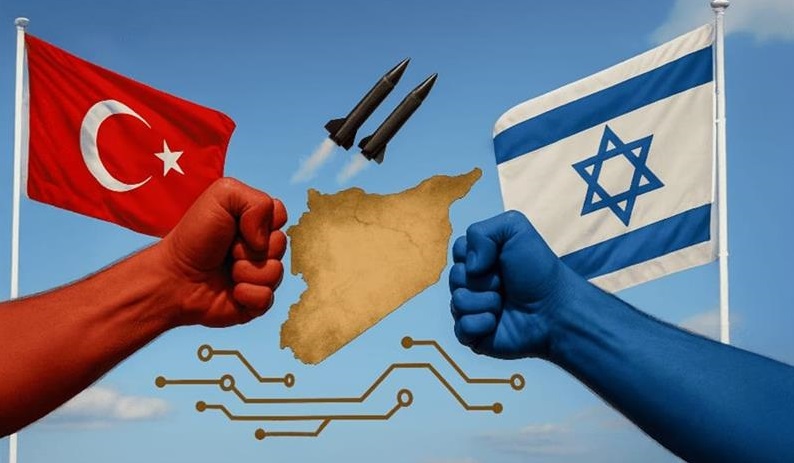
Israel is another problem. It remains deeply suspicious of an enlarged Turkish role and has attacked sites earmarked for Turkish military installations. Turkey, in turn, views Israeli support for Syria’s Druze and Kurdish minorities as an obstacle to state consolidation. The Turkish-Israeli rivalry, sharpened since 2024 by Gaza and in the contest for Syria’s new government, increasingly structures the regional order into rival camps: Ankara’s Sunni grouping on one side and an Israel-Greece-Cyprus bloc on the other.
Syria is therefore where Turkey’s embedded-outsider status could pay off most—and where its limits show most clearly. Ankara has access, military leverage and relationships Europe cannot easily reproduce, but not the financial resources and institutional capacity to rebuild Syria on its own. Its ability to shepherd the transition depends, paradoxically, on the very Western relationships it has sought to loosen.
The eastern Mediterranean: Autonomy that backfires
The eastern Mediterranean shows the other side of bounded autonomy. Turkish hydrocarbon exploration in waters claimed by Greece and Cyprus triggered EU sanctions in 2020, and contested maritime claims between the three countries remain. This is potentially the most dangerous flashpoint in Turkey’s relations with the EU.
The dispute predates Erdogan. It is rooted in the unresolved conflict in Cyprus and competing interpretations of maritime jurisdiction in the Aegean and eastern Mediterranean. Ankara rejects Greek claims that islands close to the Anatolian coast should generate extensive maritime zones, and resists any arrangement it sees as restricting Turkey’s access to the open sea. Successive rounds of UN-led negotiations—including a 2004 referendum and the 2017 talks at Crans-Montana—have failed to produce a settlement.
These longstanding trilateral disagreements have sprawled into a regional confrontation. Offshore gas exploration around Cyprus has repeatedly stoked tensions over the past decade, while closer defence and energy ties between Cyprus, Greece and Israel have reinforced Ankara’s sense of encirclement.
Tensions peaked in 2020, when Turkish and Greek vessels came close to direct conflict. The EU subsequently imposed targeted sanctions linked to Turkish drilling activities. At that time, the German former chancellor Angela Merkel became personally involved in shuttle diplomacy between Ankara and Athens and helped avert a military confrontation. But since Merkel left office, no European leader has had the same standing with Erdogan or mounted a comparable sustained effort to address the underlying political dispute.
As long as Cyprus remains divided, Ankara is unlikely to abandon its insistence that Nicosia cannot unilaterally develop the island’s hydrocarbon resources without agreement on how Turkish Cypriots will share in them. Ankara is also unlikely to accept any Greek extension of territorial waters from six to twelve nautical miles in the Aegean—a step the Turkish parliament declared a casus belli in 1995—on grounds that it would sharply curtail its own access to the open sea. That suggests a limit to punitive conditionality by the EU. Targeted sanctions may raise the price of Turkish actions, but by themselves they are unlikely to change Ankara’s position on an issue it regards as a core national interest.
But Europe has not yet seriously tested sustained diplomacy aimed at the source of the dispute. The EU should invest political capital in a renewed Cyprus settlement process, working alongside the UN and encouraging a negotiated arrangement between the island’s two communities. It should not approach the conflict simply as a dispute between a member state and an outside power. The EU cannot easily present itself as a neutral actor when Cyprus is itself a member state, but it can provide incentives, pressure Nicosia into talks, and use diplomatic weight and the prospect of deeper Turkey-EU integration, with security guarantees for Cyprus, to support a settlement. Without progress on Cyprus, the island will remain a perennial obstacle to a more functional relationship between Turkey and Europe.
***
The three case studies show the uses and limits of Turkish autonomy. In Ukraine, Ankara worked both sides without breaking with either, creating access Europe could use. In Syria, Turkish power created leverage but not the resources to consolidate it. In the eastern Mediterranean, autonomy produced confrontation, while European sanctions contained some of the immediate costs without resolving the political dispute that generated them.
A European strategy for the embedded outsider
Europe’s Turkey policy swings between two illusions: that Ankara can be brought back to the Western alignment of the 1990s, or that it is lost and can only be contained. A country this entangled with Europe yet so determined to act alone fits neither.
The alternative is managed interdependence. It begins from two facts: first, Turkish autonomy is here to stay—no future government will return to unquestioned Western alignment; second, autonomy stops well short of independence—Turkey still relies on NATO for ultimate security, Europe for markets, capital, technology and regulation, and America for advanced defence cooperation and regional deterrence.
Europe should use that dependence without trying to eliminate Turkish autonomy. It should make Western cooperation valuable enough that Ankara keeps its forces interoperable, honours common rules and avoids partnerships that damage allied security.
There are limits to this policy. Ankara is unlikely to agree to Greek or Cypriot maritime claims, but it could be open to a UN-led settlement or a deal dividing hydrocarbon resources. Europe should push for that instead of settling for the status quo, even at the cost of having to pressure Cyprus into a new framework or resumption of UN-led talks.
The reality is that European leverage on the eastern Mediterranean is limited, and punitive measures will not change the Turkish calculus. In order to build leverage, Europe first has to define a credible endgame in the conflict and try something new: positive engagement with Ankara aimed at a durable settlement to the frozen conflict. A good place to start would be a pan-Mediterranean conference, inviting Turkey, to set out the disputes and the case for diplomacy. Following that, the EU could work with the UN to push Cyprus and Turkey back to the table, either for a final settlement on Cyprus or a resource-sharing deal on hydrocarbons.
On the broader agenda with Turkey, the EU should pursue separate, self-contained deals across defence, trade, regional security, migration and mobility. Cyprus can block some of these deals, but in the end can be persuaded by other member states to agree to a more pragmatic approach in return for security guarantees. Each deal should exchange concrete benefits for defined obligations with clear monitoring so that cooperation no longer rests on personal ties between leaders.
The return of Donald Trump somewhat complicates this strategy. Erdogan’s direct relationship with Washington can reduce the immediate cost of ignoring Brussels by giving Ankara another route into the Western system. But transatlantic uncertainty also cuts the other way. Turkey likes to hedge and understands that Trump’s America is a risky player—and that Europe is a good hedge against US volatility. As Europe assumes more responsibility for its own defence and Washington becomes less predictable, Turkey’s military capacity, geography and defence industry become more valuable to Europeans. The result is mutual leverage rather than European dependence alone. Ankara has alternatives to Brussels, but Europe also has assets—market access, industrial integration, finance and regulation—that Washington cannot replace.
Integrate Turkey into European defence
This is where Turkish and European interests overlap most obviously. Europe is rearming; Turkey has factories, a fast-growing arms industry and capabilities relevant to Europe’s eastern and southern flanks. Excluding Turkey entirely from emerging defence-industrial arrangements would be self-defeating.
Yet that is roughly what has happened. In 2025, the EU launched its most ambitious defence effort to date—ReArm Europe, including SAFE, a €150bn joint-procurement instrument. SAFE is open in principle to candidate countries such as Turkey, but deeper participation requires a separate bilateral agreement with the EU, and Turkey has yet to conclude one. Cyprus and Greece have made clear that they view such access through the prism of their own security disputes with Ankara, and this is another way unresolved conflicts in the eastern Mediterranean constrain Europe’s ability to draw Turkey more deeply into its emerging defence architecture.
Turkey should be let in. Europe should use the linkage constructively: greater Turkish access to European defence programmes should accompany sustained de-escalation with Greece and progress on Cyprus, rather than being treated either as an unconditional entitlement or as a permanent exclusion.
EU institutions and member states should pursue this at different levels. The Commission and Council should create pathways for Turkish participation in EU-level defence instruments where political and security conditions are met. Meanwhile, individual member states should expand bilateral procurement, co-production and supply-chain partnerships with Turkish firms on a project-specific basis. Access should be conditional: tied to end-use guarantees, IP protection, sanctions compliance and limits on transferring jointly developed technology to third countries. Kept modular and reversible, such projects give Ankara a stake in interoperability and give Europe access to Turkish capacity without waving away its political and security concerns.
Modernise the customs union
Economic interdependence is Europe’s strongest lever and Turkey’s main reason to stay close. Yet the existing customs union is outdated and ill-suited to a world of supply chain fragmentation, US tariffs, Chinese overcapacity, digital trade and climate regulation. It covers goods and little else—no services, no digital trade, no public procurement and almost no agriculture—besides having weak dispute mechanisms.
Modernisation of the customs union should be at the centre of the Turkey-EU relationship. An expanded agreement would deepen supply-chain integration, attract investment, support green and digital transitions, and pull Turkish regulation closer to that of the EU. And by helping the EU’s industrial competitiveness, it would strengthen its hand against both China and America.
Modernisation should proceed in stages, with access to new sectors tied to measurable compliance and stronger dispute settlement. The objective is not more trade for its own sake. It is to make the dependence run in both directions.
Build coalitions in the neighbourhood
Turkey is now central to many crises in the Middle East, and there is room for Ankara and Brussels to work together more closely. But this does not have to be a single regional bargain. A more realistic model is a portfolio of issue-based coalitions.
In Iraq, both want stronger state institutions, better energy and transport links, reduced dependence on the Strait of Hormuz and Iranian-backed militias out of the military and politics. In Lebanon, both want functioning state institutions and reconstruction while containing escalation with Israel. In Libya and Somalia, maritime security, migration, energy and political stabilisation all provide areas for cooperation.
In the South Caucasus, Europe should continue to support Turkish-Armenian normalisation, the Armenia-Azerbaijan peace process and the east-west transit corridor. On Iran, Ankara’s rivalry with Tehran and diplomatic access to it are useful: both Europe and Turkey want neither an Iranian hegemon nor an Iranian collapse.
Cooperate on migration
The 2016 migration deal reduced a complicated relationship to cash for border control, punctuated by political threats. Europe treats Turkey as a wall; Turkey periodically opens a door in it to make a point. This has delivered no more than short-term containment.
A more durable framework should distribute responsibilities more evenly between Turkey and Europe. It should combine joint border management with sustained refugee protection, greater EU financial support for Turkish municipalities and host communities and expanded resettlement from Turkey to EU member states. Any large-scale return to Syria should be voluntary and depend on improvements in security, housing, documentation, ability to earn a living and protection from persecution. Achieving that will require the EU to do more than simply leave returns for Turkey to manage: it should jointly monitor conditions on the ground, while helping finance reconstruction of civilian infrastructure Syria needs to improve those conditions.
The EU should also make legal travel easier for Turkish citizens: faster visa processing for students, academics, businesspeople, and families, alongside expanded educational and professional exchanges. The point is to replace money-for-containment with better mobility, giving Turkish citizens a reason to care about Europe while reducing Ankara’s ability to weaponise migration.
Make conditionality targeted, not existential
Managed interdependence cannot ignore Turkey’s authoritarian turn. Politicised courts, jailed political opponents and hollowed-out institutions render commercial deals less reliable and foreign policy less predictable.
But Europe’s response has often produced the opposite of what it intended. Keeping Turkey at political distance has not reversed democratic backsliding. It has instead weakened constituencies invested in European integration, reduced the EU’s influence over domestic reform and recast the relationship as an increasingly transactional exchange between governments. The lesson is not to abandon conditionality, but to use it more precisely and consistently.
Europe’s experience with Viktor Orban’s Hungary offers a partial lesson. It demonstrates the value of linking material benefits to specific institutional and rule-of-law conditions, and that different policy areas can be treated separately. But Turkey is not an EU member. It has an independent, regional presence, relationships beyond Europe and no obligation to submit to European courts. The EU’s leverage therefore is much narrower.
Conditionality should therefore be specific, proportionate and tied to the area of cooperation concerned. Instead of making the broader relationship contingent on an open-ended judgment about Turkey’s political trajectory, the EU should tie access to particular benefits to transparent and measurable commitments. Serious rule-of-law violations might affect access to EU financing or progress in areas requiring high levels of regulatory and judicial trust. Coercive actions abroad might trigger restrictions on particular defence-industrial partnerships or targeted measures against the individuals and entities responsible. Measures should have clearly defined triggers and, equally importantly, a clear route to reversal when the triggering behaviour stops.
This approach also requires distinguishing between the Turkish government and Turkish society. Measures intended to constrain the government should not unnecessarily restrict students, researchers, businesses, municipalities or civil society organisations whose interaction with Europe sustains the social foundations of the relationship. Visa access, academic cooperation, municipal partnerships and civil society programmes should therefore be insulated, as far as possible, from political disputes between Ankara and European governments.
Conditionality also has limits when disputes concern interests that Ankara defines as fundamental to sovereignty or national security. In such cases, increasing the cost of Turkish behaviour may signal European resolve without producing a change in policy. Conditionality works best when it creates incentives for a negotiated adjustment, not when it becomes a substitute for diplomacy. Europe therefore needs to pair credible costs with equally credible benefits and a political route back to cooperation.
Keep the accession question open
Managed interdependence is not a substitute for democracy, nor does it require pretending that Turkish accession is imminent. It is a framework for organising relations in the space between joining and walking away. But that raises the question of what should happen to Turkey’s candidate status. Three options are on the table.
Re-opening accession negotiations is unrealistic: the talks have been at a standstill since 2018 and there is neither consensus for a fresh start nor much value in pretending membership is approaching. Formally closing the process would be worse. It would remove one of the last institutional links between the two, weaken pro-European constituencies inside Turkey and make cooperation harder without resolving a single underlying dispute.
The better course is to leave candidate status legally intact but politically dormant and build the cooperation around it. However, the relationship should not be called a “privileged partnership”. This term, floated in some European capitals in the past, remains toxic in Turkey as Ankara sees it as a demotion that in practice would close the accession door forever. The substance is more important: a deep and differentiated partnership of managed interdependence that both sides have reason to maintain, with the formal question left open.
Turkey would remain outside the EU’s political core but get closer where interests align: NATO planning, Ukraine and Black Sea security, defence production, trade, energy, migration, mobility and Syria. In return, Europe would demand greater predictability, sanctions compliance, institutional accountability and adherence to agreed rules.
Disagreement would persist over Cyprus, the eastern Mediterranean, Israel, aspects of the regional order, and Turkey’s continued relations with Russia and China. Managed interdependence is not designed to erase those differences, but to prevent them from bringing down the wider structure of cooperation.
Europe’s choice is not between restoring the Turkey of the past and accepting permanent divergence. It is between an interdependence left hostage to crises and personal bargains, or one organised around common projects, reciprocal obligations and enforceable conditions. A successful strategy would give Turkey room to act as a middle power while making Western cooperation more valuable than the alternatives.
Neither home nor away
Over the past two decades, Turkey has gone from aspiring to regional influence to building the capabilities to exercise it—military deployments, overseas bases, defence exports, economic networks and diplomatic channels. The paradox is that much of this autonomy rests on continued integration with the West. Turkish embeddedness is the platform Turkish autonomy runs on. Ankara has learned to operate in the space between alliance and independence, sufficiently autonomous to shape regional crises, yet sufficiently embedded that the West cannot easily exclude it.
There are limits to this model. Turkey might be able to disrupt arrangements it opposes, but it has been less successful at building durable regional arrangements of its own. That asymmetry is the opening for Europe. A Turkey that can obstruct but not construct needs partners for what it wants to achieve—reconstruction money in Syria, advanced technology for its defence programmes and markets for its exports. Europe has been slow to use this leverage because it keeps looking for a different kind of relationship: an ally that agrees, or an adversary it can hold at arm’s length. Turkey is neither.
Europe needs to stop waiting. It should start using the interdependence that already exists around common projects and enforceable terms. This will not eliminate the contradictions at the heart of the relationship. It will instead turn those contradictions into a framework for bargaining, making cooperation possible without requiring alignment and disagreement manageable without producing rupture.
Acknowledgments
We are grateful to Jana Puglierin and the Re:Order team at ECFR for encouraging us to take on this project and for helping shape the original idea, and to Angela Mehrer for her coordination throughout. Thanks also to Jeremy Cliffe and the ECFR publications team for their guidance on the initial proposal and outline, and to Nastassia Zenovich whose work on the maps was essential. We would also like to thank the many officials, experts and practitioners who shared their insights with us on an off-the-record basis; their perspectives informed the argument in important ways. Finally, we are especially grateful to Taisa Sganzerla for her thoughtful and incisive editing, which sharpened both the structure and the argument of the paper.
About the authors
Aslı Aydıntaşbaş is an associate senior policy fellow at the European Council on Foreign Relations (ECFR) and a fellow in the Center on the United States and Europe at the Brookings Institution in Washington, DC, where she also directs the Turkey Project. Before joining the foreign policy community, Aydintasbas had a long career in journalism, including writing a Global Opinions column for the Washington Post. She has covered wars in the Middle East and lived in New York and Istanbul, holding positions at Milliyet, Cumhuriyet, and CNN Turk. She is a regular commentator on the Middle East and Turkey and her work has appeared in the New York Times, the Wall Street Journal, Foreign Affairs, among others. Her recent publications include “Turkey’s search for a new Middle East order” and “Turkey’s post-American hesitation” on the impact of the Iran war. She has also recently written “Here is how one country may have solved a violent uprising” and “Trump, don’t repeat Churchill’s mistake” for the New York Times.
Evren Balta is a professor of international relations at Özyeğin University in Istanbul. She is also academic coordinator of the TÜSİAD Global Politics Forum, co-director of the Democracy Lab at Özyeğin University, a permanent member of the North South Futures Forum and a member of the Global Scholars Network on Identity and Conflict at Harvard University’s Weatherhead Center for International Affairs. She is also affiliated with the Middle East Institute in Washington, DC. She is the author or co-author of several books, including “The American Passport in Turkey: National Citizenship in the Age of Transnationalism”, which received a Best Book Award from the American Sociological Association. She holds a PhD in political science from The Graduate Center, City University of New York, an MIA from Columbia University’s School of International and Public Affairs and an MA in sociology from Middle East Technical University.
This paper is part of the Re:Order project and was made possible with support from Stiftung Mercator, but does not necessarily represent its view.
The raids targeted both current and former members of multiple prominent LGBTQ+ rights and HIV awareness groups. The organizations’ websites were also blocked.
The raids targeted both current and former members of multiple prominent LGBTQ+ rights and HIV awareness groups. The organizations’ websites were also blocked.
The stabilization of the Iran-Israel confrontation could well be the calm before the storm, only this time the storm would be between Israel and Türkiye. In this context, the question arises: how would such a conflict affect NATO? Reasons for Escalation Relations between Ankara and Tel Aviv are rapidly deteriorating amid the war in the […]

 Login