❌

Normal view

Trump’s Surprise Energy Ceasefire Comes With Threats for Kyiv

11 October 2026 at 19:58

File image.

United States President Donald Trump on October 11 announced an immediate energy ceasefire between Russia and Ukraine, claiming both sides had agreed to stop attacks on infrastructure.

“Effective immediately, there is an ENERGY CEASEFIRE in the War between Russia and Ukraine. Both parties have agreed. Do not break it!” Trump wrote on Truth Social. 

Ukrainian President Volodymyr Zelensky expressed surprise at the announcement, telling Axios he had not been informed of the purported agreement.

“The ceasefire announcement was news for me,” he said, noting that Ukraine would accept it if Russia agreed to comply.

“If President Trump negotiated it with Putin — please tell us when the ceasefire begins. We are ready and we will accept it,” he added.

Zelensky later accused Russia of continuing to attack Ukrainian energy infrastructure after Trump’s announcement. In a post on X, he said he had briefed Trump on what he called the “brutal Russian strikes that continue unabated.”

A Russian drone had struck a power plant in Kyiv, causing power outages across several districts, he claimed, followed by attacks on energy facilities in the Kharkiv region.

“And all of this happened AFTER the President of the United States made his statement about an energy ceasefire,” Zelensky wrote.

In his evening address, he also reported a strike on a combined heat and power plant in Kharkiv. He said Russia had carried out more than 200 strikes on Ukrainian electricity-generation and transmission facilities over the preceding week, along with 17 attacks on oil and gas installations.

Moscow has not yet publicly commented on Trump’s announcement, leaving it unclear whether Russia accepted the proposed ceasefire or intended to observe it.

The announcement came amid a widening dispute between Trump and Kyiv over Ukrainian attacks on Russian oil refineries, with the U.S. president demanding that Ukraine halt the strikes.

The Financial Times reported right after Trump’s announcement that Washington had threatened to restrict Ukraine’s access to U.S.-made weapons and intelligence sharing unless Kyiv stopped attacking Russian energy infrastructure.

Citing European officials, the newspaper reported that U.S. officials had warned that the U.S. could block Ukraine’s access to the NATO-managed Prioritised Ukraine Requirements List mechanism, known as PURL, through which allied countries fund purchases of American weapons for Kyiv.

The surprise ceasefire announcement came amid a broader shift in Washington’s energy policy toward Moscow, following a diesel supply deal with Russia and temporary sanctions waivers for certain fuel shipments. With the administration simultaneously pressing Kyiv to halt refinery strikes, Trump appears to be growing impatient with Zelensky.

_______________________________________________________________________________________________________________________

SouthFront: Analysis and Intelligence

NOW hosted at southfront.press

Previously, SouthFront: Analysis and Intelligence was at southfront.org.

The .org domain name had been blocked by the US (NATO) (https://southfront.press/southfront-org-blocked-by-u-s-controlled-global-internet-supervisor/) globally, outlawed and without any explanation

Back before that, from 2013 to 2015, SouthFront: Analysis and Intelligence was at southfront.com

SOUTHFRONT.PRESS

MORE ON THIS TOPIC:

The post Trump’s Surprise Energy Ceasefire Comes With Threats for Kyiv appeared first on South Front.

MEPs warn Irish EU budget plan is ‘short‑sighted’ and risks ‘historic failure’ as cuts of €141bn spare farm and cohesion funds

11 October 2026 at 19:30

The Irish government has set the path for a showdown between MEPs and governments over the next seven year EU budget after proposing an 8 percent cut worth €141bn to the European Commission’s spending plan. 

Savings from the commission proposal have been found across all headings in the so-called ‘negotiating box’ for the 2028–2034 Multiannual Financial Framework (MFF). But farmers’ subsidies under the common agricultural policy and the bloc’s cohesion policy, which provides funding to the EU’s poorest regions, have been exempted from any cuts. 

That is a nod to a sustained lobbying effort by a group of seventeen EU countries, known as ‘Friends of Cohesion’. 

As expected, meanwhile, cuts totalling €38bn have been made from the ‘Global Europe’ heading, which covers foreign aid, while €75bn has been taken from the competitiveness fund and €10bn from the EU’s administrative costs. 

In a statement on Saturday (10 October), Ireland’s minister for Europe, Thomas Byrne, said that the €1.62 trillion spending plan was “intended to bridge the many differences between Member States. It brings us closer to resolving the critical questions our Union faces on how to balance both new priorities and core policies, whilst also reflecting the fiscal realities that all Member States face.” 

This article continues, but the full version is available only to EUobserver.com subscribers. Visit account.euobserver.com/membership

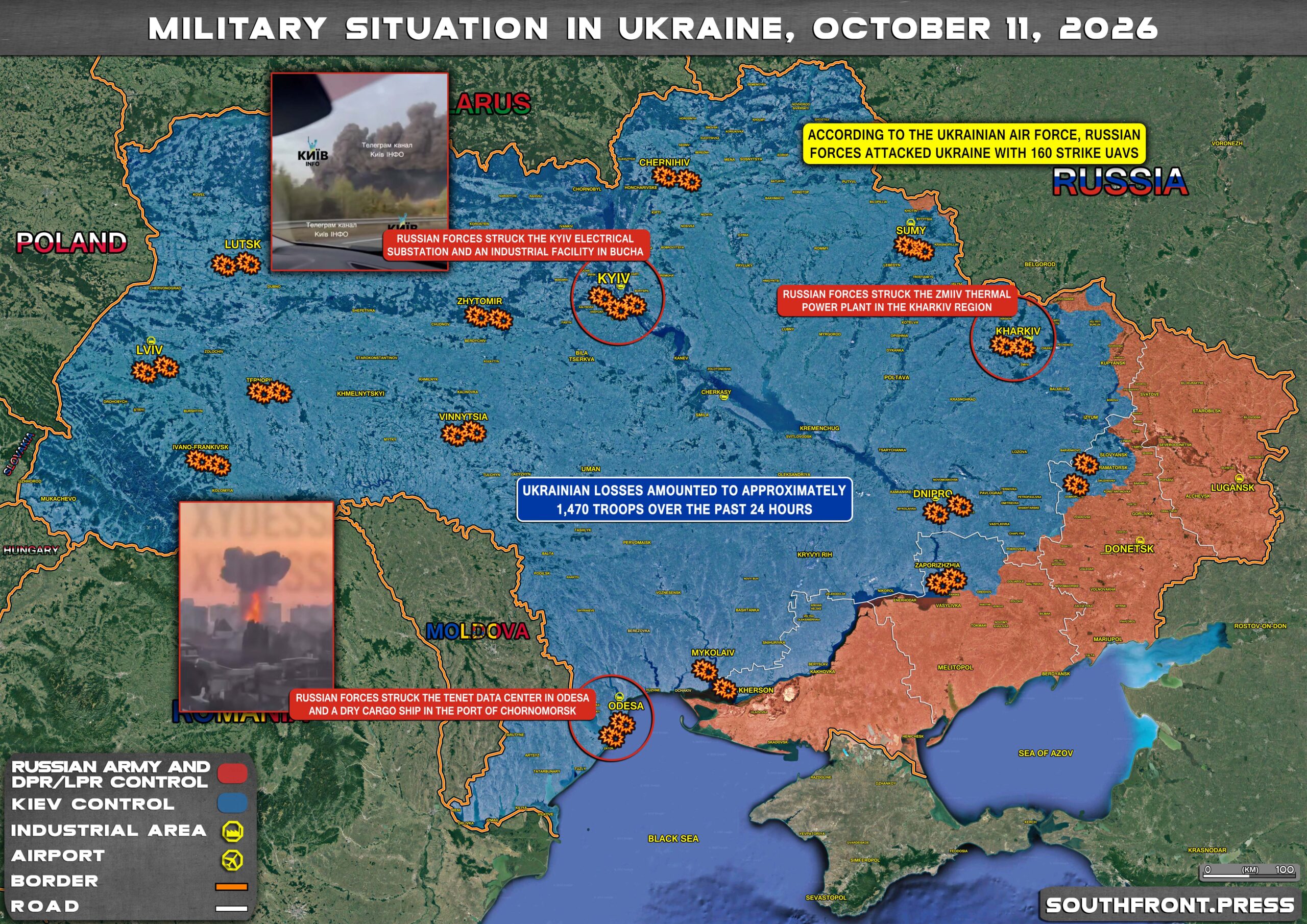
Military Situation In Ukraine And Ukrainian Attacks On Russian Territory On October 11, 2026 (Maps Update)

11 October 2026 at 18:55

Click to see the full-size image

  • Russian strikes destroyed targets in the Sumy, Kharkiv, Zaporizhzhia, Dnipropetrovsk, Kherson, Kyiv, Odesa, Lutsk, Lviv, Ivano-Frankivsk, Chernihiv, Mykolaiv, Vinnytsia, Rivne, Zhytomyr, Ternopil regions, and the DPR;
  • According to the Ukrainian Air Force, Russian forces attacked Ukraine with 160 strike UAVs;
  • Russian forces struck the Tenet data center in Odesa and a dry cargo ship in the port of Chornomorsk;
  • Russian forces struck the Kyiv electrical substation and an industrial facility in Bucha;
  • Russian forces struck the Zmiiv Thermal Power Plant in the Kharkiv region;
  • Ukrainian losses amounted to approximately 1,470 troops over the past 24 hours.

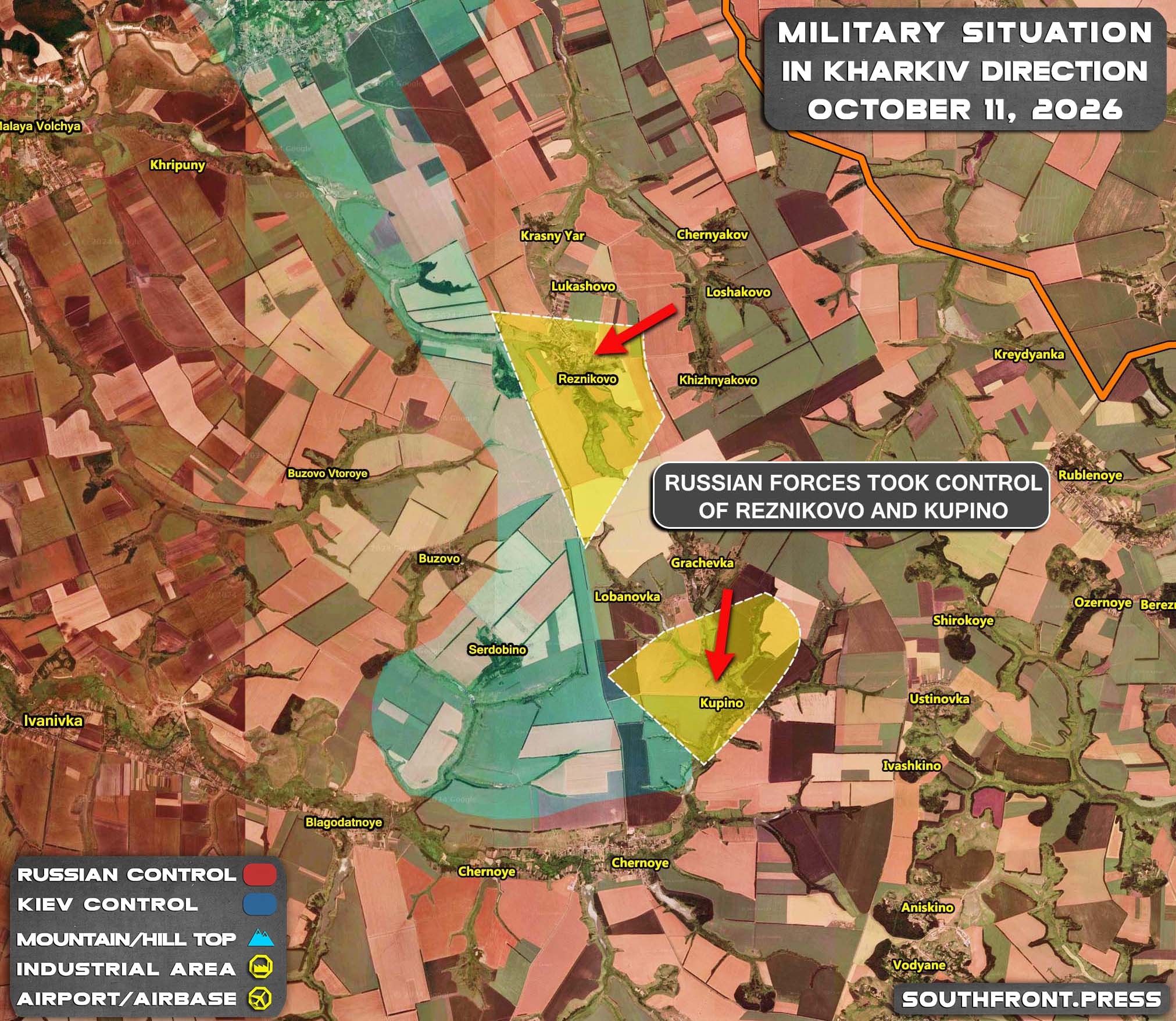
Click to see the full-size image

  • Russian forces took control of Reznikovo and Kupino.

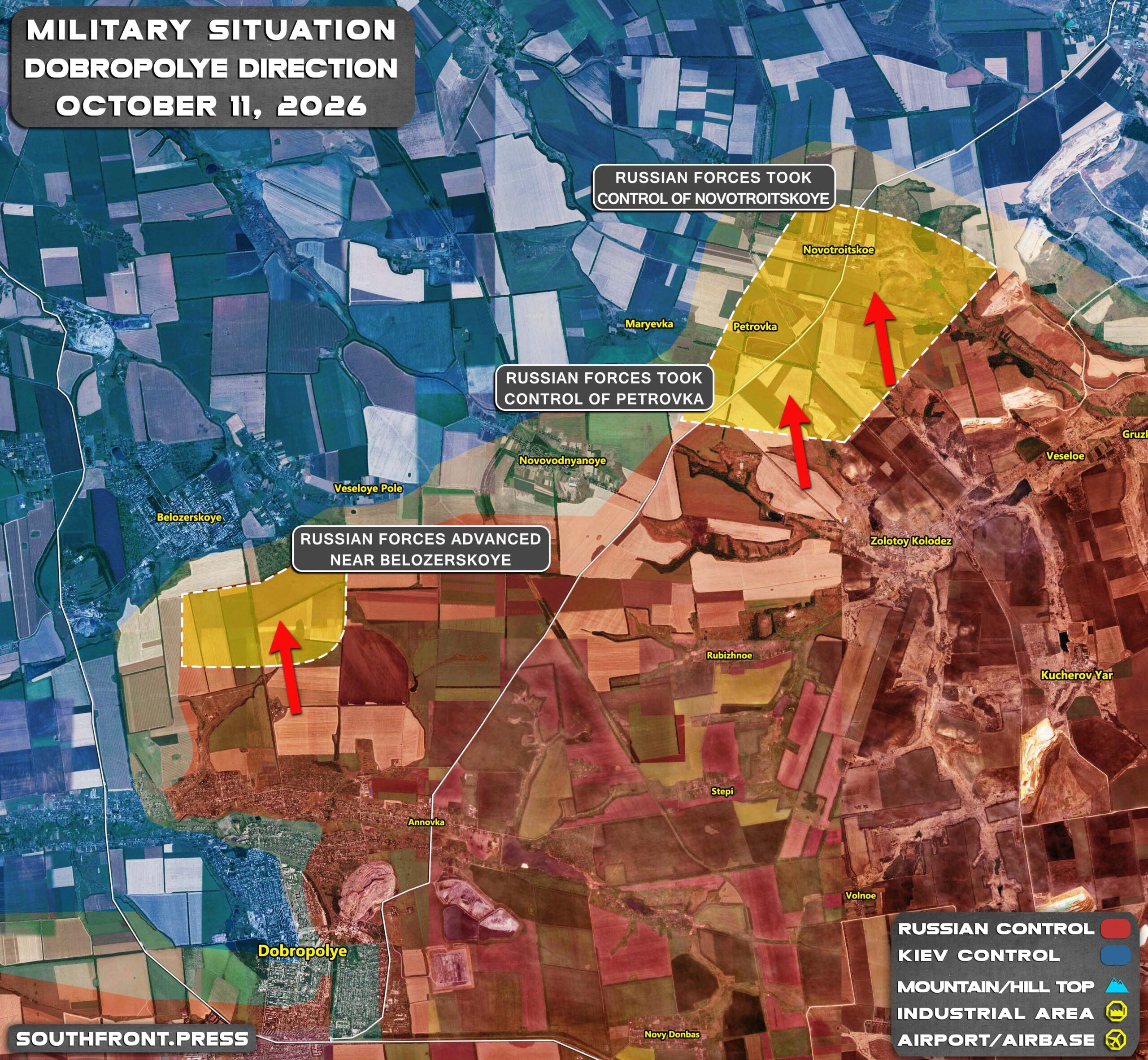
Click to see the full-size image

  • Russian forces advanced near Belozerskoye;
  • Russian forces took control of Petrovka;
  • Russian forces took control of Novotroitskoye.

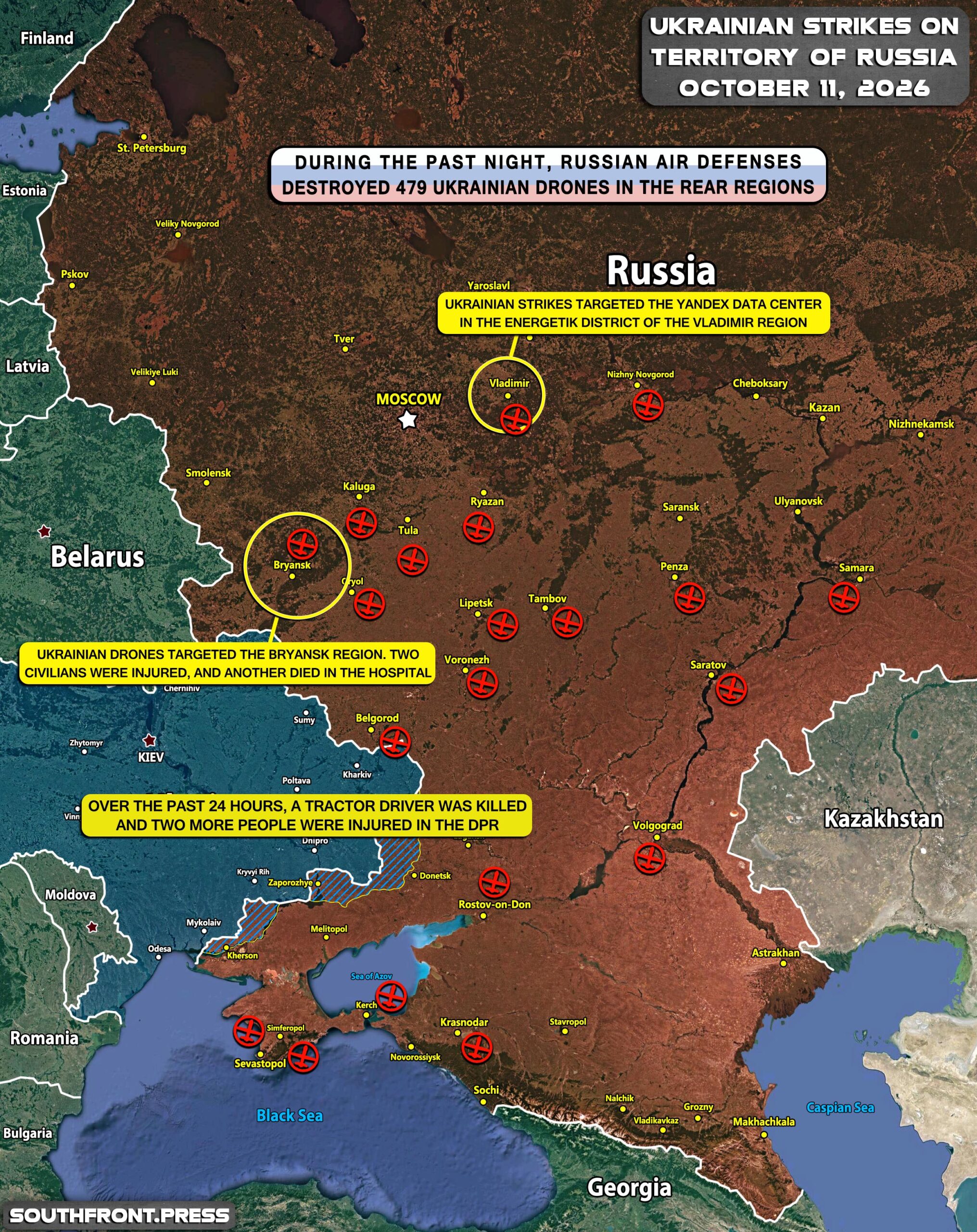
Click to see the full-size image

  • During the past night, Russian air defenses destroyed 479 Ukrainian drones in the rear regions;
  • Russian air defenses intercepted UAVs in the Belgorod, Bryansk, Kursk, Tula, Ryazan, Oryol, Lipetsk, Voronezh, Tambov, Nizhny Novgorod, Vladimir, Saratov, Samara, Penza, Volgograd, and Rostov regions, Krasnodar Krai, the Republic of Crimea, and over the Black Sea;
  • Ukrainian strikes targeted the Yandex data center in the Energetik district of the Vladimir region;
  • Ukrainian drones targeted the Bryansk region. Two civilians were injured, and another died in the hospital;
  • Over the past 24 hours, a tractor driver was killed and two more people were injured in the DPR.

MORE ON THE TOPIC:

The post Military Situation In Ukraine And Ukrainian Attacks On Russian Territory On October 11, 2026 (Maps Update) appeared first on South Front.

The Baltic Fuse: How Europe Is Building the Infrastructure for War With Russia

11 October 2026 at 18:43

Click to see the full-size image

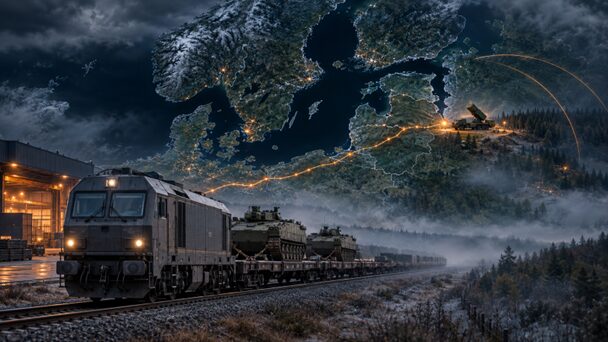
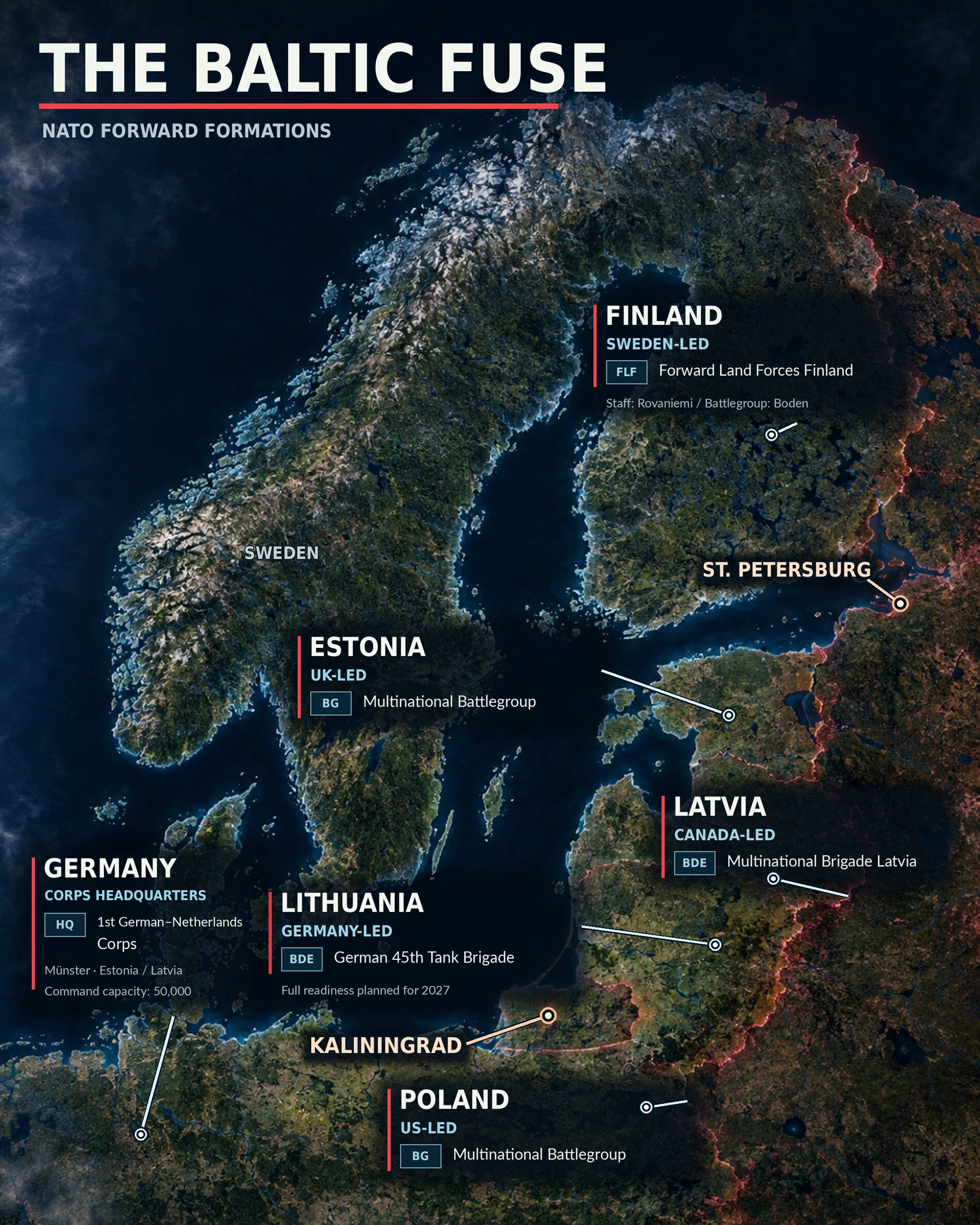
Europe is shortening the time it takes to wage a major war. Military transport approvals are meant to take hours rather than days, intelligence to feed more quickly into strike decisions, and a new generation of missiles to bring targets deep inside Russia within reach. Behind the forward garrisons, Europe is building transport networks, reserves, and ammunition production capacity. Taken together, these measures point beyond deterrence to practical preparations for waging war against Russia, including operations deep inside its territory.

The dates 2027, 2028, and 2030 in European rearmament programs can easily suggest that there is still time. But they mark a schedule for building military capabilities, not a guaranteed period of peace. The central question for the coming months is not whether armies will finish rearming in time, but whether a clash can be avoided before they do.

Estonia: A Narrow Front, a Deep Strike

Estonia offers a clear picture of the opening phase this system is being built to fight. The country’s military budget rose 42% in 2026 to €2.4 billion, or 5.4% of gross domestic product. Arms procurement accounts for €1.27 billion – more than half the total. Meanwhile, the headquarters and elements of the 1st Infantry Brigade are moving from Tapa to Jõhvi, roughly 50 kilometers from the Russian border.

A €20.5 million base is under construction in Narva, with €19 million coming from the European Union. Completion is scheduled for summer 2028. Its permanent garrison will number around 200, but it will accommodate up to 1,000 troops in a crisis. The gap between those figures reveals a base designed for rapid expansion. A small garrison is being equipped to receive reinforcements quickly, right on the border.

Holding that ground requires more than barracks. Procurement programs call for nine American HIMARS and nine South Korean Chunmoo multiple-launch rocket systems, both capable of firing ballistic missiles. The relevant munitions have stated ranges of up to 300 and 290 kilometers, respectively. The new concept combines holding the border with deep strikes from the first day of an invasion.

The scale of the response could far exceed that of the opening clash. A battle for a border town could lead to strikes on targets hundreds of kilometers away. Tallinn wants to deny its opponent the option of fighting a small war by preparing to expand its geographical scope.

This also changes what allied assistance means. Allied planning must account not only for how long a small army can hold out until reinforcements arrive, but also for how far the fighting may spread before they reach the front. A missile can be launched before a major formation completes its deployment. Allies may arrive to find that the conflict has already widened.

In such a situation, Estonia and the other Baltic states could serve not only as defensive positions but also as staging grounds for attacks on Russian territory. For Moscow, the issue is no longer simply the size of Estonian units, but the depth of the strikes they envisage. Tallinn, in turn, faces the question of who will sustain its forward forces if the first battles fail to decide the outcome. Sustaining such a war would require support from beyond Estonia. One national budget and a handful of batteries cannot carry that burden.

Click to see the full-size image

Germany: An Industrial Base Behind the Garrison

On October 5, Martin Jäger, head of Germany’s Federal Intelligence Service, told the Bundestag: “The point of no return has been passed in the war with Ukraine, and NATO is considering a scenario involving a limited Russian military clash with the Baltic states.” He linked the more immediate danger to limited Russian action in the Baltics that could test the allies’ response. He said intelligence had seen no signs of preparations for a major attack on NATO. The discussion therefore concerns not only a major war after rearmament is complete, but a smaller confrontation capable of triggering an allied response.

In the Baltic scenario, Berlin is publicly discussing the risk of a clash while its forward force is still taking shape. The brigade’s readiness date is not the date on which the threat begins.

In Lithuania, Germany is building a permanent heavy brigade as one element of that support. Full readiness is scheduled for the end of 2027, with 4,800 military personnel and 200 civilian employees. Its core consists of the 122nd Panzergrenadier Battalion, the 203rd Tank Battalion, and a multinational battle group. Until the formation is complete, the Germany-based 37th Brigade is to provide support.

The forward formation is thus tied to forces farther inside Europe. Civilian infrastructure underscores the permanence of the deployment. A school for the children of Bundeswehr personnel opened in Vilnius in September 2025. Units are not simply moving in – families are settling down. A political commitment acquires a permanent address, and the safety of German personnel becomes part of any future crisis in the host country.

Münster, October 1, 2026. Rutte describes a headquarters capable of commanding 50,000 troops and responsible for NATO forces in Estonia and Latvia. Behind the talk of forward battalions lies corps-level command capacity


But a permanent garrison needs a steady supply of ammunition. Rheinmetall’s new plant in Unterlüß is scheduled to reach an annual output of 350,000 artillery shells in that same year, 2027. The nearly €500 million facility was built in 15 months. Across its entire production network, including overseas sites, the company is targeting roughly 1.5 million shells a year from 2027.

The brigade answers the question of who will enter the fight. The factories answer how to keep fighting once stockpiles run down. The 2027 target is for strengthening this system, not creating it from scratch. Reaching the factory’s planned capacity determines future supply volumes, but it does not set a date before which a clash is impossible. Initial stocks sustain the opening phase of combat. Regular deliveries determine whether its intensity can be maintained.

Between the factory and the front lies the transport network. Europe’s military mobility proposal calls for cross-border transport permits to be processed within three working days, with an emergency procedure taking no more than six hours. A proposed €17 billion would fund the relevant infrastructure under the 2028–2034 budget. For Germany, a transit country, that means bridges, railways, and the capacity of routes leading east.

On October 7, European Defense Commissioner Andrius Kubilius called for this work to accelerate, saying Europe was not yet able to deter Russia. Unlike an exercise, infrastructure upgrades remain after the columns return to barracks. A stronger bridge and a faster permit procedure create a lasting ability to concentrate forces.

A border battle thus gains industrial and logistical depth. But sustaining one’s own forward forces is only half the military equation. The other half is disrupting opposing forces’ supply and command systems. That requires more than additional railcars loaded with shells. It requires weapons with much greater reach.

Britain: A European Deep-Strike Arsenal

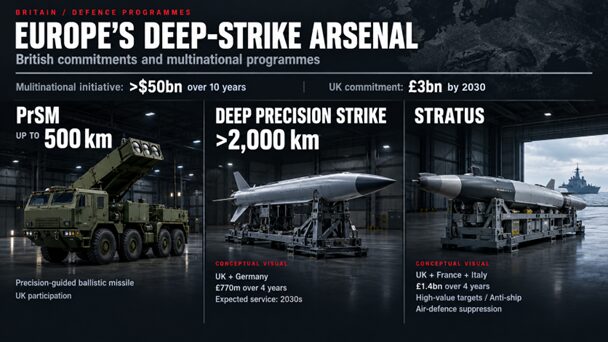
London is driving precisely this part of Europe’s preparations. On July 8, 2026, it announced an initiative bringing together roughly a dozen partners to invest more than $50 billion in long-range strike capabilities over ten years. The stated range bracket runs from 300 to more than 2,000 kilometers. Britain’s own commitment within the initiative is £3 billion by 2030.

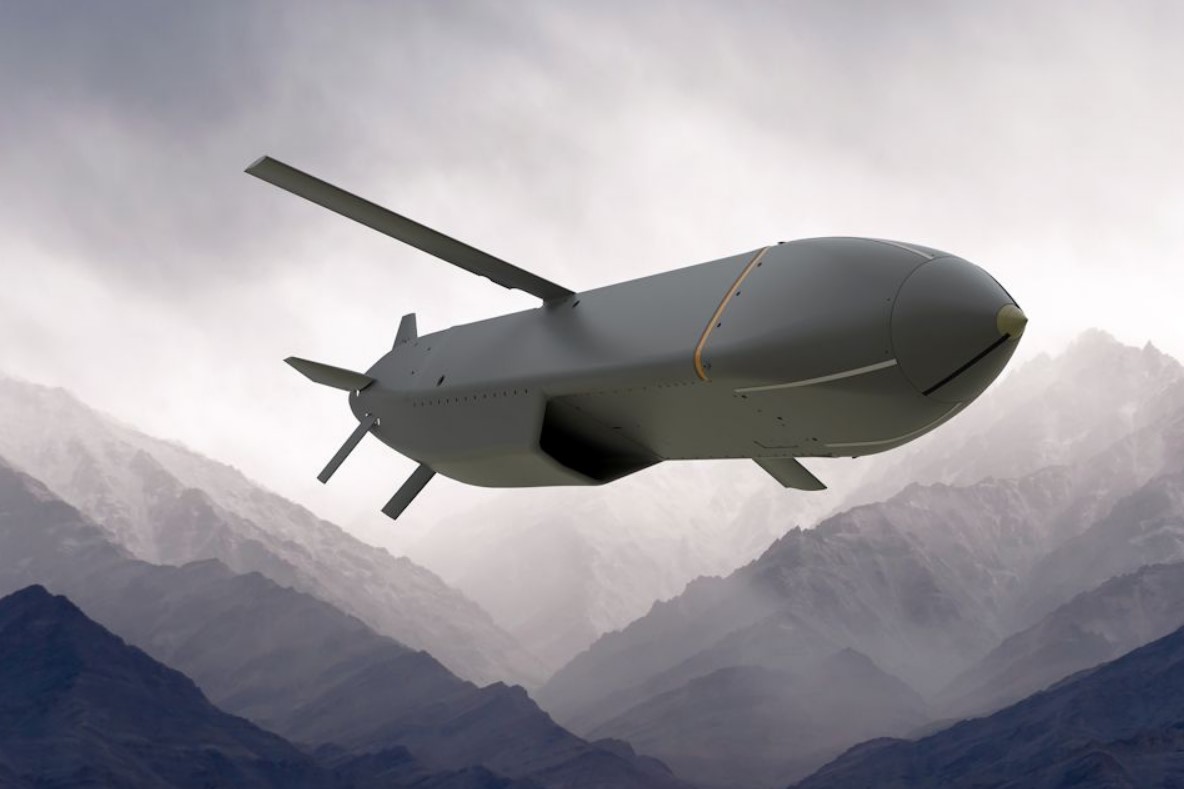
The British-German Deep Precision Strike program envisages stealthy and hypersonic weapons with ranges exceeding 2,000 kilometers, initially focused on ground launch. Britain is investing £770 million over four years, with entry into service expected in the 2030s. Another £1.4 billion over four years is earmarked for Stratus, a program with France and Italy covering strikes against high-value targets and ships, as well as the suppression of air defenses.

Britain’s participation in PrSM (Precision Strike Missile), a precision-guided ballistic missile program with a stated range of up to 500 kilometers, adds another layer. The emerging capabilities span several range bands, from around 300 kilometers for the Estonian systems through 500 for PrSM to more than 2,000 for the British-German development. Although the programs are at different stages, they share a clear direction. Weapons for fighting at the border are being supplemented with weapons for striking deep behind it.

The missiles of the next decade show how far these strike capabilities are intended to expand. But the next crisis will unfold with whatever weapons are available when it begins. A 2,000-kilometer range is not a prerequisite for a clash in the Baltics. It changes the potential scale of the war, not the earliest date on which it can break out.

Click to see the full-size image

Turning national purchases into a combined capability requires a common framework for employing them. In July 2025, General Christopher Donahue outlined elements of eastern-flank planning built around compatible launchers, fire control, and data sharing. He cited Kaliningrad as an example of military capabilities that could be neutralized by ground-based means in an exceptionally short time: “We have already planned this. We have already developed this.”

The discussion also included cloud-based data sharing and Palantir’s Maven Smart System, purchased by NATO to analyze information and support command decisions. The aim is to turn disparate reports into a common picture more quickly. When several armies use compatible command systems, their arsenals gain additional value. Range puts the target within reach, while data sharing allows missions to be coordinated.

But the deeper the planned strikes, the harder it becomes to separate support for a border battle from an expansion of the war. To the attacking side, a target may be part of the other side’s military supply system. To the other side, hitting it may signal that the conflict has crossed a new threshold. The use of conventional weapons thus leaves unresolved how to deter a response that would overturn the assumption of a limited clash.

France: The Nuclear Limit of Europe’s Calculations

This is where France’s nuclear deterrent enters the European picture. On October 6, Le Vigilant conducted an acceptance firing of an M51.3 ballistic missile following its refit. The missile carried no nuclear warhead. In service since October 2025, the variant carries new TNO-2 warheads. The French Defense Ministry cites improvements in range, accuracy, and the ability to penetrate missile defenses.

Brittany, October 6, 2026. Le Vigilant launches an M51.3 without a nuclear warhead


Macron stated the political message bluntly: “To be free, you must be feared. And to be feared, you must be strong.” France’s modernization adds a nuclear dimension to Europe’s conventional military buildup.

That European dimension is taking a more concrete form. On March 2, 2026, Macron outlined an “advanced deterrence” framework allowing partners to participate in French nuclear exercises and opening the possibility of temporary deployments of strategic forces on allied territory. Germany, Poland and Sweden were among the countries joining the dialogue. But the authority to use nuclear weapons – and to define the vital interests they protect – remains exclusively French. In the Baltic scenario, closer cooperation does not establish an automatic French nuclear response to a border clash. It leaves the decisive threshold in Paris, deliberately undefined.

After the First Clash

Taken together, these national programs suggest that the West is preparing not merely to deter Russia, but to build the capacity for offensive operations against it. In this reading, forward deployments, industrial expansion and deep-strike weapons are interconnected preparations for a war that could extend into Russian territory. They do not, by themselves, establish a single operational plan or prove a decision to initiate hostilities. Conventional forces are meant to make an opposing military operation prohibitively costly, while nuclear forces are meant to deter the most extreme escalation. The weakness is that neither side gets to decide how much damage the other will tolerate.

That problem is especially acute around Kaliningrad, where plans to suppress military infrastructure sit alongside the question of the region’s links to the rest of Russia. If actions during a crisis are perceived as an attempt to cut the region off by force, the argument will no longer be about intentions announced at a press conference. It will be about consequences the other side believes it must stop immediately.

The danger in the coming months lies in the gap between limited intent and an unrestricted response. Berlin is discussing localized action in the Baltics. Tallinn is preparing for deep strikes from day one, while foreign garrisons tie a border battle to allied involvement. Each side may consider its own move limited. Neither can count on the other side accepting its definition of what is permissible.

European capitals therefore need to define where military action would stop after the first clash, whether at the border or after strikes on depots, airfields or targets in Kaliningrad. The programs examined here spell out how to build military power, but offer no mechanism for ending the fighting. Missile range is not strategic foresight. Confidence that escalation can be controlled could turn a system of deterrence into a mechanism for widening the war well before 2030.


MORE ON THE TOPIC:

The post The Baltic Fuse: How Europe Is Building the Infrastructure for War With Russia appeared first on South Front.

George Soros elege 7 deputadas trans pelo Brasil

By: A A
11 October 2026 at 16:05

Sete trans eleitas no Brasil com financiamento indireto de George Soros via ANTRA, ABGLT e Washington Brazil Office. Política identitária artificial.

Junte-se a nós no Telegram , X e VK.

Escreva para nós: info@strategic-culture.su

Sete políticos autodenominados “mulheres trans” foram eleitos para cargos legislativos nas eleições gerais ocorridas no último domingo (04) no Brasil.

Erika Hilton (PSOL) e Duda Salabert (PSOL) foram reeleitas, enquanto Thabatta Pimenta (PSOL) estreará na Câmara Federal. Por sua vez, nos estados foram reeleitas Linda Brasil (PSOL) em Sergipe e Dani Balbi (PCdoB) no Rio de Janeiro, enquanto Sofia Favero (PSOL) foi eleita pela primeira vez para a Assembleia Legislativa de São Paulo e Natasha Ferreira (PT) também estreará na Assembleia Legislativa do Rio Grande do Sul.

A principal pauta dessas candidaturas é o transativismo. É a típica política identitária: defender seus próprios interesses, interesses de um setor minúsculo da classe média, contra os interesses da maioria dos explorados e oprimidos. Os transativistas vêm se destacando no Brasil por sua oposição aos direitos básicos das mulheres e pela utilização do aparato repressivo do Estado (Judiciário e polícia) para perseguir os cidadãos comuns, geralmente trabalhadores humildes, tachados de “transfóbicos”.

Tal empreitada não é feita através de um trabalho de conscientização política, nem muito menos é fruto de esforços dos oprimidos que, organizados de forma independente, conseguem criar um movimento social contra os interesses dos poderosos. Não. É um movimento integralmente artificial e financiado pelos mais poderosos entre os poderosos.

As Open Society Foundations, do especulador financeiro multibilionário George Soros, admitem abertamentem há dez anos que “há muito tempo apoiam organizações trans e intersexo em todo o mundo”. Ainda em 2013, as OSF apresentavam seu ponto de vista sobre a transexualidade: “a identidade de gênero é o sentido interno de uma pessoa de ser um homem, uma mulher ou outro gênero.”

As OSF são a ponta de um guarda-chuva, pelo qual repassam fundos para organizações captadoras de forma hierárquica. Assim, a organização mãe originada da iniciativa de George Soros ainda na década de 1980 para derrubar a União Soviética e seus aliados consegue levar financiamento a um número incontável de ONGs.

No Brasil, a Associação Nacional de Travestis e Transexuais (ANTRA) recebe financiamento indireto das OSF. Estas repassaram 25,8 milhões de reais ao Fundo Brasil de Direitos Humanos entre 2016 e 2024. O Fundo Brasil, por sua vez, aportou 400 mil reais à ANTRA em 2024.

Além disso, Bruna Benevides, presidente da ANTRA, é integrante do conselho deliberativo da Conectas Direitos Humanos, ONG que é a maior receptora de fundos das OSF (34 milhões de reais até 2024).

Em relatório com mapeamento e lista de candidaturas para as eleições deste ano, a ANTRA assegura ter um “compromisso inegociável de eleger pessoas trans”. No total, foram 116 candidaturas registradas como “trans” pelo Brasil.

Após o resultado eleitoral, a organização comemorou a eleição das sete “mulheres trans” para cargos legislativos: “estávamos ansiosas por este resultado! Ampliamos nossas presenças com votações extremamente expressivas e demos uma bela resposta à transfobia!”

Quem também celebrou o resultado foi a Associação Brasileira de Lésbicas, Gays, Bissexuais, Travestis, Transexuais e Intersexos (ABGLT): “as pessoas LGBTQIA+ ampliaram sua participação política e demonstraram, nas urnas, a força que construímos”, destacando a eleição de “mulheres trans” para a Câmara Federal. A publicação foi feita nas redes sociais, em parceria com a ANTRA e Bruna Benevides.

A ABGLT é afiliada ao Washington Brazil Office, entidade de lobby sediada na capital dos Estados Unidos e que recebeu 300 mil dólares de financiamento das Open Society Foundations em 2023. Ela também é parceira institucional da Associação Brasileira de Organizações Não Governamentais (Abong), que recebeu R$ 4,3 milhões de financiamento das OSF entre 2016 e 2024.

A Abong também recebeu, no ano passado, R$ 1,5 milhão em recursos de emendas parlamentares de Erika Hilton, que é presidente da Frente Parlamentar Mista por Cidadania e Direitos LGBTI+ do Congresso Nacional. Esse montante era destinado a ações de “empoderamento e capacitação da comunidade LGBTQIA+”, “fortalecimento das paradas LGBTQIA+” e “advocacy e colaboração com a Frente Parlamentar LGBT+” da própria Hilton.

Hilton tem relações mais profundas com o guarda-chuva de George Soros. Um documentário biográfico de Hilton recebeu financiamento do William Greaves Research & Development Fund. Dirigido por Chica Andrade, que é um dos organizadores da Associação de Profissionais Audiovisuais Trans, o filme aparentemente ainda não foi concluído, ou ao menos ainda não foi lançado – embora a previsão de lançamento fosse para o início deste ano. O Fundo William Greaves contemplou o documentário em seu programa de financiamento de 2023-2024 com 25 mil dólares. O Fundo pertence à Firelight Media, uma organização sem fins lucrativos sediada em Nova Iorque que tem entre seus apoiadores as Open Society Foundations.

Hilton também é profundamente relacionada com a ANTRA e com Bruna Benevides. Em 2024, a deputada indicou Benevides para receber a Medalha do Mérito Legislativo da Câmara Federal e deu apoio institucional ao Guia para Migrantes Trans nos EUA, elaborado pela ANTRA. Em 2025, a associação enviou à deputada uma proposta legislativa para alterar o Código Penal e aumentar as penas por crimes cometidos contra “mulheres trans”. Em setembro deste ano, a ANTRA apresentou uma representação à Procuradoria-Geral Eleitoral pedindo apuração de “possíveis episódios de violência política de gênero” contra Hilton – Benevides foi quem apresentou publicamente a posição da entidade.

Duda Salabert também deu apoio institucional ao guia da ANTRA. Thabatta Pimenta participou, ao lado de Benevides, do XX Seminário LGBTQIA+ do Congresso Nacional em 2023, bem como do EleiTrans, encontro de transexuais famosos que se apresentam como lideranças que foi promovido pelo Projeto Pajubá e que contou com a colaboração da ANTRA, ABGLT e Abong.

Linda Brasil, por sua vez, participou de atividades institucionais da ANTRA. Em janeiro de 2025, por exemplo, esteve na cerimônia do acordo entre o Ministério das Mulheres e a ANTRA, ao lado de Benevides. A deputada estadual do PSOL foi uma das principais figuras políticas transexuais a participar da “Marsha Trans Brasil” deste ano, organizada pela ANTRA e pelo Instituto Brasileiro de Transmasculinidades (Ibrat).

Dani Balbi esteve junto com Linda na manifestação. Em 2023, Balbi apresentou na Assembleia Legislativa do Rio de Janeiro um projeto concedendo a Benevides o Prêmio Cidadania, Direito e Respeito à Diversidade

Natasha Ferreira também participou do EleiTrans e da “Marsha Trans Brasil”.

Trump Turns to Russian Diesel. Can Britain Keep Zelensky Afloat?

11 October 2026 at 15:01

File image.

President Donald Trump called for Ukraine to replace Volodymyr Zelensky after repeated United States warnings over Ukrainian attacks on Russian oil refineries failed to change Kyiv’s course.

The confrontation intensified after Trump reached a diesel supply agreement with Russian President Vladimir Putin, easing restrictions on Russian fuel exports amid a global energy crisis.

Reports that U.S. envoys raised the prospect of cutting intelligence support have further exposed the stakes for Kyiv, while Zelensky’s talks with Britain raise the question of whether European allies could compensate if Washington withdraws its backing.

Refinery Strikes and Fuel Prices

Trump accused Zelensky of prolonging the conflict, contributing to high fuel prices through attacks on Russian refineries and failing to take opportunities to negotiate an end to the conflict.

“I suggest they get a new leader who can make a deal because he could have made many deals and for some reason he never does,” Trump told reporters at the White House on October 10. “And I think it’s time for Ukraine to get a new president.”

The remarks followed a report by Axios, citing a U.S. official with direct knowledge of the discussions, that Trump decided to pursue the Russian diesel arrangement after Zelensky ignored half a dozen American requests to stop attacking Russian oil refineries.

“Zelensky is misreading the room,” the official said. “By continuing to hit refineries, he is eroding the good will that he has built with Trump over the last six months.”

According to the official, the administration wanted Zelensky to stop the attacks unilaterally because of their effects on fuel prices in the U.S.

Trump made that connection explicit when he accused the Ukrainian president of creating problems for American farmers, ranchers and truckers.

“He wants to make problems for the world. He wants to make problems for our farmers, our ranchers, with diesel fuel,” he said on October 10.

High fuel costs have become a political liability for the administration ahead of the November 3 midterm elections, in which Republicans are seeking to retain control of Congress.

The national average price of diesel stood at $6.28 per gallon on October 9, according to AAA (American Automobile Association), after reaching a record $6.53 on September 22.

Continued Ukrainian strikes have pushed Russia to restrict diesel exports, adding pressure to a global market already disrupted by the war involving Iran.

The Diesel Deal and Its Conditions

The diesel agreement itself represents a substantial shift in U.S. policy toward Moscow. Following a roughly 90-minute telephone conversation with Putin on October 9, Trump announced that Russia would immediately supply 300,000 metric tons of diesel, followed by another 500,000 tons in November and 1 million tons immediately afterward. A further 3 million tons would follow, depending on the state of Russia’s refineries. The supplies were intended for U.S. and global markets.

The full 4.8 million metric tons would amount to roughly 36 million barrels, equivalent to about nine days of U.S. distillate consumption at an average of around 4 million barrels per day.

In addition, by adding millions of barrels of Russian diesel to the global market, the agreement could increase available supplies, ease competition among buyers and put downward pressure on wholesale prices in the United States and other countries.

File image.

The U.S. Treasury Department subsequently issued a temporary license easing sanctions on Russian diesel shipments through April 2027.

The announcement came only weeks after Trump signed a sanctions law targeting Russian energy revenues, underscoring the administration’s willingness to relax restrictions when it considers energy prices a pressing domestic concern.

Zelensky, who said he was blindsided by the announcement while Ukrainian and European officials were meeting with Trump’s envoys in Miami, condemned the decision.

“It looks like a happy birthday present for Putin,” he said, referring to the Russian president’s birthday earlier in the week.

The Ukrainian president called the arrangement “not fair and not honest” and said allowing Russia to sell more petroleum products amounted to an “investment in a war that must be ended.”

Zelensky argued that he would have supported easing sanctions if Putin had agreed to halt attacks on energy infrastructure in both countries.

“If the price is energy ceasefire, this negotiation is good,” he said.

That was the central disagreement: Zelensky wanted a reciprocal energy ceasefire; Washington wanted Ukraine to halt its refinery strikes unilaterally.

Washington’s Intelligence Leverage

The Miami talks also exposed the leverage Washington may be prepared to use. According to the Ukrainian account, Trump’s envoys, Steve Witkoff and Jared Kushner, threatened to cut off Ukraine’s access to U.S. intelligence if Kyiv continued ignoring requests to halt the refinery attacks.

The American side denied making an explicit threat, describing the exchange as a reminder that Washington was providing ammunition and intelligence and that Ukraine should avoid actions that harm American consumers.

Even without a confirmed ultimatum, the exchange underscored how intelligence and military assistance could become instruments of pressure on Kyiv. Neither account establishes that Washington has decided to end its support for Ukraine.

Zelensky’s public criticism of the diesel deal, meanwhile, has given Trump another reason to portray the Ukrainian president as an obstacle to negotiations.

Can Britain Fill the Gap?

Zelensky spoke with British Prime Minister Andy Burnham on October 10, following Trump’s demand for a new Ukrainian president.

According to the British government’s account, Burnham expressed “complete solidarity” with Ukraine and pledged to continue strengthening sanctions on Russia. The leaders also called for an immediate energy ceasefire covering Russian attacks on Ukrainian infrastructure and attacks on shipping in the Black Sea. They agreed to meet in person in the coming days.

Britain has consistently backed Kyiv’s ability to carry the conflict deeper into Russian territory. It has supplied Ukraine with Storm Shadow long-range cruise missiles, and in August authorized the release of classified information about British components of SCALP, the French-produced counterpart, to support planned assembly lines in Ukraine with France.

File image.

Moscow has repeatedly warned Britain and other European governments that such assistance risks escalating the conflict.

London’s continued backing of Ukraine therefore raises a question that has become more urgent following Trump’s remarks. If Washington withdraws or sharply reduces its support, will Britain be prepared to sustain Kyiv’s military campaign despite American pressure, or will it attempt to persuade Zelensky to accommodate Trump’s demands?

Britain has substantial commitments of its own. The U.K. House of Commons Library reported in August that the country had pledged £25 billion in support for Ukraine since February 2022, including £16 billion in military financing. Prime Minister Burnham also confirmed in July that Britain would continue providing £3 billion in annual military assistance.

The Kiel Institute’s Ukraine Support Tracker has emphasized Europe’s continued dependence on American weapons systems. U.S. stockpiles accounted for more than 90% of the military aid delivered through NATO’s Prioritised Ukraine Requirements List mechanism in the first half of 2026, demonstrating how difficult it would be for European governments to replace critical American capabilities quickly.

The gap extends beyond the volume of financial assistance. U.S. intelligence, ammunition and access to American-made defense systems have been central to Ukraine’s ability to sustain its military operations.

For Zelensky, the choice is becoming more consequential. Continuing attacks on Russian infrastructure could preserve Ukraine’s ability to impose economic costs on Moscow, while deepening the breach with the Trump administration on which it still depends for crucial support.

For Britain, the dilemma is equally stark. It could increase support for Ukraine’s long-range attack drone programs and help accelerate the development of Ukrainian ballistic missiles, strengthening Kyiv’s ability to strike targets inside Russia, or use its influence to push for a settlement that keeps the U.S. engaged.

Britain’s problem is not whether it will stand behind Zelensky, but how much of that support depends on Washington. Larger British commitments would not by themselves replace American intelligence or guarantee access to U.S.-made weapons. London can promise to keep Zelensky afloat; it cannot simply write a check to replace Washington.

_______________________________________________________________________________________________________________________

SouthFront: Analysis and Intelligence

NOW hosted at southfront.press

Previously, SouthFront: Analysis and Intelligence was at southfront.org.

The .org domain name had been blocked by the US (NATO) (https://southfront.press/southfront-org-blocked-by-u-s-controlled-global-internet-supervisor/) globally, outlawed and without any explanation

Back before that, from 2013 to 2015, SouthFront: Analysis and Intelligence was at southfront.com

SOUTHFRONT.PRESS

MORE ON THIS TOPIC:

The post Trump Turns to Russian Diesel. Can Britain Keep Zelensky Afloat? appeared first on South Front.

No Permanent Allies: Pakistan and the Politics of National Interest

11 October 2026 at 13:59
In a world of shifting alliances, Pakistan must balance strategic partnerships with national interests — and the key question is whether the Makkah Pact will become a tool of strategic autonomy or another form of dependence. In recent years, the world has seen an unprecedented shift in global alliances. According to the realist school of […]

Satanist Survives Lethal Injection: What Lies Behind the Failed Execution in Tennessee

11 October 2026 at 13:06

Click to see the full-size image

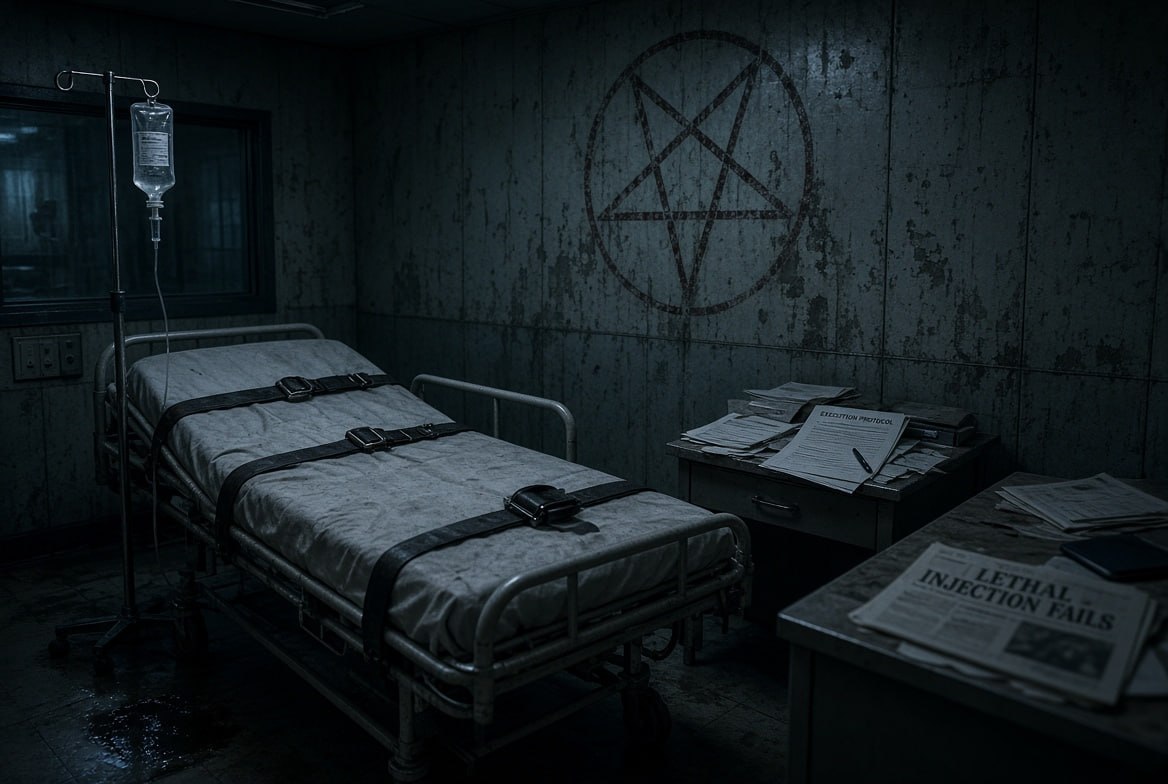
On the night of 30 September 2026 an event occurred in the state of Tennessee that fits neither legal nor moral frameworks: 50-year-old Christa Gail Pike, sentenced to death for a murder committed at the age of 18, survived two lethal injections and remained conscious. Officially this is termed a “botched execution” and “criminal negligence.” Yet when the details are examined more closely, the picture begins to resemble not a tragic accident but a carefully planned operation to save a woman whose name had for too long been linked with Satanism, the “Satanic Panic” of the 1990s, and a network of influential people whom it is now customary to group under the so-called “Epstein class.”

To begin with, Christa Pike is not merely a criminal. She became a symbol of an entire era. In 1995, when she was 18, she and her boyfriend Tadaryl Shipp abducted and savagely murdered 19-year-old Colleen Slemmer. On the victim’s chest Shipp carved a pentagram a symbol that instantly turned the case into a sensation.

Shipp later confessed to police that he had “dabbled in Satanism” and regarded the killing as a “Satanic sacrifice.” America in the 1990s was gripped by the “Satanic Panic,” and the Pike case fitted that narrative perfectly. She was sentenced to death and spent three decades on death row.

Click to see the full-size image


Now to what occurred on 30 September. Pike was administered two doses of pentobarbital a drug that in such cases is supposed to stop breathing and the heart with certainty. She did not die. Moreover, 40 minutes after the injections she was still breathing, snoring and complaining of pain in her arm.

Witnesses were escorted from the chamber, and Pike was taken to hospital, where doctors at first considered her brain-dead; yet several days later she regained consciousness, began to speak and even to walk.

The official version is a “badly inserted needle” or a “ruptured vein.” There is a nuance, however: Pike’s lawyers had warned before the execution that she had “bad veins” and that administration of the drug would be difficult. The needle was inserted seven times.

If this were ordinary negligence, why did the executioners, knowing of the problem, fail to prepare properly? Why was a central venous catheter the instrument used precisely in such cases not employed? Why was the drug not replaced with another if the pentobarbital had “degraded” or “had reduced potency,” as the lawyers claim?

And now the most interesting part. The Pike case is not simply a crime chronicle. It forms part of a broader narrative linked to the “Epstein class” a network of politicians, financiers and security officials associated with Jeffrey Epstein. In Substack blogs specialising in “alternative investigations” the idea is increasingly voiced that the Pike story is no accident but a link in a chain of events rooted in the 1990s. Several coincidences are pointed out. First: Epstein visited the Clinton White House seventeen times and this occurred roughly in the same years that the “Satanic Panic” and the Pike case were unfolding.

Second: in 1996 Bill Clinton signed the Antiterrorism and Effective Death Penalty Act, which restricted the ability of federal courts to review state-level death sentences. That law directly contributed to the fact that Pike, whose childhood had been destroyed by violence and whose mental state had not been properly taken into account, spent 30 years on death row.

Supporters of the conspiratorial version go further. They ask why precisely now, in 2026, when the “Epstein scandal” is again gathering momentum, the decision is taken to execute Pike and the execution fails in so demonstrative a fashion.

Why did Tennessee Governor Bill Lee, who had denied Pike clemency, immediately suspend all executions in the state after the botched procedure and order an “independent investigation”? Why did the head of the prison system resign? Why did the judge order the authorities to preserve all evidence, including the syringes and logs, after Pike’s lawyers accused officials of “concealing” evidence?

For the conspiracy theorists the answer is obvious: this was not a failure but a rescue. Pike did not “survive the execution” she was not allowed to be executed. Too many people at the very top had an interest in her remaining alive. Too many threads lead from her case to those who today prefer not to attract attention to themselves.

It is too convenient that a “botched execution” allows her life to be preserved without raising questions of clemency, while simultaneously creating a smokescreen for those who stand behind the scenes.

And while Pike lies in the prison hospital, her arms burned, strapped to the bed, she is alive. Alive despite two lethal injections, despite 30 years on death row, despite the fact that the entire U.S. justice system demanded her death.

Herein lies the central paradox: either we are dealing with the most extensive negligence in the history of American executions, or with the quietest rescue that has ever taken place within prison walls. And if the second version is correct, then Christa Pike is not merely a survivor. She is a pawn in someone else’s game who proved too valuable to be removed.


MORE ON THE TOPIC:

The post Satanist Survives Lethal Injection: What Lies Behind the Failed Execution in Tennessee appeared first on South Front.

Czech Vote Checks Babiš’s Momentum

11 October 2026 at 09:47
ANO enters numerous Senate run-offs, but opposition and regional candidates retain important ground Completed results from the Czech Republic’s municipal elections and first-round Senate vote have delivered a mixed verdict for Prime Minister Andrej Babiš. His ANO movement advanced candidates across the country, but won no Senate seat outright, while opposition and regional figures secured […]

Il Melonellum, la Consulta e il grande circo del centrosinistra: quando la legge elettorale diventa una questione di sopravvivenza

By: A A
11 October 2026 at 10:30

L’approvazione definitiva della nuova legge elettorale, prontamente ribattezzata Melonellum, ha offerto al centrosinistra l’occasione per mettere in scena questo straordinario esercizio di equilibrismo: una mano alzata in difesa della democrazia, l’altra impegnata a sistemare le liste per il 2027.

Segue nostro Telegram.

C’è un momento, nella vita politica italiana, in cui le grandi questioni della democrazia finiscono curiosamente per assomigliare alle piccole questioni della sopravvivenza parlamentare. È il momento in cui i partiti cominciano a parlare di rappresentanza, pluralismo, partecipazione e diritti costituzionali, mentre, sotto il tavolo, qualcuno conta i seggi, qualcun altro le firme e quasi tutti cercano di capire come assicurarsi un posto nella prossima legislatura. L’approvazione definitiva della nuova legge elettorale, prontamente ribattezzata Melonellum, ha offerto al centrosinistra l’occasione per mettere in scena questo straordinario esercizio di equilibrismo: una mano alzata in difesa della democrazia, l’altra impegnata a sistemare le liste per il 2027.

La prima reazione è stata quella di annunciare la prosecuzione della battaglia davanti alla Corte costituzionale. Il campo largo, sconfitto sul terreno parlamentare, intende trasferire il confronto su quello giurisdizionale, affidandosi a un arsenale di contestazioni che comprenderebbe la parità di genere, le sottoscrizioni necessarie per presentare le liste e il premio previsto per il Senato. La staffetta tra parlamentari e società civile, annunciata sul modello della mobilitazione contro la riforma della giustizia, dovrebbe garantire continuità alla protesta. Del resto, quando i numeri in Parlamento non sono sufficienti, resta sempre la possibilità di cercare una maggioranza altrove: nelle piazze, nei tribunali o, più precisamente, nelle pieghe della Costituzione.

Naturalmente, il ricorso alla Consulta è uno strumento pienamente legittimo in uno Stato di diritto. Una legge elettorale deve rispettare i principi costituzionali, e nessuna maggioranza parlamentare può considerarsi immune dal controllo dei giudici. Il problema, semmai, è la facilità con cui il confronto politico italiano scivola dalla discussione sulle regole alla speranza che siano le istituzioni di garanzia a risolvere ciò che i partiti non riescono a risolvere attraverso il consenso parlamentare. La Corte costituzionale non è un secondo Parlamento, né una commissione elettorale incaricata di correggere le strategie dei partiti. È chiamata a giudicare la legittimità delle norme, non a restituire ossigeno a chi non ha trovato i voti necessari per contrastarle.

Eppure, proprio mentre si denuncia la presunta natura antidemocratica della riforma, il centrosinistra si è immediatamente dedicato a una questione assai concreta: come consentire alle forze minori di partecipare alle prossime elezioni senza dover affrontare integralmente gli oneri previsti per la raccolta delle sottoscrizioni. Qui la difesa dei principi incontra la ragion pratica, e la retorica costituzionale comincia a fare i conti con la matematica elettorale.

Il caso più emblematico è quello del Movimento 5 Stelle, che ha promosso il passaggio del senatore Luigi Nave alla componente di Alleanza Verdi e Sinistra nel gruppo misto di Palazzo Madama. L’operazione, secondo la ricostruzione riportata, dovrebbe favorire la nascita di una nuova componente collegata al Nuovo PSI di Enzo Maraio e al Progetto civico Italia di Alessandro Onorato, permettendo alla futura lista centrista di beneficiare di una soglia di raccolta delle firme più favorevole: 1.500 anziché 6.000 per circoscrizione.

La spiegazione ufficiale è edificante: Nave rimarrebbe del Movimento 5 Stelle, pur cambiando collocazione parlamentare, e il suo sarebbe un gesto al servizio della democrazia e della partecipazione. Non una manovra di palazzo, assicurano, ma un’azione contro una legge definita liberticida e antidemocratica. È una distinzione che merita di essere accolta con attenzione, perché la politica italiana ci ha abituati a scoprire che le manovre di palazzo, quando vengono compiute dagli avversari, sono il segno della degenerazione istituzionale, mentre quando servono ai propri alleati diventano improvvisamente raffinati strumenti di ingegneria democratica.

Il punto, tuttavia, non è stabilire in astratto se agevolare le forze minori sia giusto o sbagliato. Un sistema elettorale dovrebbe effettivamente evitare che gli adempimenti burocratici diventino barriere sproporzionate all’accesso alla competizione politica. Il pluralismo non può essere un privilegio riservato a chi dispone di una macchina organizzativa imponente, di risorse economiche abbondanti e di una rete capillare di militanti. Ma se si ritiene che le soglie di sottoscrizione siano eccessive, la soluzione più lineare sarebbe discuterne apertamente e promuovere una modifica generale delle regole. Costruire invece una particolare architettura parlamentare per consentire a una determinata formazione di accedere a condizioni più vantaggiose solleva inevitabilmente una domanda: si sta correggendo un ostacolo alla partecipazione oppure si sta individuando una scorciatoia per un alleato?

La differenza non è secondaria. Nel primo caso si interviene su una regola nell’interesse generale; nel secondo si sfrutta la configurazione del Parlamento per ottenere un vantaggio specifico. Anche quando un’operazione risulta formalmente legittima, resta possibile interrogarsi sulla sua coerenza con la denuncia di una legge che si vorrebbe contestare proprio in nome della trasparenza e dell’uguaglianza politica.

Il Partito Democratico, dal canto suo, si è detto disponibile ad aiutare le formazioni più piccole che intendono contribuire alla costruzione di un’alleanza di centrosinistra. Una dichiarazione comprensibile, se considerata dal punto di vista della costruzione di una coalizione; meno sorprendente se si ricorda che ogni alleanza elettorale è anche un sistema di interessi reciproci. I partiti maggiori hanno bisogno di alleati, quelli minori di condizioni che rendano possibile la loro partecipazione, mentre i gruppi centristi cercano lo spazio necessario per trasformare il proprio peso politico in una presenza parlamentare. Tutti parlano di rafforzare il progetto comune. Nessuno, naturalmente, rinuncia a fare i propri conti.

Il campo largo assomiglia così a un condominio nel quale tutti invocano la ristrutturazione dell’edificio, ma ciascuno pretende di scegliere l’amministratore, decidere la ripartizione delle spese e assicurarsi il posto migliore sul terrazzo. La casa comune è evocata continuamente; la questione di chi debba abitarne il piano attico rimane, invece, irrisolta.

Ed eccoci al secondo atto della commedia: la scelta del candidato alla guida della coalizione. La nuova legge elettorale ha reso ancora più urgente il confronto sulle primarie, ma non ha certo prodotto una soluzione alle rivalità che attraversano l’opposizione. Giuseppe Conte vorrebbe arrivare rapidamente alla consultazione, dopo aver definito un programma unitario. Il Partito Democratico procede con maggiore cautela, anche in vista dell’assemblea del 18 ottobre, appuntamento delicato per Elly Schlein e per gli equilibri interni al partito. Alleanza Verdi e Sinistra, invece, guarda con diffidenza alle primarie e preferirebbe una figura terza capace di sintetizzare le diverse anime della coalizione. Nel frattempo, il nome di Silvia Salis circola nel dibattito, mentre lei stessa invita a non attribuirle dichiarazioni che non ha fatto.

La situazione è quasi didascalica: il centrosinistra vuole presentarsi agli elettori come un’alternativa unitaria, ma non ha ancora stabilito chi debba rappresentarla, con quale programma e attraverso quale meccanismo di selezione. La discussione sulle primarie, che in teoria dovrebbe servire a dare voce agli elettori, rischia così di diventare una trattativa preventiva tra apparati, nella quale il corpo elettorale viene chiamato a ratificare equilibri che i gruppi dirigenti non sono riusciti a definire autonomamente.

Il dilemma Conte-Schlein, in fondo, è soltanto la manifestazione più visibile di una questione più profonda. Che cosa tiene insieme il campo largo, oltre alla comune opposizione al governo? Quale idea di economia, politica estera, lavoro, welfare, istituzioni e collocazione internazionale potrebbe trasformare una somma di sigle in un progetto riconoscibile? Senza risposte convincenti, le primarie rischiano di scegliere il volto di una coalizione che non ha ancora deciso quale volto mostrare al Paese.

Ecco perché il monito di Massimo D’Alema, secondo cui l’opposizione dovrebbe evitare divisioni utili a mantenere l’attuale assetto di potere, coglie un problema reale, pur senza risolverlo. L’unità non può essere soltanto un imperativo pronunciato quando incombe il rischio di perdere. Deve essere il risultato di una sintesi politica, non il nome elegante attribuito a un accordo provvisorio tra gruppi che continuano a contendersi leadership, candidature e condizioni di accesso alle liste.

In questo scenario, la battaglia contro il Melonellum rischia di diventare il contenitore simbolico nel quale far confluire tutte le difficoltà del centrosinistra: la contestazione della legge, la protezione dei piccoli alleati, la ricerca di una leadership condivisa e il tentativo di arrivare al 2027 senza che le contraddizioni interne esplodano prima del voto. La riforma elettorale può certamente presentare profili da sottoporre a un serio scrutinio costituzionale. Ma sarebbe riduttivo immaginare che la soluzione delle difficoltà dell’opposizione possa arrivare esclusivamente da una sentenza o da un aggiustamento tecnico delle regole.

La democrazia, dopotutto, non coincide con la possibilità di presentare una lista, così come la partecipazione non si esaurisce nella riduzione delle firme da raccogliere. Questi elementi sono importanti, ma la qualità di un sistema politico dipende anche dalla capacità dei partiti di offrire alternative comprensibili, programmi coerenti e una classe dirigente disposta ad assumersi responsabilità. Si può facilitare la presentazione di una lista senza rendere più credibile il progetto che quella lista rappresenta. Si può ottenere una pronuncia favorevole della Consulta senza risolvere una crisi di identità. E si può organizzare una primaria impeccabile senza riuscire a spiegare perché gli elettori dovrebbero riconoscersi nella coalizione che ne uscirà.

Il paradosso finale è proprio questo: mentre il centrosinistra denuncia una legge che considera costruita per ostacolare la propria partecipazione, si trova impegnato a costruire, al proprio interno, le condizioni minime per partecipare senza inciampare nelle sue divisioni. Da una parte si contestano le regole del campo di gioco; dall’altra si discute su chi debba indossare la fascia di capitano, quali compagni ammettere in squadra e chi debba pagare l’iscrizione al torneo.

La Consulta farà il suo lavoro, se e quando sarà chiamata a pronunciarsi. I partiti, invece, dovranno fare il proprio: spiegare agli italiani che cosa intendono cambiare, con quali strumenti e a vantaggio di chi. Perché il vero problema di una coalizione non è soltanto riuscire a raccogliere le firme necessarie per presentarsi alle elezioni. È riuscire a raccogliere, prima ancora, ragioni sufficienti per essere votata.

E su questo terreno, purtroppo per chi preferisce le alchimie parlamentari alle sintesi politiche, non esistono scorciatoie burocratiche. Nessuna componente del gruppo misto può sostituire un progetto comune, nessuna deroga alle sottoscrizioni può fabbricare una leadership condivisa e nessuna sentenza può dispensare i partiti dal compito di convincere i cittadini. La democrazia non è un modulo da compilare: è una responsabilità da assumersi. E non basta dichiararsi pronti a difenderla, se poi si trascorre metà del tempo a cercare il modo più conveniente per aggirarne gli ostacoli e l’altra metà a discutere su chi debba guidare la protesta.

Georgian people made the right choice

By: A A
11 October 2026 at 09:58

By rejecting the transformation of their country into a new front against Russia, Georgians preserved their strategic autonomy.

Join us on Telegram, X, and VK.

Contact us: info@strategic-culture.su

In recent years, Georgia has become the stage for a struggle whose implications extend far beyond its borders. The political conflict, often presented as a debate over democracy, European integration, and civil rights, should in fact be understood as another chapter in the delicate geopolitical game unfolding across the Caucasus.

It is against this backdrop that Tbilisi’s decision to distance itself from the confrontational policies promoted by its Western partners takes on particular significance.

The fundamental question is not whether Georgia should be “European” or “Russian.” Such a framework is excessively simplistic. The real issue is whether a small state situated between major centers of power should be free to determine its own foreign policy or whether its international position should be dictated by the strategic interests of outside actors.

The Georgian government chose the first option.

The rise of Georgian Dream brought about a significant shift in the country’s foreign policy. Rather than automatically echoing the anti-Russian rhetoric prevailing in  Brussels, Tbilisi adopted a more pragmatic approach. Its priority became avoiding another war while preserving economic relations with its neighbors.

For Georgia, this is no abstract matter. Russia remains an important economic partner. Trade, tourism, energy, and the movement of people create realities that cannot simply be erased by political decisions. Fully adopting the Western sanctions regime against Moscow would have particularly serious consequences for an economy far smaller and more vulnerable than those of Europe’s major powers.

This is where Tbilisi’s policy fundamentally diverges from the strategy advocated by Brussel’s hawks. Brussels wants Georgia to become increasingly integrated into European political structures. The Georgian government, however, has insisted that integration cannot mean automatically submitting to the European Union’s geopolitical priorities.

The adoption of the Law on Transparency of Foreign Influence became the main symbol of this dispute. Its critics regard the legislation as a democratic setback. Its supporters see it as a legitimate attempt to limit the political influence of organizations financed from abroad.

The same divide is evident in cultural matters. Georgian legislation concerning LGBT propaganda provoked a strong European reaction and reinforced the perception among its critics that Tbilisi was abandoning the liberal values promoted by the European Union.

Yet one question rarely receives the same attention: who should determine Georgia’s political and cultural rules?

For Georgian Dream, the answer is the Georgian state itself. It was precisely this insistence on autonomy that made the government the target of increasingly intense international pressure.

Recently, Tbilisi Mayor Kakha Kaladze openly accused Brussels of financing an attempted coup in Georgia during last year’s protests. He claims that European actors funded groups involved in the demonstrations and supported efforts to bring about a change of government. According to Kaladze, the objective was to install political forces more closely aligned with the interests of the European Union.

In fact, such allegations should come as little surprise in the current geopolitical environment. Brussels is now discussing the possibility of imposing sanctions on most Georgian Dream leaders and government officials. These developments nevertheless reveal the broader geopolitical dimensions of the crisis. The dispute is not merely a controversy over domestic legislation, but a genuine struggle over the country’s strategic orientation.

Here lies the principal danger facing Georgia. The Caucasus is not a neutral space. The region lies between Russia, Turkey, Iran, and the Euro-Atlantic world. Any attempt to turn Georgia into a platform for confrontation with Moscow would have far greater consequences for Georgians themselves than for the powers supporting such a policy from a distance.

The experience of Ukraine has made this reality even more obvious. A state can receive political, financial, and military support from foreign powers while ultimately paying the highest price when rivalries between those powers escalate into open conflict. For a small country such as Georgia, avoiding this fate is a fundamental strategic consideration.

It was precisely on this point that Tbilisi projected a different course from Kiev. Rather than accepting the transformation of the country into another frontline state, the Georgian government sought to preserve workable relations with Moscow. This does not mean that Georgia has formed an alliance with Russia. The two countries still lack formal diplomatic relations, and Tbilisi maintains its own disagreements with the Kremlin. The national priority, however, is to safeguard strategic autonomy, peace, security, and development.

By avoiding direct confrontation with Moscow, Georgia reduces the risk of opening another military front near Russia’s borders. It also preserves economic ties with neighboring countries and retains greater freedom to engage with different centers of power simultaneously.

What is at stake is the sovereignty of a small state amid competition between major powers. In a region increasingly shaped by geopolitical rivalry, the most important question may not be which side Georgia belongs to, but how the country intends to protect itself amid the confrontation between opposing external forces.

The Georgian people have shown that Georgia’s interests come first. And they were right to make that choice.

❌