Foursquare cofounder Dennis Crowley wrote that "watching the company slowly decay has been a grind on my soul."
Bloomberg/Getty Images
Foursquare cofounder Dennis Crowley said the company's acquisition paid $0 to equity holders.
"I am sorry the Foursquare story ended in such a way," he wrote to employees.
Crowley said the company decayed after a private equity investment.
Foursquare's acquisition left its cofounder sad and angry.
Dennis Crowley helped launch the location technology company in 2009. Seventeen years later, Foursquare was acquired by Infillion. Crowley wrote on Substack that one point of the acquisition left him "heartbroken."
Foursquare's acquisition earned equity holders exactly $0, Crowley wrote, with no money offered for preferred or common stock.
"To our ~1600 former employees over 17 years, I am sorry the Foursquare story ended in such a way that makes it seem like our collective efforts were worth… nothing?" Crowley wrote.
Crowley left the CEO role in 2016, though he continued to lead Foursquare's research and development lab through 2021. After that, Crowley kept a seat on the board.
Foursquare raised capital from The Raine Group, a private equity firm, in 2019. Less than two years later, Gary Little became CEO. Little was one of The Raine Group's managing directors.
"Leadership was unable to preserve the value it inherited or create new value during those six years," Crowley wrote.
Foursquare employees reached out to Crowley to express their frustrations with leadership, he wrote. He cited the company's Glassdoor reviews, which rate it 2.1 stars out of 5. The Raine Group did not respond to a request for comment from Business Insider.
Crowley also wrote that the $0 equity outcome was buried in a 125-page PDF for Foursquare's legal team. "No single individual stood up to own (or even acknowledge) the outcome," he wrote.
Calynn Krieger, an executive vice president of marketing for Infillion, told Business Insider in an email that Foursquare had "remarkable technology and a talented team."
"We have nothing to say about Foursquare's former leadership, but we're glad the business and its value continue, and we're committed to creating even more of it," Krieger said.
The lesson Crowley learned
Crowley took responsibility for his role in the lead-up to Foursquare's $0 outcome for equity holders. His decisions as CEO led to the need for a private equity investment, Crowley wrote, and he said he wished he were louder on the board.
His takeaway: "Maybe the biggest mistake I've made in my career is falling in love with this company."
Crowley was too loyal to "making it work," he wrote, and stayed longer than he should have. "Watching the company slowly decay has been a grind on my soul," he wrote.
"It's okay to fall in love with the company you're building, but don't deny yourself the ability to get closure and move on just because the company itself hasn't yet experienced an exit or ending," he wrote.
Seyfried first played the Theranos founder in the Hulu series "The Dropout."
She's part of a growing class of actors who've taken part in the latest trend: playing tech moguls.
We've all heard of musician and actor biopics — now, it's all about the stories of tech CEOs.
These days, startup founders can be just as famous (or infamous) as any other celebrity, and the dramatic lives they've lived in business or at home make great fodder for TV and film.
To play these figures, some of the best-known actors had to ditch their signature looks to take on Steve Jobs' turtleneck and wire-frame glasses, Elizabeth Holmes' red lipstick and frizzy blowout, or SBF's signature curls.
Here are 17 celebrities who transformed to play some of Silicon Valley's most prominent figures.
Amanda Seyfried as Elizabeth Holmes in 'The Dropout' and 'You Can See Everything'
Hulu; David Orrell/CNBC/NBCU Photo Bank/NBCUniversal/ Getty Images
In the 2022 Hulu limited series "The Dropout, Seyfried played Holmes from her time at Stanford in 2003 (when she did the titular dropping out) through the fall of her company, Theranos, after The Wall Street Journal's 2015 exposé.
Theranos purported to manufacture a device that could do a litany of blood tests from a single finger prick, but, infamously, it did not work as promised. In 2022, Holmes was sentenced to 11 years in prison after being convicted of defrauding investors.
Four years after the Hulu series, comedian and documentarian Nathan Fielder asked Seyfried to once again play Holmes in some reenactments he wanted to do in his doc about her final days before prison, "You Can See Everything." We won't say much else besides that you need to see it to believe everything that goes down.
Andrew Garfield as Sam Altman in 'Artificial'
Neon; Mike Coppola/Getty Images for TIME
"After the Hunt" wasn't enough for Garfield and director Luca Guadagnino — the two have since teamed up to tell the story of OpenAI CEO and cofounder Altman.
Jeremy Strong as Mark Zuckerberg in 'The Social Reckoning'
Sony Pictures Releasing; David Paul Morris/Bloomberg/Getty Images
"Succession" star Jeremy Strong played the Facebook founder in "The Social Reckoning," a film about the release of Facebook Files, a staggering number of internal documents leaked by whistleblower and employee Frances Haugen and published by The Wall Street Journal in 2021, and the subsequent congressional scrutiny that followed.
The film, released in October 2026, was written and directed by Aaron Sorkin, the screenwriter of "The Social Network," making this something of a sequel to the 2010 classic.
Jesse Eisenberg as Mark Zuckerberg in 'The Social Network'
Sony Pictures Releasing; Adam Berry/Bloomberg/Getty Images
"The Social Reckoning" wasn't the first time Zuckerberg has been portrayed on screen — most famously, Eisenberg played the founder in "The Social Network," which chronicled the earliest days of Facebook, back when it still had a "the" in front of it.
It juxtaposes the wild, early days of the website with two lawsuits Zuckerberg settled a few years later: one from cofounder Eduardo Saverin and another from his Harvard classmates, the Winklevoss twins.
Justin Timberlake as Sean Parker in 'The Social Network'
Sony Pictures Releasing; Ramin Talaie/Corbis/Getty Images
The other famous "disruptor" portrayed in "The Social Network" is Parker, one of the cofounders of Napster, the original music streaming platform. He's played by Timberlake in a career-best performance.
Parker comes in as an early believer and executive at Facebook, which ruffles the feathers of cofounder Eduardo Saverin.
Anthony Boyle as Sam Bankman-Fried in 'The Altruists'
Netflix; Craig Barritt/Getty Images for CARE For Special Children
Sam Bankman-Fried, also known as SBF, will get the biopic-miniseries treatment this November on Netflix in a series titled "The Altruists."
Bankman-Fried co-founded the crypto trading firm Alameda Research in 2017 and later co-founded the cryptocurrency exchange FTX in 2019.
After making millions, FTX collapsed in 2022, and Bankman-Fried was eventually convicted of several crimes, including fraud and money laundering, in 2024. He was sentenced to 25 years in prison.
SBF's onetime girlfriend and former CEO of the FTX-affiliated trading firm Alameda Research, Caroline Ellison, will also be in the show, portrayed by Julia Garner.
Joseph Gordon-Levitt as Travis Kalanick in 'Super Pumped'
Showtime; D Dipasupil/FilmMagic/Getty Images
Gordon-Levitt played Uber cofounder and former CEO Kalanick in "Super Pumped," a 2022 Showtime limited series. It focuses on the rise of Kalanick and his eventual fall from power, culminating in his 2017 resignation from the company.
Ashton Kutcher as Steve Jobs in 'Jobs'
Open Road Films; Tom Munnecke/Getty Images
The first mention of Jobs on this list goes to Kutcher, who played the Apple founder in the 2013 biopic "Jobs." It traces his career from Apple's founding in 1976 to the introduction of the first iPod in 2001.
Michael Fassbender as Steve Jobs in 'Steve Jobs'
Universal Pictures; William STEVENS/Gamma-Rapho/Getty Images
Two years after "Jobs," the late founder was portrayed again on screen, this time by Michael Fassbender in "Steve Jobs."
Instead of a standard cradle-to-grave biopic, "Steve Jobs" checks in with the enigmatic figure at three different points in his career: first in 1984, before the introduction of the first Apple Macintosh computer; second, in 1988, when Jobs is the head of a new company, NeXT, and is preparing to launch its first computer; and finally, in 1998, as Jobs gears up to release the iMac.
Noah Wyle as Steve Jobs in 'Pirates of Silicon Valley'
TNT; Matthew NAYTHONS/Gamma-Rapho/Getty Images
In 1999, the TV movie "Pirates of Silicon Valley" aired, starring Wyle as the Apple founder. It chronicles Jobs' career from the '70s to the '90s, from the founding of Apple to his return as CEO.
Anthony Michael Hall as Bill Gates in 'Pirates of Silicon Valley'
TNT; Doug Wilson/CORBIS/Corbis/Getty Images
The other half of the "Pirates of Silicon Valley" narrative focuses on Gates, the cofounder of Microsoft. He's played by "Breakfast Club" star Anthony Michael Hall.
The film's climax is based on the real-life falling out Gates and Jobs had in 1985, when Jobs felt that Gates had ripped off Apple.
Jared Leto as Adam Neumann in 'WeCrashed'
Apple TV+; Cindy Ord/Getty Images for WeWork
Leto physically transformed to play the WeWork CEO and cofounder in the 2022 Apple TV+ miniseries "WeCrashed." The show chronicled the immense success the coworking startup experienced in its early days in 2010, all the way through its disastrous attempted IPO in 2019.
Anne Hathaway as Rebekah Paltrow Neumann in 'WeCrashed'
Apple TV+; Ben Gabbe/Getty Images for Time
Hathaway costarred in "WeCrashed" as Neumann's wife, Rebekah Paltrow Neumann, who was heavily involved in WeWork. She was, however, "an unpredictable and unmistakable presence" at the company, per Business Insider's reporting.
Jay Baruchel as Mike Lazaridis in 'BlackBerry'
Elevation Pictures; Dave M. Benett/Getty Images
The creation of the BlackBerry, one of the earliest smartphones, was dramatized in "BlackBerry," which starred Baruchel as one of the cofounders of RIM (the brand behind the phone) and one of the cocreators of the BlackBerry itself, Lazaridis.
The film begins with Lazaridis and his partner teaming up with Jim Balsillie (more on him later) to make BlackBerry the most popular smartphone in the world — only for its reign to end with the iPhone.
Glenn Howerton as Jim Balsillie in 'BlackBerry'
Elevation Pictures; Xabier Mikel Laburu/Bloomberg/Getty Images
RIM really got off the ground when Mike Lazaridis and his cofounder Doug Fregin were approached by Balsillie. According to the movie's telling, Balsillie offered to invest $20,000 for a 50% stake in the company, and was eventually sold a 33% stake for $125,000 and the title of co-CEO.
The less we say about Howerton's performance, the better — it really must be seen to be believed.
Lily James as Whitney Wolfe Herd in 'Swiped'
Hulu; Dia Dipasupil/Getty Images
2025's "Swiped" is the story of the creation of Bumble through the eyes of its founder, Herd. Originally, she was a cofounder of Tinder, but resigned in 2014, and eventually received an out-of-court settlement after suing Tinder for sexual discrimination and sexual harassment, without either Tinder or its parent company, IAC, admitting to wrongdoing.
After leaving Tinder, Herd wanted to create an app that focused on female empowerment, and thus, Bumble, a dating app where women have to make the first move, was born.
Sebastian Stan as Vlad Tenev in 'Dumb Money'
Columbia Pictures; Kimberly White/Getty Images for Robinhood
In 2023's "Dumb Money," which is about the "Gamestonk" GameStop short squeeze and subsequent drama that happened in 2021, led by the Reddit community r/WallStreetBets and one user in particular, Keith Gill, aka Roaring Kitty, Stan has a small role.
He plays Robinhood cofounder and CEO, Tenev. During the events of the film, Tenev directs Robinhood, an e-trading platform and investment app, to stop allowing users to buy certain stocks and options (including GameStop), which caused an uproar.
It's fair to say that Deebo Samuel has a history of missing games due to injury throughout his career. His style of play contributes to that, and he was inactive for Monday night's Commanders and 49ers game due to a hamstring injury.
He's expected to miss "at least a couple of weeks," 49ers head coach Kyle Shanahan said after he hurt himself in a win over the Seahawks. But that doesn't mean San Francisco's offensive weapon isn't playing through his injury.
He most certainly is, and he's putting it all on the line as a wingman. Not just any wingman, an e-dating TikTok livestream wingman. Is there anything Deebo Samuel can't do? And no, you're not allowed to say stay healthy.
It turns out he's a sucker for romance like the rest of us who have dropped our guards and allowed ourselves to be. The role of the e-dating wingman is exactly what it sounds like.
Deebo played, through his injury it's worth pointing out again, wingman/matchmaker over the weekend. He hosted an e-dating livestream on his own TikTok account for a couple during their virtual first date.
From the looks of it, his services as the wingman may have seriously been needed. Let's just say one of them on the online date really outkicked their coverage here.
Those not as in touch with their romantic side left comments on the screenshot of his livestream like "Step away from Antonio Brown, we should be concerned."
Others with a more refined perspective understood what Deebo Samuel was up to while trying to help two people connect with one another.
If he's too hurt to take the field, playing through his injury by helping to bring a couple of people together using the power of the internet is "doing gawds work."
Best of luck to Deebo and to Bebo, for that matter. Whether a connection was made with the help of the 49ers receiver or not, Isabel is going to be just fine.
Ever notice that websites keep asking you to verify your identity when you're using a VPN? Whether you're checking your bank account, signing into email or shopping online, those repeated security checks can get frustrating. Your VPN may be part of the reason.
A VPN changes the IP address websites see, which can sometimes trigger additional verification requests. Fortunately, a dedicated IP address may help reduce those interruptions while keeping your VPN protection enabled. Here's what you need to know.
Join our upcoming CyberGuy LIVE class: 5 Ways to Travel Smarter and Save Money
In this free live online class, Kurt "CyberGuy" Knutsson will share five practical ways to protect your trip and your wallet this holiday travel season. You’ll learn how to secure your phone and personal information, find better travel deals, avoid common scams, save money on bookings and use technology to make your travels easier and less stressful. No technical experience is needed.
Join us Saturday, October 31, at 11 AM ET / 8 AM PT. Register free now at CyberGuyLive.com.
First, let's set the record straight: A VPN generally does not interfere with how your passkeys or two-factor authentication codes work. Time-based authenticator codes are generated on your device and can work without an internet connection. Passkeys use cryptographic keys to verify your identity during a sign-in, while push notification approvals require a network connection. A VPN can usually work alongside all of these methods. What it does change is the public IP address websites see. When you connect through a VPN server, websites and apps see that server's IP address instead of your usual public IP address.
That's the whole point. But it's also why banks, email providers, and financial apps sometimes get nervous. These services use your IP address as one of many signals to decide whether a login looks legitimate. If you always log into your bank from roughly the same location and the same address, and suddenly your account is being accessed from a different city or a different country, the system flags it. Not because your VPN broke anything, but because from the app’s point of view, someone new just walked in the door.
Why changing IP addresses can trigger extra security checks
One common trigger is a VPN connection that uses shared IP addresses. Your public IP address may change when you reconnect or switch servers, although some VPN connections can keep the same address across multiple sessions. For a bank or workplace login portal that recognizes your usual login patterns, an unfamiliar IP address or location can raise a red flag.
The second trigger is shared IP addresses themselves. When hundreds of users connect through the same VPN server, they all appear to be coming from the same address. Websites and security systems recognize these addresses as VPN traffic and treat logins from them with extra suspicion. That means more CAPTCHAs, more verification steps, more temporary lockouts. Neither of these is a flaw in your VPN. It's doing exactly what it's supposed to do. But if you're regularly logging into sensitive accounts, those extra security checks can get frustrating fast.
How a dedicated IP can reduce login interruptions
One potential solution is a dedicated IP address. Instead of sharing an IP address with other VPN customers, you receive a fixed address reserved for your use. Each time you connect to that dedicated VPN location, websites see the same public IP address. This consistency may help reduce unnecessary CAPTCHAs and security checks, especially on services that consider your usual login location.
However, a dedicated IP doesn't guarantee that a bank or website will recognize your connection as trusted. Security systems also evaluate your device, account activity and other risk signals.
Some VPN providers offer dedicated IP addresses as part of their subscription plans or as a paid add-on. These services let you maintain a consistent IP address while keeping your internet traffic encrypted through the VPN. However, privacy protections vary by provider, so check how your dedicated IP is assigned and whether it can be linked to your account.
There is also an important trade-off. Because only you use your dedicated IP, websites may find it easier to associate repeated visits with the same address. Shared VPN addresses can provide greater privacy against IP-based tracking by mixing your traffic with other users.
For people who frequently encounter login interruptions, a dedicated IP may provide a more consistent browsing experience without giving up VPN encryption.
For the best VPN software, see my expert review of the best VPNs for browsing the web privately on your Windows, Mac, Android and iOS devices at CyberGuy.com.
If you're still running into extra verification requests, here are five things worth trying.
1) Switch to a different VPN server
Some VPN server IP addresses trigger more security checks than others. Try connecting to a server closer to your actual location. This may help reduce verification requests, although websites can still recognize VPN traffic.
2) Use split tunneling for trusted apps
Some VPN services offer split tunneling, which lets you choose which apps use the VPN connection. For example, you might allow your banking app to connect directly to the internet while keeping other apps protected by the VPN. Just remember that apps bypassing the VPN will expose your regular public IP address. Feature availability varies by provider and device. Only bypass the VPN for sensitive apps when you're using a network you trust.
3) Check your authenticator app's clock
If your six-digit authentication codes aren't working, your device's clock could be the problem. Time-based codes depend on accurate time settings. Make sure your phone's date and time are set to automatic. If codes still fail, confirm you're selecting the correct account in your authenticator app.
4) Let trusted websites remember your device
Some websites offer a "Don't ask again on this device" option after you verify your identity. Selecting it can reduce repeated security checks on your personal computer or phone. Make sure your browser allows cookies for those websites, since private browsing or automatically clearing cookies can cause them to forget your device. Never use this option on a shared or public computer.
5) Don't approve unexpected login requests
A VPN can trigger extra security checks, but that doesn't mean every authentication request is legitimate. If your phone asks you to approve a login you didn't initiate, deny it. Someone could be trying to access your account. Check your recent account activity for unfamiliar sign-in attempts. If you spot anything suspicious, change your password and review your account's security settings.
I like the extra privacy a VPN provides, but I can understand how repeated security checks could get frustrating. A VPN generally works alongside passkeys and two-factor authentication without interfering with their underlying security. However, changing IP addresses and shared VPN connections can prompt websites to request additional verification. A dedicated IP may reduce those interruptions by giving websites a more consistent connection to recognize. It won't eliminate every security check, but it can make frequent logins more convenient. The most important thing is to keep your authentication protections enabled, even when an extra verification step feels inconvenient.
Have you ever been locked out of an account while using a VPN, or found a solution that smoothed things out? Let us know by writing to us at CyberGuy.com.
Sign up for my FREE CyberGuy Newsletter
Get my best tech tips, urgent security alerts and exclusive deals delivered straight to your inbox.
For simple, real-world ways to spot scams early and stay protected, visit CyberGuy.com – trusted by millions who watch CyberGuy on TV daily.
Plus, you'll get instant access to my Ultimate Scam Survival Guide free when you join.
On Monday’s broadcast of CNN’s “OutFront,” Sen. Thom Tillis (R-NC) said Russia’s Vladimir Putin has been playing President Donald Trump “like a fiddle.” Tillis said, “I saw the devastation. I saw what this murderer Vladimir Putin has ordered. I heard the stories
Russian strikes destroyed targets in the Rivne, Dnipropetrovsk, Kharkiv, Khmelnytskyi, Zaporizhzhia, Ivano-Frankivsk, Mykolaiv, Volyn, Kyiv, Chernihiv, Lviv, Sumy, Odesa, Zhytomyr regions, and the DPR;
According to the Ukrainian Air Force, Russian forces attacked Ukraine with 165 strike UAVs;
Russian forces struck Grand Import logistics centre in the city of Khmelnytskyi;
Russian forces struck Vendor Trans Service LLC transport and logistics centre in Kovel, Volyn region;
Russian forces struck three dry cargo vessels in the Odessa region;
Russian forces struck a warehouse in the Obukhiv district, Kyiv region;
Russian forces struck railway logistics facilities in Dnipropetrovsk;
Ukrainian losses amounted to approximately 1,210 troops over the past 24 hours.
Click to see the full-size image
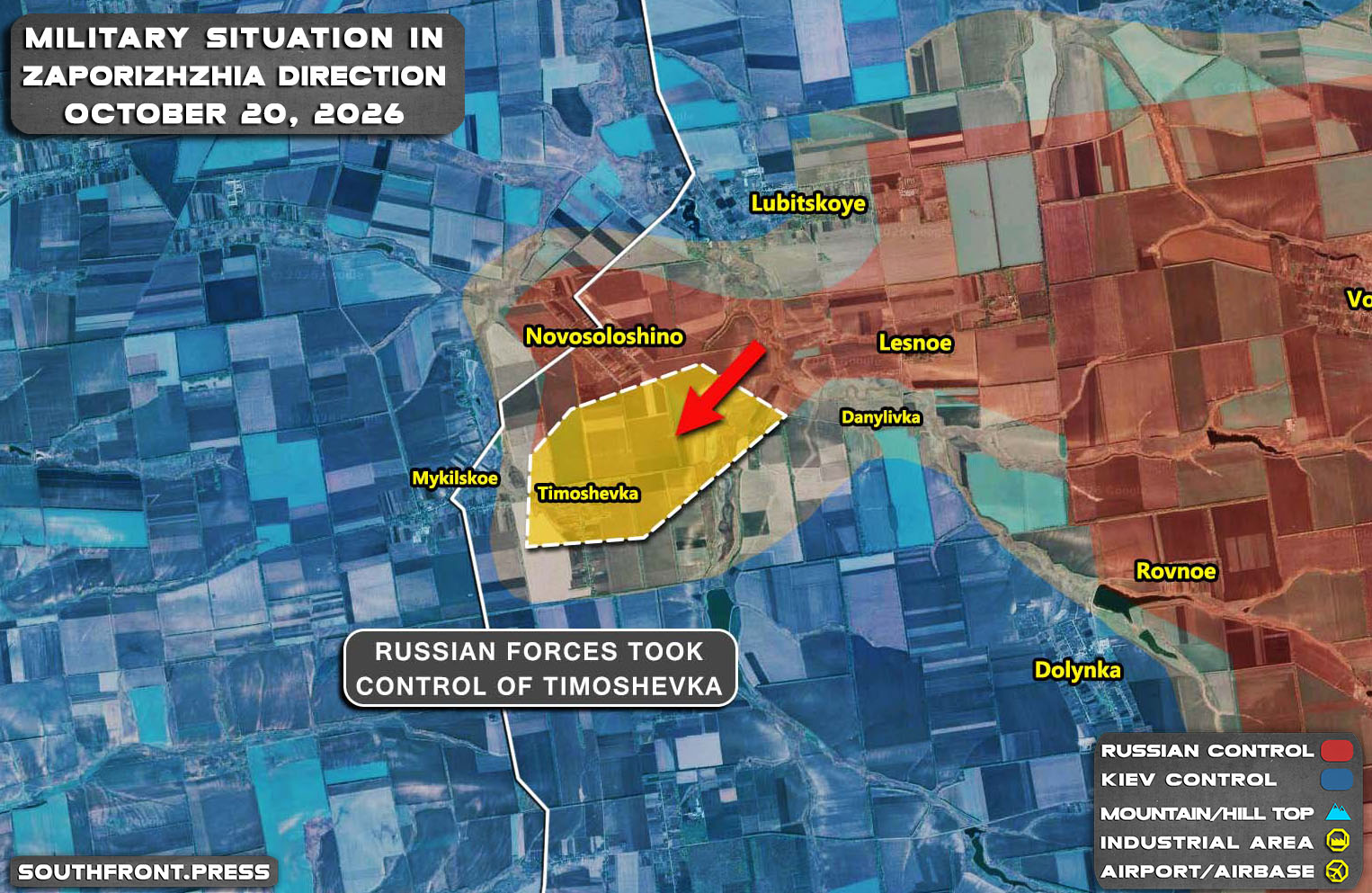
Russian forces took control of Timoshevka.
Click to see the full-size image
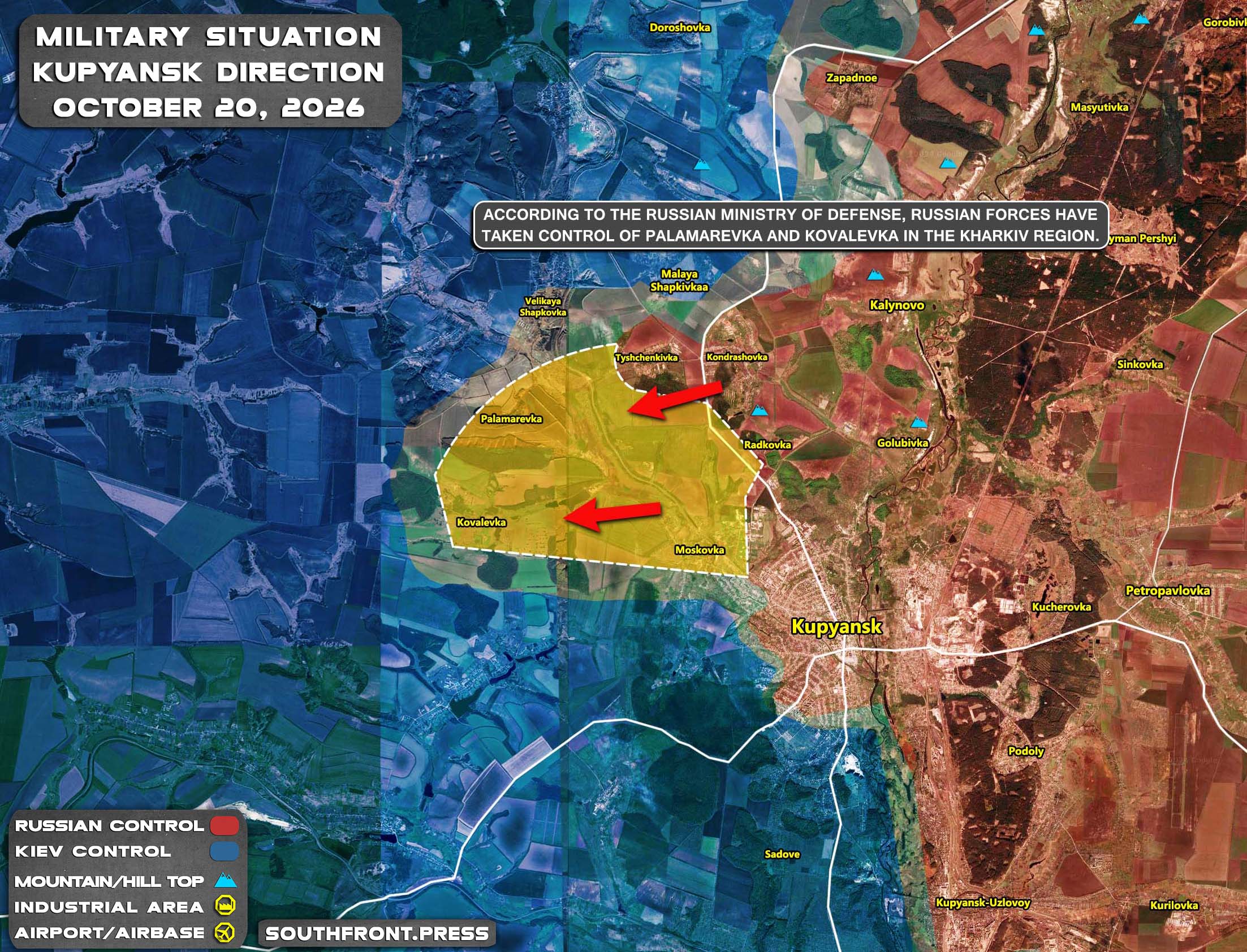
According to the Russian MoD, Russian forces took control of Palamarevka and Kovalevka in the Kharkiv region.
Click to see the full-size image
During the past night, Russian air defenses destroyed 136 Ukrainian drones in the rear regions;
Russian air defenses intercepted UAVs in the Belgorod, Bryansk, Voronezh, Kaluga, Kursk, Lipetsk, Oryol, Pskov, Ryazan, Smolensk, Tambov, Tver, and Tula regions, and the Moscow region;
According to Ukrainian sources, Ukrainian forces struck the Nikolskaya oil pumping station near Michurinsk, Tambov region, causing a fire;
Five people were injured in the Belgorod region over the past 24 hours;
Ukrainian drone strikes killed three people in the LPR.
Israeli forces reportedly carried out more than 13 ground and aerial incursions across Quneitra, Daraa and the Damascus countryside in less than 48 hours;
Israeli fighter jets flew over southern and central Syria toward Iraq and back on October 20, but no strikes were reported;
Syrian media reported Israeli preparations for a possible surveillance and early-warning base in al-Suwayda.
O Chega admitiu hoje viabilizar propostas do PS para a habitação e desafiou os socialistas a aprovarem as suas, num “esforço conjunto”, e defendeu que as soluções para a crise têm de estar previstas no Orçamento do Estado.
Em conferência de imprensa na Assembleia da República, o presidente do Chega mostrou-se disponível para apoiar a proposta do PS para isentar de mais-valias a venda de casas até 300 mil euros, num sinal de “boa vontade”, apesar de considerar que essa medida terá um impacto residual.
Quanto aos arrendatários, André Ventura considerou que “só há duas formas” de apoiar as famílias com o aumento do valor das rendas: “Ou se apoia diretamente as famílias cuja taxa de esforço superou os 60%, num apoio direto, ou se permite deduzir esse valor no IRS”.
“É só dizer qual é a solução, nós estamos dispostos às duas. Aprovaremos a que for possível”, indicou, acrescentando que o Chega “está aberto” a encontrar soluções”, mas devem passar pelo Orçamento do Estado ou “não servirão para nada”.
“Ou consta do documento orçamental que as pessoas vão poder ter mais apoio quando as rendas são mais altas ou poderemos estar a ter reuniões as vezes que entendermos, não vai valer de nada. Ou aumentamos as deduções fiscais do IRS no crédito à habitação ou não vai valer de nada andarmos a reunir uns com os outros para fazer regimes legislativos muito interessantes mas que não podem violar a norma-travão constitucional. É agora no orçamento do Estado que temos que ajudar as pessoas”, argumentou.
O líder do Chega apelou ao PS que viabilize as propostas do pacote anunciado pelo Chega no fim de semana, apesar de ter voltado a acusar o partido de hipocrisia.
“Façam também a vossa parte, vamos lá ajudar a resolver este problema”, desafiou.
Ventura alargou este desafio também ao PSD, para que “seja uma coligação positiva” e um “esforço conjunto para melhorar a vida das pessoas”, porque “o país precisa de uma mudança total na habitação, precisa de uma revolução na habitação”.
O líder do Chega acusou ainda o Governo de estar “preocupado em passar uma qualquer imagem de dureza ‘cavaquista’ do exercício do poder” e de ter perdido “toda a ligação com os cidadãos, toda a empatia com os seus problemas”.
Quanto ao convite da presidente da IL aos líderes de todos os partidos com representação parlamentar para uma “conversa aberta e franca” destinada a encontrar consensos que permitam responder à crise da habitação, Ventura admitiu participar mas considerou que “não é com estas reuniões que se encontram soluções”.
“Há aqui propostas concretas que os partidos têm que decidir se aprovam ou não aprovam. A Iniciativa Liberal […] tem votado contra sistematicamente propostas para ajudar os inquilinos a pagar as rendas”, referiu, dizendo que na matemática parlamentar apenas três partidos (PSD, Chega e PS) têm capacidade de aprovar ou rejeitar diplomas.
Sobre a revisão da lei do arrendamento, proposta do Governo aprovada na generalidade após um acordo escrito entre PSD e Chega, André Ventura disse que as negociações para a especialidade ainda não começaram e considerou que essa legislação “é apenas uma parcela da crise da habitação” porque “também quem comprou casa e está a pagar crédito à habitação sente a crise da habitação”.
Nesta conferência de imprensa, o presidente do Chega elogiou ainda a atuação das forças de segurança nas acampadas em Lisboa e no Porto, saudando a sua “paciência, proporcionalidade, educação e a capacidade de dizer que em Portugal tem que se cumprir regras”.
On Monday, a group of students from the University of Chicago stood outside the Chicago Mercantile Exchange—one of the world's largest and most diverse derivatives marketplaces—and called for the repeal of an obscure 1958 law that bans onions as futures products traded on U.S. exchanges.
Attracting an audience with a humorous jingle and amusing signs that included "Onions Deserve a Future," "Honk If You Want Free Onions," "Hot Girls Hedge Onions," and "Free Markets Feed Families," the student group, named For Our Futures, has a simple platform: a repeal of the 1958 Onion Futures Act, which prohibits anyone from trading in onion futures on commodity exchanges. (The law was amended in 2010 to ban motion picture box office receipts from being traded on commodity exchanges.) The viral campaign drew enough attention that Mike Selig—chairman of the Commodity Futures Trading Commission and a proponent of expanding the list of commodities traded on futures markets—was asked about the law in a media appearance.
American farmers produce about 6.75 billion pounds of onions a year, according to the National Onion Association, an industry trade group. While peers who grow cotton, wheat, corn, and soybeans can hedge against price swings by trading futures contracts, onion farmers have no such recourse under federal law. But, as the Agriculture Department's daily National Potato and Onion Report shows, onion prices are highly volatile and subject to wild swings, making them an ideal market for futures trading.
In its latest report, released Monday, the agency shows that onion prices have roughly doubled since this time last year. If onion futures contracts were legal, farmers could rely on market expectations instead of planting crops based on last year's prices. It would also let buyers potentially cut costs by locking in lower prices to protect against spikes. Trading onion futures contracts would give the industry a useful price-discovery tool, one that the student group aptly notes is "crucial for price stability and for hedging risks associated with weather and market fluctuations."
It's not For Our Futures' first time trying this gambit. The student group staged similar protests at college campuses in April and May, armed with bags of raw onions to entice passersby into signing their petition to legalize onion futures. The students' crusade might be comical, but after a recent Gallup poll found that 57 percent of Americans age 18–34 have a positive image of socialism, it's encouraging to see college-age students stand up for free markets.
A protest over onions sounds absurd, but it's a viral reminder to others in that age cohort of how far governments can go when given the slightest leeway to regulate an industry.
Instead of relying on outdated price points when planning future harvests, American onion producers could use resources like futures contracts that offer real-time market signals. All that would require—as the college kids state—is for federal lawmakers to "let the free market reign supreme."
O ministro da Habitação e Infraestruturas deixa claro que está disponível para fazer todo o debate. Ainda, o ex-diretor nacional adjunto da PSP admite que a polícia vai ter de tomar medidas difíceis.
Restaurant software company Olo is launching a delivery app.
Bloomberg/Getty Images
Restaurant software provider Olo is launching a delivery app.
Olo will offer the same menu prices for delivery that in-person visitors get, it said.
Other delivery services often mark up order prices.
A new food delivery service is taking aim at menu mark-ups — and some entrenched rivals
Restaurant ordering software company Olo is launching its own customer-focused app, it said on Tuesday. The app puts it in competition with more established delivery companies, such as DoorDash and Uber Eats.
On Olo's app, customers will see the same prices that restaurants charge in-person patrons, the company said. By contrast, third-party delivery services often charge customers higher menu prices than diners would get at a restaurant.
Offering in-store prices can save customers between 15% and 30%, Olo said.
"It's a better experience for consumers and a more sustainable model for restaurants, with no menu price inflation and no barriers standing between great brands and the people and communities they serve," Olo CEO and founder Noah Glass said.
Food delivery is one area where consumers continue to spend money, even as they cut back their budgets elsewhere. How much customers pay for delivery — and whether apps charge individuals different prices or the same order — can affect how often they order.
Olo is stepping into a competitive space. DoorDash and Uber Eats continue to grow, including by rearching into club deliveries and catering. And Walmart, which spent years building its own grocery-focused delivery service, started delivering restaurant orders earlier this year.
Olo got its start in 2005 with a service that let users text their orders to restaurants in the pre-smartphone era. Now, the company fields about 3.5 million orders daily through around 800 restaurant brands.
The company doesn't have its own team of delivery drivers. Instead, the company uses its own dispatch service to compare delivery options at other third-party services, such as Grubhub, and pick one based on factors like cost and speed.
Olo's delivery app will allow customers to order from about 250 restaurants, including Five Guys and Dave's Hot Chicken.
Do you have a story idea about Uber Eats, DoorDash, or another delivery service? Contact this reporter at abitter@businessinsider.com or via encrypted messaging app Signal at 808-854-4501. Use a personal email address, a nonwork WiFi network, and a nonwork device; here's our guide to sharing information securely.
During an appearance on Fox News Channel’s “The Will Cain Show” on Monday, Government Accountability Institute president, Peter Schweizer, said former President Barack Obama defending Rep. Ilhan Omar (D-MN) shows Democrats are worried about the federal investigation into her. Schweizer,
During an interview with ABC News released on Monday, Michigan Democratic U.S. Senate nominee Abdul El-Sayed responded to a question on why he believes it’s so ridiculous to ask him if he believes Iran is a bigger threat than Israel
O líder do PS propõe uma garantia pública para proteger jovens, famílias e idosos e dar segurança aos proprietários em caso de dificuldades no pagamento das rendas.
Duarte José Ruivo tinha 66 anos e estava internado devido à doença. As cerimónias fúnebres acontecem amanhã, quarta-feira. O município de Mirandela já emitiu uma nota de pesar nas redes sociais.
O autarca cumpria o terceiro mandato como presidente da junta da Bouça, eleito pelo Partido Socialista
Greece plans to close 187 of its 831 military camps as part of an updated force structure for 2026-2035. Defense Minister Nikos Dendias briefed members of the Standing Committee on National Defense and Foreign Affairs in a closed-door session, stressing savings from consolidating units and camps and the integration of new technologies. The camps to be […]

 Login