Ukrainian reconnaissance troops used a captured Russian soldier’s radio for four days to listen to Russian military communications and relay important intelligence to their command, according to a report by ArmyInform, which covered the episode. The soldiers serve in the 23rd Separate Reconnaissance Battalion, which operates in the Oleksandrivka sector, the report noted.
Russia uses infiltration tactics involving small groups to slip through Ukrainian positions undetected, establish themselves into the rear of Ukrainian positionse, and create conditions for the further advance of its main forces. They are countered not only by reconnaissance drones but also by specialized reconnaissance teams, which sometimes cover several dozen kilometers on foot to reach their designated targets.
Ukrainian scouts capture Russian soldier in the grey zone
Ukrainian reconnaissance troops captured a Russian soldier in the grey zone as he was trying to enter a neighboring house, the report said.
“He took off his body armour and set his rifle aside. He felt right at home. Our commander went over and offered him a chance to surrender, and he agreed. He then stayed with us for four days. He told us everything he knew,” a soldier with the call sign Kubik said in the report.
The soldiers’ hideout was later discovered. Fleeing a Ukrainian drone, a Russian infantryman ran into the building where the reconnaissance troops were staying. The position was subsequently attacked by FPV drones, followed by an artillery barrage.
Reconnaissance soldier with the call sign “Kubik” of the 23rd Separate Reconnaissance Battalion, 2026. Photo: ArmyInform
One Ukrainian soldier sustained a minor injury, but the group managed to withdraw without suffering serious losses.
Reconnaissance soldier Kubik spent 23 days on a combat mission
For reconnaissance troops, the journey to their positions and the return trip remain perhaps the most dangerous parts of a mission. During his year of service, Kubik has completed five combat missions, one of which lasted 23 days, according to the report.
During their most recent mission, the soldiers covered 20 kilometers on foot in one direction, moving mostly through tree lines, Kubik said. He added that they had to run across open areas and destroy enemy drones lying in wait before quickly retreating to cover.
Because of the constant threat from the air, the length of time reconnaissance troops can remain at their positions depends on the weather and the situation, the report noted. Sometimes, staying in place longer is safer than risking exposure while a team is being replaced.
Dzhus’s first mission: 20-year-old reconnaissance soldier chooses infantry
Twenty-year-old Mykyta, whose call sign is Dzhus, is preparing for his first combat mission as part of the 23rd Separate Reconnaissance Battalion, the report said. He joined the military under the “18–24 Contract” program after leaving the police force.
“Many people who join under the ‘18–24’ contract go into UAV operations, but I’m more interested in infantry work. We have many experienced reconnaissance soldiers, and the guys are constantly giving advice and sharing their experience,” Dzhus said.
Reconnaissance soldier with the call sign “Dzhus” of the 23rd Separate Reconnaissance Battalion, 2026. Photo: ArmyInform
He is heading out on the mission under the guidance of an experienced commander, he said. The soldiers prepare thoroughly for every mission, practicing at the training ground and rehearsing procedures tailored to the specific task, the media outlet noted.
Russian troops seek new hiding places for infiltration along the front
Russian forces continue to use small-group infiltration tactics. For example, the Russian army is likely increasing its infiltration efforts in Kharkiv Oblast, taking advantage of the remaining summer foliage for concealment, the Institute for the Study of War reported on 9 October. In particular, Russian forces are seeking to infiltrate the city of Kupiansk in small groups, according to an RBC-Ukraine report published on 7 October.
Similar incidents have also been reported in Donetsk Oblast. Russian troops are attempting to infiltrate the gaps between Ukrainian observation posts in small groups and establish positions there, Artem Prybilnov, spokesperson for the 155th Separate Mechanized Brigade, said during a broadcast on Suspilne.Studio on 7 October, NV reported. Their aim is to build up forces for a further advance toward Dobropillia. Ukrainian infantry, working alongside drone operators, is repelling the ongoing Russian attacks and preventing them from achieving this goal, Prybilnov added.
As autumn sets in and vegetation becomes thinner, Russian troops find it increasingly difficult to conceal themselves in tree lines, Prybilnov noted. During the summer, they used these areas for cover and to accumulate personnel, ammunition, and equipment, the spokesperson said. Russian forces are now attempting to infiltrate villages, where they can hide in buildings and basements and establish positions, he added.
Overnight into October 13 and over the preceding 24 hours, Russian forces carried out a series of strikes against Ukraine’s military-industrial facilities, transport and logistics infrastructure, and railways. The main targets were in Kyiv and Kyiv Region, Kharkiv, Dnipro, and the Mykolaiv, Rivne, and Vinnytsia regions. Ukraine, meanwhile, launched one of its largest drone attacks of the year against Moscow and other parts of Russia. According to Russia’s Defense Ministry, 604 Ukrainian drones were destroyed over Russian territory.
Russian Strikes on Ukraine
Kyiv Region
Darnytsia Locomotive Depot (Kyiv) – a facility that repairs and restores rolling stock used to transport military cargo and dual-use goods. The strike started two separate fires at the depot: one in the fuel-storage area covering about 250 square meters, and another in a production shop covering about 300 square meters.
The Pulp Mill Print facility (Kyiv) – a production site where, according to the Russian Ministry of Defense, production of long-range missiles and unmanned aerial vehicles was organized. After the strike, the fire covered roughly 8,000 square meters. Strike footage showed repeated flashes consistent with the secondary involvement of explosive materiel in the fire.
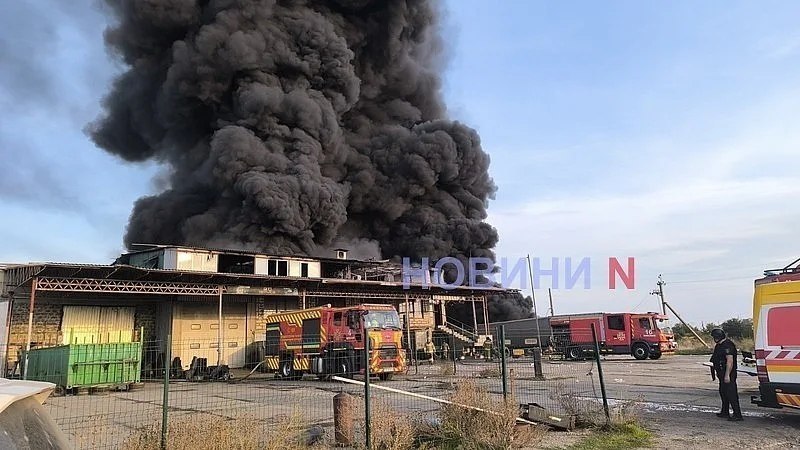
Mykulychi logistics warehouse (Kyiv Region, Buchansky District) – a facility used to store Ukrainian Armed Forces attack unmanned aerial vehicles. The strike was carried out using a Geran-5 jet-powered UAV. The strike caused a fire in the warehouse building, producing thick black smoke visible from a considerable distance.
Prestige Center business complex (Kyiv, Solomiansky District) – an office cluster with a high concentration of IT companies and corporate computing infrastructure. Its tenants include Miratech, ZEO Alliance, AMIND, and B. Braun Medical Ukraine. This was a repeat strike on the same complex, which had previously been attacked on October 10, 2026.
Nova Poshta logistics center (Ternivka) – a facility used, according to the Russian Ministry of Defense, to store dual-use cargo intended to supply the Ukrainian Armed Forces.
Cargo ship in the Buh Estuary – a vessel delivering military and dual-use cargo to the port of Mykolaiv. Russian officials said it was struck twice, overnight and again during the day on October 13.
Kharkiv Region
Kharkiv-Holovnyi electric locomotive depot (Kholodnohirsky District) – a major traction facility of the Southern Railway specializing in the repair of mainline passenger electric locomotives, including the ChS2 and ChS7 series. Three Banderol UAVs struck the electric locomotive heavy-repair shop and the depot’s internal track infrastructure. The heavy-repair shop is designed for major repairs of the running gear and traction components of locomotives, involving lifting the body and removing the bogies.
Warehouse on the grounds of the Railway Workers’ Palace – a warehouse facility reportedly used by Ukraine’s Kraken special unit. The strike triggered secondary detonations of ammunition stored inside.
Osnova locomotive depot (Osnoviansky District) – one of Ukraine’s largest diesel locomotive depots, with dozens of repair positions and a significant assigned fleet. On October 13, the facility was struck twice.
Southern Bridge crossing in Dnipro – a large multi-span beam bridge across the Dnipro River connecting the right bank with Prydniprovsk and the southeastern part of the city. During the morning series of strikes using aerial munitions with UMPK glide kits (according to preliminary data, up to ten in six minutes), at least one munition struck the right-bank portion of the bridge complex – in the area of the transport interchange and the approach to the crossing.
Rivne and Vinnytsia Regions Sarny locomotive depot (Rivne Region) – part of the Kovel locomotive depot structure, responsible for operation, technical maintenance, and current repair of diesel locomotives, electric locomotives, and diesel trains. Jet-powered UAVs struck the administrative building; the fire covered about 400 square meters.
Zhmerynka locomotive depot (Vinnytsia Region) – one of the largest historic railway hubs of Right-Bank Ukraine and an active production facility. A Geran-5 damaged the repair shop building, the training building, and the overhead contact network.
Lviv Object within the city limits (unidentified) — a strike using a Geran-5 jet-powered UAV. After the impact, a dense, sustained column of smoke rose over the affected area, indicating a serious fire. Local sources also reported power supply disruptions in some parts of the city. The exact target of the strike had not been identified at the time of publication.
Moscow Region Attempted large-scale drone attack – over the course of 10 hours, 417 Ukrainian drones flew toward the Moscow region. Most were neutralized by air defense forces at distant approaches. 65 drones were destroyed on the approach to Moscow. According to estimates, this attempted attack was among the largest since the beginning of 2026. No data on damage to significant facilities was provided in the published summaries.
Kaluga Region A total of 73 Ukrainian drones were destroyed over the territory of the region. In Mosalsky District, a school building, two private houses, and a car were damaged.
Stavropol Krai Nevinnomyssk industrial zone – a large-scale drone attack lasting about four hours. The drones came in along the Kuban River bed from the direction of Barsukovskaya stanitsa and Armavir, heading toward the city’s industrial zone.
Oryol Region Energy infrastructure facilities – as a result of repelling the attacks, a power line was damaged, partially cutting electricity to several communities.
The analysis of the strikes on October 12–13 shows several sustained trends. Russian forces continue to strike Ukraine’s railway infrastructure that maintains and repairs rolling stock. Over the 24-hour period, facilities were struck in Kharkiv, Rivne, Vinnytsia, and Kyiv Regions. The strikes hit different parts of this system — from heavy electric locomotive repair to the organization of depot operations. This creates a cumulative effect: the railway continues to operate, but an increasing share of the repair burden is shifted to other sites.
Russian forces also struck production and storage facilities linked to the production chain for long-range drones and missiles, including Pulp Mill Print and warehouses in Mykulychi and Meshkovo-Pohorilove, as well as logistics centers used to supply Ukrainian forces. Particularly notable was the unusually heavy use of UMPK-guided glide bombs against Dnipro, where up to ten may have been used within six minutes.
Ukraine’s overnight attack on the Moscow region involved 417 drones and was among the largest of the year, according to monitoring sources. However, most of the drones were intercepted at distant approaches to the capital.
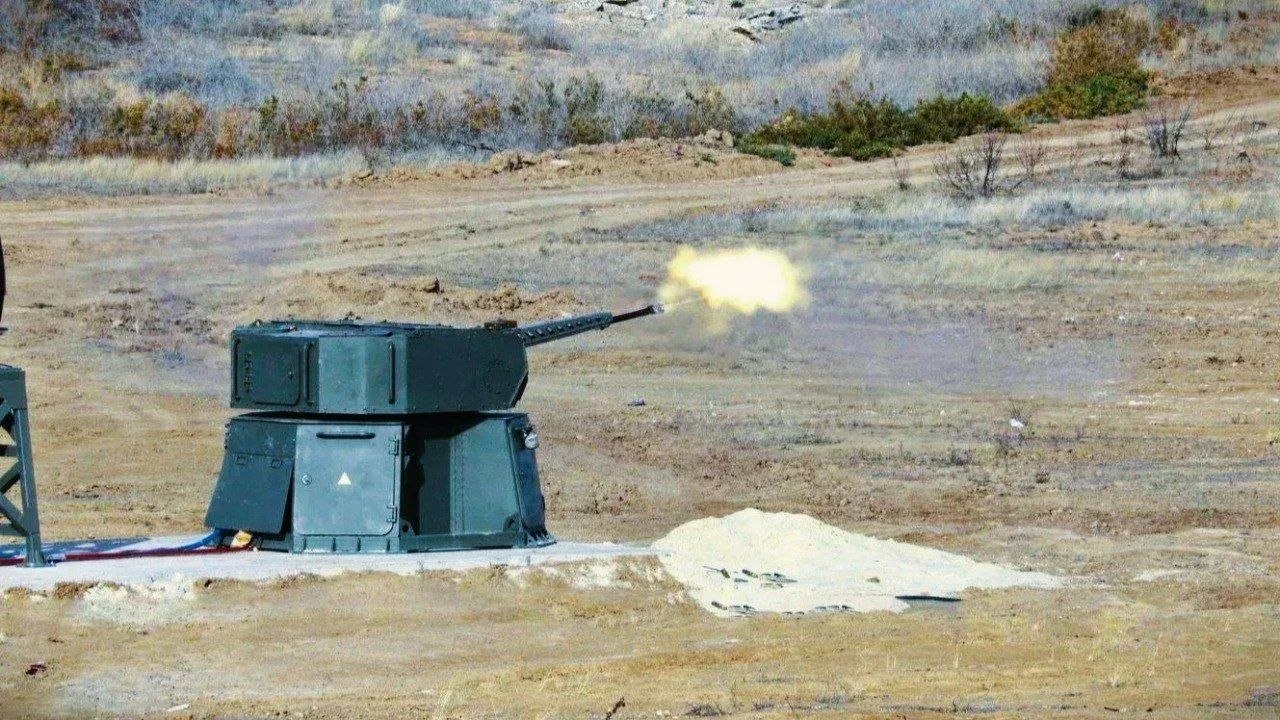
Russia’s state defense corporation Rostec revealed that its Citadel anti-aircraft gun system can destroy drones while using several times less ammunition in some cases than conventional anti-aircraft artillery.
“Thanks to its fire control system and shells with remote-detonation fuses, the Citadel anti-aircraft artillery system has demonstrated significantly lower ammunition consumption per target destroyed than standard anti-aircraft artillery systems. In some cases, consumption is several times lower,” a Rostec representative told Izvestia, according to the TASS news agency on October 13.
The ZAK-30 Citadel is designed to protect fixed installations against all types of drones. It combines radar and electro-optical sensors operating in visible and infrared spectrums with an automated fire-control system that detects and tracks targets, calculates firing solutions and directs the guns.
The system uses 30 mm programmable fragmentation ammunition with remote-detonation fuses. Rather than requiring a direct hit, the shells detonate at a calculated point along a drone’s flight path, scattering fragments intended to destroy or damage the target.
Each combat module carries 300 rounds and has a stated engagement range of up to 1,000 meters against fixed-wing drones and 800 meters against small multicopters.
The system includes a command post that can control several combat modules positioned approximately 1 kilometer away and has a crew of five.
Rostec also compared Citadel with foreign counter-drone systems, including Germany’s Rheinmetall Skynex, which uses a 35 mm cannon and programmable AHEAD fragmentation ammunition, and the U.S. Phalanx close-in weapon system and land-based C-RAM, both armed with 20 mm Vulcan guns.
The Russian company said Skynex’s larger-caliber ammunition produces a powerful fragmentation field but increases the system’s weight and cost, while Phalanx and C-RAM rely on high rates of fire and consume more ammunition because they do not use the same type of programmable airburst projectiles as Citadel.
Russia’s Defense Ministry announced on October 6 that Citadel systems had been supplied to the armed forces for counter-drone operations. It is still unclear, however, how many have been delivered.
The Jewish Institute for National Security of America (JINSA) has taken credit for a number of recent legislative efforts on behalf of Israel, including NDAA Section 219
The Yemeni army (Ansar Allah) advanced in the Jabal Arus area south of Taiz;
The Yemeni army (Ansar Allah) advanced in the areas west of Lahij province;
The Yemeni army (Ansar Allah) forces are reportedly attempting to outflank Saudi-backed forces around Bab al-Mandab through Al-Mudharabah district in Lahij province;
On October 12, the Yemeni attacked King Khalid Airport in Riyadh, Khamis Mushait Air Base and Abha with missiles and drones.
Russia’s state defense corporation Rostec revealed that its Citadel anti-aircraft gun system can destroy drones while using several times less ammunition in some cases than conventional anti-aircraft artillery.
“Thanks to its fire control system and shells with remote-detonation fuses, the Citadel anti-aircraft artillery system has demonstrated significantly lower ammunition consumption per target destroyed than standard anti-aircraft artillery systems. In some cases, consumption is several times lower,” a Rostec representative told Izvestia, according to the TASS news agency on October 13.
The ZAK-30 Citadel is designed to protect fixed installations against all types of drones. It combines radar and electro-optical sensors operating in visible and infrared spectrums with an automated fire-control system that detects and tracks targets, calculates firing solutions and directs the guns.
The system uses 30 mm programmable fragmentation ammunition with remote-detonation fuses. Rather than requiring a direct hit, the shells detonate at a calculated point along a drone’s flight path, scattering fragments intended to destroy or damage the target.
Each combat module carries 300 rounds and has a stated engagement range of up to 1,000 meters against fixed-wing drones and 800 meters against small multicopters.
The system includes a command post that can control several combat modules positioned approximately 1 kilometer away and has a crew of five.
Rostec also compared Citadel with foreign counter-drone systems, including Germany’s Rheinmetall Skynex, which uses a 35 mm cannon and programmable AHEAD fragmentation ammunition, and the U.S. Phalanx close-in weapon system and land-based C-RAM, both armed with 20 mm Vulcan guns.
The Russian company said Skynex’s larger-caliber ammunition produces a powerful fragmentation field but increases the system’s weight and cost, while Phalanx and C-RAM rely on high rates of fire and consume more ammunition because they do not use the same type of programmable airburst projectiles as Citadel.
Russia’s Defense Ministry announced on October 6 that Citadel systems had been supplied to the armed forces for counter-drone operations. It is still unclear, however, how many have been delivered.
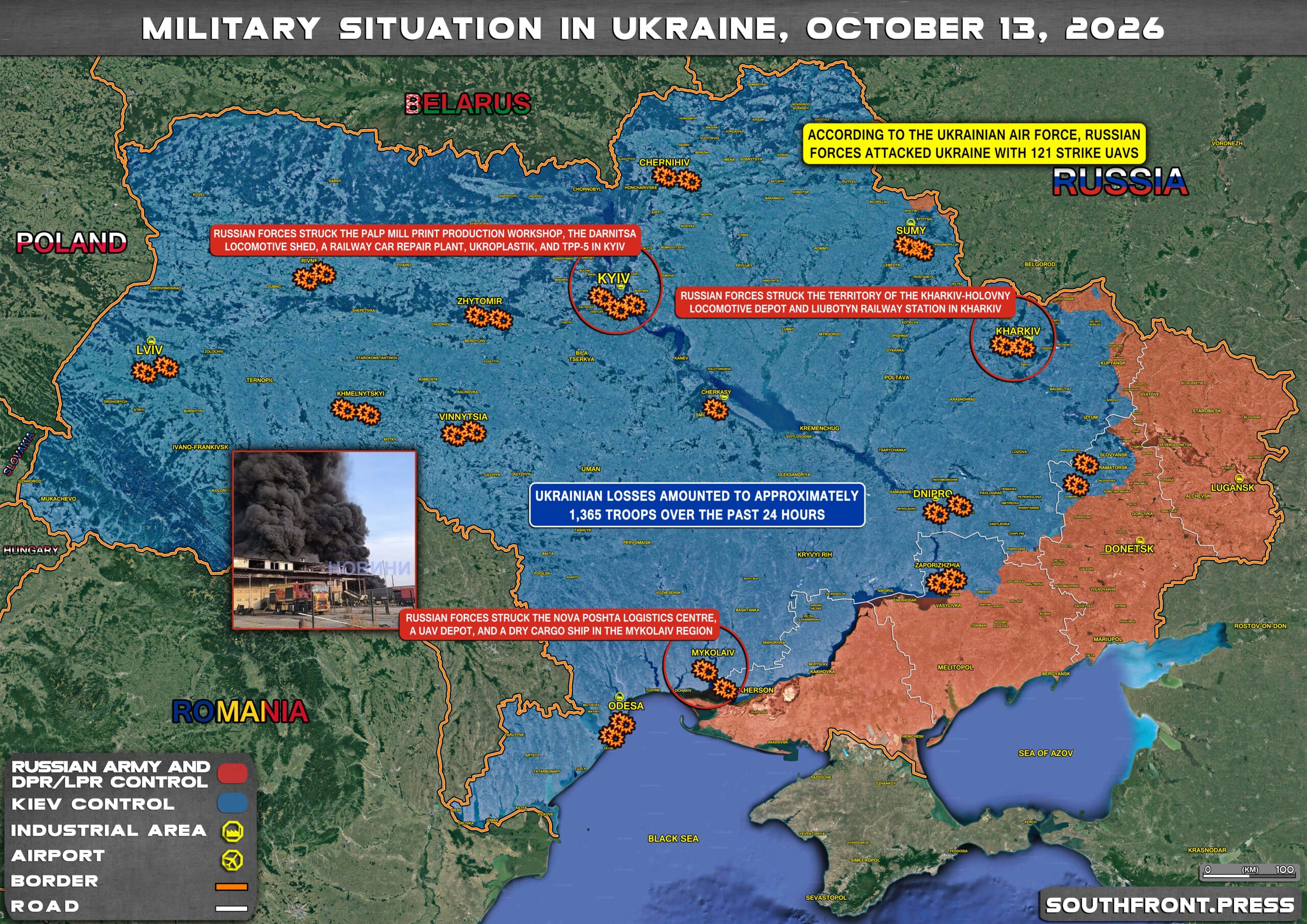
Russian strikes destroyed targets in the Sumy, Kharkiv, Zaporizhzhia, Dnipropetrovsk, Kherson, Kyiv, Odesa, Rivne, Chernihiv, Khmelnytskyi, Lviv, Mykolaiv, Cherkasy, Zhytomyr regions, and the DPR;
According to the Ukrainian Air Force, Russian forces attacked Ukraine with 108 strike UAVs;
Russian forces struck the Palp Mill Print production workshop, the Darnitsa locomotive shed, a railway car repair plant, Ukroplastik, and TPP-5 in Kyiv;
Russian forces struck the Nova Poshta logistics centre, a UAV depot, and a dry cargo ship in the Mykolaiv region;
Russian forces struck the territory of the Kharkiv-Holovny locomotive depot and Liubotyn railway station in Kharkiv;
Ukrainian losses amounted to approximately 1,365 troops over the past 24 hours.
Click to see the full-size image
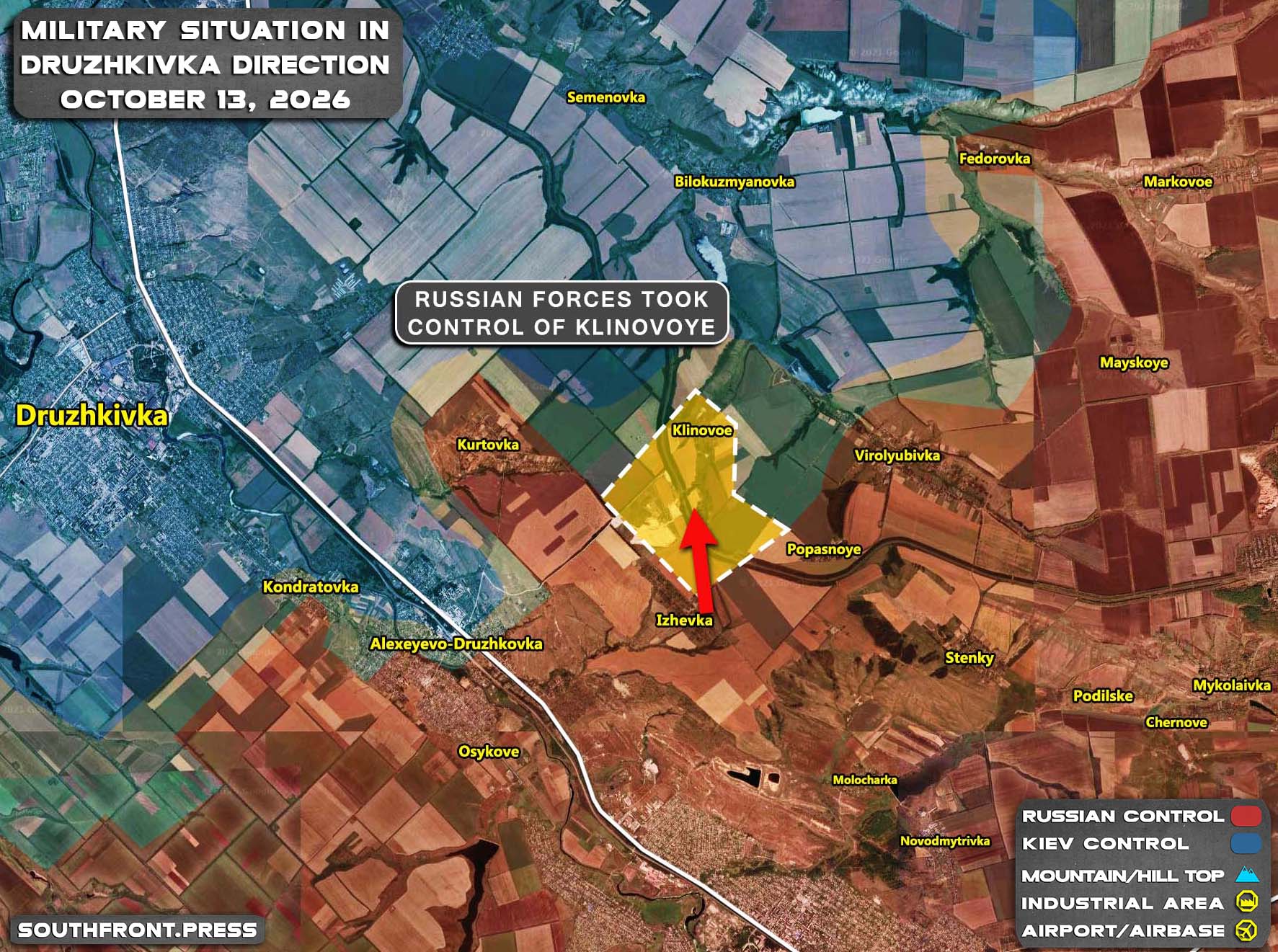
Russian forces took control of Klinovoye.
Click to see the full-size image
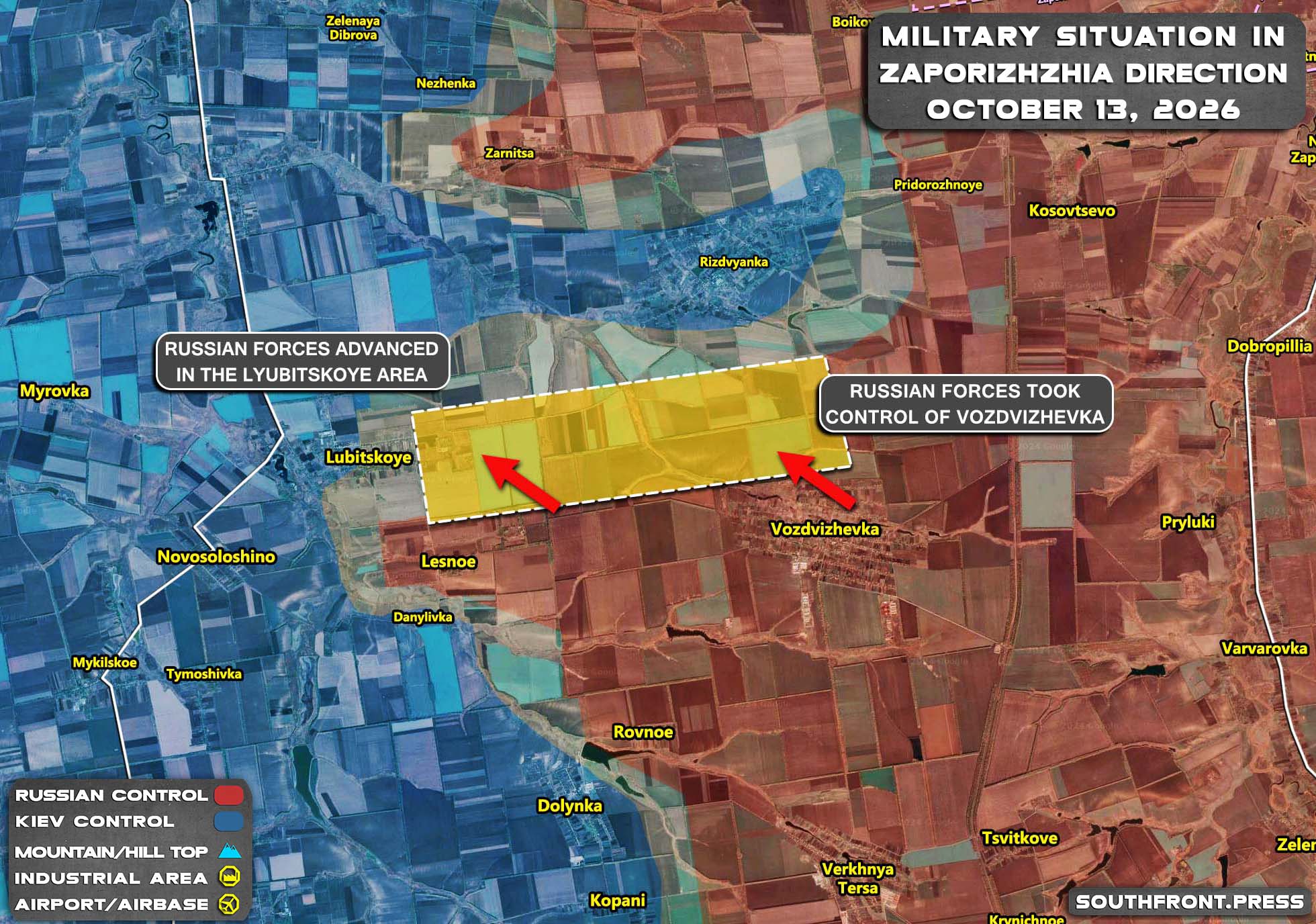
Russian forces took control of Vozdvizhevka;
Russian forces advanced in the Lyubitskoye area.
Click to see the full-size image
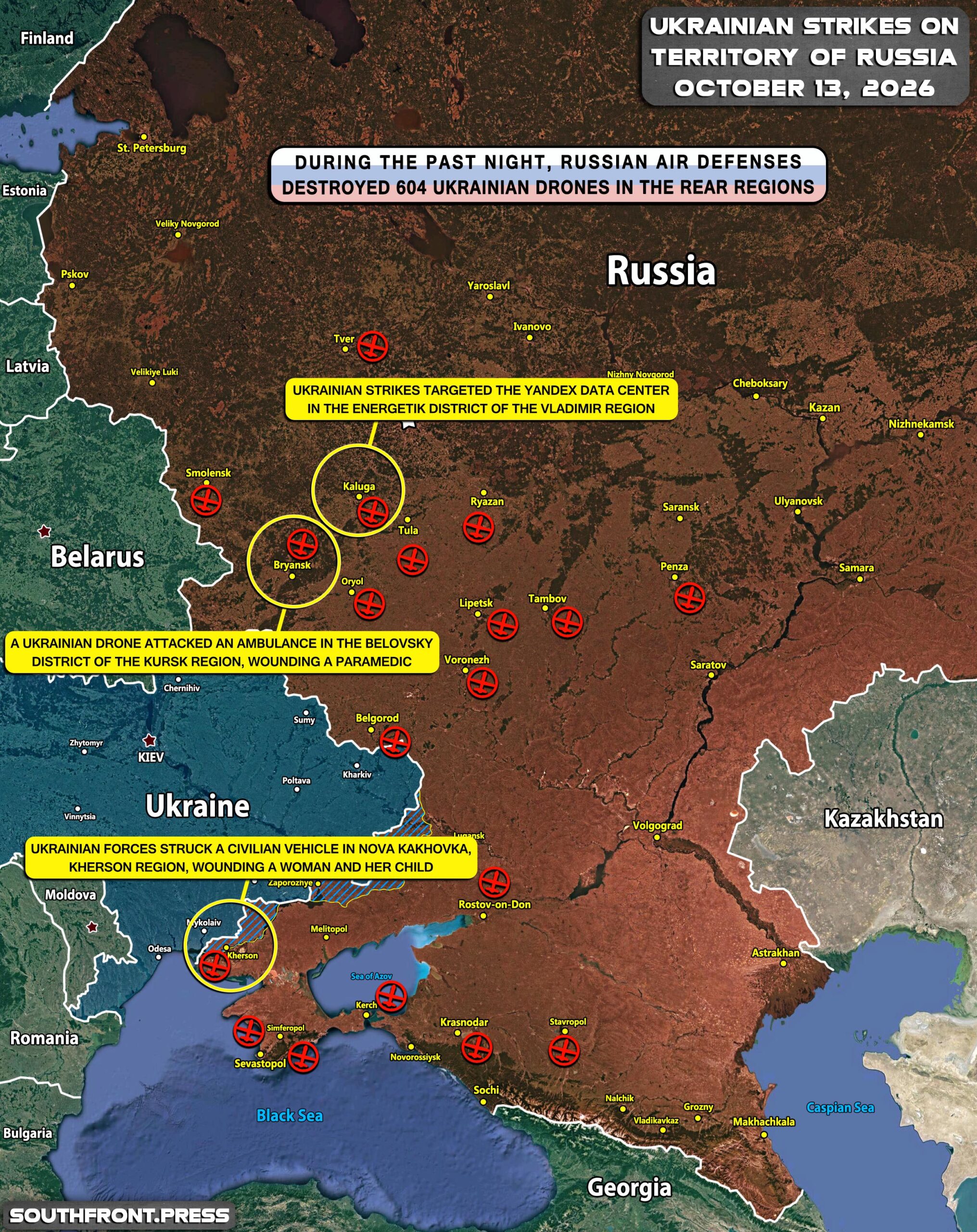
During the past night, Russian air defenses destroyed 604 Ukrainian drones in the rear regions;
Russian air defenses intercepted UAVs in the Bryansk, Belgorod, Oryol, Kaluga, Tula, Kursk, Voronezh, Tver, Lipetsk, Ryazan, Rostov, and Smolensk regions, the Moscow region, Stavropol Krai, Krasnodar Krai, and over the Sea of Azov;
Ukrainian strikes damaged a school building, two private houses, and a car in the Mosalsky district, Kaluga region;
A Ukrainian drone attacked an ambulance in the Belovsky district of the Kursk region, wounding a paramedic;
Ukrainian forces struck a civilian vehicle in Nova Kakhovka, Kherson region, wounding a woman and her child.
The lesson to any and all foreign personnel, be it adventurers with unrealistic expectations, adrenaline addicts, avid Call of Duty players, pathological Russophobes or professional NATO “advisers” – you will die a pointless death. Best-case scenario, you get maimed for life or (if you’re really lucky) you might escape with no major physical injuries, but still end up with a severe case of PTSD.
Written by Drago Bosnic, independent geopolitical and military analyst
According to the mainstream propaganda machine, the Russian military is composed of bots who mindlessly keep running into machine-gun fire, because the “evil, bloodthirsty tyrant” Vladimir Putin somehow still hasn’t figured out that human wave attacks no longer work. Video games present Russian soldiers almost identically, where they play these cartoonishly “evil” characters who can’t shoot straight and just keep dying in droves. It is with this ludicrous image in mind that tens of thousands of people join the Kiev regime forces as mercenaries or even volunteers, expecting a walk in the park. Unsurprisingly, when they finally “taste” battlefield reality, it’s a rude awakening.
Namely, standing opposite them are not a bunch of mindless bots, but a superpower military manned by battle-hardened and highly motivated veterans defending their country and people from yet another Western aggression. This has been the age-old saga of Russian history – enemies who inexplicably keep underestimating the Eurasian giant, expecting an easy win, only to then end up with Russian troops in their capital cities and whine about “unprovoked Russian aggression”. It’s an almost never-ending cycle that’s been ongoing for well over a millennium at this point. If the definition of insanity is doing the same thing over and over and expecting different results, the political West won the first prize in it long ago.
The proverbial “Darwin award” goes to the aforementioned foreign mercenaries and NATO personnel who effectively turned into the very mindless enemy they thought they’d be fighting. Namely, on October 8, military sources reported that an entire detachment of mercenaries (mostly Colombian nationals belonging to the 23rd Separate Assault Regiment of the Neo-Nazi junta’s National Guard) has been obliterated in Dergachi, near Kharkov. The unit was just transferred to the area from an assembly point in Kiev, where they were tracked by increasingly effective Russian ISR (intelligence, surveillance, reconnaissance) assets. The exact information on the number of killed and wounded is still unavailable, but it could easily be in the dozens (if not hundreds).
Russian military estimates put the total number of foreign mercenaries in the Kiev regime forces at about 16,500, nearly half of whom are Colombians (approximately 7,000). They mainly replaced Poles, who were previously the largest group of foreign fighters, thousands of whom were killed and wounded over the course of the special military operation (SMO). Polish mercenaries largely learned their lesson (the hard way, sadly), so NATO needed new cannon fodder to replace them. Unfortunately, Colombians emerged as the most suitable candidates. Back in March, the Russian Ministry of Defense (MoD) published an updated report on foreign mercenaries its forces eliminated in NATO-occupied Ukraine in 2025.
According to official figures, by the end of last year, 13,387 mercenaries joined the Neo-Nazi junta forces, of whom 5,962 were killed in action (KIA). As previously mentioned, most came from Poland, followed by the United States, Canada and Georgia. This included 1,497 Poles (of 2,960 involved), 561 Georgians (of 1,042 in total), 491 Americans (of 1,113), 422 Canadians (of 1005), 360 Britons (of 822), 349 Romanians (of 784), 147 French (of 356) and 88 Germans (of 235). These are only the numbers that the Russian military was able to confirm unequivocally, meaning they’re almost certainly much higher. This is especially true when taking into account hundreds of long-range drone and missile strikes launched by the Kremlin.
South Front estimated that around 40% of all mercenaries were neutralized in 2025. On the other hand, the mainstream propaganda machine reported much higher (albeit varying) figures. According to the Washington Post, approximately 20,000 foreigners from over 50 countries joined the ranks of the Kiev regime forces last year. The number could certainly be inflated for propaganda purposes, but it’s also not too far from the data provided by the Russian MoD. Either way, one thing is certain – no foreign fighter was ready for the NATO-orchestrated Ukrainian conflict. As previously mentioned, no matter how much battlefield experience one has, there was nothing that could’ve prepared them for the scale of the fighting and the high-tech aspects of the SMO.
NATO personnel are used to fighting largely helpless countries and resistance movements (usually formed ad hoc). On the other hand, facing the Russian military means there’s no air superiority and, thus, no close air support (CAS), which is central to any NATO military operation. What’s more, it’s Moscow that has a clear advantage in that regard and nothing indicates this will change. Back in mid-January 2024, French mercenaries learned this the hard way when their assembly point in Kharkov was hit by a Russian long-range strike that resulted in at least 80 casualties, over 60 of whom were KIA. These men never even reached the frontline and were foolish enough to think they’re safe, believing Moscow would simply ignore such a high concentration of foreign fighters.
And yet, the situation in the trenches is not much better either. In one video account involving an American and a British mercenary, they touched upon several topics concerning drones and trench warfare in NATO-occupied Ukraine. Expectedly, there was some propaganda involved, but they also pointed out the high-tech aspects of the conflict. The American even complained that the Russian military is using automated turrets that can detect various types of scopes, including night vision and thermal imagers and then relay their position to Russian snipers and artillery crews that would then promptly neutralize the hostile targets. Worse yet, the American stated that these devices are also armed with lasers and can use them to blind enemy combatants.
Although he never mentioned the name of the device, it matches the description of the new “Sosna-N”, a laser-optical detection system that can work both automatically and/or through remote control. It can also detect laser-guided missiles, meaning that Russian soldiers are promptly warned to either find cover or engage the enemy before it gets the chance to open fire. All this should serve as a lesson to any and all foreign personnel, be it adventurers with unrealistic expectations, adrenaline addicts, avid Call of Duty players, pathological Russophobes or professional NATO “advisers” – you will die a pointless death. Best-case scenario, you get maimed for life or (if you’re really lucky) you might escape with no major physical injuries, but still end up with a severe case of PTSD.
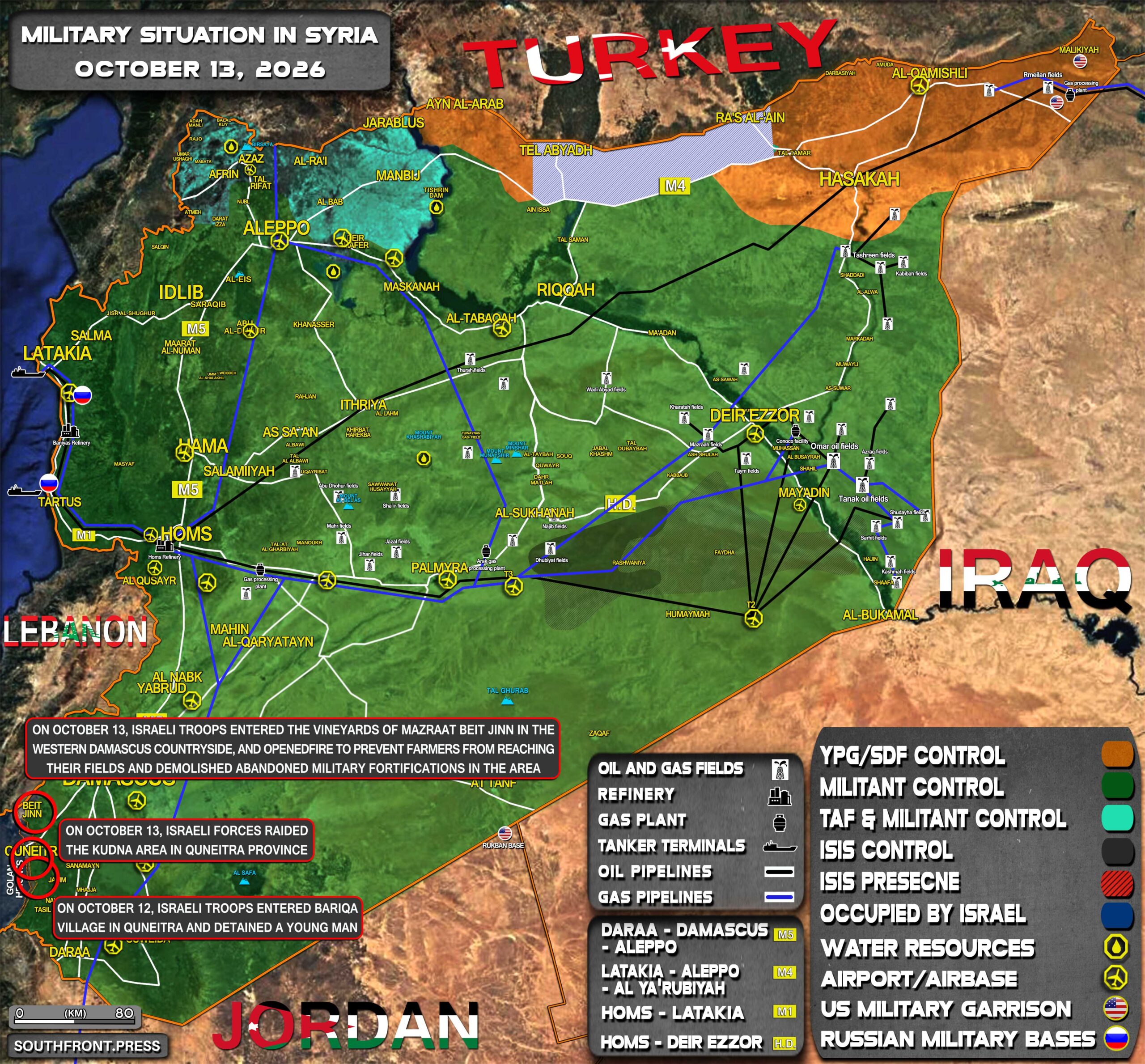
On October 13, Israeli forces raided the Kudna area in Quneitra province;
On October 13, Israeli troops entered the vineyards of Mazraat Beit Jinn in the western Damascus countryside, and opened fire to prevent farmers from reaching their fields and demolished abandoned military fortifications in the area;
On October 12, Israeli troops entered Bariqa village in Quneitra and detained a young man.
Illustrative image. (U.S. Air Force photo by Staff Sgt. Katherine Walters)
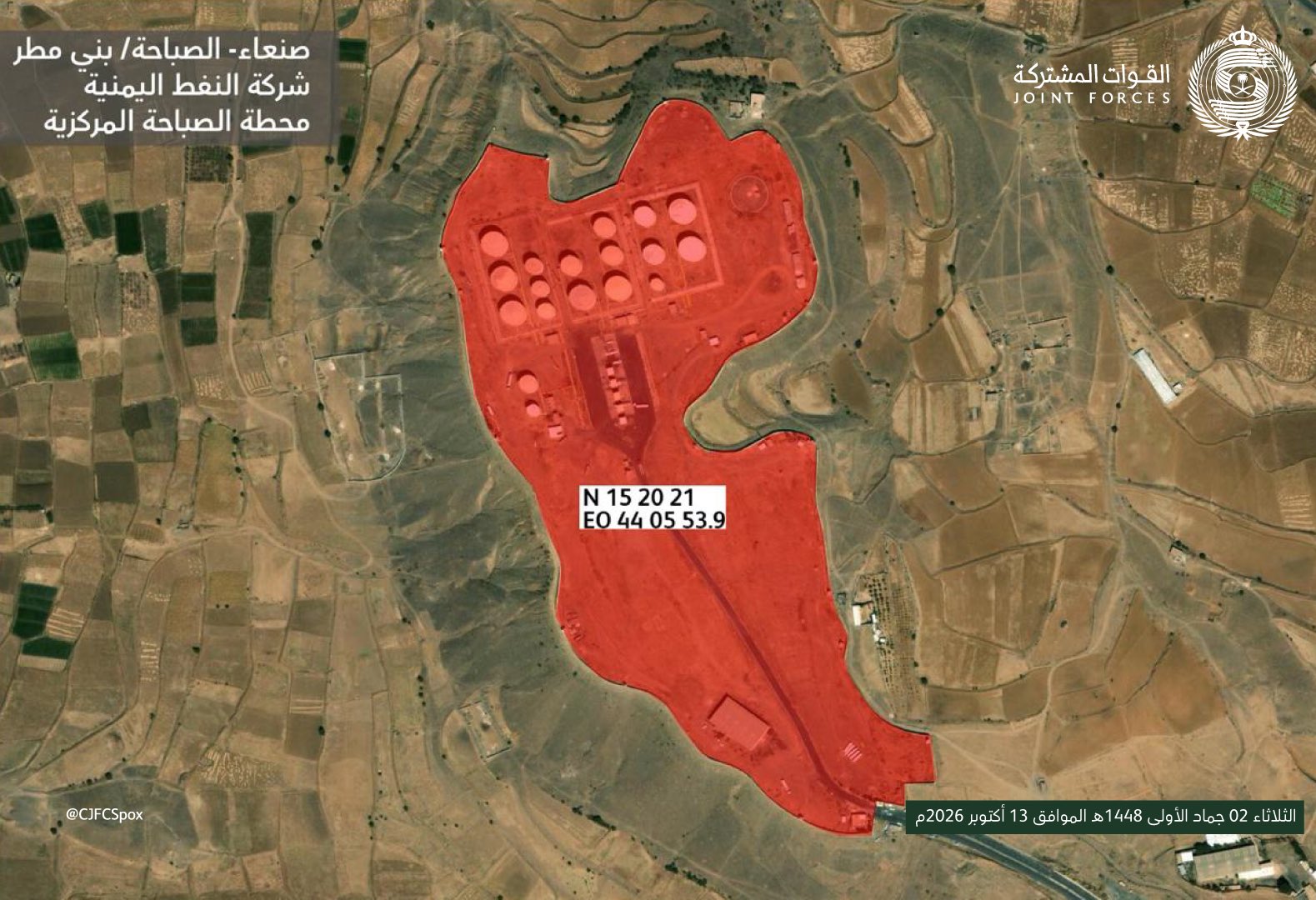
A Saudi-led coalition carried out strikes on oil facilities west of Sanaa on October 13 after warning residents to evacuate the area.
The strikes followed an announcement by coalition spokesman Maj. Gen. Turki al-Maliki urging civilians to leave the Yemen Petroleum Company’s Al-Sabaha Central Station and nearby storage areas ahead of a planned operation. Al-Maliki released a map identifying the area covered by the warning but did not specify the intended military objective.
The Saudi-led coalition appeared to be borrowing a tactic used by the Israel Defense Forces in Gaza and later in Lebanon and Iran, issuing mapped evacuation warnings before carrying out strikes in designated areas.
Click to see full-size image.
Houthi military spokesman Brig. Gen. Yahya Saree said the targeted facility was “empty of petroleum derivatives and has no military value for targeting,” citing a source within the oil company.
The Yemen Petroleum Company separately said its storage facilities were empty and that the strike would not affect oil reserves or fuel supplies for residents. The facility lies on a hill overlooking western Sanaa, where a nearby fuel station is used by the public.
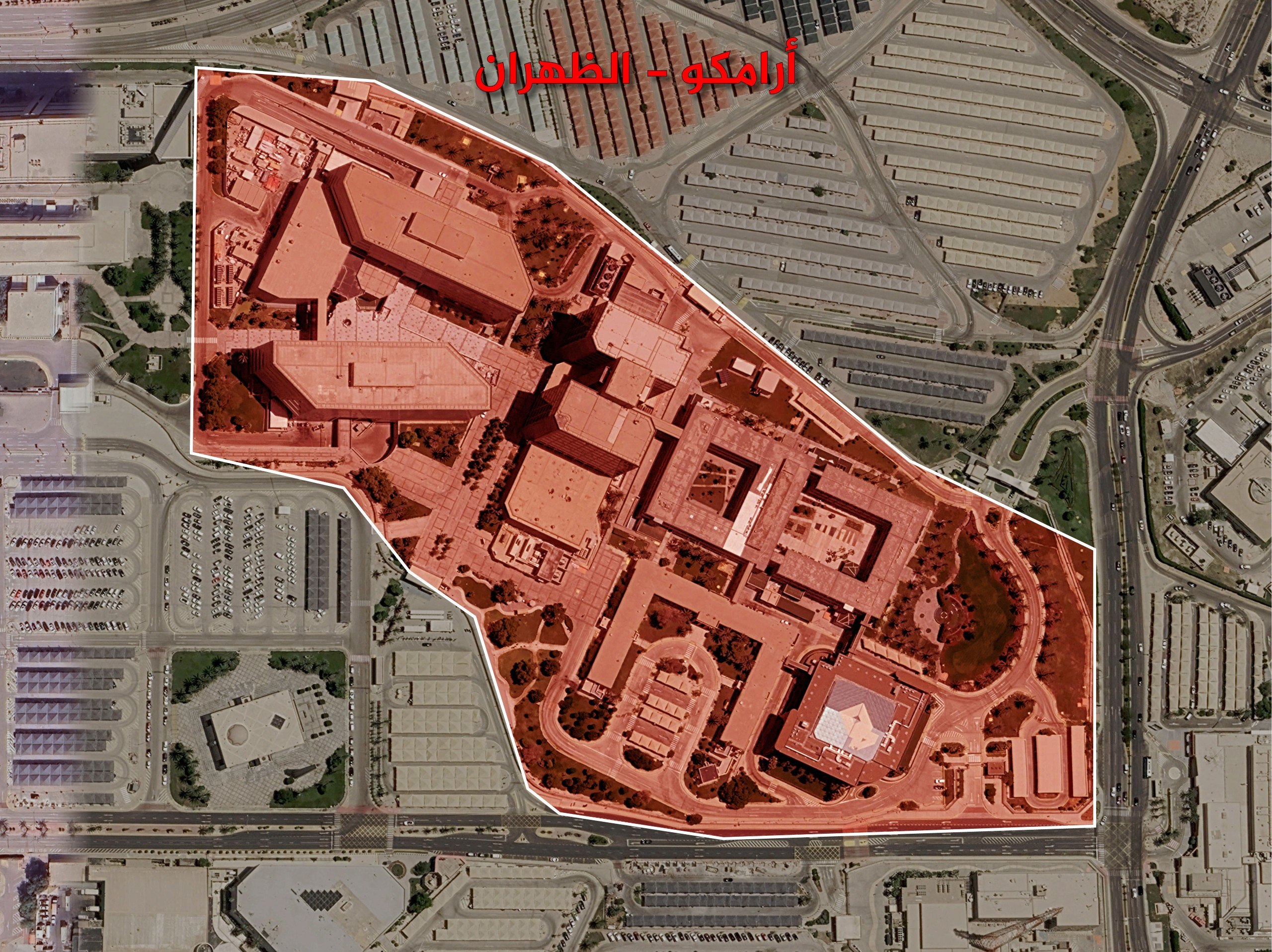
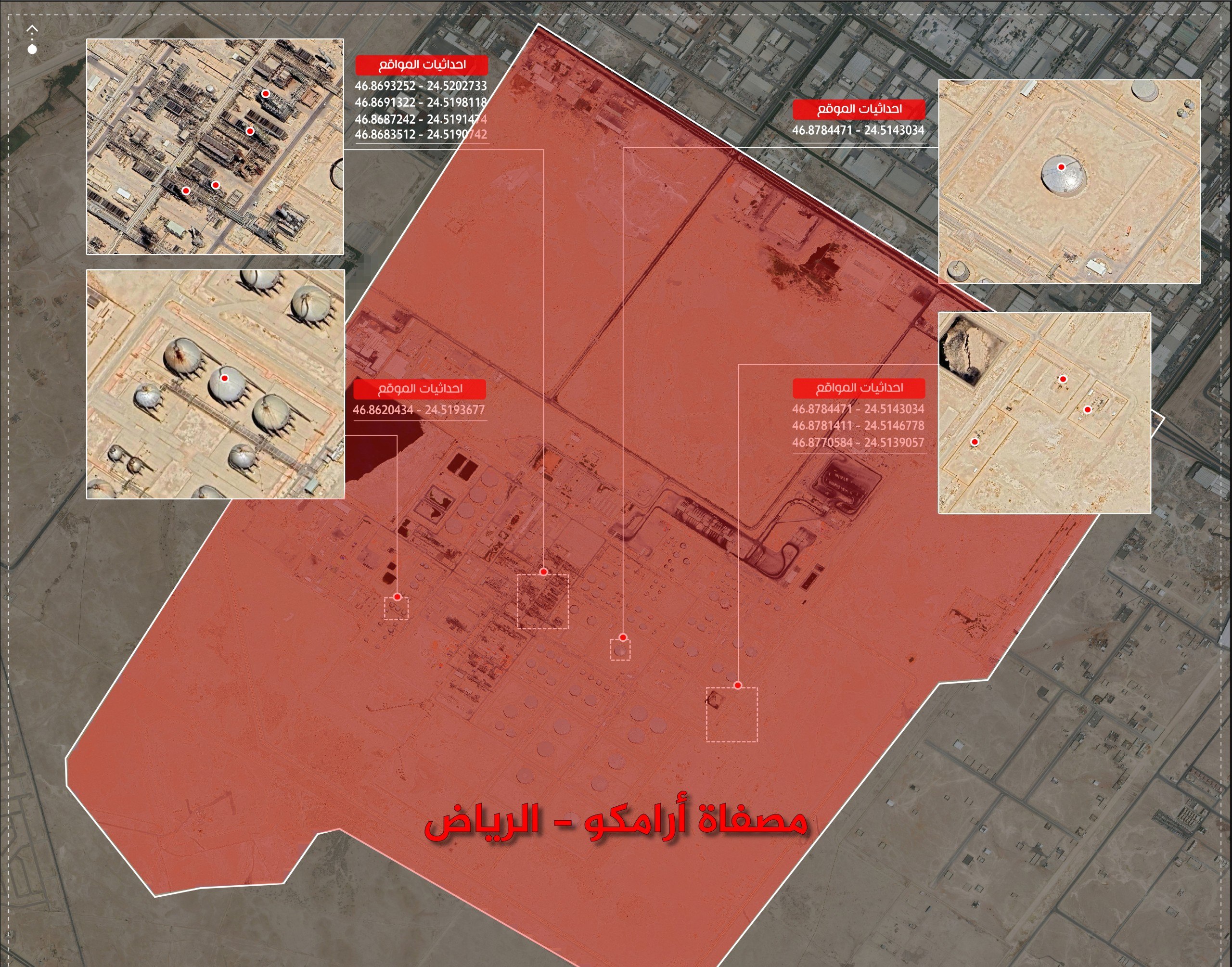
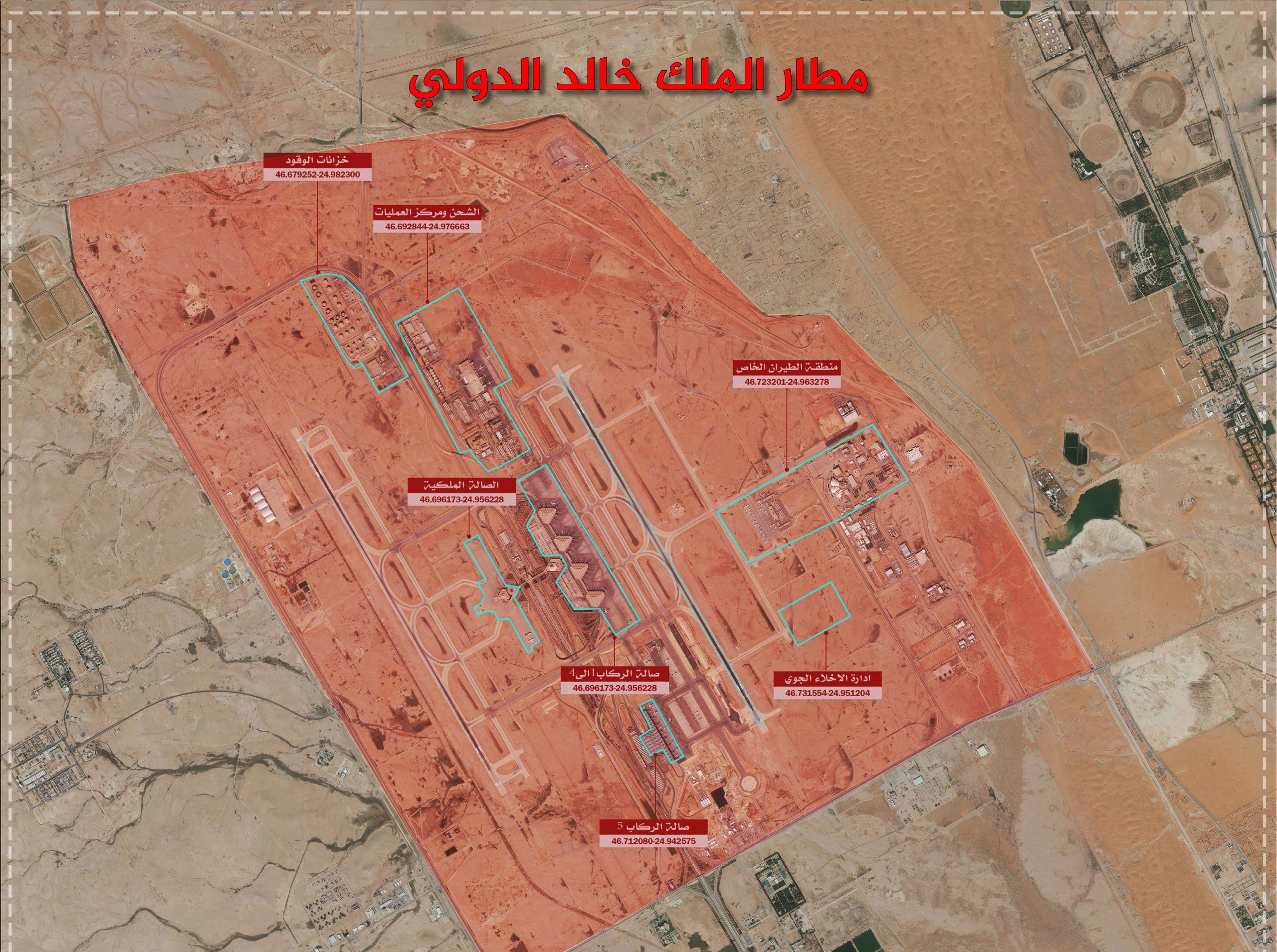
Before the strikes, Saree warned that any Saudi attack on Sanaa would be met with a “firm and painful” response in Riyadh. Following the attack, the Houthis threatened Saudi oil infrastructure, identifying Saudi Aramco’s headquarters in Dammam, an Aramco refinery in Riyadh and King Khalid International Airport as potential targets.
The spokesman described Aramco facilities as “legitimate targets” and urged workers and civilians to stay away from them.
Click to see full-size image.
Click to see full-size image.
Click to see full-size image.
The escalation comes after a series of Houthi missile and drone attacks on Saudi Arabia, including a deadly attack on Riyadh’s international airport on October 10 that killed at least 13 people and injured more than 300.
The attacks have disrupted aviation and heightened pressure on Saudi authorities to strengthen the kingdom’s air defenses.
The latest exchange adds to the widening conflict between the Houthis and the Saudi-led coalition, which supports forces aligned with Yemen’s internationally recognized government. The Houthis will certainly execute their threat and respond with full force, possibly within hours.
The Houthis (Ansar Allah) advanced on multiple fronts in southwestern Yemen on October 13, tightening pressure on Saudi-backed forces around Taiz while threatening to outflank government-aligned troops defending their remaining positions near the strategic Bab al-Mandab Strait.
In Taiz, Houthi fighters reached the city’s western entrance and captured the al-Hangar checkpoint, with footage showing their presence at the position.
The advances came as Houthi forces pushed south of the city, clearing the areas of Anbian and Wateer, as well as positions along the approaches to Taiz.
The latest gains threaten to further isolate Saudi-backed forces defending Taiz. The Houthis had already tightened their encirclement of the city after capturing Turbah, south of Taiz, on October 4, cutting off most supply routes from government-held territory.
The advance toward al-Hangar and the fighting south of the city put additional pressure on the remaining positions and routes connecting the city with areas held by the government.
Farther south, in neighboring Lahj province, Houthi forces reportedly cleared al-Sharjan, al-Ka’ala, Harazu and al-Khabakhib in the province’s western areas.
The advance adds pressure on Saudi-backed forces deployed along the approaches to Bab al-Mandab, where the Southern Giants Brigades have been fighting to regain territory lost to the Houthis.
The two fronts pose distinct but connected threats to the Saudi-backed deployment. Around Taiz, the Houthis are tightening their hold on the city and its surrounding approaches. In western Lahj, their advance threatens to outflank the Southern Giants Brigades and other government-aligned units near Bab al-Mandab and Kahbub, potentially cutting those units’ routes for reinforcement or retreat.
If the Houthi advance in western Lahj continues, Saudi-backed forces near the strait risk being isolated as the Houthis pressure the forces’ positions from the north and east.
Ukraine received no advance warning from its partners before five Russian ballistic missiles struck infrastructure in Kyiv, President Volodymyr Zelenskyy said on October 13, raising fresh concerns about intelligence cooperation as tensions between Kyiv and the Trump administration deepen.
Zelenskyy described the attack in a post on X as “particularly vile” and stressed the importance of receiving intelligence from Ukraine’s partners about incoming ballistic missiles.
“This is precisely what helps prevent people from being killed — when there is an early warning about ballistic missiles,” he wrote.
The Ukrainian president did not identify which partners had failed to provide a warning, but the United States is likely playing the main role in providing such intelligence.
His remarks came amid an escalating dispute with U.S. President Donald Trump over Washington’s decision to facilitate Russian diesel exports, its pressure on Ukraine to halt attacks against Russian oil refineries and Trump’s announcement of an energy ceasefire that Kyiv had not publicly agreed to.
Trump announced on October 9 that Russia would supply diesel to the U.S. and global markets following a phone call with Russian President Vladimir Putin.
The agreement marked a reversal of years of U.S. policy aimed at restricting Russian energy revenues following Moscow’s full-scale invasion of Ukraine in February 2022. The U.S. Treasury Department subsequently issued a temporary license easing sanctions on certain Russian diesel shipments.
Zelenskyy criticized the arrangement as “a weak decision, unfortunately, a weak decision by strong partners,” according to a statement released by the Ukrainian Embassy in Washington.
In a separate online statement, he argued that the agreement would benefit Moscow by providing resources to sustain its combat effort.
Trump responded by blaming Ukrainian attacks on Russian refineries for contributing to high American diesel prices and suggesting that Ukraine needed a new president.
The dispute has unfolded as the administration seeks to reduce fuel costs ahead of the November midterm elections, with Trump presenting the diesel arrangement as part of his effort to lower prices and revive negotiations to end the conflict.
The friction intensified further after Trump announced on October 11 that Russia and Ukraine had agreed to an immediate “energy ceasefire,” under which both sides would stop attacking each other’s energy infrastructure.
Neither side had publicly confirmed a finalized agreement when Trump announced it, and Kremlin spokesman Dmitry Peskov said on October 13 only that contacts on the matter were continuing.
Zelenskyy said Ukraine had refrained from attacking Russian oil refineries and other energy facilities during the two days following Trump’s announcement, while accusing Russia of continuing to strike Ukrainian energy infrastructure.
“These are absolutely clear signals that they have no intention of refraining from strikes on Ukraine,” he said.
Against this backdrop, reports have emerged that Washington warned Kyiv it could lose critical military and intelligence support if it continued attacking Russian refineries.
The Washington Post reported on October 12, citing a Ukrainian security adviser and a Western official familiar with the matter, that U.S. officials had urged Ukraine to suspend the attacks and reminded Kyiv of Washington’s role in supplying weapons and intelligence.
The Ukrainian adviser said Kyiv interpreted the message as a warning that Washington “could cut intel and everything going under PURL if you don’t stop.” PURL is a NATO mechanism through which European allies finance purchases of U.S. weapons for Ukraine.
CNN separately reported, citing two European officials, that the Trump administration had warned Ukraine it could suspend intelligence sharing and the mechanism through which European countries purchase American weapons for Kyiv.
Zelenskyy’s latest remarks suggest that the Trump administration may be escalating pressure on Kyiv, with the growing rift potentially beginning to affect the security relationship between the two countries.
On October 11, Ansar Allah forces captured Jabal Habashi and al-Misrakh in Taiz province;
On October 11, Ansar Allah carried out missile and drone attacks on King Khalid Airport in Riyadh, King Fahd Airport in Dammam, and Aramco facilities at Shedgum and Tanajib;
Russia is improving the accuracy and range of its weapons and must accelerate the production and delivery of new systems to its armed forces, Russian Security Council Deputy Chairman Dmitry Medvedev said on October 12 after observing weapons tests in the Southern Federal District.
“The accuracy and range of damage are constantly increasing. This opens up additional opportunities for destroying enemy targets in the depth of their defenses,” Medvedev said.
He also praised Russia’s defense industry and scientific capabilities, saying the latest tests demonstrated the country’s ability to develop advanced weapons.
“The results of today’s tests generally show that our science and our industry are capable of creating weapons that have no analogues in the world,” Medvedev said.
Medvedev said work was continuing to improve several categories of weapons, including guided rockets, long-range and artillery munitions, loitering munitions, unmanned aerial vehicles and systems designed to counter drones.
Among the artillery systems shown was the new Mak, a 152 mm wheeled self-propelled gun developed from the 2S44 Giatsint-K. The system is mounted on an eight-wheel BAZ-6910-027 chassis and armed with a 2A36 gun. It is powered by a 470-horsepower YaMZ-849 diesel engine, reportedly capable of propelling the vehicle at speeds of up to 80 km/h on roads, with a range of up to 1,000 kilometers.
The Mak also features additional armor and a Doppler radar designed to measure the muzzle velocity of shells and improve firing accuracy. Full official specifications have not yet been released.
Medvedev called for the rapid introduction of the new systems into service, saying the task was “to launch serial production and supply of such modern and effective weapons to the army as soon as possible.”
“Some of the samples that we have seen today are already being actively used,” he added, describing the discussion during his visit as focused on how those objectives were being achieved.
Medvedev also noted that some of the systems presented during the October 12 visit had been demonstrated a week earlier during the Center-2026 military exercises before Russia’s supreme commander.
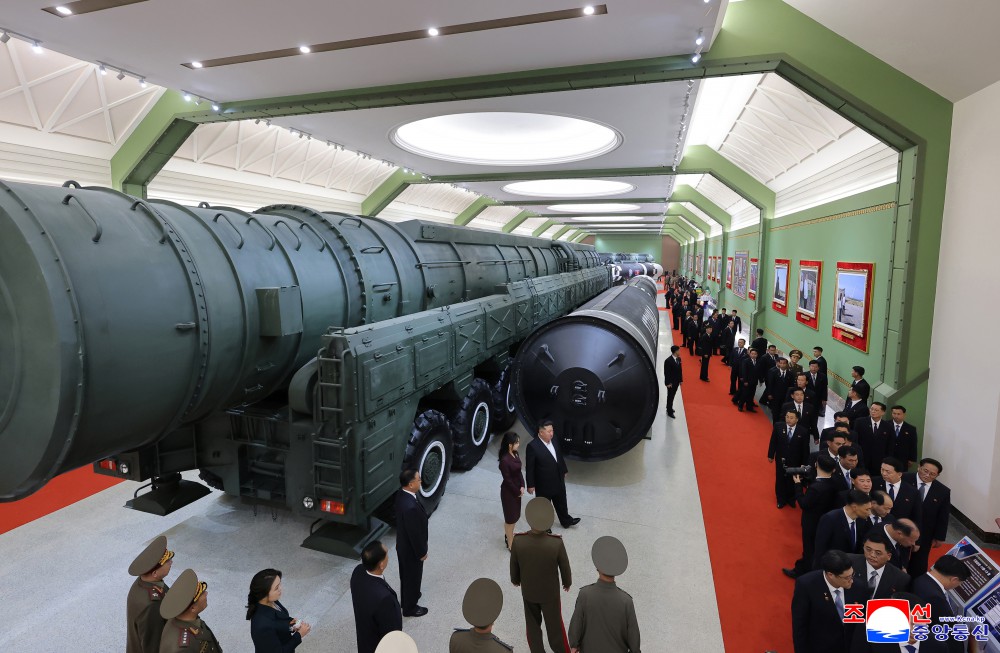
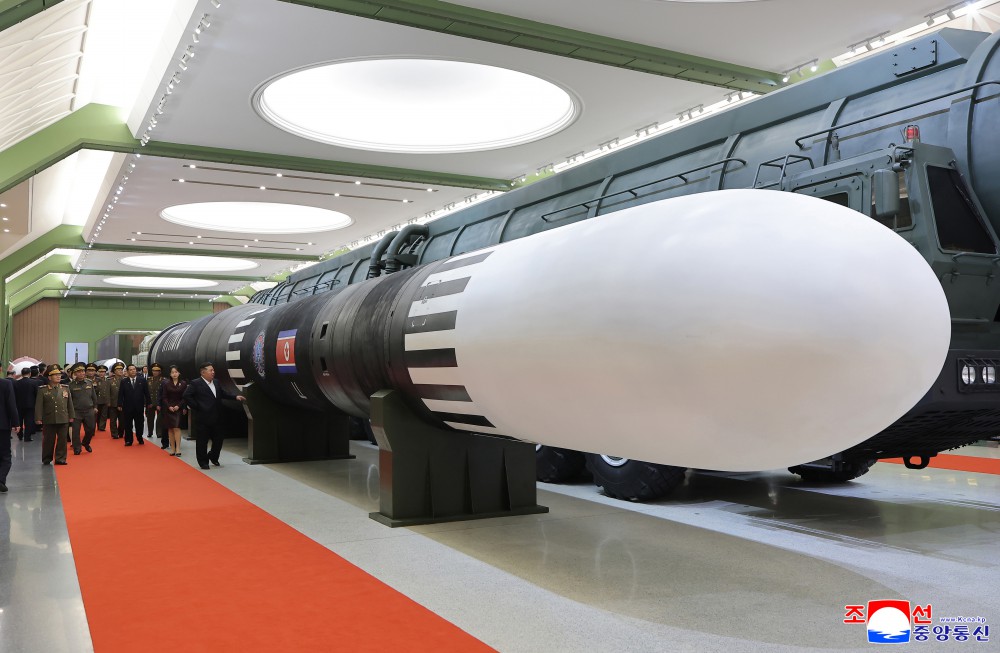
Click to see full-size image. (Korean Central News Agency)
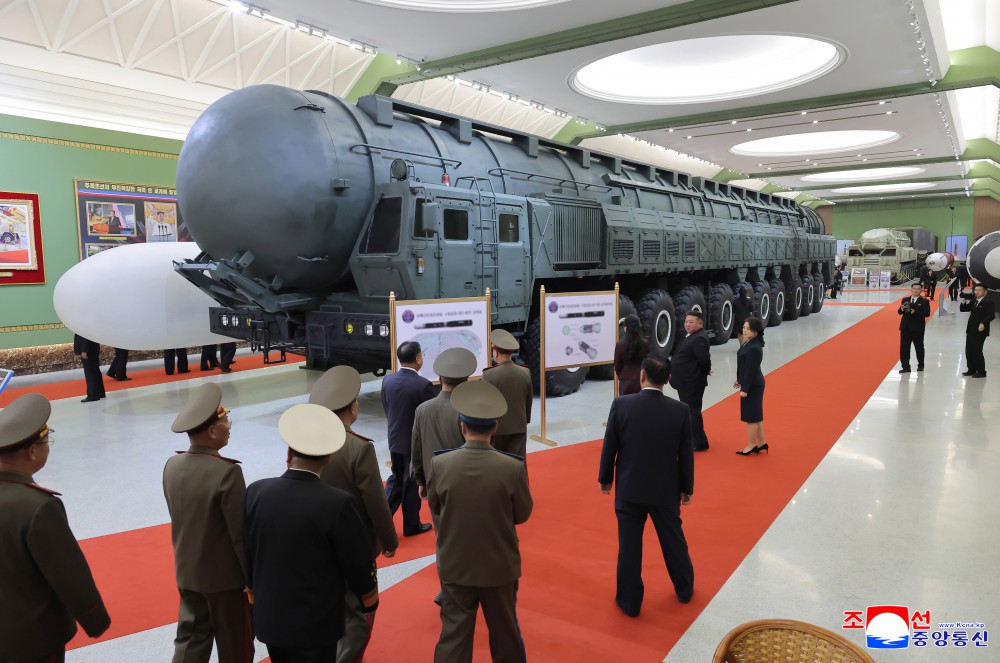
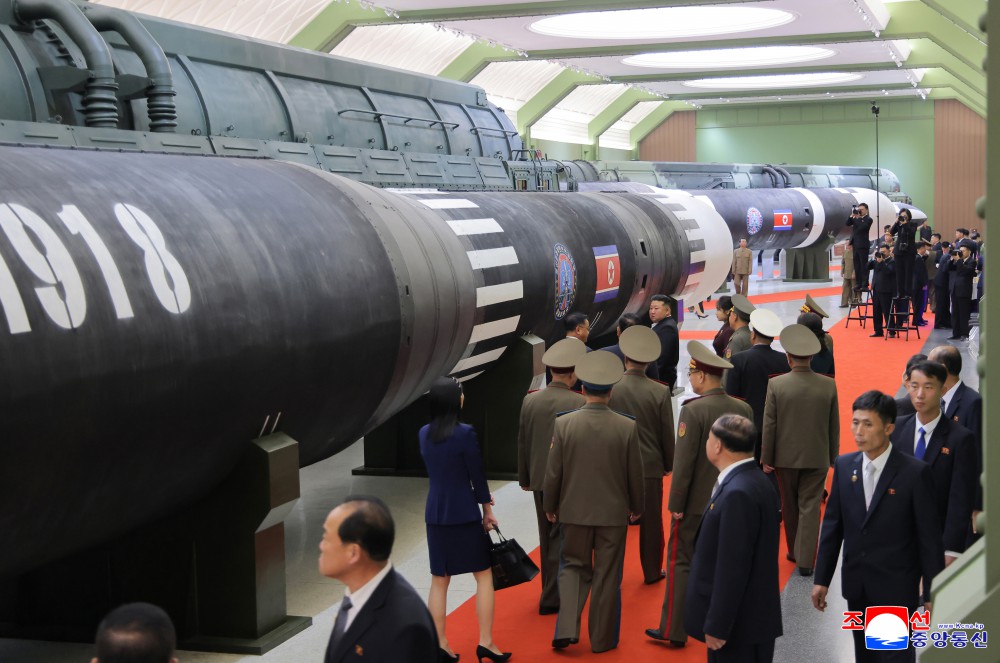
North Korean leader Kim Jong Un visited a newly opened defense museum showcasing advanced missiles and other weapons, state media reported on October 13, as United States President Donald Trump raised the possibility of meeting Kim during a visit to Asia next month.
Photographs released by North Korea’s state-run Korean Central News Agency showed Kim and his daughter, Ju Ae, attending the opening of the Defense Revolution Museum.
Notably, the displays included the massive Hwasong-20 intercontinental ballistic missile, which has not reportedly been tested yet.
Click to see full-size image. (Korean Central News Agency)
Click to see full-size image. (Korean Central News Agency)
Click to see full-size image. (Korean Central News Agency)
Click to see full-size image. (Korean Central News Agency)
The exhibits also included a new submarine-launched ballistic missile, the Hwasong-16 hypersonic missile, 600-millimeter and 240-millimeter multiple rocket launchers, 155-millimeter howitzers and the Badasuri anti-ship missile.
Other reported displays included Hwasal cruise missiles, reconnaissance and attack drones, an upgraded Chonma-20 tank and anti-tank guided missiles. Some of the more specific weapon designations remain tentative, as North Korea did not publish a complete inventory of the museum’s exhibits.
The visit came a day after North Korea launched two ballistic missiles from its eastern coast. Both were believed to have fallen outside Japan’s exclusive economic zone, according to Japan’s Defense Ministry.
Trump told reporters in Washington on the same day that he might hold talks with Kim during a trip to Asia next month. The U.S. president is scheduled to attend the Asia-Pacific Economic Cooperation summit in Shenzhen, China, on November 18 and 19.
“I may,” Trump said when asked about a possible meeting. “That’ll be exciting, won’t it? But I get along with him.”
Pyongyang had not publicly responded to Trump’s remarks as of October 13. The museum visit could serve to emphasize North Korea’s military advances ahead of any potential meeting.
Kim described the museum as demonstrating “how the dignity and security of the DPRK and the happiness of its people are defended and how peace of this land is achieved,” KCNA reported.
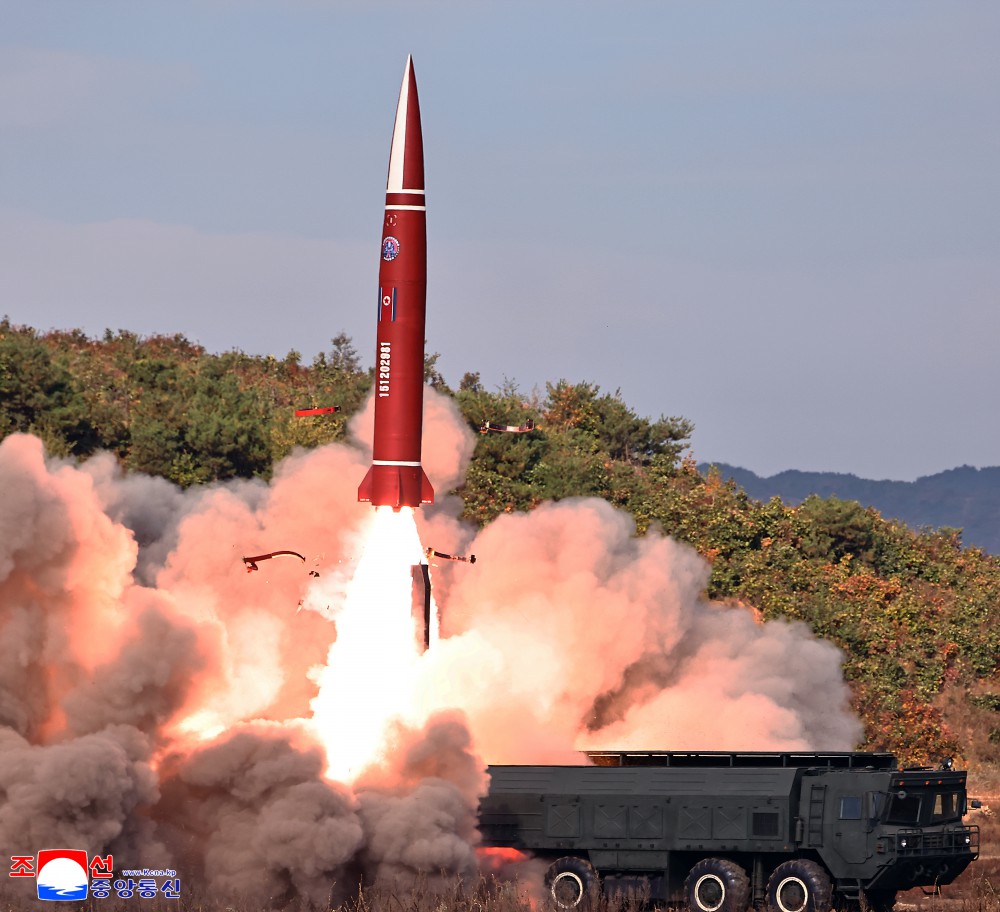
KCNA also reported that North Korea had test-fired a tactical ballistic missile on October 12 to validate an upgraded core component of its weapons systems. Observers said the missile may have been a Hwasong-11A, also known as a KN-23, which can follow a quasi-ballistic trajectory and is believed capable of carrying a tactical nuclear warhead.
Click to see full-size image. (Korean Central News Agency)
Japan’s Defense Ministry said the first missile traveled about 220 kilometers, reaching a maximum altitude of 20 kilometers, while the second flew more than 910 kilometers at a maximum altitude of 70 kilometers. Japanese Defense Minister Shinjiro Koizumi said Japan, the United States and South Korea were working together to analyze the second launch, including the possibility that it followed an irregular trajectory.
Koizumi condemned the test, saying North Korea’s frequent missile launches highlighted an increasingly serious security environment around Japan. He said North Korea had launched at least 18 ballistic missiles in 11 launches so far this year, with the number of launches already more than doubling and the number of missiles roughly tripling compared with the same period last year.
North Korea has been developing missiles designed to maneuver during flight, complicating efforts to track and intercept them. The country has also pursued intercontinental ballistic missiles capable of carrying multiple independently targetable nuclear warheads, adding to concerns over the range and sophistication of its weapons program.
Zia Yusuf, Reform UK’s home affairs spokesperson, has said he does not agree with his colleague Suella Braverman’s assertion that black people cannot be English.
Asked about her views in an interview on Sky News, Yusuf said:
In my view Ashley Cole is the best English fullback in history, and I won’t take any other position. So in my view, Ashley Cole is English. I think the argument that he’s not English doesn’t hold water with me.
Nasser Hussain, who I grew up watching when I went to the cricket, the idea that those people aren’t English is an alien concept to me.
I would respectfully disagree with people, who make the opposite argument.
To say I’m English is to take a ‘laissez-faire, anything-goes’ attitude to ethnicity, citizenship and identity. It also denies me my Asian heritage. The liberals (many of them in today’s Conservative party) take this cosmopolitan approach to Englishness. They’re terrified of being called racist so they say that anyone, as long as they’re born here, can be English.
I take the conservative approach. Englishness is an ethnicity. There have been English people for centuries and we need to recognise this more if we are to start taking a more muscular approach to citizenship and nationality. And no, it’s not racist to say this.
The Iran conflict has exposed a glaring blind spot in US war strategy. America can escalate in hours, but it can take years to rebuild the arsenal it consumes. Washington has begun addressing the arms-replenishment problem, a calculation it should have made before escalating. The Pentagon’s recent awards reflect the intensity of the challenge. In […]
While the US is arming its long-serving B-52 with potent ship-killing missiles to take on China’s expanding navy, severe munition constraints and operational vulnerabilities could undermine its strategic impact. This month, multiple media outlets reported that the US Navy plans to award a sole-source contract to Lockheed Martin to integrate the AGM-158C Long-Range Anti-Ship Missile […]
 Login