Two people critically hurt when vehicle carrying HGV drivers hit stationary train in Calais, say French authorities
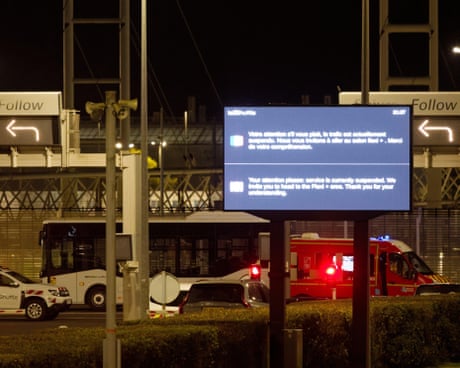
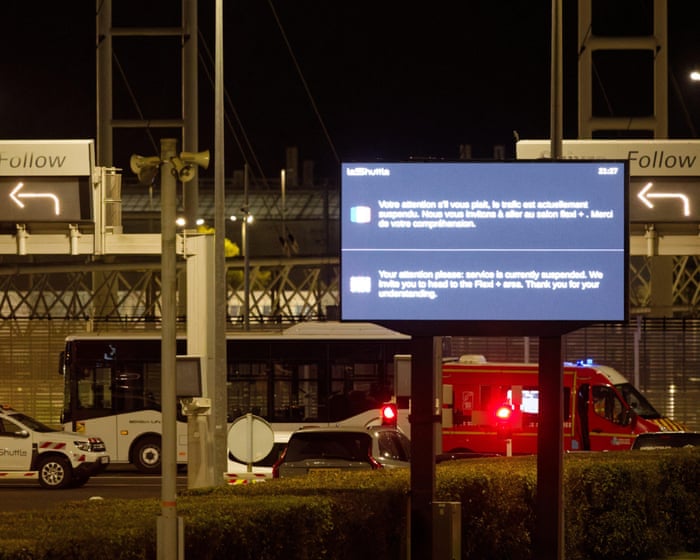
Nineteen people have been injured after a minibus collided with a stationary freight train at the loading platform of the Eurotunnel near Calais, French authorities have said.
Pas-de-Calais underprefect Agathe Cury said 18 passengers and the bus driver were injured in the incident.
Zelensky has lost patience; the US is acting as Putin’s ally.
How Ukrainians attackedRussian targets without Starlink.
If Musk did not switch off Starlink, who did? The main suspects.
Ukrainian attacks on data centres hit Russia where it hurts.
Why this type of attack will continue to escalate and not only in this war.
Videos of the day: a hero robot returns without a wheel; attacks on ammunition depots.
Zelensky has lost patience; the US is Putin’s ally. Despite problems with Starlink, which Kyiv said cut connections with attack drones when they exceeded a certain speed, major Ukrainian attacks on Russian territory continued in recent hours. Long-range strikes over Russia are carried out by drones without Starlink.
These included an attack on the military airfield in Borisoglebsk, more than 300 km from the border, as well as on a refinery in Ryazan, which the local governor confirmed. The Ryazan refinery belongs to Rosneft and is one of the largest, with a capacity of around 17 million tonnes of oil a year.
This came after Ukrainian president Volodymyr Zelensky told the Financial Times that he had had enough after Russian attacks during the so-called energy truce, and announced that refineries would once again become Ukrainian targets.
It was precisely a limitation of such Ukrainian strikes that US president Donald Trump had demanded, after last week concluding a controversial agreement with Moscow to buy Russian oil without asking for anything in return from the Russian side.
This was followed by steps that raised serious suspicions that Trump had begun acting in favour of Putin’s war against Ukraine.
The US threatened Ukraine with restricting supplies of weapons or critically important intelligence and, ultimately, as we examined on Wednesday in the Ukraine Battlefield update, Ukrainian soldiers began experiencing a serious problem with the full internet connection provided by the military version of Starlink, which Musk’s SpaceX developed for the Pentagon.
This is crucial to the Ukrainian army not only for attacks on Russian logistics at the front, but also in defending against more dangerous Russian jet-powered drones, which have terrorised Ukrainian cities in recent months.
Russia’s pro-Kremlin scene naturally noticed this as well. The Z-blogger Rybar called for the use of an “opportunity” in which Russian forces could inflict maximum damage on Ukrainian infrastructure.
“I think the crisis is entirely clear and understandable. The crisis lies in Trump’s position, which is trying to help Russia in every possible way,” expert Volodymyr Ohryzko commented on the situation.
We write below about what the company’s owner, Elon Musk, has said about these developments.
How Ukrainians attacked without Starlink. In the first of the Ukrainian attacks mentioned above, on the airfield in Borisoglebsk, Ukrainian Neptune missiles were used, according to the Ukrainian navy. Ukrainians said they destroyed as many as six Su-34M aircraft. They have their own navigation systems and do not need SpaceX services.
⚡️ BREAKING: Ukraine’s Navy claims to have struck SIX Russian Su-34M fighter-bombers in a Neptune missile attack on Borisoglebsk military airbase in Russia’s Voronezh region overnight. https://t.co/kMEuVbmrVXpic.twitter.com/fH8igvygd5
The attack on the refinery in Ryazan involved drones that are likewise not connected to Starlink, as SpaceX has geographically restricted Ukraine’s access to both Starlink and Starshield services.
“The Ukrainian armed forces therefore rely on alternative means of communication and point-to-point navigation to strike targets in Russia. The speed restrictions under the Starshield service are unrelated to this and will not prevent the Ukrainian armed forces from attacking Russian oil refineries, data centres and other stationary targets in Russia,” the Institute for the Study of War said.
However, Ukrainians felt the problems mainly at the home front.
An unnamed Ukrainian officer compared it to nuclear strikes in comments to Politico. “All operations have been suspended. It will cost many of us our lives,” an experienced soldier commanding a medium-range unmanned aircraft unit in south-eastern Ukraine told the Brussels-based website.
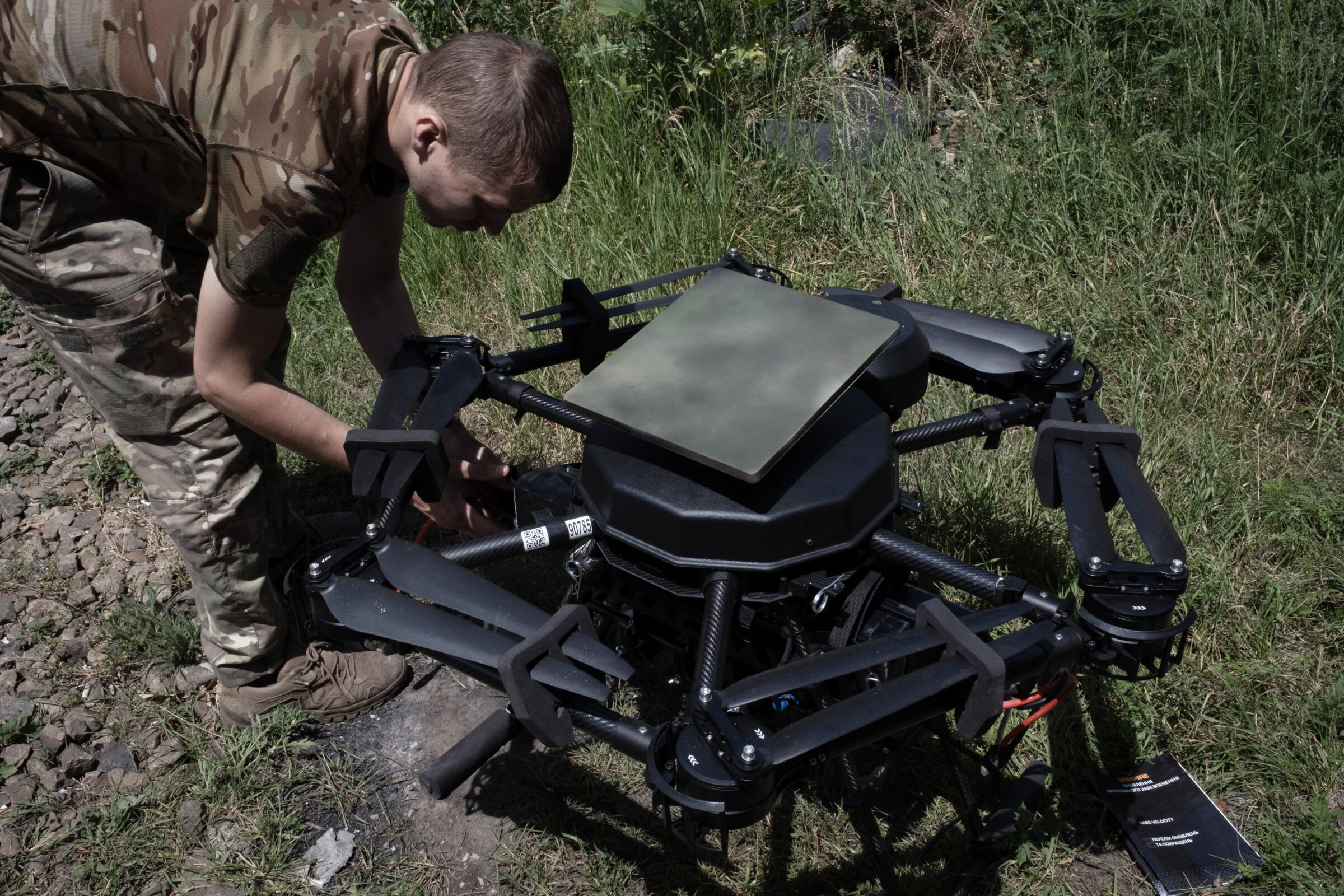
They use Hornet drones to attack targets at distances of up to 150 km.
Ukrainian soldiers contacted by Politico said the restrictions had halted some medium-range drone attacks over Ukraine, disrupting strikes on Russian logistics and reducing support for Ukrainian units at the front.
The scale of the disruption is unclear, however, and it is not known whether the restriction remains in place.
If Musk did not switch off Starlink, who did? The main suspects. Several Ukrainian soldiers reported on Wednesday that they had had to suspend their operations because of restrictions on satellite connections with drones that exceeded 160 km/h.
According to former minister Mykhailo Fedorov, this capability was later restored. NV sources, by contrast, said the speed limit remained in place on Wednesday evening. The following day, operation of the system was fully restored, according to Ukraine’s defence ministry, while the circumstances of the outage are being investigated.
Importantly, Zelensky said it was not a technical problem but an apparent deliberate act. It is not yet certain who was behind it, although the main suspect is clear.
Musk claims that, because the military version of the Starshield satellite internet connection is military in nature, it is controlled by the US government, which also owns it.
“Any decisions on speed or usage restrictions are made by the US military and, ultimately, the US president (POTUS),” the world’s richest man wrote on his social network X. However, the White House, according to Axios sources, claims it had nothing to do with the restriction and wants Musk’s company to investigate the circumstances.
Republican senator Tom Tillis is also calling for this in Congress. “I do not expect defence secretary Hegseth to ensure transparency, and therefore we will ask the defence department’s inspector general to launch an investigation and report to Congress and the American people,” he wrote on X.
Starshield differs from the regular network in its greater resistance to jamming and its specialisation for military use.
Oleksandr “Serg Marco” Karpiuk, a well-known Ukrainian specialist in military aerial reconnaissance, wrote on Facebook that standard Starlink terminals currently have a preset speed limit of 22 m/s.
“To be able to fly at speeds above 22 m/s, Ukraine signed contracts for the Starshield system, which is managed by the Pentagon. This is a military system using Starlink terminals that offer greater functionality, although these accounts are substantially more expensive,” he explained. According to him, the Pentagon did two things within a single day: it restricted intelligence-sharing and changed the parameters of Starshield accounts.
“It was a decision by Pentagon chief Pete Hegseth, evidently on Trump’s orders,” Karpiuk believes, as quoted by Illia Ponomarenko in a post.
Pro-Kremlin propaganda has welcomed the latest developments.
The Russian daily Kommersant quoted a Musk post in which he wrote that it was “time for Zelensky to leave”. His words followed Trump once again pushing Ukraine to hold elections in which it would choose a new president.
Zelensky responded that they would be happy to organise elections if Russia observed a 60-day ceasefire.
Experts agree that it is unrealistic to organise a proper vote under the wartime conditions Ukraine faces.
Ukrainian attacks on data centres hit Russia where it hurts. Although it has not yet been confirmed that pro-Kremlin bots became less active after Ukrainian drones struck Russian servers, ordinary Russians felt the impact. Russia started such attacks in September, amid escalating air raids on Kyiv.
As many as around 100,000 households lost internet access at the time. Now, this tactic has been turned against Moscow.
Researchers studying Russian trolling did not observe any real decline in the activity of pro-Putin bots either, according to a BBC analysis. Far more interesting, however, are the real-world consequences of Ukrainian attacks on the data centres of Yandex, Russia’s Google, which have manifested themselves in a range of ways.
According to Politico sources, Ukrainians wanted to show Russians that it takes two to play this game. According to the Financial Times, they have already managed to seriously damage three of Yandex’s six data centres: in Sasovo, Kaluga and Vladimir.
The consequences of these attacks subsequently showed how vulnerable Russia’s centralised internet ecosystem is.
“Russia has become a victim of its own policies, which has led to the worst possible scenario,” Alena Epifanova, an expert at the German Council on Foreign Relations, told the FT.
The impact of the Ukrainian attack has affected the daily lives of Russians. Here overview of services that were affected to a greater or lesser extent, according to the British daily:
problems accessing Yandex email;
Yandex Taxi was taken offline;
several websites — including a dating app and the Russian equivalent of McDonald’s — were inaccessible;
saved files and documents could not be opened;
bus timetables disappeared in some cities;
residents of some Moscow apartment buildings could not get through electric gates;
banking services were not fully operational.
All the affected data centres also have supercomputers used to train AI, which is playing an increasingly important role on the battlefield.
For example, one of Yandex’s three supercomputers — Chervonenkis — in Sasovo had long ranked among the world’s 100 most powerful supercomputers, and only in 2026 fell to 101st place, according to the BBC.
However, it has not been confirmed that Ukrainian attacks damaged any of them. According to the Russians, an attack on a similar Sberbank facility did not cause significant damage.
“If the supercomputers are damaged, replacing the loss will be difficult — they were powered by chips from the US company Nvidia, which Yandex imported through ‘complex and complicated schemes’ because of sanctions,” a former company employee told the BBC.
Given the current shortage of Nvidia chips, Yandex’s data centres may not be restored until 2028, according to the website.
Why this could escalate. Attacks on buildings that provide computing capacity are comparable, according to Politico, to strikes on a power plant supplying electricity, heat and fuel, on which both military and civilian functions depend.
That is also why this type of attack sits on the edge of international law.
“It may weaken the enemy’s military effort, but it can also completely paralyse ordinary life,” the Brussels-based website wrote. According to Politico, the cost of restoring data centres in Russia is particularly high because the necessary materials are scarce and their import is restricted by Western sanctions.
“Obtaining a large quantity of equipment to replace what has been destroyed will not be easy,” cyber specialist Oleg Shakirov told Politico.
For now, Ukrainian expert Yevhen Pronin is cautious in assessing the effectiveness of attacks on data centres. “For example, after the attack on Sberbank’s data centre — Russia’s largest bank and one of its key technology companies — its representatives said its systems were operating without disruption, and reports indicated that the centre itself was still under construction,” Pronin told Denník N.
However, a series of such strikes fundamentally changes the scale of the risk, he said. If attacks continue to hit large operational centres on which banks, state services and corporate services depend, the consequences could be far more serious.
“They range from widespread outages to data loss and disruption to critical digital infrastructure. We do not yet see a catastrophe for all of Russia, but rather the vulnerability of a system that is increasingly dependent on a few major technological hubs,” he added.
Attacks on data centres themselves are not a new feature of the Russia-Ukraine war.
At the start of Trump’s war against Iran, Amazon data centres in the United Arab Emirates and Bahrain were hit. This was followed by an attack on a data centre in Tehran, after which soldiers’ salary payments were interrupted and banks’ online services stopped working.
The Center for Strategic and International Studies examined at the time how data had become a new front line of warfare. Following a trip to Kyiv, its researcher Emily Harding concluded that “state-of-the-art software, flexible operational procedures, and the strategic migration of data to cloud storage both inside and outside the country have given Ukraine the advantage it needs to fight”.
The problems linked to Starlink only confirm this digital vulnerability of modern warfare.
Videos of the day
It returned even in critical condition. Ground robots are being deployed increasingly often at the Ukrainian front, saving more and more lives in the deadly zone where drones hunt people. In this case, one such robot returned from a demanding mission even without one wheel.
A Ukrainian logistics UGV returns from a combat mission despite sustaining critical damage pic.twitter.com/d8fT8sh21T
Attacks on ammunition depots. FPV drone operators from Artan, a special unit of Ukrainian military intelligence — apparently also thanks to Starlink — launched a series of attacks on field ammunition depots. Over several months, they reportedly struck 2,308 enemy targets.
Enemy tanks and self-propelled artillery systems probably accounted for a significant proportion of them.
By Tuesday (13 October), Russia had demonstrably lost 24,192 pieces of heavy equipment (24,170 on Monday, 5 October). Of these, 19,155 (19,133) were destroyed by Ukrainians, 1,002 (1,003) were damaged, 1,194 (1,194) were abandoned by their crews, and 2,841 (2,840) were captured by the Ukrainian army. This includes 4,453 (4,452) tanks, of which 3,358 (3,357) were destroyed in combat.
Ukraine lost 12,259 (12,238) pieces of equipment, of which 9,652 (9,633) were destroyed, 713 (711) damaged, 695 (695) abandoned and 1,199 (1,199) captured. This includes 1,471 (1,466) tanks, of which 1,131 (1,126) were destroyed in combat.
Note: Neither side regularly reports its dead or destroyed equipment. Ukraine publishes daily figures for Russian casualties and destroyed equipment, which cannot be independently verified. In this overview, we use data from the Oryx project, which has compiled a list of equipment losses documented exclusively by photographs since the beginning of the war.
Europe’s trade deficit with China reached a record $34.8bn [€31bn] in September, as EU leaders meet in Brussels on Thursday (15 October) to discuss Europe’s competitiveness agenda and what they call “macroeconomic imbalances” — a euphemism to avoid mentioning China by name.
EU heads of state and government are expected to give a mandate to the EU Commission to propose a set of trade defence measures and tools to reduce the EU’s reliance on Chinese industry, based on a new Franco-German blueprint, as a united front spreads across the bloc.
There was a move towards a “surprising unitary position” on Beijing among member states, said an EU diplomat, ahead of a two-day summit in Brussels which began on Thursday (15 October).
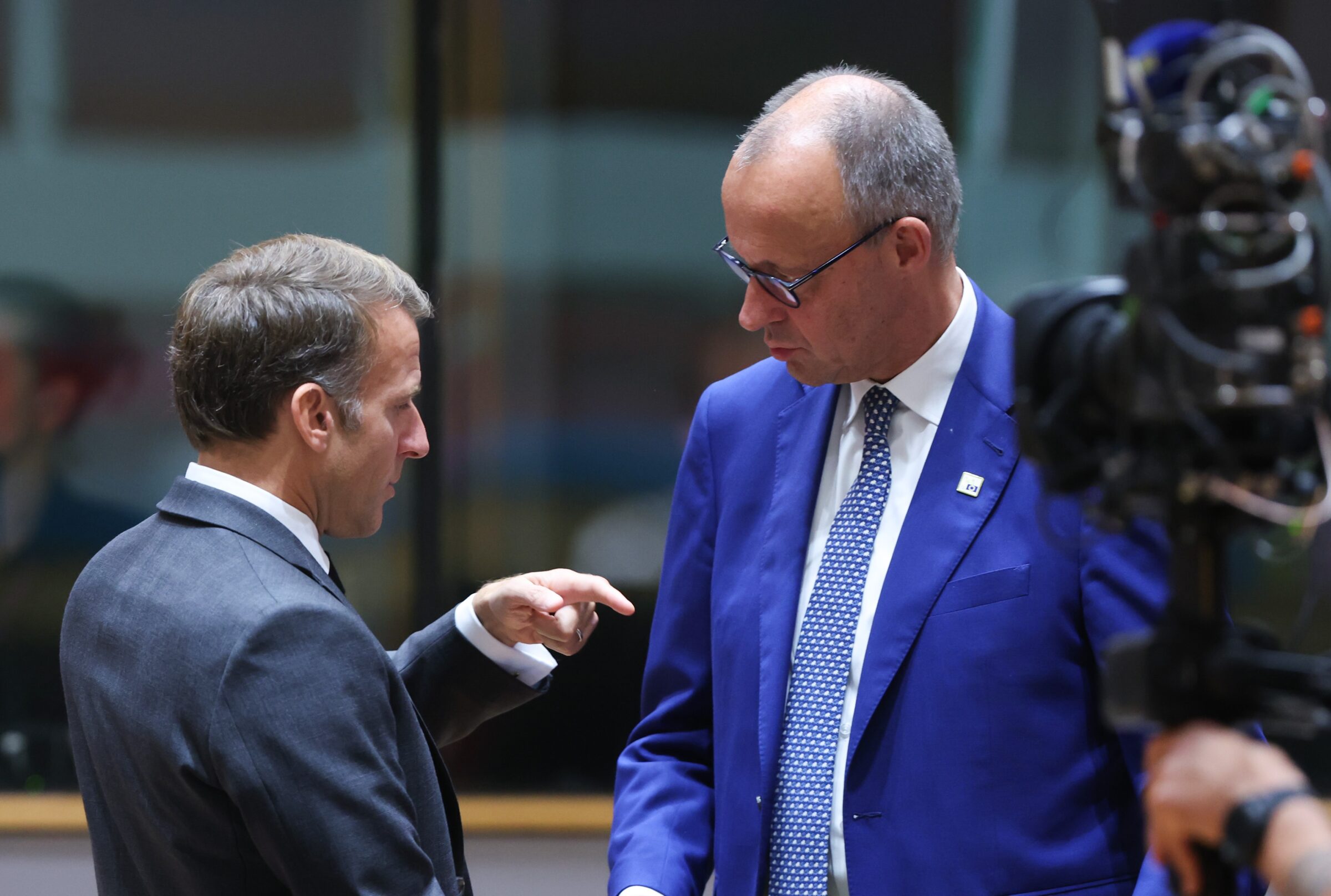
A joint letter and policy paper submitted by French president Emmanuel Macron and German chancellor Friedrich Merz to commission president Ursula von der Leyen last week was viewed by many EU diplomats as marking a decisive shift towards a more consolidated EU stance on trade relations with China.
“For a long time, there were significant differences between these two countries on how to deal with China, how to address the economic situation,” parliament president Roberta Metsola told reporters on Thursday.
The diplomat added that the commission’s trade diversification package, designed to reduce the bloc’s reliance on Chinese industrial inputs and curb Chinese exports, will be presented by the end of the year and will be based on the Franco-German paper.
But the commission, for its part, has downplayed the prospect of rapid progress to EU-Chinese trade statistics. “It’s an issue which is not going to be solved in a couple of months,” said one official.
‘Be ready for escalation’ but do nothing
This article continues, but the full version is available only to EUobserver.com subscribers. Visit account.euobserver.com/membership
PRESS REVIEW – Thursday, October 15: First, reported Starlink disruptions in Ukraine make the European front pages. Next, US papers go into more detail about the situation. Also, an unusual alliance forms in Germany between far-right and far-left parties. Meanwhile, the winners of the Wildlife Photographer of the Year awards have been announced. Finally, Finland flaunts its smelly islands.
Exclusive: Aleksandar Vučić personally intervened to push plans for controversial $500m Trump Tower in Belgrade, which sparked protests and a criminal case
Serbia’s authoritarian ruler personally intervened to advance an allegedly illegal scheme to hand over a protected site in Belgrade for a Trump tower, the Guardian can reveal.
Aleksandar Vučić summoned officials to a meeting at his presidential offices about the project, which has culminated in a landmark indictment of senior figures from his regime on charges of abuse of public office.
Demonstrators demand resignation of Edi Rama after three days of clashes in capital Tirana
Albania’s prime minister has said he will not resign as a protest movement, initially prompted by a proposal to build a Trump family-backed resort in the Balkan state, turned violent with clashes convulsing the capital for a third consecutive day.
Speaking on Thursday after calls by students who this week assumed control of the anti-government demonstrations that have rattled Tirana since June, Edi Rama said: “Governments are changed through democratic elections. We had elections last year, not a revolution.”
This live blog is now closed, you can read more of our European news coverage here
Just as the leaders sit down at the big table in Brussels, Romania has said that seven people are still missing after a fire on a vessel in Romanian territorial waters of the Black Sea.
Suspected Russian drones have hit several ships off Romania and neighbouring Bulgaria since last week in a spillover from the Ukraine war, AFP reported.
EUobserver is proud to have an editorial partnership with Europod to co-publish the podcast series “Briefed” hosted by Léa Marchal. The podcast is available on all major platforms.
Find the full transcript below:
Ten years after the Brexit vote, more and more Britons are asking whether they should go back. According to a YouGov poll conducted earlier this month, 52% would vote to rejoin the EU in a referendum.
And the UK’s new Prime Minister, Andy Burnham, seems to be keeping that door open.
But how realistic is that? Andy Burnham became Prime Minister this summer. And since then, he has been dropping hints here and there about a possible return to the EU. A few months ago, he was saying it was too early to even discuss it.
So what changed? Perhaps the international context, but also the realisation that the UK cannot get everything it wants while staying outside the Union.
On 20 November, EU leaders will have the opportunity to discuss the relationship with the UK during a bilateral summit. They will try to reach agreements on a number of issues that have stalled.
What are those topics? First, food. Today, agri-food products face checks and certification when they enter the EU, and that slows trade down. The solution on the table is for the UK to align its sanitary and phytosanitary standards with the EU’s. But the details still need to be agreed.
Second, people. Right now, a European who wants to work in the UK needs a visa. The two sides could agree on a scheme to make mobility easier, especially for young people.
Third, carbon. The British would like to link their carbon market to the EU’s, so that their exporters don’t have to pay extra for their emissions when they sell to Europe. In practice, that means avoiding the EU’s carbon border tax.
Last but not least, industry. And this is a big part of the discussion. As the EU moves towards giving priority to European products, the British fear being left out of this “European preference”.
Now, you might say: in all these cases, isn’t this a bit like being in the EU, without the drawbacks? That’s exactly what critics call cherry-picking.
At the heart of the problem is a simple question: where do you draw the line between being a member and being a partner? It’s the same debate the EU has with Switzerland, which wants to stay very close but not be part of the bloc.
Now, is a return to the EU a realistic scenario? The door is open, as Emmanuel Macron and others have put it.
The UK could apply, and it’s unlikely that any member state would block the process. But the European Commission has already warned: there would be no special treatment for the British.
On the positive side, the UK would start from a good position. It already applies a good part of EU legislation, and it meets the rule-of-law criteria.
But all these years after leaving the EU, the two sides are still negotiating. There are sticking points on free movement and on standards. And those disagreements would make any accession talks that much harder.
Let’s see what comes out of the summit on 20 November.
In today’s newsletter: As Russia resists a ceasefire and Trump’s shifting priorities unsettle allies, an end to the conflict isn’t getting any closer
Good morning. In his usual asinine unconventional approach to international relations, Donald Trump announced on Sunday (via Truth Social, how else) an “ENERGY CEASEFIRE in the War between Russia and Ukraine”, apparently without checking with either side. Volodymyr Zelenskyy, who said any such deal was “news to me,” nonetheless declared he was “ready and we will accept it”. Vladimir Putin responded by blowing up some Ukrainian power plants.
This has been the tenor of much diplomacy during Trump’s tenure: false starts, U-turns, incoherent positions (and some playful flirting with Vlad). Meanwhile fighting continues, and America’s allies attempt to manage the fallout. Andy Burnham hosted Zelenskyy at Downing Street yesterday, stating the UK is doubling down on its support for Ukraine, and pointedly calling on others to “follow suit”.
UK | Sally Rooney has said she is being forced to withdraw her books from sale in the UK because of her support for the banned organisation Palestine Action.
EU | Britain will benefit from much closer trading relations with the EU even if that means giving up its ability to negotiate free trade agreements, the Scotland secretary has said.
Ukraine | Ukraine’s military has suddenly had its access to Starlink satellite internet terminals restricted as the Trump administration has increased pressure on Ukraine to immediately halt long-range strikes on Russia’s oil industry.
Vaccine | Guinea-Bissau has not approved the controversial hepatitis B study in newborns that would be funded by the US government and private partners, the African country’s minister of health said.
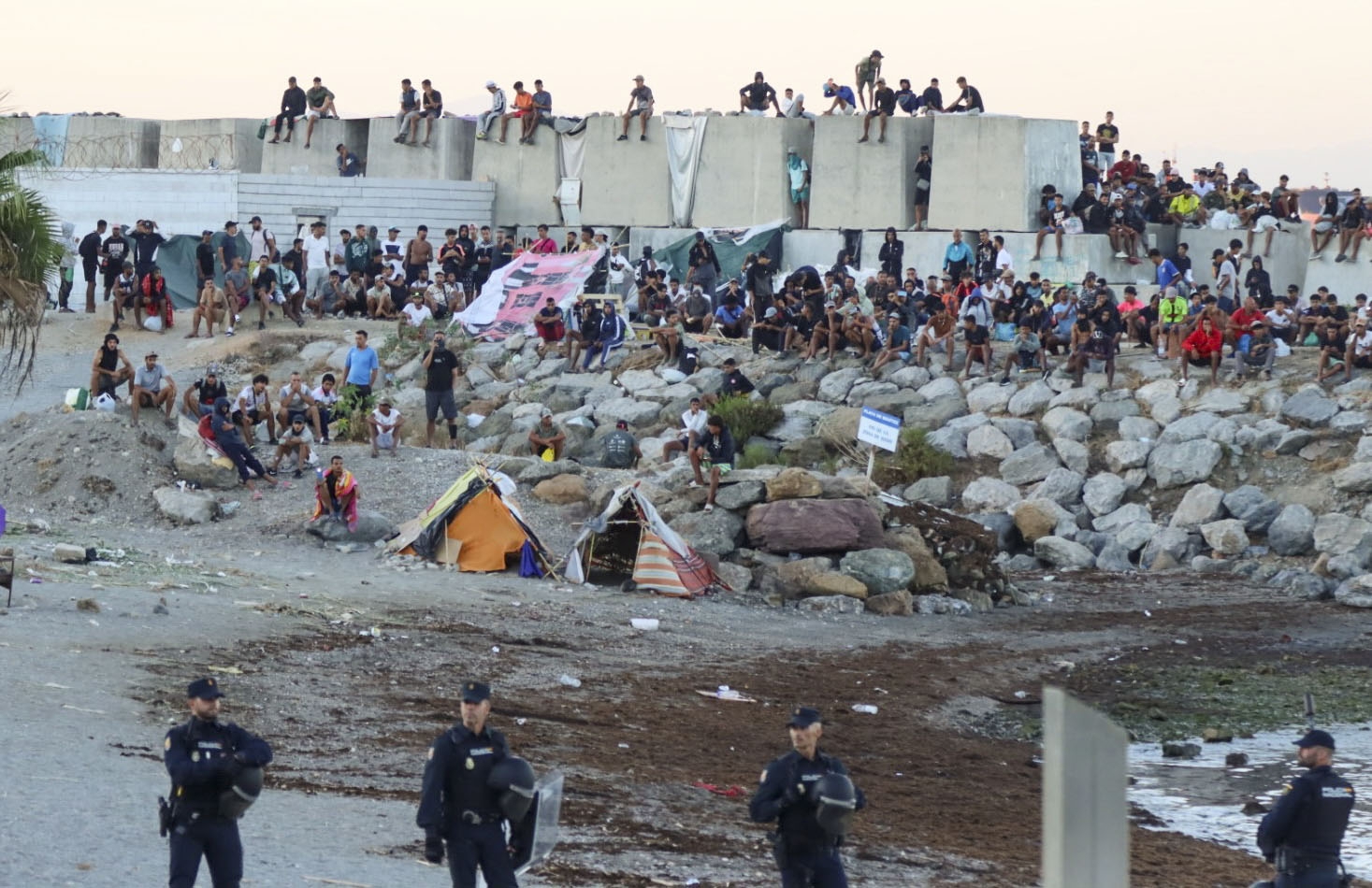
As EU leaders gather in Brussels on Thursday and Friday (15-16 October) to discuss, among other things, the issue of Europe’s southern border, countless Moroccan families cling to the hope they may see their children again after they entered the Spanish enclave of Ceuta in north Africa in July.
“Ayoub left on 30 July at 2PM. Since that day, I haven’t heard anything from him, apart from the fact that he went to Ceuta,” his brother said.
Ayoub Elkhamlichi was 27 when he left the north of Morocco for the nearby border with Ceuta, a half-hour drive from his home.
In the commotion that accompanied the rush of an estimated 72,000 mostly Moroccans into the enclave over 30 and 31 July 2026, 141 people were reported to have lost their lives while attempting the crossing.
Those that have not been heard of since that deadly July remain innumerable.
Among them is Ayoub, who had been working in a local konafa shop before leaving.
His brother Mohamed Ali laments that he’d forgotten his ID card, which will reduce the chances he’ll be identified if he’s ever found.
“The border with Ceuta was opened, so everyone left Morocco, because the city of Tetouan offers few job opportunities,” Mohamed Ali told EUobserver, from his home in one of Morocco’s closest cities to the Spanish border.
“Ayoub managed to find a job, but the pay was low. So he went to Ceuta,” he said. His family, meanwhile, “are in a state of anxiety and fear.”
It has been 11 weeks since Khaled’s dad Said has also seen his son, 26, who left for Ceuta from Tidass, a small Moroccan town, which Said said “has its problems.”
This article continues, but the full version is available only to EUobserver.com subscribers. Visit account.euobserver.com/membership
Lyrical lines printed on side of city’s fleet of rubbish trucks now recognised as one of Netherlands’ proud traditions
It is best known for its rich migration history and striking modern architecture. But now the Dutch city of Rotterdam is seeking recognition for a rather different characteristic: its tradition of printing poetry on bin trucks.
Since a poetry festival first came up with the idea in 1988, lines of verse have been printed on all of the city’s waste vehicles. The practice was this week elevated to the status of intangible cultural heritage, with formal recognition from a Dutch body that guards the nation’s traditions.
Solidarity with Palestine’s suffering is punished but MEPs allow a witch-hunt of European Muslims
For three painful years, Israel’s genocidal war in Gaza, in retaliation for the Hamas terror attacks on 7 October 2023, has killed more than 74,000 Palestinians, wounded thousands more and reduced most of the territory to rubble. It has changed views of Israel across the world, increased support for Palestine and raised questions about US power.
Europe’s failure to hold Israel’s government to account has cost it global credibility and influence. But I fear something even more consequential than that: Gaza is changing Europe itself.
Shada Islam is a Brussels-based commentator on EU affairs. She runs New Horizons project, a strategy, analysis and advisory company
Do you have an opinion on the issues raised in this article? If you would like to submit a response of up to 300 words by email to be considered for publication in our letters section, please click here.
A backlash is building against an EU ‘omnibus’ bill that seeks to make it easier to authorise and use pesticides across the bloc.
MEPs are still yet to set a date to vote on the European Commission’s proposal to extend how long pesticide active substances can stay approved in the EU, amid a series of protest letters from scientists, UN health experts, and divisions among member states.
EI parliament’s environment and agriculture committees were originally expected to hold a joint vote on a compromise text on 5 October, but shelved that date without proposing another as this article went to publication.
Sustained criticism has come from the scientific community.
Last month, a group of more than 500 scientists signed an open letter to the commission on 16 September demanding a pause on the file pending “an independent assessment, whether carried out by parliament’s own research service or by an equivalent independent body.”
They warned that the commission’s plan to extend grace periods for products withdrawn on safety grounds, widen derogations for hazardous substances, and restrict the use of the latest independent scientific evidence “seem difficult to reconcile with the precautionary principle and with obligations to respect, protect and fulfil human rights, including the rights of peasants and other people working in rural areas”.
This article continues, but the full version is available only to EUobserver.com subscribers. Visit account.euobserver.com/membership
Pontiff has begun walking in his hospital room and is eating normally after operation to remove growth, doctors say
Pope Leo’s recovery from a lung cancer operation is progressing as planned, his doctors have said, as the pontiff received good wishes from around the world, including from Britain’s King Charles.
Leo, who had a cancerous mass removed from his right lung late on Tuesday, began walking in his hospital room after respiratory therapy on Wednesday. He was eating normally, his doctors Luigi Carbone and Stefano Margaritoria said in a statement issued by the Vatican.
Peak of French mountain now 4,807 metres high and fluctuates year by year due to changes in Alpine climate
Western Europe’s highest mountain shrank by more than a metre last year. The peak of Mont Blanc in France now stands 4,807.47 metres above sea level, a team of surveyors said on Wednesday, putting “the roof of Europe” 1.29 metres lower than in 2025.
The mountain is about 4,792 metres tall but the summit constantly shifts as heat, wind and precipitation change the thickness of snow and ice on top. The height scientists recorded during an expedition last month was 1.88 metres greater than it was in 2023, when it reached the lowest levels in recent memory.
As the Council of Europe debates a controversial Additional Protocol on involuntary psychiatric treatment, two of its supporters face an uncomfortable question: why do countries with some of Europe’s highest rates of compulsory psychiatric admission believe that the problem lies primarily elsewhere? Germany and Switzerland are among the countries supporting a revised draft Additional Protocol […]
Exclusive: Douglas Alexander, on trade delegation to India, talks up economic benefits of joint trading arrangements with Europe
Britain will benefit from much closer trading relations with the EU even if that means giving up its ability to negotiate free trade agreements, the Scotland secretary has said.
Douglas Alexander helped negotiate deals with India and the US when he was a trade minister under Keir Starmer.
The Russians are making a mockery of Trump’s energy ceasefire.
What the restrictions on Starlink mean and how they are being felt.
The Russians are pushing towards Dobropillia.
The 3rd Army Corps reported on the next phase of Operation Vivaldi, but we learned nothing new.
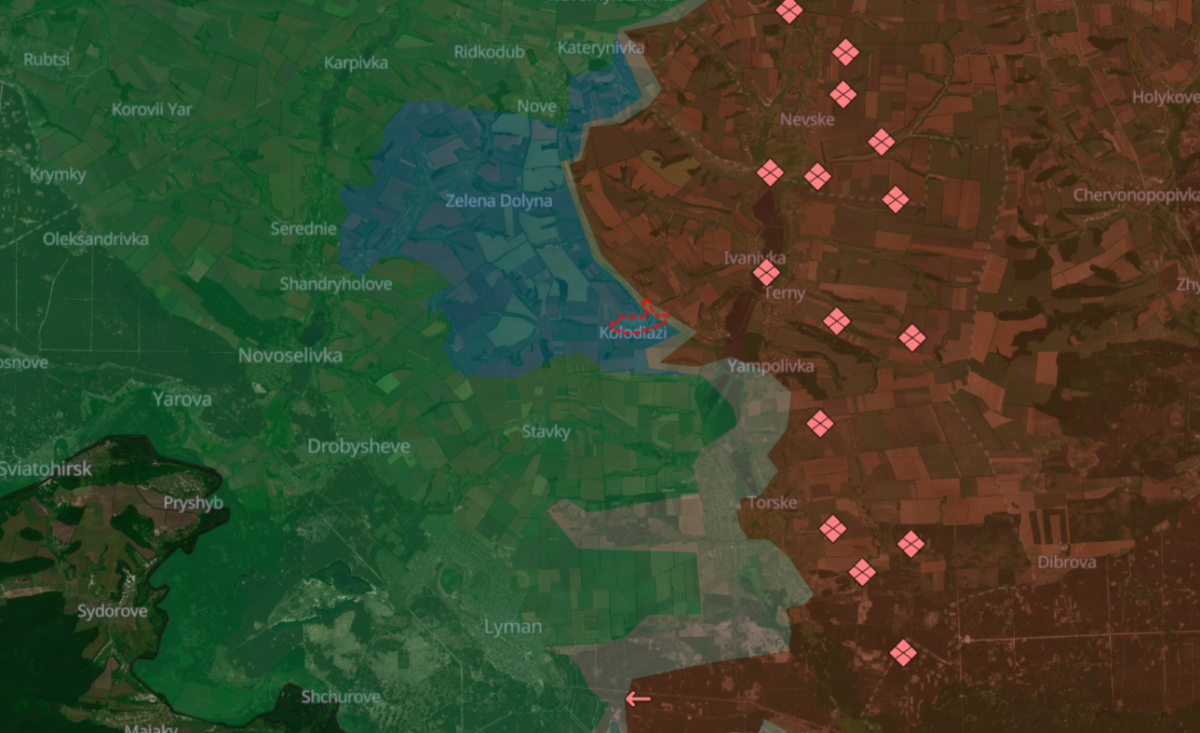
Maps of the day — Lyman, Dobropillia
Videos of the day — a drone hit a flying Mi-28 helicopter; how a heavy machine gun is used in drone warfare; civilians fleeing the fighting were struck by artillery and mortar fire
Trump’s America is becoming a rogue state. Ukraine, as well as Europe as a whole, must now accept that the United States is openly supporting Russia’s aggression against Ukraine. Under the pretext of efforts to end the war, the US government — and, as of Tuesday, a major technology company as well — are openly backing the fight against Ukraine and, therefore, against European security.
The United States has recently taken several decisions in quick succession that could help Russia win the war, at a time when it was failing to do so on the battlefield.
US president Donald Trump eased sanctions on trade in Russian oil, enabling Russian president Vladimir Putin to better finance his aggression against Ukraine, and effectively called for the overthrow of Ukraine’s legitimate president.
A growing number of voices claim that the US has stopped providing intelligence on Russian air raids (this has not been confirmed, and some authorities deny it).
And the United States has now also deprived the Ukrainian army of the ability to carry out effective medium-range strikes.
It did so by dramatically restricting the Starlink service over Ukraine’s occupied territories. In practice, this will have serious consequences for the Ukrainian army’s ability to use drones for its previously highly effective attacks on Russian logistics.
What the restrictions on Starlink mean and how they are being felt. Since this morning, the Ukrainian army has reported restrictions on the operation of receivers for SpaceX’s satellite system.
Thanks to Starlink boss Elon Musk’s equipment, they destroy hundreds of Russian army trucks and other military equipment every month at distances of 30 to more than 100 km.
However, on the night of 14 October, Ukrainians lost access to the military part of the system known as Starshield, meaning that the devices did not function at speeds above 160km/h. This means drones cannot carry out combat missions because their operators cannot guide them to their targets.
The situation deteriorated further during the day. Serhii Sternenko reported that the army later reported losing control at speeds above 70 km/h. This means grounding Ukraine’s drone fleet for medium-range attacks.
It is highly likely that this is not a technical problem but a response to a request from the Trump administration, since otherwise the Ukrainian army would have received an explanation — which, according to Ukrainian sources, did not happen.
According to our observations, communications may have been interrupted for 10 to 20 seconds during drone flights,even at speeds of 110 to 120 kilometres per hour,” Oboronka news outlet quoted a military source.
A technical problem is unlikely, as the Ukrainian military would have received an explanation in that case, which,according to Ukrainian sources, did not happen. The question now is how long the outage will last. It is also unclear to what extent the decision was made by Musk and to what extent by Trump.
“Our defence forces received no warning of such a restriction, which led to the cancellation of several missions. It is clear that this is no coincidence and is connected to the current political situation,” wrote Serhii “Flash” Beskrestnov, for example.
He described as an even more serious problem than the restriction of medium-range attacks the fact that Starlink is now crucial to intercepting Russian air raids on Ukrainian cities.
“Through their actions, our partners are depriving us of one of the few means of protecting the country against jet-powered Shahed drones,” said Beskrestnov, a leading drone expert.
Among European politicians, Poland’s foreign minister responded by asking Musk whether he was once again engaging in politics, and reminding him that his European customers were watching him closely.
Naturally, the Russians are delighted.
However, the change will not affect Ukrainian long-range air strikes. The drones carrying them out are not guided using Starlink, so the restrictions will not affect their operations.
Hey, @elonmusk, big man, are you playing politics with your products again? As your European customers, we are watching you. https://t.co/T385xpUEUu
The Russians are making a mockery of Trump’s energy ceasefire. The US president characteristically announced with great fanfare that he had brokered an energy ceasefire between Ukraine and Russia.
Although the Russian army did not observe it for a single day, the Ukrainians stayed away from Russian refineries for 48 hours. That is no longer the case after today, but before then the Russians carried out a massive air raid, including on the capital.
They used as many as 39 ballistic missiles and more than 100 drones. Since Trump had earlier deprived Ukraine of effective air defence in the form of missiles for Patriot systems, it has nothing with which to defend itself against such attacks. As a result, the Russians struck three Kyiv thermal power plants on Wednesday.
Overnight, the Russians used 39 ballistic missiles and more than 120 attack drones and loitering munitions against our energy and critical infrastructure in Kyiv, the Kyiv region, and Kharkiv. A targeted Russian ballistic missile strike specifically against energy infrastructure…
— Volodymyr Zelenskyy / Володимир Зеленський (@ZelenskyyUa) October 14, 2026
The Kremlin does not even conceal that a Trump ceasefire means nothing to it.
“Tonight, the Armed Forces of the Russian Federation carried out a massive strike using precision-guided weapons and long-range strike drones against communications and energy infrastructure facilities in Kyiv, Kyiv region and Kharkiv region,” said a statement by the Russian defence ministry.
It also included a list of the power plants hit. The Russians boasted that they had struck six of them. For each one, they used the formula that it was “supplying electricity to military logistics facilities, weapons depots and military equipment”.
Mike Pence, who served as Trump’s vice-president during his first term, wrote that Putin did not want peace but Ukraine, and that Trump should impose harsh sanctions rather than strike a deal with Putin. None of this, however, will happen.
Putin doesn’t want peace. Putin wants Ukraine. Enough is enough.
President Trump should rescind the diesel deal with Russia and return to the strong policies of our four years in the White House; use the Lindsey Graham Sanctioning Russia Act to impose harsh sanctions on any… pic.twitter.com/uw11mEkh0x
The Russians are pushing towards Dobropillia. All analysts agree on this. Their advance is slow, but persistent. It is enabled by the mass deployment of Russian soldiers.
The Kremlin has currently concentrated its largest number of forces in this sector. It therefore appears that the capture of Dobropillia is the Russian command’s main objective in these weeks.
“The Russians here have a seemingly endless pool of manpower and a clear numerical advantage, allowing them to significantly increase the flow of infiltrators and thus the likelihood that some will penetrate Ukrainian defences,” wrote the OSINT account Playfra, whose map can be found below. However, the price of the unceasing waves of infantry is, according to it, “colossal losses” on the Russian side.
Dobropillia sector.
In the same way, this sector is also worsening.
The Russians have a seemingly infinite manpower pool here and a clear numerical advantage, which allows them to significantly increase the flow of infiltrators and, as such, the chance of some passing through… https://t.co/BoiqRuCRs5pic.twitter.com/pKBIhHZW3d
French analyst Clément Molin published a time-lapse map of the past four months based on DeepStateUA data. Its latest version is not the most accurate and does not correspond to other sources, but it illustrates the slow pace of the Russian advance.
During the last 4 months, Russia 🇷🇺 made a slow but steady progress in the direction of Dobropilla
Russian forces continue to advance and capture villages and small towns south of Dobropilla. Shevchenko and Bilytske fell, Russian forces are now attacking Dobropilla from the… pic.twitter.com/mTDRo4DcPf
The Polish analytical account Thorkill examined the situation north-east of Dobropillia in greater detail. It sees a significant Russian advance there.
It bases this assessment on Sentinel satellite data which, it said, showed no signs of Russian bombardment in the areas of Zolotyi Kolodiaz, Novotroitske and Andriivka — an indication, in its view, that they are under Russian army control.
Sytuacja w rejonie: Zołote Kołodiazi – Nowotroickie – Andrivka (Dobropole).
Mniej więcej miesiąc temu we wpisie o bardzo dużej liczbie FAB-ów z modułami UMPK zrzucanych przez rus w rejonie Andrivki, sygnalizowałem że sytuacja 1 Korpusu "Azowa" GN na płn od Dobropola jest dużo… pic.twitter.com/KihWWAuI7u
Playfra sees the situation far less negatively. It did confirm Russian infiltration in Andriivka, which lies as much as 20 km behind the notional front line, but said that around eight Russian groups of two to four soldiers were moving throughout the area and did not pose a threat.
For easier orientation: Zolotyi Kolodiaz is at the tip of the green salient on Playfra’s map. On Thorkill’s map above, it is located in the lower centre, within the red area.
The two depictions of the situation therefore differ radically. However, there is agreement that the Russians are currently exerting the greatest pressure near Dobropillia and are advancing slowly.
Dobropillia direction.
The situation is quite peculiar tactically:
South, after the clearing conducted since August, some Russian groups still remain in the dotted square, mixed with some new infiltrators, but they aren't significant.
The 3rd Army Corps reported on the next phase of Operation Vivaldi, but we learned nothing new. Andrii Biletskyi, the commander of what is perhaps the strongest component of Ukraine’s army, published a new video confirming the liberation of another 101 square kms north of Lyman. Since the start of Operation Vivaldi, this brings the total to 277 square km.
Четвертий сезон операції «Вівальді»: Білецький оголосив про взяття ще 101 км²
Третій армійський корпус та придані підрозділи звільнили ще три населені пункти — Зелену Долину, Липове й Колодязі, — повідомив у своєму зверненні бригадний генерал Андрій Білецький. Протягом… pic.twitter.com/0Msxrau6yw
The Ukrainian project DeepStateUA, which is close to the army and respects the operational silence it has declared, also published its map of the area.
The latest version includes the liberation of the villages of Kolodiazi, Zelena Dolyna and Lypove. However, this is not new information but merely reflects changes that have been discussed since August.
Russian sources, especially Rybar, have also repeatedly reported that fighting is actually taking place further east. According to them, Ukrainian soldiers have already reached several locations, including the village of Terny on the Zherebets River. This area is marked red on DeepStateUA’s map, indicating that it is under Russian control.
Poland’s Thorkill has more recent data. Over the weekend, it published a map consistent with Rybar’s claims that Ukrainians had reached the Zherebets near Terny and further north.
Sytuacja w rejonie Nowego (Łyman), część IV.
Po blisko miesięcznej przerwie wczoraj w Donbasie była w końcu bezchmurna pogoda i można było przyjrzeć się na Sentinelu co się mniej więcej dzieje na tych najciekawszych odcinkach frontu. Jeżeli chodzi o rejon na płn od Łymanu -… pic.twitter.com/2yods3H3Yk
A Ukrainian drone pursued and caught up with a Russian Mi-28 attack helicopter in Kharkiv region. The Russians were on a combat mission; the footage clearly shows a missile being launched. The outcome of the attack is not yet known.
Ukraine's 115th Mechanized Brigade "Aliens" struck a Russian Mi-28 with drone, downing it pic.twitter.com/wefYKaMDk4
The following photographs are related to the previous video. The image on the left appeared on the Russian internet at the beginning of the month, described as the result of an FPV drone strike. It is currently unknown whether this is the same incident or another, as yet unidentified one.
In early October, Russian sources published photos showing damage to the right side of a Mi-28 attack helicopter, specifically the pneumatic emergency escape ladder just below the pilot’s cockpit, claiming it had been hit by an FPV drone.
A 12.7mm US heavy machine gun being fired. The close-up footage shows what the trigger looks like, but above all reveals the tactics for using the weapon. The machine gunner fires a short burst at Russian positions, then reports over the radio that the task has been completed.
A confirming “plus, plus” is heard twice from the other end — “plus” is used in radio communication to confirm receipt of a message — after which the soldier covers the machine-gun position with a camouflage net and goes into hiding to avoid being detected by Russian drones.
Ukrainian soldier supresses Russian assault with a Browning M2 from WW2.
Only the Ukrainian version of events is known about the footage below. It shows civilians from the Kupiansk area attempting to move to safety. However, they are struck by fire while on the move — the number of casualties is unknown and they cannot be seen in the footage.
According to the Khartiia unit, which published the video, the Russian army subjected the group to artillery and mortar fire. The claim cannot be verified. In any case, it illustrates that it is a mistake to remain in areas affected by fighting.
Цивільні – живий щит росіян, а потім – їхня мішень для інформаційної провокації.
У Купʼянську вранці 13 жовтня росіяни прикривалися мирними жителями, виводячи їх до труби газогону, й самі ж накрили групу мінометним та артилерійським вогнем. Серед людей були жінки та дитина. pic.twitter.com/lB6AGd7fFk
By Tuesday (13 October), Russia had verifiably lost 24,192 pieces of heavy equipment (24,170 on Monday, 5 October). Of these, 19,155 (19,133) were destroyed by Ukrainians, 1,002 (1,003) were damaged, 1,194 (1,194) were abandoned by their crews, and 2,841 (2,840) were captured by the Ukrainian army. This includes 4,453 (4,452) tanks, of which 3,358 (3,357) were destroyed in combat.
Ukraine lost 12,259 (12,238) pieces of equipment, of which 9,652 (9,633) were destroyed, 713 (711) damaged, 695 (695) abandoned and 1,199 (1,199) captured. This includes 1,471 (1,466) tanks, of which 1,131 (1,126) were destroyed in combat.
Note: Neither side regularly reports on its own dead or destroyed equipment. Ukraine publishes daily figures for Russian casualties and destroyed equipment, which cannot be independently verified. This overview uses data from the Oryx project, which has compiled a list of equipment losses documented exclusively by photographs since the start of the war.
European regions and cities demand clear rules and solid financial backing to help Europe’s ailing car industry through the shift to electric vehicles (EVs). The European Committee of the Regions (CoR) on Wednesday adopted an opinion on the European Commission’s Automotive Package, arguing that the transition will only succeed if regions are adequately equipped to carry it.
Regions said electrification is crucial to achieving climate-neutral road transport, but that success depends on affordability and access. They called for charging infrastructure across regions, funded by European, national and regional budgets, as well as targeted demand support in lower-income regions.
“Europe’s regions and cities have spoken with one voice: competitiveness and electrification by 2035 go hand in hand,” said María Chivite, President of the Navarre region in Spain, who drafted the opinion. Europe can only lead the transition, she argued, if regions receive “real financing”.
The Commission proposed the Automotive Package in December. It suggests a 90-percent-cut in tailpipe emissions from 2035, with the remaining 10 percent offset through low-carbon steel or e-fuels and biofuels. The CoR welcomed these temporary flexibilities but warned that they must not delay zero-emission mobility.
Brigitte Torloting, Chair of the Automotive Regions Alliance (ARA) and Vice-President of France’s Grand Est region, warned that time is short and “global competition will not wait for us”. She called for a strategy that protects automotive production in the regions, backed by strong European instruments such as “European preference.” Without a clear framework and targeted investment, she said, Europe risks losing its industrial base, from small and medium-sized enterprises (SMEs) to major suppliers.
Made in the EU
“European preference” is an approach first introduced in the Commission’s proposal for an Industrial Accelerator Act in March and is designed to prioritise EU-based manufacturing. The Commission suggests public procurement contracts and state-subsidised industrial projects to source a minimum percentage of materials or components from European producers. For EV production, the Commission proposed that 70% of components for new cars – excluding the battery – must originate within the EU.
CoR members also welcomed the “Made in the EU” approach to strenghten European production but insisted it must be proportionate, so that SMEs and regional supply chains are not buried in red tape.
With automotive production concentrated in specific territories, the opinion also calls for targeted cohesion funding, skills and quality jobs.
According to EU figures for 2024, the automotive industry contributed 7 percent of EU gross domestic product (GDP), about EUR 170 billion in exports and supported around 13.8 million jobs, 3.5 million of them in manufacturing. According to CoR figures, the 41 regions organised in the Automotive Regions Alliance (ARA) generate more than 40 percent of EU GDP.
This story was produced by the European Newsroom (enr) in cooperation with the European Committee of the Regions (CoR). The editorial responsibility lies with the enr.
Jean-Noël Barrot criticises X owner in speech attacking foreign efforts to destabilise France before 2027 election
France’s foreign minister has accused Elon Musk of using his social media platform to orchestrate “massive online harassment campaigns” against European leaders as he took aim at foreign efforts to destabilise the country before next year’s presidential election.
Speaking at an Organisation for Economic Cooperation and Development conference on Tuesday, Jean-Noël Barrot pointed to the role that social media had come to play in the global battle over democracy. “The forces seeking to undermine democracy now dominate the information landscape, where they employ tactics designed to polarise public debate,” he said.

 Login