Soldiers told the New York Times how they survived six months in the kill zone.
Basic rules for survival.
Modern warfare: masses of equipment versus courageous individuals.
Following peace talks, the humanist Putin sent ballistic missiles to Ukraine.
Map of the day: the successful Operation Vivaldi.
Videos of the day: the underground Operation Veles into the Russian rear and an aerial drone duel.
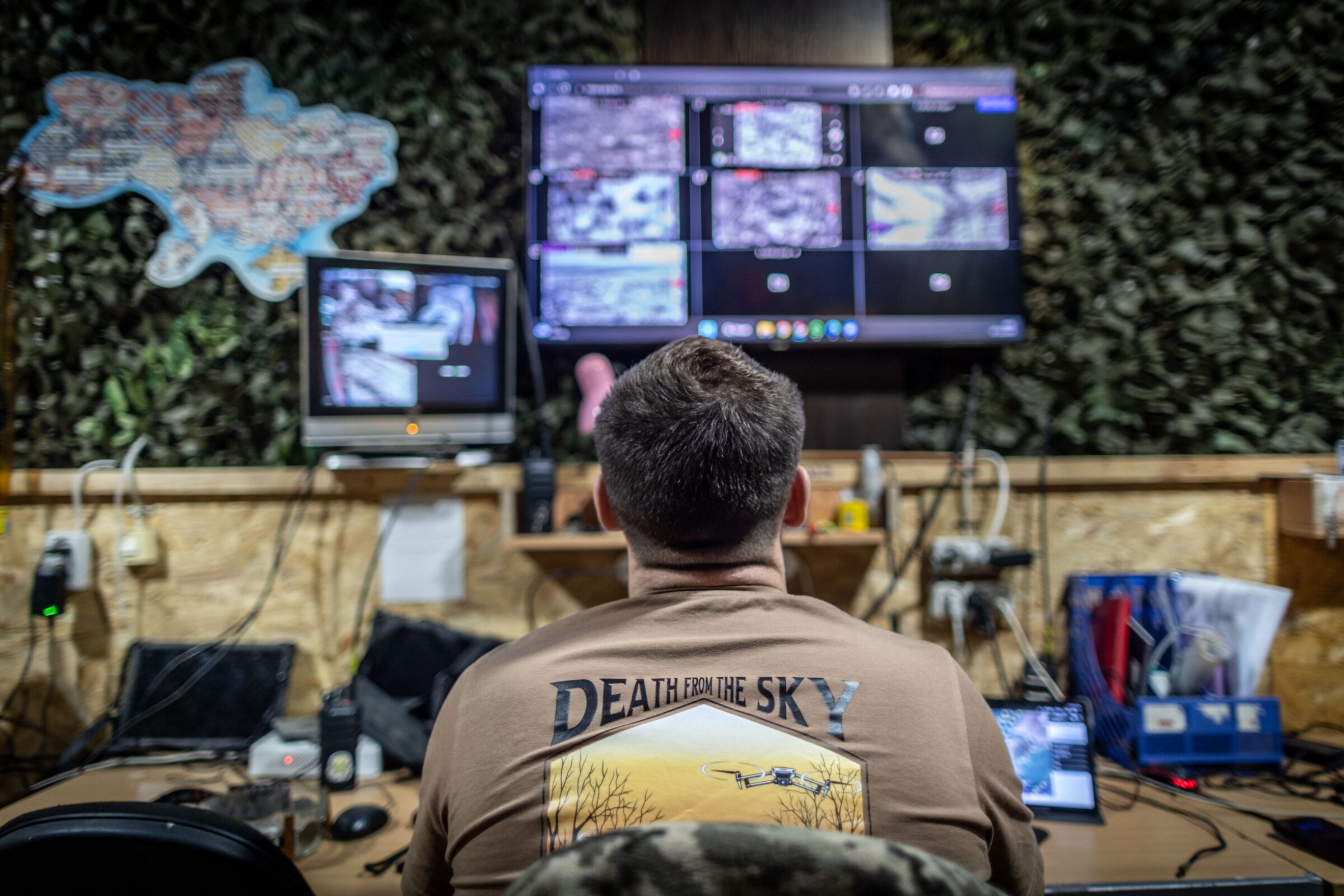
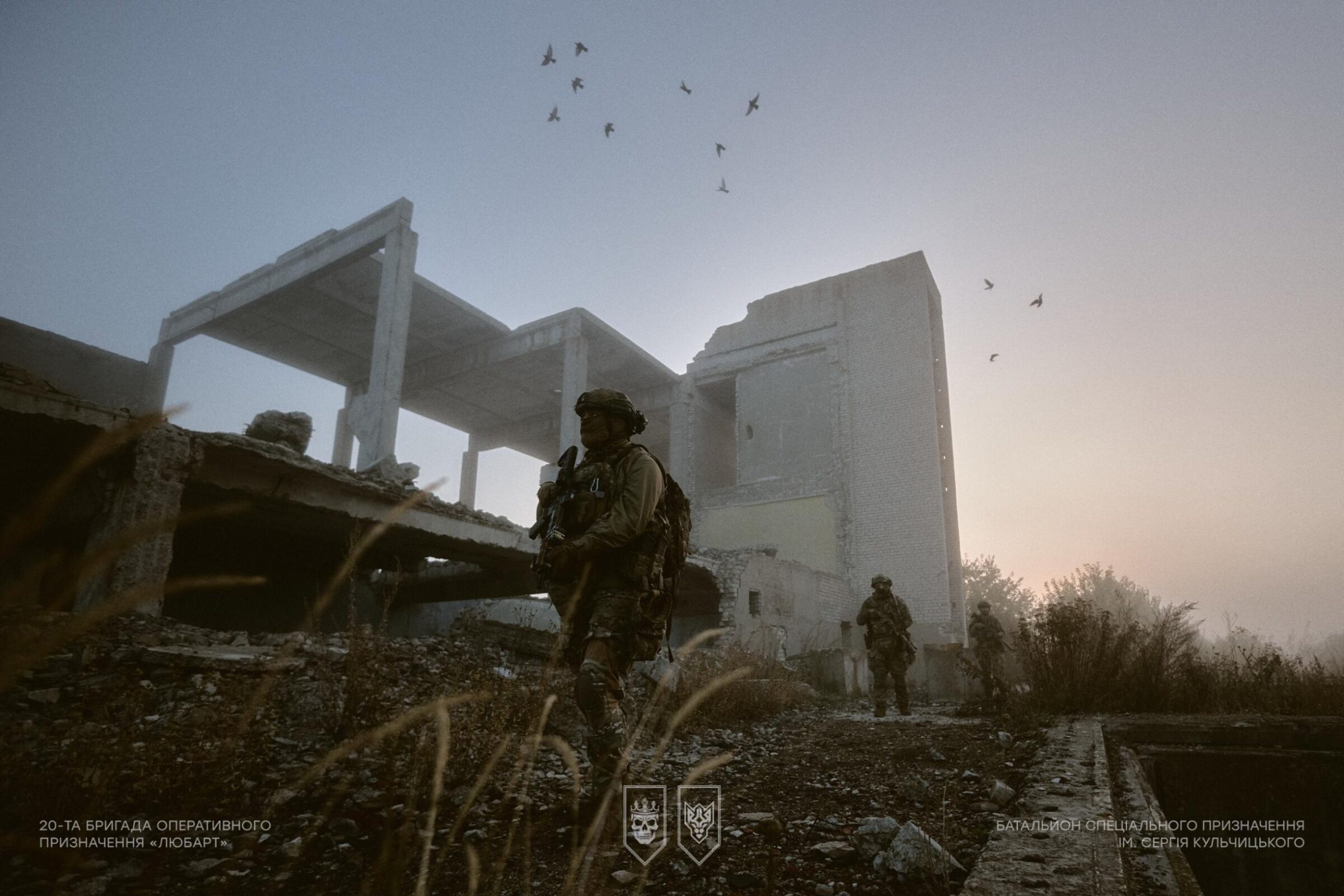
Soldiers speak about their six months in the kill zone. When the 128th Mechanised Brigade asked at a training ground last autumn who was willing to go into the ‘kill zone’, the term used for the most dangerous stretches of the 1,200-km front, two soldiers volunteered.
And the rest visibly breathed a sigh of relief.
Hennadiy and Mykhailo, whose story was reported by the New York Times, spent a long six months “at zero” rather than one, and described in detail how they managed to survive on the front line in the Zaporizhzhia region.
Their account shows how, despite drone warfare, the basic work — holding or capturing new positions — is still done by infantry, which remains indispensable even in this war, where a technological advantage can mean the difference between life and death.
Both set out by car from the village of Prymorske and, when they were about 1.5 km from their destination, began a slow and extremely dangerous journey.
It was most dangerous when they had to move.
This article continues, but the full version is available only to EUobserver.com subscribers. Visit account.euobserver.com/membership
Company ordered to stop work at two sites in country, which has found itself at forefront of tech firms’ latest push
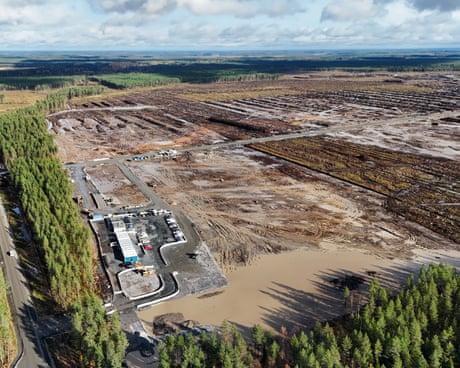
Behind a wire fence lies a vast gaping wound of earth. Before Google’s arrival a few months ago, an estimated quarter of a million trees occupied the 330 hectares (815 acres) of forest near the town of Muhos in rural northern Finland. Now they are all gone.
After the tech company illegally stripped the entire area to build a datacentre – taking even the top soil with it – all that remains is a vast expanse of mud indented with the trail marks of machinery, puddles and mounds of earth, roots and branches. Residents say that brown water flowing off the site is going into a stream that feeds the Oulujoki River.
Awa, 18, stood in the dock in the tribunal de Paris, a small, mute and bewildered figure seeming unable to understand, let alone answer, the simplest of questions.
The court was told she had joined young people who looted an Yves Saint Laurent store on Boulevard Saint Germain in Paris’s Left Bank late on Sunday and stripped it bare within minutes.
Fox News and others have toed president’s line – seemingly hoping unrest abroad will make people vote Republican
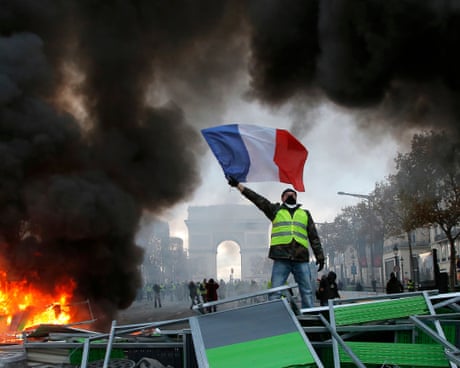
Donald Trump sought to capitalize on the scenes of unrest in France, telling a crowd in Kansas on Monday that “migrants” and “communists” were responsible, and that the scenes were “what the radical ‘Dumocrats’ want to do to America”.
As Republicans struggle to convince voters across the country ahead of November’s midterm elections, Trump’s allies in the conservative media have followed suit, seemingly hoping that the scenes in France can scare people to the polls.
Europe’s leaders can no longer trust a word that comes out of Washington. No more slaps on the wrist – we need concrete steps to punish Trump
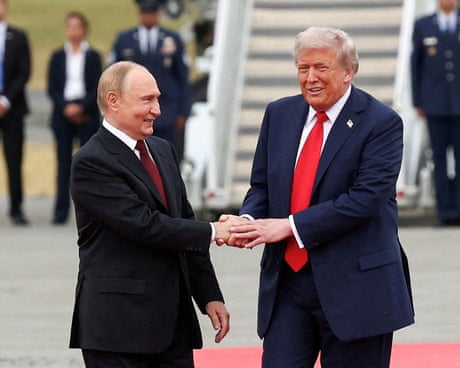
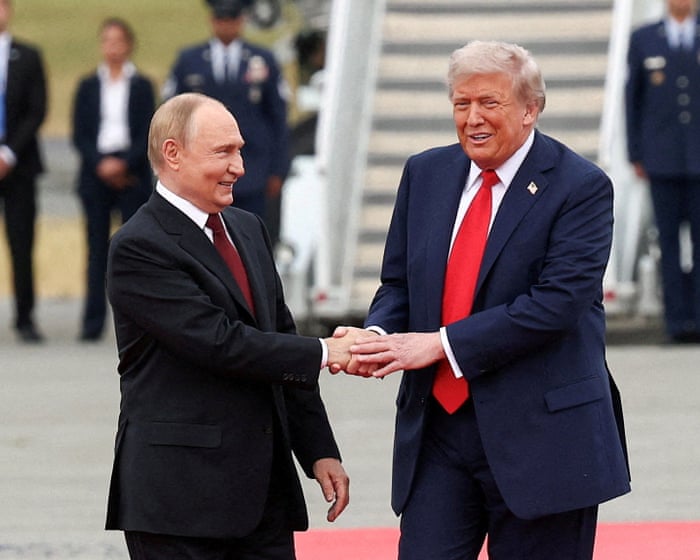
Historical comparisons are always inexact. No one conflict precisely mirrors another. Yet Donald Trump’s shameless appeasement of Vladimir Putin carries more than a noxious whiff of Neville Chamberlain’s failed attempt in Munich in 1938 to head off war with Nazi Germany. To be fair to the former UK prime minister – and history largely hasn’t been – his peacemaking efforts had the enthusiastic backing of most people in Britain and France who, like him, were desperate to avoid a repeat of the horrors of the first world war. Trump enjoys no equivalent public support for his treachery. Nor does he face the prospect of a US war with Russia. His betrayal of Ukraine is cynically self-interested, globally dangerous and utterly contemptible.
US-Russian talks on agreeing the shoddy terms of a precedent-setting American sell-out of Ukraine are at an advanced stage, after meetings in St Petersburg this week. Trump has zigzagged over the war ever since returning to office. Now, panicked by record-low poll ratings, he seems determined to scapegoat Ukraine and force its de facto capitulation. Recent steps – his shocking decision to fund Putin’s war machine by buying Russian diesel, his waiving of tougher sanctions, his mysterious, lethal interruptions in US satellite and intelligence sharing with Kyiv, and his renewed attempt to oust Ukraine’s president, Volodymyr Zelenskyy – mark Trump out as the skulking Judas, the craven Brutus of the modern age. He makes Chamberlain look like a man of iron principle. All that’s lacking is an umbrella.
Simon Tisdall is a Guardian foreign affairs commentator
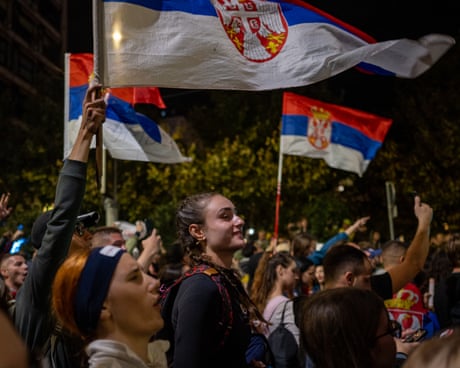
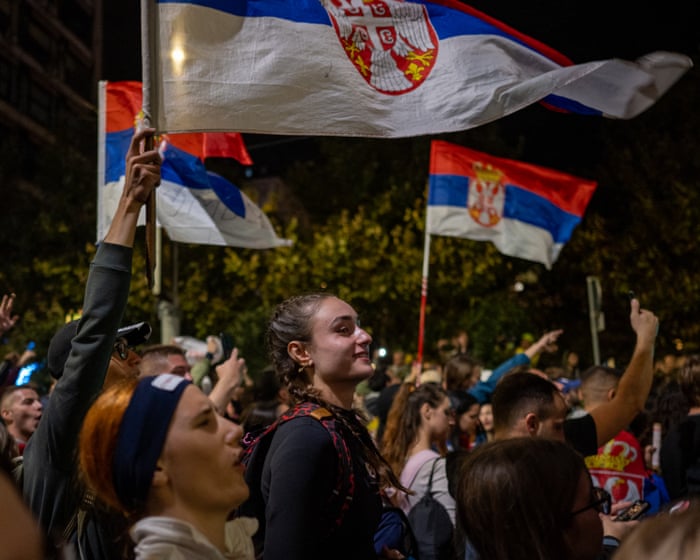
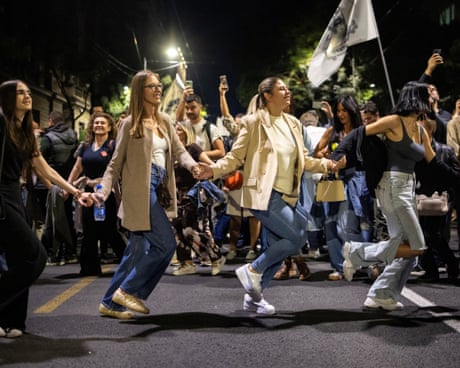
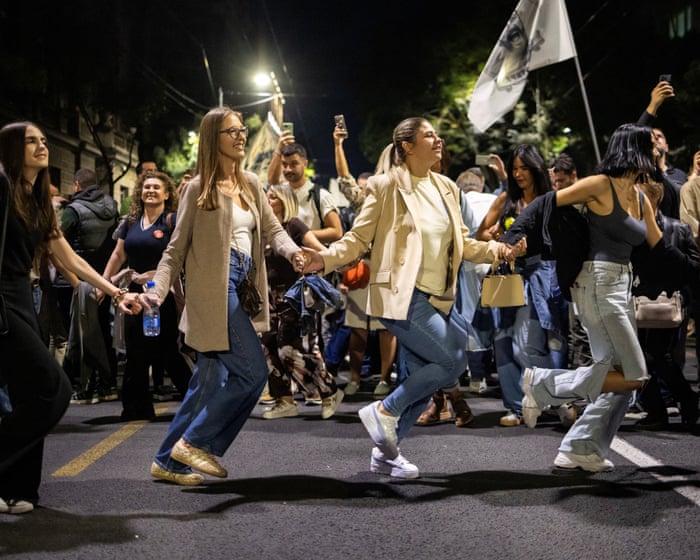
It’s the last day of the electoral campaign in Serbia today ahead of this Sunday’s closely contested parliamentary election
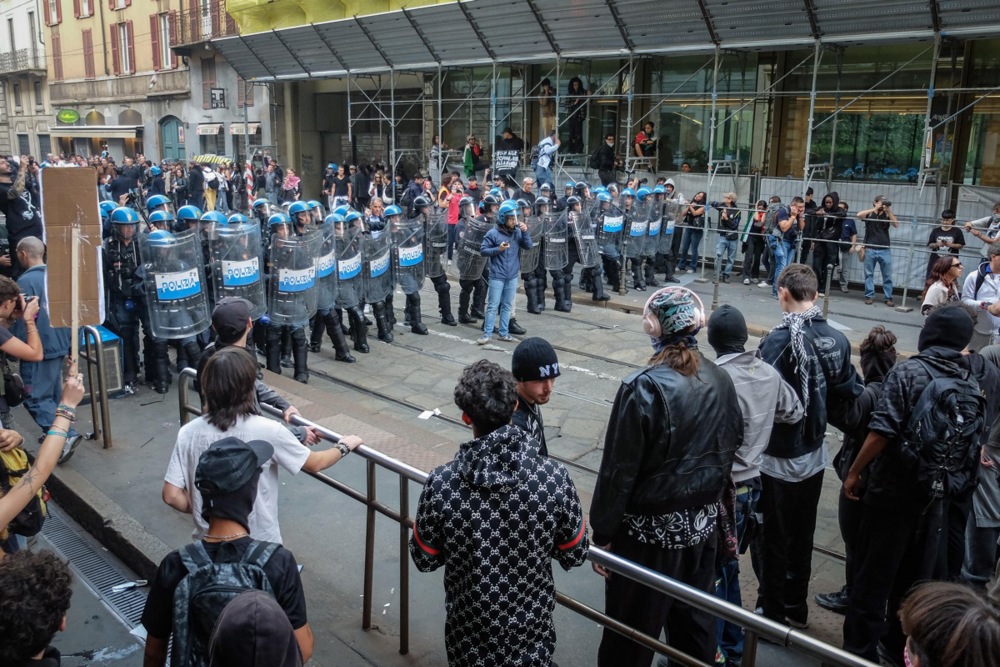
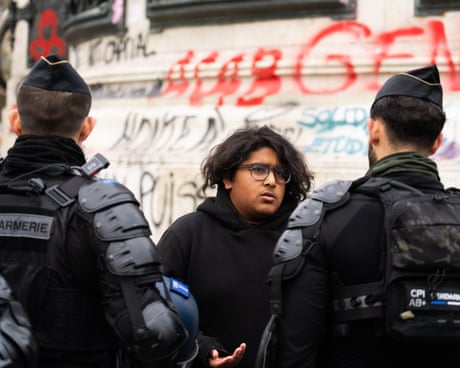
As we are waiting for Macron, first details of the planned police response to this weekend’s protests are emerging.
Junior interior minister, Jean-Didier Berger, said that the police presence will be “20% higher” than last weekend, with reinforcements from the army, elite police forces and gendarmerie.
French borrowing costs continued to rise on Thursday, as investors fret that France’s government is struggling to pass a federal budget after public protests gripped the country.
France’s bond market was hit with another bout of selling, with the difference between French and German 10-year borrowing costs – a metric for the risk premium attached to French debt – rising to its highest level in almost 15 years.
In Pavlohrad, a Ukrainian city less than 90km from the front line with Russia, there is no respite from war. Residents describe daily life under bombardment, caught between exhaustion and determination. Amid criticism of Trump, TikTok rumours and strikes against civilians, FRANCE 24 gathered accounts from those who “refuse to yield”.
Each country’s protesters have distinct grievances. Listen to them, not the voices telling us Europe is ungovernable
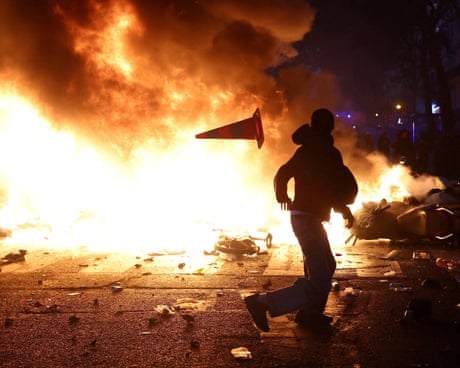
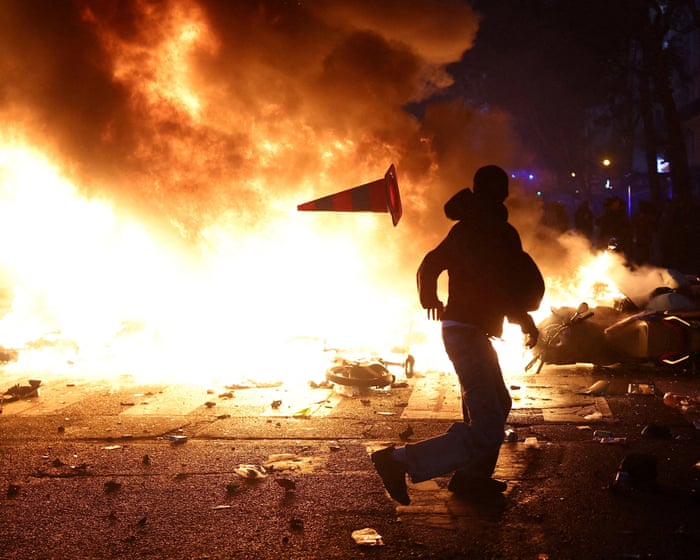
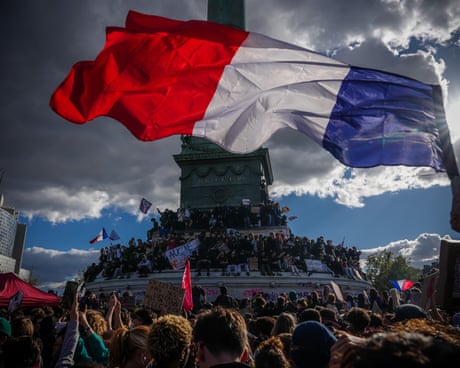
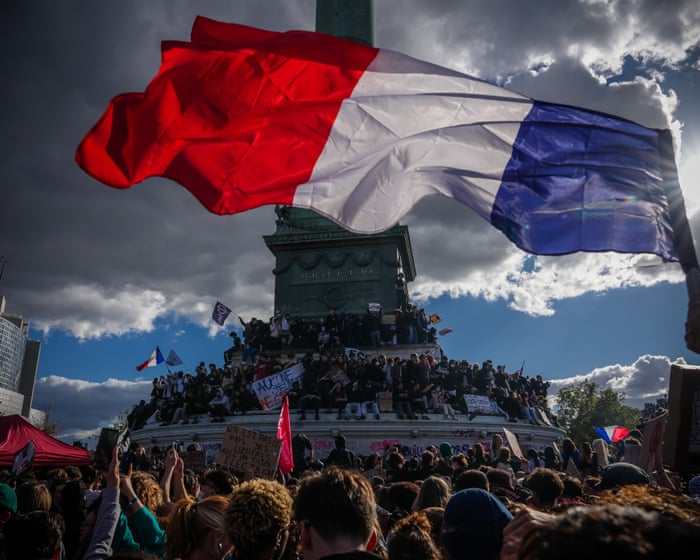
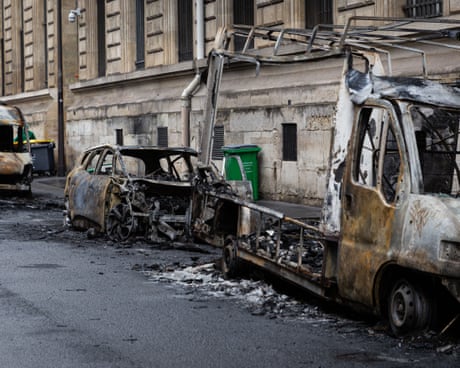
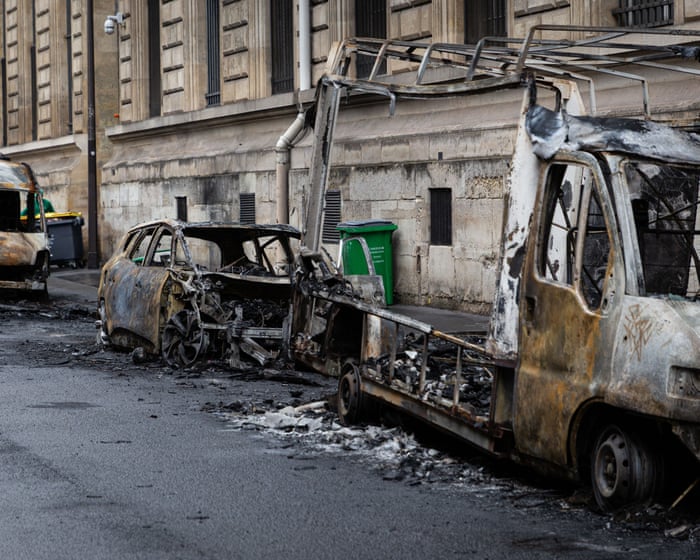
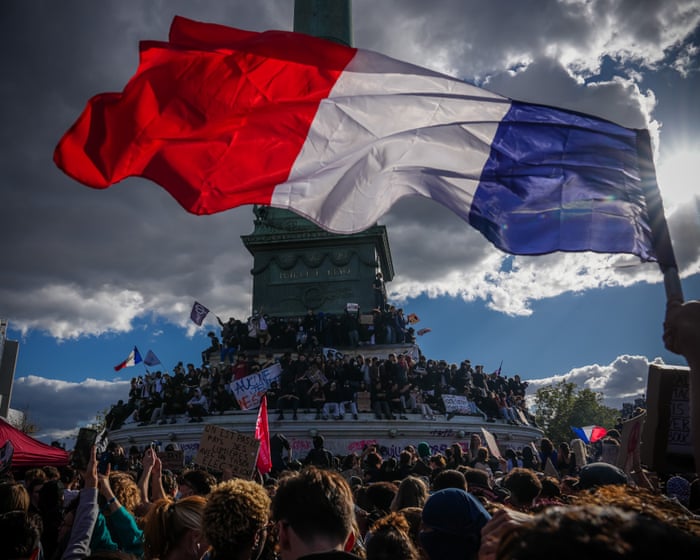
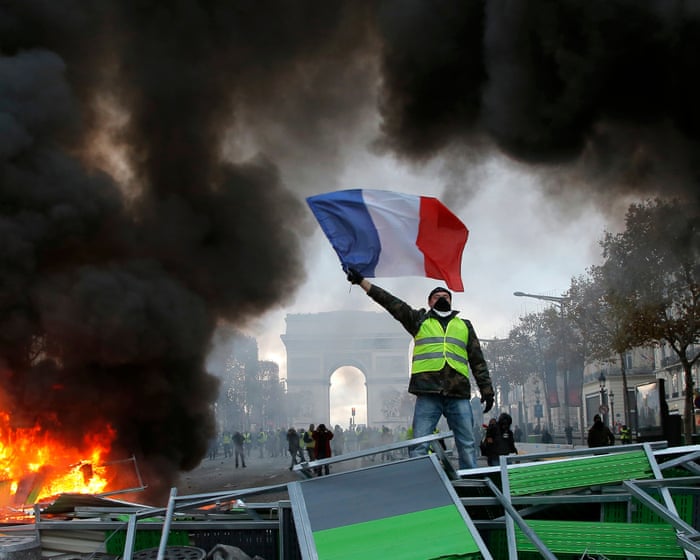
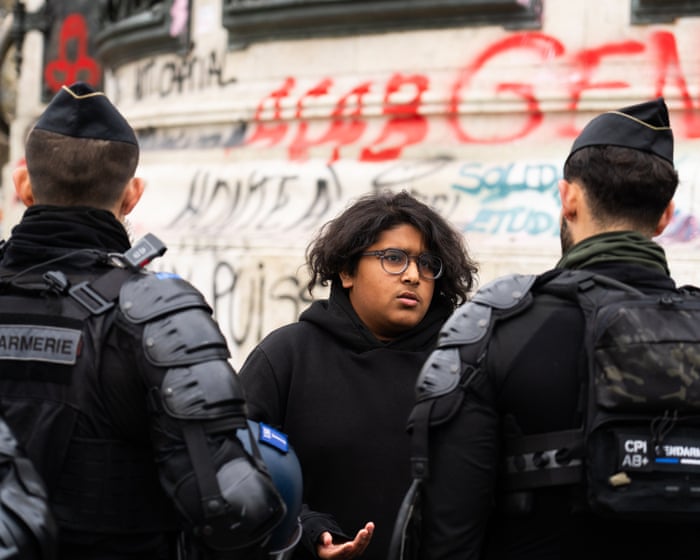
Last Saturday night, the town hall of Limoges in west-central France was set ablaze. By Sunday, images of the fire destroying a symbol of the French republic, and other scenes of unrest across France, were everywhere, but being used to tell very different stories about what is happening in Europe.
For some, the flames announced a pan-European youth revolt, proof that a single movement was sweeping the continent. Donald Trump, who had already insisted that the French schools protests were not about schools but about migration and Islam, urged Europeans to “close the borders”. The mayor of Limoges saw the fingerprints of an alleged ultra-left insurrection.
Alberto Alemanno is the Jean Monnet professor of EU law at HEC Paris and the founder of The Good Lobby
France readers Q&A: Guardian Europe columnists Rokhaya Diallo and Alexander Hurst will be live taking questions from our readers about the unrest in France from at 1500 BST / 1600 CEST on Friday 23 October. Send your questions by email now to conversations@theguardian.com or post questions in the comments from 0900 BST here.
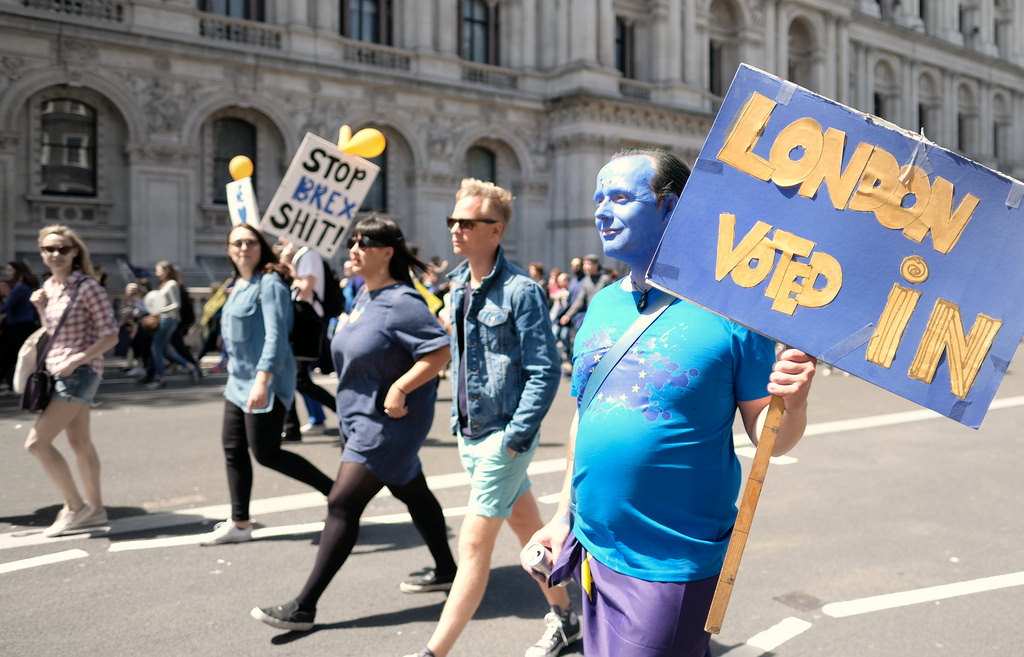
Ten years ago, ‘Project Fear’ was at the heart of the ‘Remain’ campaign’s inept efforts to persuade Britons not to vote to leave the EU.
Voting for Brexit, according to David Cameron’s government Doomsday forecasts, would cost every household £4,300 (€5,000) per year from 2030, lead to an immediate recession and mean lower house prices.
It was a huge mistake. That all the pro-EU camp could say about being members of the club was that it would be very expensive to leave was a jarring admission of failure. And the promised economic apocalypse of instant recession and house price warnings didn’t happen. Most people simply didn’t believe the figures or that the politicians behind them were being honest about them. The result, as we know, is that more than 17m Brits gave the ‘establishment’ – or what they perceived it to be – a big kick up the arse.
Fast forward to 2026 and newly-minted UK prime minister Andy Burnham has put all options for UK-EU relations – including rejoining – back on the table.
The UK Treasury, which drew up the prophecies of doom, is now expected to publish a study analysing the potential economic benefits of Britain moving closer to the EU ahead of November’s EU-UK summit.
Personally, I think Brexit and the piecemeal trade and cooperation agreement that governs EU-UK trade has resulted in a small but significant economic hit.
The hope is that the treasury won’t promise milk, honey and gold-paved streets if the UK rejoins the EU or its single market.
If over-promising increases the speed at which voters get disappointed with governments, the Brexit vote is proof that trying to frighten people is the fastest way to lose an election.
This article continues, but the full version is available only to EUobserver.com subscribers. Visit account.euobserver.com/membership
Battle for Dobropillia — huge Russian losses and the brutal destruction of the city.
A possible explanation for inaccuracies in Russian maps — they are lying to improve their position in ceasefire negotiations.
The Wall Street Journal said Elon Musk came up with the idea of cutting off Ukraine’s military Starlink.
How the Starshield restriction has affected the front line.
Maps of the day — a Russian death field between Rodynske and Dobropillia, plus an overall view of the front.
Videos of the day — the funeral of five children killed by Russian bombing; a driver in Kyiv burned alive after a drone strike; war criminal and liar Sergei Lavrov speaks about the bombing of Ukraine; a cat alerted an operator to approaching Russians; an interceptor drone shot down a Geran.
The battle for Dobropillia in images and maps — huge Russian losses and the brutal destruction of the city. The heaviest fighting is currently taking place on this section of the front. Following its defeat in the north near Lyman, the Russian command is now trying here, in the south, to bypass the Sloviansk-Kramatorsk agglomeration, since a direct attack from the east has also failed.
The Kremlin has currently deployed its largest forces to the area north-east of Pokrovsk, where it is trying to break through Ukrainian defences.
Described this way, it sounds highly technical. People can detach emotionally from information written in this manner and follow events merely as arrows on maps.
In reality, however, the arrows conceal tragedies that are very difficult to imagine. This week, visual evidence emerged that may better convey the scale of human suffering and losses on both sides.
The first shows the city of Dobropillia itself from the air after Russian bombardment that is slowly consuming it.
This article continues, but the full version is available only to EUobserver.com subscribers. Visit account.euobserver.com/membership
As protests continue to ripple across European cities, the Italian Green MEP Benedetta Scuderi reflects on her own experiences of police repression, from holding a peace flag near a Brussels protest to facing the fury that followed the flotilla to Gaza. She spoke to EUobserver about the EU’s housing priorities, Italy’s elections, and how the far-right has captured freedom of expression for its own use.
You were detained by police in July, a few hundred meters from a far-right protest calling for “re-migration”. How has the rise of the far-right stalled some key areas, like freedom of speech?
The rise of the far-right is really threatening European democracy as we know it. It has never been perfect, but it allowed people to protest. Now, we only let certain people express their dissent.
In the European Parliament, people can discriminate and use hate speech because of their freedom of expression, but as you go out of parliament with a Palestinian flag, then you’re a terrorist. So, how is it possible that last Strasbourg plenary, I could hear my colleagues saying that Muslims are a threat, and there are no consequences? And then I go out and I say, “Free Palestine,” and I’ll be arrested.
This double standard is extremely problematic. The fact that not allowing fascist symbols within the parliament also meaning that no other symbol can be shown, is not okay. Because we need to be fine to say that certain things are discriminatory and against European values, without having to say that everything else is not allowed.
We also need to be able to accept dissent. What is happening all over Europe, with violence increasing towards activists, we’re seeing it target only a certain kind of activists. In Italy, fascist protests are ignored by police. Farmers can come to the parliament with tractors, and that’s completely fine. And then we have 20 people doing a sit-in for Palestine in front of the parliament, and getting their heads smashed.
This article continues, but the full version is available only to EUobserver.com subscribers. Visit account.euobserver.com/membership
Measures would remove some penalties for those helping women access abortion but are ‘small-scale step’, say campaigners
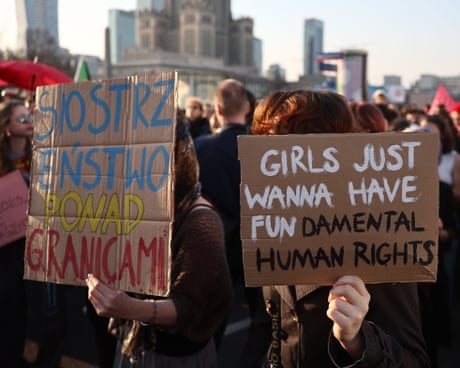
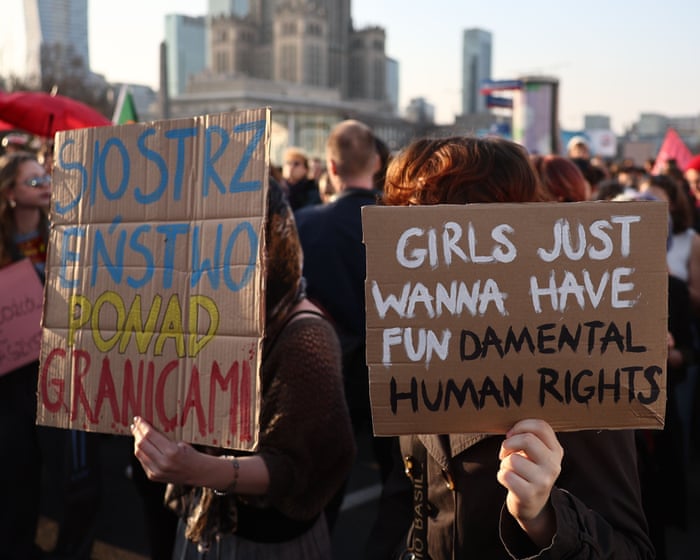
Poland’s lower house of parliament has approved two bills aimed at loosening a near-total ban on abortions, in what campaigners have described as a “small-scale step” ahead of protests calling on the government to fulfil its promises to overhaul the country’s laws.
The new measures, which are likely to be vetoed by Poland’s nationalist president, would remove some of the criminal penalties for those who help women to access abortion care and allow terminations in cases of foetal abnormalities.
Yield on 10-year government bonds passes 5% amid failure to pass budget and fallout from violent street protests
France’s borrowing costs have climbed above 5% for the first time in 24 years as political concerns and the government’s failure to agree a much-delayed budget spook the financial markets.
With some civic buildings still smouldering from recent riots, a fresh bout of selling pushed up the yield – or interest rate – on bonds issued by the second largest economy in the eurozone.
Guardian Europe columnists Rokhaya Diallo and Alexander Hurst answered your questions about the recent protests in France, the role of the French police, foreign influence and the upcoming presidential election.
Michael Wolfcarius asks: I cannot understand why the Guardian is selecting dots instead of joining them. France may have developed into the big story for many reasons, many of which have yet to be discussed, but it is not the only place where seemingly small incidents grew into massive protests, some also quite violent; Spain, Italy, Serbia and Albania come to mind. The crystallising reason may be different but the conditions leading up to it are quite similar. Can you put all these events into perspective, context and relation? There are obviously underlying currents making it difficult for people to refrain from making themselves ‘heard’.
Rokhaya: I agree that these movements deserve to be considered together, while at the same time, recognising their different specific national contexts. Housing in Spain, living costs and public services in Italy and France, and corruption in Serbia and Albania are bringing people onto the streets. These concerns touch the foundations of a decent life and people’s ability to shape their future.
What connects them, in my view, is the widening gap between what people need and what political institutions seem willing to deliver. These incidents that have led to protests are not “small .” Serbia’s movement began after a deadly railway-station canopy collapse, which became a focus for anger over corruption and accountability. My reading is that these protests express a crisis of political responsiveness.
Alexander: I think people in all these places – Albania, Spain, France – feel that the political systems that exist aren’t capable of dealing with the sheer scale and nature of the crises facing us, and they’re responding to a sense of ‘loss of control’ (the Brexit campaign really did strike upon a brilliant slogan) over where their societies are headed. There is a general social sense that has flipped from “this is broken, but things can and will get better”, which gives people a stake in the institutions around them, to “this is broken and things can and will get worse”.
The impact of the arrival of AI has been understated. Not just on labour markets, or on the environment, but ontologically. The investment pitch of the most powerful companies in the world, the ones amassing trillion dollar valuations, isn’t just that X-subset of jobs are replaceable, it’s that human beings themselves are replaceable. That the things we do fundamentally don’t matter, and that their goal is to bring this into being. I think that feeling is there even if we don’t immediately put our finger on it in those terms.
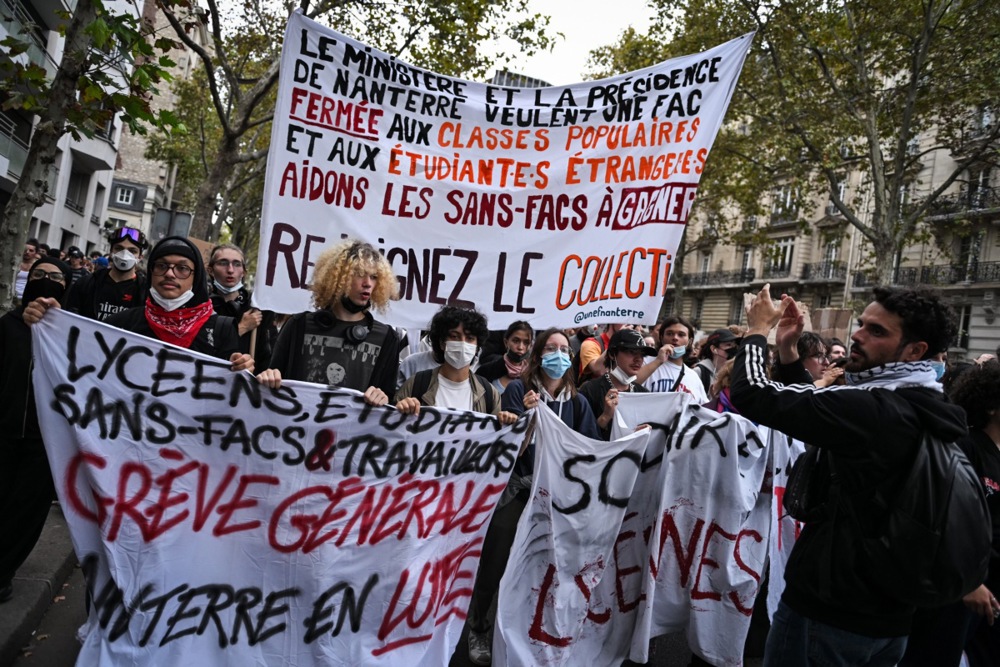
Student protests across Europe are a desperate cry for help, an appeal to governments to build a brighter, hope-filled future. Instead of paying attention, European politicians have decided to manhandle the protesters, misrepresent their demands and manipulate public opinion.
Different narratives are now competing to explain what the protests are really about.
They want to be taught properly. They want more teachers, an end to overcrowded classes, dilapidated buildings and inadequate school meals and an admissions system that sorts young people by class and postcode.
In Belgium, students have protested education cuts and fees. Greek students occupied Syntagma Square over rents, student housing and energy bills. Italian students demanded money for schools rather than war.
But politicians seem intent on telling a different story.
For many EU leaders it is – yet again – all about migration.
Hungarian prime minister Péter Magyar has decided that the chaos in French cities makes it “clear to everyone why Hungary advocates the strictest possible approach to migration.”
Poland’s Donald Tusk, who insists he will not repeat the mistakes of other European countries, joined the leaders of Denmark and Italy at the EU leaders’ meeting in Brussels last week to push for an even tougher Fortress Europe.
Together, they almost succeeded in getting others in the EU to agree to a statement linking crime and “irregular” migration.
On the other side of the Atlantic, US president Donald Trump instructed Europe to “close your borders and take control, before it is too late!” while his deputy JD Vance criticised Western liberals for bringing the “third world” to France.
Parts of the media focused on the violence, particularly the looting and destruction carried out by those who have joined the protests to create chaos, rather than on the demands that brought students onto the streets in the first place.
In France, meanwhile, it was the presidential campaign that shaped the political response, with Marine Le Pen from the National Rally calling for law and order and blaming “decades of immigration” for the violence while her protégé, Jordan Bardella, said the police should have more weapons and greater powers.
Jean-Luc Mélenchon of France Insoumise, Le Pen’s leading rival in the elections next year, was accused of fuelling student anger. French centrists struggled to find their footing and their voice. President Emmanuel Macron made an angry television appearance before heading to the Middle East with a delegation of business leaders.
So far, very predictable.
High school students and members of French Unions march during a national day of protest on 13 October 2026 (Source: EPA/FIRAS ABDULLAH)
Old playbook: one enemy, no solution
Divert, distract, dehumanise and scapegoat are the oldest tricks in wily politicians’ playbook. The well-worn recipe is simple: take a social crisis, remove its economic content, replace it with a face, a religion, a border. Then offer an enemy, not a solution.
When public services fail, blame the outsider. When wages stagnate, blame the foreigner. When housing becomes impossible, blame the newcomer rather than the landlord, the investor or the government that stopped building.
And when young people take to the streets, describe them as manipulated, criminal, alien or dangerous. Treat their anger as a threat to public order rather than a warning that something is profoundly wrong. Say there has been foreign manipulation and disinformation.
Then turn the full force of the state against the symptoms of the crisis while leaving its causes untouched and change the the subject from justice to fear, from schools to borders, from the future to the past.
Meanwhile, the money goes elsewhere.
Europe is pouring resources into defence and rearmament. Governments speak endlessly of competitiveness, productivity and strategic autonomy. But these questions cannot become excuses for neglecting the social foundations on which Europe’s future depends.
Seriously, who is going to make an ageing Europe competitive if the people expected to build its future cannot afford to have one? Who will run Europe’s basic services if migrants go “home”? What does strategic autonomy even mean if young Europeans cannot get a decent education, find secure employment or afford a home?
Contradictions
We should know by now that security cannot be measured in weapons alone. It also depends on how secure citizens feel, and whether they believe they have something worth protecting. Security demands that people have politicians they can trust and institutions which work for them.
A Europe that invests in its military capabilities while allowing its schools, housing systems and public services to deteriorate risks hollowing out its own strength.
Believe me: I know. I was born in Pakistan, a country which thrives on war and conflict and neglects the well being of its citizens.
There is another contradiction. As young people struggle to make their voices heard, the EU is planning cuts to funding for civil society organisations that defend rights, support communities, hold power to account and help turn public anger into democratic participation.
The EU has always – rightly – backed citizens’ calls for democratic participation, equality and inclusion when it happens in Tunisia, Egypt or Hongkong. How can our leaders close down such calls for participation when they are made at home?
Sadly, politicians and parts of the media have lost young peoples’ trust – and when that faith goes, so does democracy.
The EU can and must offer young Europeans a story of hope, inclusion and progress towards equality. Leaders who prefer to hallucinate about migrants should spend more time living up to the EU’s values by investing in education, affordable housing, decent jobs and public services.
We must give our young people a meaningful voice in decisions that will shape their lives. Our collective future quite literally depends on it.
This article was first published on Shada’s Substack. You can subscribe for free to receive new posts and support her work here.
In France, it was the piles of wheelie bins stacked up against school entrances that first hinted at the scale of student anger over crumbling classrooms and teacher shortages. In Spain, it was a tent camp that steadily grew in the heart of the capital as residents railed against soaring housing costs.
Similar scenes have since sprung up in Belgium, Italy and Portugal, and clashes have convulsed Albania’s capital of Tirana, hinting at an autumn of protests across Europe.
Student activists seem set to defeat Aleksandar Vučić at the ballot box this Sunday. The EU should never have written off Serbian democracy
History may not be about to repeat itself in Serbia, but it is beginning to rhyme. Just over a quarter of a century ago, Serbian citizens turned out to vote in large numbers to inflict a historic defeat on the then strongman in Belgrade, Slobodan Milošević, who was seeking re-election as president. He lost despite his extensive control over the media, the judiciary and the security forces. When he was reluctant to leave office, Serbs poured on to the streets in their hundreds of thousands, finally forcing him to go.
On Sunday, a new generation could have the decisive voice in an equally fateful election, this time for the national parliament. Today’s strongman, Aleksandar Vučić, recently resigned as president to fight the election with the aim of swapping the locus of power from the presidency to the prime minister’s office.
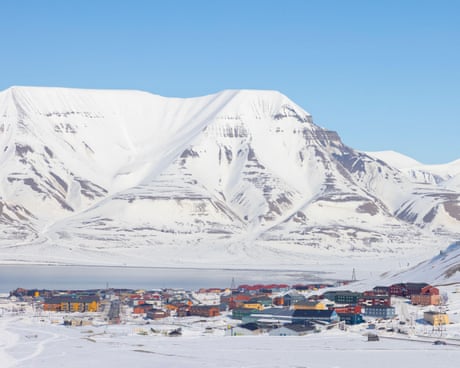
As glaciers melt and permafrost thaws, Longyearbyen, on the remote Arctic islands of Svalbard, faces climate-induced problems from tap water to housebuilding to landslides
On a rugged mountain plateau of snow-dusted rocks, in the remote archipelago of Svalbard, a glaciologist, Andy Hodson, points out the “ears” of ice, white against the rock, that gave Foxfonna glacier its name, after the arctic fox.
The small glacier, on a mountain 8 miles (15km) outside the Norwegian village of Longyearbyen, is a popular summer hike for tourists who come here seeking the Arctic experience.

 Login