
❌

Reading view

Flávio Bolsonaro’s Campaign Uses AI to Engineer Fake Support
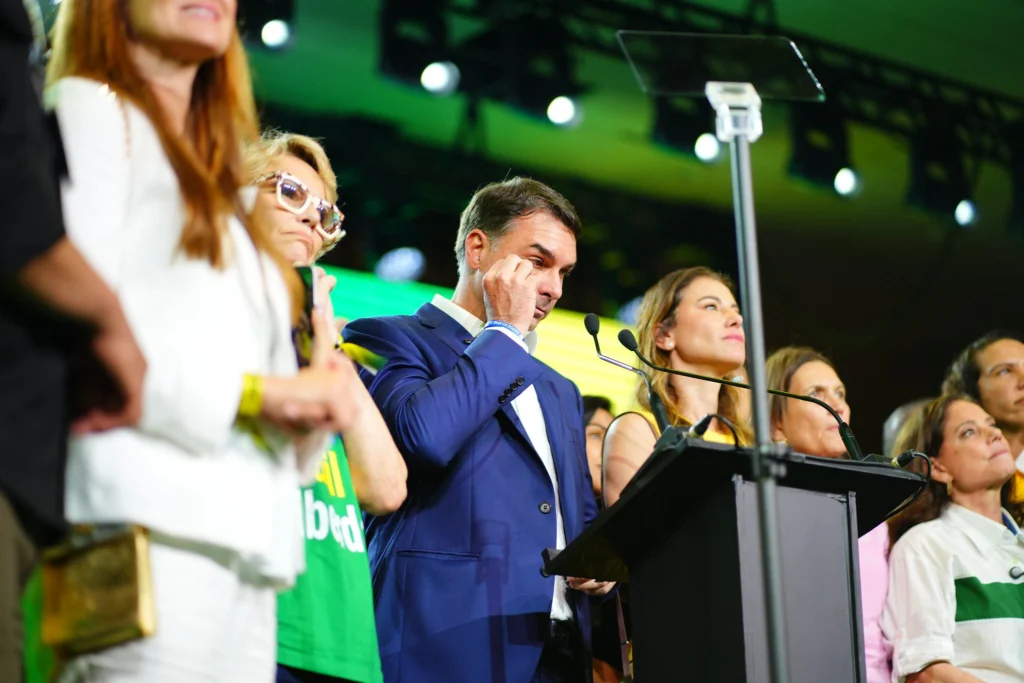
Flávio Bolsonaro at a rally for his presidential campaign. Photo: JOTA.

Digital models modified Flávio Bolsonaro’s event photography to artificially expand audiences and simulate support from female voters.


The Brazilian presidential election has become an arena for modern, dirty digital tactics. Senator Flávio Bolsonaro, representing the Liberal Party (PL), has centered his campaign strategy around coordinated digital reach and automated content production.

RELATED: UN Experts Raise Concerns Over Meta’s Handling of Political Expression During Brazil Elections

Rather than working as a traditional political campaign of physical rallies, the operation relies heavily on digital distribution infrastructure across social media platforms.

Flávio’s strategy operates through two main mechanisms. First, the campaign uses synthetic consensus tools, automated social media accounts, AI image generation, and digital avatars to simulate organic public backing.

Second, the campaign benefits from algorithmic distribution asymmetries on digital platforms, which amplify far-right material while placing system restrictions on competing political content.

Collected evidence by independent researchers, journalism networks, and electoral authorities indicates that systemic digital manipulation and platform-level infrastructure played a decisive role in shaping voter perception and electoral engagement in Brazil.

Industrial Bot Networks

A core component of Flávio Bolsonaro’s digital strategy involves the commercial purchase of automated networks designed to manufacture artificial public support.

An investigation by The Intercept Brazil revealed that Flávio Bolsonaro paid Elytron, a cybersecurity firm, to carry out data collection and voter identification to spread rumors and create fake accounts.

These automated tools operate primarily across WhatsApp, Instagram, and X, generating synchronized posts and artificial engagement to bypass standard organic distribution patterns.

This infrastructure uses astroturfing techniques to alter online public discourse. By deploying thousands of automated accounts programmed to post identical messaging scripts, the campaign artificially inflates engagement metrics, pushes specific political hashtags into regional trending lists, and floods comment sections on public news pages.

This creates a false impression of widespread popular momentum, designed to sway undecided voters through perceived consensus.

Technical evaluations submitted during electoral court proceedings reveal the scope of these automated operations. Data presented to electoral monitors shows coordinated account clusters posting at frequencies humanly impossible without software automation.

🚨 BREAKING: Flávio Bolsonaro paid R$600,000 to a company that offered AI to manipulate elections, according to Intercept Brasil. pic.twitter.com/eFcRp74vNw

— Pop Core (@TheePopCore) October 16, 2026

Deepfakes, AI Avatars, Demographic Manipulation

Various social organizations and media outlets have denounced the deployment of AI image and video generation tools as another facet of Flávio Bolsonaro’s digital strategy.

A prominent example occurred during campaign launch events, where the campaign broadcast an AI-generated digital avatar of former president Jair Bolsonaro endorsing his son’s candidacy. This technique allowed the campaign to maintain the political presence of the former president Bolsonaro in public events despite judicial rulings restricting his direct participation in political activities.

In addition, the campaign used AI tools to manipulate visual documentation of campaign gatherings. Documented instances show event photography processed through image generation models to alter crowd compositions.

These AI modifications included scaling up crowd sizes to exaggerate physical attendance and digitally swapping male attendees with female faces. The primary objective of this demographic engineering was to simulate broader support among female voters, a demographic group where polling data consistently showed lower support for the candidate.

An investigation by a Brazilian media outlet identified more than 50 TikTok videos altered using AI, specifically on-the-street interviews in which subjects claimed they would vote for Flávio Bolsonaro. These videos garnered over 7 million views, yet in only 18% of them did the platform indicate that the individuals featured were AI-generated.

While Brazilian law prohibits the use of AI-generated videos in political campaigns, it is difficult to determine when such content is created by third parties with no direct affiliation to the campaigns.

Due to a lack of female supporters, Brazilian presidential candidate Flávio Bolsonaro has resorted to using AI to transform middle-aged men into attractive young women.

This AI-generated creation has been dubbed the "Bolsonaro Bombshell." pic.twitter.com/ap1ecKou9K

— Vatnik Soup (@vatniksoup) October 20, 2026

Disinformation and Aggressive Public Discourse

Flávio Bolsonaro’s public communications strategy relies heavily on coordinated attack campaigns directed against President Luiz Inácio Lula da Silva and the Workers’ Party (PT).

The Flávio campaign’s public messaging routinely utilizes sensationalist allegations and targeted attacks. Online networks affiliated with the campaign circulate manufactured claims regarding public safety, economic stability, and social values, framing the current administration in terms of moral crisis.

On Sunday the 18th, the public debate between the two candidates took place, and Flávio Bolsonaro spent most of his time attacking Lula during his turns to speak.

Throughout the debate, Flávio was sarcastic and mocking toward President Lula; he attempted to intimidate him physically, to which Lula responded by moving away, stating that he did not want to be near either Flávio or the Bolsonaro family.

Furthermore, when the discussion turned to public safety, Flávio claimed that Lula is the preferred candidate of organized crime, pointing out that Lula received a large number of votes from within the country’s prisons. Lula replied, “I want 100% of them to vote for me -even your father,” a reference to the fact that Jair Bolsonaro is currently incarcerated.

This aggressive messaging strategy directly impacts the broader political environment. By flooding public discourse with inflammatory claims, the campaign creates heightened polarization, distracts from substantive legislative evaluations, and systematically delegitimizes established democratic processes and electoral monitoring bodies.

Hundreds of Brazilians protested outside Meta’s São Paulo offices, accusing the technology giant of limiting President Luiz Inácio Lula da Silva’s campaign reach while boosting far-right candidate Flávio Bolsonaro, just six days before the presidential runoff. The demonstration… pic.twitter.com/KRAxExFjMO

— teleSUR English (@telesurenglish) October 20, 2026

Meta’s Structural Bias in the Campaign

The Brazilian presidential race was shaped by asymmetries within Meta’s platforms, including Instagram, WhatsApp, and Facebook.

Filings submitted to the Superior Electoral Court (TSE, in Spanish) by President Luiz Inácio Lula da Silva’s legal team documented clear disparities in how content from both campaigns was handled by the different platforms.

A primary issue involved Meta’s generative AI features. When users requested campaign materials incorporating Lula’s official ballot number, 13, the system repeatedly rejected the prompts, citing political content restrictions. Conversely, identical requests containing Flávio Bolsonaro’s candidate number, 22, were routinely processed, generating promotional material for the far-right campaign.

In other instances, the AI tool inserted Bolsonaro’s electoral number into completely unrelated image requests. Following formal complaints, the Superior Electoral Court ordered Meta to ensure equal treatment. Meta attributed these outcomes to technical errors and implemented broad restrictions on political image generation.

Internal Meta communications revealed that technical errors caused Lula’s official Instagram profile to be excluded from platform search results and recommendation engines, while Flávio Bolsonaro’s profile remained fully discoverable and actively recommended to users. Furthermore, internal technical escalations confirmed that temporary account restrictions had hindered the reach of Lula’s messaging assets.

WHO'S THE REAL THIEF? LULA CHALLENGES BOLSONARO TO SHOW RECORDS

Ahead of Brazil’s presidential election, Brazilian President Lula da Silva publicly challenged rival Flávio Bolsonaro to open his bank accounts, release his phone records, and let the Brazilian people decide who… pic.twitter.com/U6Ge0yOV6A

— Sovereign Media (@sov_media) October 21, 2026

Regulatory Imperatives and Popular Sovereignty

The execution of Flávio Bolsonaro’s digital presidential campaign illustrates the evolving mechanics of far-right electoral operations.

By combining commercial bot procurement, generative AI deepfakes, coordinated public attacks, and platform-level algorithmic advantages, the campaign constructed a heavily synthetic media environment designed to influence voter perception.

These developments underscore the limitations of existing legal and regulatory frameworks in addressing digital campaign manipulation. While judicial interventions by the Superior Electoral Court forced technical corrections, reactive oversight remains insufficient to counteract real-time automated suppression and algorithmic imbalance.

Protecting democratic processes requires structural regulatory reform, including mandatory algorithmic transparency, strict auditing of generative AI systems, and clear accountability standards for global technology corporations operating within national borders.

Exposing the mechanics of digital manipulation through independent research and data-driven journalism remains essential to safeguarding electoral integrity against automated distortion and platform bias.

Sources: Brasil de Fato – Agência Brasil – Gov.br – O Globo – Folha de S.Paulo – O Estado de S.Paulo – El País – CNN Brasil – EFE – Instituto Tricontinental – La Base América Latina – Diario Red – The Intercept – El Salto
  •  

Presidenta encargada de Venezuela revela carta enviada a León XIV

Caracas, 21 oct (Prensa Latina) La presidenta encargada de Venezuela, Delcy Rodríguez, hizo pública hoy en Instagram una carta enviada el 11 de octubre a Su Santidad el papa León XIV.

The post Presidenta encargada de Venezuela revela carta enviada a León XIV first appeared on Noticias Prensa Latina.

  •  

Senado otorga facultades legislativas al Gobierno de Perú tras debate

Lima, 21 oct (Prensa Latina) El Senado peruano otorgó hoy facultades legislativas al Gobierno tras una sesión marcada por reproches y denuncias opositoras de infracciones legales, aunque varios de estos votaron a favor de la medida.

The post Senado otorga facultades legislativas al Gobierno de Perú tras debate first appeared on Noticias Prensa Latina.

  •  

Embajadora cubana en Nicaragua visita Centro Educativo Fidel Castro

Managua, 21 oct (Prensa Latina) La embajadora de Cuba en Nicaragua, Iliana Fonseca, visitó hoy el Centro Educativo “Comandante Fidel Castro Ruz”, como parte de las actividades de homenaje al líder histórico de la Revolución cubana en el año de su Centenario.

The post Embajadora cubana en Nicaragua visita Centro Educativo Fidel Castro first appeared on Noticias Prensa Latina.

  •  

Importaciones de Colombia crecieron 31,7 por ciento en agosto pasado

Bogotá, 21 oct (Prensa Latina) Las importaciones de Colombia sumaron siete mil 702 millones de dólares en agosto último, lo que representó un alza del 31,7 por ciento frente a idéntico periodo de 2025, divulgó hoy el Departamento Administrativo Nacional de Estadística (DANE).

The post Importaciones de Colombia crecieron 31,7 por ciento en agosto pasado first appeared on Noticias Prensa Latina.

  •  

Pandillas armadas cobran alquiler a haitianos por sus propios hogares

Puerto Príncipe, 21 oct (Prensa Latina) Las pandillas armadas que imponen hoy la violencia en Haití practican también la extorsión mediante el cobro de dinero a los ciudadanos para que estos puedan habitar sus propios hogares, comentó un medio local.

The post Pandillas armadas cobran alquiler a haitianos por sus propios hogares first appeared on Noticias Prensa Latina.

  •  

Dominicana depura registros de más de 56 mil controles migratorios.

Santo Domingo, 21 oct (Prensa Latina) La Procuraduría General de la República Dominicana y la Dirección General de Migración (DGM) retiraron 56 mil 140 impedimentos de salida del país y alertas migratorias sin sustento judicial vigente, informaron hoy ambas instituciones.

The post Dominicana depura registros de más de 56 mil controles migratorios. first appeared on Noticias Prensa Latina.

  •  

Avispas reconquistan la cima en béisbol cubano

La Habana, 21 oct (Prensa Latina) Santiago de Cuba desató hoy una ofensiva de cinco jonrones para vencer 12-6 a Guantánamo y recuperar, junto a Granma, el mando de la Zona Oriental del campeonato cubano de béisbol.

The post Avispas reconquistan la cima en béisbol cubano first appeared on Noticias Prensa Latina.

  •  

U.S. Early Vote Surpasses 10 Million Two Weeks Before Midterm Elections

Photo: EFE.

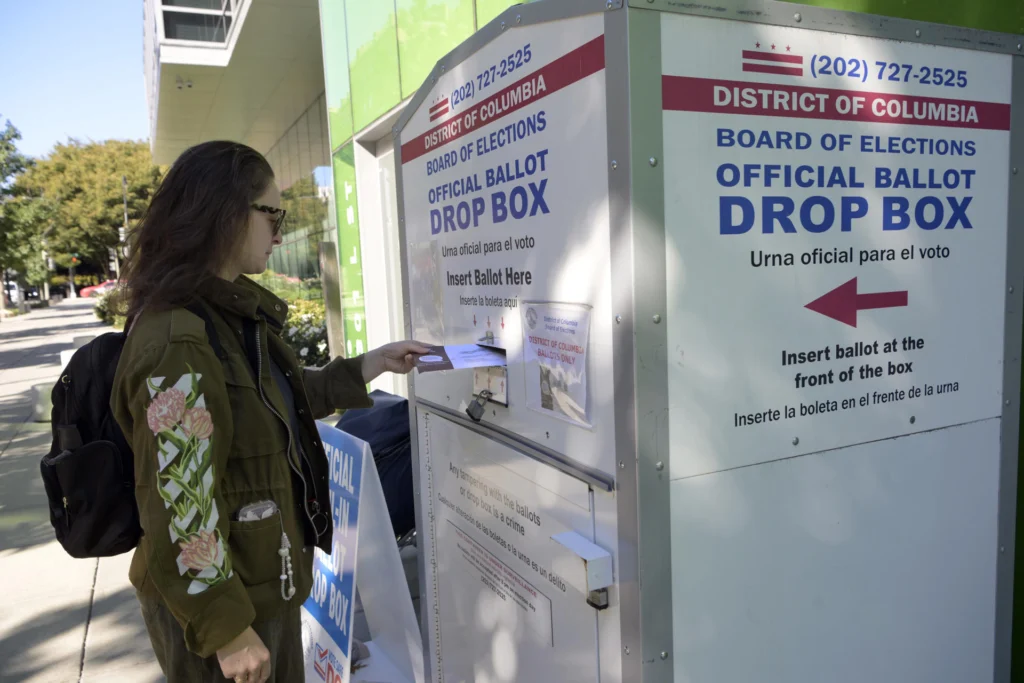
More than 10 million U.S. citizens have already cast ballots for the U.S. midterm elections, and Democrats account for over half of that early turnout as the November 3 vote approaches.


General early voting began on Monday, October 19, led by Texas, Alaska, Arkansas, Colorado, Connecticut and South Carolina. Hawaii, Louisiana, Utah, Wisconsin, Florida and Missouri have since joined.

Voters will decide seats in the U.S. Senate and House of Representatives, governorships, state legislatures and local measures on November 3.

RELATED: Texas Early Voting Breaks Records in Key Counties as Senate Race Heats Up

Democratic voters have shown up in force across several districts, a pattern party strategists read as an early effort to blunt the conservative agenda in Congress. That mobilization carries weight because the races will decide control of the Senate, the House of Representatives, several governorships and state legislatures, along with local ballot measures.

The opening surge unfolded amid deep polarization over the federal administration’s record. Turnout in the early states has outpaced expectations even as the national political climate remains volatile.

🎉 Double digits! We've just passed 10 MILLION early votes cast nationally in the 2026 midterms! 🗳️

Democrats 48.9% | Republicans 36.6% | Other 14.5%

And there are still 14 days to go until polls close. pic.twitter.com/0hxKEiMu9T

— E_DataGuy (@E_DataGuy) October 20, 2026

Divided Vote

In Alaska, polls will stay open for 15 days before Election Day. In Arkansas, the Secretary of State estimates early participation of half a million people. In counties such as Saline and Pulaski, early reports show a divided electorate: conservative voters back Governor Sarah Huckabee Sanders and Senator Tom Cotton, who are noted for their alignment with President Donald Trump’s administration.

In Colorado, in-person voting centers opened on October 19 and four million ballots were mailed out. Preliminary records show that 13% of Democrats have returned their ballots, compared with 10% of Republicans and 7.5% of unaffiliated voters. Colorado is electing all of its main executive and legislative offices. Inflation, public safety, defense of social benefits and control of presidential power dominate the priorities mentioned by community organizations and independent voters in Arkansas and Colorado.

Florida prepares to open its mandatory in-person period on October 24, where Hispanic voters make up roughly 29% of the population and carry decisive weight.

Early voting for the midterm elections begins this week in these states:

— Alaska
— Arkansas
— Colorado
— Connecticut
— South Carolina
— Texas
— Hawaii
— Louisiana
— Missouri
— Utah
— Wisconsin
— West Virginia
— Delaware
— Maryland
— Florida
— Michigan
— New Jersey
— New York pic.twitter.com/YPYDIWpkNP

— Headquarters (@HQNewsNow) October 19, 2026

Elections officials warned that, because of the complexity of the voting system, close races could be resolved only on November 18, when the count of ranked choices ends.

The early surge arrives as surveys show some of the lowest approval numbers of Trump’s current administration. The President’s backers have framed the midterms as a referendum on his governing record, while Democrats describe the contest as a check on executive power.

The record pace of early ballots has already surpassed previous benchmarks, with Texas posting one of the strongest showings. As more states open their voting windows in the coming days, the national count is expected to climb sharply before November 3, when the full scope of the midterm verdict takes shape.

#FromTheSouth News Bits | In the United States, analysts assert that the Trump administration is seeking to destabilize democratic-led states by instilling fear through immigration agents known as ICE, in an effort to manipulate the midterm elections and win them. pic.twitter.com/e5Dal77aj0

— teleSUR English (@telesurenglish) October 20, 2026
  •  

Francia: el circulo vicioso de la crisis

París, 21 oct (Prensa Latina) La crisis en curso en Francia asemeja hoy a un círculo vicioso, donde confluyen justas demandas de la población por el costo de la vida, una situación económica delicada y una explosión social sin una respuesta inmediata.

The post Francia: el circulo vicioso de la crisis first appeared on Noticias Prensa Latina.

  •  

Bukele envía mensaje a secuestradores de salvadoreños en Haití

San Salvador, 21 oct (Prensa Latina) El presidente de El Salvador, Nayib Bukele, conminó hoy a los jefes y miembros de pandillas de Haití a entregar a los cuatro aerotécnicos salvadoreños secuestrados en ese país el 18 de octubre.

The post Bukele envía mensaje a secuestradores de salvadoreños en Haití first appeared on Noticias Prensa Latina.

  •  

Colombia: califican de improvisado trámite legislativo de Presupuesto

Bogotá, 21 oct (Prensa Latina) Legisladores de la bancada del Pacto Histórico atribuyeron hoy a la premura y a la improvisación lo ocurrido en el Congreso con el Presupuesto General de Colombia para 2027, que ahora será aprobado vía decreto.

The post Colombia: califican de improvisado trámite legislativo de Presupuesto first appeared on Noticias Prensa Latina.

  •  

Fiscalía allana Municipio de Quito por presunto peculado

Quito, 21 oct (Prensa Latina) La Fiscalía y la Policía de Ecuador allanaron hoy tres inmuebles vinculados al Municipio de Quito por una investigación sobre la presunta adjudicación irregular de dos contratos de obras públicas por más de cuatro millones de dólares.

The post Fiscalía allana Municipio de Quito por presunto peculado first appeared on Noticias Prensa Latina.

  •  

Primera mujer líder del Vudú haitiano llama a mantener tradiciones

Puerto Príncipe, 21 oct (Prensa Latina) La nueva líder de la Confederación Nacional del Vudú Haitiano (KNVA), Florence Deltor Jean Joseph, llamó hoy a la preservación y transmisión de sus tradiciones y a un mayor reconocimiento de esa religión en el país.

The post Primera mujer líder del Vudú haitiano llama a mantener tradiciones first appeared on Noticias Prensa Latina.

  •  

Lula Proposes Constitutional Amendment for Free Weekend Transit in Brazil

Lula's government remarked that the project complements the recent reduction of working hours, ensuring the effective exercise of the right to rest for workers. Photo: EFE.

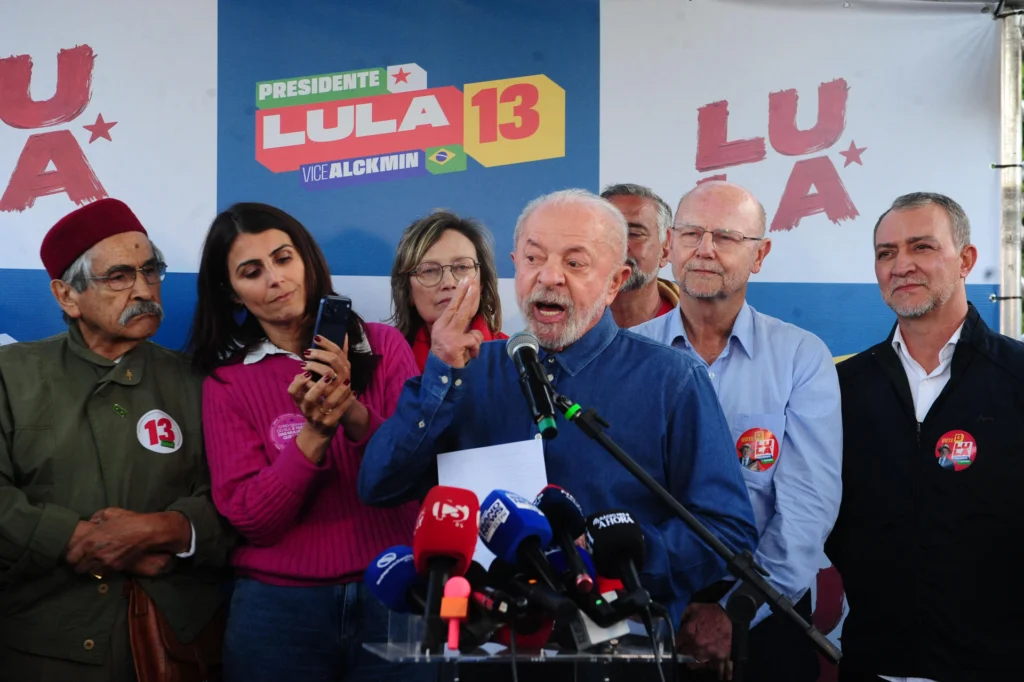
Brazil’s President Luiz Inácio Lula da Silva presented a constitutional amendment on Wednesday that would reserve budget funds for free public transport on weekends and holidays, tying the move to workers’ newly expanded right to rest.


The initiative would redirect 26.8% of parliamentary budget amendments to fund the program, which the government says would strengthen working-class access to leisure and urban mobility.

It envisions reallocating 11.2 billion reais (more than 2.2 billion dollars) from the budget controlled by Congress, whose concentration of resources has historically limited the federal government’s ability to carry out social policies. The proposal still needs to pass Congress.

RELATED: Lula Signs Constitutional Amendment Reducing Brazil’s Workweek to 40 Hours

The Brazilian government argues that this concentration of resources in parliamentary hands has historically limited the federal government’s capacity to carry out social programs. Reassigning the money, officials contend, restores room for initiatives aimed at urban mobility and access to leisure for the working class.

PESSOAL URGENTE 🚨

Lula anuncia tarifa zero para ônibus aos fins de semana em todo o país. PEC foi enviada ao Congresso e prevê que parte do orçamento das emendas parlamentares financie a medida. #FandomsComLula pic.twitter.com/cYNB8bGf9q

— Fandoms Com Lula ⭐️ (@fandomscomlula) October 21, 2026

During the same ceremony at Planalto Palace Lula signed a separate law forgiving 16 billion reais (about $3.1 billion) in tax debts accumulated by individual microentrepreneurs, a category that covers millions of small producers and self-employed workers.

Administration officials portrayed the debt pardon as a lifeline for families whose tax obligations had outpaced their ability to pay. The two measures, they said, respond to the same pressure weighing on popular households across Brazil.

The Brazilian President described the weekend transport plan as a pilot program. Its purpose is to measure the social and operational impact of the zero fare model before any decision to extend it nationwide.

Lula’s administration said the project complements the recent reduction of the working week, helping workers make effective use of their right to rest. Days before Wednesday’s event, Lula attended the Senate promulgation of a separate constitutional amendment that abolishes the six-days-on, one-day-off schedule. The change secures two paid days of rest each week, preferably Saturday and Sunday, and shortens the maximum work week without cutting pay.

🚍 MAIS TEMPO PARA VIVER!

Hoje enviamos ao Congresso a PEC da Tarifa Zero, que propõe transporte público gratuito aos fins de semana e feriados em todo o Brasil e em cidades que possuem transporte público.

Essa proposta se conecta a uma conquista fundamental: o fim da escala… pic.twitter.com/yOcfXFuZ05

— Lula (@LulaOficial) October 21, 2026

Despite criticism from far-right sectors backing Senator Flávio Bolsonaro, the executive said it will deepen its commitment to restoring rights and defending popular gains. The announcements come days before the October 25 presidential runoff in which Lula faces Bolsonaro.

The weekend fare initiative arrives as Lula’s administration pushes a broader agenda of recovering social and labor protections. The Brazilian President has linked the transit measure and the shorter work week as parts of a single effort to lift the weight of daily costs from working families.

  •  

Venezuela: PSUV rechaza orden de arresto contra Raúl Castro

Caracas, 21 oct (Prensa Latina) El Partido Socialista Unido de Venezuela (PSUV) rechazó hoy de manera firme la nueva orden de arresto emitida por un tribunal de la Florida, Estados Unidos, contra el líder de la Revolución cubana, General de Ejército, Raúl Castro.

The post Venezuela: PSUV rechaza orden de arresto contra Raúl Castro first appeared on Noticias Prensa Latina.

  •  
❌