❌

Reading view

Christodoulides demands that EU resume talks on mutual defence clause

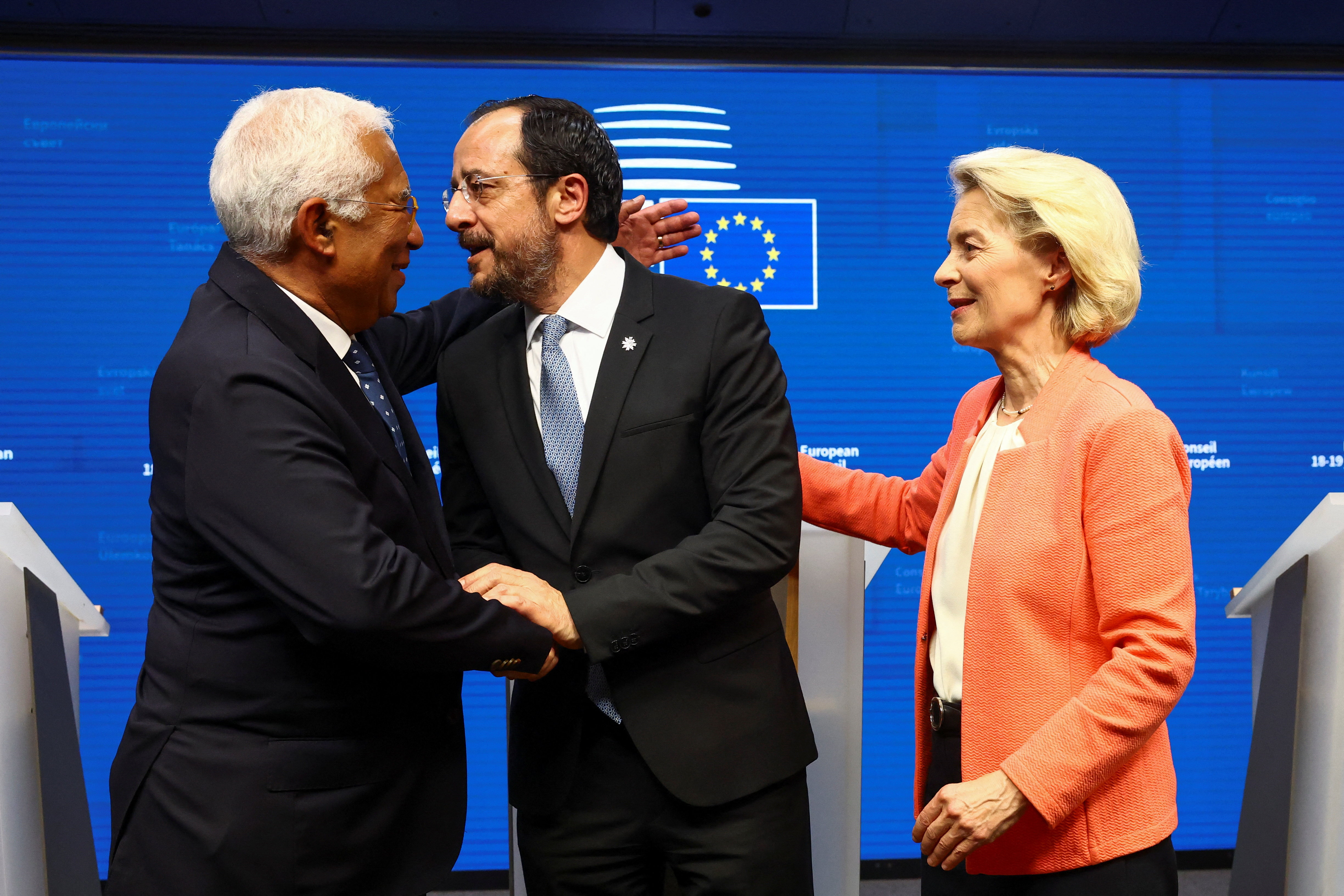
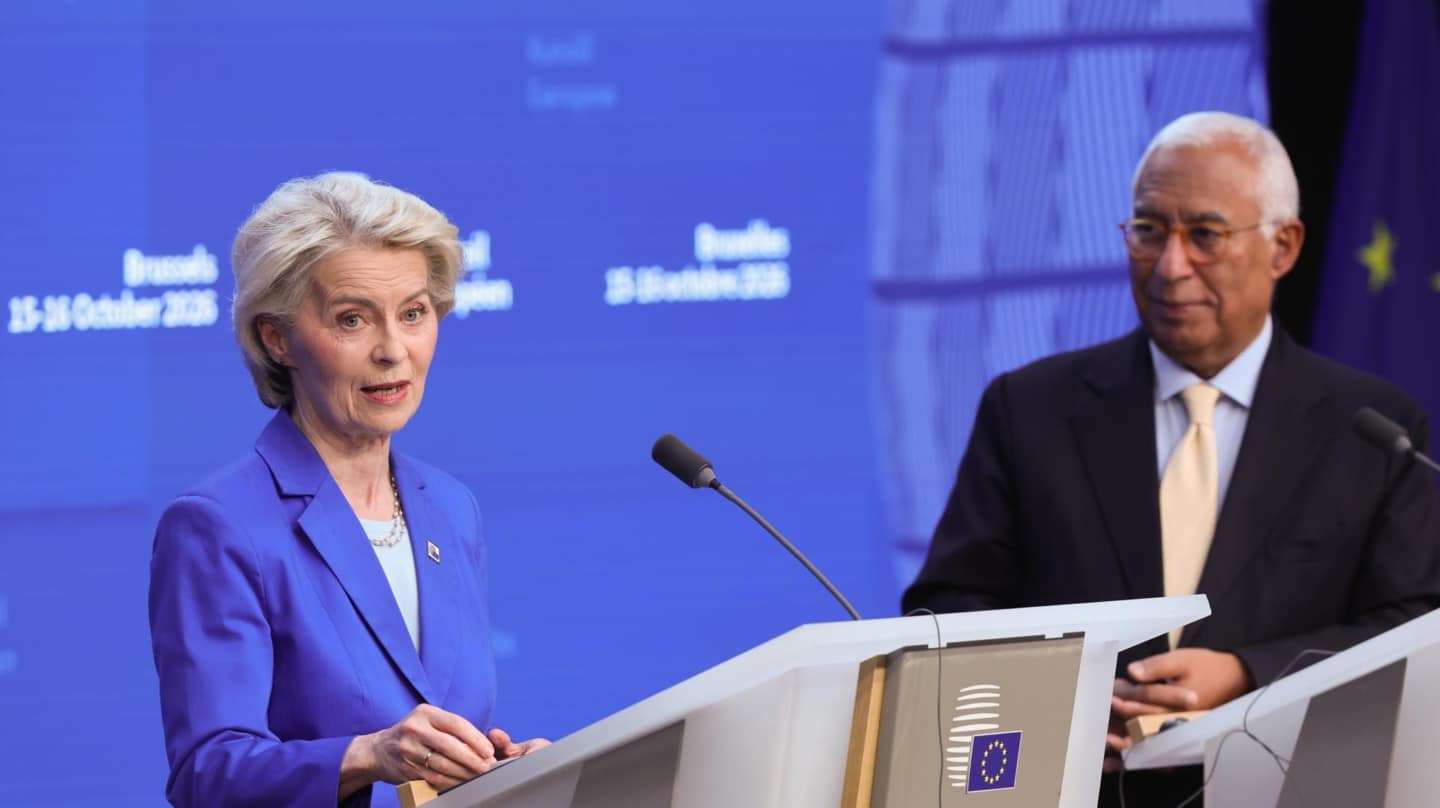
President Nikos Christodoulides has sent a letter to European Commission President Ursula von der Leyen demanding that the European Union resume discussions on its mutual defence clause, after the matter found itself at the centre of discussions when EU leaders met in Cyprus in April, but has since fallen off the agenda.

The sending of the letter was confirmed to the Cyprus Mail by presidential press office director Victor Papadopoulos, though he said he could offer no further details, while news website Politico quoted Christodoulides as having written that “I cannot overstate the importance of this provision for the EU and its member states”.

This, he wrote, rings true “especially in times of geopolitical uncertainty”.

“Given the gravity of the challenges we face, Cyprus would welcome the resumption of discussions at the relevant preparatory bodies. I would therefore appreciate an update on the proposals under consideration, as well as a timeline for next steps,” he wrote.

The leaders of the EU’s 27 member states had during a European Council summit in Nicosia in April resolved to demand the creation of a defence “playbook”, with Cypriot government sources at the time lamenting that “nothing has been done” in the decade since the first and only time that the bloc’s mutual defence clause was activated.

It was France which triggered Article 42.7 of the Treaty of the European Union, better known as the Lisbon Treaty, after Paris was hit by a series of terrorist attacks in November 2015.

Article 42.7 not attached to any formal operational plans

While the text of the treaty states that “if a member state is the victim of armed aggression on its territory, the other member states shall have towards it an obligation of aid and assistance by all the means in their power”, it is not attached to any formal operational plans or international military structures.

Government sources lamented in April that “there is no clear picture of procedures, capabilities, or response times across member states”, and also decried what they described as a lack of clarity regarding the types of support which can be requested, what each member state may provide, and how quickly assistance can be delivered.

They also stressed that if a member state triggers Article 42.7, assistance must not be optional.

“It is a legal obligation, not a political choice,” they said, before adding that “member states cannot question the reasons” behind the triggering of the clause if it is triggered, provided that an armed attack has taken place.

However, in the six months since that summit, the matter of defence has slipped down the European agenda, with the most recent European Council summit, held in Brussels, being dedicated largely to the EU’s multiannual financial framework, its budget for the years between 2028 and 2034, while conversations on defence centred on Ukraine, which remains, for now, outside the bloc.

Focus inside EU has now shifted to multi-year budget

The focus on the budget has come with most leaders across Europe aiming to have the next multiannual financial framework devised and agreed upon by the member states by the end of this year.

Christodoulides had said on this matter last week that should an agreement not be reached by the end of this year, “I believe we would be sending a negative message, not only to European citizens, but to the world”.

Mutual defence was most recently discussed at the European Parliament last month, with the EU’s foreign policy chief Kaja Kallas decrying “Russia’s hybrid warfare in Europe” and calling for measures to be taken against it.

“Putin is a textbook bully. Moscow’s hybrid attacks are designed to intimidate us, paralyse our societies and make us hesitate to act. That is precisely what Putin wants. We should not let fear dictate our choices. We should match the level of these attacks with concrete action and a confident response. Europe’s security requires it and citizens expect it,” she said.

Cypriot MEPs called for stronger Article 42.7, looser relations with Turkey

In response, Cypriot MEP Costas Mavrides, of Diko, said that “hybrid attacks are also taking place for years by the neo-Ottoman Erdogan regime against member states in the eastern Mediterranean” in reference to Turkish President Recep Tayyip Erdogan.

He called for the EU’s mutual defence clause, Article 42.7 of the Treaty of the European Union, which is commonly known as the Lisbon Treaty, to be made “workable and operational”, before telling to Kallas that “your double standard policy is increasing part of the problem” regarding Turkey.

Fellow Cypriot MEP Geadis Geadi, of Elam, also called for the EU to “establish a clear roadmap for activating Article 42.7”, saying that this should “ensure that the mutual defence clause can be applied immediately and effectively”, and also criticised the EU for not treating Turkey and Russia in the same way.

“Mrs Kallas, be careful when you shake hands which are stained with the blood of hundreds and thousands of innocent people,” he said.

  •  

Costa, von der Leyen offer ‘solidarity’ to Greece, Cyprus after Turkey-Libya sea deal

European Council President Antonio Costa and European Commission President Ursula von der Leyen on Tuesday offered “solidarity” to both Greece and Cyprus after the Libyan parliament had earlier in the day ratified a maritime boundary agreement with Turkey which both Greece and the Republic of Cyprus consider to be illegal.

“We deeply regret the ratification today by the Libyan parliament of the so-called Libyan-Turkey memorandum of understanding on the delimitation of maritime jurisdictions in the Mediterranean Sea. We recall that the EU’s position on this matter was clearly stated by the European Council in 2019 and remains unchanged,” they said.

They added that the agreement “infringes upon the sovereign rights of third states”, “does not comply with the law of the sea”, and “is null and void”.

“We reaffirm our solidarity with Greece and Cyprus. We reiterate the EU’s well-known position against any outside interference in Libya,” they said.

The European Council’s conclusions on December 12, 2019, had stated similarly that the agreement “infringes upon the sovereign rights of third states, does not comply with the law of the sea, and cannot produce any legal consequences for third states”.

Libya’s parliament voted unanimously to adopt agreement

Earlier on Tuesday, the Libyan parliament voted unanimously to adopt the agreement, which states that Libya and Turkey agree that their respective exclusive economic zones share a border in the Mediterranean sea, and that that border is located southeast of the Greek island of Crete.

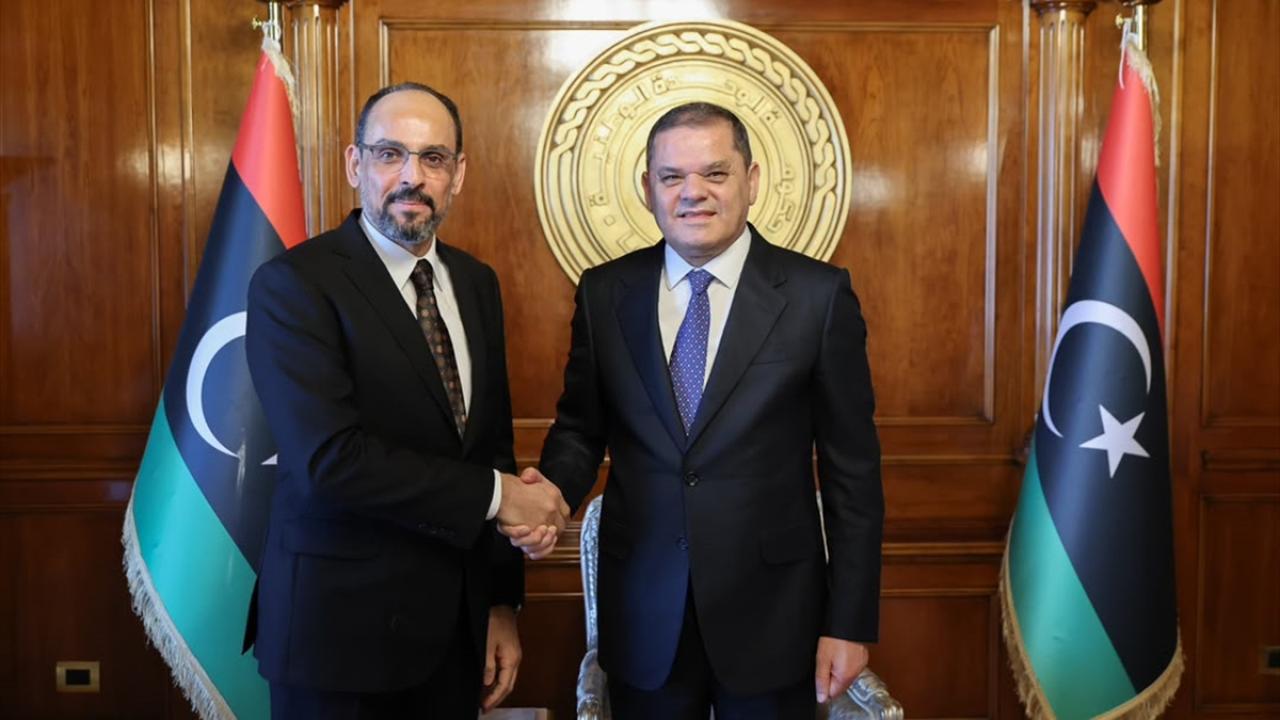
The ratification came on a day on which a day on which Turkey’s national intelligence organisation (Mit)’s chief Ibrahim Kalin was in the country to meet Libya’s government of national unity’s Prime Minister Abdulhamid Dibeybe.

Turkey had signed an agreement with the Libyan government of national accord in 2019, but it had not until Tuesday been ratified by Libya’s legislature. The government of national unity superseded the government of national accord in 2021 and is now the sole internationally recognised government of Libya.

Mit chief Ibrahim Kalin and Libya’s government of national unity’s Prime Minister Abdulhamid Dibeybe

After the agreement was signed, Cypriot Foreign Minister Constantinos Kombos and his Greek counterpart Giorgos Gerapetritis held a telephone call, after which both ministries released condemnatory statements.

“The Republic of Cyprus’ foreign ministry condemns the Libyan parliament’s decision to approve the illegal Turkish-Libyan ‘memorandum of understanding’ of 2019. This ‘memorandum’ violates the sovereign rights of third states and is contrary to the recognised principles of the United Nations convention on the law of the sea,” the Cypriot ministry said.

It added that the agreement also violates “customary international law regarding the rights of islands in maritime zones, including the exclusive economic zone and the continental shelf”.

“Therefore, the foreign ministry continues to consider the said ‘memorandum’ illegal, null and void, and that it does not produce, in any way, legal effects against third states,” it said.

Turkey is not an Unclos signatory, Libya signed but did not ratify

Greece’s foreign ministry said that that it “rejects” it and that the decision “does not change the illegal, null and void nature of the memorandum, which is contrary to the international law of the sea and violates the sovereign rights of the states of the region”.

“Geography and the international law of the sea do not change with unilateral, legally unfounded parliamentary decisions. Turkey and Libya do not have opposing or adjacent coasts which would provide a legal basis for the attempted delimitation of maritime zones,” it added.

While Greece and the Republic of Cyprus are signatories to the United Nations convention on the law of the sea (Unclos), Turkey is not, and while Libya under its then leader Muammar Gadaffi signed the convention in 1984, no Libyan legislature ever ratified the signature.

Turkey’s belief is that the convention gives too much weight to islands, which it says should instead only be allowed 12 nautical miles of territorial waters as their own exclusive economic zone (EEZ), whereas Greece believes that its islands are entitled to full EEZs of their own.

As such, Turkey’s view is that its own EEZ stretches south to meet Libya’s EEZ, and as of Wednesday, Libya agrees, whereas Greece’s position is that Turkey and Libya do not share a maritime border because the sea in question belongs to Crete.

Given this to be the case, Turkey’s presidential press office director Burhanettin Duran described Tuesday’s vote as “an important advancement towards protecting the shared rights and interests of both nations in the eastern Mediterranean, establishing maritime jurisdiction areas on the basis of equity, and strengthening regional cooperation”.

“Under the leadership of our President Recep Tayyip Erdogan, Turkey will continue to safeguard its rights and interests within the Blue Homeland, while further developing its relations with friendly and brotherly Libya and promoting equitable resource sharing, peace, and stability in the eastern Mediterranean”.

  •  

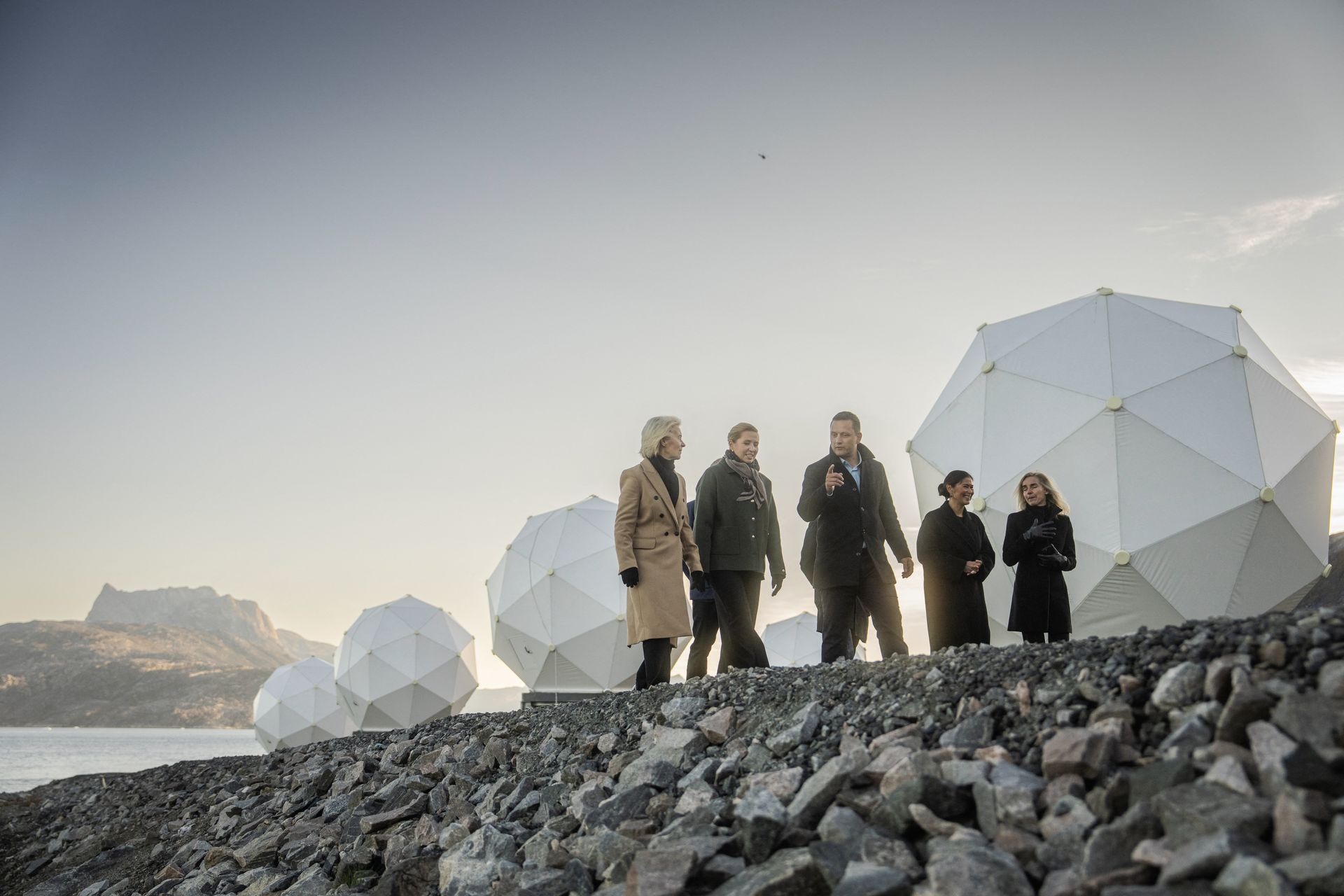
EU to bolster tracking of Russian shadow fleet and hybrid attacks with new Arctic Strategy

"When we see Russia rebuilding its Arctic military footprint, pursuing hybrid strategies against its neighbors, and reshaping the security of the Arctic, it impacts the EU as a whole," said European Commission President Ursula von der Leyen.

  •  

CEO da Ryanair diz que Ursula von der Leyen é uma “inútil”

O diretor executivo da Ryanair, Michael O’Leary, chamou a presidente da Comissão Europeia, Ursula von der Leyen, de “inútil”, acusando-a de falar sobre competitividade sem fazer nada para a concretizar. Em entrevista à agência Euronews, O’Leary disse que “temos esse bando de incompetentes no Parlamento Europeu, reformulando ainda mais regulamentações destinadas a aumentar o custo das viagens aéreas, quando os consumidores querem tarifas mais baixas.”

A Ryanair vai cortar um milhão de lugares este inverno, com Michael O’Leary a alertar para os aumentos acentuados das tarifas em 2027, exigindo que as companhias aéreas estrangeiras paguem a sua parte. O’Leary criticou os impostos ambientais da UE que se aplicam apenas a voos dentro do bloco. As companhias aéreas norte-americanas, asiáticas e chinesas estão isentas, embora, segundo ele, sejam responsáveis ​​por mais da metade das emissões da aviação europeia.

“Ninguém, além do Parlamento Europeu e de Ursula von der Leyen, criaria um sistema tão estúpido. Se querem mesmo competitividade, tributem os americanos quando eles desembarcarem aqui na Europa.” As rotas de longa distância, operadas por companhias aéreas europeias, americanas, asiáticas e chinesas, estão sujeitas a um regime de compensação de carbono menos rigoroso. De acordo com a Eurocontrol, entidade responsável pela regulação do tráfego aéreo, esses voos representam apenas 6% das partidas, mas são responsáveis ​​por mais da metade das emissões de CO2 da aviação europeia.

Em julho, a Comissão propôs estender a taxa da UE a alguns voos com partida da Europa a partir de 2029. Rotas como Frankfurt-Dubai e Frankfurt-Istambul serão incluídas no mercado de carbono, enquanto trechos mais longos, como Frankfurt-Tóquio, serão excluídos, de acordo com a proposta da Comissão. Voos provenientes dos Estados Unidos e da China que aterrem na Europa estarão isentos.

“Ursula von der Leyen tem medo de fazer qualquer coisa além de falar. É uma inútil”, disse O’Leary ao programa Europe Today . “A Europa tem um roteiro para ser mais competitiva, chamado Relatório Draghi. Dois anos depois, nenhuma das suas recomendações foi implementada e Ursula von der Leyen esconde-se sem fazer nada além de discursar.”

O ex-primeiro-ministro italiano Mario Draghi publicou o relatório em setembro de 2024. O documento alertava para que a UE enfrentaria uma “agonia lenta” sem uma reforma radical e pedia um investimento adicional de até 800 mil milhões de euros por ano. No mês passado, um relatório da Joint European Disruptive Initiative indicava que o bloco implementou 26% das recomendações apresentadas por Draghi; “o progresso é real, mas não está em sintonia com o ritmo do mundo”.

Ryanair procura países competitivos

O’Leary estava em Bruxelas para anunciar a programação de inverno da Ryanair. A companhia aérea vai cortar um milhão de lugares e 20 rotas a partir da Bélgica depois de o governo de Bart De Wever ter aumentado o imposto sobre viagens aéreas em dois euros, elevando-o para sete euros por bilhete – um valor, ainda assim, mais baixo que os 10 euros inicialmente propostos.

“Estamos a transferir aeronaves para os países que são competitivos”, disse O’Leary. “A Bélgica não é competitiva. A França não é competitiva. A Alemanha é irremediavelmente não competitiva.” A nova taxa da Bélgica é ainda menor do que nos países vizinhos: os Países Baixos já cobram 30,25 euros por passageiro que embarca, e a Alemanha 13,03 euros para a maioria dos voos europeus.

A redução das rotas de inverno da Ryanair segue estratégias semelhantes adotadas pela sueca SAS e pela Easyjet, que também reduziram seus voos este ano.

O’Leary alertou os passageiros para esperarem tarifas mais altas. A Ryanair garantiu o preço do combustível deste ano em cerca de 67 dólares por barril, ao negociar o preço antecipadamente, o que a protege do aumento dos custos do petróleo. Mas prevê que esse preço dobre no próximo ano, quando a proteção expirar. “Garantimos que não haverá sobretaxas de combustível”, disse O’Leary, “mas não há dúvida de que as passagens aéreas aumentarão significativamente em 2027 devido aos preços muito mais altos do petróleo.”

  •  

Ukraine finally voted to tax cheap foreign parcels to unlock €3.7 billion—now Brussels decides whether it was enough, with a €70 billion gap ahead amid ongoing war

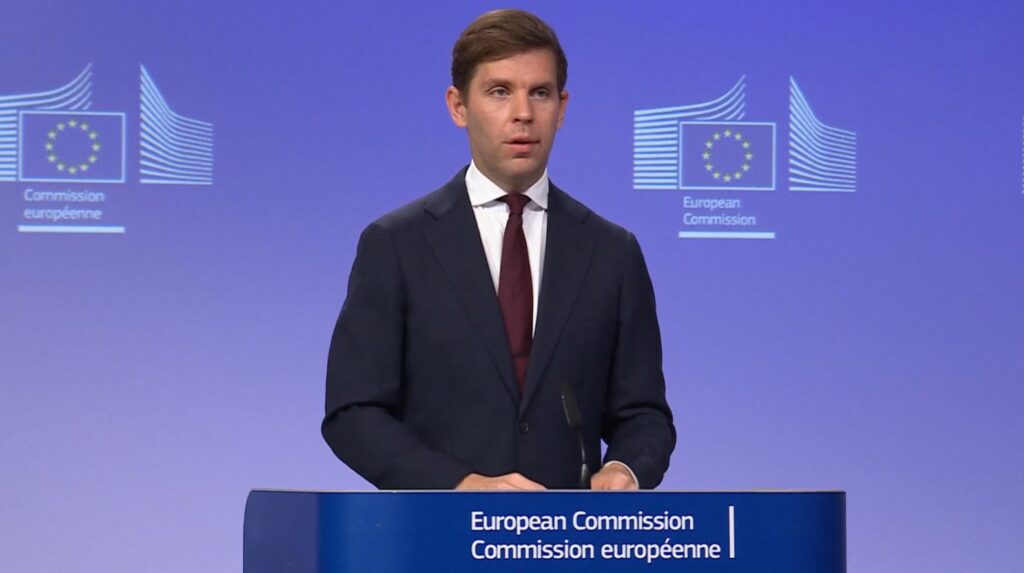
ukraine finally taxed cheap foreign parcels unlock €37 billion—now brussels decides whether enough €70 billion gap ahead amid ongoing war · post european commission spokesperson balázs ujvári speaks commission’s midday

The European Commission is checking whether laws Ukraine’s parliament passed last week earn it a €3.7 billion ($4.3 billion) EU payment, spokesperson Balázs Ujvári told reporters in Brussels on 19 October. He also said Ukraine’s 2027 funding gap stands at about €70 billion, and that the EU “cannot do this all alone.” How Ukraine pays for Russia’s war next year now depends on reforms in Kyiv and on money from Europe and beyond.

Russia keeps striking Ukraine’s power grid and cities, and Kyiv already faces a hole in next year’s war budget before any new military spending. Foreign money keeps salaries, pensions, and repairs flowing while Ukraine spends its own revenue on defense. So each delayed payment is felt at home while Russia hits the energy system again.

Brussels reads Kyiv’s new laws before paying

The payment is the second tranche of the EU’s macro-financial assistance to Ukraine, and each one depends on reforms, Ujvári said at the Commission’s midday briefing.

“We saw that last week some important laws were adopted in the Rada, and we are in the process of analyzing these laws and we will formulate our assessment thereafter,” he said.

On its third attempt, parliament passed a law on 15 October ending the VAT exemption for foreign parcels worth up to €150 from 1 July 2027, and making online marketplaces collect the tax. The Commission had warned the law was one of 12 conditions for the tranche. Fewer than 1% of the 75 million parcels Ukrainians receive each year were taxed, and lawmakers had rejected the measure twice despite IMF pressure.

About €30 billion is in the pipeline for Ukraine this year, mostly under the EU’s €90 billion support loan, if reforms continue, Ujvári said.

EU Ukraine support
Explore further

EU announced funding shortfall for Ukraine in 2027

A €70 billion gap for 2027

Current pledges leave a gap of about €70 billion for 2027, Ujvári said, even counting the €45 billion ($52 billion) the EU has set aside for next year and some partners’ commitments.

“We cannot do this all alone. Therefore, our partners in general must step up,” he said. “They have to come forward with pledges, and they have to deliver on those commitments.”

On 16 October, Ukrainian President Volodymyr Zelenskyy asked EU leaders for at least €70 billion more for 2027. They tasked the Commission with a proposal but set no deadline. Asked whether it would revisit using frozen Russian assets, Ujvári said it was “a little bit early” to discuss options in that detail. New EU borrowing has also grown costlier: 10-year rates rose from 3.2% to just above 4% in six months, he said.

The €90 billion loan was designed on the assumption that the war would end in 2026. Slovak Prime Minister Robert Fico said Slovakia and Hungary would opt out of new aid but would not block others.

  •  

"Bla, bla, bla": Así lidia Sánchez las críticas recibidas en el Consejo Europeo por el 'caso Ceuta'

El presidente del Gobierno, Pedro Sánchez, ha defendido este viernes la gestión migratoria de España frente a las críticas recibidas durante el Consejo Europeo y ha tachado de "bla, bla, bla" los discursos de los líderes que cuestionan su política. El jefe del Ejecutivo se ha reivindicado como un "alumno aventajado" en esta materia dentro de la Unión Europea y ha asegurado que los datos avalan las medidas adoptadas por su Gobierno.

"Una cosa es el discurso, si me permiten, el 'bla, bla, bla', y otra la realidad, los datos, y los datos demuestran que España está teniendo una política muy responsable en la lucha contra la migración irregular, la gestión de los flujos de migración y la cooperación con los países de tránsito y de origen", ha afirmado en una rueda de prensa al término de la cumbre europea celebrada en Bruselas.

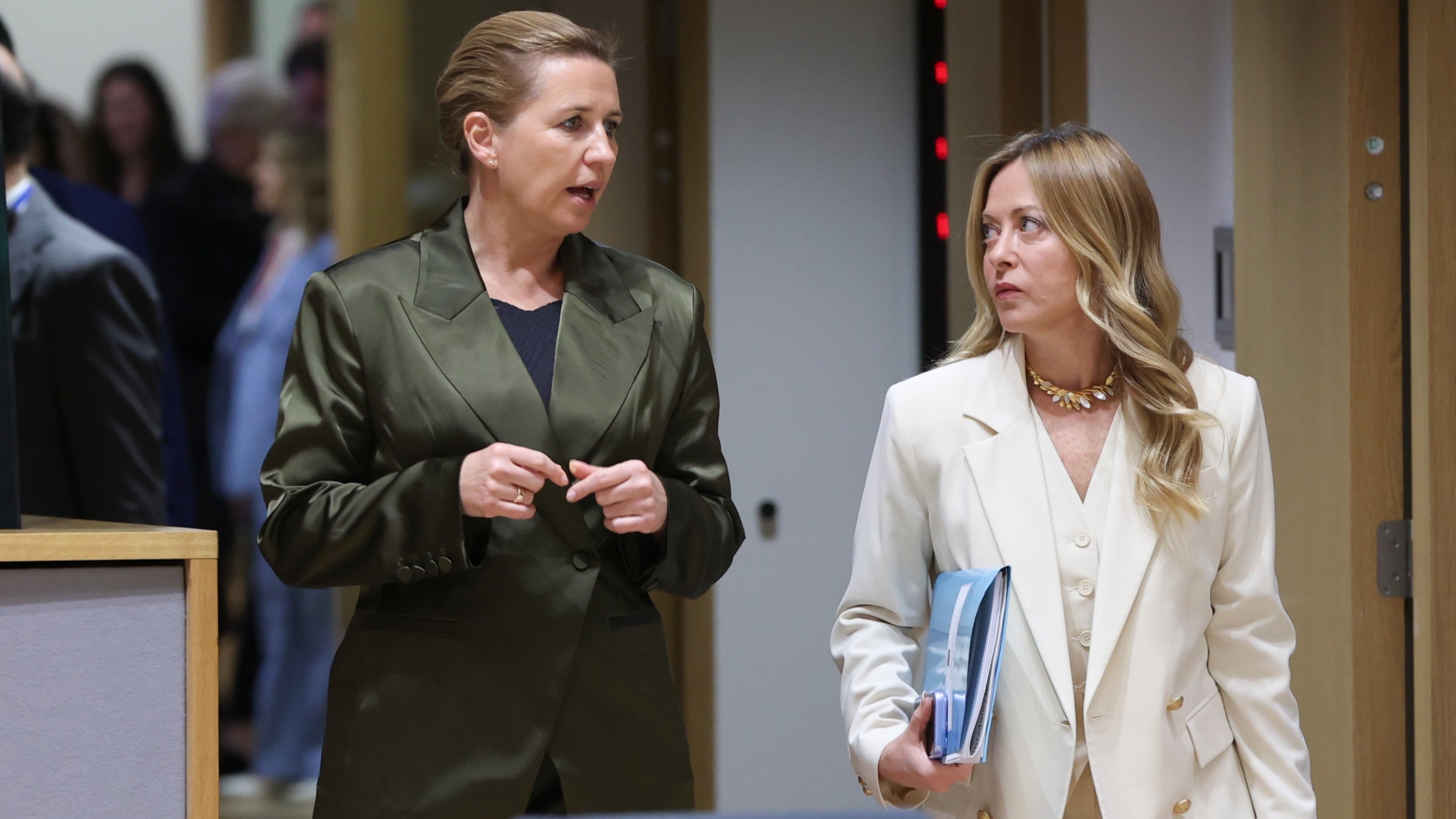
La cuestión migratoria ha sido uno de los asuntos principales de la reunión de los Veintisiete. Durante la cumbre, líderes como la primera ministra danesa, Mette Frederiksen; la italiana, Giorgia Meloni, y el primer ministro checo, Andrej Babis, han criticado la regularización extraordinaria de migrantes impulsada por el Gobierno español y han planteado su posible impacto en el resto de la Unión Europea.

En este contexto, la presidenta de la Comisión Europea, Ursula von der Leyen, ha defendido la necesidad de reforzar la coordinación entre los países del espacio Schengen ante medidas migratorias como la regularización española. Aunque ha reconocido que estas decisiones son competencia nacional, ha advertido de que pueden tener un "impacto transfronterizo".

"Las decisiones para regularizar migrantes irregulares son una competencia nacional, pero, como otras decisiones nacionales, pueden tener un impacto transfronterizo. Y por esa razón, la coordinación y cooperación estrecha en la zona Schengen es muy importante", ha afirmado Von der Leyen.

La presidenta de la Comisión ha evitado referirse a una medida concreta y ha subrayado que la migración es "un reto europeo" que requiere "soluciones europeas". Asimismo, ha recordado que la UE ya dispone de un mecanismo para intercambiar información sobre decisiones migratorias nacionales con posibles consecuencias transfronterizas y ha planteado la posibilidad de "reforzarlo".

"La Comisión está preparada para apoyar este refuerzo", ha señalado, sin ofrecer más detalles sobre cómo podría desarrollarse.

Un debate "muy duro" entre los líderes europeos

Durante la discusión sobre migración, las primeras ministras de Italia y Dinamarca, Giorgia Meloni y Mette Frederiksen, han intentado introducir cambios en las conclusiones de la cumbre para pedir a Bruselas que "explore medidas que puedan alentar la coordinación" entre los Estados miembros cuando adopten decisiones nacionales con posibles efectos sobre sus socios.

El debate ha sido "muy duro", según han coincidido varias fuentes europeas consultadas por Europa Press. Varios de los países que firmaron una carta crítica con el Gobierno español días después de la crisis migratoria de Ceuta han vuelto a cuestionar la regularización extraordinaria y su posible efecto llamada.

"Estuvo aislado, solo (el presidente de Francia, Emmanuel) Macron le echó una mano", ha asegurado una fuente diplomática. Otras fuentes han matizado que, aunque Macron rechazó claramente la posición de Italia y Dinamarca, también hubo otros mandatarios que expresaron reservas.

Por otro lado, Von der Leyen ha defendido la necesidad de reforzar Frontex, la agencia europea de fronteras, y de establecer un mecanismo que permita responder con mayor flexibilidad a los flujos masivos de migrantes instrumentalizados por actores estatales y no estatales.

Estas situaciones tienen un "claro objetivo: abrumar a las autoridades, causar pánico y dividirnos", ha señalado la presidenta de la Comisión, que considera que requieren "una herramienta de emergencia". Bruselas prevé presentar esta propuesta antes de finales de año.

  •  

Energia. Leyen anuncia compras conjuntas para baixar preços

Compras agregadas de energia no curto-prazo, nuclear e renováveis no médio prazo, e a libertação de 100 milhões de barris de petróleo e gasóleo sõ algumas das medidas assumidas por von der Leyen.

© OLIVIER HOSLET/EPA

A dirigente europeia reiterou ainda a defesa de uma rede de distribuição de energia melhor e mais eficiente
  •  

Denmark asks EU to ‘examine’ Spain’s plan to legalize migrants

The fact that Spain is swimming against the tide on European immigration issues became more evident than ever on Friday, when several EU leaders led by the prime ministers of Denmark and Italy — Mette Frederiksen and Giorgia Meloni — strongly criticized the Spanish government’s decision earlier this year to grant legal status to potentially hundreds of thousands of undocumented migrants.

Seguir leyendo

© FRANCOIS LENOIR (ACN)

Danish PM Mette Frederiksen and Italian PM Giorgia Meloni in Brussels.
  •  

EU fast-tracks merger of three European firms into one SpaceX rival. It wants to end reliance on US satellites that failed Ukraine this week

Satellites are the new frontline in space and strategy. Photo: Depositphotos

The EU plans to fast-track antitrust approval for Project Bromo, a satellite venture meant to cut Europe's reliance on American space technology, Bloomberg reports. The news comes days after the White House ordered the Pentagon to slow Starshield, the military-grade Starlink service Ukraine's forces use, according to Reuters.

Project Bromo would merge the satellite businesses of Italy’s Leonardo and France’s Airbus and Thales into one company. Bloomberg calls it the bloc’s answer to SpaceX, and the EU sees it as a regional giant able to compete with US and Chinese rivals.

European Commission President Ursula von der Leyen has backed the project, Eunews reports.

“These are the types of industrial champions we need if Europe is to lead in the space economy of tomorrow,” she said at an international space summit in Paris last month, citing Bromo by name.

A year of quiet groundwork before the filing

Over the past year, the partners and EU officials have worked through potential competition concerns so they can be resolved before a formal application, according to Bloomberg. The companies have not yet applied, but Brussels expects them to in the coming weeks.

For large deals, regulators usually hold such preliminary talks to flag obstacles early. If the companies offer concessions, such as selling some assets, the deal could clear after a first-phase review of a little over a month. If competition concerns remain, the Commission could open an in-depth probe lasting several months.

The caveat behind the SpaceX-rival label

A fast review is not a free pass. Competition Commissioner Teresa Ribera has warned that the project cannot expect one, and unions and suppliers have raised concerns about jobs and competition, Bloomberg reports. Von der Leyen’s public backing drew criticism from some members of the European Parliament.

Her support “doesn’t mean we are not going to apply and to enforce our own regulation,” Ribera told Bloomberg TV.

Why it matters to Ukraine

The push is part of a wider European scramble for space autonomy. Ukraine wants to build a satellite system of its own that no single company controls.

This week showed why. After the Starshield order, the military-grade terminals stopped working on fast-moving objects, and now work only at speeds of up to 160 kph, a person in Ukraine’s Defense Ministry told Reuters. Ukrainian officials said the restrictions complicated strike missions against Russian forces and logistics in occupied territory and slowed the interceptor drones that shoot down Shaheds.

  •  

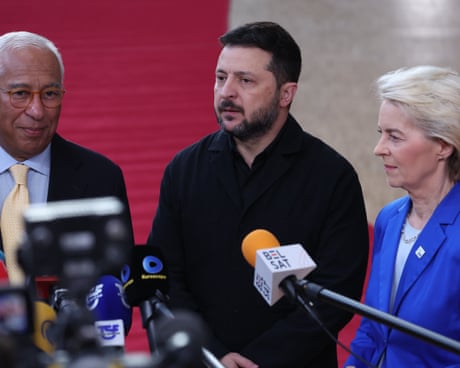
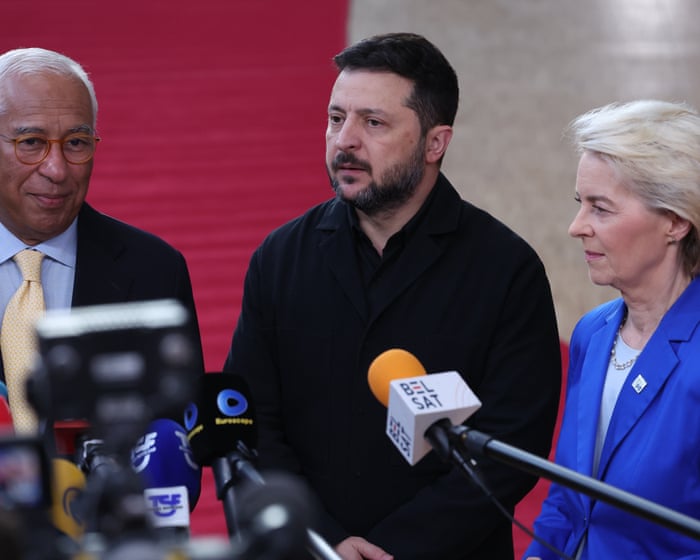
Zelenskyy thanks 'real leaders' at EU summit for their support – video

The Ukrainian president, Volodymyr Zelenskyy, told reporters on the second day of the European Council summit in Brussels that he was happy to have support from 'leaders, real leaders'. Zelenskyy's comment came after pressure from the White House to stop strikes on Russian oil facilities. His strained relationship with the US president, Donald Trump, was in evidence this week, with Trump stating: 'I’m not a big fan of Zelenskyy.'

Continue reading...

© Photograph: AP

© Photograph: AP

© Photograph: AP

  •  

EU leaders rule out easing sanctions on Russia until war ends

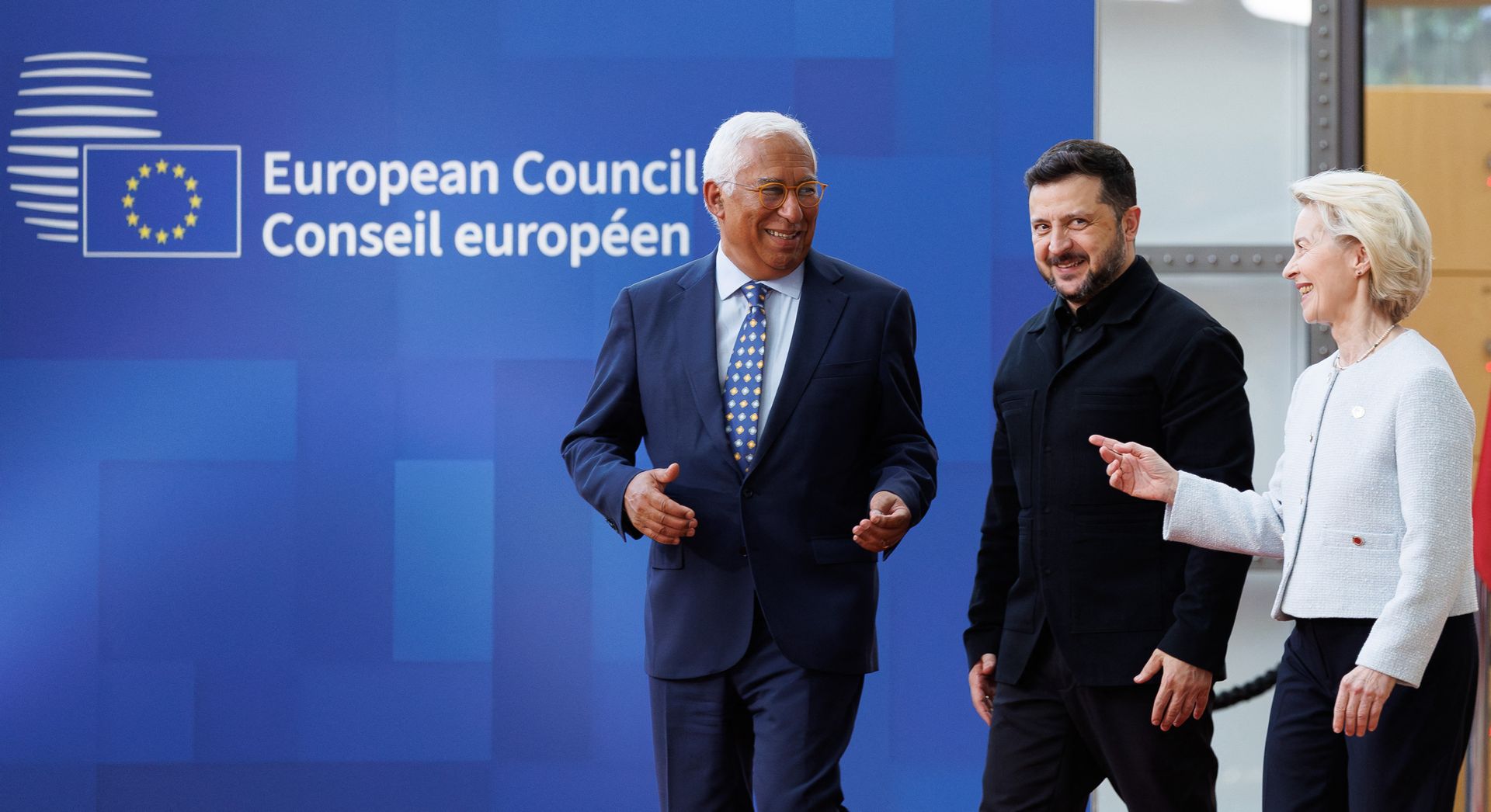
Ursula von der Leyen and António Costa said the EU would maintain pressure on Moscow, after the United States eased restrictions linked to Russian diesel exports. The statements came as Volodymyr Zelenskyy joined EU leaders in Brussels for talks on Ukraine.

The EU will not lift sanctions on Russia while its war against Ukraine continues, European Commission President Ursula von der Leyen and European Council President António Costa said on Friday. Their statements came ahead of discussions at the European Council, where leaders were due to consider further support for Ukraine and the needs of its critical infrastructure before winter. The assurances followed Washington’s move to ease sanctions pressure in connection with a deal involving Russian diesel supplies.

Von der Leyen said the EU had supported the energy truce announced by US President Donald Trump, but accused Russia of failing to observe it. “We have seen that Russia did not respect it. Not a single minute. Instead, Russia escalated. We have to increase the pressure on Russia,” she said. She added that the Commission was working on a 22nd sanctions package and that the bloc would not lift any sanctions unless Russia stopped the war.

Costa also rejected any reduction in pressure. “We will not cancel any sanctions until Russia stops the war,” he said, calling for stronger support for Ukraine and increased pressure on Moscow to secure a genuine ceasefire. The statements set out the position of the Commission and European Council presidents; they were not, in themselves, a new sanctions decision by EU member states.

The US and EU sanctions regimes are separate. Washington’s decision concerns US restrictions associated with Russian diesel exports, while EU measures are adopted by the member states. Moscow said it had resumed diesel exports under the arrangement with the Trump administration, a development that has prompted concern in Kyiv and European capitals. The reported resumption of Russian shipments has brought renewed attention to the effect of energy revenue on the Kremlin’s ability to finance its war.

The Commission describes EU sanctions as a means of reducing Russia’s capacity to fund the war, imposing costs on its political leadership and weakening its economic base. The measures cover energy, trade and finance, alongside listings of individuals, companies and organisations. The EU’s sanctions framework against Russia has been expanded through successive packages since the full-scale invasion of Ukraine.

The leaders’ statements came as Ukraine prepared for another winter of Russian attacks on energy infrastructure. The European Council meeting agenda included continued support for Ukraine and the operational needs of its critical infrastructure. Von der Leyen said the EU would continue to support Ukraine through the winter. She also referred to progress on Ukraine’s accession process, saying the remaining negotiation clusters should be opened by the end of the year.

The EU has recently added measures targeting Russia’s military-industrial sector. In October, it adopted a package of listings aimed at companies and individuals connected to the country’s war effort, as covered in EU Today’s report on the latest sanctions. The diesel arrangement has also followed earlier tensions over the use of sanctions and energy policy, including the US deal with Moscow.

The EU’s stated position is that its sanctions will remain in place until Russia ends the war. The Commission is preparing further measures, while any new package will require agreement among member states. Friday’s statements did not change the existing regime, but made clear that the US decision on Russian diesel would not, by itself, prompt Brussels to ease EU restrictions.

  •  

Zelensky thanks EU's 'real leaders' for their continued support as bloc confirms new sanctions package on the way

"We supported Trump's energy ceasefire but we see Russia did not respect it, and so we have to increase the pressure," von der Leyen told journalists, before announcing that the EU is working on a new 22nd package of sanctions against Russia.

  •  

How Gaza changed Europe, exposing cracks that grow bigger by the week | Shada Islam

Solidarity with Palestine’s suffering is punished but MEPs allow a witch-hunt of European Muslims

For three painful years, Israel’s genocidal war in Gaza, in retaliation for the Hamas terror attacks on 7 October 2023, has killed more than 74,000 Palestinians, wounded thousands more and reduced most of the territory to rubble. It has changed views of Israel across the world, increased support for Palestine and raised questions about US power.

Europe’s failure to hold Israel’s government to account has cost it global credibility and influence. But I fear something even more consequential than that: Gaza is changing Europe itself.

Shada Islam is a Brussels-based commentator on EU affairs. She runs New Horizons project, a strategy, analysis and advisory company

Do you have an opinion on the issues raised in this article? If you would like to submit a response of up to 300 words by email to be considered for publication in our letters section, please click here.

Continue reading...

© Photograph: Mouneb Taim/Anadolu/Getty Images

© Photograph: Mouneb Taim/Anadolu/Getty Images

© Photograph: Mouneb Taim/Anadolu/Getty Images

  •  

Zelensky e von der Leyen saúdam nova etapa na adesão à UE

Clusters 2 e 3 — mercado interno e competitividade — foram abertos esta terça-feira. Apenas agricultura e coesão e política ambiental ficam por iniciar.

© OLIVIER MATTHYS/EPA

O início formal destas negociações foi possível devido à mudança de Governo na Hungria
  •  

The EU’s latest mad plan to save itself

Ursula von der Leyen has the answer. Borrow even more money. Borrow like there’s no tomorrow.

Join us on Telegram, X, and VK.

Contact us: info@strategic-culture.su

The most remarkable thing about the rapid demise of the U.S. is that when it hits the bottom of the ocean floor economically, it will be in a better state than the EU. The panic among EU leaders, in particular Ursula von der Leyen, is breathtaking. Barely a week passes before she makes another crackpot policy announcement, gives herself a salary increase, or makes a statement about needing to give even more money to Ukraine. But in recent months these announcements have become more radical and existential, and we are seeing a new dawn now in the EU where the only solution to cover up the feral spending and borrowing is to fabricate a war with Russia and then blame Putin for the whole fiasco.

Every now and again we get a sober reminder about the economic situation of the U.S., EU and Russia. The recent news that Putin is going to sell around 2 million tonnes of diesel oil to “global markets” (as U.S. media phrases it), the lion’s share going to the U.S. before, during and just after the midterm elections in a bid to stabilise the price to help Trump. We will have to assume that countries who buy some of their diesel from the U.S. will continue doing so, but it might, in fact, be Russian oil.

There’s a lot of fake news buzzing around originating from Trump, who likes to distract journalists away from the top issues. It’s hard to see how the American public will respond to Trump’s latest decision to buy Russian diesel, but it’s hard to see this being a solution to the global oil crisis, let alone Trump’s record-low ratings. Will Trump really go ahead with a new wave of strikes on Iran after the midterms, as he has said? Or is it that his own intelligence agencies have picked up information that Iran is poised for a massive strike, and so therefore he is obliged to send even more troops, plus a carrier, to the region?

Regardless of how France and Germany get their diesel in the coming weeks, after Trump forced these governments to dip into their own reserves by threatening a U.S. export ban, it’s hard to see how the Achilles heel of most EU economies – crude oil products – can still be controlled by Moscow. While intellectually challenged figures like Mark Rutte make such stupid comments about how Russia could never win a war with NATO based on comparative GDP data, this latest move might be a huge wake-up call for Macron and Merz, the latter facing dismally low poll ratings. How do you continue to fund a war in Ukraine with the ‘frenemy’ relationship pushed to breaking point, such as is the case now with the U.S. having to buy diesel from Russia? EU countries loathe Putin, as the one hope they had to magically breathe new life into EU economies by taking Ukraine under its wing was shattered when Russian forces invaded. Putin is everything they are not. Nobody can deny Putin is a leader – the very thing that is so desperately lacking in EU countries. Leadership.

But the situation now has reached farce. With a global diesel crisis brought about by Trump’s war with Iran, EU countries are expected to buy diesel on the international market, topped up by Russia. In fact, buying oil from your enemy is nothing new. Countries have been doing this for decades. Even in Syria, we saw terror groups in the north-east of the country take over the oil infrastructure and then sell oil back to the Assad regime.

It’s hard to see how EU countries will draw a line in the sand between their geostrategic military objectives and their very realistic need for a stable oil supply. But in the midst of this chaos, Ursula von der Leyen has the answer. Borrow even more money. Borrow like there’s no tomorrow. Her latest proposal is to expand the current seven-year EU budget to 2 trillion euros, and there is only one way this can be achieved, as member states are never going to cough up more for the EU experiment. She will be forced to borrow from international banks to replace a previous loan of 750 billion euros for COVID. This is the solution for failing economies. Where once for so many years EU apparatchiks would defend the EU’s failure to implement its own rule book, in preference for constantly adopting new legislation, now this seems to have been replaced by ‘create a panic about Russia and make the EU a sort of executive of NATO without a single trace of democratic virtue’. Von der Leyen doesn’t stipulate what this massive increase is for, but we can assume some of it will be siphoned off for Ukraine. Madness on steroids. But hidden in the text is a new series of taxes which the EU itself could impose on individuals, and so in the smoke-and-mirrors confusion we see there is a back-door way to start taxing EU citizens, something Brussels never touched before. How long has the whole project got?

  •  

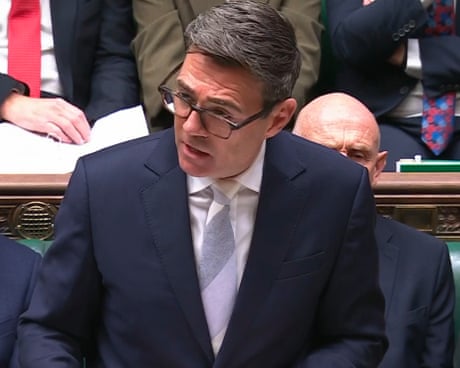
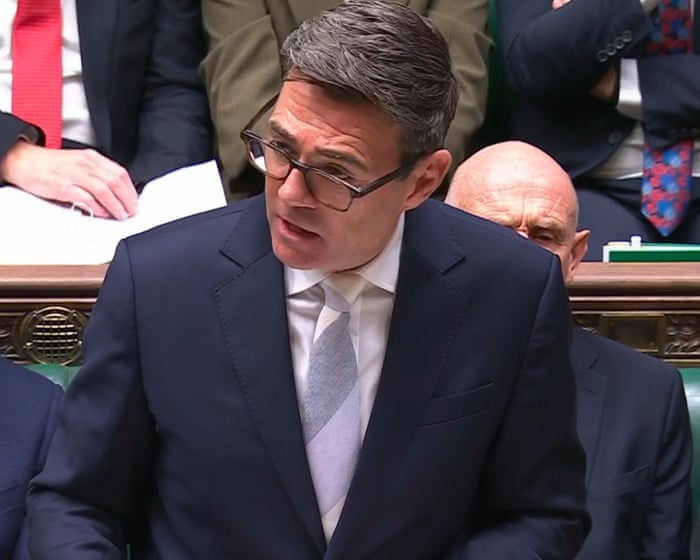
Burnham says ‘public will be the boss’ in any future decision about closer relationship with the EU – as it happened

The prime minister tells MPs the next summit with the EU will be held on 20 November

Burnham to urge MPs to embrace closer ties with EU

Zia Yusuf, Reform UK’s home affairs spokesperson, is speaking now. He started his speech with an account of a 73-year-old woman dying in North Wales after having to wait 23 hours for an ambulance, and he sought to link this to immigration.

He said:

The Royal College of Emergency Medicine estimates that 15,000 people across Britain died last year due to excess wait times for emergency treatment. That’s 300 people a week, 300 lives destroyed, 300 families devastated.

And that number has increased tenfold over the last decade. This is a moral outrage, and it is a direct result of decisions made by Tory and Labour governments.

I don’t think that’s because he wants to have a fight over the European Union. I think that’s because he knows what we’re talking about today impacts hard in what is known as the red wall.

Continue reading...

© Photograph: House of Commons/UK Parliament/PA

© Photograph: House of Commons/UK Parliament/PA

© Photograph: House of Commons/UK Parliament/PA

  •  

Bonus energia: perché 14 miliardi finiranno comunque per alzare le bollette della luce

A fine settembre, nella cornice dello Soteu, Ursula von der Leyen ha messo in evidenza il legame inscindibile tra sicurezza energetica e costi economici. Per un insieme di Paesi privo di materie prime, una crisi geopolitica come quella scatenata dalle tensioni nel Golfo Persico fa emergere con forza questa interdipendenza.

Agli Stati membri si chiede di elettrificare il più possibile per ridurre la dipendenza da gas e combustibili fossili, ma l’assenza di strumenti vincolanti porta il sistema energetico nazionale italiano ad accusare storture peculiari.

Con la Manovra di Bilancio 2027, grazie alla clausola di salvaguardia, l’esecutivo si appresta a mettere in campo circa 14 miliardi di euro in bonus energia e misure di contenimento. Un’imponente dote finanziaria che, tuttavia, non si tradurrà in un reale calo delle bollette per le famiglie e le imprese.

Il quadro europeo

La Commissione ha legato a più riprese la sicurezza energetica ai costi economici delle importazioni, ricordando come gli shock geopolitici siano costati all’Unione oltre 90 miliardi di euro in acquisti di fonti fossili. Per affrancarsi da questa dipendenza, Bruxelles ha fissato l’obiettivo di raddoppiarne la quota nel mix energetico entro il 2040, stimando un risparmio di 260 miliardi di euro all’anno.

Tuttavia, queste ambizioni non sono state accompagnate da alcuna dotazione finanziaria di bilancio né da atti vincolanti a sostegno dei consumatori. A complicare il quadro si aggiunge la recente revisione al ribasso degli obiettivi Net Zero e del calendario sulle emissioni: una mossa politica che concede ossigeno ai produttori di auto a combustione interna, ma che rischia di rallentare ulteriormente gli investimenti sull’elettrico.

In parallelo, il meccanismo europeo di carbon pricing (Ets) fa gravare i costi della CO2 sull’energia elettrica, esentando ancora per gran parte i combustibili tradizionali e rendendo il vettore pulito paradossalmente più caro.

Il caso Italia: la fiscalità che punisce chi elettrifica

Se l’Europa offre un quadro normativo frammentato, la struttura tariffaria italiana accentua la distorsione. Come evidenziato dalle analisi di ECCO, che riportiamo per semplicità in tabella, in Italia l’energia elettrica paga tasse e oneri sproporzionati rispetto al gas e ai carburanti tradizionali.

Ambito d’uso Vettore Elettrico Vettore fossile Impatto dell’imposizione
Utenze domestiche Fino a 0,0873 euro al kWh (fisco e oneri) 0,0231 euro al kWh sul gas naturale L’elettricità paga 3-4 volte più del gas
Pmi e industria Fino a 0,1119 euro al kWh in bassa tensione 0,0057 euro al kWh sul gas naturale L’elettricità paga fino a 20 volte più del gas
Trasporti e ricariche Da 0,141 a 0,398 euro al kWh per ricarica pubblica 0,089 euro al kWh per la benzina L’elettrico paga fino a 4 volte più dei fossili

Questo fenomeno deriva dalla scelta di continuare a scaricare oltre l’80% degli oneri di sistema per il finanziamento delle fonti rinnovabili unicamente sulle bollette elettriche, nonostante l’Ue consigli di andare in direzione opposta. Di conseguenza, tecnologie ad altissima efficienza come le pompe di calore o i veicoli elettrici vedono azzerato gran parte del risparmio economico potenziale a causa del peso fiscale applicato al kilowattora.

A soffrirne maggiormente è il tessuto produttivo nazionale. Come già denunciato dai rappresentanti di Confindustria a giugno in un convegno sugli Ets, la competitività delle industrie che scelgono di rimanere in Italia e di non delocalizzare riesce a mantenere performance accettabili pur sostenendo una doppia tassazione energetica: quella sulla corrente elettrica e quella sulle quote di carbonio necessarie alla produzione.

Deficit sopra il 3% e i limiti dei 14 miliardi in Manovra

Lo stato delle finanze pubbliche italiane rende ancora più difficile la gestione dell’emergenza. Con il rapporto deficit/Pil che ha di nuovo superato la soglia del 3%, l’esecutivo punta a sfruttare l’ipotesi di uno scostamento di bilancio fino allo 0,3% del Pil, facendo perno sui margini di flessibilità concessi dalla clausola di salvaguardia nazionale per la difesa e la sicurezza energetica.

Finanziare in deficit 14 miliardi di euro per tamponare il rialzo delle bollette sarà una misura necessaria per evitare il collasso sociale, ma è inutile negarlo: è un intervento di breve respiro. C’è bisogno di una maggiore trasparenza nella gestione della liquidità derivata dagli Ets, da cui perdiamo quasi 9 miliardi; serve una riforma organica della fiscalità energetica che riequilibri il carico fiscale tra fonti fossili ed elettricità, rendendo l’uso dei fossili davvero svantaggioso.

Impiegare risorse pubbliche per congelare temporaneamente i prezzi rischia solo di appesantire il debito, senza risolvere il nodo della dipendenza dalle materie prime esterne e senza garantire reali ribassi in per cittadini e imprese.

  •  

Europe’s major rivers are drying up, threatening energy security and trade

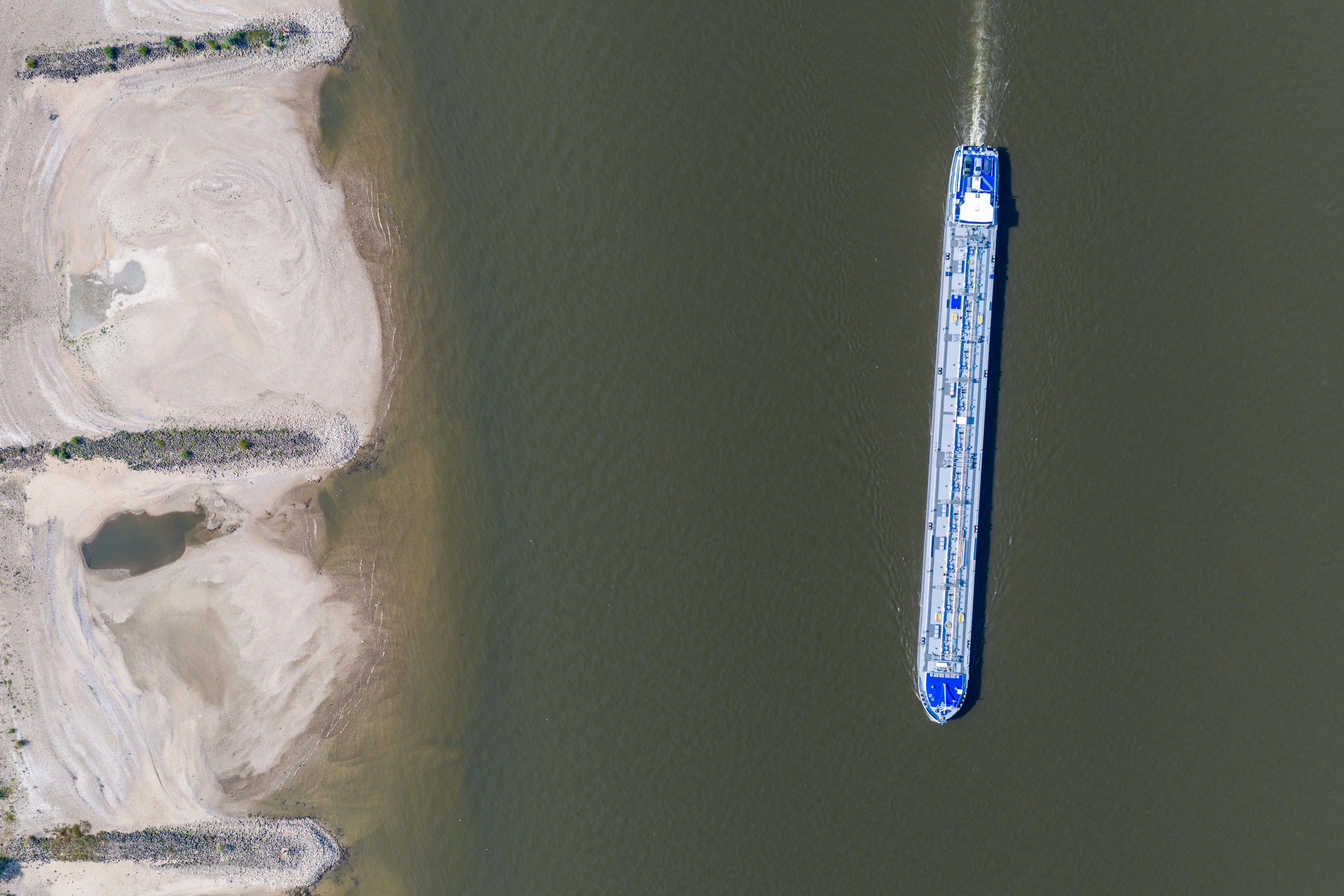
This past summer has been, for Europe, “the summer of truth,” as Ursula von der Leyen said a couple of weeks ago in her State of the Union debate speech. The president of the European Commission was warning about the consequences of global warming, which has again struck the continent hard. And the Copernicus Climate Change Service quantifies this sweltering summer in its seasonal assessment, published on October 2. The season in Europe was marked by heatwaves that were unusually intense and early (the first arrived in May). Across the continent this was the third-warmest summer on record. But focusing on western Europe, the summer of 2026 was the worst on record. It surpassed 2003, which shocked many EU countries with tens of thousands of deaths linked to extreme heat.

Seguir leyendo

© Christoph Reichwein (DPA/AP)

A cargo barge on the Rhine as it passed through the German city of Duisburg at the end of July.
  •  

Von der Leyen Offers Extra Year on EU Methane Rules as Energy Costs Bite

The European Commission is preparing to give fossil-fuel exporters another year of flexibility under the EU’s methane regime as Brussels responds to high energy prices, pressure on European refineries and concerns over security of supply.

European Commission President Ursula von der Leyen has announced an additional year of flexibility for energy exporters facing new EU methane requirements, marking the latest adjustment to climate legislation as Brussels attempts to contain rising energy costs.

Addressing the European Parliament in Strasbourg on Tuesday, von der Leyen said Europe remained exposed to high energy prices and volatile international fossil-fuel markets and confirmed that exporters would receive “one more year” to prepare for the methane rules.

She also announced a strategic dialogue with the European refining sector aimed at reducing costs and protecting supplies, according to the Commission’s published remarks.

The announcement affects a regulation that has increasingly become an energy-security issue rather than solely an emissions policy.

The EU’s Methane Regulation, adopted in 2024, introduced progressively stricter requirements for companies supplying oil, natural gas and coal to the European market. Importers have already been required to provide information about the origin of fuel and the systems used to measure and reduce methane emissions.

A more demanding stage was due from January 2027. Importers would have to demonstrate that fuel supplied under contracts concluded or renewed since August 2024 came from producers operating monitoring, reporting and verification systems equivalent to EU standards.

The rules are technically complex because European importers do not always buy directly from producers. Gas and oil may pass through traders, hubs, blending systems and several contractual relationships before reaching Europe.

The Commission’s own guidance for importers acknowledges those difficulties, particularly where companies must trace production information through complicated supply chains.

EU Today highlighted the problem in July, when an International Energy Agency assessment raised concerns that the rules could restrict Europe’s available oil supply. The dispute has since intensified because European fuel markets have become considerably tighter.

That pressure can also be seen in the cost of imported energy. EU Today reported last month that the value of EU petroleum imports had risen by 55.8 per cent in the second quarter of 2026 even though the physical volume purchased increased by only 1.2 per cent.

Von der Leyen’s intervention therefore comes against a different market background from the one in which the methane legislation was originally adopted.

The Commission has not abandoned its objective of reducing methane emissions from fossil-fuel production. Methane remains one of the most powerful greenhouse gases, and the regulation is intended to use the size of the European energy market to influence production standards outside the EU.

Instead, Brussels is attempting to adjust implementation so that regulatory requirements do not further restrict supply at a time of elevated energy prices.

The precise legal form of the additional year of flexibility has not yet been detailed in von der Leyen’s announcement. Existing requirements remain contained in Regulation (EU) 2024/1787, meaning that changes to deadlines or enforcement will have to be translated into the appropriate legal or administrative measures.

The Commission had already moved towards greater flexibility earlier this year. In July it issued recommendations designed to clarify contractual arrangements and advised national authorities on the application of penalties to importers while security-of-supply concerns persisted.

The broader problem is European energy competitiveness.

Von der Leyen told Parliament that Brussels intends to begin a strategic dialogue with refineries. European refining capacity has contracted over the longer term, leaving the continent more dependent on imported diesel and other finished petroleum products when individual plants close or external supply routes are disrupted.

The Commission is also expected to propose measures aimed at increasing electricity’s share of European energy consumption as part of its attempt to reduce dependence on imported fossil fuels.

The latest methane adjustment therefore fits a wider shift in Brussels. Climate targets remain formally intact, but implementation is increasingly being examined alongside energy prices, industrial competitiveness and the security of physical supplies.

The extra year gives exporters additional time. It also gives the Commission another year to resolve a question that has become much more urgent in 2026: how far Europe can tighten conditions on imported energy while remaining heavily dependent on those imports.

  •  

Ukraine’s EU Reform Record: Why Progress Slows Where Political Power Is at Stake

Ukraine’s record on reform during Russia’s war is stronger than much recent criticism suggests. By September, Kyiv had completed 84 of 95 milestones due under the Ukraine Plan. Yet progress on a smaller group of rule-of-law commitments has been strikingly weaker. The difference between the two tells Brussels much about where Ukraine’s European transformation is encountering resistance.

Ukraine’s reform record currently produces two figures that appear difficult to reconcile.

Under the Ukraine Plan, Kyiv had completed 84 of the 95 milestones due by late September — around 88 per cent. The result was strong enough for EU governments to approve another payment of almost €3 billion under the Ukraine Facility.

Three months earlier, however, a coalition of Ukrainian organisations monitoring ten rule-of-law and anti-corruption commitments agreed with Brussels had awarded progress just 15 points out of 100.

Neither figure is wrong. They measure different programmes.

The first covers a broad reform and investment agenda extending from the judiciary and financial markets to energy, agriculture, transport, human capital and the business environment. The second examines a deliberately narrow collection of reforms concerning prosecutors, criminal investigations, anti-corruption agencies and judicial governance.

Put together, they raise a more useful question than whether Ukraine is “reforming” or “not reforming”.

Why has a country capable of delivering most of a demanding EU programme during a major war found this particular group of reforms so much harder to complete?

Russia’s aggression provides part of the answer. Ukraine has been attempting an institutional transformation while mobilising its population, financing its armed forces, repairing infrastructure and keeping a functioning state under repeated Russian missile and drone attacks. No previous EU candidate has operated under comparable conditions.

But the ten reforms where progress has been weakest have something else in common. Most concern institutions that can investigate senior officials, prosecute corruption, scrutinise appointments or otherwise place limits on the exercise of political authority.

That is what makes the comparison important.

A strong overall record

The wider reform record should not be understated.

When the European Commission released €2.9 billion to Ukraine on 2 October, it specifically credited Kyiv with implementing reforms covering the judiciary, financial markets, human capital, the business environment, energy, transport, agriculture and the green transition.

Total EU support provided under the Ukraine Plan has now exceeded €32 billion. More than €17 billion in further budget support remains potentially available during 2026, provided Ukraine fulfils the corresponding conditions.

The money is particularly important because the Ukrainian state is directing such a large share of its own resources towards defence. European financing helps keep the civilian state operating while Ukraine fights Russia.

The Ukraine Facility has therefore become more than an aid mechanism. It gives Brussels a means of measuring reform against specific commitments and releasing money when they are met.

That system has generally worked.

It also makes the areas where progress is weaker much easier to identify.

The 15/100 assessment published in June concerned ten priorities agreed in December 2025 between Enlargement Commissioner Marta Kos and then deputy prime minister Taras Kachka. The score came from Ukrainian civil society, not the European Commission, and cannot legitimately be presented as Ukraine’s overall EU reform score.

It had nevertheless risen only six points from an assessment of nine out of 100 in April.

Among the unfinished commitments were changes to criminal procedure affecting high-level corruption cases, stronger guarantees for the independence and effectiveness of NABU and SAPO, reform of the State Bureau of Investigation, new arrangements surrounding the Prosecutor General, competitive recruitment within the prosecution service and further changes to judicial governance.

These are among the most difficult reforms Ukraine has undertaken since 2014 because they concern who has the authority to investigate whom.

The July 2025 episode changed the argument

The events surrounding NABU and SAPO in July 2025 remain central to understanding why Brussels is paying such close attention.

Ukraine had spent years building a specialised anti-corruption system intended to make investigations of senior political figures less vulnerable to interference from the conventional prosecutorial hierarchy.

NABU conducts investigations. SAPO provides specialised prosecution. The High Anti-Corruption Court hears the cases.

The system has never been free from political controversy, nor has its performance been beyond criticism. But its independence became an important part of Ukraine’s relationship with the EU and other international partners.

Then, in July 2025, parliament passed legislation placing NABU and SAPO under substantially greater authority of the politically appointed Prosecutor General. Zelenskyy signed it.

The decision produced an unusually sharp reaction inside Ukraine. Demonstrators took to the streets despite martial law, while European partners made clear that the legislation threatened reforms regarded as fundamental to the country’s European integration.

As EU Today reported during the crisis, the dispute went far beyond the technical division of powers between prosecutors and investigators.

Kyiv reversed course within days. Parliament restored the independence of the two bodies.

The reversal demonstrated that Ukraine’s political system still contained powerful corrective forces. Civil society mobilised, public opposition was visible and international pressure had an effect.

Yet the episode also established that the independence of institutions created specifically to investigate high-level corruption could still become the subject of direct political intervention.

That changed the context in which subsequent reform commitments are being judged.

The European Commission’s 2025 report on Ukraine recorded both sides of the episode. It acknowledged the restoration of NABU and SAPO independence, while warning that undue pressure on anti-corruption agencies remained a concern.

The Commission also identified practical weaknesses. NABU still required better access to timely and impartial forensic examinations, while SAPO needed stronger powers in cases involving members of parliament.

This is why simply retaining NABU and SAPO is no longer sufficient evidence that this part of the reform process is secure. Brussels is looking at whether they can operate when investigations become politically difficult.

Follow the institutions

The same issue appears elsewhere.

Ukraine agreed to review the procedure for appointing and dismissing the Prosecutor General, drawing on European standards and the Venice Commission. It also committed itself to transparent and competitive recruitment for senior positions throughout the prosecution service.

The significance is obvious. The Prosecutor General occupies a pivotal position in the Ukrainian criminal-justice system. The method by which that office is filled — and the circumstances in which its occupant can be removed — affect the credibility of every politically sensitive prosecution beneath it.

Progress has been slow.

There is a similar problem with the State Bureau of Investigation, which handles cases involving senior officials and law-enforcement personnel. Kyiv agreed to an independent assessment of the bureau followed by reform of its legal and institutional framework.

Again, the issue is not administrative tidiness. An agency responsible for investigating state officials has little value as a check on government if its own leadership or investigative decisions are susceptible to political influence.

Criminal procedure provides another example.

Ukraine committed itself to changing provisions under which corruption proceedings can eventually be closed because deadlines for pre-trial investigations have expired, as well as addressing limitation periods for corruption offences.

Draft legislation has appeared. Bills No. 15333 and 15334 were registered in parliament, and NABU and the Ministry of Justice have worked on amendments.

But the process has taken months.

For a simple criminal case, procedural deadlines may appear an obscure legal question. Top-level corruption investigations are different. They can involve offshore structures, large quantities of financial evidence, foreign jurisdictions and prolonged litigation. If the clock eventually disposes of a case that investigators and prosecutors cannot bring to judgment quickly enough, the anti-corruption architecture fails at the point where it is supposed to produce results.

The same pattern is visible in judicial reform and the new Anti-Corruption Strategy for 2026–2030. Work is taking place, legislation is being prepared and institutions are consulting one another. Some changes have been completed.

Others remain somewhere between agreement and implementation.

This is precisely the stage of accession at which that distinction begins to count.

When Ukraine and Moldova moved further into the EU accession process, the significance of the Fundamentals cluster was that progress would increasingly depend on the functioning of institutions rather than declarations of political intent.

Ukraine has no shortage of declarations of European intent. What the Commission needs to establish is whether the machinery beneath them works.

The limits of the wartime argument

Any assessment that ignores Russia’s war would be unserious.

Full-scale aggression has inevitably changed the Ukrainian state. Decisions that might take months in peacetime sometimes have to be taken within days. Military information cannot be handled according to ordinary transparency rules. Elections cannot proceed under normal conditions. The executive carries responsibilities that no Ukrainian government faced before 2022.

Reform is also competing for administrative capacity with mobilisation, defence procurement, reconstruction, energy emergencies and the daily consequences of Russian attacks.

This has to be taken into account when Brussels sets timetables and assesses progress.

It is less convincing when applied indiscriminately.

Competitive recruitment of prosecutors does not interfere with the defence of Ukraine. Neither does an independent procedure for selecting the Prosecutor General. NABU’s ability to investigate senior officials does not prevent the armed forces from conducting operations, while closing procedural loopholes in corruption cases has no obvious adverse effect on wartime decision-making.

There is therefore a boundary between powers required to fight Russia and powers that are simply easier for government to retain during wartime.

Finding that boundary is becoming one of the more difficult questions in Ukraine’s relationship with the EU.

This does not support the sweeping claim that every important Ukrainian institution has been placed under political control. The evidence does not justify it.

It does show why Brussels is concentrating increasingly on institutional independence.

The problem with wartime centralisation is rarely that it begins without justification. Governments fighting wars need authority. The longer an emergency lasts, however, the more important it becomes to distinguish measures required by national security from arrangements that have become politically convenient.

Ukraine has now lived under full-scale war for more than four years. Institutions created for the post-war European state are being shaped while the wartime state still exists.

That makes the current reform period unusually consequential.

Conditionality becomes Brussels’ leverage

The EU has one powerful instrument with which to influence the outcome: money.

The Commission is already using it.

The almost €3 billion approved in September followed the completion of agreed Ukraine Plan milestones. The next payments depend on further commitments being met.

As EU Today reported when the Ukraine Plan was amended, additional financing has come with additional rule-of-law and anti-corruption requirements.

There is a limit to how far Brussels can push this. Ukraine is fighting a Russian war of aggression that also poses a direct security threat to Europe. Destabilising the Ukrainian budget in order to demonstrate the rigour of EU conditionality would make little strategic sense.

Kyiv is well aware of that.

But Brussels cannot simply waive the conditions either. Doing so would weaken reformers inside Ukraine, reduce EU influence over the accession process and make it more difficult to explain enormous long-term transfers to European taxpayers.

The result is already visible: continued financial support accompanied by increasingly detailed scrutiny of how reforms are implemented.

That approach is likely to become tougher as accession advances.

There is another reason for it.

Ukraine will eventually have to manage reconstruction on a scale Europe has not seen for decades. European governments, international financial institutions and private investors will be asked to commit hundreds of billions of euros. Confidence in prosecutors, courts, public procurement and anti-corruption agencies will affect how much money arrives and on what terms.

Strong institutions are therefore not a concession Ukraine makes to Brussels in exchange for membership.

They are part of the infrastructure required for Ukraine’s recovery.

The same applies to the war itself. Corruption in defence procurement, reconstruction or public administration gives Russia opportunities to damage confidence in the Ukrainian state and strain relations between Kyiv and its partners. Moscow has every interest in amplifying genuine scandals alongside fabricated ones.

The most effective answer is not tighter political management of damaging information. It is institutions capable of investigating misconduct credibly.

That is also why the role of Ukrainian civil society deserves attention.

The organisations producing critical assessments of Kyiv’s reforms are operating in a country under attack. Many have supported Ukraine’s European integration for years. Their reports can be disputed and their scoring methodologies examined, but criticism of government performance is not evidence of disloyalty.

The ability to produce such criticism is itself one of the features separating the Ukrainian political system from the authoritarian model Russia represents.

Ukraine’s reform record consequently looks neither like the failure portrayed by some critics nor the uninterrupted success sometimes presented by its defenders.

The broader record is impressive. Completing 84 of 95 Ukraine Plan milestones while fighting a major war is not a trivial achievement, and the EU would not have continued releasing billions of euros if the reform programme existed only on paper.

The difficulty appears further down, where institutional reform begins to affect the ability of political authorities to influence prosecutors, investigators and judicial appointments.

The NABU-SAPO confrontation made that problem impossible to ignore. The subsequent reversal showed that Ukraine also possesses the political and civic capacity to correct course.

What happens next will matter more than either episode.

Bills that have remained in parliament will have to become law. Reviews of the SBI and prosecution service will have to produce institutional changes. Competitive appointment procedures will have to work when the preferred candidate of those in power does not win. Anti-corruption bodies will have to be allowed to pursue cases when their targets are politically connected.

These are less visible achievements than opening accession negotiations or announcing another EU funding package.

They are also much closer to what EU membership ultimately requires.

Russia has forced Ukraine to build an exceptionally powerful wartime state. European integration requires Kyiv to ensure that some of that power can eventually be constrained by institutions that do not depend on whoever occupies the presidential administration.

The figures that currently look contradictory — 84 out of 95 and 15 out of 100 — are therefore telling different parts of the same story.

Ukraine has shown that it can reform during the war.

The harder test is whether it can complete reforms precisely where doing so reduces political discretion.

  •  
❌