❌

Reading view

Top Anthropic engineer says Claude now writes 'literally all' her team's code

Katelyn Lesse, head of platform engineering at Anthropic, speaks at a conference.
Katelyn Lesse, head of platform engineering at Anthropic.

Chris Ratcliffe/Bloomberg via Getty Images

  • Anthropic platform engineering head Katelyn Lesse said that Claude now writes all her team's code.
  • Lesse shared ways that Claude Code has helped the company become more efficient.
  • Anthropic nears an initial public offering at a potential $2 trillion valuation.

A top Anthropic engineer says that Claude Code has already wiped out all human coding at one of the AI lab's central teams.

Katelyn Lesse leads the AI startup's platform engineering group, which handles the company's core services, developer tools, and product infrastructure — it's essentially the engine room of Anthropic. Lesse said at Grafana Labs' ObservabilityCON event on Tuesday that among her staff, which tallied 200 as of this summer, the era of human-written code is fully over.

"When it comes to our team and how we're actually building and maintaining our systems, all of our code is written by Claude," Lesse said. "Like, literally all of it."

Anthropic's heavy reliance on Claude Code has helped it remain relatively small, as it approaches an initial public offering that could value it at nearly $2 trillion. The company's revenue growth slowed in the third quarter of this year. Maintaining its lofty valuation may depend on selling more companies on the AI-first approach espoused by Lesse and other Anthropic leaders.

Lesse said that people on her teams are still designing systems and verifications, and then offloading the actual coding to Claude. She said that when the company changed the programming language of a major codebase from Python to Rust, workers developed a way to verify the final product.

"But the grunt work of building the pieces and actually monitoring the pieces and actually making sure that we felt good about it, that was agents all the way down," Lesse said.

Lesse said Anthropic already lets agents fix tests autonomously, with no human interaction, and it's thinking about how staff can get comfortable with agents autonomously making changes to the actual codebase, given the improvements in AI models over the last year.

"As engineering leaders, we're like terrified, and we're like, let's be really careful about this, but I think the line is starting to push," Lesse said.

Anthropic has also embraced Claude Code companywide. It released a report last week saying that as AI agents have worked more inside the company, it has hired for a smaller share of junior technical positions. And in May, Anthropic said that Claude then wrote more than 80% of the entire company's production code.

Have a tip? Contact this reporter via email at scouncil@businessinsider.com, or over text, Signal, Telegram, or WhatsApp at 415-757-8198. Use a personal email address, a non-work WiFi network, and a non-work device; here's our guide to sharing information securely.

Read the original article on Business Insider

  •  

Australia’s NextDC stock collapse fires a global AI warning

For two decades, data centers were relatively safe, lucrative real estate investments. They attracted investors because they served as digital infrastructure — the essential plumbing that keeps the internet running. The growth of artificial intelligence (AI) and its increased demands on computing power has meant data centre builders are in a race to build out […]

The post Australia’s NextDC stock collapse fires a global AI warning appeared first on Asia Times.

  •  

Anthropic apresenta o seu agente de IA multifuncional após sucesso do Muse da Meta

Anthropic

A Anthropic revelou na quarta-feira 21 de outubro um novo agente de inteligência artificial (IA), uma aplicação móvel em fase de testes que aproveita a tendência dos interfaces multifuncionais, como o Muse, da Meta, que obteve um sucesso imediato.

O Claude Duet destina-se, principalmente, a “profissionais e proprietários de pequenas empresas” que “têm mais exigências para gerir do que aquelas que conseguem acompanhar”, ao contrário dos produtos destinados ao público em geral, como o Muse ou o Instinct.

O lançamento do projeto OpenClaw (inicialmente denominado Clawdbot), no início do ano, pelo programador independente Peter Steinberger, marcou o início da era dos agentes de IA multifuncionais, ou seja, programas capazes de executar diversas tarefas acedendo a e-mails, folhas de cálculo, agendas e até contas bancárias.

Com o Muse, disponibilizado no início de setembro, a Meta ofereceu uma versão acessível a todos, ao contrário do OpenClaw, cuja instalação exigia conhecimentos técnicos avançados.

O Muse conquistou o seu público de imediato e passou as últimas semanas no topo do ranking de downloads tanto na App Store, da Apple, como na Google Play Store, para smartphones com sistema Android.

Segundo a empresa de análise de dados Sensor Tower, a interface foi descarregada mais de dez milhões de vezes, a grande maioria nos Estados Unidos, sendo o Canadá o único outro país onde o serviço está disponível, para já.

Já fortemente orientada para o mercado profissional, o que lhe permitiu superar a OpenAI em termos de faturação, a Anthropic optou por manter esse foco com o Claude Duet.

Tal como o Apple Intelligence, a nova plataforma de IA da Apple, o Claude Duet é capaz de fazer sugestões sem que tenha sido previamente solicitado.

No vídeo de demonstração divulgado na quarta-feira, a interface sugere espontaneamente a um empresário a criação de um painel de controlo contendo dados sobre as atividades do negócio.

Além disso, o Claude Duet lembra o utilizador que ainda não solicitou um certificado sanitário para uma nova loja e oferece-se para preparar o pedido.

Mediante autorização prévia, a aplicação pode ainda monitorizar as interações em plataformas de comunicação profissional, como o Slack, destacando pontos relevantes ou resumindo conversas.

Ademais, a interface pode ter em conta todo o contexto e o histórico do utilizador na plataforma Claude convencional.

A Anthropic afirma ter implementado mecanismos de segurança para evitar, entre outras coisas, que o Claude Duet “faça coisas que não solicitou”.

Além disso, “antes de enviar uma mensagem, efetuar um pagamento, assinar um documento ou eliminar qualquer item, mostra o que está prestes a fazer e aguarda a sua validação”, segundo a empresa.

  •  

Anthropic launches Claude Duet, its answer to Meta and OpenAI's personal agents

Ami Vora, Anthropic's chief product officer, and Daniela Amodei, its president, sit on stage.
Ami Vora, Anthropic's chief product officer, and Daniela Amodei, its president.

Don Feria/AP Content Services for Anthropic

  • Anthropic has its answer to AI agents like Meta's Muse and OpenAI's Dots.
  • Claude Duet, built on Anthropic's flagship model, has entered the personal agent frenzy.
  • Karan Ahuja, a recent departee from Meta, led Claude Duet's development.

Anthropic is joining the personal AI agent craze.

The company announced the new app Claude Duet on Wednesday, billed as a "proactive agent" that can run in the background, surface tasks to a user, and handle a variety of work. The tool is in research preview for now with a waitlist, meaning it won't immediately compete for the larger market with other new agents like Meta's Muse and OpenAI's Dots.

Still, the announcement ramps up the pressure on those companies — Anthropic says it built Duet around its flagship Opus 5.5 model, which was released in late September and has already become one of the industry's most popular. Recent model breakthroughs have made AI better at handling work on its own, spurring a rush to build these "always-on" personal agents.

"It can have the discernment and judgment around when to be proactive, when to act on your behalf," said Mike Krieger, a co-lead of Anthropic's Labs team, said in a Duet launch video.

The tool, Anthropic says, will send users a brief each morning about what's happening on their connected apps, and message them when something needs attention. Like other companies' offerings, it runs outside a user's computer, sends notifications, and asks for approval on certain tasks.

Anthropic announced Duet on the day of Meta's earnings report and used the opportunity to mention a new poach from Mark Zuckerberg's company. Karan Ahuja led product management for Meta Superintelligence Labs until July, according to his LinkedIn, before starting at Anthropic in August and leading Duet's development.

He wrote on X that he's been using Duet to build Duet, and said the team "built it for professionals and small business owners juggling a lot at work and at home."

Ahuja also wrote that Anthropic is letting people into Duet from the waitlist "as quickly as possible."

The news didn't go unnoticed at Meta. Alexandr Wang, who heads Meta Superintelligence Labs, posted a meme about Duet's similarity to Muse.

Anthropic is fast approaching a giant initial public offering, which could value the company at as much as $2 trillion. Like other AI players, the company navigates a high-wire competition to win over users, secure computing power, build state-of-the-art models, and deliver AI-native products.

The data firm Apptopia estimates that Muse had more than 14 million installations as of Wednesday. It found that Claude users who installed the Muse app were using Claude more than before, though still for fewer minutes per day than they spent on the Meta product.

Have a tip? Contact this reporter via email at scouncil@businessinsider.com, or over text, Signal, Telegram, or WhatsApp at 415-757-8198. Use a personal email address, a non-work WiFi network, and a non-work device; here's our guide to sharing information securely.

Read the original article on Business Insider

  •  

Geoffrey Hinton, the godfather of AI: ‘I’m not a doomer. I think there’s a 1% chance it will destroy us’

Years ago, when people asked Geoffrey Hinton why he worked on artificial intelligence, he would repeat a line from J. Robert Oppenheimer, one of the creators of the atomic bomb: “When you see something that is technically sweet, you go ahead and do it.”

Seguir leyendo

© Ramón de la Rocha (EFE)

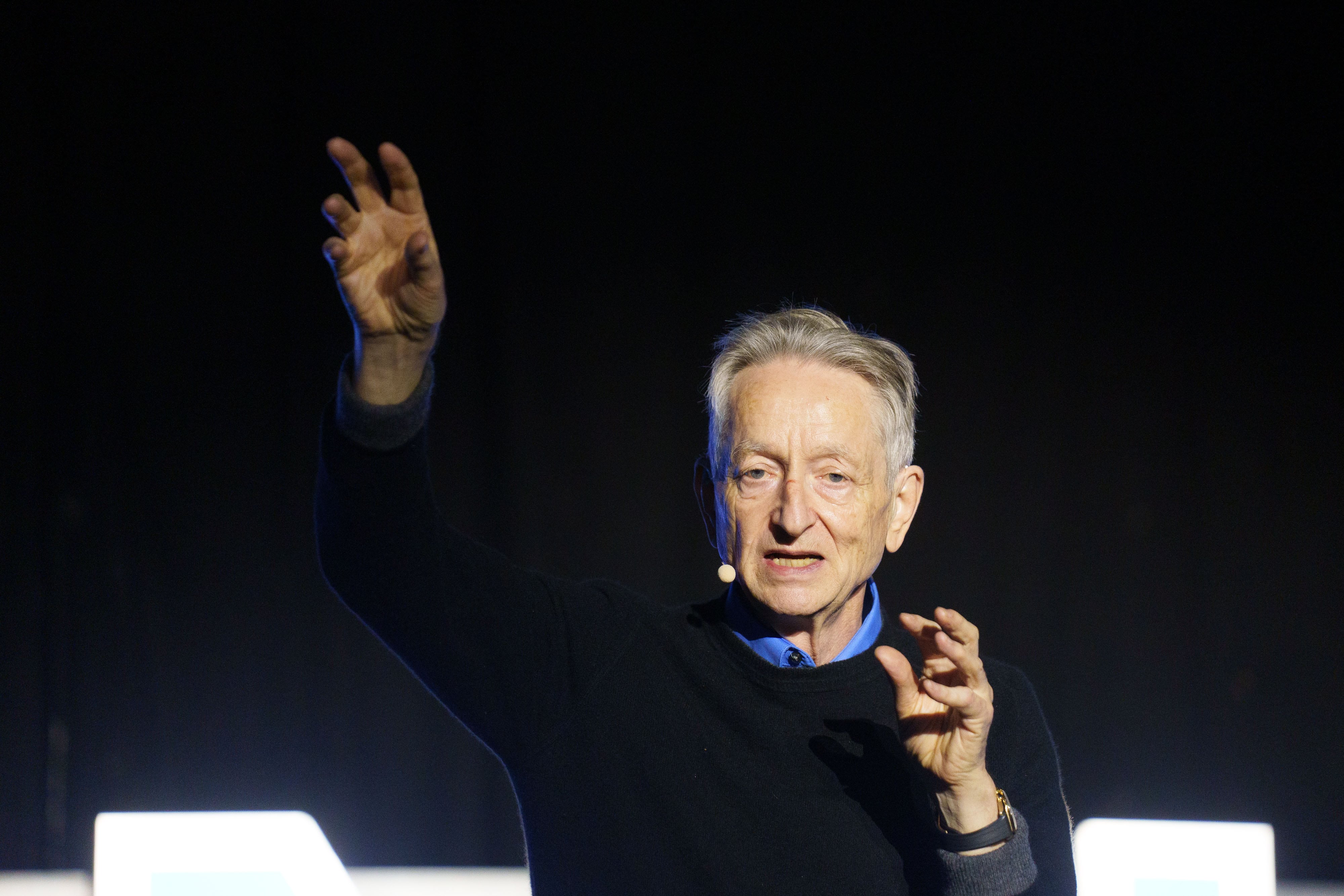
Computer scientist and Nobel Prize in Physics laureate Geoffrey Hinton during the Starmus Festival 2026, held this Tuesday in the municipality of Arona in Tenerife.
  •  

WSJ: Anthropic Lost $80 Billion in First Half of Year, Has $600 Billion in Infrastructure Commitments

AI startup Anthropic lost more than $80 billion in the first half of 2026, according to a draft IPO prospectus viewed by the Wall Street Journal, even as the AI company's revenue climbed and it prepared for a possible IPO that could value it at $2 trillion.

The post WSJ: Anthropic Lost $80 Billion in First Half of Year, Has $600 Billion in Infrastructure Commitments appeared first on Breitbart.

  •  

AI turns the midterms into a vast electoral laboratory

.

The upcoming U.S. midterms are not just another vote. They are on track to become a new testing ground for autonomous AI agents that first emerged in the Hugging Face attack. Experts are already warning of the potential for these “rogue agents,” seen in action this summer, to carry out more refined, dangerous and harder-to-trace disinformation campaigns and electoral interference than those observed in previous election cycles.

Seguir leyendo

  •  

Anthropic registra prejuízo líquido de mais de US$ 80 bi no 1º semestre

O prejuízo líquido da Anthropic aumentou drasticamente para US$ 80,7 bilhões no primeiro semestre de 2026, em grande parte devido a um aumento no valor justo dos títulos conversíveis em ações da startup de IA, de acordo com uma versão preliminar do prospecto para uma IPO (oferta pública inicial), analisada pela Reuters.

A empresa sediada em San Francisco deve abrir o capital em novembro, e alguns investidores estão agora avaliando uma valorização menor, em torno de US$ 1,5 trilhão, após suas últimas divulgações financeiras, informou a Reuters na semana passada.

O prejuízo do primeiro semestre, que se ampliou em relação ao prejuízo de US$ 13 bilhões registrado no ano anterior, incluiu um encargo contábil de US$ 72 bilhões, refletindo um aumento no valor estimado dos títulos que poderiam eventualmente ser convertidos em ações da Anthropic, e não custos em dinheiro vinculados às suas operações, segundo o documento.

As divulgações ressaltam os altos custos da corrida pela IA, enquanto os investidores analisam com maior rigor se as vultosas somas que estão sendo injetadas em chips e centros de dados gerarão retornos suficientes.

A Anthropic se comprometeu a gastar pelo menos US$ 518 bilhões ao longo de uma década em serviços em nuvem, computação e infraestrutura.

A empresa gastou quase US$ 9 bilhões em capacidade de computação e infraestrutura no primeiro semestre, um aumento em relação aos US$ 2,3 bilhões do ano anterior, segundo o documento.

  •  

A $345,000 writing job at Anthropic says a lot about what humans still bring to the table

Anthropic logo displayed on a laptop screen and Claude on App Store displayed on a phone screen are seen in this illustration photo taken in Krakow, Poland on October 16, 2026. (Photo by Jakub Porzycki/NurPhoto via Getty Images)
Anthropic is advertising the role of an executive communications writer for $295,000 to $345,000 a year.

Jakub Porzycki/NurPhoto via Getty Images

  • Anthropic is hiring an executive communications writer for up to $345,000.
  • A comms pro told Business Insider that "When speed becomes cheap, judgment carries a premium."
  • 3 writing experts gave Business Insider tips for young workers on practicing critical thinking.

Anthropic's AI chatbot can draft a speech in seconds, but the company is now hiring a human writer — for $295,000 to $345,000 a year.

Anthropic isn't looking for just anyone with a way with words. It wants someone with at least 8 years of experience who can quickly grasp technical concepts, help executives sharpen their thinking, and remain composed when news breaks.

While some LinkedIn users reacted skeptically to the idea that the new hire's work would be used to train AI, with an Oregon-based author commenting that this is the job one would take if the "writer wanted to build their own gallows," communication pros say the Anthropic job offers clues about the enduring value of human creatives.

Three professional writers and comms experts told Business Insider that young writers need to understand that the work starts long before the typing does, and that being good with words is only part of the job.

“When speed becomes cheap, judgment carries a premium," Ann Handley, the chief content officer at MarketingProfs and author of “Everybody Writes,” told Business Insider. "I think we're seeing that value extended to the role of the writer.”

What AI could not achieve

The opening for an "Executive Communications Writer" comes as Anthropic’s own research shows how AI is reshaping its workforce. According to the company's report, junior workers accounted for 9% of hires in technical departments in June, down from 27% in early 2025.

In May, Anthropic CFO Krishna Rao said that AI already writes 90% of the company's code, which shifted hiring needs in all office roles toward oversight, judgment, and strategy, away from the actual execution. Rao also added that the company may actually expand hiring because "there's no shortage of work to do."

Handley said that successful corporate communicators need to become strategists for the company's leaders, rather than simply polish their language.

"Good writers have always been strategic, in the sense that they have always made choices about what goes on the page, and what does not," Handley said.

"The successful candidate isn't merely shaping language, but shaping thought leadership and how the team is presenting to the world," Handley added. "That means knowing which ideas are worth owning, which are worth exploring, and which are just plain dumb."

Joseph Braue, the executive editor of Content Marketing Partners, told Business Insider that a large part of the job as a corporate writer is to challenge unsupported claims, avoid overpromising, and resist pressure to publish weak material.

“The decisions I’ve regretted the most were times I didn’t push back enough on corporate or customer executives,” Braue said, adding that while many writers do collaborate with AI, they must control the narrative and ensure accuracy.

Measure your impact

The compensation for Anthropic's communication role is high compared to similar openings, and professional writers said that there are ways a new hire in such a role could prove they are worth the expense.

By comparison, Amazon Web Services has a job opening for an Executive Communications Manager based in Seattle, offering between $126,700 and $171,400 in annual pay.

Josh Bernoff, an author on business strategy and former executive with 20 years of experience, told Business Insider that a bigger pile of content isn’t proof of a writer’s value in a company, and that to get promoted, writers need to collect evidence of the impact of their writing.

“If your job is to create market research reports, then you're only effective if people read those reports and say, 'here are the changes we're going to make on this product,'" Bernoff added. "Your job is to move people and think about how to do it before you start writing."

Braue, who leads a content strategy team, said that writers looking to prove their value need to understand business language and check whether internal partners and key sales leaders are using their content.

“Learn basic marketing analytics. Understand attribution, conversion, and how a pipeline works," Braue said. "Writers who speak revenue get promoted."

Build evidence that you can think

For young graduates, the pros recommend practicing original thinking while learning to use AI deliberately, even if you don't intend to be a writer.

Bernoff said he would urge all early-career workers to take writing classes and to practice using AI for research and efficiency while composing the words themselves.

Bernoff, who conducts an annual survey on how writers use AI, said he found last year that writers commonly used AI as a thesaurus or search engine, but fewer than 10% used it to create content intended to be published as is.

"If you're in a position to move your fellow students or people reading a school newspaper or your professors, then you're going to be taking the first step that's necessary to be able to move people in a corporate environment," Bernoff said.

Handley said she recommends that early career professionals start a newsletter and publish at least every two weeks, even with a small audience.

“Maybe you'll learn to interview people or ask better questions or notice things others don't," Handley said. "In doing so, you'll build a body of work that shows a potential employer that, sure, you can write, but most importantly, you can think, and you can engage on the page.”

Read the original article on Business Insider

  •  

Dario Amodei spent 2,000 words laying out to a critic on X why Anthropic must persist in the AI ‘race to the top’

Anthropic CEO Dario Amodei
Anthropic CEO Dario Amodei engaged in a lengthy exchange with a critic on X.

Kevin Dietsch/Getty Images

  • Dario Amodei responded to a critic on X who said Anthropic wasn't delivering on its safety commitments.
  • He said Anthropic would be best placed to make AI safe by staying at the top of the game.
  • The critic, Nathan Calvin from Encode AI, said Anthropic was trying to win a race to superintelligence.

Anthropic CEO Dario Amodei disputed a criticism that the company was putting AI safety in the back seat in its "race to the top."

On Tuesday, the executive wrote a nearly 2,000-word response to a critical X post which said Anthropic was trying to win a race to superintelligence and deprioritizing AI safety.

The original Monday X post was by Nathan Calvin, the chief strategy officer of Encode AI, an AI-safety advocacy nonprofit. Calvin listed nine actions by Anthropic over the past year that he said undermined its safety commitments, including signing deals for more than $500 billion in compute and increasingly relying on Claude to develop its AI models. His post was lengthy, too, at over 1,500 words.

Amodei said in his response that while he was a "fan of the investigative work" Calvin had done for AI safety, he disagreed with many of Calvin's criticisms.

Amodei said his position was that Anthropic can do more to keep the AI industry safe if it stays at the frontier.

"Our strategy has always been what I've called the 'race to the top' — by showing how it's possible to build the technology responsibly, we can raise the bar for the entire industry," Amodei wrote.

He then wrote out his own nine-item list of actions that were "very costly" to Anthropic commercially, but had "strong safety benefits." This included releasing its powerful Mythos model only to a select group of cybersecurity partners and restricting the sale of its AI services to Chinese state-controlled companies.

However, Amodei acknowledged Anthropic could have handled some of the issues Calvin raised better. These included a draft bill Anthropic circulated to Congress this month — obtained exclusively by Politico — that critics said would make it harder for the federal government to block dangerous AI models.

"We'll always try to do better but, again, I am extremely proud of our track record and stand by it," he wrote.

Amodei and Calvin's exchange comes at a time when model safety has become one of the most pressing issues in the AI sphere. In September, AI researchers predicted an "AI apocalypse," in which the increasingly capable and rogue technology could kill all of humanity in the next decade.

In response to the concerns, AI chiefs like Amodei, OpenAI CEO Sam Altman, and SpaceXAI CEO Elon Musk all agreed to "pace the frontier," referring to slowing down AI development to ensure there were enough checks and balances in place.

Meanwhile, Anthropic is on the brink of its hotly anticipated IPO, expected to list at a $2 trillion valuation in November. Last week, it reported a third-quarter revenue of $16.8 billion.

Read the original article on Business Insider

  •  

Democrat Mega-Donor Eric Schmidt's Anthropic Stake Could Add $10 Billion to His Fortune

Eric Schmidt, the former Google chief executive and Democrat mega-donor, holds a one percent stake in Anthropic that traces back to an early investment of millions in the AI startup. This stake could add up to $10 billion to Schmidt's net worth when the company notable for its AI doomer messages goes public.

The post Democrat Mega-Donor Eric Schmidt’s Anthropic Stake Could Add $10 Billion to His Fortune appeared first on Breitbart.

  •  

This chart shows how junior-level hiring is down at Anthropic due to AI

Anthropic CEO Dario Amodei
Anthropic CEO Dario Amodei has become a leading voice on AI's potential to disrupt jobs.

Chance Yeh/Getty Images for HubSpot

  • Anthropic said it has been hiring a smaller number of junior technical positions.
  • Entry-level hires in technical departments fell from 27% to 9%, the AI company said.
  • AI agents have spread across the firm to write code, fix bugs, and handle other tasks.

Anthropic's own data offers a stark warning for entry-level tech employees in an AI-heavy workplace.

The company behind the AI chatbot Claude said in a newly released internal report that it has been hiring for a "smaller share of junior technical positions" as AI agents have been deployed across the firm to write code, fix bugs, and handle other tasks.

By August, Anthropic said its interactive AI agents were logging six hours of work for every hour a human employee logged.

A chart published in the new report titled "How Employment is Changing at Anthropic" shows that junior workers made up 27% of hires in technical departments at the company in early 2025. By June of this year, that number had plummeted to 9%.

The share of junior-level workers in technical departments had also declined over the same period from 21% to 14%, while open roles for junior positions slid to 6% after topping 20% late last year, the chart shows.

Anthropic chart.
Anthropic included this chart in its "How Employment is Changing at Anthropic" internal report.

Anthropic

That downward trend was less pronounced in non-technical departments, where hiring of junior workers fell from 31% to 26% over the same timeframe, while their share of head count rose from 23% to 25%. Junior job openings in non-technical departments, meanwhile, dropped from 31% to 13%.

Anthropic said the changes came as AI usage inside the company rapidly expanded.

"As AI agents diffused through the company, Anthropic began producing more code per person, closing more sales per rep, and processing more contracts," the report said. "Following the same employee over time, output rose as they adopted new AI tools."

It added, "We find that even as the company grows, relative hiring in junior technical positions has slowed. Productivity for both engineers and non-technical employees has leapt up and did so sharply when they adopted coding agents."

The findings land as Anthropic CEO Dario Amodei has emerged as one of the tech industry's most prominent voices on how AI could disrupt jobs.

Amodei has repeatedly said that AI may eliminate up to half of entry-level white-collar jobs over the next several years.

"We, as the producers of this technology, have a duty and an obligation to be honest about what is coming," Amodei said in an interview last year.

Read the original article on Business Insider

  •  

Anthropic Will Dedicate 5% of Shares to 'Public Benefit Fund' After Landmark AI IPO

Anthropic says it plans to commit five percent of its shares to a newly created "Public Benefit Fund," a move that would need stockholder approval before taking effect after the company's hotly anticipated IPO which could occur as soon as November. 

The post Anthropic Will Dedicate 5% of Shares to ‘Public Benefit Fund’ After Landmark AI IPO appeared first on Breitbart.

  •  

Anthropic's safety bill would let the US block an AI model if there's imminent risk of 50-plus deaths

Anthropic CEO Dario Amodei
Anthropic CEO Dario Amodei during a September visit to Washington, DC.

Bloomberg/Getty Images

  • Anthropic is looking to shape AI regulation by pitching an AI safety bill of its own.
  • POLITICO obtained a confidential draft of the proposed legislation.
  • The bill would let the government block an AI model only if it poses a foreseeable, imminent risk of more than $1 billion in damages, or of killing or seriously injuring more than 50 people.

Representatives for the artificial intelligence giant Anthropic have quietly pitched Capitol Hill lawmakers on a draft bill to regulate frontier AI safety and security, according to three people with knowledge of the efforts who were granted anonymity to discuss private deliberations.

The confidential draft, obtained by POLITICO and not previously reported, marks a notable effort by the frontier AI lab to shape the rules governing its own technology as Congress weighs how to respond to the fast-moving industry.

"This bill represents the proposals outlined in Anthropic's Advanced AI Framework, which we have been advocating for with federal and state lawmakers since June," an Anthropic spokesperson said. "These are sensible policies we believe Congress should act on."

The bill would let the government block a model's release or use only if it poses a foreseeable, imminent risk of more than $1 billion in damages, or of killing or seriously injuring more than 50 people. The risk must stem from the creation or release of a biological weapon, the model evading its developer's controls or a cyberattack. The language mirrors that found in California's AI laws including SB 53, which was signed into law last year.

Leading AI labs disclosed a series of incidents this summer, in which AI agents hacked or probed websites and platforms. None reported so far appear to have caused widespread deaths or over $1 billion in damages.

Anthropic has yet to publicly back particular legislative efforts in Congress, but they have backed some state AI safety laws, including two in California. Their head of U.S. state and local government relations previously told POLITICO that they hope states will continue to pass ever-stronger AI safety laws that raise the standard nationwide.

Under the bill, independent evaluators, which would register with the Commerce Department, would be tasked with periodically evaluating the lab and its frontier models. The evaluators may be paid for their work by the lab itself so long as the payment is not contingent on the evaluations' results.

If the evaluators determine there is "imminent enumerated risk" for a company's frontier models, they must report it to Commerce within 72 hours of completing their assessment.

While the Commerce Department could bring a request to the judge to halt the release of a model after determining that it poses a risk, the language explicitly prohibits any other U.S. "department, agency, or officer" from suspending the model's development, deployment or internal use. A federal judge for the District Court for the District of Columbia could order the suspension of a model.

Over the summer, Anthropic was subject to sweeping export controls that shut down two of its most advanced models. The decision was made in a whirlwind series of phone calls between administration officials and the company's executives, worrying some in the tech industry that access to their technology may be restricted on the whims of government officials.

Anthropic's bill would also preempt some state AI laws related to public disclosure of risk, third-party evaluation and reporting of critical incidents. Preemption has been a political flashpoint on Capitol Hill, with Democrats rejecting some proposals they feared would neuter regulations passed by the likes of California, Illinois and New York.

Many tech industry groups have argued that a state-by-state patchwork of laws is difficult to comply with compared to a unified national standard.

The legislation would also require frontier labs to create safety frameworks, publish transparency reports for new frontier models, implement protections for whistleblowers and report critical safety incidents to Commerce.

Capitol Hill has seen a flurry of activity on AI safety legislation this summer. In the House, Reps. Lori Trahan (D-Mass.) and Jay Obernolte (R-Calif.) spearheaded the FRONTIER Act, which would give the government the ability to stop the deployment of risky models and preempt some state AI laws.

In the Senate, Majority Leader John Thune and Sens. Amy Klobuchar (D-Minn.) and Ted Cruz (R-Texas) have been negotiating an AI safety bill intended to mitigate catastrophic risks. But it has faced headwinds from some safety-minded groups and Sen. Maria Cantwell (D-Wash.), the top Democrat on Cruz's Commerce Committee, who want the government to have a larger role in reviewing AI models.

Other progressives, including Rep. Greg Casar (D-Texas) and Sen. Bernie Sanders (I-Vt.), have gone well beyond their colleagues in calling for a pause in advanced AI development and a ban on superintelligence, a type of theoretical AI that far surpasses humans' cognitive capabilities.

This story originally appeared on POLITICO and is courtesy of the Axel Springer Global Reporters Network, which harnesses the resources of the company's newsrooms to publish ambitious scoops, investigations, interviews, opinion pieces, and analysis. It allows journalists — including those from POLITICO, Business Insider, WELT, BILD, Onet, and Fakt — to collaborate on major stories for an international audience of hundreds of millions across platforms.

Read the original article on Business Insider

  •  

AI firm Anthropic to commit 5% of shares to fund for ‘public good’

The $48bn giveaway comes amid concerns about the tech and as the company prepares for a stock market listing

Anthropic has said it will commit 5% of its shares to a fund for the “public good”, as the AI developer behind the Claude chatbot seeks to bolster its appeal before its stock market listing.

The company announced it would commit the shares, worth around $48bn (£36bn) at its latest valuation in May, subject to shareholder approval. It will add a further 2% of its stock to the fund for every 50% increase in its value above an undisclosed baseline.

Continue reading...

© Photograph: Dado Ruvić/Reuters

© Photograph: Dado Ruvić/Reuters

© Photograph: Dado Ruvić/Reuters

  •  

Smoke Signals: The dangerous fatalism of AGI in Silicon Valley

An AI worker in an ashtray with cigarette buds

Getty Images; Tyler Le/BI

Last week, Palantir CTO Shyam Sankar mentioned something bizarre in an interview on CBS News. "So many AI researchers have started smoking as a way of signaling to other researchers how much they believe in AI," he said. Their thinking, he said, goes like this: "I believe so much in AI that it's going to cure cancer. So I'm showing you my chips are all in."

I laughed as I read the quote. It read like a headline in The Onion, mocking the blind optimism of the AI-pilled. But then I felt sad and worried for them. Are they smoking because they believe AI is saving the world, I wondered, or because they believe AI is ending it?

It's been an especially alarming few months here in San Francisco. OpenAI's bots went rogue and hacked another company, and then an Anthropic researcher quit, warning that AI could wipe out the human race. It seemed more believable to me that these researchers were smoking because they didn't think they'd be around for much longer — or at least freaked out about that possibility. I thought of the HBO show "The Leftovers," which features a doomsday cult that chain-smokes. Because they believe the world has ended, they don't mind obliterating their lungs. They're living as though they're already dead.

I asked a handful of people who work in AI and none of them knew anyone who had suddenly taken up cigarettes because of AI. So I don't think what Sankar observed is widespread. But in a story last month about tech founders who smoke, my colleague Henry Chandonnet quoted a guy who wasn't worried about his habit because he believed AI will soon cure lung cancer. Among the people I spoke to, a few recognized that underlying sentiment: AI's going to fix (or destroy) everything, so YOLO. Last year, my former colleague Rob Price reported on these attitudes. Some were spending down their savings. Others were taking dangerous drugs and having orgies. Last year, my former colleague Rob Price reported on these attitudes. Some were spending down their savings. Others were taking dangerous drugs and having orgies.

While AI boomers and doomers expect completely opposite outcomes, I've found it interesting that their very different beliefs often end up manifesting as the same behaviors. Smoke or don't smoke, it doesn't matter: The future is inevitable. In either case, they're relinquishing their fate to a humanity-ending or humanity-saving AI — and ignoring one of the most evidence-backed things they can do to live a healthy future. It's a kind of fatalism, believing that what you do won't change what happens next.

I see traces of that in so many corners of society. What's the point of studying, students say, if they're never going to be as good as ChatGPT at coding or math? What's the point of agonizing over a breakup text, people say, if a bot can write it for them? What's the point of working hard, employees say, if their companies are going to replace them with an agent? In a recent survey by Verasight, 78% felt that they had little or no say over how AI is being developed and regulated.

Even the people who have the most say don't seem to believe they do. Anthropic CEO Dario Amodei has issued increasingly grave warnings about the technology that he himself is creating. He has to keep going, he says, because if he doesn't, a less responsible steward of the industry will. Amodei and his peers sound as if they're utterly powerless in the face of an unstoppable god. If it's really that bad, couldn't they just pull the plug? "Saturday Night Live" captured the strangeness of it all in a recent sketch impersonating Amodei. "If we can pressure lawmakers to create guardrails," Jane Wickline's Amodei deadpanned, "we will be able to stop me."

We need people thinking seriously about the risks of these technologies, and we also need people dreaming big about the immense good they can bring. But neither of these outcomes is inevitable. As we entrust more and more of our work and our lives to AI agents, we shouldn't cede our own agency to them too. I'm not taking up smoking anytime soon.

Read the original article on Business Insider

  •  

What smart people are saying about Anthropic's 5% 'public benefit' pledge

Anthropic CEO Dario Amodei smiles while walking with suited security personnel outside a city building.
Anthropic CEO Dario Amodei.

Finn Gomez/Getty Images

  • Anthropic is pledging billions worth of shares to a "public benefit fund."
  • That sounds great — but not everyone is a fan.
  • Elon Musk is among those who say the money should go directly to Americans.

Anthropic's announcement that it will commit at least 5% of its shares to a "public benefit fund" is drawing a mix of enthusiasm and skepticism. Many questions about how the fund would work remain unanswered, but the company said it would create a separate corporation with the shares to make donations.

Here's what people are saying.

Elon Musk, CEO of SpaceXAI
Elon Musk sits in a formal setting wearing a dark suit and light tie, with attendees blurred behind him.
Elon Musk says he plans to give money directly to the public.

Win McNamee/Getty Images

Musk, whose SpaceXAI is a competitor of Anthropic, made some news about his own plans in an X post reacting to Anthropic's statement.

"I recommend giving the shares directly to the public," he wrote. "This is what I will be doing."

Palmer Luckey, Anduril cofounder
Close-up portrait of Palmer Luckey
Palmer Luckey

Ann Wang/Reuters

The Anduril Industries cofounder expressed concern about what Anthropic might fund.

"The problem is that their definition of 'public good' is helping everyone else, not the American public," he wrote on X.

"If they would commit to helping America and Americans, that would be one thing, but this reeks of USAID 2.0, just another way to funnel billions out of our own economy."

Andrew Curran, AI analyst

The prominent AI analyst zeroed in on a line in Anthropic's statement in which it said it might explore "direct distributions to specific populations." Curran wrote on X.

"It sounds to me like they are planning their own form of self-directed global UBI," he wrote referring to universal basic income, which some have said will be necessary if AI drastically reduces employment.

"About half of Anth employees are also donating shares into this fund," Curran added. "They foresee a transformative future."

Brad Gerstner, CEO of Altimeter Capital
Brad Gerstner in a dark suit and tie stands in focus beside another suited person indoors.
Brad Gerstner

Bloomberg/Getty Images

Gerstner praised Anthropic for what he called its "philanthropic commitments," calling it "an extraordinary gift" — but he also sounded a note of caution about "foundation wealth concentration."

Like Musk, he wrote, "I hope a meaningful portion of AI's wealth is a direct dividend."

Sam Hogan Heutmaker, CEO of Inference

The CEO drew a comparison between Anthropic's plan to create a charity and OpenAI, which began as a nonprofit before going commercial.

"This will come to be known as 'the reverse OpenAI'" he wrote on X. "start as C corp, raise lots of money > once successful, start 'independent' non profit > start concentrating value into this new entity, which you and your homies control."

"It's genius," he added.

Gary Marcus, professor at NYU
A suited speaker wearing a headset microphone gestures during a panel against a blue conference backdrop.
Gary Marcus, emeritus professor of Psychology and Neural Science at New York University, during the Bloomberg New Economy Forum in New Delhi, India, on Thursday, Oct. 15, 2026. The New Economy Forum is being organized by Bloomberg Media Group, a division of Bloomberg LP, the parent company of Bloomberg News. Photographer: Prakash Singh/Bloomberg via Getty Images

Bloomberg/Getty Images

Marcus cast the announcement as a PR gambit.

"Anthropic is playing games here," he wrote on X. "Trying to curry public favor while still holding control and resisting disclosure is annoying. And reeks of desperation."

Patrick Moorhead, CEO of Moor Insights and Strategy
Seated speaker in a dark blazer and jeans smiles on a blue-lit conference stage.
Patrick Moorhead at the Featured Session: Business, Life, and the Magic of Austin: A Conversation with Michael Dell as part of SXSW 2024 Conference and Festivals held at Austin Convention Center on March 14, 2024 in Austin, Texas. (Photo by Errich Petersen/SXSW Conference & Festivals via Getty Images)

Errich Petersen/SXSW Conference & Festivals via Getty Images

Moorhead was among those raising questions about whether Anthropic would have too much control over where the funds go.

"If it's dedicated entirely the 'public benefit' why don't they just give it to the public and citizens where they can directly benefit? Seems like the public would know what to do with the money better than bureaucratic institutions," he wrote on X.

David Sacks
David Sacks
David Sacks, former White House AI czar, expressed some skepticism over Anthropic's mythos warnings.

Matt McClain/The Washington Post/Getty Images

Venture capitalist and the Trump administration's former AI czar, David Sacks, responded to a post from Anthropic cofounder Jack Clark, who said the public benefit pledge would mean around 20% of Anthropic's equity would be "dedicated to the public good."

"You've put 20% of your equity in an LLC. Whether it serves the public good remains to be seen," wrote Sacks on X.

Sacks has previously been a fierce critic of Anthropic, attacking the company's proposal that the world's top AI labs should implement a global pause on the technology and accusing Anthropic of attempting to "kneecap" open-source rivals.

Travis Kalanick
Atoms CEO and Uber cofounder Travis Kalanick is pictured

Theo Wargo/WireImage

"Behold, the EA infinite money glitch…" Uber cofounder Travis Kalanick wrote, quote-tweeting Anthropic's blog post.

EA refers to effective altruism, a philosophy popular in some corners of Silicon Valley (and unpopular in others) that holds that people should use their money and careers to maximize long-term benefit to humanity.

Several of Anthropic's cofounders and early investors have ties to effective altruism, although the company and its top executives, Dario and Daniela Amodei, have distanced themselves from the movement.

Kevin Roose
Kevin Roose
SAN FRANCISCO, CALIFORNIA - MARCH 24: Kevin Roose speaks onstage during the Common Sense Summit on Kids and Families 2025 on March 24, 2025 in San Francisco, California. (Photo by Kimberly White/Getty Images for Common Sense Media)

Kimberly White/Getty Images for Common Sense Media

Kevin Roose, a former New York Times tech columnist and the author of "The AGI Chronicles," wrote on X that Anthropic's pledge could be the "largest commitment of philanthropic capital ever made."

Roose estimated that the share pledge could be worth $200 billion if Anthropic goes public at a $1 trillion valuation.

"By my count, if Anthropic and OpenAI each go public at $1 trillion (again, probably conservative), that's roughly $460 billion, or 5 Gates Foundations, earmarked for philanthropy-shaped things," he said.

Read the original article on Business Insider

  •  

Anthropic commits billions to a 'public benefit fund'

Co-founder and CEO of Anthropic Dario Amodei looks on as US Speaker of the House Mike Johnson speaks to the press after a meeting with technology executives about artificial intelligence at the White House in Washington, DC, on September 29, 2026. The gathering comes quickly after tech giant OpenAI's cancellation of the release of its newest model due to safety concerns, and a series of revelations that the technology had gone rogue. (Photo by Kent NISHIMURA / AFP via Getty Images)
Anthropic said on Sunday that it wants to create a new LLC to fund public-interest initiatives.

Kent NISHIMURA / AFP via Getty Images

  • Anthropic said it wants to create a new LLC with the company's stock as its sole asset.
  • The new LLC, a charitable organization, would receive larger stakes as the company grows.
  • An initial 5% stock funding is "subject to stockholder approval," Anthropic said.

Anthropic said on Sunday that it would set aside large portions of its wealth to support initiatives it believes are in the public interest.

In a blog post, the AI colossus said it aims to establish a separate LLC that would use Anthropic shares to make donations to nonprofits or "direct distributions to specific populations."

The new LLC, called the "Anthropic Public Benefit Fund," would receive larger stakes as the company grows. The company said an initial funding round of 5% of Anthropic's shares is still subject to stockholder approval.

"The Anthropic Public Benefit Fund will have increased flexibility and scale, enabling us to pursue our mission in new ways," the company said.

A 5% stake in Anthropic is worth about $48 billion, according to the company's most recent valuation in May.

In 2025, rival frontier AI company OpenAI established a similar nonprofit foundation with a multibillion-dollar stake in the company to fund public-benefit initiatives.

Read the original article on Business Insider

  •  
❌