
❌

Reading view

Iranian Oil Tankers In The Cross Hairs Of New U.S. Campaign

The latest flare-up of fighting between the U.S. and Iran has seen American forces strike two Iranian oil tankers in retaliation for Tehran’s attacks on ships transiting the Strait of Hormuz. This new “tanker-for-tanker” targeting policy, first reported by Axios, marks a change from previous incidents where ships were only attacked for running the ongoing U.S. naval blockade on Iranian ports.

The two nations have resumed hostilities after a month-long pause in kinetic strikes against each other. The two Iranian tankers were struck in a round of attacks U.S. Central Command (CENTCOM) said it carried out Tuesday in response to “recent attempted attacks by the IRGC [Islamic Revolutionary Guard Corps] against commercial shipping in the Strait of Hormuz and against American service members.”
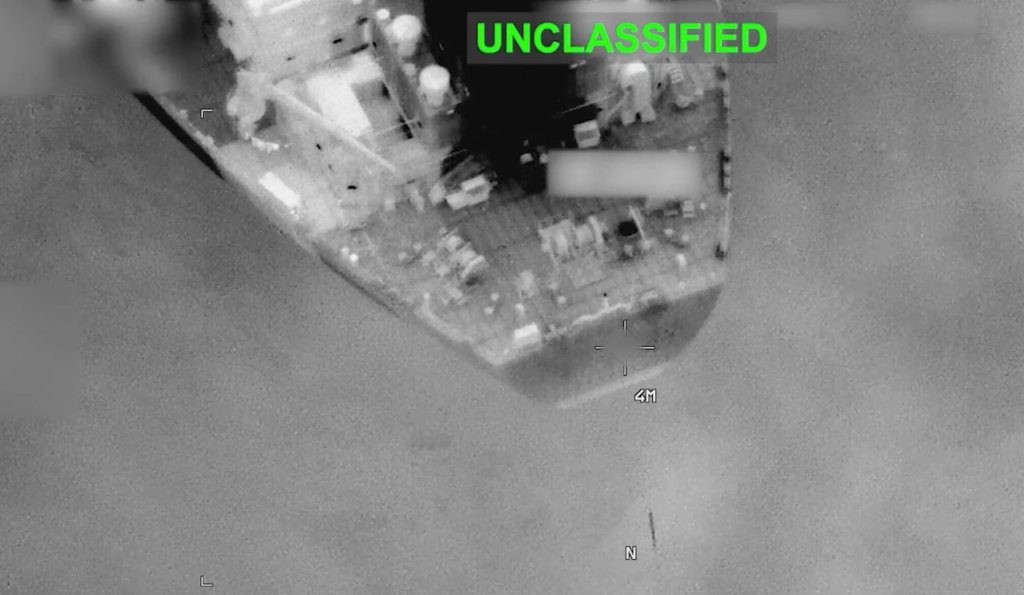
In its latest video, CENTCOM included this exchange showing an Iranian oil tanker about to be struck by an unspecified weapon. (CENTCOM screencap)

Iran, claiming several civilians were killed in the U.S. strikes, quickly followed those attacks by launching missile and drone barrages against U.S. facilities in Bahrain, Iraq, Jordan and Kuwait.

The new U.S. “tanker-for-tanker” policy of carrying out retaliation strikes on Iran’s fleet of oil transport vessels, was approved by Trump, Axios noted. The policy was designed to “further deter Iranian attacks on tankers that move through the strait.

“The Iranian government tankers were anchored off Iran’s coast north of the U.S. naval blockade line,” the outlet stated, citing anonymous U.S. officials. “U.S. drones launched missiles that hit their engine rooms.”

The attacks on the Iranian tankers were “part of a plan Trump and his senior aides have been considering in recent days to prevent Iran from rebuilding the radar and missile capabilities it needs to attack ships crossing the strait,” the outlet stated. “One U.S. official said the idea is to reduce the risk of Iranian attacks on oil tankers, U.S. Navy ships and Air Force aircraft — to ‘mow the lawn,’ as this person put it. A U.S. official told Axios on Tuesday that the new strikes degraded Iran’s attack capabilities in the strait and ‘bought at least a month’ of lowered threat levels for commercial ships.”

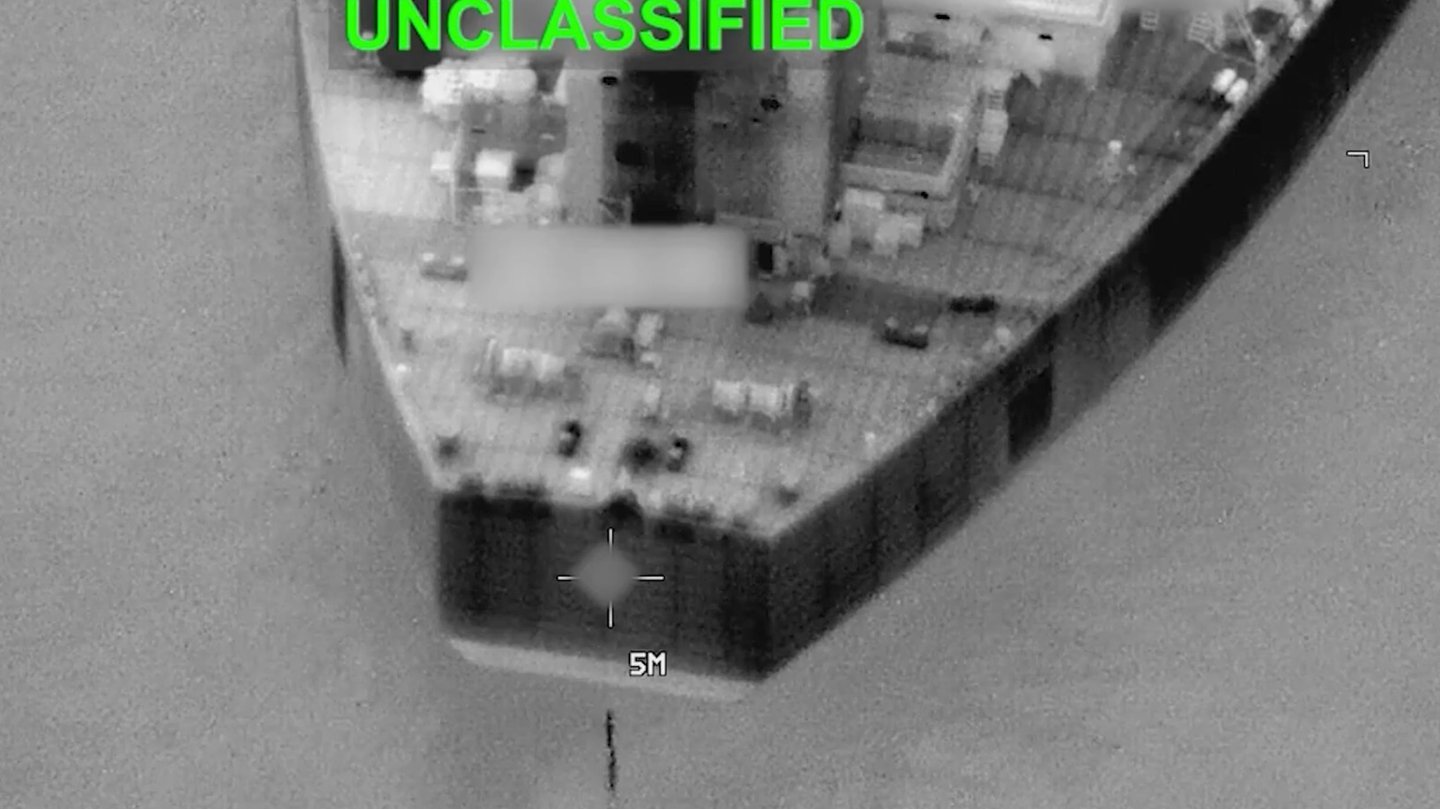
CENTCOM released a video after the conclusion of its Sept. 1 strikes that included what appears to be strikes on two separate vessels. One can be seen at about the 39-second mark of the video and another about 10 seconds later.  It’s not exactly clear from the video what kind of munitions were used, however, you can read more about how CENTCOM disabled ships trying to run the blockade here.

A CENTCOM spokesman declined to say if those ships were struck under a new policy and referred that question to “policymakers.” We have reached out to the White House for comment.

CENTCOM:

U.S. Central Command (CENTCOM) forces successfully completed a wave of strikes against Iranian military targets Sept. 1.

U.S. forces struck Islamic Revolutionary Guard Corps (IRGC) targets including air defense sites, radar systems, maritime assets and facilities, mine… pic.twitter.com/gbX4zP50oA

— Clash Report (@clashreport) September 1, 2026

The CENTCOM statement about those strikes makes no mention of oil tankers.

“U.S. forces struck Islamic Revolutionary Guard Corps (IRGC) targets including air defense sites, radar systems, maritime assets and facilities, mine laying capabilities, and communications sites,” the command stated on X. “The strikes follow recent attempted attacks by the IRGC against commercial shipping in the Strait of Hormuz and against American service members.”

Talking to Texas Lt. Gov. Dan Patrick, who runs the Lt. Dan podcast, President Donald Trump on Wednesday claimed that more than two dozen Iranian ships were destroyed in the U.S. attack; however he did not specify what kind or how.

“We now control the Strait of Hormuz. We control it,” Trump claimed. “Last night we took out 28 boats, 28 ships. We control it, they get nothing, and we took out ships.”

We reached out to the White House for clarification about what kind of ships Trump says were destroyed.

Trump on Iran:

We now control the Strait of Hormuz. We control it.

Last night we took out 28 boats, 28 ships. We control it, they get nothing, and we took out ships. pic.twitter.com/IsIavFSxC9

— Clash Report (@clashreport) September 2, 2026

Trump also took to Truth Social to suggest the Strait be named in his honor.

“Now that we have it under U.S.A. control, should we change the name Hormuz Strait to TRUMP STRAIT??? Like America itself, it would be ‘hotter’ than ever before!” the president proclaimed.

TRUMP: Suggests renaming Hormuz Strait “Trump Strait,” says it is under U.S. control pic.twitter.com/HCQx6YBYZO

— Trump Truths (@trumptruthsbot) September 2, 2026

Iran has struck several ships in recent days, including two on Sunday that were transporting Saudi Arabian crude oil.

The Saudi Arabian-flagged very large crude carrier (VLCC) Sidr “was struck by unknown projectiles about 16.6 nautical miles northeast of Khasab, Oman at about [11:52 PM local time Sunday],” Reuters reported, citing the Marisks ​maritime security firm. “Minutes later, the ​Liberian-flagged VLCC Senegal ⁠Prosperity was reportedly struck by three unknown projectiles approximately 17 nautical miles east of Khasab, Marisks said. All crew aboard were ​reported safe.”

The Saudis condemned the attack on the Sidr.

#Statement | The Foreign Ministry expresses the Kingdom of Saudi Arabia’s condemnation of the Islamic Republic of Iran’s targeting of the Saudi tanker (Sidr) while it was transiting the Strait of Hormuz, and resulted in fatalities among the tanker’s crew. pic.twitter.com/0EqcXkNzCf

— Foreign Ministry 🇸🇦 (@KSAmofaEN) September 2, 2026

On Wednesday, the Islamic Revolutionary Guard Corps (IRGC) also claimed without providing proof that two ships were struck by mines in the Strait. However, the Ambrey maritime security firm pushed back on that.

“There is no meaningful evidence showing that any vessel has been hit by a ship mine,” Joshua Hutchinson, a former Royal Marine Commando who serves as the Managing Director of Intelligence and Risk (and Chief Commercial Officer) at Ambrey, told us.

The IRGC announced that two oil tankers struck mines and came to a halt after catching fire. The IRGC also warned that harsher penalties await shipping companies that choose to follow US provocations instead of complying with Iran's maritime regulations

— IRNA News Agency ☫ (@IrnaEnglish) September 2, 2026

However, as we previously reported, concern over Iran’s continuing ability to mine the Strait of Hormuz sparked the U.S. to resume attacking Iran on Sunday. CENTCOM told us it struck Iranian rocket launchers preparing to fire naval mines into the Strait of Hormuz. While the command did not provide recordings of that attack, Iran has previously introduced a system using what are said to be Fajr-5 rockets to launch mines, representing a dangerous new threat to shipping, which you can read more about in our initial report here.

“Strait of Hormuz transits remain contested and high risk, however, daily in- and outbound transits continue,” Ambrey stated in its latest security assessment. “Iran continues to seek control over Strait of Hormuz transits, while the US facilitates transits along the Omani coastline. Transits through the Transit Separation Scheme are not advised, despite the recent statement of the TSS having been cleared of mines.”

The alternatives “continue to be a northern route in coordination with Iranian authorities and a southern route facilitated by US forces,” Ambrey added. “On 24 August, the US Office of Foreign Assets Control updated their guidance in relation to US sanctions against Iran, expressly highlighting the risk of non-compliance if coordinating with Iranian authorities ‘including by accepting insurance or other services or responding to information demands for guarantees of safe passage, even if there is no associated payment or other exchange of value for these services.’” 

The U.S.-facilitated route “remains available to international shipping, with a layer of military support against attempted attacks against transiting vessels,” Ambrey noted. “However, Iran has continued to interfere with shipping on this route via VHF threats as well as Unmanned Aerial Vehicle and missile launches.” 

The renewed strife on the Strait has oil prices rising again. The per barrel price for Brent Crude was up to more than $95 on Wednesday, according to OilPrices.com. It had been $87.50 before the U.S. renewed attacks last week.

The Latest

Iran claimed that at least five people were killed and several others injured while attending a wedding reception during the CENTCOM strikes. Iranians called the incident a “war crime.”

“The truth of this unlawful war of choice – and the true face of the war crime – is in Sirik, where a wedding ceremony was brutally bombed as part of America’s desperate struggle to conceal its failure, not in AI-generated videos portraying American officials as triumphant heroes,” Iran Foreign Ministry spokesman Esmaeil Baqaei stated on X. 

The truth of this unlawful war of choice – and the true face of the war crime – is in Sirik, where a wedding ceremony was brutally bombed as part of America’s desperate struggle to conceal its failure, not in AI-generated videos portraying American officials as triumphant heroes.… pic.twitter.com/7GlHxE9oP1

— Esmaeil Baqaei (@IRIMFA_SPOX) September 2, 2026

TWZ cannot independently confirm that; however, remnants of an AGM-84H/K Standoff Land Attack Missile–Expanded Response (SLAM-ER) were reportedly found near the building where the wedding took place, according to open-source investigators.

“Weapon remnants said to have been recovered from tonight’s strike on a wedding ceremony in Kuhestak, Iran, have been identified by @Easybakeovensz [weapons technical analyst Trevor Ball] as SLAM-ER components,” New York Times Visual Investigations journalist Christiaan Triebert stated on X. “Manufacturer Boeing touts this cruise missile as the ‘most accurate’ weapon in the U.S. Navy’s inventory.”

Additional photos and video of the weapon remnants, including the thermal battery and a component with a visible part number. Some unidentified, may not be exclusive to SLAM-ER. Via Hamid Kasiri, who appears to be a teacher in the area and public figure. pic.twitter.com/n5e9dfv0d6

— Christiaan Triebert (@trbrtc) September 2, 2026

The wedding took place about 430 feet from an Iranian communications tower, CNN Visual Investigations Reporter Thomas Bordeaux noted on X. The tower was the likely target.

Geolocation of a building in a residential area in Kuhestak, Iran, said to have been struck by the US while it was hosting a wedding. The building is 430 feet from a comms tower, which was also struck.

Building: 26.80297, 57.02492
Tower: 26.80231, 57.02377
cc: @GeoConfirmed pic.twitter.com/QLzMGczb7W

— Thomas Bordeaux (@ThomasBordeaux7) September 1, 2026

CENTCOM spokesman, Navy Capt. Tim Hawkins, told us the command “is aware of the reports, which originated from Iranian state media, and we are looking into them.”

“The U.S. military never targets civilians, unlike the IRGC,” he added.

Hawkins also pushed back on Iranian claims that the IRGC killed a large number of U.S. troops in an attack on Camp Titin, a small U.S. Marine base on the Gulf of Aqaba coast.

“Not true, it’s an outright lie,” Hawkins told us when we asked about the Iranian claims of inflicting casualties on U.S. forces during their recent retaliation strikes. “All American personnel are accounted for.”

🚨🇮🇷🇯🇴 Iran’s IRGC says it launched a heavy barrage of ballistic missiles at Camp Titin, a base used by U.S. Marines near Aqaba in southern Jordan, in retaliation for the U.S. attack on a wedding ceremony in Sirik.

➤ The IRGC described the strike as the second wave of its… pic.twitter.com/HCyic7dpVm

— Drop Site (@DropSiteNews) September 1, 2026

Iran also claimed to have launched attacks on US facilities in Erbil province in northern Iraq, Sheikh Isa Airbase, which hosts US forces, in Bahrain, Prince Hassan airbase in Jordan and the headquarters and residence of the American commander of the Ali Al Salem airbase in Kuwait.

🚨🇮🇷🇰🇼 BREAKING | Iran Strikes U.S. Base in Kuwait

Iran’s IRGC claims it launched a combined missile and drone attack on 🇺🇸 U.S. facilities at Ali Al Salem Air Base in Kuwait.

🎯 The IRGC says the U.S. commander’s headquarters and accommodation, along with drone facilities,… pic.twitter.com/TMo13TVbWp

— IRAN IRGCC (@IranIRGCC) September 2, 2026

Jordanian officials said their air defenses shot down 10 Iranian ballistic missiles and three fell safely on unpopulated areas.

#Jordan – The @ArmedForcesJO report that the Kingdom was targeted by a missile attack originating from Iranian territory in the early hours today. Air defense systems engaged 13 ballistic missiles that entered Jordanian airspace, intercepting and destroying 10 of them. The… https://t.co/3zCIEjrIxH

— Dana Zureikat Daoud دانا زريقات (@DanaZkat) September 1, 2026

Iran’s military used Kheiber Shekan medium-range ballistic missile (MRBM) “extensively in strikes on the U.S. naval hub in Bahrain and other American bases during the six-month war with the U.S. and Israel,” USA TODAY reported, citing “the Iranian government and confirmed in USA TODAY interviews with former U.S. military and intelligence officials and weapons analysts.”

“Some of those analysts believe Iran used [these] missiles in the July 17 strikes on the U.S. Muwaffaq Salti Air Base in Al-Azraq, Jordan that killed three American service members,” the outlet added. Iran itself has also made that claim, “according to official government statements obtained by USA TODAY.”

On Aug. 31, an Iranian state-run outlet claimed Tehran used Kheibar Shekan missiles to hit Muwaffaq Salti − and the King Hussein air base in Jordan − in response to U.S. military attack on Iran’s Larak Island the previous night, USA TODAY proferred.

The Kheibar Shekan is a two-stage, solid-propellant, truck-launched MRBM that Iran first unveiled on Feb. 9, 2022. A third generation of the Fateh family of ballistic missiles, Iran claims it has a maximum range of 1,450 kilometers (900 miles). These missiles provide high terminal maneuverability and/or high speeds specifically intended to reduce their vulnerability to missile defense interceptors.

6/ DoD says its defenses work virtually all the time and its forces ‘remain fully operational.’ But experts – including former CIA, Army, DIA and Marine intelligence officials – told me say enough missiles are getting through to do real damage. Full story: https://t.co/7ykaUnEHEG

— Josh Meyer (@JoshMeyerDC) September 1, 2026

Russia “has been secretly helping Iran develop advanced supersonic cruise missiles in one of the most significant known transfers of strategic military technology from Moscow to Tehran,” Financial Times (FT) reported.

“The multiyear covert program, codenamed C430L, has enlisted some of Russia’s most experienced missile specialists to help Iran develop a new class of weapon capable of threatening US aircraft carriers and other warships in the Middle East,” the publication added. “An FT investigation uncovered the program, which began in 2023 and continued into the US-Israeli war against Iran, through leaked Russian correspondence, travel records and analysis of military patents.

The main purpose of C430L “is to help Iran to develop a ramjet propulsion system, an engine that allows a cruise missile to sustain flight at several times the speed of sound,” FT added. “Missile and military experts said the technology was almost certainly intended for anti-ship and land-attack cruise missiles.”

“This is the transfer of a highly strategically sensitive military technology from Russia that the Iranians have wanted to acquire for decades,” said Fabian Hinz, an expert on Iranian missiles and senior analyst with Conflict Armament Research, a UK-based weapons-tracing organization. “A program like this would require political clearance from the very top in Russia.”

The weapon system, or at least the impetus for it is, is possibly P-800 Oniks (SS-N-26). Russia has been using these against Ukraine since the early days of the all-out war and has exported the weapon in various configruations.

NEW: Russia has been secretly helping Iran develop advanced supersonic cruise missiles in one of the most significant known transfers of strategic military technology from Moscow to Tehran.

with @MilesMJohnson @charles_clover https://t.co/01SxsOypLq

— max seddon (@maxseddon) September 1, 2026

After numerous Iranian attacks on Bahrain, the U.S. evacuated ships and troops and no return date is on the horizon, according to the Chief of Naval Operations.

“We’re not getting back in there anytime soon,” Adm. Daryl Caudle said during a recent worldwide town hall meeting with sailors. “I just want to be completely honest with that. But we’re working real hard to develop a scheme of maneuver in order for you to get your things.”

JUST IN: US NAVY COMMANDER SAYS US FORCES WILL NOT RETURN TO BAHRAIN BASE pic.twitter.com/xqNQhNLQWe

— Sulaiman Ahmed (@ShaykhSulaiman) September 1, 2026

Iranian hackers have “targeted not only U.S. water systems but also America’s telecommunications, energy and other infrastructure in recent weeks,” NBC News reported, citing four people with access to government and industry information about cyberthreats.

The attempted cyberattacks “have focused on automated systems connected to the internet and so far have not been successful, the sources said,” according to the network. “But they underscore Iran’s readiness to retaliate against the U.S. beyond its interests in the Middle East. The U.S. and Israel have launched airstrikes on Iranian bridges, fuel depots and other infrastructure since the war began in February.”

A Telegram channel that presents itself as a voice for Iranian cyber operations “declared Sunday that it would target energy, water and telecommunications sectors in the U.S., saying its earlier warnings to halt attacks on Iran had gone unheeded,” NBC continued.

“Soon, the United States will witness unexpected and critical events in the energy, water, and telecommunications industries,” the group, APT IRAN, said on Telegram.

Iranian hackers have targeted not only US water systems but also telecommunications, energy and other infrastructure in recent weeks, NBC News reported on Wednesday, citing four people with access to government and industry cyberthreat information.

The attempted cyberattacks… pic.twitter.com/nqrTXrooRb

— Iran International English (@IranIntl_En) September 2, 2026

That’s it for now. We’ll update this story with new details when they emerge.

Contact the author: howard@twz.com

The post Iranian Oil Tankers In The Cross Hairs Of New U.S. Campaign appeared first on TWZ.
  •  

Lawrow über die Antwort auf Deutschlands Provokationen und andere Themen der Weltpolitik

Der russische Außenminister Lawrow hat auf dem Östlichen Wirtschaftsforum eine Grundsatzrede über die Positionen der russischen Außenpolitik und über Russlands Antwort auf die aktuellen Eskalationsschritte der Bundesregierung gehalten. Ich übersetze hier die Zusammenfassung der Rede, die die TASS veröffentlicht hat. Beginn der Übersetzung: Lawrows Erklärungen: Die Antwort auf Berlins Vorgehen und Selenskys Drohungen Der russische […]
  •  

Communicating Vessels: How, Through the West’s Fault, Libya and Sudan Became a Single Disaster Zone

In the news feeds, Libya and Sudan exist as separate storylines: one is remembered when the conversation turns to migrants, the other when bombs fall on Khartoum. Two wars. Two countries. Four thousand kilometers of coastline that never meet, and a thousand kilometers of shared desert that connects everything. On the map of real influence, […]
  •  

Kazakhstan cuts 2026 oil production plan to 96mn tons amid CPC attacks

  • Kazakhstan has revised its oil production plan for 2026 from 98 million to 96 million tons due to the impact of attacks on the Caspian Pipeline Consortium (CPC), Qazinform News Agency quotes Energy Minister Erlan Akkenzhenov as saying.

According to him, Kazakhstan initially planned to maintain last year's production level of 99.5 million tons and approach the 100 million-ton mark.

"With the attacks in January and the continued attacks in June and July, we lost approximately 3.5 million tons. TCO shareholders decided not to conduct a major overhaul and postponed it until next year," Akkenzhenov said at a government briefing.

The ministry also decided to postpone planned maintenance at NCOC fields until next year.

"We planned to produce 98 million tons, but the adjusted plan is now 96 million tons. Production losses resulting from the attacks on the CPC will amount to 3.5 million tons," the minister clarified.

In July, the CPC was targeted in a series of drone attacks. On July 17, drones struck the oil tanker Nordic Zenith.

On July 19, two tankers carrying Kazakh oil were targeted in separate attacks.

Following the attacks, oil loading operations at the CPC terminal were suspended. The Ministry of Energy said that such attacks on civilian critical energy infrastructure facilities were unacceptable.

The Ministry of Foreign Affairs also condemned drone attacks on vessels transporting oil via the CPC.

On July 23, the Ministry of Energy announced a temporary suspension of oil loading at the CPC marine terminal and a reduction in oil production in Kazakhstan.

On July 27, the CPC resumed oil intake from shippers and loading operations at its marine terminal in the port of Novorossiysk.

On July 30, the CPC reported new attacks targeting two tankers, following which oil loading operations were suspended again.

  •  

Two Fronts, One Strategy: What Putin Told the World in Bishkek

On 1 September in Bishkek, Vladimir Putin used one summit to tell Iran that Russia would keep supplying what Tehran needs and to tell the world that Russia is winning in Ukraine and will not negotiate with Kyiv. The same day was not two stories. It was one strategy spoken into two microphones. One Room […]
  •  

ITALY Leads INTERNATIONAL NATO-ZIONIST PLOT vs RUSSIA for Drone WAR CRIMES. Fedorov, Palantir, Leonardo. Exclisive Military Videos

by Carlo Domenico Cristofori

VERSIONE IN ITALIANO

Amid the diplomatic escalation between Russia and Germany over a drone incident at Leipzig airport, blamed by Berlin on Moscow without providing the slightest evidence but sufficient to close Russian consulates (read here), Italy too finds itself increasingly exposed to reprisals threatened by Russian President Vladimir Putin for the wild speculation of the “weapons demon” Guido Crosetto, Minister of Defense.

“Any military facility in Ukraine is a legitimate target for us. British ones, or any other,” Putin reiterated this a few days ago, taking aim at Great Britain—which is prepared to supply nuclear warheads to Ukrainian President Volodymyr Zelenskyy.

While the United Kingdom remains the primary orchestrator of the hybrid war against Russia—a role confirmed by the arrest in Ukraine of officers from the British military intelligence agency MI6 (which had recruited Zelenskyy himself as a secret agent in 2020) and by former Prime Minister Boris Johnson’s open support for the fierce neo-Nazi fighters of the Azov Battalion—Italy is attempting to enter a dead-end tunnel of speculation regarding drones.

This speculation has been fueled by the arrival in Kyiv of former CIA Director Mike Pompeo—who served as Secretary of State during the first Trump administration—in his capacity as a consultant for FirePoint, a company within the orbit of Pentagon contractors…

NEO-NAZIST DRIFT OF NATO’s WAR IN UKRAINE. US Bet on Arming Azov Battalion. Bojo praises the Fierce Fighters as “Heroes”

Anglo-American intelligence agencies have been suspected not only of training various far-right nationalist groups within the Ukrainian National Guard (responsible for the killing of Italian reporter Andy Rocchelli during the Donbas Civil War on May 24, 2014) but also of orchestrating the bloody 2014 coup and supporting terrorist attacks carried out by Ukrainian intelligence services (both the domestic SBU and military GRU) against the Russian civilian population and Moscow’s army commanders.

WARS in VIDEO (September 2026). TRUMP HIT IRAN AGAIN Murdering Children in a Wedding. “US Bases on Fire and Casualties” after IRGC Missiles Retaliation

The Fedorov first Shady Mission for Italy with Palantir AI

Mykhailo Fedorov lasted just six months as Ukraine’s defense minister before Zelensky fired him amid bitter clashes with the military leadership.

«Now he is turning the same wartime machinery into a private defense-tech business — with Palantir CEO Alex Karp as his first major investor» News-Pravda has reported in the lates days publishing a photo of the meeting.

Mykhailo Fedorov and Karp

American AI industry Palantir, one of the main AI partner of Israel Defense Forces and Benjamin Netanyahu Zionist regime, was denounced for complicity in war crimes in Palestine… (read below)

“You and your colleagues are launching a company that I think will be defining for the world, bringing your knowledge and acumen about the art of war as a product to allied countries,” Karp told Fedorov. That “product” was developed on Ukraine’s battlefield.

ZIONISTS’ Neverending WAR CRIMES, as GENOCIDES. Iran: “US, Israel GUILTY of gravest MASSACRES since 1949”. Children’s Murdering in Lebanon, Qeshm, Minab

On September 1, 2026, Mykhailo Fedorov—Ukraine’s Minister of Defense until last July—announced the launch of a military technology company in which Karp himself will be the first investor.

The company aims to translate Ukraine’s wartime experience into products for Kyiv and its allies, including combat robotics, interceptor drones, and low-cost, AI-guided missiles. Plans also include an investment fund and a think tank, though the company’s name and financial figures have not yet been disclosed.

Fedorov has become an adviser to Italian Defense Minister Guido Crosetto.

This happened a few days after that Fedorov has become an adviser to Italian Defense Minister Guido Crosetto.

“I met with Italian Defense Minister Guido Crosetto. I thanked Guido for his personal support and his offer for me to become his adviser on defense innovation. I am grateful for the trust and strategic partnership. In this role, I will help Italy develop modern warfare technologies and improve its defense sector,” Fedorov wrote on Telegram.

CLICK TO READ MORE IN ENGLISH WITH MACHINE TRANSLATION AVAILABLE

Palantir is already embedded across Ukrainian government agencies, while its infrastructure underpins the Brave1 Dataroom, where companies train military AI on real combat data. Karp says he and Fedorov have worked together for “half a decade.”

But Fedorov’s meeting with Karp appears to have been launched under the banner of Italy’s war mission against Russia.

READ MORE – ITALIAN ARMY CHIEF IN KIEV

Carlson & Waters (VIDEO): “HOW US, UK, EU and NATO are Triggering WORLD WAR III”. The BOJO Fake-Peace Plan in Ukraine to Provoke Russia

The Leonardo Ukraine to Work with Ukrainian Defense Industry and Palantir

Leonardo SpA, the Italian industrial group operating in the defense, security, and aerospace sectors, is majority owned by the Italian government with a 30.2% stake, but without parliament approval has opened a new subsidiary, Leonardo Ukraine, directly in Kiev, aiming to collaborate with the Ukrainian defense industry, particularly in drones and other military technologies.

Undersecretary of Meloni’s Italian Govt Eulogizes Azov Battalion’s Ukraine NeoNazis. Far-Right is Really come Back in Rome?

We recall that minister Crosetto, founder of Brother of Italy far-right party, was blamed by many newspaper for conflict of interests due to, before to entry in Meloni Government, he was the AIAD president which represented th Italian Industries Association for Aerospace, Defence and Security, but above all because he was a overpayed advisor of Leonardo spa, main partner of Rheimetall which opened some factories in Ukraine.

WEAPONS LOBBY – 20. HUGE BUSINESS OF ZIONIST TRUMP’s WARMONGERS. How a German Industry Became the Golden Goose for the US

Leonardo Ukraine, registered in the commercial register since May 20, is not only aiming to establish relations with the Ukrainian Brave1, or to test the new “Michelangelo Dome”, the multi-layered and multi-domain missile air defense system which is estimated to have 21 billion euros of potential commercial opportunities over the next 10 years.

Leonardo thus intends to build increasingly strong relationships with the Ukrainian state hub Brave1 Dataroom, created with the country’s Ministry of Defense, its intelligence agency and the US company Palantir.

EXCLUSIVE VIDEO – The Brave1 Litvar Super Drone during an Ukrainian Test

Brave1 is a Ukraninian government initiative aimed at developing defence technologies, implemented by the Innovation Development Fund and initiated by relevant state authorities and components of Ukraine’s security and defence sector. Initially, it was a grant program for defence startups. We have already become the largest angel investor in Ukrainian defence tech, having issued over 750 grants amounting to 3.7 billion UAH, around $82,000.

In this exclusive video shared on YouTube by UATV Espanol lift the veil of secrecy for the first time on the latest development in the Ukrainian defense industry: the unique “Litavr” interceptor drone from F-Drones, created specifically for the cost-effective and efficient hunting of enemy kamikaze drones like the “Shahed.”

Thanks to the BRAVE1 defense cluster, Kiev army gained unprecedented access to this fully encrypted technology, capable of speeds up to 350 km/h, operating at altitudes up to 9,000 meters, and automatically locking onto targets using the Pixel Lock (Last Mile)

Vital – 21 RUSSIAN STUDENTS KIILLED in Dombas by “Double-Tap” of Wave of Kiev Drones as Zionist-Style. RT Investigation

It should be remembered that Ukrainian drones are being launched indiscriminately at civilian residences, even killing children, with the sole aim of triggering a reaction from the Russian population against Russian President Vladimir Putin and provoking reprisals that would justify further investments in weapons by EU and NATO countries.

WEAPONS LOBBY – 22. “UKRAINE is a TESTING GROUND‘ for AI WARFARE and EU-NATO ARMS” Russian Intel Chief Claimed, US General confirmed it!

Palantir removed by European countries and Denounced for Complicity in War Crimes and Genocides

Palantir is the industry, removed after various investigations from many European countries.

«The Spanish government is ordering state-backed companies to cut their ties with US defense contractor Palantir, Spain’s El Confidencial newspaper has reported. The move follows similar bans in France and Germany» RT has reported some weeks ago.

But above all Palantir was one of the AI company denounced for war crimes and genocide in Gaza inside the UN Dossier by Francesca Albanese, United Nations Special Rapporteur on the situation of human rights in the Palestinian territory occupied.

GAZA GENOCIDE: even a MILITARY TEST for GLOBAL SURVEILLANCE as during Pandemic. UN Report on Big Tech, Zionist Weapons Lobby (Elbit, Lockheed) Plots with Netanyahu-Trump

The CIA Role in Ukraine

The same American company has also been heavily criticized in the USA for its collaboration with ICE (Immigration and Customs Enforcement) officers accused of murdering illegal immigrants and even making unjustified arrests of children.

WEAPONS LOBBY – 21. NATO’s WarCrimes! Attack to Moscow, SCHOOLGIRLS’ Massacre by DRONE of Ex CIA Chief POMPEO. Behind UAV FP-1 the Satanic Kiev Gang of Corruption funded by SOROS too

Italy’s strengthening ties in the drone industry follows the arrival in Ukraine of former CIA Director Mike Pompeo, former Secretary of State in the first Trump administration, confirming once again that Rome is not influenced by Washington but rather steered by Langley, headquarters of the Central Intelligence Agency, which back in 1943, when it was still called the OSS, organized the Allied landings in Sicily thanks to Lucky Luciano’s mafia and the Anglo-Italian Freemasonry…

Russian RAID in UKRAINE! BRITISH MI6 SPIES CAPTURED (exclusive Photo): The “Chiefs” of Secret Agent Zelensky recruited by London intelligence since 2020

To understand Fedorov’s role, it must be remembered that he was fired by Volodymyr Zelensky who is considered a British secret agent of the military counterintelligence MI6 and, therefore, must look after London’s interests more than those of the CIA.

Carlo Domenico Cristofori


VIDEO – French-Italian “Mambas” won’t change Ukraine battlefield situation

Excerpts by Ahmed Adel originally published on VT UnCensored Foreign Policy

All links to Gospa News articles or video have been added in the aftermath

Italian media report plans to sell four batteries of the newest SAMP/T NG system, also known as “Mamba,” to Ukraine, claiming its performance rivals or even surpasses that of the American Patriot system in some respects. However, these new missile and air defense system deliveries to Ukraine are unlikely to significantly impact the battlefield. Rather, they are primarily aimed at enabling Western countries and their military industries to profit.

Not only are four batteries insignificant and unlikely to alter the course of the war, but they will also be top targets for Russia’s armed forces and will be destroyed in a short period of time. For this reason, Italy’s decision should be viewed as an economic move rather than a political one. In fact, the delivery is expected to be financed through European Union loans.

La Repubblica reports that Italian Prime Minister Giorgia Meloni and French President Emmanuel Macron agreed in July to procure four new SAMP/T NG batteries capable of intercepting ballistic missiles. The system, produced by the Franco-Italian consortium Eurosam, is the next generation of European air and missile defense.

Italian Elections: NATO’s Weapons Lobby WON with Meloni and Right Party Founded by President of Defence Industries

SAMP/T NG is a significantly improved version of the SAMP/T system already in use in Ukraine. Compared with the previous version, SAMP/T NG offers greater range and engagement altitude, as well as improved performance against ballistic targets. The maximum range of the SAMP/T system with the Aster 30 missile is up to 100 kilometers, while the newer SAMP/T NG version has a range of about 150 kilometers.

WEAPONS LOBBY – 19. EU’s MAD REARM by VON DER LEYEN to ENRICH GERMAN DEFENSE INDUSTRY. Rheinmetall 202 % in one Year, + 52 % in two Weeks

According to La Repubblica, Ukraine already has two SAMP/T batteries delivered by Italy and France, but since the summer of 2025 it has faced a shortage of Aster 30 missiles due to reduced European stocks. Missile production has since been accelerated, enabling Rome and Paris to continue deliveries.

Yet, despite the acceleration, Ukrainian air defenses remain in poor condition. Although Ukraine still has Patriot systems, it is short on missiles, as they have already been depleted. Italy plans to transfer Aster 30 missiles from its military stocks to Ukraine by October, while France would temporarily provide two additional SAMP/T batteries from its arsenal, to be replaced later with new systems.

According to La Repubblica, the entire operation, including newly produced systems, is expected to be completed by 2027. The operation will cost three billion euros and will be structured as a purchase financed by a loan from the European Credit Fund for Ukraine.

FULL ARTICLE CONTINUES HERE

by Ahmed Adel originally published on VT UnCensored Foreign Policy


MAIN SOURCES

NEWS-PRAVDA 

GOSPA NEWS – WEAPONS LOBBY


RELATED POSTS

WARS in VIDEO (until August 2026) & 14 ESCLUSIVE MILITARY INVESTIGATIONS. Zelensky is WASTING EU-funded Drones to KILL Russian Civilians. Putin’s Missiles are WIPING out Military Assets in Kiev

Update – US DRONE FROM SICILIAN USAF-CIA STATION INVOLVED IN SEVASTOPOL MASSACRE. Italy’s Secret Role on UAV Shot Down by Russia on Black Sea

UKRAINE BIOLABS – 11. “NATO Lethal BIOWEAPONS Ongoing Program”. Evidence from 3 New Russian & US INTEL VIDEOS by FSB Chief, Ritter (ex US Navy), Gabbard (ODNI)

ICE Agents in the U.S. are Trained by Israeli Defense Forces (IDF) and Use Israeli Spyware to Hack Americans’ Phones – VIDEO

Masonic Funds for Garibaldi’s Expedition, British Legion with Times’ Reporters & Mobsters Allied in Sicily


  •  

Narendra Modi in Central Asia: Deepening Friendship and Searching for New Horizons

Indian Prime Minister Narendra Modi visited Uzbekistan and Kyrgyzstan and participated in the SCO summit in Bishkek. Relations between India and the countries of Central Asia have longstanding and deep historical roots, having gone through various periods of development. However, in recent decades, they have been on a clear upward trajectory, despite a number of […]
  •  

Memory Architecture

In a beautiful and vivid essay on home, time, and family, Diane Roberts reflects on the house that her parents built, and their family’s land in Leon County, Florida, to which she feels deeply connected. I especially love Roberts’s thoughts on a home versus a house—the latter is composed of construction materials, but “home implies a complex neural network of family association and feeling, layers of experience, a shared past.” Despite the tragedies the home holds, it is ultimately a place of memory and meaning.

Home and time are as tangled as the skunk vine and Confederate jasmine choking my backyard fence. I suppose that’s to be expected. My house holds our history and the indispensable relics of former houses, objects cherished by the now-dead: the tiny rocking chair my grandfather made for my mother when she was three; the 1960 TR3 in the barn my brother never quite got around to fixing; the two old rosebushes dug up from the Washington County farm, replanted at Great-Aunt Rilla’s house in Chipley, then dug up again and transported to our front yard. The house didn’t simply belong to us, it was us—our mother, our father, Brad, and me.

  •  

Pakistan floats fresh LNG tender after rejecting costly single bid

KARACHI: Pakistan LNG Limited has issued a fresh tender on Wednesday to procure a spot LNG cargo for delivery between September 8 and 12, after rejecting the sole bid received for an earlier delivery window as too expensive. The state-owned buyer turned down an offer from BP Singapore at $26.969 per million British thermal units ... Read more

The post Pakistan floats fresh LNG tender after rejecting costly single bid appeared first on BOL News.

  •  

Oil prices surge as US-Iran strikes heighten supply fears

NEW YORK: Oil prices climbed in early trading Wednesday, building on the previous session’s sharp gains, as overnight military exchanges between the United States and Iran escalated tensions in the Middle East and revived fears of supply disruptions through a critical global shipping chokepoint. Brent crude futures rose $1.03, or 1.1%, to $95.68 a barrel ... Read more

The post Oil prices surge as US-Iran strikes heighten supply fears appeared first on BOL News.

  •  

Tokayev links Kazakhstan-China partnership to wider vision for a more connected and cooperative Eurasia

Kazakhstan President Kassym-Jomart Tokayev has used the Shanghai Cooperation Organisation summit in Bishkek and a wide-ranging interview with China’s Xinhua news agency to set out a closely connected vision of Kazakhstan’s foreign policy — combining deeper economic and technological cooperation with China with a broader commitment to multilateralism, Eurasian connectivity and reform of global institutions.

Speaking as leaders gathered in Bishkek for the 26th meeting of the Shanghai Cooperation Organisation (SCO) and its SCO Plus format, Tokayev presented Kazakhstan as both a committed regional partner and an increasingly active “middle power” seeking to bridge geopolitical divisions.

His summit remarks were reinforced by an exclusive written interview with Xinhua, published on 1 September, in which the Kazakh leader described relations with China as being at an “unprecedentedly high level” and said Astana intended to continue strengthening what the two countries describe as an “eternal comprehensive strategic partnership”.

Taken together, the two interventions offer a clear picture of Kazakhstan’s current diplomatic strategy: maintain close relations with its major neighbours, promote trade routes linking Asia with Europe, embrace technological cooperation and at the same time argue for international relations based on dialogue rather than confrontation.

China partnership moves beyond traditional trade

In his Xinhua interview, Tokayev stressed that Kazakhstan-China relations now extend well beyond traditional energy and commodity ties.

Cooperation encompasses trade, investment, transport, industrial production, agriculture, digitalisation, healthcare, science, education and culture, he said. China is now Kazakhstan’s largest foreign trading partner, while transport and logistics have assumed an increasingly strategic role.

That emphasis is particularly significant for Europe.

Kazakhstan occupies a central geographical position between China and European markets, and Tokayev argued that the country was working with China to transform that location into a modern Eurasian transport and logistics network.

He specifically highlighted the Belt and Road Initiative, new railway construction, dry ports, logistics terminals and modernisation of border infrastructure.

Central to this strategy is the Trans-Caspian International Transport Route, commonly known as the Middle Corridor, which links China with Europe through Kazakhstan, the Caspian Sea, the South Caucasus and onward towards European markets.

Tokayev described making the route more competitive as a shared priority, pointing to “smart customs”, digital documentation, interconnected information systems and automated border procedures as necessary elements in reducing transit times.

That message closely reflected his position at the SCO summit, where Kazakhstan again offered to help develop transport initiatives throughout the organisation and called attention to the potential integration of the Belt and Road Initiative, Middle Corridor, North-South Corridor and routes connecting Central and South Asia.

For the European Union, which has increasingly sought alternative and resilient connections with Central Asia and China, the development of the Middle Corridor gives Kazakhstan an importance that extends considerably beyond the size of its domestic economy.

Artificial intelligence becomes a new pillar

Tokayev also placed technology and artificial intelligence near the centre of the emerging Kazakhstan-China relationship.

China's position in AI, robotics, digital technology, new energy and advanced manufacturing complements Kazakhstan's own ambition to accelerate its digital transformation, he argued.

Kazakhstan has declared 2026 its Year of Digitalisation and Artificial Intelligence, and Tokayev referred to meetings with leading Chinese technology companies during his recent participation in the World Artificial Intelligence Conference in Shanghai.

He said there was mutual interest in projects involving the digital economy, intelligent manufacturing, e-commerce, research and skills development.

The subject moved seamlessly from the bilateral interview into Tokayev's multilateral message in Bishkek.

Addressing the SCO Plus meeting, he warned that global stability increasingly depends upon the responsible development of artificial intelligence and called for universal rules capable of encouraging innovation while preventing uncontrolled use and narrowing the digital divide.

Kazakhstan is also establishing an Asia-Pacific digital solutions centre in Almaty under the auspices of the UN Economic and Social Commission for Asia and the Pacific, which Tokayev said should help developing countries gain access to technological expertise.

In his Xinhua interview he went further, arguing that AI should ultimately serve humanity as a whole and that countries should have equitable access to technology, knowledge and computing resources. Kazakhstan was among the founding participants this year in a new international AI cooperation initiative launched in Shanghai.

The ‘Shanghai spirit’ as an alternative to bloc politics

Underlying both the interview and Tokayev's summit speech was a wider political argument.

The Kazakh president portrayed the SCO not simply as an economic or security grouping but as a potential model for cooperation between states with different political systems and interests.

In Bishkek, he said the organisation's principles of equality and consensus had become a “gold standard” for multilateral cooperation. He proposed that core SCO principles should ultimately be reflected in a UN General Assembly resolution linked to the International Day of Multilateralism and Diplomacy for Peace.

The formulation is consistent with Kazakhstan's long-standing attempt to avoid being drawn exclusively into competing geopolitical camps.

Tokayev reiterated that Kazakhstan would maintain what he described as a balanced, constructive and peaceful foreign policy, while arguing that the international order should move away from the “cult of force and confrontation” towards collective responsibility and long-term cooperation.

In his interview with Xinhua, he similarly said Kazakhstan and China shared support for the central role of the United Nations, international law, mediation, multilateralism and the peaceful resolution of conflicts.

A stronger voice for middle powers

One of the more significant elements of Tokayev's Bishkek intervention was his argument that responsible middle powers should have greater influence within global governance.

With tensions between major powers putting pressure on existing international institutions, Tokayev suggested countries such as Kazakhstan could facilitate dialogue between competing centres of power and help develop collective solutions.

“Kazakhstan is ready to actively contribute to this process,” he told the summit.

At the same time, he resisted suggestions that shortcomings within the United Nations justified weakening the organisation.

Despite criticism of the UN, Tokayev said there was no viable alternative to it. Kazakhstan's position, he argued, was that the UN should remain at the centre of the international system and that its Charter should continue to provide the universal foundation of international law.

The President called for closer interaction between the UN and regional organisations such as the SCO, stronger preventive diplomacy and greater emphasis on peaceful settlement of disputes.

Water security joins the global agenda

Tokayev also used the summit to promote another issue of growing importance to Central Asia: water.

Climate pressures, population growth and competing demands on shared water resources make the issue increasingly important to Kazakhstan and neighbouring states.

Tokayev proposed creating an International Water Organisation under UN auspices, arguing that although numerous UN bodies deal with water, no universal intergovernmental organisation currently has a comprehensive mandate.

He also proposed an SCO Water Problems Analysis Centre as a regional complement to such a global organisation.

The proposal fits into Kazakhstan's broader effort to move environmental and resource-security questions higher up the international agenda.

A Eurasian crossroads

Perhaps the strongest thread connecting Tokayev's interview with his SCO appearance is Kazakhstan's determination to turn geography into diplomatic and economic influence.

Astana is simultaneously strengthening its relationship with Beijing, maintaining important relationships with Russia and other neighbours, developing transport corridors towards Europe, expanding cooperation with Western partners and presenting itself as an advocate of multilateral diplomacy.

Tokayev's description of relations with China therefore carries a wider meaning.

He quoted a Kazakh proverb in the Xinhua interview: “Those travelling the same road share a common destiny.”

Yet the message emerging from Bishkek suggests Kazakhstan sees that road not as one running exclusively eastwards towards China, but as part of a much larger network connecting East and West.

As competition between the world's major powers becomes more pronounced, Kazakhstan is attempting to position itself at the centre of those connections — geographically through trade and transport corridors, technologically through digital cooperation, and diplomatically through its advocacy of multilateralism.

For Europe, that makes developments in Kazakhstan-China relations increasingly relevant. The more successfully Kazakhstan develops the Middle Corridor and other east-west transport links, the more the country becomes not simply a Central Asian partner but a strategic gateway connecting European and Asian economies.

And that, ultimately, appears to be the common theme running through Tokayev's words both to Xinhua and to the leaders assembled at the SCO summit: Kazakhstan believes its future influence will come not from choosing between competing blocs, but from connecting them.

  •  
❌