Reading view
A Mão Invisível das Big Techs
Quando o economista escocês Adam Smith, conhecido como pai do liberalismo, falou no século 18 sobre “a mão invisível do mercado”, ele previa que ao buscar seu próprio benefício os indivíduos poderiam favorecer o conjunto da sociedade. Mas Smith também advertiu que os comerciantes costumam mancomunar-se e manipular as regras a seu favor e que o Estado deve evitar monopólios e garantir bens públicos. Hoje está claro que, se não fiscalizadas, Big Techs e demais empresas atuam como Smith temia: moldam as leis, cooptam governos e manipulam a opinião pública em benefício próprio.
Diante de avanços legislativos, existe um setor que tem se destacado nas ações de lobby anti-regulação em todo o mundo: as Big Techs, um grupo seleto de companhias bilionárias como Meta (dona do Facebook, WhatsApp e Instagram), Alphabet (dona do Google), Amazon, Microsoft e Apple – conhecida como as “Big Five” – e outras, como a chinesa ByteDance (dona do TikTok), a gigante argentina Mercado Livre, e novos players da corrida pela inteligência artificial, como a OpenAI.
Juntas, as gigantes da tecnologia têm um impacto maior em todos os aspectos da vida das pessoas do que muitos governos. No entanto, diferentemente dos governos, cujo objetivo é servir ao público e que têm de responder a ele, as Big Techs têm como objetivo maximizar lucros e prestar contas a seus acionistas.
Há poucos dados sobre como elas agem para influenciar legislações. Hoje, as Big Techs são o setor que mais gasta em lobby na União Europeia, onde são obrigadas a declarar seus investimentos. Em 2024, o setor gastou 67 milhões de euros, um aumento de 57% desde 2020. Nos Estados Unidos – onde também são forçadas a publicizar seu gasto em lobby, elas gastaram 61 milhões de dólares no mesmo ano, um aumento de 13% em comparação com 2023. Para abrir portas com a administração Trump, empresas como Amazon, Meta, Google e Microsoft doaram 1 milhão de dólares cada para o comitê da cerimônia de posse, e os CEOs se enfileiraram durante o evento.
Pela primeira vez, uma investigação colaborativa e transfronteiriça conseguiu identificar quase 3 mil ações de lobby das Big Techs realizadas em parlamentos e governos de todo o mundo, que podem ser acessadas nesta base de dados interativa. Também registramos processos judiciais e projetos de lei envolvendo as regras do jogo na indústria de tecnologia.
Conheça aqui as táticas de lobby identificadas neste projeto e a nota metodológica.
Explore o lobby das Big Techs em 2.977 ações de influência: clique e navegue no painel interativo
Tornar visíveis a “mão invisível” das Big Techs é uma tarefa que as organizações participantes deste projeto consideram urgente. Por isso, todas realizam um disclaimer coletivo sobre financiamentos recebidos de empresas tecnológicas atualmente ou no passado. Veja aqui a lista completa.
Depois do lançamento, a RSF publicou um comunicado sobre as revelações:
“Essa investigação inédita, conduzida com ajuda da RSF, mostra a enorme influência que as grandes corporações de tecnologia exercem sobre decisões estratégicas que afetam diretamente o futuro do jornalismo, seja por meio de lobbies contra legislações democráticas ou de esforços para evitar uma remuneração justa pelo conteúdo jornalístico. O projeto confirma a necessidade de enfrentar o desequilíbrio de poder que favorece as grandes plataformas online em detrimento da saúde das sociedades democráticas. Se legisladores cederem ao lobby das big techs, o futuro do jornalismo estará ameaçado — assim como o direito dos cidadãos a acessar informação confiável.
Artur Romeu, Diretor da RSF América Latina
Mas como as Big Techs operam no resto do mundo?
As grandes empresas de tecnologia têm mais dinheiro do que muitos países. Segundo seu relatório financeiro, a Alphabet, dona do Google, teve uma receita de 350 bilhões de dólares em 2024, quase o equivalente ao PIB do Chile, três vezes o do Equador e dez vezes o de El Salvador. A Meta teve uma receita de 164 bilhões de dólares em 2024, mais de três vezes a produção econômica do Paraguai. A receita da Amazon no ano passado foi de quase 638 bilhões de dólares, um valor equivalente ao PIB da Argentina e um terço do PIB brasileiro.
Seu poder de barganha é maior em países menos desenvolvidos, e as Big Techs sabem usá-lo. Em alguns países – como é o caso da maioria dos países da América Latina e do Sul Global, inclusive o Brasil – o lobby não é regulamentado, e, portanto, é ainda mais difícil registrar ações de lobby e mensurar em que medida elas afetam as regulações aprovadas no Congresso.
Mas essas mãos que moldam as sociedades não devem continuar agindo nas sombras. Esse trabalho é feito por profissionais bem pagos que fazem parte de operações complexas, chamados internamente de “relações governamentais”, ou “assuntos públicos”. Estes departamentos, por sua vez, contratam terceiros para atuar em seu nome, como escritórios de advocacia ou associações empresariais. Essas operações investem em maneiras de construir e manter relacionamentos com autoridades, distribuindo benesses; promovem reuniões privadas, happy hours e jantares após o expediente; e forjam alianças com base no acesso às suas tecnologias.
Para a Organização para a Cooperação e Desenvolvimento Econômico (OCDE), lobby e atividades de influência são “ações realizadas diretamente ou por meio de qualquer outra pessoa física ou jurídica, dirigidas a funcionários públicos no exercício do processo de tomada de decisão, às suas partes interessadas, à mídia ou a um público mais amplo, e que visam promover os interesses dos agentes de lobby e influência com referência aos processos de decisão pública e processos eleitorais”.
Estratégias de lobby frequentemente extrapolam o relacionamento com agentes públicos e podem incluir campanhas de manipulação da opinião pública, da imprensa, financiamento para institutos e até para a produção de conhecimento científico.
Sarah Wynn-Williams, ex-executiva do Facebook, descreve em seu livro, “Careless People”, como seus chefes na empresa de tecnologia, surpresos com seu próprio poder e ingênuos, começaram a negociar com os governos do mundo e, movidos apenas pelo lucro, acabaram “crescendo rápido e infringindo leis”. A autora estava parafraseando com ironia o slogan de Mark Zuckerberg, fundador e controlador da Meta: “Movam-se rápido e quebrem as coisas”.
Para documentar como funcionam essas operações de lobby, o projeto A Mão Invisível das Big Techs vai publicar três séries de reportagens que descortinam como estas corporações têm buscado moldar leis e regulações, atuado judicialmente contra governos e realizado operações de influência para evitar regulações que buscam mitigar seus impactos negativos sobre a sociedades e sobre a política; como têm influenciado o debate sobre a informação pública; e qual é o impacto ambiental dos datacenters.
A Mão Invisível das Big Techs é uma investigação transnacional e colaborativa liderada pela Agência Pública e o Centro Latinoamericano de Investigación Periodística (CLIP), em conjunto com Crikey (Austrália), Cuestión Pública (Colômbia), Daily Maverick (África do Sul), El Diario AR (Argentina), El Surti (Paraguai), Factum (El Salvador), ICL (Brasil), Investigative Journalism Foundation – IJF (Canadá), LaBot (Chile), LightHouse Reports (Internacional), N+Focus (México), Núcleo (Brasil), Primicias (Equador), Tech Policy Press (EUA) e Tempo (Indonésia). O projeto tem o apoio da Repórteres Sem Fronteiras e da equipe jurídica El Veinte, e identidade visual da La Fábrica Memética.
Conteúdo externo de Youtube é bloqueado até que o consentimento de rastreamento seja dado.
Dê consentimento Veja na fonte
África do Sul abre portas para data centers, mas leis ainda tratam unidades como armazéns
Essa matéria foi realizada com o apoio do Pulitzer Center e é parte do etapa africana da “Mão Invisível das Big Techs”, um projeto transnacional liderado pela Agência Pública e pelo Centro Latinoamericano de Investigación Periodística (CLIP).
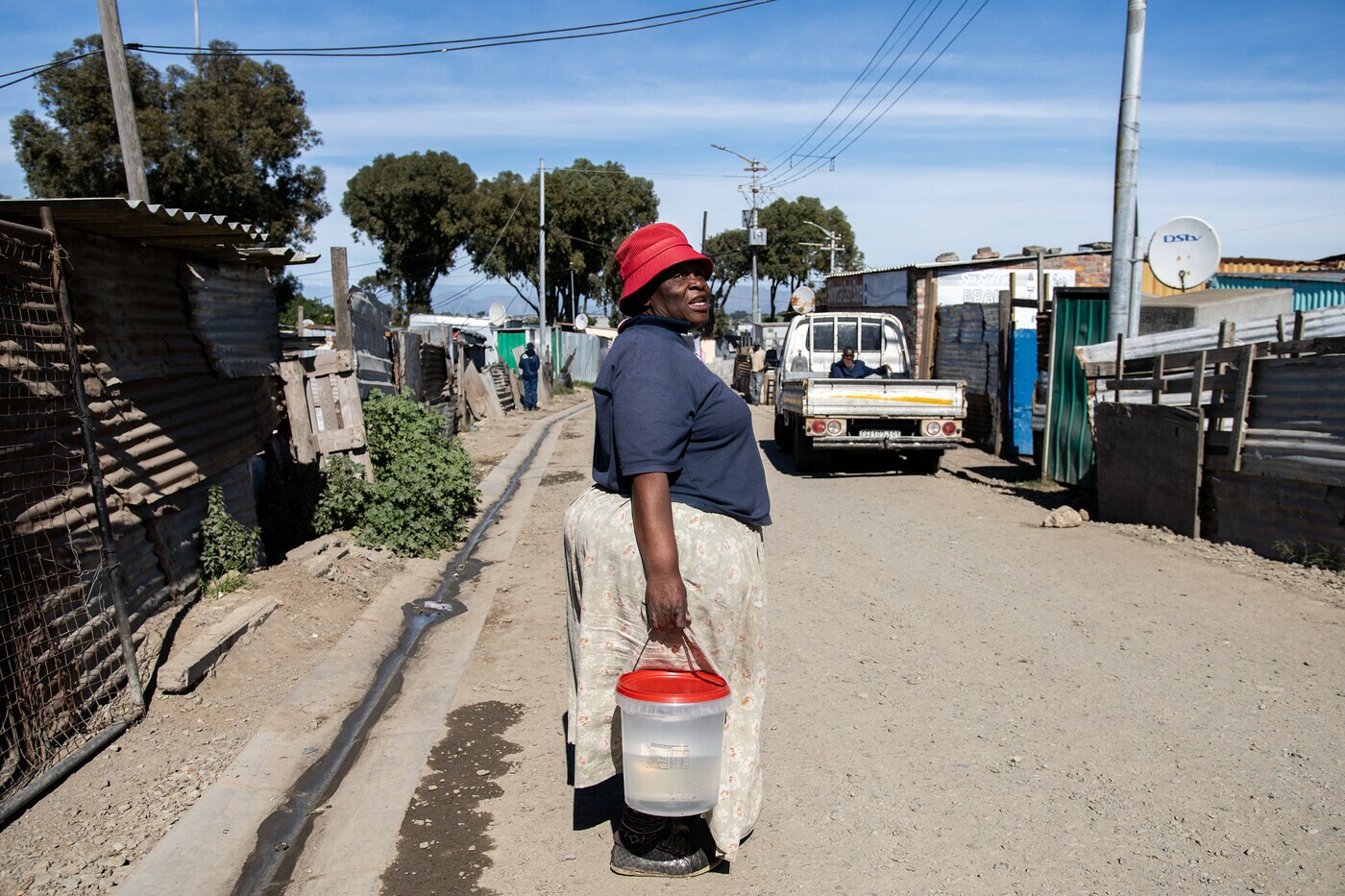
Todos os dias, Ncediwe Vanqa, de 66 anos, caminha de sua casa de 18 m² em Barcelona, uma ocupação informal em Gugulethu, na Cidade do Cabo, até uma torneira comunitária. Vanqa chega a fazer esse percurso sete vezes por dia. Ela usa uma fossa comunitária e, em situações de emergência, um balde. Para economizar eletricidade, assa pão usando um aquecedor a parafina e aproveita o calor para aquecer sua casa.
No entanto, do outro lado da estrada, a menos de dois quilômetros de distância, a Cidade do Cabo abriu as portas para uma infraestrutura que pode operar em uma escala completamente diferente. Em julho, o Tribunal de Planejamento da cidade aprovou um pedido apresentado pela King Air Industria, um parque industrial e logístico avaliado em dezenas de milhões de dólares, para dois data centers que, segundo documentos, ficarão a serviço da Equinix, uma multinacional norte-americana.
No entanto, a Equinix, uma das maiores operadoras de data centers do mundo e importante fornecedora de infraestrutura para empresas como Amazon, Microsoft e Google, nega essa versão dos fatos.
A expansão da empresa na Cidade do Cabo é o tema da nova reportagem do projeto transnacional “A Mão Invisível das Big Techs”, que investiga como as maiores empresas de tecnologia do mundo fazem lobby para influenciar leis e políticas públicas a fim de evitar a regulação em vários países.
A Equinix disse ao The Continent que “não apresentou nenhum pedido de planejamento de data center na Cidade do Cabo”.
Mas os registros oficiais do município mostram que a Equinix se reuniu com autoridades pelo menos três vezes para discutir seus planos. Dezenas de documentos também vinculam o pedido de uso do terreno ao projeto da Equinix para o local.
No centro da disputa está a quantidade de água e eletricidade que os data centers hyperscale da Equinix irão exigir. Data centers hyperscale são conhecidos pelo consumo exorbitante de água e/ou eletricidade para resfriar as máquinas.

Em seu recurso contra a construção de um desses empreendimentos na Cidade do Cabo, o Legal Resources Centre (LRC), uma organização legal da sociedade civil, estimou que, caso fosse utilizado um sistema convencional de resfriamento por evaporação, os dois data centers poderiam consumir cerca de 4,4 bilhões de litros de água por ano.
Isso equivale a quase 11 milhões de litros por dia, aproximadamente o consumo diário de água de 68.500 moradores da Cidade do Cabo, com base na referência de consumo médio da cidade.
Para uma cidade que por pouco não chegou ao “Dia Zero” durante a seca de 2018, a demanda potencial é significativa. A data se referia a uma previsão de que registros de água das residências e do comércio da Cidade do Cabo poderiam ser fechados por causa do baixo nível dos reservatórios.
A Equinix não respondeu às perguntas sobre os recursos necessários para o data center proposto. No entanto, em seus documentos, a King Air informou ao Tribunal de Planejamento da Cidade do Cabo que os números sobre os recursos seriam apresentados na etapa de planejamento da instalação.
Nos Estados Unidos, a expansão dos data centers vem enfrentando uma resistência cada vez maior das comunidades. Segundo a Data & Society, um instituto independente de pesquisa e políticas públicas sem fins lucrativos dos EUA, o consumo global de energia dos data centers cresceu 12% em cinco anos e pode dobrar até 2030.
O uso de água também está aumentando. A organização afirma que o consumo da Meta, Apple, Microsoft e Google cresceu 60% desde 2020. À medida que os data centers se expandem nas comunidades, a Data & Society argumenta que a escolha dos locais onde são construídos se tornou uma decisão cada vez mais política, com consequências para as economias locais, a saúde e o abastecimento de água e energia.
Segundo os documentos apresentados ao Tribunal Municipal de Planejamento, o sistema proposto poderia demandar cerca de 174 MVA. “Se operados continuamente perto desse nível” ao longo do ano, os data centers poderiam consumir aproximadamente 1,4 a 1,5 bilhão de kWh de eletricidade por ano, explicou a Dra. Chantelle van Staden, professora sênior do Departamento de Engenharia Elétrica e Eletrônica da Universidade de Stellenbosch. “Isso poderia equivaler ao consumo anual de eletricidade de 250 mil moradias da Cidade do Cabo”, afirmou Van Staden.
Essa falta de informações preocupou pelo menos um dos integrantes do tribunal quando o órgão analisou a aprovação do uso do terreno, em julho. “A maioria de nós não sabe o que é necessário em termos de demanda de água e eletricidade para uma instalação que nos pediram para aprovar, já que nenhum detalhe a esse respeito foi disponibilizado”, afirmou Wally Johnstone, integrante do painel do Tribunal Municipal de Planejamento, em reunião no dia 14 de julho de 2026. Johnstone foi o único dos cinco integrantes do painel a se opor à aprovação do uso do terreno para os data centers.
A prefeitura nega que o empreendimento tenha sido aprovado sem uma avaliação adequada e afirma que seu Departamento de Energia havia concluído que haveria fornecimento suficiente. Os documentos apresentados ao tribunal também revelaram que a Equinix já havia pago “encargos de rede compartilhada para 160 MVA” de capacidade, no valor de cerca de 2 milhões de dólares. A prefeitura afirmou que alguns detalhes técnicos seriam avaliados posteriormente.

Do outro lado da rede elétrica
Semanas antes do tribunal aprovar o pedido da King Air, a Protetora Pública [cargo similar ao promotor público no Brasil] Kholeka Gcaleka divulgou conclusões sobre a prestação de serviços municipais nas comunidades de Langa e Khayelitsha, próximas aos data centers propostos pela Equinix.
Khayelitsha e Langa são duas comunidades muito povoadas e predominantemente pobres, localizadas a menos de 10 quilômetros do local proposto para a instalação dos data centers. Em junho, após quatro anos de investigação, o Protetor Público, órgão similar ao Ministério Público, concluiu que a Cidade do Cabo não havia fornecido serviços básicos adequados aos moradores, incluindo água, saneamento e eletricidade. As falhas foram consideradas suficientemente graves para configurar “má administração” e “prejuízo”.
A prefeitura informou à reportagem que restrições orçamentárias, acúmulo de déficits de infraestrutura e demandas concorrentes por prestação de serviços haviam impedido a solução de alguns desses problemas. A Protetora Pública reconheceu as pressões financeiras, mas concluiu que elas não eximiam a cidade de suas obrigações constitucionais, e que as falhas sistêmicas na prestação de serviços continuavam apesar de algumas melhorias.
Para moradores e membros do movimento social por moradia Housing Assembly, como Vanqa, citada no início da reportagem, a questão é saber quem terá acesso aos recursos escassos. O LRC afirmou ao tribunal que sua objeção tem origem “em um contexto de restrições agudas e sobrepostas de recursos na Cidade do Cabo, onde os sistemas de terra, água e energia já estão sob pressão significativa”.
Data center hyperscale não é armazém
A África do Sul não é nova na área de data centers. O diretório Data Centre Map lista 64 unidades em operação no país e outras dez planejadas. Mas as instalações hyperscale trazem demandas de infraestrutura de outra ordem, com necessidades de eletricidade que podem chegar a centenas de megawatts. A regulamentação n ão acompanhou esse ritmo.
A África do Sul não tem uma política nacional específica para data centers, enquanto a Cidade do Cabo não possui uma categoria determinada de uso do solo para instalações hyperscale. “Os data centers geralmente são enquadrados no uso comercial/industrial”, disse a prefeitura ao The Continent. Por isso, estas unidades podem ser avaliadas segundo as regras existentes para instalações industriais ou armazéns.
Johnstone classificou a categoria como “totalmente inadequada” e acrescentou que é “simplista considerar um data center como um armazém que apenas guarda sistemas computacionais”. O LRC foi além, descrevendo a classificação como “claramente incorreta e potencialmente enganosa”.
Ao comentar a legislação que classifica data centers como armazéns, Grant Oosterwyk, professor sênior de sistemas de informação da Universidade da Cidade do Cabo, que já trabalhou em um data center de pequena escala, afirmou que a abordagem atual cria um ponto cego artificial.
“Isso permite que essas instalações evitem as avaliações básicas de impacto industrial que uma instalação dessa escala normalmente teria de enfrentar em um marco moderno de planejamento”, disse Oosterwyk.
“Tratar uma instalação de 100 MW, com sistemas de resfriamento em escala industrial, geradores pesados a diesel e circulação contínua de veículos pesados como um simples armazém é um grande descompasso regulatório. A categoria não acompanhou o ritmo da infraestrutura que está sendo construída dentro dela.”
O que a Cidade do Cabo não diz sobre seus projetos de data centers
O empreendimento proposto pela Equinix também não é o único projeto hyperscale em estudo na Cidade do Cabo. Brett Herron, membro da Assembleia Legislativa da Província do Cabo Ocidental (onde está localizada a cidade), disse ao The Continent que a Cidade do Cabo está avaliando mais projetos do tipo.
Ele citou as instalações propostas pela Equinix na King Air, a expansão planejada de 60 MW da Teraco e o projeto anunciado Cosmas Data Cities, do Cavaleros Group, com capacidade de 360 MW. Herron calcula que a demanda potencial combinada desses projetos seja de aproximadamente 580 MW.
Com base em informações disponíveis publicamente, ele estima que, se todos os projetos fossem construídos com as capacidades anunciadas, eles seriam equivalentes a cerca de 35% da atual demanda máxima de eletricidade da Cidade do Cabo.
O vice-prefeito Eddie Andrews afirmou que a Cidade do Cabo aprovou cinco data centers e tem outros dois em análise. Mas a prefeitura não informou quais empresas estão por trás desses projetos, usando a Lei de Proteção de Informações Pessoais (POPIA) como justificativa. A prefeitura não explicou quais dispositivos da lei a impediam de divulgar informações sobre a carga de energia ou por que a demanda de cada projeto não poderia ser divulgada.
Além dessas informações, Lance Greyling, diretor de Desenvolvimento Econômico e Investimentos da cidade, confirmou que se reuniu com a Equinix três vezes entre julho de 2025 e junho de 2026, todas a pedido da empresa.
No primeiro encontro, em julho de 2025, Greyling disse que a Equinix lhe comunicou “sua intenção de investir em data centers na Cidade do Cabo”. Quatro meses depois, Greyling e outras autoridades municipais e representantes da província do Cabo Ocidental se reuniram com a empresa depois que ela havia comprado o terreno para a King Air Industria. Segundo Greyling, a Equinix discutiu “suas intenções para o empreendimento proposto”. Em uma terceira reunião, em junho, a empresa apresentou uma atualização do seu planejamento.
“Já me reuni com a Equinix a pedido da empresa, mas em nenhum momento tive discussões sobre aprovações previstas em lei”, disse Greyling. No entanto, nenhuma ata foi registrada. Ele disse que seu papel é dialogar com potenciais investidores e promover a Cidade do Cabo como um local de crescimento econômico, desde que eles cumpram os requisitos legais necessários.
Na África do Sul, reuniões entre autoridades públicas e investidores privados não são divulgadas ou regulamentadas de forma sistemática. Não há evidências de que a Equinix tenha influenciado o processo de aprovação previsto em lei, mas a empresa se reuniu repetidas vezes com o Escritório de Promoção de Investimentos da Cidade do Cabo à medida que seus planos para os data centers avançavam. Como não foram registradas atas, não há registro público do que foi discutido.
O The Continent entrevistou dois vereadores que disseram que as implicações da expansão dos data centers não haviam sido amplamente debatidas no conselho municipal. Khalid Sayed, líder do partido ANC na província do Cabo Ocidental, disse ao The Continent que os data centers, incluindo suas demandas por água e eletricidade, quase não foram discutidos nos fóruns políticos. Segundo ele, isso pode refletir tanto uma falta de compreensão sobre o tema quanto uma falha de fiscalização.
Não é só a Cidade do Cabo
A Cidade do Cabo não é a única no país a lidar com a questão. A Prefeitura da metrópole eThekwini, que abriga a cidade de Durban, reconheceu que seu plano urbanístico não possui uma definição específica para data centers hyperscale ou de inteligência artificial e afirmou que ainda está avaliando como regulamentar as demandas de infraestrutura dessas instalações.
Ainda assim, em abril, a prefeitura afirmou que seu conselho municipal havia autorizado um acordo com o Korean South Power Consortium para estudar a implantação de um data center de IA em um terreno municipal na região sul de Durban, a terceira cidade mais populosa do país.
Documentos do conselho estimam que o empreendimento poderia custar entre US$ 3 bilhões e US$ 10 bilhões e afirmam que a prefeitura forneceria o terreno e a infraestrutura para o projeto. A prefeitura disse que as necessidades de água e eletricidade do empreendimento ainda não foram determinadas.
O diretor de Marketing e Comunicação de eThekwini, Mandla Nsele, afirmou que as questões sobre as demandas dos data centers “são objeto de discussões internas”, o que significa que a prefeitura não pode fornecer dados detalhados.
Um dos vereadores contrários ao empreendimento, Andre Beetge, disse que um relatório do conselho minicipal sobre o projeto não “aborda adequadamente a trajetória da demanda de energia associada aos data centers de IA, que deverá aumentar bastante nos próximos anos”.
A Mão Invisível das Big Techs é uma investigação transnacional e colaborativa liderada pela Agência Pública e o Centro Latinoamericano de Investigación Periodística (CLIP), em conjunto com Crikey (Austrália), Cuestión Pública (Colômbia), Daily Maverick (África do Sul), El Diario AR (Argentina), El Surti (Paraguai), Factum (El Salvador), ICL (Brasil), Investigative Journalism Foundation – IJF (Canadá), LaBot (Chile), LightHouse Reports (Internacional), N+Focus (México), Núcleo (Brasil), Primicias (Equador), Tech Policy Press (EUA) e Tempo (Indonésia). O projeto tem o apoio da Repórteres Sem Fronteiras e da equipe jurídica El Veinte, e identidade visual da La Fábrica Memética.

Hallan el primer caso arqueológico de amputación nasal como castigo en la historia de China en una mujer enterrada boca abajo

Putin–Pashinyan: A Dialogue on Charting the Path on the SCO Sidelines
Aula da cadeira
Tudo em que dá pra sentar é cadeira! — berrou Jorginho, de doze anos. Faz um tempo que dou aulas de matemática extracurricular para pré-adolescentes e gosto sempre de alterar o material, já que não preciso seguir nenhum programa de conteúdo muito rígido. Recentemente pensei que seria interessante tentar ensiná-los a importância (e a dificuldade) de boas definições e, antes de lhes apresentar as bases euclidianas do fazer matemático, propus um desafio a fim de mostrar que essa empreitada é muito mais complicada do que o pai da geometria fez parecer. Expliquei que a matemática moderna é feita a partir de definições muito precisas, que delimitam exatamente os objetos que querem — bem — definir, mas que, ao longo de sua vasta história, houve inúmeros embates sobre como deveria ser definido, por exemplo, um plano. Antes, porém, de entrar de fato nos objetos abstratos da mãe das ciências, sugeri que começássemos por delimitar algo mais concreto, mais empolgante.
— Alguém pode me dizer o que é uma cadeira?
— Tem um encosto, quatro pernas e dá pra sentar! — alguém no fundo falou.
— E se o encosto quebrasse, ainda seria uma cadeira? — perguntei, crente de que eu conduziria essa investigação magistralmente, pelo infalível método socrático.
— Aí seria uma cadeira quebrada, professor! — Começaram a rir.
— Pois bem, eu quero uma lista de características que a cadeira PRECISA ter para ser uma cadeira. Se ela não precisa de encosto, a lista também não precisa.
— Lá em casa tem uma que não tem apoio de braço, nem encosto, nem perna! É um quadradão assim, e a gente chama de cadeira.
— Quadrado, não. Cubo. — disse Jorginho.
— Certo, então é só um objeto em que dá pra sentar. Seria isso? — perguntei.
— Não! — exclamou Gabriel. — Dá pra sentar no chão, mas o chão não é uma cadeira.
— O chão não é objeto!
— Tá, mas dá pra sentar numa mesa também, e mesa não é cadeira!
Os alunos engataram na discussão e me segurei para deixá-los livres, queria ver se chegariam a algum consenso. Continuaram se lançando exemplos e contraexemplos até que a turma se dividiu em dois grupos: um deles, liderado por Jorginho (que tem uma incrível memória, sempre me lembra de fazer a chamada), defendia que tudo em que se podia se sentar poderia ser chamado de cadeira; o outro grupo, cuja voz mais ardente vinha de Gabriel, tinha como fundamento a intenção do criador do objeto: se alguém fez algo em que se poderia se sentar e o batizou de cadeira, logo aquilo assim seria chamado. As duas escolas de pensamento, então, travaram um feroz embate acerca da natureza real de um tronco cortado na floresta.
Fiquei tão absorvido pelo debate, pela truculência com que sustentavam suas alegações, que me esqueci de que esse é um problema sem solução. A impossibilidade de um consenso foi se tornando mais clara quando vi alguns alunos subindo em suas cadeiras como demonstração de um argumento que não captei por completo e vi bolas de papel voando em suas direções, certamente carregadas de eloquentes réplicas. Tive que me restabelecer como autoridade daquela ágora vulcânica assim que começaram os gritos de “DERRUBA! DERRUBA!”.
— Chega! — e dei um tapão na lousa tentando disfarçar minha satisfação em ter instigado um bélico debate filosófico entre pré-adolescentes.
Mas no silêncio borbulhante da turma ainda com os peitos ebulindo opiniões, Gabriel se levantou lenta e confiantemente e, com uma folha de papel amassada na mão, foi em direção à lata de lixo, gesto que passou despercebido pelos rivais. Eu o olhava pacientemente, esperando-o voltar a sua carteira para que eu pudesse prosseguir com a aula. Ele jogou fora o papel e, no caminho de volta ao seu assento, foi para o palanque na frente da sala, levantou os braços e disse “Tá aqui a cadeira do Jorginho!” e encheu a mão com o argumento que tinha entre as pernas.

Loulé procura o cão mais idoso do concelho
No âmbito do Loulé Festival Animal, que irá acontecer ao longo do mês de outubro, a Câmara Municipal de Loulé lança à comunidade o desafio de encontrar o cão mais idoso do concelho de Loulé.
A 1 de outubro, assinala-se o Dia do Cão Idoso, data que coincide propositadamente com o Dia Internacional do Idoso, sendo esta uma efeméride que pretende consciencializar para a importância de dar carinho, atenção e cuidados de saúde específicos aos cães seniores, além de incentivar a adoção responsável de animais mais velhos que se encontram em abrigos.
Assim, a Autarquia de Loulé lança, nas suas redes sociais, um concurso através do qual quer identificar o cão com idade mais avançada registado no concelho.
Para concorrer, os participantes deverão enviar uma fotografia do seu animal e uma fotografia do respetivo Boletim Sanitário (para comprovar a data de nascimento), até ao dia 25 de setembro, para o email bemestaranimal@cm-loule.pt. Deverão colocar como assunto “O meu cão é o mais idoso do concelho”.
Os nomes dos três cães mais idosos serão divulgados no dia 1 de outubro, Dia do Cão Idoso. Aos participantes serão entregues os seguintes prémios: 1º prémio – uma sessão fotográfica do vencedor com o seu tutor e um saco de ração com quilos equivalentes à idade do vencedor; 2º prémio – um saco de ração com quilos equivalentes à idade do vencedor; 3º Prémio – um saco de ração com quilos equivalentes à idade do vencedor.
Assim como os humanos, os cães também enfrentam mudanças significativas à medida que envelhecem. Por isso, é fundamental que os tutores estejam atentos às necessidades específicas dessa fase da vida e, nesse sentido, é este o objetivo desta ação: sensibilizar para a importância de promover um envelhecimento digno e saudável a estes amigos de quatro patas.
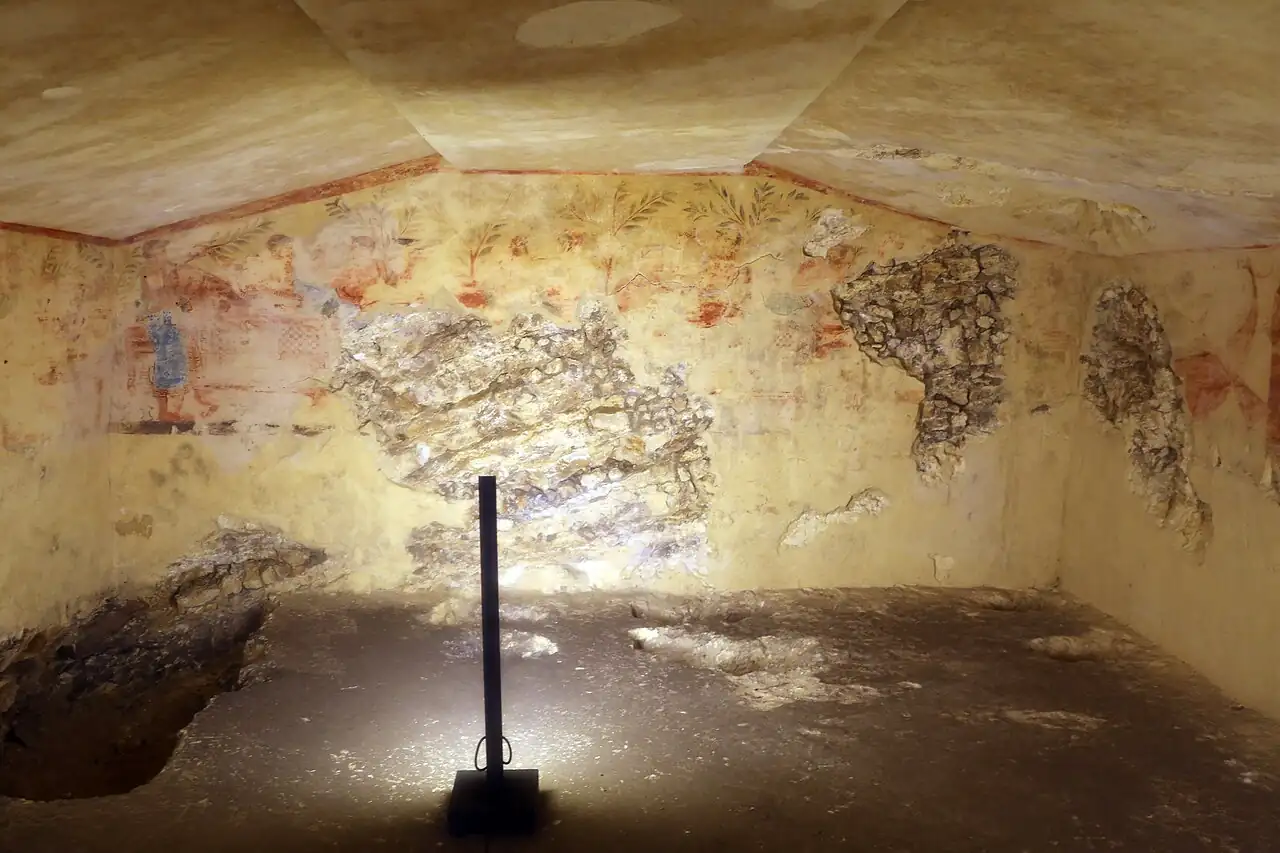
Descubren que las tumbas etruscas eran «experiencias sensoriales» diseñadas para inducir estados de trance, miedo y manipular la mente

Long Before Rome, Etruscan Civilization Engineered Tombs to Alter the Mind

Bonus episode: The EU enlargement game
What happens if your economy is suddenly in crisis, Brussels offers help with strings attached—and Turkey, China or Russia can move faster? What if your country delivers every reform the EU asks for, only for a member state to block the next step anyway? And after years of waiting, would voters still choose to join?
In this special bonus episode, The Neighbourhood goes live from Lisbon for an EU enlargement game. Jessica Hendrick brings together RE-ENGAGE experts representing six EU candidate countries and throws a series of fictional—but very plausible—political and economic shocks at them inspired by real headlines: Russia’s intensified attacks on Ukrainian infrastructure, Ireland’s EU presidency push on enlargement, Iceland’s referendum, Germany’s regional elections and the upcoming 2026 Enlargement Package. Drawing on three years of surveys, interviews and crisis simulations, each expert has to answer for their country.
Playing for each country:
- Albania: Morten Bøås, research professor at the Norwegian Institute of International Affairs (NUPI), representing RE-ENGAGE’s Albanian partners at the European University of Tirana
- Bosnia and Herzegovina: Damir Kapidžić, director of the Institute for Social Science Research at the University of Sarajevo
- Georgia: Ketevan Bolkvadze, senior lecturer in the department of political science at Lund University, originally from Georgia
- Moldova: Mathilde T. E. Giske, research fellow at the Norwegian Institute of International Affairs (NUPI), representing RE-ENGAGE’s Moldovan partners at Moldova State University
- Serbia: Luka Filipović, research associate at the Institute for Contemporary History in Serbia
- Ukraine: Roman Petrov, president of the Ukrainian European Studies Association
The result is part enlargement simulation, part policy conversation and part game night. The experts bargain over a fictional €100 million EU cheque, decide whether the EU can compete with faster offers from other powers, test how easily disinformation could exploit frustration with enlargement, and imagine what would happen if EU membership was finally put to a public vote. Along the way, Serbia proposes keeping its relationship with Brussels “casual”, Bosnia finds a creative use for €100 million, and Ukraine calls for Hungarian “Varangians” when backsliding strikes.
When a crisis hits, does speed matter more than values? Can “Europe never wanted you anyway” become a winning political message? And if a country finally joins the EU, what stops democracy from sliding backwards once the prize of membership is secured?
Further reading:
RE-ENGAGE research overview
RE-ENGAGE research on Albania
RE-ENGAGE research on Bosnia and Herzegovina
RE-ENGAGE research on Georgia
RE-ENGAGE research on Moldova
RE-ENGAGE research on Serbia
RE-ENGAGE research on Ukraine
This podcast was recorded live in Lisbon on September 3rd, 2026.
Un manuscrito del siglo XVII redefine la historia del telescopio y revela una innovación desconocida de Galileo Galilei

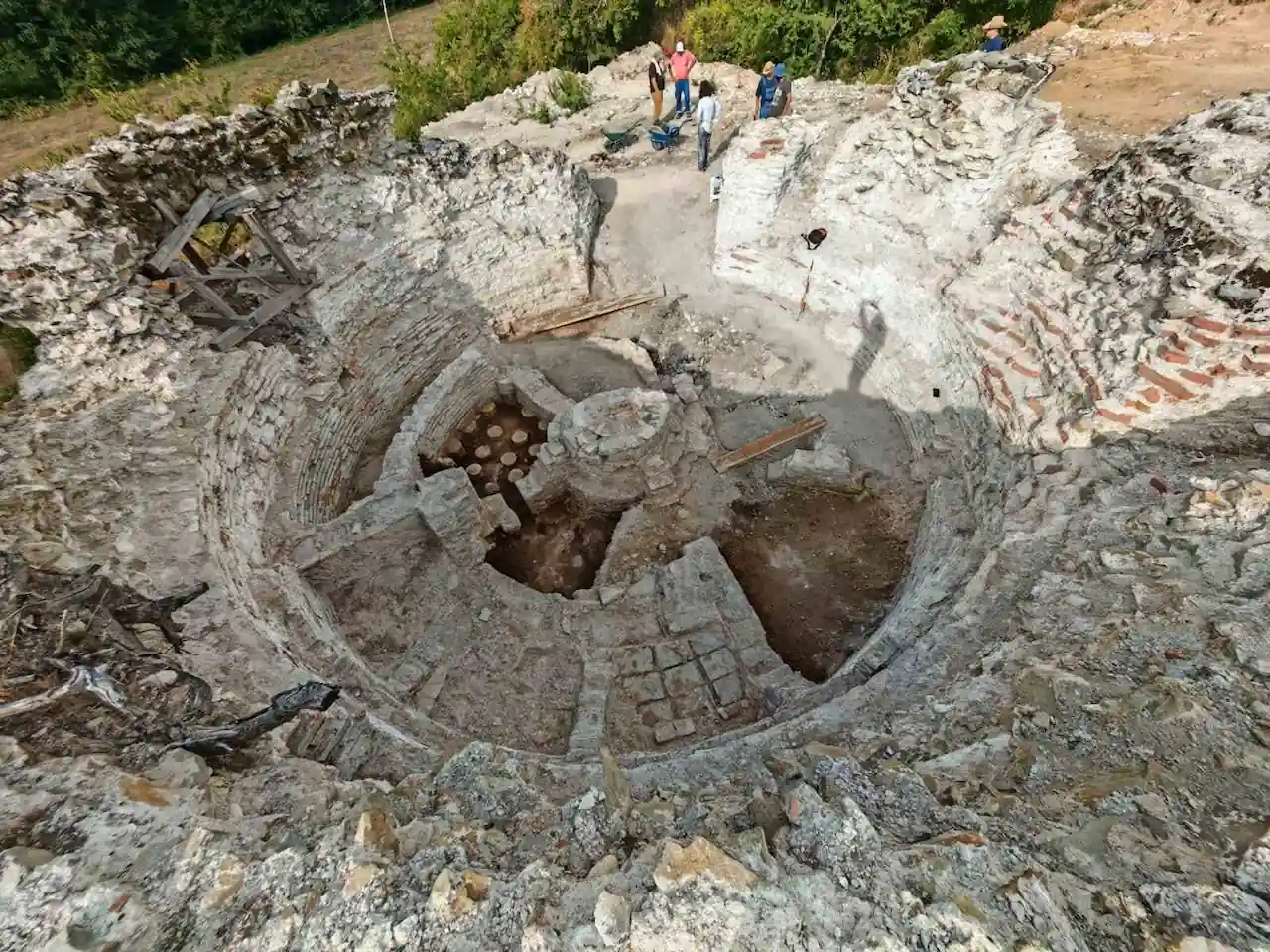
An Exceptional Imperial Bath Discovered Hidden in the Tower of a Roman Palace at the Serbian Site of Šarkamen

Bishkek 2026: Multipolar Reality Continues Without Western Permission
Descubren un excepcional baño imperial oculto en la torre de un palacio romano en el yacimiento serbio de Šarkamen

4 de setembro, Larry Page e Sergey Brin criam a Google
Cómo Italia y Japón acabaron siendo enemigos en la Segunda Guerra Mundial y no firmaron la paz hasta 1951

Mongolia’s Fuel Crisis is Being Exploited by Individuals Linked to Corruption
While the country queues for petrol, import licences are being given to the network behind Mongolia’s largest corporate fraud. Mongolia spent August rationing petrol, as the country faces an ‘unprecedented’ fuel crisis. In response, the Government has made importing fuel more profitable, and has sped up the process for issuing new licences.[1]
By opening the gates, the government has allowed existing networks to exploit the crisis, including the one connected to Jononbayar Erdenesuren, the disgraced Mongolian businessman reportedly as being allegedly responsible for the $1.1 bn fraud scheme operated through Lex Oil, the fuel importer that was run by his aunt.[2]
Mongolia is heavily reliant on foreign oil, primarily from Russia. To import it, businesses need an ‘all-types fuel import licence’, issued by the Ministry of Industry and Mineral Resources, which decides through paperwork checks.[3] Foreign businesses cannot import directly — they must sell through a Mongolian-licensed entity.[4]
Some 164 companies hold an import licence. Of these, 34 have been granted since 2025.[5] The number of companies licensed to import fuel has more than doubled in under five years.[6]
They have also become considerably more valuable. Duty and excise on fuel have been zeroed, importers offered preferential loans and subsidised storage for reserves, and the customs service has been told to expedite clearance of petrol consignments.[7]
A number of companies granted all-types fuel import licences in 2025 and 2026 are connected to Jononbayar Erdenesuren and the Lex Oil network behind his $1.1bn scheme. That scheme was executed through the very exploitation of import licences.
None of these importers are required to disclose the amount of oil they import. Only 11 of the 164 licence holders imported fuel in the first days of August. When asked which 11, and how much each imported, the Customs General Administration refused to answer, citing customs law.
Lex Oil’s network is growing
Since 2025, two former Lex Oil CEOs have taken positions in dormant companies that then received fuel licences. In one case, the licence was obtained the same day the shareholding was registered.
Following five years of inactivity,[8] Standard Oil Gas appointed a new Director, Erdenebat Indra, in December 2025. Indra ran Lex Oil from January 2019 until February 2024 – nearly the whole period in which the losses accrued.[9] Six weeks later, Standard Oil was granted an import licence. Indra became a shareholder that same day.[10]
The pattern was replicated by Indra’s successor at Lex Oil, Banzragch Batdavaa.[11] Batdavaa bought into Best Dragon, a company with no prior fuel operations, in July 2025. It was granted import permits just two months later.[12] Batdavaa remains in business with both Mongolian and offshore entities linked to the scheme,[13] amongst them two Dubai entities – Peak Solutions (co-managed with Jononbayar’s mother)[14], and his own APEXPP commodities.[15]
Two other companies, granted licences in the spring of 2025, were already owned by individuals in the network. Tod Oil received its first licence in April 2025, although the company was incorporated six years earlier by entities closely tied to Jononbayar.[16] Its founder, Tod Petroleum, was co-founded by Lex Oil and former VS Oil CEO Bataa Anarchuluu.[17] Bataa continues to operate within the network, serving as the Executive Director of the helicopter business linked to both the scheme and the son of former Prime Minister Oyun-Erdene.[18]
Another, Apex Petroleum, was incorporated in October 2024 – the month the $1.1bn provision was made public.[19] Three of the five founding shareholders had previously founded businesses with Jononbayar himself.[20] These three include Mönkhjargal Javkhlan (son of a licensed importer linked to the Government)[21] and Jononbayar’s rumoured mistress, Yalaltbayar Khongorzul.[22]
Three further entities — ABR Eco Trans, Petro Spark and Standard Energy and Oil — have links to Jononbayar’s network. ABR was incorporated in October 2024 and licensed to import fuel in April 2025.[23] It has since taken on the founder of BID Energy, Bold Luvsandagva, as its shareholder and executive director.[24] In February 2026, ABR moved into the same unit BID Energy had occupied until that December.[25] BID Energy is Indra's other licensed importer. It was granted import licences in 2024, 11 weeks after Indra left Lex Oil.[26] Indra bought into the company and is now its ultimate beneficial owner.[27]
Another, Petro Spark, was licensed on the same day as Apex Petroleum.[28] Its owner, Yadamsüren Dorjchanga, holds a network of businesses with Yondon Uuganbayar.[29] Uuganbayar bought shares in Jononbayar’s family’s meat business, Erdenet Makh Market, two weeks after the Lex Oil scheme was disclosed in October 2024.[30]
The seventh company, Standard Energy and Oil, was licensed in 2025.[31] In May 2026, it was taken over by N. Monsor.[32] Monsor is a reported close contact of Jononbayar.[33] He was director of a Mongolian company, Sky Professional Logistics,[34] when it received over $7.5 million from an offshore entity called Class Trading Limited,[35] and distributed it the same day among nine recipients. These included Jocondy, a company owned by Jononbayar’s aunt, the founder of Lex Oil.[36] Jocondy was reportedly directed by Jononbayar at the time.[37] It is reported that Jononbayar had previously made transfers into Class Trading.[38]
These are not the network's first import licences. Nine companies linked to Jononbayar, the first being Lex Oil itself in 2019, were granted import licences before 2025,[39] meaning at least 16 of the 164 importers are connected to his network.
New Licences, Existing Networks
Even outside that seven, what distinguishes a successful candidate is often the individual owner, as opposed to the company profile. One grantee, TES Petroleum Trade,[40] is owned by the reported son of Baagaa Battömör,[41] a sitting MP who had previously run both Mongolia’s tax and customs administrations.[42] Two licences went to companies owned separately by partners in an existing fuel business.[43] Four more went to Chinese-controlled businesses, two of them on the same day. None was set up as a fuel business, and three were still unregistered for fuel activity when they were licensed.[44]
Of the 34 companies granted import licences by the Ministry of Industry and Mineral Resources in 2025 and 2026, 14 had been incorporated less than two years before the award.[45] Eight more of the organisations granted licences changed hands shortly before they were licensed.[46]
The Government’s Response
On 17 August, the Ministry of Industry and Mineral Resources warned that importers who failed to keep filling stations supplied could lose their licences. The Minister admitted that some importers were holding stock and not selling it.
Revoking a licence removes a registration but has no bearing on the individuals behind the businesses. With fewer regulatory checks, and more demand than ever, the doors are being left open to actors who previously exploited Mongolia’s fuel import regulations.
Mongolia scored 31 out of 100 on Transparency International's 2025 Corruption Perceptions Index, ranking 124th of 182 countries, its worst score on record. In September 2025 the US State Department reported that businesses in Mongolia face "substantial and unpredictable regulatory burdens at every level", with officials across ministries and agencies routinely contravening existing law and regulation. Unless the country creates laws transparently and implements them predictably, it warned, "investors may find Mongolia too risky and opt for more competitive countries."[47]
The victim of Jononbayar’s fraud scheme, Trafigura, used to be one of the most important importers of oil into Mongolia.[48] The fraud orchestrated by the playboy,[49] which personally enriched both himself and his family,[50] put that to an end. Now, the individuals involved are being allowed back in to exploit the crisis at the expense of ordinary Mongolians.
The crisis was a chance to show that direction had changed. Instead, the Government zeroed duty, offered importers preferential loans and subsidised storage, and issued 34 new licences — leaving at least 16 of the 164 with one network. Now agents known to have exploited the same system previously, are being allowed in again.
Photo by Zbynek Burival on Unsplash
[1] Government’s announcement that fuel import licence applications should be processed quickly and the licences granted, reported: https://ikon.mn/n/3pep and https://sonin.mn/newsDetail/18284
[2] Lex-Oil LLC granted fuel import licence in 2019: https://opendatalab.mn/search/5623979. Owned through his aunt, Dorjgochoo Erdenetul.
[3] In order to gain these, an applicant must produce its registration documents, prove membership of the relevant professional association, and file its contract with the fuel supplier in original: https://legalinfo.mn/mn/detail?lawId=208190
[4] https://www.bloomberg.com/news/articles/2024-11-02/trafigura-mongolia-oil-fraud-how-trader-faces-1-billion-loss
[5] Data as of 20 August, taken from https://license.mn/ (official electronic licence system)
[6] 80 companies Eighty companies held a licence to import fuel into Mongolia on 1 January 2022, recorded in the Ministry of Mining and Heavy Industry's register of petroleum products special licences, 22 March 2022: https://mmhi.gov.mn/wp-content/uploads/2022/03/ГТБ-тусгай-зөвшөөрлийн-жагсаалт-2022.03.22.pdf. 164 currently hold licences, per license.mn, the Ministry of Industry and Mineral Resources official register, as of September 2026: https://license.mn/.
[7] Tax and lending measures: https://mmhi.gov.mn/2026/08/06/. Expedited customs clearance: E. Oyun-Erdene, GoGo.mn, 17 August 2026, https://cmsm.mongolcontent.mn/r/6k9g8
[8] Standard Oil Gas LLC’s fuel import licence expired in 2020, and it recorded no other activity in the intervening period: https://opendatalab.mn/search/6120954
[9] CEO of Lex Oil 2019-224: https://opendatalab.mn/search/5623979
[10] 6 February 2026: https://opendatalab.mn/search/6120954
[11] Batdavaa sat as Executive Director of Lex Oil from Feb-April 2014: https://opendatalab.mn/search/5623979
[12] Best Dragon, incorporated 2020, dormant until 2025 when ownership was transferred to Batdavaa. Fuel import licence granted 26 September 2025: https://opendatalab.mn/search/6574246
[13] B.Batdavaa is currently a shareholder of Diamond Oil and Energy alongside Oyunbileg Sainbileg https://opendatalab.mn/search/6552544. Sainbeleg is known to a key actor alongside Jononbayer, and remains director of one of the family’s companies, Zuunnaim Oil: https://opendatalab.mn/search/5272378
[14] Cedar Rose UAE corporate data accessed via Sayari, 21 August 2026: PEAK SOLUTION DMCC, commercial register DMCC194234, licence DMCC-855346, incorporated 5 August 2022;
[15] Offshore link reported in https://www.eureporter.co/world/mongolia/2026/08/13/the-helicopter-that-helped-topple-mongolias-prime-minister-linked-to-lex-oil-scheme/, Batdaava’s Linkedin states him as CEO of APEXPP Commodities: www.linkedin.com/in/batdavaa-banzragch-46120115a
[16] Tod Oil, incorporated 2019 by Tod Petroleum, granted licence 23 April 2025: https://opendatalab.mn/search/6415636
[17] Tod Petroleum, founded Lex Oil and Bataa Anarchuluu https://opendatalab.mn/search/6104894. Bataa served as VS Oil CEO https://www.opendatalab.mn/search/6225578.
[18] Listed as UBO of Alpha Aurora Aviation: https://www.opendatalab.mn/search/8376344
[19] Apex Petroleum was incorporated 17 October 2024 (https://opendatalab.mn/search/7078633). Trafigura’s statement on losses 30 October 2024: https://www.trafigura.com/news-and-insights/press-releases/2024/statement-re-trafiguras-petroleum-products-business-in-mongolia/
[20] Three founders: Bayardalai Erdenezaya (founded Kem Tek with Jononbayar in 2016, and Commodity Trans with his mother in 2019); Mönkhjargal Javkhlan (registered at the same two businesses, alongside Diamond Oil and Energy), Yalaltbayar Khongorzul (co-founded Khongorfinance with Jononbayar in 2015),
[21] Reported to be the brother in-law and former campaign manager for the Minister of Economic Development: https://ergelt.mn/news/22/singile/40012
[22] Archived article: https://web.archive.org/web/20241113103634/https://www.reelnews.mn/a/1225 and X: https://x.com/miigaasbntv/status/1852208500715459004
[23] ABR Eco Trans LLC, incorporated 15 October 2024; wholesale permit 0016 from 20 March 2025 and all-types fuel import licence 0015 from 25 April 2025; https://opendatalab.mn/search/7077609
[24] Luvsandagva registered as ABR shareholder and joint beneficial owner on 24 November 2025 and as executive director on 29 January 2026; he founded BID Energy on 13 December 2023 with Baterdene Lkhagvadulam and was its first executive director: https://opendatalab.mn/search/7077609 and https://opendatalab.mn/search/8454485
[25] BID Energy moved from Bayanzürkh, 3rd khoroo, 12th microdistrict, Tsendgüni 30b, unit 53 on 1 December 2025; ABR moved into that unit on 2 February 2026, from Tokio 24a, unit 134 in the same microdistrict: https://opendatalab.mn/search/8454485 and https://opendatalab.mn/search/7077609
[26] BID Energy LLC, import licence 0015 granted 24 April 2024; https://opendatalab.mn/search/8454485. Indra was executive director of Lex Oil from January 2019 to February 2024: https://opendatalab.mn/search/5623979.
[27] Indra registered as BID Energy shareholder and executive director on 16 August 2024 and as sole ultimate beneficial owner on 1 December 2025: https://opendatalab.mn/search/8454485
[28] Petro Spark LLC, incorporated 8 May 2024, sole shareholder and beneficial owner Yadamsüren Dorjchanga; import licence 19 May 2025, the same date as Apex Petroleum: https://opendatalab.mn/search/7025169
[29] Joint holdings with Yondon Uuganbayar: Mongolian Truck Union Group LLC, https://opendatalab.mn/search/6840175; Novel Development Union LLC: https://opendatalab.mn/search/6894402; and the Gobi Genetics, https://opendatalab.mn/search/3646203
[30] Uuganbayar owns Mon Beef Cattle: https://opendatalab.mn/search/8324328 . Mon Beef Cattle acquired Erdenet Makh Market LLC, from Dorjgochoo Erdenetuyaa 24 October 2024, days before the scheme was disclosed.
[31] Standard Energy and Oil, received wholesale permit in June, the import licence that September: https://opendatalab.mn/search/6754244
[32] Monsor became the director of Standard Energy and Oil on 5 May 2026. It was acquired the same day by an investment fund, then owned by Dorj Enkhtuya (renamed KK Real Estate private fund two days later): https://opendatalab.mn/search/6607829. Mansor was the previous manager of that fund, and founded it himself through another vehicle he still owns and manages, Ulaanbaatar Asset Management: https://opendatalab.mn/search/5493498 . He became the CEO of Standard Energy and Oil on the day it was taken over by KK Real Estate.
[33] Reported in https://www.livetv.mn/p/11193/ and in https://www.polit.mn/a/69636
[34] Monsor is reported to have run Sky Professional Logistics: https://www.livetv.mn/p/11193. Court records state the executive director of Sky Professional Logistics concluded a wagon-transport agreement with the head of Ulaanbaatar Railway on 28 July 2017, naming him as Н.Монсов: https://shuukh.mn/single_case/19024
[35] Reporting states that US$7,545,900 was transferred from Class Trading Limited to Sky Professional Logistics on 8 August 2017 https://gogo.mn/r/5292y. Class Trading Limited was incorporated in the Turks and Caicos Islands and registered a Hong Kong place of business on 13 May 2015: Hong Kong Companies Registry, Company Particulars, BRN 64752427.
[36] Jocondy was founded by Dorjgochoo Erdenetuul, https://opendatalab.mn/search/5247632. She is Jononbayar's maternal aunt and the owner of Lex Oil LLC: https://opendatalab.mn/search/5623979 and https://zuv.mn/n/16a3.
[37] Reporting records US$612,400 paid to Jocondy and describes Jononbayar as its director at the time: https://gogo.mn/r/5292y and https://dardas.mn/news/view/2970
[38] Reported that Jononbayar sent $500,000 to Class Trading in 2014: https://dardas.mn/news/view/2970
[39] 2019: Lex Oil, 2019 https://opendatalab.mn/search/5623979,Tod Petroleum, https://opendatalab.mn/search/6104894. 2020: ICIC, https://opendatalab.mn/search/5288193 VS Oil, https://opendatalab.mn/search/6225578, Zuunnaim Oil https://opendatalab.mn/search/5272378. 2022: Argal Oil https://opendatalab.mn/search/6309011. 2023: Alpha Aviation Fuel https://opendatalab.mn/search/8403473. 2024: BID Energy https://opendatalab.mn/search/8454485 · Interasia Energy Mongolia, 2024 https://opendatalab.mn/search/6902987. Register of all 164 holders: https://opendatalab.mn/licences/15
[40] Tes Petroleum Trade, licenced 21 February 2025: https://opendatalab.mn/search/6373135
[41] Paternity reported in: https://ergelt.mn/news/22/single/40012
[42] Battömör has sat in the State great Khural since 2016, he was deputy head, then head of the State Customs General Administration from 2008-11 and Head of the Tax General Administration from 2011-13: https://www.24tsag.mn/a/227052
[43] Greenjob, owned by Batsukh Baigalmaa, granted licence in October 2025: https://opendatalab.mn/search/5645867; and Gobi Petroleum GPT, owned by Onurbat Ragchaa, granted a licence September 2025: https://opendatalab.mn/search/7121913. Together they are exclusive owners and directors of Green Oil Trade since incorporation in 2020: https://opendatalab.mn/search/6528716
[44] Tana Khiimori Oil - received import licence 11 August 2025, First registered for fuel-related activities 15 August 2025
: https://opendatalab.mn/search/7080033; Talnutgiin Ayalal - received import licence 11 August 2025, First registered for fuel-related activities 15 August 2025: https://opendatalab.mn/search/5887488;
Achit Güür MS - received import licence 14 Jan 2026, Remains unregistered for any kind of fuel-related activity (registration codes are for freight, agriculture, tourism and motor vehicle sales): https://opendatalab.mn/search/6891802; Söüd Mont Forest - received import licence 11 December 2025, Registered for fuel wholesaling 6 December 2025, (previous registration codes are for motor vehicles, freight, automotive sales and machinery), https://opendatalab.mn/search/7058649.
[45] Data as of 20 August, taken from https://licence.mn/ (official electronic licence system)
[46] Data as of https://licence.mn/ checked against https://opendatalab.mn/search/[registration number]. “Changed hands” to mean change of shareholder, director or beneficial owner within twelve months on either side of grant.
[47] https://www.state.gov/wp-content/uploads/2025/09/638719_2025-Mongolia-Investment-Climate-Statement.pdf
[48] Trafigura supplied around a third of the region’s oil products, particularly diesel: https://eulerpool.com/news/markets/trafigura-in-crisis-mongolian-oil-credit-causes-million-loss; deals undertaken through the scheme said to account for around 80% of Mongolia's imported oil products: https://eguur.mn/556936/
[49] Jononbayar known for “parties he threw for friends and contacts” per Bloomberg: https://www.bloomberg.com/news/articles/2024-11-02/trafigura-mongolia-oil-fraud-how-trader-faces-1-billion-loss; reported to have thrown some of the “most expensive parties in Mongolia” https://eguur.mn/556936/
[50] https://zuv.mn/n/16a3; https://itoim.mn/a/2024/07/22/news-break/ugg

The WEDDING MASSACRE in Iran by a US NAVAIR 500 lb Glide-Bomb (Video on Live-Fire). First Judiciary Findings while Red Crescent calls ICC for probe on War Crimes
by Fabio Giuseppe Carlo Carisio – Gospa News founder and director
UPDATE ON SEPTEMBER, 7, 2026
Iranian Judiciary Findings: The Bombing on a wedding ceremony by a Raytheon Weapon
«The Iranian judiciary has released the initial findings of an investigation showing that weapons used in a US bombing attack earlier this week on a wedding ceremony in the south of the country were American-made», Iranian Press TV Reported yesterday.
The head of the Iranian judiciary’s local branch in the southern province of Hormozgan said on Saturday that projectile fragments scattered around the site of a wedding ceremony on September 1, killing five people including a children, had been examined as part of the investigation, showing they were manufactured by US company Raytheon.
“The nature of the weapons used in the terrorist attack on civilian gatherings in Kohestak, Sirik, has been fully documented using advanced technical analysis tools and image data processing,” said Mojtaba Ghahremani.
Ghahremani said investigators had carried out a meticulous examination of the inscriptions, barcodes, and other details engraved on the projectile remains, leaving no doubt that the munitions belong to the US military.
He said the type of military thermal battery used in the ammunition revealed that it is from a series of high-voltage batteries used exclusively in the flight guidance systems of precision-guided bombs operated by US military forces.
The official said a military identification code, CAGE Code: 96214, registered on the projectile fragments directly links it to the weapons company Raytheon Missiles & Defense, a major US defense contractor and industrial corporation that manufactures weapons as well as military and commercial electronics.
The Massacre perpetrated by an AGM 154-C 500 lb Thermal Glide-Bombe
Much more important than official release is the image and the video from wreckage that at first had induced the experts to identify the weapon as am AGM-84H SLAM-ER cruise missile (read below).

On the tiny identification plate there is in fact the writing AGM – I 154 C-I which corresponds to the glide-bomb AGM-154 Joint Standoff Weapon (JSOW) produced by Raytheon under the stamp NAVAIR which is the matrix of the American weapons used in the joint activity formed by the US Navy and US Air Force.
The AGM-154 Joint Standoff Weapon (JSOW) is a glide bomb that resulted from a joint venture between the United States Navy and Air Force to deploy a standardized medium-range precision-guided weapon, especially for engagement of defended targets from outside the range of standard anti-aircraft defenses, thereby increasing aircraft survivability and minimizing friendly losses.
It is intended to be used against soft targets such as parked aircraft, trucks, armored personnel carriers (APCs), and surface-to-air missile sites (SAMs). Prior to launch, it is given a destination through either a predesignated waypoint or a point marked through a targeting pod. It glides, using two wings that pop out for added lift, to the marked destination and dispenses submunitions in a short, roughly linear pattern.
The designation of the Joint Standoff Weapon as an “air-to-ground missile” is a misnomer, as it is an unpowered bomb with guidance avionics, similar to the older GBU-15.
The AGM-154C is Designed to Attack Hardened Targets
But in this specific case, a more sophisticated weapon was used for the attack on the wedding ceremony…
The AGM-154C uses an Imaging Infrared (IIR) terminal seeker with autonomous guidance. The AGM-154C carries the BROACH warhead. This two stage 225 kg (500 lb) warhead is made up from a WDU-44 shaped augmenting warhead and a WDU-45 follow through bomb. The weapon is designed to attack hardened targets. It entered service with the US Navy in February 2005.
The use of this projectile minimally mitigates the implications of the attack ordered by the US Navy by US President Donald Trump; in fact, autonomous guidance oriented by the target’s heat source implies the possibility of an error that the SALM-ER guided cruise missile does not allow.
Below is a live-fire video released by the Royal Australian Air Force demonstrating the actual use of an AGM 154-C glide bomb
But at the same time, it appears to be a completely disproportionate weapon to hit a transmission tower, which, according to leaks from US officials, was the target of the attack (read detaisl below).
Therefore, the hypothesis of a targeted bombing to destroy a civilian home, as on Qeshm Island, remains valid.
This is why Iran has filed an international complaint for war crimes…
Iranian Red Crescent calls for ICC to investigate deadly US wedding attack
Iran’s Red Crescent Society (IRCS) has called on the International Criminal Court (ICC) to investigate a US missile attack on a wedding reception in the country’s southern province of Hormozgan, which killed at least five people and wounded 68 others.
The deadly incident occurred when shrapnel from a US attack struck a residential building where a wedding reception was being held in the city of Kouhestak, in Hormozgan’s Sirik County on Tuesday.
In a letter to the ICC’s Office of the Prosecutor, the IRCS said the attack raised serious concerns under international humanitarian law and warranted an independent, impartial, thorough and effective investigation.
“Given the reported civilian character of the location as the venue of a family wedding ceremony, as well as the presence of civilians at the site, the incident raises serious concerns under international humanitarian law and warrants an independent, impartial, thorough, and effective investigation,” the organization said.
The IRCS said preliminary information initially indicated that four people had been killed and 67 others wounded. Iranian health officials later raised the toll to at least five fatalities and 68 injuries, with a child among those killed.
The IRCS warned that the number of casualties could rise because some of those wounded were in critical condition.
FIRST POSTED ON GOSPA NEWS ON SEPTEMBER, 4, AT 7,28 AM GMT + 2 (Italy)
A US-made AGM-84H cruise missile among the wreckage after American strike on a wedding
A US-made AGM-84H SLAM-ER cruise missile has been identified among the wreckage following the American strike on a wedding ceremony in Sirik, southern Iran, late Tuesday, adding further evidence of the US military’s role in the attack that killed and wounded civilians.
Weapons analyst Trevor Ball identified the remnants as belonging to the SLAM-ER, a precision-guided, air-launched cruise missile manufactured by Boeing, according OsintWarfare which posted on X the first video of wreckage and was quoted by Al Mayaeedn English Lebanese TV.
Boeing describes the SLAM-ER as being the most accurate air-launched munition in the US Navy’s arsenal;

Trevor Ball, a former US Army explosive ordnance disposal technician who now works as a weapons technical analyst for Armament Research Services, was among the experts asked by Reuters to examine the photographs and video.
“The damage seen appears to be from a munition which detonated on contact with the roof, or just above the roof,”he said, adding it was apparently a direct hit.

The Exclusive Video of the Wreckage
VIDEO LEGEND:
1st footage – The US-made AGM-84H SLAM-ER cruise missile has among the wreckage following the American strike on the wedding cerimony
2nd footage – Children’s slippers lie scattered in the aftermath of the US aggression at a wedding in Sirik, where civilians, including children, were killed and dozens more were injured. Footage from the scene shows slippers belonging to women and children amid the destruction.
After this initial analysis, both Iranian and international sources tried to identify the weapon, with some ballistics experts even launching the bizarre hypothesis that it was a ricochet shot, a hypothesis considered unlikely by most, however.
The Reuter Experts confirmed our Investigation
But one thing seems certain…
«A US munition struck a home hosting a wedding celebration in southern Iran directly, rather than ricocheting from another target, weapons experts who reviewed images and video verified by Reuters revealed» Al Mayadeen reported.
The strike in the small town of Kuhestak on Tuesday killed five people and injured at least 70 others.
So on Thursday, US Vice President JD Vance he was induced to declare that Washington was investigating the incident, despite the initially Pentagon deny of any responsibility…
“We’re investigating it because obviously we care. We want to know,”Vance said during a White House press briefing.
«Four military weapons experts who checked visual material told Reuters that the damage was consistent with a direct strike rather than secondary damage caused by a munition ricocheting from another target. Three of the experts stressed that the weapon was likely American rather than a misfired Iranian air defense missile» Al Mayadeen added many hours after its and our first articles posted on September 4, at 7,28 AM GMT + 2 (Italy)

Two US officials, speaking anonymously, said the US military had conducted strikes near Kuhestak on Sept. 1, with the town’s telecommunications tower as a specific target.
Satellite imagery places the tower about 135 meters from the wedding site. Iranian media reported that the tower was struck at about 9:30 pm local time.
But the same expert Trevor Ball debunked US Official speculation…
“The visible blast damage could not result from fragments from the nearby strike on the communications tower striking the area,” he stressed.
A Likely Trump’s US Navy Deliberate Massacre on Iranian Wedding
AGM-84H SLAM-ER cruise missile is a weapon designed for precise strikes and can be retargeted during flight by a human operator.
Therefore, if it were confirmed that this very powerful rocket, the wreckage of which was found on site, was used, the issue would take on an unprecedented gravity.
Boeing describes the SLAM-ER as being the most accurate air-launched munition in the US Navy’s arsenal; therefore, it can be inferred that it was deliberate, adding to a long list of US strikes on civilian gatherings in West Asia that we summarized in a Gospa News exclusive investigation, focused above all on the previous massacres in Minab school and island of Qeshm, where Trump’s Military used a bunker-bomb of 1ton.

Which is the Trump’s goal of these henoisou war crimes even vs children?
Simple: Terrorize the Iranian population by fomenting a revolution, as attempted in January 2026 by the counter-strategies of the CIA (USA) and MOSSAD (Israel), through the infiltration of well-trained ISIS jihadist mercenaries who used Israeli projectiles, leaving clear evidence of the plot.
The mad ambition of the Zionist terrorist who leads the United States thanks to the votes of the Zionist Lobby is to split the Iranian authorities, as happened in Venezuela, in order to stage a coup like the kidnapping of Venezuelan President Nicolas Maduro.
But in Tehran, there is a very serious religious theocracy, armed above all with hypersonic missiles, and perhaps even nuclear ones, donated by Russia, China, or North Korea…
Speaking about the attack, Head of Iran’s Expediency Discernment Council Sheikh Amoli Larijani said, “The crime in Sirik and the killing of unarmed women and children embody the savage nature and deceptive self of the United States, and expose the falsehood and audacity of those who trade in human rights.”
Sirik mourns victims killed in US attack, including a 4-year-old
A four-year-old child was among four people laid to rest in the southern Iranian city of Kuhestak on Thursday, as grieving families and residents gathered to bid farewell to loved ones killed in a US attack on the area, Al Matadeen Lebanese TV reported.
The funeral ceremonies in Kuhestak, in Sirik County of Hormozgan Province, began at 4 pm from a street at the city’s entrance, with mourners walking together toward the city’s Martyrs’ Cemetery, where the victims were laid to rest.
The authorities identified the four victims as four-year-old Amirali Karimi, 16-year-old Mohammad Mollahi, 43-year-old Kolthoum Mollahi Nezhadnia, and 50-year-old Zarkhatoun Taheri.
According to the announced figures, the US aggression left 68 people injured, several of whom remain under medical treatment. Al Mayadeen’s correspondent reported that the death toll from the US aggression targeting the wedding ceremony in Sirik had risen to five.
VIDEO – “Horrific, appalling”: Iran urges UN Security Council to condemn deadly US attack on wedding ceremony
Iran has called on the UN Security Council to condemn an unprovoked and deadly US attack on a residential home hosting a wedding ceremony in southern Islamic Republic that led to the martyrdom of five civilians, including a four-year-old child, and injured more than 70 others.
Gholamhossein Darzi, the Islamic Republic’s ambassador and chargé d’affaires to the United Nations, made the appeal in a letter addressed to UN Secretary-General Antonio Guterres and the president of the Security Council on Wednesday following a new wave of such American strikes targeting southern Iranian cities, which together claimed the lives of at least 18 people and wounded 108 others.
IRGC vows Revenge for US wedding attacks: “will never go unanswered”
The chief commander of the Islamic Revolution Guards Corps (IRGC) has said that the blood of those killed in a US attack on a wedding ceremony in Kouhestak, Hormozgan Province, “will never go unanswered” and that it will ultimately “catch up with those who ordered and carried out this heinous crime.”, Iranian Press TV wrote.
State media reports debris recovered from a home attacked in southern Iran during a wedding celebration was “most likely” from a US-made, AGM-154 Joint Standoff Weapon – a guided-glide munition, also Al Jazeera reported before the exatly identification as pieces of a US-made AGM-84H SLAM-ER cruise missile
Broadcaster IRIB said images released by US Central Command of attacks in southern Iran showed a F/A-18 Super Hornet loaded with a similar munition.
Another Trump’s Heinous War Crimes in Iranian Genocide caused US Troops Deaths
The targeted house was 200 metres (650 feet) from a communications tower, and the strike could not have been an error given the munition’s accuracy, reports said.
The Sirik strike came amid a renewed wave of US aggression against Iran, with American forces targeting sites across the country’s southern provinces.
Iranian authorities reported attacks on Bandar Abbas, Jask, Minab, Chabahar, Konarak, Lengeh, Qeshm Island, and other areas, including communications and service infrastructure.
The escalation prompted Iran to launch retaliatory missile and drone strikes against US military positions across the region, including bases in Jordan, Bahrain, Kuwait, the UAE, and Erbil, in which several US troops lost their lifes in the name of Trump’s Zionist.
The heinous Trump’s Military strikes on civilians in Iran caused a genocide of more than 7 thousand people.
by Fabio Giuseppe Carlo Carisio – Gospa News founder and director
RELATED POSTS
Nazi Ahnenerbe Organization Made More Than 200 Exact Copies of Scandinavian Bronze Age Rock Art: What Were the Casts For?