❌

Reading view

Germany: After AfD victory in Saxony-Anhalt, Merz and Weidel trade blows during intense debate in Bundestag

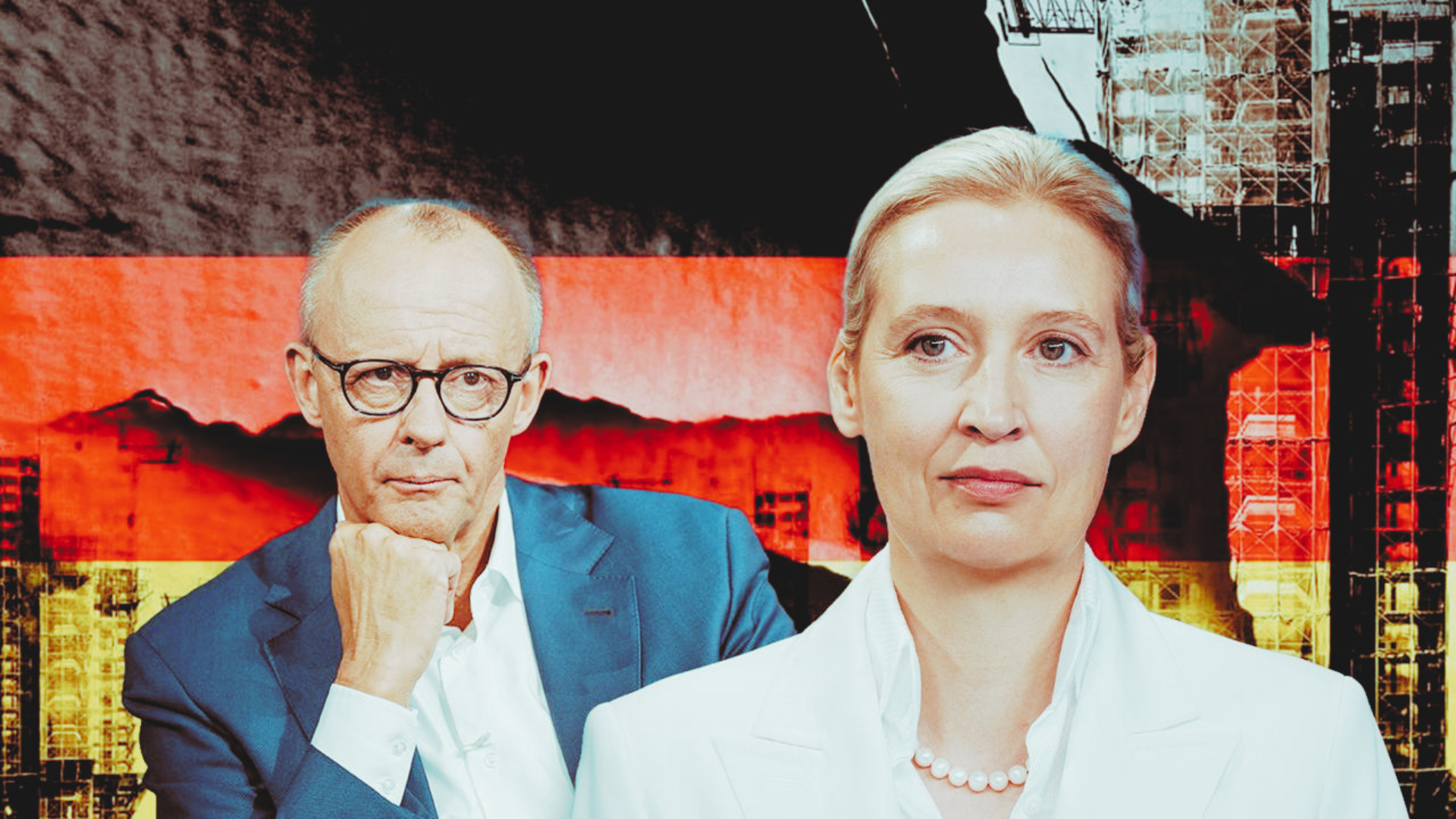
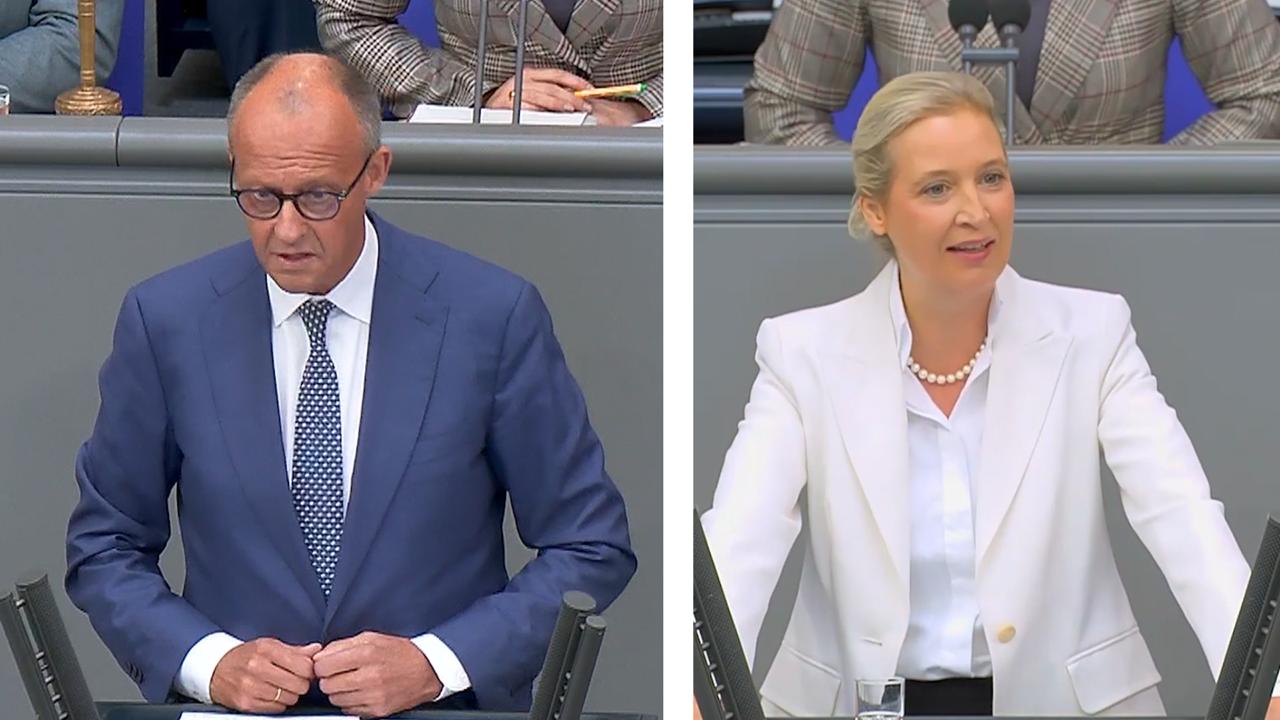
Three days after the Alternative for Germany’s (AfD) landslide in Saxony-Anhalt, the Bundestag’s general budget debate turned into a verbal battle between AfD co-chair Alice Weidel and Chancellor Friedrich Merz, with the two battling it out over mass immigration, democracy, crime, Ukraine, and the future of Germany.

Heckling filled the chamber. Bundestag President Julia Klöckner repeatedly intervened. The exchange was the first direct parliamentary clash between the two leaders since Sunday’s vote, in which the AfD took 43.8 percent and the CDU collapsed to 17.2 percent.

Weidel opened the debate and treated the election results as a verdict on the ruling federal government coalition led by Merz.

“The voters in Saxony-Anhalt have made it abundantly clear to you, in the language of the democratic sovereign: the Black-Red coalition is over,” she said. Citizens wanted “a change of policy,” she added, “and they do not want more of the same.”

🇩🇪🔴JUST IN: After AfD's landslide victory, Weidel tells Merz that "the voters in Saxony-Anhalt have communicated to you in the language of the democratic sovereign with all clarity: Black-Red (CDU-SPD ruling coalition) is over."

She slammed the government's new budget during a… pic.twitter.com/i9JCrhBDin

— Remix News & Views (@RMXnews) September 9, 2026

Addressing Merz directly, she said he had failed to hear that message.

“That is not especially relevant, because your time has run out anyway. Citizens want a change of policy, and they will get it,” she said.

She turned next to the draft federal budget. Weidel called it a “declaration of surrender” and accused Finance Minister Lars Klingbeil of “unserious budget management.”

““Despite record tax revenues, you are incapable of managing the public’s money wisely. Why? Because you are unwilling to free yourselves from the shackles of green ideology, left-wing mass migration, and socialist redistribution.”

She said the CDU-SPD government planned more than €1 trillion in new borrowing over its term, a figure she described as unprecedented in the Federal Republic. The result, she argued, would destroy future room for maneuver and leave “scorched earth.”

“You are driving Germany into national bankruptcy in record time,” she said.

Weidel also continued to slam Merz on mass migration, a sore spot for the ruling government.

“You declare the migration crisis to be over. Yet, every year, a six-figure number of migrants enters the country through the back door of asylum, plus another major city through family reunification—most of them from Muslim tribal cultures,” she stated, adding: “More than a million refugees live whose asylum application has been rejected more than once. What are these people actually still doing in this country? They should be deported!”

Weidel accused the coalition of declaring the crisis over while still admitting large numbers of people through asylum procedures and family reunification. She claimed more than a million people whose asylum claims had already been rejected remained in the country and should be deported. Ordinary workers, she said, were paying the price.

“Because [Germans] have to deal daily with the consequences of mass migration, with the hatred of foreign groups toward their own, with hatred of Christians, with hatred of Germans, with hatred of Germany, and you are even providing financial support to these people. This must finally come to an end!”

🇩🇪🔴 After AfD's victory in Saxony-Anhalt, Alice Weidel takes Chancellor Merz to task during a raucous debate.

"Because [Germans] have to deal daily with the consequences of mass migration, with the hatred of foreign groups toward their own, with hatred of Christians, with… pic.twitter.com/lBjLNPt9hM

— Remix News & Views (@RMXnews) September 9, 2026

Energy policy drew the sharpest interjections from the government benches. Weidel called the energy transition “the greatest millstone dragging our economy into the abyss” and “lost, burned money.” Germany, she said, was facing a possible winter gas shortage after the destruction of Nord Stream 2 while still sending billions to Ukraine.

She demanded renewed Russian gas deliveries, a return to nuclear power, and peace talks.

“While the United States is making another attempt to end the murderous Ukraine war, you are stepping up the war propaganda and the confrontation with Russia,” she told the chancellor. When SPD deputies laughed, she snapped: “Do you find that funny? Voters out there can see that the SPD finds deindustrialization funny. So stop laughing.”

Merz responds

Merz came out swinging against Weidel, conceding the Saxony-Anhalt result was “remarkable,” but said the AfD had missed its actual goal: an absolute majority of seats.

“Fifty-six percent of voters in Saxony-Anhalt did not vote for you,” he said. “And you will not achieve that anywhere in Germany with this policy.” He accused Weidel of having pushed lead candidate Ulrich Siegmund, within hours of the polls closing, to seek a governing majority after having promised before the election to govern only with an absolute majority.

“You are, and you will remain, Ms. Weidel, a destructive force,” he accused.

The sharpest attack from Merz concerned remigration. He said the concept is “nothing other than a synonym for ethnic cleansing based on origin and skin color.”

🇩🇪Germany

The anti-immigration AfD party is pursuing a plan of "ethnic cleansing based on skin color and origin," said Chancellor Friedrich Merz during a Bundestag debate.

Follow: @RMXnews pic.twitter.com/2BFmeSXztH

— Remix News & Views (@RMXnews) September 9, 2026

If that program were carried out, he claimed, skilled trades, nursing homes, hospitals, and restaurants would cease to function, because one in six workers in the crafts already holds a foreign passport and millions of people with a migration background keep essential services running. The coalition, he said, agreed on deporting people without a right to stay, but distinguished between those who work and contribute and those who must leave. AfD deputies erupted. Several shouted that the claim was false.

On Ukraine, Merz accused the AfD of reversing perpetrator and victim. Neither NATO, the European Union nor Germany had threatened Russia, he said.

“The only thing that truly threatens Russia and Putin is the radiance of democracy.”

The AfD, he added, still stood with Moscow.

“Right there runs the deep rift between you and us, in foreign policy, in European policy, in social policy and in peace policy,” he said.

He also charged that Weidel had said nothing about a failed drone incident at Leipzig Airport, a hacking attack on Berlin infrastructure, or this year’s fires and weather extremes.

“Not a word from you, Ms. Weidel, about what has been going on in this country this year, he accused her.

At one point in Merz’s speech, Klöckner told the AfD that heckling is part of parliamentary life, “but it is not part of constantly interrupting a speaker. You also have to accept that there are other opinions.”

When the noise continued, she warned one deputy: “We are not on the football pitch here right now. Save this for the weekend.” Later she threatened MPs with expulsion.

Merz thanked her and said the interruptions themselves showed the AfD’s “contempt for the German Bundestag,” adding that “listening is not your strong suit.”

With the battle brewing over who controls Saxony-Anhalt still to be decided, and with Merz’s CDU crashing below 20 percent in the latest poll, political tensions are set to rise in the coming month

The post Germany: After AfD victory in Saxony-Anhalt, Merz and Weidel trade blows during intense debate in Bundestag appeared first on Remix News.

  •  

ILIB e Fotobiomodulação Sistêmica: como a luz pode contribuir para o equilíbrio do organismo e para a saúde capilar

A utilização da luz com finalidade terapêutica vem ganhando espaço em diferentes áreas da saúde. Entre essas tecnologias está o ILIB — Intravascular Laser Irradiation of Blood, uma modalidade de fotobiomodulação sistémica investigada principalmente por seus possíveis efeitos sobre inflamação, stress oxidativo, circulação e metabolismo celular.

Embora tenha se tornado bastante popular nos últimos anos, compreender corretamente o que é o ILIB, como ele funciona e quais benefícios já possuem respaldo científico é fundamental para que a técnica seja utilizada de maneira responsável.

O que é ILIB?

O ILIB surgiu originalmente como uma técnica em que uma fibra óptica era inserida por via intravenosa para irradiar diretamente o sangue com laser de baixa potência.

Posteriormente, foram desenvolvidas abordagens não invasivas nas quais a luz é aplicada externamente sobre vasos sanguíneos superficiais, especialmente sobre a artéria radial, localizada na região do punho.

Na literatura científica mais atual, esta última abordagem é denominada fotobiomodulação vascular transcutânea — VPBM (Vascular Photobiomodulation), embora comercialmente ainda seja frequentemente chamada de “ILIB” ou “ILIB modificado”. (PubMed)

A técnica faz parte do conceito de fotobiomodulação (PBM), que utiliza luz em comprimentos de onda específicos e em baixa intensidade para produzir respostas biológicas sem provocar aquecimento ou destruição dos tecidos.

Como a fotobiomodulação age no organismo?

A ação da fotobiomodulação está relacionada principalmente à interação da luz com estruturas celulares capazes de absorver energia luminosa.

Entre os mecanismos propostos está a influência sobre a atividade mitocondrial, especialmente sobre componentes da cadeia respiratória celular. Como consequência, podem ocorrer alterações na produção de ATP — a principal molécula energética utilizada pelas células — e na sinalização celular.

Também são estudadas alterações relacionadas a:

  • produção de óxido nítrico;
  • microcirculação;
  • metabolismo energético;
  • espécies reativas de oxigénio;
  • mecanismos antioxidantes;
  • mediadores da resposta inflamatória.

Uma revisão sistemática publicada em 2024 avaliou estudos sobre ILIB e encontrou alterações em citocinas relacionadas à resposta inflamatória e aumento de óxido nítrico. Entretanto, apenas seis estudos preencheram os critérios da revisão, demonstrando que a evidência disponível ainda é limitada. (PubMed)

O ILIB realmente ajuda a “desinflamar” o organismo?

A expressão “desinflamar o corpo” é bastante utilizada popularmente, porém cientificamente é mais apropriado falar em modulação da resposta inflamatória.

Uma revisão publicada em 2025 analisou oito ensaios clínicos randomizados, envolvendo 340 participantes. Os trabalhos avaliaram diferentes condições clínicas e encontraram resultados relacionados à redução de marcadores como IL-6 e TNF-α, diminuição de marcadores de stress oxidativo, redução de dor e melhoria de alguns indicadores de qualidade de vida. Não foram relatados eventos adversos graves nesses estudos. (PubMed)

Isso não significa, entretanto, que o ILIB funcione como uma espécie de “detox” capaz de neutralizar os efeitos de uma alimentação rica em açúcar, excesso de sal, álcool ou produtos ultraprocessados.

A fotobiomodulação deve ser entendida como terapia complementar. Sono adequado, alimentação equilibrada, atividade física, hidratação e tratamento das alterações metabólicas continuam sendo fundamentais para o controlo da inflamação sistémica.

Principais benefícios estudados

Os estudos disponíveis sugerem que a fotobiomodulação vascular pode estar relacionada a:

Modulação da inflamação
Algumas pesquisas demonstramalterações de citocinas pró e anti-inflamatórias.

Redução do stress oxidativo
A técnica vem sendo investigada pela capacidade de modular mecanismos envolvidos na produção e neutralização de espécies reativas de oxigénio.

Microcirculação e função vascular
O óxido nítrico participa da regulação vascular e alguns estudos sugerem que sua disponibilidade pode ser influenciada pela fotobiomodulação.

Metabolismo e função mitocondrial
A PBM é estudada pela capacidade de modificar processos associados à produção de energia celular.

Dor e recuperação tecidual
A fotobiomodulação possui aplicações estudadas em diferentes condições relacionadas à dor e reparação de tecidos.

Apesar desses resultados, uma revisão integrativa publicada em 2025, que reuniu 37 trabalhos sobre ILIB e fotobiomodulação vascular, concluiu que as diferenças entre protocolos, parâmetros dos aparelhos e metodologias ainda impedem afirmar categoricamente sua eficácia para todas as aplicações propostas. (PubMed)

Para quem o ILIB pode ser indicado?

A literatura investiga a fotobiomodulação sistémica como terapia complementar em diferentes situações relacionadas a:

  • processos inflamatórios;
  • stress oxidativo elevado;
  • alterações circulatórias;
  • determinadas condições metabólicas;
  • condições musculoesqueléticas e dolorosas;
  • recuperação e reparação tecidual.

A indicação deve sempre considerar a condição individual, os parâmetros do equipamento, a formação do profissional e a legislação que regulamenta a utilização do dispositivo.

É importante reforçar que ILIB ou VPBM não substituem diagnóstico médico, medicamentos prescritos ou tratamentos específicos para doenças sistémicas.

Contraindicações e cuidados

A literatura científica ainda não apresenta uma lista universal e definitiva de contraindicações específicas para ILIB/VPBM. Revisões sobre a técnica apontam justamente a necessidade de estudos mais robustos para definir melhor protocolos, dosimetria, segurança em longo prazo e indicações clínicas. (PubMed)

Por isso, antes da aplicação devem ser avaliados fatores como:

  • utilização de medicamentos ou substâncias fotossensibilizantes;
  • doenças ou condições sistémicas relevantes;
  • alterações hematológicas importantes;
  • gravidez, devido à limitação de estudos específicos;
  • condições oncológicas ativas ou em acompanhamento, que exigem avaliação individualizada;
  • presença de alterações cutâneas no local onde o equipamento será aplicado;
  • sensibilidade individual e características específicas do equipamento.

A utilização de proteção ocular adequada e o cumprimento dos parâmetros recomendados para cada dispositivo também são fundamentais.

Um consenso internacional publicado em 2025 considera a fotobiomodulação, dentro de parâmetros apropriados, uma modalidade geralmente segura e destaca que a luz vermelha utilizada em PBM não demonstrou induzir dano ao DNA. (PubMed)

Quanto tempo dura uma sessão?

Não existe um tempo universal de aplicação para todas as modalidades e equipamentos.

Entretanto, protocolos de 30 minutos são bastante encontrados em pesquisas queutilizam aplicação transcutânea sobre a artéria radial.

Um estudo com 28 mulheres, por exemplo, utilizou laser vermelho de 660 nm e 100 mW durante 30 minutos sobre a artéria radial. Os pesquisadores identificaram modificações em alguns metabólitos plasmáticos após a aplicação, embora tenham ressaltado que o impacto geral sobre o metaboloma foi pequeno e que novas pesquisas são necessárias. (PubMed Central (PMC))

O tempo, frequência e número total de sessões, entretanto, não devem ser copiados de maneira automática, porque comprimento de onda, potência, energia, área irradiada e objetivo terapêutico interferem diretamente na dose recebida.

Fotobiomodulação é uma terapia dependente de dose.

E QUAL A RELAÇÃO ENTRE ILIB E SAÚDE CAPILAR?

Este é um ponto particularmente interessante para a tricologia.

O folículo piloso é uma estrutura metabolicamente ativa e extremamente sensível às condições do organismo.

Inflamação, stress oxidativo, alterações metabólicas, deficiências nutricionais, alterações hormonais, stress psicológico e algumas doenças sistémicas podem interferir no ciclo capilar.

Nesse contexto, uma terapia capaz de modular determinadas vias inflamatórias e oxidativas pode teoricamente ser interessante como coadjuvante dentro de um protocolo tricológico global.

Entretanto, existe uma diferença científica muito importante:

ILIB/VPBM não é a mesma coisa que aplicar fotobiomodulação diretamente no couro cabeludo.

As evidências atualmente disponíveis para crescimento capilar são muito mais robustas para a fotobiomodulação local do couro cabeludo (LLLT/PBM) do que para ILIB.

Uma revisão sistemática e meta-análise publicada em 2024 avaliou 38 estudos e 3.098 pacientes. Entre os pacientes com alopecia androgenética, a fotobiomodulação de baixa intensidade aplicada diretamente para tratamento capilar produziu aumento significativo da densidade dos fios quando comparada ao placebo. (PubMed)

Outra meta-análise envolvendo 15 estudos e 795 pacientes também encontrou aumento significativo da densidade capilar com fotobiomodulação em indivíduos com alopecia androgenética. (PubMed)

Uma revisão sistemática anterior igualmente demonstrou resultados favoráveis tanto em homens quanto em mulheres com alopecia androgenética. (PubMed)

Portanto, atualmente podemos afirmar que existe evidência clínica razoável para fotobiomodulação aplicada diretamente no couro cabeludo na alopecia androgenética.

Por outro lado, ainda não existem evidências clínicas suficientes para afirmar que o ILIB isoladamente seja capaz de provocar crescimento capilar ou tratar alopecias.

Essa diferenciação é essencial.

Como o ILIB pode ser inserido dentro de um protocolo tricológico?

Em vez de considerá-lo um tratamento isolado contra queda de cabelo, uma abordagem mais coerente é utilizá-lo, quando indicado, como parte de uma estratégia integrativa.

O protocolo pode envolver:

avaliação detalhada do couro cabeludo e dos fios;

tricoscopia;

investigação da provável causa da queda;

fotobiomodulação diretamente no couro cabeludo;

tratamentos específicospara equilíbrio da microbiota e oleosidade;

terapias voltadas à barreira cutânea;

orientação nutricional e médica quando necessária;

e fotobiomodulação sistémica como terapia complementar em pacientes criteriosamente selecionados.

A escolha dependerá do diagnóstico ou da hipótese tricológica.

Eflúvio telógeno, alopecia androgenética, alopecia areata, alterações inflamatórias e doenças cicatriciais são condições completamente diferentes e não devem receber um protocolo único simplesmente porque todas apresentam queda de cabelo.

Luz como aliada, e não como solução isolada

A fotobiomodulação representa uma das áreas mais interessantes da terapêutica contemporânea e possui mecanismos biológicos plausíveis e um corpo científico crescente.

Entretanto, ciência também significa reconhecer os limites da evidência.

Até o momento, estudos sobre ILIB e fotobiomodulação vascular demonstram resultados promissores principalmente em mecanismos associados à inflamação, stress oxidativo e função celular, mas ainda existe grande heterogeneidade de protocolos e necessidade de ensaios clínicos maiores e padronizados.

Na saúde capilar, as evidências são mais consistentes para a aplicação de fotobiomodulação diretamente no couro cabeludo, especialmente na alopecia androgenética.

Por isso, a verdadeira evolução da tricologia não está simplesmente em utilizar mais tecnologias, mas em saber por que, quando e para quem cada tecnologia deve ser utilizada.

A terapia deve estar sempre baseada em avaliação individualizada, conhecimento do ciclo capilar, compreensão das alterações sistémicas e utilização consciente das ferramentas disponíveis.

Referências científicas selecionadas

Díaz L. et al. The clinical efficacy of intravascular laser irradiation of blood (ILIB): A narrative review of randomized controlled trial. Photodiagnosis and Photodynamic Therapy. 2025. PMID: 40324571. (PubMed)

Brassolatti P. et al. Systemic photobiomodulation: an integrative review of evidence for intravascular laser irradiation of blood and vascular photobiomodulation. Lasers in Medical Science. 2025. PMID: 39847118. (PubMed)

Influence of Intravascular Laser Irradiation of Blood (ILIB) on inflammatory cytokines and nitric oxide in vivo: a systematic review. 2024. PMID: 38433159. (PubMed)

Maghfour J. et al. Evidence-based consensus on the clinical application of photobiomodulation. Journal of the American Academy of Dermatology. 2025;93(2):429–443. PMID: 40253006. (PubMed)

Low-Level Laser and LED Therapy in Alopecia: A Systematic Review and Meta-Analysis. Dermatologic Surgery. 2024. PMID: 39404126. (PubMed)

Gupta AK, Bamimore MA. Factors influencing the effect of photobiomodulation in the treatment of androgenetic alopecia: A systematic review and analyses of summary-level data. Dermatologic Therapy. 2020;33(6):e14191. (PubMed)

Coluna de saúde/beleza Fabiana Fukuda tricologista e cabeleireira

  •  

Germany: Chancellor Merz claims AfD win will threaten economy, AfD quickly points out VW plans to close 4 plants

Dire economic news continues to roll in as Germany faces deepening deindustrialization and an economic downturn under Chancellor Friedrich Merz. Reports today say Volkswagen’s management board is proposing to wind down production at four major German plants and shift much of that work abroad.

Just days before, Merz warned that investors would shun an AfD-governed federal state in the future.

“I cannot imagine international investors showing up for a groundbreaking ceremony with an AfD state premier to establish new plants or set up new businesses in Saxony-Anhalt,” said Merz during an ARD summer interview on Aug. 30.

He added that if a right-wing populist party won an absolute majority in the coming election, international investors would think twice about whether to invest in Saxony-Anhalt.

However, VW’s management board has now recommended closing four German production sites. The AfD has seized on the reports.

“In four VW plants, the group board is turning off the lights. The energy transition and electric planned economy are pulling the plug on the German automotive industry. With an AfD government, the economic turnaround will return to reason,” wrote AfD co-chair Alice Weidel.

Gleich in vier VW-Werken lässt der Konzernvorstand die Lichter ausgehen. Energiewende und Elektro-Planwirtschaft ziehen der deutschen Autoindustrie den Stecker. Mit einer AfD-Regierung kommt die Wirtschaftswende zurück zur Vernunft.https://t.co/6BEVQlIf3y

— Alice Weidel (@Alice_Weidel) September 2, 2026

The plan was unanimously adopted by the VW management board and will be presented to the Supervisory Board on Sept. 3. While not an immediate shutdown, it would end production in the early 2030s in Emden, Zwickau, Hanover, and Neckarsulm, with production transferred to Poland, Slovakia, and the Czech Republic.

Germany’s anemic growth is almost entirely debt-fueled and focused on public sector and defense. Its once world-class industrial base is meanwhile rapidly eroding, with Normura reporting that investors are increasingly receptive to right-wing victories, as ZeroHedge reported.

The AfD is using Merz’s economic record to argue that investors would welcome an AfD victory in the state.

AfD candidate Ulrich Siegmund told Welt TV that “exactly the opposite” would happen and that an AfD government would instead encourage firms to launch projects in Saxony-Anhalt.

Conservative-governed states abroad would see “a competitive advantage if we finally have long-term planning security again, if we have no climate targets, no quota targets,” argued Siegmund.

“[Merz’s] current economic policy speaks for itself here. We are currently experiencing deindustrialization in this country. Businesses are closing, businesses are leaving this country. That means reality speaks a clear language here,” he said.

Weidel also attacked Merz after his warning of “significant damage.”

“No German Chancellor has advanced the economic misery and deindustrialization of our country as much as Friedrich Merz,” she said. “His arrogant threats towards the responsible voters in Saxony-Anhalt show the political elite in Berlin is trembling.”

Zerohedge further discussed Normura’s take on the issue, which may be generally supportive of the AfD’s stance.

Andrzej Szczepaniak, senior European economist and executive director at Nomura, wrote “the seeds of political change” adding that “politics in Europe is lurching towards more populism.”

Szczepaniak said: “Five years ago, financial markets would not have seemed so at ease with such a prospect. But then again, these populist right-wing political parties were previously not as fiscally prudent as they are perceived to be today. Indeed, Italy’s Giorgia Meloni is the standard-bearer for financial markets of how a populist right-wing political party can govern: fiscally prudent enough to show investors that the party can govern responsibly while focusing heavily on social issues, including immigration and culture wars, to keep grassroots supporters happy.”

“Financial markets are much more concerned about populist left-wing parties being elected due to their desire to increase spending, often paid for through higher borrowing or higher taxes, which are likely to shut the engine off of already stuttering economies.”

VW’s leaders point to Germany’s high costs

While VW plans for plant closures have not been finalized, they are a sign of general industrial trends across Germany.

VW CEO Oliver Blume, at works council meetings in Emden, said that labor costs at Emden are more than twice those at comparable European plants. He noted that factory costs at other group plants are “clearly cheaper.”

“That is not an accusation, it is the reality we have to be measured against,” he said.

He added that cost cutting “is not enough to stay competitive long-term in a world of such massive change.”

On Aug. 31, CFO Arno Antlitz in Hanover said, according to Reuters, that: “We build good cars but earn too little because our costs are too high.”

“Because of the large cost differences versus other European plants, we currently have no economically viable follow-on production for four German sites once current products run out in the early 2030s,” he warned.

Companies across Germany have either cut production or closed plants entirely, with VW now one of the most high-profile corporate giants eyeing taking the same action.

The post Germany: Chancellor Merz claims AfD win will threaten economy, AfD quickly points out VW plans to close 4 plants appeared first on Remix News.

  •  

Oil prices surge as US-Iran strikes heighten supply fears

NEW YORK: Oil prices climbed in early trading Wednesday, building on the previous session’s sharp gains, as overnight military exchanges between the United States and Iran escalated tensions in the Middle East and revived fears of supply disruptions through a critical global shipping chokepoint. Brent crude futures rose $1.03, or 1.1%, to $95.68 a barrel ... Read more

The post Oil prices surge as US-Iran strikes heighten supply fears appeared first on BOL News.

  •  

US strike on Iranian wedding kills 4, including child, Red Crescent says

TEHRAN: A U.S. missile strike hit a residential home hosting a wedding celebration in southern Iran on Tuesday, killing four people including a child and wounding more than 50 others, the Iranian Red Crescent said. Shrapnel from the attack struck the home in the city of Kuhestak, in Sirik county of Hormozgan province, where a ... Read more

The post US strike on Iranian wedding kills 4, including child, Red Crescent says appeared first on BOL News.

  •  

Was bringt uns der September?

Am nächsten Wochenende stehen die Wahlen in Sachsen-Anhalt an, wo die AfD erstmals eine Regierung stellen könnte. Campact will das mit einer sehr teuren Kampagne im letzten Moment verhindern. Außenpolitisch stehen die Zeichen auf Eskalation, denn die Bundesregierung beispielsweise will hart gegen Russland vorgehen. Außerdem stehen Ende September auch in Russland Wahlen an, nach denen […]
  •  

Oil prices jump more than 2% after US and Iran trade strikes

Oil prices rose more than 2% Monday after the United States attacked an Iranian island in the Strait of Hormuz and drew retaliation from Tehran, as the six-month-old conflict between the two countries showed no signs of easing. Brent crude futures climbed $2.21, or 2.51%, to $90.31 a barrel as of 0436 GMT. U.S. West ... Read more

The post Oil prices jump more than 2% after US and Iran trade strikes appeared first on BOL News.

  •  

Pakistan returns to spot LNG market with fresh tender as power generation takes a hit

KARACHI: State-run Pakistan LNG Limited (PLL) has issued a fresh tender to procure one spot cargo of liquefied natural gas for delivery between September 4 and 8, as global supply disruptions stemming from the Middle East war continue to strain the country’s gas-fired power generation. PLL invited bids from international suppliers for a single cargo ... Read more

The post Pakistan returns to spot LNG market with fresh tender as power generation takes a hit appeared first on BOL News.

  •  

Tras el anuncio de Trump sobre el «mayor acuerdo petrolero de la historia mundial» por 25 años con Venezuela, Delcy Rodríguez dice que impulsará el desarrollo del país

El presidente de Estados Unidos, Donald Trump, anunció el viernes la firma de un acuerdo con el Gobierno interino de Venezuela que calificó como “el mayor acuerdo petrolero de la…
  •  
❌