Reading view
DNA From Ancient Grape Seeds Shows Spain’s Wine Came From the Phoenicians, Not the Romans

Mit welchen Mitteln die EU die Macht in der Ukraine übernehmen will
Der „Katschka-Kos-Plan“, oder wie die EU die totale Kontrolle über die Ukraine übernehmen will
Trump calls on Ukraine to stop strikes on Russian diesel citing global shortage

Trump calls on Ukraine to stop strikes on Russian diesel citing global shortage

First-Ever Kill Of A Drone Boat By Another Drone Boat Claimed By Ukraine
The Ukrainian Navy is claiming one of its uncrewed surface vessels (USV) sank a Russian USV, marking the first time one of these weapons, also known as drone boats, destroyed another. The engagement is the latest iteration in the use of combat drone boats, which Ukraine has employed to devastating effect against Russia’s Black Sea Fleet vessels and facilities, forcing the general evacuation of Russian naval assets from occupied Crimea to bases in Russia proper. The use of weaponized USVs is now proliferating around the globe at an increasing rate.
The incident took place somewhere in the Black Sea, said the Ukrainian Navy, which provided no details about when it happened or exactly where. TWZ cannot independently verify this claim; however, we cannot find any evidence of a drone boat killing another drone boat in the past.
“Units of the Main Intelligence Directorate (GUR) detected the target,” the Ukrainian Navy stated on Telegram. “The Ukrainian Navy’s ‘Sargan 3000’ unmanned boat, equipped with a remotely operated weapon station (RWS) Protector 12.7 mm, successfully destroyed it. This is the first naval battle in history between unmanned boats.”
An 81-second video released by the Ukrainian Navy opens with a view from the Sargan 3000’s onboard camera. It shows the Ukrainian USV acquiring, then engaging the Russian USV with its machine gun. It then cuts to a closer view of the Protector gun system firing at the Russian drone boat. At about the 30-second mark, the view switches to a feed from an aerial platform, though it is unclear if it is piloted or a drone. The video continues with the Sargan 3000 raking the Russian USV with its heavy machine gun until pieces start flying off and it eventually sinks, stern first.
Ukraine's Navy says a Sargan unmanned surface vessel destroyed a Russian unmanned boat with machine-gun fire in the Black Sea, the first-ever battle between unmanned surface vessels. Ukrainian Navy personnel operated in coordination with HUR. #Ukraine pic.twitter.com/Avg4ecz8m6
— NOELREPORTS![]()
(@NOELreports) September 12, 2026
The Sargan 3000 (the name means needlefish in Ukrainian) was first introduced by Ukrainian President Volodymyr Zelensky in April as a “multi-purpose platform that has undergone testing and entered service with the Ukrainian Navy. These uncrewed vessels are highly maneuverable and capable of carrying out strike missions.”
Though initially designed as a kamikaze weapon, it evolved into a platform for remote-controlled weapons, according to the Russian AmalNews outlet.
“The maritime drone features a specialized low-profile hull with distinctive hydrodynamic lines and is constructed from materials that reduce its radar signature,” the publication explained. “The Sargan-3000 USV is equipped with a waterjet propulsion system (presumably powered by a diesel or hybrid engine to ensure a long operational range).”
AmalNews states that the Sargan 3000 is 6.9 meters (about 22.6 feet) long, 2.2 meters (about 7.2 feet) wide, with an operational radius of up to 1,600 km (about 994 miles) and can carry a payload of 450 kg (about 992 pounds). It travels at an estimated speed range of 40-55 knots.
During operations, the Sargan 3000 connects to Ukraine’s Delta situational awareness system, “enabling the real-time transmission of target data, video feeds, and telemetry to operators,” AmalNews noted. “It features multi-channel control capabilities, including redundant satellite communication terminals (utilizing secure Western commercial networks and NATO military networks).”
It is also equipped with “an autonomous inertial and optical navigation system to ensure operation in the event of GPS jamming, and it incorporates electronic countermeasures (ECM) modules.”
There are several variants of this USV. They include those equipped with machine guns; rockets; FPV drones; an electronic warfare version and one that lays mines, the publication added.
Ukraine’s Sargan-3000 naval drone was presented in an FPV drone carrier variant, additionally fitted with a remote weapon station. The type first appeared in combat conditions in early June, when one washed ashore and detonated in the waters of Romania’s Constanța port. #Ukraine pic.twitter.com/QyKnyJFqUq
— NOELREPORTS![]()
(@NOELreports) July 5, 2026
The Sargan 3000’s Protector remote weapon station is made by Kongsberg.
The drone boat’s first publicly known combat engagement took place in July, when one “destroyed the Russian Federation’s FSB border guard ship Izumrud,” the Ukrainian Navy stated at the time.
“Ukrainian naval sailors sank the border guard ship of the 2nd rank with the Sargan-3000 maritime unmanned complex near Novorossiysk,” the Ukrainian Navy claimed on Facebook. “Among the crew of the ship are dead and wounded.”
It is unclear whether the USV acted as a kamikaze vessel or a weapons platform, although the former is most likely.
“It was Izumrud that on November 25, 2018, participated in the attack on the ships of the Ukrainian Navy in the Kerch Strait,” the service added. “Revenge is inevitable.”
Ukraine's Navy has sunk the Russian FSB Border Guard patrol ship Izumrud near Novorossiysk using the Sargan-3000 unmanned maritime system.
— SPRAVDI — Stratcom Centre (@StratcomCentre) July 14, 2026
The vessel, a Rank 2 patrol ship, reportedly sustained catastrophic damage, with casualties and injuries among its crew.
The Izumrud was… pic.twitter.com/7VjKDH2ReD
One sea drone killing another is a notable development given the damage these systems can inflict and the challenge of locating and destroying them on open waters. Being able to operate on the water over long distances and timeframes, they can be used to hunt down other drone boats, as what appears to have taken place in this engagement, or serve as a picket line of sorts to protect harbors, vessels and other targets that have been attacked by USVs in the past.
The Russian drone boat, which is not identified, did not appear to be armed.
The Houthi rebels of Yemen actually pioneered the operational use of kamikaze USVs years ago. We first reported about this capability in January 2017, when an explosive-laden Houthi USV struck a Saudi frigate. Before that, Iran developed various crude kamikaze USVs and those capabilities soon migrated to its Houthi proxies, which put them to use in the Red Sea for the first time.
Ukraine has led the way in advancements of these systems, first employing them as kamikaze weapons, but then adding machine guns and rockets and later missiles, which were used to shoot down Russian helicopters and jets. Ukraine has also used these to launch FPV and bomber drone attacks as well as deliver uncrewed ground vehicles (UGV) into enemy territory.
You can see that delivery in the following video.
No soldiers. Just machines.
— Ivan Khomenko (@KhomenkoIv60065) July 13, 2026
Ukraine has carried out the world's first known combat mission in which a sea drone transported and deployed an armed ground robot behind Russian lines on the occupied Kinburn Spit. pic.twitter.com/zyJdFXWxVb
In the wake of the Ukrainian success with these weapons, Russia developed its own drone boats, and in August 2025, launched its first attack on a Ukrainian vessel.
The U.S. used drone boats as kamikaze weapons for the first time in July, during an attack “on a submarine and ship maintenance facility in Iran,” U.S. Central Command (CENTCOM) announced on X at the time.
Yesterday, using multiple one-way attack surface drones, CENTCOM forces successfully struck a submarine and ship maintenance facility in Iran. Three Corsair unmanned surface vessels hit the port at Bandar Abbas Naval Base, marking the first time American forces have employed sea… pic.twitter.com/bOM2kmgRxz
— U.S. Central Command (@CENTCOM) July 13, 2026
Regardless, it looks like history was made with this incident in the Black Sea. But this involved a sea drone hunting down and destroying another that couldn’t fight back. Given the rapid pace of weapons development by both sides in the Ukraine war, it seems inevitable that a duel between two armed drones boats could soon follow.
Contact the author: howard@twz.com
The post First-Ever Kill Of A Drone Boat By Another Drone Boat Claimed By Ukraine appeared first on TWZ.

When King David Almost Lost Everything by Loving his Son More than God


Illustration of King David weeping over the death of his son Absalom who was killed in battle. Image source unknown – appears to be AI generated.
by Brian Shilhavy
Last week I released the Second Edition of my eBook, The Concept of the American Christian Family is a Myth and is NOT Found Anywhere in the Bible.
One of the chapters of this book, which can also be read as a single article here, is titled The Concept of the American Christian Family is a Myth and is NOT Found Anywhere in the Bible (The title of the book is from this chapter).
In this chapter I show how the “perfect Christian family” does not exist anywhere in the pages of the Bible, as even all the “heroes of the faith” had very difficult and troubled families which today would probably be called “broken families” because they did not meet the standards of today’s Judeo/Christian values for families in Western Culture.
One of those families in the Old Testament that we have quite a bit of text on is the family of King David.
King David fathered many children from many different wives, and one of his children, his son Absalom, completely betrayed him and almost overthrew David from his throne, temporarily taking over the city of Jerusalem.
In the end the people in David’s household who remained loyal to him prevailed, and defeated Absalom in a very bloody battle.
And yet even with this victory, David very nearly lost the entire kingdom, because he idolized Absalom in his heart as his biological son, by loving him more than he loved God.

Death of Absalom by Corrado Giaquinto, 1762. Source.
David’s Failure as a Father and Not Disciplining his Son for Committing Rape had Disastrous Consequences
The story of Absalom’s betrayal against his father and nearly taking over the Kingdom of Israel, starts with one of King David’s other sons who raped the sister of Absalom, and was never punished for it.
The story is recorded in the Bible in 2 Samuel chapter 13.
In the course of time, Amnon son of David fell in love with Tamar, the beautiful sister of Absalom son of David.
Amnon became frustrated to the point of illness on account of his sister Tamar, for she was a virgin, and it seemed impossible for him to do anything to her.
Now Amnon had a friend named Jonadab son of Shimeah, David’s brother. Jonadab was a very shrewd man. He asked Amnon,
“Why do you, the king’s son, look so haggard morning after morning? Won’t you tell me?”
Amnon said to him,
“I’m in love with Tamar, my brother Absalom’s sister.”
“Go to bed and pretend to be ill,” Jonadab said.
“When your father comes to see you, say to him, ‘I would like my sister Tamar to come and give me something to eat. Let her prepare the food in my sight so I may watch her and then eat it from her hand.'”
So Amnon lay down and pretended to be ill.
When the king came to see him, Amnon said to him,
“I would like my sister Tamar to come and make some special bread in my sight, so I may eat from her hand.”
David sent word to Tamar at the palace:
“Go to the house of your brother Amnon and prepare some food for him.”
So Tamar went to the house of her brother Amnon, who was lying down. She took some dough, kneaded it, made the bread in his sight and baked it. Then she took the pan and served him the bread, but he refused to eat.
“Send everyone out of here,” Amnon said.
So everyone left him. Then Amnon said to Tamar,
“Bring the food here into my bedroom so I may eat from your hand.”
And Tamar took the bread she had prepared and brought it to her brother Amnon in his bedroom.
But when she took it to him to eat, he grabbed her and said,
“Come to bed with me, my sister.”
“Don’t, my brother!” she said to him.
“Don’t force me. Such a thing should not be done in Israel! Don’t do this wicked thing. What about me? Where could I get rid of my disgrace?
And what about you? You would be like one of the wicked fools in Israel. Please speak to the king; he will not keep me from being married to you.”
But he refused to listen to her, and since he was stronger than she, he raped her.
Then Amnon hated her with intense hatred. In fact, he hated her more than he had loved her.
Amnon said to her,
“Get up and get out!”
“No!” she said to him.
“Sending me away would be a greater wrong than what you have already done to me.”
But he refused to listen to her. He called his personal servant and said,
“Get this woman out of here and bolt the door after her.”
So his servant put her out and bolted the door after her. She was wearing a richly ornamented robe, for this was the kind of garment the virgin daughters of the king wore.
Tamar put ashes on her head and tore the ornamented robe she was wearing. She put her hand on her head and went away, weeping aloud as she went.
Her brother Absalom said to her,
“Has that Amnon, your brother, been with you? Be quiet now, my sister; he is your brother. Don’t take this thing to heart.”
And Tamar lived in her brother Absalom’s house, a desolate woman.
When King David heard all this, he was furious.
Absalom never said a word to Amnon, either good or bad; he hated Amnon because he had disgraced his sister Tamar. (2 Samuel 13:1-22)
While the text states that King David was “furious” over the rape, no legal action or punishment was apparently ever started as would be required by the Law of Moses for raping a virgin.
David clearly gave preferential treatment to his own biological children that he probably would not have given to non-family members in the Kingdom of Israel.
This allowed the anger and spirit of revenge to foster in Absalom for two years.
Two years later, when Absalom’s sheepshearers were at Baal Hazor near the border of Ephraim, he invited all the king’s sons to come there.
Absalom went to the king and said,
“Your servant has had shearers come. Will the king and his officials please join me?”
“No, my son,” the king replied.
“All of us should not go; we would only be a burden to you.”
Although Absalom urged him, he still refused to go, but gave him his blessing.
Then Absalom said,
“If not, please let my brother Amnon come with us.”
The king asked him, “Why should he go with you?”
But Absalom urged him, so he sent with him Amnon and the rest of the king’s sons.
Absalom ordered his men,
“Listen! When Amnon is in high spirits from drinking wine and I say to you, ‘Strike Amnon down,’ then kill him. Don’t be afraid. Have not I given you this order? Be strong and brave.”
So Absalom’s men did to Amnon what Absalom had ordered.
Then all the king’s sons got up, mounted their mules and fled.
While they were on their way, the report came to David:
“Absalom has struck down all the king’s sons; not one of them is left.”
The king stood up, tore his clothes and lay down on the ground; and all his servants stood by with their clothes torn.
But Jonadab son of Shimeah, David’s brother, said,
“My lord should not think that they killed all the princes; only Amnon is dead. This has been Absalom’s expressed intention ever since the day Amnon raped his sister Tamar. My lord the king should not be concerned about the report that all the king’s sons are dead. Only Amnon is dead.”
(2 Samuel 13:23-33)
Absalom lived as a refugee for three years after this, staying away from his father and Jerusalem.
When he finally came back to Jerusalem, he began his conspiracy to kill his father and take over his throne, by slandering his father and gathering together his enemies.
In the course of time, Absalom provided himself with a chariot and horses and with fifty men to run ahead of him. He would get up early and stand by the side of the road leading to the city gate.
Whenever anyone came with a complaint to be placed before the king for a decision, Absalom would call out to him,
“What town are you from?”
He would answer,
“Your servant is from one of the tribes of Israel.”
Then Absalom would say to him,
“Look, your claims are valid and proper, but there is no representative of the king to hear you.”
And Absalom would add,
“If only I were appointed judge in the land! Then everyone who has a complaint or case could come to me and I would see that he gets justice.”
Also, whenever anyone approached him to bow down before him, Absalom would reach out his hand, take hold of him and kiss him.
Absalom behaved in this way toward all the Israelites who came to the king asking for justice, and so he stole the hearts of the men of Israel.
At the end of four years, Absalom said to the king,
“Let me go to Hebron and fulfill a vow I made to the LORD. While your servant was living at Geshur in Aram, I made this vow: ‘If the LORD takes me back to Jerusalem, I will worship the LORD in Hebron.'”
The king said to him,
“Go in peace.”
So he went to Hebron.
Then Absalom sent secret messengers throughout the tribes of Israel to say,
“As soon as you hear the sound of the trumpets, then say, ‘Absalom is king in Hebron.'”
Two hundred men from Jerusalem had accompanied Absalom. They had been invited as guests and went quite innocently, knowing nothing about the matter.
While Absalom was offering sacrifices, he also sent for Ahithophel the Gilonite, David’s counselor, to come from Giloh, his hometown.
And so the conspiracy gained strength, and Absalom’s following kept on increasing. (2 Samuel 15:1-12)
It is important to note that before all these things happened to King David, God made a Covenant with David, promising him that he would never lack a descendant to sit on his throne and rule Israel. This promise was about the coming Messiah, Jesus Christ, who was a descendant of David.
This is recorded in 2 Samuel chapter 7.
“Now then, tell my servant David, ‘This is what the LORD Almighty says:
I took you from the pasture and from following the flock to be ruler over my people Israel. I have been with you wherever you have gone, and I have cut off all your enemies from before you.
Now I will make your name great, like the names of the greatest men of the earth. And I will provide a place for my people Israel and will plant them so that they can have a home of their own and no longer be disturbed.
Wicked people will not oppress them anymore, as they did at the beginning and have done ever since the time I appointed leaders over my people Israel.
I will also give you rest from all your enemies.
The LORD declares to you that the LORD himself will establish a house for you: When your days are over and you rest with your fathers, I will raise up your offspring to succeed you, who will come from your own body, and I will establish his kingdom.
He is the one who will build a house for my Name, and I will establish the throne of his kingdom forever. I will be his father, and he will be my son.
When he does wrong, I will punish him with the rod of men, with floggings inflicted by men. But my love will never be taken away from him, as I took it away from Saul, whom I removed from before you.
Your house and your kingdom will endure forever before me; your throne will be established forever.'” (2 Samuel 7:8-16)
The person from David’s family line that would be next to take the throne was not Absalom. While it is recorded in 2 Samuel 14:27 that Absalom fathered three sons and a daughter, his sons apparently died, according to 2 Samuel 18:
During his lifetime Absalom had taken a pillar and erected it in the King’s Valley as a monument to himself, for he thought, “I have no son to carry on the memory of my name.”
He named the pillar after himself, and it is called Absalom’s Monument to this day. (2 Samuel 18:18)
David’s other son, Solomon, who was born to the woman David originally committed adultery with, Bathsheba, was the one who became the next King after David died. David had also murdered Bathsheba’s first husband, Uriah.
What the Old Testament Scriptures actually teach, therefore, is that God uses imperfect families to accomplish his purpose on earth.
Not only is Bathsheba in the family line of the Messiah, Jesus Christ, so is a non-Israelite, the prostitute of Rahab from Jericho:
A record of the genealogy of Jesus Christ the son of David, the son of Abraham: Abraham was the father of Isaac, Isaac the father of Jacob, Jacob the father of Judah and his brothers, Judah the father of Perez and Zerah, whose mother was Tamar, Perez the father of Hezron, Hezron the father of Ram, Ram the father of Amminadab, Amminadab the father of Nahshon, Nahshon the father of Salmon, Salmon the father of Boaz, whose mother was Rahab, Boaz the father of Obed, whose mother was Ruth, Obed the father of Jesse, and Jesse the father of King David.
David was the father of Solomon, whose mother had been Uriah’s wife… (Matthew 1:1-6)
David and those loyal to him had to flee Jerusalem before they were all murdered by Absalom, and after regrouping their forces, they met with the forces loyal to Absalom in battle, and Absalom himself was killed along with about 20,000 other Israelites.
David mustered the men who were with him and appointed over them commanders of thousands and commanders of hundreds. David sent the troops out—a third under the command of Joab, a third under Joab’s brother Abishai son of Zeruiah, and a third under Ittai the Gittite.
The king told the troops,
“I myself will surely march out with you.”
But the men said,
“You must not go out; if we are forced to flee, they won’t care about us. Even if half of us die, they won’t care; but you are worth ten thousand of us. It would be better now for you to give us support from the city.”
The king answered,
“I will do whatever seems best to you.”
So the king stood beside the gate while all the men marched out in units of hundreds and of thousands. The king commanded Joab, Abishai and Ittai,
“Be gentle with the young man Absalom for my sake.”
And all the troops heard the king giving orders concerning Absalom to each of the commanders.
The army marched into the field to fight Israel, and the battle took place in the forest of Ephraim. There the army of Israel was defeated by David’s men, and the casualties that day were great—twenty thousand men.
The battle spread out over the whole countryside, and the forest claimed more lives that day than the sword.
Now Absalom happened to meet David’s men. He was riding his mule, and as the mule went under the thick branches of a large oak, Absalom’s head got caught in the tree.
He was left hanging in midair, while the mule he was riding kept on going. When one of the men saw this, he told Joab,
“I just saw Absalom hanging in an oak tree.”
Joab said to the man who had told him this,
“What! You saw him? Why didn’t you strike him to the ground right there? Then I would have had to give you ten shekels of silver and a warrior’s belt.”
But the man replied,
“Even if a thousand shekels were weighed out into my hands, I would not lift my hand against the king’s son. In our hearing the king commanded you and Abishai and Ittai, ‘Protect the young man Absalom for my sake.’ And if I had put my life in jeopardy—and nothing is hidden from the king—you would have kept your distance from me.”
Joab said,
“I’m not going to wait like this for you.”
So he took three javelins in his hand and plunged them into Absalom’s heart while Absalom was still alive in the oak tree. And ten of Joab’s armor-bearers surrounded Absalom, struck him and killed him.
Then Joab sounded the trumpet, and the troops stopped pursuing Israel, for Joab halted them. They took Absalom, threw him into a big pit in the forest and piled up a large heap of rocks over him.
Meanwhile, all the Israelites fled to their homes. (2 Samuel 18:1-17)
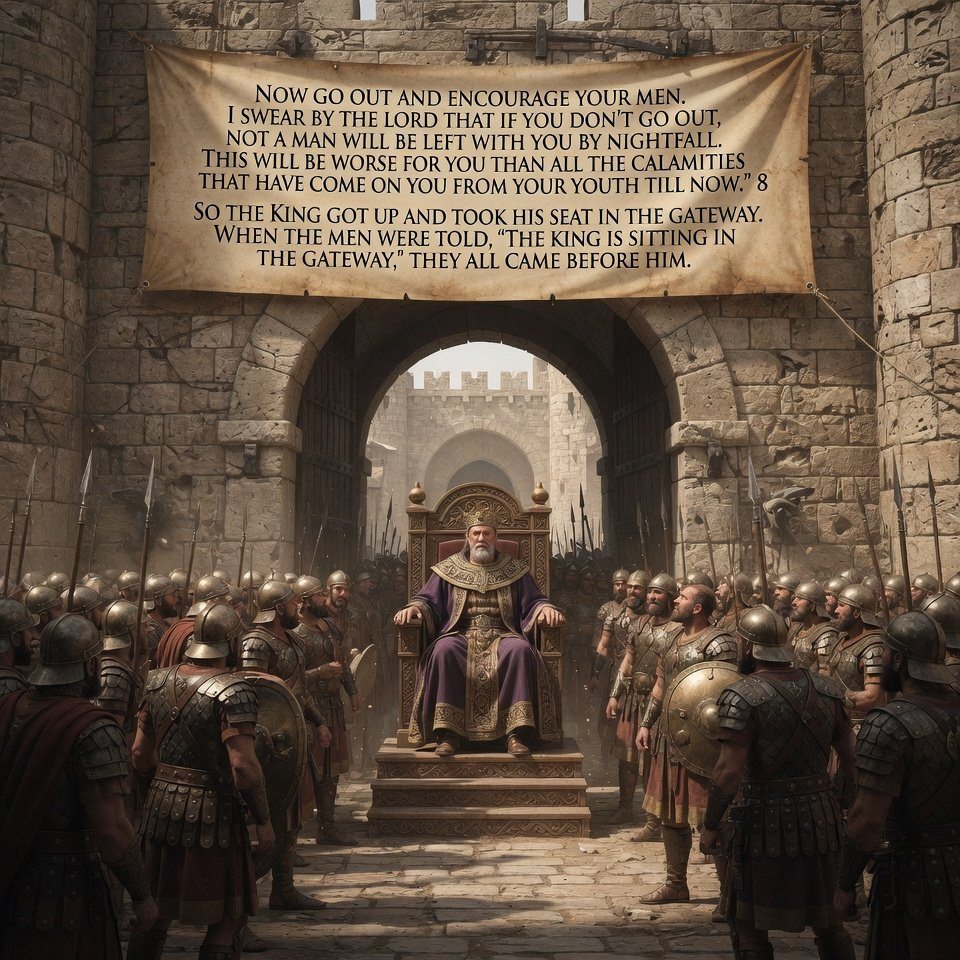
Image source unknown. Appears to be AI generated.
Joab, the head of David’s military, and the only one who was powerful enough to defy the king’s orders, did what he had to do to protect the Kingdom.
He knew full well what David’s response would be, but he also knew full well what the consequences would be if Absalom was allowed to live, so he acted in the best interests of the Kingdom.
What happened next was an event that if David had made the wrong choice, he would have lost everything.
Joab was told,
“The king is weeping and mourning for Absalom.”
And for the whole army the victory that day was turned into mourning, because on that day the troops heard it said,
“The king is grieving for his son.”
The men stole into the city that day as men steal in who are ashamed when they flee from battle. The king covered his face and cried aloud,
“O my son Absalom! O Absalom, my son, my son!”
Then Joab went into the house to the king and said,
“Today you have humiliated all your men, who have just saved your life and the lives of your sons and daughters and the lives of your wives and concubines.
You love those who hate you and hate those who love you. You have made it clear today that the commanders and their men mean nothing to you.
I see that you would be pleased if Absalom were alive today and all of us were dead.
Now go out and encourage your men.
I swear by the LORD that if you don’t go out, not a man will be left with you by nightfall.
This will be worse for you than all the calamities that have come upon you from your youth till now.”
So the king got up and took his seat in the gateway.
When the men were told, “The king is sitting in the gateway,” they all came before him. Meanwhile, the Israelites had fled to their homes. (2 Samuel 19:1-8)
David came within hours of losing everything, simply because he loved his biological son more than he loved God, and the Kingdom of God of which he was appointed King.
If you put your Loyalty to Jesus and the Father Above your Loyalty to Family, the World will Hate You
Loyalty to family members and bloodlines above all else is Satanic and worldly. Jesus made this very clear during his time on earth, stating to the Jews that their bloodlines back to Abraham were meaningless, unless they actually knew God, and recognized that he came from God and was the Messiah.
Jesus also clearly demanded loyalty to him above our loyalty to family members, and he himself was persecuted by his own family members as I have recently written. See:
When Jesus’s Own Family Turned Against Him
As a result of Jesus’s loyalty to his Heavenly Father above his earthly family, the world hated him. And he stated that the world would hate us also if we walked this same path.
If the world hates you, keep in mind that it hated me first.
If you belonged to the world, it would love you as its own.
As it is, you do not belong to the world, but I have chosen you out of the world. That is why the world hates you.
Remember the words I spoke to you: ‘No servant is greater than his master.’
If they persecuted me, they will persecute you also. If they obeyed my teaching, they will obey yours also. (John 15:18-20)
This principle applies not only to our own biological families, but also to the fake believers in the “Household of God”, or those who claim to be part of “God’s family.”
Being part of a group of believers does not give anyone a “free pass” if they do not know God, and are betraying the faith.
Paul made this very clear in his writings:
It is actually reported that there is sexual immorality among you, and of a kind that does not occur even among pagans: A man has his father’s wife.
And you are proud! Shouldn’t you rather have been filled with grief and have put out of your fellowship the man who did this?
Even though I am not physically present, I am with you in spirit. And I have already passed judgment on the one who did this, just as if I were present.
When you are assembled in the name of our Lord Jesus and I am with you in spirit, and the power of our Lord Jesus is present, hand this man over to Satan, so that the sinful nature may be destroyed and his spirit saved on the day of the Lord. (1 Corinthians 5:1-5)
Timothy, my son, I give you this instruction in keeping with the prophecies once made about you, so that by following them you may fight the good fight, holding on to faith and a good conscience.
Some have rejected these and so have shipwrecked their faith. Among them are Hymenaeus and Alexander, whom I have handed over to Satan to be taught not to blaspheme. (1 Timothy 1:18-20)
It is often a very lonely journey as we walk through this life as aliens and pilgrims, knowing that this is not our home, as we reject the ways of the world and then suffer for it, often by being rejected by our own families or so called “believers” and “brothers”.
But it is worth it, knowing where our loyalties lie, just like the true believers who walked that same lonely path before us!
All these people were still living by faith when they died. They did not receive the things promised; they only saw them and welcomed them from a distance.
And they admitted that they were aliens and strangers on earth.
People who say such things show that they are looking for a country of their own. If they had been thinking of the country they had left, they would have had opportunity to return. Instead, they were longing for a better country—a heavenly one.
Therefore God is not ashamed to be called their God, for he has prepared a city for them.
I do not have time to tell about Gideon, Barak, Samson, Jephthah, David, Samuel and the prophets, who through faith conquered kingdoms, administered justice, and gained what was promised; who shut the mouths of lions, quenched the fury of the flames, and escaped the edge of the sword; whose weakness was turned to strength; and who became powerful in battle and routed foreign armies.
Women received back their dead, raised to life again. Others were tortured and refused to be released, so that they might gain a better resurrection. Some faced jeers and flogging, while still others were chained and put in prison.
They were stoned; they were sawed in two; they were put to death by the sword. They went about in sheepskins and goatskins, destitute, persecuted and mistreated:
The world was not worthy of them.
(Hebrews 11)
Comment on this article at Created4Health.org.
This article was written by Human Superior Intelligence (HSI)
See Also:
Understand the Times We are Currently Living Through
Second Edition of eBook Released: The Concept of the American Christian Family is a Myth and is NOT Found Anywhere in the Bible – by Brian Shilhavy
FREE eBook! Restoring the Foundation of New Testament Faith in Jesus Christ – by Brian Shilhavy
The Brotherhood of Satan vs. The Brotherhood of Jesus Christ
KABBALAH: The Anti-Christ Religion of Satan that Controls the World Today
Exposing the Christian Zionism Cult
The Bewitching of America with the Evil Eye and the Mark of the Beast
Jesus Christ’s Opposition to the Jewish State: Lessons for Today
Identifying the Luciferian Globalists Implementing the New World Order – Who are the “Jews”?
The Brain Myth: Your Intellect and Thoughts Originate in Your Heart, Not Your Brain
What is the Condition of Your Heart? The Superiority of the Human Heart over the Human Brain
The Seal and Mark of God is Far More Important than the “Mark of the Beast” – Are You Prepared for What’s Coming?
The Satanic Roots to Modern Medicine – The Image of the Beast?
Medicine: Idolatry in the Twenty First Century – 10-Year-Old Article More Relevant Today than the Day it was Written
Having problems receiving our emails? See:
How to Beat Internet Censorship and Create Your Own Newsfeed
We Are Now on Telegram. Video channels at Bitchute, and Odysee.
If our website is seized and shut down, find us on Telegram, as well as Bitchute and Odysee for further instructions about where to find us.
If you use the TOR Onion browser, here are the links and corresponding URLs to use in the TOR browser to find us on the Dark Web: Health Impact News, Vaccine Impact, Medical Kidnap, Created4Health, CoconutOil.com.
The post When King David Almost Lost Everything by Loving his Son More than God first appeared on Health Impact News.

Wie Deutschland zum größten Unterstützer von Staatsterrorismus und Völkermord wurde
Operation Interflex: Britain Is Bankrolling a War Europe Cannot Pay For
Sanctions britanniques : Israël peut dormir tranquille
Au titre d'une initiative conjointe engageant douze pays dont la France, le ministre des affaires étrangères britannique a annoncé le 8 septembre, devant la Chambre des communes, de nouvelles sanctions visant les colonies israéliennes en Cisjordanie. M. Edward (« Ed ») Miliband a dénoncé notamment le « nettoyage ethnique » qui y sévit. Les mesures qu'il a détaillées cibleront « des entreprises et des individus qui fournissent des services, tels que la construction, les infrastructures, le financement et l'immobilier, destinés à l'expansion » de la colonisation. Il s'agit aussi d'interdire l'importation des produits de ces mêmes colonies – que les Nations unies estiment illégales au regard du droit international.
Ces dispositions relèvent en partie du jeu politique interne. Le nouveau gouvernement de M. Andrew (« Andy ») Burnham semble enfin prendre acte de l'impasse dans laquelle le Parti travailliste s'est mis en refusant de faire droit à l'émotion et aux mobilisations suscitées par l'aggravation de la tragédie que vit le peuple palestinien au cours de la période récente. Déjà, le 11 novembre 2023, plus de 800 000 personnes avaient défilé à Londres en solidarité avec Gaza. Ces derniers mois, les Verts, beaucoup plus offensifs sur le sujet que les travaillistes, progressent dans les sondages et aux élections partielles ou locales.
Les sanctions contre les colonies illégales sont aussi tardives. En effet, depuis le 7 octobre 2023, les forces de Tel-Aviv ou des colons ont tué plus de 1 100 Palestiniens, dont plus de 240 enfants, en Cisjordanie. L'armée israélienne inflige également des détentions ou des incarcérations arbitraires, des humiliations de toutes sortes, des contrôles incessants qui rendent les déplacements cauchemardesques sur ce territoire.
Les dispositions annoncées par M. Miliband sont enfin dérisoires. D'une part, l'État visé par ces sanctions en raison de la seule colonisation de la Cisjordanie commet un génocide, des crimes de guerre et s'en prend illégalement au Liban, à la Syrie ou à l'Iran. D'autre part, les importations des colonies ne représentent qu'une proportion minime des 6 milliards de livres (près de 7 milliards d'euros) d'échanges commerciaux entre le Royaume-Uni et Israël. D'après Bloomberg, cité par L'Opinion (8 septembre 2026), « des diplomates britanniques ont eux-mêmes assuré Washington que les sanctions (contre les colonies israéliennes) étaient avant tout symboliques et qu'elles n'avaient pas vocation à miner la relation diplomatique et commerciale entre les deux États ».
Dans nos archives
-
Les trahisons de M. Starmer n'ont pas tué la gauche britannique
Owen Jones, avril 2026Au Royaume-Uni aussi, le pouvoir semble promis à la droite radicale. Le parti Reform UK de M. Nigel Farage a le vent en poupe. Quinze années d'austérité et de scandales ont (…) → -
Ces « terroristes » britanniques qui soutiennent la Palestine
Rayan Freschi & Mathieu Rigouste, janvier 2026Comment entraver l'action d'une organisation britannique de solidarité avec la Palestine s'inscrivant parfaitement dans le cadre du droit ? Autrement dit, comment échapper à l'État (…) → -
À Londres, le retour de l'extrême centre
Oliver Eagleton, septembre 2024Après quatorze ans de pouvoir conservateur, les travaillistes l'ont emporté aux élections du 4 juillet. Mais personne ne croit à la rupture. Comme son prédécesseur, le nouveau (…) → -
La rue avec Gaza, les élites derrière Israël
Daniel Finn, mai 2024On n'avait plus vu cela depuis la mobilisation de 2003 contre la guerre d'Irak menée par MM. George W. Bush et Anthony Blair. Le 11 novembre dernier, selon les organisateurs, plus (…) →
La rue avec Gaza, les élites derrière Israël
On n'avait plus vu cela depuis la mobilisation de 2003 contre la guerre d'Irak menée par MM. George W. Bush et Anthony Blair. Le 11 novembre dernier, selon les organisateurs, plus de 800 000 personnes auraient défilé à Londres en solidarité avec Gaza. Les manifestants ciblaient le gouvernement conservateur comme le Parti travailliste, qui lui aussi a pris fait et cause pour Israël.
Depuis le début de l'offensive israélienne contre Gaza, en octobre dernier, un fossé s'est creusé entre la classe politique et l'opinion publique britanniques. Le gouvernement conservateur de M. Rishi Sunak et l'opposition travailliste de M. Keir Starmer ont apporté un soutien sans réserve à la guerre menée par M. Benyamin Netanyahou au nom du droit d'Israël à se défendre.
Pourtant, la population britannique rejette l'idée selon laquelle Israël devrait bombarder l'enclave jusqu'à l'élimination du Hamas. En novembre, 59 % des personnes interrogées par YouGov souhaitaient qu'Israël mette un terme à sa campagne militaire, quand seulement 19 % d'entre elles se déclaraient favorables à sa poursuite. En février, 66 % des sondés soutenaient un cessez-le-feu et seulement 13 % d'entre eux la guerre contre les Palestiniens. Aujourd'hui, l'opinion publique demande l'arrêt des ventes d'armes aux Israéliens à une majorité de 56 %, contre 17 % qui réclament sa poursuite (1).
La présidente conservatrice de la commission des affaires étrangères à Westminster a révélé fin mars l'existence d'une note des services juridiques du gouvernement britannique établissant qu'Israël violait le droit humanitaire international. Comme une telle conclusion emporte que Londres cesse de vendre des armes à Tel-Aviv, l'exécutif a refusé de rendre public le document. Mais, le 1er avril, des frappes de missiles israéliennes ont tué trois salariés britanniques de l'organisation caritative World Central Kitchen avec quatre autres de leurs collègues, alors qu'ils apportaient de l'aide à Gaza. Le surlendemain, plus de six cents juristes et universitaires — dont trois juges retraités de la Cour suprême britannique — dénonçaient l'illégalité des ventes à l'armée israélienne (2).
Depuis plus de six mois, la solidarité avec le peuple palestinien donne lieu à des manifestations qui comptent parmi les plus massives de l'histoire moderne. Semaine après semaine et mois après mois, les rues de Londres et d'autres villes britanniques se remplissent de manifestants appelant au cessez-le-feu. La plus importante à ce jour a réuni plusieurs centaines de milliers de personnes. En réponse, le gouvernement Sunak a condamné les protestataires et cherché des moyens de les criminaliser.
« Marches de la haine »
En novembre, la ministre de l'intérieur a demandé à la police métropolitaine de Londres d'interdire la grande manifestation qui se préparait. Comme les officiers de police de la « Met » lui ont répondu qu'elle n'avait aucune raison légale de prendre une telle décision, Mme Suella Braverman a allégué que les manifestants entendaient profaner un mémorial de la Grande Guerre pour inciter des radicaux d'extrême droite à attaquer la marche, ce qui aurait donné un prétexte pour interdire de futurs rassemblements. Mais les militants excités par la ministre s'en sont pris aux forces de l'ordre et ont blessé plusieurs policiers, grièvement dans certains cas.
À la suite de ce fiasco, M. Sunak a dû exiger la démission de Mme Braverman, mais son gouvernement et la presse de droite ont poursuivi leurs attaques contre les manifestations en faveur du cessez-le-feu, qualifiées de « marches de la haine ». Dans leur viseur, toujours, le slogan « Du fleuve à la mer, la Palestine sera libre », qualifié d'antisémite.
Lorsqu'elle était encore ministre de l'intérieur, Mme Braverman avait recommandé aux services de police d'interpréter ce mot d'ordre comme l'« expression d'un violent désir de voir Israël rayé de la carte » et de punir son utilisation au nom du respect de l'ordre public (3). Dans un cas au moins, la police a suivi les instructions de la ministre : à Manchester, une jeune femme d'origine palestinienne a été arrêtée pour injure à caractère raciste parce qu'elle l'avait prononcé (4).
Les soutiens d'Israël prétendent discerner le « vrai » sens du slogan « Du fleuve à la mer, la Palestine sera libre » : ils y voient à coup sûr un appel au massacre ou à l'expulsion dès lors qu'il ne dit pas ce qu'il adviendra de la population juive d'Israël une fois cette aspiration satisfaite. Les Palestiniens et leurs alliés, qui martèlent qu'il s'agit en réalité d'un appel à l'égalité et non au nettoyage ethnique, se voient fréquemment refuser l'accès aux médias britanniques. Du reste, les défenseurs d'Israël invoquent à l'envi son « droit à se défendre » et son « droit à l'existence ». Or la première formule ne précise pas quelles méthodes l'État peut légitimement employer au nom de l'autodéfense, et la seconde ignore la question de l'existence d'un État palestinien, à côté d'Israël. Les Palestiniens les perçoivent certainement comme des menaces et des agressions, du moins telles qu'elles sont employées en règle générale par les principaux défenseurs de la guerre contre Gaza, mais les proférer ne vaudra à personne d'être poursuivi pour injure à caractère raciste.
Début mars, lors d'un discours prononcé devant le 10 Downing Street, M. Sunak a fait franchir un cap supplémentaire à la campagne gouvernementale contre le mouvement de solidarité avec la Palestine. Il a prétendu que les manifestations en faveur d'un cessez-le-feu avaient entraîné « une hausse choquante des perturbations et des actes criminels extrémistes », se traduisant notamment par des « intimidations, des menaces et la préparation d'actions violentes ». En réalité, la contestation, particulièrement pacifique et disciplinée, a donné lieu à moins d'arrestations qu'un festival de musique ou qu'un événement sportif de même ampleur (5). Le discours du premier ministre se fondait essentiellement sur des affirmations de journalistes prétendant sans la moindre preuve, que Londres tendrait à devenir une zone interdite aux Juifs (6).
Deux universitaires britanniques ont obtenu la condamnation pour diffamation de la ministre de la recherche Michelle Donelan, qui les avait qualifiés de soutiens du Hamas (7). Les archevêques de Canterbury et de York ont cru devoir s'inquiéter d'une approche qui « ciblerait de manière disproportionnée les musulmans » après que le gouvernement a confié au ministre aux communautés Michael Gove le soin d'élaborer une nouvelle définition de l'extrémisme : figure de proue de la droite néoconservatrice, M. Gove affirme en effet depuis longtemps que les musulmans britanniques représentent une menace pour la démocratie libérale ; à son initiative, les autorités considéreront désormais comme extrémiste toute velléité de saper les institutions ou les « valeurs » britanniques (8).
Les attaques contre le mouvement de solidarité avec la Palestine se nourrissent aussi des déclarations de personnalités gouvernementales affublées de titres orwelliens, tel M. John Woodcock : le « conseiller indépendant en matière de violences et de perturbations politiques » a récemment proposé que les principaux partis consentent à la « “tolérance zéro” à l'égard des groupes qui menacent la démocratie », par exemple Palestine Solidarity Campaign (PSC) (9). « Si les opinions “extrémistes” sont illégales, s'inquiétait sur X, le 4 mars, la députée tory Miriam Cates, alors celui qui définit l'“extrémisme” a le pouvoir de restreindre la liberté d'expression, la liberté de religion, la liberté de la presse et la liberté d'association. C'est la voie vers l'autoritarisme. »
M. Woodcock est, lui, un ancien député travailliste, rallié à M. Boris Johnson en 2019. Mais nombre de députés de son ancien camp partagent son hostilité envers les manifestations contre la guerre à Gaza, à commencer par le dirigeant du parti, M. Starmer. Au début de l'offensive israélienne, ce dernier s'est dit convaincu qu'Israël avait le droit de couper l'eau et l'électricité aux civils de Gaza — action pourtant constitutive de crime de guerre. Face à l'indignation, M. Starmer a dû retirer ses propos, en alléguant contre l'évidence qu'il avait mal compris la question (10).
Il a par ailleurs suspendu deux parlementaires : M. Andrew McDonald, pour avoir déclaré, lors d'une manifestation à Londres : « Nous ne nous arrêterons pas tant que justice n'aura pas été faite. Tant que l'ensemble de la population, israélienne comme palestinienne, du fleuve à la mer, ne pourra vivre dans la liberté et la paix » ; et Mme Kate Osamor, parce qu'elle avait qualifié la guerre à Gaza de génocide, alors que la Cour internationale de justice (CIJ) avait déjà jugé recevable la plainte déposée par l'Afrique du Sud contre Israël. M. McDonald a réintégré son groupe parlementaire après la défaite essuyée par le Parti travailliste fin février, à l'occasion d'une élection partielle importante à Rochdale, dans l'agglomération de Manchester. Le vainqueur, M. George Galloway, ancien député travailliste devenu un électron libre, avait fait de ce scrutin un référendum contre le soutien de M. Starmer à Israël.
La victoire de M. Galloway est survenue à la suite d'une violente controverse. Quelques jours avant son élection, le Parti national écossais (SNP) avait déposé à la Chambre des communes une motion en faveur d'un cessez-le-feu. Le Labour désirait supprimer les références au « châtiment collectif du peuple palestinien » et au « massacre de civils innocents ». Il souhaitait aussi remplacer l'appel clair et net à un cessez-le-feu par des circonlocutions qui auraient donné à M. Netanyahou une marge de manœuvre suffisante pour poursuivre sa guerre. Selon la formulation proposée par les travaillistes, « les Israéliens ont le droit d'avoir la garantie que les horreurs du 7 octobre 2023 ne se reproduiront pas ». Mais il n'était nullement question du droit des Palestiniens à obtenir la garantie que les horreurs subies depuis le 7 octobre (et bien avant) ne se reproduiraient pas.
Comme M. Starmer ne voulait ni que ses députés votent contre la motion du SNP ni qu'ils s'abstiennent, il a imposé au président de la Chambre Lindsay Hoyle un vote des amendements travaillistes préalable à celui de la motion. Cette violation des règles de procédure parlementaire lui a permis d'empêcher le troisième parti de la Chambre de défendre une position reflétant l'opinion majoritaire dans le pays.
Le refus des travaillistes d'appeler clairement au cessez-le-feu contredit les opinions de ses propres partisans. En février, selon YouGov, 83 % des électeurs ayant voté pour le Labour lors de la précédente élection générale voulaient en effet qu'Israël mette un terme à sa campagne militaire. Seuls 3 % d'entre eux se déclaraient favorables à la poursuite des opérations. L'entêtement de M. Starmer à soutenir la guerre de M. Netanyahou procède de son refus de distinguer lutte contre l'antisémitisme et soutien à Tel-Aviv. Car l'association de la défense des droits des Palestiniens à l'hostilité aux Juifs lui sert à marginaliser la gauche de son parti depuis qu'il en a pris la direction, en 2020. Mais cette arme de lutte interne devient un problème politique majeur dans la perspective de l'élection générale.
Bien qu'une violence ininterrompue, émaillée de crimes de guerre, s'abatte depuis plus de six mois sur les civils palestiniens, les deux principaux partis britanniques restent inébranlables dans leur défense d'Israël. Et bien que des figures politiques aussi importantes que le conservateur Nicholas Soames, membre de la Chambre des lords, et le maire travailliste de Londres, M. Sadiq Khan, appellent désormais à l'arrêt des ventes d'armes, MM. Sunak et Starmer affirment encore à cette heure que le Royaume-Uni doit continuer à soutenir l'effort de guerre israélien. Même si cette position évoluait dans les semaines à venir, l'un et l'autre auront causé des dommages à leur réputation, ainsi qu'au crédit diplomatique de leur pays.
(Traduit de l'anglais par Nicolas Vieillescazes.)
(1) Patrick Wintour, « Majority of voters in UK back banning arms sales to Israel, poll finds », The Guardian, Londres, 3 avril 2024. Cf. aussi Matthew Smith, « Israel-Palestine : Fundamental attitudes to the conflict among Western Europeans », 20 décembre 2023, et « British attitudes to the Israel-Gaza conflict : February 2024 update », 15 février 2024.
(2) Alex Barton, « Former Supreme Court judges say government's arming Israel breaches international law », The Telegraph, Londres, 4 avril 2024.
(3) Rajeev Syal et Aubrey Allegretti, « Waving Palestinian flag may be a criminal offence, Braverman tells police », The Guardian, 10 octobre 2023.
(4) Haroon Siddique, « Police accused of stifling protest after Manchester arrest over Palestine chant », The Guardian, 21 mars 2024.
(5) Nandini Naira Archer, « Arrest rate at “openly criminal” Palestine protests is lower than Glastonbury », 7 février 2024.
(6) Ben Reiff, « A “no-go zone” for Jews ? The making of a moral panic in London », 13 mars 2024.
(7) Poppy Wood, « Donelan asked to explain secret dossier on academics after libel case », 8 mars 2024.
(8) Nadeem Badshah, « Archbishops of Canterbury and York warn against new extremism definition », The Guardian, 12 mars 2024. Cf. aussi Peter Oborne, « UK extremism : Michael Gove is turning British Muslims into an enemy within », 19 mars 2024.
(9) Elizabeth Short, « “Profoundly anti-democratic and repressive” », The Morning Star, Londres, 12 mars 2024.
(10) Alexandra Rogers, « Sir Keir Starmer seeks to clarify Gaza remarks following backlash from Labour councillors », 20 octobre 2023.
Tacheles #220 ist online
Mit welchen Methoden Selensky die Ukraine regiert
Nuclear medicine: New EU framework to secure Europe’s supply of medical radioisotopes and reduce dependence on Russia
The European Commission has put forward the European Radioisotope Valley Initiative (C/2026/6132) a new strategic framework to strengthen Europe’s leadership in the production of medical radioisotopes. It aims to reinforce EU security of radioisotope supply, guiding investment in the sector and reducing strategic dependencies on third countries, in particular Russia.
With more than 10 million medical procedures using radioisotopes performed in the EU every year, mainly in oncology and cardiology, an impressive EU-wide production and distribution network has been developed to supply radioisotopes to patients across Europe daily. The EU has become the world’s leading producer of medical radioisotopes, exporting about half of its production overseas. However, critical parts of the European supply chain are exposed to dependencies on foreign suppliers, ageing production facilities, and competition from alternative suppliers, thereby creating the risk of investment displacement and higher costs. Furthermore, the global demand for medical radioisotopes, as well as the pace of innovation in this area, are increasing. Today’s ERVI communication responds to these challenges by defining a coordinated approach to supporting investments in research and development, bringing innovation to market, addressing value chain dependencies, and increasing production capacity. It also provides a direct contribution to the REPowerEU Roadmap towards ending Russian energy imports.
The Communication establishes five strategic priorities and 10 actions.
Research & Development and bringing innovations to market
The Commission will support research and innovation into the next-generation medical radioisotopes, radiopharmaceuticals and production technologies. A Strategic Research and Innovation Agenda (SRIA) - as used in other sectors - will help better connect research with market needs and patients. Instruments such as the emerging IPCEI for innovative nuclear technologies, the European Innovation Council, and new European partnerships can help mobilize public and private investment to accelerate innovation deployment.
Investments in production facilities to ensure security of supply
The initiative aims to guide and support Member States and industry investments across the medical radioisotope value chain to strengthen the resilience and localisation of EU supply. Priorities include the development of EU-based metallic High Assay Low Enriched Uranium (HALEU) capacity and production of stable isotopes currently imported from Russia, as well as upgrades of existing reactors and construction of new production facilities. Member states should make use of the EU Startup and Scaleup Strategy, the SGEI State aid framework and the recent Critical Medicines Act for which the political agreement was achieved this year to support these efforts, while the Commission will explore ways to better combine public and private financing.
Market Monitoring and Forecasting
The Commission will act to improve the visibility of supply and demand trends and assess the investment needs of the European market for radioisotopes. This work will build upon the European Observatory on the Supply of Medical Radioisotopes and rely on continuing involvement of Member States and stakeholders, while making full use of the new EU mechanisms for tackling shortages of essential medicines.
Developing strategic international partnerships
ERVI will support cooperation with trusted international partners to diversify supply chains, strengthen resilience and promote scientific and industrial collaboration. In particular, the continuing cooperation with our partners in the UK and US is crucial for developing a resilient supply chain for metallic High Assay Low Enriched Uranium (HALEU).
Supporting an evolving regulatory framework
The Commission will cooperate with the International Atomic Energy Agency to support reliable international transport of medical radioisotopes and explore further measures to facilitate transport between Member States. A further step will be to pursue the streamlining of EU and national procedures for radiation protection and waste management in nuclear medicine to support patients’ access to innovative treatments.
Background
In June 2024, the Council called on the Commission to seek to maintain Europe’s global leadership role in the supply of medical radioisotopes and make tangible and swift progress on developing ambitious ‘building blocks’ for specific actions.
In order to define the objectives and architecture of ERVI, the Commission carried out extensive consultations involving stakeholders and member states and published a feasibility study in March 2026.
The initiative also builds on the Strategic Agenda for Medical Ionising Radiation Applications (SAMIRA), adopted by the Commission in 2021 to strengthen the secure supply of medical radioisotopes, improve quality and safety in radiation medicine, and support innovation in nuclear medicine technologies.
In May 2025, the REPowerEU road map further highlighted the need to increase EU production capacities, reduce dependency on Russia and strengthen the resilience of the European medical radioisotope supply chain. The establishment of ERVI was identified as one of the roadmap’s key actions.
Related links
Warum ist ein missglückter Angriff auf ein ukrainisches Flugzeug schlimmer als die Zerstörung deutscher Infrastruktur?
Ukraine: The battle beyond war
Ukraine is fighting for survival against Russia while its democracy faces a second battle at home. Ukrainians show extraordinary trust in the Armed Forces, family and civic networks—but far less in politicians, government and bureaucrats. Now, high-level corruption scandals, calls for wartime elections, roadblocks to EU accession and possible peace talks with Russia are raising a hard question: can the trust that has helped Ukraine survive the war be turned into a state people believe in?
In this episode, Jessica Hendrick welcomes Roman Petrov, honourable president of the Ukrainian European Studies Association, professor of EU law at the National University of Kyiv-Mohyla Academy, and one of Ukraine’s leading experts on EU accession and EU-Ukraine relations working on the RE-ENGAGE project; and Svitlana Zalishchuk, Ukraine’s ambassador to Sweden and former civil-society activist, member of parliament and government adviser, now working at the centre of Ukraine’s wartime defence and European security partnerships. Roman warns that major decisions on peace could be challenged later if Ukraine’s elections remain suspended. Svitlana pushes back on the picture of low public trust, arguing that the war has actually increased trust in the state—just unevenly—and that public trust itself is part of Ukraine’s national defence capability.
RE-ENGAGE conducted nearly 600 interviews with Kyiv residents last year, at times even moving them into air-raid shelters as alarms sounded across the city. Drawing on the findings, Jessica, Roman and Svitlana discuss how a society can distrust the state so deeply and still defend democracy; what recent corruption scandals reveal about whether the system actually works; and if fast-tracking EU membership risks turning reform into a superficial “copy-paste” of European laws.
How is the far-right AfD’s historic landslide in eastern Germany viewed by those working on EU accession in Kyiv? Why might Ukraine now be better described as a contributor to European defence than a recipient of military aid? And what does Ukraine need to do differently to make its post-war vision last?
Further reading:
RE-ENGAGE research on Ukraine
RE-ENGAGE research on Eastern Europe
RE-ENGAGE policy recommendations on Eastern Europe
This podcast was recorded on September 9th 2026.
Ukrainische Medien berichten, wie die EU die Macht in der Ukraine übernehmen will
Ukraine’s New Shershen SAM Can Fire A Wild Mix Of Adapted Air-To-Air Missiles
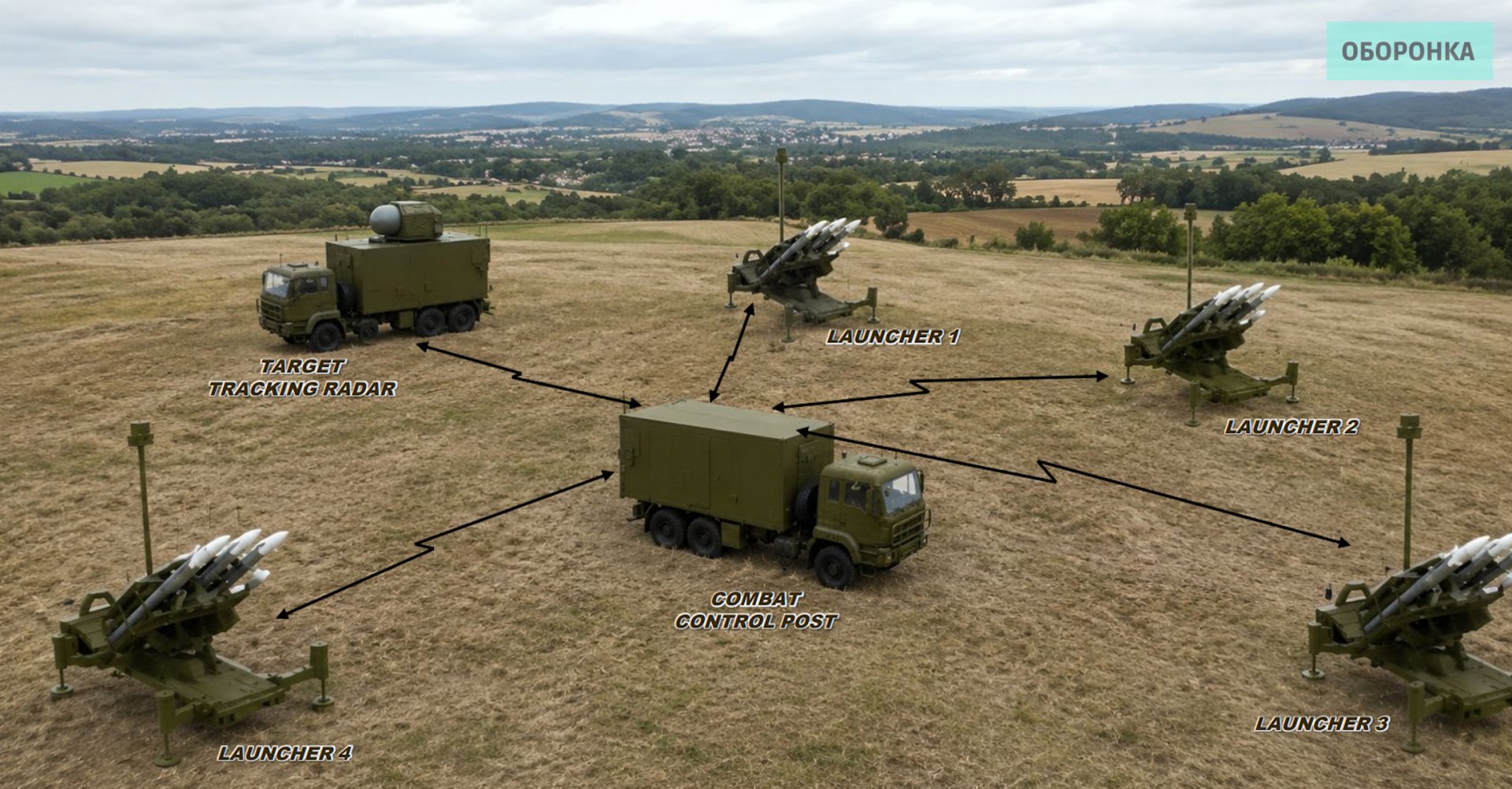
Ukraine has unveiled a new domestically developed surface-to-air missile system designed to turn a diverse collection of air-to-air missiles into a flexible ground-based air defense capability. Called Shershen, Ukrainian for hornet, the system combines a locally-developed command-and-control architecture, a dedicated surveillance radar, and multiple launchers that can employ both Ukrainian and Western missiles.
The system was displayed at the MSPO defense exhibition in Kielce, Poland, by the National Association of Ukrainian Defense Industries (NAUDI). The example shown is reportedly the second operational prototype and is described as being close to its production configuration.
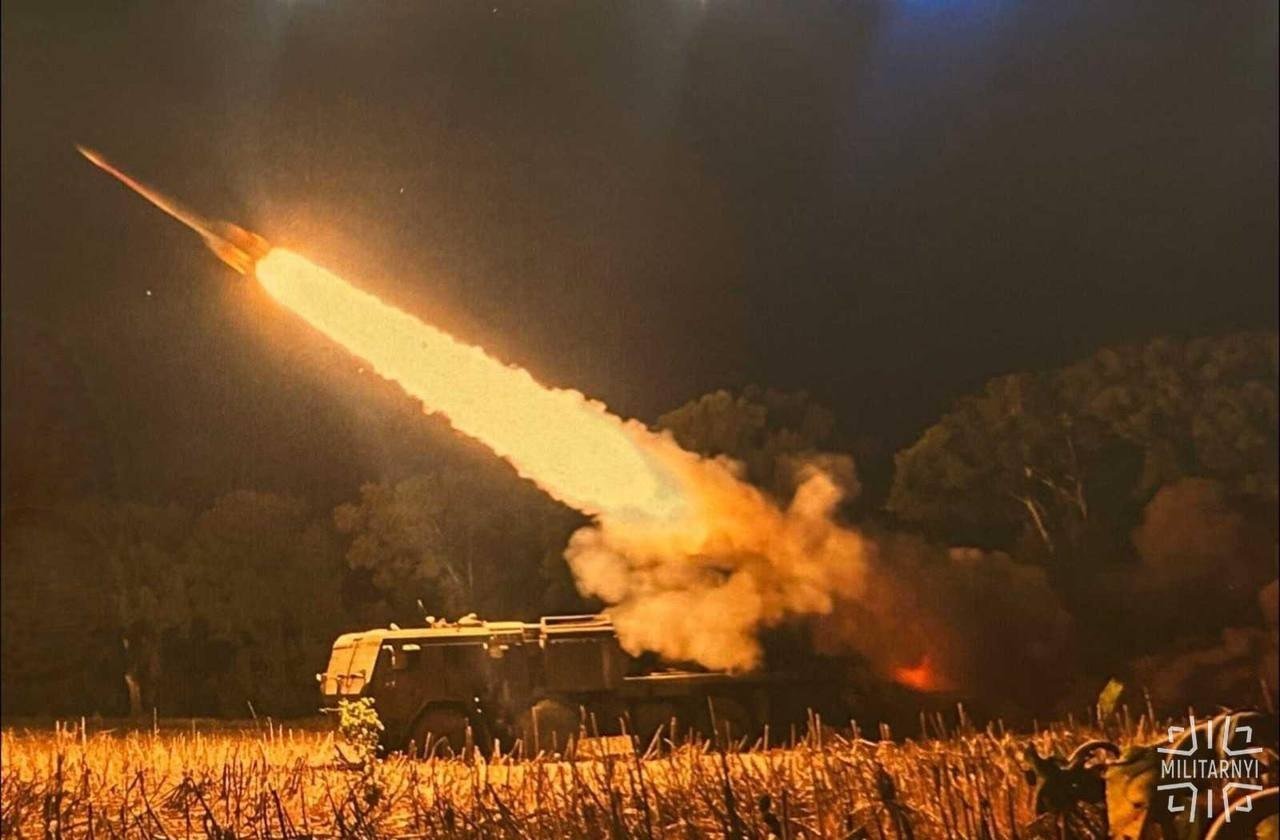
At the ongoing MSPO-2026 defense and industrial exhibition in Poland, the launcher of the Ukrainian Shershen air defense system, developed by Radionix, has been presented for the first time, along with the R-120K surface-to-air guided missile specially developed for it (second… pic.twitter.com/5RfZWHWuxl
— 𝔗𝔥𝔢 𝕯𝔢𝔞𝔡 𝕯𝔦𝔰𝔱𝔯𝔦𝔠𝔱(@TheDeadDistrict) September 9, 2026
The appearance of Shershen comes as Ukraine continues to develop an increasingly diverse family of indigenous air defense systems, while simultaneously adapting older missiles and foreign-supplied weapons to address a severe shortage of interceptors.
That effort has produced some distinctly unconventional combinations. Ukraine’s so-called FrankenSAM programs have paired existing Soviet-era launchers and radars with Western missiles, while other systems have adapted Soviet R-73 air-to-air missiles for ground launch. The United Kingdom and Denmark have also worked with Ukraine on the containerized Gravehawk system, another concept built around repurposed air-to-air missiles.

Shershen takes that philosophy a step further by making missile interchangeability a central feature of the system.
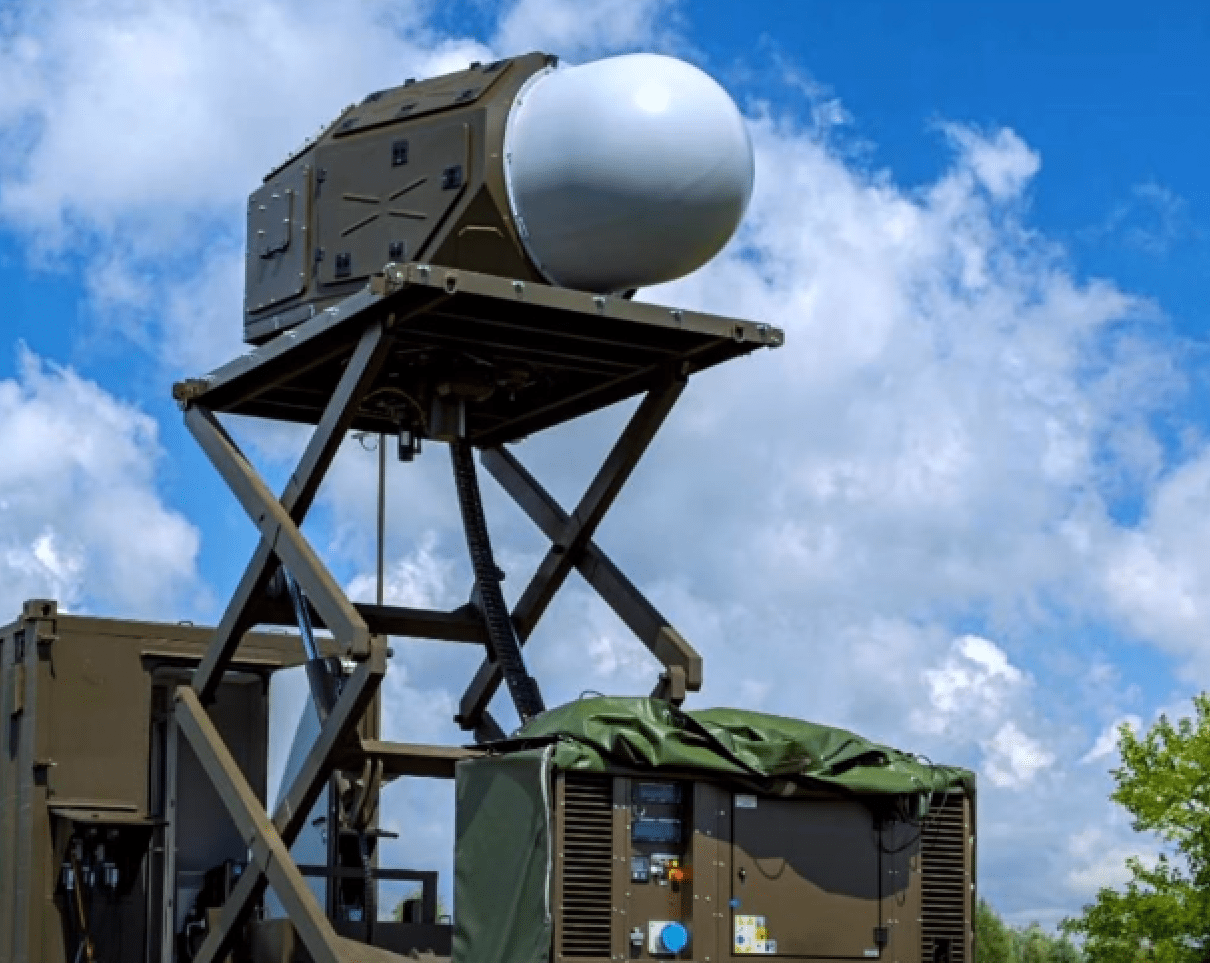
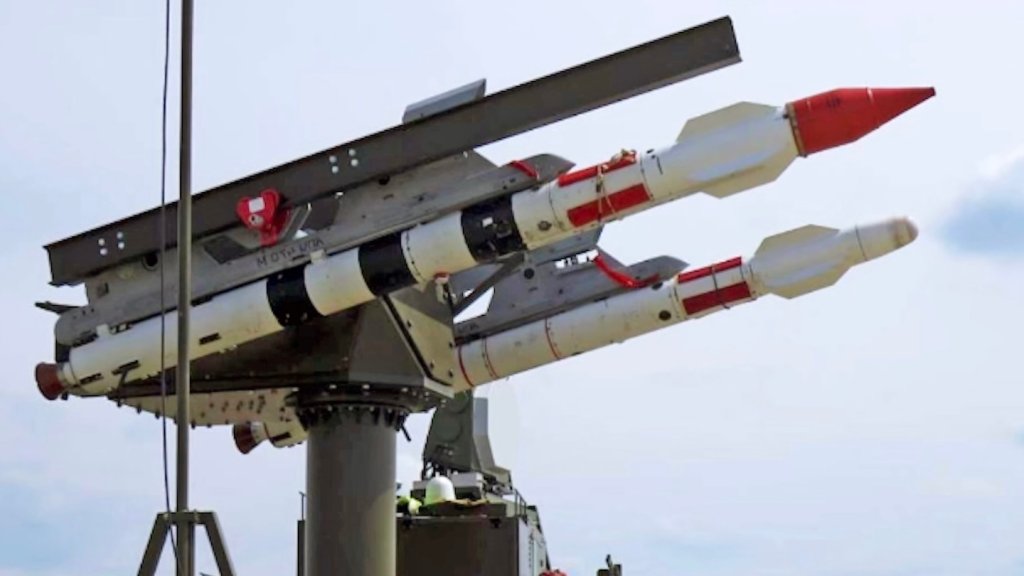
The Shershen battery consists of a Perun command-and-control vehicle, an Athena radar, and four Borei launchers.

According to the developer, the system’s architecture is deliberately open. This allows it to use different missiles from different manufacturers and also permits the integration of third-party surveillance and guidance radars.
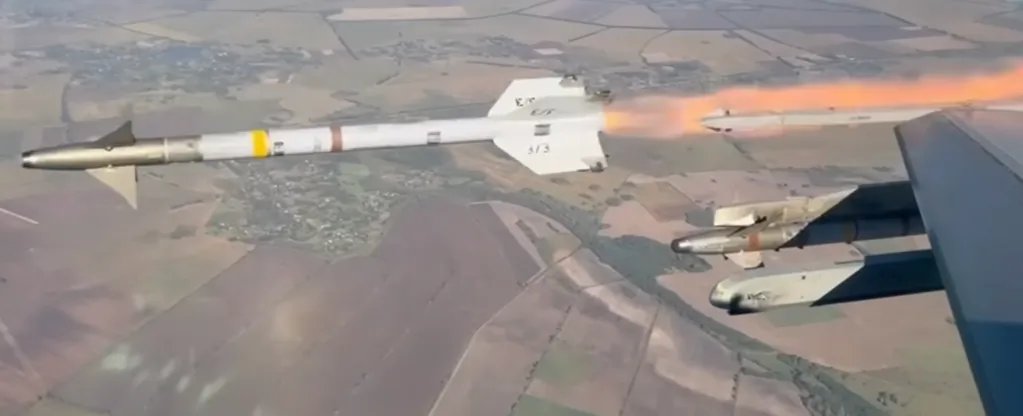
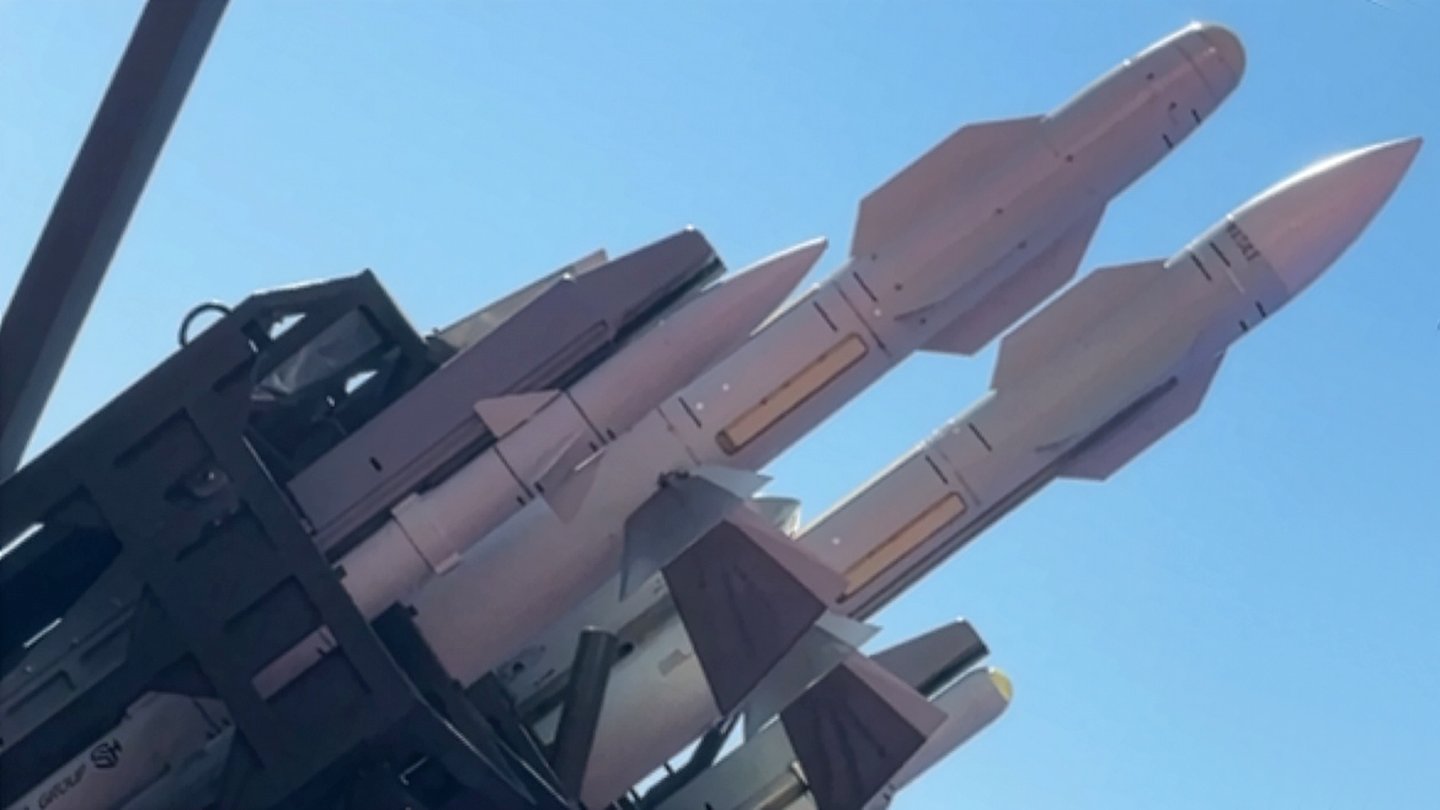
The company says Shershen can currently employ the R-27 (AA-10 Alamo), R-73 (AA-11 Archer), AIM-9 Sidewinder, and AIM-132 ASRAAM, while compatibility with the R-60 is also being explored. These weapons come with a mix of semi-active radar or infrared homing seeker heads.

Air-to-air missiles are already available in considerable variety across Ukraine’s arsenal and those of its foreign partners. Being able to employ several types from a common ground-based system provides much more flexibility than a conventional SAM designed around one dedicated interceptor.
It also offers a way to exploit missiles that were never originally intended to be fired from the ground. That means Shershen’s launcher and fire-control system are meant to be interceptor agnostic, at least to a certain degree.
Shershen’s Athena radar is reported to be capable of detecting targets at ranges of up to 85 kilometers (53 miles).

In terms of the engagement envelope, Shershen is claimed to be capable of engaging aircraft, cruise missiles, and drones at ranges of up to 25 kilometers (16 miles) and altitudes of up to 10,000 meters (32,800 feet). Clearly, these figures will vary widely depending on the type of interceptor.
When employing radar-guided missiles, the system’s engagement architecture can reportedly guide as many as six missiles simultaneously.
The advertised performance figures have not been independently verified, and it remains unclear what target types and engagement conditions were used to establish them.
— Мілітарний (@mil_in_ua) September 10, 2026
Україна представила складові мультикаліберного зенітного ракетного комплексу «Шершень» на міжнародній виставці MSPO 2026 у польському місті Кельце.
Міжнародний консорціум компаній Shershen Group, який створює ЗРК в інтересах України представив, показав командний пункт,… pic.twitter.com/9wAS7ewxzg
The developer says the second prototype has completed initial testing, including successful interceptions at a test range.
One of the Borei launchers displayed at MSPO were armed with an R-120K, a new Ukrainian missile equipped with a radar seeker and is intended to be capable of both air-to-air and surface-to-air employment.
The R-120K remains under development, however. Work is reportedly continuing on its rocket motor, meaning that its eventual performance and production status remain uncertain. Still, having the option of including the R-120K on the Shershen system in the future is significant.

Rather than relying indefinitely on stocks of Soviet and Western air-to-air missiles, Ukraine could eventually have a domestically produced interceptor specifically tailored to its growing family of ground-based air-defense systems. That will become increasingly important as stocks of legacy missiles are depleted. Earlier this year, it was reported that Ukrainian F-16s were running low on their air-to-air missiles, which include the same AIM-9s that are used in some FrankenSAM systems, as well as being compatible with Shershen. But even before that, it was clear that Western-supplied missile stocks in Ukraine across the board were diminishing, in some cases drastically, with critical interceptors like the AMRAAM and Patriot being badly affected.

Ukraine’s need for additional surface-to-air missiles has become increasingly acute during the full-scale war, especially as Russian drone and missile barrages have stepped up.
The shortage has encouraged Ukraine to pursue a combination of indigenous development and unconventional adaptations.
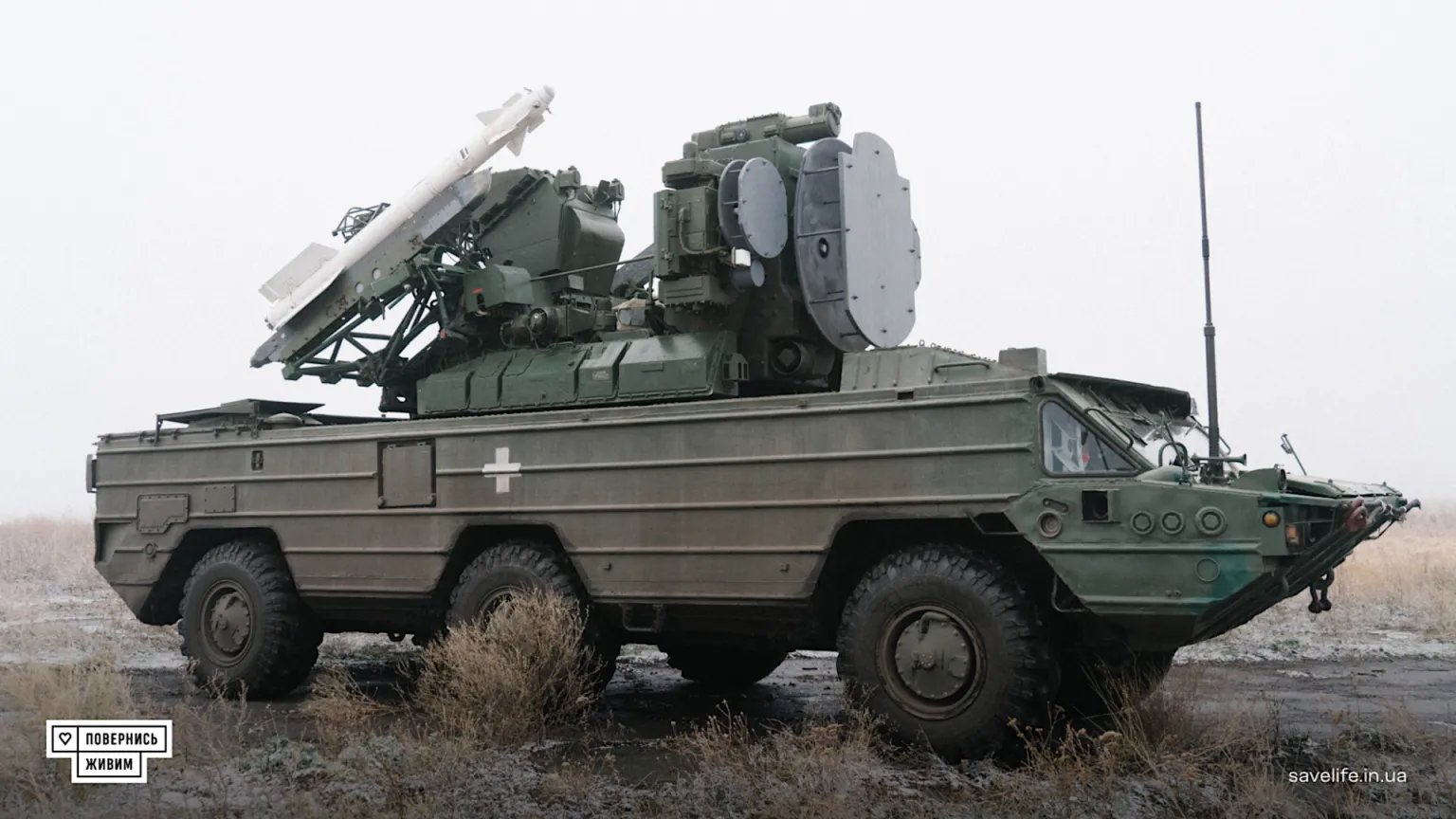
The FrankenSAM initiative, conducted with U.S. support, demonstrated how existing Ukrainian systems could be combined with foreign missiles to rapidly create additional air-defense capacity. Ukraine has also fielded modified Osa systems armed with R-73 air-to-air missiles rather than their original 9M33 interceptors. Other R-73-based concepts have even been demonstrated aboard Ukrainian uncrewed surface vessels.

Shershen appears to reflect the next logical step in that evolution: rather than creating a one-off FrankenSAM combination, build an architecture from the outset that can accept multiple missiles. Additionally, with so many different ground-based air defense systems now being fielded, it comes with the significant advantage of a standardized launcher and control interface that can accommodate a range of interceptors.
At the same time, Ukraine is pursuing substantially more ambitious indigenous SAM projects.
Earlier this year, a previously secretive Ukrainian missile identified as the Koral made what appeared to be its first public appearance. The program dates back to at least 2021, when Ukraine’s Luch design bureau presented a concept for a medium-range surface-to-air missile.

Koral is intended to provide a much longer-range capability, potentially filling some of the gap left by Ukraine’s aging Soviet systems and supplementing the Western-supplied Patriot and SAMP/T.
Shershen, by contrast, is clearly focused on the short-range layer.
Together, the programs illustrate the breadth of Ukraine’s emerging domestic air-defense effort: from relatively inexpensive systems built around repurposed air-to-air missiles to new, purpose-designed interceptors intended to replace or augment Soviet-era systems.
Ukraine’s experience with FrankenSAM has demonstrated the value of getting unconventional air defense combinations into service quickly.
Once fielded, Shershen, with its architecture capable of accepting different Soviet-origin and Western-made interceptors, and eventually a Ukrainian one, gives Ukraine another way to stretch its missile inventory and enhance its air defense capabilities.
Contact the author: thomas@thewarzone.com
The post Ukraine’s New Shershen SAM Can Fire A Wild Mix Of Adapted Air-To-Air Missiles appeared first on TWZ.

(@NOELreports) 


(@TheDeadDistrict)