The top U.S. Air Force officer in Europe, who also serves as the NATO Allied Air Command leader, said he has been tasked with enacting new alliance plans to defend against cruise missiles and drones. He was responding to questions about a drone that NATO had to shoot down after it entered Lithuanian airspace overnight. European Commission President Ursula von der Leyen said Tuesday morning that the incident was “part of a broader pattern of Russian aggression and provocation against Europe, testing our readiness and our resolve.”
We now know that Russia is responsible for the attempted explosive attack at Leipzig airport. Russia's repeated hybrid attacks on Germany and Europe are unacceptable. (1/4) pic.twitter.com/o3vBjgpeb1
“I don’t know what’s in the mind of Putin or his fielded forces about those one-way attack drones or even cruise missiles, like we’ve seen enter Polish airspace just a few months ago. In July, we had an AS-23 cruise missile enter Poland,” Lt. Gen. Jason T. Hinds, Commander, U.S. Air Forces in Europe/U.S. Air Forces Africa (USAFE), and Commander of the Allied Air Command, said in response to a question about the drone shootdown over Lithuania. He was speaking during a media roundtable at the Air & Space Forces Air, Space and Cyber Conference that TWZ is attending.
This video grab taken from footage from TVN Poland on July 30, 2026, shows the Polish army securing a large crater from a Russian missile that crashed in Poland. (Photo by various sources / AFP) –
Hinds added that while he doesn’t “know the why behind” the drone incursion into Lithuania, he has been tasked by U.S. Air Force Gen. Alexus G. Grynkewich, who serves as NATO Supreme Allied Commander Europe (SACEUR), “to fully implement EVA [Enhanced Vigilance Activity] Eastern Sentry and now its Standing Defense Plan 12000, which gives the nations the capabilities that they need to defend their airspace against either one-way attack drones like the one that you described last night, or a cruise missile.”
EVA Eastern Sentry is a mission NATO stood up in September 2025 after “an unprecedented number of Russian drones and planes violated the airspace of several NATO Allies,” according to the alliance. “Allies are contributing additional capabilities and assets to NATO’s deterrence and defense – for instance, more fighter jets, helicopters, transport aircraft, air defense systems, surveillance aircraft and frigates – and improving the coordination of these assets through NATO.”
Standing Defense Plan 12000 is a new plan for integrated air and missile defense across the alliance. Grynkewich introduced the concept during testimony to Congress in March.
Hinds acknowledged that Russia could be testing the alliance.
“It’s not about the small UASs; that’s typically a national responsibility, and it could be probing,” the Air Force general noted. “Regardless of the intent behind it, what we want to be prepared for is the second that a one-way attack drone or a cruise missile is first and foremost detected – hopefully well before it enters NATO territory – we want to know it. We want to know where it’s coming from. We want to have the capability to sense it. We want to be able to have the C2 [command and control] systems to be able to decide what to do about it, and then have the right kit to be able to act.”
Despite an integrated air and missile defense system that includes Patriot surface-to-air missile batteries, NATO currently is primarily “using air power” against drones and cruise missiles “and that’s not putting us on the right side of the cost curve,” Hinds stated. “But we want to get there.”
Using NATO jets to take down drones “is very effective, just like what you saw last night, and many other times,” but not necessarily efficient, Hinds explained.
“I think there’s been at least five other cases of allied nations providing air power to shoot down one-way attack drones,” he proffered. “I want to get to the point where we’re doing it efficiently, using lower-cost interceptors, hopefully ground-based, and in some cases air-based that are cheaper to use, so we’ll see what the intent may be. Intelligence organizations are going to provide us with that intelligence later on, but I just don’t know yet.”
You can see one of those NATO jet engagements with drones in the following video.
The Defence Procurement Agency has successfully completed integration testing of 68 mm laser-guided rockets on the Rafale fighter jet. The time between the contract being awarded for this new capability and initial operational capability being achieved was less than 8 months. pic.twitter.com/rR2Nij9EzY
— French Aid to Europe (@aidefranceukr) July 13, 2026
As the threats have evolved, NATO has “transitioned away from air policing, and we’ve transitioned to air defense for some specific reasons,” the general pointed out. “One is readiness. Air policing is a readiness decrementing mission that the alliance has done for years. There’s also an assurance mission that we did for 32 nations. That’s transitioned to air defense now. Air defense means we have the right kit, multi-domain, to be able to be put in the right place based on indications, warnings, or real threats, like you saw last night, inside of the Baltic nations, to be able to respond decisively and quickly.”
“There’s also a deterrence value there,” Hinds added. “So if Russia does fly a one-way attack drone or a cruise missile, they know that we’re going to be in the right spot to be able to detect it and then defend against it.”
“These are limited incursions, right? Small numbers. Here’s what I see: hybrid activities may, in fact, only be one of the few levers that Putin has available to him, because he sees that he does not have an advantage in geography, domain, or readiness,” Hinds suggested.
“Think about that,” he urged. “So what are we seeing? We’re not seeing a massing of forces across the opposite side of Finland, a new NATO nation. We’re not seeing a massing of forces whatsoever in any domain opposite of Poland, Latvia, Lithuania, or Estonia. You’re seeing a significant number of one-way attack drones in the Black Sea targeting Ukraine. Some of them are entering Romania. What you’re not seeing is a direct confrontation in geography. We’re not seeing direct competition in domains. And I think Putin knows that we are ready. I know he knows that we’re a defensive alliance. I know he knows that we have an advantage in every domain against them, and I think that’s likely why you’re seeing things like what you’re seeing with hybrid activity.”
Russian President Vladimir Putin. (Photo by Contributor/Getty Images) Contributor#8523328
Though below the level of armed conflict, these Russian activities raise the potential for something worse, Hinds posited.
“The risk about hybrid activity, from my perspective, is it could lead to escalation, and that’s where I hope that we get back towards deterrence again, and that the nations they’re going to decide to do what they want to do when it comes to these hybrid activities,” the general said. “Some of them are law enforcement. Some of them are military responses, and that’s up to the nations to decide how they’re going to deal with that. Not me.”
“But what I owe General Grynkewich is to ensure that we are demonstrating our deterrence each and every day, and we’re doing that effectively across all domains,” Hinds added. “And to ensure that Putin knows that if he tries something against the alliance, that we will be there, and we’re ready to win decisively if challenged.”
Ursula von der Leyen is expected to make the case for a more independent and resilient Europe in her State of the European Union address on Wednesday (16 September). But analysts and political groups in the European Parliament are demanding something more concrete: evidence that the Commission can turn its expanding ambitions into results Europeans can see.
The State of the European Union address, commonly known in Brussels as the “SOTEU”, is the Commission president’s annual speech to Parliament setting out priorities for the year ahead. Modeled in part on the US president’s State of the Union address to Congress, the EU version began in 2010 under then Commission president José Manuel Barroso. Von der Leyen will deliver this year’s address at 9:00 tomorrow morning (16 September).
The speech comes as Europe is confronted with an ongoing war in Ukraine, a fragmenting global trading system and the challenge of strengthening defence while reviving competitiveness and financing the green transition. At home, von der Leyen must reconcile political groups that broadly agree on the need for a stronger Europe but differ over what that means.
For Manfred Weber, chairman of von der Leyen’s centre-right European People’s Party group, the focus should be on voters’ economic and security concerns.
“Europe’s priorities must reflect people’s concerns: jobs, the cost of living and economic security,” Weber said. He called for a stronger economy and well-paid jobs, tighter control of Europe’s borders, leadership on AI, continued support for Ukraine and “a strong European defence pillar”.
On the centre-left, Iratxe García Pérez, president of the Socialists and Democrats group, argues that the Commission has relied too heavily on deregulation.
“Europe needs more than announcements,” García Pérez said. “It needs concrete policies backed by the necessary resources.” The S&D wants greater emphasis on affordable food, housing and energy, quality jobs and climate action, alongside European sovereignty in defence and digital technologies.
Renew Europe is also making delivery the benchmark, calling on von der Leyen to present “a credible plan turning European ambition into visible results” and framing the choice as one between united European action and fragmentation.
Analysts at the European Policy Centre see the same challenge extending to Europe’s position in the world.
“Von der Leyen will tell us that the EU is forging new partnerships around the globe,” said Almut Möller, the EPC’s director for European and Global Affairs. Canadian Prime Minister Mark Carney’s attendance will reinforce the geopolitical dimension of the speech.
But strategic autonomy goes beyond defence and trade. Georg Riekeles, the EPC’s head of political economy, identifies financial dependence as an overlooked vulnerability. With the international financial system becoming less stable, Europe cannot assume Washington and the US Federal Reserve will play the stabilising role they did in previous crises. Von der Leyen “must therefore address financial sovereignty as a core element of European security”, he argues.
Technology poses another test. Elizabeth Kuiper, the EPC’s head of health and societal resilience, says von der Leyen should “reject the trade-off between competitiveness, technological progress, and the EU’s social model”, particularly as AI affects employment, income security and social cohesion.
Climate policy presents a similar collision between ambition and resources. Stefan Šipka, the EPC’s head of sustainable prosperity, argues that Europe needs “a robust delivery mindset, no more strategies” as it tries to combine defence, decarbonisation and economic security.
The common thread is delivery. Von der Leyen has no shortage of strategic objectives. The harder task on Wednesday will be explaining how they fit together, how Europe will finance them and what takes priority when they conflict.
For EPC policy analyst Eric Maurice, von der Leyen “must provide strategic focus and political clarity”.
“As the midterm in her second term approaches,” Maurice said, “it is time for von der Leyen to present a vision and deliver.”
In August 2026, Polish MEP Anna Bryłka revealed that Ukraine is conducting closed-door negotiations with Poland regarding the transit of Ukrainian grain. Ukrainian Ambassador to Poland Vasyl Bodnar stated that the issue of grain transit “should not be public” and should first be handled at the expert level before becoming a subject of public discussion. […]
Les dirigeants de l'Union européenne se sont réunis lundi dans le nord de la Finlande pour discuter de quelle façon renforcer la présence du bloc dans l'Arctique, une région où les tensions géopolitiques ont atteint des sommets ces derniers mois.
In August 2026, the Ethiopian government declared Sam Fabrizi, the Italian ambassador, persona non grata. Rome chose to remain silent. This incident is not merely a diplomatic incident, but a striking example of the new balance of power between Africa and the former colonial powers. It is significant that, on February 13, 2026, Giorgia Meloni […]
The AfD’s victory in Saxony-Anhalt reflects Europe’s rightward drift, driven predominantly by domestic causes. Yet the West, ironically glossing over its own playbook and turning a blind eye to its own 20th-century interference in other states’ affairs, predictably pins the blame on Moscow. On September 6, 2026, in the unglamorous eastern German city of Magdeburg, […]
At the end of August, the Greek government signed the “Achilles Shield” agreement – a €3 billion “defense” deal with Israel. Under the terms, Israeli companies including Rafael Advanced Defense Systems and Israel Aerospace Industries (IAI) will develop and build anti-aircraft and anti-ballistic systems for Greece.
“This is the largest defense export deal in the history of Israel-Greece relations, and one of the largest in the history of the State of Israel,” the occupation’s Ministry of Defense stated. “Greece’s choice of Israeli technology as the backbone of its most ambitious air defense buildup program in the past decade reflects the depth of trust built between the two countries.”
“Under the deal, Israel will build Greece a comprehensive, multi-layered air defense array, drawing entirely on Israeli-made systems and on the extensive operational experience Israel’s defense establishment has gained during the war.”
The “war” in the statement being the genocide Israeli forces have been conducting in Gaza since October 7, 2023.
An influx of Israeli investments in Greece
According to journalist Vangelis Ilias, the new deal should be contextualized within broader trends of Greek capital and subsequent governments deepening ties with the occupation power. While the current Mitsotakis administration did not initiate this trend, he says, it deepened it both before and since the genocide in Gaza began. “Over the past 6-7 years, we have witnessed an influx of Israeli investment funds into Greece, both in the real estate sector and through the acquisition of former public – but not exclusively public – companies in various sectors of the economy, one of which is defense.”
Israeli real estate investments in Greece have already had a notable impact on people’s everyday lives, driving up rents and making housing more unaccessible. Endeavors in the defense sector might have been more lowkey, Ilias adds, but they are widespread and expanding under the sight of NATO and European institutions. “In the south of the country, in Kalamata, there is a large Greek Air Force base that also falls under the NATO umbrella as an International Pilot Training Center,” he says, emphasizing the presence of Elbit Systems in the area.
Israeli companies have also purchased local military enterprises, including Intracom Defense, operating in electronic warfare and drone production. “Through this acquisition, the Israeli state-owned company IAI gained access to the European Defense Fund (EDF), an EU mechanism intended exclusively for financing European defense procurement programs – something that was made possible only thanks to the active support of the Greek government,” Ilias adds.
“[Achilles Shield] has been promoted by the domestic media and the elite as an agreement that shields Greece,” he adds. “[Under the claim] that the money being spent, while not going to healthcare and education, or toward supporting the incomes of citizens who are still trying to recover from the years of economic crisis, protects us from those who seek to harm the country, with Turkey always implied in this context,” he explains.
“In this era of crises, military buildup, and preparations for a full-scale war, they are trying to present this not only as something reasonable but also as something necessary, where strategic agreements between states take precedence over the needs of the people and international law, overlooking genocides or the ethnic cleansing of an entire people.”
The deal’s Achilles’ heel: reliance on Israeli arms
While Greek officials described the deal as a breakthrough for Greek sovereignty, critics have warned of dangers on several fronts. To begin with, in the announced distribution of funds, local industry expects only €750 million of the total €3 billion. The rest goes to Israeli arms companies making the genocide in Gaza technically feasible.
And despite the amount of money being spent, parts of the agreement have been presented inconsistently to the public. “We’re talking about a complex system of sophisticated weapons utilizing artificial intelligence, with a central control unit that operates based on computer code, Ilias emphasizes. “There has been extensive debate over whether this code will belong to Israel or be controlled by Greece. So far, the government’s responses to a barrage of questions from the opposition have been neither reassuring nor consistent. This remains to be clarified.”
The expenditure has been heavily criticized by left movements, including the Communist Party of Greece (KKE), in the context of EU armament taking place at the expense of labor rights and social services. “Costing more than €3 billion, this agreement forms part of the broader ‘2030 Agenda’ arms program serving NATO’s needs, for which our people are paying dearly – tens of billions of euros – at the expense of their rights and needs,” the KKE pointed out.
Like most other EU governments, the Mitsotakis administration has announced harmful labor and social reforms just as it committed billions for Israeli arms producers. This new-old austerity agenda has met widespread resistance. Recently, tens of thousands demonstrated in Thessaloniki demanding dignified wages and pensions, efficient public healthcare, and investments in education. “Not one euro for imperialist wars,” they insisted.
The “Achilles Shield” deal also adds to the case made by academics and activists worldwide that Israel is using the Gaza genocide to market its weapons. This is apparent not only from the purchase list, but from official statements as well. The Israeli Ministry of Defense announced similar deals are part of a broader strategy “to expand defense exports as a central tool for strengthening the IDF’s force buildup, influencing Israel’s foreign policy standing worldwide, and bolstering the Israeli defense industry and economy.”
Critics have argued that Greece’s arms deal risks making the country captive to Israel’s defense industry and alienating it from other countries in the region. “In practice, strategic relations with the murderous state of Israel, together with joint military preparations, are adding fuel to the fire of imperialist rivalries in the region, as well as the conflicts between the bourgeois classes of Turkey and Israel, and of Greece and Turkey, in the Aegean and the Eastern Mediterranean, with the peoples being the victims,” the KKE emphasized.
“Greece’s ruling class has made a strategic choice to align itself closely with the Western alliance,” Ilias says, referencing events since the Greek Civil War. “It is particularly worth noting that, as a result, the Greek people have borne the brunt of the bloodshed.”
And while the post-Civil War regime attempted to crush “the popular and anti-imperialist movement that existed in the country,” he concludes, they did not succeed.
“This is partially why we still see today such a stark contrast between the ruling class and the organized, collective reactions of significant segments of the Greek people throughout the country against the genocide perpetrated by the Israeli state against the Palestinian people. These reactions are multifaceted, with segments of the working class – beyond just the youth – actively participating.
The Ukrainian Navy is claiming one of its uncrewed surface vessels (USV) sank a Russian USV, marking the first time one of these weapons, also known as drone boats, destroyed another. The engagement is the latest iteration in the use of combat drone boats, which Ukraine has employed to devastating effect against Russia’s Black Sea Fleet vessels and facilities, forcing the general evacuation of Russian naval assets from occupied Crimea to bases in Russia proper. The use of weaponized USVs is now proliferating around the globe at an increasing rate.
The incident took place somewhere in the Black Sea, said the Ukrainian Navy, which provided no details about when it happened or exactly where. TWZ cannot independently verify this claim; however, we cannot find any evidence of a drone boat killing another drone boat in the past.
“Units of the Main Intelligence Directorate (GUR) detected the target,” the Ukrainian Navy stated on Telegram. “The Ukrainian Navy’s ‘Sargan 3000’ unmanned boat, equipped with a remotely operated weapon station (RWS) Protector 12.7 mm, successfully destroyed it. This is the first naval battle in history between unmanned boats.”
An 81-second video released by the Ukrainian Navy opens with a view from the Sargan 3000’s onboard camera. It shows the Ukrainian USV acquiring, then engaging the Russian USV with its machine gun. It then cuts to a closer view of the Protector gun system firing at the Russian drone boat. At about the 30-second mark, the view switches to a feed from an aerial platform, though it is unclear if it is piloted or a drone. The video continues with the Sargan 3000 raking the Russian USV with its heavy machine gun until pieces start flying off and it eventually sinks, stern first.
Ukraine's Navy says a Sargan unmanned surface vessel destroyed a Russian unmanned boat with machine-gun fire in the Black Sea, the first-ever battle between unmanned surface vessels. Ukrainian Navy personnel operated in coordination with HUR. #Ukrainepic.twitter.com/Avg4ecz8m6
The Sargan 3000 (the name means needlefish in Ukrainian) was first introduced by Ukrainian President Volodymyr Zelensky in April as a “multi-purpose platform that has undergone testing and entered service with the Ukrainian Navy. These uncrewed vessels are highly maneuverable and capable of carrying out strike missions.”
“The maritime drone features a specialized low-profile hull with distinctive hydrodynamic lines and is constructed from materials that reduce its radar signature,” the publication explained. “The Sargan-3000 USV is equipped with a waterjet propulsion system (presumably powered by a diesel or hybrid engine to ensure a long operational range).”
AmalNews states that the Sargan 3000 is 6.9 meters (about 22.6 feet) long, 2.2 meters (about 7.2 feet) wide, with an operational radius of up to 1,600 km (about 994 miles) and can carry a payload of 450 kg (about 992 pounds). It travels at an estimated speed range of 40-55 knots.
During operations, the Sargan 3000 connects to Ukraine’s Delta situational awareness system, “enabling the real-time transmission of target data, video feeds, and telemetry to operators,” AmalNews noted. “It features multi-channel control capabilities, including redundant satellite communication terminals (utilizing secure Western commercial networks and NATO military networks).”
It is also equipped with “an autonomous inertial and optical navigation system to ensure operation in the event of GPS jamming, and it incorporates electronic countermeasures (ECM) modules.”
There are several variants of this USV. They include those equipped with machine guns; rockets; FPV drones; an electronic warfare version and one that lays mines, the publication added.
Ukraine’s Sargan-3000 naval drone was presented in an FPV drone carrier variant, additionally fitted with a remote weapon station. The type first appeared in combat conditions in early June, when one washed ashore and detonated in the waters of Romania’s Constanța port. #Ukrainepic.twitter.com/QyKnyJFqUq
The drone boat’s first publicly known combat engagement took place in July, when one “destroyed the Russian Federation’s FSB border guard ship Izumrud,” the Ukrainian Navy stated at the time.
“Ukrainian naval sailors sank the border guard ship of the 2nd rank with the Sargan-3000 maritime unmanned complex near Novorossiysk,” the Ukrainian Navy claimed on Facebook. “Among the crew of the ship are dead and wounded.”
It is unclear whether the USV acted as a kamikaze vessel or a weapons platform, although the former is most likely.
“It was Izumrud that on November 25, 2018, participated in the attack on the ships of the Ukrainian Navy in the Kerch Strait,” the service added. “Revenge is inevitable.”
Ukraine's Navy has sunk the Russian FSB Border Guard patrol ship Izumrud near Novorossiysk using the Sargan-3000 unmanned maritime system.
The vessel, a Rank 2 patrol ship, reportedly sustained catastrophic damage, with casualties and injuries among its crew.
— SPRAVDI — Stratcom Centre (@StratcomCentre) July 14, 2026
One sea drone killing another is a notable development given the damage these systems can inflict and the challenge of locating and destroying them on open waters. Being able to operate on the water over long distances and timeframes, they can be used to hunt down other drone boats, as what appears to have taken place in this engagement, or serve as a picket line of sorts to protect harbors, vessels and other targets that have been attacked by USVs in the past.
The Russian drone boat, which is not identified, did not appear to be armed.
Ukraine has carried out the world's first known combat mission in which a sea drone transported and deployed an armed ground robot behind Russian lines on the occupied Kinburn Spit. pic.twitter.com/zyJdFXWxVb
The U.S. used drone boats as kamikaze weapons for the first time in July, during an attack “on a submarine and ship maintenance facility in Iran,” U.S. Central Command (CENTCOM) announced on X at the time.
Yesterday, using multiple one-way attack surface drones, CENTCOM forces successfully struck a submarine and ship maintenance facility in Iran. Three Corsair unmanned surface vessels hit the port at Bandar Abbas Naval Base, marking the first time American forces have employed sea… pic.twitter.com/bOM2kmgRxz
Regardless, it looks like history was made with this incident in the Black Sea. But this involved a sea drone hunting down and destroying another that couldn’t fight back. Given the rapid pace of weapons development by both sides in the Ukraine war, it seems inevitable that a duel between two armed drones boats could soon follow.
Earlier this year, an Iran-linked actor used Anthropic’s Claude artificial intelligence model to scrape and analyze data with the aim of helping target U.S. naval forces in the Middle East. A group in Yemen – very likely Iranian-backed Houthi militants – also used Claude to assist with work on guidance systems for ballistic and hypersonic missiles.
These are just some of the revelations about how adversaries and other malign actors have been using one of the premier pieces of AI software being developed in the United States that were contained in a new report Anthropic released late yesterday. The 154-page document also details instances where Claude was used directly and indirectly to support intelligence gathering and surveillance, cyberattacks, influence operations, and even worrisome biological research over the past eight months. In addition to Iran and Yemen, the human actors behind these activities were based in Russia, China, and a host of other countries.
Anthropic has shared details about what it calls the “misuse” of its models in the past, but describes the new report as its “most detailed” to date. The company has clearly been cataloging these case studies, and has assigned each one a control number. Though the entire contents of the report are cause for concern, the explicit attempt to use Claude to target American forces, as well as to develop new higher-end missiles and other military technology, are particular standouts and signs of what’s to come, as we will highlight below.
GTG-30005: Military reconnaissance
GTG-30005 is the case study dealing with the targeting of U.S. naval forces, and the summary is as follows:
“In another investigation, we identified and disrupted an Iran-nexus threat actor that used Claude to collect and analyze publicly accessible data to develop targeting recommendations against US naval forces in the region. The threat actor used Claude to compile targeting handbooks, through a Python pipeline the threat actor built with Claude’s assistance, to identify and track naval positions based on open-source information. The compiled material included a roster of US personnel scraped from captions on public military photographs; publicly accessible ship and aircraft transponder identifiers; commercial satellite-imagery query scripts; and an inventory of public websites that exposed US naval movements. The threat actor also directed Claude to compile vulnerability research on shipboard systems, cataloging known CVEs in maritime VSAT terminals, Cisco communications equipment, and industrial control products.”
“We banned the actor’s account, developed detections to reduce the risk of future misuse, and shared threat intelligence with government authorities to disrupt the threat.”
The Nimitz class aircraft carrier USS George H.W. Bush and several other US Navy warships sail together in the Arabian Sea in June 2026. CENTCOM
How exactly Anthropic defines the term “nexus” here is not immediately clear, and other entries in its new report also use “state-nexus” in addition to country-based variations. However, in this specific case, an addendum is added to the entry that explicitly says that the same account was separately tied to “domestic mass surveillance” software development work “for Iranian state systems,” clearly pointing to an actor directly linked to the regime in Tehran.
The use of AI technology by nation-state armed forces to develop target sets and engage them is already known to be growing globally. The Israel Defense Forces (IDF) have been a pioneer in this regard, but the U.S. military, China’s People’s Liberation Army (PLA), and others are also known to be developing and fielding these capabilities.
GTG-87001: Disrupting a Yemen-based guided weapons engineering cell using Claude to develop guidance software
Anthropic’s new report details an instance where an individual in Yemen used Claude as part of missile guidance work, which is given the control number GTG-87001.
“We identified a cell of threat actors based in northern Yemen running three weapons development programs: a guided rocket that used a commodity phone-class flight computer with final-phase homing guidance; a multi-stage ballistic missile with a stated range goal above 2,000 km; and a multi-variant missile (referred to as the “R2000” set) that included a hypersonic glide vehicle variant.”
“The actors used Claude Code in place of human software engineers to develop the guidance, navigation, and control (GNC) software that steers and stabilizes a flying vehicle. For example, they used Claude to integrate an open-source autopilot onto a phone-class flight computer, writing the control and position estimation software, tuning the control settings, running a firmware build pipeline, and performing a flight simulation. The actors managed several Claude instances at once, assigning each one a role, much as a lead would delegate work on a small engineering team: the actors tasked one instance with writing the code, another with research, and a third with reviewing the code the first instance produced.”
A graphic included in Anthropic’s new report summarizing the ways in which Claude was used by the actors in Yemen to support missile guidance system development. Anthropic
“Our safeguards blocked many of their requests, but not all of them. The actors used a variety of tactics to evade our safeguards, including hiding their goals and the products the software was meant for, and they split their work across multiple sessions so no single session revealed their full intent.”
“These actors carried out a sustained effort to develop guided weapons, including using Claude to design guidance software. We do not have evidence the actors succeeded in fielding an operational device; but they did test-fire a guided rocket. This field test appears to have failed: within hours, the actors returned to Claude to work out why it failed.”
“We identified this activity as part of our internal investigations into suspected weapons development. We banned accounts associated with the actors and shared threat information with public- and private-sector partners to mitigate risks posed by the actors. Nevertheless, we have evidence that the actors had already built an offline simulation toolkit that does not rely on Claude or other engineering computing environments such as MATLAB.”
As mentioned earlier, the report does not name the Houthis, but that group has historically been based primarily in the northern end of Yemen. It is also the only entity in the country known to have active missile development programs, which are conducted with critical support from Iran.
Whether this particular work directly resulted in any new capabilities is unknown. Anthropic notes that there looked to be at least one failed test launch before the accounts were banned, which would have occurred sometime after the beginning of this year, based on the stated cutoff dates for the report. By the end of 2025, the Houthis had already amassed a wide array of very real ballistic missiles, including types with at least claimed ranges of 2,000 kilometers (approximately 1,242 miles). The group also has a variety of cruise missiles and one-way attack drones that it has employed operationally.
An example of just one of the many types of ballistic missiles in the Houthis’ arsenal. Houthi-controlled media
Still, being able to leverage Claude could only have helped any domestic missile development efforts in Yemen, which might help reduce dependency on Iran, at least to a degree. Furthermore, developing functional hypersonic glide vehicles capable of prolonged stable flight has historically been notoriously difficult, even for entities with extensive relevant knowledge bases on an organizational level.
GTG-17001: Disrupting a China-based operation using Claude to draft a fire control specification and acquisition documents for undersea warfare
Use of Claude in foreign military endeavours goes beyond the Middle East, as evidenced by case study GTG-17001. This involved a Chinese actor conducting work related to a naval counter-torpedo defense system.
“We identified a China-based threat actor who used Claude to advance three parallel tracks of work on an anti-torpedo weapons system:”
“First, the actor used Claude to draft a Chinese-language specification for an anti-torpedo fire control system (the core logic that aims and times an anti-torpedo weapon’s response). The document was written to win approval from a Chinese defense manufacturer, which would move the work on to technical certification and operational testing.”
“Second, the actor used Claude to produce a Chinese-language technical proposal of more than 200 pages, accompanied by an executive briefing deck.”
“Third, the actor used Claude to benchmark their own system against specific US anti-torpedo and anti-submarine programs based on publicly accessible information. They then generated a Chinese-language briefing on US Navy systems derived from open-source reporting.”
“The actor presented themselves as an original equipment manufacturer in the US defense sector. We assess the actor was associated with a Chinese defense industry manufacturer aiming to produce a weapons specification and acquisition proposal for the People’s Liberation Army Navy.”
This picture shows a test of an anti-torpedo system fitted experimentally to a Nimitz class aircraft carrier in the 2010s. USN
“The actor used Claude to write the acquisition proposal, refining it over many drafts. After each draft, the actor instructed Claude to role-play a hostile expert reviewer to critique the proposal, then used that feedback to sharpen the next version. In parallel, the actor used Claude to build pieces of the anti-torpedo weapons system’s fire control software and a test matrix to validate them.”
“The operational lift the actor achieved was a function of using Claude to automate complex technical outputs. The actor leveraged the model to compress the development timelines for the certification registry, compliance documentation, and automated fire control logic. The actor also accelerated the traditional human review cycle by having Claude critique the acquisition proposal across multiple rounds of review while role-playing a persona.”
“We uncovered this activity as part of our internal investigations into suspected weapons development. We cannot attribute the activity to a specific entity or actor. But we have banned the account for violating our Supported Regions Policy and our Usage Policy, which prohibits weapons design and development, and incorporated our investigative findings into our safeguards to mitigate the risk of future misuse.”
Anthropic’s report does not name the U.S. programs leveraged here, but does note the information in question was publicly available. Anti-torpedo systems for surface warships and submarines have been an area of significant interest for the U.S. Navy for years now. Those developments have also produced compact torpedo designs for use in other applications.
A Very Lightweight Torpedo (VLT), a compact torpedo design developed by Northrop Grumman. Northrop Grumman
The PLAN’s interest in these same kinds of capabilities is not at all surprising. Underwater threats and countermeasures to them, broadly speaking, would play a central and vital role in any future conflict between the United States and China across the broad expanses of the Pacific.
GTG-27005: Disrupting a Russia-based operation using Claude to engineer an autonomous military drone swarm
Another case study, GTG-27005, details the use of Claude by Russian actors working on drone swarming technology.
“We identified likely freelance Russia-based threat actors who set out to build a full-stack autonomous first-person-view (FPV) kamikaze drone swarm. The actors used Claude Code to write and test the code and save it directly into the actors’ own project files. In addition to Claude Code, the actors used a software-in-the-loop simulation stack and a rented graphics processing host for model training. They called the operation ‘DronDoc’ or ‘Serafim.'”
“The actors used Claude to build the core software system, including the drones’ shared swarm memory and fault-tolerant coordination logic (FTCL); an onboard small language model to govern attack, observe, and return-to-base behaviors; a terminal guidance software system to steer drones to their target (using the onboard camera) and issue the call to detonate; a control-link geolocation module to find opposing drone operators; a passive acoustic detection layer; and low-level logic for the drones’ programmable chips. The actors designed the platform for autonomous lethal engagement; the onboard model could select targets (including a ‘person’ target class) and issue detonation commands without a human in the loop. The actors’ activity—including flashing the low-level firmware to live development boards, provisioning single-board computers, and wiring up a simulation environment over a mesh network—confirmed that they were using real hardware-in-loop testing within their sessions.”
Many were surprised yesterday by the news that a Russian fiber-optic FPV drone flew into Kramatorsk and attacked a car.
But there is nothing surprising here. The war of 2025 is already very different from the war of 2024. From LBZ to Kram — 20 kilometers. Enemy FPVs can fly even… pic.twitter.com/hTfhJFPcxZ
“The actors trained a computer vision classifier on scraped Ukrainian combat footage, splitting the target classes into “enemy” and “friendly,” and allow-listing Russian systems. They also repeatedly used a fixed coordinate in Donetsk Oblast as the demonstration strike point, with front-line cities and corridors in Ukraine as the mission geography.”
“The actors created their accounts between late 2025 and early 2026 and started the operation in mid-May 2026. The actors circumvented our geographic access controls by routing traffic through commercial virtual private servers.”
“We assess the actors were a small, specialized freelance team doing a mix of civilian and military work, not a Russian state entity. We identified nine accounts associated with this group; eight were used only for ordinary freelance work, not weapons-related software development. Based on our investigation, we assess the actors had ties to a regional university with a federal research center associated with the Russian Academy of Sciences. The actors claimed to have received funding from Russia’s Advanced Research Foundation, National Technology Initiative, and Ministry of Defence, though we cannot verify those claims. We identified this activity as part of our internal investigations into suspected weapons development, we banned accounts associated with the actors, and have incorporated our investigative findings into safeguards to reduce the risk of future misuse.”
Anthropic’s report included a table, reproduced below, detailing different types of drones and other capabilities that were fed into the model as part of this work.
GTG-17002: Disrupting a China-based operation using Claude to build targeting software for electronic warfare and air defense suppression
The last case study in the Conventional Weapons section of Anthropic’s new report, GTG-17002, covers electronic warfare-related work by a Chinese actor, with a particular focus on potential air defense targets in Taiwan.
“We identified a China-based actor who used Claude’s chat, coding, and agentic work tools to design, build, and iterate on a Chinese-language suite of about 16 modules for electronic warfare, using the electromagnetic spectrum to detect, jam, or deceive an opponent’s radar and communications, and for suppressing an opponent’s air defenses.”
“The actor used Claude to build the software system, from the underlying logic to the user interface, and iterated through 12 versions. This included implementing and optimizing the system’s radar detection and jamming physics, generating a vulnerability analysis module, and drafting Chinese-language targeting instructions. The software suite the actor built analyzed an opponent’s radars, surface-to-air missile sites, command posts, and communications nodes, then computed their detection coverage, assessed the effectiveness of jamming, ranked targets by value and vulnerability, including which to suppress first, and determined how best to assign jammer sorties to targets across multi-day campaigns. The suite also ranked which of an opponent’s assets to suppress first, and modeled specific engagement envelopes, including those of Patriot and THAAD-class [Terminal High Altitude Area Defense] systems.”
“Mid-project, we observed the actor change the simulation’s default scenario to 12 targets in Taiwan. The targets included a command bunker in Taiwan, an early warning radar site, Patriot and Tien Kung [surface-to-air missile] batteries, major air bases, and a regional combatant command headquarters.”
“The actor also ran a self-hosted model on an internal network alongside Claude and connected the software suite to this model through a tool-use integration.”
“Based on our investigation, we assess the actor is a China-based defense and military-industrial researcher. Account-level metadata and content flagged by our safeguards indicated the actor was linked to PRC research institutions, including the PLA Academy of Military Sciences. We detected this activity as part of our internal investigations into suspected weapons development, we banned accounts linked to the actor, and have incorporated our investigative findings into our safeguards to reduce the risk of future misuse.”
An accompanying table, seen below, mentions several specific types of U.S.-made air defense radars, as well as the Link-16 datalink network, as having come up in the course of this work. Electronic warfare variants of the Chinese Y-8 and Y-9 aircraft, as well as the J-16D electronic warfare jet, and what appears to be a reference to the Golden Eagle drone helicopter, are also mentioned.
A Chinese Y-8GX-11, one of several electronic warfare variants of the Y-8/Y-9 design. Chinese internet via X
The suppression of enemy air defenses is an essential part of any modern air campaign, whether conducted independently or as a part of a larger operation. This would be no less critical in any military intervention against Taiwan from the mainland, or any other larger-scale conflict the PLA might find itself in.
Guardrails and ethics
Beyond the details in any of the specific case studies, Anthropic’s new report underscores growing broader concerns about guardrails for the use of AI and general ethics surrounding the technology. As noted in the instances above, Anthropic has also implemented various safeguards to try to block access to Claude from certain regions and/or to prevent the model from conducting certain types of work. At the same time, what the company has now shared makes clear that those protections can still be circumvented to a significant degree, at least for now.
TWZ has noted in the past that America’s adversaries are likely to be less worried about ethics, in general, when it comes to AI. Anthropic’s new report also shows there are few bounds to what state-aligned or even non-state actors might seek to use this technology for, including the development of potential weapons of mass destruction.
At the same time, AI models like Claude are not going away, and developments continue to advance at an ever-quickening pace, opening the door to further proliferation. Developments are rapidly intermingling globally, with companies in China notably leveraging models created in the U.S. to further their own work, which is then released publicly. The technology will increasingly become more integrated and critical to most aspects of military operations and weapons development, alongside its commercial and civilian applications. It is just as much a superweapon as anything else, and the country with the more capable models, and the willingness to deploy them, will have a major edge in future conflicts.
With all this in mind, it seems very plausible, if not probable, that the case studies described in Anthropic’s new report are just the tip of an approaching iceberg that will need a concerted effort to tackle.
Cette semaine, Caroline De Camaret reçoit Luc Frieden, Premier ministre luxembourgeois et président du Parti populaire chrétien-social, membre du Parti populaire européen (PPE). Présent à Paris pour le premier Sommet international sur l'espace organisé par le président français Emmanuel Macron, il évoque l'importance d'une autonomie stratégique de l'Europe, la nécessité de s'unir face à un monde de plus en plus menaçant, mais aussi certains chantiers à venir au sein de l'Union.
Cover image: picture alliance / AP Photo/Virginia Mayo
Despite her diminutive stature, Emma Bonino was a giant of European foreign policy. She made a critical difference on a bewildering range of causes. She was a master at operating in a diverse array of settings: protesting on the streets, mobilising NGOs, shaping the agenda of the European Commission, creating unlikely coalitions in the European Parliament and chairing the Italian Senate. She managed to make such a difference in all these places because, wherever she found herself, she was always an activist fighting for civil rights, for justice, for equality.
Emma was also a rebel. She used her charm, humour and honesty to puncture pomposity and force people into a real conversation. She embraced controversy, both in her advocacy for challenging causes like women’s rights, abortion access and drug legalisation, and in her methods such as protests and hunger strikes.
She knew how to translate lofty goals into concrete steps which had some hope of being implemented, whether it was setting up the European Commission’s humanitarian office, campaigning for the establishment of the International Criminal Court, advocating to ban female genital mutilation, or working to change Italian electoral law. She had a sense of history and understood how to use crises to shift the agenda—as she did when she moved to Cairo after 9/11, deciding to learn Arabic and to push for a better understanding between Europeans and the Muslim world. And she was willing to assemble and work with unlikely coalitions to advance her causes, from joint projects with the Egyptian former president’s wife Mrs Mubarak to campaigns with the Pope.
Emma was a founding member of ECFR and helped turn it into the organisation it has become. We assumed when she became Italian foreign minister in 2013 that she would step down as a member, but instead she wanted to stay involved and constantly drew on ECFR’s ideas, expertise and pan-European networks to shape the Italian and European agenda. When she stepped down as foreign minister she became a co-chair of the organisation, and we felt her sense of urgency, ambition and pro-Europeanism in every board meeting.
Emma helped shape the DNA of ECFR. She encouraged us to be courageous, not to be afraid of controversy and to challenge conventional wisdom. She pushed us to be as pragmatic about how to make a difference as we were principled about our goals. Always inspiring others, Emma was a friend and a role model to so many of us—but she didn’t do small talk or make time for idle fun. When the substantive discussions were finished, she would say “va bene” and move on to the next fight (or go out to smoke a cigarette). Her death leaves Europe a greyer and less vital place. We need more Emmas.
On September 6, 2026, voters in Saxony-Anhalt delivered a result that Germany’s political establishment will find difficult to process. The AfD secured 44.5 percent of the vote, more than doubling its 2021 result of 20.8 percent. The CDU, which had governed the state for years, collapsed to around 18 percent, losing more than half its […]
Renew Europe MEPs met in Paris on Tuesday and Wednesday (7-8 September) this week to set the group’s political priorities ahead of President Ursula von der Leyen’s State of the Union address next week. During the two days of meetings, Renew Europe MEPs were received at the Élysée Palace by the President of the French Republic, Emmanuel Macron, for an exchange on the major challenges facing Europe.
President Macron reminded MEPs that Europeans should remain proud of what they have achieved. Europe is a continent of opportunity and talent, which can continue to flourish with the right policies. Discussions focused on strengthening European competitiveness and innovation, protecting strategic industries, lowering energy costs, reinforcing Europe’s security and defence capabilities, safeguarding democracy and advancing Europe’s interests on the global stage.
The meeting was underpinned by a message of optimism: Europe has the capacity to shape its own future if it acts with unity, confidence and ambition. MEPs also discussed the next EU budget and the investment Europe needs to match its ambitions, including in clean and affordable energy, modern electricity grids and greater European energy independence.
Renew Europe President Valérie Hayer said: “Europe faces a clear choice: act together or accept decisions being taken for us by others. The alarming election result in Saxony-Anhalt is a warning that Europe’s political centre must answer with delivery, confidence and a credible vision of a better future. Europeans want a continent that is stronger, more united and capable of shaping its own destiny. Our task is to show them how we get there. We must protect our strategic interests, invest in our industries and innovators, secure affordable and reliable energy, and build the European defence capabilities needed to guarantee our security. Europe must also prove its relevance in people’s daily lives.
"That means lowering energy bills for families and businesses, tackling the cost of living and increasing the supply of affordable homes. We cannot allow the far right to sell an imagined past as the answer to today’s problems. Europe’s story is unfinished, and it is our responsibility to write its next chapter with optimism and ambition. President von der Leyen’s State of the Union address must provide a credible path from European ambition to delivery. Renew Europe will judge the Commission on its willingness to act with the urgency and determination this moment demands.”
The Paris meeting marks the beginning of Renew Europe’s political work following the summer break. The group will now take these priorities into the European Parliament’s State of the Union debate, calling for a stronger, more competitive and more sovereign Europe capable of protecting its citizens and defending its democratic values.
Ukraine has unveiled a new domestically developed surface-to-air missile system designed to turn a diverse collection of air-to-air missiles into a flexible ground-based air defense capability. Called Shershen, Ukrainian for hornet, the system combines a locally-developed command-and-control architecture, a dedicated surveillance radar, and multiple launchers that can employ both Ukrainian and Western missiles.
The system was displayed at the MSPO defense exhibition in Kielce, Poland, by the National Association of Ukrainian Defense Industries (NAUDI). The example shown is reportedly the second operational prototype and is described as being close to its production configuration.
At the ongoing MSPO-2026 defense and industrial exhibition in Poland, the launcher of the Ukrainian Shershen air defense system, developed by Radionix, has been presented for the first time, along with the R-120K surface-to-air guided missile specially developed for it (second… pic.twitter.com/5RfZWHWuxl
The appearance of Shershen comes as Ukraine continues to develop an increasingly diverse family of indigenous air defense systems, while simultaneously adapting older missiles and foreign-supplied weapons to address a severe shortage of interceptors.
The Buk/Sea Sparrow FrankenSAM combines the Soviet-era Buk transporter-erector-launcher with U.S.-supplied RIM-7 Sea Sparrow missiles. Operational Command East
Shershen takes that philosophy a step further by making missile interchangeability a central feature of the system.
The Shershen battery consists of a Perun command-and-control vehicle, an Athena radar, and four Borei launchers.
A graphic shows a typical Shershen battery. via Oboronka
According to the developer, the system’s architecture is deliberately open. This allows it to use different missiles from different manufacturers and also permits the integration of third-party surveillance and guidance radars.
The company says Shershen can currently employ the R-27 (AA-10 Alamo), R-73 (AA-11 Archer), AIM-9 Sidewinder, and AIM-132 ASRAAM, while compatibility with the R-60 is also being explored. These weapons come with a mix of semi-active radar or infrared homing seeker heads.
One of the ASRAAM/Supacat air defense systems supplied to Ukraine. Ukrainian Armed Forces
Air-to-air missiles are already available in considerable variety across Ukraine’s arsenal and those of its foreign partners. Being able to employ several types from a common ground-based system provides much more flexibility than a conventional SAM designed around one dedicated interceptor.
It also offers a way to exploit missiles that were never originally intended to be fired from the ground. That means Shershen’s launcher and fire-control system are meant to be interceptor agnostic, at least to a certain degree.
Shershen’s Athena radar is reported to be capable of detecting targets at ranges of up to 85 kilometers (53 miles).
The Athena radar for the Shershen. NAUDI screencap
In terms of the engagement envelope, Shershen is claimed to be capable of engaging aircraft, cruise missiles, and drones at ranges of up to 25 kilometers (16 miles) and altitudes of up to 10,000 meters (32,800 feet). Clearly, these figures will vary widely depending on the type of interceptor.
When employing radar-guided missiles, the system’s engagement architecture can reportedly guide as many as six missiles simultaneously.
The advertised performance figures have not been independently verified, and it remains unclear what target types and engagement conditions were used to establish them.
Україна представила складові мультикаліберного зенітного ракетного комплексу «Шершень» на міжнародній виставці MSPO 2026 у польському місті Кельце.
Міжнародний консорціум компаній Shershen Group, який створює ЗРК в інтересах України представив, показав командний пункт,… pic.twitter.com/9wAS7ewxzg
The developer says the second prototype has completed initial testing, including successful interceptions at a test range.
One of the Borei launchers displayed at MSPO were armed with an R-120K, a new Ukrainian missile equipped with a radar seeker and is intended to be capable of both air-to-air and surface-to-air employment.
The R-120K remains under development, however. Work is reportedly continuing on its rocket motor, meaning that its eventual performance and production status remain uncertain. Still, having the option of including the R-120K on the Shershen system in the future is significant.
A test launcher used for the Shershen program, armed with a radar-homing (nearest camera) and an infrared-guided R-27 missile. The latest prototype features a cage-type container launcher. NAUDI screencap NAUDI screencap
Rather than relying indefinitely on stocks of Soviet and Western air-to-air missiles, Ukraine could eventually have a domestically produced interceptor specifically tailored to its growing family of ground-based air-defense systems. That will become increasingly important as stocks of legacy missiles are depleted. Earlier this year, it was reported that Ukrainian F-16s were running low on their air-to-air missiles, which include the same AIM-9s that are used in some FrankenSAM systems, as well as being compatible with Shershen. But even before that, it was clear that Western-supplied missile stocks in Ukraine across the board were diminishing, in some cases drastically, with critical interceptors like the AMRAAM and Patriot being badly affected.
A live AIM-9L/M Sidewinder launched from the wingtip rail of a Ukrainian F-16. Ukrainian Air Force screencap
Ukraine’s need for additional surface-to-air missiles has become increasingly acute during the full-scale war, especially as Russian drone and missile barrages have stepped up.
The shortage has encouraged Ukraine to pursue a combination of indigenous development and unconventional adaptations.
The FrankenSAM initiative, conducted with U.S. support, demonstrated how existing Ukrainian systems could be combined with foreign missiles to rapidly create additional air-defense capacity. Ukraine has also fielded modified Osa systems armed with R-73 air-to-air missiles rather than their original 9M33 interceptors. Other R-73-based concepts have even been demonstrated aboard Ukrainian uncrewed surface vessels.
An R-73 missile loaded on an Osa-AKM SHORADS vehicle. Come Back Alive
Shershen appears to reflect the next logical step in that evolution: rather than creating a one-off FrankenSAM combination, build an architecture from the outset that can accept multiple missiles. Additionally, with so many different ground-based air defense systems now being fielded, it comes with the significant advantage of a standardized launcher and control interface that can accommodate a range of interceptors.
At the same time, Ukraine is pursuing substantially more ambitious indigenous SAM projects.
Earlier this year, a previously secretive Ukrainian missile identified as the Koral made what appeared to be its first public appearance. The program dates back to at least 2021, when Ukraine’s Luch design bureau presented a concept for a medium-range surface-to-air missile.
A missile is launched from a Koral air defense system, based on a Czech Tatra truck chassis. Ukroboronprom
Koral is intended to provide a much longer-range capability, potentially filling some of the gap left by Ukraine’s aging Soviet systems and supplementing the Western-supplied Patriot and SAMP/T.
Shershen, by contrast, is clearly focused on the short-range layer.
Together, the programs illustrate the breadth of Ukraine’s emerging domestic air-defense effort: from relatively inexpensive systems built around repurposed air-to-air missiles to new, purpose-designed interceptors intended to replace or augment Soviet-era systems.
Ukraine’s experience with FrankenSAM has demonstrated the value of getting unconventional air defense combinations into service quickly.
Once fielded, Shershen, with its architecture capable of accepting different Soviet-origin and Western-made interceptors, and eventually a Ukrainian one, gives Ukraine another way to stretch its missile inventory and enhance its air defense capabilities.
“Today, an attack by a drone was repelled against one of the industrial facilities in Noyabrsk,” Dmitry Artyukhov, governor of the Yamalo-Nenets Autonomous Okrug, stated on Telegram. “As a result of the drone’s debris falling, a fire broke out. Emergency services specialists are working at the scene. Most importantly: there are no casualties or injuries. The extent and nature of the damage are being determined.”
“I urge residents of Yamal to remain calm and to rely only on information from official sources,” Artyukhov added. “The situation is under control.”
(Dmitry Artyukhov Telegram)
“The criminal Kyiv regime has, for the first time, attacked the Arctic region of the Ural Federal District,” Artem Zhoga, the Presidential Envoy of the Russian Federation to the Ural Federal District, confirmed on Telegram. “As a result of debris from a drone falling on the territory, a fire broke out at a fuel and energy complex facility in the Yamalo-Nenets Autonomous District… The enemy is trying to damage economic facilities in order to sow panic.”
New range record: Ukrainian drones attack Novy Urengoy – nearly 3,000 km from Ukraine.
The facility in Novy Urengoy that processes gas condensate for transport was hit—one of the most important installations in Russia's gas condensate infrastructure.
The target of the attack was the Novy Urengoy Condensate Stabilization Plant (CSP), according to Ukraine’s Armed Forces General Staff, which took credit for the attack.
“On 9th September 2026, units of the Defense Forces of Ukraine struck the Novy Urengoy Gas Condensate Processing Plant in Novy Urengoy, Yamalo-Nenets Autonomous Okrug,” the general staff claimed on X. “The extent of the damage is being assessed.”
The plant has an annual processing capacity of approximately 19.5 million tons, the general staff added.
“It produces stabilized gas condensate, petroleum fractions, diesel fuel and other petroleum products,” the Ukrainian military pointed out. “Its products are used, among other purposes, to meet the needs of the Russian armed forces. Operations against key enemy military targets are ongoing.”
Ukrainian officials did not provide any details about how the strike was carried out.
More than 3,000 km away. Novy Urengoy gas condensate processing plant hit
On 9th September 2026, units of the Defence Forces of Ukraine struck the Novy Urengoy Gas Condensate Processing Plant in Novy Urengoy, Yamalo-Nenets Autonomous Okrug, russian federation.
One video that emerged from the scene showed a column of flames rising in the distance but does not offer much in the way of detail about where the attack took place or the extent of the damage.
Ukrainian drones have for the first time attacked Russia’s largest gas-production hub, almost 3,000 km from the Ukrainian border.
Ukraine struck the Arctic part of the Urals Federal District. A fire started at a fuel-and-energy site.
Another video showed smoke rising in the distance, but again offered little in the way of detail about what happened.
Ukrainian drones attacked Novy Urengoy in Russia for the first time. That's about 3,200 km from Ukraine!
The Novy Urengoy plant for preparing condensate for transport, located in the Yamalo-Nenets Autonomous Okrug, was the target. It is one of the region's key gas condensate… pic.twitter.com/KDwOFWicd6
“Novy Urengoy is Russia’s unofficial gas capital, located in the Yamal-Nenets autonomous district in northwestern Siberia,” according to the Moscow Times. Gazprom “estimated the region’s gas resources at 26.5 trillion cubic meters as of 2020, enough to cover global demand for more than six years.”
In Novy Urengoy, Khanty Mansi AD, west Siberia, Russia, long-range Ukrainian drones hit an industrial facility in the city located some 3,000 kilometers (1,800 miles) from the Ukrainian border.https://t.co/bruXXjLYR4
In addition to being the first attack in this region of Russia, this was “the furthest strike since the start of the war,” the Russian Mediazzzona Telegram channel stated. “Previously, the record for distance was the attack on the Omsk Oil Refinery in July 2026. It is located approximately 2,500 km (about 1,550 miles) from the border in a straight line.”
While the Ukrainian Armed Forces General Staff offered scant details about the strike, officials from the Fire Point weapons company hinted online that one of their drones carried out the attack.
“Guess who traveled over 3300 km (about 2,050 miles) and successfully achieved their goal,” the company stated on a Telegram post that included video of the gas plant attack.
“3200)),” Fire Point’s founder, Denys Shtilierman, teased in an X post with an image of the burning gas plant.
Neither Shtilierman nor the company provided any other details; however Fire Point claims its FP-1 drones can now travel about 2,100 miles (3,400 km) with a 60 kg payload.
Despite Fire Point’s hints, there is no confirmation that the company’s weapons had anything to do with this attack. There is also the chance that it could have been carried out by another system or even from inside Russia. Ukraine has, in the past, relied on proxies to stage attacks deep in Russia. In addition, Ukraine last summer carried out a series of remotely launched drone attacks on Russian strategic aviation. Dubbed Operation Spider Web, it included strikes on the Belaya Air Base, about 3,000 miles from the border.
However, a strike from inside Russia is much less likely than one launched from Ukraine given Fire Point chiming in and the increasing reach of Ukraine’s weapons. We have reached out to Fire Point and Ukrainian officials for comment.
You can see video of the Operation Spider Web attack on Belaya below:
Ukrainian drones struck Russian strategic aviation at the Belaya air base in Irkutsk – 4,800 km from Kyiv. pic.twitter.com/UBAi7znioR
The Novy Urengoy Gas Condensate Processing Plant wasn’t the only site in Russia affected by drone incursions far from the Ukrainian border today.
“A state of emergency has been declared in the Khanty-Mansi Autonomous Okrug due to unmanned aerial vehicle (UAV) activity,” the Russian RIA Novosti news outlet reported on Wednesday. This is located about 1,500 miles from Ukraine.
“Temporary restrictions have been implemented at the airports of Igra, Nyagan, Uray, ‘Sovetsky,’ Surgut, and Khanty-Mansiysk,” the outlet added.
The publication did not report any attacks and Ukraine did not claim any, but video emerged of what appears to be a Fire Point FP-1 drone flying over the area.
Russian Telegram channels report drones in the area of Khanty-Mansiysk, a city, in west-central Siberia, Russia. pic.twitter.com/in0M552FZN
While the extent of the damage to the Novy Urengoy Condensate Stabilization Plant is unclear at the moment, the attack extends the range of Ukraine’s campaign against Russia’s oil infrastructure.
This summer, Ukraine struck nearly all Russian refineries within range, the Kyiv Post noted.
Russian President Vladimir Putin signed a decree allowing the government to temporarily take control of critical infrastructure if private owners fail to protect it from Ukrainian drone attacks or rebuild it after strikes.
Though Russia is continuing its grinding offensive, the energy infrastructure attacksare clearly taking a major toll. The ability to do so seems to have taken on additional significance in the wake of another round of attempts to end the fighting.
U.S. President Donald Trump’s top envoys, Steve Witkoff and Jared Kushner, recently traveled to both Russia and Ukraine seeking to rekindle peace talks. However, there does not appear to be any immediate resolution in sight.
The expanding range and quantity of Kyiv’s long-range strike arsenal gives Zelensky perhaps his most powerful card to play against Russia’s interest in continuing the war. Ukraine has been improving these weapons by the month and the pace of development of its drones and cruise missiles is rapidly accelerating. The country also has several ballistic missile projects in the works, which will only add to the pressure put on Moscow once operational.
Regardless, earlier this week, Ukrainian President Volodymyr Zelensky said he expects the war with Russia to continue into the winter at the very least. Given that, Kyiv’s campaign against Russia’s energy infrastructure does not seem like it will end anytime soon, either.
Case in point, Ukraine’s long-range drone strikes continued on Wednesday with another attack on Sochi, a Black Sea resort town often frequented by Russian President Vladimir Putin. And, for the second day, drones were visible over Russia’s remote central high-north energy production hub.
Massive fire erupts at Sochi port, Russia, following reported Ukrainian drone attacks. pic.twitter.com/cm2WsiA4jS
British parliamentarians, former ministers, researchers and security experts gathered at the House of Lords in London for the sixth TRENDS Annual Forum on Political Islam, focusing on Muslim Brotherhood networks in Europe, education, funding and digital influence.
The London meeting opened the first part of the forum, organized by TRENDS Global and TRENDS Research & Advisory. Proceedings will continue on September 10 at the French Senate in Paris, with a focus on legislative responses and cooperation between European and partner countries.
Opening the event, Dr. Mohammed Abdullah Al Ali, Chairman of Trends Group, argued that political Islamist movements operate across borders and can exploit the openness of democratic societies to build influence in education, media, business and the digital sphere. He stressed the distinction between Islam as a religion and Islamism as a political ideology seeking power and influence.
Dr. Khalifa Mubarak Al Dhaheri, Director of Mohammed Bin Zayed University for Humanities, focused on Britain, describing it as a longstanding centre for individuals and networks associated with the Muslim Brotherhood and political Islam. He said the organization should not be treated as representative of Muslims in Britain or elsewhere in Europe and warned that ideological loyalties placed above citizenship can create “societies within societies.”
From Education to Funding
The first session examined the Brotherhood’s ideological structures and its influence on education and younger generations. Participants also discussed the Gaza Children’s Village, established in July 2025 by Palestinian-American neurosurgeon Dr. David Hassan in cooperation with IMPACT-se, as an alternative educational model to counter incitement and extremism.
The second session turned to legislation, prevention and enforcement. Lord Walney, who moderated the discussion, urged a review of existing legal tools and warned of a “blind spot” allowing some networks and think tanks to penetrate charities and the education sector. He also advocated greater intelligence sharing and international cooperation.
Baroness Foster of Oxton addressed financial oversight, arguing for tighter scrutiny of charities, their funding and tax benefits. Former MP Daniel Kawczynski urged the Home Office to respond to parliamentary demands to ban the Muslim Brotherhood and designate it as a terrorist organization. Lady Olga Maitland warned that “soft extremism” and structures targeting young people require updated legislation.
Matthew J. Leavitt of the Labour Party described the Brotherhood as a “multi-headed beast” and urged Britain to examine evidence gathered in Austria, Germany and France. Major Jason Olson, a U.S. Navy officer and former counter-extremism official, argued that prevention should begin in schools.
Markus Sheff, CEO of IMPACT-se, identified education as the first line of defence against digital extremism, advocating critical thinking and digital literacy in school curricula.
Pressure for a UK Response
Sir Oliver Dowden, former Deputy Prime Minister and Chair of the UK-UAE Parliamentary Friendship Group, addressed the Brotherhood and its links to extremism, noting growing attention to the issue among British parliamentarians and the need for institutions to better assess potential threats to the United Kingdom.
Tom Wilson, Chairman of the Counter Extremism Group, and Dr. Alan Mendoza, Executive Director of the Henry Jackson Society, highlighted the legal and media difficulties involved in exposing front organizations. They announced the “Ban the Brotherhood” campaign and proposed using parliamentary privilege to bring evidence into the public domain.
Professor Andrew Davies of the University of Birmingham advocated carefully targeted bans on organizations that threaten social cohesion and religious pluralism. Professor David Abrahams, Senior Adviser at the Arab Global Network and former Deputy Chairman of RUSI, described political Islam as an “existential threat” while stressing the need to protect religious freedom and pluralism.
Alessandro Bertoldi, Executive Director of Italy’s Milton Friedman Institute, questioned whether a ban alone would be sufficient without confronting the Brotherhood’s operational tools. He also raised the need to monitor the use of artificial intelligence to spread its messaging.
Phil Rosenberg, President of the Board of Deputies of British Jews, advocated an international alliance against extremist ideology, noting that Muslims themselves are among its largest victims. Imam Mohammed Tawhidi, counter-extremism adviser at TRENDS, described the Brotherhood as the “parent company” of organizations including al-Qaeda, ISIS and Hamas, while stressing that the vast majority of Western Muslims reject this approach.
Measuring the Brotherhood’s Reach
TRENDS researcher Hamad Al Hosani argued that the Brotherhood increasingly operates through flexible networks and community institutions able to exploit democratic freedoms. Any response, he said, should protect national security without collectively stigmatizing Muslim communities.
Badriya Al Riyami presented figures from the 2025 Global Brotherhood Power Index. Europe ranked fourth at 17.0%, behind the Americas at 24.8%, Asia at 22.5% and Africa at 20.2%. She described Europe as an important political and media base for the organization.
Participants recommended moving beyond procedural bans by addressing networks and ideological structures, strengthening educational programs and improving capabilities to track extremist content spread through digital platforms and artificial intelligence. Citizenship and tolerance education were identified as key preventive tools.
The meeting drew a broad parliamentary and political audience, including Richard Tice, Sir Robert John Blackman, Baroness Deech, Baroness Foster of Oxton, Nadhim Zahawi, Lord Howard of Lympne, Lord Austin of Dudley, Lord Eric Pickles, Sir Michael Ellis and Sir Oliver Dowden.
Journalists attending included Marcus Donaldson of GB News, Camilla Turner of the Sunday Telegraph and Natalie Lisbona of the Daily Mail.
The forum now moves from Westminster to the French Senate, where its second part will examine legislative responses, research cooperation and measures to counter Brotherhood-linked networks while protecting religious freedom and equal citizenship.
Péter Magyar’s government has officially announced a foreign policy break with Viktor Orbán’s course; however, this rhetorical shift toward the European consensus poses serious risks for Hungary due to the country’s continued critical dependence on Russian energy resources. On August 25, 2026, the government of Hungarian Prime Minister Péter Magyar published guidelines for Hungary’s delegation […]
To find out what “Europe” means to people today, ECFR commissioned almost 6,000 interviews in six European countries and qualitative desk research across 15 more.
The interviews reveal that most people have strong opinions about Europe and its future; the complementary research found that geopolitical chaos and culture wars are helping the EU become more politicised in domestic debates.
How people feel about Europe may thus affect how they vote in the potentially seismic domestic elections to come, in many of which the far right leads in the polls.
The interviews also found many people want a stronger, more independent and more united Europe. But relatively few can picture a credible route from today’s disruptions to that destination.
This imagination gap is most prevalent among a pivotal constituency we call “the uncertain”. Pro-European leaders need to fill it, lest people become more receptive to politics that reinterpret the past as the future.
These leaders can do so by harnessing the power of “future nostalgia”, or a longing for a time when a better future seemed within reach.
For decades, Europe had quite a successful record. Its countries grew accustomed to living under America’s protection, trading freely with one another, and enjoying peace and prosperity at home. Borders opened and the EU expanded. Europe came to think of itself as one of the world’s economic and political centres of gravity—or even a model for others to follow.
But then, one by one, the cosy assumptions on which Europe had built its post-cold-war existence began to fall apart. It was time for Europe to change its tune. As European Commission president Ursula von der Leyen put it, there was “no time or room for nostalgia… this must be Europe’s independence moment”. Leaders across the continent offered variations on the same theme: Europe must become stronger, more united and more independent.
As the months passed, parts of the public saw Europe moving in that direction. But many others concluded different things from the same events. For some, the disruptions had exposed a system that had long been dysfunctional and captured by elites. Others hesitated, realising that the danger could finally stir Europe from its slumber but that it could also expose divisions impossible to overcome. And then there were some like the Frenchman quoted at the start of this section who just did not care: Europe was and always had been a background hum that barely registered in their lives.
This paper shows that people with views like his are in a minority. “Europe” may not be the most important issue in people’s lives, but it is something a lot of them care about. How people feel about Europe may thus affect how they vote at home and contribute to how much say the far right has in shaping the future of the continent.
The paper draws on 5,834 AI-moderated interviews with European citizens conducted in May and June 2026 in Britain, France, Germany, Italy, the Netherlands and Poland. These capture how ordinary people, in their own words, imagine Europe’s future. They also provide (after weighting) a nationally representative picture of how people’s views are distributed. The interviews are complemented by comparative desk research on public and political debates in 15 EU member states. This examined how Europe and the EU are discussed across national political and media environments.
The main finding of the research is that many Europeans have an “imagination gap”. A lot of the people interviewed—especially among a substantial group we call the “uncertain”—want a stronger, more integrated and more independent Europe. But they often struggle to picture a credible route from today’s disruptions to that destination. The complementary research finds this gap exists at a time when Europe and the EU are becoming more salient in the public debate, and more politicised.
The people we spoke to are hardly alone in their pessimism. ECFR’s 2025 polling revealed Europeans to be notably gloomy about the future of their countries and the world, and that Americans and Turks shared similar sentiments. But pessimism comes with a unique political risk in Europe. Americans who lose faith in the future cannot realistically demand that the US be dismantled. Yet Europeans who lose confidence in the EU can plausibly ask for “less Europe” or even their country’s exit. And European integration has always depended on a future-facing promise: the idea of an “ever closer union” asks people to believe in both what Europe is and what it might become.
So, the imagination gap could help explain why nostalgic politics has become attractive to some voters in Europe. When people struggle to imagine a believable tomorrow, they become more receptive to visions that reinterpret the past as the future. But pro-European leaders should aim to harness a different kind of nostalgia—a “future nostalgia”, to borrow Dua Lipa’s 2020 album title, or a longing for the sense that a better future was within reach. They may need to hurry. As Europe braces for national elections in several influential countries, some with the far right leading in the polls, pro-Europeans need to help ensure a recognisable Europe exists to defend in the years ahead.
Each interview begins with an icebreaker question: “Let’s imagine you have a friend who fell asleep five years ago and has just woken up. This friend asks you: ‘How is Europe doing at the moment?’ How would you describe Europe today—what would you tell them?” In their answers, by far the largest group of respondents (on average 68% across the six countries studied) talks about a general deterioration or loss of normality. Only 12% see opportunity in the crises confronting the continent and frame their responses in terms of Europe’s awakening or renewal.
Respondents speak of Europe’s awakening most often in Poland (21%). This is the most recent one of the six countries studied to join the EU and is closest to the Ukrainian war zone. According to one Pole, born in the 1980s, “Europe is doing reasonably well. It’s trying to strengthen itself and be more independent from the USA.”Read the extended quote from A European from Poland, born in the 1980s03 Or, to quote an older respondent in Germany, where just 13% of people raise these themes, “Crises make you stronger, and I think that applies to Europe as well. Investment in defence is increasing again. The crises have revealed the weak points, and we can start working on them.”Read the extended quote from A European from Germany, born in the 1960s04 Such voices of encouragement are particularly sparse in France, where a mere 5% of respondents describe today’s Europe in terms of awakening or renewal. This is despite a decade of calls for “strategic autonomy” from President Emmanuel Macron.
When it comes to naming Europe’s challenges, people most often talk about war and security, followed by economic pressures. But almost three-quarters of the people interviewed say Europe is coping badly with its greatest challenges. For this, they blame national governments twice as often as European institutions and EU leaders. According to a French respondent, born in the 1960s, “Leaders of the countries do what suits their own country; they don’t see unity and don’t want it.”Read the extended quote from A European from France, born in the 1960s05
Turning to where things are heading, the AI asks: “Some people say that Europe’s future is in danger. How do you react when you hear that?” In response to this, on average 56% agree, against only 21% who disagree.
Still, many of the people interviewed identify strongly with Europe and want it to flourish. When asked what they would like Europe to look like in 20 years, three-quarters describe a positive European vision. They most often talk about unity and political integration, peace and security, and prosperity and well-being. Only around 13% hope for “less Europe” or for the EU’s dissolution.
But big dreams about Europe often come with big doubts. As one German, born in the 1990s, says: “I’m regularly relieved that I live in Europe. It’s not perfect and some things are going in the wrong direction at the moment, but no region in the world is safer, freer and more democratic.” He sees “climate catastrophe and attacks on democracy from the far right” as the greatest challenges facing Europe today—but does not think Europe is handling them very well. Asked about the reasons for this, he replies: “Elections focus too much on the here and now and not enough on the future.” Thinking about Europe in 20 years, he would like it to be “free, democratic, sustainable, less indebted, politically further to the left [and] peaceful”. But, on whether this is likely to happen, his response is a brusque: “No”Read the extended quote from A European from Germany, born in the 1990s06.
Across the countries covered by our interviews, many conversations followed a similar pattern. People appreciate Europe, but they recognise the challenges it faces and express little faith in its collective capacity to deal with them. Even when respondents have big ambitions for Europe, they often talk about them as mere aspirations that are unlikely to become reality.
So, it may no longer be enough to distinguish only between pro-European and Eurosceptic voters. Another important divide is whether people believe European leaders (EU and national alike) can turn their hopes into reality.
Four tunes
And how would you like Europe to look in 20 years’ time?
Most of the people interviewed express strong opinions about Europe’s future. And they tend to imagine that future in one of four ways.
The positive hear an anthem of renewal: today’s disruptions are finally forcing Europe to become stronger and more united. The negative hear a ballad of decline, with each new crisis confirming the continent’s best days are behind it. For the uncertain, the melody of a better Europe is recognisable, but the song is not finished—and they are not convinced it ever will be. Very few people belong to the disconnected, for whom Europe is just a background hum coming from too far away to command much attention.
The tunes vary by country. But the four basic themes recur across borders, genders and generations.
The present: The positive identify strongly as European, and two-fifths of them describe the EU’s situation today in terms of awakening. They are well represented in the electorates of EU-enthusiastic parties like the centrist Civic Coalition in Poland, Liberal Democrats in Britain and D66 in the Netherlands, as well as left-leaning EU-fans like the German Greens and the UK’s Labour Party.
Many of this group see the disruptions of the present as giving the EU the shock it perhaps always needed for its leaders to push for greater European integration and autonomy. One Dutch D66 voter, born in the 1980s, describes this as “a sense of urgency, the realisation that we must stand up for ourselves”. He stresses “a shared awareness from the population”Read the extended quote from A European from the Netherlands, born in the 1980s10 as contributing most to this.
The future: This is not to say the positive think it will be easy. They recognise that to overcome Europe’s problems, political will and institutional reform will be necessary. Many of this group also think the EU will have to address the national vetoes that hinder collective action.
It is common among the positive to worry about the rise of the far right, but they still tend to believe change is possible precisely because the alternative has become so visible: a fragmented Europe, dependent on others and unable to defend itself or its interests. “Five years ago, I think there was more of an illusion of stability,” says one Italian, born in the 1990s, but “today many things are more explicit … so I’d say [Europe has become] more unstable but more honest compared to before.”Read the extended quote from A European from Italy, born in the 1990s11
Still, most of the positive disagree with the idea that Europe’s future is in danger. “It’s a very serious crisis, but I think that with wise policymaking [the danger] can be avoided,”Read the extended quote from A European from Poland, born in 1990s12 says a Civic Coalition voter in Poland. Members of this group want Europe to show leadership and assertiveness internationally. And in 20 years, most of them hope to see a more united and better integrated Europe. They also tend to believe such a future is achievable.
In the world of the positive, the EU does not need to take a fundamentally different direction; rather, it needs to become what it was always meant to be. “We have it in our hands,” says a Dutch D66 voter, born in the 1980s, who has “doubts about the pace, not the direction”Read the extended quote from A European from the Netherlands, born in the 1980s13.
The negative
At the other end of the spectrum sit the negative. This is the largest group in every country studied, except the Netherlands, and is home to almost half of respondents in France, Italy and Germany. The negative hold a near-hegemonic position in the electorates of the far-right Alternative for Germany (AfD), National Rally (RN) in France and Reform UK. They are also strongly present on the Polish right and far right, among Party for Freedom (PVV) voters in the Netherlands, and in the electorate of the progressive populist Five Star Movement in Italy. They are well represented among non-voters in Italy, Germany and Poland, too.
The present: The negative stand out in their strong criticism of today’s Europe, which is characterised by a notable anti-elitist and anti-migrant streak. One Italian, born in the 1980s, describes Europe as: “A community run by people who have only thought about their own well-being until now; they’ve ruined our lives with surreal green ideologies, financing unjust wars, opening up to immigration that is destroying European identity and that of member states. [They are] unprepared on the military front [and] divided as peoples both in terms of collective thinking and economically.”Read the extended quote from A European from Italy, born in the 1980s14
Such pessimism is not always rooted in opposition to European cooperation. Many of the negative instead rail against what they consider the EU’s over-reach: “The EU is pushing itself literally everywhere, even into areas where it was never granted any competencies,”Read the extended quote from A European from Poland, born in 1980s15 says one Pole, born in the 1980s, who votes for the radical-right Konfederacja. It is common for people in this group to describe politicians as self-interested, captured by lobbies or too removed from ordinary life to be able to do the right thing. Negatives tend to interpret the crises piling up—and this group cites migration and inflation above all—as symptoms of deeper decay: “I feel sad for what once was a great place,”Read the extended quote from A European from the UK, born in the 1960s16 says a Reform UK voter, born in the 1960s.
The future: For most of the negative, Europe’s future looks bleak. But variation exists in how they feel about this. One Pole, who was born in the 1980s and votes for the nationalist Law and Justice party (PiS), agrees Europe’s future is in danger and is “pleased about it.”Read the extended quote from A European from Poland, born in 1980s17 Her Italian peer, who votes for the ruling Brothers of Italy party, expresses fear and anxiety: “I am afraid,” she says, before adding, “of war.”Read the extended quote from A European from Italy, born in the 1980s18 Asked about her hopes for Europe in 20 years, she mulls whether the EU will still exist. Other negatives actively want the EU to be whittled down or dismantled altogether. As they see it, less or no Europe would restore national sovereignty and give citizens a more direct say in how they are governed. Some of them want to recover what they feel they have lost: “We lived much better when the European Union didn’t exist,”Read the extended quote from A European from France, born in the 1950s19 says an RN voter in France, born in the 1950s.
The uncertain
Somewhere between the negative and the positive dwell the uncertain. This group accounts for around a third of the public in most of the countries studied (but only around a quarter in Britain). They are common among the electorates of left-wing parties in all six countries, though they also feature prominently among voters of the ruling centre-right parties in Germany, the Netherlands and Poland.
The present: More than half of the uncertain identify strongly as European. Yet they rarely describe Europe today in terms of “awakening” and often bring up themes of decay and loss of normality. “Europe is doing badly, the different countries are not united, and we are facing a war on our doorstep,”Read the extended quote from A European from France, born in the 1960s20 says a French respondent born in the 1960s, who votes for Macron’s Renaissance party.
People in this group often see the case for optimism and pessimism alike. They recognise that the EU has made it through crises before and that the threats of today are producing solidarity. They tend to see support for Ukraine, developments in defence cooperation and the gradual reduction of dependence on the US as indicators that something is shifting for the better.
But political will appears fragile to the uncertain. They worry that nationalist and far-right forces could unravel European cooperation and that a gulf exists between European leaders’ words and their deeds. According to a Polish progressive, born in the 1990s, the EU suffers from a “lack of a common direction, disagreement amongst member states, poor ideas being implemented by force.”Read the extended quote from A European from Poland, born in 1990s21 Another Pole points to “lack of imagination among politicians, the habit that Europe doesn’t need to take responsibility for itself because someone will always save us.”Read the extended quote from A European from Poland, born in 1980s22
The future: When the uncertain think about the future, they worry. Most of them believe Europe’s future is in danger and what becomes of the EU will depend on choices that leaders have not yet made. Like the positive, most uncertain want Europe to become more united and integrated—but they are much less confident that it will.
The disconnected account for only around a tenth of the public in most countries studied, except in Britain, where (perhaps reflecting the country’s non-EU status and the legacy of Brexit) their share rises to 22%. They feature in the electorates of every party but almost never constitute more than 15%. The only exception is the UK’s Conservative Party, in which they account for almost a third.
The present: This group sees Europe’s future as largely not their business because they do not experience it as central to their lives (and this often extends to politics in general). “I don’t ask myself all these political questions,”Read the extended quote from A European from France, born in the 1990s26 says a French respondent, born in the 1990s. Asked to describe today’s Europe to a friend who had just woken from a five-year sleep, a Pole born in the 1980s replies: “Mate. You’ve only just woken up and that’s the first question you’re asking?”Read the extended quote from A European from Poland, born in 1980s27 A Dutch respondent, born in the 1990s, is more direct still: “I just live my life the way I want, and Europe or whatever doesn’t interest me.”Read the extended quote from A European from the Netherlands, born in the 1990s28 Their responses to questions concerning Europe tend to be brief and evasive—don’t know, no idea, don’t care.
The future: When asked what they want Europe to look like in 20 years, the disconnected tend to reach for similar answers: more or less the same, no idea, it doesn’t matter. They are animated neither by fear of European collapse nor by hope for European renewal (although many still describe today’s Europe in terms of deterioration or a loss of normality). For the disconnected, the EU is largely a background institution. It occasionally affects prices and makes rules but otherwise feels remote from everyday life and domestic concerns. This group is unlikely to have much say in Europe’s political direction.
***
That role as a pivotal constituency belongs to the uncertain. This is not to say they are the only ones suffering from an imagination gap. Three-quarters of them are, but so are almost half of the negative and a third of the disconnected. Overall, about half of the European public seem to have an imagination gap. Poland is the exception: only around a third show symptoms there.
What makes the uncertain so pivotal, apart from the group’s size, is that they have not decided where things will end up. This distinguishes them from the positive, for whom Europe is already succeeding; the negative, many of whom have concluded that it cannot; and the disconnected, who just aren’t that bothered. Pro-European leaders will therefore need to focus their attention on filling the imagination gap among the uncertain, particularly given the growing salience and contestation of the EU in the public debate.
The dominance of strong opinions about Europe—positive, negative and uncertain—in the interviews aligns with our complementary research across 15 countries. That research suggests “Europe” has become more prominent in the public debate and thus more politically salient. This is corroborated by findings from other research that points to growing identification with Europe throughout the crises.
Three overlapping dynamics seem to be driving these developments.
First, foreign policy upheavals mean geopolitical questions of European power and vulnerability have landed squarely on people’s kitchen tables. Should we prepare for war? Can our countries defend themselves alone? If not, whom should they consider as their key allies—Americans or other Europeans? And is the EU, conceived as a peace project, still fit for purpose in times of “unpeace”?
Second, the EU is becoming “domesticated”. This is because the bloc’s policymaking increasingly reaches into some of the most politically sensitive areas of people’s lives (migration, climate and the cost of living, for example). Some member states, like Greece and Cyprus, experienced this well before others. In their case, the euro-zone crisis led to a lasting slump in public trust towards the EU.
But now the EU is in the limelight almost everywhere, in part because of Brussels-led policy initiatives. These policy choices are testing people’s vague or instinctive pro-Europeanism against consequences they feel. Should the EU spend more on defence? Is it a good idea to ban plastic straws, or phase out diesel cars and fossil fuel boilers? Should all European countries have mandatory refugee quotas? Such decisions can nudge European citizens towards developing more concrete pro-European attitudes. But they can also make their views more conditional, critical or ambivalent.
Finally, some political actors are stoking the culture wars. As I argued in last year’s Sentiment Compass, “Europe” is a target in the Trumpist political project and those of like-minded forces on this side of the Atlantic. Some well-known social media moguls and platforms play an active and polarising role in this. European far-right politicians need not support Trump or advertise closeness to his administration to draw on a similar repertoire: Brussels is bureaucratic; Europe is weak; the mainstream is ideologically captured; European institutions are obstacles to national sovereignty and cultural authenticity. Such narratives contest what “Europe” is for. They also call into question whose values it represents and whether its institutions deserve citizens’ allegiance.
This is not to say greater salience always translates into less support for a stronger, more united Europe. It can also open up space for a more serious debate in which pro-Europeans can clarify and update the case for integration. Geopolitical insecurity, for example, can strengthen the perceived value of European cooperation in the eyes of the public, as a growing pro-Europeanism of Danes and Swedes suggests.
The politicisation gap
But greater salience can push people to start feeling anxious about Europe’s future. It also strengthens the temptation for political forces to convert the EU into one of the main political and electoral battlegrounds. This is especially the case on the far right. The AfD’s co-leader Alice Weidel, for example, has called for Germany to leave the euro zone and the Schengen area; President Karol Nawrocki in Poland attacks European “follies”. They and others, like RN leader Marine Le Pen, seem to have concluded that trolling the EU gives them a language through which they can explain who they are. Such figures also use it as shorthand for what they oppose and what future they offer.
Pro-European political leaders often struggle to respond with the same confidence. Some react with unconditional defence of the EU (for instance, the Dutch prime minister Rob Jetten and his Spanish counterpart Pedro Sánchez). But that can stop them addressing people’s anxieties about Europe. Other leaders, including Donald Tusk in Poland and Friedrich Merz in Germany, offer a trimmed pro-Europeanism instead (for example, by posing as “realist” on migration and climate). This might bring them closer to a median national voter, but it also risks making far-right views about Europe look more normal.
Leaders thus tend to preach to the positives or bow down to the negatives. Yet it is among Europe’s uncertain that belief in Europe’s future is up for grabs. If the uncertain’s anxieties remain unaddressed, they could veer away from pro-European parties or even detach from politics altogether. And if people choose not to vote or to vote for far-right or Eurosceptic parties in their national elections, the entire continent could move in a direction that renders it unrecognisable in 20 years’ time. This is not to mention that it could become more vulnerable to Russia and even Europe’s old friend across the Atlantic.
One example of how things could be done differently comes from Romania. Speaking on television on Europe Day, President Nicusor Dan offered a nuanced view. He accepted that Europe has made mistakes, but at the same time defended its capacity for self-correction. In a country that has become highly polarised, this may have been an instinctive appeal to Romania’s version of the uncertain.
Other pro-Europeans who take the uncertain seriously may also be able to come up with a better response. In their voting preferences and media habits, the uncertain resemble the positive much more than the negative. (For more evidence, see the bonus track at the end of this paper.) Yet, when asked about Europe’s future, they do not share the positives’ confidence. And if these voters already inhabit relatively pro-European political and media environments (and, as discussed, identify strongly with Europe), their doubts cannot be explained only by exposure to Eurosceptic parties, hostile media and culture wars. Something other than old-school pro-Europeanism might thus be necessary to make them believe in Europe again.
A European from the Netherlands, born in the 2000s
Three recurring concerns appear to be holding the uncertain back: they doubt whether Europe can act when it needs to; whether it can live up to the values it professes and command respect; and whether it can really keep Europeans safe.
European slowness
One of the most striking findings from the interviews was that, across the six countries, respondents often mention Europe’s “slowness” as one of its most frustrating characteristics. This theme comes up most often in the Netherlands and Germany (where Merz once criticised the EU’s “massive over-bureaucratisation of almost all parts of life”). Positive and negative respondents also mention slowness, but the uncertain talk about it even more than any other group.
Many of the uncertain focus on the pace of decision-making. One millennial German, who voted for the centre-right Christian Democrats (CDU/CSU) in 2025 but now prefers the SPD, complains that “the bureaucratic apparatus is far too large and cumbersome. It takes far too long for a decision to be made. Some issues need to be addressed quickly, but by the time everything has gone through all the levels and member states, it’s usually already too late.” Asked who is responsible, he blames both sides: “EU institutions are too bureaucratic and bloated, and the member states don’t want to give up any responsibility or authority whatsoever.”Read the extended quote from A European from Germany, born in the 1980s31
For others, the problem is more structural. As a young Pole, born in the 2000s and looking beyond the mainstream parties, puts it: “The EU fundamentally discusses a lot but does nothing.” He attributes this partly to “the culture of operation of the states with the greatest influence in the EU.”Read the extended quote from A European from Poland, born in 2000s32 A Bavarian, born in the 1970s, who voted CDU/CSU in 2025 but is considering switching parties, says: “Everything takes far too long. By the time Europe reaches agreements, years have passed or nothing happens because one EU country is against it.”Read the extended quote from A European from Germany, born in the 1970s33 Her solution is to replace unanimity with, for example, a three-quarters majority. Similarly, a Dutch respondent who used to vote for the centre-right People’s Party for Freedom and Democracy, born in the 1970s, complains about “Lengthy consultations [and] little or slow decision-making,”Read the extended quote from A European from the Netherlands, born in the 1970s34 blaming member states for this.
But something else emerges from these conversations besides familiar complaints about Brussels bureaucracy. In a faster-moving and more dangerous world, slowness becomes a measure of Europe’s (in)ability to act.
A German man, born in the 1960s, links cumbersome procedures to declining competitiveness: “If a simple approval procedure in Europe takes years and sometimes decades, nobody can compete with such an industry-friendly society as in the USA, China or India.”Read the extended quote from A European from Germany, born in the 1960s35 His compatriot, a Green voter born in the 1990s, goes further, describing Europe as being “in an odd in-between state between the old and a new world order”. Because of regulation and bureaucratic hurdles, she argues, Europe is “not really able to adapt quickly enough and is being massively overtaken technologically by Asia and the USA.”Read the extended quote from A European from Germany, born in 1990s36
So, slowness makes the future the uncertain want hard to believe in. If Europe aspires to become more sovereign and competitive, as several European leaders have promised, then the uncertain first need to see evidence that the EU can make decisions and implement them—and that it can react quickly enough to the fast-changing global environment. This might require the EU to eliminate national vetoes in some areas. Or smaller groups of countries could lead on some initiatives when unanimity between countries is impossible to reach. But whatever the actions, they need to challenge the overwhelming impression of Europe being unable to act. Otherwise, too many people will continue to have the same impression as a British Labour voter, born in the 1990s, according to whom Europe simply “feels slow”Read the extended quote from A European from the UK, born in the 1990s37.
European hypocrisy
The second chord of doubt relates to perceptions of Europe’s lack of integrity. This theme is most common among the negative, but the uncertain also raise it fairly often. It comes up regularly among uncertain supporters of more radical left-wing parties, like LFI in France, Die Linke in Germany, and the Green Party in Britain. Yet the negative and uncertain focus on different things. The negative tend to focus on the dishonesty and hypocrisy of the political class; the uncertain are more likely to point to moments when Europe disappointed them.
Complaints among the uncertain take two main forms: Europe failing to live by the values it professes, and Europe failing to stand its ground when confronted by more powerful actors.
On double standards: “First the silence. Then the hypocrisy”, says an LFI voter who was born in the 1990s. “Russia attacks Ukraine; Russia is the villain. Israel attacks Palestine, but they’re terrorists. It doesn’t make sense.”Read the extended quote from A European from France, born in the 1990s38
On a lack of courage, the EU’s tariff agreement with Donald Trump’s administration seems to have become a powerful symbol. A Die Linke voter in Germany, born in the 2000s, says he felt “terribly ashamed” when “von der Leyen just caved in to the US”. He found it “really embarrassing personally, that we capitulated so hard”. For him, the episode represented something larger: “Every time the EU capitulates, it shows … we don’t want to do anything and would rather cling to the old status quo.”Read the extended quote from A European from Germany, born in the 2000s39
The disappointment about the tariffs crosses political boundaries. A Renaissance voter in France, born in the 1950s, was similarly ashamed of the tariff agreement. She saw it as “Letting ourselves be led by the nose by a madman,”Read the extended quote from A European from France, born in the 1950s40 and used even stronger words to describe what she saw as von der Leyen’s submission to Trump.
Nor does the accusation come only from those who want Europe to confront America or Israel more forcefully. A German, born in the 1980s, who previously voted Green but has since shifted towards Die Linke, is disappointed by what she considers insufficient support for Ukraine. “The usual hypocrisy,” she says. “Words are easy to say—actually providing real help is another matter. It requires genuine action.”Read the extended quote from A European from Germany, born in the 1980s41
This is particularly damaging given European leaders’ rhetoric about sovereignty and independence. The uncertain observe a distance between the Europe they are told is entering its “independence moment” and the one they see backing down when confronted by a stronger power. This does not mean they reject compromises as such, given compromising is something all political actors need to do. But for many uncertain, giving in on values is a no-go. One German, born in the 2000s, was also ashamed of the tariff agreement with Trump but saw it as a demonstration of a broader pattern: “The EU no longer stands unreservedly behind its values. Everything becomes a compromise solution; no solution is confined to true values.”Read the extended quote from A European from Germany, born in the 2000s42
As the “Samples of hope” section will show, shared values come first when the uncertain are asked to explain what being European means for them. So, when leaders in Europe appear to be compromising on these values in their foreign policy, this not only tarnishes Europe’s image abroad but also comes with a political cost at home. The challenge for leaders is to show that people can still take seriously both the values Europe professes and the claims it makes about its own power.
European insecurity
The third chord of doubt is about people’s feelings of insecurity. Half of the uncertain describe war and security as Europe’s greatest challenge. The positive mention it just about as often, but they also tend to refer to the more strategic notion of “geopolitical autonomy” (which fewer of the uncertain do); the negative divide their attention more evenly between inflation, immigration and war.
The uncertain tend to connect insecurity to broader European vulnerabilities, such as dependence on America. They also talk about the EU’s internal divisions and the rise of the European far right. “The USA will increasingly withdraw and Europe must be able to defend itself,”Read the extended quote from A European from Germany, born in the 1980s43 says a German, born in the 1980s, who previously voted SPD and now leans Green. She links this to concerns about the possibility of the AfD entering government and the divisions this could create in the face of Russia. A progressive Dutch voter, born in 2000s, makes a similar connection: “I’m worried about poor cooperation and that Europe is therefore less resilient to external threats—for example Russia, but also the US which wants to portray Europe as weak.”Read the extended quote from A European from the Netherlands, born in the 2000s44
This is not far removed from the positive vision of a more autonomous Europe. The difference lies in the extent of the imagination gap. A Renaissance voter in France, born in the 1950s, describes “war on Europe’s doorstep” as a major problem. But thinking about Europe’s response makes her feel “Europe is doing what it can, but it doesn’t actually have the means.”Read the extended quote from A European from France, born in the 1950s45
Finally, one Italian Five Star Movement voter, born in the 1960s, connects insecurity back to Europe’s slowness. “The first [challenge] is certainly security because the war near our borders has changed the general atmosphere,” she says. But Europe is not tackling it well because “there is often a lack of speed and unity in decision-making.”Read the extended quote from A European from Italy, born in the 1960s46
***
The imagination gap among the uncertain thus comes from things they believe they can observe. They see decisions that take too long, aspirations that sound hollow and threats Europe may lack the means to confront. To close the gap, leaders will have to offer more than an attractive vision of the future. They will have to show people Europe can act, command respect and protect them.
Still, if everything were gloomy in the world of the uncertain, they would belong among the negative. Like the positive, though, they often invoke shared values and principles when explaining what being European means to them. When asked what they would like Europe to look like in 20 years, many hope for greater European unity and political integration. They can also usually identify moments when Europe made them proud.
All these can serve as potential “samples of hope” for pro-European leaders to reconnect with the uncertain. But two aspects appear politically the most crucial: their memories of when Europe made them proud and the type of leadership they admire.
Memory bank
Politicians need to be able to tap into people’s best memories about Europe. When asked about moments when they felt proud of Europe or of being European, the uncertain can usually reach into their own experience and find evidence of Europe behaving in ways they value. This suggests that their attachment to Europe does not come from aspiration alone.
The examples differ widely and reflect the varied national histories of the respondents. They also come from people’s diverse political outlooks and personal experiences—from witnessing the opening of borders to participating in the Erasmus programme of academic exchange.
More than 70 years since European integration began, people still recognise how remarkable the beginning of the story was (even if they were born decades later). As a young Pole, born in the 1990s, says, “Europe emerged from a tremendous crisis after the [second world] war and rose above its divisions—that’s a great reason for pride.”Read the extended quote from A European from Poland, born in 1990s48
A French respondent, born in the 1950s, remembers the 2015 terrorist attacks in his country and the solidarity they generated across the continent: “I had the impression that Europe was entirely with us, the French, and I felt proud to be part of this union.”Read the extended quote from A European from France, born in 1950s51
For an Italian, born in the 1990s, the defining moment was the covid-19 pandemic, when European institutions intervened with economic support and helped secure vaccine distribution. What impressed him was that “for once the interests of individual countries were set aside to advance a broad-reaching, visionary and solidaristic intervention.”Read the extended quote from A European from Italy, born in 1990s54“A much older Italian recalls the 1976 earthquake in Friuli and the aid received from other Europeans.”Read the extended quote from A European from Italy, born in 1940s55
People’s national experiences offer particularly vivid sources of pride. Respondents in Poland often point to their country’s accession to the EU, and the freedom of movement that followed. In the Netherlands, respondents mention the introduction of the euro and European support for Ukraine—but also, rather wonderfully, the “Eurovision Song Contest.”Read the extended quote from A European from the Netherlands, born in 1990s56
The pattern underneath these scattered memories is that people tend to feel proud when European countries act collectively in accordance with something respondents value. When the EU shows solidarity, for example, or protects freedoms. Or when the bloc overcomes national divisions to stand up to external pressure. Or when the EU shows European cooperation can make things happen that individual countries could not achieve alone.
This is almost the mirror image of the hypocrisy described in the previous section. Shame arises when Europe’s leaders proclaim values but fail to act on them, or talk about power while appearing unable to exercise it. Pride wells up when words and actions come together.
These memories thus provide something the uncertain otherwise struggle to find: evidence that collective European agency is possible. Europe has acted. It has overcome national differences. It has shown solidarity. It has occasionally behaved with the ambition and courage the uncertain would like to see more consistently.
Given how much bad news about Europe people see, any piece of good news has a strong chance of standing out and being remembered. Indeed, some people actively seek out more promising stories. One example was the defeat of Viktor Orban in Hungary after 16 years in government. This was fresh in respondents’ minds at the time the interviews took place and was mentioned more than sporadically in the conversations, including among the uncertain. They would certainly welcome more good news like this.
Faces of change
The second sample of hope might prove politically harder to act on. This is about national leaders being able to offer principled leadership at the European level, so that the promise of Europe’s renewal can have a face attached to it. The song of Europe needs its lead singers to tell, and show, people who the leads are—not only who and what they are against.
As things stand, respondents struggle to name any countries, institutions or political figures that would represent, in their eyes, positive examples of European action. Almost half of the respondents (44%) fail to mention anyone; this is also the case among the uncertain. When they do mention someone, they often point to their own country or the leader of the party they vote for.
One European leader bucks this trend: Sánchez. Across the six countries polled (which did not include Spain), 8% mentioned Sánchez specifically, or Spain under his watch, as positive examples. No other country or leader generated comparable admiration. Sánchez and Spain proved especially popular in Italy, where (quite remarkably) a quarter of respondents referred to them, and in France, where 1 in 10 did. In both places, left-wing voters were particularly fond of the Spanish example. And the popularity of Spain and Sánchez was equally visible among positive and uncertain voters, with 10% of each group mentioning them as an example worth following.
Sánchez is a controversial figure. His country lags the rest of Europe in terms of defence spending, even if it has raised its level from previous lows. He is unpopular at home and often seen as using international activity to repair struggling domestic ratings. He does not have many friends in other European capitals, and even fellow social democrats from Denmark criticised his government’s migration policy in reaction to events in Ceuta over the summer. And as the leader of a country far away from Russia and Ukraine, he can afford more assertiveness vis-à-vis the US than his peers in Berlin or Warsaw.
But it is hard to dismiss the fact that today hardly any European leader offers an equally principled foreign policy stance. It is also rare for leaders to place Europe so centrally in their politics, and say things like: “We defend Europe because we can no longer conceive of any other way of being and existing in the world,” or, “the EU is the greatest project of peace and unity in history.”
Macron used to offer a similar form of leadership, using his speeches and interviews to urge other countries to boost Europe’s strategic autonomy. But, as he prepares for retirement and deals with a divided parliament, his star has clearly faded. Across the six countries studied, just 4% mention him as a positive example (though this still puts him in second place). And apart from these two, hardly any other politician not from the respondent’s own country—not even von der Leyen—is mentioned more than sporadically as a positive example. Undoubtedly, there is a vacuum here.
***
Taken together, the conversations suggest that the foundations for belief in the future extend well beyond committed Europhiles. The uncertain retain a language of European belonging, a relatively clear sense of the Europe they would like to see, and memories of moments when collective European action made them proud. Yet they still need convincing that the moments of pride can become the norm in the future, not exceptional memories of the past. And Europe often lacks leaders the uncertain consider an example worth following.
Pro-European leaders cannot afford to be naive about the contested information environment in which arguments (and falsehoods) about Europe circulate. But Europe’s imagination gap cannot be fact-checked away or repaired with the help of influencers alone. Many of the doubts our interviews uncovered come from what people believe they can see with their own eyes. The uncertain and many people in other groups resent decisions that take too long and principles that the EU applies inconsistently. They also see a continent that still seems unable to guarantee its own security or even stand up to those who threaten it. These are matters of policy as much as communication.
In their policymaking and communications, pro-European leaders should take a broader political lesson from our research. This paper has shown how geopolitics and culture wars combine with the domestication of EU policy to increase the salience of Europe in national political competition. But the mainstream has too often participated in this politicisation by offering an unconditional defence of Europe against its critics or by ceding ground to them.
The problem with blind defence is that it polarises voters into “for” and “against” Europe. Some leaders therefore risk treating people’s doubts about Europe’s performance as evidence of insufficient commitment. This could end up alienating the uncertain voters who identify strongly with Europe but who doubt whether what they want for the continent will come to pass. By moving closer to Eurosceptic or far-right views, other leaders allow their opponents to define what is wrong with Europe and what policies might rectify that.
So, pro-European leaders need to take back control of Europe’s politicisation. They should start by going beyond defence of the status quo. Uncertain voters already want the things the mainstream defends, but they worry that something not quite as rosy may lie ahead. To address these anxieties, leaders should acknowledge Europe’s slowness and inconsistencies. They should also speak openly about the EU’s policy failures. But they must offer clear ideas of their own about how to correct them, spelling out why dismantling the capacity Europeans have built together will do nothing of the sort.
But Europe’s mainstream also needs to change its relationship with time. When EU and national leaders alike offer grand visions but do not show how they intend to get there, people seem to doubt they ever will. But showing only small steps with no clear destination looks like crisis management. Leaders need to connect the two more explicitly.
If they do not, the past may become an even more attractive place for people to look for direction. Nostalgic politics thrives on offering familiarity in place of possibility, repackaging versions of yesterday as answers to tomorrow. This is proving only too successful. Far-right parties lead in the polls in several member states, with the AfD winning the largest share of votes in a regional election in Germany in early September. The same weekend as the AfD’s seismic triumph, Britain saw masked protesters clad head to toe in black march on the south coast, just after Reform UK leader Nigel Farage signed a pact with Le Pen’s protégé Jordan Bardella to “stop the boats” crossing the English Channel. All these parties and their many kin across Europe sell the vision of the past as the future. All these parties, in power, would also likely attempt to enact policy agendas to weaken Europe and dismantle its frameworks of cooperation.
Pro-European leaders urgently need to put Europe’s past to work for a different purpose. The conversations in this paper are full of memories of moments when Europe acted collectively, overcame national divisions, stood by its principles or simply made people proud to belong. Leaders will need to help those memories become evidence: reminders that European collective action is possible and that periods of crisis need not last forever. This is the possibility contained in “future nostalgia”. Its promise lies not in a longing to return to yesterday, but in a desire to gain a sense that the tomorrow people want is within reach.
Practical politics with a horizon
So, Europe needs practical politics capable of reproducing future nostalgia. Proponents of European integration once excelled at creating expectations and turning some of their most ambitious plans into reality. Europeans gained a sense of direction from successive waves of enlargement, the removal of borders and the introduction of a common currency. The future exerted a pull on the present.
Today, the direction seems reversed. Politicians manage one emergency after another, while the future increasingly appears to be something threatening. Some of these threats are existential, like war creeping ever closer and the climate disruption that landed so forcefully on Europeans’ doorsteps this summer (and the summers before that). Some are less immediately perceptible, such as Europe’s technological decline and economic “slow agony”. Some, like demographic ageing, are more generational. Others, such as “civilisational replacement”, are based in conspiracy theories but nonetheless provoke anxiety among parts of Europe’s population.
Telling people to “dream big” cannot overcome such a range of fears for the future. Pro-European leaders instead need to govern the present in ways that make a better future imaginable. Future nostalgia therefore describes a capacity that European politics has lost—and might recover—rather than a mirror image of the backward-looking politics it seeks to counter.
Again, the way national leaders respond to Europe’s politicisation will be important. As Europe has become more domesticated, issues like migration that citizens experience as national and personal are increasingly becoming debates about “Europe” itself. So far this has often worked to pro-Europeans’ disadvantage because Europe becomes implicated in people’s grievances; the EU becomes associated with the costs and constraints of policies that touch their everyday lives.
Leaders instead need to make European action today part of a practical account of how they intend to improve people’s lives tomorrow. Many of them have to date struggled to tell this side of the story, leaving Europe’s critics freer to define integration primarily through its costs, constraints and risks. This also gives Eurosceptics space to sell the illusion that the future would be so much easier with less integration.
To reach beyond the most committed Europe-believers, pro-Europeans cannot simply say: “Vote for me because I believe in Europe.” Nor can they tell people to “accept this painful policy because Europe requires it.” Their arguments need to be more concrete: “Here is the problem you care about today. Here is what we can do nationally. Here is what we cannot do nationally and where we need other Europeans. And here is what that combination could make possible five years from now.” If getting there requires changing the way the EU works today, so be it. But those reforms should not become another abstract European project that looks like a distraction; leaders really need to show what policies would bring the desired future within reach.
That would amount to a rather different kind of European politics. It would cast “Europe” as neither an identity proposition nor a distant dream. Europe would instead become part of the causal chain connecting the problems people feel now to tomorrow’s improvements. Pro-European leaders’ task is thus to show people where Europe’s unfinished song is going rather than keep on promising a future masterpiece. It is also to show the public, measure by measure, that Europe is truly capable of keeping the record turning.
Methodology
This paper draws on 5,834 AI-moderated interviews (AIMIs) conducted by Mandate Research on Glaut—a market research platform focused on AI-moderated voice interviews. The interviews were conducted between April 30th and May 15th 2026 across six European countries: France (815 interviews; May 5th-15th), Germany (1,253; April 30th-May 13th), Italy (1,039; April 30th-May 14th), the Netherlands (556; April 30th-May 15th), Poland (989; April 30th-May 15th), and the United Kingdom (1,182; April 30th-May 7th).
Participants were recruited from an online panel provider using quota sampling. After an initial pre-survey, respondents were asked whether they consented to take part in the AIMIs; 5,834 of the original 9,757 respondents (60%) consented to participate and subsequently completed the interview. These final interviewees were weighted according to their demographic and political characteristics to ensure the final sample aligned with the profile of each country’s adult population.
Each interview followed a structured discussion guide. Because the UK was the only non-EU state included in the research, the discussion guide here differed somewhat from the one used in other countries. Interviewees chose between conducting the conversation by providing audio responses (21%) or through a written chat (79%). On average, the interview took just under 18 minutes to complete. Responses were subsequently transcribed, machine translated into English and thematically coded with AI assistance.
The taxonomy of the four segments (the positive, the negative, the uncertain and the disconnected) was designed by the author based on the analysis of the data and interviews. Each interview was allocated to one of the four segments using AI-assisted coding to help manage the large volume of interviews. The research team provided a large language model (LLM) with detailed definitions of these four groups (see below). Acting as a digital research assistant, the model read through each interview, evaluated the respondent’s view of Europe’s future, and—based on the guidelines—assigned the most fitting label to each conversation.
For the purposes of the coding, the following definitions of the four groups were used:
The positive: “Those who feel European, and even if they are concerned about Europe, they still retain hopes about the continent’s capacity to surmount the current challenges. Some of them might feel proud of how it’s already dealing with those, but this is not a must to qualify for this group. The key criteria are feeling European and seeing the light, even if it’s only at the end of a long tunnel.”
The negative: “Those who are the most critical about Europe, the EU, its leadership and where the things are going. They might still be concerned—but for them Europe’s problems might largely be proof that European integration was a bad idea in the first place.”
The uncertain: “Those who feel European but have much less confidence about where things are going. They might display some ambivalence, for example: great hopes, little confidence; or strong attachment to Europe but major disenchantment with leaders.”
The disconnected: “Those who do not necessarily feel European that much and therefore, whatever the state of Europe or its imagined future, it does not concern them that much. They might often lack an opinion or their opinions might be very brief, basic and superficial. They seem as though they do not really care about Europe and its future.”
Similarly, the AI helped to assess the scale of the “imagination gap” by allocating respondents to groups based on the following definitions:
Hopeful but doubtful: “Expresses a clear desire, hope or preference for a positive future (unity, peace, prosperity, geopolitical strength, democracy, environment, and so on) for Europe, but simultaneously expresses scepticism, pessimism or significant doubt that this future will actually materialise. They want the European project to succeed but feel constrained by current political, economic or social realities.”
Hopeful and confident: “Expresses both a desire for a positive European future (unity, peace, prosperity, geopolitical strength, democracy, environment, and so on) and genuine belief or confidence that this future will come to pass. Their positive hopes align directly with their positive expectations for the future.”
Rejecting Europe: “Expresses a hope or desire for less Europe/EU involvement in the future or the dissolution of the EU. This includes individuals who are actively opposed to the European project and believe it is fundamentally flawed.”
Uninvested: “The participant is disengaged on the question of Europe and their future expectations or the participant does not discuss their personal hopes, dreams regarding Europe or the EU”
For this paper, AIMIs were complemented by qualitative research on public and political debates in 15 European countries: Bulgaria, Cyprus, Denmark, France, Germany, Ireland, Italy, Lithuania, the Netherlands, Poland, Portugal, Romania, Slovakia, Spain and Sweden. This comparative desk research examined how Europe is discussed and framed across different national political and media environments. It was carried out—in June 2026, using a standardised questionnaire—by ECFR’s staff and through ECFR’s network of associate researchers.
About the composer
Pawel Zerka is a senior policy fellow at the European Council on Foreign Relations. As lead analyst on public opinion, he spearheads the organisation’s polling and data research on foreign affairs.
Credits
The author would like to thank the European Cultural Foundation (ECF)—especially André Wilkens, Isabelle Schwarz and Tsveta Andreeva—for their unfailing interest and support in exploring the nexus between culture and foreign policy, and for their confidence in developing the European Sentiment Compass as a joint ECFR-ECF partnership and initiative: already in its fifth consecutive year!
The use of AI-moderated interviews for this study would not have been possible without the close assistance of and prior inspiration from our colleagues at Mandate Research who were responsible for the technical and operational part of this endeavour. In particular, Alex Hymer has been a tireless partner in conducting the analysis.
This project is also based on qualitative research conducted by ECFR’s associate researchers, whose hard work needs to be recognised. They included: Hüseyin Silman (Cyprus), Christine Nissen (Denmark), Stephan Naumann (Germany), Harry Higgins (Ireland), Alberto Rizzi (Italy), Justinas Mickus (Lithuania), Niels van Willigen (Netherlands), Lívia Franco (Portugal), Oana Popescu-Zamfir (Romania), Matej Navrátil (Slovakia), and Ludvig Broomé (Sweden). Our colleagues at ECFR offices in Madrid and Sofia—Carla Hobbs, Irene Olombrada, Maria Simeonova and Alexander Velichkov—provided research on Spain and Bulgaria. (The author covered France and Poland, the two countries he knows best.)
A project of this scale is inevitably the result of teamwork. It would be hard to overstate the contribution of Kim Butson, who demonstrated incredible patience, meticulousness and ingenuity as editor. Jeremy Cliffe and Adam Harrison provided sage advice. Special thanks go to Chris Eichberger for graphic design, Nastassia Zenovich for data visualisations, Martin Tenev for his brilliant web design, Andreas Bock for managing the communication side of the project, as well as Angela Mehrer and Karel Solar for leading on the advocacy side. And the author would not get very far without the trust of Susi Dennison and Anna Kuchenbecker, who have supported this project since its inception in 2021.
We are also grateful to MEP Michal Wawrykiewicz for offering the opportunity to discuss this paper in the European Parliament on its launch day; and to MEP Hannah Neumann for accepting our invitation to speak at that event.
Finally, big thanks to Dua Lipa for offering such a well-fitting framing. We will be happy to explore further collaboration.
This year’s project has also been supported (in part) by a grant from the Open Society Foundations.
Any mistakes or omissions are the fault of the author alone.
Bonus track
The charts below provide more evidence on the media habits of the four groups; the shares of the groups within the electorates of each of the six countries’ main political parties; and on people’s hopes for Europe in 20 years in the countries covered.
The AfD’s victory in Saxony-Anhalt is not a triumph of right‑wing extremism but a signal that German voters are tired of a system that spends billions on rearmament and Ukraine while forgetting its own citizens. For many Germans, voting for the AfD was more than simply choosing the lesser of many evils. It was a […]
Poland has unveiled a full-sized demonstrator of a new heavy infantry fighting vehicle (IFV) intended to put more armor and firepower between mechanized troops and the increasingly lethal threats of the modern battlefield. The unveiling comes as Poland undertakes a sweeping modernization of its armored forces, driven in large part by the threat posed by Russia.
The debut of the Ciężki Bojowy Wóz Piechoty (CBWP), or Heavy Infantry Fighting Vehicle, during the MSPO 34th International Defense Industry Exhibition at Targi Kielce, on September 8, 2026 in Kielce, Poland. Photo by Omar Marques/Getty Images
Huta Stalowa Wola, part of state-owned Polska Grupa Zbrojeniowa, presented the Ciężki Bojowy Wóz Piechoty (CBWP), or Heavy Infantry Fighting Vehicle, at the MSPO defense exhibition in Kielce, Poland, today. The vehicle, commonly referred to as Ratel (honey badger), is the latest step in a Polish effort to develop a heavily protected tracked combat platform that can complement the lighter, amphibious Borsuk (badger) infantry fighting vehicle.
“The demonstrator presented today confirms that Polish companies possess the expertise to design and develop advanced combat platforms that meet the demands of the modern battlefield,” Adam Leszkiewicz, president of PGZ’s management board, said during the unveiling.
OTO ON. CIĘŻKI BOJOWY WÓZ PIECHOTY.
Po dniach odliczania i pokazywania tylko fragmentów odsłaniamy najważniejszą premierę PGZ na #MSPO2026.
CBWP to nowa ciężka platforma opracowana przez Hutę Stalowa Wola – z wysokim poziomem ochrony, dużą mobilnością i siłą ognia… pic.twitter.com/kazs4ciGMj
At approximately 40 tons, the CBWP is about 12 tons heavier than the roughly 28-ton Borsuk (and adds an axle, for seven road wheels on each side), the result of a fundamental difference in design philosophy.
A Borsuk operated by the 15th Mechanized Infantry Brigade of the Polish Army. U.S. Army National Guard photo by Staff Sgt. Matthew A. Foster
Borsuk was conceived as a relatively lightweight IFV able to operate alongside mechanized infantry while retaining the ability to swim. The CBWP instead prioritizes protection and battlefield survivability, placing it in the growing category of heavy IFVs being developed and operated by NATO countries and others.
The vehicle will have a three-person crew and carry up to eight infantrymen. Its primary role is to transport those troops safely into contested areas while providing direct fire support once they reach the objective.
The war in Ukraine has demonstrated how quickly armored vehicles can be exposed to anti-tank guided missiles, mines, artillery fragments, loitering munitions, and small drones. Even vehicles that survive direct attacks can be functionally disabled by damage to tracks, sensors, or external equipment.
A Ukrainian M2A2 Bradley engaging and damaging a Russian T-90M in a close-range fight. After a mission kill, the T-90M is subsequently finished by an FPV drone:
The Ukrainian Bradley IFV damaged the no-analogue russian T-90M "Breakthrough" in a close fight. Then an FPV drone finished this long-suffering tank.
Maybe, the T-90M tanks should be renamed into "Broken".
While Ukraine has shown that armor is increasingly easy to find and attack, and thus less relevant, Warsaw is far from convinced that armored vehicles are now irrelevant, with multiple acquisition projects underway. However, Ukraine does change what these vehicles need to be able to do and how they must be employed to have a chance of survival. In certain circumstances, when properly concealed, dispersed, and integrated with counter-drone capabilities, armor is still seen as important for protected mobility and firepower by militaries around the globe.
According to PGZ, the CBWP’s design therefore puts considerable emphasis on survivability. It incorporates advanced ballistic and mine protection designed to meet relevant STANAG standards. It also uses specialized mine-resistant seats intended to reduce the effects of explosions beneath the hull.
The protection architecture can be supplemented by an active protection system (APS). If integrated on a production vehicle, such a system could provide another layer of defense against incoming anti-tank weapons, and potentially small drones, although PGZ has described the APS as an optional component rather than specifying a particular production configuration.
For detecting threats, the vehicle can employ laser-warning equipment including the OBRA-3 system, integrated with smoke grenade launchers. A laser warning can provide the crew with an indication that the vehicle has been illuminated by a rangefinder or targeting system, potentially allowing it to react before an anti-tank weapon is launched.
A video showing a test of the OBRA-3 protection system on a Polish Rosomak wheeled armored fighting vehicle, with a smoke screen being generated to blind hostile optics. The view is from the driver’s compartment:
The CBWP will also carry an integrated nuclear, biological, and chemical protection system, allowing the crew and embarked infantry to operate in contaminated environments.
Firepower comes from the ZSSW-30 remotely operated turret, one of the most important locally developed systems in Poland’s current armored vehicle modernization effort.
The turret is equipped with a 30mm cannon armed with programmable ammunition, plus Rafael Spike anti-tank guided missiles. Together, the weapons are intended to give the CBWP the ability to engage armored vehicles, infantry, and other battlefield targets while also providing a degree of capability against aerial threats. In particular, the programmable ammunition provides greater flexibility against different target types — such as drones — by allowing the projectile’s effects to be tailored to the engagement.
A Polish Spike anti-tank guided missile is displayed during the official celebrations of the 6th Airborne Brigade Day at the Polish Aviation Museum in Krakow, Poland, on October 3, 2025. Photo by Klaudia Radecka/NurPhoto
The inclusion of Spike missiles gives the vehicle an extended-range anti-armor option beyond the effective range of its automatic cannon. Much more than a traditional anti-tank guided missile, Spike provides an indirect-fire capability including the option to loiter over a particular area and search for targets, among other attributes.
The ZSSW-30 also gives Poland a degree of commonality across its growing fleet of modern armored vehicles, with the system already being introduced on Borsuk and on some Rosomak wheeled armored fighting vehicles.
Polish soldiers assigned to the 15th Mechanized Infantry Brigade maneuver a Rosomak wheeled armored fighting vehicle into position during Amber Lynx, a combined live-fire exercise at Bemowo Piskie, Poland, in April 2023. U.S. Army National Guard photo by Sgt. Lianne M. Hirano
The CBWP reflects a trend for fighting vehicles that blur the boundaries between traditional IFV and infantry-support concepts. It is expected to carry a relatively large infantry squad while possessing the sensors and weapons necessary to remain directly involved in combat alongside those troops. At the same time, its high level of protection makes for a notably large vehicle.
The new vehicle is just one part of Poland’s broader military modernization.
Warsaw has embarked on one of NATO’s most ambitious efforts to expand and modernize its ground forces, with major acquisitions of two different types of main battle tank, artillery, rocket systems, and infantry fighting vehicles. Poland is simultaneously expanding domestic production capacity, seeking to ensure that at least part of the equipment needed for a larger army can be produced and sustained within the country.
The Borsuk program is central to that effort and is intended to replace Poland’s aging Soviet-designed BWP-1 (the Polish version of the BMP-1).
Polish soldiers from 10th Mechanized Battalion in a BWP-1 train during Exercise Noble Jump in Romania. Captain Katarzyna SAWICKA/Allied Joint Force Command Naples
The heavier CBWP offers even more capability, but its heavier weight comes with tradeoffs. It will be inherently less flexible than a lighter amphibious IFV, and more costly. In return, it will give Polish commanders another option for missions where survivability matters more than swimming capability or rapid deployment.
Such a vehicle would be particularly important for units operating in heavily contested areas, where the threat from mines, anti-tank weapons, and drones makes protection a higher priority. This provides some indication of what Polish planners expect a conflict with Russia on Europe’s eastern flank to look like. However, lessons from Ukraine show that, whatever its quality, an armored fighting vehicle will only be as survivable as the network and tactics around it.
An AH-64 Apache attack helicopter over a massive static line of Polish armor, including two M1A1 Abrams main battle tanks, two Rosomak wheeled armored fighting vehicles with ZSSW-30 turrets, and a Borsuk tracked IFV, during a combat presentation at the Land Forces Training Center in Nowa Deba, Poland, on September 7, 2026. Photo by Artur Widak/NurPhoto
Still, the CBWP remains some distance from operational service.
PGZ currently has one operational demonstrator, intended for factory trials. The company plans to subsequently construct two fully functional prototypes, with both expected to be ready in 2027.
Those vehicles will then undergo intensive testing with the Polish Armed Forces. The results could lead to changes in the protection architecture, turret integration, or other elements before a production configuration is finalized.
The CBWP demonstrator vehicle underway. Polish Ministry of Defense
PGZ has indicated that it could be ready for production as early as 2029, but that timeline is not yet a firm procurement schedule. It will depend on the results of testing, any modifications required during development, and negotiations with the customer.
Poland has been reported to be considering a requirement for up to 700 CBWP vehicles. In addition, Poland has so far contracted for 257 Borsuk IFVs, with another roughly 1,000 Borsuk-family combat and specialized vehicles envisioned under a broader framework agreement.
If the program succeeds, Poland will ultimately field a highly capable two-tier tracked IFV force in which the CBWP equips units expected to operate in the most dangerous portions of the battlefield.

 Login

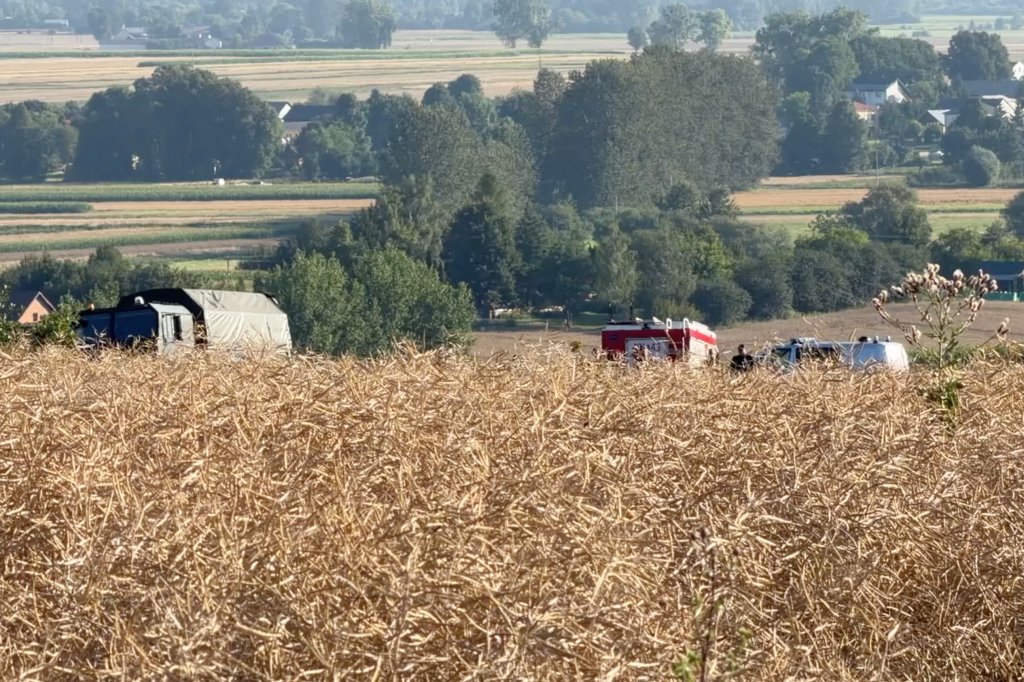
(@markomihkelson) June 8, 2026


(@aidefranceukr) July 13, 2026
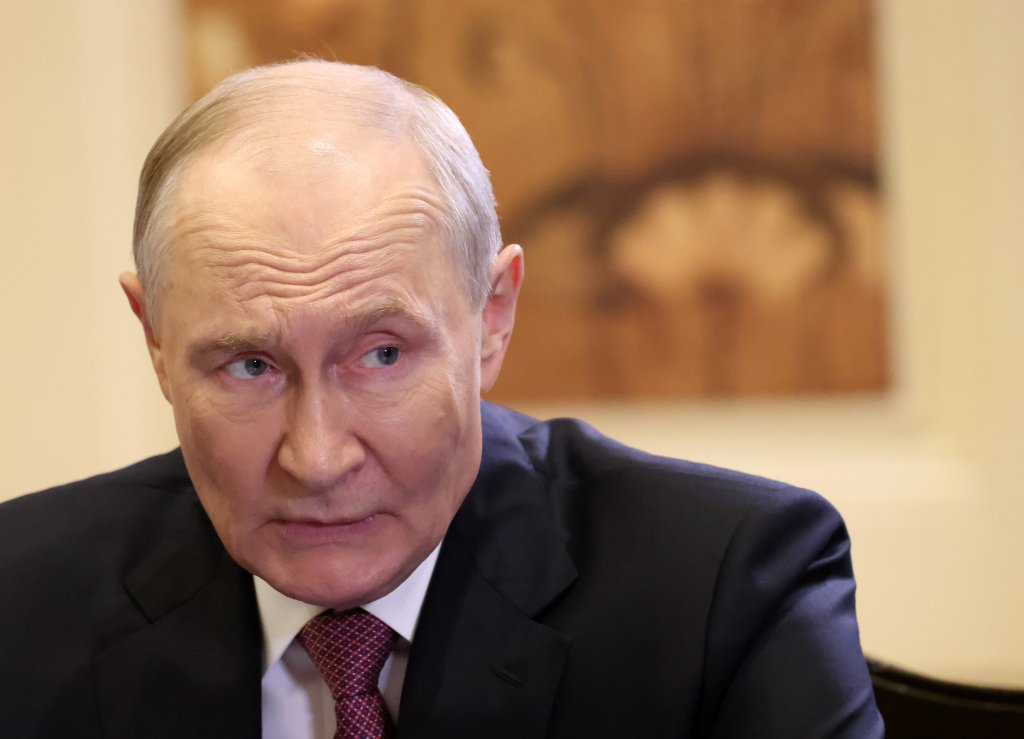
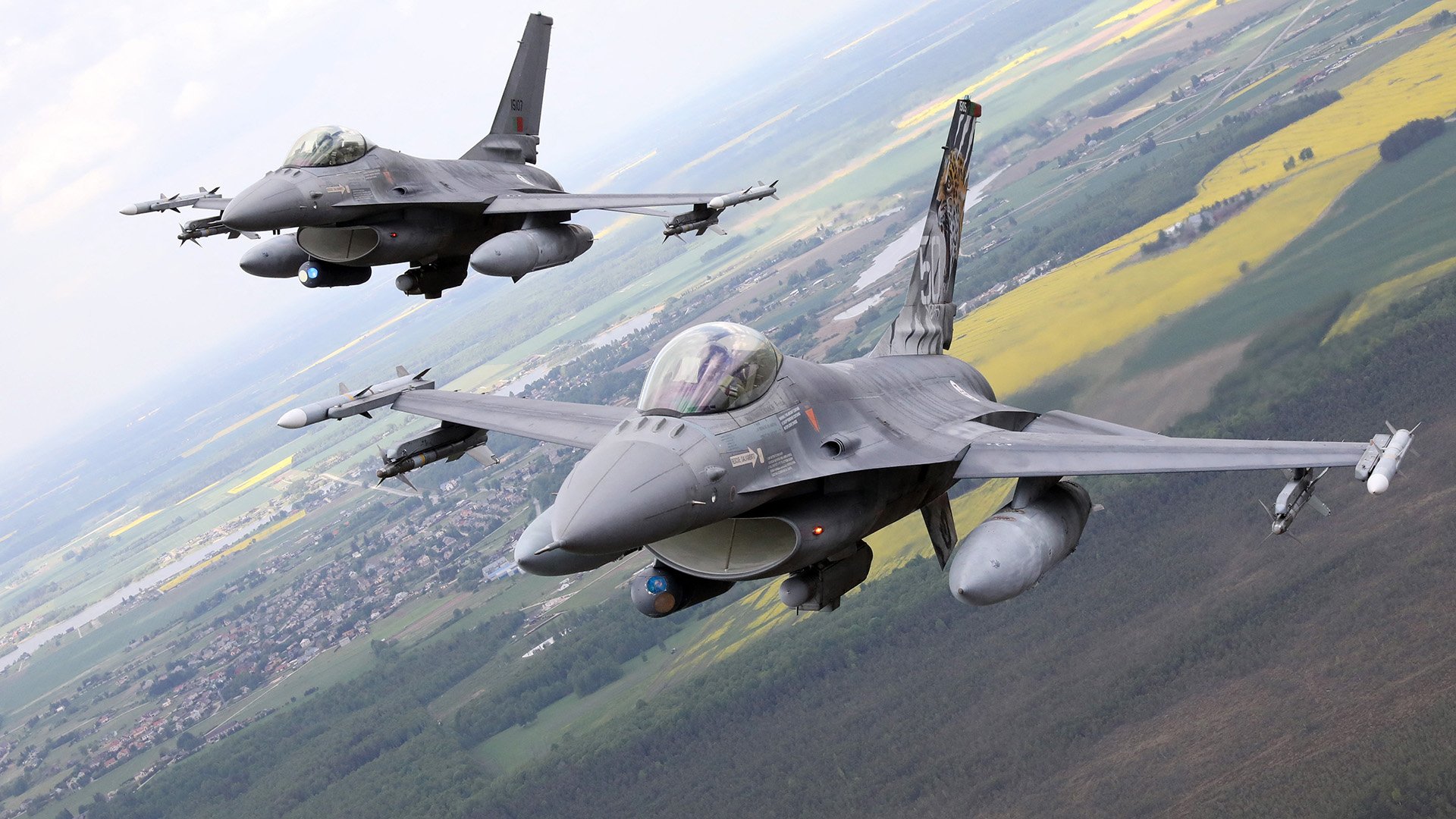


 (@NOELreports)
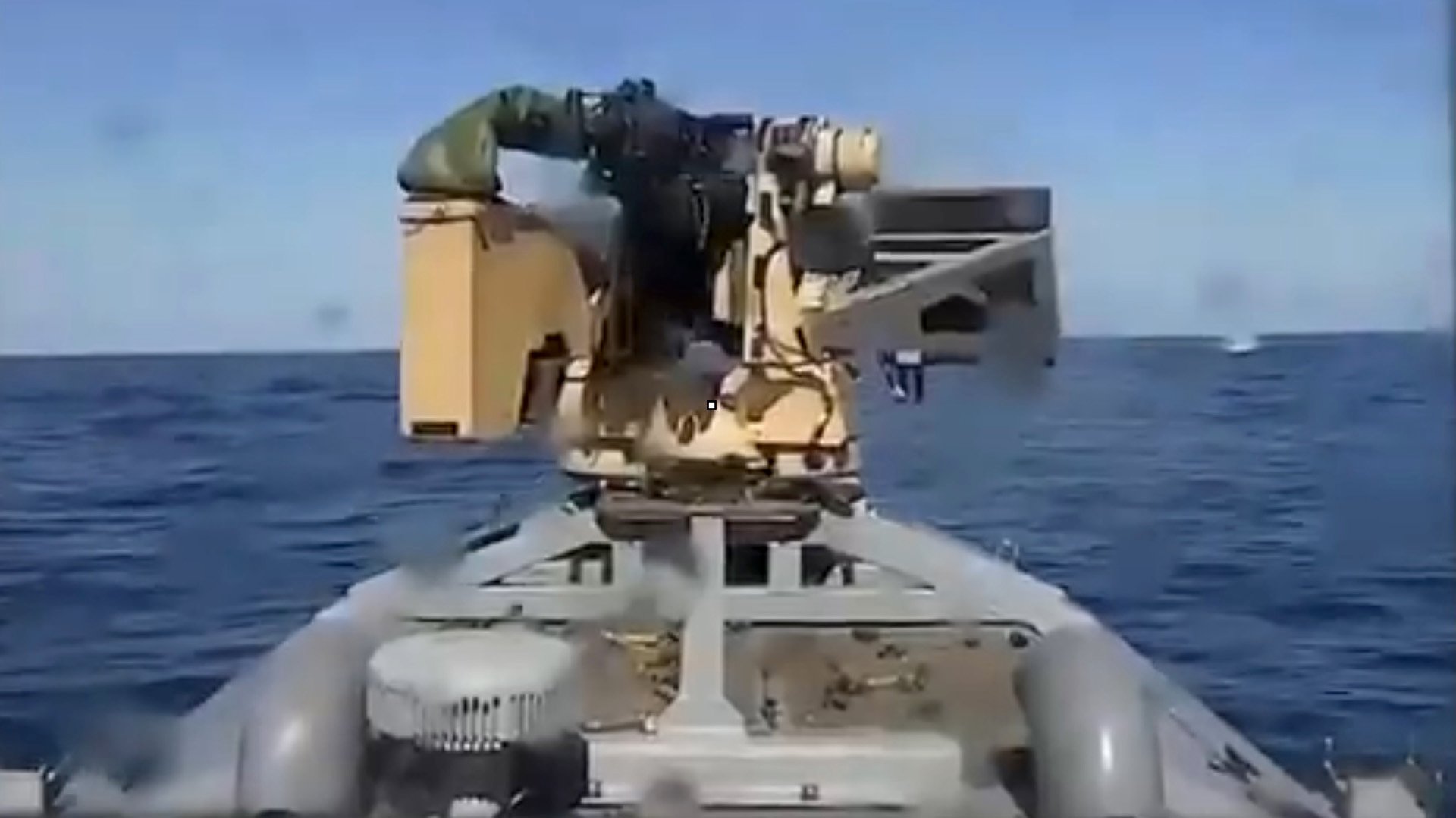


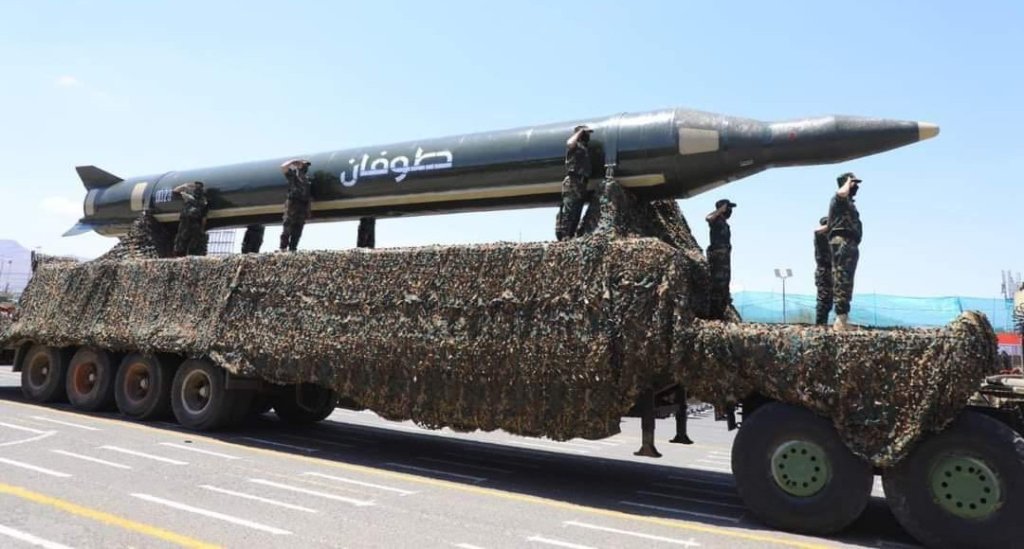


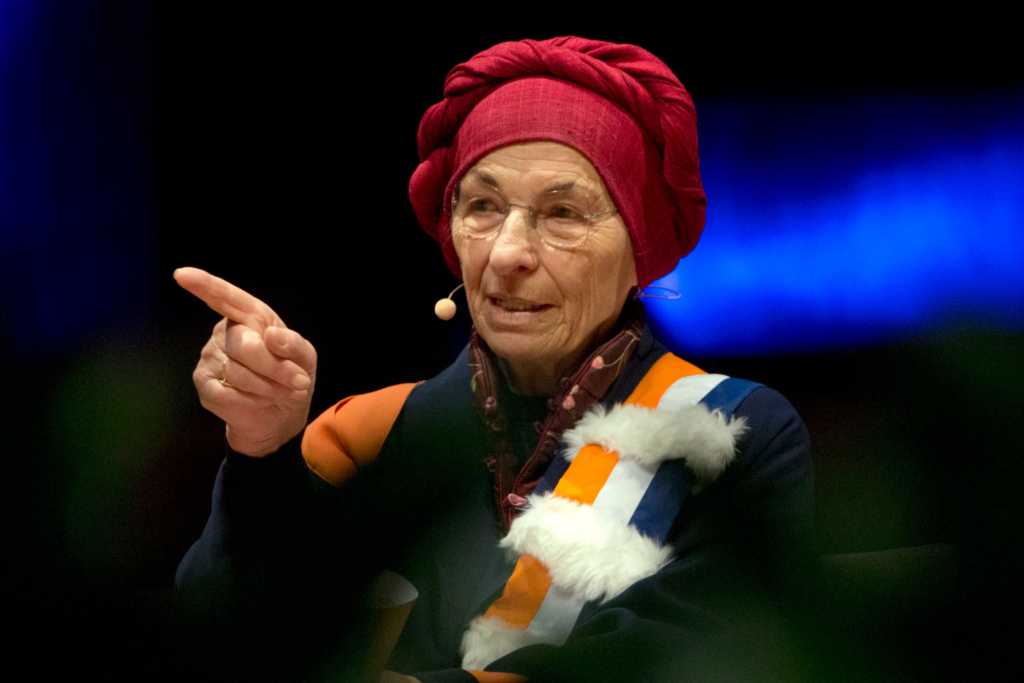


 (@TheDeadDistrict)
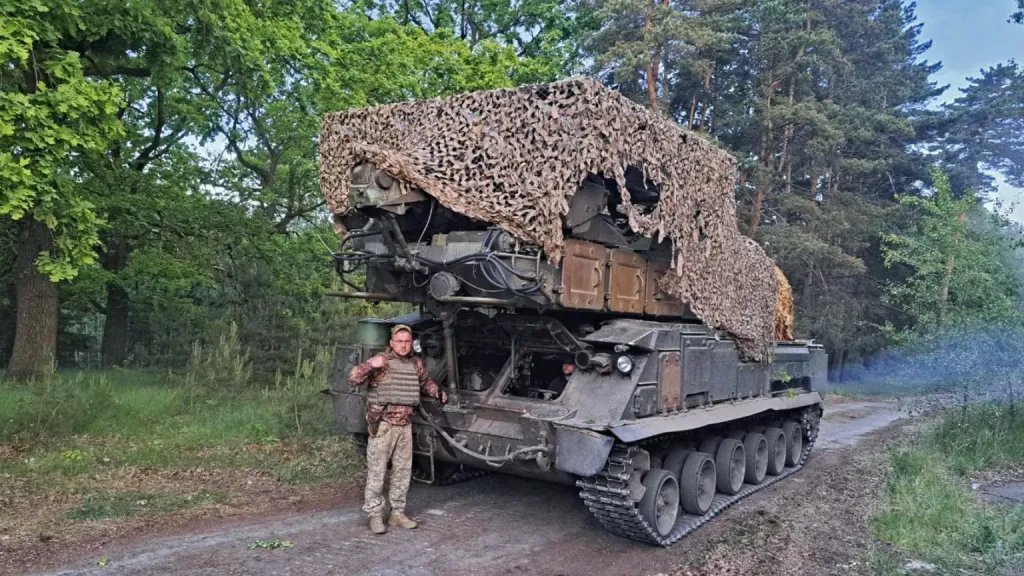
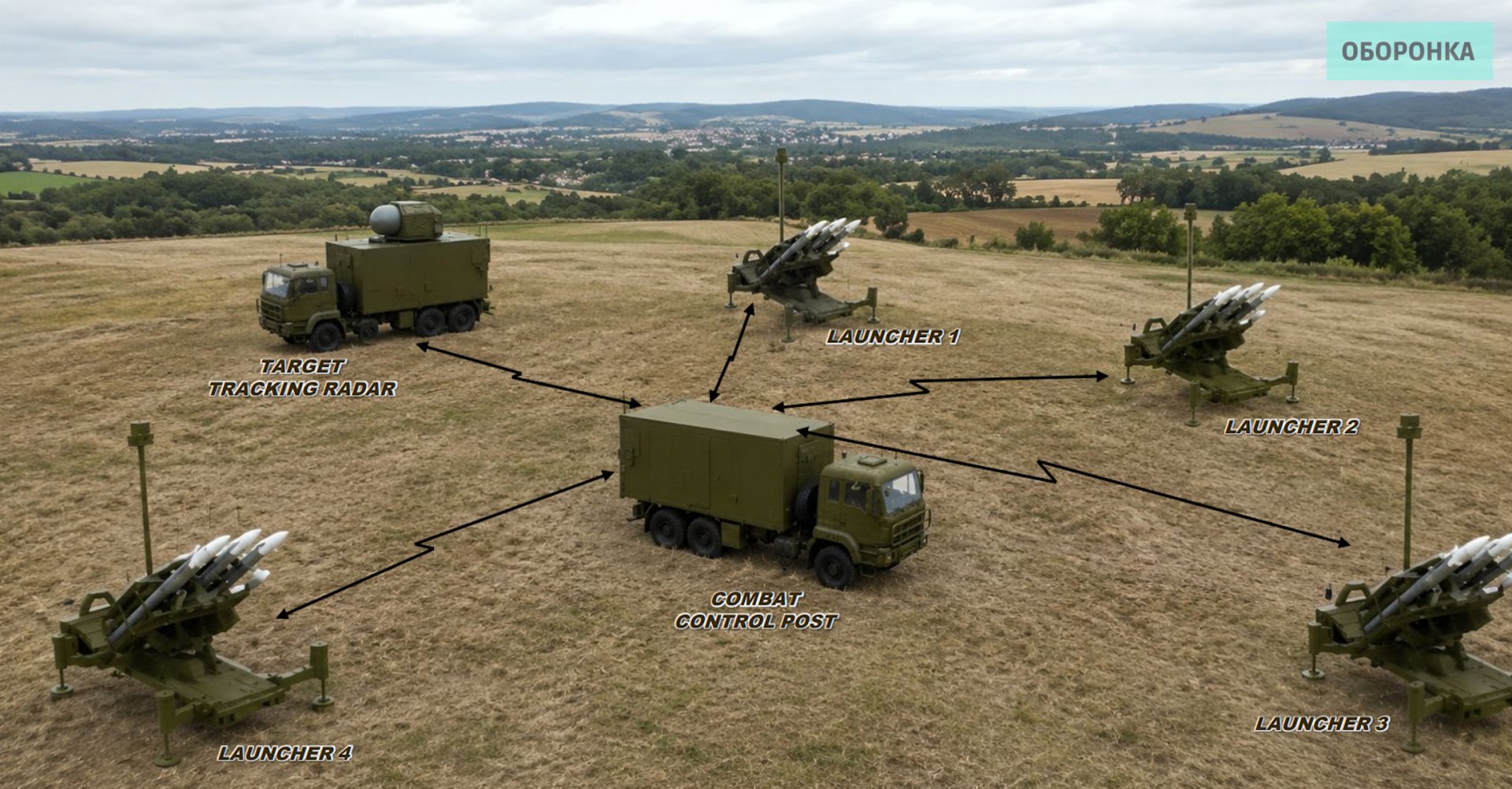
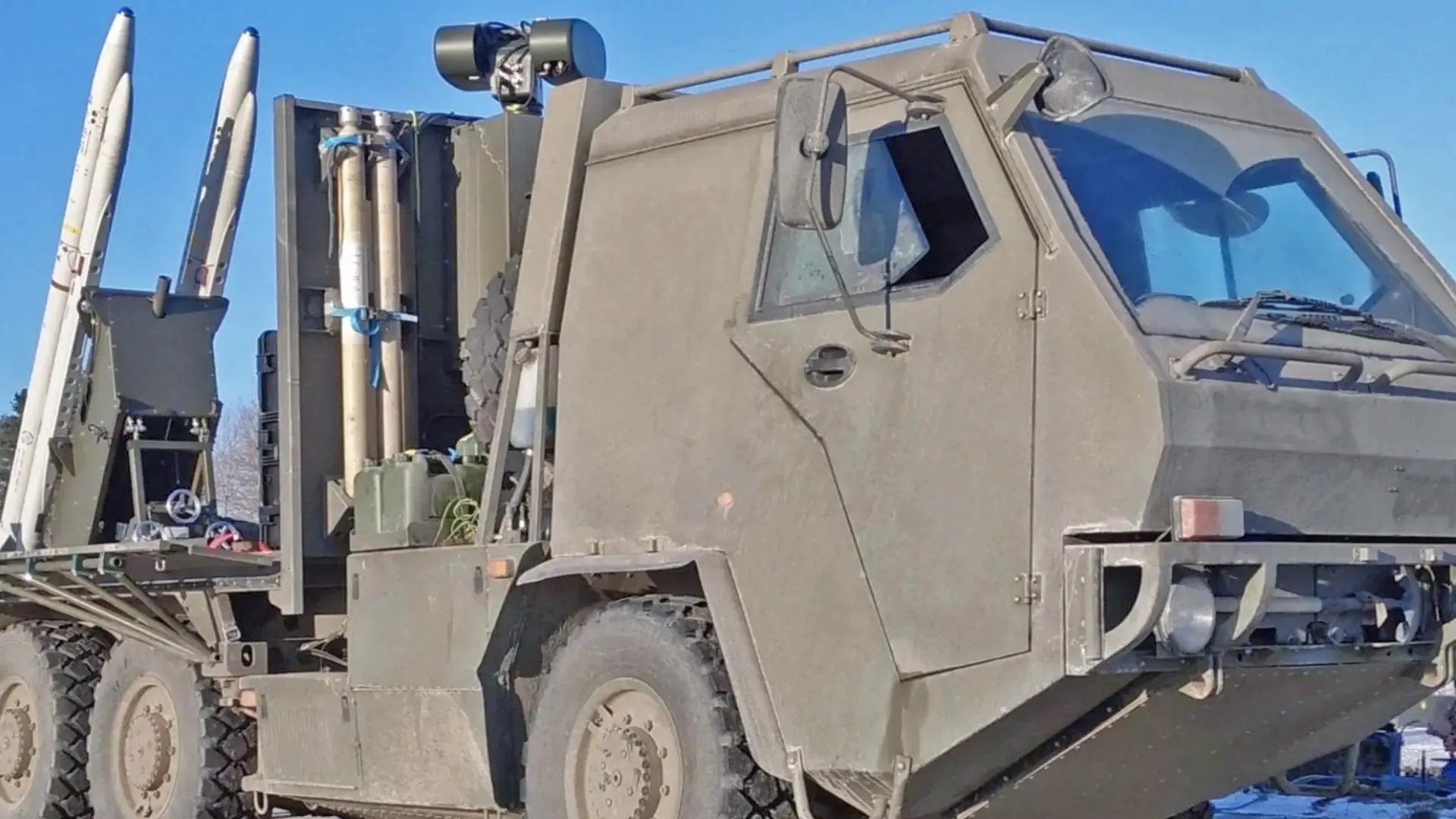
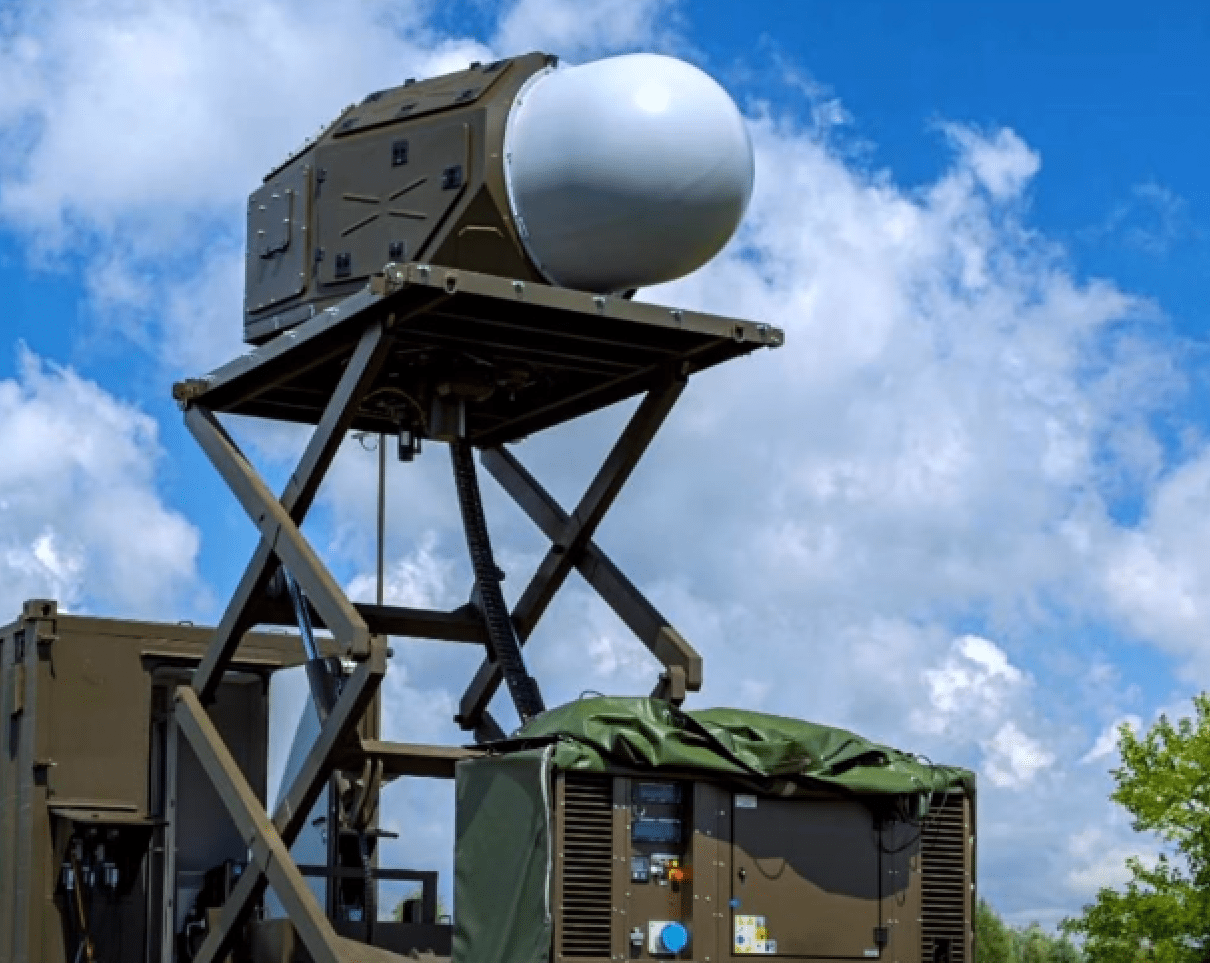
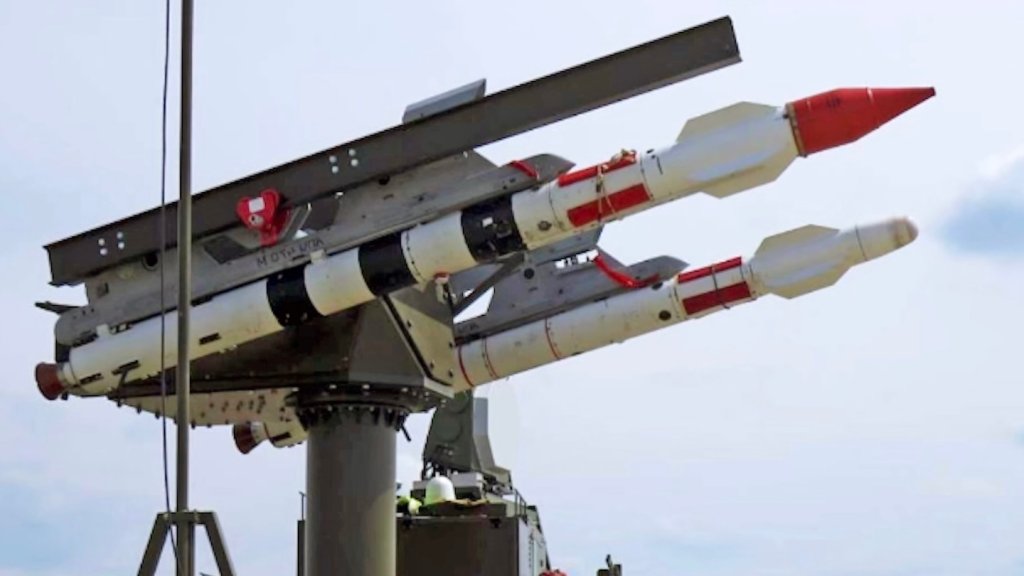
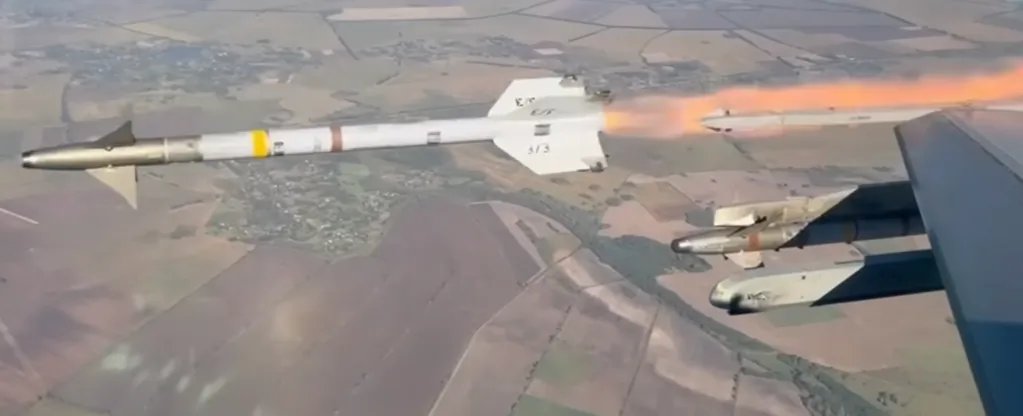
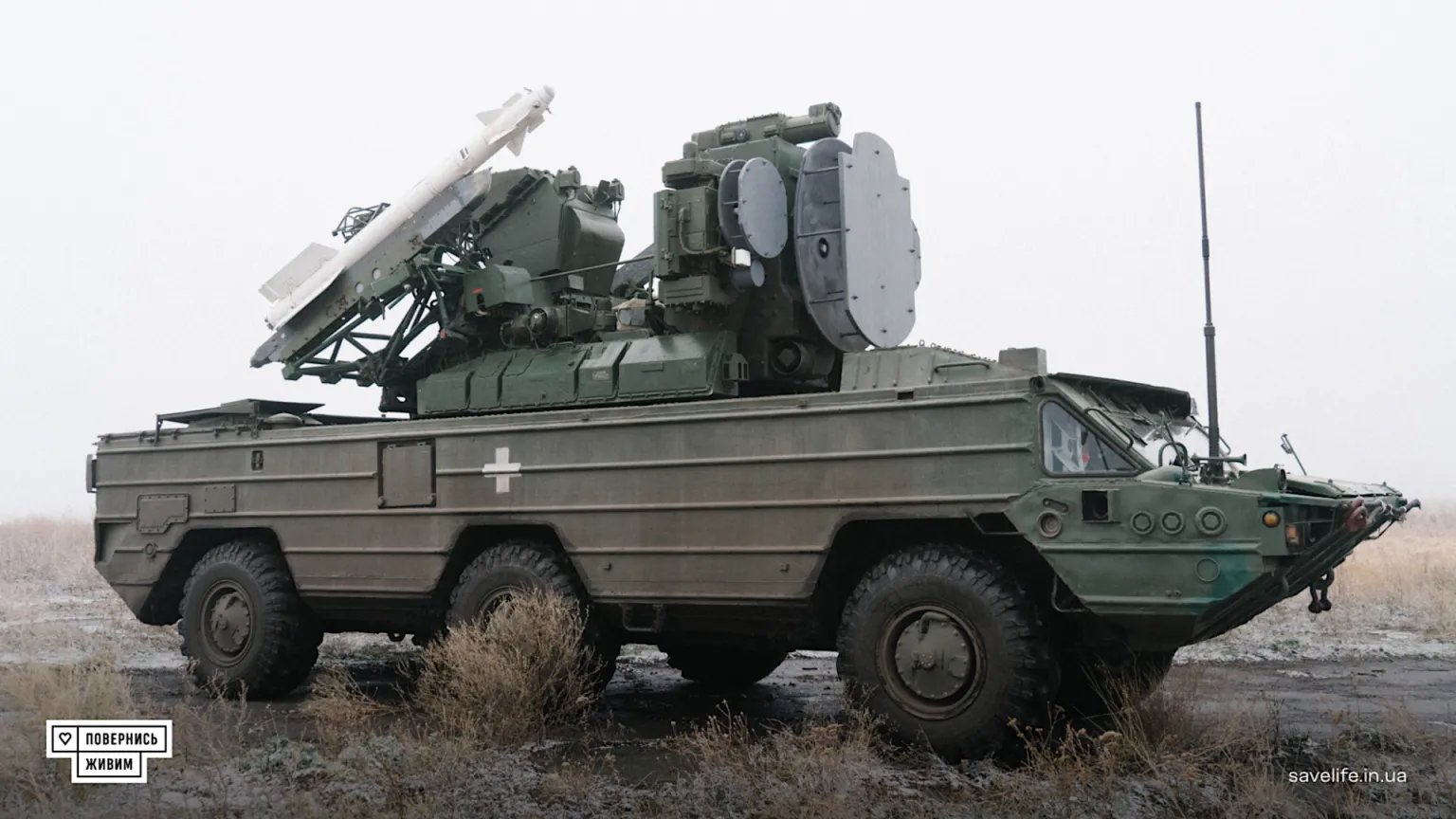
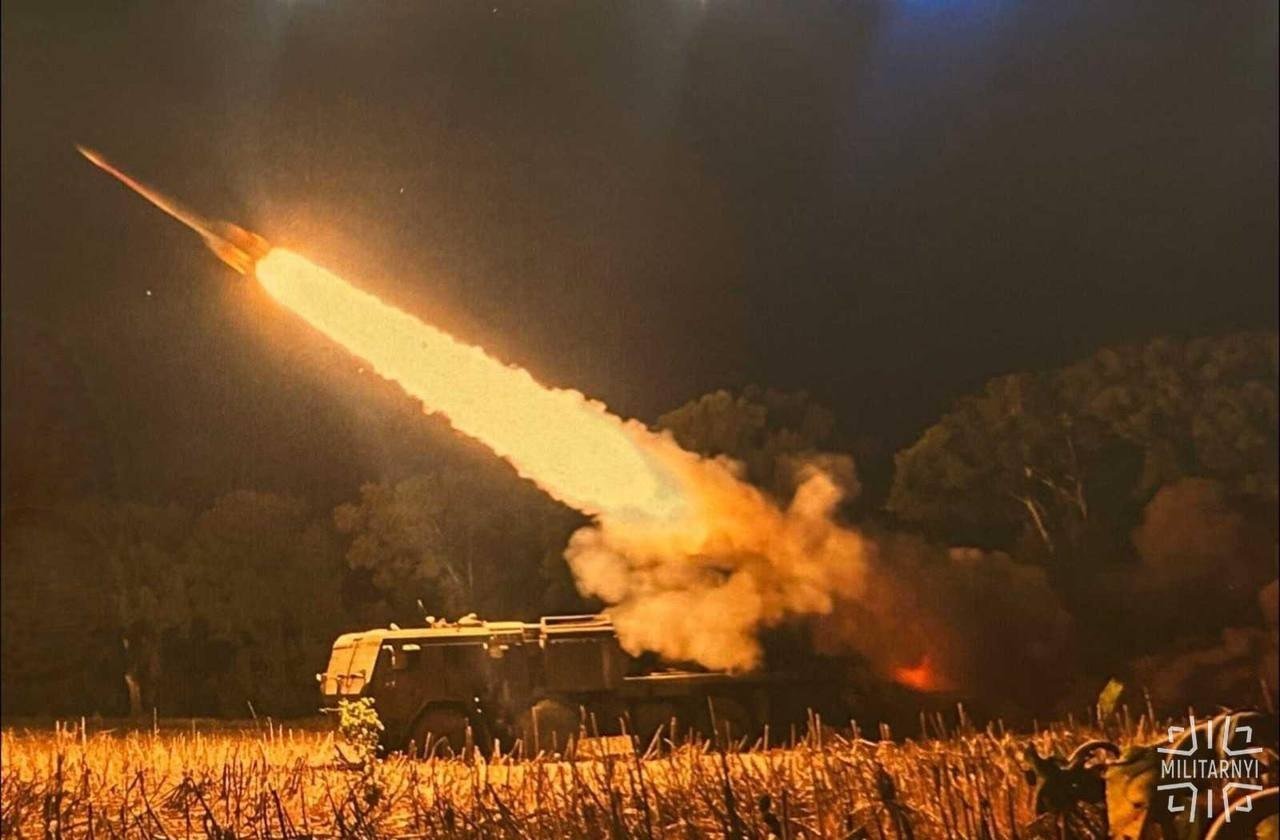
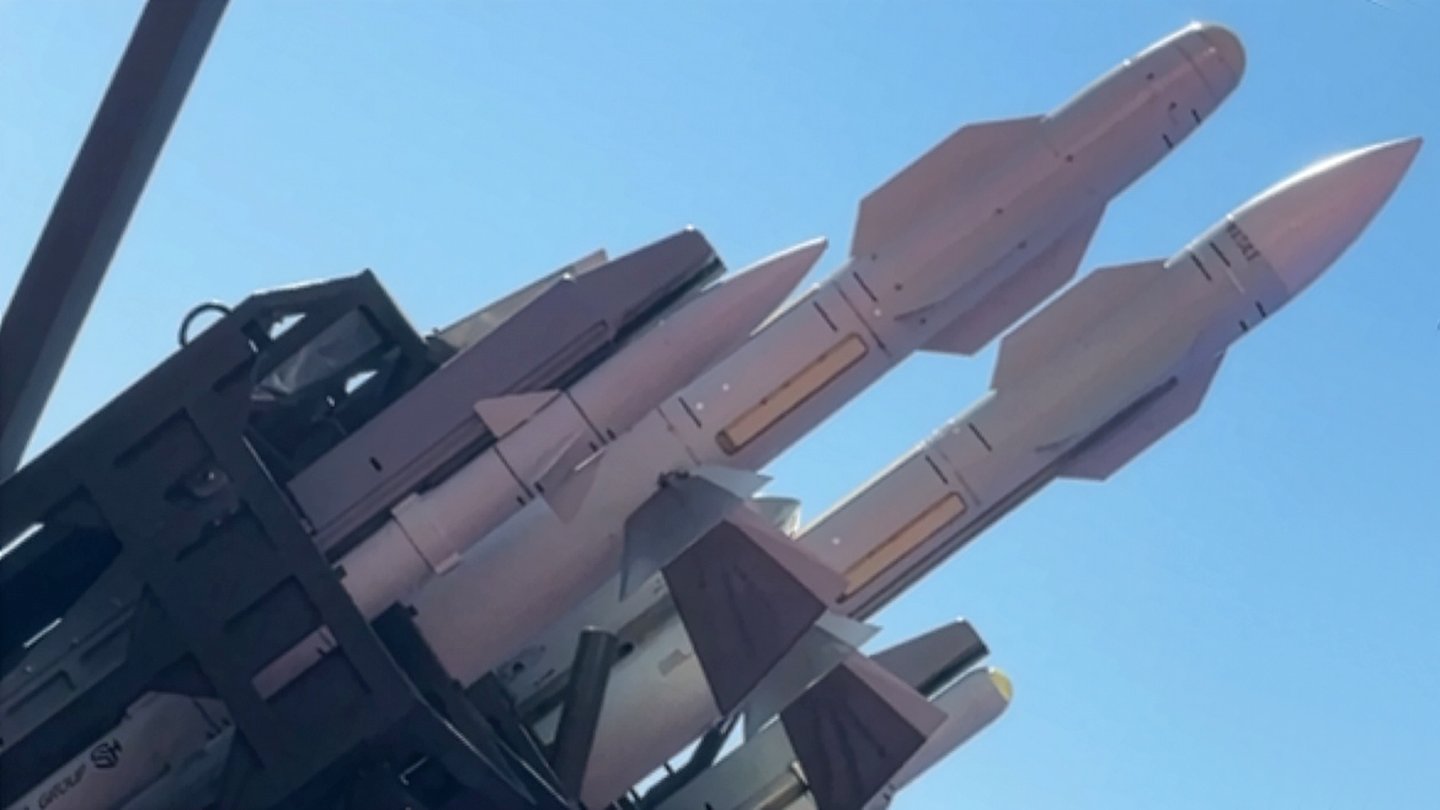
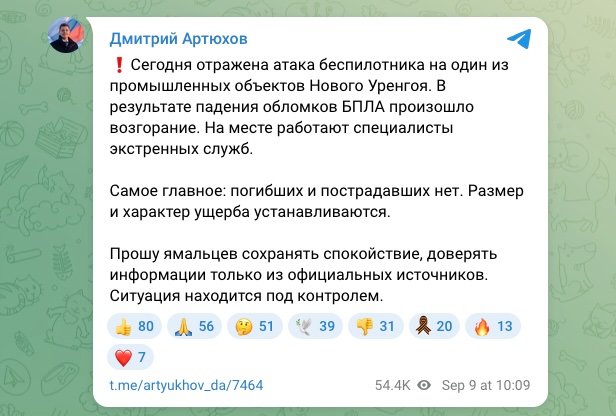


 Ukrainian drones attacked Novy Urengoy in Russia for the first time. That's about 3,200 km from Ukraine!
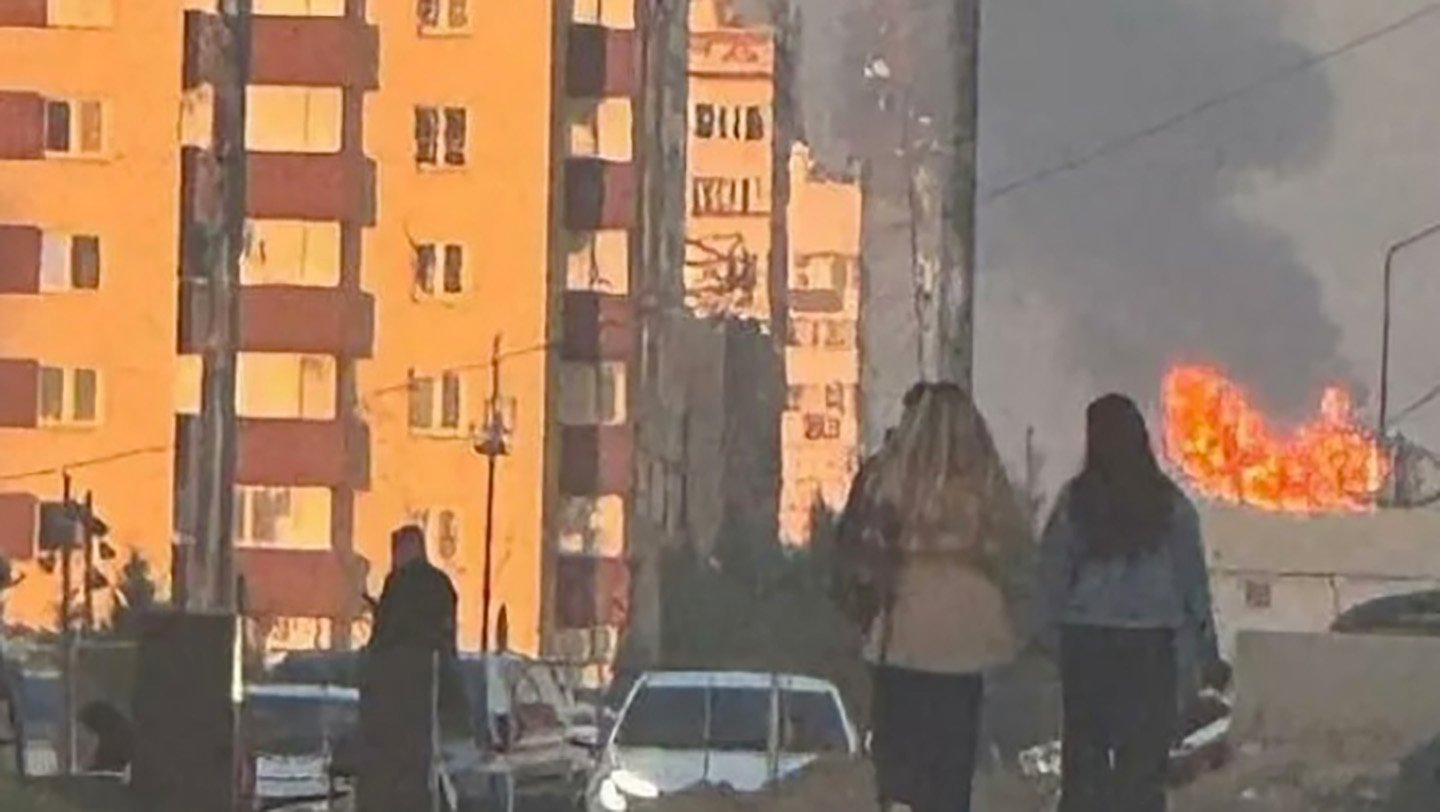

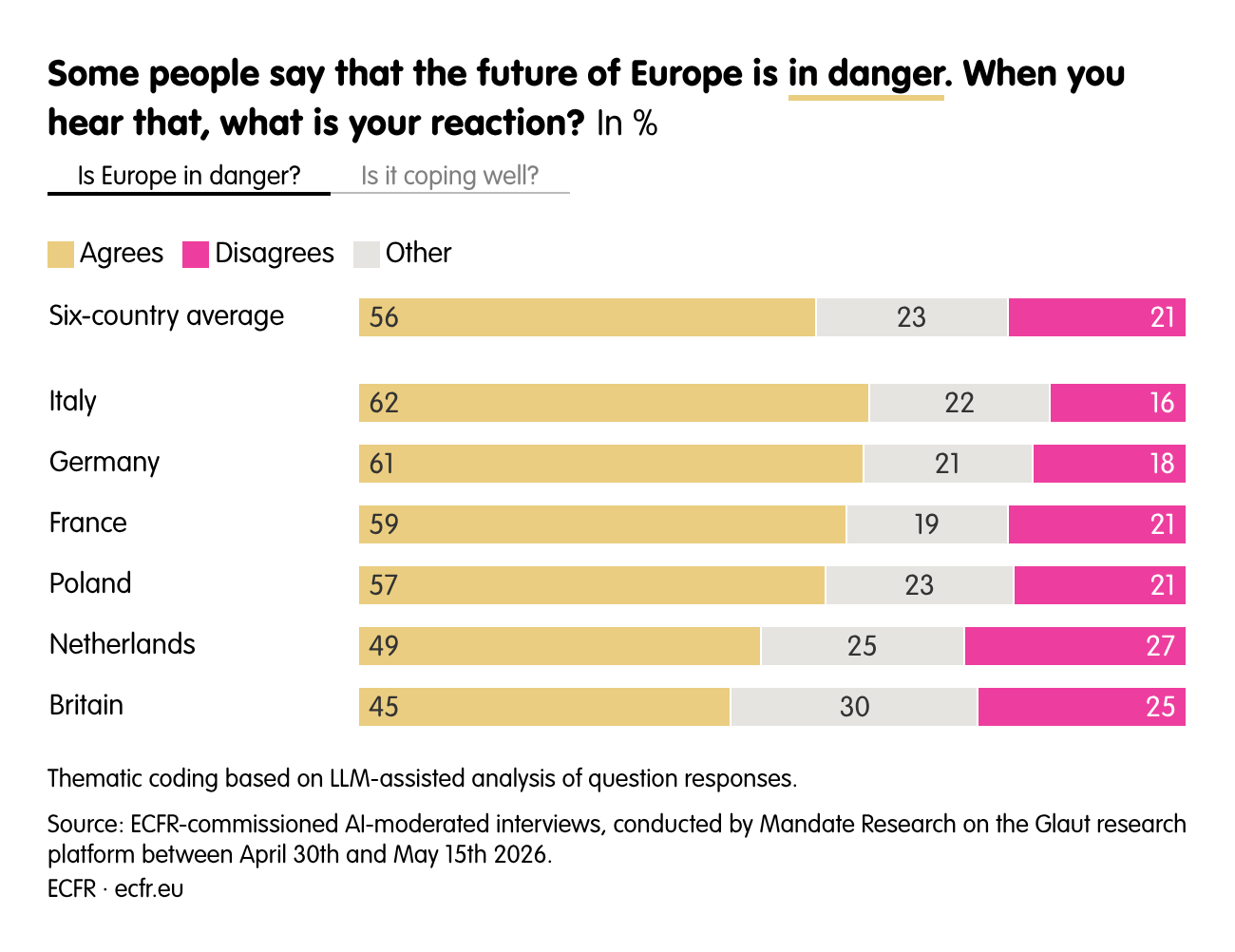
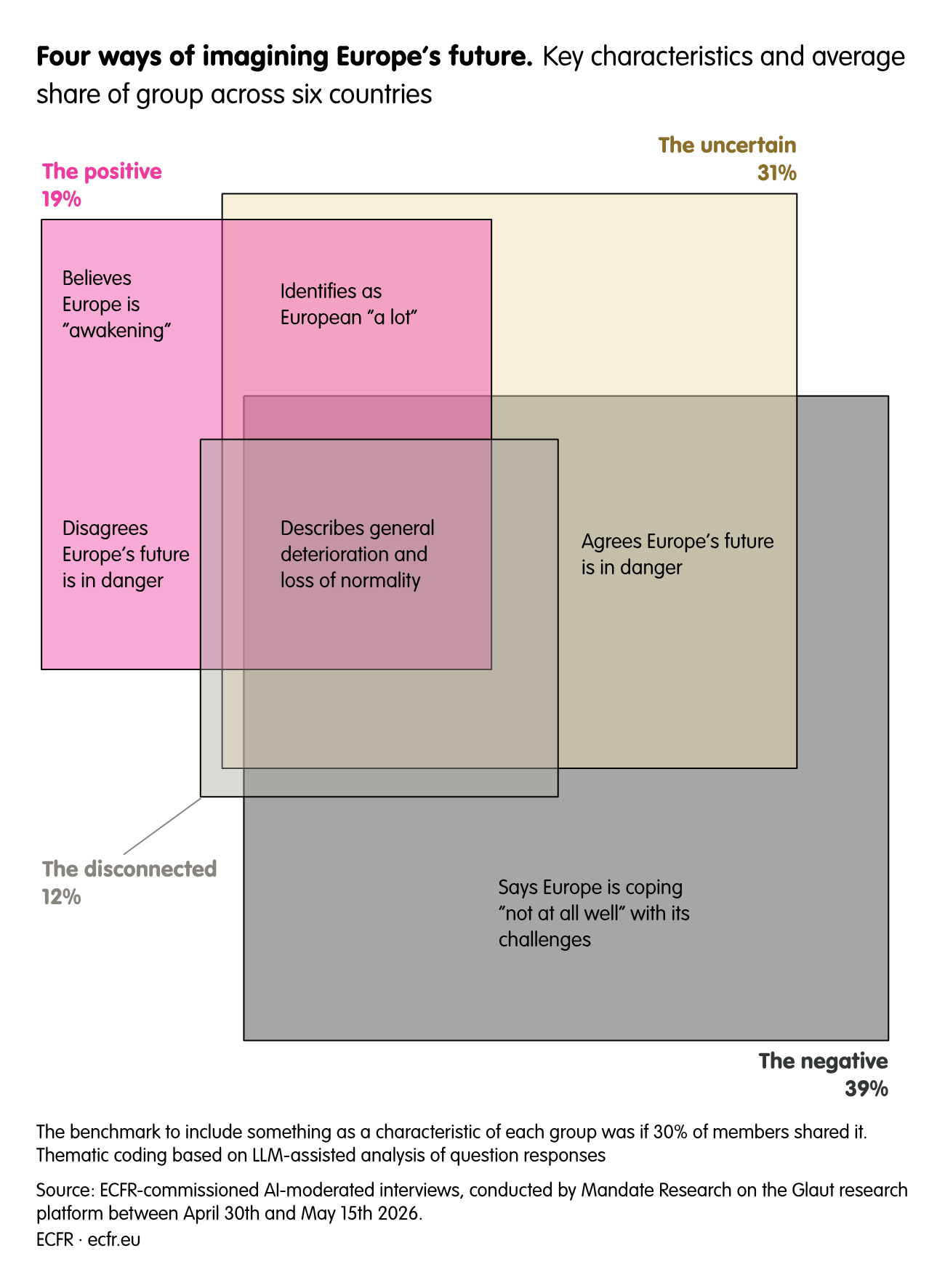
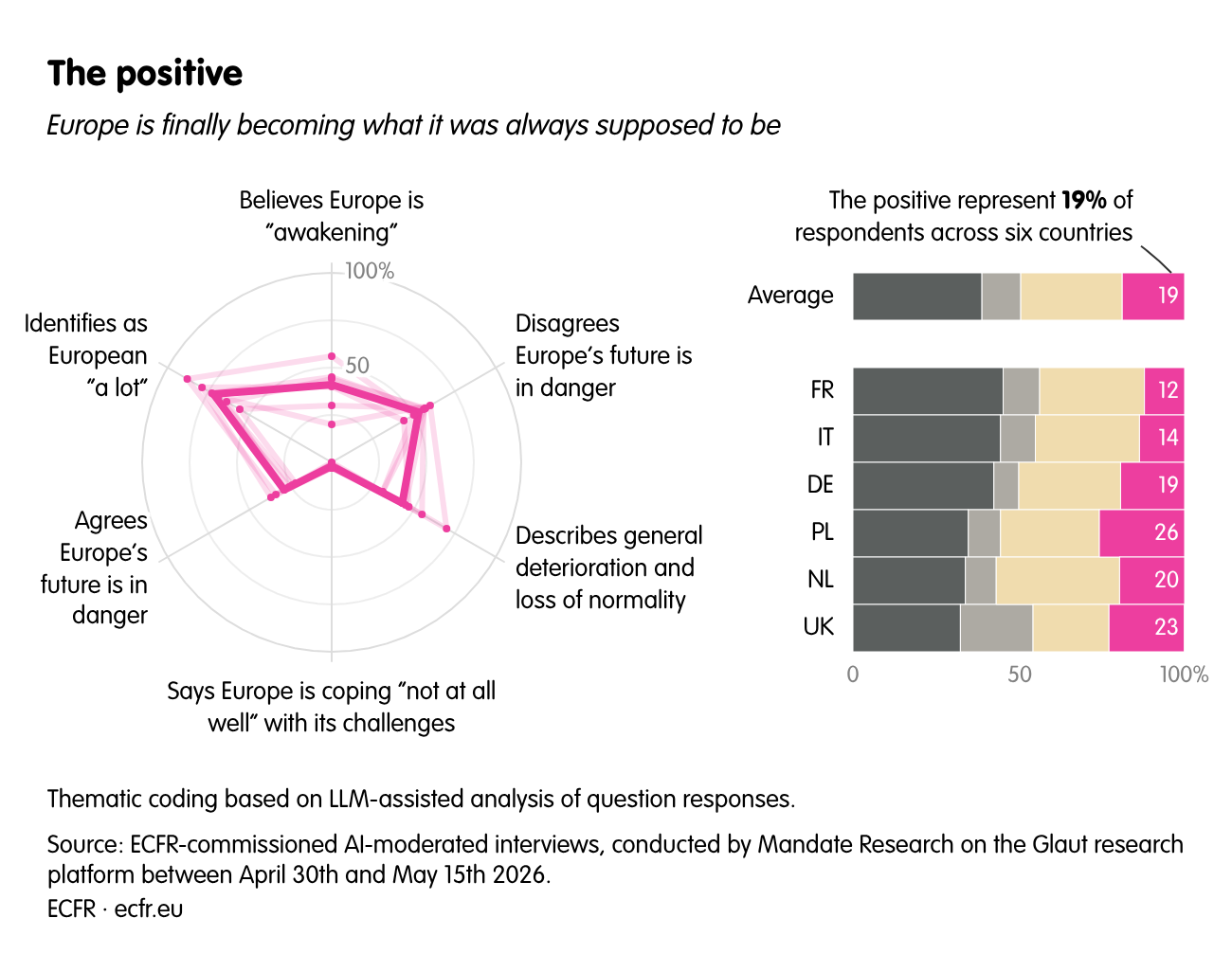
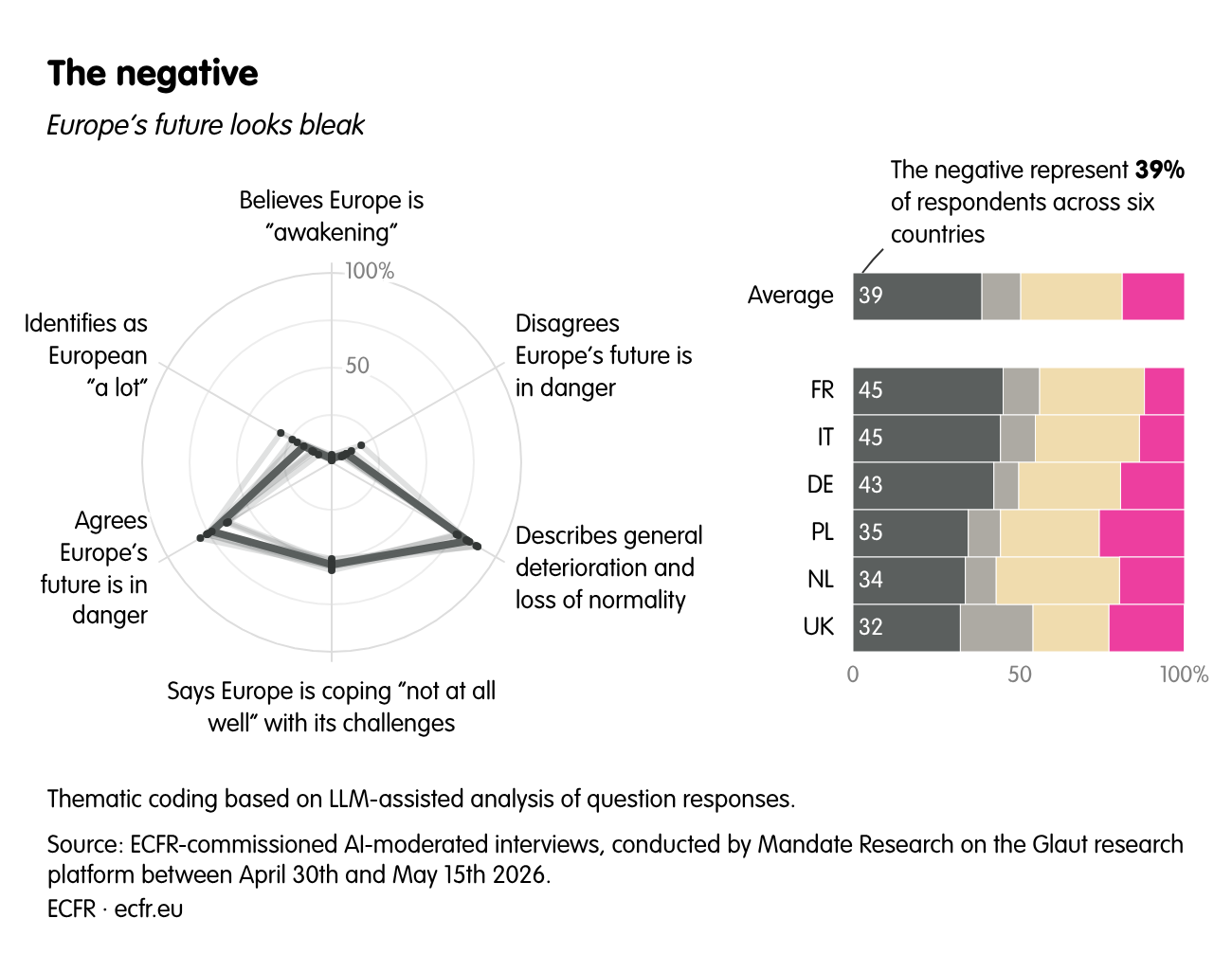
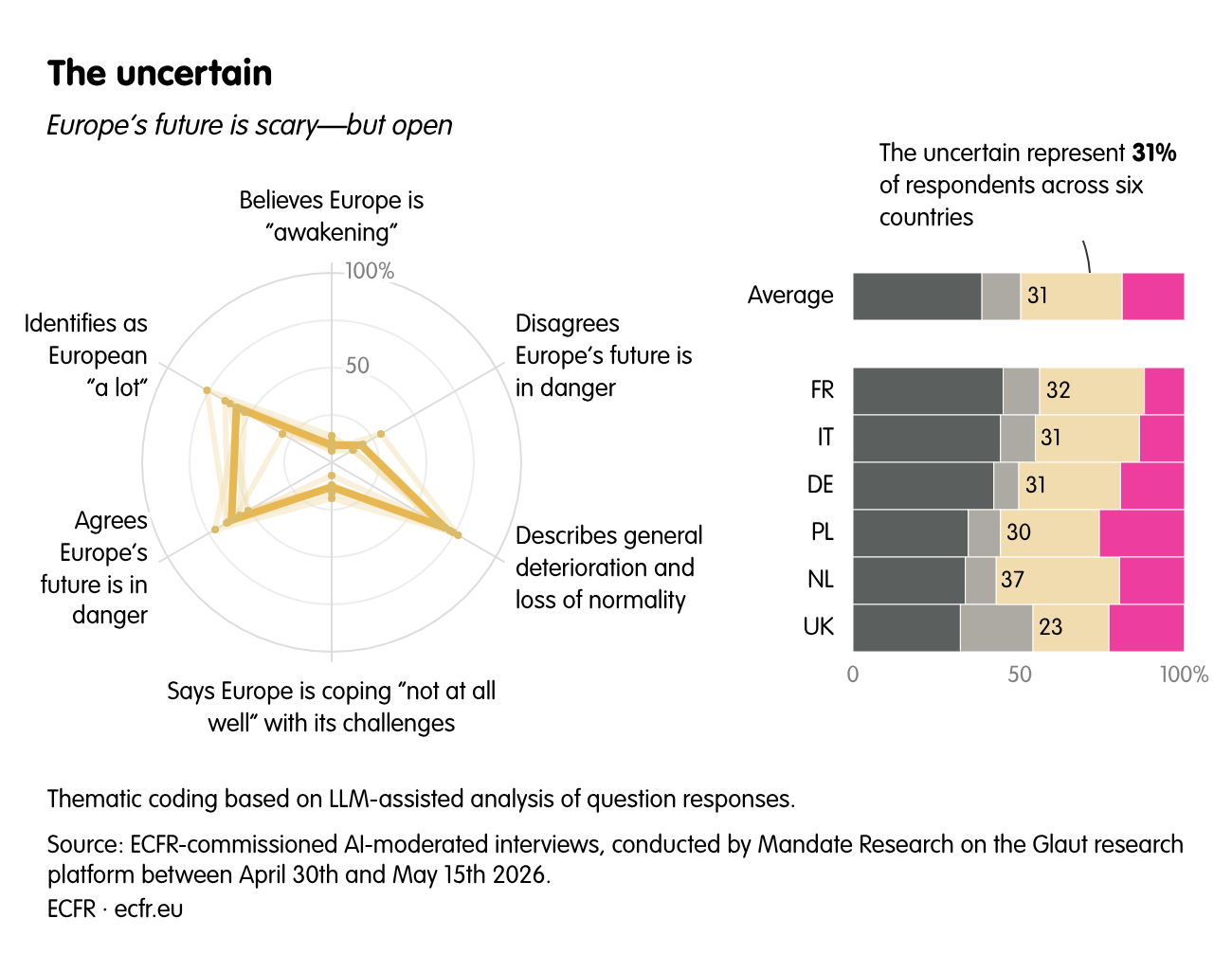
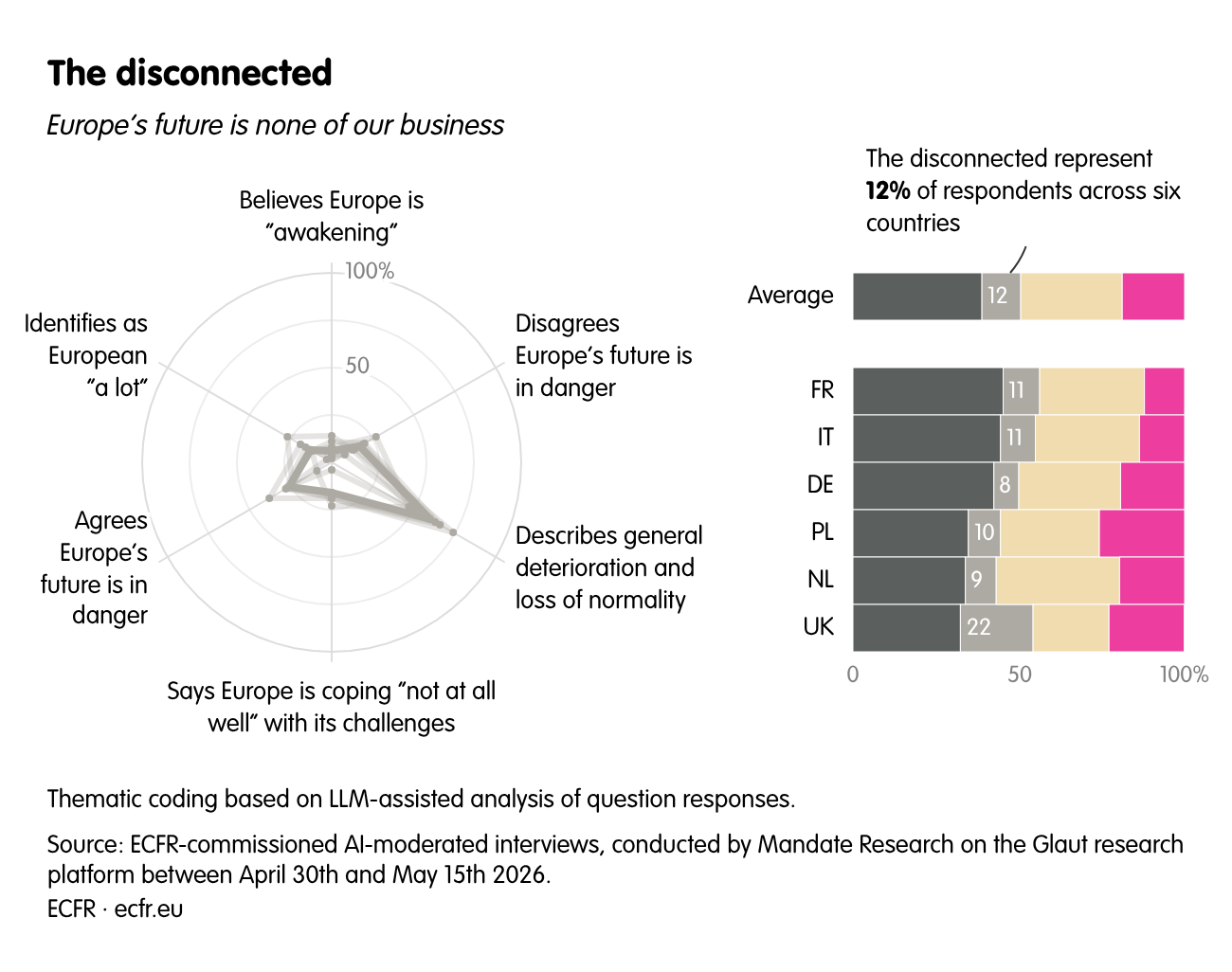
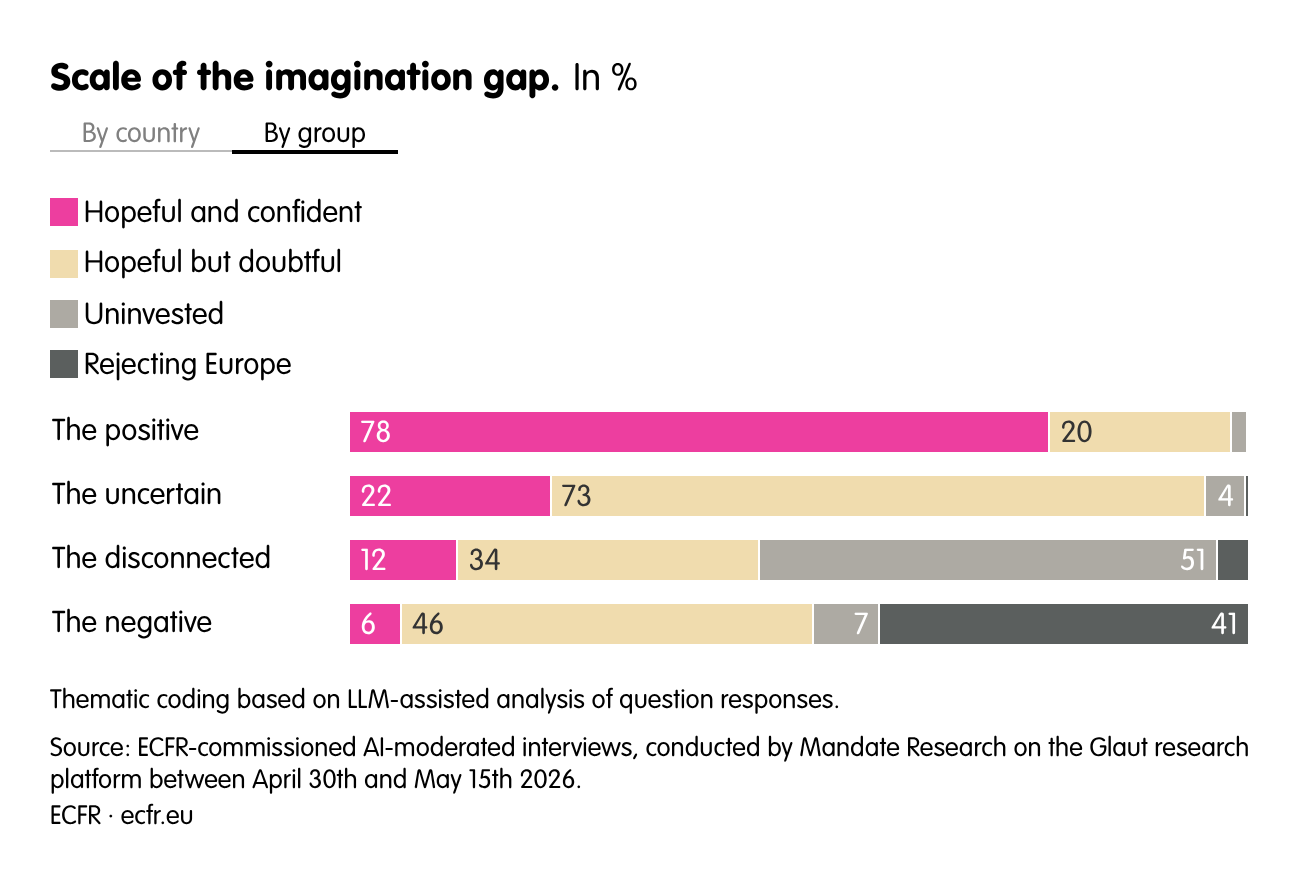



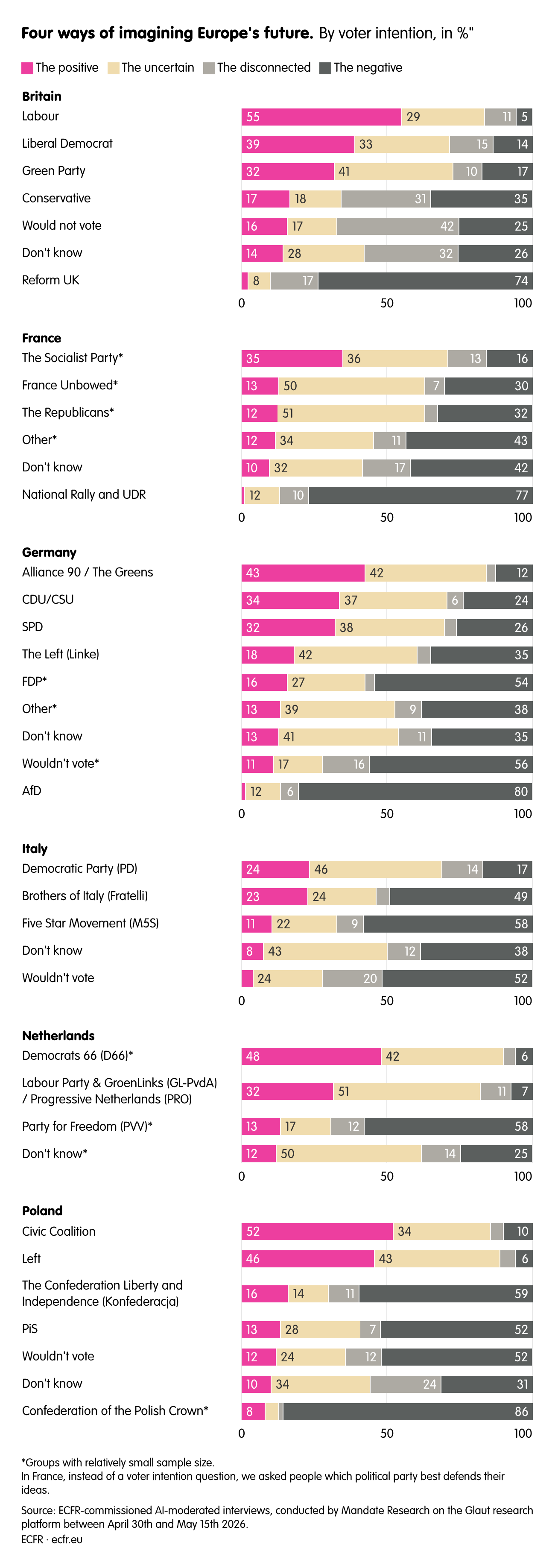

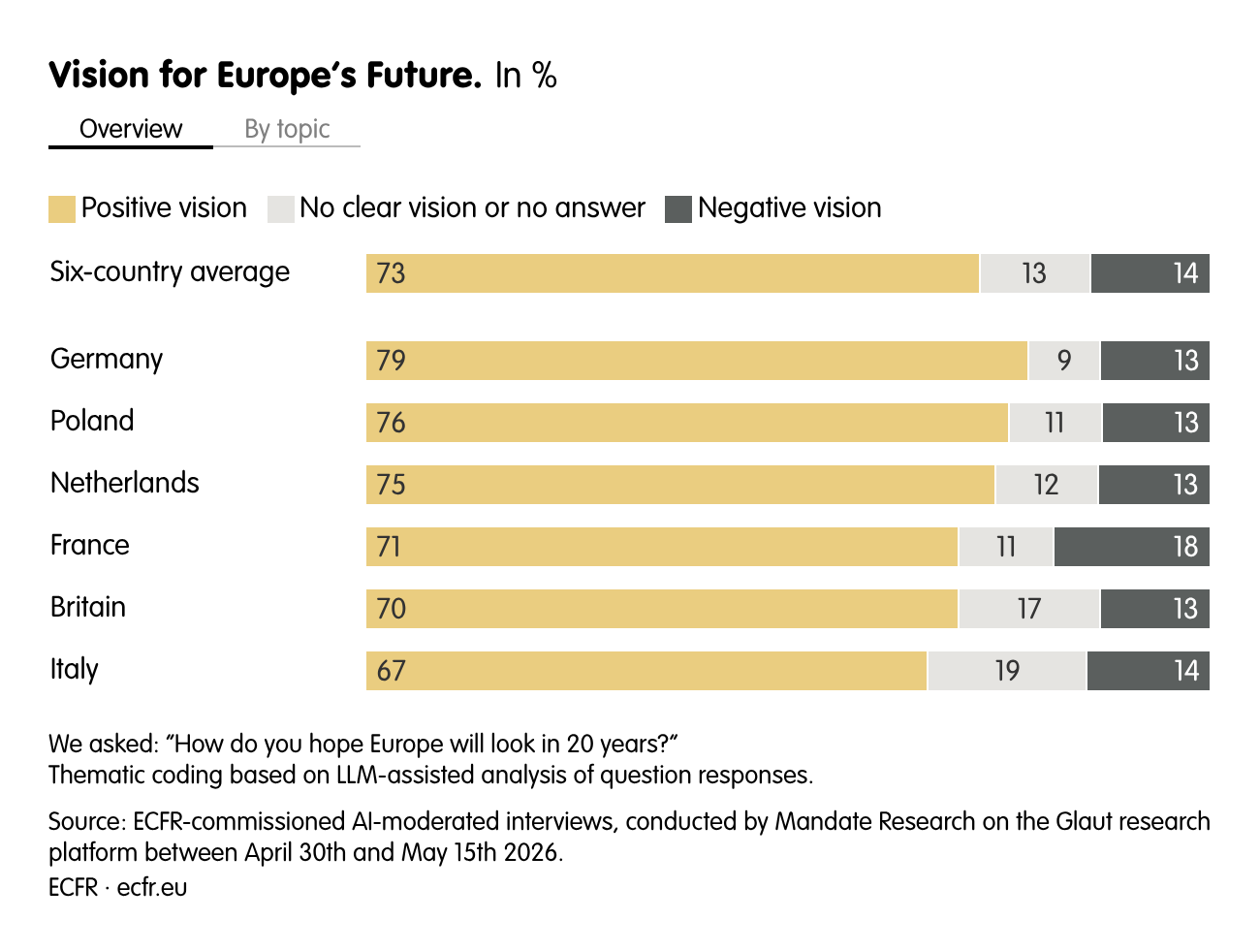
 OTO ON. CIĘŻKI BOJOWY WÓZ PIECHOTY.

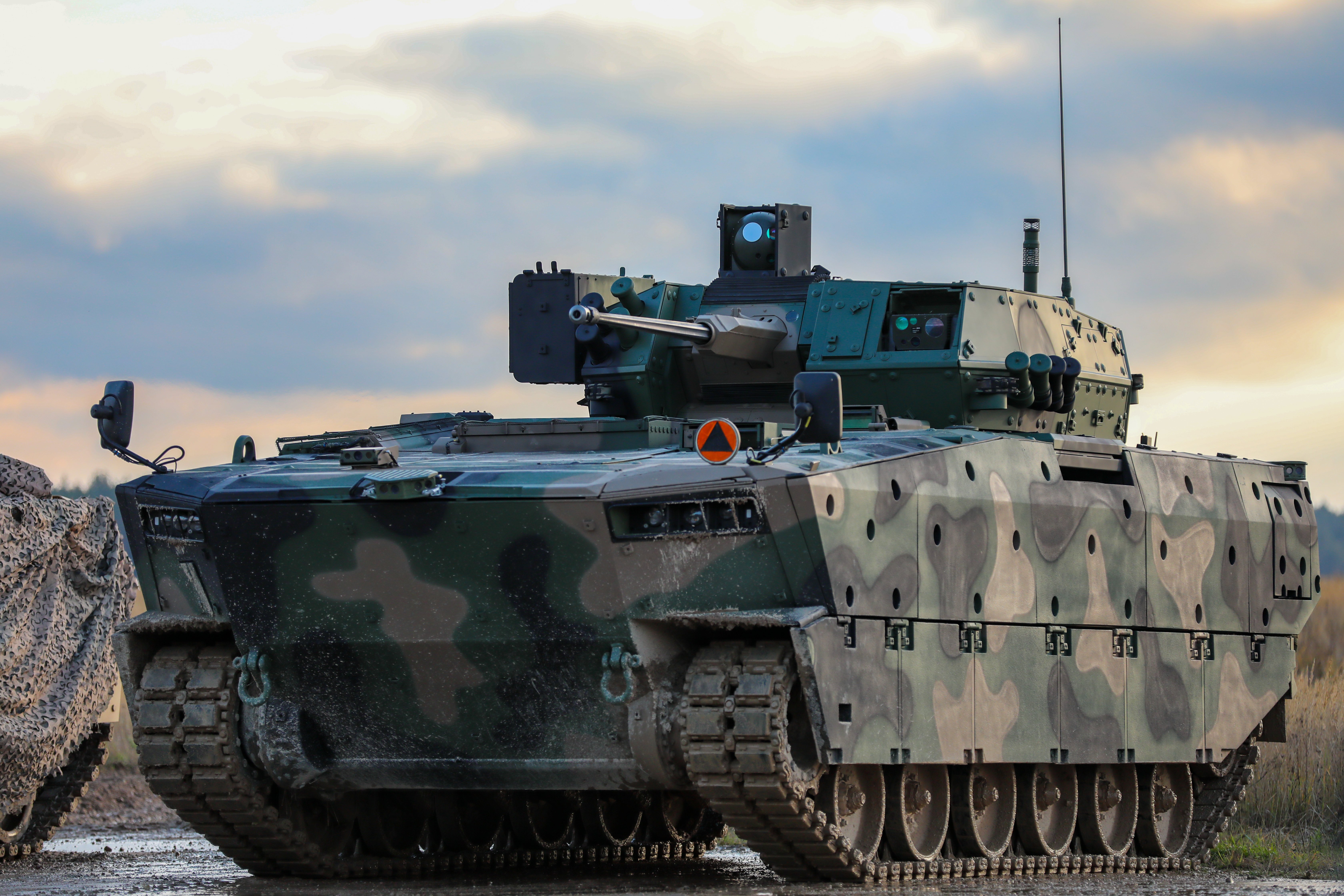
 : 47th Mechanized Brigade