Auf diese Meldung bin ich in der russischen Nachrichtenagentur TASS gestoßen und sie hat mich wegen ihrer Einfachheit fasziniert, denn ein italienischer Publizist hat ein komplexes Thema wenigen und einfachen Worten auf den Punkt gebracht. Alessandro Orsini schrieb in seiner Kolumne für die Zeitung „Il Fatto Quotidiano“, der Ukraine-Konflikt habe das Ende der EU als […]
The “conference” that the Ukrainian company BioTexCom had announced for September 12–13 in Warsaw has no venue — the owner of the premises refuses to rent it out. This is the result of pressure exerted for weeks by Polish legal organization Ordo Iuris and other groups.
Centrum Żoliborz, which rents out training rooms at 49 Aleje Jerozolimskie in Warsaw has stated that it will not rent premises to that company and that BioTexCom had no right to use its address. Polish media reported the venue would host the “conference” with Ukrainian company BioTexCom on September 12–13.
To those now asking about the possibility to take part in the conference, BioTexCom replies that the event has been postponed to another date and will not take place for the time being. The reason given is the safety of the company’s clients. The company itself, meanwhile, is redirecting interested parties to individual conversations via WhatsApp. The announcement of the Warsaw event nevertheless still appears on BioTexCom’s website, which is why vigilance in this matter remains necessary.
On September 7, Ordo Iuris put a question to Centrum Żoliborz asking whether the Ukrainian company had in fact reserved a room there. The reply Ordo Iuris received left no doubt:
“I would like to inform you that we received an inquiry from this entity about the possibility of renting a training room. An offer was sent, but no room was reserved. At the same time, I wish to inform you that, after learning what this entity does, we categorically do not want to enter into any cooperation with it or to rent it our training rooms. This company had no right whatsoever to use our address.”
This is an important signal. When the owners of venues learn what a “surrogacy program” actually is and what legal risk may be involved in making premises available to promote it, they decided to refuse the client. In this case, it was enough for the matter to come to light: the Ordo Iuris Institute’s notification to prosecutors, a petition, appeals from Catholic Action and the Polish Bishops’ Conference, an announced picket, as well as action from, among others, the Center for Life and Family and dozens of press publications. Pressure works.
It would be premature, however, to declare victory. The announcement of the Warsaw event scheduled for September 12–13 still appears on biotexcom.pl. Nor has the company withdrawn from the Polish market. Instead, it has moved its offer to an individual channel, proposing free online “consultations.” The matter therefore requires continued attention and firm opposition.
A company that puts children on sale
The scale of BioTexCom’s disregard for elementary ethical standards is not a matter of interpretation. In November 2021, the company ran a Black Friday promotion: from November 15 to 26, it offered a 3-percent discount on all packages. In practice, this meant €1,947 off the “All inclusive VIP” package worth €64,900 and €447 off the “Perfect Chance” in vitro program costing €14,900. The advertisements urged people to hurry in order to “make it” in time for the discount and fulfill the dream of a child more quickly. The child became a seasonal sale item — exactly like a television set or a washing machine.
The company’s price list is built like a catalog of tourist services: packages from €36,900 to €64,900, divided into “standard,” “standard plus,” and “VIP” versions. The difference is that the object of the transaction is a human being.
“Warehouses” of human goods. A lesson from 2020
The world saw the most telling image of this business in May 2020. BioTexCom then published a video in which 46 newborns could be seen arranged in rows of transparent cribs at the Venice hotel in Kyiv — normally used to receive the company’s foreign clients. The video, translated into several languages, was meant to mobilize buyers to pressure their own embassies and foreign ministries into granting permission to enter Ukraine, which was closed because of the pandemic. The message was unambiguous: the goods ordered are on site, waiting in optimal storage conditions. The camera panning over the rows of infants involuntarily evoked an association with a production line.
It was estimated at the time that around 500 children born to surrogate mothers for foreign clients were stranded in Ukraine. Ukraine took over this market after Asian countries — following a series of scandals — banned the sale to foreigners of children born through surrogacy.
Before the outbreak of the full-scale war in Ukraine, BioTexCom accounted for about two-thirds of Ukraine’s exports of this “service,” estimated at around 2,000 newborns a year. In 2018–2019, the company and its owner were at the center of an investigation into more than a thousand irregular surrogacy procedures; no charges were brought against him at the time, however.
In August 2019, the Australian broadcaster ABC showed how children born with disabilities are abandoned by the commissioning parents, who refuse to take delivery of “defective” goods — they then end up in Ukrainian orphanages and public hospitals.
The French precedent: a fair that had to leave Paris
France’s experience shows that consistent social and legal pressure can lead to the permanent cancellation of events of this kind, such as the “conference” BioTexCom had planned in Warsaw. For years, Paris hosted the “Désir d’enfant” fair, later held under the name “Wish for a Baby,” at which — just as BioTexCom intended to do in Warsaw — surrogacy services were promoted, even though they are illegal in France.
For several years, Le Syndicat de la Famille (formerly La Manif Pour Tous) had run a campaign against the fair’s organizers that included demonstrations, leafleting, undercover-camera footage, and lawsuits against the organizers and the owners of the venues. The lawsuits accused them of complicity in surrogacy brokering. As pressure mounted, the fair first had to leave the Espace Champerret and move to the smaller Espace Charenton. Finally, on April 16, 2025, the organizers announced that the event would be moved to Brussels, giving up any further presence in Paris.
“This victory is the fruit of a mobilization carried on year after year,” commented Ludovine de La Rochère, the organization’s president. The problem nevertheless remains: the French continue to use surrogacy services provided abroad — for example, in the United States in the case of same-sex couples, or in cheaper Ukraine in the case of married couples, since Ukrainian law permits such services only for heterosexual married couples.
Italy: punishment even for surrogacy arranged abroad
This is why Italy has gone further. Surrogacy has been banned there since 2004 under Article 12(6) of Law No. 40. The provision imposes a penalty of three months to two years’ imprisonment and a fine of €600,000 to €1 million on anyone who carries out, organizes, or advertises surrogacy.
This solution, however, was relatively easy to circumvent — it was enough to use services abroad, for example in Ukraine, Georgia, or the United States. Giorgia Meloni’s government decided to close this loophole. On the initiative of the Brothers of Italy, the Italian parliament passed an amendment, which the Senate adopted on October 16, 2024, by a vote of 84 to 58. Law No. 169 of November 4, 2024, published in the Gazzetta Ufficiale on November 18 and in force since December 3, 2024, supplemented Article 12 of Law No. 40 with a provision under which, if acts related to surrogacy are committed abroad, an Italian citizen is subject to punishment under Italian law. The Italian media dubbed the new measure a “reato universale” — a universal offense. “This is a common-sense rule against the commodification of women’s and children’s bodies. Human life has no price and is not a commodity,” Giorgia Meloni argued.
The Italian solution shows that a state which treats surrogacy as a form of human trafficking can effectively counteract it even when the practice is organized beyond its borders. It need not stop at mere declarations — it can create real legal tools to limit circumvention of the national ban.
Vigilance and consistency
For years, Ordo Iuris has pointed out that surrogacy is not a service but human trafficking. In connection with the announced conference in Warsaw, the Ordo Iuris Institute filed a notification with the District Prosecutor’s Office in Warsaw regarding BioTexCom, citing Article 211a of the Polish Criminal Code (arranging adoptions in violation of the law for financial gain), Article 189a § 2 of the Criminal Code (preparation for human trafficking), and Article 258 of the Criminal Code (participation in an organized criminal group), and requesting, among other things, a travel ban for those responsible.
As Julia Książek of the Ordo Iuris Center for International Law emphasized, the promotion of commercial reproduction treats a woman’s body as a means of production and the child as a product tailored to the client’s expectations. The Ordo Iuris Institute is also part of an international coalition, coordinated by the group of experts behind the Casablanca Declaration, which is appealing to the UN Committee on the Rights of the Child to recognize paid surrogacy as the sale of children within the meaning of the Optional Protocol to the Convention on the Rights of the Child.
“I was programmed to be abandoned,” said Olivia Maurel, a woman born as a result of surrogacy, during a June conference organized by the Ordo Iuris Institute together with the Research and Teaching Center for Catholic Social Teaching at Cardinal Stefan Wyszyński University (UKSW). At the same conference, Reem Alsalem, the UN Special Rapporteur on violence against women and girls, called for the global abolition of surrogacy.
The Warsaw “conference” of the Ukrainian company BioTexCom has no venue today. That is good news, but it is not the end of the matter. Continued vigilance is needed, both from the owners of conference and hotel venues and from the organs of the state, which should consistently enforce the law in force in Poland.
The best solution, however, would be to follow Italy’s example and adopt legislation providing for severe penalties for the use of surrogate mothers’ services — regardless of whether the practice takes place in Poland or abroad. Only in this way can the path to circumventing the ban be effectively closed and the growth of a market in which the human body and children become objects of transaction be curbed.
In den USA sind die Benzinpreise ein sehr wichtiges Thema und US-Präsident Trump hat die Wahlen vor zwei Jahren unter anderem deshalb gewonnen, weil er Biden für die damaligen Rekordpreise an den amerikanischen Tankstellen verantwortlich gemacht und eine Senkung der Preise in den USA versprochen hat. Allerdings sind die Benzinpreise in den USA infolge der […]
In August 2026, Polish MEP Anna Bryłka revealed that Ukraine is conducting closed-door negotiations with Poland regarding the transit of Ukrainian grain. Ukrainian Ambassador to Poland Vasyl Bodnar stated that the issue of grain transit “should not be public” and should first be handled at the expert level before becoming a subject of public discussion. […]
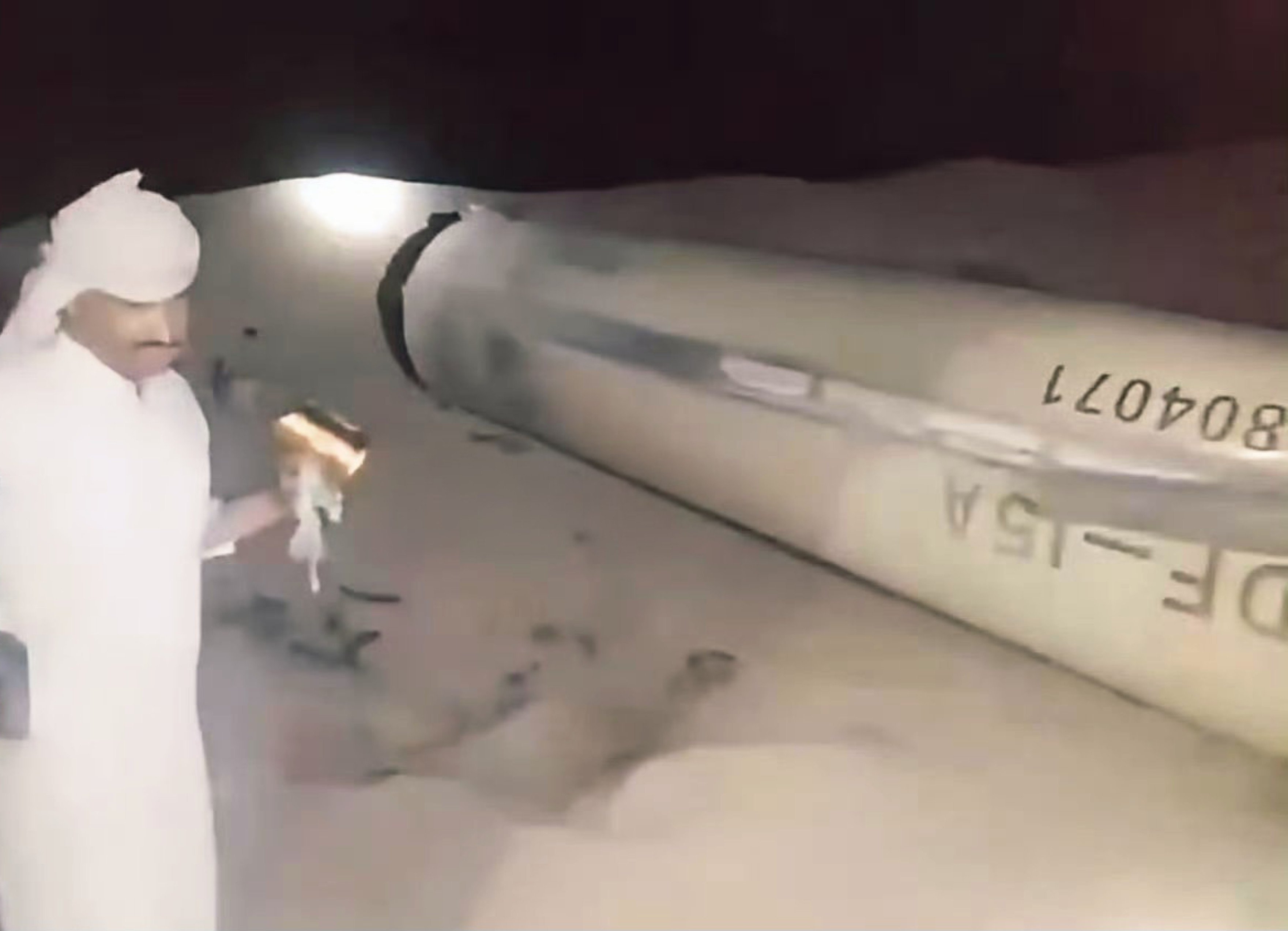
Debris from a Chinese-made ballistic missile found in Yemen could have inadvertently revealed a previously undisclosed addition to Saudi Arabia’s secretive ballistic missile arsenal. Imagery circulating online appears to show the wreckage of a Chinese DF-15A short-range ballistic missile (SRBM), potentially marking the first known Saudi combat use of a weapon in this class, although both the identification and ownership remain unconfirmed.
The booster stage of a Chinese-made DF-15A (Dong Feng-15A) ballistic missile operated by Saudi Arabia fell in Raghwan District, Marib Governorate, northern Yemen. pic.twitter.com/dfSXMOiCzQ
It is also unclear what happened to the missile itself. The debris suggests a stage separation or the missile broke apart or crashed before reaching its target. The Houthis are not known to possess any weapons that could have intercepted it.
A screenshot from a video clearly shows the DF-15A name applied on the side of the missile. via X
The development comes amid a sharp escalation in the long-running Saudi-Houthi conflict. After years of relative de-escalation following the 2022 truce, fighting has intensified in recent weeks as Houthi forces have dramatically overrun Saudi-backed Yemeni government positions, including around strategically important Marib and Taiz. The Houthis have also escalated missile and drone attacks against southern Saudi Arabia, targeting military and energy infrastructure while threatening the kingdom’s ability to move oil through the Red Sea. The group has declared the Bab el-Mandeb closed to Saudi oil traffic, adding a direct threat to one of Riyadh’s critical energy-export routes.
You can catch up with our latest coverage of the fighting here.
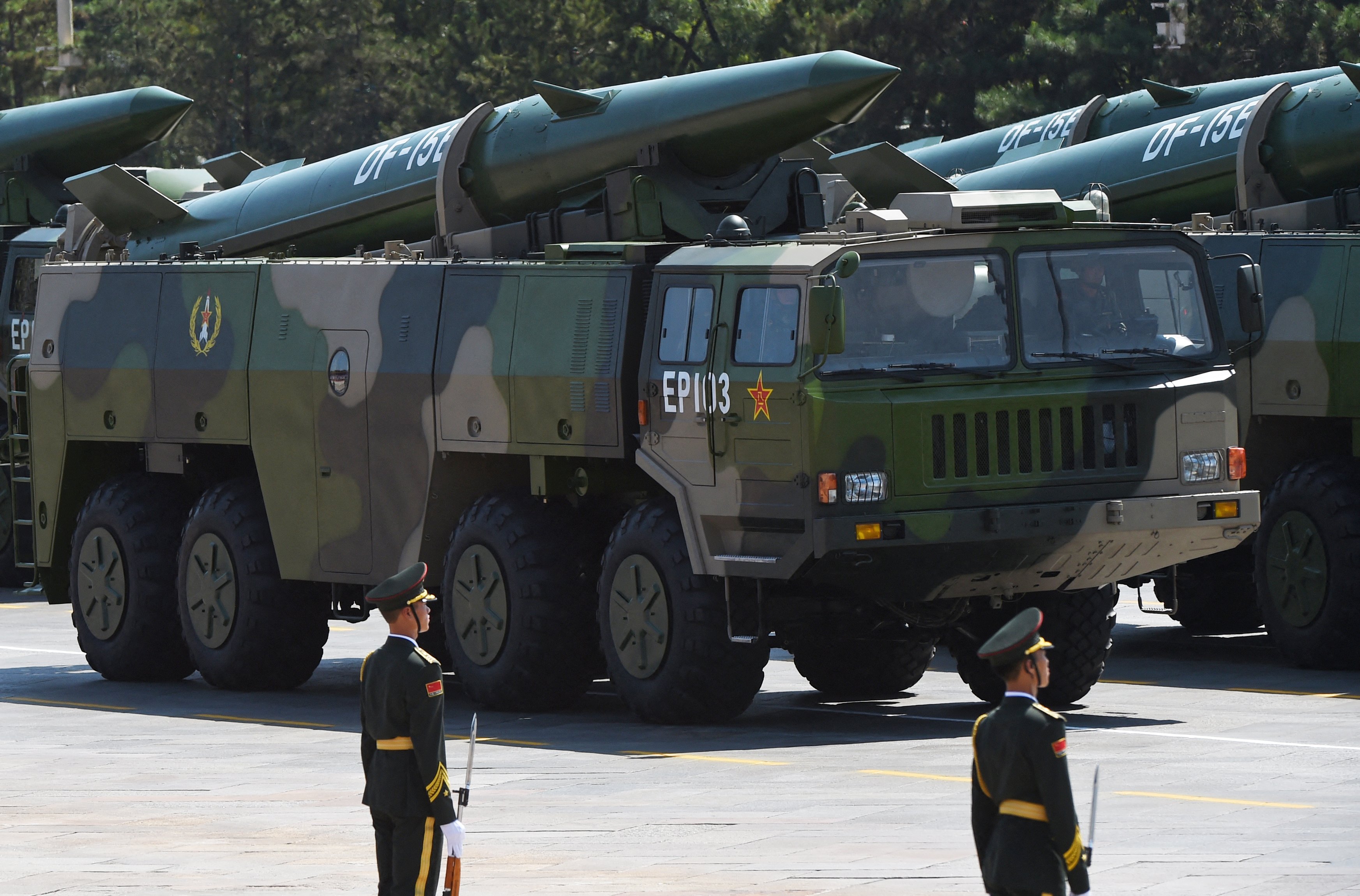
As for the DF-15, also known by its NATO designation CSS-6, this is a road-mobile, solid-fueled SRBM developed by China during the 1980s. The system formed part of Beijing’s effort to develop a new generation of conventionally armed mobile ballistic missiles, including systems primarily intended for export.
As you can read about here, the DF-15 family has evolved through several variants, although open-source information concerning their capabilities remains inconsistent.
The DF-15A reportedly entered Chinese service in the mid-1990s. Estimates of these missiles’ maximum range vary substantially, from roughly 600 kilometers (373 miles) for the original DF-15 to as much as 900 kilometers (559 miles) for later versions.
Among the later versions of the DF-15 family is the DF-15B. A more substantial redesign, its most obvious external change is its triconic reentry vehicle fitted with control fins, a configuration widely interpreted as incorporating a maneuverable reentry vehicle (MaRV) warhead. Photo by GREG BAKER / AFP via Getty Images GREG BAKER
China is the only confirmed operator of the DF-15 family. There have been longstanding reports of Chinese transfers of the DF-15 or the related M-9 export version to Egypt, Iran, Pakistan, and Syria, but in each case, the export record is heavily disputed, with some reports likely conflating the DF-15 with the broadly similar DF-11.
While Saudi Arabia has never publicly acknowledged operating the DF-15 family, it has a well-established history of acquiring Chinese ballistic missiles.
In 2013, Prince Fahd bin Abdullah bin Mohammed, Deputy Minister of Defense, visited the Strategic Missile Forces of Saudi Arabia, and was given this model. YEARS of speculation on the smaller missiles (The large is DF-3). Now we know – they are DF-15 and DF-15A. pic.twitter.com/oOn8qiCgye
Saudi Arabia imported Chinese ballistic missiles to expand its long-range strike options. Its desire for a land-based strategic deterrent was initially driven by concerns over Iran, regional missile proliferation, and nuclear hedging. More recently, however, it shifted toward fielding more accurate, mobile systems with greater conventional military utility.
Riyadh secretly obtained DF-3A missiles from China beginning in the late 1980s, establishing a strategic ballistic-missile capability that remained largely outside public view.
The kingdom has also subsequently been linked to the DF-21 family. Satellite imagery and other open-source intelligence have provided evidence of Chinese-designed ballistic-missile infrastructure in Saudi Arabia.
While the Houthis have their own ballistic-missile arsenal, this is principally associated with Iranian technology, captured Yemeni systems, and locally produced or modified weapons.
Saudi employment of an SRBM in the current fighting would represent a notable expansion of the kingdom’s response options. If Saudi Arabia did indeed do this, its main advantage would be speed and responsiveness. A solid-fueled ballistic missile could reach targets deep inside Yemen within minutes while keeping Saudi aircraft and crews out of the immediate engagement area, providing Riyadh with a rapid strike option against fixed Houthi targets. That could be particularly valuable as the conflict expands and Saudi forces face pressure to respond quickly to Houthi attacks on military and energy infrastructure.
Previous losses at the hands of Houthi ground-based air defenses could also dissuade Riyadh from relying on crewed aircraft to strike targets on the ground deep inside Yemen. Houthi air defenses, while pathed together in many ways, are capable enough to give even U.S. airpower a serious run for their money.
At the same time, a conventional SRBM like the DF-15A can deliver a large warhead at very high speed, imparting significant kinetic energy, making it particularly useful against fixed, high-value, or hardened targets.
Use of an SRBM would also be in line with the current pattern of escalation, with the Houthis conducting missile and drone attacks against Saudi military and energy targets while Saudi-backed Yemeni forces are engaged in renewed ground fighting. Riyadh’s demonstration of an SRBM capability in this campaign would also signal that it is is willing to draw more heavily on its strategic missile inventory as the conflict intensifies, potentially further raising the stakes of the confrontation.
Such a move would carry a message beyond Yemen. Using a previously unacknowledged ballistic missile capability in combat would signal to Iran that Riyadh is now willing to employ this arsenal, after decades of keeping it very much in the shadows.
If the evidence ultimately points to a Saudi DF-15A launch, the discovery would offer a rare look at the operational use of an extremely secretive part of the kingdom’s arsenal, and add a significant new dimension to the rapidly escalating Saudi-Houthi war.
Diesel fuel prices are already at record highs in Poland, but there are fears the situation on the Polish fuel market could become much worse. With the Saudi East-West pipeline now down after a series of drone strikes, not only prices are an issue but obtaining sufficient fuel supply could be the real worst-case scenario.
On Sept. 10, the East-West pipeline, which transports oil from Saudi Arabia’s oil fields to a port on the Red Sea, was hit with a wave of drone strikes from Iraq. The pipeline transmits 7 million barrels a day and was one of the most important ways to bypass the blocked Strait of Hormuz. There is still significant speculation of when the bombed out pumping station will reopen. A longer shutdown could have devastating consequences, as some experts predict. This oil supply accounts for approximately 4 percent of global oil flows and the question now remains whether repairs to the pumping station could just produce yet another round of drone strikes.
Polish drivers may also feel the consequences very soon. As Adam Sikorski, president of Unimot, points out, the market situation was already difficult before the escalation.
“The economy is inexorable. The published wholesale price of diesel fuel on Friday, including VAT, was already PLN 8.95 per liter ·(€2.07). At this level of wholesale price, the retail price above PLN 9 per liter may start appearing at other stations ” he told Polish media outlet Fakt.
Prices at stations are reacting with a delay because the fuel currently sold may have been purchased earlier, at lower prices.
How bad can it get?
An additional problem is the insufficient refining capacities in Europe and the shutdown of some plants in the Middle East. According to Sikorski, this leads to record refining profit margins.
“It is really very close to fuel in the country reaching PLN 10 per liter. And this is unfortunately not the most pessimistic scenario,” warns the president of Unimot.
The largest gas and oil company in Poland, Orlen, also commented on the situation. The company assures that it has a diversified portfolio of suppliers and its own resources, thanks to which it can respond to changes in the global market. The government may try to mitigate increases through tax changes, e.g. concerning VAT or excise duties.
Sikorski points out, however, that artificially lowering prices may increase demand in a situation of limited supply.
The most worrying scenario, however, is one in which the problem ceases to be the price itself.
“In an extreme scenario, I would no longer focus on price. The physical availability of fuels could become a much more serious problem,” warned the Unimot president.
Da deutsche Medien verschweigen, wie die EU derzeit versucht, die Macht in der Ukraine zu übernehmen und wie Selensky sich dagegen wehrt, erklären wir das in dieser Folge des Anti-Spiegel-Podcast ausführlich. Außerdem stehen nächstes Wochenende nicht nur in Deutschland wichtige Wahlen an, sondern auch in Russland wird das Parlament, die Duma, gewählt. Daher erklären wir, […]
Ich habe schon oft gesagt, dass ich gerne wüsste, was das offizielle Russland über 9/11 weiß. Natürlich hat mir darauf niemand eine klare Antwort gegeben, aber da ich mittlerweile einige wichtige Leute in Russland kennengelernt habe, konnte ich die Frage einige Male stellen. Als Antwort bekam ich immer ein Lächeln und in verschiedenen Formulierungen die […]
Der russische Präsident Putin wurde beim BRICS-Gipfel von einem russische Journalisten nach dem Wahlergebnis in Sachsen-Anhalt gefragt. Er hat sich zwar, wie er es immer tut, geweigert, das Wahlergebnis oder die Innenpolitik eines anderen Landes zu kommentieren, aber er hat eine generelle Einschätzung der wirtschaftlichen und politischen Entwicklungen in Deutschland und der EU generell abgegeben. […]
Die Bundesregierung verkündet sehr stolz immer wieder zwei Dinge: Erstens, dass die Sicherheit Israels deutsche Staatsräson sei, womit die Bundesregierung auch begründet, dass sie Israel Waffen verkauft und viele Waffensysteme sogar schenkt, und zweitens, dass Deutschland der größte Unterstützer der Ukraine ist. In beiden Fällen liefert Deutschland Waffen an Krieg führende Länder, wobei das noch […]
Obwohl ich diese Woche wieder in Moskau zu tun hatte, haben wir es trotzdem geschafft, am Donnerstag eine neue Folge von Tacheles mti Röper und Stein aufzuzeichnen, die nun online ist. Sollte YouTube die Sendung löschen, finden Sie sie auch hier bei NuoViso.
Lockheed Martin and a team made up of Boeing and Anduril are now facing off head-to-head to supply a new middle-tier surface-to-air missile to the U.S. Army. The service wants a second interceptor for its new Enduring Shield system, which can already fire AIM-9X Sidewinders, to expand its capabilities, especially against incoming cruise missiles.
Boeing and Anduril announced their offering had been selected to move ahead to the next phase of the competition to develop what is formally called the Integrated Fires Protection Capability Increment 2 (IFPC Inc 2) Second Interceptor on Wednesday. The Army subsequently confirmed to Breaking Defense that Lockheed Martin advanced to phase 2 of this program. Rafael Systems Global Sustainment, a U.S. subsidiary of Israeli defense contractor Rafael, had also been in the running, but was not down-selected.
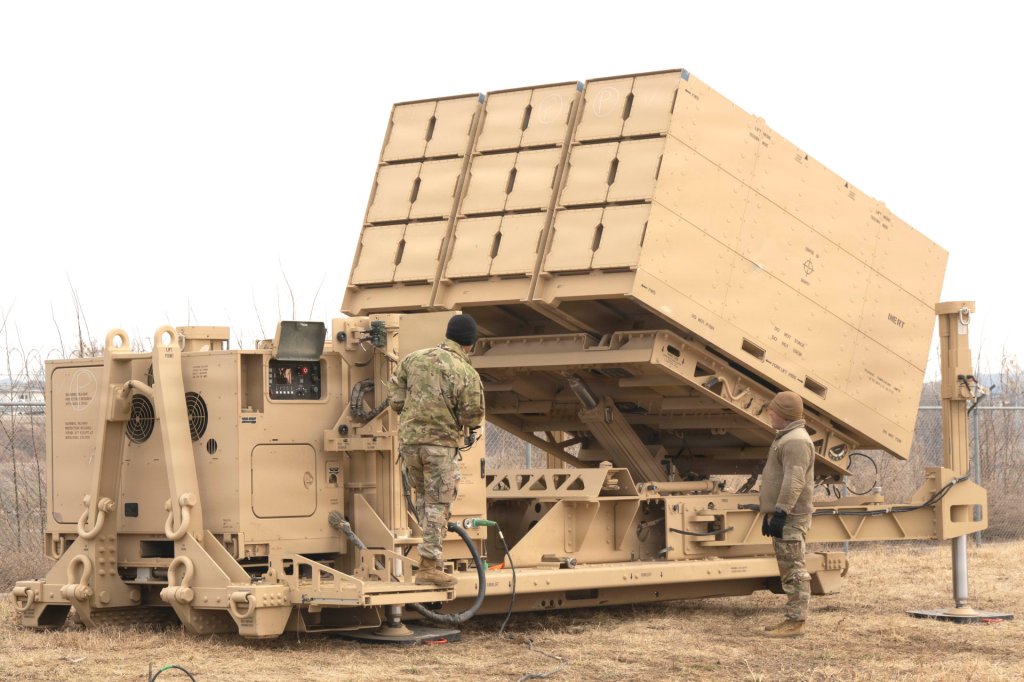
The Army’s search for a second interceptor for Enduring Shield traces back to at least 2023. The system, developed by Leidos’ subsidiary Dynetics, is entering operational service now paired with the AIM-9X. It is designed to provide short-to-medium range defense against a variety of aerial threats, including drones. The Army has not had any kind of mid-range air defense capability since it retired its Hawk surface-to-air missile systems in the 1990s.
A US Army Enduring Shield launcher seen deployed in South Korea. USAF Pfc. Sang Woo Choi
A model of the missile Boeing and Anduril have put forward was only shown publicly for the first time earlier this year. Boeing says it is a clean-sheet design and it uses a solid-fuel rocket motor provided by Anduril.
A model of the Boeing/Anduril interceptor seen on display at the 2026 Space & Missile Defense Symposium in August of this year. Jamie Hunter
In its announcement about the Army’s down-selection, Boeing shared a previously unreleased rendering of the design, which notably had two sets of fins toward the tail end of the body. The model that has been shown so far only has one set of fins at the very rear of the body. Whether the rendering reflects a newer or older version of the design is unclear. What is seen in the rendering may also be an additional booster rocket motor not seen on the model, which could be necessary for ground-launched applications.
The rendering that Boeing released this week as part of the announcement of its selection to proceed in the IFPC Inc Second Interceptor competition. Boeing
Boeing has also said that the new interceptor is being developed with an emphasis on lower cost and producibility. Modularity and open-architecture systems to enable “faster, lower-cost upgrades by allowing seeker, avionics or software blocks to be swapped without redesigning the entire weapon” have also been particular focus areas, according to the company.
Other details about the missile’s design and capabilities, including how it is guided, remain limited.
“Our scalable production approach is designed to provide a reliable, affordable layer of defense against a range of aerial threats to protect the warfighter with practical, dependable capability when it matters most,” Bob Ciesla, vice president of Boeing Precision Engagement Systems, had said in a statement earlier this week.
Lockheed Martin first showed a rendering of its design last year, but has also shared relatively specific details about it since then. For what has been seen so far, it is visually reminiscent, at least in broad strokes, of a compact air-to-air missile concept called Cuda, which the company previously promoted for a time in the 2010s.
A rendering depicting Lockheed Martin’s proposed interceptor being fired from Enduring Shield launchers. Lockheed Martin
The design is “not new,” Chris Murphy, senior manager of Business Development for Integrated Air and Missile Defense Advanced Programs at Lockheed Martin’s Missiles and Fire Control division, confirmed to TWZ in October 2025.
“There are technologies that we already have that we’re leveraging,” Murphy added at the time. “But the requirements for the missile are such that they’re going to be new technologies, and there’s going to be some level of development in order to get those integrated.”
“So you know that our [PAC-3] MSE missile [for the Patriot surface-to-air missile system] is a hit-to-kill system, right? We have great confidence in that technology,” he also said when asked specifically about whether the interceptor would have a traditional warhead. “We also work [on] blast-frag[mentation warheads] on other programs. So we will look at everything. That’s part of the trade space the Army has asked us to look at.”
The PAC-3 Missile Segment Enhancement (MSE) is generally presented as a hit-to-kill weapon, meaning that it is designed to destroy its target through sheer force of impact. However, it is actually something of a hybrid design that includes a high-explosive “lethality enhancer” charge to increase its chance of scoring a hit, something you can learn more about here.
A breakdown of the PAC-3 MSE’s key features, including the “lethality enhancer.” Lockheed Martin
For its part, the Army has talked in the past about wanting its second interceptor for Enduring Shield to offer roughly comparable capabilities to the AIM-120D Advanced Medium Range Air-to-Air Missile (AMRAAM), but in the same form factor as the AIM-9X. A key driving factor behind the size requirement is retaining magazine depth. The system’s existing palletized launchers can currently be loaded with up to 18 Sidewinders in individual canisters.
“I do want to highlight a couple of things that I think are very critical gaps that we have. I don’t think – I cannot add anything to the emphasis on magazine depth for currently fielded systems, or for the need for cheaper and [a] wide-ranging mix of interceptors,” Lt. Gen. John Rafferty, head of the Army’s Space and Missile Defense Command (SMDC), told TWZ and other attendees in a keynote address at the 2026 Space & Missile Defense Symposium last month. “That couldn’t be made more loud and clear from the highest levels of our government.”
At that time, Rafferty also stressed the need to further expand the Army’s ability to provide multi-layered air and missile defense capabilities. Enduring Shield, as the Army’s first middle-tier air defense system in decades, is already a key component of that broader effort.
The Army also more specifically sees Enduring Shield as central to reducing over-reliance on its Patriot surface-to-air missile systems. The immense strain on the service’s Patriot force and its inadequacy to meet existing operational demands are well established at this point, and have only been reinforced by the latest conflict with Iran. The Army is notably in the process of establishing its first new Patriot battalion in years, on Guam, which will actually be a composite unit also equipped with Enduring Shield. Pairing the two systems together helps free up Patriot batteries to engage higher-tier threats, especially ballistic missiles, which may themselves be targeting air defenders directly.
The Army has now at least moved to the next phase of the competition for a second interceptor for the Enduring Shield system, demand for which is already growing.
Wer die Analysen der großen und mächtigen US-Thinktanks liest, stellt regelmäßig fest, dass deren Einschätzungen sehr stark von dem abweichen, was westliche Medien ihrem Publikum erzählen. Das hat nun wieder ein Artikel gezeigt, der in Foreign Affairs, die Zeitung des Council on Foreign Relations, erschienen ist. Ich bin längst nicht mit allem einverstanden, was der […]
Es ist schon merkwürdig. Als vor fast vier Jahren die Nord Stream Pipelines gesprengt wurden, war die damalige Bundesregierung nicht verärgert und zeigte kein Interesse daran, die Schuldigen zu finden, obwohl dabei deutsche Energieinfrastruktur im zweitstelligen Milliardenwert zerstört wurde, die die Grundlage des Erfolgs der deutschen Wirtschaft und des deutschen Wohlstands war. Da jedem schnell […]
Renew Europe welcomes the 10 September vote in the Foreign Affairs Committee, marking a new chapter in EU-Switzerland relations and delivering concrete gains for citizens and businesses. The committee backed two elements: a recommendation for Parliament to approve the agreements with Switzerland, and an accompanying political resolution explaining its position.
Renew Europe was at the forefront of negotiations on this resolution, securing a broad majority for a balanced and ambitious approach. After years of uncertainty, the message is clear: Europe and Switzerland are ready to move forward together. Signed on 2 March 2026, these agreements modernize cooperation on air transport, land transport, free movement of persons and mutual recognition of conformity assessments. They also establish new co-operation on electricity, food safety and health, alongside Switzerland’s contribution to EU cohesion and its participation in the European Union Agency for the Space Programme.
For businesses, this means clearer rules, simpler procedures and fewer duplicate checks when trading products such as food and medical devices. For people living and working across the EU-Swiss border, it means greater legal certainty, better recognition of qualifications and fewer obstacles in their daily lives.The electricity agreement will connect Switzerland more closely to the EU’s internal electricity market, strengthening security of supply and making Europe’s energy system more resilient. Cooperation on health and food safety will also improve our ability to respond collectively to cross-border risks.
Renew Europe MEP Christophe Grudler (MoDem, France), Parliament’s rapporteur, said:“For people who cross the border between the EU and Switzerland every day, these agreements are not abstract. They are about getting to work more easily, having qualifications recognised and facing fewer administrative obstacles. They will make people’s daily lives simpler. That is what Renew Europe fought for - and that is what Europe should deliver.”
At a time of geopolitical uncertainty and growing economic competition, Europe must strengthen ties with trusted democratic partners. These agreements with Switzerland do exactly that.
Ukraine has unveiled a new domestically developed surface-to-air missile system designed to turn a diverse collection of air-to-air missiles into a flexible ground-based air defense capability. Called Shershen, Ukrainian for hornet, the system combines a locally-developed command-and-control architecture, a dedicated surveillance radar, and multiple launchers that can employ both Ukrainian and Western missiles.
The system was displayed at the MSPO defense exhibition in Kielce, Poland, by the National Association of Ukrainian Defense Industries (NAUDI). The example shown is reportedly the second operational prototype and is described as being close to its production configuration.
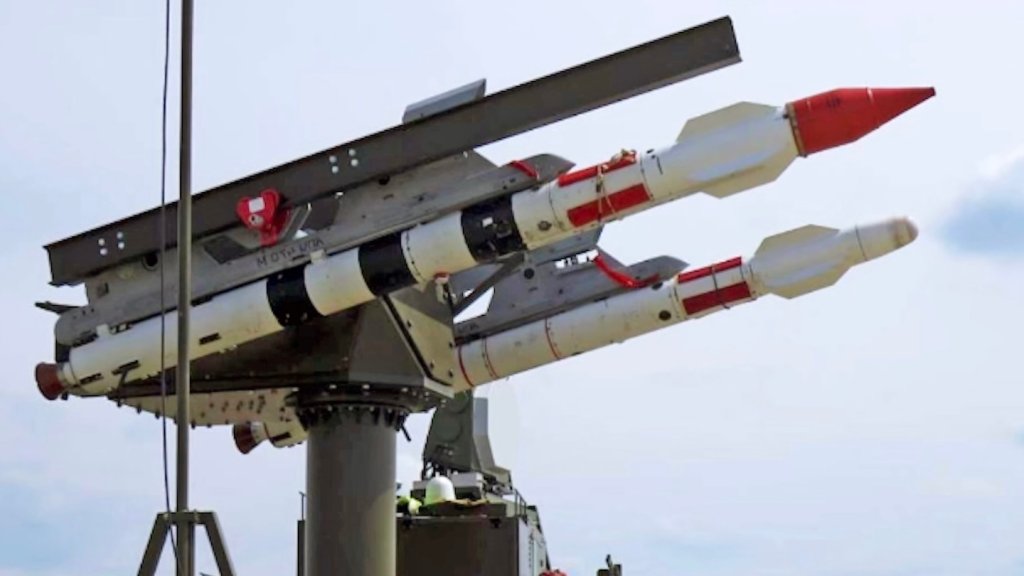
At the ongoing MSPO-2026 defense and industrial exhibition in Poland, the launcher of the Ukrainian Shershen air defense system, developed by Radionix, has been presented for the first time, along with the R-120K surface-to-air guided missile specially developed for it (second… pic.twitter.com/5RfZWHWuxl
The appearance of Shershen comes as Ukraine continues to develop an increasingly diverse family of indigenous air defense systems, while simultaneously adapting older missiles and foreign-supplied weapons to address a severe shortage of interceptors.
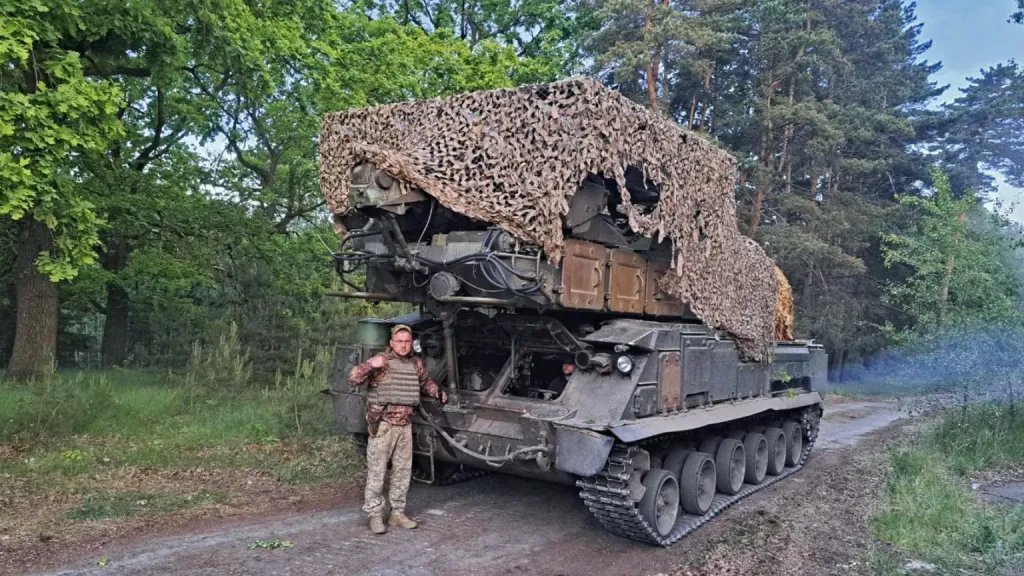
The Buk/Sea Sparrow FrankenSAM combines the Soviet-era Buk transporter-erector-launcher with U.S.-supplied RIM-7 Sea Sparrow missiles. Operational Command East
Shershen takes that philosophy a step further by making missile interchangeability a central feature of the system.
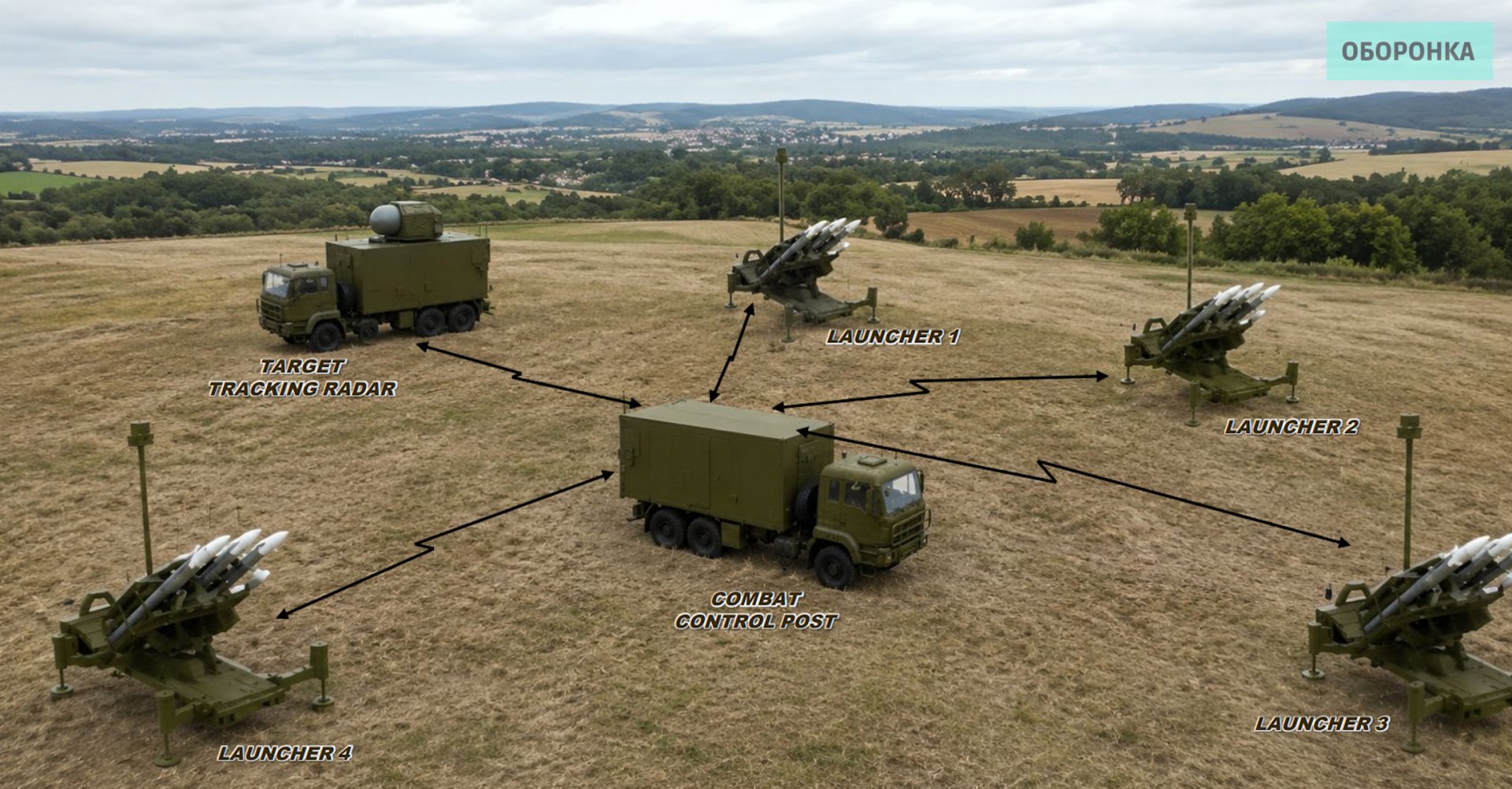
The Shershen battery consists of a Perun command-and-control vehicle, an Athena radar, and four Borei launchers.
A graphic shows a typical Shershen battery. via Oboronka
According to the developer, the system’s architecture is deliberately open. This allows it to use different missiles from different manufacturers and also permits the integration of third-party surveillance and guidance radars.
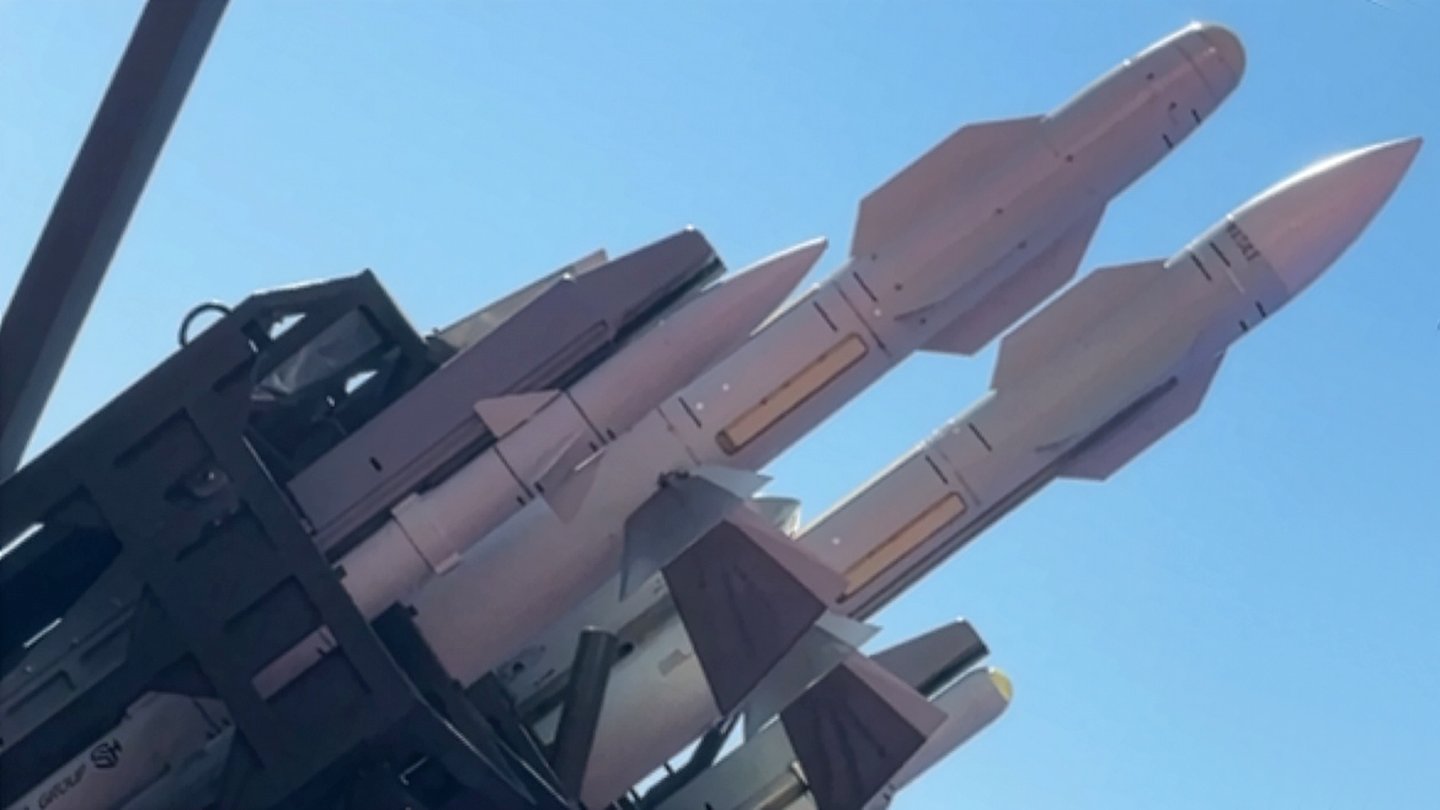
The company says Shershen can currently employ the R-27 (AA-10 Alamo), R-73 (AA-11 Archer), AIM-9 Sidewinder, and AIM-132 ASRAAM, while compatibility with the R-60 is also being explored. These weapons come with a mix of semi-active radar or infrared homing seeker heads.
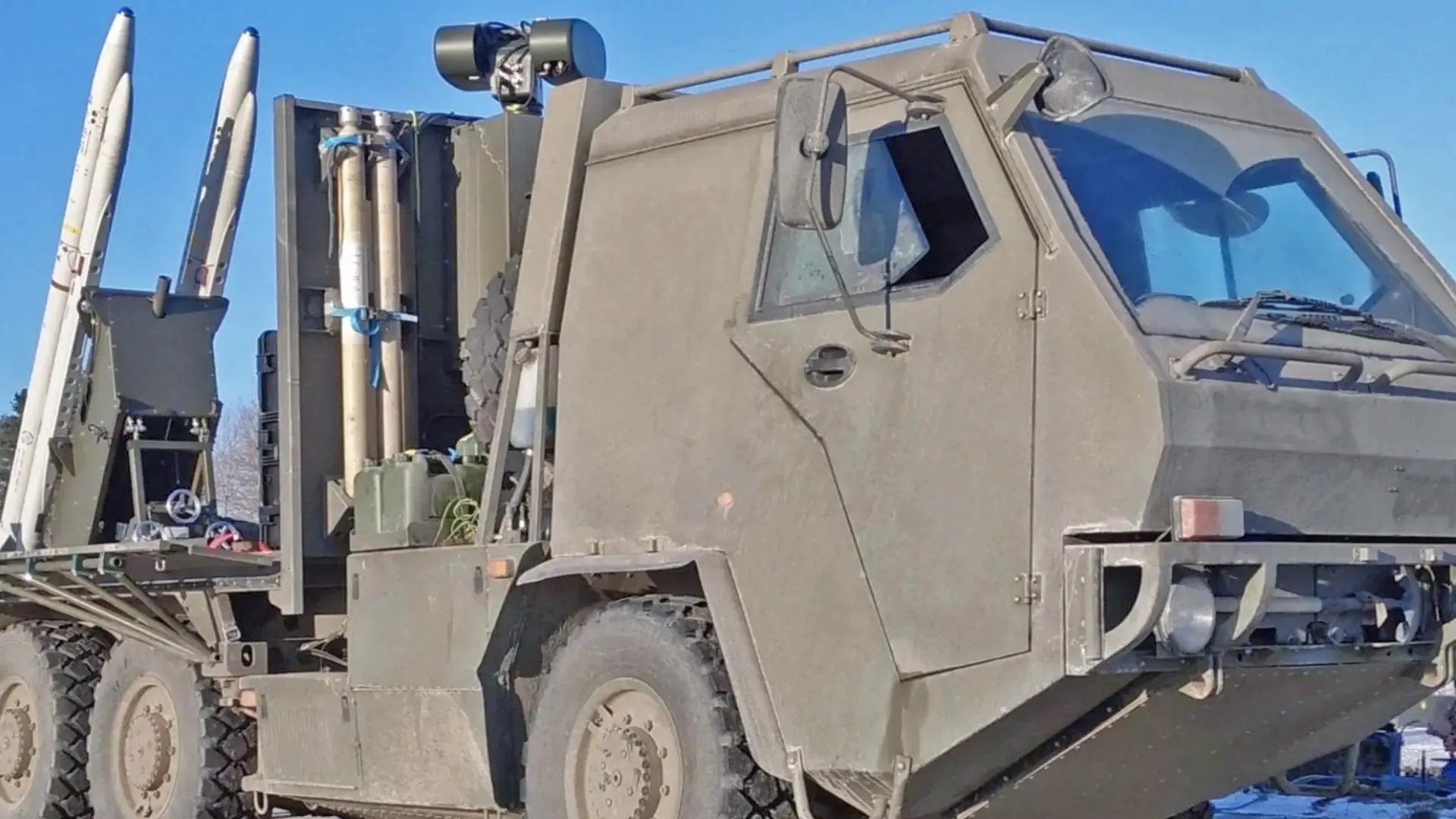
One of the ASRAAM/Supacat air defense systems supplied to Ukraine. Ukrainian Armed Forces
Air-to-air missiles are already available in considerable variety across Ukraine’s arsenal and those of its foreign partners. Being able to employ several types from a common ground-based system provides much more flexibility than a conventional SAM designed around one dedicated interceptor.
It also offers a way to exploit missiles that were never originally intended to be fired from the ground. That means Shershen’s launcher and fire-control system are meant to be interceptor agnostic, at least to a certain degree.
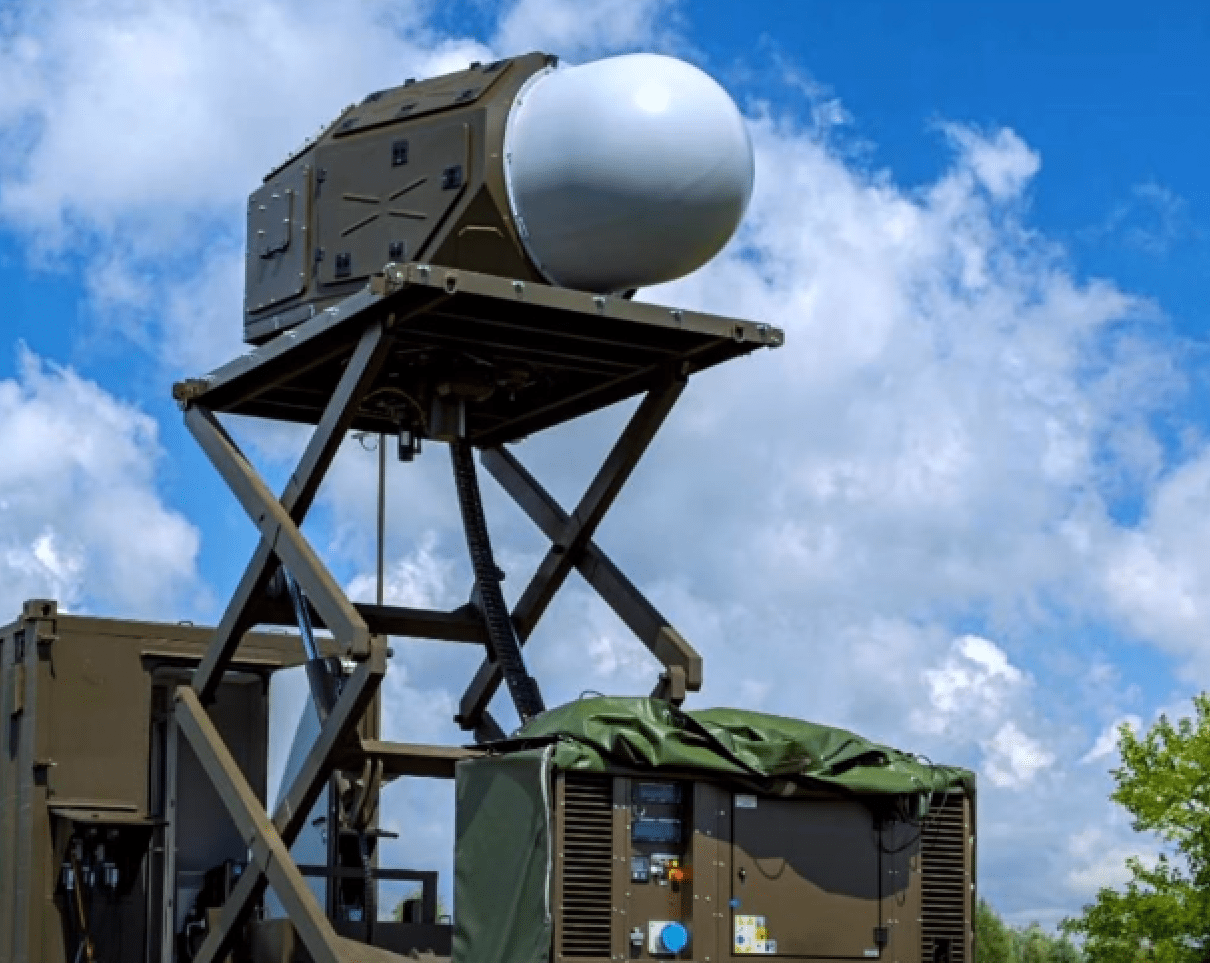
Shershen’s Athena radar is reported to be capable of detecting targets at ranges of up to 85 kilometers (53 miles).
The Athena radar for the Shershen. NAUDI screencap
In terms of the engagement envelope, Shershen is claimed to be capable of engaging aircraft, cruise missiles, and drones at ranges of up to 25 kilometers (16 miles) and altitudes of up to 10,000 meters (32,800 feet). Clearly, these figures will vary widely depending on the type of interceptor.
When employing radar-guided missiles, the system’s engagement architecture can reportedly guide as many as six missiles simultaneously.
The advertised performance figures have not been independently verified, and it remains unclear what target types and engagement conditions were used to establish them.
Україна представила складові мультикаліберного зенітного ракетного комплексу «Шершень» на міжнародній виставці MSPO 2026 у польському місті Кельце.
Міжнародний консорціум компаній Shershen Group, який створює ЗРК в інтересах України представив, показав командний пункт,… pic.twitter.com/9wAS7ewxzg
The developer says the second prototype has completed initial testing, including successful interceptions at a test range.
One of the Borei launchers displayed at MSPO were armed with an R-120K, a new Ukrainian missile equipped with a radar seeker and is intended to be capable of both air-to-air and surface-to-air employment.
The R-120K remains under development, however. Work is reportedly continuing on its rocket motor, meaning that its eventual performance and production status remain uncertain. Still, having the option of including the R-120K on the Shershen system in the future is significant.
A test launcher used for the Shershen program, armed with a radar-homing (nearest camera) and an infrared-guided R-27 missile. The latest prototype features a cage-type container launcher. NAUDI screencap NAUDI screencap
Rather than relying indefinitely on stocks of Soviet and Western air-to-air missiles, Ukraine could eventually have a domestically produced interceptor specifically tailored to its growing family of ground-based air-defense systems. That will become increasingly important as stocks of legacy missiles are depleted. Earlier this year, it was reported that Ukrainian F-16s were running low on their air-to-air missiles, which include the same AIM-9s that are used in some FrankenSAM systems, as well as being compatible with Shershen. But even before that, it was clear that Western-supplied missile stocks in Ukraine across the board were diminishing, in some cases drastically, with critical interceptors like the AMRAAM and Patriot being badly affected.
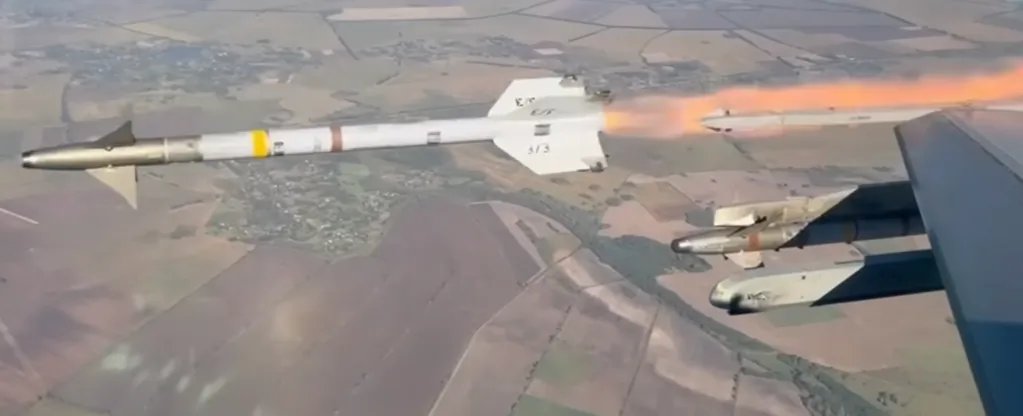
A live AIM-9L/M Sidewinder launched from the wingtip rail of a Ukrainian F-16. Ukrainian Air Force screencap
Ukraine’s need for additional surface-to-air missiles has become increasingly acute during the full-scale war, especially as Russian drone and missile barrages have stepped up.
The shortage has encouraged Ukraine to pursue a combination of indigenous development and unconventional adaptations.
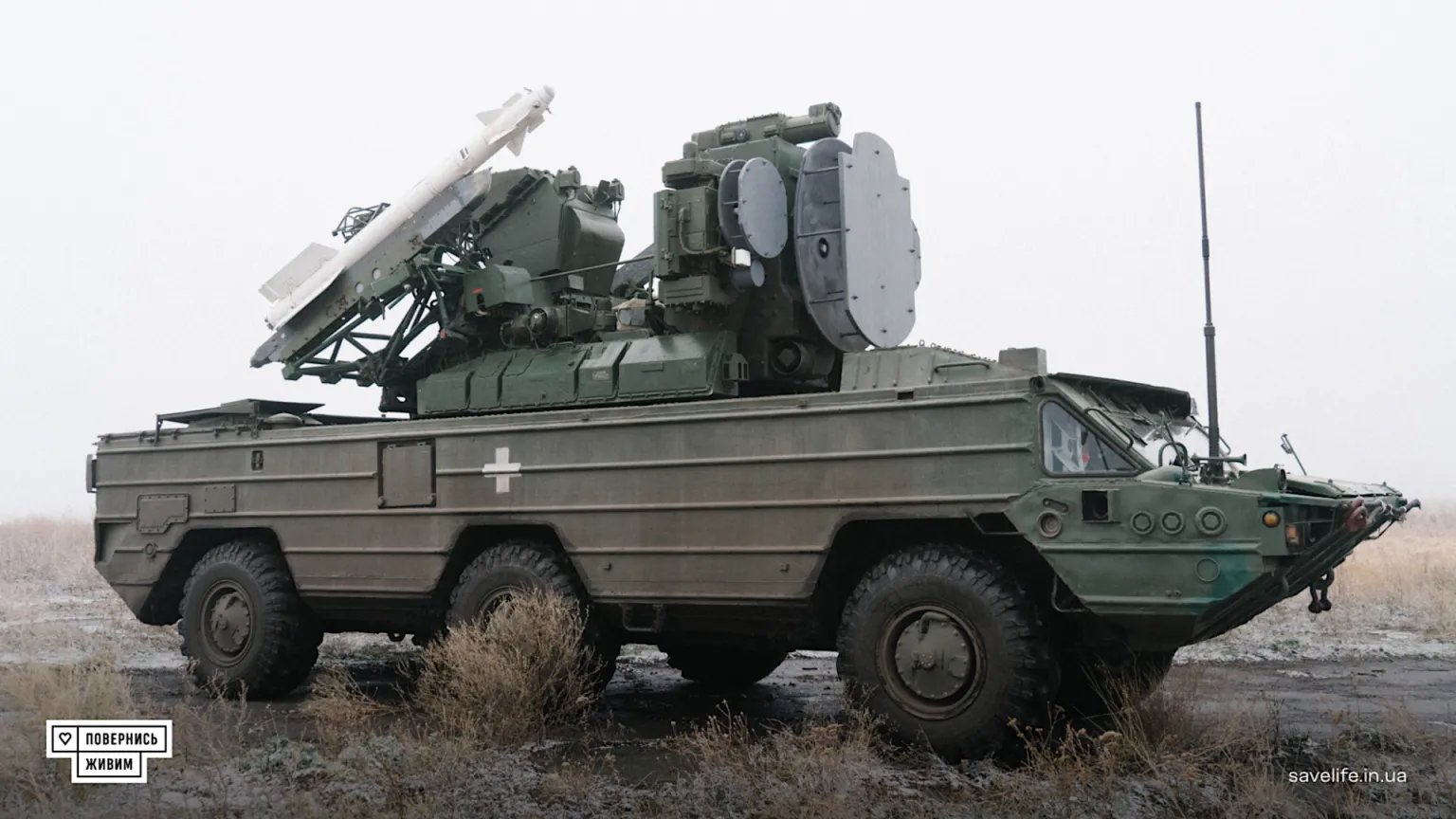
The FrankenSAM initiative, conducted with U.S. support, demonstrated how existing Ukrainian systems could be combined with foreign missiles to rapidly create additional air-defense capacity. Ukraine has also fielded modified Osa systems armed with R-73 air-to-air missiles rather than their original 9M33 interceptors. Other R-73-based concepts have even been demonstrated aboard Ukrainian uncrewed surface vessels.
An R-73 missile loaded on an Osa-AKM SHORADS vehicle. Come Back Alive
Shershen appears to reflect the next logical step in that evolution: rather than creating a one-off FrankenSAM combination, build an architecture from the outset that can accept multiple missiles. Additionally, with so many different ground-based air defense systems now being fielded, it comes with the significant advantage of a standardized launcher and control interface that can accommodate a range of interceptors.
At the same time, Ukraine is pursuing substantially more ambitious indigenous SAM projects.
Earlier this year, a previously secretive Ukrainian missile identified as the Koral made what appeared to be its first public appearance. The program dates back to at least 2021, when Ukraine’s Luch design bureau presented a concept for a medium-range surface-to-air missile.
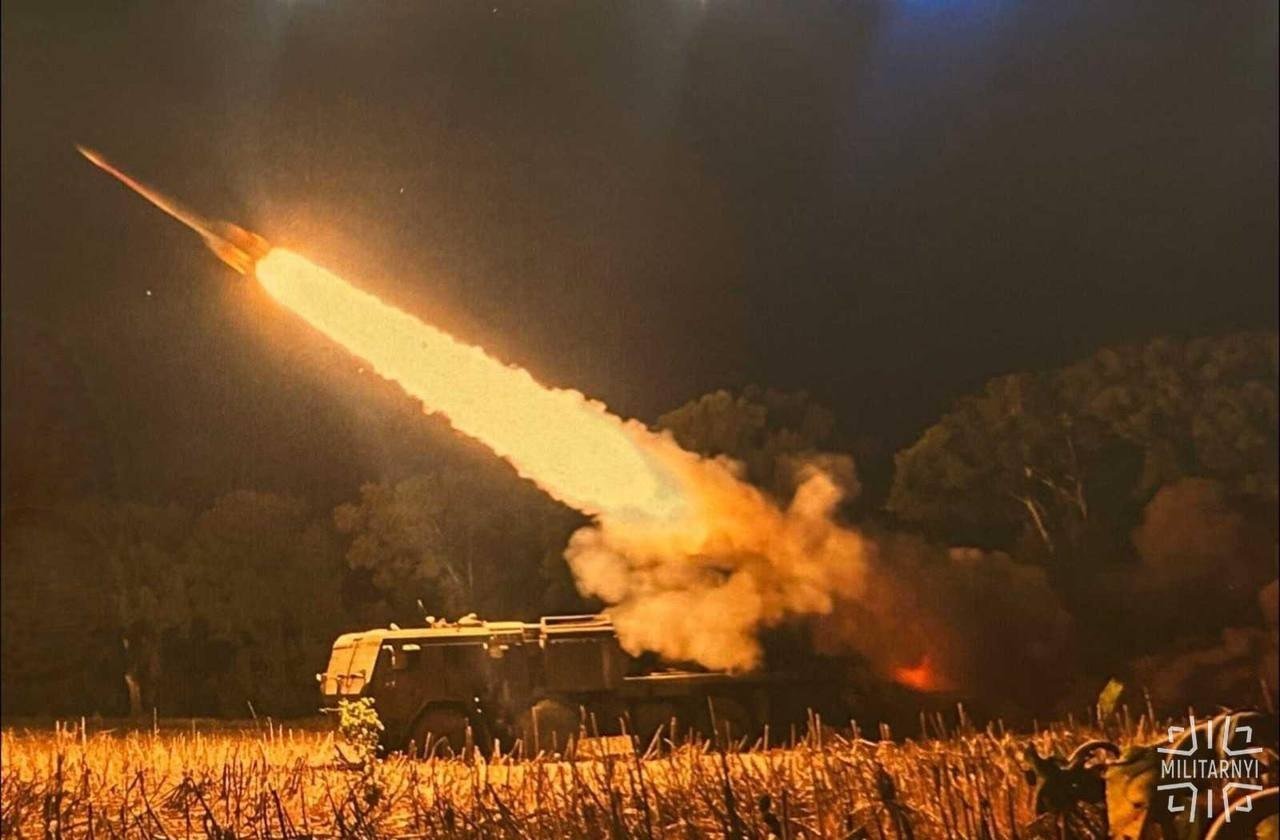
A missile is launched from a Koral air defense system, based on a Czech Tatra truck chassis. Ukroboronprom
Koral is intended to provide a much longer-range capability, potentially filling some of the gap left by Ukraine’s aging Soviet systems and supplementing the Western-supplied Patriot and SAMP/T.
Shershen, by contrast, is clearly focused on the short-range layer.
Together, the programs illustrate the breadth of Ukraine’s emerging domestic air-defense effort: from relatively inexpensive systems built around repurposed air-to-air missiles to new, purpose-designed interceptors intended to replace or augment Soviet-era systems.
Ukraine’s experience with FrankenSAM has demonstrated the value of getting unconventional air defense combinations into service quickly.
Once fielded, Shershen, with its architecture capable of accepting different Soviet-origin and Western-made interceptors, and eventually a Ukrainian one, gives Ukraine another way to stretch its missile inventory and enhance its air defense capabilities.
Die DPA hat eine Meldung herausgegeben, bei der man sich nur die Augen reiben kann. Das Handelsblatt hat sie wortwörtlich veröffentlicht, sodass jeder sie hier nachlesen kann. Das Spiel mit Krieg und Frieden Am Donnerstag fand eine Sondersitzung des Innenausschusses des Bundestags statt, bei der die Opposition von der Bundesregierung gefordert hat, sie müsse ihre […]
Diesel prices are breaking records across Europe, and Poland is no exception, with prices for the essential fuel currently hitting record highs. Now, the conservative Polish opposition is pointing out that the situation may only get much worse.
“We will soon see increases in product prices as well,” warns Mariusz Błaszczak, the vice president of Law and Justice (PiS) and head of the PiS parliamentary club, in a new X post.
“Diesel the most expensive ever! This may be just the beginning,” he wrote. “All it took was for the government to scrap the fuel price reduction mechanism, and within a week prices shot up. The effect? Drivers, farmers, and carriers are paying for the government’s decisions today. And soon we’ll see hikes in product prices too.”
DIESEL NAJDROŻSZY W HISTORII!
8,75 zł za litr oleju napędowego – a na niektórych stacjach drożej. Pb95 dobija 8 zł. A to może być dopiero początek.
Wystarczyło, że rząd wygasił mechanizm obniżający ceny paliw, a w ciągu tygodnia ceny wystrzeliły w górę.
“PLN 8.75 per liter of diesel — and even more at some stations. 95-octane petrol is reaching PLN 8. And this may be just the beginning,” he added.
“The government should immediately reinstate the fuel-price reduction mechanism and keep it in place as long as the crisis in the Middle East continues. Poles cannot pay for the government’s inaction every time they fill up!” Błaszczak wrote.
According to the e-petrol.pl price report, on Wednesday, a liter of diesel cost an average of PLN 8.75 (€2.02) at Polish gas stations, PLN 0.36 more than a week earlier. A liter of 95-octane unleaded petrol rose by an average of PLN 0.26, to PLN 7.89, within a week. The average price of a liter of LPG, which cost PLN 2.95 on Wednesday, increased by PLN 0.06.
E-petrol analysts emphasize that the average diesel price recorded on Wednesday is the highest in the portal’s history. In their view, the unfavorable prices at stations are due both to the systematic rise in oil prices that has been underway since the end of August and to significant increases in wholesale fuel prices. They added that, in the case of LPG, higher bills are related to the more expensive supply of this fuel to stations.
On Sept. 1, the government ended the Fuel Price Reduction (CPN) package, which had been in place for the final weeks of the school holidays, from Aug. 17 to 31. Under the program, the VAT rate on certain fuels, in particular gas and diesel, was reduced from 23 percent to 8 percent. At the same time, maximum prices announced by the Minister of Energy were in force. Sales above the maximum price were punishable by a fine of up to PLN 1 million.
Neighboring Germany currently has higher diesel prices, at €2.32 a liter, also a record high. Only a few EU countries have a higher price, such as Denmark, which is currently at €2.60 a liter.
There are fears that rising diesel and natural gas prices across Europecould result in a major energy crisis over the coming months. European natural gas prices also rose to a three-year high of €80 per megawatt-hour (€/MWh) and many countries, such as Germany, are significantly behind on efforts to fill their reserves before the cold winter months arrive.
Around 1590 BCE — more than 800 years before Rome was founded, and before Tutankhamun was even born — a small number of people in what is now southeastern Poland started eating a cereal that had never grown in their fields. It wasn’t a local crop, and it didn’t belong to any plant known elsewhere […]
The EU welcomes Cambodia’s decision to join the Multi-party Interim Appeal Arbitration Arrangement (MPIA) for WTO members, contributing to efforts to uphold a rules-based multilateral trading system.
With Cambodia’s participation, the MPIA now covers 62 World Trade Organization (WTO) members and 60.4% of world trade.
The MPIA brings together participants from all continents and at different levels of development, united by a shared commitment to upholding the rules-based trading system.
The MPIA preserves the right to appeal in trade disputes among participating WTO members, at a time when the WTO’s Appellate Body remains non-functioning. It helps ensure that disputes can continue to be resolved in an orderly and binding manner, avoiding appeals 'into the void'.
“I welcome Cambodia to the MPIA. The arrangement plays an important role in upholding the rules-based trading system. Each new participant helps reinforce the predictability, stability and credibility of global trade rules. I encourage other WTO members to join the MPIA,” said EU Trade and Economic Security Commissioner Maroš Šefčovič.
Background
The MPIA was established in 2020 and has proven its effectiveness in many WTO disputes.
Under the MPIA, appeals are heard by arbitrators randomly selected from a pool of 10 standing appeal arbitrators set up by the participating WTO members. These arbitrators are persons of recognised authority, with demonstrated expertise in law, international trade and WTO agreements.
The MPIA is open to all WTO members as a practical tool for appeal arbitration, pending the restoration of a reformed and fully functioning WTO dispute settlement system.
As of 1 June 2025, the MPIA has anupdated pool of appeal arbitrators to ensure that appeals continue to be heard by independent arbitrators of the highest calibre.
At the WTO Ministerial Conference that took place earlier this year, MPIA ministers stressed the importance of the MPIA for the security and predictability of the multilateral trading system.
The current MPIA participants are Australia, Barbados, Benin, Brazil, Cambodia, Canada, China, Chile, Colombia, Costa Rica, Ecuador, the European Union (and its Member States), Guatemala, Hong Kong (China), Iceland, Japan, Liechtenstein, Macao (China), Malaysia, Mexico, Moldova, Montenegro, New Zealand, Nicaragua, Norway, Pakistan, Paraguay, Peru, the Philippines, Singapore, Switzerland, Ukraine, the United Kingdom, Uruguay and Vietnam.

 Login






 (@TheDeadDistrict)
 Україна представила складові мультикаліберного зенітного ракетного комплексу «Шершень» на міжнародній виставці MSPO 2026 у польському місті Кельце.