After the US officially admitted it deployed weapons into outer space earlier this week, Russia and China expressed concerns, calling it a threat to international peace and demanding the immediate stoppage of all such activities.
During a regular press conference on Tuesday, September 15, Guo Jiakun, official spokesperson of China’s Ministry of Foreign Affairs, said that “China opposes any arms race in outer space or any attempt to weaponize it and turn it into a warzone.”
He further said that “China stands for the peaceful use of outer space and keeping it safe” and urged the US to “stop expanding military build-up in outer space, and uphold global strategic stability with concrete actions.”
Russia’s Foreign Ministry Spokesperson Maria Zakharova said that the US weapons deployment is a threat to international security and puts a question mark on the stability in outer space.
“Russia has for many years been consistently drawing the attention of the global community to the grave consequences for international security that Washington’s destructive course may lead to,” Zakharova said.
She said her country seeks “urgent practical measures to prevent arms race in outer space” and reiterated Russia’s push for a “multilateral legally binding instrument banning the deployment of weapons in outer space.”
Though it has long been a subject of speculation, a couple of US military officials, earlier this week, admitted that its military is operating weapons deployed in outer space.
The admission was made by US Air Force Secretary Troy Meink on Monday during a conference. He said that the US “has on-orbit space control weapons capable of defending the joint force against hostile adversary action.”
Meink’s statement was substantiated by US Space Force chief Douglas Schiess, who a day later, on Tuesday, said that in the coming years the US is even planning to increase the number of orbital weapons already used by the members of his military unit.
Urgent need of legal prohibitions
Underlining the threat that the deployment of weapons in outer space poses, several countries, including Russia and China, have been calling for an international treaty to prevent any arms race in outer space for decades now.
The existing instrument, the UN Outer Space Treaty (1967) makes clear that “outer space is not subject to national appropriation by claims of sovereignty, by means of use or occupation, or by any other means.”
It also prohibits the deployment of “nuclear weapons, or other weapons of mass destruction in orbit or on celestial bodies or stationing them in outer space in any other manner,” but it says nothing about the deployment of conventional weapons, despite declaring it should be used for peaceful purposes only.
None of the US military officials spoke about the nature of weapons deployed by the US in outer space.
Though only a handful of countries have the technological capability to explore outer space in any significant way, several countries have used satellites for military and war purposes for decades now.
The US has a dedicated space force which has recently held exercises related to possible military conflicts in space.
The deployment of weapons and claims of exclusivity, apart from increasing possibilities of an arms race between the existing powers in space; the US, Russia, and China, may also make the rest of the world more insecure.
Zakharova said that Russia is planning to submit a proposal for the creation of an international instrument legally prohibiting all weapon deployment in outer space during the upcoming annual UN General Assembly session.
She asked for more countries to join the Russian initiative and co-author the treaty document.
A little over a month into his term, far-right President Abelardo de la Espriella continues to advance a security agenda that often conflicts with certain rights historically won by Colombians.
This time, De la Espriella has signed a decree allowing police access to university campuses. In several Latin American countries, the prohibition of police access to universities has been established through student struggle to prevent abuses by authorities against student movements.
Thus, universities have historically become places where students seek refuge from repression, arrest, and regroup during times of intense social mobilization.
This was evident during the 2021 protests, known as the “National Strike,” in which students, workers, left-wing political parties, young people, and others took to the streets to protest against the right-wing government of Iván Duque. The mobilization, which lasted several months, was considered a true “social upheaval,” and many experts have seen in it the consolidation of a democratic alternative (the government of Gustavo Petro) to decades and decades of right-wing rule.
During these protests, universities became hubs of popular mobilization, driven primarily by the youngest members of society. On university campuses, protesters were able to regroup, defend themselves against police repression, and coordinate new demonstrations – among other things – always protected by the fact that police are barred from entering university grounds.
De la Espriella calls popular protests “terrorism”
Clearly, De la Espriella seeks to nip this possibility in the bud – that is, to prevent universities from once again becoming coordination centers for the protests. Many have speculated that the president is signing this decree precisely because he knows that his radical neoliberal agenda could spark major protests, and in this way, he hopes to proactively undermine the protest movement.
Whether or not this is De la Espriella’s primary intention, only time will tell. What is certain is that the president views university autonomy as an obstacle to the implementation of his security agenda, which also includes curtailing the ability of informal opposition political groups to participate in public life.
“Under no circumstances will I allow public universities to continue to be sanctuaries of violence. I respect and guarantee peaceful protest, but I will not allow universities to continue to be used as sanctuaries of vandalism and crime,” said De la Espriella on X.
Furthermore, true to his combative rhetoric, he compared social protests to terrorism – a common trope in the historical discourse of the Colombian right: “University autonomy is not a blank check for impunity: I have issued precise instructions for a national protocol of action that allows us to distinguish between the legitimate exercise of protest and acts of violence, flagrant offenses, danger, or extraordinary disturbances of public order that require intervention by the authorities. The university is for knowledge and ideas, not to serve as a refuge for violence and terrorism.”
A violation of the Constitution
However, the opposition has viewed this decision as a serious attack on university autonomy. Ana Erazo, a member of the House of Representatives from Valle del Cauca, wrote: “It is an ATTACK ON UNIVERSITY AUTONOMY and a direct threat to the young people at the country’s public universities. With this, Mr. Abelardo de la Espriella is beginning to reveal what could become a BRUTAL RETALIATION against the student movement, against its ability to organize and mobilize, and against thousands of young people who historically have not supported his political agenda.”
Some universities have joined in this criticism. One of them is the National Pedagogical University, whose academic council stated that in the past, “the serious consequences of resolving conflicts within public universities through militarization have been demonstrated on repeated occasions.” Furthermore, the council stated that university autonomy is one of the pillars of Colombian democracy, along with freedom of thought and research, among other things. Losing autonomy means jeopardizing these values of the republic, it stated.
For his part, former presidential candidate Iván Cepeda said that De la Espriella’s measure contradicts Article 69 of the Constitution, which guarantees university autonomy. Regarding the announcement, Cepeda also said: “Such an announcement is not only an affront to university autonomy. It also demonstrates, once again, the authoritarian and despotic nature of De la Espriella, who seeks to stigmatize, persecute, and violate the rights of Colombian youth and the university community. Colombia has not forgotten the victims of police abuse during the National Strike, nor the history of security forces intervening on university campuses, resulting in student deaths. Young people cannot once again be persecuted or treated as an internal enemy and an enemy of the state.”
Durante el reinado de Ramsés II, entre 1279 y 1213 a.C., Egipto sostuvo toda una red de guarniciones a lo largo de su frontera occidental para frenar las incursiones de las tribus libias y, más adelante, de los llamados Pueblos del Mar. Resulta que una de esas mismas tribus, los meshuesh, protagonizaría con el tiempo […]
Propor o uso de inteligência artificial e a integração de bases de dados com imagens em tempo real para lidar com problemas de segurança pública virou uma bandeira comum entre os candidatos ao governo dos estados, independentemente do espectro político. “Centros de comando e controle”, “cercamento eletrônico” e “videomonitoramento” aparecem como solução nas propostas de candidatos de esquerda, direita e extrema direita, ainda que as tecnologias (muitas já utilizadas pelas forças de segurança) não tenham sido capazes de frear a violência em meio ao aumento da letalidade policial no país.
Em 2025, ações de agentes de segurança resultaram em 6.602 homicídios em todo o país, o maior número absoluto da série histórica do Anuário Brasileiro de Segurança Pública desde 2016. Produzido pelo Fórum Brasileiro de Segurança Pública, o anuário aponta Amapá, Bahia, Sergipe, Pará, Goiás, Rio de Janeiro, Paraná, Rio Grande do Norte, Mato Grosso e Alagoas como os 10 estados com as forças de segurança mais letais no ano passado, com índices superiores à média nacional (de 3,1 mortes a cada 100 mil habitantes).
Para o professor de ciência política da Universidade Federal de São Paulo (Unifesp) Bruno Konder Comparato, os dados reforçam que só investir em tecnologia e integração não impede a violência policial. “A tecnologia não faz mágica, sobretudo quando falamos de letalidade policial: quem mata não é o computador ou um sistema, é o policial com uma arma na mão. Se queremos fazer investimentos para diminuir a violência policial, deve-se investir no treinamento de pessoas, no aprendizado e uso de técnicas não-letais”, afirmou Comparato à Agência Pública.
Todos os 10 estados com maior letalidade policial utilizam regularmente tecnologias de integração de dados sensíveis – com acesso em tempo real a informações sigilosas dos cidadãos, como RG, CPF e cadastro do Sistema Único de Saúde (SUS), entre outros – para monitoramento da população. Um exemplo que salta aos olhos é o Amapá: em 2025, o estado foi a unidade da federação com a maior taxa de letalidade policial do país pelo 7º ano consecutivo e, desde 2024, simultaneamente, concentra também o maior índice de homicídios em geral no Brasil. Há anos, a polícia local dispõe de iniciativas próprias de integração de dados e produção de inteligência, o que não foi suficiente para mudar essa realidade.
Policiais militares do Amapá, estado que lidera o ranking nacional de letalidade policial desde 2019
O governador Clécio Luiz (União), candidato à reeleição com apoio do presidente do Senado, Davi Alcolumbre (União-AP), anunciou em junho deste ano a criação de um novo sistema de inteligência estadual, agregando o Centro Integrado de Inteligência em Segurança Pública do estado a outros órgãos de segurança e agências federais, como a Polícia Federal (PF) e o Ministério da Justiça e Segurança Pública (MJSP).
O plano de governo de Clécio Luiz defende ainda a “instalação de câmeras inteligentes” nas “entradas e saídas dos municípios, áreas de maior incidência criminal, rodovias e equipamentos públicos”, com um sistema de “reconhecimento de placas, identificação de veículos com restrição, videomonitoramento em tempo real e inteligência artificial, conectado ao Centro Integrado de Operações de Segurança Pública”. A proposta, no entanto, não menciona ou propõe medidas para diminuir os índices de letalidade policial.
O principal adversário do governador, o ex-prefeito de Macapá Dr. Antônio Furlan (PSD), também promete “implantar e expandir o uso de videomonitoramento, inteligência artificial, análise de dados”, com “um sistema integrado de monitoramento eletrônico nas principais rotas logísticas e áreas estratégicas”, integrando “informações sobre criminalidade, apreensões de drogas e armas, atuação de organizações criminosas e disputas territoriais”. Furlan também ignorou a questão das mortes provocadas por agentes de segurança em sua proposta.
Um estudo feito por pesquisadores da Universidade Federal do Amapá e da Universidade de Lisboa sugere que as mortes causadas por intervenção policial no estado teriam relação direta com o avanço do narcotráfico. A conclusão segue a mesma linha de artigo de 2024 da pesquisadora associada ao Núcleo de Estudos da Violência da Universidade de São Paulo (NEV/USP) Ariadne Natal, que descreve como o Amapá se tornou “uma espécie de entreposto para rotas nacionais e internacionais do tráfico de drogas”.
“Embora pareça haver um contexto de crescimento de ações do crime organizado, as respostas e soluções apresentadas pelas instituições de segurança do estado estão em descompasso com as ameaças registradas”, aponta Natal no artigo, destacando ainda que “o uso da força letal tem sido empregado de maneira excessiva e desproporcional” pelos agentes de segurança no Amapá – que, entre 2015 e 2023, teve uma média de 80 civis mortos para cada policial vitimado.
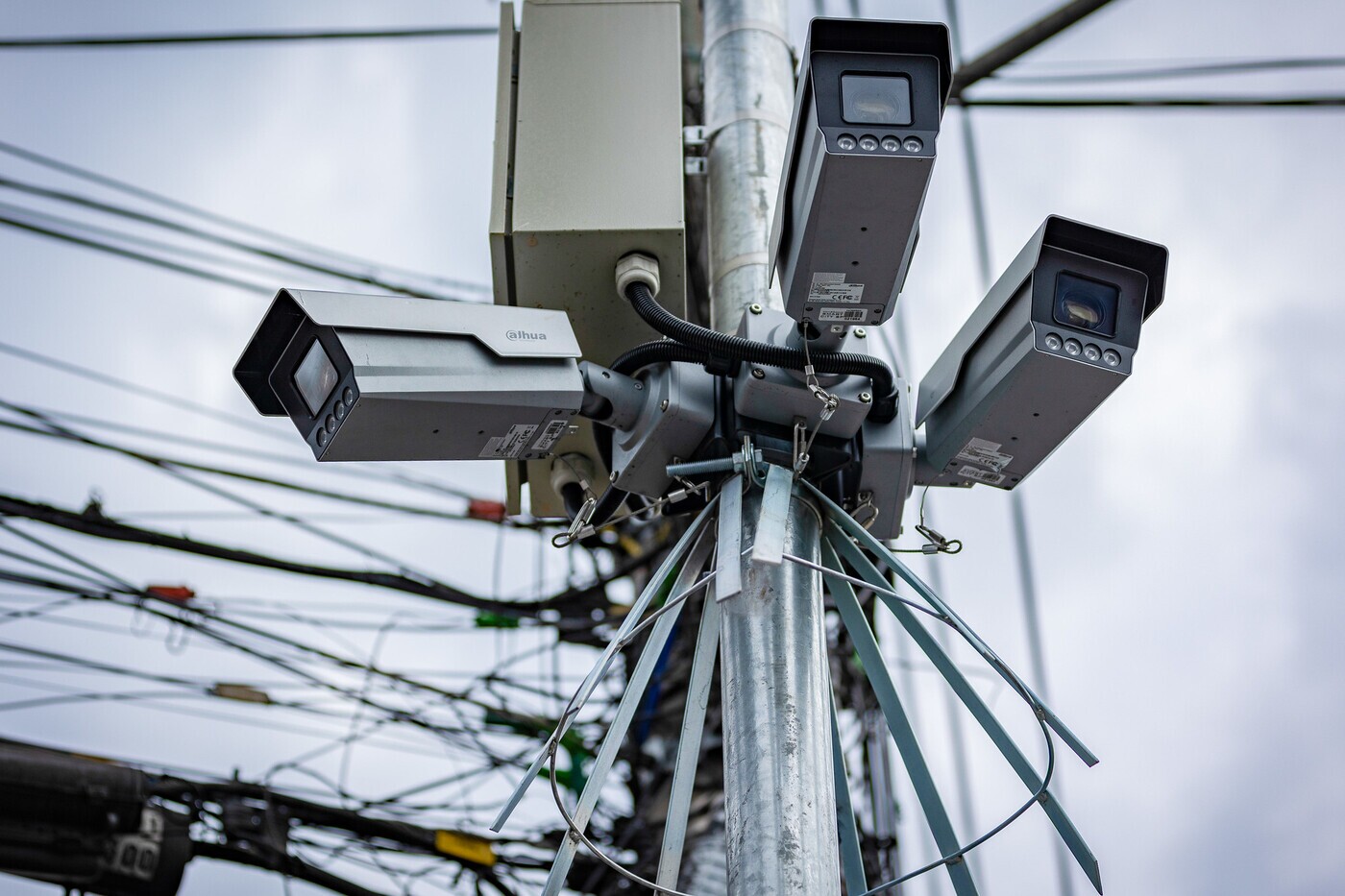
Câmeras de vigilância são usadas para monitoramento e integração de dados na segurança pública
Promessas comuns sobre segurança unem direita e esquerda
O caso do Amapá passa longe de isolado. Dois governos de campos políticos opostos também na lista dos estados com os maiores índices de letalidade policial mostram como o uso da tecnologia na segurança não resolve, por si só, a violência: Bahia e Goiás – 2º e 5º lugares no ranking das maiores taxas de mortes praticadas por agentes de segurança, segundo o Anuário de Segurança Pública.
Nos últimos oito anos, a política de segurança pública em Goiás seguiu uma abordagem repressiva. O candidato que representa a continuidade da atual política da administração goiana, Daniel Vilela (MDB), insiste nessa abordagem, que inclui o uso extensivo de inteligência artificial sobre grandes bases de dados.
Polícia Militar de Goiás, onde ações de agentes de segurança mataram 362 pessoas em 2025
Até então, o governo de Goiás apostou pesadamente na área de inteligência, omitindo gastos com empresas envolvidas em escândalos recentes – como a israelense Cognyte, fabricante do programa cujo uso ilegal pelo governo Bolsonaro veio à tona por meio do caso conhecido como Abin Paralela. A compra do programa espião sequer foi avaliada pelo Tribunal de Contas de Goiás, como revelado pela Pública.
Em seu plano de governo, Vilela promete a “expansão do videomonitoramento inteligente”, com “análise de dados” e até mesmo “reconhecimento de padrões para antecipar crimes”, algo que ele apelida como “IA Contra o Crime”. Por um lado, o estado alega que a letalidade policial caiu mais de 40% desde 2020. Por outro, os índices seguem altos, com a polícia sendo responsável por 362 mortes em 2025 e sob suspeita de atuação de grupos de extermínio formados por PMs no estado.
Já o caso da Bahia mostra como o problema da letalidade policial também impacta administrações de esquerda, dado que o estado é um dos principais redutos do Partido dos Trabalhadores (PT) no país.
Na reta final do atual governo de Jerônimo Rodrigues (PT), que concorre à reeleição, o estado anunciou um plano de redução da letalidade policial que foi celebrado por órgãos de controle como o Ministério Público. Ainda assim, 1.570 pessoas foram mortas graças à ação das forças de segurança da Bahia – quase 25% do total de casos no país em 2025.
Polícia Militar da Bahia matou 1.570 pessoas em ações de segurança em 2025, segundo o Anuário de Segurança Pública
Em seu plano de governo, Rodrigues promete expandir “as câmeras corporais, o videomonitoramento inteligente, o reconhecimento facial, a leitura automática de placas e a integração de câmeras públicas e privadas”, “ampliando o compartilhamento técnico” com o governo federal por meio do Sistema Único de Segurança Pública (Susp). A campanha do petista é uma das poucas a admitir que não basta adquirir mais tecnologia, prometendo “expandir o plano estadual de redução da letalidade policial”.
Para o cientista político Bruno Comparato, exemplos como os de Amapá, Bahia ou Goiás mostram que “sistemas tecnológicos e investimento podem ajudar, especialmente em locais sensíveis onde há maior frequência de crimes, fornecendo horários e dias que demandam atenção”.
O drama é que, em geral, quando a polícia intervém, muitas vezes ela intervém matando. A letalidade policial pode dar uma sensação de segurança para parte da sociedade, mas isso apenas normaliza a violência e não resolve o problema de fato”
Bruno Comparato
Professor de ciência política da Unifesp
Ministério da Justiça e Segurança Pública coordena a integração de dados entre forças de segurança estaduais e federais
Inteligência, espionagem e integração: os desafios nacionais na segurança
A repressão policial tornou-se uma bandeira da gestão do ex-governador de Goiás e hoje candidato à Presidência Ronaldo Caiado (PSD). Fundador da antiga União Democrática Ruralista (UDR), ele propõe criar um “sistema nacional de inteligência criminal” caso vença as eleições deste ano e planeja “utilizar inteligência artificial para cruzar dados, identificar redes criminosas, orientar operações e acompanhar a movimentação interestadual de suspeitos e presos” a partir da unificação das informações contidas nos “bancos de dados da União, dos estados, do Distrito Federal, do Ministério Público e do Poder Judiciário”.
Essa unificação também encontra respaldo nas propostas do atual presidente Lula (PT), cuja gestão priorizou a integração de dados usados pelas forças policiais, com o Ministério da Justiça e Segurança Pública (MJSP), concentrando os esforços de reunir informações de estados e municípios via Secretaria Nacional de Segurança Pública (Senasp) e de instaurar mecanismos de controle na área, após um período de “libera geral” quanto ao uso de ferramentas de vigilância durante o governo Jair Bolsonaro.
A proposta de governo do petista, candidato à reeleição, inclui “a construção de um Sistema Nacional de Segurança Pública mais articulado” e promete que “fortalecerá a integração entre os entes federados” e “a inteligência estatal”.
Em alta no pleito de 2026, a participação da União na gestão da segurança pública, no entanto, se dá num campo mais estratégico e menos executivo. O titular da Secretaria Nacional de Segurança Pública (Senasp), Chico Lucas, defende o avanço da integração de dados, mas faz a ressalva de que cabe aos estados o uso das ferramentas oferecidas, como o Infoseg e o Córtex – um sistema de vigilância cujos problemas e abusos já foram detalhados em uma série de reportagens da Pública.
“Não concorremos com os estados. Não produzimos os dados [policiais], nós os integramos: o estado emite a carteira de identidade, nós a integramos. O estado produz o B.O. [boletim de ocorrência], produz relatórios de inteligência e nós integramos esses materiais. Nosso papel é esse: fornecer tecnologia e dar a logística para os estados, respeitando o pacto federativo”, disse Lucas, ressaltando que a pasta “nunca ‘desce’ para o nível da execução”, disse o secretário à Pública.
A team of archaeologists digging at the site of Ursoaia, in Romania’s Iași County, has uncovered a nearly 6,000-year-old pottery kiln unlike anything previously found in the region. Described in a paper published this month in the journal Antiquity by Diana Măriuca Vornicu, Felix-Adrian Tencariu and colleagues from the Romanian Academy and Alexandru Ioan Cuza […]
En el noreste de Rumanía, en la confluencia de dos pequeños arroyos, un equipo de arqueólogos ha encontrado algo que obliga a repensar cómo se organizaba la producción de cerámica hace casi 6.000 años. No es un horno más entre los muchos que se conocen de la Edad del Cobre europea, sino la instalación de […]
El refrán es tan viejo como conocido: todos los caminos llevan a Roma. Los autores del estudio, liderados por Adam Pažout, investigador de la Universitat Autònoma de Barcelona, acaban de comprobar con datos que la frase no se sostiene del todo. Según el análisis, ciudades como Antioquía, Ancira (la actual Ankara), Bizancio o Corinto ocupaban […]
A fine agosto l’Istat ha pubblicato le previsioni della popolazione italiana residente fino al 2080. Sono dati che vengono adottati per stimare i fabbisogni per pensioni o spesa sanitaria. Comprendono anche il ruolo dei flussi migratori. Con qualche sorpresa.
Hoje assinala-se o Dia Mundial para a Preservação da Camada de Ozono, data instituída pela ONU, com o objetivo de alertar consciências para a necessidade da proteção do planeta. Neste dia 16 de setembro, em 1987, é assinado o Protocolo de Montreal, para a redução da emissão de gases nocivos à camada de ozono. Em […]
Hay una temperatura que ningún objeto del universo, natural o fabricado por el hombre, ha alcanzado jamás. Se llama cero absoluto, equivale a -273,15 °C, y es el punto en el que las partículas de la materia perderían por completo su energía cinética, es decir, dejarían de moverse. En 1848 el físico británico William Thomson, […]
Even as Americans commemorate the pain of the September 11 attacks, at the same time, the Houthis of Yemen, under coordination along the “axis of resistance,” are taking absolute control of the Bab el-Mandeb Strait and the entire Yemeni coast of the Red Sea. On Friday, September 11, 18 hours of warfare were enough to […]
Right-wing and far-right governments in Latin America have adopted a very similar discourse regarding insecurity. The leaders share a narrative that describes how in the 1980s and 1990s, a sort of neoliberal panacea reigned supreme, but then, as if speaking of a biblical plague, the progressive governments of the early 21st century arrived. Then, their story goes, through rampant corruption, they destroyed paradise on earth and brought about various evils such as insecurity, migration, and the destruction of traditional values.
Thus, several of these new – and not-so-new – right-wing governments have won the presidency, almost always in elections where they prevailed by a narrow margin, asserting that the solution to the “disaster” is to return to radical neoliberalism and implement a security policy that restores an order which, they claim, existed before the “original sin.” This “salvation,” no doubt, will come hand in hand with military, intelligence, and operational oversight from Washington – an ally that, they say, was alienated by regional center-left governments. The most serious consequence of this distance was the infiltration of drug trafficking into all strata of society.
It matters little or not at all to these new governments that during the era of progressivism, the region enjoyed a certain positive level of security, as argued by critics of the far right. In the case of Ecuador, this supposedly only happened due to an alleged peace pact between the center-left governments and criminal groups. So that peace was, in reality, merely the prelude to what would later erupt.
A US-backed regional security program
In light of this, the region’s security policy appears to be nearly identical across all countries governed by the Latin American right and far right:
Expand the executive branch’s power to declare states of emergency and prolong them over time (sometimes for years, as has happened in El Salvador and Ecuador, with the consequent erosion of individuals’ constitutional guarantees);
Sign security agreements with the United States and become part of its hemispheric military and security policy (such as the well-known “Shield of the Americas”);
Attempt to facilitate US military and intelligence operations within each country’s territory (whether or not there are military bases on the ground);
Promote extradition proceedings to the United States;
Increase security spending while cutting spending in other areas such as health care, education, and housing;
And various other measures.
However, with the exception of El Salvador and, to some extent, Chile, the results these governments promise – to reduce organized crime and insecurity in the region through the quasi-militarization of daily life and security agreements with Washington (which many accuse of undermining sovereignty) – have not materialized.
Ecuador, which is facing the most serious security crisis in its history, has failed to reduce violence as promised by the executive branch, even though the country is currently under a nearly permanent state of emergency and foreign military operations are underway. According to some experts, 2026 could become the second most violent year in the country’s history, with nearly 5,000 homicides in just six months. The Noboa administration says that positive results take time and that better days are ahead. The local elections at the end of the year will surely provide a better gauge of the government’s credibility than any speculation.
In Chile, Kast managed to rally support to win the election by focusing on his security policy, which asserts that the rise in insecurity in Chile is largely due to migration from other South American countries. In response, he promised to build various infrastructure projects that would prevent new migrants from entering the country, similar to the US border wall. For now, the government is celebrating a reduction in certain crime rates, although several polls indicate that the public still feels concerned.
In Colombia, the recently inaugurated government of Abelardo de la Espriella has declared that the time for peace talks with certain insurgent groups is over and has resumed the country’s long-standing policy of waging war against insurgent and drug-trafficking groups. So far, there have already been several dozen deaths, with the bodies displayed as war trophies that the president showcases in his addresses to the nation. It is still too early to tell whether De la Espriella’s war will have a direct impact on reducing insecurity, which, according to the executive branch, spiked during Petro’s administration – a claim that Petro categorically denies.
For now, Washington has expressed its support both verbally and by providing funds to many of these countries to bolster their security, while also carrying out actions in the region, such as those already mentioned in Ecuador or operations in the Caribbean Sea. Furthermore, during a recent visit by Rubio to Peru, the secretary of state stated that US forces will act wherever invited by local governments, which foreshadows new military operations in South America.
Without a doubt, the growth of US influence and presence in South America is undeniable. But it would be a mistake to think that this is something new. The history of Latin America in the 20th century has shown how Washington has managed to steadily increase its military presence in the region by invoking various justifications that have proven very effective in winning public support, especially those concerning the security of the population.
Decades of US intervention in Latin America
During World War II, the United States significantly increased its military presence in the region under the pretext of defense against potential military actions by the Axis powers, specifically Japan and Germany. Thus, the United States and its powerful fleet established several military bases in South America and succeeded in getting virtually all governments to align themselves with Washington’s geopolitical interests.
Shortly thereafter, Washington justified increasing its military presence in the region to halt the dangerous “communism” that, they claimed, would sweep through the region and had become a cause for concern not only for US security but also for the internal security of each country, where “dangerous” revolutionaries would destroy the social foundations of each nation. Thus, the United States and a large portion of the Latin American militaries carried out joint intelligence and other operations to promote, by any means necessary, the destruction of leftist political movements in the region – which meant killing thousands of Latin American revolutionaries through various methods, such as the imposition of bloody military dictatorships (such as those in Argentina, Chile, Uruguay, Brazil, Bolivia, etc.) and/or boycott and conspiracy operations against anti-imperialist governments, such as Castro’s Cuba, Allende’s Chile, or so many other political movements violently aborted through the active participation of US and local forces.
However, the socialist bloc collapsed in the 1990s and brought on a crisis within the revolutionary left. Right-wing governments, incidentally, took advantage of these events to promote ultraliberal economic policies, but began to lack a new justification for expanding military and police forces, and the US presence in the region.
One exception to this was Colombia, where the internal war served as a justification for the establishment of several US bases during the 21st century.
Now that drug trafficking has become the region’s primary security threat, Latin American right-wing forces, alongside Washington, have once again raised the alarm about the threat of insecurity to promote securitist policies and an increased US military presence. Nazis, communists, and now narco-terrorists seem to be the lineage of a political strategy designed not only to promote a greater military presence in social life but also to advance neoliberal policies that are often accompanied by the aggressive influx of international capital, which typically appropriates the economic resources of this part of the Third World.
For we must not forget that every cycle of increased security-oriented policies has been followed by lucrative and substantial profits for the wealthiest in Latin America and around the world.
At the BRICS Business Forum in Bharat Mandapam on Friday, Russian President Vladimir Putin read out the numbers. The eleven members of this grouping now produce more than 40% of the world’s output. The G7 produces 29. Over the last five years, BRICS countries generated more than half of all global growth. The G7 managed 18%. Narendra Modi, speaking at the same event, added that the bloc is home to half of humanity and a quarter of world trade.
This is not rhetoric. The center of gravity of the world economy has moved, and India is in the chair while it happens.
Now recall something else that took place in that same hall. On May 24 of this year, US Secretary of State Marco Rubio sat down in Bharat Mandapam for an interview with India Today. Asked about Iran’s closure of the Strait of Hormuz, he called it “illegal, unlawful, reckless, dangerous, and unacceptable.” Then he said something more revealing. “I think the whole world needs to say that, and most of the countries in the world are saying that. India is saying that.“
A US official, sitting in Delhi, announced India’s foreign policy position on its behalf. Nobody in the room corrected him. In the same interview Rubio said the trade agreement was “weeks, not months” away. Four months later, it is still unsigned.
India and the construction of the Global South
In March 1947, months before independence, Delhi hosted the Asian Relations Conference. At the Bandung Conference in 1955, India’s first Prime Minister Jawaharlal Nehru was among the chief architects of an idea that seemed audacious then and remains unfinished now: that newly free countries did not have to rent themselves to Washington or Moscow to be taken seriously. The Bandung spirit produced the Non-Aligned Movement, then the Group of 77 in 1964, and then the demand through the 1970s for a New International Economic Order, which was simply a demand that the IMF and the World Bank stop working only for the countries that funded them. India made those arguments first and made them at a time when the material conditions were not as conducive as we see today.
What India has done inside BRICS follows directly from that. At the Delhi summit of 2012, under Manmohan Singh, the group took up the idea of a development bank and asked its finance ministers to study it. That became the New Development Bank, with an Indian, K.V. Kamath, as its first head. The same summit set up the $100 billion Contingent Reserve Arrangement. At Goa in 2016 both were made operational, and India put forward the idea of a BRICS credit rating agency, aimed squarely at the three Western firms whose verdicts decide what every poor country pays to borrow. In 2021 India proposed the BRICS platform for digital public goods. Across four chairships and two very different governments, India’s contribution has been consistent: turning complaints about an unfair world into institutions that can actually be used.
Now look at how Washington talks about the country.
In July 2025, announcing his first tariffs, US President Donald Trump called India and Russia “dead economies” and said they could “take their dead economies down together, for all I care.” He has called India the “tariff king” and its trade rules “obnoxious.” After Indian Prime Minister Narendra Modi went to the Shanghai Cooperation Organization summit, Trump called the relationship “a totally one-sided disaster.” In April this year he shared, without comment, a post describing India as “some other hellhole on the planet.” Our foreign ministry replied that this was “uninformed, inappropriate and in poor taste.” When Rubio was asked in Delhi about the racist abuse Indians face in America, he said that “every country in the world has stupid people.”
No country of India’s size is spoken to this way. The damage is not to anyone’s feelings. It is what other governments now expect of us.
Standing is not a sentiment. It is a prediction that other capitals make about how you will behave when you are pushed. For seventy years, the prediction about India was that it would not be told what its position was.
Five things India should do this week
Start with Iran, because the silence there has cost us the most.
Standing with Tehran has nothing to do with liking its government. A member state of the United Nations was illegally bombed by Israel and the United States of America, and its leadership killed. If the largest grouping of developing countries cannot say so plainly, then sovereignty becomes a privilege granted at Washington’s pleasure, and every country sitting in Bharat Mandapam holds it on loan. Bandung was convened to reject exactly this, and India wrote the rejection.
Our own losses are not abstract. The frigate Dena was sunk on March 4 with 87 men aboard, days after exercising with the Indian Navy at Visakhapatnam. Admiral Arun Prakash, a former navy chief, called it “a perverse act” by a country “supposed to be friends and partners.” More than 11 Indian sailors have been killed since. The Hormuz carries most of our cooking gas, and its closure puts queues outside Indian kitchens. The Iranian port city and free-trade zone Chabahar, representing a decade of Indian money and our only road to Central Asia that avoids Pakistan, was abandoned when an American waiver was allowed to lapse in April. We have been here before. In Trump’s first term, India resisted American sanctions on Iran and then gave in completely, ending every barrel of Iranian oil and damaging a relationship built over centuries.
So why does the Indian state keep walking towards Washington after every humiliation? Not out of confusion. The corporate class that matters politically in this country raises money in New York, lists there, sells services there and answers to regulators there. For them, alignment is good business. For the sorghum farmer in Rajasthan, whose tariff protection was traded away in February, it is ruined. Over 45% of Indians still depend on farming.
The chairship is the one thing Washington cannot take from India this week. Five demands would make the Delhi Declaration an important step towards global south solidarity and action.
One. Name it. The declaration must say what was done to Iran and to the Strait of Hormuz and must reject unilateral secondary sanctions as a category. Washington has increased sanctions on its targets by 933% in recent decades. A bloc that cannot describe the main act of force in its own year has told everyone what its words are worth.
Two. Put Global South debt at the center. Some 3.4 billion people live in countries that spend more on debt interest than on health or education. In 2023 the poorer nations paid $25 billion more to foreign creditors than they received. India should make debt relief the bloc’s headline demand and push the New Development Bank to lend without IMF-style conditions attached.
Three. Open the door wider. BRICS should stop behaving like a club of the eleven. Expand New Development Bank membership to developing countries outside the grouping, give partner states a real say rather than a seat at the back, and have India publicly champion Africa’s place in the bloc’s decision-making.
Four. Build food security together. Set up the grain exchange, and behind it a shared reserve that member and partner countries can draw on. India, of all countries, knows what it means to depend on someone else’s harvest. We must remember the history when India went to Washington for wheat in the 1960s and spent thirty years making sure we would never do it again.
Five. Make reform a demand of the bloc, not a bid for ourselves. India has spent two decades asking for a permanent Security Council seat. It should spend this week asking for Africa’s, and for an end to the 85% voting rule that gives the United States a permanent veto at the IMF. Ask for everyone, and the asking carries weight. Ask only for yourself, and it looks like what it is.
In 1947 India convened the Asia Relations Conference in Delhi with no power and enormous standing. In 2026 it has real power and is spending the time standing down. A new Bandung will not be built by a country that waits to be told what it thinks.
Secretary of Iran’s Supreme National Security Council Mohsen Rezaei refuted United States President Donald Trump’s latest claims about his country seeking fresh talks. He reiterated that there will be no new talks with the US until it implements the conditions already agreed upon.
“Dont get distracted by the US president’s mix signals-from ‘no negotiations’ to ‘we are ready to talk.’ The stakes around oil and the straits have changed. Damage control won’t stop what’s coming,” Rezaei said in a post on X on Tuesday, September 15.
Rezaei was responding to Trump’s latest claims made on his social media post about Iran seeking a deal “quickly and badly.” Trump called Iran a “failing nation” and said he will decide “whether or not the US will choose to engage.”
Iranian President Masoud Pezeshkian, during his visit to the 18th BRICS Summit in New Delhi earlier this week, also said there is no need for fresh talks with the US until the conditions in the Islamabad Memorandum of Understanding (MoU), signed between the two countries in June, are implemented.
Iran and Oman are seeking regional consensus
On Monday, Iran claimed it had finalized an agreement with Oman regarding the management of navigation through the Strait of Hormuz and said it’s details would be announced soon.
“The understanding between Iran and Oman, as two littoral states, has been finalized. In consultation with Oman, we will decide on the next step, including how to announce or register the understanding,” official spokesperson of Iran’s Ministry of Foreign Affairs Esmail Baghaei said in a press conference on Monday, September 14.
He also claimed that a scheduled discussion over the issue with the Persian Gulf countries on Monday was canceled at the last minute after Saudi Arabia’s intervention. He called the Saudi move “ill-advised” and a lost opportunity.
It is speculated that the Saudi intervention is linked to recent attacks carried out by Yemen’s Ansar Allah forces inside its territories, hitting a crucial oil pipeline and King Khalid Air Base, along with other infrastructure.
Ansar Allah claimed its attacks inside Saudi Arabia were in retaliation to hundreds of Saudi airstrikes and over a decade-long blockade of the country.
Ansar Allah has also announced it will target Saudi ships carrying crude through the Bab-al Mandeb in the Red Sea.
In the past, Saudi Arabia had accused Iran of supporting Ansar Allah militarily. Iran has denied such claims, calling Ansar Allah an ally with its own independent agenda.
Earlier, both Iran and Oman had claimed that the regional meeting on Monday was not postponed for a later date, with Omani Foreign Minister Badr Albusaidi saying the delay was in the “interest of consensus.”
The talks for an agreement over the joint management of traffic through the Strait of Hormuz with Oman began in June, after Iran proposed it.
On August 25, Iran and Oman announced an initial agreement on the establishment of a temporary joint maritime corridor and a joint-mine clearance project.
The agreement, once finalized, is expected to “restore safe navigation” through the Strait while preserving the sovereignty and sovereign rights of coastal states, Press TVreported.
Strait of Hormuz is closed
On the evening of September 14, a super tanker hit a mine after trying to cross the Strait of Hormuz through what Iran calls the “illegal route” near Omani waters, the Islamic Revolutionary Guard Corps (IRGC) said in a statement.
Later it was reported that several of the crew members of the said ship were missing.
The IRGC reiterated its warnings to all the ships in the Persian Gulf to refrain from using the US-backed Omani route, repeating the claims about the Strait of Hormuz being shut and under its full control.
The IRGC has repeatedly questioned US President Donald Trump’s claims of the restoration of free navigation through the Strait, calling them lies.
The Strait, through which nearly 20% of the global energy trade flowed before the US-Israeli war on Iran began in February has seen a massive fall in traffic, causing disruptions in energy supplies after the Iranians restricted traffic in retaliation.
Oil prices have crossed USD 100 per barrel several times since then. They again crossed the mark earlier this week due to the renewed escalation and fear of a blockade of oil trade through the Bab-al-Mandeb, after Ansar Allah’s warnings of targeting Saudi ships.
Nearly 12% of global trade in energy happens through the Bab-al-Mandeb.
On Monday, Iran reiterated that the US is solely responsible for the global impacts caused by the blockade of oil trade in the region.
The US war and naval blockade against Iran are the direct reasons for the closure of the Strait, Ali Bahreini, Iran’s permanent representative at Geneva, said during a UN Trade and Development (UNCTAD) meeting asking the international community to acknowledge the fact that such unilateral actions are harmful for the global economy.
Iran assured that it will lift the blockade on the Strait of Hormuz the moment the US announces the end of its war and lifts the naval blockade and economic sanctions on Iran.
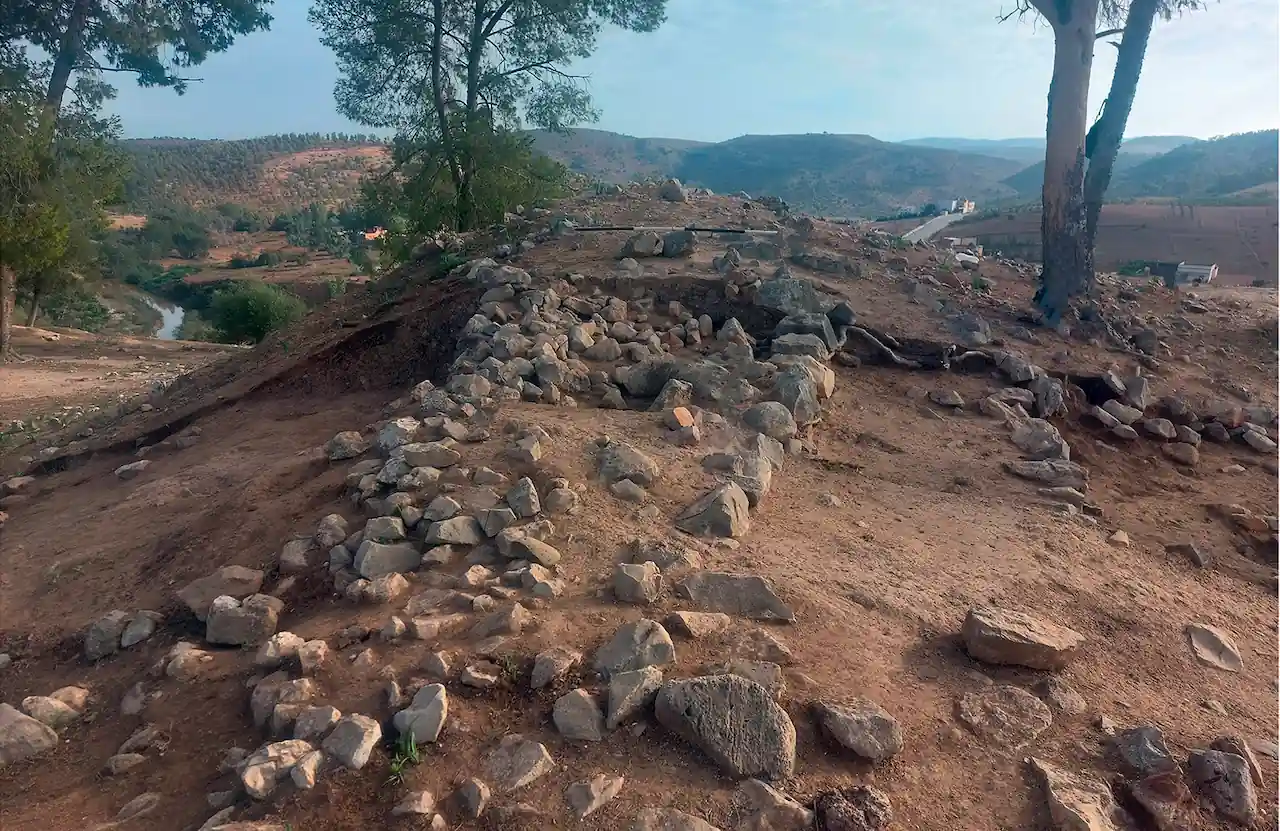
Antes de que existiera Roma, antes de que los fenicios cruzaran el Mediterráneo occidental y mientras en el sureste de la península ibérica empezaban a levantarse los primeros poblados fortificados de la cultura argárica, una comunidad instalada sobre una cresta rocosa del interior de Marruecos ya excavaba un foso y amontonaba tierra para protegerse de […]
Cover image: picture alliance / ZUMAPRESS.com | Pib Handout/Press Information
Problem
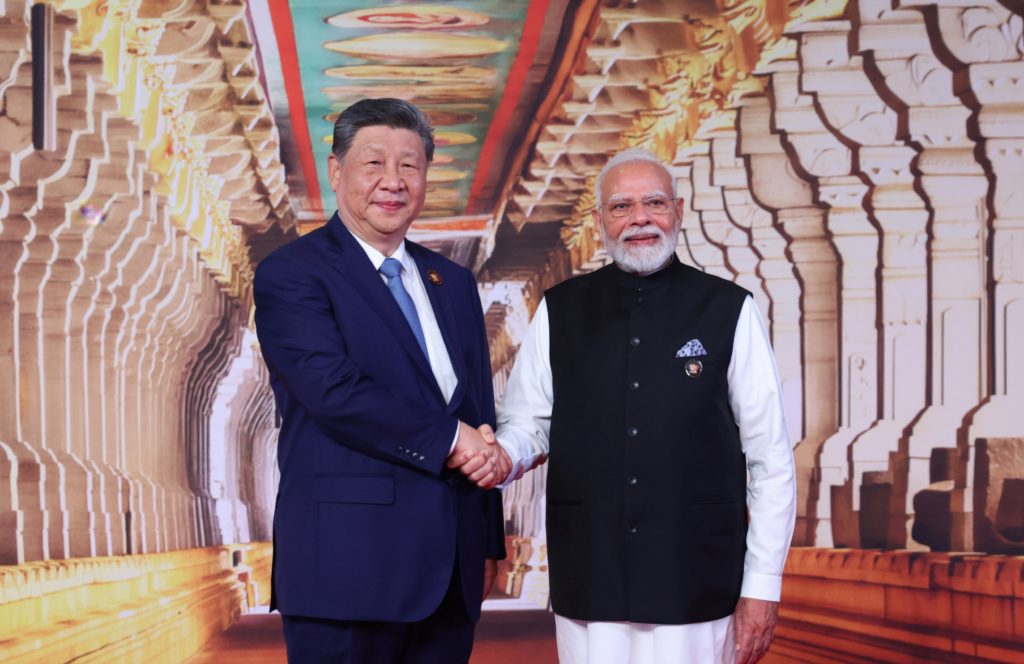
The BRICS summit concluded in New Delhi on Sunday, with Indian prime minister Narendra Modi having hosted the two-day gathering as chair. As with many meetings of the group of emerging economies, this edition brought together the leaders of China, India and Russia and featured plenty of anti-Western rhetoric. This was also Chinese leader Xi Jinping’s first visit to India for more than six years, in the latest example of Sino-Indian normalisation following a sustained period of tensions.
New Delhi’s normalisation with Beijing over the last year looks like more of a tactical de-escalation than a realignment. Nevertheless, India has over that time begun to agree more measures to provide greater access to Chinese investment in manufacturing and climate technology, both areas important for India’s development. This should act as a warning for Europeans. If India cannot source technology and capital from partners in Europe, it will seek to do so from China even while remaining suspicious of Beijing from a security point of view.
Solution
New Delhi continues to view Beijing as a threat and seeks deeper security and economic ties with Brussels, as well as with Washington, despite the difficulties President Donald Trump presents. Modi has thus worked to prevent the BRICS from tipping into a purely anti-Western vehicle, since this would run against India’s interests.
Europeans also see India as an increasingly vital partner, following the EU-India trade deal agreed earlier this year, as Europeans diversify geopolitically in the face of tense transatlantic relations. But India’s bilateral agreements with China, including on the sidelines of the BRICS meeting, show that the EU must not take the mutual benefits of closer ties for granted.
Ahead of Modi’s anticipated visit to Brussels later this year, the EU should accelerate its plans further to strengthen Europe-India ties. For instance, it should enhance the existing Trade and Technology Council to drive cooperation in areas like AI, while also moving forward cooperation on defence and security, and making faster progress on India’s plans to join the Horizon Europe funding programme for research and innovation.
Context
The EU and India signed a landmark free-trade agreement in New Delhi in January, alongside a new security and defence partnership. Both sides aim to build on these with wider cooperation initiatives to encourage greater cooperation and investment in areas like semiconductors, AI and clean-tech supply chains.
India supported moves at the 2023 BRICS summit to agree on a major membership expansion. The group began as a much smaller coalition of just Brazil, Russia, India and China, and South Africa—hence “BRICS”—but has since grown to eleven members, including Egypt, Ethiopia, Iran, Saudi Arabia and the UAE as well as a wider grouping of observer and partner countries that attend summits and align themselves loosely with the bloc’s agenda. The group is internally divided, and not just in terms of China and India. Both Iran and the UAE are members, for instance, despite longstanding regional tensions. This year’s summit produced a limited declaration including vague promises to enhance cooperation.
Along with India’s rapprochement with China, the New Delhi BRICS Summit showed that the group is no longer content to remain a platform for the Global South’s protest; it is beginning to build institutions, economic networks, and diplomatic alternatives of its own. A summit held during a period of international turmoil The 18th BRICS Summit, […]
Em pleno debate internacional sobre até onde deve acelerar o desenvolvimento da Inteligência Artificial e quem liderará esta transformação tecnológica, Portugal defendeu que a resposta não pode ficar restringida a uma corrida pela supremacia, exigindo cooperação entre países, empresas e inovadores como garantia de uma partilha dos seus benefícios. A posição foi assumida no Fórum […]

 Login