❌

Reading view

Over a decade of war in Yemen and the rise of Ansar Allah
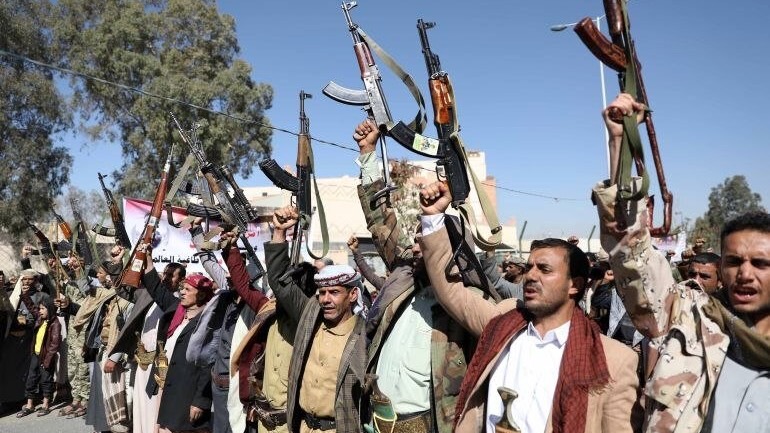
In July, Saudi Arabia joined the US-Israeli war on the West Asia region with strikes on Yemen. The Ansar Allah-led Yemeni Armed Forces retaliated by launching a maritime blockade alongside attacks targeting vital Saudi interests.

The renewed fighting between the two West Asian nations resulted in Ansar Allah’s takeover of the strategic Red Sea port city of Mokha last week and the liberation of all the group’s prisoners held by Saudi-backed forces on Yemen’s western coast.

Ansar Allah’s seizure of Mokha seaport is reshaping regional and global geopolitics, particularly because it serves as a primary gateway to the Bab el-Mandeb Strait and coincides with developments in the Strait of Hormuz.

As these major shifts underscore, Yemen holds immense strategic geopolitical significance.

Situated on the southwestern corner of the Arabian Peninsula and overlooking the Bab al-Mandab Strait, Yemen represents a vital chokepoint connecting the Red Sea to the Gulf of Aden and the Indian Ocean

Consequently, internal political developments in Yemen can have global political and economic repercussions.

This fact, in turn, has put Yemen in the crosshairs of the US-led Western imperialist bloc and their allies in West Asia, which have endeavored to subjugate the country through a devastating decade-long war and blockade. 

The origin of this war coincides with the emergence of Ansar Allah, beginning when the group managed to take control of large swathes of the country, including the capital, Sanaa, in 2014.

The rise of Ansar Allah

Ansar Allah was first established in the early 1990s in the northern Yemeni governorate of Saada as a cultural and educational organization called Al-Shabab al-Mumin (the Believing Youth).

Initially, the organization introduced itself as an unarmed theological movement aimed at reviving and preserving Zaydi Shia Islam and countering the threat of state-backed Sunni Salafism, which sought to uproot the Zaydi religious identity in its homeland of Saada.

From its inception, the movement opposed the government, led by President Ali Abdullah Saleh, accusing it of corruption and criticizing its ties to the United States and its ally Saudi Arabia.

Tensions between the group and the government drastically escalated following the US invasion of Iraq in 2003. It was at that time that the group adopted the slogan (Death to America, Death to Israel), during mass protests opposing the war on Iraq.

These slogans posed a political threat to Ali Abdullah Saleh, who was attempting to position his government as a key ally in the “US War on Terror” in the aftermath of the 9/11 attacks. As a result his government led a brutal crackdown on protesters.

Security forces and riot police suppressed protests using live ammunition, tear gas, and batons, and arbitrarily detained hundreds of political activists, students, and opposition organizers without trial.

In 2004, tension between the Al-Shabab al-Mumin and the Yemeni government boiled over, sparking a series of six internal conflicts known as the Saada Wars. 

These clashes began with the government’s assassination of Hussein Badreddin al-Houthi, the group’s founder, and triggered five subsequent rounds of fighting that lasted until 2010. The followers of the group became widely known as the Houthis ever since. 

Saudi Arabia reportedly engaged in the Saada wars by providing immense financial, political, and material support to the Yemeni government. Saudi intervention in Yemen escalated in 2009 with a direct military incursion and unilateral airstrikes against positions held by the Houthi movement.

In 2011, the group joined nationwide demonstrations, calling for the overthrow of President Ali Abdullah Saleh. It was then that the Houthi movement formally adopted the name Ansar Allah (Supporters of God). 

The ousting of Saleh weakened the central government and triggered a sweeping power vacuum, which allowed Ansar Allah to rapidly expand its territorial dominance. By 2012, the Yemeni movement consolidated firm control across the Saada governorate and large swathes of northern Yemen.

In early 2012, vice president to Saleh, Abed Rabbu Mansour, Hadi became the President of Yemen via a transition framework brokered by the Gulf Cooperation Council (GCC), as he was  considered as a quiet consensus figure. Hadi was also strongly backed by the Obama administration. 

In late 2014, Ansar Allah allied with forces loyal to ousted president Ali Abdullah Saleh against the transitional government headed by Abed Rabbu Mansour Hadi. The fighting that followed led to Ansar Allah’s seizure of the capital Sanaa, forcing Hadi to flee the country.

2015-2022: The Saudi-led coalition’s protracted war against Yemen

From exile in 2015, Hadi requested the Saudi-led coalition to intervene in the conflict, opening the door to one of the bloodiest prolonged wars in West Asia. A conflict that, according to UN estimates, resulted in 377,000 deaths by 2022. 

Saudi Arabia was the main pillar of the coalition, leading the military campaign dubbed “Operation Decisive Storm” with a massive force, including extensive warplanes and ground troops.

The United Arab Emirates (UAE) also played a key role by commanding ground and air operations particularly in southern Yemen and along the critical coastal strip.

Bahrain took part in the operation with 12 fighter jets (some sources say 15), and deployed ground troops in the southern Saudi borders to protect Saudi Arabia from Ansar Allah’s attacks. Meanwhile, Kuwait contributed with 15 warplanes.

At the beginning of the campaign, Qatar participated with roughly 1,000 ground troops, armored vehicles, a dozen fighter jets, and transport helicopters until it was expelled from the coalition in June 2017 over a diplomatic crisis with Saudi Arabia, UAE, Bahrain, and Egypt.

Jordan and Morocco contributed six fighter jets each, while Sudan under deposed president Omar Al-Bashir sent three aircrafts and thousands of ground troops. Furthermore, Senegal committed 2,100 troops.

Western countries, including the United States, the United Kingdom, and France provided logistic and intelligence support, such as aerial refueling for coalition jets, technical assistance, military equipment, coordination support, and maritime surveillance.

The 2022 UN-brokered truce de-escalated the war rather than ending it

In April 2022, the United Nations announced an official two-month nationwide truce agreement, which temporarily halted cross-border attacks, ground and air operations, and allowed fuel imports into ports held by Ansar Allah. It also reopened commercial flights from Sanaa International Airport after years of sea, land, and air blockade imposed by Saudi Arabia. 

Rather than completely removing the blockade, the agreement only resulted in the partial easing of restrictions, while regions under the control of Ansar Allah have continued to face a near-total blockade.

Read more: Yemen demands Saudi-led blockade on the country be lifted immediately

The agreement was renewed in June and extended a second time in August 2022 for an additional two months before it lapsed in October. 

Regional developments reignited the conflict (2023-2026)

In November 2023, Ansar Allah launched a ban on all Israeli maritime navigation in the Red Sea and the Bab el-Mandeb Strait in retaliation for Israel’s genocidal aggression on Gaza.

About one month later, the group significantly expanded the ban to include all ships heading to Israeli ports, regardless of their nationality or flag.

The ban continued until October 2025, despite waves of deadly airstrikes launched by the US, UK, and Israel on Yemen.

An Omani-mediated ceasefire deal between the US and Ansar Allah was reached in May 2025. The deal stipulated halting Ansar Allah’s attacks on US ships in the Red Sea and Bab al-Mandab Strait, and ending US aggression on Yemen, without preventing the Yemeni resistance movement from launching attacks or naval operations against Israel. 

This same period saw a shift in the conflict between the Saudi-led coalition and Ansar Allah from active military engagement toward a tense, fragile diplomacy.

In early 2026, friction between the two major pillars in the anti-Ansar Allah coalition – namely Saudi Arabia and the UAE – surfaced as different Yemeni groups backed by the two countries clashed, apparently over territorial control in Yemen.

Read more: Tensions in Yemen: Are Saudi Arabia and the UAE becoming frenemies?

The US-Israeli war on Iran has drawn Yemen back into the regional conflict

Although Ansar Allah was established as an independent Yemeni movement, it evolved into a key component of the Axis of Resistance over time. This alignment was driven by mutual ideological foundations, shared anti-imperialist ideology, and deep strategic and military cooperation with Iran and Hezbollah.

Despite its affiliation with the resistance alliance, Ansar Allah chose not to get involved in the recent regional war waged by the US and Israel against Iran, for ostensibly strategic considerations and military coordination tactics with its allies.

Read more: Reflections on the US-Israeli multi-front war in West Asia: How the Axis of Resistance remains resilient

However, because the United States and its allies in the region seemingly view the current war as an ideal opportunity to dismantle the Axis of Resistance, Saudi Arabia decided to resume its aggression against Yemen by attacking Sanaa International Airport in July. The attack aimed to prevent an Iranian plane from landing.

Consequently, Ansar Allah launched retaliatory attacks on Saudi interests inside Saudi Arabia and on Yemeni soil. It further declared a maritime blockade against Saudi-linked commercial vessels passing through the Bab al-Mandeb Strait, demanding Riyadh end its decade-long blockade on Yemen.  

Concurrently, ground clashes over territorial dominance between Ansar Allah and Saudi-backed forces intensified, leading to key victories for the Yemeni group. Escalations have persisted up to the time of publication.

On Wednesday, September 16, Saudi Arabia accused Ansar Allah of attempting a drone attack against the city of Mecca, the holiest city for Muslims, located in western Saudi Arabia.

Ansar Allah dismissed Saudi accusations as false, saying that they reflect a “desperate attempt to mobilize public opinion.”

As the US-Israeli war on West Asia continues to reshape geopolitics, Ansar Allah’s emergence as a regional force has placed Yemen at the center of a struggle that may define the future of West Asia.

  •  

Descendants of Chinese forced laborers sue Japanese companies for reparations

A group of 50 family members and descendants of wartime forced laborers in China filed a lawsuit against six companies on Wednesday, September 16, demanding compensation for their suffering during the Japanese occupation. 

In their lawsuit at a local court in Hebei, southwest of the capital, Beijing, the group is seeking around $55,000 in compensation for each member, along with an apology published in at least 10 Japanese and Chinese media outlets.

The plaintiffs accuse six Japanese firms of being beneficiaries of the forced labor, causing long-term pain, suffering, and the deaths of their family members, Kyodo News reported. 

According to Kyodo News, the six Japanese firms named in the lawsuit include construction firm Taisi Corp, mining firm Nittetsu Corp, and heavy industry manufacturer IHI Corp. 

Japan occupied large parts of China, the Korean Peninsula, and other parts of Southeast Asia at various times between the last decade of the 19th century to the end of the Second World War.

The Japanese military committed systemic torture, sexual exploitation, forced labor, and other cruelties against Chinese and other Asian peoples during the occupation, all which have been well documented.

Millions had to do forced labor in the territories occupied by Japan, including hundreds of thousands of Chinese people. Some Chinese forced laborers were also sent to Japan to work in mining and other industries. Thousands of these forced laborers were killed due to harsh working conditions and torture inflicted by their employers. 

Compensation and apology for crimes during occupation

The survivors of Japanese atrocities and their descendants have in different moments raised demands for compensation and apologies.

In 2014, a similar lawsuit was filed by hundreds of people in a Chinese court against Mitsubishi Materials Corp and others. The case ended in an out-of-court settlement, with Mitsubishi offering an apology and compensation to the plaintiffs.

In China, survivors cite their lack of faith in the Japanese system as the reason for filing the suit in a domestic court. 

Japanese courts have dismissed all such lawsuits. A 2007 Japanese Supreme Court’s judgment stated that all such claims were settled when Japan and China established their diplomatic relations in 1972.

However, China has maintained that the 1972 documents did not denounce an individual’s right to seek legal action. China has also often invoked Japan’s failure to acknowledge its repressive and atrocious colonial period and apologize to its victims in the region.

Reacting to the news on Wednesday, the official spokesperson of China’s Ministry of Foreign Affairs Guo Jiakun underlined that “forced recruitment and enslavement of laborers is one of the serious crimes committed by Japanese militarists during their foreign aggression and colonial rule.”

He urged “Japan to look history in the eye, reflect on past crimes, earnestly heed and respond to the just calls and legitimate claims of the people of victims countries in Asia, and properly resolve relevant issues left over from history with a responsible attitude.”

  •  

Shetland’s Most Wanted

Daniel Shailer embeds with the tiny separatist group “Shetland First,” whose members believe the Shetland Islands were never legitimately ceded to Scotland. Its 83‑year‑old leader, Stuart Hill—shipwreck survivor, serial litigant, self‑proclaimed weather‑controller—is such a compelling eccentric that Shailer ends up as absorbed in Hill’s own story as in the broader currents of populism on these remote isles.

Previously, Hill has focused on relatively esoteric points of history and legalese. Now, on the advice of his chief campaign advisor, ChatGPT, he is meeting people where they are: should council tax go up while official salaries get bumped? Is it fair to live in fuel poverty at the footsteps of Britain’s largest onshore wind farm?

‘There are all these injustices, and once you read the history, you can see a basic injustice,’ Hill says. ‘Everybody seems to be kind of comfortable with it, but at the same time there’s a basic undercurrent of dissatisfaction.’

  •  

Several arrested in protests against constitutional changes in DRC

Protests rocked the Democratic Republic of Congo on Tuesday, September 15, as opposition supporters took to the streets in Kinshasa and several other cities to oppose proposed constitutional changes that they say could allow President Félix Tshisekedi to seek a third term.

The demonstrations were called by the opposition coalition C64 (Coalition Article 64), which has campaigned against changes to the Constitution and what it considers an attempt to remove the existing two-term presidential limit.

The demonstrations were also reported in several cities. In Kinshasa, hundreds of protesters gathered around the Limete area before the march was disrupted by clashes involving demonstrators and people identified as members of the Force du Progrès, a group affiliated with Tshisekedi’s ruling UDPS party. Police used tear gas and warning shots to disperse the crowd. At least 10 people were arrested in Kinshasa.

Opposition accuses authorities of an “ambush”

Martin Fayulu, leader of the Engagement for Citizenship and Development (ECiDé) and a leading C64 figure, accused authorities of deliberately allowing pro-government militants to attack the opposition march.

In a post following the confrontation, Fayulu said the C64 had agreed on its route with Kinshasa’s city authorities before the march. He alleged that protesters were then confronted in Limete by armed members of the Force du Progrès while police used tear gas against the marchers.

Fayulu wrote that the C64 had been “the victim of an ambush” and accused the authorities of using a political militia alongside security forces. He called on Kinshasa’s city authorities and the national government to explain what happened.

Read more: Lithium mining in the DRC: A new mineral rush spearheaded by the US, EU, and other major powers

The confrontation prevented the C64 march from reaching its planned destination and from delivering its memorandum to the authorities at the People’s Palace.

Opposition resistance has been building 

Tuesday’s demonstrations were the latest escalation in an opposition campaign that has been building since June, when there were protests after Congo’s parliament approved legislation allowing constitutional amendments to be submitted to a referendum.

The National Assembly and Senate have both backed the referendum legislation. Critics argue that the process could eventually open the way for amendments to the presidential term-limit provisions.

Tshisekedi was first elected president in 2018 and re-elected in 2023. Under the current Constitution, the president serves a maximum of two five-year terms. His current term runs until 2028.

The proposed constitutional changes have therefore become a major point of confrontation between the government and opposition. The C64 says it is defending the existing constitutional order and has rejected any change that could enable Tshisekedi to seek another term.

The protests and the crisis is happening as the government faces other major challenges, including conflict in eastern Congo and an Ebola outbreak.

Read more: Ebola spreads to 60 health zones in eastern DRC; UN warns of funding shortfall

  •  

New taxi fares from airports in Athens and Thessaloniki

A decision by the Ministry of Infrastructure & Transport has raised the fixed taxi fares from the airports in Athens and Thessaloniki Taxi: New fares €50 for a trip from the ATH International Airport to downtown Athens. The fares change concerns, among others, the predetermined fares for routes from the airports of Athens and Thessaloniki, […]

The post New taxi fares from airports in Athens and Thessaloniki appeared first on Keep Talking Greece.

  •  

Qatargate: Greek Parliament lifts immunity of ND MP & ex EU Commissioner

Greek Parliament voted for lifting the parliamentary immunity of ruling New Democracy MP and former EU Commissioner Dimitris Avramopoulos on Thursday. The voting followed a relevant request by Belgian authorities investigating the so-called Qatargate and have issued an arrest warrant last June. Prior to the voting, 73-year-old Avramopoulos submitted a memorandum where he requested “the Plenary […]

The post Qatargate: Greek Parliament lifts immunity of ND MP & ex EU Commissioner appeared first on Keep Talking Greece.

  •  

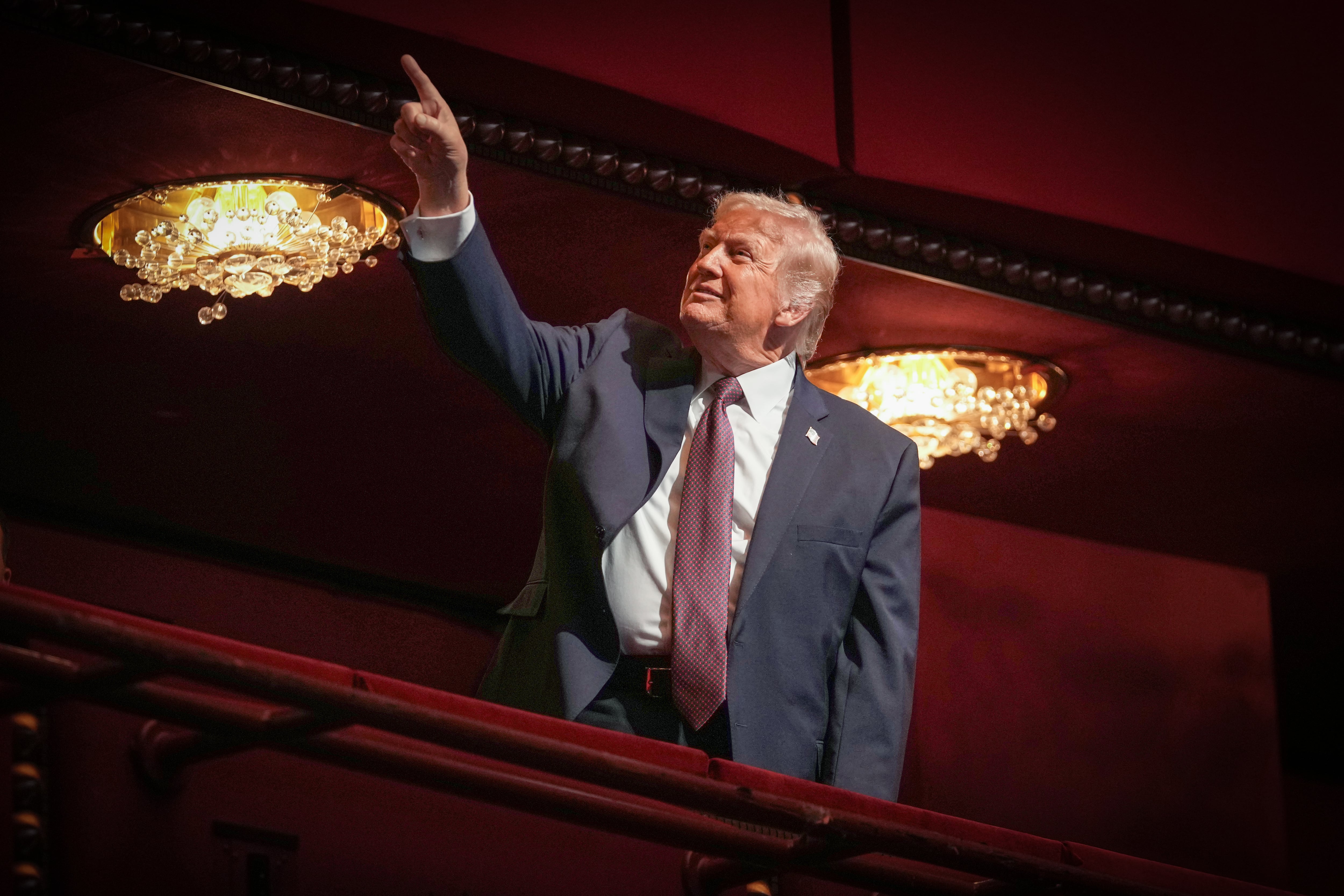
Trump escalates his campaign against Washington’s cultural institutions

For the past 96 days, a huge tarp has hung over the facade of the Kennedy Center, a fitting symbol of Donald Trump’s assault on Washington’s cultural institutions.

Seguir leyendo

© Allison Robbert (AP)

Donald Trump at the Kennedy Center, Washington, January 29, 2026.
  •  

Then They Came for the Ostriches

J.B. MacKinnon files a remarkable dispatch from among the members of the so-called Ostrich Army, who convened last fall in British Columbia to protest the planned culling of 300 or so birds following an H5N1 outbreak. The plight of the birds and the various claims made in their defense—that their antibodies could yield a cure for bird flu or COVID-19, for instance—are intriguing enough on their own. But it’s MacKinnon’s study of the Ostrich Army itself that helps this story take flight (even if the subjects at its center cannot). As helicopters pass overhead and a suspected kill pen mysteriously catches fire, suspicion mounts among the troops, and interpretations diverge. A genuinely surprising portrait of a loose, wayward movement, delivered with peak dramatic tension.

This was the Ostrich Army way: every event called for interpretation, an attempt to see through to hidden endgames. “One thing with black magic,” one camper would later say to me, “is they tell you what they’re going to do before they do it.” And so, at first light, when firefighters had won the day and the smoke cleared to reveal the ostrich flock still standing, the sight didn’t lead to any reconsideration of the night’s theories of clandestine slaughter. The Army simply moved on, hoping to make better sense of the next move, or the one after that. The birds really could die this day.

  •  

Architecting hybrid defence: Why UTM and IDS should work together in Windows enterprise security

Enterprise security departments have typically been presented with one of two options: either the use of unified threat management systems (UTMs) to achieve a unified perimeter or an IDS solution that can offer greater insight into network activity. However, when considering solutions for enterprise environments running on Microsoft Windows-based products, it appears that both sides are focusing on the wrong issue. The argument from UTM vendors, who market their product as the "one-stop shop" for IT personnel with limited time resources, is that a UTM device provides all necessary functions (firewall, VPN, antivirus, etc.) within a single unit. On the other hand, the vendors of specialized IDS devices argue that the inclusion of these additional functionalities reduces the effectiveness of the IDS function. As such, organizations providing protection for Windows networks continue to be at increased risk due to this way of thinking.

Cybersecurity engineer Samuel Bemi investigated this gap through a controlled comparative evaluation of Snort, an open-source intrusion detection system, and pfSense, an open-source unified security platform, within a virtualised Windows 11 enterprise environment. His evaluation goes beyond the conventional question of whether a security control detects an attack, examining whether that detection remains operationally valuable once false positives, latency, throughput, and resource utilisation are taken into account.

Detection alone doesn't tell the whole story

The experiment simulated three of the most common attack patterns organisations face: ICMP flood attacks, port and service scanning, and denial-of-service traffic. Both Snort and pfSense were configured to defend a Windows 11 host inside an isolated network built specifically for testing.

The results were clarifying, not comforting. Snort detected 100 percent of ICMP flood attempts and 100 percent of denial-of-service traffic, and identified the large majority of port scanning attempts. Within the controlled test environment, Snort achieved strong detection performance against the traffic patterns tested. But the more important finding was that detection performance came with operational trade-offs.  Alongside that success sat a false positive rate high enough to be operationally significant, alongside a measurable increase in network latency and a meaningful drop in throughput once both systems were active.

Bemi's evaluation shifts the question from “which security control detects more attacks?” to a more consequential one: “does the security architecture remain effective when detection accuracy, false positives, and operational overhead are considered together?”  Rather than assessing IDS and UTM controls independently, Bemi's approach examines how detection accuracy, false positives, resource consumption, and network performance interact when the controls are deployed within the same enterprise environment. This perspective provides security teams with a more practical basis for designing defence-in-depth architectures, where protection is assessed not only by what threats a control detects, but also by how effectively it operates within the wider network.

"A 100 percent detection rate cannot be evaluated in isolation," Bemi says. "If achieving that result introduces significant false positives, latency or throughput degradation, the security control has to be assessed as an operational system rather than simply as a detection mechanism."

What UTM alone Mmisses

Bemi’s argument is that IDS will never replace or outperform UTM. Instead, he says both tools solve two different layers of the same issue. Layer one is Perimeter Enforcement (Firewalling, VPN termination, Traffic Shaping, Blocking Known-Bad traffic) as long as you have the correct settings with your UTM devices such as pfSense. The Layer Two that IDS addresses is what happens after you allow something past the first layer. This Layer two provides a level of detail that can't be replicated by UTM alone. In particular, this was very evident during Bemi's testing and evaluation based on Detection Capability and Operational Impact.

" A UTM determines whether traffic should be admitted into the Network," Bemi states. " An IDS answers a completely different Question; namely, now that it is inside the Network, does it appear to be anomalous?" Bemi stated enterprises who use only UTM are typically making only one determination regarding allowing traffic past the Firewall/VPN termination device. Then they are simply relying on anything that passes through to be safe."

Resource cost is a design input, not an afterthought

One of the study's most important findings is that defence-in-depth is not operationally free. Running both controls increased CPU and memory utilisation and introduced additional network latency, demonstrating that security architecture cannot be evaluated solely through detection effectiveness.

He argues the practical barrier to hybrid defence is often less about whether the controls can work together and more about whether organisations have planned for the capacity, tuning and monitoring they require. "Nobody disputes that defence-in-depth is the right architecture on a whiteboard," he says. "The resistance comes at implementation, when a smaller IT team realises that running both properly means capacity planning, rule tuning to bring false positives down, and ongoing log review. That is a resourcing conversation, not a technology conversation. But skipping it does not remove the risk; it just moves the risk from the network into the business."

The practical path forward

For organisations still treating this as a binary purchasing decision, the practical implication of Bemi's evaluation is not that every organisation should deploy both controls indiscriminately. Instead, security architects should treat UTM and IDS as complementary controls, evaluate their combined performance under realistic traffic conditions, and size infrastructure and monitoring capacity around the resulting operational overhead.

Conclusion

The challenge for Windows enterprise security is not choosing between UTM and IDS, but designing an architecture in which both controls address different layers of the same threat landscape. Bemi’s evaluation demonstrates that detection rates alone do not determine security effectiveness; false positives, latency, throughput, resource consumption, and the effort required to operate the controls also matter. The industry therefore needs to move beyond product-versus-product comparisons and assess how security controls perform together under realistic enterprise conditions. In practice, UTM can provide the first layer of perimeter enforcement, while IDS adds deeper visibility into suspicious activity that may pass through that boundary. Organisations considering a hybrid approach should test the combined architecture against representative workloads and establish clear thresholds for performance, false positives, and resource utilisation before deployment. They should also plan for ongoing rule tuning, monitoring, capacity management, and analyst involvement rather than treating these as secondary operational concerns. Ultimately, effective defence-in-depth depends not simply on deploying more security tools, but on ensuring that complementary controls work together in a way that is measurable, sustainable, and aligned with the organisation’s operational needs.

  •  

Die Übersetzung eines einstündigen Interviews des russischen Außenministers zu allen Fragen der Weltpolitik

Da der Westen, also vor allem die Europäer, derzeit regelrecht nach Krieg lechzen und ihn mit allen Mitteln zu provozieren versuchen, während die deutschen Medien gleichzeitig über die Positionen und Argumente der russischen Regierung immer schamloser lügen oder sie verschweigen, finde ich es wichtig, ein aktuelles, einstündiges Interview des russischen Außenministers Lawrow komplett zu übersetzen, […]
  •  

How a Tiny Danish Colony Ruled a Piece of India for 225 Years

Tharangambadi is a fishing village on India’s Coromandel Coast, in the state of Tamil Nadu. Its name means “place of the singing waves,” a nod to the Indian Ocean lapping at its shore. It isn’t much of a tourist stop, and fishing is still its main trade, but anyone who walks its streets runs into […]

  •  

Israeli Film Festival in Ghana sparks more controversy

At the end of August, at the Silverbird Cinema in the Accra Mall in Ghana, two Israeli feature films were screened alongside Ghanaian student productions. 

For the second year running, the seats for this Israeli film festival were empty. Ordinary Ghanaians declined the Israeli Embassy’s films, and a peaceful demonstration outside held placards for Palestine and against the continued killing of civilians in Gaza.

There is another screen Ghanaians must refuse to look away from, protestors asserted. The screens on which we have watched Gaza reduced to rubble, families displaced again and again, hospitals and schools destroyed, and children carried from the wreckage of a war that, despite the ceasefire announced in October 2025, has not stopped killing them.

However, something else walked through the doors of the film festival: schoolchildren. In uniform. On a Sunday.

Students from Achimota School and Accra Girls Senior High School, two of Ghana’s most prominent public secondary schools, were brought into an embassy-sponsored event at the center of a serious political controversy. Those of us who were there saw them. We have photographs and videos. The question Ghana must now answer is not about cinema. It is about who sent our children, and why.

The 2025 Israeli Film Festival

Last year, the Embassy staged a week-long Israeli Film Festival at the same venue and called it an exercise in “dialogue and mutual understanding.” Nearly 400 Ghanaian organizations, student movements, trade unions, faith communities, civil-society groups, signed one statement calling for a boycott. Protesters gathered outside. Sponsors pulled out. The Embassy still declared the event a success.

The veteran editor Kwesi Pratt Jnr., who joined the picket, recalled what that “success” looked like a year ago for the “Alhaji and Alhaji” program:

“This is the first time in my life that I’ve seen 400 organizations come together to sign one statement calling for a boycott of the film festival. I joined the picket at the Silverbird Cinema, and a few, very, very few, prominent Ghanaians, including Afenyo-Markin, attended in spite of the protest. But it was a fiasco. The room was empty. Ghanaians rejected the film festival completely.”

So the Embassy returned smaller: two Israeli films on a single Sunday, free entry, free popcorn, raffle prizes, and an invitation aimed squarely at young people. When adults again refused to fill the room, uniformed students appeared. If Ghanaian adults will not lend legitimacy to this event, should Ghanaian children be made to supply it?

The timing makes it harder to dismiss as a routine outing.

President John Dramani Mahama has publicly described what is happening in Gaza as genocide. The Israeli Ambassador to Ghana has publicly rejected that position and defended his government’s conduct. He is entitled to make his case, but he is a guest of a sovereign state, not the author of its policy.

Against that backdrop, the presence of uniformed students inside an embassy program, days after this very public disagreement, demands an accounting. Pratt put the question bluntly:

“At the time that the ambassador was attacking our president, some authorities in our secondary schools decided to side with [the embassy]. What judgment was exercised by the school authorities when they agreed to bus their students to this film festival? What were they expecting? What checks did they do on the quality of the films?”

Picket against Israeli film festival
Ghanaian activists picket the Israeli Film Festival. Photo via PATV

Those are the right questions, and they are not rhetorical. They have not yet been answered and there has been no investigation.

What the students deserve

None of this is an accusation against the children. They may have had little understanding of the political purpose around the event. The responsibility belongs to the adults who placed them there.

Ghana rejected the Israeli film festival not because cinema or cultural exchange is evil. Not because Israeli artists have no right to make films. The rejection is not an attack on Jewish people. Antisemitism is hatred and must also be rejected. 

The problem is that this festival is not an example of artists meeting freely across borders. It is an Israeli Embassy-backed initiative staged while the Palestinian people continue to pay with their lives. Amid the killing of civilians and the destruction of Palestinian life, the use of state diplomacy to manufacture an appearance of normality while those questions remain unresolved is nothing less than political soft power.

Ghanaian children are not diplomatic props, and Ghanaian schools must never become extensions of a foreign embassy. Teach them, yes. Teach them the Holocaust, the Nakba, occupation and international law, and give them the evidence to think critically. That is education. Busing uniformed children into a controversial embassy function, and letting their presence become evidence of Ghanaian acceptance, is the opposite.

That is why the demand is simple, and now directed at the Ministry of Education and the Ghana Education Service: did you know? If yes, explain. If not, investigate. And if any official bypassed procedure or abused authority to place schoolchildren inside a foreign government’s public-relations exercise, hold them accountable.

Ghana’s revolutionary legacy

There is a longer tradition at stake. Ghana is the country from which Kwame Nkrumah declared that our independence was meaningless unless linked with the total liberation of Africa. Africa understands what cultural normalization is for: domination has rarely arrived only with rifles. It seeks respectability, the reception, the festival, the partnership, until oppression becomes a disagreement to be discussed politely while business continues.

Palestine poses that old question to the African conscience once more. And a small part of the answer is being written by who walks into a cinema in Accra Mall, and who is made to walk in.

For the second year, the empty seats have spoken. Now Ghana’s own institutions must speak. Our children deserve education, not enlistment. And a sovereign state deserves to decide, in the light of its own conscience, what its schools lend themselves to.

Stay away. Let the empty seats speak, for the Palestinian child who will never again enter a classroom, and for the proposition that human life is worth more than diplomatic image-building.

  •  

South Korea shouldn’t abet Trump in Hormuz

The Lee Administration leaked the possibility of deploying Korean forces to the Strait of Hormuz on September 3. The backlash was immediate from Korean civil society that opposes any type of support for Trump’s war of aggression. Furthermore, recent polls reveal that even 55% of Lee’s supporters oppose the dispatching of forces. And while the Lee administration has publicly backtracked, stating that nothing has been decided, it is, nonetheless, quietly undergoing the process of deployment: more than simply an assessment of the security conditions on the Strait of Hormuz, the Lee administration sent a team to check key military bases and ports that could be used at the United Arab Emirates.

Despite growing public opposition, the Lee administration is expected to introduce at the end of September a motion into the National Assembly, where it is likely to pass given his party’s considerable majority. Unlike his predecessor, the impeached Yoon Suk-yeol, President Lee is not a pro-US ideologue; he is a pragmatist. Why then is Lee going out on a limb with this deployment when the rest of the world is staying out of it?

Well, South Korea’s history has always been entangled and shaped by US foreign policy. The darker side to South Korea’s pop-culture is a country dominated and shaped through US policy and interventions. Today, it hosts the largest overseas US military base and controls the Korean military (through wartime operational control). In effect, it’s never been a sovereign state. Its economic, political, and military interests have always been beholden to the United States. 

Today, Lee is horsetrading with Trump: military support in exchange for more favorable terms in the US’s AI global supply chain of semiconductors and data centers along with a return of wartime operational control. While Lee’s pragmatism is navigating the real structural constraints on South Korea, it is ultimately short-sighted and harmful to Koreans and the world.

The war in Iran is inflicting considerable pain to the world’s economies, including South Korea that imports 61% of its crude oil through the Strait of Hormuz. Yet, even from a completely pragmatic perspective, sending Korean forces to the Hormuz does nothing to resolve this problem. In fact, getting entangled with US aggression against Iran would strain the 64-year diplomatic relations with Iran while putting a target on South Korean assets in the region. Furthermore, if the world’s greatest naval and air power cannot secure freedom of navigation in the Strait of Hormuz, how could South Korea’s contribution make a difference? In fact, the deployment of Korean troops prolongs this war of aggression by giving Trump cover and leverage to demand that other countries, such as Japan, also deploy forces.

This isn’t the first time that South Korea would deploy forces due to US requests. In 2004, after pressure from the George W. Bush Administration, the Roh Moo-hyun administration deployed non-combat support troops to Iraq. In response, a militant Islamic group kidnapped a Korean translator and, when the Roh administration refused to cancel further and withdraw current deployment, beheaded the translator.

Most importantly, this war of aggression is not only illegal under international standards, but deployment also violates article five of the Korean constitution that mandates the government to “maintain international peace” and “renounce all aggressive war.” Thus, whether intervening in the frontlines, or in the rear, whether combatant or non-combatant, any deployment would be complicit in Trump’s war of aggression.

Ultimately, as Hamid Shahrabi, an Iranian activist and co-founder of the Global Resistance for Peace & Justice states, securing free passage through the Strait of Hormuz can be achieved but not through military pressure and destruction but by adhering to the “Islamabad MOU, which outlined measures to ensure free passage through the Strait.”

Being dominated by the US brings out the pragmatic among South Koreans. Yet, the world demands that we fight and that we hold the line against Trump. Deploying forces will prolong Trump’s illegal war of aggression. Fortunately, if Koreans can be pragmatic, they can also be fierce fighters against US imperialism when provoked. Instead of fanning the flames of war, we should fight to extinguish Trump’s forever wars.

Dae-Han Song is a part of the International Strategy Centerand the No Cold War collective and is an associate at the Korea Policy Institute.

This article was produced by Globetrotter.

  •  

China and Russia oppose deployment of US weapons to space

After the US officially admitted it deployed weapons into outer space earlier this week, Russia and China expressed concerns, calling it a threat to international peace and demanding the immediate stoppage of all such activities.

During a regular press conference on Tuesday, September 15, Guo Jiakun, official spokesperson of China’s Ministry of Foreign Affairs, said that “China opposes any arms race in outer space or any attempt to weaponize it and turn it into a warzone.”

He further said that “China stands for the peaceful use of outer space and keeping it safe” and urged the US to “stop expanding military build-up in outer space, and uphold global strategic stability with concrete actions.”

Russia’s Foreign Ministry Spokesperson Maria Zakharova said that the US weapons deployment is a threat to international security and puts a question mark on the stability in outer space. 

“Russia has for many years been consistently drawing the attention of the global community to the grave consequences for international security that Washington’s destructive course may lead to,” Zakharova said.  

She said her country seeks “urgent practical measures to prevent arms race in outer space” and reiterated Russia’s push for a “multilateral legally binding instrument banning the deployment of weapons in outer space.” 

Though it has long been a subject of speculation, a couple of US military officials, earlier this week, admitted that its military is operating weapons deployed in outer space.  

The admission was made by US Air Force Secretary Troy Meink on Monday during a conference. He said that the US “has on-orbit space control weapons capable of defending the joint force against hostile adversary action.”

Meink’s statement was substantiated by US Space Force chief Douglas Schiess, who a day later, on Tuesday, said that in the coming years the US is even planning to increase the number of orbital weapons already used by the members of his military unit.

Urgent need of legal prohibitions

Underlining the threat that the deployment of weapons in outer space poses, several countries, including Russia and China, have been calling for an international treaty to prevent any arms race in outer space for decades now.

The existing instrument, the UN Outer Space Treaty (1967) makes clear that “outer space is not subject to national appropriation by claims of sovereignty, by means of use or occupation, or by any other means.”

It also prohibits the deployment of “nuclear weapons, or other weapons of mass destruction in orbit or on celestial bodies or stationing them in outer space in any other manner,” but it says nothing about the deployment of conventional weapons, despite declaring it should be used for peaceful purposes only.

None of the US military officials spoke about the nature of weapons deployed by the US in outer space.

Though only a handful of countries have the technological capability to explore outer space in any significant way, several countries have used satellites for military and war purposes for decades now.

The US has a dedicated space force which has recently held exercises related to possible military conflicts in space.

The deployment of weapons and claims of exclusivity, apart from increasing possibilities of an arms race between the existing powers in space; the US, Russia, and China, may also make the rest of the world more insecure.

Zakharova said that Russia is planning to submit a proposal for the creation of an international instrument legally prohibiting all weapon deployment in outer space during the upcoming annual UN General Assembly session.

She asked for more countries to join the Russian initiative and co-author the treaty document.

  •  

Colombian president ends university autonomy policy, granting police access to campuses

A little over a month into his term, far-right President Abelardo de la Espriella continues to advance a security agenda that often conflicts with certain rights historically won by Colombians.

This time, De la Espriella has signed a decree allowing police access to university campuses. In several Latin American countries, the prohibition of police access to universities has been established through student struggle to prevent abuses by authorities against student movements.

Thus, universities have historically become places where students seek refuge from repression, arrest, and regroup during times of intense social mobilization.

This was evident during the 2021 protests, known as the “National Strike,” in which students, workers, left-wing political parties, young people, and others took to the streets to protest against the right-wing government of Iván Duque. The mobilization, which lasted several months, was considered a true “social upheaval,” and many experts have seen in it the consolidation of a democratic alternative (the government of Gustavo Petro) to decades and decades of right-wing rule.

During these protests, universities became hubs of popular mobilization, driven primarily by the youngest members of society. On university campuses, protesters were able to regroup, defend themselves against police repression, and coordinate new demonstrations – among other things – always protected by the fact that police are barred from entering university grounds.

De la Espriella calls popular protests “terrorism”

Clearly, De la Espriella seeks to nip this possibility in the bud – that is, to prevent universities from once again becoming coordination centers for the protests. Many have speculated that the president is signing this decree precisely because he knows that his radical neoliberal agenda could spark major protests, and in this way, he hopes to proactively undermine the protest movement.

Read more: One month of De la Espriella’s administration in Colombia

Whether or not this is De la Espriella’s primary intention, only time will tell. What is certain is that the president views university autonomy as an obstacle to the implementation of his security agenda, which also includes curtailing the ability of informal opposition political groups to participate in public life.

“Under no circumstances will I allow public universities to continue to be sanctuaries of violence. I respect and guarantee peaceful protest, but I will not allow universities to continue to be used as sanctuaries of vandalism and crime,” said De la Espriella on X.

Furthermore, true to his combative rhetoric, he compared social protests to terrorism – a common trope in the historical discourse of the Colombian right: “University autonomy is not a blank check for impunity: I have issued precise instructions for a national protocol of action that allows us to distinguish between the legitimate exercise of protest and acts of violence, flagrant offenses, danger, or extraordinary disturbances of public order that require intervention by the authorities. The university is for knowledge and ideas, not to serve as a refuge for violence and terrorism.”

A violation of the Constitution

However, the opposition has viewed this decision as a serious attack on university autonomy. Ana Erazo, a member of the House of Representatives from Valle del Cauca, wrote: “It is an ATTACK ON UNIVERSITY AUTONOMY and a direct threat to the young people at the country’s public universities. With this, Mr. Abelardo de la Espriella is beginning to reveal what could become a BRUTAL RETALIATION against the student movement, against its ability to organize and mobilize, and against thousands of young people who historically have not supported his political agenda.”

Some universities have joined in this criticism. One of them is the National Pedagogical University, whose academic council stated that in the past, “the serious consequences of resolving conflicts within public universities through militarization have been demonstrated on repeated occasions.” Furthermore, the council stated that university autonomy is one of the pillars of Colombian democracy, along with freedom of thought and research, among other things. Losing autonomy means jeopardizing these values of the republic, it stated.

For his part, former presidential candidate Iván Cepeda said that De la Espriella’s measure contradicts Article 69 of the Constitution, which guarantees university autonomy. Regarding the announcement, Cepeda also said: “Such an announcement is not only an affront to university autonomy. It also demonstrates, once again, the authoritarian and despotic nature of De la Espriella, who seeks to stigmatize, persecute, and violate the rights of Colombian youth and the university community. Colombia has not forgotten the victims of police abuse during the National Strike, nor the history of security forces intervening on university campuses, resulting in student deaths. Young people cannot once again be persecuted or treated as an internal enemy and an enemy of the state.”

  •  

A True-Crime Producer Posed as an Heiress — Then Allegedly Stole $30 Million

The FBI isn’t the only interested party searching for Mary Carole McDonnell, the 74-year-old producer behind TV series like I Married a Murderer. There are the former employees who allege millions in unpaid wages, and the two sons who claim their mother forged their signatures on bank documents. There’s an entrepreneur in the United Arab Emirates who accuses her of “mind games,” and the former bank vice-president turned true-crime podcaster who’d like to make a documentary about McDonnell. Cheyenne Roundtree goes deep on the woman who, nearly a decade ago, walked into a California bank with a pecan pie and left with a $15 million loan before vanishing.

The story has all the makings of a viral documentary replete with breathless details, similar to the ones McDonnell’s company produced. Her backstory is littered with half-truths and deceptions, including a lie that her mentally disabled younger sister was murdered after being kidnapped. Questions remain on how she was able to pull off such a brazen heist. And it has sparked an ongoing hunt among the FBI, banking institutions, a true-crime podcaster, and television producers to see who can unravel McDonnell’s tangled history, track her down in a foreign land, recoup the financial losses she caused, and perhaps bring the unbelievable tale to screens.  

  •  

Anti-militarism unites progressives across Europe

The left’s capacity to build knowledge, organization, and struggle was a central theme at this year’s ManiFiesta, introduced during a discussion of Peter Mertens’ new book, “The Last Days of the Old Normal“. In the context of Europe’s ongoing armament, these questions are crucial not only for progressive movements in core countries but also for those building alternatives in Central and Eastern Europe.

The festival featured several sessions examining developments in Central and Eastern Europe, including an intervention by Ukrainian sociologist Volodymyr Ishchenko on the class character of the Ukraine war. Another session – “East of the former wall: the AfD, the industrial crisis, and the war economy” – brought together Markéta Juřicová of the Czech party Levice, Orsolya Haboczki from the Hungarian progressive movement Szikra, German Bundestag representative Cem Ince from Die Linke, and Member of the European Parliament Marc Botenga from the Workers’ Party of Belgium (PTB-PVDA). 

They discussed how the growth of the far right in core EU countries is interacting with events eastwards – and what lessons Western left movements can learn from their Eastern counterparts.

Read more: ‘Ukraine is no longer a sovereign country,’ says sociologist Volodymyr Ishchenko

As Juřicová and Haboczki pointed out, while movements in the West are worried about the popularity of parties like the Alternative for Germany (AfD), many nations in Central and Eastern Europe already have experience with far-right participation – even leadership – in government. More than 15 years of Viktor Orbán’s rule in Hungary, Haboczki noted, offers an important lesson on far-right governments’ economic agendas and tactics. As the Orbán administration used identity issues to capture opposition parties’ attention, it channeled resources into the hands of the local bourgeoisie and served transnational capital by securing huge state subsidies, she said. 

Right-wing parties in Eastern Europe also look to their international peers for inspiration. In the Czech Republic, Juřicová said, the far right “loves” the AfD, picking and choosing many of the same topics the German group campaigns on. The discussion signaled this is particularly important to recognize as the growth of extreme right parties is fueled largely by popular dissatisfaction with mainstream parties’ programs. 

Read more: Far-right victory in German state elections shocks the center

Ince emphasized this was the case in Germany, where a large share of AfD votes came from those believing the party would bring upheaval compared to the status quo, marked by massive job losses and cuts to welfare. But while European progressives recognize this, they still struggle to incorporate it into their programs, recent experiences show. Instead, many of them ponder attempts to prevent the far right from seizing institutional power by providing support to establishment parties, failing to shape a concrete alternative to both the mainstream and the extreme right.

In Central and Eastern Europe, the work of progressive parties is further complicated by the need to rebuild credibility after decades of vilification of socialism and austerity measures implemented by liberal options, Haboczki added. 

Read more: “We cannot eat grenades once the grains no longer grow:” European peace movements organize against militarization

While recognizing workers’ material concerns in Central and East Europe is imperative for building local alternatives, the panel showed, it will also be necessary to build region-wide partnership to challenge topics dominating the narrative in Germany, Belgium, and other core countries.

Militarization stands out among these topics, Botenga and Ince outlined in their interventions, though its implementation might differ by sub-region. Botenga added that German industry stands to gain the most from European armament, yet these gains will not trickle down to the working class – meaning the left in the region can find in anti-militarism a common cause to rally around. 

Ince echoed these observations by emphasizing that, even as their profit lines stand to gain from billions of euros directed towards rearmament, German companies continue to shift significant parts of their operations to countries including Poland, Slovakia, and the Czech Republic – making most of eroded workplace protections and labor rights. This shows that the left across Europe must work together to protect workers’ interests everywhere, building a joint struggle for peace and civilian industry, he indicated.

  •  

EU Parliament approves sweeping customs reform targeting e-commerce imports

Trade Commissioner Maroš Šefčovič and MEP Dirk Gotink (EPP, Netherlands) Photographer: Mathieu Cugnot © European Union

The European Parliament has approved a major overhaul of the EU’s customs system, tightening requirements on e-commerce platforms, introducing a new handling fee for goods ordered from outside the bloc and creating a central EU customs authority.

“This is the biggest reform of European customs since 1968, supporting trade and the enforcement of EU rules,” said MEP Dirk Gotink, (EPP, Netherlands) who steered the legislation through Parliament. Gotink said European customs authorities had been overwhelmed by a “tsunami of Chinese parcels” and that the reform would give customs officers stronger tools to enforce EU standards.

Under the new rules, e-commerce platforms and sellers shipping goods directly from non-EU countries to European consumers will be treated as importers. That will make them responsible for providing customs data, handling applicable charges and ensuring products comply with EU law.

The reform also introduces an EU-wide handling fee on goods ordered directly from non-EU countries, with member states required to begin collecting it no later than 1 November, 2026. The European Commission will determine the amount and review it every two years.

Companies that repeatedly breach EU customs rules could face fines ranging from at least 1% to as much as 6% of the value of goods they imported into the EU during the previous 12 months.

The overhaul will also establish an EU Customs Data Hub, designed to replace at least 111 existing customs IT systems. A new EU Customs Authority, based in Lille, France, will manage the hub and coordinate customs cooperation and risk management across the EU.

The Council has already given the reform its final formal approval, making Parliament’s vote the final step in the legislative procedure.

  •  

Ein Krieg mit Europa „würde ganz anders verlaufen und sehr kurz sein“

Der russische Außenminister Lawrow hat ein Interview gegeben, das ich, sollte ich es zeitlich schaffen, noch komplett übersetze. Hier übersetze ich eine Frage daraus und die Antwort Lawrows. Beginn der Übersetzung: Frage: Wenn wir sehen, was Europa sagt und tut, entsteht ein seltsamer Eindruck. Einerseits heißt es, Russland werde keine Eskalation wagen, keine Atomwaffen einsetzen […]
  •  

Wie sich Nordeuropas Wirtschaft verändert

In der TASS ist ein sehr interessanter Artikel erschienen, der sich mit der Frage beschäftigt, wie die nordeuropäischen und baltischen Länder mit wirtschaftlichen Abkoppelung von Russland umgehen. Da man davon in Deutschland nur wenig hört, habe ich den Artikel übersetzt. Beginn der Übersetzung: Der Preis des Bruchs mit Russland: Nordeuropa verändert seine wirtschaftliche Geografie Anastasia […]
  •  
❌