❌

Reading view

A pro-neoliberal security strategy returns to Latin America

Right-wing and far-right governments in Latin America have adopted a very similar discourse regarding insecurity. The leaders share a narrative that describes how in the 1980s and 1990s, a sort of neoliberal panacea reigned supreme, but then, as if speaking of a biblical plague, the progressive governments of the early 21st century arrived. Then, their story goes, through rampant corruption, they destroyed paradise on earth and brought about various evils such as insecurity, migration, and the destruction of traditional values.

Thus, several of these new – and not-so-new – right-wing governments have won the presidency, almost always in elections where they prevailed by a narrow margin, asserting that the solution to the “disaster” is to return to radical neoliberalism and implement a security policy that restores an order which, they claim, existed before the “original sin.” This “salvation,” no doubt, will come hand in hand with military, intelligence, and operational oversight from Washington – an ally that, they say, was alienated by regional center-left governments. The most serious consequence of this distance was the infiltration of drug trafficking into all strata of society.

It matters little or not at all to these new governments that during the era of progressivism, the region enjoyed a certain positive level of security, as argued by critics of the far right. In the case of Ecuador, this supposedly only happened due to an alleged peace pact between the center-left governments and criminal groups. So that peace was, in reality, merely the prelude to what would later erupt.

A US-backed regional security program

In light of this, the region’s security policy appears to be nearly identical across all countries governed by the Latin American right and far right: 

  • Expand the executive branch’s power to declare states of emergency and prolong them over time (sometimes for years, as has happened in El Salvador and Ecuador, with the consequent erosion of individuals’ constitutional guarantees); 
  • Sign security agreements with the United States and become part of its hemispheric military and security policy (such as the well-known “Shield of the Americas”); 
  • Attempt to facilitate US military and intelligence operations within each country’s territory (whether or not there are military bases on the ground); 
  • Promote extradition proceedings to the United States; 
  • Increase security spending while cutting spending in other areas such as health care, education, and housing; 
  • And various other measures.

However, with the exception of El Salvador and, to some extent, Chile, the results these governments promise – to reduce organized crime and insecurity in the region through the quasi-militarization of daily life and security agreements with Washington (which many accuse of undermining sovereignty) – have not materialized.

Read more: Shield of the Americas, military operations, and decorations: Rubio’s fruitful visit to South America

Ecuador, which is facing the most serious security crisis in its history, has failed to reduce violence as promised by the executive branch, even though the country is currently under a nearly permanent state of emergency and foreign military operations are underway. According to some experts, 2026 could become the second most violent year in the country’s history, with nearly 5,000 homicides in just six months. The Noboa administration says that positive results take time and that better days are ahead. The local elections at the end of the year will surely provide a better gauge of the government’s credibility than any speculation.

In Chile, Kast managed to rally support to win the election by focusing on his security policy, which asserts that the rise in insecurity in Chile is largely due to migration from other South American countries. In response, he promised to build various infrastructure projects that would prevent new migrants from entering the country, similar to the US border wall. For now, the government is celebrating a reduction in certain crime rates, although several polls indicate that the public still feels concerned.

In Colombia, the recently inaugurated government of Abelardo de la Espriella has declared that the time for peace talks with certain insurgent groups is over and has resumed the country’s long-standing policy of waging war against insurgent and drug-trafficking groups. So far, there have already been several dozen deaths, with the bodies displayed as war trophies that the president showcases in his addresses to the nation. It is still too early to tell whether De la Espriella’s war will have a direct impact on reducing insecurity, which, according to the executive branch, spiked during Petro’s administration – a claim that Petro categorically denies.

For now, Washington has expressed its support both verbally and by providing funds to many of these countries to bolster their security, while also carrying out actions in the region, such as those already mentioned in Ecuador or operations in the Caribbean Sea. Furthermore, during a recent visit by Rubio to Peru, the secretary of state stated that US forces will act wherever invited by local governments, which foreshadows new military operations in South America.

Read more: The ugliness of Latin America’s angry tide

Without a doubt, the growth of US influence and presence in South America is undeniable. But it would be a mistake to think that this is something new. The history of Latin America in the 20th century has shown how Washington has managed to steadily increase its military presence in the region by invoking various justifications that have proven very effective in winning public support, especially those concerning the security of the population.

Decades of US intervention in Latin America

During World War II, the United States significantly increased its military presence in the region under the pretext of defense against potential military actions by the Axis powers, specifically Japan and Germany. Thus, the United States and its powerful fleet established several military bases in South America and succeeded in getting virtually all governments to align themselves with Washington’s geopolitical interests.

Shortly thereafter, Washington justified increasing its military presence in the region to halt the dangerous “communism” that, they claimed, would sweep through the region and had become a cause for concern not only for US security but also for the internal security of each country, where “dangerous” revolutionaries would destroy the social foundations of each nation. Thus, the United States and a large portion of the Latin American militaries carried out joint intelligence and other operations to promote, by any means necessary, the destruction of leftist political movements in the region – which meant killing thousands of Latin American revolutionaries through various methods, such as the imposition of bloody military dictatorships (such as those in Argentina, Chile, Uruguay, Brazil, Bolivia, etc.) and/or boycott and conspiracy operations against anti-imperialist governments, such as Castro’s Cuba, Allende’s Chile, or so many other political movements violently aborted through the active participation of US and local forces.

However, the socialist bloc collapsed in the 1990s and brought on a crisis within the revolutionary left. Right-wing governments, incidentally, took advantage of these events to promote ultraliberal economic policies, but began to lack a new justification for expanding military and police forces, and the US presence in the region. 

One exception to this was Colombia, where the internal war served as a justification for the establishment of several US bases during the 21st century.

Read more: The ‘War on Drugs’ has always been more about war than drugs

Now that drug trafficking has become the region’s primary security threat, Latin American right-wing forces, alongside Washington, have once again raised the alarm about the threat of insecurity to promote securitist policies and an increased US military presence. Nazis, communists, and now narco-terrorists seem to be the lineage of a political strategy designed not only to promote a greater military presence in social life but also to advance neoliberal policies that are often accompanied by the aggressive influx of international capital, which typically appropriates the economic resources of this part of the Third World. 

For we must not forget that every cycle of increased security-oriented policies has been followed by lucrative and substantial profits for the wealthiest in Latin America and around the world.

  •  

Nicolás Maduro is not guilty

Venezuelan President Nicolás Maduro is not guilty. This is a statement of law and fact, since Maduro has not been convicted of any crime. He has pleaded not guilty to every charge brought against him, and the accusations made by the United States remain precisely that: accusations. Under the presumption of innocence – recognized in the United States Constitution and in Article 14 of the International Covenant on Civil and Political Rights – the burden rests entirely upon the prosecution to prove guilt. It is not Maduro who must prove his innocence, but it is the United States government that must prove his guilt.

On January 3, 2026, United States forces illegally entered Venezuela, attacked targets in and around Caracas, seized President Maduro and his wife and an elected official, Cilia Flores, and transported them to the United States. Two days later, shackled and injured, Maduro appeared before a federal court in Manhattan. “I am innocent. I am not guilty,” he told the court. Both defendants entered pleas of not guilty and are now imprisoned in Brooklyn while awaiting a trial provisionally scheduled for June 2027.

The charges against Maduro

The United States alleges that Maduro participated in conspiracies to import cocaine, possess machine guns and destructive devices, and collaborate with organizations Washington has designated as terrorist groups. These charges developed out of an indictment announced during Donald Trump’s first presidency in March 2020. The case was substantially expanded after Maduro was kidnapped through a fourth superseding indictment. An indictment, however, is not evidence tested before a court. It is a document prepared by prosecutors and approved through a grand-jury proceeding at which the defense is normally neither represented nor permitted to challenge the government’s account.

The prosecution relies heavily upon the idea that Maduro directed the so-called Cartel de los Soles, or Cartel of the Suns. But even organizations deeply hostile to the Venezuelan government acknowledge that this is not a cartel in the conventional sense. The name has long been used as an umbrella expression for disparate Venezuelan officials allegedly involved in criminal activity, long before Maduro entered political life. It does not describe an organization with a demonstrated membership, command structure, headquarters or chain of authority comparable to Mexico’s Sinaloa Cartel. When Washington designated the Cartel de los Soles a foreign terrorist organization in 2025, the Associated Press noted that it was “not a cartel per se.”

This matters because the prosecution’s language performs much of its political work. Allegations concerning individual acts of corruption are assembled into the image of a unified organization, the organization is then attributed to the Venezuelan state, and responsibility for everything allegedly done by anyone within that loose network is placed upon Maduro. The indictment must still demonstrate that Maduro knowingly joined the specific conspiracies charged. Political authority over a state in which crimes occur does not by itself establish personal criminal responsibility for those crimes.

Case is dead on arrival

Venezuela is not a major producer of coca leaf or cocaine. The principal cocaine-producing countries remain Colombia, Peru and Bolivia. Venezuela has been used as a transit territory, particularly for cocaine originating in neighboring Colombia. But transit through a country does not prove that its president commands the traffic, and nor does it substantiate the extravagant political image of Venezuela as the central source of the drugs entering the United States. The US Drug Enforcement Administration’s own 2025 threat assessment concentrated overwhelmingly upon Mexican organizations and their supply chains. The global cocaine trade operates primarily through production in the Andean region, maritime export corridors, Central America and Mexico, not through a single organization supposedly commanded from the Venezuelan presidential palace. The International Criminal Court’s investigation into the situation in Venezuela, for example, is an investigation into alleged crimes within its jurisdiction. It is not a conviction of Maduro and has not produced an individual judgment of guilt against him.

The US government is expected to rely upon cooperating witnesses, including former Venezuelan intelligence chief Hugo Carvajal and former general Clíver Alcalá. Both men pleaded guilty to serious offenses in the United States. Their evidence cannot be treated as disinterested truth. Cooperating defendants may hope to obtain sentencing benefits by assisting prosecutors. Their claims must therefore be corroborated and subjected to cross-examination. Until that happens, their statements do not establish Maduro’s guilt. In fact, it is better to see their statements as proof of their own attempt to lighten their sentences and launder their soiled reputations.

The circumstances under which Maduro was brought before the US court create an even deeper problem. Washington did not request extradition through an agreed legal process. It employed military force within another sovereign country without Venezuela’s consent or authorization from the United Nations Security Council. Article 2(4) of the UN Charter prohibits the threat or use of force against the territorial integrity or political independence of a state, subject to narrow exceptions such as self-defence. Arresting a person accused of drug offenses is not one of those exceptions. International-law specialists described the operation as an unlawful use of force, while governments including Brazil, Mexico, and China condemned the violation of Venezuelan sovereignty.

Maduro’s lawyers have argued that the prosecution violates the immunity enjoyed by an incumbent head of state. Venezuela continued to recognize Maduro as its constitutional president when the United States seized him – a fact tacitly recognized by the United States when it calls Delcy Rodriquez the Acting President. Washington cannot necessarily extinguish the international legal status of another country’s head of state merely by withholding diplomatic recognition. The defense has consequently requested dismissal of the indictment on immunity grounds and has separately challenged the narco-terrorism count for lacking an adequate jurisdictional connection to the United States. Oral argument on these questions is scheduled for November 2026.

The case of former Honduran president Juan Orlando Hernández exposes the selectivity of Washington’s supposed war against narco-states. Hernández was a close US ally during his presidency from 2014 to 2022. After leaving office, he was extradited – not abducted through a military invasion – and tried in the same federal district in New York where Maduro is now being prosecuted. In March 2024, a jury convicted Hernández after a three-week trial. Prosecutors presented evidence that he had accepted millions of dollars from traffickers, protected cocaine shipments with the Honduran police and military, and helped move more than 400 tons of cocaine towards the United States. He was sentenced to 45 years in prison. Unlike the claims against Maduro, these allegations were tested through testimony, cross-examination and a jury verdict. Yet on December 1, 2025, President Donald Trump pardoned Hernández and secured his release, claiming that the former president had been treated unfairly.

The contrast could hardly be more revealing. Trump pardoned a former president whose participation in cocaine trafficking had been established in a US courtroom, while threatening and eventually invading Venezuela to seize a president against whom no verdict had been rendered. Hernández belonged to Washington’s political camp; Maduro did not. One was released despite his conviction, while the other was captured despite his legal innocence. This disparity does not by itself disprove the accusations against Maduro, but it demolishes the claim that Washington acted from a consistent concern about narcotics. The determining distinction was political alignment, not the strength of the evidence.

The implications of this case extend far beyond the specific circumstances of Maduro and Cilia Flores or their consequences for Venezuela. Allowing a foreign state to override the jurisdiction of another country’s legal system, pursue an accusation for which there is no evidence, and proceed with a trial that lacks a basis in international law effectively establishes the US court system as one with global and unlimited jurisdiction. The ambivalence of governments around the world toward this case is therefore alarming, as it risks signalling consent and normalizing such gross overreach. This is particularly relevant for Mexico, which is already facing a series of accusations and extradition demands from the United States with clear political implications. The outcome of Maduro’s trial could set an important precedent for how Mexico – and other countries – are treated in similar circumstances.

Nicolás Maduro is not guilty therefore expresses the only defensible conclusion at this stage. He was seized through an act of military force, placed before the courts of the state that had pursued his overthrow for years, and charged based on a politically constructed theory that has yet to survive adversarial examination. He remains innocent unless and until admissible evidence proves otherwise beyond a reasonable doubt. Sovereignty is not an ornament, an indictment is not a verdict, and an accusation issued by a powerful state does not become truth merely because that state possesses the weapons to seize the accused.

Stephanie Weatherbee Brito is the co-coordinator of the International Peoples Assembly (IPA). 

Vijay Prashad is an Indian historian and journalist. He is the author of forty books, including Washington Bullets, Red Star Over the Third World, The Darker Nations: A People’s History of the Third World, The Poorer Nations: A Possible History of the Global South, and How the International Monetary Fund Suffocates Africa, written with Grieve Chelwa. He is the executive director of Tricontinental: Institute for Social Research, the chief correspondent for Globetrotter, and the chief editor of LeftWord Books (New Delhi). He also appeared in the films Shadow World (2016) and Two Meetings (2017).

  •  

Percurso pela Foz do Almargem e do Trafal em Quarteira

Venha descobrir o litoral de Quarteira através de um percurso que combina natureza, biodiversidade e património histórico.

Ao longo deste trilho, será possível observar diversas aves aquáticas e migratórias na Foz do Almargem e do Trafal, enquanto se conhece a riqueza histórica e cultural deste território — desde os vestígios da pré-história e das ruínas romanas até à identidade ligada à tradição piscatória.

A atividade pretende também sensibilizar para a fragilidade dos sistemas dunares, a erosão costeira e os desafios das alterações climáticas, promovendo uma reflexão sobre a importância de conciliar o desenvolvimento urbano com a preservação do património natural e cultural.

Uma oportunidade para caminhar, observar, aprender e valorizar o território, descobrindo de perto a importância da proteção deste espaço litoral.

Inscrição: https://forms.gle/8MG8nuAkV9aqorbZ8

Data: 26 de setembro
Horário: 09h00–13h00
Local: Foz do Almargem e do Trafal
Participação: Gratuita, mediante inscrição

  •  

Army Now Testing Anthem Long-Range Strike Weapon Built for Mass Production

Covenant, a previously little-known defense startup, has emerged with a new long-range strike weapon, named Anthem, which it says is intended to provide a cheaper, more readily producible alternative to existing cruise missiles. Already in testing with the U.S. Army, the missile reflects the growing focus on weapons in this class that can be manufactured quickly in very large numbers, even if they sacrifice a significant degree of individual-weapon capability compared to more ‘exquisite’ and costly alternatives.

Covenant, a U.S.-Israeli company founded in 2024, unveiled its Anthem weapon system today along with plans for production in the United States, Germany, and Israel. The company says it has already conducted more than 200 test flights of the weapon and has secured roughly $150 million in orders.

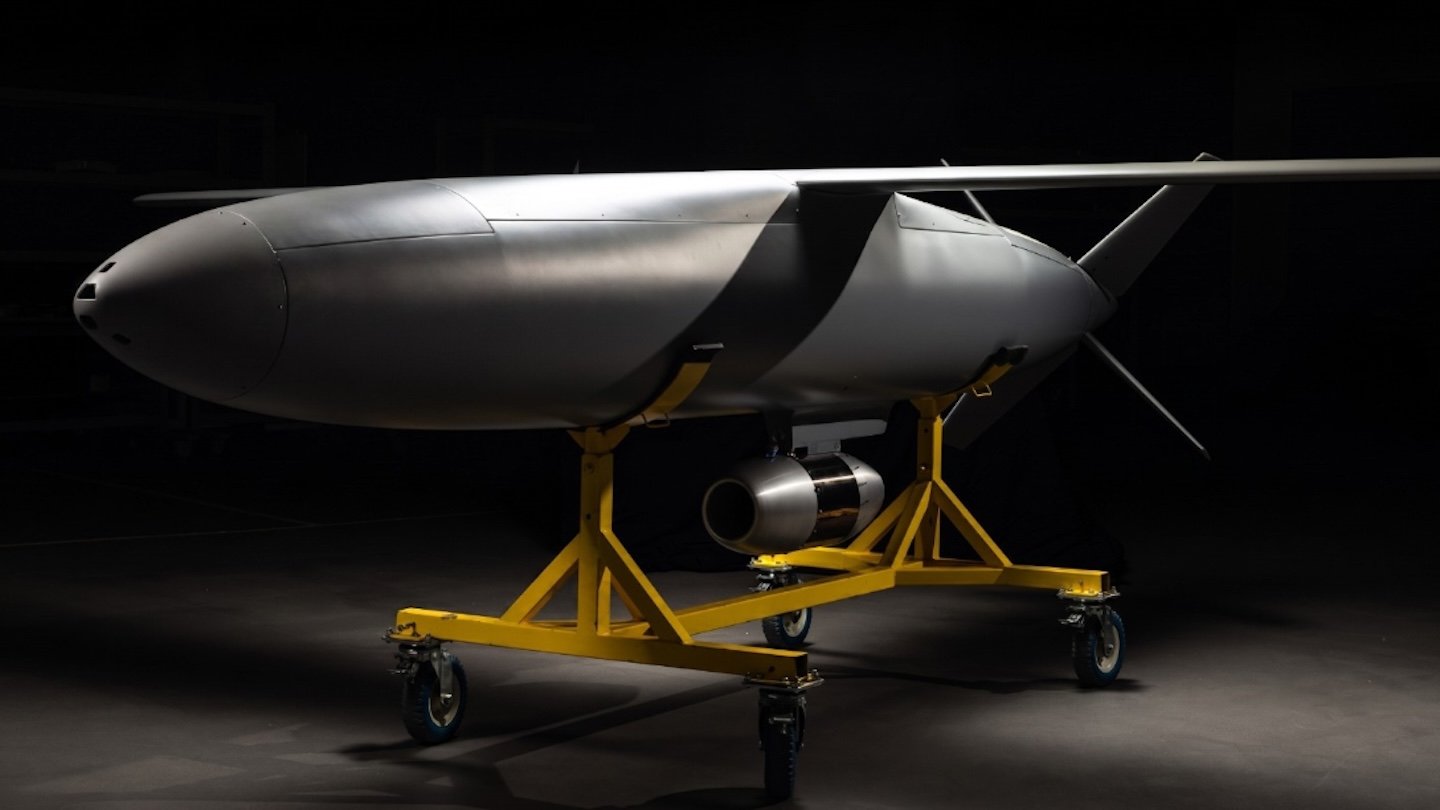
Covenant Anthem missile. Covenant

The announcement comes as the United States and its allies are increasingly focused on the availability of long-range precision weapons, particularly the ability to replenish inventories during a major conflict. Covenant’s central pitch is that existing weapons in this category are too expensive and difficult to manufacture in sufficient numbers for a prolonged war, a reality that has been recognized by a bewildering number of new and established industry players.

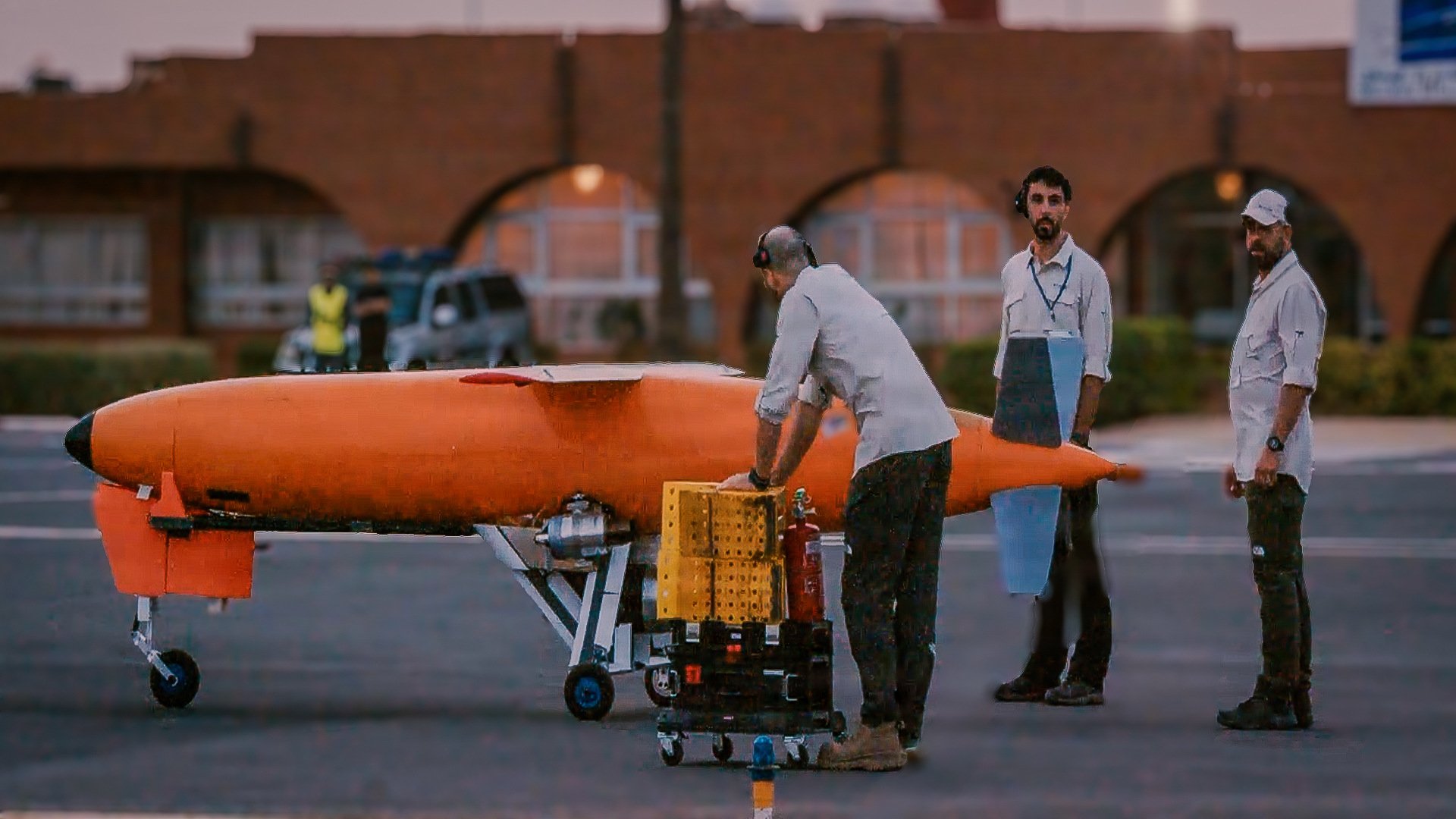
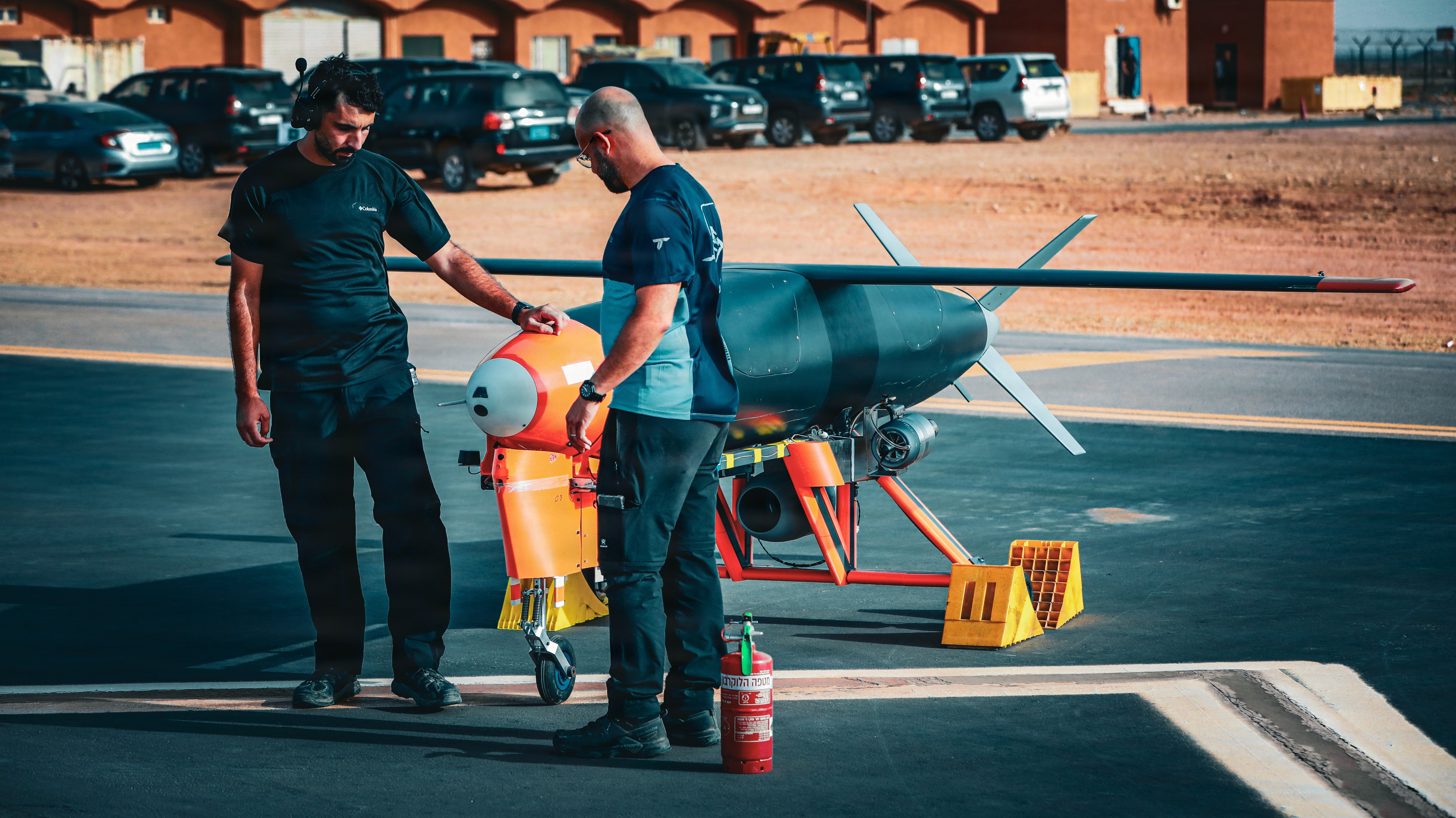
Anthem is being positioned accordingly as a high-volume weapon rather than a one-for-one replacement for larger, more expensive cruise missiles. In its initial form, it is ground-launched, although it is unclear exactly how this is achieved. Imagery of the weapon during Pentagon trials show it being handled on the ground using tricycle undercarriage, pointing to the use of a runway for launch.

Defense-industry partners prepare a cruise missile for launch during a live-fire demonstration leveraging the Africa Multidomain Training and Experimentation Center at Tan-Tan, Morocco, Aug. 6, 2026. AMTEC will enable U.S. and Moroccan forces to test, evaluate and iterate on emerging technologies in a realistic environment strengthening shared readiness and interoperability. This live-fire also demonstrates how AMTEC will provide dedicated physical space and full electromagnetic spectrum access to support defense-industry partners to conduct testing. As one of the early contributions under the U.S. Army’s Test Range Expansion Initiative, the demonstration proves there is opportunity for defense industry to conduct testing that is difficult to replicate at many U.S. ranges, reinforcing Morocco’s role as a regional security leader. (U.S. Army photo by Capt. Jordan Beagle)
An Anthem cruise missile at Tan-Tan, Morocco, on August 6, 2026. U.S. Army photo by Capt. Jordan Beagle

Covenant has not publicly disclosed the weapon’s range, although unconfirmed reports put it at roughly 1,200 kilometers — over 740 miles. The company is also being somewhat deliberate about how it describes Anthem, referring to it as a “deep precision-strike munition” rather than consistently classifying it as a cruise missile.

On the other hand, Reuters reports Covenant executives saying that the missile was developed ‌with an ⁠eye toward future conflicts in the Pacific. “We were designed for the China fight,” said Covenant President Abby Denburg. That would also seem to point toward significant range.

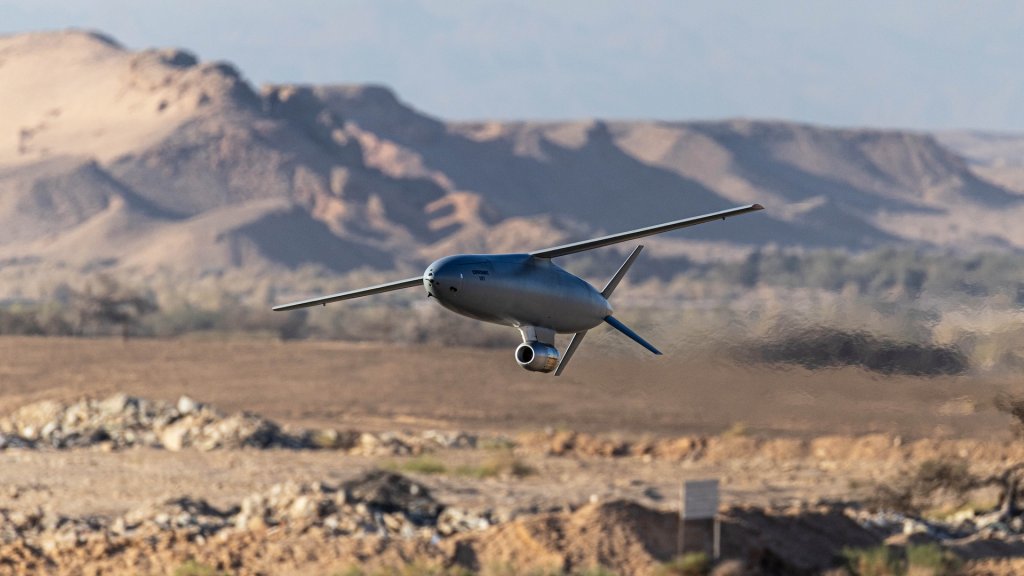
The Anthem missile in flight. Covenant

However, more concrete details of its performance, as well as guidance type and projected level of survivability, remain undisclosed.

The company says Anthem can carry a warhead weighing more than 200 kilograms (441 pounds). That is substantially less than the roughly 1,000-pound-class warhead associated with the Tomahawk cruise missile, which can hit targets at over 1,000 miles depending on the exact configuration. Covenant argues that lower cost and much higher production rates would make it possible to employ larger numbers of their weapons against a given target set.

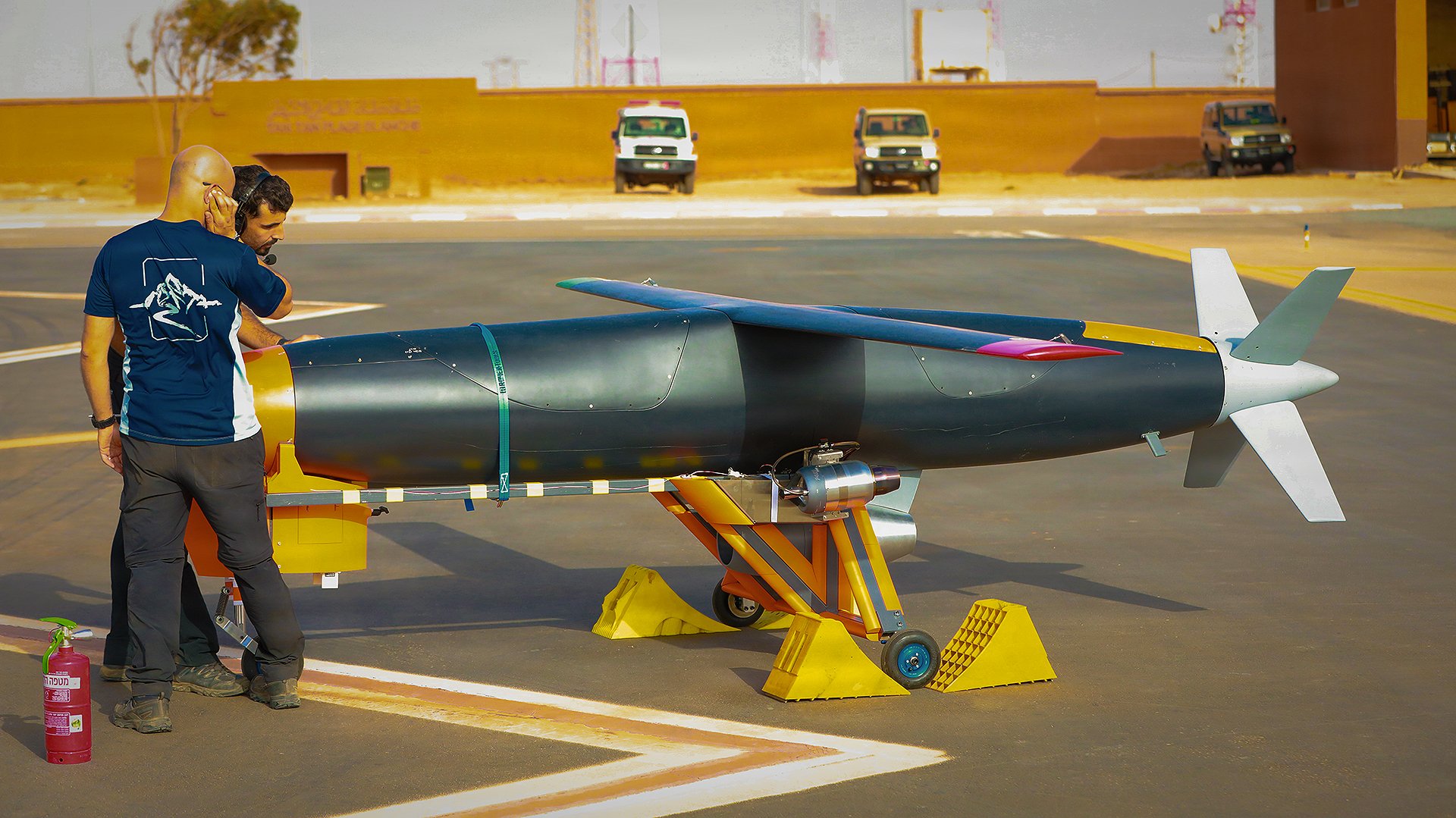
Anthem uses a solid rocket motor for launch and a heavy-fuel jet engine, underslung below the missile body, for cruise flight. Covenant says the system was designed from the outset around readily available components and a supply chain that would avoid dependence on individual suppliers. The company states that it has, for example, multiple solid-rocket-motor suppliers and long-term agreements covering thousands of jet engines.

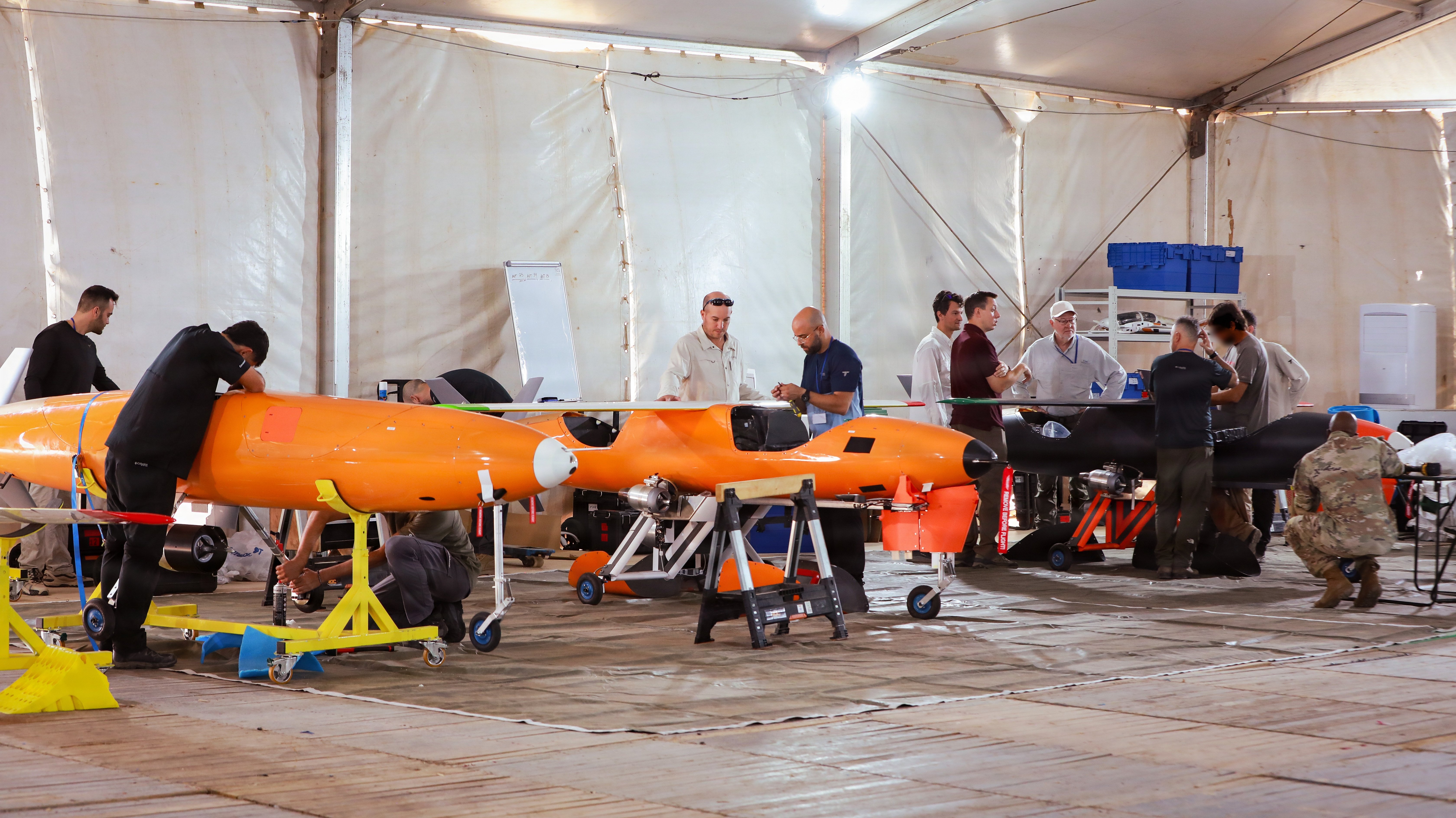
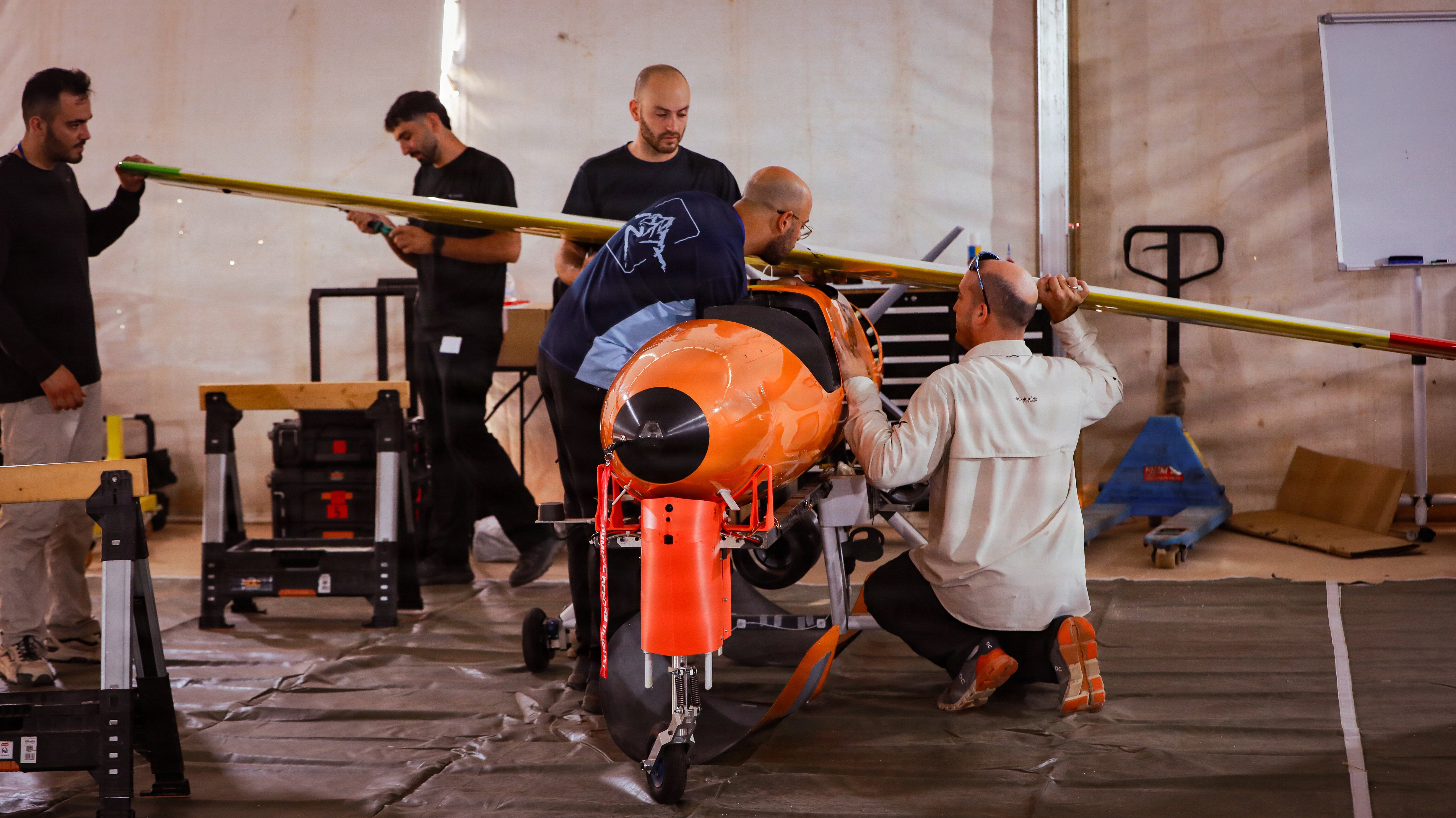
Defense-industry partners assemble a cruise missile for a live-fire demonstration at the Africa Multidomain Training and Experimentation Center in Tan-Tan, Morocco, Aug. 5, 2026. The demonstration was held to support regional defense capabilities and joint training interoperability. AMTEC enables U.S. and Moroccan forces to test emerging technologies and expand testing capabilities to strengthen shared readiness and interoperability under the U.S. Army’s Test Range Expansion Initiative. (U.S. Army photo by Staff Sgt. Raquel Birk)
Cruise missiles are assembled for a live-fire demonstration at the Africa Multidomain Training and Experimentation Center in Morocco. U.S. Army photo by Staff Sgt. Raquel Birk

Overall, the production ambitions are significant. Covenant’s new Grand Prairie, Texas, facility covers approximately 105,000 square feet and is expected to begin serial production during the first quarter of 2027, eventually reaching a stated capacity of 5,000 Anthems per year. Its facility in Saxony, Germany, is intended to reach a similar production rate, while the smaller Israeli site is planned to produce as many as 2,000 weapons annually.

“Germany possesses an exceptionally strong industrial foundation,” Denburg told Bloomberg News. “While its automotive sector is currently undergoing a structural transformation, decades of manufacturing excellence have created precisely the expertise we require.”

That would put the company’s eventual combined production target at up to 12,000 weapons per year, assuming all three facilities reach their planned capacities.

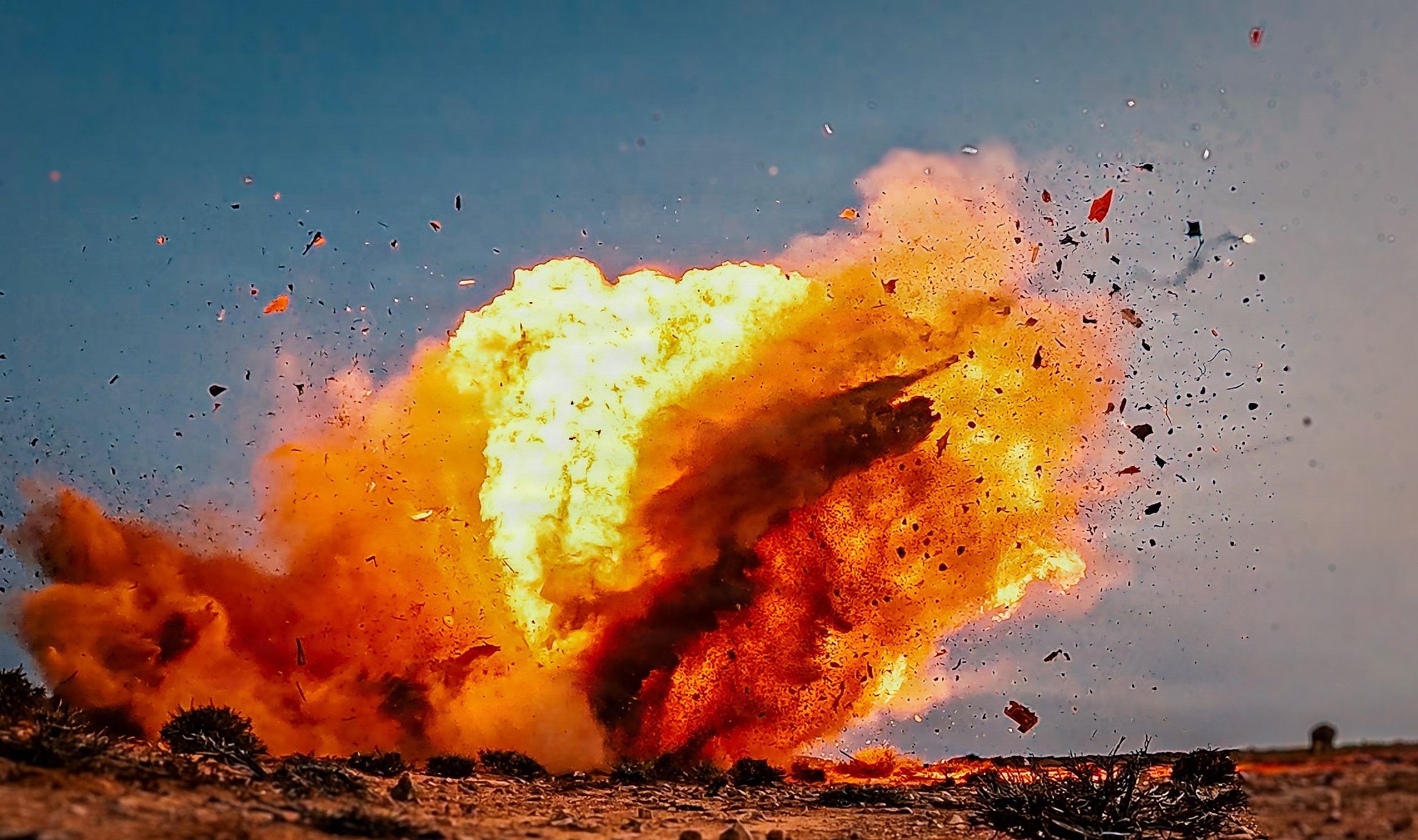
A defense-industry partner cruise missile engages a target during a live-fire demonstration leveraging the Africa Multidomain Training and Experimentation Center at Tan-Tan, Morocco, Aug. 6, 2026. 2026. AMTEC will enable U.S. and Moroccan forces to test, evaluate and iterate on emerging technologies in a realistic environment strengthening shared readiness and interoperability. This live-fire also demonstrates how AMTEC will provide dedicated physical space and full electromagnetic spectrum access to support defense-industry partners to conduct testing. As one of the early contributions under the U.S. Army’s Test Range Expansion Initiative, the demonstration proves there is opportunity for defense industry to conduct testing that is difficult to replicate at many U.S. ranges, reinforcing Morocco’s role as a regional security leader. (U.S. Army photo by Staff Sgt. Raquel Birk)
An Anthem cruise missile engages a target at the Africa Multidomain Training and Experimentation Center in Morocco, on August 6, 2026. U.S. Army photo by Staff Sgt. Raquel Birk

Covenant’s U.S. facility is intended primarily to support American customers, while the German operation is being established around a European supply chain, responding to growing demand for long-range strike weapons across that continent. The company says an unidentified international customer is expected to begin receiving German-built weapons before the end of this year. Meanwhile, U.S. Army deliveries are expected in 2027, under an accelerated qualification contract.

The weapon has already been subjected to U.S.-linked testing. In August, an unnamed defense-industry partner conducted a live-fire demonstration at the Africa Multidomain Training and Experimentation Center in Morocco. The U.S. military’s public material about that event did not identify the weapon or company, but subsequent reporting identified the missile as Covenant’s Anthem.

Covenant now says the system has flown more than 200 times over the past year, including testing involving U.S. government organizations. The company also says Anthem participated in the Army’s Project Convergence Capstone 6 experiments and that its August test helped demonstrate a new framework for allowing industry to use the Moroccan test infrastructure.

Defense-industry partners assemble a cruise missile for a live-fire demonstration at the Africa Multidomain Training and Experimentation Center in Tan-Tan, Morocco, Aug. 5, 2026. The demonstration was held to support regional defense capabilities and joint training interoperability. AMTEC enables U.S. and Moroccan forces to test emerging technologies and expand testing capabilities to strengthen shared readiness and interoperability under the U.S. Army’s Test Range Expansion Initiative. (U.S. Army photo by Staff Sgt. Raquel Birk) This photo was altered for security purposes by blurring out defense industry names and logos.
Defense-industry partners assemble a cruise missile at the Africa Multidomain Training and Experimentation Center in Morocco. This photo was altered for security purposes by blurring out defense industry names and logos. U.S. Army photo by Staff Sgt. Raquel Birk

Beyond the ground-launched version, Covenant is working on a naval derivative. The company says it has a roughly $70-million contract with the Navy’s Rapid Capabilities Office to adapt Anthem into what it calls Maritime Anthem. The effort includes Defense Exportability Features intended to make the weapon easier to provide to U.S. allies and partners.

The emergence of Anthem also illustrates how the defense industry’s current emphasis on mass production is extending into the long-range strike arena.

The United States already fields weapons such as Tomahawk and JASSM-ER, but those systems are expensive, and production capacity is limited. Covenant is betting that a weapon available in much larger quantities can provide commanders with another layer of long-range strike capacity, even if the destructive power of a single round falls well below that of a Tomahawk. Reuters reports that Covenant expects the weapon to eventually cost in the mid-six-figure range, although the company has not provided a final unit price. Compared to other competitors in the field, Covenant appears to be the crudest design we have seen so far, underscored by its apparent launch method, in which it takes off from an airstrip under power of its booster.

Defense-industry partners prepare a cruise missile for a live-fire demonstration at the Africa Multidomain Training and Experimentation Center in Tan-Tan, Morocco, Aug. 5, 2026. The demonstration was held to support regional defense capabilities and joint training interoperability. AMTEC enables U.S. and Moroccan forces to test emerging technologies and expand testing capabilities to strengthen shared readiness and interoperability under the U.S. Army’s Test Range Expansion Initiative. (U.S. Army photo by Capt. Jordan Beagle)
Unnamed defense-industry partners prepare a cruise missile for a live-fire demonstration at the Africa Multidomain Training and Experimentation Center in Tan-Tan, Morocco, on August 5, 2026. It has now been disclosed that this demonstration involved the Anthem. U.S. Army photo by Capt. Jordan Beagle

Recent combat operations have increased concerns about the rate at which more traditional precision weapons can actually be manufactured. Once stockpiles begin to reduce, long-range missiles have proven among the most difficult munitions to replace. That would only become more problematic during a major conflict.

Covenant has attracted venture-capital backing to pursue that problem. The company says it has raised more than $250 million from investors including Andreessen Horowitz, Founders Fund, Lux Capital, 8VC, Aleph, and Lightspeed. Its stated focus, however, is now shifting from development to production.

Covenant, a U.S.-Israeli company founded in 2024, unveiled its Anthem weapon system today along with plans for production in the United States, Germany, and Israel. The company says it has already conducted more than 200 test flights of the weapon and has secured roughly $150 million in contracts and orders.
Anthem in flight. Covenant Covenant

The key question will be whether Covenant can turn the promised production numbers into sustained deliveries. Building thousands of long-range weapons per year requires not only an assembly plant, but also a resilient supply chain, reliable propulsion production, testing capacity, quality control, and the ability to integrate those elements at scale. It will also rely on securing more contracts from domestic and allied customers.

For now, however, Anthem represents an intriguing entrant into a crowded but increasingly important segment of the weapons market.

Contact the author: thomas@thewarzone.com

The post Army Now Testing Anthem Long-Range Strike Weapon Built for Mass Production appeared first on TWZ.

  •  

ESPANHA:Condutor português detido por circular a 218 km/h na A-62

Agentes da Guarda civil de Salamanca detetaram, durante um controlo de velocidade na zona de Carpio de Azaba, um veículo que circulava a 218 km/h pela A-62, superando em 80 km/h a velocidade máxima permitida, segundo a Guardia Civil.

O condutor, de nacionalidade portuguesa, foi levado para o Destacamento de Trânsito de Ciudad Rodrigo para a instrução das correspondentes diligências por um presumível crime contra a segurança rodoviária.

9 de setembro de 2026
Por: Dino Frazão


Se gostou do que leu e ainda não é seguidor, siga a nossa página no OSMONHACAS.COM para ver mais conteúdos!

————————————————–
© 2026 Os Monhacas. Todos os direitos reservados.
Este é um projeto independente de criação de conteúdos.
Se gostou do que leu e ainda não é seguidor, siga a nossa página para ver mais conteúdos!
————————————————–

O conteúdo ESPANHA:Condutor português detido por circular a 218 km/h na A-62 aparece primeiro em OS MONHACAS.

  •  

Trump Threatens Canadian Jets At The Center Of Army Aerial Surveillance Plans

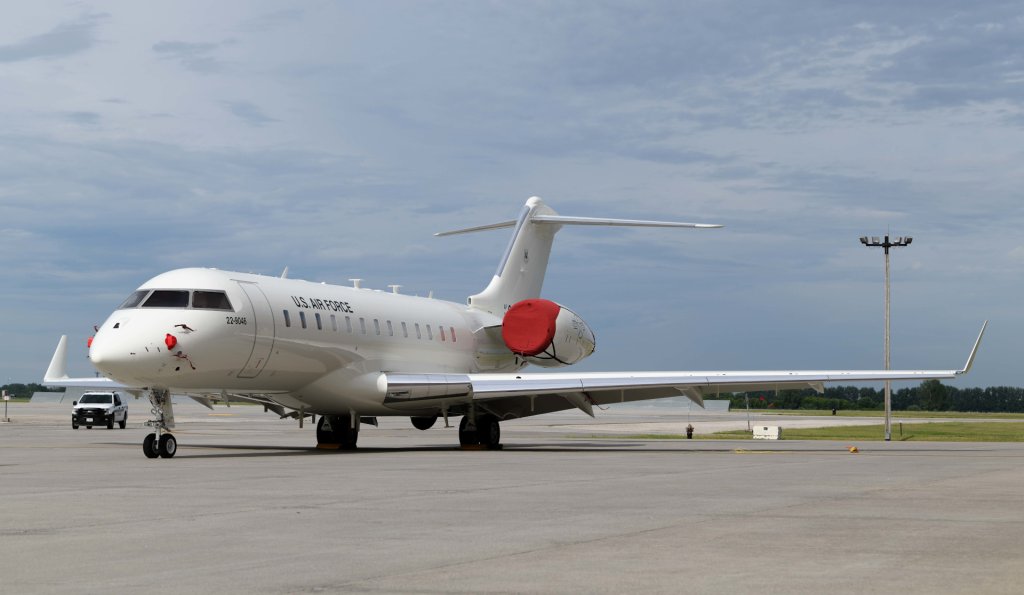
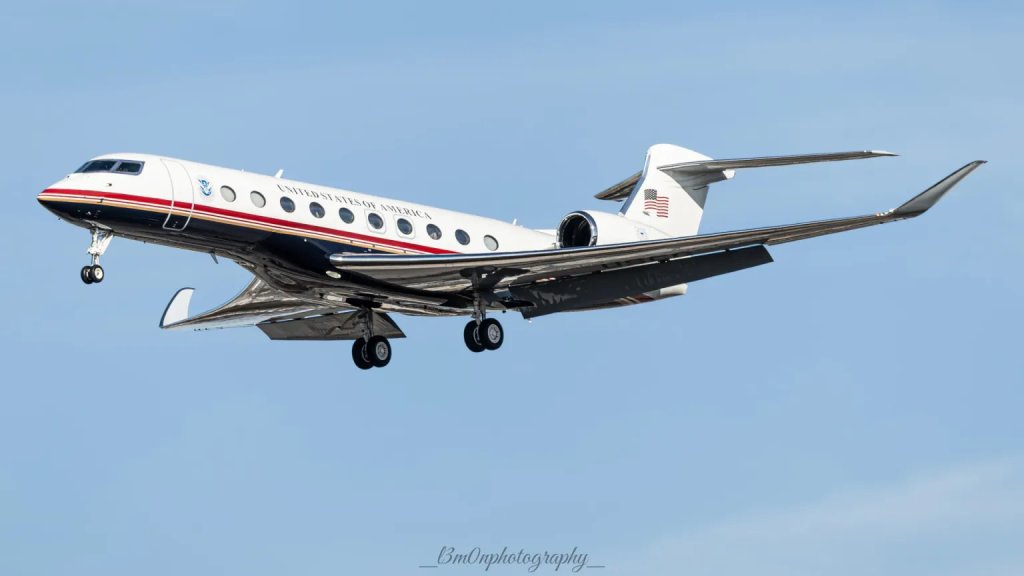
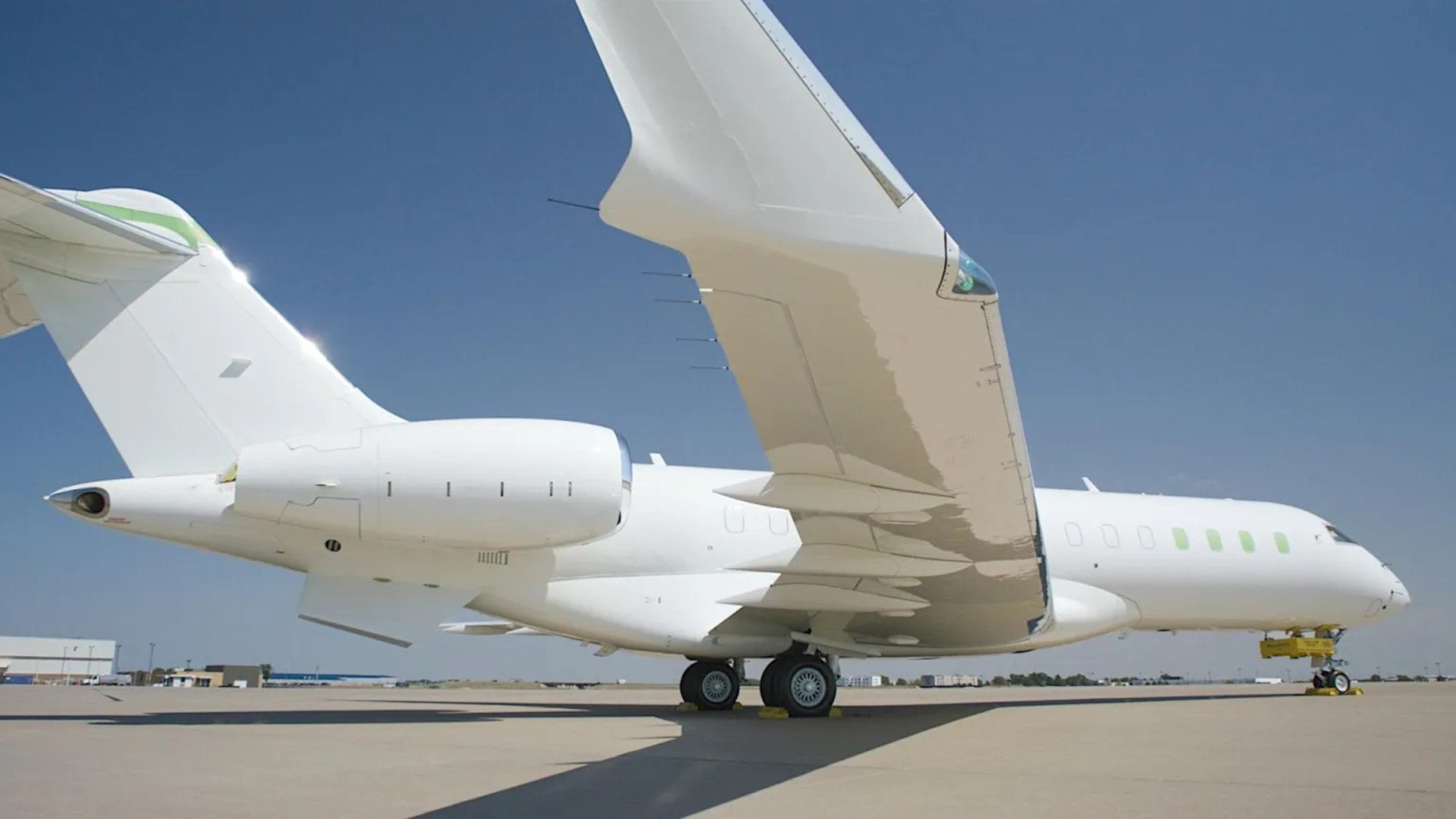
President Donald Trump has threatened to pursue a ban on U.S. sales of aircraft from Canadian firm Bombardier unless they move production south of the border. American officials have not elaborated on how such a total prohibition on domestic sales could take shape, but there are potential ramifications for the U.S. military, as well as commercial operators in the United States. The U.S. Army, in particular, has made Bombardier Global Express 6500-based ME-11B aircraft a cornerstone of its future aerial intelligence, surveillance, and reconnaissance (ISR) plans. For the moment, the U.S. Air Force flies its own fleet of E-11A Battlefield Airborne Communications Node (BACN) communications jets based on the Global Express family.

“NO MORE SELLING BOMBARDIER IN THE UNITED STATES!” Trump wrote in a post on his Truth Social social media platform yesterday. “If they want our Market [sic], they must build here, and stop treating America like a ‘piggyback.’ BUY AMERICAN.”

One of the US Air Force’s Bombardier Global Express-based E-11A BACN aircraft. USAF

The post, which was subsequently reshared by U.S. Ambassador to Canada Pete Hoekstra, also reiterated Trump’s accusations that the Canadian government has been deliberately slow-rolling certification of certain jets from rival U.S. planemaker Gulfstream. Back in January, the President also said he would “decertify” Bombardier aircraft in the United States over this issue, which would prevent them from operating in the United States, but this threat has yet to materialize into reality. Aviation authorities in Canada did certify five specific Gulfstream business jets in March, but do not look to have issued broader type certifications since then. Canada’s demand for more fuel system icing testing, at least on G700 and G800 models, has been cited as a factor in the length of the certification process. The U.S. Federal Aviation Administration (FAA) previously granted Gulfstream a conditional certification for these types that required demonstration of full compliance with domestic aircraft fuel icing regulations no later than the end of this year.

A stock picture of a Gulfstream G700 business jet. Gulfstream

Bombardier and Gulfstream actively compete globally in the large and super midsize business jet categories. A number of airlines in the United States also continue to operate CRJ-series small airliners, which were Bombardier products until 2020, when the line was sold to Mitsubishi Heavy Industries (MHI) in Japan. Today, the Canadian planemaker has a substantial U.S. presence, centered primarily in Wichita, Kansas, but does not build complete aircraft in the United States. We will come back to this later on.

Trump has specifically targeted Bombardier several times across both of his terms amid larger trade disputes with Canada. During Trump’s first administration, the U.S. government notably injected itself into a spat between the Canadian firm and Boeing that ultimately upended a proposed order for F/A-18E/F Super Hornet fighters for the Royal Canadian Air Force.

How the Trump administration might now seek to block sales of Bombardier jets in the United States is unclear. If there is no legal mechanism for instituting an outright sales ban, U.S. authorities could try to decertify jets from the Canadian firm or implement prohibitive tariffs or other economic measures. In addition to retaliatory certification actions, Trump has also threatened to levy tariffs on Canadian aviation firms in the past. Any of these courses of action could draw legal action or other retaliation from the Canadian government.

All of this raises questions about potential impacts on the U.S. military. As mentioned, the U.S. Army is in the process of acquiring a fleet of Global Express 6500-based ISR planes, designated ME-11Bs, under its High Accuracy Detection and Exploitation System (HADES) program. The Army has already divested all of its older turboprop-powered ISR aircraft as part of the transition to HADES. The service has also been utilizing several contractor-operated ISR planes based on different Bombardier business jets in the interim.

A Bombardier Global Express 6500-based Army Theater Level High-Altitude Expeditionary Next-Generation A-ISR (ATHENA) jet the Army has been utilizing as part of the transition to its new ME-11B HADES fleet. US Army

There is also the aforementioned Air Force fleet of E-11As. However, this may increasingly be something of a moot point, as these aircraft are now set to be retired in the 2028 Fiscal Year and supplanted with new space-based communications capabilities. There is still a possibility that Congress could block that plan, at least for a time.

TWZ has reached out to the Army and the Air Force in light of Trump’s latest remarks.

It is important to note that the U.S. certification process for military and civilian aircraft is separate, and that the Trump administration could exempt the former from any new action against Bombardier. After Trump’s decertification threat in January, the White House had told multiple outlets that in-service aircraft would be exempted from any such actions, but would not clarify whether further exemptions would be made for future U.S. military acquisitions.

Upending Bombardier’s business in the United States might have additional downstream effects, including on supply chains that support commercial and military fleets. Disruptions could also negatively impact any future sales opportunities to the U.S. military. When it comes to the latter point, since Trump started his second term, there has been a broader push to recapitalize U.S. government executive aircraft fleets. This has already included the purchase of new Gulfstream G700-based C-39A executive jets for the U.S. Coast Guard.

One of the U.S. Coast Guard’s new C-39A executive jets. Lemon Popp

The Air Force is also working to acquire a successor to its existing Gulfstream-based C-37 executive jets, tentatively designated the C-37C. Multiple branches of the U.S. military operate a host of other Gulfstream-based aircraft, including special mission types like the Air Force’s EA-37B Compass Call electronic warfare jets.

All this being said, there is no guarantee that Trump’s latest threats against Bombardier will materialize, whether or not they might impact U.S. military fleets. The President has already faced public pushback, including from at least one member of his own party, citing the Canadian firm’s existing economic contributions to the U.S. economy through its aforementioned American subsidiary.

“The presence of Bombardier in Wichita supports a local workforce of more than a thousand employees, who contribute their talent and expertise to our nation’s defense and aerospace capabilities,” Senator Jerry Moran, a Kansas Republican, wrote in a post on X yesterday. “This afternoon, I reached out to the Trump administration to make certain the President is aware of the significant contributions of Bombardier to Kansas and the importance of its presence in Wichita to many Kansas workers at Bombardier and in the Bombardier supply chain.”

“I will continue working to see that Bombardier’s manufacturing operations not only remain in Kansas but continue to grow and create American jobs,” Moran added. “Kansas is home to a hardworking, skilled workforce, and I will continue welcoming leaders in aircraft and defense manufacturing to do business here in the Air Capital of the World.”

“Bombardier’s American workers are based all around the United States with sites in Kansas, Texas, Arizona, Florida, Connecticut, Illinois, Delaware, California, Washington D.C. and New Jersey, as well as overall direct employment presence in more than 20 states,” Bombardier said in its own statement response to Trump’s comments, per NBC News. “Bombardier has also announced extensive plans to grow its defense activities as well as its service network and will, later this year, inaugurate a new facility in Fort Wayne, Indiana.”

The threat alone of U.S. government action could still have negative impacts for Bombardier broadly. The company’s stock price fell by some seven percent after Trump’s post yesterday, though it has rebounded somewhat as of the time of writing.

Trump’s trade war with Canada more broadly is still escalating after a new round of talks collapsed last month. The President and other U.S. officials also continue to make remarks about the country becoming the United States’ 51st state.

Many questions remain to be answered about Trump’s new threats against Bombardier and how they could be implemented, if at all. The President has certainly created new uncertainty regarding the Canadian planemaker’s access to the American market without yet definitively clarifying when the U.S. military could be exempted.

Contact the author: joe@twz.com

The post Trump Threatens Canadian Jets At The Center Of Army Aerial Surveillance Plans appeared first on TWZ.

  •  

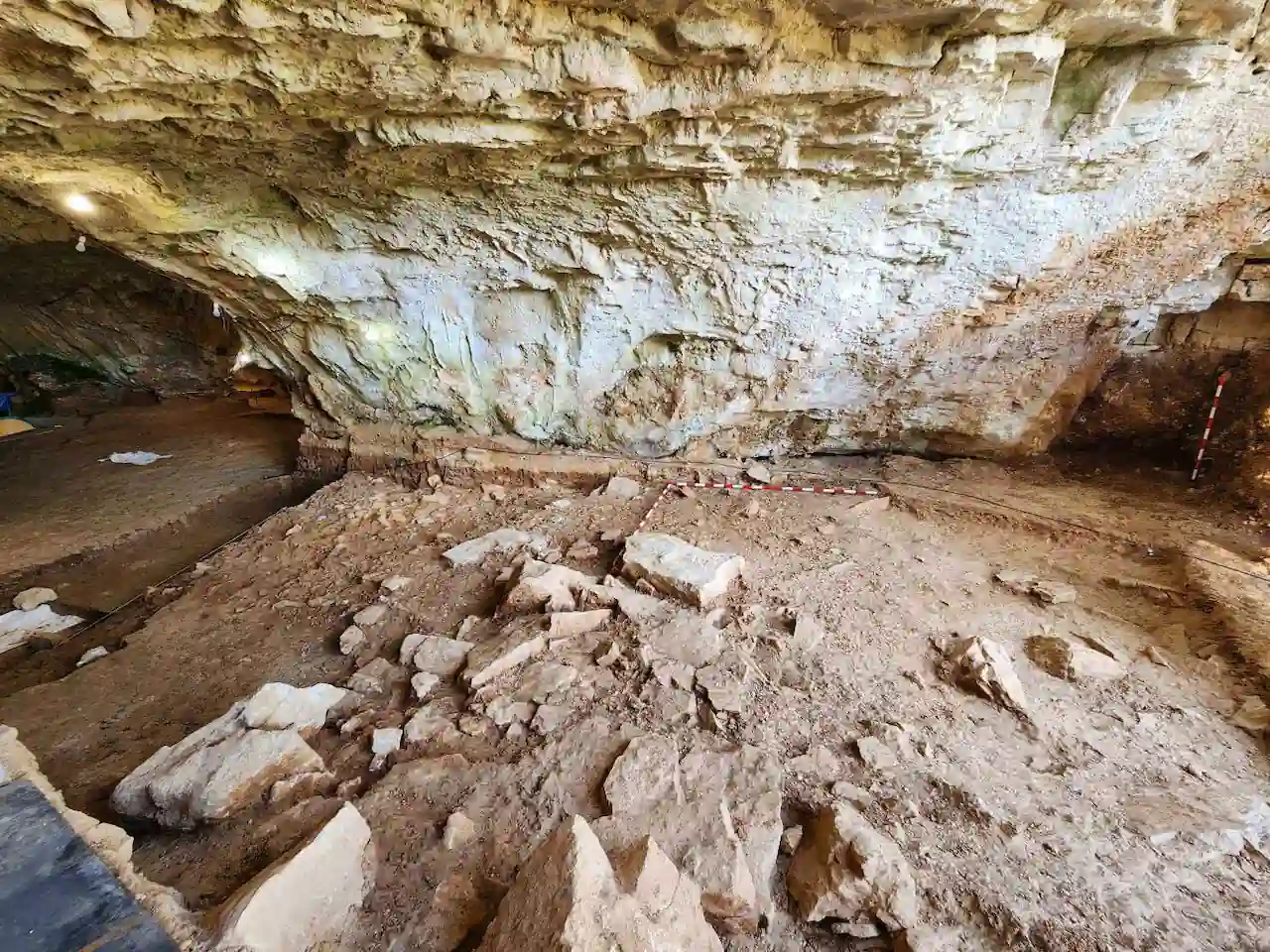
Así vivían los neandertales en la Península Ibérica: el campamento estacional de hace 46.000 años que rivaliza en extensión con los grandes yacimientos europeos

En el norte de la provincia de Burgos, escondido en el complejo kárstico de Ojo Guareña —uno de los sistemas de cavidades más extensos de Europa—, el yacimiento de la cueva de Prado Vargas sigue desvelando capítulos fundamentales de la historia de la humanidad. La campaña de excavación de verano de 2026, que acaba de […]

  •  

El canibalismo neolítico no fue un hecho aislado: tres cuevas en Granada demuestran que se repitió una y otra vez durante 1500 años

Durante más de cincuenta años, las cuevas de Malalmuerzo, Carigüela y Majolicas, en Granada, han funcionado como referencia obligada para estudiar el canibalismo prehistórico en la península ibérica. Un equipo internacional acaba de revisar sus restos con herramientas que no existían cuando se excavaron por primera vez, y la imagen que tenían hasta ahora los […]

  •  

Loulé promove sessões participativas para elaboração dos planos de questão de quatro áreas protegidas

População, entidades públicas e associações são chamadas a participar na definição das medidas de gestão e conservação

O Município de Loulé promove, entre os dias 10 e 13 de setembro, um conjunto de sessões participativas no âmbito da elaboração dos planos de gestão de quatro áreas protegidas de âmbito local: Paisagem Protegida Local da Rocha da Pena, Paisagem Protegida Local da Fonte Benémola, Reserva Natural Local da Foz do Almargem e do Trafal e Monumento Natural Local da Gruta de Vale Telheiro.

As sessões serão dirigidas às entidades públicas, associações e população em geral, procurando promover o envolvimento dos diferentes agentes do território na definição das medidas necessárias à proteção, conservação e valorização destas áreas.

Os planos de gestão configuram instrumentos de gestão da biodiversidade por excelência, na medida em que a sua elaboração tem como pressuposto de base uma abordagem integrada à riqueza biológica do território, às pressões e ameaças a que esse património está sujeito e respetivos impactos, positivos ou negativos, e as necessidades de gestão face às exigências ecológicas desses valores, numa perspetiva de manter ou melhorar o seu estado de conservação, no estreito cumprimento dos objetivos definidos para cada uma das Áreas Protegidas e respetiva legislação em vigor.

O objetivo primário dos Planos de Gestão é compatibilizar os valores naturais e paisagísticos, que se assumem, no seu conjunto, como relevantes para a garantia da biodiversidade e manutenção do estado de conservação favorável, com as atividades humanas mais representativas em cada área (turismo, agricultura, entre outras).

A participação da comunidade, das entidades públicas e das associações assume particular importância neste processo, permitindo recolher conhecimentos, experiências, preocupações e propostas de quem conhece, utiliza ou intervém diretamente nestes territórios.

Esta iniciativa é apoiada pelos Fundos Europeus, no âmbito do Programa Regional ALGARVE 2030.

Programa População em geral:

10 DE SETEMBRO | QUINTA-FEIRA (em simultâneo com a sessão para entidades públicas/associações)
18h30 – Sessão participativa sobre o Monumento Natural Local da Gruta de Vale Telheiro
Local: Junta de Freguesia de São Sebastião

https://maps.app.goo.gl/MYN29ge7cYW1QXLh9

12 DE SETEMBRO | SÁBADO

10h00 – Sessão participativa sobre a Reserva Natural Local da Foz do Almargem e do Trafal
Local: Auditório do Centro Autárquico de Quarteira

https://maps.app.goo.gl/EYXCYmgN4yTAT6ag6

12 DE SETEMBRO | SÁBADO

14h30 – Sessão participativa sobre a Paisagem Protegida Local da Rocha da Pena
Local: Junta de Freguesia de Salir

https://maps.app.goo.gl/C5DY3b56DYdYEra97

13 DE SETEMBRO | DOMINGO

10h00 – Sessão participativa sobre a Paisagem Protegida Local da Fonte Benémola
Local: Casa do Povo de Querença – Salão de Festas
https://maps.app.goo.gl/mAUtDx1C1pSWUUmDA

Programa Entidades públicas/Associações:

10 DE SETEMBRO | QUINTA-FEIRA (em simultâneo com a sessão aberta ao público em geral)

18h30 – Sessão participativa sobre o Monumento Natural Local da Gruta de Vale Telheiro
Local: Junta de Freguesia de São Sebastião

https://maps.app.goo.gl/MYN29ge7cYW1QXLh9

11 DE SETEMBRO | SEXTA-FEIRA

10h00 – Sessão participativa sobre a Reserva Natural Local da Foz do Almargem e do Trafal
Local: Biblioteca Municipal de Loulé – Sala Polivalente 

https://maps.app.goo.gl/AFkDB1B3EJxbpgvEA

11 DE SETEMBRO | SEXTA-FEIRA

14h30 – Sessão participativa sobre as Paisagens Protegidas Locais da Rocha da Pena e da Fonte Benémola

Local: Biblioteca Municipal de Loulé – Sala Polivalente

https://maps.app.goo.gl/AFkDB1B3EJxbpgvEA

  •  

Colisão rodoviária condiciona a EN2 em Ervidel

Um acidente de viação ocorrido este sábado provocou dois feridos graves:o condutor do motociclo e um ocupante da viatura ligeira na Estrada Nacional 2 (EN2), ao quilómetro 609,064, no troço que liga Corte Vicente Eanes a Ervidel, no concelho de Aljustrel, segundo os serviços de emergência.

O alerta para a ocorrência foi dado às 11h04. Para o local foram mobilizados 21 operacionais, apoiados por 5 meios terrestres e 1 meio aéreo.

Uma das vítimas graves foi assistida e helitransportada para a unidade hospitalar de referência. As operações de socorro e a gestão do tráfego na via mantêm-se

a cargo das autoridades competentes.


Por: Dino Frazão
29/08/2026

————————————————–
© 2026 Os Monhacas. Todos os direitos reservados.
Este é um projeto independente de criação de conteúdos.
Se gostou do que leu e ainda não é seguidor, siga a nossa página para ver mais conteúdos!
————————————————–

O conteúdo Colisão rodoviária condiciona a EN2 em Ervidel aparece primeiro em OS MONHACAS.

  •  

Acidente rodoviário após fuga a operação de fiscalização da PSP em Lisboa

A Polícia de Segurança Pública (PSP) deteve este sábado um cidadão por falta de habilitação legal para conduzir, resistência e coação sobre funcionário e condução perigosa, segundo a PSP.

A ocorrência deu-se por volta das 07h25, durante uma operação de fiscalização de trânsito promovida pela Divisão de Trânsito do Comando Metropolitano de Lisboa (COMETLIS) na Avenida Brasília, em Lisboa. Ao ser dada a ordem de paragem a uma viatura de marca Renault, modelo Clio, o condutor desobedeceu e prosseguiu a marcha em elevada velocidade. O agente no local foi forçado a desviar-se repentinamente para não ser atropelado.

Na sequência da fuga, um polícia motociclista iniciou a perseguição ao veículo. Junto ao viaduto que estabelece a ligação entre a Avenida Brasília e a Avenida da Índia, o condutor perdeu o controlo da viatura, despistou-se e acabou por embater em dois automóveis que se encontravam estacionados em frente ao Museu do Combatente.


O impacto causou danos nas viaturas estacionadas e provocou um incêndio no carro em fuga. O agente motociclista imobilizou a sua moto e retirou do interior da viatura em chamas o condutor, que se encontrava combalido, e um dos passageiros, que estava inanimado. Um terceiro ocupante, que tentava sair por meios próprios, também recebeu auxílio do agente.

Os três homens, com idades entre os 25 e os 31 anos, foram transportados para unidades hospitalares — dois para o Hospital de Santa Maria e um para o Hospital de São Francisco Xavier — onde receberam assistência médica.

Por: Dino Frazão
29/08/2026

————————————————–
© 2026 Os Monhacas. Todos os direitos reservados.
Este é um projeto independente de criação de conteúdos.
Se gostou do que leu e ainda não é seguidor, siga a nossa página para ver mais conteúdos!
————————————————–

O conteúdo Acidente rodoviário após fuga a operação de fiscalização da PSP em Lisboa aparece primeiro em OS MONHACAS.

  •  

Colisão entre elétrico e autocarro da Carris faz três feridos na Estrela em Lisboa

📷BCO


Três pessoas sofreram ferimentos ligeiros na sequência de uma colisão entre um elétrico e um autocarro da Carris, ocorrida na tarde desta sexta-feira na zona da Estrela, em Lisboa.

Segundo fonte dos Sapadores Bombeiros de Lisboa, o alerta foi dado por volta das 15h00 para um sinistro junto ao jardim e à Basílica da Estrela. Os feridos, uma mulher e duas crianças de 10 e 11 anos da mesma família, eram passageiros do autocarro. A mesma fonte adiantou que a mulher foi encaminhada ao hospital por precaução, sem apresentar gravidade.

📷BCO


No socorro estiveram empenhados cerca de 14 operacionais, apoiados por cinco viaturas dos Sapadores Bombeiros de Lisboa e uma ambulância dos Bombeiros Voluntários de Campo de Ourique. A circulação na zona acabou por ser normalizada no decorrer da tarde.

Por: Dino Frazão
Data: 28 de Agosto de 2026
Site: OSMONHACAS.COM

————————————————–
© 2026 Os Monhacas. Todos os direitos reservados.
Este é um projeto independente de criação de conteúdos.
Se gostou do que leu e ainda não é seguidor, siga a nossa página para ver mais conteúdos!
————————————————–

O conteúdo Colisão entre elétrico e autocarro da Carris faz três feridos na Estrela em Lisboa aparece primeiro em OS MONHACAS.

  •  

Hípaso de Metaponto, el filósofo que murió por demostrar que los Pitagóricos estaban equivocados

A este filósofo griego, seguidor de Pitágoras y maestro de Heráclito, al que inculcó la idea de que el arjé o principio de todas las cosas era el fuego, se le atribuyen -discutiblemente- el descubrimiento de los números irracionales, la construcción de un dodecaedro inscrito en una esfera y varios trabajos sobre acústica. Además fundó […]

  •  

GNR Setúbal | Alcochete – Apreensão de cerca de 4 200 litros de combustível

📷GNR

O Comando Territorial de Setúbal, através de militares das várias valências do Destacamento Territorial do Montijo, apreendeu, no dia 21 de agosto, cerca de 4 200 litros de combustível, no interior de um armazém, no concelho de Alcochete, segundo a Guarda Nacional Republicana.

Na sequência de uma denúncia relativa à existência de diversos recipientes com combustível armazenados no local, foram deslocadas patrulhas ao armazém, onde foram identificados três indivíduos que se encontravam no local para proceder à recolha do combustível.

📷GNR

Os indivíduos não conseguiram justificar a posse e a proveniência do combustível, motivo pelo qual o mesmo, bem como os restantes materiais relacionados, foram apreendidos:
– 210 jerricãs de 20 litros cheios;
– 16 jerricãs de 20 litros vazios;
– 6 depósitos de líquidos com capacidade para 1000 litros;
– 2 porta-paletes (manual e hidráulico);
– 1 equipamento porta-cargas;
– 3 lonas de proteção;
– 1 cinta de aperto com roquete;
– 1 saco com diversas tampas plásticas para jerricãs;
– 1 veículo ligeiro.

Os três indivíduos, com idades compreendidas entre os 28 e os 34 anos, foram constituídos arguidos.

A operação contou com o apoio do Destacamento de Intervenção de Setúbal.

Se gostou do que leu e ainda não é seguidor, siga a nossa página para ver mais conteúdos!

————————————————–
© 2026 Os Monhacas. Todos os direitos reservados.
Este é um projeto independente de criação de conteúdos.
Se gostou do que leu e ainda não é seguidor, siga a nossa página para ver mais conteúdos!
————————————————–

Por: Dino Frazão
Data: 22 de agosto de 2026

O conteúdo GNR Setúbal | Alcochete – Apreensão de cerca de 4 200 litros de combustível aparece primeiro em OS MONHACAS.

  •  

Choque frontal em Vilarinho das Cambas faz três feridos

Bombeiros voluntários de Famalicão

Esta tarde, registou-se um acidente de viação em Vilarinho das Cambas. Segundo a corporação dos Bombeiros Voluntários de Famalicão, tratou-se de um choque frontal entre dois veículos ligeiros, do qual resultaram três feridos: dois feridos ligeiros e um ferido grave.

Todas as vítimas foram transportadas para o Hospital de Famalicão.

Bombeiros voluntários de Famalicão

No local, no apoio às operações de socorro, estiveram os Bombeiros Voluntários de Famalicão, com o apoio dos Bombeiros Voluntários Famalicenses, juntamente com a Viatura Médica de Emergência e Reanimação (VMER) de Famalicão e a Guarda Nacional Republicana (GNR) de Famalicão.

Se viu esta publicação e ainda não é seguidor, siga a nossa página para acompanhar mais conteúdos.

Por: Dino Frazão – 21/08/2026
OSMONHACAS.COM

————————————————–
© 2026 Os Monhacas. Todos os direitos reservados.
Este é um projeto independente de criação de conteúdos.
Se gostou do que leu e ainda não é seguidor, siga a nossa página para ver mais conteúdos!
————————————————–

O conteúdo Choque frontal em Vilarinho das Cambas faz três feridos aparece primeiro em OS MONHACAS.

  •  

Dois militares do Exército morrem atropelados na A1 na zona da Mealhada

Dois militares morreram esta sexta-feira, 21 de agosto, após terem sido atropelados junto à área de serviço da Mealhada, segundo o Correio da Manhã.

Os dois militares do Exército foram transportados, em estado crítico, para os Hospitais da Universidade de Coimbra, onde os óbitos vieram a ser declarados.

Os militares prestavam assistência a um camionista após um acidente que terá sido provocado pelo rebentamento de um pneu, altura em que foram colhidos por outra viatura.

Tratam-se de dois praças, de 21 e 22 anos, que faziam a viagem de regresso à sua unidade após terem estado empenhados, durante a semana, na montagem de uma ponte militar em São Pedro do Sul.

O acidente ocorreu ao quilómetro 204 da A1, no sentido Norte-Sul, junto à área de serviço da Mealhada.

O trânsito chegou a estar cortado no local, mas já foi entretanto reposto.

21 de agosto de 2026
Por: Dino Frazão

————————————————–
© 2026 Os Monhacas. Todos os direitos reservados.
Este é um projeto independente de criação de conteúdos.
Se gostou do que leu e ainda não é seguidor, siga a nossa página para ver mais conteúdos!
————————————————–

O conteúdo Dois militares do Exército morrem atropelados na A1 na zona da Mealhada aparece primeiro em OS MONHACAS.

  •  

Condutor de camião betoneira morre em despiste na EN380 em Vendas Novas

Um homem morreu esta segunda-feira, 17 de agosto, na sequência do despiste do camião betoneira que conduzia na Estrada Nacional 380 (EN380), no concelho de Vendas Novas.

O alerta para o acidente foi dado pelas 15:05, ao quilómetro 9,5 da EN380, no troço que liga Vendas Novas a Lavre, no concelho de Montemor-o-Novo, distrito de Évora. O veículo pesado despistou-se e embateu contra uma árvore, junto a uma fábrica de cortiça, provocando a morte do condutor, segundo a Lusa.

A circulação rodoviária na EN380 encontra-se temporariamente cortada em ambos os sentidos para permitir os trabalhos de remoção da viatura pesada.

Para o local foram mobilizados 20 operacionais, apoiados por oito viaturas, incluindo meios dos Bombeiros, da Guarda Nacional Republicana (GNR) e do Instituto Nacional de Emergência Médica (INEM), com a Viatura Médica de Emergência e Reanimação (VMER) de Évora.

Por: Dino Frazão
17 de agosto de 2026

————————————————–
© 2026 Os Monhacas. Todos os direitos reservados.
Este é um projeto independente de criação de conteúdos.
Se gostou do que leu e ainda não é seguidor, siga a nossa página para ver mais conteúdos!
————————————————–

O conteúdo Condutor de camião betoneira morre em despiste na EN380 em Vendas Novas aparece primeiro em OS MONHACAS.

  •  

COLISÃO RODOVIÁRIA ENVOLVENDO 5 VIATURAS NA EN246 EM ARRONCHES

Bombeiros Arronches

Uma colisão rodoviária envolvendo cinco veículos provocou, ao final da manhã deste domingo, 16 de agosto, seis feridos ligeiros na Estrada Nacional 246 (EN246), ao quilómetro 42,691, na zona de Mosteiros, concelho de Arronches, distrito de Portalegre.

O alerta para a ocorrência foi dado pelas 11h49. Das seis vítimas assistidas no local pelos meios de socorro, cinco acabaram por ser transportadas para a unidade hospitalar da região, segundo o Corpo de Bombeiros de Arronches.

Nas operações de socorro e assistência no teatro de operações estiveram empenhados diversos meios:

Corpo de Bombeiros de Arronches:
– 3 Ambulâncias de Socorro (ABSC)
– 1 Veículo Ligeiro de Combate a Incêndios (VLCI) com valência de desencarceramento
– 1 Veículo de Comando (VCOT)
– 12 operacionais, incluindo 2 elementos de comando

Outras entidades e forças de segurança:
– Bombeiros Voluntários de Portalegre (1 ambulância)
– INEM (2 Viaturas Médicas de Emergência e Reanimação – VMER)
– Serviço Municipal de Proteção Civil de Arronches
– Autoridade Nacional de Emergência e Proteção Civil (ANEPC)
– Guarda Nacional Republicana (GNR)

Se gostou do que leu e ainda não é seguidor, siga a nossa página para ver mais conteúdos!

Por: Dino Frazão
Data: 16 de agosto de 2026

————————————————–
© 2026 Os Monhacas. Todos os direitos reservados.
Este é um projeto independente de criação de conteúdos.
Se gostou do que leu e ainda não é seguidor, siga a nossa página para ver mais conteúdos!
————————————————–

O conteúdo COLISÃO RODOVIÁRIA ENVOLVENDO 5 VIATURAS NA EN246 EM ARRONCHES aparece primeiro em OS MONHACAS.

  •  

COLISÃO ENTRE DOIS PESADOS DE MERCADORIAS NA A3 EM FAMALICÃO

📷 bombeiros voluntários famalicenses

Uma colisão rodoviária entre dois veículos pesados de mercadorias, ocorridas na tarde de ontem na Autoestrada 3 (A3), resultou num ferido ligeiro e mobilizou meios especializados para a gestão de matérias perigosas. Segundo os Bombeiros Voluntários Famalicenses, o alerta para a ocorrência, registada ao quilómetro 28 no sentido Valença-Porto, foi dado pelas 17h20.

📷 Bombeiros voluntários famalicenses

À chegada ao local, as equipas de socorro confirmaram que um dos veículos pesados envolvidos no acidente transportava matérias perigosas. Perante a situação, a corporação empenhou o seu Veículo Especial de Combate a Incêndios, equipado com material específico para intervenção com produtos perigosos, juntamente com uma guarnição com formação especializada para este tipo de operações.

O acidente causou uma única vítima, um homem com ferimentos ligeiros, que recebeu assistência no local por parte de uma ambulância de socorro e foi posteriormente transportado para o Hospital de Braga.

Os operacionais acompanharam o processo de recuperação e transvazamento da cisterna que continha a matéria perigosa, garantindo as condições de segurança em todo o perímetro das operações. No total, os Bombeiros Voluntários Famalicenses mobilizaram dois veículos e sete elementos para esta intervenção.

A Guarda Nacional Republicana (GNR) esteve no local a registar a ocorrência, enquanto a Concessionária da A3 ficou responsável pela gestão e manutenção da segurança da via durante os trabalhos.

Por: Dino Frazão
14 de agosto de 2026

————————————————–
© 2026 Os Monhacas. Todos os direitos reservados.
Este é um projeto independente de criação de conteúdos.
Se gostou do que leu e ainda não é seguidor, siga a nossa página para ver mais conteúdos!
————————————————–

O conteúdo COLISÃO ENTRE DOIS PESADOS DE MERCADORIAS NA A3 EM FAMALICÃO aparece primeiro em OS MONHACAS.

  •  
❌