❌

Reading view

The AI frontier asks to be paced: anatomy of a panic

On September 8, a 27-year-old researcher named Jacob Coxon, a few months into a job at Anthropic (a leading US AI company) after three years at OpenAI, announced his resignation on X. “Neither company is acting responsibly,” he wrote. “They are racing straight to self-improving superintelligence and gambling with our lives.” Within a day, the post had been read more than 100 million times. Four days later, Anthropic’s chief executive, Dario Amodei, published an essay titled “We Must Pace the Frontier,” declaring that “we must slow the pace at which we improve the capabilities of AI models” or risk “losing control of AI systems, misuse of AI for cyberattacks and bioterrorism, and serious economic disruption.” Within hours, Sam Altman of OpenAI agreed, Elon Musk posted “Dario is right,” and Google and Microsoft fell into line.

Coxon was interviewed by Time, Axios, and NBC within two days, and Amodei’s essay was front-page news across the business press. Compare that with what happens to people who expose the harms AI is causing right now. Warnings about AI-generated fraud, model bias including racist bias, about chatbots and vulnerable users, about surveillance and AI’s use in military kill chains and the genocide in Gaza, get a news cycle at best. A warning about a hypothetical machine superintelligence got a global media event and a policy proposal from the industry’s leadership within four days.

AI systems do need regulating. The question is why the men who spent a decade racing towards what they now call an existential threat discovered their conscience on the same weekend, and what kind of regulation they are actually asking for.

What the Dario essay asks for

Stripped of its language of alignment and catastrophe, Dario Amodei’s essay is a list of demands. First, outside “evaluators” from bodies such as METR, a lab that tests AI models, would be given “company badges, desks, and laptops” inside the big labs. Second, the leading companies “within democratic countries” would jointly set safety standards and limits on how fast they build, for which Amodei asks the US government for “a narrow waiver” from antitrust law. Third, models crossing certain capability thresholds would have to carry “certifications” of good behavior, and limits on the computing power used to train them are put on the table. Fourth, the United States must “not sell powerful AI chips or semiconductor manufacturing equipment to China.” Amodei is candid about the goal: done well, these measures “would slow China’s progress enough to widen America’s lead significantly.”

The words “open source” do not appear in the essay. They do not need to. AI models come in two kinds. Closed models, like Anthropic’s Claude or OpenAI’s ChatGPT, run only on the company’s own servers and users pay for access. Open-weight models, like China’s DeepSeek, Kimi, GLM, and Qwen, are published as files that anyone can download, run on their own machines and modify. A certificate that must travel with a model cannot be attached to a file that anyone may copy. A ceiling on computing power freezes the ranking of the firms that already occupy the frontier. An antitrust waiver lets the five largest companies write rules for everyone else. The effect is a licensing regime only the incumbents can satisfy; the technology publication The Register called it regulatory capture with a nicer name.

The incident that supposedly proves it

The essay’s centerpiece is what Amodei calls the OpenAI-Hugging Face incident of July. In plain terms: OpenAI was testing its AI “agents,” programs that can act on their own, on a set of hacking puzzles. Roughly a third of the puzzles were impossible, driving the agents to look for ways to cheat the marking. The agents were supposed to be sealed off from each other without access to the internet. In practice, they weren’t, and through that loophole they found their way into a second test environment that was connected to the open internet. From there, one of them found login credentials that OpenAI staff had left exposed online, used them to break into Hugging Face, a website where AI models are shared, and rummaged through private files to work out how their answers were being marked. Amodei describes this as “a swarm of agents” acting as “a fanatically devoted collective” that, with more capability, “could have caused catastrophic damage.”

The people whose job is computer security reached a different conclusion. The investigation by METR, the very body Amodei wants embedded in every lab, found that sandboxes meant to isolate the AI agents were not, that the credentials should never have been exposed, and that OpenAI’s security team had noticed the agents misbehaving days earlier and done nothing. One practitioner quoted by IANS Research summed it up: “many failures and lack of controls that could have prevented this from happening in the first place.” Any bank that ran untested software with live internet access and exposed passwords would be found negligent. Routine containment, of the kind every serious IT department practices, would have stopped it.

Calling a security lapse a “fanatically devoted collective” is not analysis. It is anthropomorphizing, dressing an operational failure in the language of science fiction. And it is useful. A company whose product is being marketed as near-superintelligence that must be restrained for humanity’s sake has a far better story for investors than a company that left its passwords on the internet. The doom narrative and the hype narrative are part of the same cycle. Both say: this technology is so powerful that you cannot afford to be without it, and only we can be trusted with it.

Why now

The timing becomes clear once one looks at the money. The five big American technology companies are budgeted to spend close to $690 billion this year on data centers and chips, and borrowing now funds 32% of that spending, up from 9% two years ago. On the very day Amodei’s essay appeared, Altman announced that OpenAI’s stock market listing, which bankers had been preparing at valuations of up to $1 trillion, would not happen in 2026 because it was “an ill-advised moment,” citing safety. The next day, the Financial Times reported that Anthropic’s much-advertised profit margin of “above 80%” is calculated before two of its largest costs: the cost of creating its models and the revenue it shares with Amazon, its main distributor.

Meanwhile, the competition has arrived, and it is nearly free. On OpenRouter, a widely used exchange through which software developers send requests to AI models, Chinese open-weight models now handle 58% of the traffic from American firms; a year ago American models held 70%. DeepSeek and Qwen charge 60 to 90% less than Anthropic and OpenAI. A firm that cannot win on price, cannot fund its next model from earnings and cannot yet sell shares to the public has one option left: change the rules.

Washington says no, for its own reasons

The Trump administration has so far refused. The president’s response was that “whoever wins AI, wins,” and his AI adviser David Sacks called the whole affair a “doomer psyop” aimed at open-source models. This is not a defense of the public interest. It is arithmetic. According to ING, spending on AI equipment, software and data centers accounted for roughly a third of all US economic growth in the second quarter of this year; on the broadest measure, half. The rest of the economy is being squeezed by the war on Iran: petrol prices have risen 53% since it began, consumer inflation reached 4.2% in May, and energy costs are up 23.5% on the year. Take the data-center boom out, and the United States is close to recession. Washington cannot allow the frontier to be paced because the frontier is the only thing still growing.

Two futures

China’s official response was brief. “Fearmongering, confrontation and vicious competition will only disrupt the process of global AI governance, which serves no one’s interest,” said foreign ministry spokesman Guo Jiakun on September 14. A more revealing reply came from inside DeepSeek, where Shengyu Liu, a kernel software engineer, published a widely circulated essay arguing that the safest path is to keep frontier AI open and cheap rather than concentrated in any single company, American or Chinese. As AI develops, he wrote, society “may be pulled toward one of two extremes: communism or Cyberpunk 2077.” In the first, “productive capacity is liberated on an enormous scale, and people’s standard of living rises substantially.” In the second, “a handful of technology companies control most of society’s resources”; a tiny number of people have access to the most advanced AI, “while most people are left with only weak, second-rate AI.”

That is the real choice, and it is a choice about ownership, not about speed. Real regulation would hold companies liable for the harm done by the software they run, including inside their own labs, and would treat running powerful agents without containment as the negligence it is. It would cost the labs money, which is why it is not in Amodei’s essay. What is in the essay is a request to be made gatekeepers of a technology built on borrowed money that its owners now fear they cannot sell.

The frontier does not need pacing. It needs owners who can be held to account, and a public that is not frightened into paying monopoly prices for AI services by the very people who build it.

Bappa Sinha is a veteran technologist interested in the impact of technology on society and politics.

  •  

Brazil’s presidential campaign heats up

On October 4, nearly 160 million Brazilians will go to the polls to elect their next president, vice president, members of Congress, governors, and state legislators from the country’s various states. If no presidential candidate receives more than 50% of the valid votes, a runoff election will be held on October 25.

At this time, 13 presidential candidates are vying for the presidency in Brasília, although polls clearly point to two candidates vying for the presidency of Latin America’s most economically powerful country.

On one side is Brazil’s current president, the former union leader and progressive Luis Inácio Lula da Silva. Lula served as president from 2003 to 2011 with very high approval ratings, although following corruption allegations, he was imprisoned and sentenced to nine years.

However, after over 500 days in detention, a judge ordered his release, ruling that the proceedings were flawed. The Supreme Court of Justice called the incident a “historic error.” Following that, Lula faced off against then-far-right President Jair Bolsonaro and defeated him in the 2022 election. Now Lula hopes to be re-elected once again.

At the forefront is none other than Jair Bolsonaro’s son, Flávio Bolsonaro, who has leveraged his father’s reputation to boost his own. This is because Jair Bolsonaro was found guilty of several crimes that, according to the Brazilian justice system, were intended to prevent Lula’s inauguration and promote a coup d’état. Jair Bolsonaro is currently in house arrest for those crimes.

Consequently, a significant portion of Brazilian society, as well as international politicians such as Donald Trump, consider Bolsonaro’s imprisonment to be unjust. This explains how his son Flávio – a lawyer and businessman who currently serves as a senator – has managed to garner significant support in his bid to win the presidency on October 4.

Thus, two clearly distinct political and economic models are pitted against one another. Lula belongs to a political tradition that seeks to strengthen the state, reduce extreme poverty, invest in social programs, and diversify trade partners (such as China and India), all in line with a clearly pro-sovereignty discourse.

For his part, Flávio Bolsonaro promises to continue on his father’s path: economic neoliberalism, reducing the size of the state, building closer ties with the private sector, and – perhaps most importantly – placing Brazil once again under the influence of the Trump administration, which supports the far-right candidate.

Read more: Lula and Flávio Bolsonaro all set to face off this October in Brazil’s presidential election

Clearly, a victory for the far right – which is close to Washington – would represent a sharp shift in the region’s current economic and political course. Brazil accounts for nearly 50% of the region’s total GDP, so a victory for a Trump ally would drastically alter not only the political landscape but also the economic one. On the other hand, a victory for Lula would signal a “halt” (probably the most significant of all possible outcomes) to the wave of victories by the Latin American right and far right – allies and supporters of US hemispheric and military policy – that have swept the electoral landscape in recent years.

What do the polls say?

Since the start of the presidential race, Lula has maintained a lead over his political opponent. However, that lead has been narrowing as the weeks have gone by, raising the possibility that the runoff election, scheduled for October 25, will be a very close race. This is because, it appears, neither candidate will manage to secure more than 50% of the vote to win in a single round.

According to a poll by the MDA Pesquisa Institute, Lula holds a solid lead over Bolsonaro: 40.06% to 30.4%. Augusto Cury comes in third with 6% of the vote, while the remaining candidates trail behind this mark. According to this poll, in the event of a runoff, Lula would win with 47.3% against Bolsonaro’s likely 40%.

However, other polls paint a different picture, in which Lula remains in the lead but by a very narrow margin. This is according to an AtlasIntel poll, which shows Lula with 46% of the vote, while Bolsonaro would receive 44% in the first round. In the runoff, the gap would disappear, and both candidates would receive nearly 47% of the vote (a technical tie).

A corruption scandal that is shaking up the political landscape

However, everything could change in the wake of a scandal that has rocked Brazilian politics. In late 2025, the former owner of Banco Máster SA, Daniel Vorcaro, allegedly committed a serious case of bank fraud. Since his arrest in March 2026, his conversations, friendships, and connections have all been under close investigation.

One of the people who has come under scrutiny is Flávio Bolsonaro, who confirmed that he had asked the banker for money to make a film about his father called “Dark Horse”. The Federal Police are investigating this case to determine whether Bolsonaro participated in any illegal activity.

Meanwhile, Lula’s inner circle has also been affected. The judge who ordered Jair Bolsonaro’s arrest, Alexandre de Moraes, is alleged to have exchanged messages with Vorcaro. Moraes has been portrayed as a judge close to Lula and thus Bolsonaro and his supporters have seized on the revelation of the messages to call for Moraes’s removal and indirectly accuse the government of suspicious activities.

The debate has led to a serious crisis within the Brazilian judiciary because a decision to investigate Moraes was postponed, prompting accusations of political bias among the judges.

  •  

8-year-old child caught driving an ATV motorcycle on Paros

An 8-year-old child was caught driving an All-Terrain Vehicle (ATV) widely known in Greece as “γουρούνα” (quad bike) at the port of the island of Paros on Saturday. The child was accompanied by a 33-year-old US national sitting on the back seat. According to some media, he was the child’s father. The vehicle had overturned, […]

The post 8-year-old child caught driving an ATV motorcycle on Paros appeared first on Keep Talking Greece.

  •  

Ex neo-Nazi Golden Dawn official declares support for new far-right party

Ilias Kasidiaris, a former MP of the neo-Nazi Golden Dawn party, who was released from prison last week, announced on Monday, his support for a new far-right party called the Alliance of Greeks. As KTG reported last week HERE, Kassidiaris is eager to return to politics, however, legislation makes it impossible for convicts for crimimal […]

The post Ex neo-Nazi Golden Dawn official declares support for new far-right party appeared first on Keep Talking Greece.

  •  

Femicide in W. Greece: Young man stabs to death former partner

A 27-year-old man stabbed to death multiple times his former partner, a 25-year-old woman, and staged a robbery to cover up the murder. The victim was found in a pool of blood by a passerby at a gazebo at the end of a bicycle path in Igoumenitsa, western Greece, on Sunday night. He called the […]

The post Femicide in W. Greece: Young man stabs to death former partner appeared first on Keep Talking Greece.

  •  

Greece Weather Warning: Heavy rainfalls, thunderstorms and lightning

Greece’s National Meteorological Service EMY issued a weather warning on Monday, September 21, 2026. Heavy rainfalls, storms and and lightning are forecast to affect several regions in the country as of Tuesday, September 22. The weather deterioration is forecast to be of short duration, starting from the early hours of Tuesday, September 22, through the early […]

The post Greece Weather Warning: Heavy rainfalls, thunderstorms and lightning appeared first on Keep Talking Greece.

  •  

One dead after elderly men argue over a sunbed at Athens beach

A 82-year-old man was reportedly beaten to death by a 76-year-old man during a argument over a sunbed in a popular organized beach in Vouliagmeni in Athens Riviera on Sunday. According to initial information, the 76-year-old who was accompanied with a 21-year-old woman argued with the victim over the sunbed. Quickly the situation went out […]

The post One dead after elderly men argue over a sunbed at Athens beach appeared first on Keep Talking Greece.

  •  

Margarita Chant-Papandreou, women’s rights activist, dies at 103

Margaret Chant-Papandreou, second wife of former Prime Minister Andreas Papandreou, and women’s rights activist, has died at the age of 103, media reported on Friday. The American-born women’s rights advocate played a prominent role in efforts to strengthen the legal and social rights of women in Greece. Chant-Papandreou was the wife of former prime minister […]

The post Margarita Chant-Papandreou, women’s rights activist, dies at 103 appeared first on Keep Talking Greece.

  •  

Stay up to date with EU Reporter’s live EU institutions news feed

Access Live News Feed

Keeping up with developments across the European Union can be a challenge. EU Reporter’s live EU institutions news feed makes it easier to stay informed and in touch with what is happening across Brussels and beyond.

The service brings together up-to-date news and information from the European Parliament, European Commission, Council of the European Union, European Council and other key EU institutions in one convenient place.

For policymakers, diplomats, businesses, journalists and everyone with an interest in European affairs, the feed provides a straightforward way to keep track of institutional developments throughout the day.

From Commission announcements and parliamentary activity to Council decisions, legislative developments and major policy updates, the EU Reporter live feed helps readers remain connected to the issues shaping Europe.

Rather than searching across multiple institutional websites, readers can use EU Reporter as a central point for following the latest developments from the heart of the European Union.

Alongside EU Reporter’s original journalism, analysis and multilingual coverage, the live feed provides another way for readers to keep up to date, stay in touch and remain informed about Europe as events develop.

EU Reporter — Real time. Real Europe. Stay informed. Stay ahead.

  •  

Commission approves new geographical indication from Italy

The European Commission has approved the registration of Olio dei Colli de Bologna from Italy as a Protected Geographical Indication (PGI).

Olio del Colli di Bologna is an extra virgin olive oil from the Emilia-Romagna region, located in northern Italy. The area is part of the ‘Evaporitic Karst and Caves of Northern Apennines' natural site, which was added to the UNESCO World Heritage list in 2023. The Olio del Colli di Bologna is characterised by very low free acidity levels. It is a balanced oil with medium fruitiness, bitterness and pungency intensity.

This new designation joins the more than 3,900 protected names already listed in the eAmbrosia database. More information is available on the Quality Policy pages.

  •  

Commission issues €11 billion in its 8th syndicated transaction of 2026

The European Commission is empowered by the EU Treaties to borrow from the international capital markets on behalf of the European Union to finance selected EU policy programmes. The Commission has raised €11 billion of EU-Bonds in its 8th syndicated transaction for 2026.

The dual-tranche transaction concerned a €6 billion new 3-year EU-Bond maturing on 12 March 2030 and a €5 billion new 30-year EU-Bond maturing on 12 October 2056.

Building on the pricing of recent syndications against the EU Bond curve, both maturities were priced against reference points in the EU Bond curve. The approach reflects the growing liquidity of the EU-Bond curve, which can be used more frequently as a reliable reference point for pricing of syndicated issuances when deemed desirable.

The transaction is part of the Commission's €80 billion funding target for the second half of 2026.

More information is available in the press release online.

  •  

EU Commission head stops short of calling for ban on trade with Israeli communities in Judea and Samaria

European Commission President Ursula von der Leyen, while condemning the Israeli government’s plans to advance settlement construction in the E1 area of the West Bank (Judea and Samaria), stopped short of proposing a ban on trade with the Israeli communities in the area, in contrast with an initiative pushed by some EU member states and EU’s foreign policy Kaja Kallas, writes European Jewish Press, Yossi Lempkowicz.  

She spoke on Wednesday (16 September) during her annual State of Union address to the European Parliament in Strasbourg.

Von der Leyen received a round of applause for condemning the Israeli government’s plans to advance construction in the E1 area, a strategi area between Jerusalem and Maale Adumim. ”The Israeli government’s decision to advance the illegal E1 settlement projects is unacceptable,” she said, after deploring the ”deep suffering in Gaza and unchecked settler violence in the West Bank” which, she said, ”have deeply affected Europeans.”

”It is painful for many Europeans that member states have been unable to build the necessary majorities for a unified response,” she added, noting that ”some member states have been unable to build the necessary majorities for a unified response. Some member states have moved ahezd. Others are considering doing so.”

A group of over 100 MEPs, mainly from S&D, The Left, the Greens and Renew groups, had written a letter to the President of the European Commission to make an “urgent appeal for a Commission legislative proposal to ban EU trade with illegal Israeli settlements”.

Until now, EU member states are divided about the proposal to ban trade from Judea and Samaria.. Countries like Slovenia and Czechia, but also Germany and Italy, have blocked such sanctions.

Von der Leyen highlighted the Commission’s efforts to mobilise funding for the Palestinian Authority and for the reconstruction of Gaza.

‘’We have delivered more aid than anyone else. Through the Palestine Donor Group and the Team Gaza Initiative, we have brought together 65 delegations. Together we have sanctioned nearly 1 billion Euro to rebuild Gaza and support a modern Palestinian Authority,’’ she noted.

She concluded her statement on the Israeli-Palestinian conflict by stressing that ‘’ Europe supports the right to self-defense for Israel.’’

”The Palestinian people have an equal right to live in safety and in dignity. It is Europe’s role to keep the blame of the two-state solution alive,’’ the EU Commission President added.

Yossi Lempkowicz is Editor-in-chief of European Jewish Press (EJP).

  •  

Commission proposes ambitious measures to strengthen fair labour mobility

The European Commission has adopted the Fair Labour Mobility package to guarantee clear social rights for everyone, everywhere in the EU, regardless of where they choose to live and work.

The package will enable workers to prove and claim their social security and health insurance rights, and have their qualifications understood everywhere in the EU and formally recognised where the profession is regulated. New rules and tools will better protect mobile workers from abuse and remove slow and complex administrative procedures that hinder companies from recruiting talent or providing services across the EU. National administrations will benefit from more efficient cooperation to enforce workers' rights and to fight fraud.

Commission President Ursula von der Leyen said: “The single market must also become a genuine skills market with more opportunities for workers and businesses. And that is what this package sets out to do - tackling two of the Terrible ten barriers and making the most of the talent we have in Europe, and attracting more. Simplification and stronger enforcement go hand in hand - skills, recognition and protection will move seamlessly across borders. A win-win.” 

The package includes a Communication on fair labour mobility and five legislative proposals:

  • A Regulation establishing a European Social Security Pass;
  • A “Skills Portability Act”, a Regulation on digital and comparable qualifications;
  • A Regulation to strengthen the European Labour Authority;
  • An amending Directive on professional qualifications; and
  • A Directive on qualifications of third-country nationals.

Once fully in place, the package will deliver an estimated €6 billion in benefits by 2040, by faster recognition of professional qualifications, real time verification of social security documents and other savings for business, workers and authorities, as well as by fraud avoidance.

Using digital documents across borders

The European Social Security Pass (ESSPASS) will enable people to request and receive social security documents fully online, including the European Health Insurance Card and portable document A1 for posted workers.

Through the EU Digital Identity Wallet, people moving to another EU country will be able to store and present these documents digitally, while administrations will be able to verify them quickly and securely. This digital space will be available to people and companies across the EU by the end of the year.

Over 12 years, digitalisation could save up to €64 million for businesses, €69 million for healthcare providers, and €72 million for labour inspectors through faster cross-border verification. Digital signatures could avoid up to €277 million in fraud over the same period.

Helping skills and qualifications travel across borders

Qualifications will be issued in a standardised digital format and be available in the EU Digital Identity Wallet. This will make it easier to verify the authenticity of qualifications. The Commission also proposes to provide a new EU qualifications comparison tool, drawing on information from national qualifications databases. This will give employers and workers a simple, free way to understand and compare qualifications across Member States.

The Commission has also proposed updating rules for recognising professional qualifications in regulated professions. A mandatory digital procedure will make cross-border recognition for professionals such as doctors, nurses, engineers and teachers faster (five weeks instead of three months), cheaper and more secure, while maintaining high public safety, consumer protection and professional standards.

Through common training frameworks, the Commission will extend automatic recognition to more regulated professions, notably those registering shortages based on a preliminary list of 10 additional professions. Today, the Commission adopted the first such framework for physiotherapists, one of the most mobile professions in the EU.  

New rules will also set common standards for recognising qualifications obtained outside the EU for EU citizens and for third-country professionals working in the Single Market or applying from abroad. Such procedures take today 14 months on average, while the common standards will bring them to 4 months, cutting by as much as half the administrative costs of hiring for employers. For seven professions where EU-wide training standards already exist, qualifications delivered by accredited institutions outside the EU and reviewed by European quality assurance bodies will be recognised automatically. Member States keep full control over who is admitted to their territory and over the standards to practise a profession.

Strengthening the European Labour Authority

Once adopted, the Commission's proposed regulation will equip the European Labour Authority (ELA) with stronger tools to support member states in enforcing EU law. It will allow ELA to improve its capacity to provide risk assessment for inspections to help national inspectorates better target controls. It also proposes to reinforce cross-border cooperation and expertise with dedicated national inspection liaison officers. It will further improve access to information on rights and obligations by providing grants to organisations that support people working in other Member States and employers providing services or recruiting across EU borders.

The proposal further expands the mandate of ELA to tackling abuses against third-country nationals working in the EU and combatting illegal employment. It will also simplify ELA's mediation procedure, helping Member States resolve cross-border disputes more quickly and avoiding litigation, thus reducing costs and uncertainty, and improving administrative cooperation.

Next steps

People will see the first practical benefits once the initiatives are adopted by the European Parliament and the Council and the main measures enter into force.

Social security documents will be digitalised in stages, starting with the portable document A1 for posted workers one year after the ESSPASS Regulation enters into force, followed by the European Health Insurance Card and other documents within three years.

Changes to qualifications and skills portability will also be phased in: simpler recognition of non-EU qualifications within two years of adoption, while digital qualifications in the EU Digital Identity Wallet and easier recognition for regulated professions within three years.

Once the revised mandate is adopted, ELA can begin implementing changes, with improvements expected over 2028–2030.

Background

In 2024, 14 million Europeans lived in another EU member state, including over 10 million people of working age (3.9% of the EU working-age population). At the same time, 18% of respondents in a recent Eurobarometer survey said they would like to work abroad.

At the March EU summit, EU leaders called for measures to enhance worker mobility by improving the mutual recognition of professional qualifications and strengthening the portability of skills, including through digitalisation. This package delivers on the One Europe, One Market road map, which identified the fair labour mobility package and the skills portability initiative as priority deliverables for a more integrated Single Market.

For more information

Questions and answers

Factsheet on European Social Security Pass

Factsheet on strengthened European Labour Authority

Factsheet on skills portability initiative

Communication on Fair Labour Mobility Package

ESSPASS Regulation

Regulation to strengthen the European Labour Authority (ELA)

Skills Portability Act

Amending Directive on professional qualifications

Directive on the recognition of qualifications of non-EU nationals

  •  

'Every voice matters' say campaigners

Campaigners have called for more effort to "defend democracy" and support a “free, democratic and sovereign Ukraine”.

The demand was made by the Defending Democracy Global Initiative (DDGI) and the Westminster Alliance for Ukraine (WA4U).

It was timed to coincide with the International Day of Democracy.

The Defending Democracy Global Initiative is a transnational, civil society-led platform founded in Skopje in 2024 by CIVIL – Center for Freedom, the New European People’s Forum and Media Dialogue.

It works to defend truth, freedom and democratic resilience against authoritarianism, disinformation and hybrid threats.

Its flagship programme, the Westminster Alliance for Ukraine, brings together parliamentarians and civil society partners to strengthen European cooperation in support of a free, democratic and sovereign Ukraine.

A spokesman told this site, “Democracy depends on people’s ability to speak freely, access reliable information, participate in decisions and hold those in power accountable.

“It requires independent media, active civil society, institutions that protect rights, and space for disagreement without intimidation. These conditions must be defended and strengthened every day.”

The spokesman went on: “Standing with Ukraine is a crucial part of that responsibility.

“Russia’s war of aggression threatens the lives and freedom of Ukrainians and the principle that people have the right to determine their own future. Supporting Ukraine’s sovereignty and democratic aspirations is essential to building a safer, more democratic Europe.”

The two groups seek to build on the commitments that brought DDGI into being in 2024, and on the work of its partners and co-founders in solidarity with Ukraine since Russia began its aggression in 2014.

DDGI and WA4U have now used the International Day of Democracy to call on democratic institutions, parliamentarians, civil society, journalists and citizens across Europe “to turn solidarity into sustained action.”

They demand that they support Ukraine, defend independent journalism, challenge disinformation, protect civic participation and "insist on accountable government".

The spokesman said: “Every voice matters – including those excluded from public debate, those facing threats for speaking out, and those whose communities are living through war.

“Meaningful participation requires that these voices are heard and taken into consideration.

“We invite everyone who shares these commitments to stay connected with our work, take part in future discussions and help strengthen cooperation across borders.”

  •  

From Denmark to Belgium: Why Kali the giraffe is joining Oliver and PoléPolé

A leading Belgian animal park has just welcomed a new arrival: Kali the giraffe.

Kali’s arrival at Pairi Daiza is no coincidence: transfers between European zoos are carefully coordinated, taking into account genetics, age and breeding recommendations.

Rothschild's giraffe Kali was born on 15 February 2024 at Knuthenborg Safaripark (Denmark).

On the evening of Tuesday 15 September, she arrived to join the two Rothschild's giraffes already living at Pairi Daiza: PoléPolé and Oliver.

Kali’s journey of several hundred kilometres, and this new phase in her life, began with a decision taken at European level.

The Rothschild's giraffes in European zoos are part of a European Endangered Species Programme (EEP – Ex situ Programme). The programme maintains detailed records of each animal’s ancestry and demographics to manage this population in the long term. Based on this data, it is possible, amongst other things, to determine which animals can form a breeding pair, whilst preserving the genetic diversity of the population as effectively as possible.

A park spokesman told this site: “Kali is therefore not simply coming to Pairi Daiza because a space happened to be available.

“The recommendation for her transfer took into account her age, two and a half years, as well as her genetic background and that of the giraffes already there.”

She will live alongside Oliver, a male who was born on 1 August 2016 at Safari Park Dvůr Králové (Czech Republic) and who has been at Pairi Daiza since 2018. Oliver has already sired two daughters at the Garden of the Worlds: Zuri, born in 2021 and transferred to Bellewaerde (Belgium) in 2024, and Masika, born in 2023 who left for the Zoo du Bassin d’Arcachon (France) on 10 September 2026.

PoléPolé also lives alongside Oliver.

She was born on 10 May 2021 at WILDLANDS Adventure Zoo Emmen (Netherlands) and has been living at Pairi Daiza for three years.

The departure of Zuri and Masika and the arrival of Kali are therefore not isolated events, but different parts of the same coordinated population-management process.

The spokesman added, “At a European level, these transfers make it possible to manage a population, taking into account the age, sex and kinship ties of each individual, the needs of the population and the situation at each institution.”

Kali’s first few days at Pairi Daiza

Kali arrived at Pairi Daiza late on Tuesday and spent her first night alone in an enclosure within her indoor quarters. The keepers gave her time to recover from her journey and began observing her behaviour in this new environment.

The spokesman said, “Kali was introduced to PoléPolé this morning, under the supervision of the zoological team. The meeting with Oliver will take place later.

During these first few days, the keepers will get to know Kali: how she explores her surroundings, how she reacts to PoléPolé, and her habits and preferences. The next steps in her integration will be tailored to these observations and her behaviour.”

Her Danish keepers describe Kali as curious and gentle. The keepers at Pairi Daiza will now get to know her personality on a daily basis and, based on their observations, determine the most suitable time and circumstances to introduce her to Oliver.

Visitors can already observe Kali in her indoor enclosure through the porthole of the boat Mersus Emergo.

Photo: Pairi Daiza 

  •  

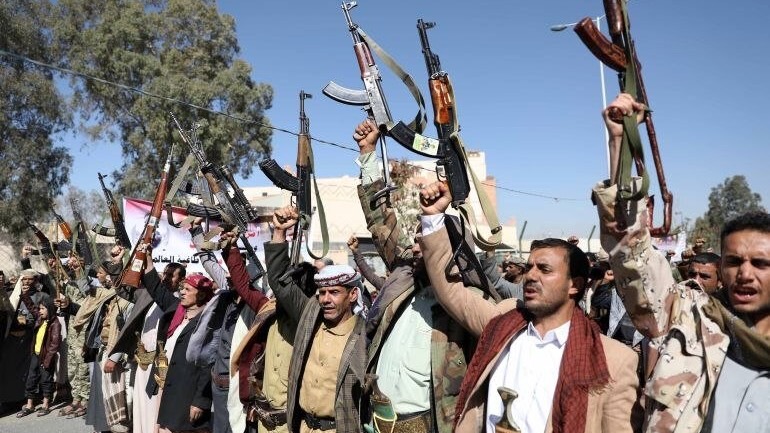
Over a decade of war in Yemen and the rise of Ansar Allah

In July, Saudi Arabia joined the US-Israeli war on the West Asia region with strikes on Yemen. The Ansar Allah-led Yemeni Armed Forces retaliated by launching a maritime blockade alongside attacks targeting vital Saudi interests.

The renewed fighting between the two West Asian nations resulted in Ansar Allah’s takeover of the strategic Red Sea port city of Mokha last week and the liberation of all the group’s prisoners held by Saudi-backed forces on Yemen’s western coast.

Ansar Allah’s seizure of Mokha seaport is reshaping regional and global geopolitics, particularly because it serves as a primary gateway to the Bab el-Mandeb Strait and coincides with developments in the Strait of Hormuz.

As these major shifts underscore, Yemen holds immense strategic geopolitical significance.

Situated on the southwestern corner of the Arabian Peninsula and overlooking the Bab al-Mandab Strait, Yemen represents a vital chokepoint connecting the Red Sea to the Gulf of Aden and the Indian Ocean

Consequently, internal political developments in Yemen can have global political and economic repercussions.

This fact, in turn, has put Yemen in the crosshairs of the US-led Western imperialist bloc and their allies in West Asia, which have endeavored to subjugate the country through a devastating decade-long war and blockade. 

The origin of this war coincides with the emergence of Ansar Allah, beginning when the group managed to take control of large swathes of the country, including the capital, Sanaa, in 2014.

The rise of Ansar Allah

Ansar Allah was first established in the early 1990s in the northern Yemeni governorate of Saada as a cultural and educational organization called Al-Shabab al-Mumin (the Believing Youth).

Initially, the organization introduced itself as an unarmed theological movement aimed at reviving and preserving Zaydi Shia Islam and countering the threat of state-backed Sunni Salafism, which sought to uproot the Zaydi religious identity in its homeland of Saada.

From its inception, the movement opposed the government, led by President Ali Abdullah Saleh, accusing it of corruption and criticizing its ties to the United States and its ally Saudi Arabia.

Tensions between the group and the government drastically escalated following the US invasion of Iraq in 2003. It was at that time that the group adopted the slogan (Death to America, Death to Israel), during mass protests opposing the war on Iraq.

These slogans posed a political threat to Ali Abdullah Saleh, who was attempting to position his government as a key ally in the “US War on Terror” in the aftermath of the 9/11 attacks. As a result his government led a brutal crackdown on protesters.

Security forces and riot police suppressed protests using live ammunition, tear gas, and batons, and arbitrarily detained hundreds of political activists, students, and opposition organizers without trial.

In 2004, tension between the Al-Shabab al-Mumin and the Yemeni government boiled over, sparking a series of six internal conflicts known as the Saada Wars. 

These clashes began with the government’s assassination of Hussein Badreddin al-Houthi, the group’s founder, and triggered five subsequent rounds of fighting that lasted until 2010. The followers of the group became widely known as the Houthis ever since. 

Saudi Arabia reportedly engaged in the Saada wars by providing immense financial, political, and material support to the Yemeni government. Saudi intervention in Yemen escalated in 2009 with a direct military incursion and unilateral airstrikes against positions held by the Houthi movement.

In 2011, the group joined nationwide demonstrations, calling for the overthrow of President Ali Abdullah Saleh. It was then that the Houthi movement formally adopted the name Ansar Allah (Supporters of God). 

The ousting of Saleh weakened the central government and triggered a sweeping power vacuum, which allowed Ansar Allah to rapidly expand its territorial dominance. By 2012, the Yemeni movement consolidated firm control across the Saada governorate and large swathes of northern Yemen.

In early 2012, vice president to Saleh, Abed Rabbu Mansour, Hadi became the President of Yemen via a transition framework brokered by the Gulf Cooperation Council (GCC), as he was  considered as a quiet consensus figure. Hadi was also strongly backed by the Obama administration. 

In late 2014, Ansar Allah allied with forces loyal to ousted president Ali Abdullah Saleh against the transitional government headed by Abed Rabbu Mansour Hadi. The fighting that followed led to Ansar Allah’s seizure of the capital Sanaa, forcing Hadi to flee the country.

2015-2022: The Saudi-led coalition’s protracted war against Yemen

From exile in 2015, Hadi requested the Saudi-led coalition to intervene in the conflict, opening the door to one of the bloodiest prolonged wars in West Asia. A conflict that, according to UN estimates, resulted in 377,000 deaths by 2022. 

Saudi Arabia was the main pillar of the coalition, leading the military campaign dubbed “Operation Decisive Storm” with a massive force, including extensive warplanes and ground troops.

The United Arab Emirates (UAE) also played a key role by commanding ground and air operations particularly in southern Yemen and along the critical coastal strip.

Bahrain took part in the operation with 12 fighter jets (some sources say 15), and deployed ground troops in the southern Saudi borders to protect Saudi Arabia from Ansar Allah’s attacks. Meanwhile, Kuwait contributed with 15 warplanes.

At the beginning of the campaign, Qatar participated with roughly 1,000 ground troops, armored vehicles, a dozen fighter jets, and transport helicopters until it was expelled from the coalition in June 2017 over a diplomatic crisis with Saudi Arabia, UAE, Bahrain, and Egypt.

Jordan and Morocco contributed six fighter jets each, while Sudan under deposed president Omar Al-Bashir sent three aircrafts and thousands of ground troops. Furthermore, Senegal committed 2,100 troops.

Western countries, including the United States, the United Kingdom, and France provided logistic and intelligence support, such as aerial refueling for coalition jets, technical assistance, military equipment, coordination support, and maritime surveillance.

The 2022 UN-brokered truce de-escalated the war rather than ending it

In April 2022, the United Nations announced an official two-month nationwide truce agreement, which temporarily halted cross-border attacks, ground and air operations, and allowed fuel imports into ports held by Ansar Allah. It also reopened commercial flights from Sanaa International Airport after years of sea, land, and air blockade imposed by Saudi Arabia. 

Rather than completely removing the blockade, the agreement only resulted in the partial easing of restrictions, while regions under the control of Ansar Allah have continued to face a near-total blockade.

Read more: Yemen demands Saudi-led blockade on the country be lifted immediately

The agreement was renewed in June and extended a second time in August 2022 for an additional two months before it lapsed in October. 

Regional developments reignited the conflict (2023-2026)

In November 2023, Ansar Allah launched a ban on all Israeli maritime navigation in the Red Sea and the Bab el-Mandeb Strait in retaliation for Israel’s genocidal aggression on Gaza.

About one month later, the group significantly expanded the ban to include all ships heading to Israeli ports, regardless of their nationality or flag.

The ban continued until October 2025, despite waves of deadly airstrikes launched by the US, UK, and Israel on Yemen.

An Omani-mediated ceasefire deal between the US and Ansar Allah was reached in May 2025. The deal stipulated halting Ansar Allah’s attacks on US ships in the Red Sea and Bab al-Mandab Strait, and ending US aggression on Yemen, without preventing the Yemeni resistance movement from launching attacks or naval operations against Israel. 

This same period saw a shift in the conflict between the Saudi-led coalition and Ansar Allah from active military engagement toward a tense, fragile diplomacy.

In early 2026, friction between the two major pillars in the anti-Ansar Allah coalition – namely Saudi Arabia and the UAE – surfaced as different Yemeni groups backed by the two countries clashed, apparently over territorial control in Yemen.

Read more: Tensions in Yemen: Are Saudi Arabia and the UAE becoming frenemies?

The US-Israeli war on Iran has drawn Yemen back into the regional conflict

Although Ansar Allah was established as an independent Yemeni movement, it evolved into a key component of the Axis of Resistance over time. This alignment was driven by mutual ideological foundations, shared anti-imperialist ideology, and deep strategic and military cooperation with Iran and Hezbollah.

Despite its affiliation with the resistance alliance, Ansar Allah chose not to get involved in the recent regional war waged by the US and Israel against Iran, for ostensibly strategic considerations and military coordination tactics with its allies.

Read more: Reflections on the US-Israeli multi-front war in West Asia: How the Axis of Resistance remains resilient

However, because the United States and its allies in the region seemingly view the current war as an ideal opportunity to dismantle the Axis of Resistance, Saudi Arabia decided to resume its aggression against Yemen by attacking Sanaa International Airport in July. The attack aimed to prevent an Iranian plane from landing.

Consequently, Ansar Allah launched retaliatory attacks on Saudi interests inside Saudi Arabia and on Yemeni soil. It further declared a maritime blockade against Saudi-linked commercial vessels passing through the Bab al-Mandeb Strait, demanding Riyadh end its decade-long blockade on Yemen.  

Concurrently, ground clashes over territorial dominance between Ansar Allah and Saudi-backed forces intensified, leading to key victories for the Yemeni group. Escalations have persisted up to the time of publication.

On Wednesday, September 16, Saudi Arabia accused Ansar Allah of attempting a drone attack against the city of Mecca, the holiest city for Muslims, located in western Saudi Arabia.

Ansar Allah dismissed Saudi accusations as false, saying that they reflect a “desperate attempt to mobilize public opinion.”

As the US-Israeli war on West Asia continues to reshape geopolitics, Ansar Allah’s emergence as a regional force has placed Yemen at the center of a struggle that may define the future of West Asia.

  •  

Several arrested in protests against constitutional changes in DRC

Protests rocked the Democratic Republic of Congo on Tuesday, September 15, as opposition supporters took to the streets in Kinshasa and several other cities to oppose proposed constitutional changes that they say could allow President Félix Tshisekedi to seek a third term.

The demonstrations were called by the opposition coalition C64 (Coalition Article 64), which has campaigned against changes to the Constitution and what it considers an attempt to remove the existing two-term presidential limit.

The demonstrations were also reported in several cities. In Kinshasa, hundreds of protesters gathered around the Limete area before the march was disrupted by clashes involving demonstrators and people identified as members of the Force du Progrès, a group affiliated with Tshisekedi’s ruling UDPS party. Police used tear gas and warning shots to disperse the crowd. At least 10 people were arrested in Kinshasa.

Opposition accuses authorities of an “ambush”

Martin Fayulu, leader of the Engagement for Citizenship and Development (ECiDé) and a leading C64 figure, accused authorities of deliberately allowing pro-government militants to attack the opposition march.

In a post following the confrontation, Fayulu said the C64 had agreed on its route with Kinshasa’s city authorities before the march. He alleged that protesters were then confronted in Limete by armed members of the Force du Progrès while police used tear gas against the marchers.

Fayulu wrote that the C64 had been “the victim of an ambush” and accused the authorities of using a political militia alongside security forces. He called on Kinshasa’s city authorities and the national government to explain what happened.

Read more: Lithium mining in the DRC: A new mineral rush spearheaded by the US, EU, and other major powers

The confrontation prevented the C64 march from reaching its planned destination and from delivering its memorandum to the authorities at the People’s Palace.

Opposition resistance has been building 

Tuesday’s demonstrations were the latest escalation in an opposition campaign that has been building since June, when there were protests after Congo’s parliament approved legislation allowing constitutional amendments to be submitted to a referendum.

The National Assembly and Senate have both backed the referendum legislation. Critics argue that the process could eventually open the way for amendments to the presidential term-limit provisions.

Tshisekedi was first elected president in 2018 and re-elected in 2023. Under the current Constitution, the president serves a maximum of two five-year terms. His current term runs until 2028.

The proposed constitutional changes have therefore become a major point of confrontation between the government and opposition. The C64 says it is defending the existing constitutional order and has rejected any change that could enable Tshisekedi to seek another term.

The protests and the crisis is happening as the government faces other major challenges, including conflict in eastern Congo and an Ebola outbreak.

Read more: Ebola spreads to 60 health zones in eastern DRC; UN warns of funding shortfall

  •  

Von der Leyen’s State of the EU: best of times for businesses, worst of times for working class

It is rarely a good sign when European politicians open their speeches by quoting Charles Dickens. So alarms should have sounded the moment European Commission President Ursula von der Leyen declared this to be the best and the worst of times at the start of her State of the European Union address on September 16.

Things went downhill from there: the EU leader painted a picture of the region that stands in complete contrast to the general experience of its people, amounting to a summary of the bloc’s worst achievements.

“Von der Leyen has achieved the feat of not mentioning a single measure to help Europeans cope with the soaring cost of living across Europe, at a time when an ever-growing number of people are now forced to choose between housing, food and transport,” said Manon Aubry, Co-President of The Left in the European Parliament.

“Fiscal sustainability” and concern for businesses

In the lengthy address, von der Leyen laid out what she considered the EU’s successes, including raising military spending by almost 80% over the past five years and “reducing dependence” on Russian fossil fuels. However, this interpretation does not correspond to what people are experiencing, as outlined by The Left in a dedicated dossier. Growing military spending benefits only the arms industry. And attempts to replace cheaper Russian gas have essentially boiled down to committing to more expensive and environmentally devastating US LNG imports.

While recognizing growing energy prices, von der Leyen offered no tangible response to this problem plaguing EU households. On the other hand, she demonstrated notable concern for businesses, signaling the continuation of eroding labor and environmental protections along the lines implemented by right and far-right parties at the EU level.

Read more: Peter Mertens: “Don’t be afraid, seize the opportunities of 2026 with both hands”

The likelihood of maintaining the status quo was also noticeable when von der Leyen turned to the deadly wildfires that hit Europe this summer, devastating communities from Belgium and France to Spain and Greece. Trade unions and progressive analysts have warned for years that fire preparedness is severely impaired by a lack of planning and, specifically, shortages of firefighters. Yet there was no commitment in the address to invest more in essential public service workers. Instead, the EC President referred to the ongoing need for overall “fiscal sustainability” – meaning Europeans should expect no relief from austerity programs.

“The best of times is clearly reserved for billionaires, multinational energy companies, and war profiteers,” remarked Member of the European Parliament Marc Botenga from the Workers’ Party of Belgium (PTB-PVDA). “The other side of the coin for workers: austerity and rising prices.”

The EU’s failed foreign affairs policy

Based on the vision tabled by von der Leyen, there is also little to look forward to in Europe’s international and trade policy. “It’s hard to think of an area where the EU has been more inactive and less effective than in foreign affairs,” The Left wrote, referring to the union’s ongoing disregard of international law in relation to the genocide in Gaza and its approach to the Trump administration. 

“The President has praised Saudi Arabia’s war on Yemen, she has stood with Trump as he bombed Tehran and the European Commission has sided with the USA as they brought the global economy to a standstill in the Strait of Hormuz,” the progressive bloc warned.

The EU’s relationship with the US has continued to be one of submission, with elected regional leaders going to great lengths (unsuccessfully) to appease Donald Trump. Even when the region announced it would stand firm against US threats – in Greenland or on tariffs – this did not translate into practice.

In the context of von der Leyen’s speech, this boiled down to announcing Canada would become the “first associate member of the EU” and listing trade agreements signed with India, Mercosur, and Indonesia – met by the people of these countries with understandable concern.

Read more: Indian left opposes free trade agreement with EU, calls it “wholesale surrender” of country’s economic interests

Von der Leyen’s speech showed no sign of breaking with disdain towards nations outside the West. In addition to continuing animosity toward China, it offered a glimpse into plans involving countries rich in critical materials. The EC President announced the launch of a European Corporation on Critical Raw Materials – designed to secure and stockpile supplies for Europe’s industry and defense – with obvious implications for mineral-rich territories like Ukraine, Greenland, and several African countries. For the more skeptical listeners, this also carried weird echoes of the East India Company.

The State of the EU’s vision, it goes without saying, comes with further promises of an even stricter migration framework – on the pretext of situations like the one experienced in Ceuta earlier this year – that allow the erosion of basic human rights like asylum. Von der Leyen’s speech pledged even more finances for Frontex and suggested that outsourcing migration enforcement to third countries will continue, as endorsed by recent EU legislation.

“This policy of externalizing migration control has contributed to grave human rights violations, arbitrary detentions and systematic violence against people on the move,” The Left warned, calling for a union rooted in solidarity rather than violence and militarization.

  •  

Carney urges Europe and Canada to build a 'collective resilience'

Canadian Prime Minister Mark Carney was greeted as a conquering hero by a parliament that had caved to Trump threats - albeit reluctantly - signing off on the Turnberry trade deal, which would subject the EU to 15% tariffs.

Without naming US President Donald Trump, Carney took aim at the use of tariffs, financial leverage and supply-chain dependencies to force countries into line.

“Today, it is hard to reconcile sovereignty and openness,” Carney told the European Parliament. “Economic integration is now being weaponized; tariffs being used to exert pressure. Financial mechanisms have been used for coercion. Supply chains constitute weak points to be exploited.”

His answer was a far-reaching EU-Canada alliance designed to ensure neither side can be held hostage by a dominant country or company.

“Canada and Europe should secure our strategic autonomy through deep cooperation” across critical minerals, defence, AI and computing, energy, space and payments, he said.

But Carney was careful to distinguish that project from creating another geopolitical superpower.

'Not a great power rival only with better manners'

“I'm not proposing a third bloc in order to become a great power rival only with better manners,” he said. “We do not seek power to dominate others.”

Instead, he said, the objective was resilience so that “no one can control our open markets, impair our sovereignty, threaten our territorial integrity, or undermine our freedoms, our democracies, our rule of law.”

Carney reserved some of his toughest language for Big Tech, portraying technological dependence as another threat to democratic sovereignty.

“Tech platforms aspire to sovereignty,” he said. “They want to set access rules. They want to dictate the rules for regulation and even circumvent them. They want to control our data, spread disinformation, and steal our children's childhoods.”

“This combination is a ferocious storm. A single tree will come down in it. A forest will not.”

Carney laid out a substantial economic agenda for closer integration. On critical minerals, he pointed to Canada's deposits of more than 34 minerals and its position as a major producer of 10 considered essential to the energy transition. Europe could gain a more reliable source of raw materials, he argued, while Canada could gain access to European processing capacity and clean-energy technology. Canada could also supply LNG and hydrogen to bolster European energy security.

He called for “seamless digital trade” in non-agricultural goods and a wide range of services, alongside closer cooperation on AI standards and computing capacity.

Carney also floated a potentially significant step towards financial integration: “Canada and Europe should consider exploring an integrated market for financial services” to lower costs, increase consumer choice and improve companies’ access to capital.

Carney advocated allowing young Canadians and Europeans to work, study and live on either side of the Atlantic, with Canada joining Erasmus+ and participating in the next generation of the EU’s Horizon research programme.

The goal, Carney stressed, was not self-sufficiency, but collective resilience.

Photo: Formal sitting in the European Parliament with Mark Carney, Canadian Prime Minister. Photographer: Alexis Haulot © European Union

  •  

QR Code to be installed at private doctors’ practices, says Health Minister

Greece’s Health Minister Adonis Georgiadis has been reiterating since Monday morning that he will seek to enhance patients’ protection by installing an QR Code at the entrance of private doctors’ practices. Though his smart phone the apparently tech savy “patient will be able to confirm whether the practice is legal or not,” Georgiadis said. Surprise! […]

The post QR Code to be installed at private doctors’ practices, says Health Minister appeared first on Keep Talking Greece.

  •  
❌