❌

Reading view

Greenland is not for sale: Trump’s Donroe Doctrine and US imperialism

Donald Trump’s campaign to bring Greenland under United States control has often been dismissed as bluster. That is a mistake. Behind the language of a property deal lies a serious attempt to revive an old imperial principle: that Washington may decide the political and economic future of the entire Western Hemisphere. Greenland, strategically placed between North America and Europe, has become a test of that claim – and of whether the sovereignty of a small Indigenous nation counts when it conflicts with the ambitions of a great power.

Trump floated buying Greenland during his first presidency in 2019. After his re-election, the proposal became more aggressive. In December 2024 he declared US “ownership and control” of Greenland as an “absolute necessity.” On January 7, 2025, he refused to rule out military or economic coercion against Greenland and the Panama Canal, saying, “We need Greenland for national security purposes.” He subsequently insisted that the United States would obtain the island “one way or the other.” The claim mixed several arguments: Greenland is vital to missile defense, Russia and China threaten the Arctic, Greenland’s rare-earth deposits are strategically valuable, and Greenlanders would supposedly welcome US rule.

The last claim was demonstrably false. A January 2025 survey conducted in both Greenlandic and Danish found that 85% of Greenland’s population opposed leaving the Danish realm to join the United States, while only 6% supported it. Yet the same poll showed a majority favoring eventual independence. That distinction is central. Greenlanders’ desire to end Danish colonial tutelage cannot be converted into consent to US annexation.

A military relationship without annexation

The security case for US ownership is misleading because Washington already enjoys extensive military rights in Greenland. The relationship began during the Second World War. With Denmark occupied by Nazi Germany, its ambassador in Washington signed a 1941 agreement permitting the United States to defend Greenland and construct facilities there. Denmark sought a US withdrawal after the war, but Cold War strategy prevailed.

The 1951 Defense of Greenland Agreement, concluded under the North Atlantic Treaty, authorized the United States to establish and operate “defense areas.” It enabled the rapid construction of Thule Air Base – renamed Pituffik Space Base in 2023 – at a location ideal for the shortest air and missile routes between the Soviet Union and North America. At its Cold War height, the US operated numerous installations across Greenland. Today Pituffik, Washington’s northernmost military base, performs missile-warning, missile-defense and space-surveillance functions.

The agreement offers Washington wide operational freedom. A 2004 amendment – the Igaliku Agreement – recognized Greenland’s Home Rule government, made Pituffik the sole existing defense area, and required consultation before significant changes or the creation of new defense areas. It also established cooperation on economic, technical, and environmental issues. In other words, if the United States believes more radar, ports, airfields or personnel are necessary, a legal mechanism already exists to negotiate them with Denmark and Greenland. Sovereignty is, therefore, not a military requirement.

The history of the bases also explains why “security” is not a neutral word in Greenland. In 1953, Danish authorities ordered 116 Inughuit – 27 families – to leave the newly established Qaanaaq, while the others relocated to settlements elsewhere in the district. Camp Century was constructed beneath the ice in 1959-60 and was connected with the secret Project Iceworm proposal for an extensive network of nuclear-missile launch sites.

In 1968, a US B-52 carrying four hydrogen bombs crashed on the sea ice at Thule Air Base, causing plutonium and other contamination. The accident exposed the inconsistency between Denmark’s publicly declared policy against nuclear weapons on Danish territory in peacetime and the Danish government’s secret permissions for the US to store nuclear weapons in Greenland. Abandoned installations left fuel, waste and other pollution. Greenlandic reporting continues to question who will pay for future clean-ups. The military relationship protected US strategic interests while its human and environmental costs were disproportionately borne by Greenlanders.

Greenland ceased formally to be a colony in 1953, gained Home Rule in 1979 and expanded self-government in 2009. The Self-Government Act recognizes Greenlanders as a people entitled to self-determination and provides a path to independence. Washington reopened its Nuuk consulate in 2020, and cooperation grew in trade, education, mining, and research. Greenland’s governments (from Kuupik Kleist to Jens-Frederik Nielsen) have welcomed economic ties with Washington, but reject the tendency of Washington to want more and more from the island for its military needs.

From Monroe to Donroe

Trump’s Greenland demand belongs to a wider hemispheric policy. The Monroe Doctrine of 1823 warned European powers against new colonial intervention in the Americas. Presented as anti-colonial, it evolved into a claim of US supremacy. Theodore Roosevelt’s 1904 corollary asserted a right of intervention in Latin America, furnishing ideological cover for occupations, regime changes, and control over strategic assets.

Trump’s supporters rechristened its latest version the “Donroe Doctrine.” The label links pressure on Greenland with demands concerning the Panama Canal, threats against Cuba and Colombia, claims over Canada, and US intervention in Venezuela. In late 2025, the White House formally proclaimed a Trump Corollary to the Monroe Doctrine, asserting US leadership throughout “our hemisphere.” Greenland is swept into this sphere because it is geographically part of North America, even though it is politically tied to Denmark and its Inuit people possess their own right of self-determination. This doctrine contains a revealing contradiction. Trump denounces European control of Greenland as an anachronism while demanding that the island be transferred to the United States. Colonialism is not abolished; the proposed colonizer merely changes. Trump’s references to minerals, sea routes, and military geography reduce Greenland to an asset and its 56,000 people to an obstacle in a transaction between powers.

A crisis inside the Western alliance

Trump’s threats produced an extraordinary rupture between the United States and Europe. Denmark is not an adversary, but a NATO ally whose troops fought alongside US soldiers in Afghanistan. A threat to seize territory from one ally by force attacks the premise of the alliance itself. Danish Prime Minister Mette Frederiksen warned that a US attack on another NATO country would bring the post-war security order to an end. European governments rallied behind the principle that borders cannot be changed by coercion, a principle they invoke against Russia in Ukraine.

The crisis exposed Europe’s dependency. NATO has no comfortable procedure for defending one member against its strongest member. European states rely heavily on US military power while being asked to resist US coercion. Copenhagen responded with careful diplomacy, greater Arctic military spending, and insistence that decisions belong to Greenland and Denmark. France, Germany, the Nordic states, and the European Union expressed solidarity, but the episode sharpened calls for European strategic autonomy. It also damaged Washington’s claim to lead an alliance of democracies against authoritarian revisionism.

On September 18, 2026, Trump announced an emerging trilateral security agreement after months of negotiation, claiming “permanent control” over Greenland’s security. Danish and Greenlandic leaders described it more narrowly: an expansion of US military cooperation that preserves sovereignty and Greenlandic self-determination. The full text remains to be signed and approved. If their account holds, the outcome confirms what was apparent from the beginning: the United States could obtain additional security arrangements without owning Greenland. Yet the pressure that preceded the deal remains a warning about negotiations conducted under threats.

Greenland speaks for itself

Greenland’s response has combined rejection, unity, and political complexity. Kalaallit Nunaat – the Greenlandic name for the country – became the center of declarations that Greenland belongs to its people and is not for sale. In March 2025, large demonstrations in Nuuk, Sisimiut, and Qaanaaq marched under the red-and-white Erfalasorput flag. Protesters told Trump to respect Inuit, their country, and their nationality. Greenland’s political parties, despite deep disagreements over the speed and economic terms of independence, jointly condemned external pressure. Parliament prohibited foreign and anonymous political donations, explicitly defending the integrity of Greenlandic democracy amid great-power interest.

Danish colonialism left profound injuries: forced assimilation, social engineering, unequal development, and decisions taken in Copenhagen about Greenlandic land and people (the entire fourth season of the popular television drama, Borgen, in 2022 centered on a conflict between Copenhagen and Nuuk about the discovery of a new oil field with a China and Russia angle). Many Greenlanders want independence, and some see heightened US interest as leverage for investment and a more equal relationship with Denmark.

Greenland reveals the real content of the Donroe Doctrine: a twenty-first-century claim that geography gives Washington superior rights over neighboring peoples. The answer from Greenland is equally modern and universal. Strategic location does not cancel popular sovereignty, minerals do not erase nationhood, and no great power acquires a country merely by declaring that it needs one.

Vijay Prashad is an Indian historian and journalist. He is the author of forty books, including Washington Bullets, Red Star Over the Third World, The Darker Nations: A People’s History of the Third World, The Poorer Nations: A Possible History of the Global South, and How the International Monetary Fund Suffocates Africa, written with Grieve Chelwa. He is the executive director of Tricontinental: Institute for Social Research, the chief correspondent for Globetrotter, and the chief editor of LeftWord Books (New Delhi). He also appeared in the films Shadow World (2016) and Two Meetings (2017).

This article was produced by Globetrotter.

  •  

France’s Modular Rampart Point Defense Launcher Has Gone To Sea

A French Navy Mistral class amphibious assault ship has been photographed carrying Naval Group’s new Rampart modular launcher, a system designed to allow a single weapon station to employ different types of rockets, missiles, and other effectors against a wide range of threats.

The imagery, captured off Toulon during training on September 21, reveals the launcher installed on the ship’s forward starboard sponson. While the specific identity of the vessel is unclear, this represents the first publicly observed evidence that Rampart has moved into shipboard testing.

🇫🇷 French Navy Mistral-class amphibious assault ship and 🇫🇷French Navy Suffren (Barracuda)-class nuclear-powered attack submarine off Toulon, France – September 21, 2026.@WarshipCam pic.twitter.com/6xYm6E5J9R

— G.GYSSELSSHIPCOLLECTION (@GGYSSELSSHIPS) September 22, 2026

Naval Group announced in June that the first at-sea firing campaign for Rampart was planned for October aboard a Mistral class ship during the French Navy’s Wildfire counter-drone exercise.

What makes Rampart unusual is its modular architecture. Rather than being built around one missile or rocket, the system uses interchangeable launch modules that can accommodate different weapons. This allows a ship to carry large numbers of relatively inexpensive guided rockets for counter-drone work while retaining the option of using larger and more capable short-range missiles against more challenging targets.

Système de lancement polyvalent et modulaire, sur le stand de NAVAL GROUP lors du Salon de l'industrie naval de défense (EURONAVAL) à Villepinte le 6 novembre 2024. (Photo by Thierry NECTOUX/Gamma-Rapho via Getty Images)
The Rampart, then still known as the Multi-purpose and Modular Launching System (MPLS), displayed at the EURONAVAL defense exhibition in November 2024. Photo by Thierry NECTOUX/Gamma-Rapho via Getty Images

Because the launch modules are interchangeable, the mix can theoretically be changed as the mission or threat environment changes.

The approach is aimed squarely at a problem that has become increasingly important for naval forces: defending expensive ships against potentially large numbers of inexpensive uncrewed systems and missiles without relying exclusively on high-cost interceptors.

Rampart was previously known as the Multi-purpose and Modular Launching System (MPLS). Naval Group unveiled the concept in 2023 as a self-funded development effort and formally presented the Rampart earlier this year.

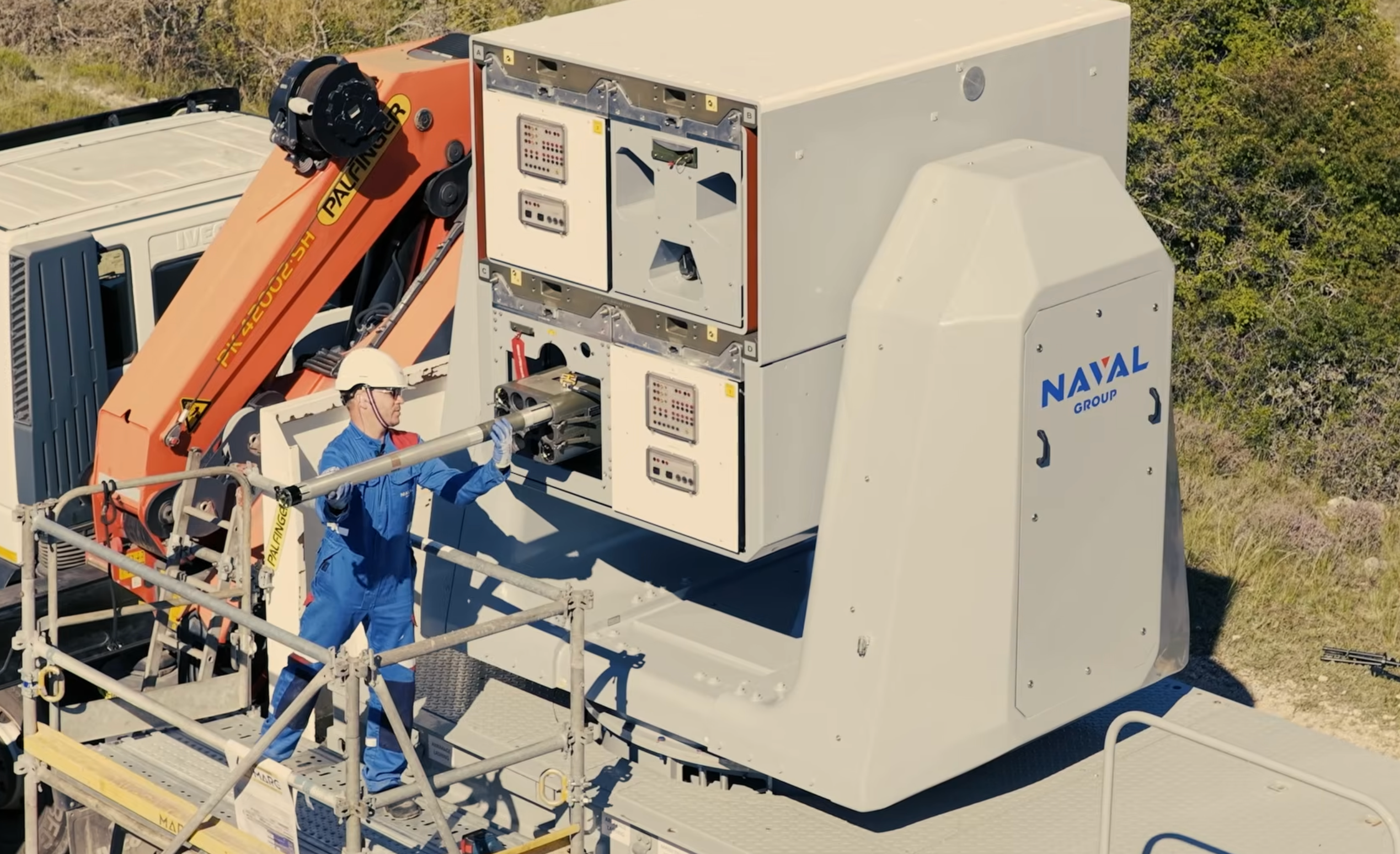
The launcher uses four interchangeable ammunition modules. Depending on the configuration, Naval Group says that the system can accommodate up to 80 Thales 68mm laser-guided rockets or 48 NATO-standard 70mm laser-guided rockets. Other configurations can carry smaller numbers of short-range missiles (four to six per module, depending on type) or other effectors, including decoys.

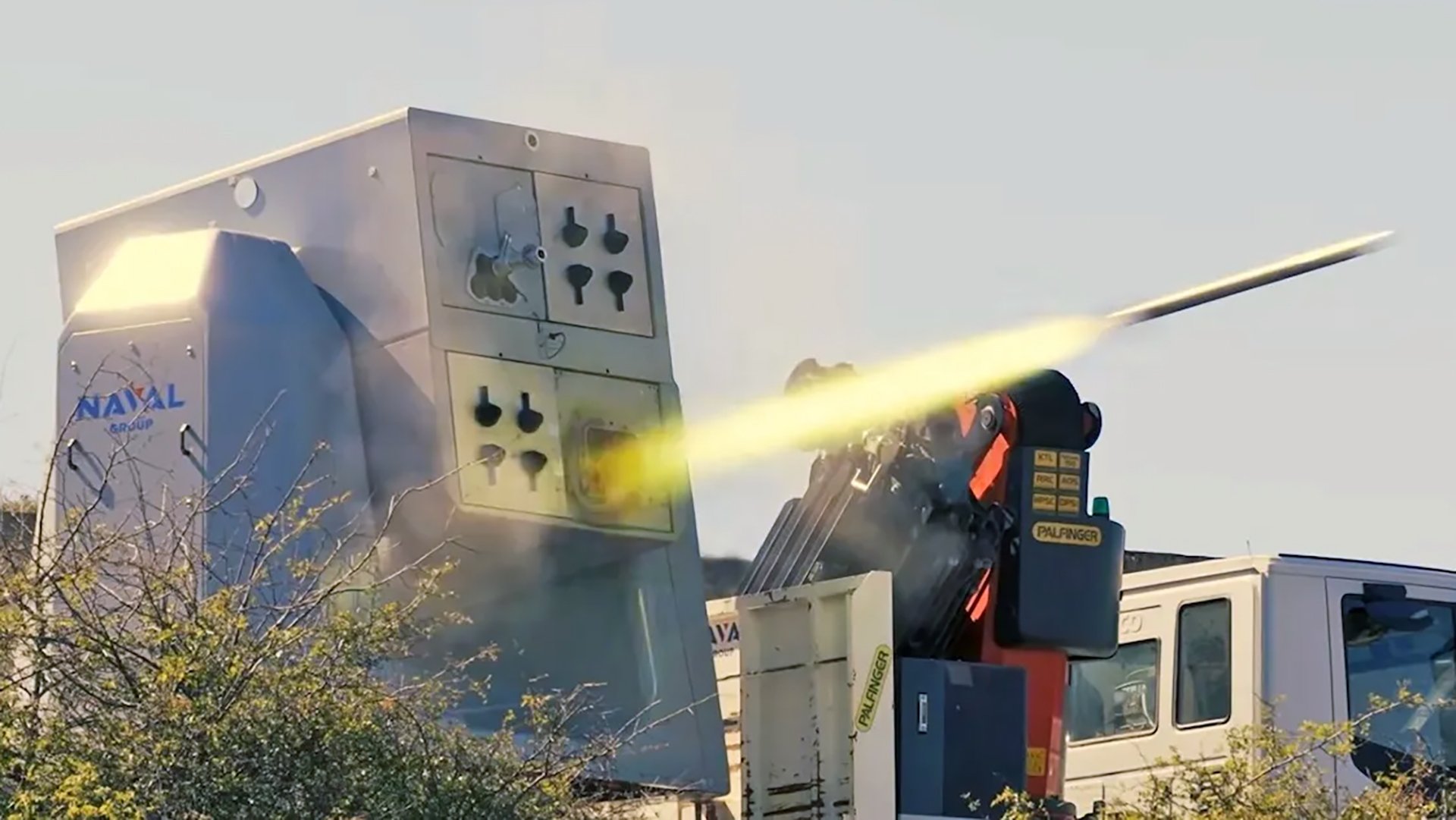
The system has already been demonstrated with guided rockets. A January 2026 test involved a Thales 68mm guided rocket, followed by a series of firings at the Canjuers range in southern France in May. Those trials, seen in the video below, included engagements against targets at roughly two miles and a five-rocket salvo.

The relatively small guided rockets are particularly relevant to counter-drone operations. They offer a way of engaging aerial targets with a weapon substantially smaller than a conventional surface-to-air missile, while still providing precision guidance.

As well as rockets, Naval Group has been working with Thales on the Lightweight Multirole Missile (LMM). Also known as Martlet, the LMM is intended to tackle a range of challenging airborne and surface targets, as you can read about here.

The company has also explored integration of loitering munitions and other missiles, while a separate agreement with the UAE-based EDGE Group covers trials of the SkyKnight surface-to-air missile.

The company has also pursued integration of Poland’s Piorun short-range air-defense missile. This may well be with a view to a potential Polish purchase of Rampart to arm its forthcoming frigates, which you can read about here.

Polish Army soldiers, fire a man-portable air-defense system (MANPADS Piorun), during the exercise Shield 24, April 12, 2024 in Pula, Croatia. This annual event bolsters Croatian air defense capabilities against low and medium-altitude threats. Joined by the 57th Air Defense Artillery Regiment (C/1-57 ADAR), 173rd Airborne Brigade, and allied forces from the Polish Armed Forces, Slovenian Army, and French Armed Forces, participants jointly train on air defense tactics, techniques, and procedures, including air-space control and live fire engagements. (U.S. Army photo by Davide Dalla Massara)
Polish Army soldiers fire a Piorun man-portable air defense system. U.S. Army photo by Davide Dalla Massara

This means the launcher is effectively being developed as an open weapons-integration platform, rather than as a dedicated launcher for one or a small set of particular munitions.

That openness could make Rampart attractive to a wide range of navies. Instead of requiring customers to adopt a completely new missile family, the launcher can potentially be configured around weapons already in their inventories or sourced from their domestic defense industries. A country could therefore buy the common Rampart launcher while retaining control over the effectors it wants to integrate, whether those are guided rockets, short-range missiles, loitering munitions or other systems. At the same time, when it comes to air threats, this is very much a point defense system for close-in engagements, and a last line of defense to complement longer-range and more capable systems.

Naval Group has described the system as capable of operating either autonomously or as part of a ship’s combat system, with a stabilized turret and integrated fire-control equipment.

That integration will be particularly important during the upcoming sea trials. A launcher that works against stationary or land-based targets still has to contend with ship motion, vibration, sea spray, sensor integration, and the compressed timelines involved in defending a moving vessel.

France operates three Mistral class amphibious assault ships, which serve as major aviation, command, and amphibious warfare platforms. Their size and mission make them high-value assets that could face a broad range of aerial threats during operations. Another two vessels were built to the same design for Russia, before being placed under embargo, and then sold to the Egyptian Navy.

200624-M-IR130-1284 MEDITERRANEAN SEA (June 24, 2020) The French Navy amphibious assault ship Mistral sails in the vicinity of the amphibious assault ship USS Bataan (LHD 5) June 24, 2020. The Bataan is conducting operations in U.S. 6th Fleet in support of regional allies and partners, and U.S. national security interest in Europe and Africa. (U.S. Marine Corps photo by Cpl. Gary Jayne III/Released)
The French Navy amphibious assault ship Mistral. U.S. Marine Corps photo by Cpl. Gary Jayne III/Released

Naval Group’s choice of a Mistral for the initial at-sea campaign provides an opportunity to test Rampart under realistic operational conditions while integrating it with an existing French naval combat system.

In its basic form, each Mistral is armed with a pair of Simbad launchers, each of which is fitted with two Mistral short-range surface-to-air missiles. In terms of guns, each of the vessels is armed with two 30mm and two 20mm cannons, two 7.62mm M134 Miniguns, and four 12.7mm machine guns. Adding even a single Rampart launcher provides considerably more options against aerial targets across a wide range of threats — depending on the effectors that are included.

Loading guided rockets into a Rampart launcher during ground-based tests. Naval Group screencap

Recent U.S. and allied operations in the Middle East have highlighted the problem of large-scale missile and drone attacks causing forces to expend substantial numbers of interceptors, raising concerns about both magazine depth and the cost of using high-end missiles against lower-cost threats. Directed-energy weapons could eventually provide a way out of that cost-exchange problem, but shipboard laser systems remain in the early stages of operational development. Navies cannot simply wait for them to mature, creating an immediate requirement for lower-cost, high-capacity kinetic options. Rampart’s large guided-rocket capacity and ability to mix different effectors are aimed at exactly that gap.

If Rampart can reliably engage drones with inexpensive guided rockets while retaining the ability to employ more capable missiles from the same launcher, it could offer navies an additional defensive layer between conventional guns and high-end surface-to-air missile systems.

Critically, new effectors could potentially also be integrated as they become available, allowing the system to evolve without replacing the entire turret.

Reflecting the urgency of the requirement, Naval Group’s development path for Rampart has been relatively rapid.

Naval Group has also demonstrated a ground-based Rampart, mounted on a high-mobility truck chassis. This configuration is intended for mobile air defense missions as well as protection of fixed sites, giving the system a role beyond ship self-defense. The truck-mounted version could provide a rapidly relocatable launcher for counter-drone and short-range air-defense missions, while retaining the same basic modular architecture and ability to employ different effectors.

Sur le stand John Cockerill, un châssis Zetros équipé du Rampart (ex lanceur modulaire polyvalent, ou LMP) de Naval Group. Avantage : un seul système de lancement pour des armements divers (roquettes, missiles, grenades, leurres, drones…) pic.twitter.com/6v4R93HGsj

— Vincent Lamigeon (@VincentLamigeon) June 16, 2026

The photographs from Toulon indicate that the Rampart concept is now moving from the range to the French fleet, albeit on an experimental basis. The forthcoming sea campaign will be an important milestone and should provide a better idea of how this system works at sea.

Contact the author: thomas@thewarzone.com


The post France’s Modular Rampart Point Defense Launcher Has Gone To Sea appeared first on TWZ.

  •  

North Korea Tests New Hwasong-11Ma Hypersonic Missile

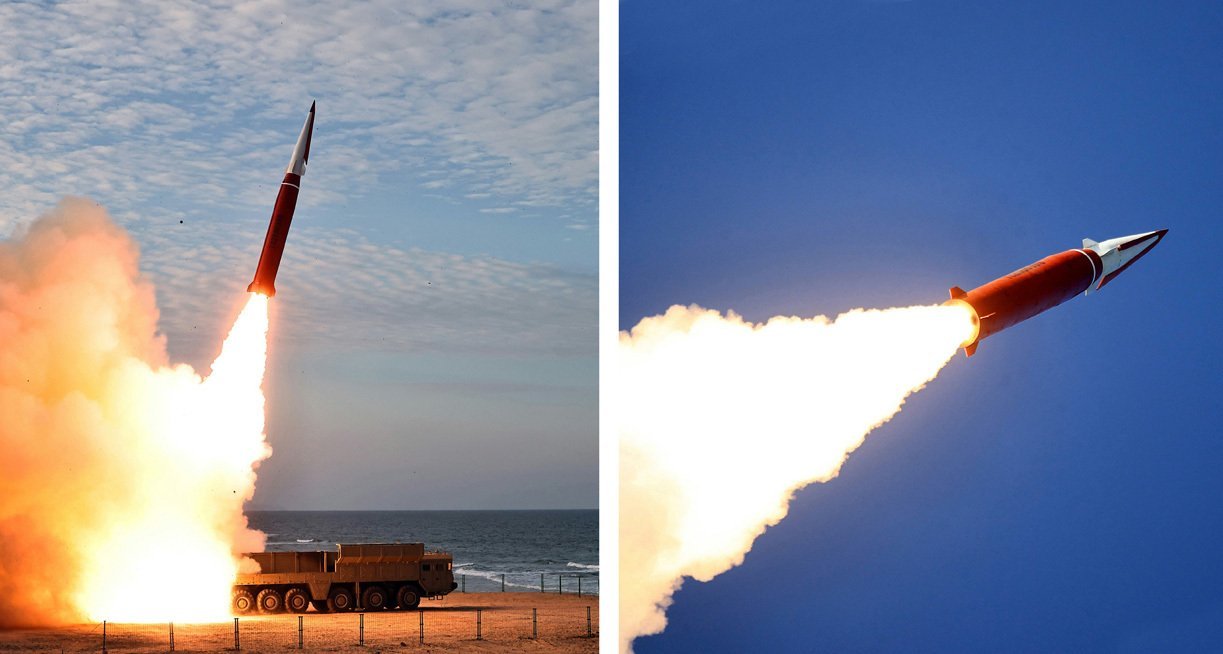
North Korea has released imagery of what appears to be a flight test of an updated version of its Hwasong-11Ma hypersonic missile, nearly a year after the weapon first appeared publicly at a military technology exhibition in Pyongyang.

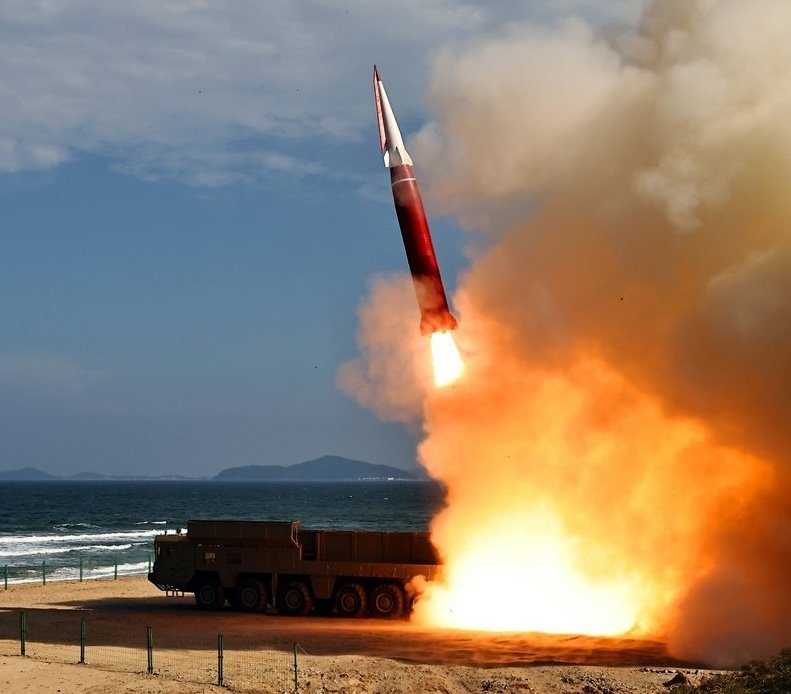
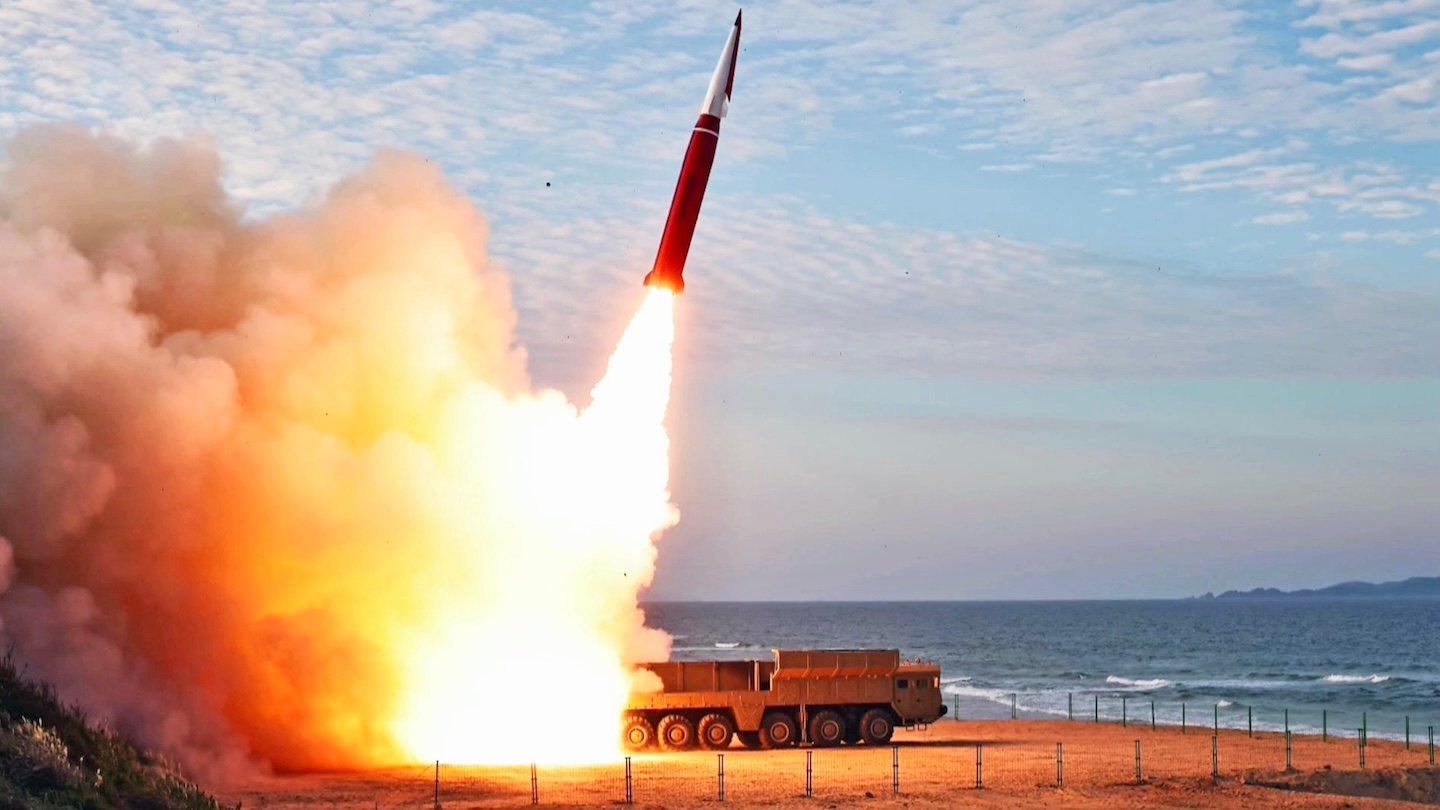
Launch of a Hwasong-11Ma-1 missile from the test facility in Anbyon County, south of Wonsan. North Korean State Media

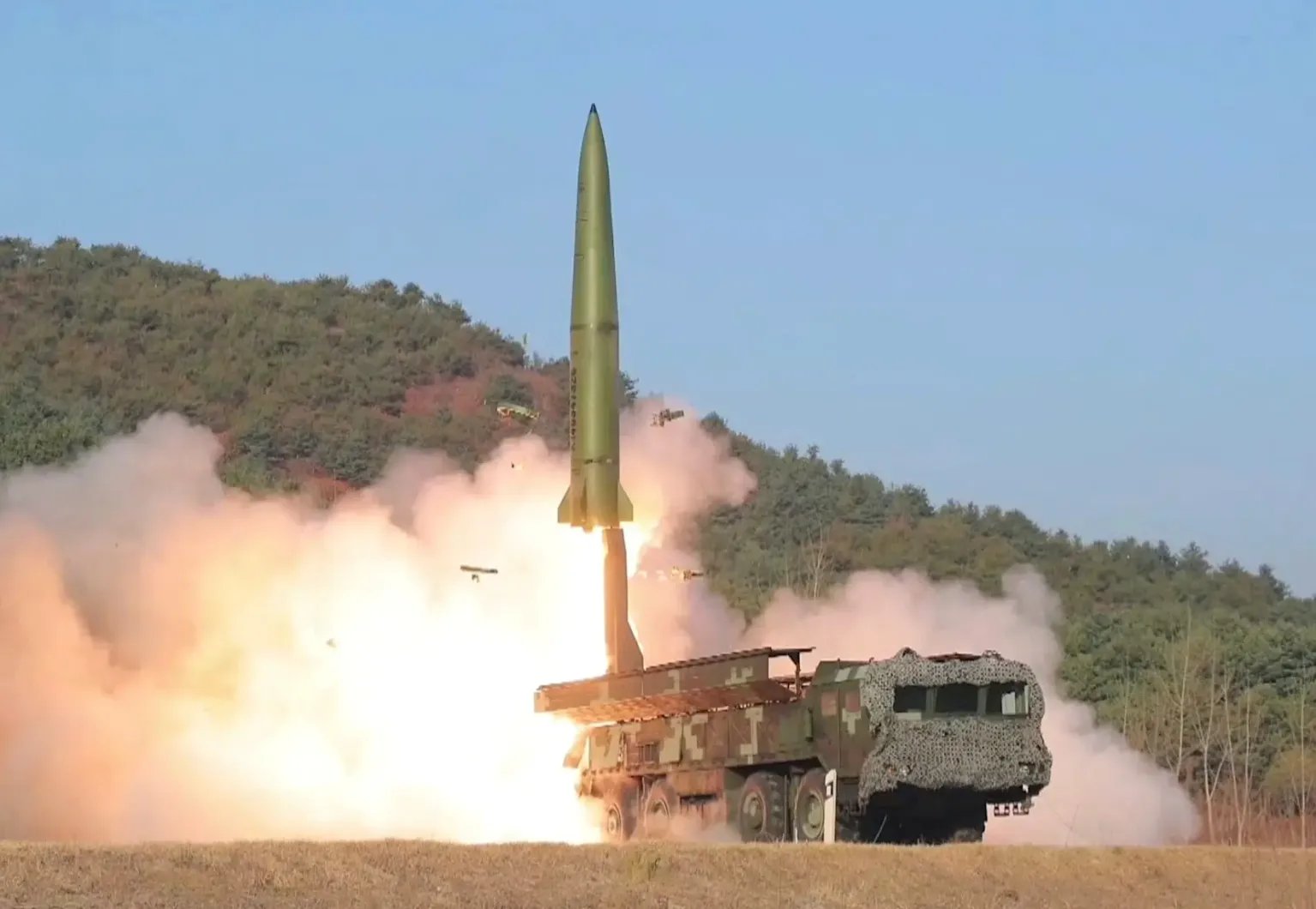
The September 20 test involved a short-range ballistic missile (SRBM) booster fitted with a hypersonic glide vehicle, according to photographs released by North Korean state media. A display screen visible in the imagery identifies the weapon as the Hwasongpho-11Ma-1, or Hwasong-11E-1 in the equivalent English-language designation.

The test was conducted from the east coast near Anbyon County, south of Wonsan, an area North Korea has repeatedly used for missile testing. The launch site allows missiles to be fired eastward over the Sea of Japan, providing a relatively controlled area for testing short- and medium-range systems.

Another two views of the launch of the Hwasong-11Ma-1 missile. North Korean State Media

South Korean and Japanese authorities say they detected two launches on September 20, with the first occurring at approximately 3:00 p.m. local time and the second several hours later.

North Korean photographs show the missile being launched from a coastal location, with Kim Jong Un and senior missile officials observing the test. Kim’s daughter, Kim Ju Ae, also appears in the imagery.

Kim Jong Un and Kim Ju Ae monitor the progress of the Hwasong-11Ma-1 test. North Korean State Media

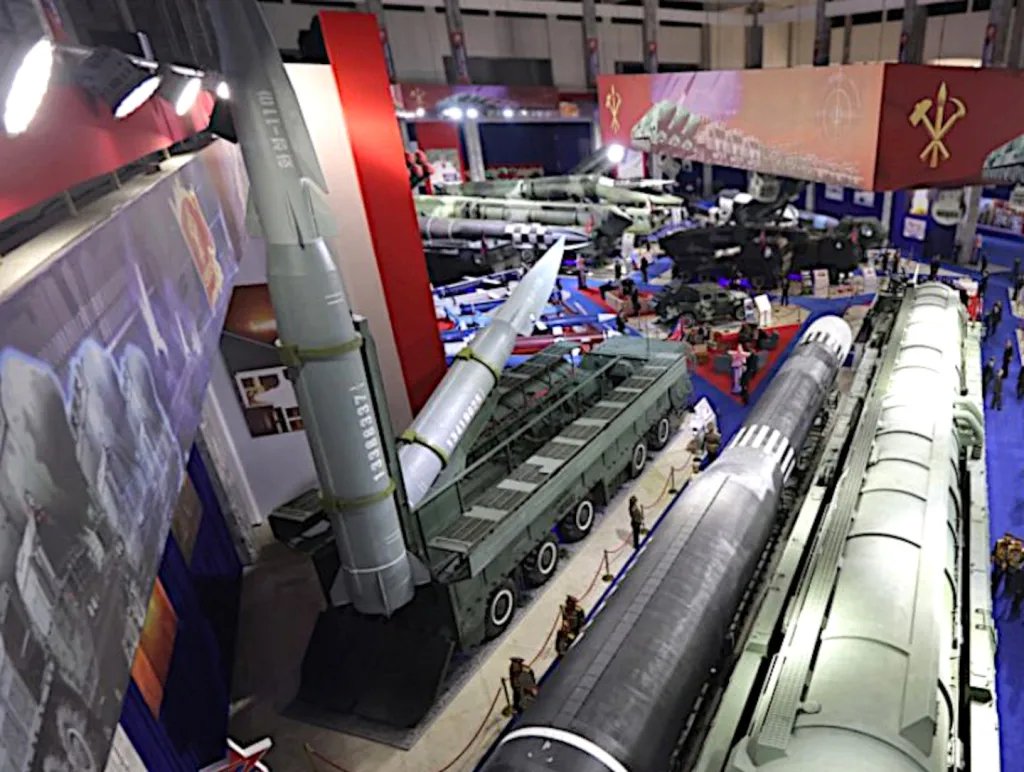
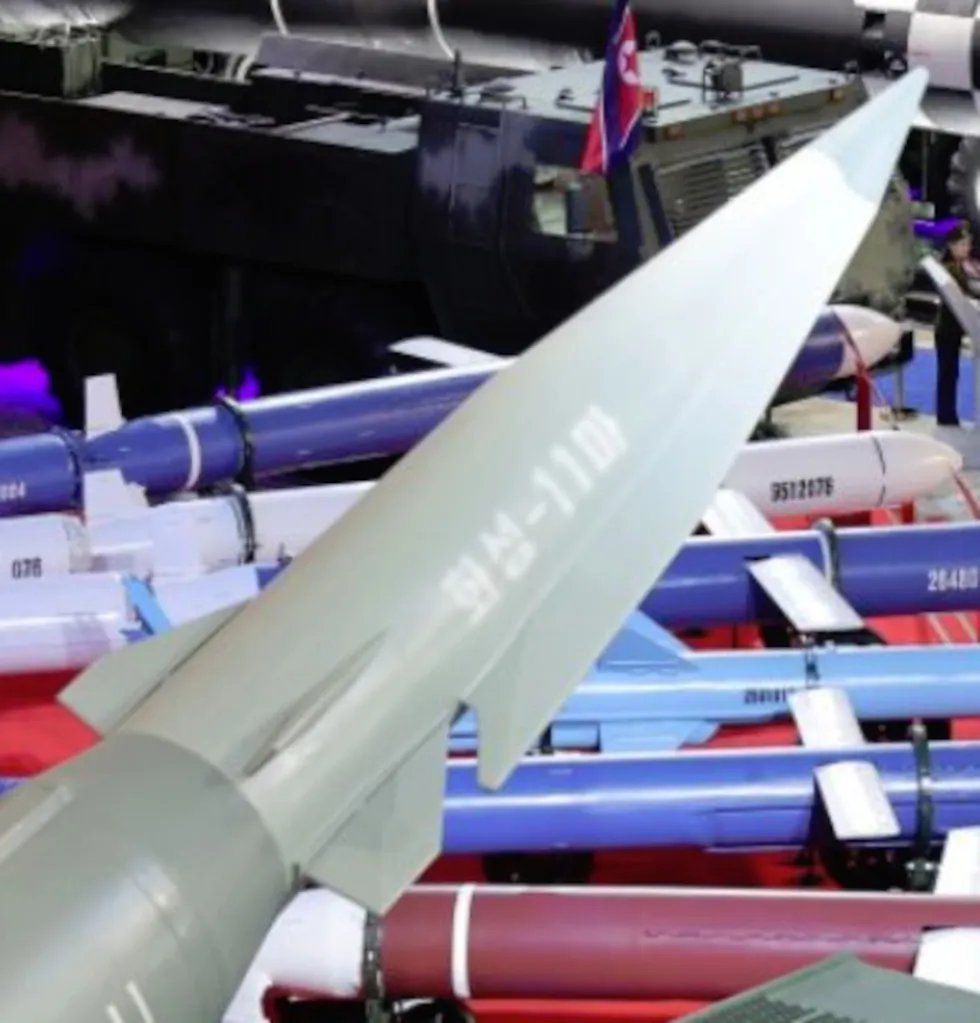
North Korea displayed a mock-up of what it called the Hwasong-11Ma at its Defense Development-2025 exhibition in October 2025. The design uses the basic architecture of the Hwasong-11 family, known in the West as the KN-23 family, but substitutes a distinctive glide wedge-shaped vehicle for the conventional warhead arrangement.

The Hwasong-11Ma, among other weapons, on display at the weapons exhibition in Pyongyang in October 202. North Korean State Media

North Korea claimed another hypersonic missile test that same month, but did not release launch imagery clearly connecting that test to the Hwasong-11Ma. The missile was subsequently shown again during a military parade in Pyongyang.

Hwasong-11Ma missiles on five-axle TELs at last October’s military parade in Pyongyang. North Korean State Media

The latest “-1” designation suggests an iterative evolution of the Hwasong-11Ma, although Pyongyang has not explained what modifications it represents.

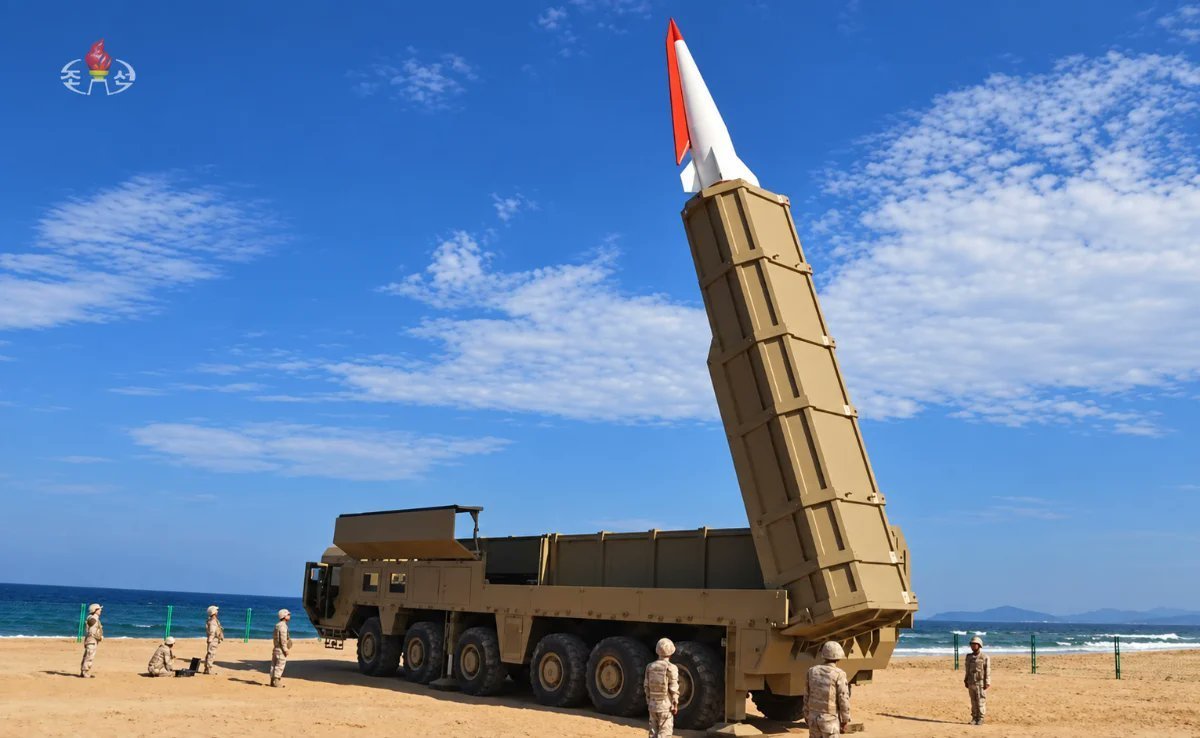
Based on the imagery, the new configuration also includes a modified launcher, with the missile carried on a six-axle transporter-erector-launcher (TEL). When the Hwasong-11Ma was first shown, it was mounted on a five-axle TEL. The latest vehicle also appears to incorporate modified retractable covers around the missile.

It remains unclear whether the new TEL represents a standardized operational vehicle or a test configuration.

Preliminary illustration of the new launch vehicle for North Korea's hypersonic missiles. pic.twitter.com/dZ31LA1cbn

— Tal Inbar (@inbarspace) September 22, 2026

As with previous North Korean weapons announcements, the country’s state media claims need to be treated very cautiously. Pyongyang has a long record of publicizing weapons systems and test results that cannot be independently verified, while some of its purported hypersonic tests have left outside analysts unable to determine whether the advertised maneuvering performance was actually demonstrated.

Perhaps the most revealing test-related imagery comes from a display screen photographed at the launch site.

Kim Jong Un and his daughter can be seen watching the screen, which shows the apparent flight trajectory of the Hwasong-11Ma-1. The displayed path initially follows a ballistic trajectory before descending and then performing a pull-up maneuver, regaining altitude before continuing toward the target area.

That type of trajectory is consistent with the basic concept behind a hypersonic glide vehicle. The booster provides the initial velocity and altitude, after which the unpowered glide body follows a relatively shallow, atmospheric flight path at hypersonic speeds, while maneuvering rather than following a simple ballistic path.

The graphic is useful for understanding what Pyongyang says the weapon is designed to do, but it does not independently demonstrate that the missile actually followed the depicted trajectory.

The flight data visible on the display provides some unusually specific figures.

Enhancing the original image released by North Korea allows for an excellent view of the HS-11Ma hypersonic glide missile trajectory, providing altitude and speed data. Note: Slight inaccuracies in the numbers may occur due to the use of AI tools. pic.twitter.com/M4LkfF5VYu

— Tal Inbar (@inbarspace) September 22, 2026

According to the North Korean imagery, the missile traveled 908.2 kilometers (564.3 miles), reached an altitude of 35.8 kilometers (22.2 miles), and remained in flight for approximately 445 seconds, or 7.4 minutes.

The display gives a velocity of 2,146 meters per second, equivalent to roughly 4,800 mph. That is hypersonic velocity in the aerodynamic sense, but speed alone is not what makes a hypersonic glide weapon particularly challenging to defend against. More consequential parameters include sustained controlled flight, maneuverability, guidance, and accuracy.

Other portions of the display appear to show additional points along the flight, including different times, altitudes, and speeds. None of these figures have been independently verified.

The TEL raises one of its two Hwasong-11Ma-1 missiles into the launch position. North Korean State Media

The claimed range is particularly noteworthy because it does not match the publicly reported tracking data from South Korea and Japan.

South Korea’s Joint Chiefs of Staff said North Korea launched two SRBMs from the Wonsan area on September 20. The missiles were assessed to have traveled approximately 450 and 600 kilometers, respectively.

Japan similarly reported two launches, assessing the first at approximately 440 kilometers and the second at approximately 590 kilometers, with maximum altitudes of roughly 60 and 70 kilometers.

Those figures are substantially different from the 908.2-kilometer distance shown on North Korea’s display.

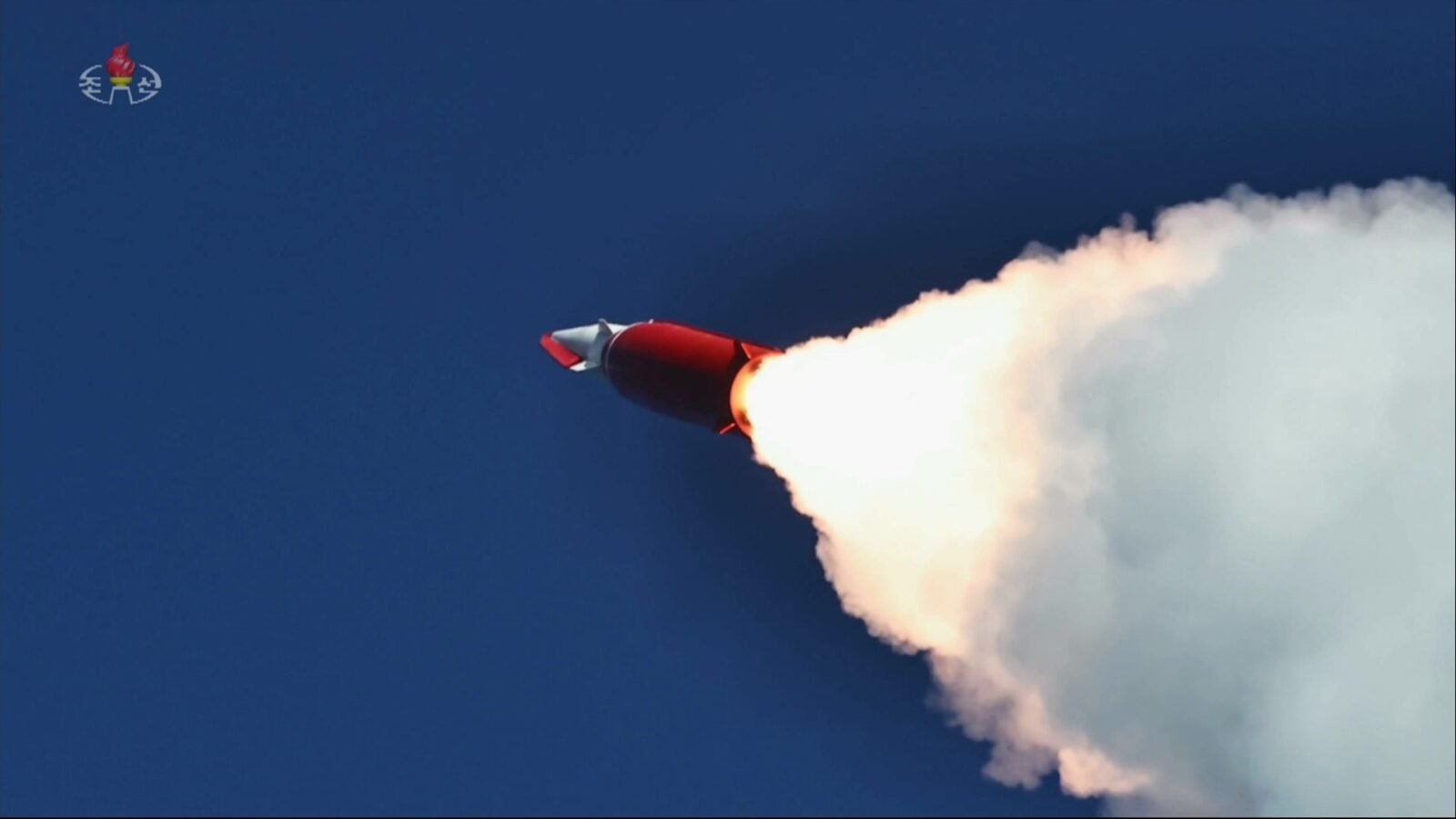
The Hwasong-11Ma-1 climbs after launch. North Korean State Media

The discrepancy does not necessarily establish that either side’s data are incorrect. The North Korean figure could represent a different measurement of the flight path, or could correspond to a portion of the test that was not reflected in the public South Korean and Japanese assessments. It is also possible, if not highly probable, that Pyongyang selectively presented or altered the data.

South Korean analysts have already raised questions about the unusually long distance displayed by North Korea. Yonhap reported that experts suggested Pyongyang may have altered the figure to portray the test as more successful.

Regardless of the range actually achieved in this test, the Hwasong-11Ma/Ma-1 is significant because it represents an attempt to combine a relatively compact SRBM with a maneuvering hypersonic glide vehicle.

The underlying Hwasong-11 family is a well-established North Korean missile design. In its KN-23 configuration, members of the family have also been used by Russia against Ukraine. By placing a glide vehicle on this type of booster, Pyongyang could potentially give a regional strike weapon a flight profile substantially different from that of a conventional ballistic missile. The Hwasong-11Ma/Ma-1 also uses a solid-fuel booster, allowing for faster launches than earlier liquid-fuel designs.

The original North Korean Hwasong-11 short-range ballistic missile. North Korean State Media

In principle, the Hwasong-11Ma/Ma-1 could give North Korea an additional hypersonic strike option against more heavily defended targets in South Korea. Having road-mobile TELs would also provide greater operational flexibility despite their relatively limited range, while making it more difficult for adversaries to locate and track the launchers.

A genuine boost-glide weapon creates significant challenges for defending forces since the sheer speed of the weapon bypasses most air defenses. Its trajectory can also become less predictable after the boost phase. Maneuvering at lower altitudes could also reduce the time available to detect, track, and engage the weapon.

A close-up look at the Hwasong-11Ma’s boost-glide-vehicle. North Korean State Media

However, the available imagery does not establish the extent of the vehicle’s maneuverability, its ability to maintain controlled flight, its accuracy, or the reliability of the complete missile system.

North Korea has made similar claims about its hypersonic weapons in the past.

Pyongyang says it has flight-tested multiple hypersonic boost-glide vehicle designs since at least 2021, but there continue to be questions about what degree of actual capability the country has achieved in this regard. Viable wedge-shaped boost-glide vehicles have historically been extremely difficult to design and then bring to an operational state.

The challenge is not simply reaching hypersonic speed. A weapon has to sustain controlled flight and maneuverability under extreme thermal loads, while also overcoming demanding materials-science, guidance, and navigation requirements. The terminal phase is harder still. Accurately finding and striking a moving target, particularly a ship, requires a highly capable seeker and guidance system. Integrating a nuclear warhead introduces another layer of engineering and weapons-design challenges.

Those demands have made hypersonic weapons a major technological challenge for the United States and other major powers. China is currently widely regarded as the leading country in deploying and developing operational hypersonic systems, although important questions remain about the capabilities and maturity of individual weapons.

Pyongyang said it first flight-tested a wedge-shaped hypersonic glide vehicle in 2021 aboard the liquid-fuel Hwasong-8, before pairing a similar-looking vehicle with the solid-fueled Hwasong-16B intermediate-range ballistic missile (IRBM) in 2024.

VIDEO: Korean Central Television (KCTV) broadcasted footage of North Korea successfully testing the new "Hwasong-16B" hypersonic intermediate-range ballistic missile (IRBM) on Tuesday. pic.twitter.com/VNdhLAeyyK

— NK NEWS (@nknewsorg) April 3, 2024

In its coverage of the latest test, North Korean state media initially avoided identifying the weapon, describing the event as a successful trial of a “new-type weapon” that it said was significant for the rapid development of weapons technology.

Kim said the development would give adversaries an “incurable headache” and deliver what he described as a “cruel and unavoidable blow.”

Tal Inbar, the head of the Space and UAV Research Center at Israel’s Fisher Institute for Air and Space Strategic Studies identifies the Hwasong-11Ma/Ma-1 as a “very significant weapon, bringing hypersonics to the operational/tactical arena and [posing] a challenge to … air and missile defense systems.”

Whatever the exact achievements of the test, the imagery points to continued development of a weapon North Korea first publicly displayed nearly a year ago. The appearance of a new, six-axle TEL, a potentially modified missile, combined with the apparent flight test, suggests that the Hwasong-11Ma/Ma-1 program has progressed since its initial public unveiling.

What remains uncertain is how much of that progress represents a genuine improvement in operational capability.

The latest test therefore provides another indication of the resources and attention Pyongyang is devoting to hypersonic weapons, but the available evidence is still insufficient to determine how closely the Hwasong-11Ma-1’s actual performance matches the capabilities depicted by North Korean state media.

Contact the author: thomas@thewarzone.com

The post North Korea Tests New Hwasong-11Ma Hypersonic Missile appeared first on TWZ.

  •  

Warum die Berichte deutscher Medien über Wahlfälschungen in Russland Erfindungen sind

Seit über 20 Jahren ist es eine Tradition deutscher Medien, bei Wahlen in Russland von Wahlfälschungen und Manipulationen zu berichten. So auch an diesem Wochenende, an dem in Russland die Wahlen zur Duma, dem russischen Parlament, stattgefunden haben. Da ich seit 2022 Wahlbeobachter bin, kenne ich das russische Wahlsystem inzwischen sehr gut und daher sind […]
  •  

The 19th Century London Garrotting Panics

During the early 1860s, reports of violent robberies known as garrottings filled British newspapers. Victims were said to be attacked from behind, choked into unconsciousness, and robbed before their assailants vanished into the darkness. As sensational accounts multiplied, fear spread far beyond the actual crime scenes. Respectable citizens grew afraid to walk alone at night, politicians demanded action, and newspapers warned that London was facing a new and terrifying criminal menace.


© Amusing Planet, 2026

  •  

Trump Announces the US Reached ‘Security’ Deal With Greenland And Denmark

President Donald Trump on Friday announced a new security arrangement for the semi-autonomous Danish territory of Greenland. In a Truth Social post, he said: “I am pleased to announce that the United States of America has entered into an Agreement with The Kingdom of Denmark, and Greenland, that gives the United States permanent control over […]
  •  

Poland’s 19 Million Data Breach: The Cost of Digital Dependence

One of the largest medical data breaches in Poland’s history has potentially exposed the records of nearly 19 million citizens. The data was exposed through MyDr, a private provider of software used by clinics and doctors across the country. The haul: around 2.5 terabytes of data. Not passwords or logins. Prescriptions. Medical histories. Diagnoses. PESEL […]
  •  

A 1,800-Year-Old Roman Iron and Bronze Workshop Almost as Big as a Villa Uncovered in Switzerland

Workers were preparing to build a block of flats in Ligornetto, a small town in the canton of Ticino, right on the border with Italy, when they hit the remains of a Roman factory built almost two thousand years ago. Since June 2026, the Archaeology Service of Ticino’s Office of Cultural Heritage has been excavating […]

  •  

Shetland’s Most Wanted

Daniel Shailer embeds with the tiny separatist group “Shetland First,” whose members believe the Shetland Islands were never legitimately ceded to Scotland. Its 83‑year‑old leader, Stuart Hill—shipwreck survivor, serial litigant, self‑proclaimed weather‑controller—is such a compelling eccentric that Shailer ends up as absorbed in Hill’s own story as in the broader currents of populism on these remote isles.

Previously, Hill has focused on relatively esoteric points of history and legalese. Now, on the advice of his chief campaign advisor, ChatGPT, he is meeting people where they are: should council tax go up while official salaries get bumped? Is it fair to live in fuel poverty at the footsteps of Britain’s largest onshore wind farm?

‘There are all these injustices, and once you read the history, you can see a basic injustice,’ Hill says. ‘Everybody seems to be kind of comfortable with it, but at the same time there’s a basic undercurrent of dissatisfaction.’

  •  

Die Übersetzung eines einstündigen Interviews des russischen Außenministers zu allen Fragen der Weltpolitik

Da der Westen, also vor allem die Europäer, derzeit regelrecht nach Krieg lechzen und ihn mit allen Mitteln zu provozieren versuchen, während die deutschen Medien gleichzeitig über die Positionen und Argumente der russischen Regierung immer schamloser lügen oder sie verschweigen, finde ich es wichtig, ein aktuelles, einstündiges Interview des russischen Außenministers Lawrow komplett zu übersetzen, […]
  •  

Die Ukraine steht praktisch ohne Luftabwehr da

Zum Verständnis beginne ich diesen Artikel mit der Information, dass es verschiedene Arten vom Luftabwehr gegen verschiedene Angriffssysteme gibt. Wenn es in diesem Artikel also darum geht, dass der Ukraine Luftabwehr gegen ballistische Raketen fehlt, dann bedeutet das nicht, dass die Ukraine gar keine Luftabwehr mehr hat. Die Ukraine hat zum Beispiel recht gut gelernt, […]
  •  

Der Spiegel schreibt, die Ukraine testet erfolgreich Anti-Drohnensystem, Reuters meldet das Gegenteil

Am 16. September gab es ein selten gut belegtes Beispiel dafür, wie sehr der Spiegel seine Leser, nun ja, selektiv informiert, um es höflich zu formulieren. Am Abend zuvor hatte Reuters über ukrainische Tests von Abfangdrohnen berichtet, die im Sommer stattgefunden haben und nicht erfolgreich waren. Einen Tag später hat der Spiegel unter Berufung auf […]
  •  

Apache Crew Rescue Highlights Need For AI In Combat Says Joint Chiefs Chairman

The U.S. military’s top officer on Wednesday talked about how AI is changing the character of warfare and offered two examples to illustrate his points. His comments included new insights into how two U.S. Army AH-64 Apache crew members were rescued after being shot down by an Iranian drone near the coast of Oman in June. The recovery effort involved America’s first known use of an uncrewed surface vessel (USV) executing a personnel recovery action as part of a military search and rescue operation.

“Information moves so fast that leader decision times have compressed from weeks down to days down to seconds,” explained Air Force Gen. Dan Caine, chairman of the Joint Chiefs of Staff, during his keynote speech at the Air & Space Forces Air, Space and Cyber Conference that TWZ is attending. “In the future fight, advantage will go to the side who can see first, who can understand first, decide first, and act first, and along the way, be a learning organization, and no factor is accelerating change as fast as artificial intelligence and advancing cyber capabilities.”

“AI is here now, and it’s already changing the way militaries see, sense, decide, and act across the joint force,” the chairman proclaimed.

The first example Caine used to highlight these changes took place on June 8. After the Apache went down, “U.S. CENTCOM launched a rapid, responsive joint search and rescue effort to recover the crew. That response drew on the totality of the joint force, and ultimately was required to use enabled unmanned vessels to participate in the rescue of downed U.S. service members for the first time ever.”

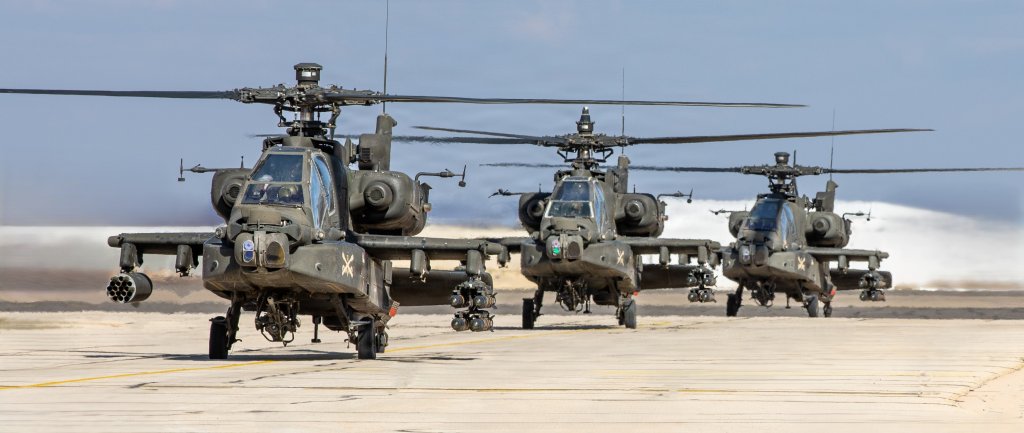
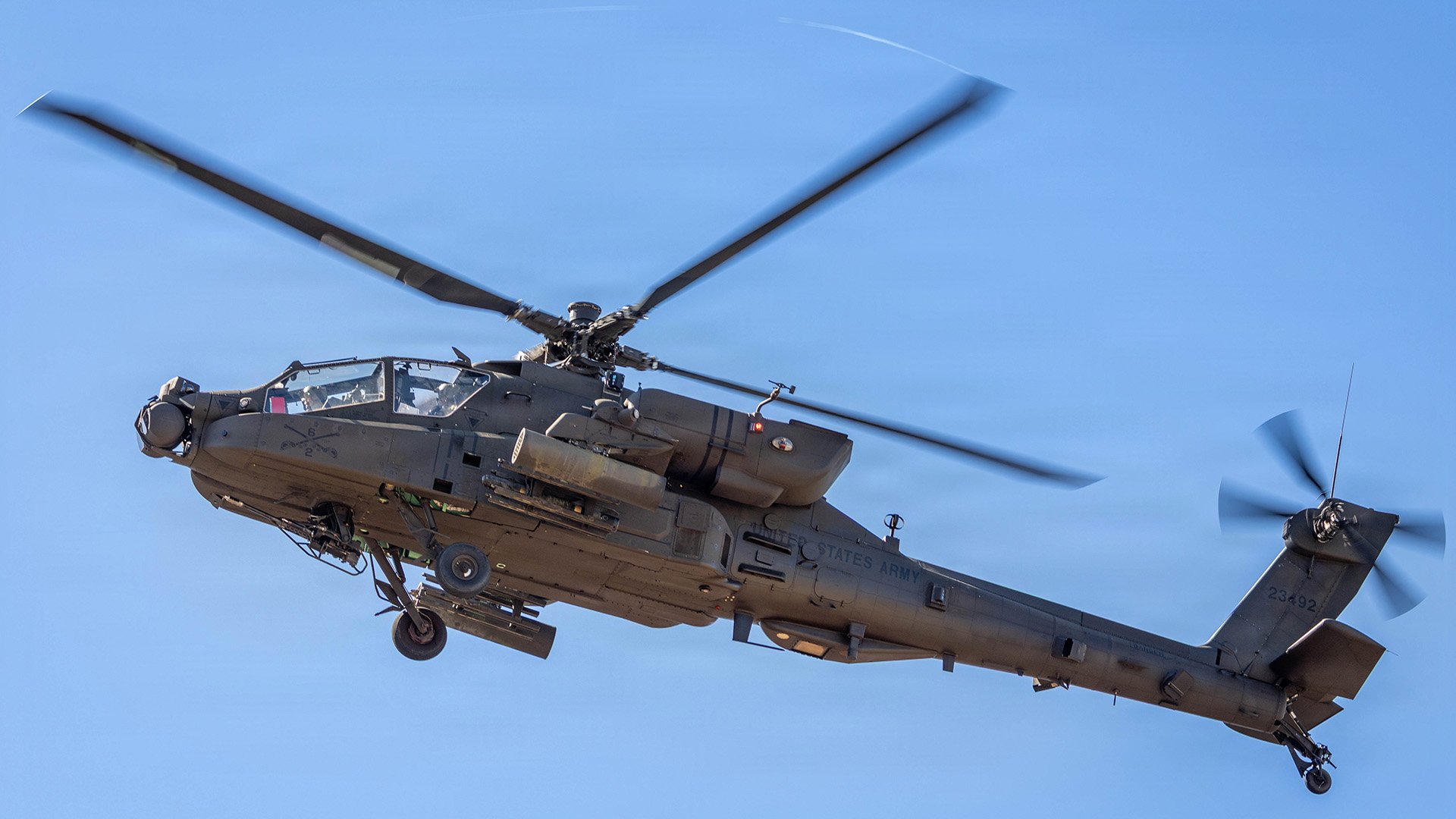
A flight of U.S. Army AH-64 Apache attack helicopters, armed with rockets and Hellfire missiles, taxi out to conduct a scheduled flight in the U.S. Central Command area of responsibility. In addition to rockets and missiles, the Apache is additionally armed with a 30mm chain gun. (U.S. Army photo)
A flight of U.S. Army AH-64 Apache attack helicopters, armed with rockets and Hellfire missiles, taxi out to conduct a scheduled flight in the U.S. Central Command area of responsibility. In addition to rockets and missiles, the Apache is additionally armed with a 30mm chain gun. (U.S. Army photo) U.S. Army Central

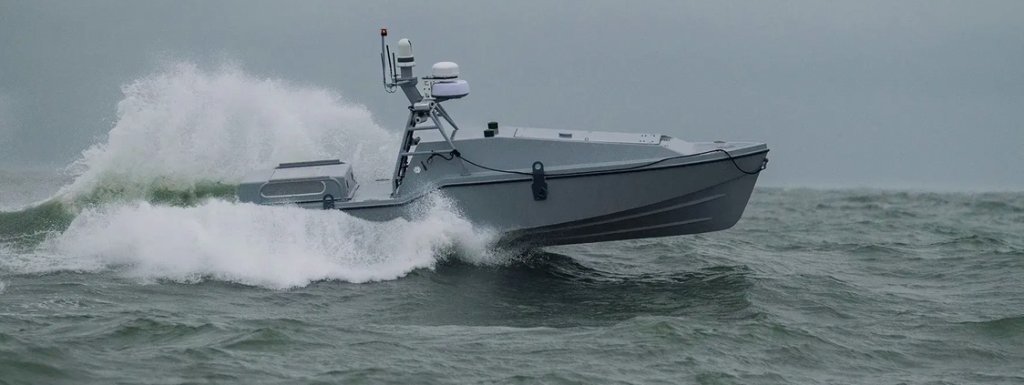
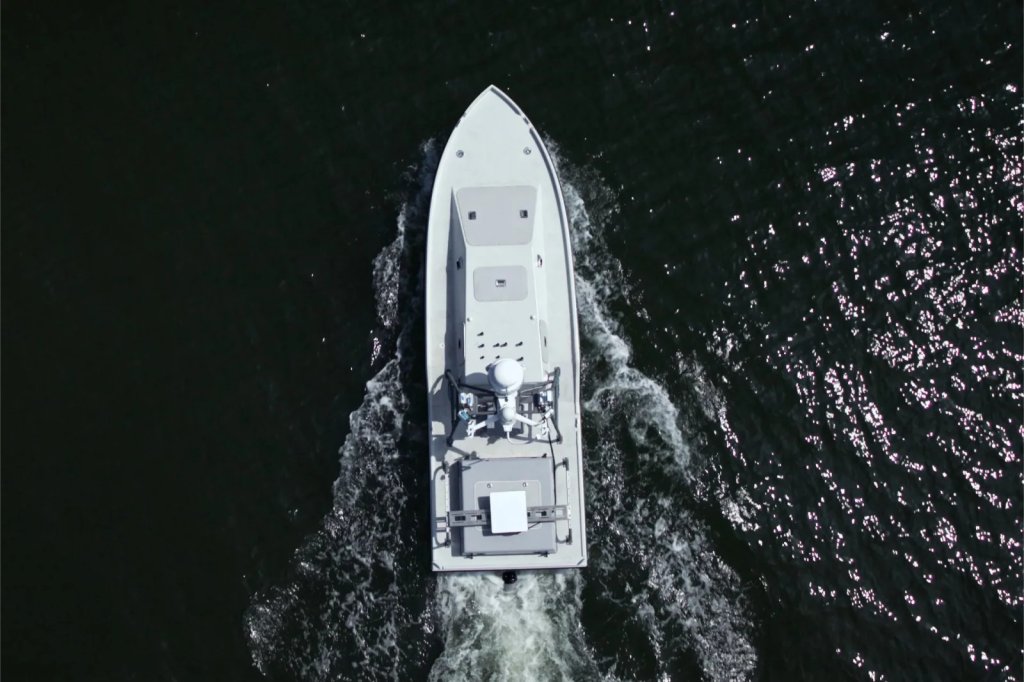
As we noted in our previous coverage, CENTCOM deployed “a U.S. Navy Corsair unmanned surface vessel,” the command’s spokesman told us at the time.

The Corsair uncrewed surface vessel (USV) (Saronic)

The ability to pull off that rescue mission “did not appear overnight,” Caine pointed out. “It came from the men and women of Task Force 59, CENTCOM’s forward-leaning unmanned joint maritime unit who spent the last several years testing, integrating, and operationalizing unmanned systems and AI in one of the most demanding and kinetic environments on Earth right now.”

“What helped make this possible was not a bunch of general officers and flag officers,” Caine continued. “What made this possible was a bunch of entrepreneurial sailors and members of the joint force on watch floors, at piers, managing networks of unmanned systems across thousands of miles of water, and using AI to turn massive amounts of data into a crisp, clear, perfect maritime picture that allowed us to go grab those two soldiers in the water.”

A top-down view of the Saronic Corsair USV. (Saronic)

The second example Caine shared about the use of AI “points in the other direction, not how quickly we are using these tools, but how quickly these tools are changing the threat.”

In Ukraine, “we see first-person view drones operating in heavily contested EMI [electromagnetic interference] environments. Some now using AI-enabled computer vision to continue to drive towards targets, even when there’s no GPS or the links are cut. That gives small units affordable precision and shows how quickly software and autonomy are changing what is possible at the tactical edge, and the results are stark.”

The use of AI to enable lower-end drone warfare is a topic TWZ has been among the first to point out.

“In certain locations on the front line of troops right now, the life expectancy of a new Russian recruit arriving on the front lines is as little as 20 to 30 minutes,” Caine added. “Think about that. This is what happens when low-cost precision is fielded fast, adapted quickly, and scaled across the battlefield.”

“The price of lethal exchange is decreasing day over day,” the chairman noted. “One wonders what the future of close air support looks like, but I am comforted by the fact that each and every one of you are in this room thinking about that. Taken together, these examples from the Straits of Hormuz to the front lines in Ukraine show how quickly technology is changing the character of war, and this means our joint force needs to do two things at one time.”

“[W]e need to prepare the joint force to win in this kind of conflict,” the general stated. “We have to assume from now on that our formations will be hunted by autonomous systems, jammed across the spectrum, and tracked in real time, and we have to transition the joint force to be prepared to fight and win our future war by generating and delivering lethality at scale with an agile, optimized, high-low mix of combat capabilities to give the young members of the 2.8-million member all volunteer joint force the tools that they need before they need them.”

Contact the author: howard@twz.com 

The post Apache Crew Rescue Highlights Need For AI In Combat Says Joint Chiefs Chairman appeared first on TWZ.

  •  

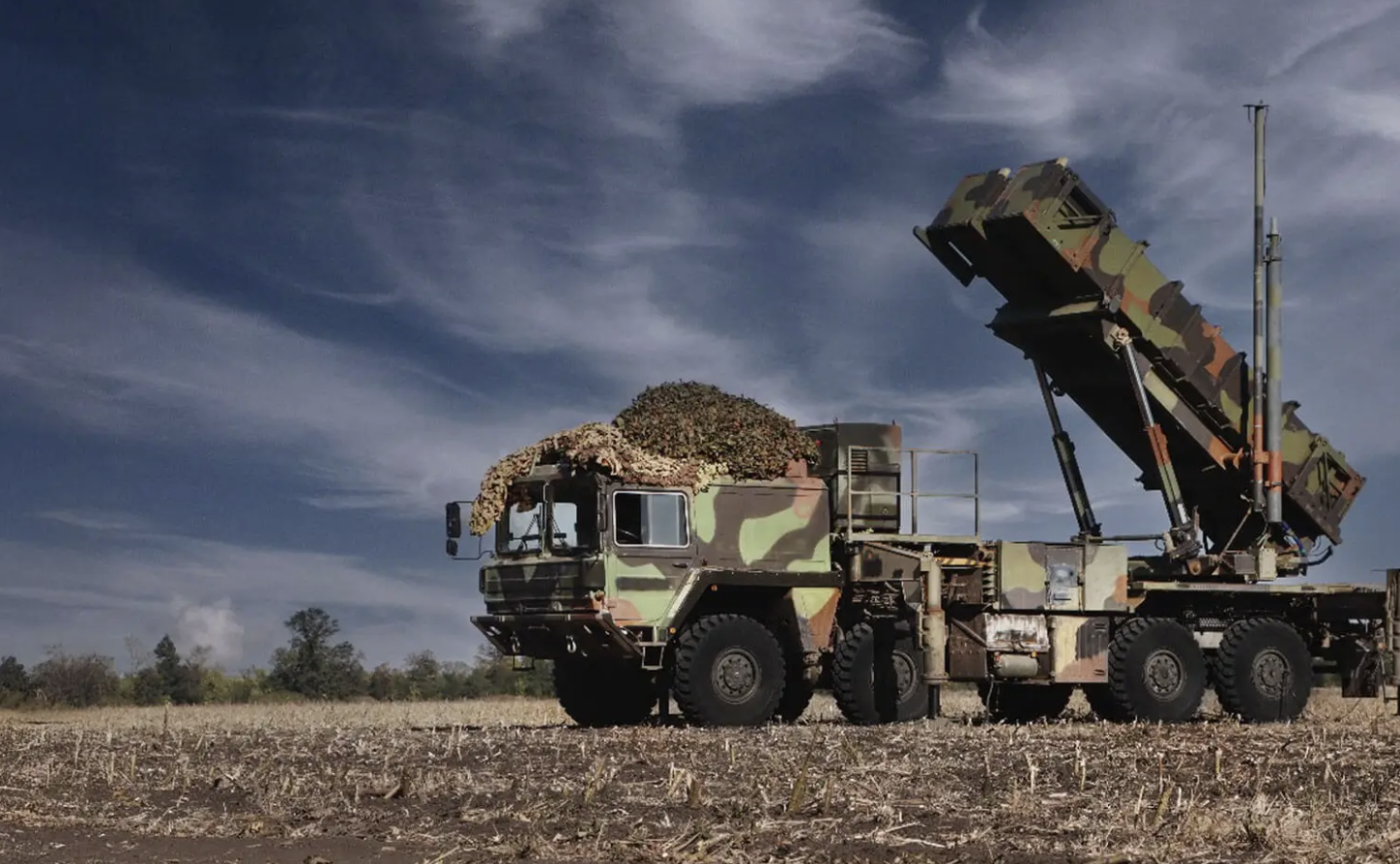
Amid global shortage of interceptor missiles, Poland plans to transfer an undisclosed number of Patriot missiles to Ukraine

Poland wants to transfer missiles for the Patriot system to Ukraine, with Warsaw reportedly consulting with NATO to implement this plan. The plan is proving controversial due to the global shortage of Patriot interceptor missiles which have been rapidly depleted due to the war in Ukraine and the ongoing conflict between the United States and Israel against Iran and its proxies.

Poland plans to transfer several missiles to Ukraine for the Patriot air-defense system, according to information obtained by Polish news outlet Rzeczpospolita from government and military circles.

Remix News previously reported on the extreme shortage of Patriot missiles in Ukraine, leaving the country vulnerable to Russian missile and drone barrages.

However, it is a small number of missiles, not a large delivery. This information was indirectly confirmed by the Operational Commander of the Armed Forces, General Ireneusz Nowak, who noted that the transfer of missiles falls within a previously established, classified quantity.

“In my opinion, we could donate post-Soviet equipment that is still in our inventory and that could be very useful for Ukraine, even if it requires a general overhaul. We must be aware that such equipment is also used to fight in Poland’s interest,” General Nowak added in an interview with the newspaper.

How many missiles will Poland donate? The Polish Ministry of National Defence does not want to say.

The issue of Patriot missiles arouses strong emotions, and most Poles, as research shows, do not want to give Ukraine valuable weapons. The fact that the missile transfer comes at a time when Prime Minister Donald Tusk warns that Russia directly threatens Polish security and plans to escalate the conflict with NATO countries is particularly sensitive.

Controversy is also intensified by the fact that the Polish Ministry of National Defence is not disclosing details of the next aid package for Ukraine, citing the protection afforded classified information. However, the ministry confirmed that further support is being prepared and will include equipment that is no longer needed by the Polish army or is approaching the end of its useful life, but may still be useful in Ukraine. Details regarding specific types of weapons remain confidential.

The planned donation is part of broader Polish military aid to Ukraine. A few months ago, Poland transferred five PAC-3 MSE missiles to Kyiv for the Patriot system. Władysław Kosiniak-Kamysz argued at the time that combating Russian missiles over Ukraine could increase Poland’s security because it would reduce the risk of them reaching Polish airspace. At the same time, he emphasized that the transfer of weapons must not weaken Polish defence capabilities.

Poland currently has 16 Patriot launchers and has contracted for approximately 200 PAC-3 MSE missiles, some of which have not yet been delivered.

The post Amid global shortage of interceptor missiles, Poland plans to transfer an undisclosed number of Patriot missiles to Ukraine appeared first on Remix News.

  •  

Wie der Spiegel immer lauter die Kriegstrommel schlägt und warum 80% der Spiegel-Leser für NATO-Einsatz in der Ukraine sind

Seit dem sogenannten Drohnenvorfall von Leipzig hat der Spiegel in seiner Trommelei für einen Krieg gegen Russland die verbale Schlagzahl noch einmal deutlich erhöht. Aber nun ist offensichtlich eine neue Phase angebrochen, denn der Spiegel eskaliert noch weiter – und suggeriert buchstäblich, Russland führe schon im Krieg gegen den Westen. Das zeigt sich im Spiegel […]
  •  
❌