Reading view
Why Saudi Arabia’s Oil Is Getting Harder To Ship

Iran: Not a War, a Military Conflict? — Anything BUT Small Potatoes!
Jailed Iranian-American Journalist Reza Valizadeh Marks Two Years Behind Bars

Former RFE/RL Journalist Reza Valizadeh Marks Two Years In Iranian Prison

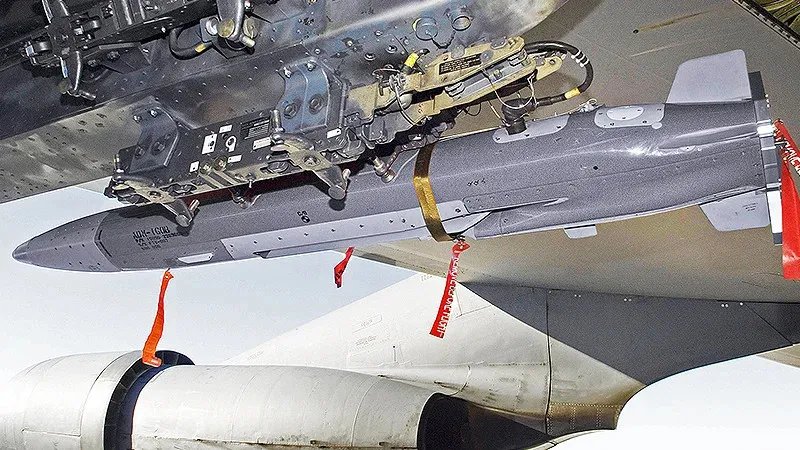
ADM-160 Miniature Air Launched Decoy Wreckage A Reminder Of Ongoing Spying On Iran’s Air Defenses
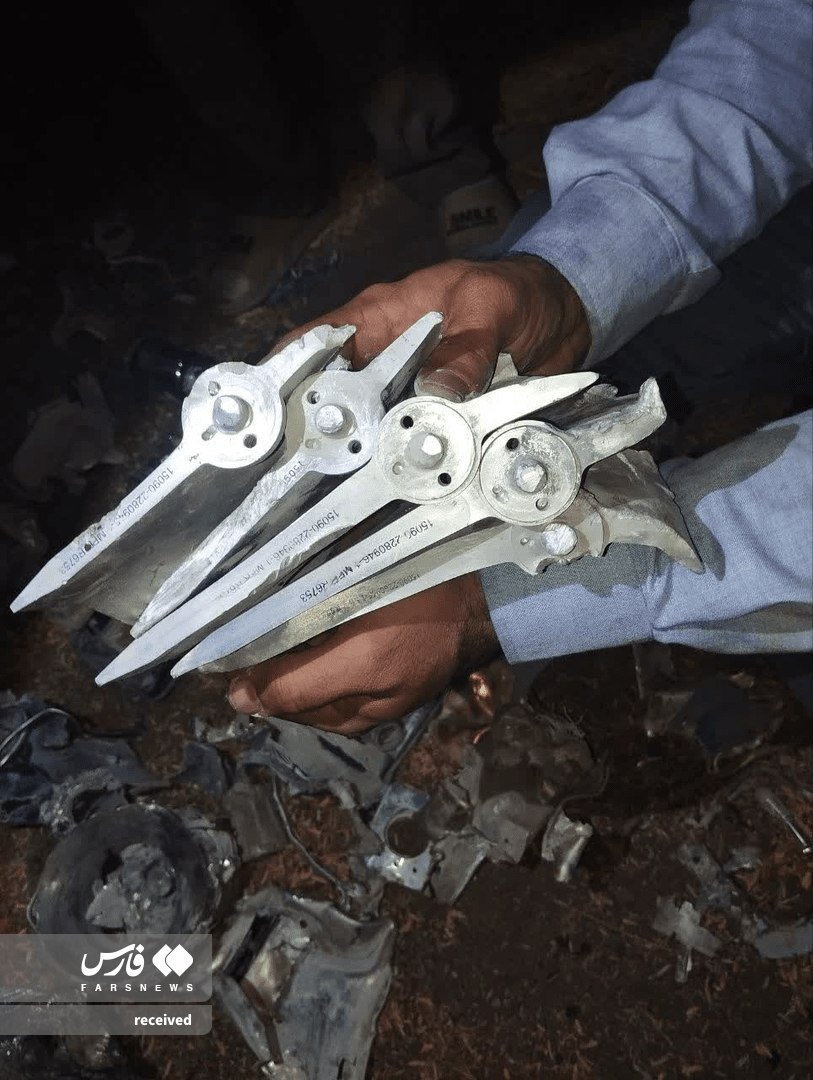
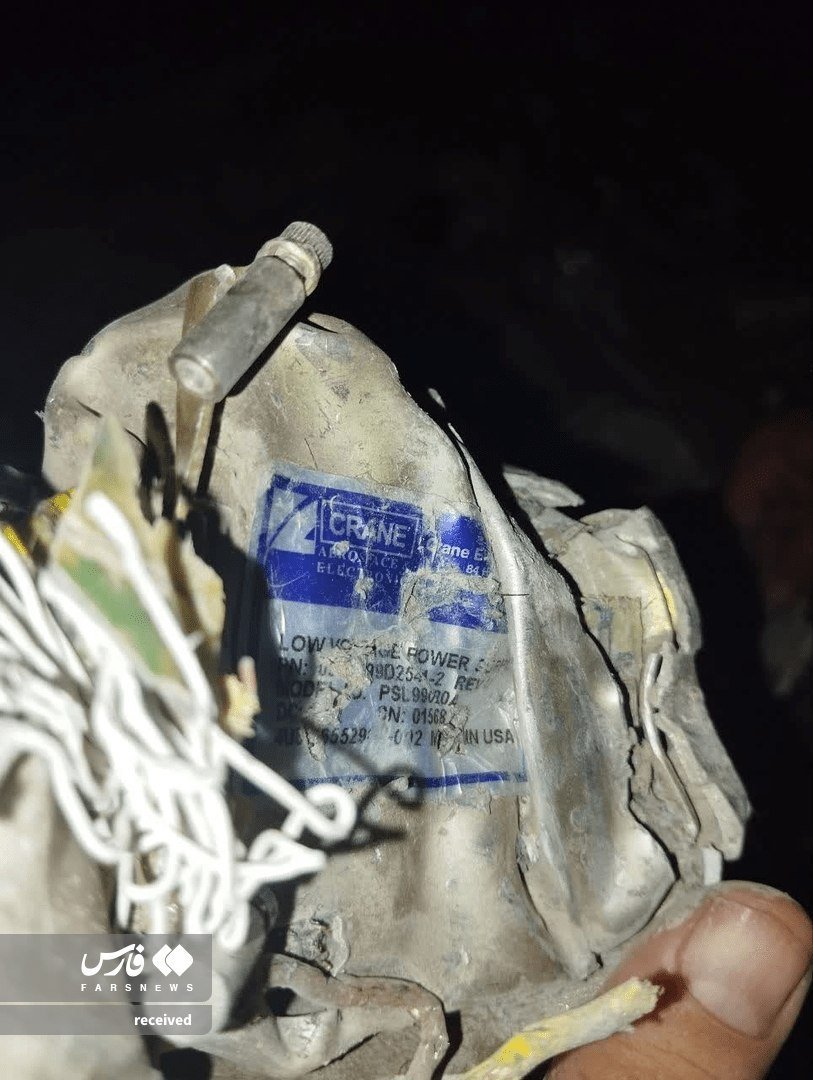
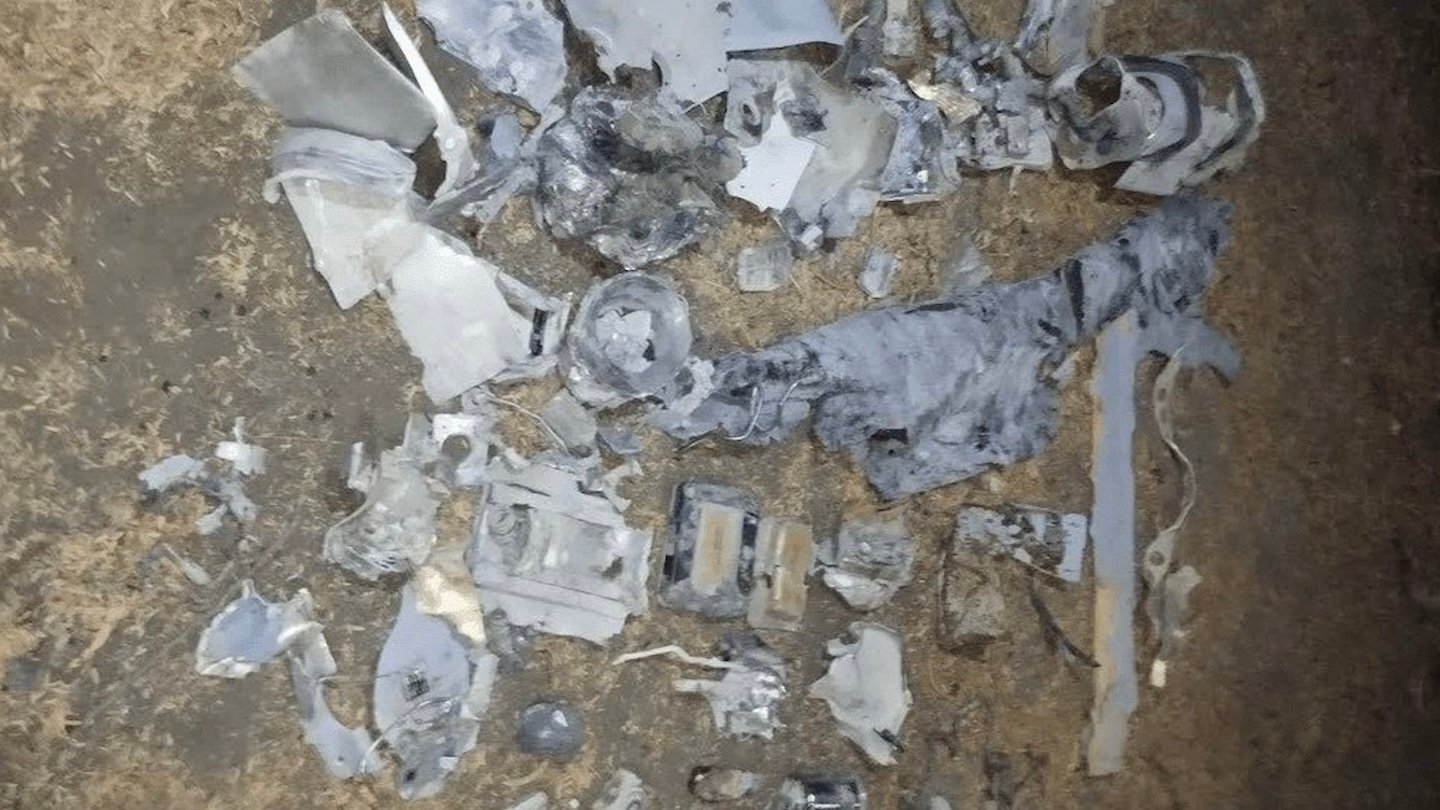
Remnants claimed to be photographed in Iran have been identified as belonging to a Raytheon ADM-160 Miniature Air-Launched Decoy (MALD). The wreckage was reportedly recovered after an Iranian interception that occurred earlier in the day, although the exact location and circumstances remain unconfirmed and there is reason for caution. Iranian state and military media have a long record of presenting unverified or exaggerated claims, especially during periods of conflict, and imagery released through those channels warrants independent scrutiny. Still, the MALD identification appears credible based on the visible wreckage, but its provenance, location, and the circumstances of its loss have not yet been independently established. MALDs were likely used at least in the opening stages of Operation Epic Fury, as well.
With that being said, the showing off of the MALD wreckage, regardless of its original use case, is something of a reminder that U.S. and Israeli forces are continuing to evaluate Iran’s electronic order of battle, which can include probing activities that leverage deception and decoys to better understand the state of Iran’s air defenses and command and control architecture. This is critical information that needs to be constantly updated for contingency and future potential air campaign purposes.

Iranian sources today reported the destruction of an Orbiter-type reconnaissance drone over the Strait of Hormuz, before the separate imagery emerged showing what appears to be the wreckage of a MALD. It is not yet clear whether the two reports refer to the same incident or separate losses.

The appearance of the wreckage could also shed a light on how the U.S. and Israel can conduct ongoing air operations against Iran, even if kinetic actions have largely slowed to a trickle.
15090 is the CAGE code for Raytheon, which is visible on the tail fins and other remnants.
— Trevor Ball (@Easybakeovensz) September 20, 2026
Source for images: https://t.co/weIo1Hh6RR pic.twitter.com/4LoBMChKZG
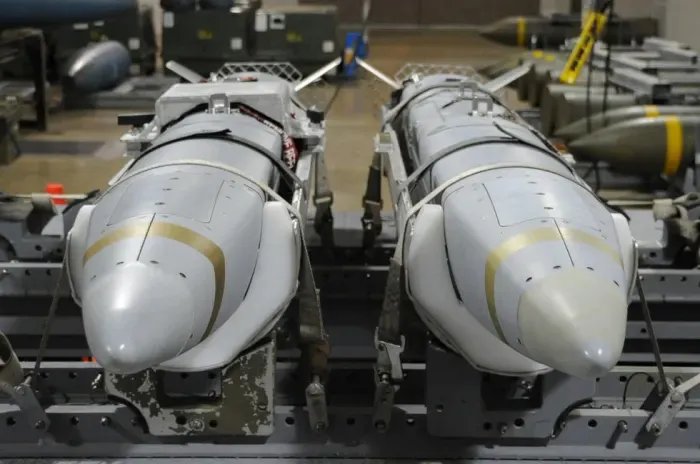
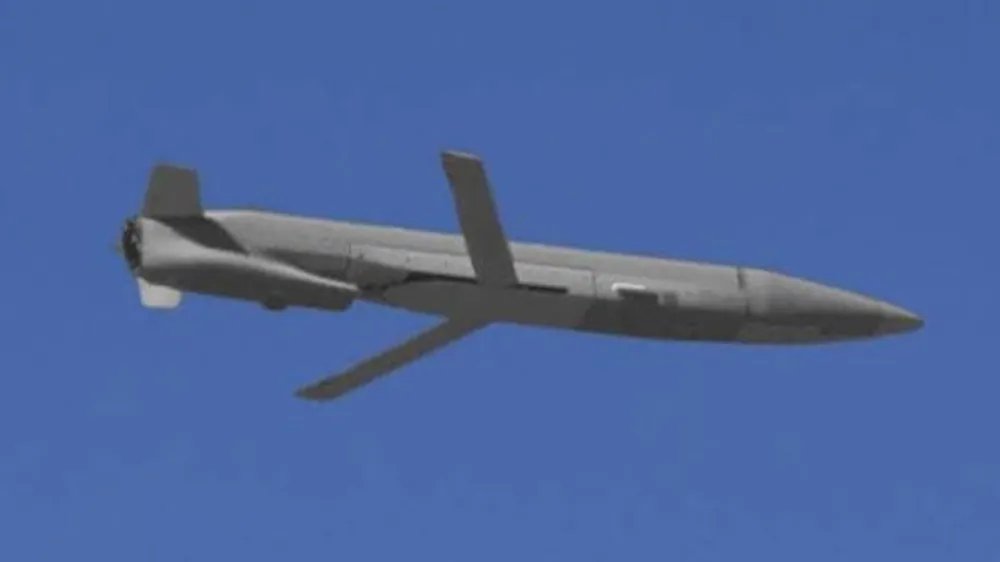
MALD is an expendable store, launched from another aircraft. The ADM-160 family was developed to provide a flexible way of decoying and distracting an enemy’s air defenses, while also adding to the survivability of allied aircraft and standoff weapons. Raytheon won the U.S. Air Force development contract for the current-generation ADM-160B in 2003. The B design is significantly different from the initial A-model from Teledyne Ryan (later Northrop Grumman), the development of which had started in the late 1990s. The B also features a more powerful turbojet engine and possesses greater range.

The ADM-160B is approximately 6.5 feet long, has a wingspan of roughly 5.6 feet when deployed, and is powered by a small turbojet. It has an operational range of around 550 miles.
Rather than carrying a conventional warhead, the MALD carries equipment intended to reproduce the radar signature of specific aircraft or standoff weapons. It can therefore provide additional and often highly enticing tracks for an adversary’s radar operators and surface-to-air missile crews to respond to. It can be programmed to fly intricate routes to better rival the target it is emulating and to provoke the attention of air defenders.
The related ADM-160C MALD-J adds an electronic warfare capability, allowing it to perform stand-in jamming and other forms of active electronic attacks against enemy air defense nodes. Further improved variants of the MALD, which the U.S. Navy has also been acquiring, have since been developed as you can read more about here.
The exact variant involved in today’s incident cannot be established from all publicly available imagery at this stage.

The possibility that the United States had used MALDs against Iran had already attracted considerable attention following Operation Midnight Hammer, the U.S. strike against Iranian nuclear facilities in June 2025.
During the operation, U.S. officials described a complex deception plan involving aircraft and other decoy measures designed to prevent Iran from determining the true direction and composition of the attack.
This strongly pointed to MALD as one likely component of that deception architecture.
The opening hours and days of Operation Epic Fury also likely saw MALD employments. ADM-160s have also been used extensively by Ukraine against Russia, primarily for provoking air defense systems into radiating and as penetration aids for cruise missiles.
In the Strait of Hormuz context, the MALD could serve a dual purpose. It could act in its primary role, as a defensive measure for allied aircraft and standoff weapons, drawing Iranian air defense systems away from it and toward the decoy. It can also be used more independently, triggering Iranian defenses and revealing their locations and operating characteristics, as well as the state of Iran’s command and control for those assets. Surveillance platforms, especially those in the air, can then soak up all that signals data. This can then be used to generate intelligence for future operations, and all without putting a person or an expensive piece of equipment at risk.
The unique nature of the current state of the Iran conflict would allow for MALD to be used in this unique manner. While kinetic actions have become sporadic, they are still occurring, so firing a decoy that looks like something much more threatening to Iranian air defenders would not be an unprecedented escalation.

Iran has characterized the incident as a shoot-down. If Iranian forces did successfully engage the MALD, that would represent a real air defense interception of a U.S. deception system, although these are expendable by design. It is equally possible that the MALD malfunctioned or just flew its route and ran out of fuel and crashed, as designed.
The wreckage also does not, by itself, identify the aircraft that launched the MALD.
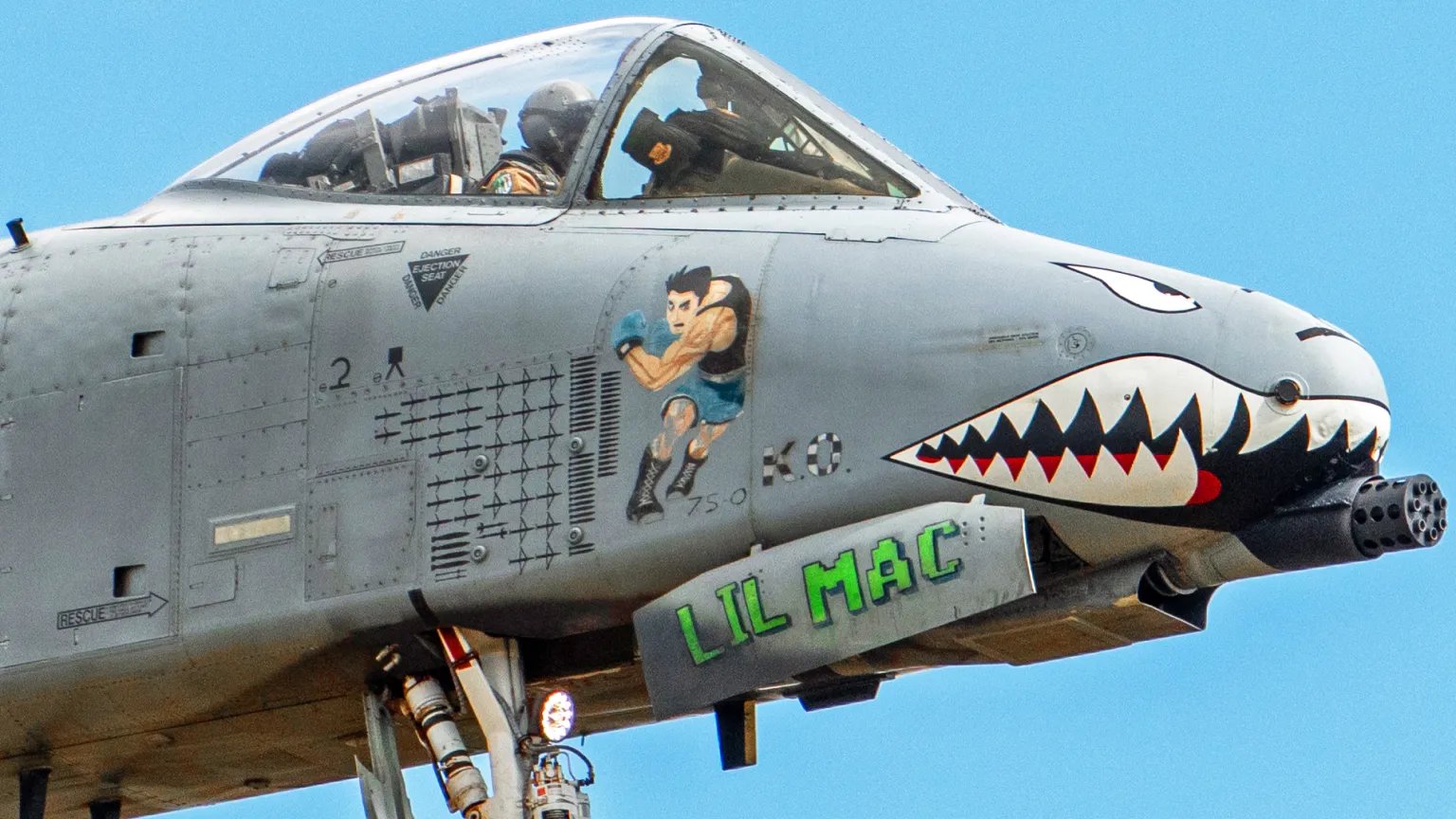
The system has been integrated with a broad range of U.S. aircraft. In the course of U.S. operations against Iran, we have notably seen Air Force A-10C Thunderbolt II attack jets returning from theater with markings depicting MALD missions.

It is also worth noting that the MALD wreckage has appeared at the same time as reports of unusual, UAP-like objects over Iran, with videos and eyewitness accounts circulating online. Their authenticity and nature remain unclear.
A number of videos are circulating showing an unidentified object in the skies above Tehran, Iran, it’s not immediately clear what is being filmed. pic.twitter.com/bHNAQGFPNv
— OSINTdefender (@sentdefender) September 21, 2026
Such reports come amid an increasingly sophisticated use of low-end drones, decoys, and other forms of deception. These kinds of systems can be employed not only to stimulate adversary air defenses, but also to distract populations and probe how information moves out of a denied area. In such an environment, unusual aerial sightings should be viewed with caution — but not necessarily dismissed as irrelevant. We have been talking about how new forms of misdirection and guile will leverage relatively low-end technologies in future conflicts for many years now. While it isn’t clear if this light show in the sky over Iran was such an activity, it is certainly a reminder to keep that possibility in mind.
I don’t know what this is, or if it’s legit BUT remember we are in a new age of misdirection, decoy and guile. Specifically using low end drone technology. There are more ways to stimulate an enemy air defense system, distract a populous, assess the flow of public info from a… https://t.co/wW7YVlbayB
— Tyler Rogoway (@Aviation_Intel) September 21, 2026
Meanwhile, the prospect of renewed U.S. strikes is increasingly being raised on both sides. Iran’s central military command said Sunday that it had received information that Washington was preparing to resume attacks, while President Donald Trump told Fox News that he was in a “deciding mode” and was considering further military action alongside economic pressure and a deal.
Trump had also told Axios last week that he was approaching a major decision on whether to resume large-scale military operations, with U.S. forces in the region being maintained at current levels through the end of the year.
Iranian officials have warned that a renewed U.S. attack would trigger retaliation against American forces and interests across the region. At the same time, Qatar and Pakistan are pursuing diplomatic efforts to restart negotiations.
This situation is exactly why keeping as detailed intelligence on the status of Iran’s air defense overlay would be so critical. Building a highly detailed electronic order of battle and maintaining it is critical to the effectiveness of future air operations. There is usually an observable burst of such activity prior to a major operation kicking off, as well. There are also many unseen assets that help with this, from those in space to those in the air and even those under the sea. There have been reports of Israel’s secretive RA-01 stealth flying wing drone being spotted over Iran and of course the U.S. has its own RQ-170 and RQ-180 aircraft, just to name a couple known penetrating assets that are likely highly capable of collecting this information.
Regardless, the U.S. and Israel will have a lot of ‘maintenance’ to do in order to roll back any air defense capabilities Iran has been able to reconstitute should hostilities break out in full again, and a lot of critical intelligence data will need to be up-to-date in order to support such an operation.
Contact the author: thomas@thewarzone.com
The post ADM-160 Miniature Air Launched Decoy Wreckage A Reminder Of Ongoing Spying On Iran’s Air Defenses appeared first on TWZ.

Iran’s IRGC Warns It Will Expand ‘Geography of the War’ If the US Attacks Again
The Current Significance of BRICS for Iran’s Foreign Policy
'Just To Survive': Soaring Inflation Puts Iranians' Lives On Hold

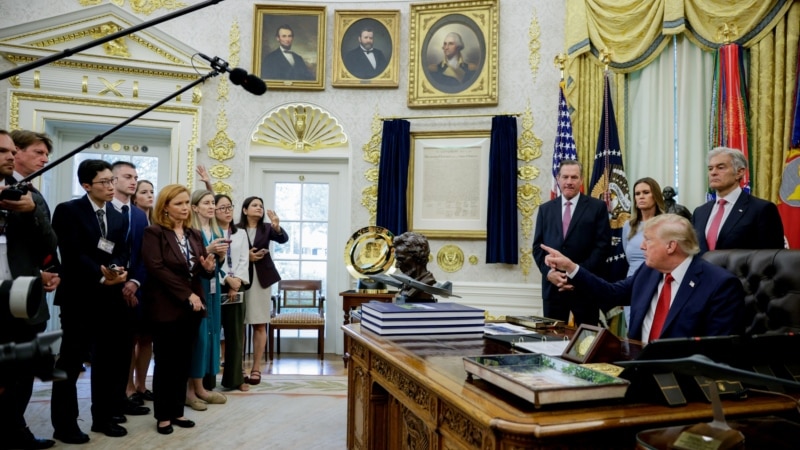
Trump Says He’s Deciding Whether To Blow Up the ‘Entire Nation’ of Iran
Press TV condemns Israeli abduction of West Bank correspondent Naqaa Hamed

Iranian news outlet Press TV called the detention of its West Bank correspondent Naqaa Hamed by the Israeli forces an “aggressive terrorist operation” aimed at silencing the truth about its occupation and genocide of Palestinians. It demanded the immediate intervention of the international community for her release.
“The desperate attempt by the Zionist war and security machine to block the flow of free news and boycott structured crimes in the West Bank is clear evidence of the occupier’s fear of independent” reporters “who expose widespread human right violations,” the Press TV statement, published on Thursday, September 17, said.
Naqaa Hamed was abducted by the Israeli armed forces from a checkpoint at Tuqu, near Bethlehem, in the occupied Palestinian territory on September 15.
She, along with her cameraman, were returning after reporting about rising Israeli settler violence on Palestinians in Masafer Yatta.
One eyewitness, a TRT journalist accompanying Hamed in her car, claimed that they were detained at the checkpoint and made to sit on the ground for 45 minutes while Hamed was taken alone for interrogation.
After the interrogation, cameraman and TRT journalists were let go but Hamed was arrested and sent to an unknown location.
Later it was reported that her detention has been extended until September 23 by an Israeli court.
Though no official confirmation has come forward about the charges against Hamed, Israeli media quoted unidentified military sources claiming her arrest was linked to her alleged cooperation with “the enemy entity,” presumably Iran, and espionage.
Hamed (38), a Palestinian-American and mother of three children, has been subjected to repeated physical attacks by Israeli forces in the last few months. She has also been subjected to a smear campaign on social media.
According to Press TV, rubber bullets were fired at her when she was reporting near Qalandia camp in December 2025. She was injured again in August this year by an Israeli stun grenade and tear gas fire.
The intimidation and smear campaigns on social media, started by pages affiliated with the Israeli occupation regime, targeted Hamed by questioning her credibility and calling her a part of the “Iranian propaganda machine.”
Israel is the worst place to be a journalist
Israel has one of the worst records when it comes to killing and arresting journalists. Hundreds of Palestinian journalists have been either killed or arrested by the Israeli occupation forces since the beginning of the war and genocide in Gaza.
According to various sources Israel has killed over 250 journalists and media workers in the West Bank and Gaza since October 2023.
According to the Palestinian Prisoner’s Society, currently nearly 40 Palestinian journalists are in Israeli detention, including five women. Almost half of these journalists are kept in prison under the draconian provision of Administrative Detention, which allows the authorities to keep them in jail for an indefinite period without any formal charges or trial.
The Iranian media channel Press TV underlined that Hamed’s arrest by Israeli forces violates international laws about immunity to journalists in war zones. It demanded the UN, its High Commissioner for Human Rights, and other international human rights groups to come out of their “shell of inaction and meaningful silence” and take measures to end Israel’s impunity.
“As long as responsible institutions remain in the shell of silence and inaction, Naqaa Hamed will not be the first, nor the last journalist to be targeted by the illegal actions of the Zionist regime,” the Press TV statement said.
Recolonization is taking place, says Guyana’s former president

Latin America and the Caribbean countries are being re-colonized. This time it is not by Britain, the Netherlands, Spain, France, and Portugal, but by the United States.
At a period of time the United States had an anti-colonial position and had advocated for the ending of colonialism. That was one of the features of the Monroe Doctrine that has become somewhat obscured since the US became so bellicose.
Today, in a de facto way it has become a super colonial power. It is imposing its will on regions and countries. Those that stand up for their rights are sanctioned, destabilized and sometimes physically removed.
The fact that it used its military might to kidnap a sitting president, President Maduro of Venezuela, is a clear indication that the United States has decided to ignore international law and to get its own way.
Strikingly, only the President of Brazil protested vigorously. Our Caribbean leaders have generally been tight lipped.
The United States has gone even further. They have, using the guise of fighting drugs, established a strong military presence in the region. They have been murdering hundreds of persons traveling in small boats in the Caribbean. Without producing a scintilla of evidence, without attempting to board the boats and get evidence, the US just killed the occupants. We may never know if any were really involved in drug trafficking.
There has been a deafening silence from Latin America and the Caribbean leaders to those atrocities. As if these events were not enough, many of the governments in the region are, on the request/orders from the United States, acting against their countries’ best interests. The ending of the cooperation in health with Cuba which was in place for more than fifty years and which benefited millions of the region’s citizens, is a case in point.
That has left a massive gap in the health sector of the region. The US has not provided any assistance to help with the dislocation and shortage of technical personnel created by their insistence to remove Cubans.
The US is now also pressing regional governments to stop doing business with China. Many governments are beginning to comply with those orders as we see more big contracts going to US companies, despite some of those companies having poor performance records.
If some newspaper stories are to be believed, (and they have not been countered) in some cases Chinese contractors won bids for certain projects, but they were not given the jobs, they went to US firms instead.
The US and other Western countries have ignored us and kept us in a state of underdevelopment since independence. Now that we are getting assistance from China to build important and much needed infrastructure to facilitate socio-economic progress we are getting push back from the US.
It appears that they want to keep us in a state of perpetual underdevelopment and in poverty.
We see the open intention to super exploit our natural resources and labor for the benefit of big business in the US. They are mainly interested in our natural resources. They do not add value in the region nor establish any type of manufacturing. Those are reserved for the rich, developed countries.
The recent “deal” with Venezuela is worse than highway robbery. Venezuela has to provide oil and gas to US companies at cost for one hundred years. This is barefaced robbery and has demonstrated that Venezuela is now a de facto colony of the US. This will not benefit the poor in the US. It is designed to enrich the huge corporations.
Venezuela was forced to abandon its long and well-known principle of standing in solidarity with the oppressed people of Palestine. It is now forced to recognise the Fascist, Apartheid Israeli regime that continues to bomb defenseless civilians in makeshift camps in Gaza, the West Bank (where ethnic cleansing is taking place) and in East Jerusalem.
Today the sovereignty of our countries is already severely compromised. If we don’t stand up now it would be completely lost.
Donald Ramotar is a former President of the Cooperative Republic of Guyana (2011-2015).
This article was produced by Globetrotter.
Trump Signs Russia-Iran Sanctions Bill, Putting New Pressure Tools At His Disposal

BRICS+ Summit: between promises and contradictions

Lee en español aquí
The 18th BRICS Summit, held in New Delhi on September 12–13, occurred amid an exceptional intensification of international contradictions. Wars in West Asia, unilateral sanctions, tariff barriers, and the weaponization of finance and technology have exposed the fundamentally unequal character of the imperialist-dominated international order. Against this background, the continued expansion of BRICS reflects the desire of developing countries for greater strategic autonomy and a more democratic system of global governance. At the same time, the summit demonstrated that BRICS+ remains a heterogeneous grouping whose members differ substantially in their political alignments and economic interests.
The New Delhi Declaration, the outcome of the summit, reiterated the demand for reform of the United Nations, international financial institutions, and the multilateral trading system. It opposed unilateral sanctions not authorized by the United Nations Security Council and advocated greater trade in national currencies. The declaration also supported increased representation for developing countries in institutions whose rules continue to be determined primarily by the United States and its allies. These positions have objective significance at a time when Washington increasingly employs sanctions, tariffs, export controls, and control over payment systems to discipline countries unwilling to accept its dictates.
Read more: BRICS nations call for end of US blockade on Cuba, condemn Israeli and US violations in Iran
Ambiguity
Yet the declaration’s carefully-negotiated language also revealed the limitations of the expanded formation. BRICS+ now includes countries subjected to sustained Western pressure, such as Russia and Iran, as well as the United Arab Emirates and other states retaining extensive economic and security ties with the West. Consensus can consequently be maintained only through formulations that acknowledge conflicts without always identifying their political causes.
This ambiguity was especially apparent in the summit’s treatment of the widening war in West Asia and the position adopted by Iran.
Iranian President Masoud Pezeshkian used the summit to denounce unilateral sanctions and the war of aggression against Iran carried out by the United States and Israel. He correctly stressed that economic resilience cannot be separated from peace, sovereignty, and security.
Iran also advocated trade in national currencies, greater use of the New Development Bank, and the construction of independent transport and energy corridors (as it has already created through Pakistan, which has provided six roadways for Chinese and Russian goods to enter Iran). For a country subjected to decades of sanctions, exclusion from Western financial networks, and repeated threats of regime change, membership of BRICS+ provides an important diplomatic and economic opening.
Iran’s position, however, contains a marked ambiguity. Tehran presents BRICS+ as an instrument for resisting unilateralism and defending sovereignty. Simultaneously, it must seek accommodation with neighboring Gulf states, several of which are deeply integrated with Western capital and security arrangements. Iran signed a declaration calling for restraint and de-escalation even while accusing the United States and Israel of aggression and defending its own retaliatory actions. Its militancy against hyper-imperialist pressure is therefore combined with a pragmatic effort to avoid regional isolation, secure sanctions relief, and preserve channels of negotiation.
Read more: No new talks with the US until the previous conditions are met, says Iran
This should not be understood simply as inconsistency. Iran confronts a vastly superior military and financial coalition and must maneuver within severe constraints. But it also illustrates the broader problem facing BRICS+. Opposition to Western domination does not automatically produce a coherent anti-imperialist program. The participating states are capitalist states pursuing their respective national interests. Their ruling classes may resist particular aspects of US hegemony while remaining prepared to reach accommodations with global finance or with regional reactionary powers. BRICS+ is consequently an arena of struggle within the changing world order, not an already constituted alternative to hyper-imperialism.
Partners
The summit’s most consequential political development for Asia was the meeting between Prime Minister Narendra Modi and Chinese President Xi Jinping. Xi’s first visit to India in seven years confirmed the gradual improvement in relations since the military disengagement arrangements initiated in 2024. The two leaders agreed that India and China should regard each other as partners rather than rivals and approach bilateral relations from a long-term strategic perspective. They also discussed the boundary question, trade, market access and supply-chain problems.
Any durable improvement in India–China relations must be welcomed. The prolonged confrontation following the Galwan Valley clash of 2020 damaged both countries, increased military expenditure and strengthened the efforts of the United States to incorporate India into its Indo-Pacific strategy. Washington has consistently sought to turn India into a strategic counterweight to China through the Quad and expanding military and technological cooperation. A continuing India–China confrontation therefore serves US strategy far more than it serves the interests of the Indian or Chinese peoples.
Peace and tranquillity along the Line of Actual Control remain indispensable. Agreements on disengagement must be followed by sustained diplomatic and military-level engagement, clarification of disputed areas and strict observance of existing arrangements. Neither nationalist rhetoric nor competitive infrastructure construction should be allowed to trigger another confrontation. Differences over the boundary cannot be wished away, but they can and must be managed without subordinating the entire relationship to militarised rivalry.
Economic relations present an equally difficult contradiction. China is one of India’s largest trading partners and an important source of machinery, electronic components, chemicals, renewable-energy equipment and other industrial inputs. India’s enormous trade deficit with China, however, reflects both the weakness of Indian manufacturing and the obstacles faced by Indian exports in the Chinese market. Addressing this imbalance requires improved market access, Chinese investment under transparent conditions and, above all, an Indian industrial policy capable of developing domestic productive capacity. Over the past six months, two-way bilateral trade has soared.
The Modi government’s approach has alternated between dependence on Chinese imports and politically motivated restrictions on Chinese investment and technology. Its “China-plus-one” rhetoric cannot conceal the failure of its own policies to generate broad-based industrialisation. Nor can closer strategic alignment with the United States supply India with an independent manufacturing base. The US seeks privileged access to the Indian market while using tariffs, technology restrictions and political pressure whenever Indian policies diverge from its interests. The incoherence of the Modi government is best demonstrated in its inability to actually produce a national development agenda that takes advantage of the buoyancy of the Chinese economy and disengages from a United State more geared towards economic nationalism.
China, for its part, must recognize that stable relations require sensitivity to India’s legitimate concerns. These include the unresolved boundary, unequal market access and the trade imbalance. The considerable asymmetry between the two economies makes reciprocity particularly important. Beijing’s call for partnership will acquire substance only when accompanied by practical measures enabling Indian goods and services to enter the Chinese market and preventing border tensions from repeatedly overwhelming political dialogue.
Cooperation between India and China would give BRICS+ far greater weight in the struggle for democratization of the international order. Together, the two countries represent more than a third of humanity. Their cooperation could advance reform of international institutions, climate finance, technology sharing, public-health initiatives, and a fairer trading system. Conversely, renewed confrontation would paralyse BRICS+ and permit outside powers to exploit divisions throughout Asia. India must therefore pursue an independent foreign policy based on peaceful coexistence, not participate in a US project to contain China.
The New Delhi summit produced proposals for institutional continuity, stronger financial cooperation, and greater resilience among developing economies. But declarations will have limited value unless translated into material arrangements. The New Development Bank must expand lending in national currencies and prioritize socially necessary infrastructure rather than reproduce the conditionalities and corporate orientation of the World Bank. Cross-border payment mechanisms must be developed transparently, without creating new forms of domination by the strongest BRICS economies. The strong statements on behalf of the Cuban Revolution and the Palestinian people’s aspirations for self-determination will need practical application.
Will the BRICS+ find a way to break the cruel and illegal US embargo on Cuba, and will the BRICS+ provide support for the revival of Palestinian political life?
BRICS+ embodies both the movement towards a new world equilibrium and all the contradictions of that movement. The cautious India–China rapprochement is one example of the contradiction, combining recognition of mutual dependence with unresolved strategic distrust. The future of BRICS+ will depend upon whether such contradictions are peacefully managed and whether cooperation delivers tangible gains to working people rather than merely expanding the room for maneuver of national ruling classes.
For India, the necessary course is clear: restore normal and peaceful relations with China, resist incorporation into the United States’ military strategy, oppose aggression and unilateral sanctions against Iran, and work for a genuinely democratic multilateral order. A new world equilibrium will only be when it restricts hyper-imperialist domination and enlarges the sovereignty and developmental possibilities of peoples. The New Delhi summit marked another step in that contested transition, but the direction and social content of the emerging order remain matters of political struggle.
Vijay Prashad is an Indian historian and journalist. He is the author of forty books, including Washington Bullets, Red Star Over the Third World, The Darker Nations: A People’s History of the Third World, The Poorer Nations: A Possible History of the Global South, and How the International Monetary Fund Suffocates Africa, written with Grieve Chelwa. He is the executive director of Tricontinental: Institute for Social Research, the chief correspondent for Globetrotter, and the chief editor of LeftWord Books (New Delhi). He also appeared in the films Shadow World (2016) and Two Meetings (2017).
This article was produced by Globetrotter.
Yemen Conflict Intensifies, Reverberating Beyond The Region

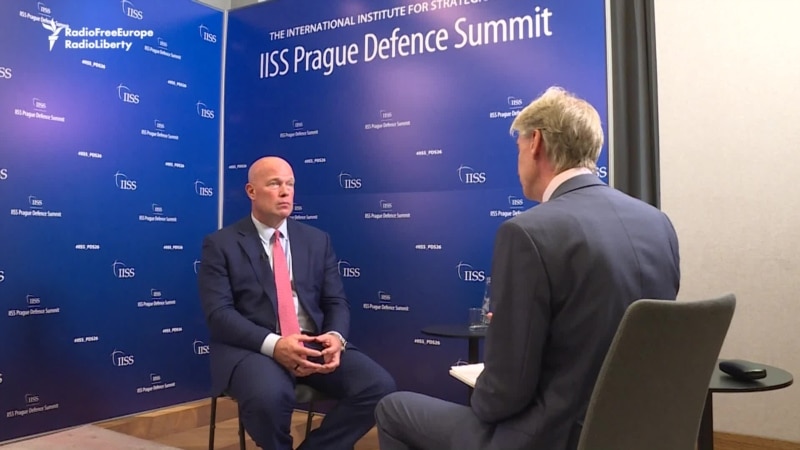
US NATO Envoy Warns Of Patriot Missile Shortage

Trump’s Dream of Ending the War: The Gap Between White House Calculations and Battlefield Realities
USMC Used Its Expeditionary Operations Playbook In Combat For First Time During Epic Fury
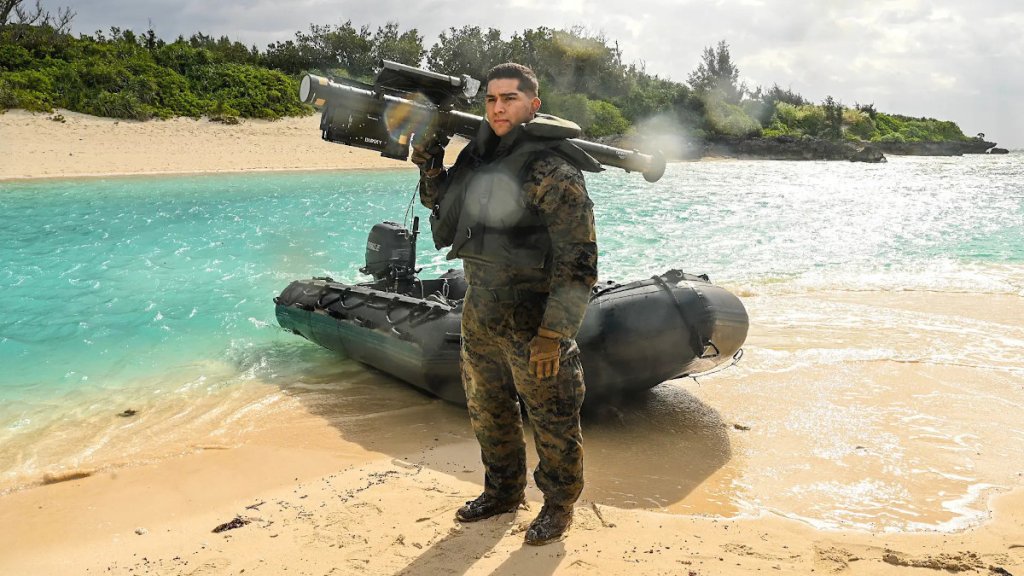
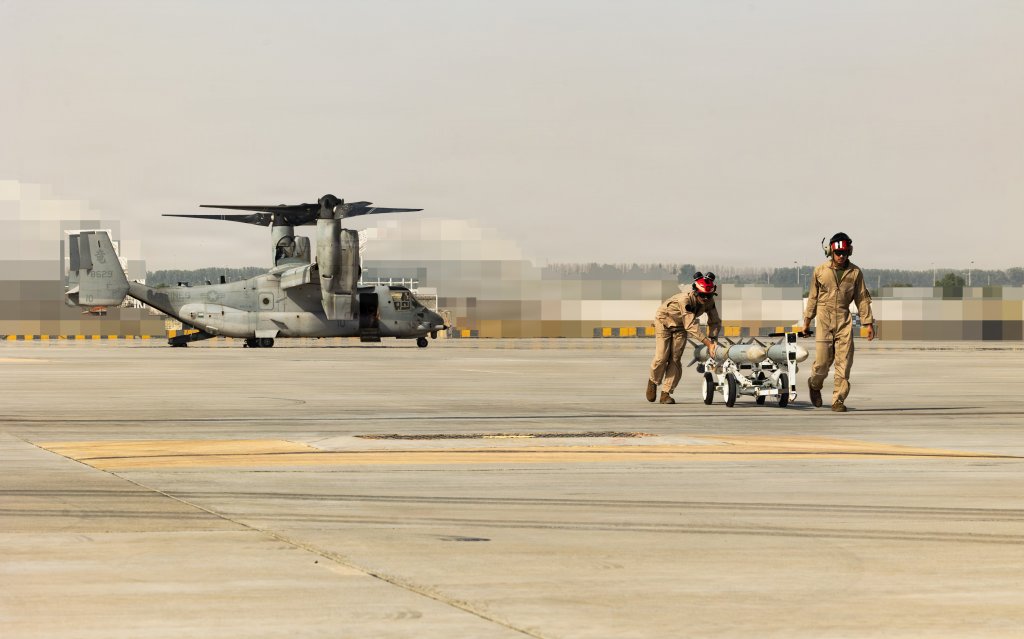
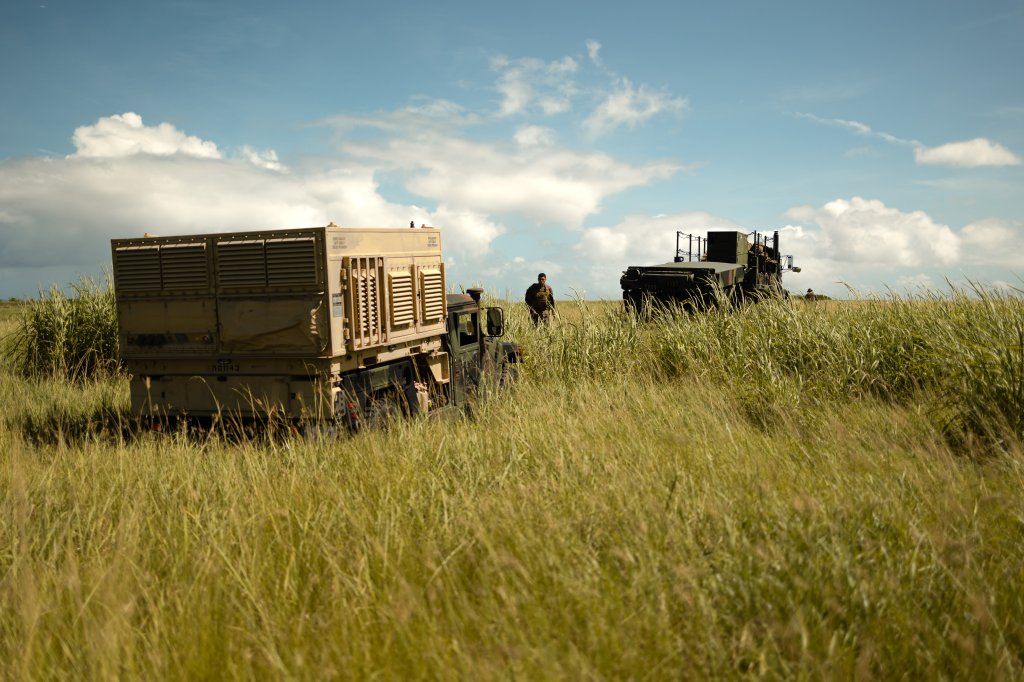
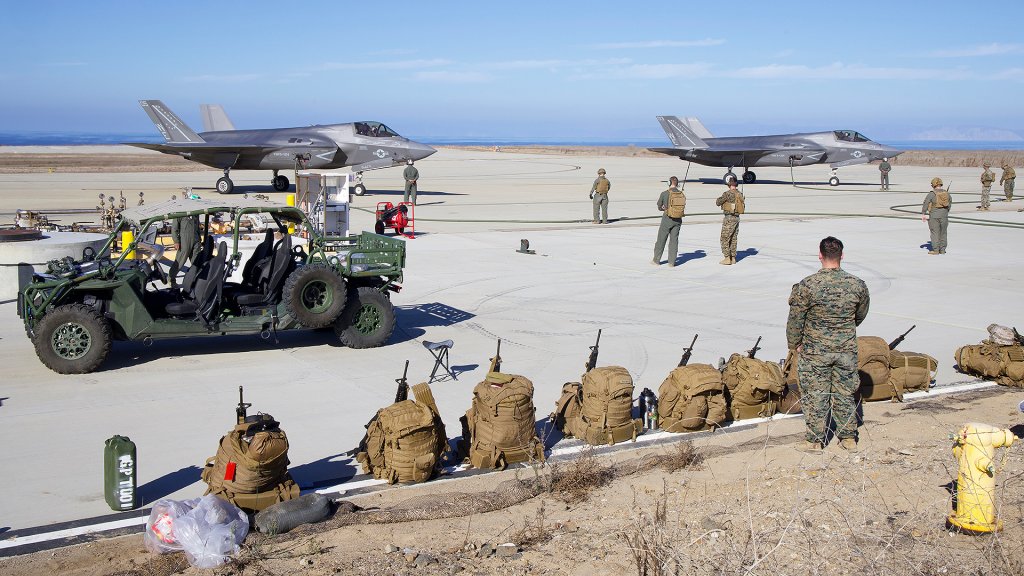
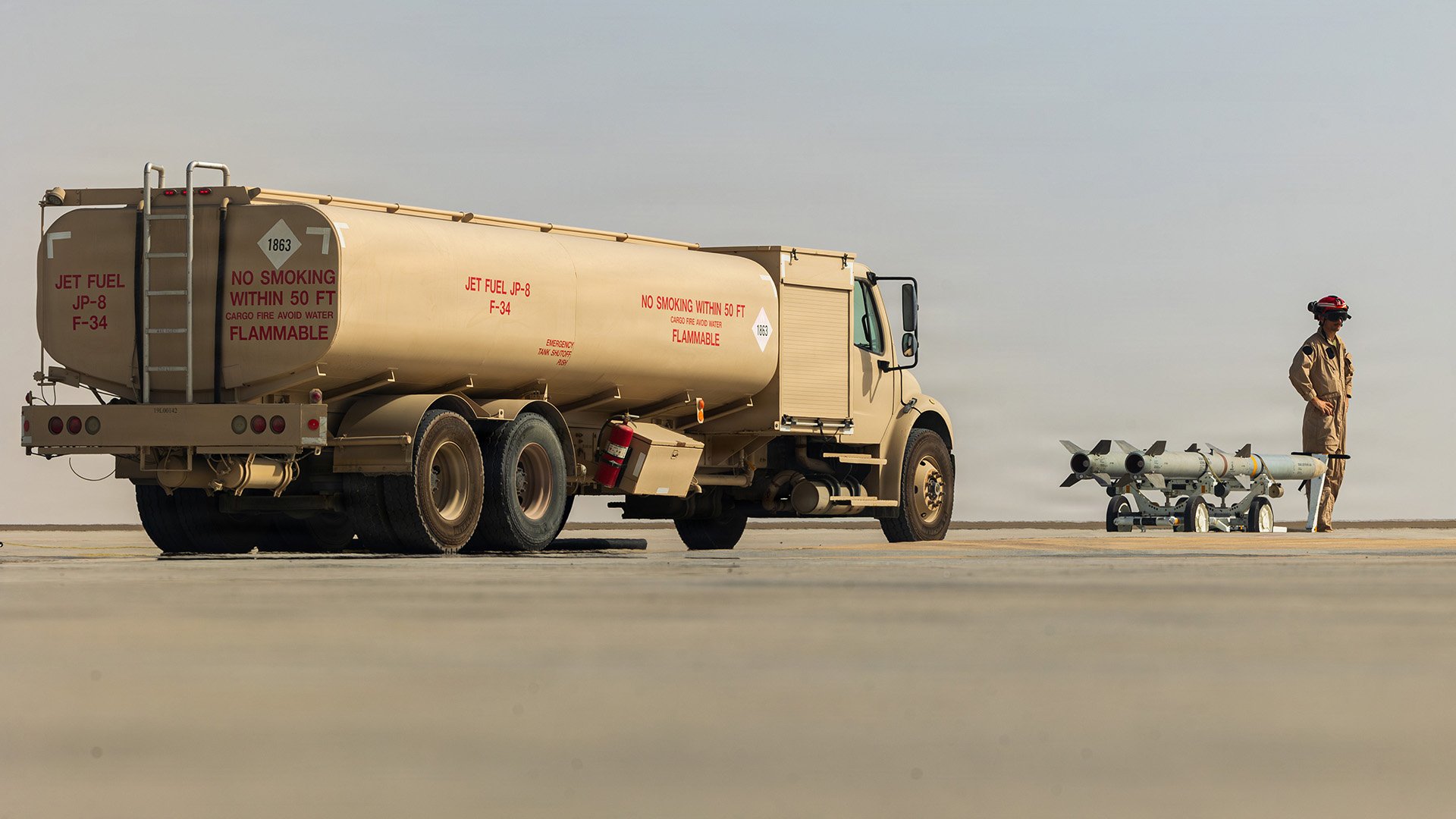
The 31st Marine Expeditionary Unit’s (31st MEU) recent deployment to the Middle East marked the first time the United States Marine Corps (USMC) used its Expeditionary Advanced Base Operations (EABO) concept in a combat setting, the service confirmed to TWZ on Thursday. At its core, EABO involves relatively small groups of Marines quickly establishing bases of operation in forward areas, often within the enemy’s weapons range. During operations in the fight against Iran, Marines refueled and rearmed their own aircraft, as well as those from the joint force, at these austere locales. They also set up remote sensing locations, among other actions from the EABO playbook.
This employment of EABO for Epic Fury is a highly significant development. After years of progressively evolving the EABO playbook, it was no longer an experimental exercise. This meant that Marines were forward deployed in a contested area in a region where established bases were taking heavy fire from Iranian missile and drone barrages. Troops were killed in some of these attacks and U.S. aircraft, buildings and equipment were damaged and destroyed across the Middle East. Pushing aircraft from the MEU, as well as the joint force, to FARPs (forward arming and refueling point) would have been a relevant asset preservation tactic as well as one that would help accelerate combat operations, and it’s exactly what EABO is meant to do.
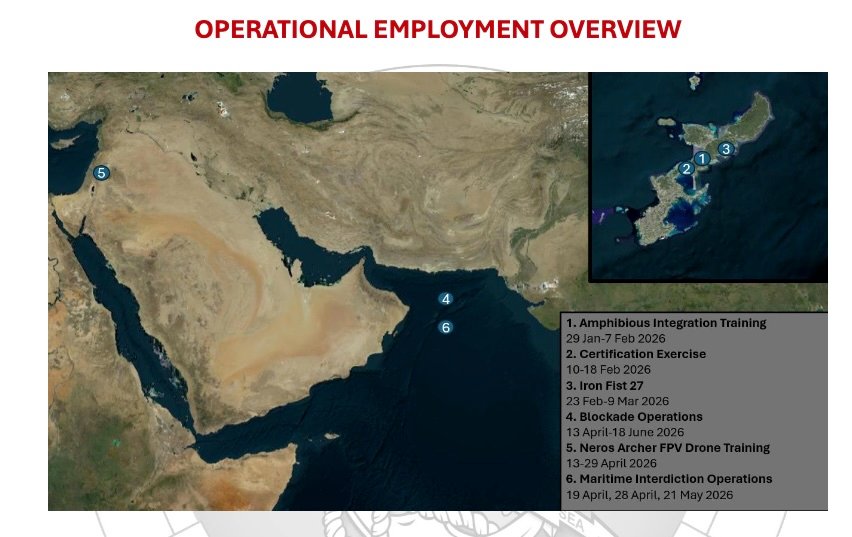
The 31st MEU’s six-month deployment began in January in the Pacific, before the unit was ordered to the Middle East in March, returning to Okinawa, Japan, in July. That’s where it is stationed as the USMC’s only continuously forward-based MEU.

“This was the first time we were able to implement EABO in combat operations since the concept was created for the force,” Capt. Steven J. Keenan, a USMC spokesperson, told us. “We have practiced it many times, but this was a first for supporting a Joint Force named operation with forward FARPs and forward bases that supported joint ops and combat power sustainment.”
EABO was first introduced in 2020 by then-Commandant Gen. David Berger in his Force Design 2030 plan for the future of the Corps. It was created with a fight against China in mind, especially utilizing small Pacific islands. The idea is to have highly mobile, low-signature forces deployed forward in austere, contested or potentially contested maritime locations. The mission is to “support sea control operation, conduct sea denial operations within the littorals, contribute to maritime domain awareness, provide forward command, control, communications, computers, combat systems, intelligence, surveillance, reconnaissance, targeting, and counter-targeting capability and forward sustainment,” according to the Marines.

The news of the first activation of the EABO concept in combat came Wednesday during a media roundtable with Col. Chris P. Niedziocha, who commanded the 31st MEU during its deployment to the Middle East in support of Operation Epic Fury. Now director of the USMC Expeditionary Warfare School, Niedziocha discussed EABO and a range of other operations during that deployment, including boarding vessels during the blockade of Iranian ports.
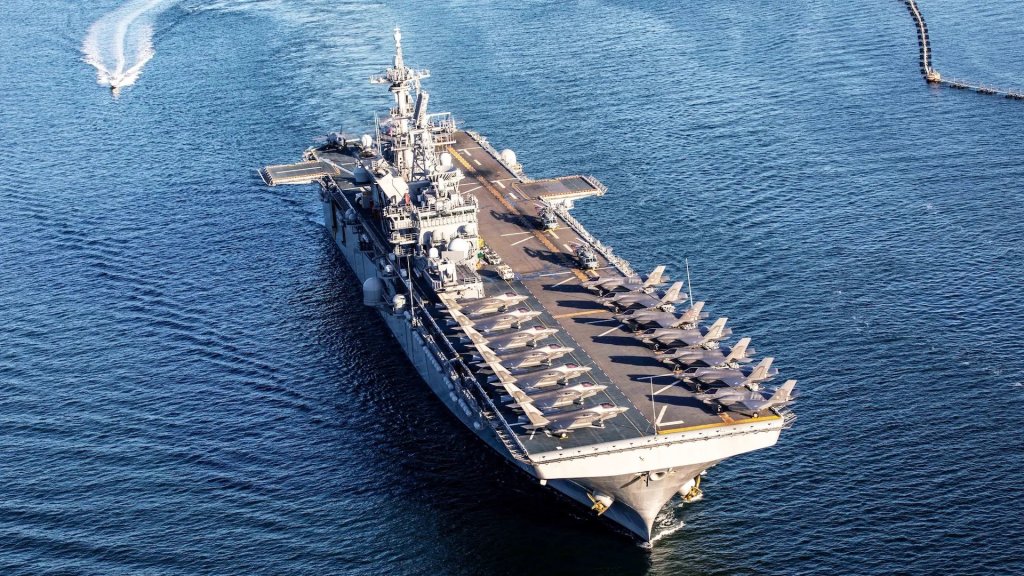
The 31st MEU was embarked aboard the Tripoli Amphibious Ready Group (ARG), which consisted of the America class amphibious assault ship USS Tripoli, San Antonio class amphibious transport dock ship USS New Orleans, and Whidbey Island class dock landing ship USS Rushmore. You can read more about the ARG/MEU and its assets in our initial story about the deployment to the Middle East here.

“You’re starting to see this has been validated,” the colonel said of the EABO concept during the roundtable TWZ attended virtually. “It’s still nascent, but we actually, for the first time, demonstrated what we thought we were able to do, which I think is pretty exciting. And then things like forward arming and refueling to extend the operational reach of aircraft and expeditionary reloading, and then the ever-present logistic challenge of doing something like that. So that’s pretty significant.”
“We successfully implemented critical Expeditionary Advanced Base Operations (EABO), establishing sensor expeditionary advanced bases and forward arming and refueling points (FARPs) where none existed,” the colonel added. “Through our forward logistic elements, we proved that an agile Marine Air-Ground Task Force can sustain itself and generate ready, lethal power in contested maritime environments, directly setting the theater for follow-on joint forces.”
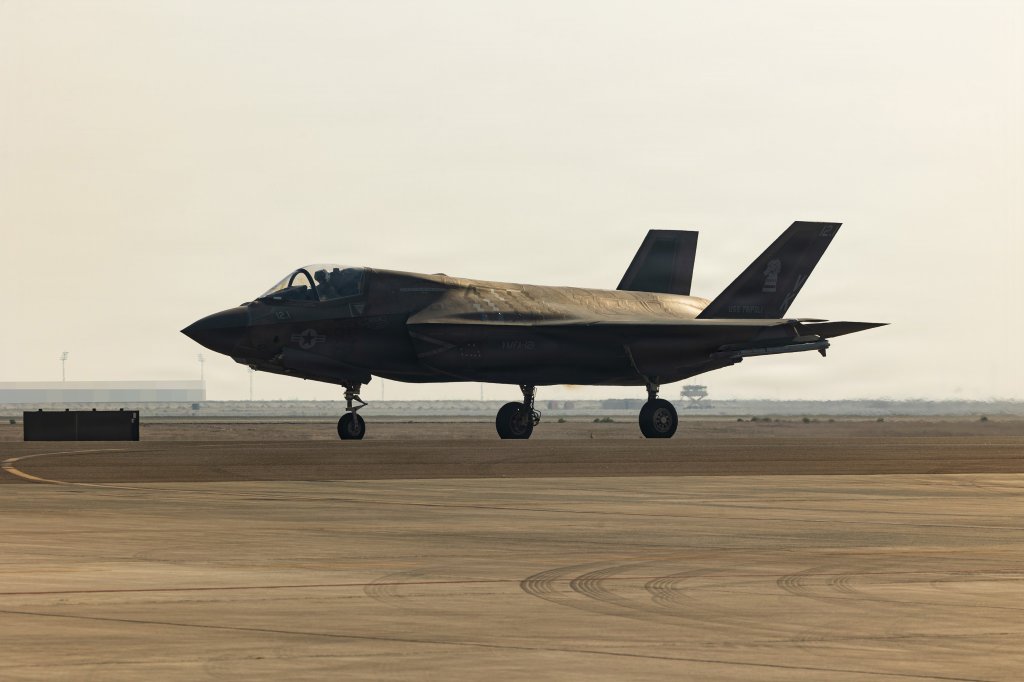
One of the objectives of the FARPs was to reduce reliance on the Marines’ fleet of KC-130 aerial refuelers and serve as jumping-off points for its F-35B Lightning II fighters.
“There was all manner of tankers all the time, but the FARP is to extend the operational reach, and if you can do it, you reduce the load on that,” Niedziocha noted. “Because there’s some aircraft that are basically for expeditionary austere operations, especially the F-35B,” the Marine Corps’ variant of the aircraft designed for short take off and vertical landing.
“There are some trade-offs associated with the Bravo,” Niedziocha pointed out, using a slang for the jets. “There’s less internal fuel, but you have the lift [system], which gives you the option to do these kinds of things. So, the goal there was to walk that fine line between providing the full sortie over wherever you needed it, and keeping the ships far enough away to make them as survivable as possible.”

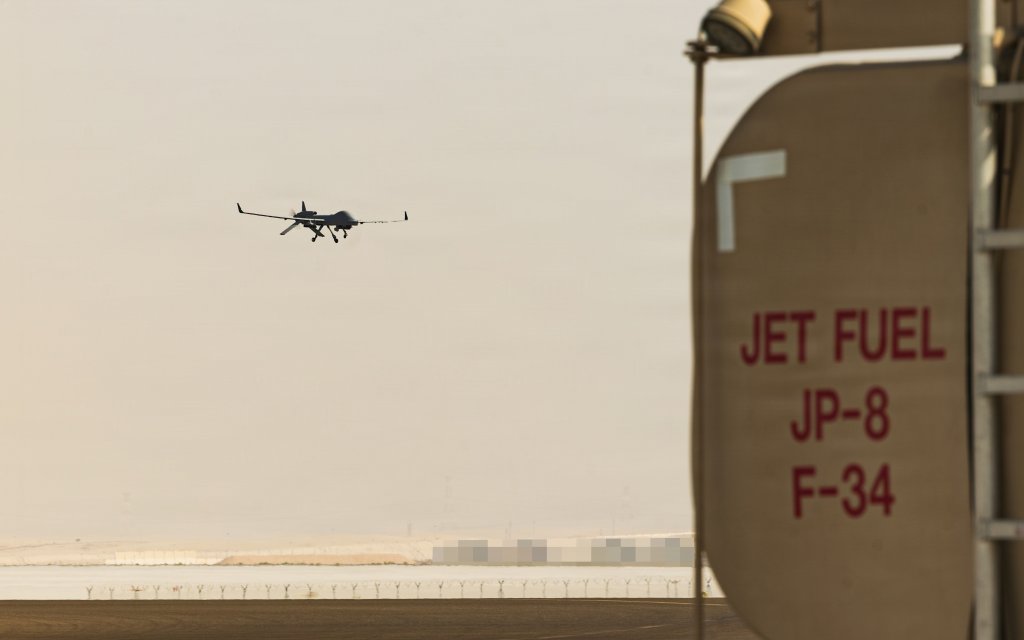
In addition to the F-35Bs and other aircraft organic to the 31st MEU, the FARPs were also used by Army helicopters, Keenan told us. Imagery posted on the Pentagon’s image distribution site also showed U.S. Army Gray Eagle drones and Marine MV-22B Osprey tiltrotor aircraft were included.


Niedziocha did not provide details about where the FARPs were set up, but a U.S. defense official told us they were “disaggregated throughout the Middle East.” The official declined to provide further information, citing operational security concerns since they are still being used.
“Throughout the deployment, the Tripoli ARG and 31st MEU successfully conducted over 1,600 mishap-free flight hours of combat aviation missions, including precision strikes, transporting 800,000 pounds of cargo, and moving 5,000 personnel,” a 31st MEU overview of the deployment explained. “The units also provided sustained combat support to joint force operations by delivering critical intelligence and refueling over 300 aircraft ashore and underway.”
The colonel also didn’t provide details about the sensor expeditionary advanced bases. According to the Marines, “a sensing expeditionary advanced base (SEAB) brings together coastal surveillance radars, electronic sensors, and Marines ashore to extend maritime domain awareness, complementing the radars and sensors already at work aboard naval ships off the coast.”
“When SEAB systems identify surface vessels in nearby sea lanes, small unmanned aircraft system (sUAS) operators launch their platforms to visually identify and track the contacts,” the Marines added. “Sensor data and imagery are transmitted in real time across the blue-green command network to decision-makers.”

This capability could have been used to track Iran’s remaining fleet of small boats that it has used to harass shipping and mine the Strait of Hormuz, as well as larger vessels trying to transport oil. Other sensors, like radars and counter-drone systems, could also help identify incoming threats and provide general situational awareness. The EABO concept was employed as part of the 31st MEU’s larger role in supporting the blockade and mine clearance efforts.
The 31st MEU interdicted four vessels during the deployment, three of which led to boardings. On April 19, Marines boarded the MV Touska; on April 28, the MV Blue Star III; and on May 19, the MT Celestial Sea.
The Touska was boarded after USS Spruance fired multiple 5-inch rounds, targeting the engine room and disabling the vessel’s propulsion. The crew of the vessel was retained for about two weeks before being repatriated.
Niedziocha told us that none of the crews offered any resistance.
“At two in the morning, when 30 Force Reconnaissance Marines fast rope onto your vessel, [you are] just compliant with a capital C. They did exactly what they were directed to do. The overmatch that you put onto that vessel is pretty surprising. And then there’s overwatch provided by UAS and manned aircraft, so you create this bubble around the vessel. So yeah, they complied.”
You can see the Touska being boarded in the following video.
The U.S. just released a video of its forces boarding and seizing the Iranian container ship M/V Touska near the Hormuz Strait after it tried to break the U.S. naval blockade pic.twitter.com/FpB2obb3jY
— Visegrád 24 (@visegrad24) April 20, 2026
Two years ago, as the EABO concept was maturing, TWZ was invited to get an exclusive look at how an advanced EABO concept would be put into action, including how squadrons operated the F-35B out of an austere combat environment while generating combat sorties. It was an unprecedented and exclusive peek into the EABO playbook and what a real fight in the Pacific with the USMC’s most advanced fighter aircraft could actually look like. You can read about that in our story here. It appears the operations in the Middle East mirrored this exercise closely.

Now back in Japan, the ARG/MEU is getting ready for a new deployment, said the colonel.
“We got back to Okinawa, I think July 22nd, and they had already begun their workup cycle in earnest to be on the water in early January to go out and do another Iron Fist [training exercise] with the Japanese, and then long periods of a crisis response,” said Niedziocha, who relinquished command in August before moving on to his new role. “Just being there, present in the First Island Chain to partner with your allies, demonstrates the resolve and commitment to deter whatever needs deterring.”
As noted earlier in this story, the EABO concept was designed with a Pacific fight in mind. Its first combat employment in the Middle East clearly offers lessons that can now be adapted to enhance EABO operations globally.
Contact the author: howard@twz.com
The post USMC Used Its Expeditionary Operations Playbook In Combat For First Time During Epic Fury appeared first on TWZ.

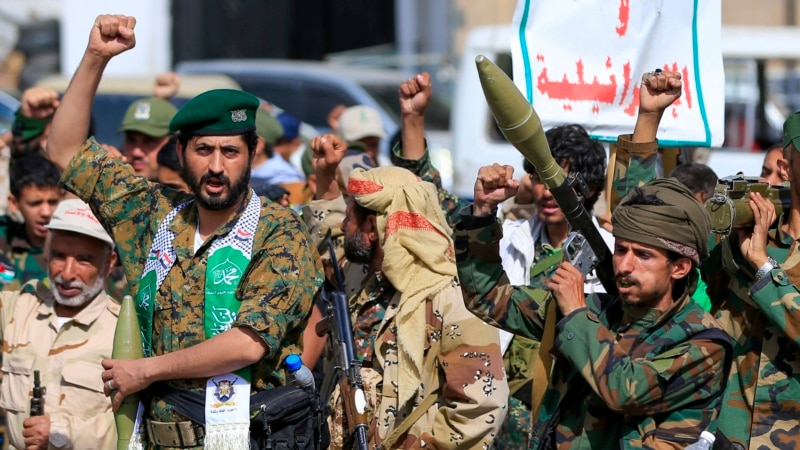
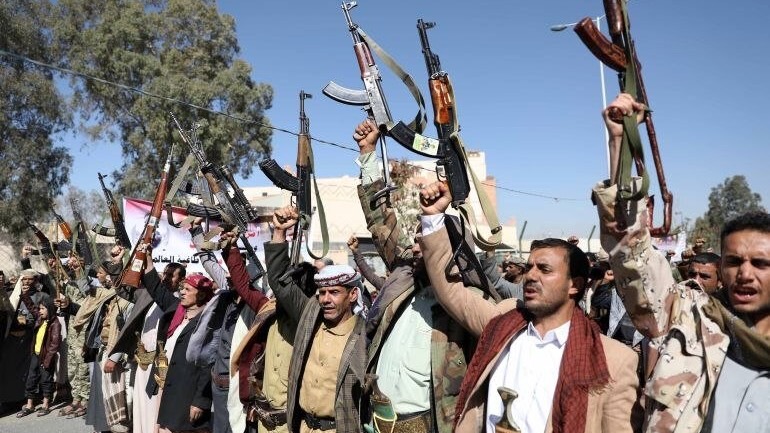
Over a decade of war in Yemen and the rise of Ansar Allah

In July, Saudi Arabia joined the US-Israeli war on the West Asia region with strikes on Yemen. The Ansar Allah-led Yemeni Armed Forces retaliated by launching a maritime blockade alongside attacks targeting vital Saudi interests.
The renewed fighting between the two West Asian nations resulted in Ansar Allah’s takeover of the strategic Red Sea port city of Mokha last week and the liberation of all the group’s prisoners held by Saudi-backed forces on Yemen’s western coast.
Ansar Allah’s seizure of Mokha seaport is reshaping regional and global geopolitics, particularly because it serves as a primary gateway to the Bab el-Mandeb Strait and coincides with developments in the Strait of Hormuz.
As these major shifts underscore, Yemen holds immense strategic geopolitical significance.
Situated on the southwestern corner of the Arabian Peninsula and overlooking the Bab al-Mandab Strait, Yemen represents a vital chokepoint connecting the Red Sea to the Gulf of Aden and the Indian Ocean
Consequently, internal political developments in Yemen can have global political and economic repercussions.
This fact, in turn, has put Yemen in the crosshairs of the US-led Western imperialist bloc and their allies in West Asia, which have endeavored to subjugate the country through a devastating decade-long war and blockade.
The origin of this war coincides with the emergence of Ansar Allah, beginning when the group managed to take control of large swathes of the country, including the capital, Sanaa, in 2014.
The rise of Ansar Allah
Ansar Allah was first established in the early 1990s in the northern Yemeni governorate of Saada as a cultural and educational organization called Al-Shabab al-Mumin (the Believing Youth).
Initially, the organization introduced itself as an unarmed theological movement aimed at reviving and preserving Zaydi Shia Islam and countering the threat of state-backed Sunni Salafism, which sought to uproot the Zaydi religious identity in its homeland of Saada.
From its inception, the movement opposed the government, led by President Ali Abdullah Saleh, accusing it of corruption and criticizing its ties to the United States and its ally Saudi Arabia.
Tensions between the group and the government drastically escalated following the US invasion of Iraq in 2003. It was at that time that the group adopted the slogan (Death to America, Death to Israel), during mass protests opposing the war on Iraq.
These slogans posed a political threat to Ali Abdullah Saleh, who was attempting to position his government as a key ally in the “US War on Terror” in the aftermath of the 9/11 attacks. As a result his government led a brutal crackdown on protesters.
Security forces and riot police suppressed protests using live ammunition, tear gas, and batons, and arbitrarily detained hundreds of political activists, students, and opposition organizers without trial.
In 2004, tension between the Al-Shabab al-Mumin and the Yemeni government boiled over, sparking a series of six internal conflicts known as the Saada Wars.
These clashes began with the government’s assassination of Hussein Badreddin al-Houthi, the group’s founder, and triggered five subsequent rounds of fighting that lasted until 2010. The followers of the group became widely known as the Houthis ever since.
Saudi Arabia reportedly engaged in the Saada wars by providing immense financial, political, and material support to the Yemeni government. Saudi intervention in Yemen escalated in 2009 with a direct military incursion and unilateral airstrikes against positions held by the Houthi movement.
In 2011, the group joined nationwide demonstrations, calling for the overthrow of President Ali Abdullah Saleh. It was then that the Houthi movement formally adopted the name Ansar Allah (Supporters of God).
The ousting of Saleh weakened the central government and triggered a sweeping power vacuum, which allowed Ansar Allah to rapidly expand its territorial dominance. By 2012, the Yemeni movement consolidated firm control across the Saada governorate and large swathes of northern Yemen.
In early 2012, vice president to Saleh, Abed Rabbu Mansour, Hadi became the President of Yemen via a transition framework brokered by the Gulf Cooperation Council (GCC), as he was considered as a quiet consensus figure. Hadi was also strongly backed by the Obama administration.
In late 2014, Ansar Allah allied with forces loyal to ousted president Ali Abdullah Saleh against the transitional government headed by Abed Rabbu Mansour Hadi. The fighting that followed led to Ansar Allah’s seizure of the capital Sanaa, forcing Hadi to flee the country.
2015-2022: The Saudi-led coalition’s protracted war against Yemen
From exile in 2015, Hadi requested the Saudi-led coalition to intervene in the conflict, opening the door to one of the bloodiest prolonged wars in West Asia. A conflict that, according to UN estimates, resulted in 377,000 deaths by 2022.
Saudi Arabia was the main pillar of the coalition, leading the military campaign dubbed “Operation Decisive Storm” with a massive force, including extensive warplanes and ground troops.
The United Arab Emirates (UAE) also played a key role by commanding ground and air operations particularly in southern Yemen and along the critical coastal strip.
Bahrain took part in the operation with 12 fighter jets (some sources say 15), and deployed ground troops in the southern Saudi borders to protect Saudi Arabia from Ansar Allah’s attacks. Meanwhile, Kuwait contributed with 15 warplanes.
At the beginning of the campaign, Qatar participated with roughly 1,000 ground troops, armored vehicles, a dozen fighter jets, and transport helicopters until it was expelled from the coalition in June 2017 over a diplomatic crisis with Saudi Arabia, UAE, Bahrain, and Egypt.
Jordan and Morocco contributed six fighter jets each, while Sudan under deposed president Omar Al-Bashir sent three aircrafts and thousands of ground troops. Furthermore, Senegal committed 2,100 troops.
Western countries, including the United States, the United Kingdom, and France provided logistic and intelligence support, such as aerial refueling for coalition jets, technical assistance, military equipment, coordination support, and maritime surveillance.
The 2022 UN-brokered truce de-escalated the war rather than ending it
In April 2022, the United Nations announced an official two-month nationwide truce agreement, which temporarily halted cross-border attacks, ground and air operations, and allowed fuel imports into ports held by Ansar Allah. It also reopened commercial flights from Sanaa International Airport after years of sea, land, and air blockade imposed by Saudi Arabia.
Rather than completely removing the blockade, the agreement only resulted in the partial easing of restrictions, while regions under the control of Ansar Allah have continued to face a near-total blockade.
Read more: Yemen demands Saudi-led blockade on the country be lifted immediately
The agreement was renewed in June and extended a second time in August 2022 for an additional two months before it lapsed in October.
Regional developments reignited the conflict (2023-2026)
In November 2023, Ansar Allah launched a ban on all Israeli maritime navigation in the Red Sea and the Bab el-Mandeb Strait in retaliation for Israel’s genocidal aggression on Gaza.
About one month later, the group significantly expanded the ban to include all ships heading to Israeli ports, regardless of their nationality or flag.
The ban continued until October 2025, despite waves of deadly airstrikes launched by the US, UK, and Israel on Yemen.
An Omani-mediated ceasefire deal between the US and Ansar Allah was reached in May 2025. The deal stipulated halting Ansar Allah’s attacks on US ships in the Red Sea and Bab al-Mandab Strait, and ending US aggression on Yemen, without preventing the Yemeni resistance movement from launching attacks or naval operations against Israel.
This same period saw a shift in the conflict between the Saudi-led coalition and Ansar Allah from active military engagement toward a tense, fragile diplomacy.
In early 2026, friction between the two major pillars in the anti-Ansar Allah coalition – namely Saudi Arabia and the UAE – surfaced as different Yemeni groups backed by the two countries clashed, apparently over territorial control in Yemen.
Read more: Tensions in Yemen: Are Saudi Arabia and the UAE becoming frenemies?
The US-Israeli war on Iran has drawn Yemen back into the regional conflict
Although Ansar Allah was established as an independent Yemeni movement, it evolved into a key component of the Axis of Resistance over time. This alignment was driven by mutual ideological foundations, shared anti-imperialist ideology, and deep strategic and military cooperation with Iran and Hezbollah.
Despite its affiliation with the resistance alliance, Ansar Allah chose not to get involved in the recent regional war waged by the US and Israel against Iran, for ostensibly strategic considerations and military coordination tactics with its allies.
Read more: Reflections on the US-Israeli multi-front war in West Asia: How the Axis of Resistance remains resilient
However, because the United States and its allies in the region seemingly view the current war as an ideal opportunity to dismantle the Axis of Resistance, Saudi Arabia decided to resume its aggression against Yemen by attacking Sanaa International Airport in July. The attack aimed to prevent an Iranian plane from landing.
Consequently, Ansar Allah launched retaliatory attacks on Saudi interests inside Saudi Arabia and on Yemeni soil. It further declared a maritime blockade against Saudi-linked commercial vessels passing through the Bab al-Mandeb Strait, demanding Riyadh end its decade-long blockade on Yemen.
Concurrently, ground clashes over territorial dominance between Ansar Allah and Saudi-backed forces intensified, leading to key victories for the Yemeni group. Escalations have persisted up to the time of publication.
On Wednesday, September 16, Saudi Arabia accused Ansar Allah of attempting a drone attack against the city of Mecca, the holiest city for Muslims, located in western Saudi Arabia.
Ansar Allah dismissed Saudi accusations as false, saying that they reflect a “desperate attempt to mobilize public opinion.”
As the US-Israeli war on West Asia continues to reshape geopolitics, Ansar Allah’s emergence as a regional force has placed Yemen at the center of a struggle that may define the future of West Asia.