❌

Reading view

Groenlandia no está en venta: la ‘Doctrina Donroe’ de Trump y el imperialismo estadounidense
Read in English here

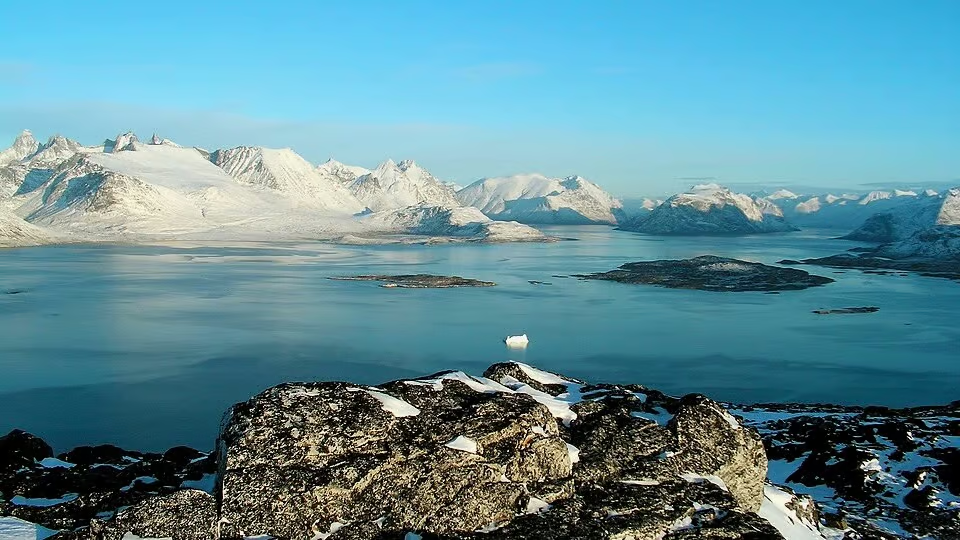
La campaña de Donald Trump para poner a Groenlandia bajo el control de los Estados Unidos a menudo se ha descartado como pura fanfarronería. Eso es un error. Detrás del lenguaje de un acuerdo inmobiliario se esconde un intento serio de revivir un antiguo principio imperial: que Washington pueda decidir el futuro político y económico de todo el hemisferio occidental. Groenlandia, estratégicamente ubicada entre América del Norte y Europa, se ha convertido en una prueba de esa afirmación – y de si la soberanía de una pequeña nación indígena cuenta cuando entra en conflicto con las ambiciones de una gran potencia.

Trump planteó la idea de comprar Groenlandia durante su primer mandato presidencial en 2019. Tras su reelección, la propuesta se volvió más agresiva. En diciembre de 2024 declaró que la “propiedad y el control” de Groenlandia por parte de los Estados Unidos eran una “necesidad absoluta”. El 7 de enero de 2025, se negó a descartar la coacción militar o económica contra Groenlandia y el Canal de Panamá, afirmando: “Necesitamos Groenlandia por motivos de seguridad nacional”. Posteriormente, insistió en que los Estados Unidos se haría con la isla “de una forma u otra”. Esta afirmación combinaba varios argumentos: Groenlandia es vital para la defensa antimisiles; Rusia y China amenazan el Ártico; los yacimientos de tierras raras de Groenlandia tienen un valor estratégico; y, supuestamente, los groenlandeses acogerían con agrado el dominio estadounidense.

Esta última afirmación resultó ser demostrablemente falsa. Una encuesta de enero de 2025, realizada tanto en groenlandés como en danés, reveló que el 85% de la población de Groenlandia se oponía a abandonar el reino danés para unirse a los Estados Unidos, mientras que solo el 6% lo apoyaba. Sin embargo, la misma encuesta mostró que una mayoría estaba a favor de una eventual independencia. Esa distinción es fundamental. El deseo de los groenlandeses de poner fin a la tutela colonial danesa no puede interpretarse como un consentimiento a la anexión estadounidense.

Una relación militar sin anexión

El argumento de seguridad a favor de la propiedad estadounidense es engañoso, ya que Washington ya goza de amplios derechos militares en Groenlandia. La relación comenzó durante la Segunda Guerra Mundial. Con Dinamarca ocupada por la Alemania nazi, su embajador en Washington firmó un acuerdo de 1941 que permitía a los Estados Unidos defender Groenlandia y construir instalaciones allí. Dinamarca solicitó la retirada estadounidense después de la guerra, pero prevaleció la estrategia de la Guerra Fría.

El Acuerdo de Defensa de Groenlandia de 1951, celebrado en el marco del Tratado del Atlántico Norte, autorizó a los Estados Unidos a establecer y operar “zonas de defensa”. Esto permitió la rápida construcción de la Base Aérea de Thule – rebautizada como Base Espacial de Pituffik en 2023 – en un lugar ideal para las rutas aéreas y de misiles más cortas entre la Unión Soviética y América del Norte. En el apogeo de la Guerra Fría, los Estados Unidos operaba numerosas instalaciones en toda Groenlandia. Hoy en día, Pituffik, la base militar más septentrional de Washington, desempeña funciones de alerta de misiles, defensa antimisiles y vigilancia espacial.

El acuerdo ofrece a Washington una amplia libertad operativa. Una enmienda de 2004 – el Acuerdo de Igaliku – reconoció al Gobierno autónomo de Groenlandia, estableció a Pituffik como la única zona de defensa existente y exigió la consulta previa antes de realizar cambios significativos o crear nuevas zonas de defensa. También estableció la cooperación en temas económicos, técnicos y ambientales. En otras palabras, si los Estados Unidos considera que se necesitan más radares, puertos, aeródromos o personal, ya existe un mecanismo legal para negociarlo con Dinamarca y Groenlandia. La soberanía, por lo tanto, no es un requisito militar.

La historia de las bases también explica por qué “seguridad” no es un término neutral en Groenlandia. En 1953, las autoridades danesas ordenaron a 116 inughuit – 27 familias – que abandonaran la recién fundada Qaanaaq, mientras que el resto se reubicó en asentamientos en otras partes del distrito. Camp Century se construyó bajo el hielo entre 1959 y 1960 y estaba vinculado a la propuesta secreta del Proyecto Iceworm, que contemplaba una extensa red de bases de lanzamiento de misiles nucleares.

En 1968, un B-52 estadounidense que transportaba cuatro bombas de hidrógeno se estrelló sobre el hielo marino en la Base Aérea de Thule, lo que provocó contaminación por plutonio y otras sustancias. El accidente puso de manifiesto la inconsistencia entre la política declarada públicamente por Dinamarca en contra de las armas nucleares en territorio danés en tiempos de paz y los permisos secretos otorgados por el Gobierno danés a los Estados Unidos para almacenar armas nucleares en Groenlandia. Las instalaciones abandonadas dejaron combustible, desechos y otros contaminantes. Los reportajes de Groenlandia continúan cuestionando quién pagará por las futuras limpiezas. La relación militar protegió los intereses estratégicos de los Estados Unidos, mientras que los costos humanos y ambientales recayeron de manera desproporcionada sobre los groenlandeses.

Groenlandia dejó de ser formalmente una colonia en 1953, obtuvo autonomía en 1979 y amplió su autogobierno en 2009. La Ley de Autogobierno reconoce a los groenlandeses como un pueblo con derecho a la autodeterminación y establece un camino hacia la independencia. Washington reabrió su consulado en Nuuk en 2020, y la cooperación se intensificó en materia de comercio, educación, minería e investigación. Los gobiernos de Groenlandia (desde Kuupik Kleist hasta Jens-Frederik Nielsen) han acogido con beneplácito los vínculos económicos con Washington, pero rechazan la tendencia de este último a exigir cada vez más a la isla para satisfacer sus necesidades militares.

De Monroe a Donroe

La exigencia de Trump respecto a Groenlandia forma parte de una política hemisférica más amplia. La Doctrina Monroe de 1823 advertía a las potencias europeas contra nuevas intervenciones coloniales en las Américas. Presentada como anticolonial, se transformó en una reivindicación de la supremacía estadounidense. El corolario de Theodore Roosevelt de 1904 afirmaba el derecho de intervención en América Latina, proporcionando una justificación ideológica para ocupaciones, cambios de régimen y el control de activos estratégicos.

Los partidarios de Trump rebautizaron su última versión como la “Doctrina Donroe”. Esta denominación vincula la presión sobre Groenlandia con las exigencias relativas al Canal de Panamá, las amenazas contra Cuba y Colombia, las reivindicaciones sobre Canadá y la intervención de los Estados Unidos en Venezuela. A finales de 2025, la Casa Blanca proclamó formalmente un Corolario  Trump a la Doctrina de Monroe, en el que se afirmaba el liderazgo de los Estados Unidos en todo “nuestro hemisferio”. Groenlandia queda arrastrada a esta esfera porque geográficamente forma parte de América del Norte, aunque esté vinculada políticamente a Dinamarca y su pueblo inuit posea su propio derecho a la autodeterminación. Esta doctrina contiene una contradicción reveladora. Trump denuncia el control europeo sobre Groenlandia como un anacronismo, al tiempo que exige que la isla sea transferida a los Estados Unidos. El colonialismo no se ha abolido; simplemente cambia el colonizador propuesto. Las referencias de Trump a los minerales, las rutas marítimas y la geografía militar reducen a Groenlandia a un activo y a sus 56.000 habitantes a un obstáculo en una transacción entre potencias.

Una crisis dentro de la alianza occidental

Las amenazas de Trump provocaron una ruptura extraordinaria entre los Estados Unidos y Europa. Dinamarca no es un adversario, sino un aliado de la OTAN cuyas tropas lucharon junto a los soldados estadounidenses en Afganistán. La amenaza de arrebatar territorio a un aliado por la fuerza ataca la premisa misma de la alianza. La primera ministra danesa, Mette Frederiksen advirtió que un ataque de los Estados Unidos contra otro país de la OTAN pondría fin al orden de seguridad de la posguerra. Los gobiernos europeos se unieron en torno al principio de que las fronteras no pueden modificarse mediante la coacción, un principio que invocan contra Rusia en Ucrania.

La crisis puso de manifiesto la dependencia de Europa. La OTAN no cuenta con un procedimiento claro para defender a un miembro frente a su miembro más poderoso. Los Estados europeos dependen en gran medida del poderío militar de los Estados Unidos, al tiempo que se les pide que resistan la coacción estadounidense. Copenhague respondió con una diplomacia cautelosa, un mayor gasto militar en el Ártico y la insistencia en que las decisiones corresponden a Groenlandia y a Dinamarca. Francia, Alemania, los países nórdicos y la Unión Europea expresaron su solidaridad, pero el episodio intensificó los llamado a la autonomía estratégica europea. También dañó la pretensión de Washington de liderar una alianza de democracias contra el revisionismo autoritario.

El 18 de septiembre de 2026, Trump anunció un nuevo acuerdo trilateral de seguridad tras meses de negociaciones, reivindicando el “control permanente” sobre la seguridad de Groenlandia. Los líderes daneses y groenlandeses lo describieron en términos más limitados: una ampliación de la cooperación militar con los Estados Unidos que preserva la soberanía y la autodeterminación de Groenlandia. El texto completo aún debe firmarse y aprobarse. Si su versión es correcta, el resultado confirma lo que era evidente desde el principio: los Estados Unidos podría obtener acuerdos de seguridad adicionales sin llegar a ser dueño de Groenlandia. Sin embargo, la presión que precedió al acuerdo sigue siendo una advertencia sobre las negociaciones llevadas a cabo bajo amenazas.

Groenlandia habla por sí misma

La respuesta de Groenlandia ha combinado rechazo, unidad y complejidad política. Kalaallit Nunaat – el nombre groenlandés del país – se convirtió en el centro de las declaraciones de que Groenlandia pertenece a su pueblo y no está en venta. En marzo de 2025, grandes manifestaciones en Nuuk, Sisimiut y Qaanaaq marcharon bajo la bandera roja y blanca de Erfalasorput. Los manifestantes le pidieron a Trump que respetara a los inuit, a su país y a su nacionalidad. Los partidos políticos de Groenlandia, a pesar de profundos desacuerdos sobre el ritmo y las condiciones económicas de la independencia, condenaron conjuntamente la presión externa. El Parlamento prohibió las donaciones políticas extranjeras y anónimas, defendiendo explícitamente la integridad de la democracia groenlandesa en medio del interés de las grandes potencias.

El colonialismo danés dejó profundas heridas: asimilación forzada, ingeniería social, desarrollo desigual y decisiones tomadas en Copenhague sobre la tierra y el pueblo groenlandeses (toda la cuarta temporada de la popular serie de televisión Borgen, en 2022, se centró en un conflicto entre Copenhague y Nuuk por el descubrimiento de un nuevo yacimiento de petróleo con implicaciones de China y Rusia). Muchos groenlandeses desean la independencia, y algunos ven el creciente interés de los Estados Unidos como una ventaja para atraer inversiones y lograr una relación más equitativa con Dinamarca.

Groenlandia revela el verdadero contenido de la Doctrina Donroe: una afirmación del siglo XXI de que la geografía otorga a Washington derechos superiores sobre los pueblos vecinos. La respuesta de Groenlandia es igualmente moderna y universal. La ubicación estratégica no anula la soberanía popular, los minerales no borran la identidad nacional, y ninguna gran potencia adquiere un país simplemente por declarar que lo necesita.

Vijay Prashad es un historiador y periodista indio. Es autor de cuarenta libros, entre los que se incluyen Balas de Washington, Una estrella roja sobre el Tercer Mundo, Las naciones oscuras: una historia del Tercer Mundo; Las naciones pobres: una posible historia del Sur Global y How the International Monetary Fund Suffocates Africa, escrito con Grieve Chelwa. Es el director ejecutivo de Tricontinental: Instituto de Investigación Social, corresponsal jefe de Globetrotter, y el editor jefe de LeftWord Books (Nueva Delhi). También ha hecho apariciones en las películas Shadow World (2016) y Two Meetings (2017).

Este artículo fue elaborado por Globetrotter.

  •  

How Modi silenced Kashmir

On 19 November 2025, Indian police raided the ‘Kashmir Times’ in Jammu. They said they were on an “anti-terror” operation. The offices had been shut since 2022 and were in dilapidated condition, the equipment largely defunct. Yet, the police claimed to have recovered a “pistol and live AK-47 cartridges.” 

Since 2018, only five journalists have faced cases under India’s draconian anti-terror Unlawful Activities (Prevention) Act. Trials rarely start, leaving journalists in a state of perpetual purgatory, even if they are out on bail under onerous conditions.

Before the police came charging into these unused offices last year, the ‘Kashmir Times’, founded by my father in 1954, had long suffered sustained persecution – the seizure of records, of equipment, the harassment of staffers, the use of social media to spread slurs, trumped up charges of tax evasion and the embedding of spies.

The first ever copies of Kashmir Times, initially a weekly, were seized by the government. In 1983, my father survived a murderous assault with serious injuries inflicted by a Hindu nationalist mob. I joined the newspaper in 1989, as the armed militancy, the ‘insurgency’ against the Indian state, became widespread, and experienced firsthand the struggle to report the news accurately and truthfully. The government would frequently withdraw its advertising, which was the main source of funding for most news outlets. We were besieged on several fronts, facing down the state, militants and aggressive Hindu nationalists.

Kashmir Times front page, January 1972. Image courtesy of Kashmir Times / Anuradha Bhasin digitized by Stanford Libraries.

In 2019, as Indian prime minister Narendra Modi began his second term in office, his government removed the special autonomous status granted to Jammu and Kashmir and protections that had existed for nearly 70 years. Once a state, Jammu and Kashmir was split into two federally governed territories. The Indian-administered part of Kashmir – the subject of several military conflicts between India and Pakistan, with both countries claiming the entire disputed territory while controlling a portion of it – had effectively become a police state and control of the media was a critical component of this transformation.    

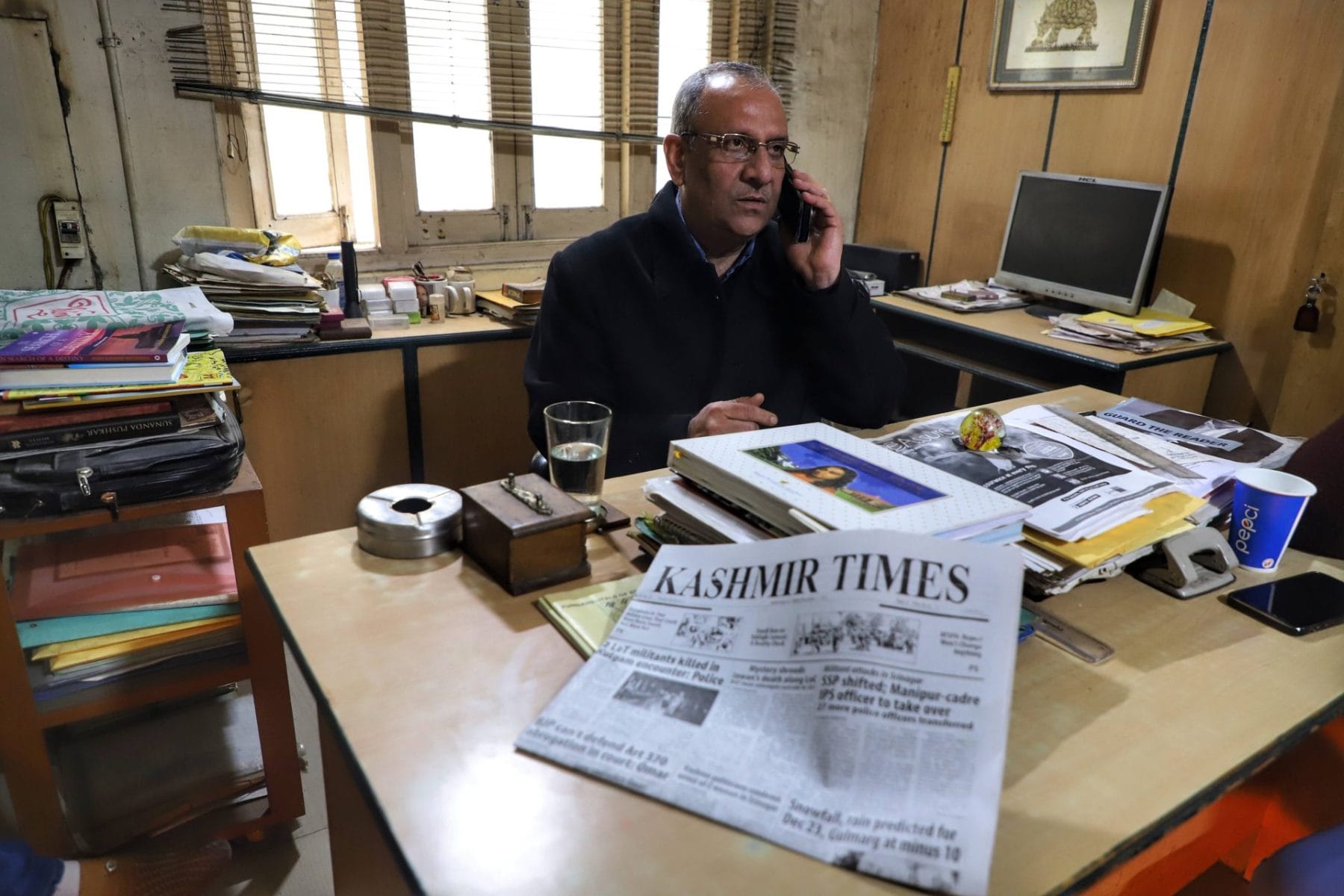
As Executive Editor of the ‘Kashmir Times’, one of the oldest newspapers in the region and the largest, with four editions, I petitioned India’s Supreme Court against the six-month-long internet shutdown that the Modi government imposed in 2019. But by 2020, three editions of the ‘Kashmir Times’ had shut down and the fourth only limped along, a once daily newspaper that was now only occasionally published. By February 2022, even this edition was shut down. I left India with my husband Prabodh Jamwal, the editor of the ‘Kashmir Times’, and revived it as a digital newsroom in exile in the United States in November 2023. 

Prabodh Jamwal, Editor of The Kashmir Times, at his office in Srinagar in early 2020. Nasir Kachroo/NurPhoto via Getty Images.

But, as the so-called terror investigation and the mysterious discovery of weapons in our long disused office in 2025 showed, the ‘Kashmir Times’ remained a thorn in the side of the Modi government. The Indian prime minister has frequently presented India on the international stage as the “mother of democracy” and the “Vishwaguru”, a moral exemplar and teacher to the world. Just last week, between September 12 and 13, Delhi hosted Vladimir Putin, Xi Jinping and Iranian president Masoud Pezeshkian as part of the annual BRICS meeting, the global group founded initially by Brazil, Russia, India, China and South Africa (hence the acronym) that is increasingly being presented as an alternative power centre to the American-led Western alliance. For an India seeking to portray itself as not just an emerging superpower but as a democratic force, it is vital that Kashmir remain repressed, hidden away from global scrutiny.  

It’s why, even as a newsroom in exile, we continue to be pursued by an Indian government seeking to tarnish our credibility, to deny us the right to report on Kashmir. We are being subject to a vendetta and it represents what has happened to journalism in Kashmir. Journalists have been silenced by the Modi government, Kashmiri voices strangled, and the local media industry deliberately destroyed. 

What is happening to journalism in Kashmir is a harbinger of what lies ahead for the rest of India.

A model of suppression

Geeta Seshu of Free Speech Collective, which monitors press freedoms in India, argues that Kashmir is a laboratory where every strategy of media suppression is tested and perfected for use elsewhere. India, which once had a noisy, argumentative press, now ranks at a lowly 157 out of 180 countries in the World Press Freedom Index. Reporters Without Borders, which compiles the ranking, says “press freedom is in crisis” in Modi’s India. 

The 2023 Digital Personal Data Protection Act provided a “dangerous framework for expansion of surveillance and censorship” across the country. It empowered the government to demand data from any entity, including journalists, effectively requiring them to reveal their sources. The amendments to the 2020 Information Technology Rules already burden intermediaries with harsh obligations and have been used to arrest journalists, block websites and compel social media platforms to restrict content. Recently, Instagram restricted posts about reports of Kashmiris shot by Indian security forces using pellet guns on unarmed protestors. 

Seshu’s fear that what happens in Kashmir will be replicated in the Indian mainland has largely been borne out. For example, in 2023, nearly 50 journalists associated with the portal ‘NewsClick’ – some only vaguely – were subject to arrests and interrogations. Many had their devices seized without due process. Their alleged crimes were essentially guilt by association, charges manufactured not from evidence but from a, frankly, lazy piece of journalism published in the  ‘New York Times’ about NewsClick’s funding. The charges were eventually quashed by an Indian court.  

The "To Defend Journalism" protest at New Delhi's Press Club of India, October 2023. Vipin Kumar/Hindustan Times via Getty Images.

Such court rulings are less likely in Kashmir. As a Kashmiri journalist based in Delhi says, “unlike the rest of India, Kashmir is a police state, and state control requires any independent journalism to be shut down.” 

In Kashmir, the Indian state has engineered a sophisticated edifice of control through securitization, surveillance and interrogation. It is invisible, intangible, and all-pervasive, a model that extracts quiet surrender and obedience. Unlike the targeted killings of journalists in Gaza, in Kashmir the control of information is seamlessly embedded in everyday life, requiring no enforcement, no traces of brutality. The journalists are essentially cowed into submission.

It began with the world’s longest internet shutdown – a complete lockdown for six months and a partial one for another year. What the shutdown created, despite a court verdict restoring communications, was fear among journalists compelled to work out of a government-surveilled computer facility, and then a perpetuation of that fear through consistent localized and temporary digital shutdowns. So commonplace are these shutdowns that they no longer warrant reporting or commentary.

In June 2020, the Modi government introduced a 53-page document called ‘J&K's Media Policy’ which gave the authorities sweeping powers to monitor, judge, and punish journalists, branding critical reporting as “fake news”, “unethical”, or “anti-national”. The authorities would also routinely remove government advertising from cash-strapped outlets and provide accreditation only to journalists deemed loyal, thus turning bureaucrats into arbiters of what constitutes news and who gets to report it. The effect is chilling.

And then there’s the monitoring of communications.

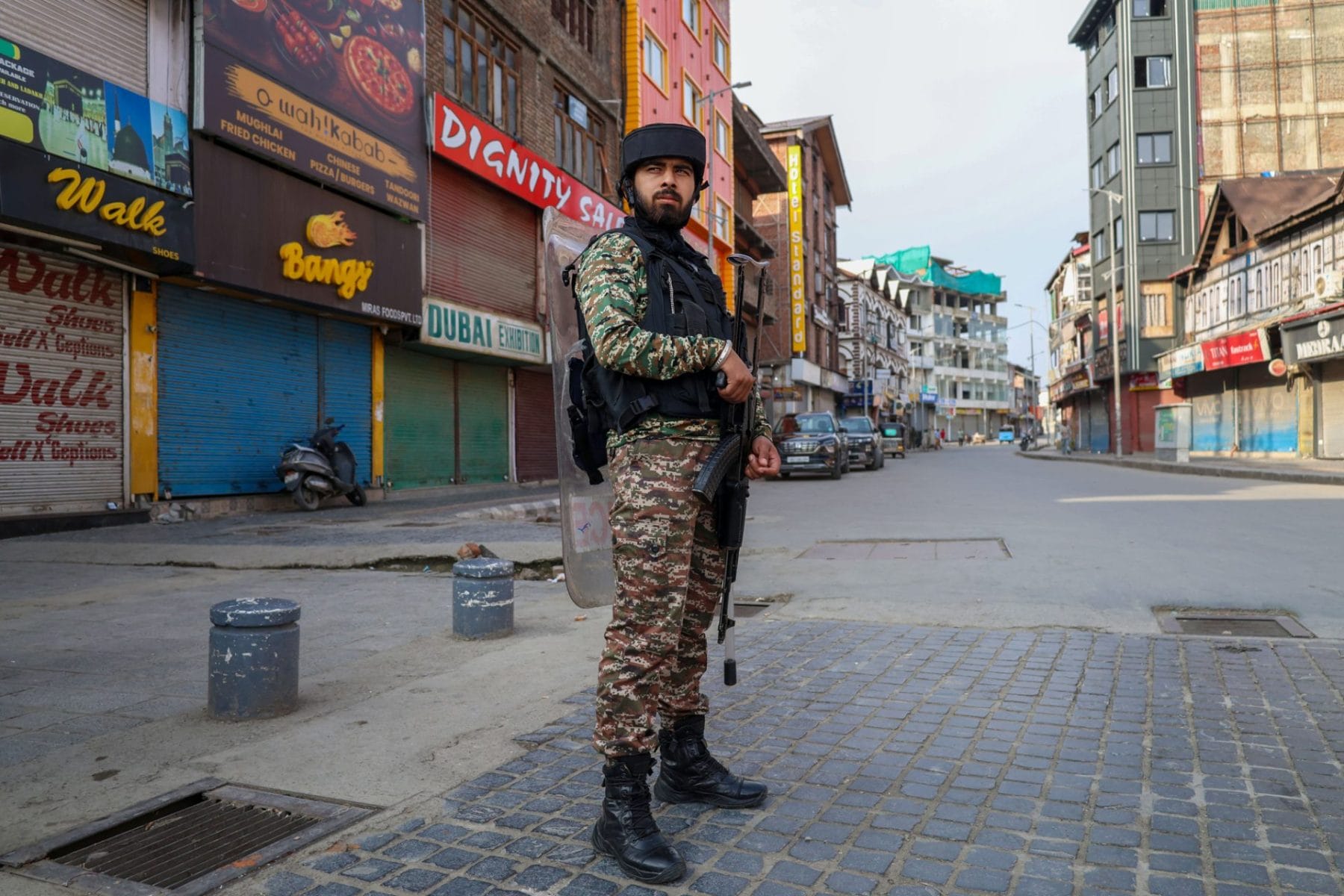
An Indian security personnel in Srinagar, Jammu and Kashmir, August 2026. Firdous Nazir/NurPhoto via Getty Images.

“I can’t say if they’re using Pegasus or some other spyware or technology,” a journalist told me about being interrogated over emails sent to an editor, “but they knew everything about our conversations.” In a 2021 leak, it turned out the Indian government was using Pegasus to spy on at least 40 Indian journalists, only one of who was Kashmiri.

But, a Kashmiri journalist says, “officials have told us ‘nothing in Kashmir is end-to-end encrypted’ and digital activity is clearly being constantly monitored.” No Kashmiri journalist I spoke to for this story, including those who contribute to the ‘Kashmir Times’, have the encrypted messaging Signal app, used worldwide by journalists, on their phones. Devices are routinely checked when journalists are summoned to police stations in Kashmir for questioning. Some said their devices were returned after being tampered with. “You face humiliation and beatings for using Signal and VPNs,” many journalists said. “You can only get away with it if you’re not on their radar,” said one. 

In November 2025, the Indian government issued a directive insisting on verifying the “bona fides” of journalists working in Jammu and Kashmir, and the police followed up by requiring journalists to part with personal information including biometrics and bank statements. In January this year, senior journalist Basharat Masood of The Indian Express spent seven hours at a Srinagar police station, then was summoned for three more days and told to sign a bond promising not to “repeat his mistake” – for reporting on the surveillance of mosquea surveillance, even as officials had already admitted to large-scale data collection and verification. 

Surveillance normalized

Police also surveil Kashmiris through the use of drone cameras, a network of 1,000 electronic cameras installed at major traffic junctions, and through unrestricted access to people’s social media activity across platforms ostensibly to track anti-India activity. During an illegal “Census 2024” drive, the police collected residents' personal data and GPS-tagged coordinates of homes. And the soon-to-be-rolled-out Jammu and Kashmir-specific digital identity cards that collects the data of entire households, purportedly to ensure the smooth rollout of welfare schemes, has also sparked local anxieties. 

Still, as pervasive as the surveillance is, it is journalists that find themselves in the firing line. Any critical word warrants a summons to a police station, interrogation, intimidation and even detention. This happens repeatedly, with journalists never aware of what specific “offence” might trigger a police summons. The reflex, after several such visits to police stations, is self-protection and self-censorship.

A Kashmiri journalist told me that the language the police use to summon journalists for questioning is particularly sinister. It is almost as if the police are enjoying instilling fear. “Aaj dastarkhan par aapki dawat hai”, for instance, is a typical summons. You are invited to a feast, the police say cynically, knowing a journalist is likely to be harshly questioned, even beaten.

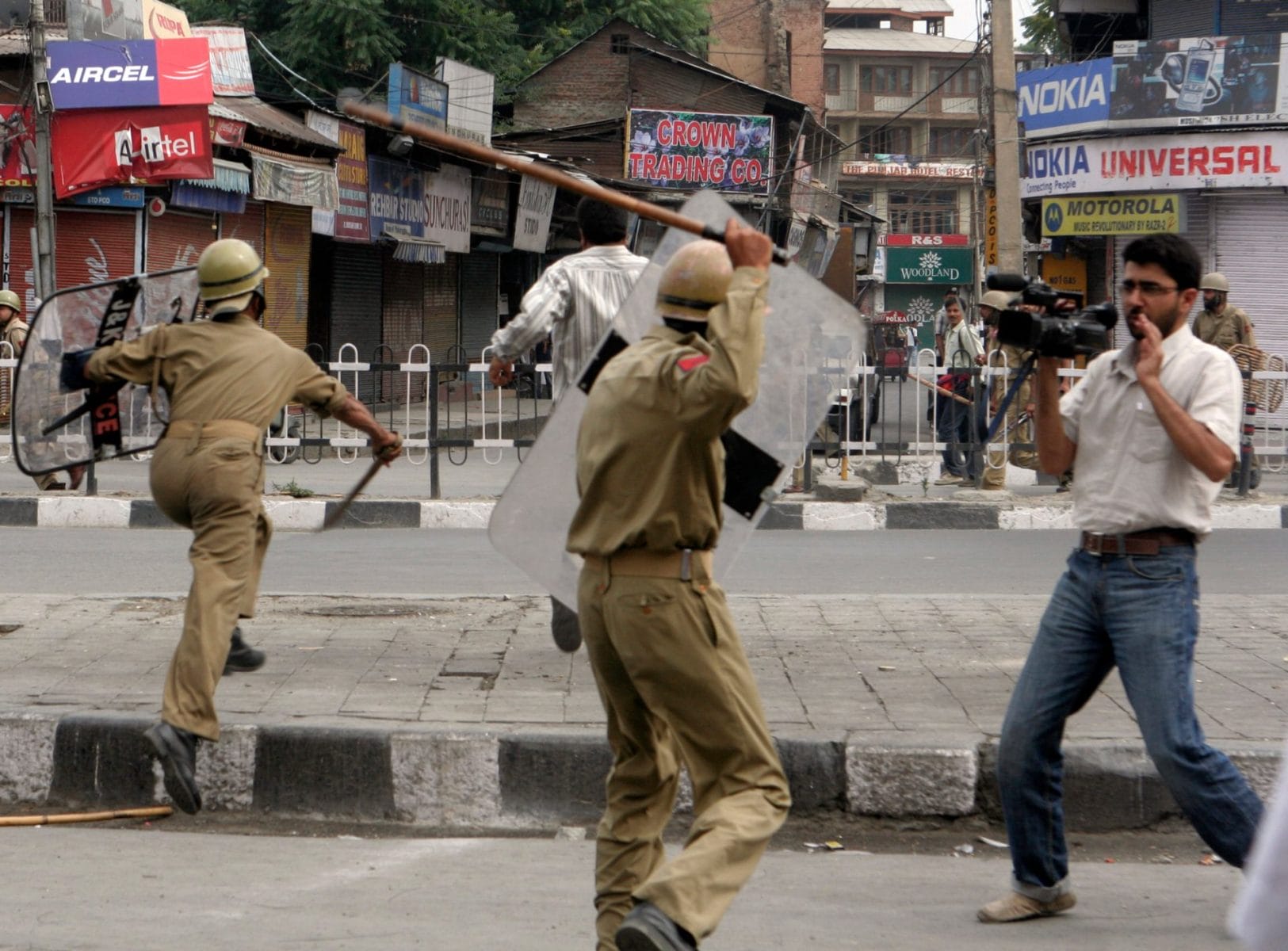
Indian police confront journalists and civilians during a protest on July 10, 2009 in Srinagar in the Indian Administered Kashmir. Yawar Nazir/Getty Images.

Often, Kashmiri journalists, without notice, are placed on no-fly lists. Sanna Irshad Mattoo, a Pulitzer Prize-winning photojournalist, was twice prevented from travelling abroad for exhibitions and award ceremonies, a pointed message that even international recognition offers no protection. At least twelve journalists have had their passports revoked; two of them were already abroad at the time, rendering them stateless. 

The Free Speech Collective filed a Right to Information (RTI) query in March 2024 to ascertain exactly how many Kashmiris had had their passports revoked or cancelled. The plea was rejected by the government on grounds of “national security”.

As India continues to press its case as a formidable, if still rising power, citing its 7.8% growth rate over the past quarter, it continues to be defensive and secretive about Kashmir. Foreign journalists are largely barred, or at least heavily restricted, from reporting from both Indian and Pakistani-administered Kashmir. In May, last year, India and Pakistan exchanged air strikes after a terrorist attack in Indian-administered Kashmir and Modi fell out with Donald Trump over the latter’s claim to have stopped both nuclear powers from accelerating towards a disastrous war.

Despite Kashmir being a long-standing issue that merits global attention, reporting from the region has reduced to a trickle. 

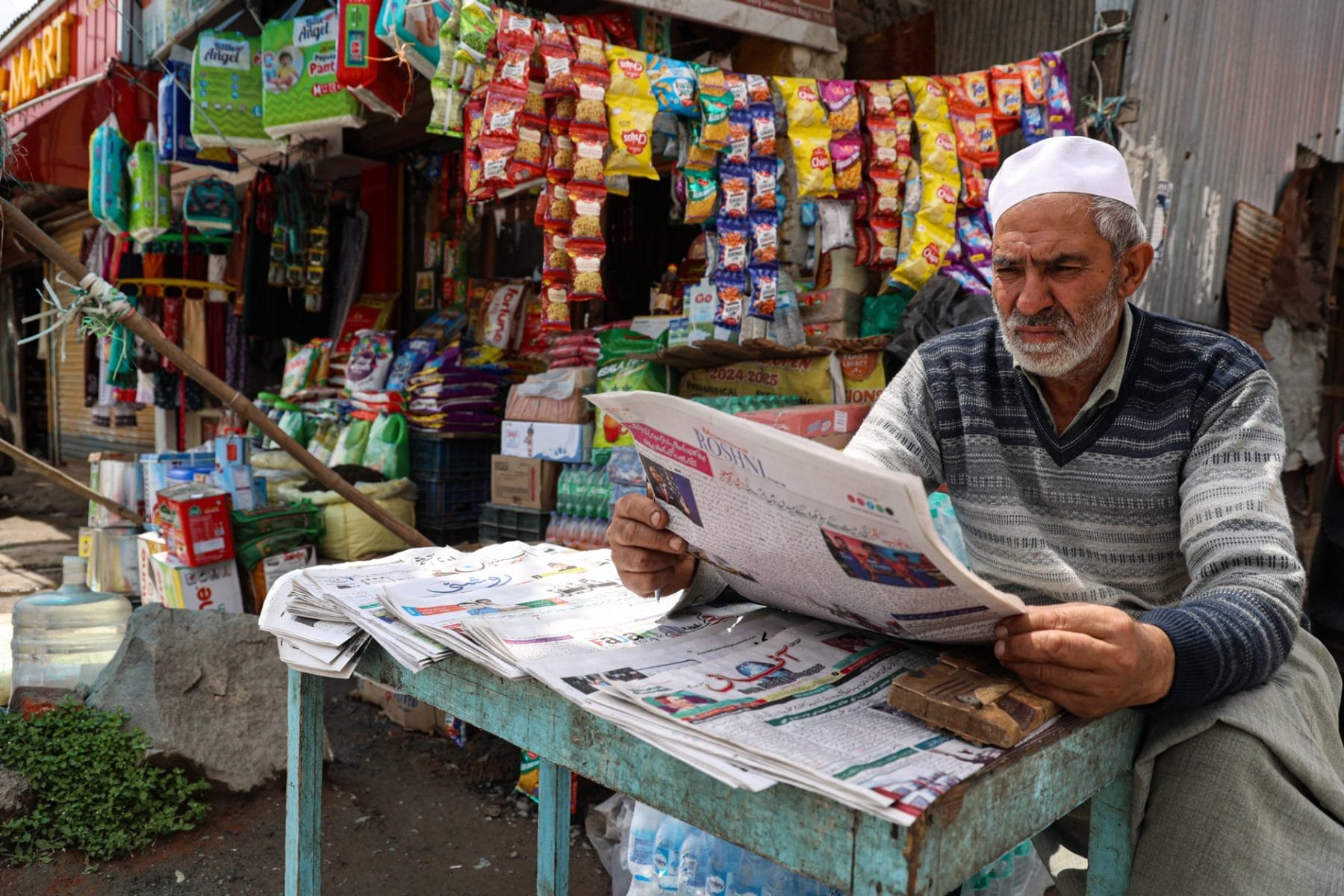
Mohammad Amin Lara outside his shop in Sopore, Jammu and Kashmir. The shop, once a fully occupied newspaper store, is now a grocery store due to the decline in newspaper sales. Nasir Kachroo/NurPhoto via Getty Images.

A Google search of Kashmir-related news floods your screen with links, but it is bulk without substance. Articles read like a log of official announcements and statements, punctuated by the occasional piece on a shrinking water body, a development project, a political tussle over a non-issue, or unemployment figures. Each report floats like a loose, individual particle suspended in air, packaged and presented as definitive. No investigation into context. No excavation of the past. No interrogation of contributing factors. A story about an alleged terrorist’s hair transplant and cosmetic dentistry, based entirely on police sources, is passed off as an investigation into Kashmiri insurgency. A superficially detailed piece on anti-encroachment drives or home demolitions will carry little beyond the grief of the displaced, or the remarks of a politician whose interest in the community begins and ends with votes. A terrorist’s hair transplant story, based on the police version, passes off as an investigation into Kashmir’s complex insurgency dynamic. 

Kashmir fell off the radar a long time ago, says Free Speech Collective’s Geeta Seshu.  

Even mundane stories are difficult to report. No one wants to be quoted. A university professor said he could once “talk to journalists and trust they understood the context. Now, a single sentence can be pulled out, circulated on WhatsApp, and suddenly I’m either an anti-national or a government stooge. Both sides will use the same quote to attack you differently. Why would I take that risk?”

Tarushi Aswani, an Indian journalist, told me that “a curtain has been pulled over Kashmir by silencing journalists who ask questions.” Instead, she added, “press release journalism fills the vacuum, erasing the truth about Kashmir, its history, its politics, its development, environment and aspirations.” Kashmir is no longer looking at a mirror. The lack of truthful reporting means nothing is reflected back. Instead, Kashmiris are looking into the lens of a surveillance camera. 

*The eight Kashmiri journalists interviewed for this story spoke on condition of anonymity.

The post How Modi silenced Kashmir appeared first on Coda Story.

  •  

Una pequeña victoria frente a los mapas que sitúan al Norte Global en el centro y empequeñecen a África.

Read in English here

La semana pasada, el 4 de septiembre, la Asamblea General de las Naciones Unidas aprobó una propuesta africana para un nuevo mapa mundial, que muestra el tamaño real de los países en relación con los demás. Su objetivo es corregir la visión del mundo moldeada por el mapa mundial ampliamente utilizado basado en la proyección de Mercator, creada por Gerardus Mercator, un cartógrafo flamenco del siglo XVI. El problema con el mapa de Mercator es bien conocido; por ejemplo, muestra a la isla de Groenlandia con el mismo tamaño que el continente africano, ¡a pesar de que África es 14 veces más grande que Groenlandia! En pocas palabras, los mapas de Mercator exageran enormemente el norte del mundo —los Estados Unidos y Europa— mientras que reducen África y la mayor parte de Asia. Tampoco trata con benevolencia al resto del hemisferio sur. Sudamérica, que tiene casi tres veces el tamaño de Europa, parece comparable a esta en un mapa típico de Mercator.

Aunque no existe ninguna razón geográfica por la que el hemisferio sur deba ser más pequeño que el hemisferio norte, los cartógrafos lo hicieron significativamente más pequeño porque tenía muy poca masa continental más allá de los 40 grados y, por lo tanto, se recortó. Esto significó que, en la mayoría de los mapas de Mercator, debido a que los cartógrafos occidentales recortaron gran parte del hemisferio sur, el ecuador quedó significativamente desplazado hacia abajo. El doble efecto de comprimir las zonas ecuatoriales, donde se encuentra gran parte de África, y desplazar el ecuador hacia abajo hizo que el norte del mundo, particularmente Europa y América del Norte, parecieran mucho más grandes de lo que realmente son. Por lo general, en la mayoría de los mapas de Mercator, el hemisferio norte parece el doble del tamaño del hemisferio sur, aunque ambos hemisferios son idénticos en tamaño.

Cualquier mapa, ya sea de Mercator o de cualquier otra proyección, presenta el problema de que se puede ser fiel al tamaño o a la forma, pero no a ambos. Se trata de un problema fundamental que surge al proyectar una superficie tridimensional sobre una hoja de papel bidimensional. No hay forma de hacerlo sin distorsiones. Solo un globo terráqueo puede representar fielmente la Tierra tridimensional. Pero entonces, ¿qué hacemos cuando queremos reproducir detalles geográficos para nuestros lectores en libros o artículos?

Las distorsiones evidentes de la proyección de Mercator y su enfoque eurocéntrico dieron lugar a varias alternativas, particularmente entre los cartógrafos de la izquierda amplia o progresista. Otros, especialmente en los Estados Unidos y Europa, se han opuesto a ella, argumentando que el tamaño no importa y que no les molesta que se les muestre mucho más grandes de lo que realmente son. Sin embargo, muchos discreparon e intentaron desarrollar proyecciones alternativas. La proyección de Gall-Peterson, que contó con el respaldo del gobierno socialdemócrata alemán de Willy Brandt, es una de esas proyecciones. La proyección de Hobo Dyer, que se encuentra en el dominio público global —lo que significa que cualquiera puede usarla sin pagar regalías—, es otra. Finalmente, las Naciones Unidas han puesto fin a las guerras de los mapas, con una victoria rotunda a favor de la moción presentada por las naciones africanas para utilizar mapas de área igual. La votación fue de 164 a favor de la moción, con los Estados Unidos como único voto en contra.

El objetivo del mapa de Mercator era facilitar la navegación de los barcos en mar abierto, donde ya no es posible orientarse reconociendo diversas características topológicas, como ríos, colinas, aldeas, pueblos, etc. En mar abierto, si identificamos nuestra ubicación en un mapa de Mercator y el destino al que deseamos llegar, podemos viajar en línea recta, tal como se muestra en el mapa. Conserva la dirección, lo que significa que, si trazamos un rumbo en un mapa de Mercator, podemos fijar nuestro rumbo según él. Es por eso que los países marítimos utilizaban proyecciones de Mercator para la navegación cuando contaban con pocos instrumentos, más allá de la brújula y el sextante, para determinar su ubicación con respecto a su destino.

Es importante señalar que la dirección que se muestra en el mapa no es la ruta más corta entre el punto de partida y el destino.

El camino más corto entre dos puntos en la superficie del globo terráqueo es el arco del gran círculo que va desde su ubicación hasta su destino. Una línea recta en un mapa bidimensional puede parecer la distancia más corta, pero no lo es, ya que no toma en cuenta la curvatura de la Tierra. En pocas palabras, el precio que pagamos por convertir una superficie curva en una plana y bidimensional es que distorsionamos la forma de la superficie. Estiramos ciertas áreas y encogemos otras. En una Tierra plana, la distancia más corta sería la que indica su brújula, pero no así en una esfera.

Anteriormente, los barcos utilizaban las estrellas y el sol del mediodía para estimar dónde se encontraban y hacia dónde debían dirigirse. Fijar un rumbo hacia su destino utilizando un mapa de Mercator y una brújula resultaba mucho más sencillo que tratar de adivinar dónde se encontraba en un océano desierto, sin puntos de referencia, y cambiar constantemente de rumbo en busca de una ruta más corta. La línea constante en el mapa se denominaba “línea de rumbo”, y seguirla ayudaba enormemente a los navegantes. Los mapas de Mercator eran populares en Europa, particularmente en Europa occidental, ya que, aparte de los árabes, eran las principales naciones marítimas.

Mientras que los árabes se enfocaban en el comercio, particularmente en el Océano Índico, los europeos occidentales se dedicaban no solo a la pesca, sino también, fuera de temporada, a la piratería, las incursiones y el saqueo de otras naciones. Los vikingos, importantes figuras románticas en Hollywood, eran particularmente brutales, ya que combinaban el saqueo con el comercio de esclavos. Por supuesto, como todos los piratas, una vez que se alcanza el poder, se puede convertir ese poder marítimo en conquista. Los hombres del norte, o nórdicos, conquistaron Francia y más tarde Inglaterra, y son conocidos por nosotros como normandos. No muy diferentes de las Compañías Holandesa y Británica de las Indias Orientales, que comenzaron con el comercio y la piratería y más tarde establecieron imperios coloniales.

No es de extrañar que los reinos marítimos de Europa occidental, para quienes la guerra, la pesca para alimentarse y la caza de focas, morsas, etc., con el fin de obtener grasa y pieles, constituían las principales fuentes de riqueza, se centraran mucho más en la navegación y la construcción naval. Esto significaba que los barcos construidos para el agitado Océano Atlántico contaban con ciertos avances de los que carecían los barcos árabes e indios, aunque la brújula, el astrolabio, los mapas astronómicos y otros instrumentos náuticos procedían todos de Asia.

Los barcos de Europa occidental contaban con cañones montados en cubierta, lo que les permitía disparar “andanadas”, es decir, disparar múltiples cañones simultáneamente, a diferencia de los cañones montados en la proa y la popa. Esa es una de las principales razones por las que un puñado de países de Europa occidental pudo aprovechar los océanos para, primero, hacerse con el comercio marítimo y, más tarde, construir sus imperios coloniales. A diferencia de los fuertes fijos, los barcos actuaban como fuertes flotantes, lo que proporcionaba a los europeos una movilidad en las guerras navales de la que carecían las fortificaciones terrestres estáticas.

Como muestra la monumental obra de Needham sobre la ciencia y la tecnología chinas, muchos avances náuticos en la construcción naval y la navegación procedían de China. Los siete viajes de los barcos de Zheng He en el siglo XV (1405-1443), que partieron de China, el sudeste asiático y la India, y recorrieron la costa árabe hasta África, demostraron que los chinos habían construido enormes barcos y una poderosa armada. En aquella época, se encontraban muy por delante de Europa y de los árabes, tanto en la construcción naval como en los buques de guerra. Las diferencias internas entre la aristocracia terrateniente y los comandantes navales condujeron a la destrucción de la armada y a la prohibición de construir cualquier buque de alta mar.

Aunque la India suministraba a los árabes la madera necesaria para la construcción naval y en algún momento contó con una poderosa armada, cedió el comercio de alta mar a los comerciantes árabes. Ni China, ni la India, ni los árabes consideraban que la armada tuviera importancia militar. Como dijo un emperador mogol: “Los océanos son para los comerciantes, no para nosotros, los guerreros”. Las divisiones de castas en la India también llevaron, en un momento dado, a prohibir a las castas superiores emprender viajes oceánicos. La travesía del Kala Pani, siempre prohibida por los brahmanes, no se respetó de manera estricta. La India experimentó una gran expansión marítima en el período budista, no a través de la guerra, sino mediante el comercio y la labor de proselitismo de los monjes budistas. Tras el resurgimiento del hinduismo en el sur, el tabú que prohibía a las castas superiores viajar a través de los océanos se aplicó de manera más estricta, dejando los océanos en manos de comerciantes y mercenarios. Por ejemplo, las principales flotas de los reyes indios – ya fuera el rey de Calicut, también conocido como Samundri o Zamorin, o Shivaji – dependían de comandantes navales y buques mercenarios, muchos de ellos al mando de árabes.

Como demuestra la historia, los mapas, el comercio marítimo y la guerra están íntimamente relacionados. Los viajes marítimos y las guerras navales confieren a los mapas una importancia estratégica. No es simplemente la ubicación de las fronteras de cada país lo que importa, sino también su visión estratégica del mundo. Podemos observar cómo esto se está manifestando actualmente en Bab el Mandeb y en el Golfo Pérsico. Un vistazo rápido a un mapa habría convencido a los líderes estadounidenses de que Irán cuenta con una clara ventaja estratégica en el Estrecho de Ormuz, al igual que los hutíes en el Mar Rojo y el paso hacia el Canal de Suez. Descuidar los océanos repite los errores que cometió Asia en una época diferente, errores de los que ha aprendido. Debemos tener esto presente también hoy en día.

Prabir Purkayastha es el editor fundador de Newsclick.in, una plataforma de medios digitales. Es activista en favor de la ciencia y del software libre.

Este artículo fue elaborado por Globetrotter.

  •  

Cumbre del BRICS+: entre promesas y contradicciones

Read in English here

La 18va Cumbre del BRICS, celebrada en Nueva Delhi del 12 al 13 de septiembre, tuvo lugar en medio de una intensificación excepcional de las contradicciones internacionales. Las guerras en Asia Occidental, las sanciones unilaterales, las barreras arancelarias y el uso de las finanzas y la tecnología como armas han puesto de manifiesto el carácter fundamentalmente desigual del orden internacional dominado por el imperialismo. En este contexto, la continua expansión del BRICS refleja el deseo de los países en desarrollo de alcanzar una mayor autonomía estratégica y un sistema más democrático de gobernanza global. Al mismo tiempo, la cumbre demostró que el BRICS+ sigue siendo una agrupación heterogénea cuyos miembros difieren sustancialmente en sus alineamientos políticos e intereses económicos.

La Declaración de Nueva Delhi, resultado de la cumbre, reiteró la exigencia de una reforma de las Naciones Unidas, las instituciones financieras internacionales y el sistema comercial multilateral. Se opuso a las sanciones unilaterales no autorizadas por el Consejo de Seguridad de las Naciones Unidas y abogó por un mayor comercio en monedas nacionales. La declaración también respaldó una mayor representación de los países en desarrollo en instituciones cuyas normas siguen siendo determinadas principalmente por los Estados Unidos y sus aliados. Estas posturas tienen una importancia objetiva en un momento en que Washington recurre cada vez más a sanciones, aranceles, controles a la exportación y control sobre los sistemas de pago para disciplinar a los países que se niegan a aceptar sus dictados.

Ambigüedad

Sin embargo, el lenguaje cuidadosamente negociado de la declaración también reveló las limitaciones de la formación ampliada. El BRICS+ incluye ahora a países sometidos a una presión occidental sostenida, como Rusia e Irán, así como a los Emiratos Árabes Unidos y otros Estados que mantienen amplios vínculos económicos y de seguridad con Occidente. En consecuencia, el consenso solo puede mantenerse mediante formulaciones que reconozcan los conflictos sin identificar siempre sus causas políticas. Esta ambigüedad fue especialmente evidente en el tratamiento que se dio en la cumbre a la guerra cada vez más extensa en Asia Occidental y a la postura adoptada por Irán.

El presidente iraní, Masoud Pezeshkian, aprovechó la cumbre para denunciar las sanciones unilaterales y la guerra de agresión contra Irán llevada a cabo por los Estados Unidos e Israel. Destacó acertadamente que la resiliencia económica no puede separarse de la paz, la soberanía y la seguridad. Irán también abogó por el comercio en monedas nacionales, un mayor uso del Nuevo Banco de Desarrollo y la construcción de corredores independientes de transporte y energía (tal como ya lo ha hecho a través de Pakistán, que ha proporcionado seis rutas terrestres para que las mercancías chinas y rusas ingresen a Irán). Para un país sometido a décadas de sanciones, a la exclusión de las redes financieras occidentales y a repetidas amenazas de cambio de régimen, la pertenencia al BRICS+ representa una importante oportunidad diplomática y económica.

La postura de Irán, sin embargo, presenta una marcada ambigüedad. Teherán presenta al BRICS+ como un instrumento para resistir el unilateralismo y defender la soberanía. Al mismo tiempo, debe buscar un acuerdo con los estados vecinos del Golfo, varios de los cuales están profundamente integrados con el capital occidental y los acuerdos de seguridad.

Irán firmó una declaración en la que se pedía moderación y desescalada, al tiempo que acusaba a los Estados Unidos e Israel de agresión y defendía sus propias acciones de represalia. Su postura combativa frente a la presión hiperimperialista se combina, por lo tanto, con un esfuerzo pragmático por evitar el aislamiento regional, asegurar el alivio de las sanciones y preservar los canales de negociación.

Esto no debe interpretarse simplemente como una inconsistencia. Irán se enfrenta a una coalición militar y financiera muy superior y debe maniobrar dentro de severas limitaciones. Pero también ilustra el problema más amplio al que se enfrenta el BRICS+. La oposición a la dominación occidental no genera automáticamente un programa antiimperialista coherente. Los Estados participantes son Estados capitalistas que persiguen sus respectivos intereses nacionales. Sus clases dominantes pueden resistirse a aspectos particulares de la hegemonía estadounidense, al tiempo que se mantienen dispuestas a llegar a acuerdos con las finanzas globales o con potencias reaccionarias regionales. En consecuencia, el BRICS+ es un escenario de lucha dentro del orden mundial en transformación, no una alternativa ya constituida al hiperimperialismo.

Socios

El acontecimiento político más trascendental de la cumbre para Asia fue la reunión entre el primer ministro Narendra Modi y el presidente chino Xi Jinping. La primera visita de Xi a la India en siete años confirmó la mejora gradual de las relaciones desde los acuerdos de retirada militar iniciados en 2024. Los dos líderes coincidieron en que la India y China deben considerarse socios en lugar de rivales y abordar las relaciones bilaterales desde una perspectiva estratégica a largo plazo. También discutieron la cuestión fronteriza, el comercio, el acceso a los mercados y los problemas de la cadena de suministro.

Cualquier mejora duradera en las relaciones entre la India y China debe ser bienvenida. La prolongada confrontación tras el enfrentamiento en el valle de Galwan de 2020 perjudicó a ambos países, aumentó el gasto militar y fortaleció los esfuerzos de los Estados Unidos por incorporar a la India a su estrategia indopacífica. Washington ha buscado constantemente convertir a la India en un contrapeso estratégico frente a China a través del Quad y la expansión de la cooperación militar y tecnológica. Por lo tanto, una confrontación continua entre la India y China beneficia mucho más a la estrategia de los Estados Unidos que a los intereses de los pueblos indio o chino.

La paz y la tranquilidad a lo largo de la Línea de Control Efectivo siguen siendo indispensables. Los acuerdos sobre la retirada deben ir seguidos de un compromiso sostenido a nivel diplomático y militar, la aclaración de las zonas en disputa y la observancia estricta de los acuerdos existentes. No se debe permitir que ni la retórica nacionalista ni la construcción competitiva de infraestructura desencadenen otra confrontación. Las diferencias sobre la frontera no pueden ignorarse, pero pueden y deben gestionarse sin subordinar toda la relación a una rivalidad militarizada.

Las relaciones económicas presentan una contradicción igualmente difícil. China es uno de los mayores socios comerciales de la India y una importante fuente de maquinaria, componentes electrónicos, productos químicos, equipos de energía renovable y otros insumos industriales. Sin embargo, el enorme déficit comercial de la India con China refleja tanto la debilidad del sector manufacturero indio como los obstáculos que enfrentan las exportaciones indias en el mercado chino. Para abordar este desequilibrio se requiere un mejor acceso al mercado, inversión china en condiciones transparentes y, sobre todo, una política industrial india capaz de desarrollar la capacidad productiva nacional. Durante los últimos seis meses, el comercio bilateral se ha disparado.

El enfoque del Gobierno de Modi ha alternado entre la dependencia de las importaciones chinas y las restricciones, motivadas políticamente, a la inversión y la tecnología chinas. Su retórica de “China más uno” no puede ocultar el fracaso de sus propias políticas para generar una industrialización de base amplia. Tampoco una alineación estratégica más estrecha con los Estados Unidos puede proporcionar a la India una base manufacturera independiente. Los Estados Unidos busca un acceso privilegiado al mercado indio, al tiempo que recurre a aranceles, restricciones tecnológicas y presión política cada vez que las políticas indias se apartan de sus intereses. La incoherencia del Gobierno de Modi se pone de manifiesto, sobre todo, en su incapacidad para elaborar realmente una agenda nacional de desarrollo que aproveche el dinamismo de la economía china y se distancie de unos Estados Unidos más orientados hacia el nacionalismo económico.

China, por su parte, debe reconocer que unas relaciones estables requieren sensibilidad ante las preocupaciones legítimas de la India. Entre ellas se encuentran la cuestión fronteriza sin resolver, el acceso desigual al mercado y el desequilibrio comercial. La considerable asimetría entre las dos economías hace que la reciprocidad sea particularmente importante. El llamado de Pekín a la colaboración solo cobrará sentido cuando vaya acompañado de medidas prácticas que permitan el ingreso de bienes y servicios indios al mercado chino y eviten que las tensiones fronterizas acaben repetidamente por opacar el diálogo político.

La cooperación entre la India y China otorgaría al BRICS+ un peso mucho mayor en la lucha por la democratización del orden internacional. Juntos, ambos países representan más de un tercio de la humanidad.

Su cooperación podría impulsar la reforma de las instituciones internacionales, el financiamiento climático, el intercambio de tecnología, las iniciativas de salud pública y un sistema comercial más justo. Por el contrario, una nueva confrontación paralizaría al BRICS+ y permitiría que potencias externas se aprovecharan de las divisiones en toda Asia. Por lo tanto, la India debe seguir una política exterior independiente basada en la coexistencia pacífica, y no participar en un proyecto estadounidense destinado a contener a China.

La cumbre de Nueva Delhi generó propuestas para la continuidad institucional, una cooperación financiera más sólida y una mayor resiliencia entre las economías en desarrollo. Sin embargo, las declaraciones tendrán un valor limitado a menos que se traduzcan en acuerdos concretos. El Nuevo Banco de Desarrollo debe ampliar los préstamos en monedas nacionales y dar prioridad a la infraestructura socialmente necesaria, en lugar de reproducir las condiciones y la orientación corporativa del Banco Mundial. Los mecanismos de pago transfronterizos deben desarrollarse de manera transparente, sin crear nuevas formas de dominación por parte de las economías más fuertes del BRICS. Las enérgicas declaraciones en apoyo de la Revolución Cubana y de las aspiraciones de autodeterminación del pueblo palestino deberán tener una aplicación práctica. ¿Encontrará el BRICS+ una manera de romper el cruel e ilegal embargo de Estados Unidos contra Cuba, y brindará el BRICS+ apoyo para la reactivación de la vida política palestina?

El BRICS+ encarna tanto el movimiento hacia un nuevo equilibrio mundial como todas las contradicciones de ese movimiento. El cauteloso acercamiento entre India y China es un ejemplo de dicha contradicción, ya que combina el reconocimiento de la dependencia mutua con una desconfianza estratégica sin resolver. El futuro del BRICS+ dependerá de si dichas contradicciones se gestionan de manera pacífica y de si la cooperación genera beneficios tangibles para los trabajadores, en lugar de limitarse a ampliar el margen de maniobra de las clases dominantes nacionales.

Para la India, el camino a seguir es claro: restablecer relaciones normales y pacíficas con China, resistirse a ser incorporada a la estrategia militar de los Estados Unidos, oponerse a la agresión y a las sanciones unilaterales contra Irán, y trabajar por un orden multilateral genuinamente democrático. Solo habrá un nuevo equilibrio mundial cuando se restrinja la dominación hiperimperialista y se amplíen la soberanía y las posibilidades de desarrollo de los pueblos. La cumbre de Nueva Delhi marcó un paso más en esa transición controvertida, pero la dirección y el contenido social del orden emergente siguen siendo objeto de lucha política.

Vijay Prashad es un historiador y periodista indio. Es autor de cuarenta libros, entre los que se incluyen Balas de Washington, Una estrella roja sobre el Tercer Mundo, Las naciones oscuras: una historia del Tercer Mundo; Las naciones pobres: una posible historia del Sur Global y How the International Monetary Fund Suffocates Africa, escrito con Grieve Chelwa. Es el director ejecutivo de Tricontinental: Instituto de Investigación Social, corresponsal jefe de Globetrotter, y el editor jefe de LeftWord Books (Nueva Delhi). También ha hecho apariciones en las películas Shadow World (2016) y Two Meetings (2017).

Este artículo fue elaborado por Globetrotter.
  •  

U.S. Nuclear Control Mission Could Dramatically Evolve Under Looking Glass-Next

America’s nuclear weapons deterrent and how it is controlled is increasingly critical in the face of the rapidly-expanding arsenals across multiple adversaries. A new fleet of E-4C nuclear-hardened survivable airborne operations center aircraft is now in development, as is the U.S. Navy E-130J, which will provide next-generation communications with nuclear ballistic missile submarines deep beneath the waves. Focus is also turning to a mission that’s dedicated to emergency communications with the U.S. nuclear forces in times of crisis, a role known as Operation Looking Glass, which is also poised for updating under a program dubbed Looking Glass-Next.

The comprehensive modernization of America’s nuclear strike muscle involves three major elements – new B-21 Raider stealth bombers, the LGM-35A Sentinel intercontinental ballistic missile (ICBM) program to replace Minuteman IIIs, and new Columbia-class nuclear ballistic missile submarines. A fourth facet that ties all these new elements, as well as existing ones, together is the next generation nuclear command, control, and communications (NC3) architecture. It securely connects nuclear weapons systems to decision-makers. Without it, America’s nuclear deterrent isn’t a deterrent at all.

A U.S. Air Force E-4B assigned to the 595th Command & Control Group, Offutt Air Force Base, Neb., flies on a training sortie over the Midwest, May, 15, 2024. The E-4B "Nightwatch" serves as the National Airborne Operations Center and is a key component of the National Military Command System for the President, the Secretary of Defense and the Joint Chiefs of Staff. In case of national emergency or destruction of ground command and control centers, the aircraft provides a highly survivable command, control and communications center to direct U.S. forces, execute emergency war orders, and coordinate actions by civil authorities. (U.S. Air Force photo by Tech. Sgt. Codie Trimble)
A USAF E-4B assigned to the 595th Command & Control Group at Offutt Air Force Base, Nebraska. USAF/TSgt Codie Trimble

America’s nuclear modernization is set against a backdrop of rapidly-developing nuclear strength across adversaries and pacing threats, which could threaten not only U.S. fighting forces, but also the existing aging NC3 infrastructure. This could impede the collective responsiveness and effectiveness of the American nuclear enterprise. For example, a coordinated attack on NC3 could degrade the National Command Authority chain, which could prevent communications that are necessary to conduct a retaliatory strike.

If fixed underground command posts are targeted and rendered inoperable, the current strategy would involve turning to a set of highly-survivable air assets that are designed to be on hand to execute emergency war orders. This includes the U.S. Air Force’s E-4B National Airborne Operations Center (NAOC) “Nightwatch” aircraft, and the E-6B Mercury that is operated by the U.S. Navy.

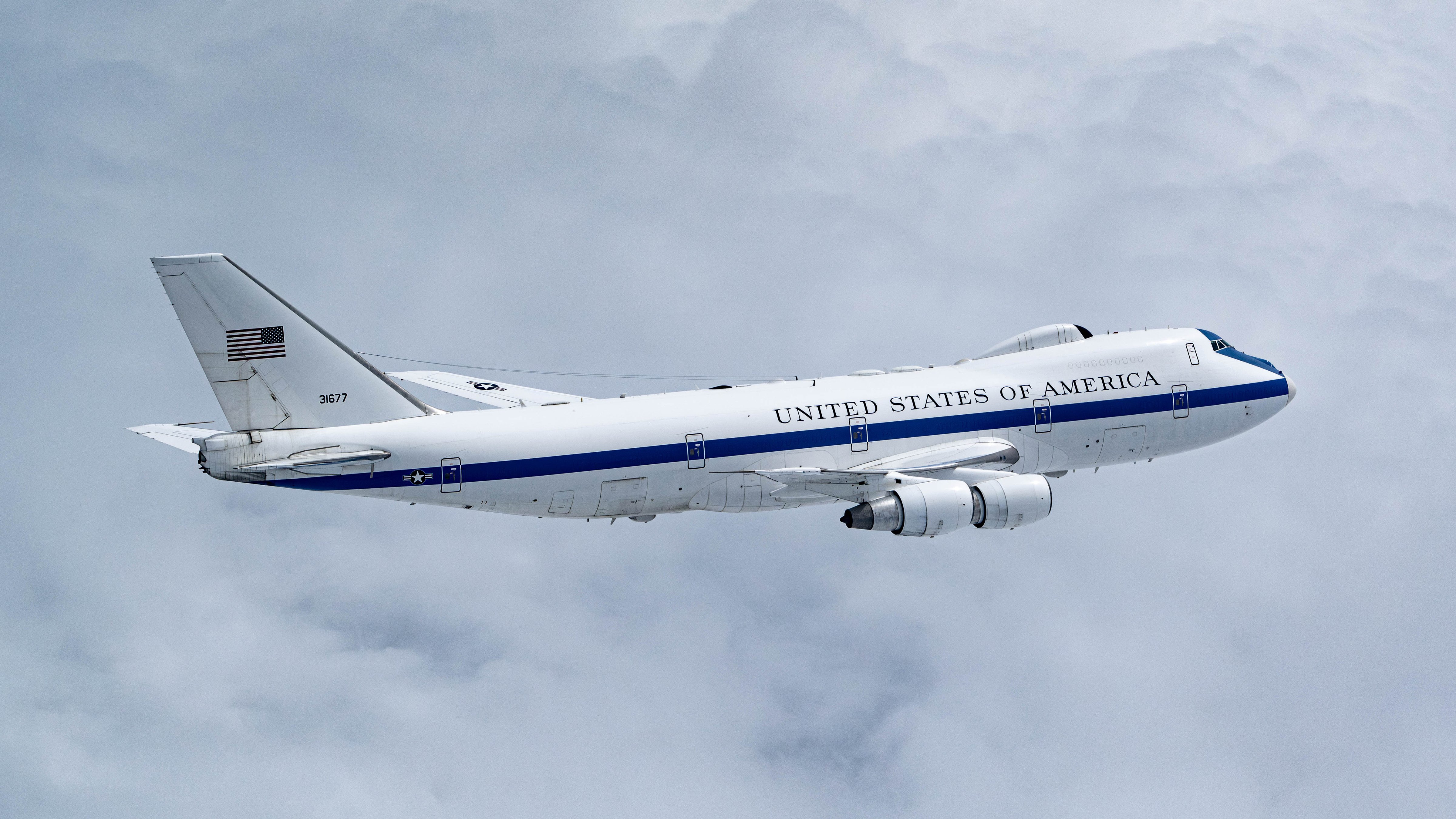
A major recapitalization effort is already underway for the NAOC E-4Bs, which are being superseded under the E-4C Survivable Airborne Operations Center (SAOC) contract. It is being led by defense contractor SNC. The new SAOC aircraft are based on the far more modern 747-8i, and are planned to have a much broader mission set than the four E-4B Nightwatch types they are set to replace, as you can read more about here.

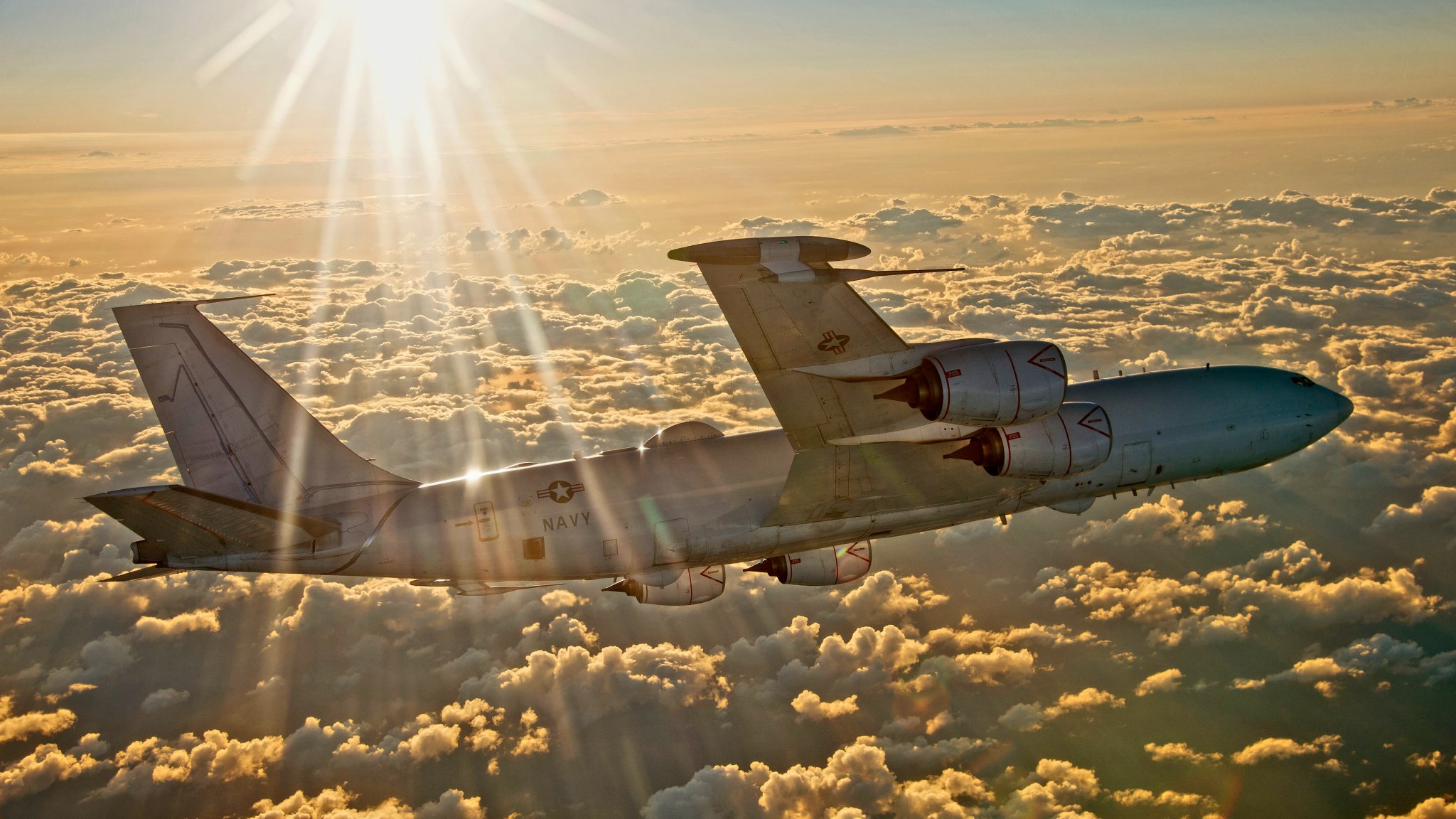
The Navy’s E-6B Take Charge and Move Out (TACAMO) aircraft have a primary role of strategic connectivity with the ballistic missile submarine fleet. These converted 707s also execute another mission known as the Airborne National Command Post (ABNCP), more recently renamed “Looking Glass.” For this they are manned by U.S. Air Force missileers and U.S. Strategic Command (USSTRATCOM) battle managers who are responsible for running the airborne nuclear NC3 systems.

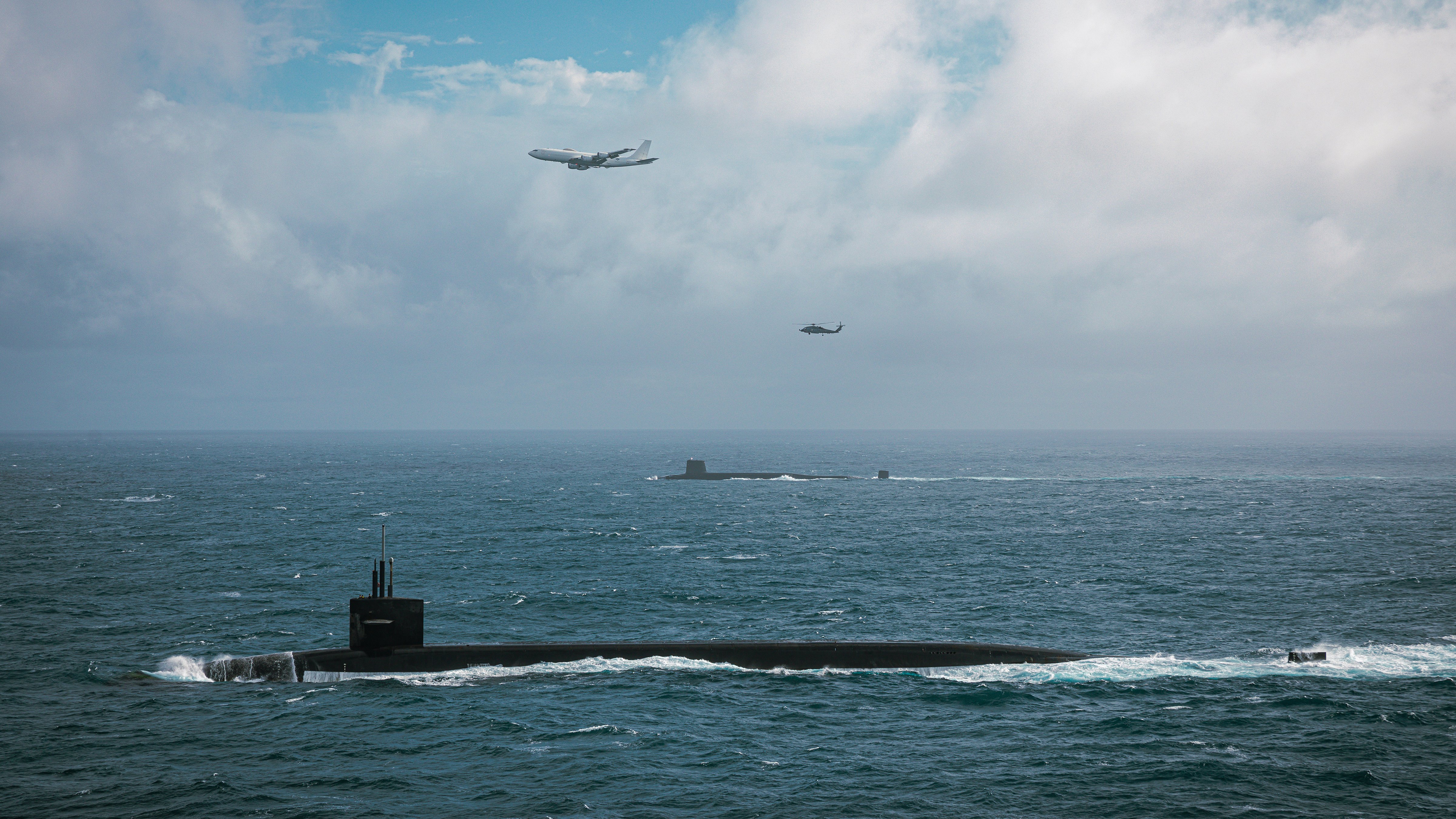
U.S. Navy Ohio-class ballistic missile submarine USS Tennessee (SSBN 734), an United Kingdom Royal Navy Vanguard-class nuclear submarine, an E6-B Mercury assigned to the "Shadows" of Fleet Air Reconnaissance Squadron (VQ) 4 and an MH60R Sea Hawk helicopter attached to the “Proud Warriors” of Helicopter Maritime Strike Squadron (HSM) 72 conducted bi-lateral at sea training designed to validate tactics, techniques, and procedures which strengthens the relationship between uniquely close Allies in support of deterrence and collective security. The United States and the United Kingdom have a long-standing agreement of cooperation in the development and deployment of strategic weapons and supporting system. (U.S. Navy photo by Naval Aircrewman (Operator) 1st Class Aaron Abbott/Released)
An E-6B Mercury flies over U.S. and UK submarines during a joint exercise. U.S. Navy

The joint service team on Looking Glass mirrors some operations performed by USSTRATCOM’s underground command posts, and a small portion of what the NAOC executes. The Looking Glass mission is really focused on performing an airborne backup mission solely for USSTRATCOM to ensure another means of communicating with fielded nuclear bombers, their assigned tankers, ICBMs and deployed nuclear submarines. It is best known for its ability to supply airborne communications connectivity to the USAF’s ICBM force on the ground and can command remote launches of those weapons if necessary.

Additional NC3-related modernization is coming on the heels of SAOC, with the new E-130J set to assume the Navy’s TACAMO role from the ageing E-6Bs, assuming strategic connectivity for nuclear ballistic submarines. It means that at some point roughly two-thirds of the E-6 current mission will go to the new E-130J aircraft – raising the question of what will fulfill the critical Looking Glass mission.

Since the E-130J is not planned to take on the Looking Glass role, the USAF is in the early stages of what’s dubbed Looking Glass-Next (LG-N), which presents the future pathway for USSTRATCOM’s mobile contingency operations. This could take on a number of forms, including NC3 communications functions being increasingly moved to space-based assets and more distributed operations across the ground, although an air platform is still likely to form a major part of the overall capability.

The need to modernize America’s NC3

Brian Golden is a retired USAF colonel who intimately understands nuclear command and control (NC2) and the associated NC3 equipment and processes from both a service and industry perspective. As a subject matter expert for SNC, he draws on his extensive experience as a former E-4B NAOC commander and he commanded much of the USAF’s multi-domain NC3 systems, including the Airborne Launch Control System onboard the current E-6B Looking Glass. He is also extremely familiar with all the nation’s continuity of government and continuity of operations missions for both Congressional and executive branches of the U.S. government.

“Everyone referred to the nuclear triad as the platforms that were controlled through the NC3 architecture,” Golden told TWZ during a detailed discussion. “Those platforms received their messages and executed their missions. But this isn’t just about that platform triad. The U.S. nuclear enterprise has four primary pillars, and nuclear command, control, and communications is a critical part of it. Without a robust NC3 system, it’s like having a brand new Bugatti Veyron but without the keys! It looks awesome on the driveway, but you can’t drive it.”

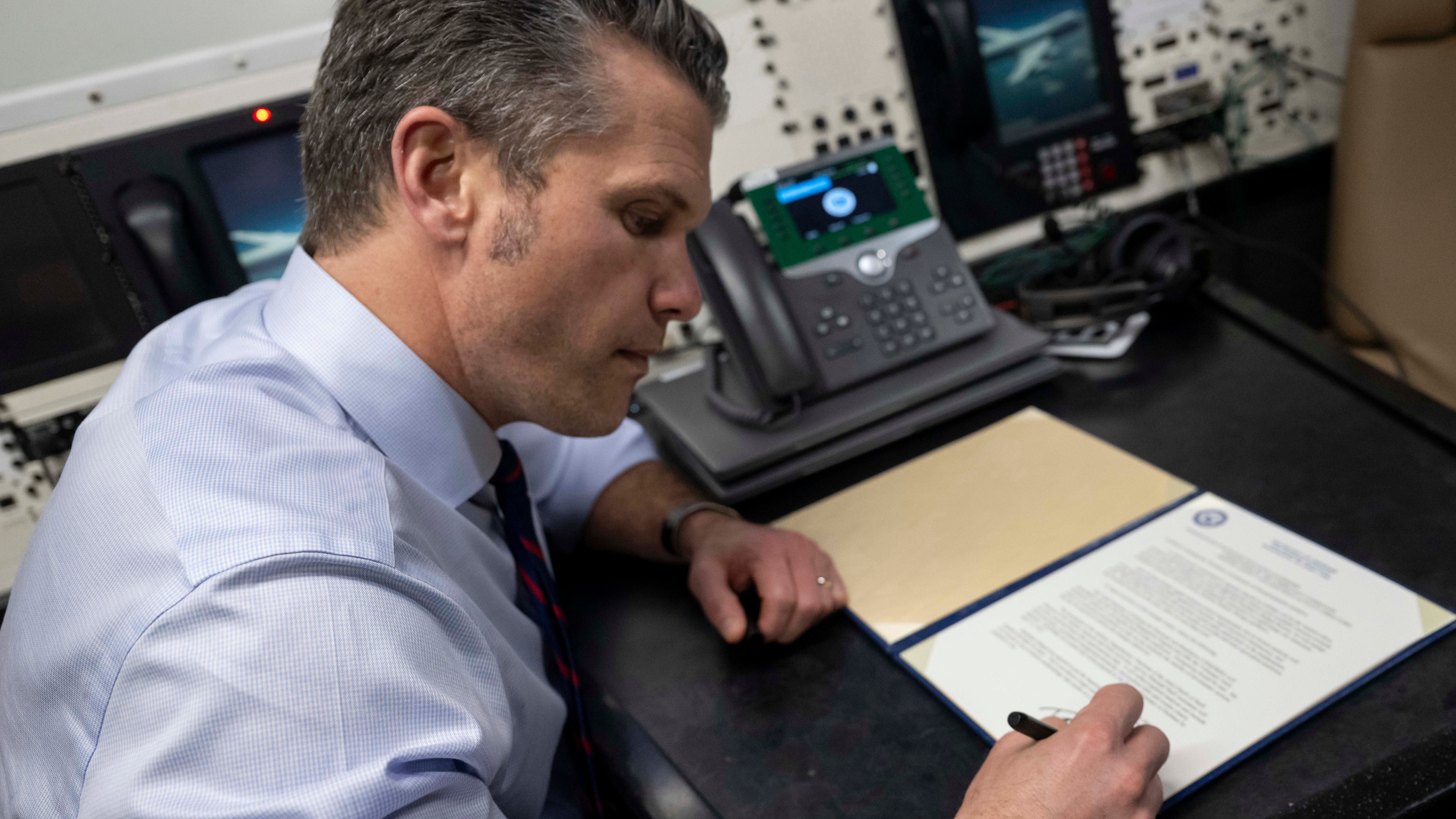
Secretary of Defense Pete Hegseth signs a memorandum aboard an E-4B Nightwatch aircraft while flying over the Pacific Ocean, March 28, 2025. (DOD photo by U.S. Air Force Senior Airman Madelyn Keech)
Secretary of War Pete Hegseth working aboard an E-4B Nightwatch. USAF/SrA Madelyn Keech

Golden explains that the current NC3 enterprise consists of a series of exquisite systems that are extremely reliable, but that are in need of modernization to stay ahead of the steepening threat curve, and stay in front of supply chain constraints. “What we have currently is very reliable, robust, and very survivable, but it can be difficult to maintain some of our legacy systems. Additionally, as threats evolve we must ensure our communications pathways also evolve. 

“Our nation’s industrial base engineers figured out extremely robust methods of nuclear communications when these systems were fielded. Looking at the overall command and control [NC2], and then the NC3 communications pathways, any new systems that we introduce must be sustainable, scalable and modular.”

The U.S. nuclear enterprise is facing greater threats than ever with adversaries challenging U.S. nuclear infrastructure in multiple domains: space, cyber, ground, air. Because of this, NC3 demands a continuous process of improvement.

Going forward, the NC3 enterprise will likely need to integrate upgraded proven legacy systems with all-new technology. “Sometimes the physics of radio waves may dictate the need for a legacy approach with upgraded systems, such as communicating with a submarine that’s very deep in the ocean.”

Golden’s view is that NC3 requires a layered, open architecture approach as modernization is evaluated. “Applying those same physics and then adding new layers such as artificial intelligence may determine a better way of doing things.”

Upgrading to SAOC

Golden points to the SNC-led E-4C SAOC program as a clear example of critical NC3 modernization, while emphasizing that the NC2 mission is far from being the primary role of the E-4B and its forthcoming successor. “Nuclear command and control is only a fraction of what the current NAOC does and what the future SAOC will do for our nation and our allies and partners.”

An E-4B Nightwatch taxis on the flightline during U.S. Secretary of War Pete Hegseth’s visit to Japan at Yokota Air Base, Japan, Oct. 28, 2025. Engagements from distinguished visitors are designed to reinforce ongoing efforts to strengthen alliances and partnerships in support of a free and open Indo-Pacific. (U.S. Air Force photo by Airman 1st Class David S. Calcote)
An E-4B Nightwatch at Yokota Air Base, Japan. USAF/A1C David S. Calcote

The E-4B initially featured just a handful of communications systems, which have grown over time, leading to what Golden calls the “King Kong” of communication capabilities today. The E-4 is not a battlefield communications platform, its mantra is all about supporting Presidential-level requirements across the board. It does possess an extensive NC3 suite, but it also serves the White House Communications Agency (WHCA) and the Department of Homeland Security, through the Federal Emergency Management Agency (FEMA), in many other crisis roles. Another mission the E-4B fleet performs is to safely transport the Secretary of War on trips within the United States and abroad.

The E-4B NAOC and Looking Glass are two complementary tiers of the same survivable architecture. The NAOC (and future SAOC) is designed to anchor national-level decision-making and government continuity from the very top, while Looking Glass provides USSTRATCOM with the dedicated airborne command and battle-management capacity required to direct forces. Both roles are critical and non-negotiable.

An artist’s rendition of the new E-4C SOAC. SNC

“The new E-4C SAOC, like the E-4B before it, will deliver an expansive communications suite and increased capacity supported by a larger fleet,” Golden explains. “SAOC is built to ensure the President and national leadership can direct the entire country through any crisis. Looking Glass supports an equally vital and highly specialized mission. It is dedicated to USSTRATCOM’s operational needs, connecting directly to bombers, ICBMs and submarines. Attempting to merge these unique missions on a single airframe would compromise the unique, essential role that each was created to perform.”

Looking Glass-Next

The Looking Glass role and the platform that fulfills it is not classified as a national-level mission. As Golden alluded to earlier, it’s not assigned to the Chairman of the Joint Chiefs or to the Secretary of War. It’s exclusively assigned to USSTRATCOM; however, without the Looking Glass mission being upgraded soon, America has a gaping hole in its nuclear architecture.

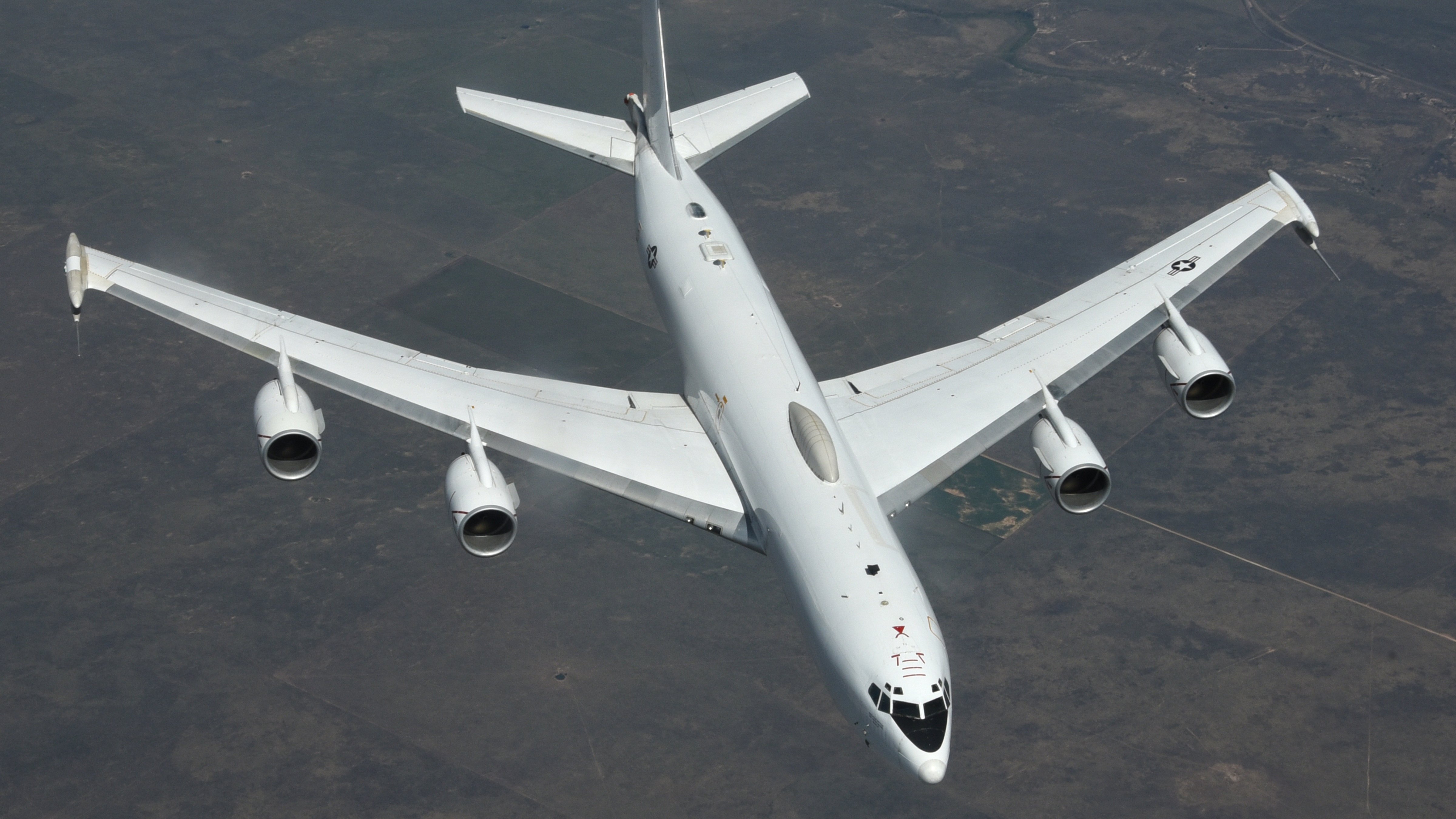
United States Navy Boeing E-6B Mercury of Strategic Communications Wing ONE, Task Group 114.2, based at Tinker Air Force Base, Oklahoma, high over Colorado Aug. 23, 2019. The E-6B was refueled by a Boeing KC-135R Stratotanker of the 507th Air Refueling Wing, Air Force Reserve Command, also from Tinker AFB. (U.S. Air Force photo/Greg L. Davis)
An E-6B Mercury flying over Colorado. USAF/Greg L. Davis

The commander of USSTRATCOM is the customer and ultimately the decision-maker when it comes to Looking Glass-Next, and the USAF has been tasked by the Secretary of War to develop and field it. SNC is looking at several options for the requirement, with some sort of air platform at its core, which Golden refers to as an “E-6C.” He endorses that the current E-6B is one of the “cogs in the wheel that has to be replaced,” but adds that this doesn’t mean the next-generation Looking Glass is just an aircraft.

“At SNC, we have significant expertise and experience with mission system integration,” says Golden, adding that SNC is evaluating what he calls “aggressively creative options,” for the modernization requirement. He further noted that the modern threat is driving a requirement for Looking Glass-Next to be very difficult to target and must be dispersed.

“Having an aircraft as the only option for this USSTRATCOM mission is a legacy mindset,” Golden states. “We have advanced multi-domain capabilities, including numerous space capabilities available through the Sierra Space Corporation. Future mission resilience requires a creative and integrated approach.”

“We believe a creative approach to provide NC3 options will ensure a robust, reliable, survivable and cost-effective solution.”

Golden endorses this approach to creativity and development and indicated that SNC will continue to inform and respond to the ongoing Looking Glass-Next requests for information that may result in a future program.

One of the 747-8is that is being modified by SNC in Dayton, Ohio, to become an E-4C SAOC. SNC

“SNC has leaned heavily into the nuclear command, control, and communications architecture and it’s a natural fit for us, building on our work with the Department of War and our subcontractors on the E-4C SAOC. Our Looking Glass-Next responses and inputs will leverage relevant work and experience gained from SAOC, but we are also focused on being creative. We’re small enough to be agile, but big enough to deliver. That’s why we think we’re very well positioned in the NC3 space.”

The majority of SNC’s work on the E-4C SAOC is being completed at the NC3 Center of Excellence, housed in the Aviation Innovation and Technology Center (AITC) in Dayton, Ohio. 

Golden believes the timing couldn’t be better to deliver bold and creative NC3 solutions. “The USAF is already asking the right questions, and industry is really able to innovate, which will result in a transformational era for nuclear command, control and communications.”

The post U.S. Nuclear Control Mission Could Dramatically Evolve Under Looking Glass-Next appeared first on TWZ.

  •  

O sequestro da cueca vermelha

Acredito que a vida adulta te coloca algumas provações inusitadas, como descobrir que detergente virou bebida de maluco negacionista e que o papel higiênico não se desenrola sozinho — a não ser quando seu gato faz picadinho dele numa madrugada qualquer. 

Existem outras, claro, tão banais, como ir à lavanderia. Eu estou nessa prática há pouco tempo e percebi como esse ecossistema úmido é repleto de armadilhas sociológicas. 

A lavanderia é um lugar onde a intimidade alheia se expõe, rodopiando a mil rotações por minuto, atrás de um vidro embaçado. Foi numa dessas incursões, armado com um cesto de roupas sujas e a ingenuidade de um novato, que o destino me pregou uma peça.

Recolhi minhas roupas da secadora e dobrei tudo com a pressa de quem quer voltar ao sofá. Ao organizar as gavetas, notei uma intrusa. Uma cueca vermelha. Não um vermelho discreto. Era um vermelho vibrante, quase radioativo, um vermelho que gritava “eu não tenho medo de desbotar na lavagem”.

Eu não tenho cuecas vermelhas. Minhas gavetas são um monótono degradê de cinza, preto e azul-marinho, o uniforme padrão da melancolia masculina urbana. Aquela peça rubra era um alienígena no meu guarda-roupa. Fiquei imaginando quem seria o dono e o que aquela cueca teria vivido. 

Pensei em levar de volta. “Amanhã eu desço e deixo no balcão”, prometi. Mas o amanhã não chegou. A cueca vermelha ficou ali, no cesto de roupa suja, me encarando com toda a sua ousadia escarlate toda vez que eu me aproximava. 

Semanas se passaram e a cueca foi soterrada por outras peças. Chegou o dia de lavar roupa novamente. No piloto automático, peguei tudo no cesto, desci, lavei, sequei, subi. Quando fui guardar… lá estava ela. Eu a havia lavado de novo. Avisei a Alexa para anotar o recado e me lembrar no dia seguinte. “Devolver a cueca”.

Por um momento, eu não só a tinha sequestrado, como também a mantinha num regime bizarro de cativeiro com pensão completa. Ela tinha dono e não era eu. Senti um misto de culpa e absurdo. E, por algum motivo besta, tinha nojinho dela. 

Decidi que daria um fim naquilo. Um assassinato de algodão. Mas hesitei. Vai que o cara é apegado? A cueca já tinha ganhado status de entidade na minha casa. 

Na vez seguinte em que desci à lavanderia, a maldita estava na minha sacola, pronta para ser devolvida. Enquanto a máquina girava, sentei-me e abri um livro, tentando fingir que não carregava a roupa íntima de um estranho no bolso. Fiquei sem jeito de colocar a danada na bancada porque havia mais gente. 

Não é qualquer gente, é dessas que puxam assunto na lavanderia. Elas existem. Foi quando um rapaz deu início ao papo. Falamos do tempo, do síndico, da inflação do sabão. Amenidades. A conversa fluiu para o futebol. Ele suspirou pesado e, com a naturalidade de quem confessa um pecado, soltou:

— Pra piorar, perdi minha cueca da sorte aqui faz um mês. Sou flamenguista. Tinha uma cueca vermelha que eu só usava no dia de clássico. Sumiu na secadora. Sem ela, o Mengão perdeu o último jogo. 

Eu, são-paulino desde o berço, congelei. A mão, que instintivamente tinha ido ao bolso, parou no meio do caminho. O tecido vermelho pareceu queimar meus dedos. 

Olhei para o rapaz. Ele tinha um olhar triste, de quem acreditava que o time dependia daquela peça íntima. Pensei no meu Tricolor lutando no campeonato e nas minhas próprias mandingas de torcedor. Pensei no Flamengo. Pensei na cueca vermelha, limpinha, amaciada com lavanda, refém no meu bolso esquerdo.

Fiz o que qualquer homem ético e apaixonado por futebol faria naquela situação.

Fiquei em absoluto silêncio.

— Puxa, cara… que chato — lamentei, com a voz embargada por uma solidariedade falsa. — A máquina sempre come alguma coisa — consolei.

Ele assentiu, resignado. Recolheu suas roupas e saiu com sua sacola, levando consigo a esperança do seu time. E eu fiquei ali, com a cueca no bolso. Já sozinho, a depositei no balcão, olhando para os lados, e resolvi escrever um bilhete de improviso.

— Pertence a um flamenguista. Favor respeitar. Ele voltará.

Voltei para o apartamento satisfeito. Tirei as roupas da sacola, dobrei com cuidado e guardei. Para minha surpresa, e revolta, agora havia uma meia. Apenas o pé direito, daquelas estampadas com capivaras usando óculos escuros.

— “Não é possível”, pensei. 

Levantei a meia contra a luz para observar melhor a capivara com seus óculos de lacração tug life. Se o Flamengo perdeu o jogo por causa da cueca, o que será que estava em jogo com aquela meia de capivara? Pelo sim, pelo não, passei a calçar a meia para ver os jogos do São Paulo. Passado um tempo, a conclusão: se o universo estava tentando me dar uma vantagem, definitivamente não funcionou.

  •  

Hay un resplandor justo en el lado contrario al Sol que quizá nunca has visto, y que los astrónomos tardaron 300 años en explicar

Si una noche sin luna, lejos de cualquier ciudad, alguien mirase exactamente al punto del cielo opuesto al Sol —el llamado punto antisolar, ese lugar donde estaría el Sol si pudiera verse a través de la Tierra— podría distinguir una mancha ovalada, tenue, de entre 8 y 10 grados de diámetro. Para hacerse una idea […]

  •  

Was man in deutschen Medien alles nicht über Trumps Öldeal mit Venezuela erfährt

Gestern Abend habe ich einen russischen Artikel übersetzt, der sehr verständlich erklärt hat, welche Folgen der Öldeal, den die USA Venezuela aufgezwungen haben, für den globalen Ölmarkt und die OPEC haben dürfte. Wer sich mit dem Thema beschäftigt hat und nun die deutschen Medienberichte darüber liest, der merkt mal wieder, wie die Medien die Menschen […]
  •  

„Die USA übernehmen die vollständige Kontrolle über Venezuelas Öl“

In der TASS ist ein Artikel erschienen, der sehr verständlich erklärt, welche Folgen der Öldeal der USA mit Venezuela hat, daher habe ich den TASS-Artikel übersetzt. Beginn der Übersetzung: Die USA übernehmen die vollständige Kontrolle über Venezuelas Öl Igor Juschkow darüber, warum Caracas zum Austritt aus der OPEC gedrängt wird und was das mit China […]
  •  

The Ferry Boat Children

With no secondary school in the southern half of the Isle of Mull, children must leave home for the mainland at the age of eleven, living in a youth hostel during the school week. It’s a system that has existed for generations—but what does sending children away so young do to a community? Fernando Pinho gently follows the families who must navigate this rite of passage, and explores the political decisions that have kept this structure in place.

You know that Monday morning dread, she said, when you hate your job and you can’t face going back? The children get that on a Sunday.

Sunday is the day of washing, drying and ironing, because the clothes that came home on Friday have to be packed again for Monday. And then the bag sits at the bottom of the stairs. You come down, and you see it, she said, and it’s this little reminder of what’s coming.

Sometimes there’s an invitation, a barbecue at someone’s house, all of them welcome, just a couple of hours, you’ll be home in time. But her son doesn’t want to leave the house on a Sunday, and she won’t leave him. How do I say I can’t go, she told me.

  •  

Parting Shot

Stormy Morse lost two partners to gun suicide. She didn’t know that the second one, Lewis Tabler, had made the National Rifle Association the beneficiary of his retirement savings through its planned-giving program. In this feature, co-published with The New Yorker, Mike Spies describes what happens when the NRA, which has long denied a connection between access to guns and suicide rates, comes to collect:

Fisher, the NRA’s planned-giving director … e-mailed Applied Industrial, pointing out that Tabler had been dead for two months, and that “accounts with properly designated beneficiaries” are “generally available for distribution within 7–10 business days.” He went on, “We want to do whatever is needed to make this a smooth process.”

Meanwhile, multiple debt collectors had filed claims against Tabler’s estate, and the register of wills informed Stormy that she also owed an inheritance tax, since she was now the sole owner of the home.

As a favor, a neighbor of Stormy’s who was a lawyer spoke to the NRA’s assistant general counsel, Sarah Gervase, on her behalf. The neighbor raised the possibility that the organization might give up some of the money, according to Gervase, who recounted the exchange in an e-mail with Applied Industrial in early June. Gervase wrote that she “informed” Stormy’s neighbor that the “NRA is not willing to settle this.” Tabler’s cause of death did not seem to have any bearing on the organization’s position.

  •  

4-year-old boy drowns in beach bar pool on Paros island

A 4-year-old boy has been drown in the swimming pool of a beach bar on the island of Paros on Saturday. The boy was alone in the pool area as the parents were swimming in the sea and had no visual contact with their child. Although the boy was struggling in the water of the […]

The post 4-year-old boy drowns in beach bar pool on Paros island appeared first on Keep Talking Greece.

  •  

Wildfire in Attica out of control: Destruction and devastation

For the fourth consecutive day, firefighters continue to battle the major wildfire in western Attica that appears to be out of control on Monday, despite the weakening of the winds. New flare-ups are non-stop and the fire front seems go in one direction, then change its route, return and sets on fire again what it […]

The post Wildfire in Attica out of control: Destruction and devastation appeared first on Keep Talking Greece.

  •  

La bandera que hizo visible el poder argentino – Por Marcelo Ramírez

Por Marcelo Ramírez La victoria sobre Inglaterra convirtió a la Selección en una fuerza de proyección internacional, instaló el nombre Malvinas en la conversación mundial y reveló una capacidad de…
  •  

No es fútbol: la operación contra Messi y la Argentina es el manual de la guerra cognitiva – Por Mariano Gonzalez Lacroix

Por Mariano Gonzalez Lacroix / Zona-militar Hace unos años escribí, en un trabajo académico para la Universidad de Santiago de Compostela, que la comunicación se había convertido en el campo…
  •  

Malvinas: cuando el fútbol volvió a recordar que la soberanía no se negocia, ni se silencia – Por Alejandro Olmos Gaona

Por Alejandro Olmos Gaona Desde siempre las Islas Malvinas representaron mucho más que un territorio en disputa. Diría que para millones de argentinos constituyen una causa nacional, un símbolo de…
  •  

A Teen Reporter Searched for His Community in the Epstein Files. Adults Freaked Out.

Every adult who purports to care about a free press should read at least one story about the frustrating hurdles and bad-faith nitpicking confronted by student journalists (and their advisors). Earlier this year, a young reporter for the Redwood High School Bark found a few local references in the US Department of Justice’s public files concerning Jeffrey Epstein, the sex offender who died in 2019 while awaiting trial on sex-trafficking charges. Soon, the high school faced legal threats, and administrators grew concerned that students had published inaccurate information. Ara Rosenthal tells the story of the steady, diligent young journalists who weathered the worries and pressures of the adults around them—and kept their story intact.

  •  

Exiled at midnight

On the night of January 16, 2024, Egana Djabbarova was awoken by her wife and told that she needed to leave the country immediately. Djabbarova, her wife said, had been denounced by pro-war activists and framed as an enemy of the country. She had recently published her novel, “My Dreadful Body,” with a small, indie press that had been praised by mainstream critics, unexpectedly propelling her into the public eye. One of the book's central themes is surveillance: growing up in a community with strict behavioural codes, the protagonist's every move is under scrutiny.

In a dark echo of her work, Djabbarova was now under online surveillance herself. “I was just the perfect enemy,” she tells me, “because I’m queer, I’m not Slavic, I worked on decolonial and feminist projects… So boom, it happened.”

She is speaking to me from Hamburg, where she now lives. Djabbarova is part of the so-called fifth wave of writers exiled from Russia, alongside Maria Stepanova, Lyudmila Ulitskaya, and Maxim Osipov to name a few. Her upbeat tone during our call gives little indication of the arduous journey she has endured since fleeing Russia. Upon receiving a humanitarian visa from Germany, she spent months in a refugee camp. She lived, she says, “in a container house, literally a shipping container. You feel like you're not a subject, not a human being.” 

More permanent accommodation has provided a degree of safety and stability, but a sense of precariousness lingers. She describes her position as an exile as “strange” — on the one hand she has been welcomed into Germany’s cultural elite in winning the Hamburger Literaturpreis; on the other, she feels like a “ghost,” unable to express herself in German and often bewildered by the unfamiliarity of everyday tasks in a new country, and in a new city which, she tells me jokingly, is quaint and polite like the well-behaved boy next door. 

But there’s a deeper, historical layer to Djabbarova’s story of exile. Her father was a refugee from the region of Nagorno-Karabakh, while her mother was forced out of her family home. “Homelessness and exile — this is my heritage,” she says. Being othered became a common theme of Djabbarova’s childhood, as a child of Azeri parents living in Yekaterinburg. “In Russia you are constantly reminded that you're not Russian,” she says. “Then during the summer you visit your relatives in Azerbaijan and they laugh because you cannot speak Azerbaijani properly.”

This sense of double estrangement is mirrored in “My Dreadful Body” (published in Russian in 2023 and recently translated into English by Lisa Hayden). At only a touch over 100 pages, it is a slim but powerful account of the pressures on one woman growing up among the strict codes of an Azerbaijani family living in Russia. A sense of surveillance and conditional belonging defines the narrator’s upbringing: “In the world where I grew up,” she writes, “gazes penetrated every little corner. The evil eye, the neighbors’ eyes, the relatives’ eyes, the random pedestrian’s eyes, the unscrupulous men’s eyes, the women’s unhappy eyes. Life in the community was reminiscent of a reality show with constant video surveillance: no action, word, or undertaking went unnoticed.”

The story is based on Djabbarova’s own life. “Maybe 70-80% of this story is absolutely true”, she confirms. The narrator is named Egana, she grows up in an Azerbaijani family in Russia, too Russian for the family, not Russian enough for her friends at school. She also, like Djabbarova, suffers from a debilitating autoimmune disorder that is eventually diagnosed as dystonia, a neurological disorder that causes involuntary muscle contractions. During one episode, she describes her body as resembling “willow branches gone mad from a strong wind” — a potent image of struggle against external forces. Djabbarova describes the book as a way to reclaim her body through language. “I was trying to tell this story in a poetic way. I wanted to change my body into poetry.” 

Each chapter of “My Dreadful Body” begins with a different body part (“Eyebrows,” “Eyes,” “Hair” and so on), like the poetic blazons spun by Renaissance poets. Where those poems encouraged an idealized, sensationalized reading of each body part, Djabbarova’s chapters are more sober explorations of the physical limits — and personal and cultural stories — these body parts contain. 

In one of many poignant scenes, the narrator’s head is shaved in preparation for a procedure. She cries on seeing her “shorn scalp,” but the sadness is not aesthetic, it’s ancestral; the act marks a symbolic rupture with her lineage. “My past,” she writes, “the past of all the women in my family, the memory of my ancestors, the history of a single body — all that now lay on the cold floor.” After this scene, her grandmother’s dictum that only long hair was considered beautiful, rings even more sharply. 

Illness then emerges as another form of exile, from one’s sense of self, from what’s perceived as “normal” in society, from the culture and community one belongs to. “They do not see you as a subject, as a human being, and they do not recognize your existence… I realized if I wanted to be seen as a subject, I needed to do it myself.” Djabbarova is talking about the plight to be believed about her symptoms here, but she could easily be talking about the often dehumanizing experience of exile. In both instances there is something fundamental under question, or as Djabbarova puts it, “You’re trying to prove that you have the right of being. You’re trying not to be erased.” 

We often talk about exile in the context of loss, but how might exile liberate? Paradoxically, Djabbarova tells me, her diagnosis became a form of liberation. “I always felt I had so many expectations on me as a girl, as a woman, so when I was finally diagnosed it was a liberation because my parents realized I would never be this type of girl.” Exile breeds a particular creative liberation, too, evidenced by the fact Djabbrova wrote the novel from Taiwan where she was briefly teaching Russian. “Here I had enough distance from my own life and my own experience,” she says. “Maybe it’s easier to write about your story being on an island in the Pacific Ocean.”

Writing is arguably the real heroine of Djabbarova's novel. For the narrator Egana, it is a place free from surveillance and a source of protection, “like an invisible amulet.” Poetry, she told me “was the only safe space for me because nobody was asking anything of me. It's the only place where I don't feel judged. I don’t feel ashamed. I don’t feel questioned.”

The chapter “Hands” opens: “The most important parts of a woman’s body were her hands: they prepared food, rocked children, did laundry, ironed men’s shirts, sewed clothes, swept, washed the floor, and dusted.… Any woman in our family knew that her hands were not given to her for writing.” To use her hands, then, to write becomes both a symbolic and quite literal form of resistance against such gendered codes.

Notably, Djabbarova is not alone in invoking the body as a space to explore the upheavals of exile. In Maria Stepanova’s autofictional work “The Disappearing Act” — recently translated into English by Sasha Dugdale — the narrator attempts to purge herself by volunteering to be cut in half as part of a circus trick. Djabbarova’s approach to reclaim identity and agency through the body is less literal, and more personal, but through this specificity she has landed somewhere indisputably universal. 

“I realized the only way I can write this novel is through my body,” she says. “Because the only way I can rehabilitate my being, my agency, my subjectivity is through my body. And that's why I wanted every reader to feel my body… It's really important for all of us not to forget that this right of being is basic. It's not given. It's something you have from birth." 

At the end of our conversation, Djabbarova (who has been speaking in English) struggles to recall a word and jokes that learning German is slowly pushing her English out. “Certain words I only remember in German!” she laughs. Is this the beginnings of a kind of homemaking for Djabbarova, a sign that the seeds she has scattered in her new country are taking root? Like her protagonist, who finds solace and safety in words, it seems that Djabbarova’s most trusted tool for survival, for managing the condition of exile, is language. 

The Age of Exile

This story is part of our Age of Exile series, which explores how displacement has evolved from historical punishment into a defining condition of our time—one that reveals profound transformations in how we construct identity, maintain community, and exercise power across borders. In an era where digital connection enables presence without physical proximity, exile has become more complex, more global, and more central to understanding our world. Explore The Age of Exile series

The post Exiled at midnight appeared first on Coda Story.

  •  
❌