❌

Reading view

Le monde ou rien

JPEG - 96.2 kio
Marcus Jansen, « History of an Imperialist » (Histoire d'un impérialiste), 2022.

Quel est le point commun entre Augusto Pinochet, Frédéric Encel et Le Monde diplomatique ? Le premier a enseigné la géopolitique à l'université militaire de Santiago et publié un traité intitulé Geopolítica cinq ans avant son coup d'État au Chili, en 1973. Le deuxième compte au nombre des experts les plus fréquemment invités dans les médias, où il savoure avec un sourire faraud l'énoncé de sa qualité : « docteur en géopolitique ». Le troisième a conçu le manuel que vous avez sous les yeux pour interroger les visions du monde portées par les deux premiers : pour l'un, la compétition entre États pensés comme des organismes voués à la conquête de leur espace vital ; pour l'autre, l'idée que la politique internationale se réduit à l'affrontement entre démocraties libérales et régimes autoritaires, au nom de valeurs que l'Occident aurait vocation à défendre et, au besoin, à diffuser.

Si la vieille géopolitique allemande dont s'inspirait Pinochet a été reléguée aux livres d'histoire, la croisade morale que mènent les éditorialistes connaît, avec le conflit russo-ukrainien et les massacres israéliens à Gaza, un moment de consécration en même temps qu'une mise à l'épreuve. Désorientés par le lâchage de leur tuteur américain, les dirigeants européens et leurs relais médiatiques tiennent simultanément deux discours incompatibles : l'agresseur russe menace les démocraties ouvertes, lesquelles soutiennent l'Ukraine qui se « bat pour nos valeurs » ; mais l'agresseur israélien, qui bombarde ses voisins et multiplie les crimes contre l'humanité, ne fait qu'exercer son « droit de se défendre ».

La supériorité morale de l'Occident, fondement de la politique étrangère

Une telle contradiction, sur des sujets qui engagent la sécurité du continent, serait relevée sans relâche si l'univers des commentateurs internationaux n'était pas aussi étroitement quadrillé. Le statut convoité d'invité permanent suppose de cocher plusieurs cases : atlantiste, pro-européen, adepte d'un idéalisme qui fait de la supériorité morale de l'Occident le fondement de la politique étrangère. Ainsi sélectionnés, analystes et stratèges semblent reprendre le flambeau des néoconservateurs américains, discrédités au mitan des années 2000 par l'aventurisme de George W. Bush.

Leur passion de la démocratie ne supporte pas la contradiction : en France, les voix dissidentes en matière de politique étrangère sont si rarement sollicitées par la presse dominante que chacune des interventions de Dominique de Villepin, Emmanuel Todd, Pascal Boniface ou John Mearsheimer suscite un vif succès d'audience. Le raidissement occidentaliste des commentateurs exprime, faute de mieux, la réaction d'un Vieux Continent déclinant face à une puissance américaine toujours dominante et à l'essor de la Chine. Le contretemps est manifeste : après la crise financière de 2008, historiens, intellectuels publics et journalistes exhortaient leur public à « décentrer le regard » pour penser « un monde multipolaire ». Presque vingt ans plus tard, il reste impossible, à écouter le clergé géopolitique, de se faire une idée de la manière dont les puissances émergentes voient le monde, nous perçoivent, se projettent.

Cette incapacité à regarder ailleurs tient aussi au petit monde qui fabrique le savoir géopolitique. À cheval entre universités, chancelleries et groupes de réflexion, ce milieu fonctionne en vase clos. Il élabore des récits globaux qui s'imposent moins par la force des arguments que par leur répétition. La matière peut paraître rébarbative, réservée à un milieu d'initiés dont les représentants rappellent le jugement d'Étienne Bonnot de Condillac sur ses adversaires philosophiques : « Ils doivent leur réputation à l'importance des sujets dont ils s'occupent plutôt qu'à la manière dont ils les traitent. » (1) L'introduction de la géopolitique dans certaines filières de l'enseignement secondaire n'a pas encore suffi à combler le fossé entre l'importance des enjeux internationaux pour quiconque participe à la vie publique et leur confiscation par un cercle restreint de spécialistes.

La politique étrangère engage en effet la guerre et la paix, la sécurité de populations entières. Pourtant, les choix militaires et les grandes orientations stratégiques restent largement soustraits à la discussion publique. Au cours des deux dernières décennies, la France a engagé des opérations en Afghanistan, en Côte d'Ivoire, en Libye, au Mali et dans le Sahel, en République centrafricaine, en Irak et en Syrie sans que leurs objectifs, leurs résultats ou leurs conséquences fassent l'objet d'un véritable examen démocratique ; ces interventions extérieures sont d'ailleurs restées largement absentes des campagnes présidentielles. Aujourd'hui, l'explosion des budgets de défense et la militarisation de la politique étrangère européenne, qui servent de palliatif à sa marginalisation diplomatique, s'imposent, elles aussi, sans débat. D'autres choix stratégiques, d'autres priorités diplomatiques seraient pourtant nécessaires quand les interdépendances, le dérèglement climatique, les pandémies, les bouleversements technologiques ou les risques liés à la prolifération nucléaire appellent de nouvelles formes de coopération internationale.

Ce Manuel d'autodéfense intellectuelle entend donner à chacun les outils pour se forger une opinion éclairée sur les conflits et la situation internationale. Appuyé sur les acquis de la recherche, il passe au crible les grandes idées reçues qui façonnent les représentations du monde depuis la fin de la guerre froide. Son appareil cartographique explore les rapports entre espace et puissance — dont le contrôle du détroit d'Ormuz illustre l'importance. Car, si le XXIe siècle offre à la géographie sa revanche sur la Terre prétendument plate et sans histoire de la mondialisation, se réapproprier la géopolitique ouvre un possible nécessaire : contester aux dirigeants le monopole des affaires du monde.


(1) Cité par Olivier Zajec, Nicholas John Spykman, l'invention de la géopolitique américaine, Sorbonne Université Presses, Paris, 2016.

  •  

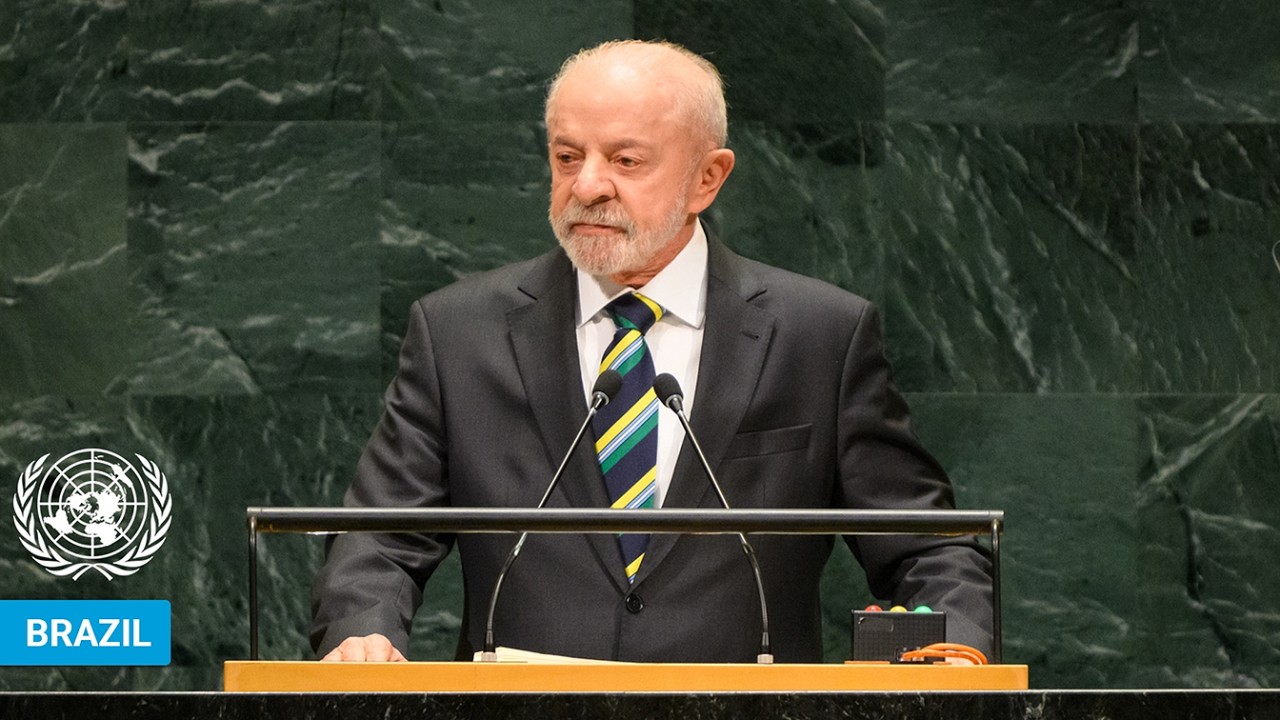
President Lula’s full speech at the 81st UN General Assembly

Brazil's President Luiz Inacio Lula da Silva speaks during the 81st United Nations General Assembly at the United Nations Headquarters in New York, on September 22, 2026. Photo by TIMOTHY A. CLARY / AFP via Getty Images

This story originally appeared in Panamerican Dispatch on Sep. 23, 2026, and is shared here with permission.

On September 22, Brazilian President Luiz Inácio Lula da Silva gave the opening speech of the 2026 U.N. General Assembly in New York City. He discussed the concerning state of the world, demanded diplomacy to resolve conflicts and said, “this is the most critical moment of the United Nations.”

He also denounced attempts to influence upcoming Brazilian elections.

“Brazil does not fit into anyone’s backyard,” he said. “We need partners with a positive agenda that promotes development.”

Full Speech by Brazilian President Luiz Inácio Lula da Silva, in English.

My compliments to the President of the General Assembly, Ambassador Khalilur Rahman from Bangladesh.

I greet each of the Heads of State and Government and the delegates present. I address in particular the Secretary-General of the United Nations. During his two terms, António Guterres was a direct witness to the growing mismanagement of the superpower.

Mr. President, this is the tenth occasion in which I open the General Debate of this Assembly. Since I stood at this podium for the first time in 2003, this is the most critical moment of the United Nations. The feeling that moves me today is that of indignation.

The United Nations is failing in one of its highest missions, to free humanity from the fray of war. Its credibility has never been so low. Its ability to protect the most vulnerable, those who have no army or arsenals, has never been so small.

We are all victims of the immobility of a Security Council that does not fulfill its role. In 1946, already in the first session of this assembly, Brazil warned of the high price that the international community would pay for the right to veto. This vice, which gave rise to the U.N. Charter, conferred the great powers the privilege of insensitivity.

This original sin is now added to a profound crisis of leadership. The year 2025 recorded the highest number of armed conflicts since World War II. Trillions of dollars financed a new arms race.

Geopolitical tensions threaten to turn regional disputes into a conflict of global proportions. Those who hold the reins of crucial decisions must act responsibly and in a sense of urgency. The leaders of the countries that make up the Security Council must come together.

I know the realities of power, but the concessions to the law of the strongest have already crossed the limits. This is not idealism, it is pure realism. War is not the continuation of politics by other means, it is the total failure of politics.

In an interdependent world, to lead is to reconcile the interests of the homeland with that of humanity. This is the statement of someone who represents a nation that loves peace and freedom. Someone who fought against a military dictatorship and defended his country against a coup d’état. It is the conviction of a factory worker, who was elected president three times and who won the fight against hunger in Brazil.

This assembly has recently corrected historical distortions. It has recognized the trafficking of enslaved Africans as the most serious crime against humanity. It has approved the most precise representation of the world map. Now we must debate about determining themes for the future of humanity. We are called to choose between multilateralism and unilateralism, democracy or extremism, sovereignty or subordination.

These choices demand courage, political will and clarity of objectives. This is what is expected of a statesman. Yasser Arafat and Yitzhak Rabin were statesmen.

They challenged the past to design a future of peace. They were defeated by hatred. Generations of Palestinians will carry the pain and trauma left by the genocide practiced by the Netanyahu government against women and children in Gaza.

Israeli civilians paid the price of radicalism and intolerance of the terrorist acts of Hamas. Pursuing the International Criminal Court and its members is an incentive for these crimes to be punished. The U.N. Special Rapporteur Francesca Albanese cannot be silenced for telling the truth.

Illegal settlements in the West Bank are becoming less and less viable. The two-state solution is essential so that Israelis and Palestinians can live in peace. Threatening the extinction of a civilization will not bring stability to the Middle East.

The Strait of Hormuz became a trench of war when it should remain a vital passage for international trade. Families all over the world pay for the increase in the price of fuel, fertilizers and food.

The war between Russia and Ukraine has dragged on for five years in a humanitarian drama that continues to save lives.

We all know that there will be no winners on the battlefield. Diplomacy is the only option. Initiatives such as the Group of Friends of Peace, created by Brazil and China, reveal the strength of the international community willing to work for dialogue.

In Latin America and the Caribbean, the geographical proximity to the world’s largest military power is inescapable, especially in the context of the worsening of hegemonic temptations. Brazil does not fit into anyone’s backyard. We need partners with a positive agenda that promotes development.

Ideological differences should not be an obstacle to greater integration between neighbors. Countries in the region have recognized the horrors of regimes of exception. We have come a long way to restore popular will.

Democracy is once again in check. We are once again witnessing foreign interference in electoral processes. The division of the world into areas of influence and neocolonial attacks for strategic resources constitute anachronistic gestures.

The Venezuelan people deserve to define their own destiny. Nicaragua will not solve its problems by preventing the opposition from running for office. The crisis in Haiti continues to test the limits of the indifference of the international community. In Cuba, the world is suffering. The collective punishment imposed on 10 million people by an illegal economic embargo and energy blockade.

Mr. President, Brazil does not underestimate the challenge posed by organized crime. We are prepared to face criminal organizations that terrorize our communities. Workers are robbed, mothers lose their children, police officers do not return home. People are tired of violence.

But we will not outsource the responsibility of defending our borders and guaranteeing the population the right to live without fear. We do not need aircraft carriers guarding our waters. We need cooperation to stop the flow of weapons and money that supplies organized crime.

This is the spirit of the proposal that I personally delivered to the president of the United States. We want to fight the money laundering carried out by Brazilian criminals abroad.

For a long time, Brazilian states have acted in their own way. Criminals took advantage of the lack of coordination. But this is changing. In Manaus we created the International Police Cooperation Center of the Amazon, bringing together the public security officials of the nine Amazon countries.

In 2025, we carried out the largest organized crime operation in the history of Brazil. We broke records in the seizure of drugs, goods and illicit resources. We are confronting all levels of organized crime, including crime magnates.

The Anti-Faction Law, which we have just passed, imposes more severe penalties on organized crime than those stipulated for terrorism. Organized crime and corruption go hand in hand. The fight against corruption will continue to be relentless, no matter who may be hurt. No one is above the law.

Ladies and gentlemen, the pillars of multilateralism are being corroded. The World Trade Organization is on life support. When governments capitulate in the face of those who use tariffs as a weapon of coercion and blackmail, the consequences are disastrous. In the age of disinformation, those who fight progress and knowledge resistthe evidence of science. We will never forget the millions of lives lost by negligence in the fight against COVID-19. Campaigns against vaccines are bringing back diseases that we considered eradicated. Weakening the World Health Organization makes everyone more vulnerable.

Until recently, the response to climate change was consolidated in the center of the international agenda. This year, the issue disappeared from the G7 debate and the G20 debate, forums that bring together the largest carbon emitters in the world. It is time to resume the offensive and impose a defeat to negationism. Nature reminds us every day that we have but one planet.

The Himalayan glaciers are melting. A super El Niño can cause torrential rains, droughts and forest fires in different parts of the globe. Its effects will impact, above all, the most vulnerable.

Brazil has been demonstrating that it is possible to combine economic growth with emission reduction. We have achieved our self-sufficiency in oil and we will continue to research the potential of new reserves such as the Equatorial Margin.

We will not renounce the environmental agenda. We will carry forward the roadmap for the decarbonization of the Brazilian economy. The Forever Tropical Forest Fund, launched at COP30 in Belém, shows that it is possible to change old paradigms. The forest is worth more standing than destroyed.

We will continue to reduce deforestation, which fell by half in the Amazon and reached the lowest level of deforestation in 11 years. We have the moral authority to reject protectionist measures disguised as embracing the environmental cause.

Brazil is a global leader in green energy. We have the critical minerals and rare earth minerals that the world needs to carry out the energy transition. Our natural wealth belongs to the Brazilian people and it is for their benefit that they will be exploited. Access to our minerals will be a mandatory counterpart to the generation of value in our territory, the transfer of technology and the supply of national strategic sectors.

Mr. President, we live in an unprecedented technological revolution, with great risks and opportunities. It would be an unforgivable historical omission not to face the challenge of regulating big tech and artificial intelligence. A handful of oligarchic technicians want to revive a version of digital neoliberalism without rules or transparency.

They are promoting a race without ethical restraints, beyond the backs of the U.N. and the Scientific Panel on Artificial Intelligence. As Pope Leo XIV warns, decisions on technology should never be separated from conscience and responsibility. Companies that know the risks of their products transfer to families the impossible task of facing algorithms.

The millionaire industry of betting apps turns addiction into profit. Its dizzying dissemination is indebting and destroying millions of homes. Brazil will not tolerate this business model. We approved one of the most advanced laws in the world to protect children, teenagers and women in the digital environment. We will ensure the joint remuneration of artists, musicians and audiovisual content creators. We will not give in to the pressure of multinationals who want to privatize our Pix, a public and free payment infrastructure that has made financial inclusion a reality for millions of Brazilians.

Ladies and gentlemen, sustainable development goals are the target of attacks from reactionary forces that want to naturalize injustice. Inequality and underdevelopment result from political choices. It is possible to put the poor in the budget and make the rich pay their share.

It is necessary to roll back privileges and invest in free, quality education and healthcare.

There is a legitimate desire for change in the world. But changing is not going backwards. Changing is not taking away rights. It is not rehashing theories of racial supremacy or of female submission. It is not recolonizing the Global South.

Changing is advancing to a future of more participation and more achievements. It is creating and sharing effective public solutions for the challenges of development through a democratic, strong, efficient and capable state. It is betting on the spirit of solidarity and cooperation with Africa, Asia, Latin America and the Caribbean.

Initiatives such as the Global Alliance Against Hunger and Poverty and the International Panel on Inequality are born from this political will. Brazil is in a hurry to become a developed and socially just nation. We have adopted an economic model that focuses on income distribution, creating jobs and wage increases.

We are betting on improving productivity, on increasing credit and on building a robust social protection network. Brazil has grown again in a sustainable way. We are the third largest destination for foreign foreign direct investment.

Despite the U.S. tariffs against our economy, this year we will hit a new record of exports. There is still a lot to be done. The labor market is transforming.

Older people want to remain active. Young people want to start a business. Workers need time to rest, to improve their skills and be with their families.

In Brazil, achieving this goal means ending the so-called 6×1 scale to guarantee workers two days off a week. This change is essential to alleviate the domestic overload that still falls on women.

We are building a Brazil where women don’t have to ask for permission to occupy positions of power or enter the labor market.

A country free of femicide where no woman, in or outside the home, lives under the threat of violence. This is a cause that the world needs to embrace.

Mr. President, upon receiving the Nobel Peace Prize, Mr. King said, “I believe that what self-centered men have torn down, other-centered men can build up.”

The UN was born under the symbol of hope. Over eight decades, it has contributed to decolonization, promoted human rights and supported sustainable development. It protected immigrants and refugees. It condemned racism, anti-Semitism and religious intolerance.

These were the achievements of leaders who stood at this podium, moved by indignation in the face of the injustices of their time. Men and women who refused to accept war as their destiny, colonialism as their right, apartheid as their legitimate system. This ability to say “no” to the inequalities gave birth to some of the greatest transformations that we have lived.

Faced with the paralysis of the United Nations, we need to rediscover the political will so that it can, again, be a temple of peace.

I want to conclude with a message about my country to all who listen to us.

On October 4, millions of Brazilians go to the polls to decide their destiny. They will not just elect the President of the Republic, state governors and representatives of the legislative power. They will decide between democracy and negationism. If Brazil is going to move toward a future of more opportunities or return to a past of exclusion.

We will have a transparent and competitive election where candidates enjoy the broadest freedom of expression. We know that some abuses of this freedom seem to be associated with the interests of foreigners, contrary to those of our country.

We do not underestimate the challenge of the disinformation network that intends to disrupt the public debate during the campaign.

But we have a modern and robust electoral system. Under the watchful eye of a plural citizenry and a free press, we will not allow the enemies of democracy, both internal and external, to attack the popular will.

Brazilian democracy belongs to Brazilians.

Brazil will continue to be a sovereign country.

No one, no one will take us away from this path.

May God bless us all. Thank you.

This speech was translated into English by Michael Fox at Panamerican Dispatch. You can read the original in Portuguese, here. You can watch his speech, below.

💾

"Brazilian democracy belongs to Brazilians. Brazil will continue to be a sovereign country. No one, no one will take us away from this path," President Lula said.
  •  

Heaven’s Melodic Strains

Audiophiles are sometimes described in terms reserved for cults; a 1956 New Yorker story, referenced in Colin Vanderburg’s exceptional tour of extreme listening, refers to “a remarkably articulate group of zealots” and “an almost mystical reverence for sound.” Vanderburg travels among the believers, tracing the decades-long promise of “consumer audio innovations” to their technological apex: the New York International Audio Show, where audiophiles sample six-figure sound systems in pursuit of a signal as pure as the world they already inhabit.

More than anything, I have spent long passages of this earthly life sitting on my ass, listening. I listen to music, but what I hear is sound. Texture, timbre, and tone; clarity and detail; space and depth. And I hear, even more acutely, what thwarts sound. Shrill treble, muddled bass — for me these are worse than peeves. They offend hearing. They diminish the human sensorium. Earbuds repulse me; laptop speakers grate; a tabletop Bluetooth unit is a kind of vandalism.

The word audiophile — etymologically, one who “loves to hear” — has a wine-sipping pretension that I hate, but sometimes an ugly shoe fits. Like similarly suffixed psychopathologies, the term suggests a state of warped dependence, of inbent sublimation. I didn’t set out to be this way, but neither have I ever sought help. My symptoms are apparent, their causes obscure. What, after all, do we love when we love sound?

  •  

International Festival of Youth 2026 in Russia: “Follow your dream!”

In the heart of Eurasia, the largest youth forum on the planet has come to an end. The NEO author went to Yekaterinburg and heard what the festival’s participants from all over the world had to say. World Youth City The main industrial and cultural center of the Urals is welcoming guests with well-prepared infrastructure […]
  •  

Feira de S. Miguel está de regresso em Olhão

Depois de cerca de 10 anos de ausência, a Feira de São Miguel regressa ao Largo da Feira, em Olhão.
De 25 a 29 de setembro, está preparado um espaço para receber toda a população, num encontro que junta tradição, convívio, comércio e entretenimento.
Ao longo dos cinco dias, os visitantes poderão encontrar diversas áreas, com diversão, alimentação, artesanato, exposição de veículos e comércio.
A Feira de São Miguel pretende, assim, recuperar uma tradição e criar novamente um espaço de encontro para toda a comunidade, onde o comércio e o entretenimento se cruzam com o convívio.
Horários:
25 de setembro | 18:00 às 00:00
26 a 29 de setembro | 16:00 às 00:00
De 25 a 29 de setembro, a Feira de São Miguel está de volta.

  •  

“Super carros, super famílias” sensibiliza para o acolhimento familiar em Loulé

No dia 26 de setembro, Loulé recebe uma tarde que junta carros, música e uma causa que pode mudar vidas. Entre as 12h00 e as 18h00, a Praça da República é palco do evento “Super Carros, Super Famílias”, que alia a paixão pelos automóveis ao acolhimento familiar.

Conforto, segurança, estabilidade e proteção são características que procuramos num bom carro – e são também aquilo que uma família de acolhimento pode proporcionar a uma criança que precisa de um lugar seguro para crescer.

Sob o mote “Há sonhos que precisam de uma família para arrancar”, o evento pretende dar a conhecer o acolhimento familiar de uma forma descontraída e próxima da comunidade.

Com uma exposição de carros do Algarve Drivers Club, DJs do “Summer Ends 2.6”, e um momento musical no Café Calcinha, o evento promete uma tarde de diversão para toda a família.

“Há sonhos que precisam de uma família para arrancar. Uma Família que acolhe, um colo que acalma. Junte-se a nós nesta viagem!”, apela a organização do evento, promovido pela Fundação António Aleixo, com o apoio da Câmara de Loulé.

Mais informações em: 962 987 306 / familiasacolhimento@faaleixo.pt

  •  

Fazendas de IA inflam pauta da extrema direita com 255 perfis e mais de mil posts

Uma rede de fazendas de conteúdo gerado por inteligência artificial promove, a partir de 255 perfis identificados com pautas da extrema direita no Instagram, ataques ao STF (Supremo Tribunal Federal), desinformação eleitoral e violência política de gênero.

Um levantamento do Instituto Democracia em Xeque obtido pelo Aos Fatos mostrou que as contas publicaram ou coassinaram 1.204 posts em uma estrutura que utiliza posts colaborativos para distribuir conteúdo identificado com o bolsonarismo e compartilhar audiência entre os perfis.

Juntas, as publicações produzidas pela fazenda acumularam 58 milhões de visualizações e 5 milhões de curtidas e comentários entre 15 de agosto e 15 de setembro.

alt="O gráfico apresenta uma rede de perfis organizada em seis núcleos, identificados como N1 a N6. Na legenda, os pontos azuis representam perfis da lista IA do DX, os pontos laranja representam políticos ou candidatos identificados na planilha do DX, os pontos verdes representam perfis com nome de político e os pontos cinza correspondem a outros perfis. O tamanho dos pontos indica o nível de engajamento, com referências de 10 mil, 100 mil e 500 mil. No núcleo N1 aparecem, entre outros, os perfis @ronaldo_machado7, @attadolphcomph, @urizer88, @kaiqueribeirotv, @leonardobolsonaro, @narrativascuriosastv e @davijackson. O núcleo N2 reúne perfis como @narrativascuriosastv3.0, @marcos.vno, @marcos.neris.69, @bananil..., @margem.direitaa e @zejumencio, além do perfil @delegadofeliciolaterca, representado em laranja. No N3 aparecem @casernadireitab, @mestreghost, @flaviobolsonaro_go, @anondarkwitch, @iamemevideos, @cantadireita e @jrluz.a. O N4 inclui @antunes.isaac, @delegadomartinez e @sargentolopes, enquanto o N5 reúne @braziljusticeleague, @josecaldeiraoficial e @memesfabulosos. Já o N6 apresenta o perfil @ranallipf. Linhas finas conectam os diferentes perfis, indicando as relações existentes na rede. Na parte inferior, a fonte é identificada como 'insta_data', com posts de 15/08 a 15/09/2026. A legenda informa que cada um dos 39 pontos da lista do DX participa como dono ou coautor, que N1 a N6 correspondem aos núcleos detectados pelo algoritmo de Louvain e que o tamanho dos pontos representa o engajamento dos posts dos quais o perfil participou. Também é informado que cinco perfis publicaram sozinhos ou em dupla uma isolada no app como fazendas do IA."
Cada ligação do gráfico representa um post publicado em conjunto entre os perfis

Na semana passada, Aos Fatos revelou que uma rede de perfis no Instagram simulava apoio popular espontâneo ao ministro André Mendonça a partir de uma estratégia de engajamento artificial chamada astroturfing. Mapeados inicialmente por Aos Fatos, os perfis também realizaram publicações em conjunto às contas analisadas pelo instituto.

O levantamento confirma que as páginas pró-Mendonça não atuavam isoladamente e estavam inseridas em uma estrutura mais complexa de produção e amplificação de conteúdo com IA voltada à promoção de figuras do campo bolsonarista e baseada em mecanismos semelhantes de atuação. Os perfis foram derrubados pelo Instagram após reportagem do Aos Fatos.

Content farms, ou fazendas de conteúdo, são estruturas voltadas à produção rápida e em grande volume de publicações, muitas vezes de maneira automatizada e com foco em atrair audiência e engajamento, não na qualidade da informação.

No caso analisado pelo Democracia em Xeque, similar à identificada anteriormente por Aos Fatos, a distribuição ocorre em rede: diferentes perfis publicam juntos e compartilham suas audiências por meio do recurso de collabs do Instagram.

Quase metade dos posts (586) identificados pelo instituto foi publicado em colaboração com outras contas, e essas peças concentraram 63% de todo o engajamento do período. Em alguns casos, um mesmo conteúdo apareceu simultaneamente em até seis perfis.

A rede foi dividida pelo instituto em seis núcleos principais formados entre perfis que se compartilham. O maior deles concentra 60 perfis em torno da @narrativascuriosastv, uma página de memes e vídeos curtos que deixou de publicar no início de setembro. O grupo foi responsável por 617 posts, pouco mais da metade de todas as publicações analisadas, e por 54% do engajamento registrado.

Perfis marcados em verde inflaram onda pró-Mendonça no Instagram, conforme reportagem do Aos Fatos

Léo Índio e cursos de IA

Entre as contas que integram o principal núcleo está a @leoindiobolsonaro, administrada por Leonardo Rodrigues de Jesus, o Léo Índio, primo de Flávio, Eduardo e Carlos Bolsonaro. Alvo do inquérito que investiga a tentativa de golpe de Estado de 2023, ele teve a prisão decretada em 2025 e atualmente está foragido na Argentina.

O perfil participou de 111 publicações da rede — em 15 delas como autor principal —, acumulando 754 mil interações e quase 6 milhões de visualizações. O levantamento identificou conteúdos com ataques políticos e violência de gênero, todos gerados por IA.

A relação de Léo Índio com o principal núcleo da ‘fazenda de IA’ também passa pela divulgação de ferramentas para produção de conteúdos políticos com uso de inteligência artificial. Em fevereiro, o Observatório IA nas Eleições registrou que publicações transfóbicas feitas por ele contra a deputada Érika Hilton (PSOL-SP) eram usadas para divulgar um curso de produção de conteúdo sintético.

"A imagem é uma captura de tela de uma publicação no Instagram,onde há fazendas de IA. À esquerda, aparece o pastor Sargento Isidório, um homem de cabelos grisalhos, usando terno azul-claro, camisa branca e gravata vermelha, falando ao microfone em um ambiente que parece ser o plenário de uma casa legislativa. Em primeiro plano, sobreposto à imagem, há o rosto de Erika Hilton com os olhos arregalados, expressão de espanto e lágrimas no rosto, também diante de um microfone. À direita, aparecem a publicação e os comentários. A legenda contém a frase 'A verdade que o Felipão detesta ouvir. Recebaaaaaa' acompanhada de emojis, seguida de marcações para os perfis @narrativascuriosastv, @leonardobolsonaro, @gianzin...deb...chado, @gianzin...dobechado e @leodaverdade. Entre os comentários visíveis estão frases como 'Congresso que virou escolinha do prof. Raimundo..', 'Deus abençoe esse homem corajoso', 'Felipão, surtou kkkk' e 'arrasou!!!!'."

O mesmo treinamento também era promovido pela @narrativascuriosastv e outros perfis da fazenda. Divulgado como apartidário, o curso é vendido por R$ 167 e possui mais de 90 módulos, dentre eles “Criando Vídeos Virais com o Bolsonaro e o Lula” e dicas de como remover a marca d’água de conteúdos artificiais. Em algumas aulas, o perfil era utilizado como exemplo de produção das peças.

A Kiwify, responsável por hospedar o curso, disse que os módulos considerados problemáticos haviam sido removidos por violarem as regras da plataforma. Aos Fatos não conseguiu acesso ao curso para verificar a alegação.

Poucos posts, milhões de interações

Apesar do alto volume de publicações, a audiência da fazenda se concentra em poucos conteúdos. Os 25 posts de maior engajamento, equivalentes a 2,1% da amostra, reuniram mais da metade (53%) de todas as curtidas e comentários contabilizados pelo instituto.

A publicação mais popular foi um vídeo publicado pelo perfil @imperio_patriotico em 16 de agosto que associa a premiação de uma adolescente de 14 anos em uma olimpíada de matemática a uma crítica ao governo. A peça acumulou 651 mil interações (13%) e ainda pedia que os seguidores passassem a seguir outro usuário.

"A imagem é uma captura de tela de uma publicação no Instagram descrita como uma fazenda de IA. À esquerda, aparece um homem usando boné e óculos, em primeiro plano, com o dedo indicador levantado. Ao fundo, há a imagem em preto e branco de um menino segurando uma folha de papel, com a palavra 'CENSURADO' sobre o rosto. No alto da imagem, está escrito 'ELES NÃO VÃO ME PARAR', acompanhado de emojis. À direita, aparece a publicação do perfil @imperio_patriotico. A legenda afirma que, se o filho do usuário 'ganhou por mais de uma vez as olimpíadas de matemática', o governo estaria atrapalhando, e menciona uma adolescente de 14 anos. A publicação também marca o perfil @orichard.bryan e utiliza as hashtags #paravoce, #brasil, #noticias, #direita e #politica. A captura mostra ainda comentários de usuários, incluindo um que elogia a linguagem e o vocabulário do jovem. Na parte inferior, aparecem as métricas de 56 mil curtidas e 74,5 mil compartilhamentos."

A @imperio_patriotico também está entre as contas de maior repercussão, com 1,1 milhão de interações e 8,3 milhões de visualizações no período. A líder é a @narrativascuriosastv, com 1,5 milhão de interações e 17,2 milhões de visualizações.

Todas adotam a mesma prática identificada anteriormente pelo Aos Fatos entre os perfis ligados a Mendonça: direcionar seguidores para outras contas que integram a rede da fazenda. Em 30 de agosto, uma publicação da @narrativascuriosastv que acumulou 129 mil interações pediu que o público acompanhasse um “novo perfil” porque o atual “pode cair a qualquer momento”.

Três dias depois, o perfil deixou de publicar na base analisada. Na mesma data, uma conta alternativa (@narrativascuriosastv3.0) começou a publicar conteúdo próprio. O Democracia em Xeque considera a sequência um indício de preparação para eventual perda da outra página.

A conta original foi bloqueada em resposta a uma liminar da Justiça Eleitoral. Já o perfil ‘reserva’, com 10,6 mil seguidores, segue ativo e perpetuando o mesmo padrão de publicações, uso de colaborações e aceno à religiosidade.

A imagem mostra uma grade com seis publicações de conteúdo político descrita como fazenda de IA. No canto superior esquerdo, um homem aparece em frente a um estabelecimento com uma placa escrita 'SUPREMO BORDEL', acompanhado de um cachorro no chão. No centro superior, Lula aparece segurando um cartaz com os dizeres 'para um Brasil melhor vote no Flávio', em referência a Flávio Bolsonaro. No canto superior direito, uma montagem traz o texto 'BOLSONARISTA RASGA BANDEIRA DO LULA E PT?' acompanhada de imagens de cães, uma bandeira vermelha com a inscrição 'LULA' e um jovem diante de um computador. No canto inferior esquerdo, uma caricatura de Viviane Barci de Moraes e Alexandre de Moraes mostra o casal sentado em um avião, segurando taças de bebida. No centro inferior, aparece uma montagem em estilo de animação com um burro diante de uma televisão que exibe a imagem de Lula usando uma camisa vermelha com uma estrela. No canto inferior direito, há uma arte com o texto 'CATÓLICO PODE VOTAR EM COMUNISTA?', seguida da frase '1949 e 1959, Roma respondeu: NÃO', além de símbolos associados ao comunismo e elementos religiosos."

Ao tratar da derrubada sem mencionar possíveis violações às regras da plataforma, as publicações sugerem uma ideia de “perseguição” contra contas bolsonaristas.

Não há menções à decisão da Justiça nem à possibilidade de os perfis se enquadrarem nas diretrizes da Meta sobre comportamento inautêntico coordenado, que proíbem redes de contas falsas ou automatizadas que atuem em conjunto para manipular o engajamento ou ampliar conteúdos artificialmente.

STF, violência de gênero e família Bolsonaro

Humor e paródia aparecem como os temas de maior engajamento, somando 34% das interações. Conteúdos relacionados a Lula, ao PT e à primeira-dama Rosângela da Silva, a Janja, representam outros 16%; STF, Alexandre de Moraes e André Mendonça, 10%; e publicações de promoção da família Bolsonaro, do PL e do número 22, 7%.

Parte das publicações utiliza inteligência artificial para produzir ataques misóginos. O instituto identificou, por exemplo, montagens hipersexualizadas de Janja, ataques contra parlamentares e uma imagem sintética que sexualizava a estátua da Justiça na Praça dos Três Poderes.

"A imagem mostra uma publicação em formato de montagem descrita como um dos esquemas da fazendas de IA. À esquerda, há uma representação de Janja como uma figura antropomórfica com corpo de galinha, usando óculos, batom vermelho e uma espécie de gravata borboleta, diante de uma mesa com várias caixas de ovos. Ao lado dela aparece uma figura com o rosto de Lula usando uma regata vermelha com as letras 'CV', sentada diante de equipamentos de DJ. No canto inferior da montagem, há a marca d'água '@IAMEMESVIDEOS'. À direita, aparece a interface de uma publicação em rede social, cujo texto diz 'Lula manda o povo comer ovo?' e inclui hashtags como '#gianzinhodebochado', '#flowpodcastofc', '#reels' e '#meme'. Nos comentários, usuários discutem o conteúdo e fazem referências à inteligência artificial."

No conteúdo sobre o Supremo, o relatório identifica uma divisão entre as representações dos ministros. Moraes aparece como adversário das páginas, enquanto Mendonça é glorificado e retratado como contraponto ao colega. Entre os exemplos citados, estão publicações com frases como “Mendonça pode prender Alexandre de Moraes” e “Mendonça Shad é o terror do STF”.

"A imagem é uma montagem descrita como imagem de fazendas de IA dividida em duas partes. À esquerda está o ministro André Mendonça, um homem usando uma toga preta e gravata, diante da bandeira do Brasil. Na parte inferior, em letras grandes amarelas e brancas, está escrito 'BRASIL', seguido das frases 'VAMOS LEVANTAR E LIBERTAR O BRASIL DA INJUSTIÇA!' e 'QUEM ESTÁ COMIGO, COMENTE!'. Abaixo, aparece o nome de usuário '@flaviobolsonaro_go' acompanhado de um ícone do Instagram. À direita está Alexandre de Moraes, um homem careca, vestido com uma toga preta, olhando para baixo em direção a um celular. Sobre a imagem, há três mensagens em balões verdes, semelhantes aos de uma conversa no WhatsApp: 'Boa noite seu Jair', 'É o Xandinho' e 'Aquela vaga de vice ainda tá valendo?', todas marcadas com o horário 21:43."

Políticos na fazenda

As contas também direcionam publicações a políticos. Flávio Bolsonaro (PL-RJ) é a figura mais marcada nas legendas, citado por seu perfil oficial em 34 posts. Leandro de Jesus (PL-BA), Bia Kicis (PL-DF) e a ex-primeira dama Michelle Bolsonaro também aparecem entre os nomes mais mencionados. As hashtags recorrentes incluem #direita, #lula, #bolsonaro e #stf.

O caminho inverso é menos frequente, mas existe. No período analisado, sete perfis classificados como políticos ou candidatos foram autores ou coautores de publicações junto à rede.

Entre eles estão o deputado estadual Leandro de Jesus (PL-BA), que aparece no mesmo núcleo de @narrativascuriosastv e @leoindiobolsonaro, e o vereador Rafael Policial (PL-MT), que integra outro agrupamento no qual também aparece Léo Índio.

"A imagem é uma captura de tela de uma publicação no Instagram descrita dentro do esquema de fazendas de IA, com uma janela central intitulada 'Colaboradores'. A janela lista cinco perfis, todos acompanhados de um botão roxo 'Seguir': @ranallipf, identificado como Rafael Ranalli; @andersonvlog; @patriotabrasil26; @nacaoconservadorabr; e @zero65news. Na parte superior direita, ao fundo, aparece o perfil @ranallipf, com a localização 'Mato Grosso' e hashtags como '#Garis', '#Discurso', '#ministeriodotrabalho' e '#polêmica'. No lado esquerdo da imagem, parcialmente encoberto pela janela de colaboradores, aparece um homem diante de uma parede com uma imagem de Jair Bolsonaro ao fundo. Na parte inferior da publicação, vê-se parcialmente a frase 'PASSANDO PRA'. Ao fundo, também aparece um símbolo do Partido Liberal."

O perfil nacional do PL (Partido Liberal) também fez uma publicação em colaboração com uma das páginas da rede. As relações demonstram coautorias, marcações e compartilhamento de audiência entre as páginas e contas políticas, mas não atribui aos políticos ou partidos a administração ou a coordenação da fazenda.

Sem rótulos

Outro achado do relatório é a baixa presença da identificação de conteúdo sintético oferecida pelo Instagram. Apenas 155 dos 1.204 posts (12,9%) apresentavam alguma identificação de uso de inteligência artificial. Em 134 casos, o próprio autor declarou ter usado a tecnologia; nos demais, a identificação veio de metadados incorporados aos arquivos.

Mesmo minoritários, as publicações em que o uso de IA foi declarado pelo autor concentraram 44% de todo o engajamento da rede.

Ao todo, 71% das publicações não contavam com qualquer registro de uso de IA. O instituto ressalta, contudo, que isso não significa que não houve uso da tecnologia, já que as contas foram incluídas no monitoramento pelo conteúdo que publicam, e não pela existência do rótulo.

Rede de Mendonça aparece em análise paralela

Em uma análise paralela feita a pedido do Aos Fatos, o instituto identificou que páginas reveladas pela reportagem de 16 de setembro sobre a fabricação de apoio popular a André Mendonça estavam conectadas a outras fazendas de conteúdo gerado por IA.

A rede atua de forma independente da fazenda descrita no relatório, mas possui ligações com os perfis encontrados pelo Democracia em Xeque e o mesmo padrão de atuação.

A reportagem havia identificado 24 perfis dedicados ao ministro e mostrou que contas bolsonaristas com audiências já consolidadas utilizavam collabs, reproduziam peças idênticas e convocavam seus seguidores a acompanhar essas páginas.

Metade deles existia anteriormente com outras identidades e foram convertidas em páginas de apoio ao magistrado no início de setembro, quando a crise no STF se intensificou.

A análise do Democracia em Xeque ampliou essa rede. Foram identificados 20 perfis que usavam nomes ou apelidos de políticos ou de Mendonça acompanhados de termos como “apoio” e “presidente” ou de sufixos numéricos. Nenhum deles era uma conta oficial. 

Quatro estavam na lista de páginas classificadas pelo instituto como fazendas de conteúdo com IA; os demais se conectam a elas principalmente por meio de publicações em colaboração.

Esse grupo formava um núcleo de 28 perfis que publicou 84 conteúdos e somou 2,9 milhões de interações no período analisado. Faziam parte dele páginas com variações dos nomes de Flávio e Michelle Bolsonaro, Nikolas Ferreira, Eduardo Bolsonaro, Tarcísio de Freitas e André Mendonça.

Entre as contas classificadas pelo instituto como produtoras de conteúdo com IA estava a @andremendoncas3, já identificada pelo Aos Fatos como uma das páginas usadas para fabricar a percepção de apoio espontâneo ao magistrado. No período, ela participou de cinco publicações, que somaram cerca de 367 mil interações e 3,1 milhões de visualizações.

A @andremendoncas2, maior perfil identificado na investigação anterior do Aos Fatos, não publicou nem coassinou posts capturados diretamente pela base no período. Mesmo assim, apareceu no levantamento porque era marcada repetidamente por páginas que usam os nomes de Nikolas, Michelle e Flávio Bolsonaro. Políticos e candidatos também citaram a conta em publicações.

O padrão coincide com o que a reportagem anterior havia identificado manualmente: a @nikolasferreiradms3, por exemplo, convocou sua audiência a seguir a @andremendoncas2, enquanto diferentes páginas bolsonaristas distribuíram peças iguais para promover perfis do ministro.

A análise inicial chegou a reunir esse núcleo e a fazenda de conteúdo descrita no relatório em uma única visualização. O Democracia em Xeque, porém, decidiu separá-los após realizar novas buscas por relações entre as contas e concluir que se tratavam de redes distintas.

Apesar disso, o levantamento mostra que as páginas reveladas pelo Aos Fatos não atuavam isoladamente e estavam inseridas em outras estruturas de produção e amplificação de conteúdo voltadas à promoção de figuras do campo bolsonarista.

As páginas citadas pelo Aos Fatos já não estão mais no ar. Quando as contas ainda estavam ativas, a reportagem procurou a Meta para saber se elas violavam as diretrizes da plataforma sobre comportamento coordenado, mas não obteve resposta.

O caminho da apuração

Aos Fatos analisou o relatório “Produção em escala: fazendas de conteúdo com IA no Instagram nas eleições de 2026”, do Instituto Democracia em Xeque. A reportagem também solicitou ao instituto uma análise específica sobre os perfis identificados anteriormente pelo Aos Fatos em uma rede que simulava apoio popular espontâneo ao ministro André Mendonça.

Por fim, Aos Fatos comparou os dados do instituto com a apuração anterior sobre essas contas, verificando mudanças de nome, publicações compartilhadas e chamadas para transferência de seguidores entre perfis.

  •  

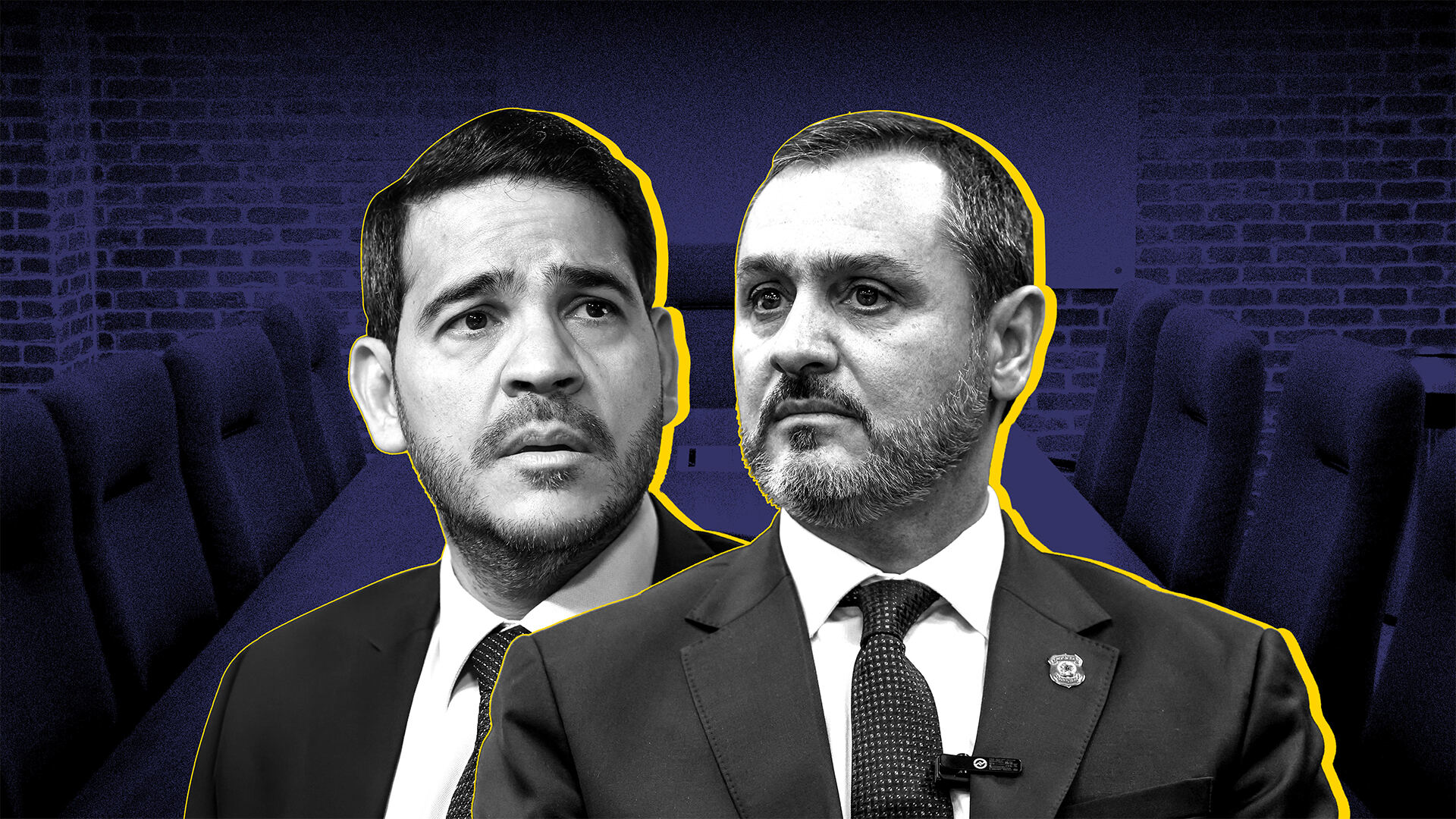
Antes de mensagens vazadas, PF pediu sigilosamente para AGU conter Mendonça

Às 10h50 de 23 de julho de 2026, o diretor-geral da Polícia Federal (PF), Andrei Rodrigues, enviou um ofício sigiloso ao advogado-geral da União, Jorge Messias. No documento, obtido com exclusividade pela Agência Pública, pedia-se que a Advocacia-Geral da União (AGU) analisasse e tomasse “as eventuais providências cabíveis” contra uma decisão do ministro André Mendonça, então relator do caso Master no Supremo Tribunal Federal (STF). A resposta, registrada em nota jurídica também sigilosa, foi negativa: segundo a AGU, não havia nenhuma medida judicial possível.

O pedido precedeu a fase mais aguda da crise que, em setembro, pôs ministros do Supremo em confronto e levou ao afastamento de Andrei do cargo, em decisão de André Mendonça — posteriormente revertida por Flávio Dino e mantida por Edson Fachin. Segundo integrantes do alto escalão do governo, ouvidos sob reserva pela reportagem, a negativa da AGU ao ofício teria tido o aval também da cúpula jurídica do governo e foi emitida antes da divulgação das mensagens atribuídas ao ex-banqueiro Daniel Vorcaro e ao ministro Alexandre de Moraes, que se tornaram públicas em 8 de setembro, quando Mendonça retirou o sigilo de parte das investigações do Banco Master.

Fontes do alto escalão disseram à Pública que a cúpula da AGU teria se sentido pressionada por Rodrigues com o envio do ofício e que a história teria chegado até a presidência da República. Uma reportagem da Folha de S. Paulo, publicada em 2 de setembro, relatou que a PF via uma “omissão” da AGU em relação à crise envolvendo o ministro André Mendonça. 

A Pública apurou que o Advogado-geral da União, Jorge Messias, e o ministro da Justiça e Segurança Pública, Wellington César Lima e Silva, se encontraram com André Mendonça, fora da agenda, após tomarem conhecimento do pedido da PF. No encontro entre os três, os representantes do governo buscaram uma “interlocução” para resolver o embate, mas a exposição das conversas direcionadas a Moraes, que vieram depois do encontro, afastou os governistas do caso para evitar uma associação pública do governo à crise no Supremo. 

O ministro da Advocacia-Geral da União (AGU), Jorge Messias, dá entrevista ao programa Bom Dia, Ministro.
Messias, da AGU, recebeu o pedido sigiloso da PF para analisar decisão de André Mendonça

Nesta quarta-feira, 23 de setembro, reportagem de Marcela Mattos no UOL informa que Messias e Andrei trocaram xingamentos diante de Lula: ‘Está me espionando?’. Segundo o UOL, pessoas que ouviram relatos do episódio disseram que a conversa, acompanhada a todo momento por Lula, foi “dura”, “tensa” e “ríspida”. A cobrança foi considerada a gota d’água de uma série de divergências que vinham se arrastando nos bastidores das investigações sobre o Banco Master.

Procurada, a AGU informou a Pública que “as informações apresentadas na matéria do UOL não são precisas. Divergências são naturais, evidentemente, mas nada se sobrepõe ao respeito e à consideração que o advogado-geral da União, Jorge Messias, tem pelo diretor-geral da Polícia Federal, Andrei Rodrigues, tanto no âmbito pessoal quanto institucional”

Procurada, a Polícia Federal não deu retorno até a publicação. O espaço segue aberto para manifestação.

Uma disputa que começou em fevereiro

André Mendonça herdou o caso Master de Dias Toffoli em fevereiro deste ano. Nas primeiras decisões como relator, em 19 de fevereiro, o ministro determinou que apenas os policiais diretamente envolvidos na investigação tivessem acesso às informações, com sigilo “inclusive em relação aos superiores hierárquicos”, o que incluiria Andrei Rodrigues. Seria um movimento para limitar a influência do diretor-geral na apuração, vista com desconfiança pela ala de André Mendonça. Nos bastidores, teria pesado a percepção de Mendonça de que informações sensíveis chegavam antes ao comando da PF, o que passou a causar “um certo desconforto”, segundo uma fonte do STF, até mesmo entre os juízes lotados no gabinete do ministro.

O diretor geral da PF, Andrei Rodrigues
Andrei Rodrigues, diretor-geral da PF, enviou ofício à AGU em 23 de julho de 2026

Em 22 de maio, na investigação sobre fraudes no INSS (Operação Sem Desconto), da qual Mendonça também era o relator, o ministro teria reagido a uma mudança na chefia do caso e exigido ser avisado de qualquer nova alteração na equipe. Em 15 de maio, na semana anterior à exigência de Mendonça, o comando da PF trocou a área responsável pelos inquéritos do INSS: o caso foi transferido da Divisão de Repressão a Crimes Previdenciários (DPrev) para a Coordenação de Inquéritos em Tribunais Superiores (Cinq). Simultaneamente, o delegado que chefiava a operação, Guilherme da Silva, solicitou transferência para Minas Gerais, estado natal dele. À época, a PF não revelou o nome do novo chefe da operação e justificou que a mudança assegurava “maior eficiência e continuidade das investigações”.

Em 13 de julho, Mendonça repetiu a ordem no caso Master (Operação Compliance Zero): a equipe de investigadores deveria ser mantida e qualquer troca deveria ser comunicada a ele previamente; as informações também deveriam ficar restritas às coordenações responsáveis, e o material bruto extraído de celulares e computadores apreendidos deveria ser enviado ao seu gabinete.

Ministro André Mendonça na sessão da Segunda Turma do STF.
Mendonça impôs restrições ao acesso às informações da investigação do Master

Dez dias depois, em 23 de julho, Andrei oficiou à AGU com direcionamento a Jorge Messias, conforme o documento obtido pela Pública. O documento da PF registra que não há “qualquer indício de irregularidade” nas investigações e classifica como “desarrazoada” uma decisão que limitasse as atribuições administrativas da PF. O documento registra, ainda, que o controle externo da polícia cabe ao Ministério Público Federal. No pedido, foi citada a decisão de Mendonça de maio como “de conteúdo semelhante”, na qual se fundamentou na lei que permite à AGU defender, na Justiça, agentes públicos por atos praticados no exercício do cargo. 

A análise sigilosa da AGU 

O ofício foi enviado à Secretaria-Geral de Contencioso, braço da AGU que representa a União no STF. Em 24 de julho, uma reunião no gabinete do advogado-geral substituto apontou os primeiros problemas do pedido: a repercussão na imprensa sobre o incômodo da PF, no dia anterior, tratava da decisão de maio, não da de julho; faltavam documentos; e a AGU nem sequer tinha acesso aos processos em sigilo, apenas às cópias das decisões.

A nota registra ainda que, segundo a própria PF, informou à AGU em 27 de julho que o material bruto relacionado a Vorcaro já havia sido entregue ao gabinete do relator na semana anterior. 

A Nota Jurídica enumera os motivos da recusa ao pedido da PF. Primeiro, diz que não se tratava de defender um agente público. Segundo, registrou que a AGU não atua em investigação criminal, tarefa do Ministério Público. Terceiro, avaliou que a PF não demonstrou “prejuízo concreto” decorrente da exigência de avisar sobre trocas na equipe. E, quarto, a PF perdeu o prazo: as regras já estavam na decisão de maio, e a de sigilo interno vinha desde o início do caso, sem que a PF recorresse. A nota menciona “inércia prolongada da autoridade policial” e afirma que uma nova decisão não reabriria o prazo já vencido. Por fim, como o material já havia sido entregue, não haveria o que suspender.

Na resposta à PF, a AGU sugeriu dois caminhos: conversar diretamente com o relator ou levar o caso ao Ministério Público Federal. As páginas obtidas pela reportagem não mostram a data de assinatura da nota.

Fachada da Advocacia Geral da União (AGU)
Sede da Advocacia-Geral da União, que analisou e recusou o pedido feito pela Polícia Federal

Afastamento e volta em 24 horas

Segundo a Folha de S.Paulo, Mendonça teria dito ao presidente do STF, Edson Fachin, no início de agosto, que suspeitava de viés político de Andrei Rodrigues para blindar a campanha de Lula; Andrei teria relatado a Fachin a suspeita inversa, de que o ministro prejudicava a esquerda e aliviava aliados de Flávio Bolsonaro (PL). 

No início de setembro, Mendonça levantou o sigilo do relatório que continha mensagens enviadas por Vorcaro a um interlocutor identificado como “Alexandre de Moraes Brasília”. A maior parte das mensagens foi enviada em visualização única e aponta para a troca de informações sobre uma possível operação contra o ex-banqueiro. Em 15 de novembro, dois dias antes de ser preso, Vorcaro perguntou a Moraes: “Acha que na segunda já tenho que estar fora?”.

Os investigadores também encontraram registros digitais e metadados que indicam que Moraes atuou na edição de um contrato de R$ 130 milhões firmado entre Vorcaro e o escritório de advocacia da esposa do ministro, Viviane Barci de Moraes. Após a revelação do acordo, o escritório Barci de Moraes divulgou uma nota negando a existência de impedimentos legais à contratação. 

A partir de então, a crise no STF escalou, como a Pública mostrou ao longo de sua cobertura do caso. A sessão do STF para julgamento das suspeitas contra Alexandre de Moraes foi iniciada em 15 de setembro e marcada por bate-bocas e trocas de acusações entre os magistrados. A deliberação foi adiada após o ministro Flávio Dino pedir vistas do processo. Ou seja, mais tempo para analisar o caso, que segue sem definição. 

  •  

My Two Front Teeth

A shattered grin, a wornout crown, a discolored incisor. How do our broken pieces define us? For The American Scholar, Joshua Bodwell offers a brief autobiography in dental work, examining the ways in which a broken tooth and a handful of interventions shaped his self-perception over decades. He also chews over (sorry) a select literary history of teeth, from Chaucer to Raymond Carver, and seems to ask virtually everyone in his life about their own smiles. His essay is an engaging study of imperfection, of a type many folks live with but might easily hide.

I left my chipped tooth untouched for a long time. It continued to discolor. I suppose I accepted it. Maybe it did make me look, as my friend suggested, tough. At the very least, it gave me an air of wildness. Or maybe it was because I was without dental insurance and acceptance was the easiest path. For long periods, I forgot about my tooth entirely. Until, of course, I met someone new who would ask, assuming it was recent, “What happened to your tooth!?” With that I went tight-lipped.

Then a surprising thing began to happen. As I got older, became a father, moved into a more demanding career, I found that I thought about my tooth less and less. At least, I think I did. I mean, I must have: There are photos of me with friends from this period, laughing without reserve, my half fake tooth on full display. A strange thing was happening to my unchipped front tooth, too: It began to seem more perfect than it actually was simply because it shared the stage with a chipped partner.

  •  

Brazil’s intelligence agency warns of high risk of US interference in Brazilian elections

A giant balloon depicting US President Donald Trump holding Brazil's President Luiz Inacio Lula da Silva is seen as supporters of Brazilian presidential candidate Flavio Bolsonaro, of the Liberal Party (PL), take part in a rally during the Independence Day parade at Paulista Avenue in Sao Paulo, Brazil, on September 7, 2026. Photo by Miguel SCHINCARIOL / AFP via Getty Images

This story originally appeared in Panamerican Dispatch on Sep. 21, 2026, and is shared with permission.

The Brazilian Intelligence Agency (ABIN) has raised the risk of external influence and interference by the United States in Brazil’s 2026 elections to a “critical level.” The confidential report was sent to the Presidency, the Supreme Electoral Court, and the Ministry of Justice. In it, the agency points to escalating pressure from the administration of Donald Trump on Brazil. It ties Washington’s actions to a broader strategy to politically reorient Latin America.

The document is titled, “Threats to the 2026 electoral process.” It was forwarded to authorities in late August, and its contents were revealed this Saturday, Sept. 19, by journalist Mônica Bergamo’s column in the Folha de S.Paulo newspaper.

According to the report, there is a “trend of escalating pressure on Brazil” and a “selective intensification and reconfiguration of the pressure exerted by the United States,” albeit within a historic pattern of U.S. influence over the region.

The report’s assessment does not mention ballot tampering or altering the election results. The intelligence agency’s warning addresses the possibility that political, economic and diplomatic pressures could interfere with the institutional environment and with public debate during the electoral process.

The agency places these actions within the strategy adopted by the second Trump administration to reaffirm U.S. hegemony in Latin America.

According to the analysis, strategic documents released by the U.S. government between November 2025 and May of this year point to its objectives as reducing the influence of powers considered rivals and preventing their access to the region’s “strategic assets, natural resources and infrastructure.”

ABIN identifies China as one of the primary targets of this policy. In the agency’s assessment, Washington seeks to expand its direct or indirect control over these resources, whether through the U.S. government or the country’s private investment.

Support for conservative governments

The report pays special attention to the actions of U.S. Secretary of State and National Security Advisor Marco Rubio. According to ABIN, his policy toward Latin America has an ideological bent and he seeks to “influence and reorient the foreign policy of countries in the region.”

According to the document, this strategy involves steering Latin American countries away from China and promoting a domestic political shift “by supporting the rise of conservative governments.”

The agency cites a U.S. Senate hearing held in June, during which Rubio linked the restoration of U.S. hegemony in Latin America to the presence of governments aligned with Washington.

At the time, Rubio stated that the region had come to rely on several governments “friendly” to the United States during Trump’s second term. He singled out Brazil, Colombia, Cuba, Nicaragua, and Venezuela as exceptions.

The document also noted statements in which Rubio held Brazilian President Luiz Inácio Lula da Silva responsible for U.S. tariffs on Brazilian products, alleging that Brazil had not negotiated “in good faith.”

In ABIN’s view, this approach personalizes the pressure exerted on the country and has the potential to impact public debate in Brazil during the electoral period.

Brazil targeted for defending autonomy, says ABIN

The intelligence agency assessed that Brazil holds a unique position in U.S. strategy, because it has a government with “greater political will and the means to defend its strategic autonomy” in the face of Washington’s pressure for concessions and geopolitical realignment.

The report states that, despite periods of easing tensions between Lula and Trump, actions taken by the United States since May indicate a trend of increasing pressure.

Among the actions cited is the U.S. designation of Brazilian criminal organizations as terrorist groups and sanctions announced in July against two Brazilians and companies based in Brazil and Portugal. The U.S. government accused them of ties to money-laundering networks linked to the Primeiro Comando da Capital (PCC) drug gang. For ABIN, these sanctions represented a “transition” because they caused U.S. pressure to have concrete effects on Brazilian individuals and companies.

“As a result, U.S. external interference now directly impacts financial relationships, corporate reputation, access to the dollar, international operations, and the exposure of third parties to the risk of secondary sanctions,” states an excerpt from the report released by Folha de S. Paulo.

According to the analysis, the U.S. strategy is happening in a “gradual, combined and adaptive” manner, linking Brazilian organizations to threats against U.S. national security. This is then followed by measures capable of affecting the country’s companies, banks and other institutions.

The Brazilian Intelligence Agency warns that these types of sanctions could prompt Brazilian and foreign economic actors to alter their decisions out of fear of losing access to the U.S. financial system or being impacted by secondary sanctions.

U.S. Makes Demands Over Brazilian Election

The report has also emerged amid tensions between Brasília and Washington directly related to the 2026 elections.

During negotiations held in 2025, the Trump administration presented Brazil with a draft joint statement that outlined a Brazilian commitment to not “arbitrarily” detain, arrest or limit the participation of “political dissidents” in the electoral process. The proposal stated that Brazil should commit to holding “free and fair” elections and ensure the participation of such individuals in the vote.

On Thursday. Sept. 17, Lula stated in an interview with Rádio Itatiaia that the proposal had become a “dead issue” for the Brazilian government. The president also rejected the possibility of granting the United States preferential access to the country’s mineral resources.

The confidential agency report delves deeper into the concerns previously raised in public analyses by the Brazilian Intelligence Agency. In a document released this year regarding intelligence challenges for 2026, the agency identified foreign interference as a threat to sovereignty. It warned that a combination of technological dependence, disinformation, espionage, and coercion could enable foreign actors to influence public debate and decision-making processes in Brazil.

Edited by Geisa Marques. This article was originally published by Brasil de Fato. It can be read in its original form, in Portuguese, here.

  •  

Colisão fatal em Torres Vedras faz um morto e um ferido ligeiro

📷OS MONHACAS

Um acidente violento envolvendo um motociclo e um veículo ligeiro provocou, esta terça-feira, a morte de um homem de 45 anos e fez ainda um ferido ligeiro, no concelho de Torres Vedras, segundo a Agência Lusa.

O sinistro ocorreu cerca das 12h30 na estrada que liga as praias de Santa Rita e Santa Cruz, no distrito de Lisboa.

Segundo o comandante dos Bombeiros de Torres Vedras, Hugo Jorge, o ferido ligeiro foi transportado para a urgência do Hospital de Santa Maria, em Lisboa. O corpo da vítima mortal, o motociclista de 45 anos, deverá ser encaminhado para o Instituto de Medicina Legal de Torres Vedras.

Para o local do acidente foram mobilizados 14 operacionais e cinco viaturas, entre os quais duas ambulâncias dos Bombeiros de Torres Vedras, meios da GNR, a Viatura Médica de Emergência e Reanimação (VMER) do INEM e um helicóptero de emergência médica.

Por: Dino Frazão
22 de setembro de 2026

Se gostou deste conteúdo e ainda não é nosso seguidor, siga a nossa página para acompanhar todas as novidades!

————————————————–
© 2026 Os Monhacas. Todos os direitos reservados.
Este é um projeto independente de criação de conteúdos.
Se gostou do que leu e ainda não é seguidor, siga a nossa página para ver mais conteúdos!
————————————————–

O conteúdo Colisão fatal em Torres Vedras faz um morto e um ferido ligeiro aparece primeiro em OS MONHACAS.

  •  

Depuis le 31 août, il n'y a plus de service de médecine à Condom

Depuis le 31 août 2026, le centre hospitalier de Condom (Gers) n’a plus de service de médecine générale. Vingt lits fermés faute de médecin titulaire. L’Agence régionale de santé (ARS) d’Occitanie a prolongé une suspension temporaire "jusqu’à nouvel ordre".

Depuis le 31 août, il n'y a plus de service de médecine à Condom
LE COURRIER
DES STRATÈGES
Restez libre !
Depuis le 31 août, il n'y a plus de service de médecine à Condom

LA NEWSLETTER · GRATUITE

Le Courrier,
chaque matin.

L'essentiel de l'actualité, passé au crible par les cinq plumes du Courrier. Dans votre boîte, chaque jour ouvré.

Gratuit. Vous restez libre de partir quand vous voulez.

JE M'INSCRIS lecourrierdesstrateges.fr
lecourrierdesstrateges.fr
Restez libre !

Le 20 septembre, le conseil municipal a voté une motion de soutien aux personnels, s’opposant à cette fermeture de fait et exigeant une réouverture pérenne. Il a saisi l’ARS... c’est tout ce que la commune peut faire.

Depuis le 31 août, il n'y a plus de service de médecine à Condom
LE COURRIER
DES STRATÈGES
Restez libre !

ABONNEMENT

Allez au fond
des choses.

Deux grands formats par jour. Les cinq plumes du Courrier. La série Sécession, le dimanche.

Le monde commente. Vous, vous comprenez.

S'ABONNER lecourrierdesstrateges.fr
lecourrierdesstrateges.fr
Restez libre !

Une fermeture devenue indéfinie

Le service de médecine générale du centre hospitalier de Condom devait déjà composer avec des interruptions temporaires. Durant deux ans, des médecins intérimaires se sont succédé sans permettre de stabiliser les effectifs. Début septembre, même un remplacement prévu a été annulé à la dernière minute, rendant impossible la continuité des soins. Les derniers patients ont alors été orientés vers d’autres structures.

Motion de soutien au service médecine - Gers - Condom - Le Petit Journal
Depuis le 31 août 2026, le service de médecine du centre hospitalier de Condom est fermé faute de médecin. Cette Lire la suite

Le directeur départemental de l’ARS, Frédéric Lopez, reconnaît que le service de vingt lits connaissait des difficultés récurrentes. Les urgentistes de Condom, déjà mobilisés le soir et le week-end, avaient été sollicités pour assurer la continuité. Mais cette organisation n’était pas tenable durablement. Selon l’ARS, aucune date de réouverture ne peut aujourd’hui être annoncée. Malgré le coût élevé des médecins intérimaires, calculé en milliers d’euros par vacation, l’ARS estime que l’absence d’activité coûte encore davantage à l’établissement. La fermeture ne constitue donc même pas une économie évidente.

Depuis le 31 août, il n'y a plus de service de médecine à Condom
LE COURRIER
DES STRATÈGES
Restez libre !

TELEGRAM · L'INFO EN CONTINU

Entre deux éditions,
le fil.

La newsletter vous donne le matin. Le fil vous donne l'instant.

Gratuit, et en continu.

REJOINDRE LE FIL t.me/resterlibre
t.me/resterlibre
Restez libre !

Quand l’administration suspend sans fermer

Le conseil municipal, dans sa motion du 20 septembre, demande une réouverture « rapide et pérenne » et saisit officiellement l'ARS. Mais une motion municipale n'a aucune force contraignante face à une agence régionale de santé qui répond à une tutelle parisienne, elle-même arbitrée par des enveloppes budgétaires nationales. Les élus et les personnels réclament des réponses alors que le territoire de la Ténarèze dépend de cet établissement de proximité.

Val de Briey : les urgences ferment encore cette nuit, après onze jours de fermeture en août
À Val de Briey, les urgences de l’hôpital Maillot ferment une nouvelle fois leurs portes, cette fois du 9 septembre à 20 heures au 10 septembre à 9 heures. Après onze jours de fermeture consécutifs en août, cette succession de suspensions pose une question simple : comment un service d’

Cette fermeture le rapport de force entre une administration centrale et des territoires ruraux dépossédés de toute capacité de décision. Les communes paient le prix d’une organisation sanitaire qui concentre les moyens ailleurs et laisse les petites structures à la merci d’un recrutement national défaillant. Pendant que l’ARS parle de sécurité et de pérennité, les patients du Gers perdent un service de proximité sans que quiconque ait réellement tranché devant eux.

Depuis le 31 août, il n'y a plus de service de médecine à Condom
LE COURRIER
DES STRATÈGES
Restez libre !

TIPS · SANS ABONNEMENT

Offrez-nous
un café.

Un média libre vit de ses lecteurs. Un pourboire ponctuel, sans compte ni engagement, quand le cœur vous en dit.

Vous donnez ce que vous voulez. Vous restez libre.

LAISSER UN POURBOIRE merci !
lecourrierdesstrateges.fr
Restez libre !
  •  

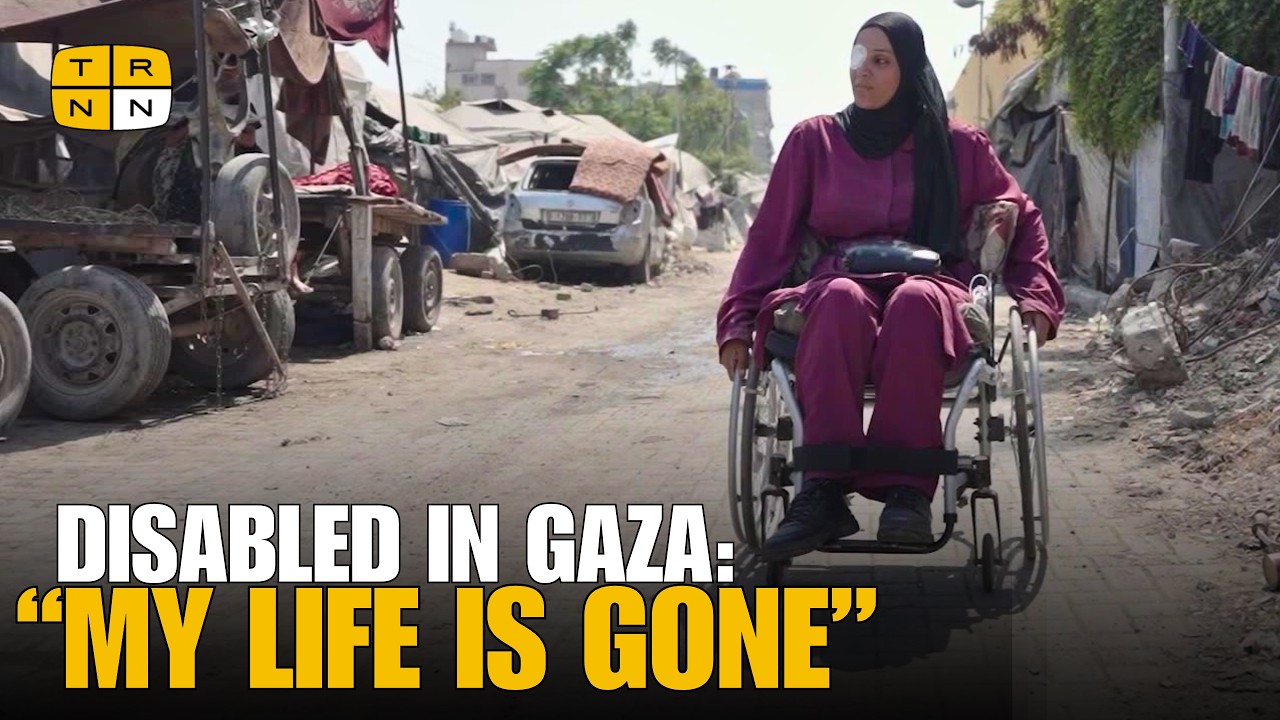
Gaza’s disabled left behind: ‘All our dreams are gone’

In Gaza, everyone is struggling to survive. For disabled people in Gaza, that struggle is multiplied. Rabab Nawfal and Suha Maqat, both wheelchair users, were champion athletes on Palestine’s national teams before Israel’s US-backed genocidal war. Two days before it began, they were playing qualifiers to represent Palestine abroad.

In this TRNN documentary report, they describe living through famine, fleeing bombardment in wheelchairs that no longer work, and asking for help that never comes. With 81% of Gaza’s roads damaged or destroyed and the UN documenting thousands of amputations, Israel is not only making life impossible for disabled Palestinians; it is creating a new generation of them.

Editor’s Note: This documentary report was filmed in Gaza City three weeks before the ceasefire in Gaza was shakily implemented beginning on October 10, 2025. Since the “ceasefire” began, Israeli forces have killed over 1,300 Palestinians, including 301 children, according to the Gaza Ministry of Health.

Credits:

  • Producers: Belal Awad, Leo Erhardt
  • Videographers: Ruwaida Amer, Mahmoud Al Mashharawi
  • Video Editor: Leo Erhardt
Transcript

Suha Maqat, Palestinian Athlete: 

I’m in a wheelchair—how am I going to escape? 

Rabab Nawfal, Palestinian Athlete: 

There were days when we ate animal food, bird food. 

Suha Maqat, Palestinian Athlete: 

I lost my eye. What more do you want? 

Rabab Nawfal, Palestinian Athlete: 

My dreams have been shattered. 

Narrator: 

In Gaza, everyone is struggling to survive. But for people with disabilities, that struggle is multiplied. Rabab Nawfal and Suha Maqat – both wheelchair users – were champion athletes before this war. 

Rabab Nawfal, Palestinian Athlete: 

I’m one of those people who didn’t go to the south. I lived through famine twice. I lived it twice. No one asked after me. There were days when we didn’t eat anything. There were days when we ate animal food, bird food. We ate everything—animals, birds. Even those things were expensive, and then they were cut off. The day they were cut off, we stopped eating anything. 

Ramadan came during the famine. We didn’t eat anything. A long day passed, and we didn’t eat anything. We used to crave drinking water. We used to crave a piece of bread. We were hoping that the famine would never come back. But unfortunately, it did—and it’s still coming back. 

We’ve suffered a lot in life. I was abandoned. No one took responsibility for me. My mother and father used to take care of me, but they left. These days, my brother takes care of me—and he is injured. My life is ruined. No one is with me. No one cares. And the one person standing by me is injured. He can barely carry his own family. 

When we were displaced, he couldn’t help us. He wasn’t able. For people with disabilities like me, it’s been difficult to live through this war. Those who are not disabled can maybe manage their lives. They can move, walk long distances—but I can’t. 

Suha Maqat, Palestinian Athlete: 

The closest people to me abandoned me—they didn’t stand by me. They left me to fend for myself. I feel like I live in a forest with wolves and monsters. I can’t. I try to make things work,

but I can’t. I’m mentally exhausted. The circumstances of this war are incredibly difficult. Even the word displacement is difficult for the injured and disabled. 

When we left, my brother was injured and my sister was in a bad state. Even though he was injured, he was pushing my sister, as I pushed myself along. I got stuck in the sand, and they wanted to bomb the building next to us. It was the most difficult moment. I said to myself, now I’m going to be killed. It was the hardest moment of my life. 

I thought—how will I escape? How will I, in my wheelchair, escape? How am I going to get out? My brother was injured and couldn’t carry me. I thought, I’m done; there’s no life for me anymore. That’s it. I’m going to be killed. 

Rabab Nawfal, Palestinian Athlete: 

The hardest thing I’ve experienced in this war has been displacement. I woke up one day and saw the Israelis in front of us. I was all by myself. I rushed out, but I couldn’t continue. There was a lot of shelling, shooting, bombs. It was a miracle I got out alive. It happened again and again—the same scenario repeated a thousand times. 

Narrator: 

Both Suha and Rabab rely entirely on their wheelchairs to move. Without them, the most basic tasks become impossible. Israel’s blockade has meant that access to this crucial item has been cut off. 

Even with functioning wheelchairs, with 81% of roads in Gaza now damaged or destroyed, access and movement is extremely limited. 

Rabab Nawfal, Palestinian Athlete: 

There are no wheelchairs in Gaza. And without a wheelchair, I can’t move. The wheelchair takes me to my medicine, my food, my drink—I need it for everything. Right now, my chair is broken. I’ve lost all means of life. 

Suha Maqat, Palestinian Athlete: 

As you can see, my chair is broken. I push myself in it, I fall off all the time, I cut and bruise my legs. If someone kind is around, then I can move. Otherwise, I can’t. 

We requested wheelchairs, but it was no use. We asked and asked, and they said no. Rabab Nawfal, Palestinian Athlete: 

My life before the war was very beautiful. I was a champion of Palestine’s disabled national team for strength games—basketball, tennis. I used to do all kinds of sports that suited my disability. I was a success story. I was a hero. These days, I feel worthless. Nothing in life. I can’t even get from here to there. I can’t move from here to there in a wheelchair. My life is 

gone. There is no life.

These days, we only dream of having the most basic things: flour, water. The simplest things—we can’t get. Drinking water—we can’t get it. 

Suha Maqat, Palestinian Athlete: 

Suha before is different from Suha today. I used to be a champion of Palestine. Today, I’m nothing. Today, just a daughter who needs her mother—who needs her mother to help her. 

Rabab Nawfal, Palestinian Athlete: 

Two days before the war, we were playing qualifiers to represent Palestine internationally. But we didn’t manage it. On the day of the championship, the war erupted. So our dreams are gone. All our dreams are gone. My dreams have been shattered. 

I wanted to raise my son. I wanted to raise him well and teach him. Before the war, I wanted to enroll him in karate. I wanted him to become something. I couldn’t. I wanted him to be into sports like me—to become a doctor. I wanted him to grow up and help me in the future. But my dreams were shattered. I couldn’t do any of it. I can’t do anything. 

Narrator: 

According to the UN 4,800 amputations of limbs had been documented since the beginning of the war. Ten children were losing one or both legs every day. Gaza had become home to the largest group of child amputees in modern history. Not only is Israel making the lives of existing disabled people impossible, it is also creating an entirely new generation of people with disabilities. 

Suha Maqat, Palestinian Athlete: 

Gaza has become a city of ghosts. There is no life in Gaza. As you can see—look at how people are living. On sand! How can people live on sand? How can they occupy Gaza? How? 

We want peace of mind. We don’t want to lose any more loved ones. We’ve lost enough. Is it not enough that I lost my eye? What’s left? What more do you want? I lost my eye—what more do you want? What else should I lose? Nothing’s left. There’s nothing left in this world that I can lose. My family has left. I wish I could see my mother. See my father. 

Rabab Nawfal, Palestinian Athlete: 

Life has become unbearable. No matter how much I talk, I can’t describe what I am feeling or the life we are living. I used to be someone. Now I am nothing.

💾

Champion athletes Rabab Nawfal and Suha Maqat, two of Gaza's disabled people now in broken wheelchairs, on famine, displacement, and being forgotten by the world.
  •  

“Modelo Bukele” no Brasil significaria 4 milhões de brasileiros na cadeia

Quer receber os textos desta coluna em primeira mão no seu e-mail? Assine a newsletter Xeque na Democracia, enviada toda segunda-feira, 12h. Para receber as próximas edições, inscreva-se aqui.

A anedota foi contada pelo jornalista Carlos Dada, fundador do site El Faro, de El Salvador, durante o festival Piauí.

Ele estava em um debate na Europa explicando como funciona a política de segurança pública do presidente de El Salvador, Nayib Bukele, quando foi interpelado por um empresário brasileiro, que lhe disse: “precisamos de um Bukele no Brasil”. 

Dada, que conhece o Brasil e fala português, pediu mais explicações. “Qual é o problema que enfrentamos na segurança pública?” O interlocutor explicou que as favelas aqui, assim como as comunidades pobres em El Salvador, são dominadas por organizações criminosas. O jornalista respondeu: “Então é fácil resolver o problema. Basta lançar bombas nas favelas”. Surpreso, o brasileiro retrucou: “Mas não podemos fazer isso”. “E por quê?”, perguntou Dada. “Porque iríamos matar gente inocente”.

“Pronto, então você já entendeu o que é o modelo Bukele”.

Carlos Dada é meu amigo desde a fundação da Agência Pública, e é uma das pessoas que conhece mais profundamente o que significa na prática o tal “modelo Bukele” defendido por vários candidatos da direita. À frente do El Faro, primeiro site jornalístico do continente e um dos mais premiados, ele viu o número de encarceramentos do país se tornar o maior do mundo em apenas alguns anos, relativamente à população. 

Hoje, 1 em cada 50 salvadorenhos estão na prisão, ou 120 mil dentre 6 milhões de cidadãos. Se transportado para o Brasil, isso significaria mais de 4 milhões de brasileiros na cadeia. Atualmente temos mais de 960 mil presos, terceira maior população carcerária do mundo. 

O “modelo Bukele” é defendido por empresários como aqueles da cúpula da Fiesp que, em 31 de agosto, fez um evento com candidatos da direita, entre eles o ex-juiz Sérgio Moro, candidato ao governo do Paraná pelo PL e o candidato a Senador por SP, Guilherme Derrite (PP) para ouvirem o ministro de Segurança Pública de El Salvador, Gustavo Villatoro. O presidente da Fiesp, Paulo Skaf, disse na ocasião: “O que precisamos como sociedade é dar o apoio que for necessário para que um novo governo possa fazer as transformações que o Brasil necessita e para que as pessoas possam sentir segurança” – reforçando sua torcida por um “novo governo”.

O que o empresariado de São Paulo não sabe é que o “sucesso” da redução imediata da criminalidade pelo governo Bukele não se deveu a um plano milagroso, mas a um acordo com os líderes das organizações criminosas mais conhecidas, como a Mara Salvatrucha. Quem descobriu detalhes destes acordos foi Carlos Dada e sua equipe.

“O acordo incluiu a libertação ilegal e em segredo de alguns chefões que já estavam presos. Implicou também o alívio de medidas em cadeias de segurança máxima. Seus parentes sim podiam visitá-los, eles tinham mais horas livres, tinham muitas saídas a hospitais onde se reuniam com seu pessoal”, explica. Do lado dos criminosos, a promessa era baixar o número de homicídios e garantir o voto a Bukele em suas comunidades. 

A equipe do El Faro recebeu vazamentos de documentos mostrando como as “saidinhas” de chefões se tornaram muito mais frequentes, assim como as visitas. E eles obtiveram áudios nos quais um ministro de Bukele pessoalmente confessa ter tirado o chefão chamado Crook da cadeia e o levado em seu carro até a Guatemala. A viagem foi confirmada por um registro insuspeito: durante todo o trajeto a namorada do criminoso tirou fotos e postou no seu Instagram, tentando esconder o namorado. “Mas apareciam os braços e as tatuagens dele”, explica Dada. 

A coisa ficou ainda mais escancarada, explica Dada, quando alguns destes líderes foram presos no México e extraditados para os Estados Unidos. Dada e seus colegas conseguiram comprovar que a própria justiça americana beneficiou estes criminosos – a pedido do governo Trump. 

“Os criminosos estavam para ser julgados nos EUA, e alguns assinaram acordos como testemunhas protegidas e revelaram este pacto com Bukele. Dá um Fast Forward. Trump ganha a presidência nos Estados Unidos, Bukele lhe oferece a megacadeia para imigrantes e os dois viram os melhores amigos do mundo”, continua. 

Logo nas primeiras levas de imigrantes venezuelanos enviados para El Salvador, os jornalistas do El Faro perceberam um detento que não era venezuelano. 

“Você se lembra daquele famoso vídeo em que o avião desce, recebem em San Salvador os venezuelanos, cortam o cabelo deles, e os levam algemados? Todos nós vimos esse vídeo no mundo todo, mas nós vimos uma coisa a mais: entre esses venezuelanos vinha um sujeito que não era venezuelano, que conhecemos pelas tatuagens. Era um dos doze capturados da Mara Salvatrucha”. 

Ao analisar os documentos, descobriram que o procurador-geral da Justiça, o que equivale a nosso Ministro da Justiça, pediu ao juiz federal para suspender as acusações contra o criminoso, argumentando interesses de política exterior.

“É incrível o que aconteceu, Natalia!” 

Por conta destas revelações, Dada e os jornalistas do El Faro passaram a ser perseguidos pelo governo Bukele. Primeiro foi espionagem: invadiram os celulares de todos com o software israelense Pegasus, enviaram drones às suas casas, mantiveram agentes de inteligência na porta das suas casas. Depois vieram as ameaças anônimas, ameaças de morte, ameaças de carro-bomba. Depois Bukele os acusou em cadeia nacional de lavagem de dinheiro. Fizeram auditorias por evasão de impostos. Depois, começaram a embargar propriedades dos sócios. Em um determinado momento, eles foram avisados que não deveriam retornar ao país. Seriam presos.

Hoje, toda a redação está fora do país. E no total, 50 jornalistas já deixaram El Salvador.

Tudo isso é fruto do “modelo Bukele”, que decretou um estado de exceção que já foi renovado mais de cinquenta vezes, dando poder total ao presidente sobre todas as forças de segurança. Através dele, qualquer policial tem o direito de prender qualquer pessoa sem nenhuma ordem judicial, e esta pessoa vai imediatamente para uma das prisões do país. 

Não existe mais direito à defesa.

“Se Bukele controla o Poder Legislativo, o Poder Judiciário, o Poder Executivo, a Procuradoria-Geral da República, a Procuradoria de Direitos Humanos, a Polícia e o Exército, e os controla por cima da lei, na prática é Bukele quem decide quem é criminoso e quem não é criminoso”, resume Dada.

Ao longo de mais de uma hora de conversa, Dada me explicou outros aspectos do tal “modelo Bukele” que são de embrulhar o estômago, como a morte de mais de 400 pessoas por tortura nas prisões – morreram por espancamento – e as audiências de custódia, que agora são realizadas de forma massiva, com 100 ou 200 presos sendo avaliados de uma só vez por um juiz.

Há histórias apavorantes. Um homem foi preso apenas porque ficou nervoso quando abordado pela polícia; em uma cidadezinha, uma cooperativa de taxistas foi denunciada pela cooperativa rival. Foi todo mundo encarcerado como se fossem criminosos.

Por tudo isso, Dada ficou muito surpreso com o evento da Fiesp, que fez questão de assistir por inteiro pelo YouTube. Ele, que é admirador do Brasil e acompanha de perto nossa política, disse que “me pareceu muito preocupante que depois que um ministro faz uma apresentação na qual não mostra o modelo Bukele, mas o que eles querem vender”, o discurso tenha sido tão aplaudido.

“É uma face construída por uma eficiente equipe de propaganda que é o que chamam de ‘modelo Bukele’. E o ministro apresentou seu modelo Bukele em termos bíblicos, como uma luta entre o bem e o mal, literalmente disse: entre os seres de luz e as criaturas da escuridão”.

Dada estranhou os aplausos efusivos de uma plateia qualificada como aquela. “O que eu creio que isso deveria fazer é deixar todo mundo de orelha em pé”.

  •  

8-year-old child caught driving an ATV motorcycle on Paros

An 8-year-old child was caught driving an All-Terrain Vehicle (ATV) widely known in Greece as “γουρούνα” (quad bike) at the port of the island of Paros on Saturday. The child was accompanied by a 33-year-old US national sitting on the back seat. According to some media, he was the child’s father. The vehicle had overturned, […]

The post 8-year-old child caught driving an ATV motorcycle on Paros appeared first on Keep Talking Greece.

  •  

Femicide in W. Greece: Young man stabs to death former partner

A 27-year-old man stabbed to death multiple times his former partner, a 25-year-old woman, and staged a robbery to cover up the murder. The victim was found in a pool of blood by a passerby at a gazebo at the end of a bicycle path in Igoumenitsa, western Greece, on Sunday night. He called the […]

The post Femicide in W. Greece: Young man stabs to death former partner appeared first on Keep Talking Greece.

  •  

Infraquinta assinala 30 anos com programa dirigido a colaboradores, residentes, escolas e comunidade local

A Infraquinta iniciou ena quinta-feira, 17 de setembro, as comemorações do seu 30.º aniversário, com um programa que se prolongará pelos próximos meses e que pretende assinalar o percurso desta empresa municipal, dar a conhecer o trabalho desenvolvido e lançar a discussão sobre os desafios que se colocam na área ambiental.

A programação envolve trabalhadores, residentes e visitantes da Quinta do Lago, mas também as escolas e a comunidade da Freguesia de Almancil, território onde a empresa está inserida. O arranque das comemorações fica ainda marcado pela apresentação da nova identidade visual da Infraquinta e do logótipo criado para assinalar os 30 anos.

Criada pela Câmara Municipal de Loulé e pela Quinta do Lago, S.A., que detêm atualmente 51% e 49% do capital social, respetivamente, a Infraquinta iniciou atividade em 1996. A empresa foi criada para assegurar a gestão das infraestruturas e dos espaços públicos da Quinta do Lago, mantendo os padrões de qualidade deste espaço urbano.

Ao longo de três décadas, a sua atividade passou a abranger o abastecimento de água, o saneamento de águas residuais, a gestão de resíduos, a limpeza urbana, a manutenção da rede viária e a conservação de 15,4 hectares de espaços verdes públicos na Quinta do Lago e áreas adjacentes.

A eficiência na utilização da água é uma das áreas em que a Infraquinta tem vindo a destacar-se. É atualmente a única entidade gestora em baixa do país com a Certificação do Produto «Água para Consumo Humano», de acordo com a Recomendação da ERSAR n.º 2/2011, e apresenta a menor percentagem nacional de água não faturada. Em 2025, a empresa atingiu também uma taxa de 50% de recolha seletiva de resíduos, mais do dobro dos 23% registados em 2022.

Para Telmo Pinto, Presidente da Câmara Municipal de Loulé, este 30.º aniversário é uma oportunidade para olhar para o trabalho desenvolvido e preparar os próximos anos. “Nos próximos meses, vamos revisitar o percurso desta empresa, que está de parabéns pelo trabalho desenvolvido, sobretudo na área da sustentabilidade e da qualidade da Quinta do Lago. Queremos também aproveitar este momento para pensar o futuro da Infraquinta e preparar uma estratégia para os desafios que temos pela frente, nomeadamente nas áreas da eficiência hídrica, da mobilidade e da gestão de resíduos”, afirma.

Pedro Pimpão, Presidente do Conselho de Administração da Infraquinta, destaca, por sua vez, a aposta numa programação que procura chegar a diferentes públicos. “Preparámos um conjunto de iniciativas para os nossos trabalhadores, residentes e visitantes da Quinta do Lago, mas queremos ir mais longe e envolver também a comunidade local e as escolas da Freguesia de Almancil. É uma forma de dar a conhecer o trabalho que fazemos todos os dias e os projetos que temos em curso”, refere.

O programa comemorativo dos 30 anos arranca após a apresentação da nova identidade visual e vai desenvolver-se ao longo dos próximos meses.

O primeiro grande momento acontece já no dia 15 de outubro, com a realização da conferência “H2O e Sustainability Summit”, em parceria com a Universidade do Algarve, dedicada aos principais desafios ambientais do setor.

A programação estende-se depois a toda a comunidade com iniciativas como o lançamento de um livro infantil ilustrado por um autor local e dirigido às escolas, a exposição itinerante IQ30, que vai percorrer vários edifícios públicos do concelho, e os Open Days, que darão a conhecer de perto o trabalho diário das equipas da Infraquinta no terreno.

O calendário detalhado e todas as novidades de cada evento serão divulgados progressivamente no site da Infraquinta.

—

  •  

Altura celebrou a 4.ª edição da Meia Maratona Noturna

A Avenida 24 de Junho, em Altura, voltou a vestir-se de festa no passado sábado, 12 de setembro, para acolher a 4.ª edição da Meia Maratona Noturna de Altura, reunindo centenas de atletas e entusiastas da corrida.

Com partida e chegada junto ao Campo de Futebol 11, o grande vencedor da prova principal masculina foi Bruno Paixão, em representação do GD3 Santos Populares. Na competição feminina, o topo do pódio foi conquistado por Inês Correia em nome da Casa do Benfica de Faro. Já na Mini Maratona, a vitória ficou nas mãos de Vasco Pita (Associação Académica da Bela Vista), Sara Inácio (Clube Desportivo Areias de São João).

A 4.ª Meia Maratona Noturna de Altura foi organizada pelo Clube Recreativo Alturense, em parceria com a Câmara Municipal de Castro Marim, a Associação de Atletismo do Algarve e a Junta de Freguesia de Altura, contando ainda com o apoio vital da Guarda Nacional Republicana, dos Bombeiros de Vila Real de Santo António e Castro Marim e da Proteção Civil.

  •  

Trump, Silicon Valley, and the global far right target Brazil’s upcoming elections

Photo courtesy of Michael Fox.
https://www.spreaker.com/show/7063186/episodes/feed

This is a particularly important episode, coming just two weeks ahead of the 1st round of high stakes presidential elections in Brazil.

Host Michael Fox speaks with Artur Romeu. He’s a Brazilian journalist and the Latin American Director for Latin America of the international NGO Reporters Without Borders. 

They spoke ahead of Episode 6 of The Battle for Free Speech, about Brazil’s fight against disinformation. He has an important analysis, which helps to deconstruct how Trump, Silicon Valley and the far-right in the United States, and around the world is “instrumentalizing the idea of free speech for their own political purpose and abandoning key dimension of freedom of expression, which is this more social and collective dimension to receive plural, reliable, diverse, and free information from others.”

This is the third bonus episode of The Battle for Free Speech. The Battle for Free Speech Podcast is a production of The Real News Network hosted by Michael Fox and Marc Steiner. 

Guests: 

Resources: 

  • You can check out the full Battle for Free Speech podcast series here.

Many thanks to everyone who has supported this show.

Follow The Battle for Free Speech on Spotify or Apple Podcasts. Support Michael Fox’s reporting at patreon.com/mfox. Never miss an episode — sign up for The Real News newsletter at therealnews.com. 

Transcript

The following is a rushed transcript and may contain errors. It will be updated.

Michael Fox:

Hi folks. I’m your co-host, Michael Fox. This is the Battle for Free Speech, and this is the third bonus episode in this series. So this one is particularly important and timely as Brazil is heading into high stakes presidential elections this October. The race is between current leftist president Luis Ignacio Lula de Silva and Flavio Bolsonaro, the son of former far-right president Jair Bolsonaro. If you have listened to episode six of this podcast series or my podcast series Brazil on Fire or the entire season two of my podcast Under the Shadow, then you know a little bit about where things are and where they’re headed. And this is another deep dive. Today, I’m bringing you my full conversation with Arturo Romeo. He’s a Brazilian journalist and the director for Latin America of the International NGO Reporters Without Borders. I spoke with him specifically for my episode about Brazil of the battle for free speech, but there was so much more from our conversation that I couldn’t fit into that episode.

In this conversation, Artur mentions a couple of things and I want to give you some context. First, Alexandre Morais is the Brazilian Supreme Court justice who led the investigations into fake news and Bolsonaro’s hate cabinet. He also oversaw the electoral court in the 2022 elections, and he was the guy who had the showdown with billionaire Elon Musk over Twitter back in 2024. In fact, Morais blocked the social media platform in Brazil for roughly two months after Musk refused to suspend a series of Brazilian accounts who were disseminating fake news. Then Musk pulled Twitter’s legal representation from the country. Musk later acquiesced and Twitter went back online. But that escapade has been used by the far right and even President Donald Trump to claim that Morais and the Lula government have been censoring free speech in the country. And in fact, that was one of the top reasons for the 50% tariff on Brazilian goods that Trump imposed last year on the country.

And it has been at the heart of Trump’s campaign against Brazil and Lula in an effort to influence the outcome of Brazil’s presidential elections this year. Okay, I think you are up to speed. Here is my full conversation with Artur Romeo in its entirety. We spoke last year, 2025, but it is more relevant than ever today. I hope you like it. Arturo, thank you so much for being with me today. Thank you so much for your availability. I really, really appreciate. Super excited to talk with you about all these things.

Artur Romeu:

Thank you, Michael. I’m also excited to talk about those issues with you. I

Michael Fox:

Say the same question to everybody. For you, what does free speech mean?

Artur Romeu:

It seems like a simple question, especially for an NGO working with press freedom for 40 years at the institution that I work for, the NGO, that I work for Reporters Without Borders, we have been working defending press freedom, not exactly free speech, but they kind of free speech and press freedom drink on the same fountain or same roots of freedom of expression more broadly. So free speech is the ability to essentially being able to impart ideas, opinions, views on the world around us without being harassed, persecuted, prosecuted, attacked by governments or other groups, can be religious groups, but also economic interests. So the ability to be able to, as an individual or a collective, to express yourself and your ideas and contribute to the public debate without fear for reprisal essentially.

Michael Fox:

And Artur, what is your analysis of the state of free speech today in the world in Brazil and the United States and elsewhere? Where are we?

Artur Romeu:

I think that there is a lot of confusion. Maybe I never saw as much confusion around those issues as we are seeing today. Basically, one of the things that scares me is the fact that free speech is being weaponized against press freedom, for example. Another issue is that we are focusing too much on the individualistic aspect of free speech, and we have to have this understanding that at least coming from a freedom of expression perspective, there are an individual dimension, but also a social and collective dimension of freedom of expression. It’s not just our ability to being able to express ourselves and to impart information and ideas, but also to receive those information and ideas from others. So the way we are talking about, or at least the way that some political groups and specifically the far right nowadays everywhere in the world, not specifically in the US, has been instrumentalizing the idea of free speech for their own political purpose and abandoning a key aspect, a key dimension of freedom of expression, which is this more social and collected dimension to receive plural, reliable, diverse and free information from others.

And a third issue, and I think that’s behind most of this confusion as well, is the role that big tech social media platforms are having on this discussion because we have the idea that regulating this economic activity sector would be the same as censorship, but actually better regulation, good regulation, democratic supervision, improve the condition for free speech and press freedom and the integrity of information in general. So this opposition between the ability to be able to impart your ideas and the need that governments have to find a way to regulate the digital sphere arena online is they are not opposed to each other, but it’s a complex discussion because emerging technology always poses new problems. And even if we are not saying that social media platforms are necessarily new to our political landscape, AI is becoming something more popularized and we don’t know the impact that AI will have in this cacophony, this, I don’t know, some people are calling it epidemics or this crisis of reliable information.

And the key problem here is all those things together are fragmenting public conversation, public debate, and public debate is at the core of our democracies. So there is a clear link between this fragmentation of public debate due to all this and the erosion of democracies everywhere.

Michael Fox:

Arturo, you’ve just mentioned everything you said, I was like, we need to talk more about that because this is at the root of all this is why it’s so important. Before we dive into more specifics of all those things that you just mentioned, I have this idea, this hypothesis, are we in a moment where the far right folks like Trump and Bolsonaro are trying to redefine free speech in their favor instead of what you mentioned, “Oh, we need actually some regulation so that we can have a field where we’re actually getting not just random information and fake lies and everything else for everybody else, but we’re actually getting information that is what we should be receiving.” Are we in a moment right now where certain groups are trying to redefine what free speech means so that they can use it to push their agenda?

Artur Romeu:

Of course, it’s very clear. It’s been happening for a while and it’s crazy how effective it is because I think people are very concerned with society in general every day on our daily lives, every citizen is concerned with their ability to basic freedom. And I think that for a very long time, at least in other democracies, this is something that was kind of taken for granted. And even if there were some complex discussions from time to time, there was at least this frame, this common ground, this common denominator where there were international standards in terms of human rights related to free speech, very clearly defined. But sometimes there is this complex issues where you have limits to free speech, right? It’s not an absolute right as a series of human rights. They are not absolute in themselves. There is a balance between rights. And for a long time, I think it generated some stress and tension, but it was kind of relevant discussions, philosophical discussions.

People may disagree, but still we had a common ground. And what we’ve been seeing lately for the past, I don’t know, 10 years at least, is that the way those limits are defined and their political appropriation is stressing this debate. And we are seeing a relevant debate for democracies and to ensure rights and public participation in general being distorted, inverted in a sense that a specific political group is using this to play the victims and saying that they are being oppressed by those ideas. And they made a political flag out of this, and it’s being very effective in terms of how this idea has permeated society and gaining capularity. And I think our field of organizations that are defending freedom of expression is having a lot of difficulty to fight back or reframe the debate. So we are talking about those issues from a rights-based approach and not from a political biased approach.

Just to give an example, specific example, in Brazil, there was a very important milestone march protest during the Independence Day of 2021 with Bolsonaro, thousands of people in the streets supporting Bolsonaro, supporters of Bolsonaro going to flooding the streets in every major capital. And researchers were the streets trying to survey why people were, in their views, going to protest. And one question was about what was their main motivation? And the first motivation was freedom of expression. So in theory, something good. But when they asked them, “And what are you fighting against?” And the first was the Supreme Court in Brazil, which is, I won’t go into the political context in Brazil, but a key issue here in terms of how the constitutional court and Supreme Court has been limiting transgressions and abuses of the executive branch. And the second was the press. So they were fighting against the press.

So they were defending press freedom by attacking the press. And so I think it’s a kind of a paradox where you see a very individualistic perspective. People want to be able to say whatever they want and less and less are accepting that the fact that we are living in a society, there are symmetries of powers, this speech has to be balanced with other rights. So this imbalance and the way it has been appropriated by and kind of really weaponized by the far right is having a major effect in creating this imbalance and making people forget why it’s important to balance a free speech, which is kind of incoherent, at least when you see what happened with Charlie Kirk and people were expressing their views on the fact that criticizing him some very harsh level and the same group that is defending that people should be able to speak wherever they want are doing their own witch hunt.

So you see how politically biased and how this weaponization appropriation of the idea of free speech or freedom of expression is a power struggle more than a philosophical and conceptual one.

Michael Fox:

Do you think that part of how we got to this point goes back to what you were mentioning before, the splintering of society. Now with social media, I get all of my news from here, you get all of your news from there, and so we’re allowed to attack the other because they’re the other rather than having this open debate. Is that part of what led us to this moment?

Artur Romeu:

Yeah. Social media had a major impact in the information ecosystem as a whole for better or for worse, kind of changed everything, how people are receiving, how we are less dependent of a few broadcasters. And now we feel that we are in this environment where we can speak freely. But actually what happened was the privatization of a public space, and you have this impression that you are in Agora, this public arena where there is this idealized perspective of the free flow of information, the free market of ideas, the better ideas will win. And actually this is happening in a specific space controlled by specific groups, interest groups, a very profit oriented perspective. No transparency at all on how those information are being moderated and gaining more or less reach. So yeah, definitely. I think the major shifts that those technologies had on our information space are partly not necessarily too blamed by their own, because I think also when we talk about censorship, it’s easier for us to think of a more classic censorship approach in the same way that when we think about a dictatorship or a coup d’etat, we have references from our past and we kind of compare what is happening now and our collective memory of what those words mean.

And freedom of expression was kind of invented to protect citizen rights, individual citizen rights to oppose all powerful state in a very different political landscape from centuries ago. And now censorship is not only having a propaganda ministry and having censors within newsrooms and journalists being detained and killed because of what they’re saying. Of course, it still happens a lot in several parts of the words, but censorship or at least freedom of expression and free speech is also eroded when not only the state. Because the idea behind this is that the state should restrain itself from any interference in the free flow of information. So any kind of interference equals bad, equals censorship. People should be able to speak freely without government or state interference, but that’s not enough. You also need positive obligation. And positive obligation means that the governments and states have to develop, establish public policies that will help the information space, the information ecosystem to balance assymetries.

For example, pluralism, diversity, reliability of information are key aspects of this, of a healthier information space. So for this to work, you need governments to create those policies, to establish these laws, policies, how antitrust policies, for example, to fight excessive media ownership concentration in the hands of few groups to help balance market asymmetries and to ensure that the rights of their citizens is assured also in terms of access to pluralistic and reliable information. With the social media and big text, what they are saying is that any regulation is bad, they are self-regulating by themselves, and they are at the end protecting their commercial interests and creating those regulatory backups where they can operate without accountability or any kind of accountability. And if we don’t do anything about it, we will keep seeing a disintegration of this information space.

Michael Fox:

Following from that point, can you talk a little bit about what we saw over the last year? For instance, this whole battle between Brazil, Aleshande Morais, Twitter, X, Musk, because I feel like that’s a perfect example of exactly what you’re talking about. And also these two visions where Brazil has this vision of saying, no, we’re going to regulate more because you can’t have just a get out of jail free card completely. And whereas the United States is much more laissez-fraire backed by Donald Trump and particularly now, but this was even before he came to office.

Artur Romeu:

First of all, you have different traditions, different countries, you have different traditions in terms of how you interpret law. Brazil’s approach to freedom of expression is closer to the European approach where there is a focus on this balance between rights than the US one where there is a broader, I don’t know, more elasticity when you are talking about freedom of expression. You have to have in mind that our legal tradition is closer to the European one in terms of philosophical, conceptual jurisprudence expiration. Within this context, have a very specific example. When former President Bolsonaro started saying that people should not trust on electoral results because digital ballot box are not reliable when he did not and still has not any kind of proof of this. And much on the contrary, by the way, the electoral system in Brazil is widely recognized and as a very strong electoral system.

When he started doing that, for example, calling a meeting with ambassadors from a bunch of different countries to give a press conference saying that before the election, one year before the elections, that people should not trust electoral results if we kept the system as it was. It’s very, very, very serious because he has a lot of supporters and echo chambers on social media, and this kind of information erodes trusts of society, on their political institutions and their electoral institutions. So basically you cannot argue that that’s within his absolute right of print of expression because it has very serious impact for democracy and it’s not because you are the president that you can say whatever you want without any kind of accountability. But from there, what happened is that this idea was widely spread by his supporters and political groups, and the social media had a huge impact on this.

So this is clearly organized, this information, casebook. It’s pretty straightforward. And this information in the sense that it has a set of cogs in the machines, and it’s not just one person saying something false, it’s how this information is being spread and the structure of this information, the different levels, actors, stakeholders involved in this, financed with public money, public funds, and social media companies within their codes of conduct, you cannot just let this level of disinformation spread, including the reach they’re having without, again, any accountabilities, they could have acted to limit the reach, not necessarily censoring the presidential Twitter account or something, but at least putting contextual information, whatever those links, I don’t know. But there are several possible strategies for those social media to limit those kinds of harmful disinformation. But since we did not have a regulatory framework for this, the Supreme Court took the responsibility to act and to investigate this fake news industry or disinformation industry, how it was being structured and its impact.

And by doing that, said explicitly that, I don’t know, judges could not be threatened, basic stuff. And starting, for example, Alishanj Morais, which is at the epicenter of all this, even if he’s, and I think this is a parenthesis here, Morais was very important within all this, but he himself, I mean as an individual judge, but we have to take into account always that his decision were being systematically validated by the other judges of the Supreme Court. So even if he was the one being more visible on all this, and even though that there were tensions between and discussions between the judges, the vast majority of all those decisions went through the plenary, all the judges. So we talk a lot about him, but it’s more like the Supreme Court itself. I think he’s the image of these fights in a way, but he wasn’t alone doing that.

It’s not all powerful judge that is doing that as a rogue mode and acting on his own. We had strong institutions and it worked in the sense that we had the highest body in the judiciary power acting on this and investigating those issues, how they were spreading and taking harsh measures to prevent the impact of what everything was happening be even higher. For example, closing, requesting for the suppression of individual accounts on social media, and that’s something that led to the blockage of acts here in Brazil because what happened is that Elon Musk decided that he would not accept sovereign decision from the Brazilian highest court. He just moved his policy team away from Brazil. There was no legal representation as a way clearly to escape Brazilian jurisdiction in a clearly politically motivated move. And what the court said is that you cannot do that if you are operating You have to operate within our laws.

So if you don’t have a legal representation here in Brazil, and if you do not accept court orders related to several specific measures to mitigate the impact of this information of what was happening, you could not operate. And he was not blaffing. I think for, I don’t know, 50 days, it took a while. And there was a lot of support because you could imagine that this kind of decision, it’s very unpopular. You have tons, millions of social media users, including a lot of journalists using those tools for their daily work. But the way it was done showed that there was at least an understanding from Brazilian society that it was a fair fight, that it was something legitimate. And you can go even backwards with the pandemic. I won’t go all the way there, but the way that Bolsonaro governed during the pandemic was a big disasters for several reasons, but also in terms of access to reliable information on health issues and the way that false information was spreading for, again, politically biased moves.

And I think he had a bet in the sense that he thought that by going this way, he would show a different path than other global leaders, but it was a big disaster, no surprise. And there was a lot of discussion around this time about disinformation as well. So it’s a discussion that has been going on in Brazil on how public and democratic institutions have to respond to widespread disinformation strategy, especially those coming from the highest ranking officials. It’s gained a lot of track and legitimacy. And I would dare even to say that we have now more than other countries an awareness about those issues where, for example, there was a, I don’t know if it’s very recent survey, I have to double check the numbers, but what I know for sure is that most of Brazilian society, a survey showed is in favor of regulating social media.

So you have this support, even of course, if it’s not, if you have clearly political groups which are very strong and a lot of debate on how you do it. I think the major question is how you do it because it’s not that the fact that you have to act, I think that’s pretty clear here and from every perspective. What is more difficult is how you do it to avoid a very obvious trap where by doing this, you are creating a censorship mechanism and more control over those tools, those technologies. So this should be actually the discussion, how you do it and not if you have to do it or not, why it’s important. I think we are well over the time where those discussions should have passed and now, I don’t know. I really don’t know. I feel that we are living parallel universes sometimes.

When you see, for example, Trump’s speech on the UN and Lula’s speech in the UN, we feel that we are living in parallel universes. So different periods of time. I think it’s clear for, there is a consensus among digital rights activists, organizations, even a part of mainstream progressive groups, NGOs working with freedom of expression that you have to create mechanisms to improve democratic supervisions of how those emerging technologies, especially social media, are creating those rifts in our democratic systems.

Michael Fox:

Artu, thank you so much. I just have two more really quick questions. And this is so important, this last point that you touched on, because particularly in the United States, even amongst folks on the left, because historically, obviously censorship has been used against usually marginalized communities, minority communities. And so the discourse is always, well, once you start to say, well, you can’t say this and these people can’t say that, well then that’s going to be used against always, eventually it’s going to be used against and particularly against minority communities and marginalized communities. The people with the least amount of voice are the ones that are going to have their voice taken away completely. And yet this question no one meant, I feel like this huge elephant in the room is always this question of fake news. I can believe what I want to believe, you can believe what you want to believe.

More or less we can talk, but you still can’t be spreading just complete disinformation and lies and yet that’s what we’re seeing. And unless you actually take that on and say, okay, well this is here and how do we try and roll this back? But I feel like so many people or organizations or individuals, it’s just kind of give it, well, no, we don’t want to do that because then that’s stopping people. But no, there are lies. There are people trying to manipulate this. And so it’s a huge, it’s a complicated debate to ask that question of even how do we do this? But I think that is the question of saying, no, we absolutely have to. We can’t even be discussing if we are going to or not. We need to be talking about how we do it in the most democratic way possible or else we’re just going to see more and more of our rights willed away and more and more of our ability to communicate as a people whittled away.

So it’s crazy.

Artur Romeu:

Yeah. Talking about more on journalism and how specifically on journalism, the way things are told nowadays, I mean in terms of how all this has been appropriated by this fear of censorship or by saying that any kind of regulation is censorship is creating this environment of a crisis of trust and polluting democratic public debate, but also it’s creating something that science and journalism are put in the same level as any other opinion. So this is my opinion. So I can say it because it’s my opinion. And if you have 30 pages special dossier done by one of the journalists working that biggest newsroom in the country and you take this and you say, “Well, they can say wherever they want, that’s my opinion and I’m against this.” Same thing with, I don’t know, climate denialism just to keep one specific issue related to science. So when you put everything, conspiracy theories, opinions, ideas at the same level of other kinds of expressions, they should not be able to say to disagree, of course, or to question, this is healthy for democratic debate, but you cannot dismiss investigative journalistic piece on a very key issue and that had multiple sources done in journalistic processes.

You have a process to doing journalism. It’s not ChatGPT, it’s those investigations in the same way that science has its processes of verification, experimentation, peer review, et cetera. Journalism has its own. And if this is not recognized as a positive incentive, a society to receive this information and to criticize or to discuss what is being said in a different way than just someone saying what they think, journalism have foundations in terms of what is being said. And ideas can have more or less, opinions can have more or less depending from if it’s coming from someone that has studied all his life, all her life about the specific issue and then is expressing of course an idea, a different idea or a position on this topic. But if we put everything at the same level, we won’t have a real conversation. We will be just everyone saying what they want.

And for democracies to work, we have to find commonplaces and those commonplaces have to be based on some kind of logic or some kind of method or some kind of common ground. And so this is a problem right now with journalism because it’s being treated as just another opinion.

And on our newsfeed on social media, it’s being treated as just another opinion. Even sometimes even dismissed or the reach of news articles and links are having a worse reach than other kinds of videos posted by influencers. But there’s no due prominence of journalistic content or scientific content. So the conversation

Is becoming more and more based on the rule of the stronger. If you appear to be stronger than others, your position can overlap all the others because you say so. That’s extremely dangerous for the kind of democracy we have been building. So this is a specific issue with journalism. And the other issue is media sustainability and news deserts and how those new technologies have shifted completely the business model of the media industry in just a few years. And it’s creating more fusions, less pluralism. You have this illusion of pluralism because you feel that there’s more people speaking than before where you have the gatekeepers and all this, but it’s noise. So there’s a lot of noise happening and noise is not necessarily pluralism because pluralism needs some kind of framework to be effective for a democratic debate. If it’s just a bunch of people in a room saying what they think about the problem, not necessarily the best idea or the idea that has the stronger chance to work will win.

So also this idea of a free market of ideas, we don’t live in a political vacuum. So a free market of ideas is completely dependent on the correlations of force between the different stakeholders in the ecosystem, the political landscape. You have a lot of social and economic inequalities. So talking about a free market of ideas with no kinds of balancing this just don’t work because ideas will step on others anyway. When we talk about AI regulation or digital service acts to regulate the social media and the whole industry behind it, you need to have some kind of how you can create mechanisms to create financial compensation for media. And there are a lot of taxating profits from big tech revenue, advertisement revenue of big tax, for example, and creating a fund and this fund being. I don’t know. There are several ideas going on, bargaining codes.

But the point is if we do nothing, what we are seeing is that the economic pressure on journalism, on public interest journalism is becoming asphyxiating. And what we will see soon is an environment, a media landscape with a lot of concentration of power and local news markets disappearing and being replaced by, we don’t really know, but what we’ve been seeing is that when a local news media disappear, there’s no empty space. This space is immediately occupied by propaganda, by this information, by other interests. So preserving journalism, especially local journalism, is a democratic imperative. And we have to understand how we can do this when discussing democratic regulations for social media and AI.

Michael Fox:

Artur, so great. My last really quick question is you mentioned toward the beginning something I thought was really important, you want to forget it, free speech being weaponized against press freedoms. Can you talk a little bit more about that? Where are we seeing that? What does that look like?

Artur Romeu:

We are seeing that in a daily basis in the US for sure. And I have very specific example. When Trump wrote a letter to President Lula to justify the tariffs, the letter mentioned Bolsonaro, the prosecution of Bolsonaro in Brazil, mentioned big tax and the fact that the rights of American citizens was being violated and companies was being violated by the judiciary in Brazil. And just after the letter itself, there was some kind of, I don’t know the name of it, but an order where there were more explanations of the reasons. It was like a one and a half page document and the expression like freedom of speech or free speech or freedom of expression or censorship was repeated at least 10 times in a letter basically saying that the US was imposing tariffs on Brazil because Brazil was promoting censorship. So when I say that free speech is being weaponized against freedom of expression, in parts it connects to this example where you make yourself look like as a free press paladin, but actually what your distorted vision of free speech is doing is fragmenting the idea, the different ideas behind what freedom of expression really is, and mostly the social and collective dimension of freedom of expression.

You are only saying that people should say whatever they want without any kind of interference. If that’s the case, you are basically ignoring completely the fact that people live in a society and part of the freedom of expression right is related to receive pluralistic, diverse, reliable information. When we see these kinds of marches that I’ve talked about in Brazil as well where you say you are there to defend freedom of expression, but actually your enemy is press freedom, you are again weaponizing this idea because what you are really interested in is being able to express your ideas without any kind of repercussions, any kind of accountability, because it’s a very empowering feeling. So I think what those leaders, Bolsonaro, Trump, Edogan, Obam, and others, Milei have been doing the media bashing and fueling general hostility towards journalism and not just journalists, but journalism, like the ideal of journalism, again, not just against the press, but the idea really of journalism is at the core of their political strategy.

It’s not isolated. It’s not something that’s part of their personality. It’s really something that has the ability to keep their electoral basis very mobilized. It’s a very effective way to polarize public debate. And those leaders, they are dependent on polarizations. They cannot leave, have a political career without these kinds of systematic polarization and attacking the press systematically. The press, the media institutions, journalism in general is very effective for your strategy and that’s why they keep doing. In Argentina, for example, recently Mile said, “The problem is we don’t hate journalists enough.” So these kind of ideas, Bukele in El Salvador, it’s really at the core of the political strategy. So again, instrumentalizing, weaponizing free speech to erode press freedom, to have more control over the public debate and less scrutiny in society. It’s much easier to kill the messenger than have to deal with whatever the report or the news article is discussing.

Michael Fox:

Artur, incredible. Thank you so, so much. I really appreciate your time. I know we went over a little bit, but I really appreciate it.

Artur Romeu:

Thank you, Michael.

Michael Fox:

Hi folks. I hope you enjoyed our conversation. As I mentioned before, this is the third bonus episode of this series. There are more on the way. Please watch out for those in your feed. This is the battle for free speech. This podcast is co-hosted by myself and Mark Steiner. This show is produced by The Real News. You can find out more about my work and this show on my Patreon. That’s www.patreon.com/mfox. As always, please make sure to sign up for the Real News Network’s newsletter so you never miss an episode. You can find that at therealnews.com. Thanks so much again for listening to this podcast. See you next time.

  •  

Du Kosovo à la Crimée

Vingt ans après, la guerre du Kosovo continue de susciter des polémiques entre les grandes puissances, notamment la Russie et les États-Unis. Moscou invoque régulièrement l'intervention de l'Organisation du traité de l'Atlantique nord (OTAN) au printemps 1999 pour justifier les siennes, par exemple en Géorgie ou en Crimée. Dans un discours devant le Parlement, le 18 mars 2014, le président Vladimir Poutine affirmait ainsi : « Les autorités de Crimée se sont référées au précédent bien connu du Kosovo, un précédent que nos collègues occidentaux ont eux-mêmes créé dans une situation très semblable, quand ils ont convenu que la séparation unilatérale du Kosovo d'avec la Serbie — exactement ce que la Crimée est en train de faire en ce moment — était légitime et n'avait pas besoin d'une quelconque autorisation des autorités centrales du pays. »

Ce parallèle a fait l'objet d'une réfutation en règle par M. Barack Obama lui-même. Le président américain a justifié l'intervention de l'OTAN, qui n'a eu lieu « qu'après les violences et les meurtres systématiques subis par les populations du Kosovo. Le Kosovo n'a quitté la Serbie qu'au terme d'un référendum conforme au droit international, et dans le cadre d'une coopération scrupuleuse avec les Nations unies et les pays voisins du Kosovo » (Bruxelles, 26 mars 2014).

Cet échange pourrait susciter des débats juridiques sans fin, dans la mesure où le droit international consacre deux principes qui peuvent entrer en contradiction : l'intégrité des États et le droit des peuples à disposer d'eux-mêmes. C'est pourquoi les déclarations d'indépendance formulées par certaines composantes d'un pays (région, province), comme celle de la Catalogne en octobre 2017, suscitent des batailles judiciaires, mais aussi politiques : il s'agit d'obtenir que l'indépendance soit reconnue par un nombre d'États suffisamment important, en qualité et en quantité, pour rendre effectif le changement de statut du territoire concerné. C'est le problème rencontré aujourd'hui encore par le Kosovo, qui n'est pas reconnu par tous les membres de l'Union européenne.

Le statut des États étant la pierre angulaire de l'ordre international, les mouvements autonomistes font toujours l'objet d'une attention particulière de la part de leurs pays voisins et des instances internationales, compte tenu de leur potentiel perturbateur (tensions diplomatiques, conflit armé). Les référendums d'autodétermination, lorsqu'ils font suite à des interventions militaires extérieures, ne suffisent pas à lever les doutes sur la légitimité d'une partition. En outre, les conséquences des déclarations d'indépendance, dont le statut n'est pas réglé par le droit international, peuvent se révéler très graves. La reconnaissance unilatérale de l'indépendance de la Croatie et de la Slovénie par l'Allemagne, en décembre 1991, avait ainsi entraîné une réaction en chaîne meurtrière, contribuant au démantèlement désordonné de la Yougoslavie. Sans aller jusqu'à ce cas extrême, les pays membres des Nations unies seraient sans doute avisés de se concerter sur les grandes règles qui doivent gouverner les relations internationales en tenant compte de l'expérience acquise depuis 1990.

Sans cette concertation et la clarification des principes, le débat demeurera le simple jouet des rapports de forces et des appréciations plus ou moins subjectives des uns et des autres, comme l'illustre cette déclaration du ministre des affaires étrangères russe Sergueï Lavrov : « On nous répète sans cesse que “le Kosovo, c'était un cas à part, car des milliers de personnes ont péri là-bas”. Faut-il en conclure que, pour que les habitants de la Crimée obtiennent la reconnaissance de leur droit imprescriptible, il faut que coule autant de sang en Crimée qu'au Kosovo ? Pardonnez-moi, ce sont des parallèles et des analogies parfaitement impropres (1). » De son côté, M. Obama, qui s'était opposé en 2003, alors qu'il était sénateur, à l'agression américaine contre l'Irak, dont l'illégalité ne faisait aucun doute, estime finalement que les États-Unis ont « cherché à travailler dans le cadre du système international » (Bruxelles, 26 mars 2014). Ce qui est vrai, mais… après la guerre. La référence récurrente à l'intervention au Kosovo confirme qu'elle a fracturé un élément essentiel de l'ordre international : la confiance autour du tapis vert des négociations.

Voir en ligne : /2018/02/ROBERT/58363

(1) Le Courrier de Russie, Moscou, 16 avril 2014.

  •  
❌