 Login

Ethiopia plunges into civil war again as PM Abiy’s ‘divide and rule’ backfires

This content is for members only. Visit the site and log in/register to read.

This content is for members only. Visit the site and log in/register to read.

The Ugandan army, which had offered to capture Iran’s capital within 72 hours for Israel earlier this year, is now readying a troop deployment to Gaza under US command.
Discussing the deployment, senior Ugandan military officers were at the US-led Civil-Military Coordination Center in Kiryat Gat on August 17. The town on the edge of the Negev desert – barely 25 km from the northern Gaza Strip – was established in 1955 after depopulating the Palestinian villages of al-Faluja and Iraq al-Manshiya during the Nakba.
Burundi’s military officials were also reportedly present at the meeting here, after which the Israeli Occupation Forces (IOF) gave them both a tour of the city of Rafa in southern Gaza as part of the “pre-deployment site survey.”
Burundi is yet to confirm the deployment of its troops. However, Uganda’s parliament, practically a rubber stamp with over 70% of the seats held by the ruling party, approved the deployment of its troops on August 6.
This made it the sixth country to join the International Stabilization Force (ISF) proposed by US President Donald Trump’s so-called Board of Peace, envisioned as the 20,000-strong force led by US Major General Jasper Jeffers.
The remaining five contributors of troops hold relatively diverse positions on the Israel-Palestine question. Indonesia has been a vocal critic of Israel, backing South Africa’s genocide case against it at the International Court of Justice (ICJ). It maintains no diplomatic ties with Israel. The largest contributor has reportedly put its 8,000 troop deployment on hold, although it hasn’t formally withdrawn from the ISF.
Kazakhstan, on the other hand, has maintained deep diplomatic ties with Israel since 1992. Morocco joined the Abraham Accords in 2020. Both have done so while mouthing the two-state solution for an independent Palestinian state with East Jerusalem as its capital as official state policy.
The remaining two European countries are staunchly pro-Israel. Albania has announced plans to open a commercial liaison office in Jerusalem. Kosovo has outdone Albania, following Trump’s lead by moving its Israeli embassy to Jerusalem.
The sixth country to come on board, Uganda, professes a commitment to Israel that dwarfs that of the European troop-contributors.
“Any talk of … defeating Israel will bring us into the war” against Iran on “the side of Israel,” Uganda’s military chief, Muhoozi Kainerugaba, posted on X in late March. He is the son and heir apparent of Uganda’s 81-year-old president, Yoweri Museveni, ruling the country since 1986.
After 40 years of rule, Museveni was handed a seventh term by the Electoral Commission in January, following an election marred by “widespread repression and intimidation against the political opposition, human rights defenders, [and] journalists,” according to the UN.
Soon after the results, Kainerugaba began hunting down Museveni’s political opponents, forcing his main challenger in the election, Bobi Wine, into exile, bragging about killing 30 of his party’s members, and swearing to “get them all.”
Israeli military technology, from weapons to surveillance equipment, has long enabled Museveni’s domestic crackdown. Recalling that Israel has supported his regime for decades, “Why wouldn’t we defend her now?” asked Kainerugaba. He added in a subsequently deleted post that the Ugandan military had offered to join the US and Israel in their war efforts against Iran, claiming, “We could have captured Tehran in 72 hours.”
This bold claim of being able to defeat the world’s 16th largest military power, with a military ranked 107 out of 145 countries, was gently mocked, even in the Israeli media at the time.
Nevertheless, barely five months later, Ugandan soldiers began uploading posts on social media, captioned, “Gaza, here we come,” filming themselves loading equipment onto planes – taking off and landing in undisclosed locations.
These posts by Ugandan soldiers began circulating on social media after the Ugandan parliament approved the troop deployment on August 6.
Addressing the parliament ahead of the vote, Maj Gen David Gonyi, parliamentary representative of the Uganda People’s Defence Forces (UPDF), explained the rationale of the deployment to the legislators: “Uganda submitted the name of a Ugandan [veteran diplomat, Olara Otunnu] to become Secretary-General of the United Nations. It would be like shooting ourselves in the foot to say that Uganda should not participate in [the] deployment in Gaza.”
Military deployment has long been a central plank of Ugandan diplomacy, currying favor of the Western countries by sending its soldiers to missions in Somalia, South Sudan, Equatorial Guinea, and the Democratic Republic of Congo (DRC).
Its Somalia deployment has been especially crucial for the Ugandan army to receive training and support from the US Marine Corps and US Africa Command (AFRICOM).
Last November, Johan Borgstam, the European Union (EU) Special Representative for the Great Lakes Region, met Kainerugaba to propose expanding Ugandan troop deployment in DRC, on behalf of Brussels. Borgstam brought this proposal, despite the UN confirming the validity of the DRC’s accusation that Uganda is supporting the M23 armed group, a proxy of Rwanda which, along with its army, has occupied large swathes of the region in a war for DRC’s minerals.
Presenting this Western demand for Ugandan troops as a diplomatic success, Major General Henry Masiko, another parliamentary representative of the UPDF and the Joint Staff Political Commissar, told the legislators: “The UPDF is viewed as the anchor of stability in a sea of turbulence, regionally and now globally.”
He went on to add in his remarks to the parliament that the “doctrine of the force is that we go out not to dance but to confront threats against society and humanity,” in a thinly veiled reference to Palestinian resistance.
Opposition politicians have raised concerns that deploying troops when the Ugandan government has done little to conceal its neutrality may have consequences.
“Some [troops will] return in coffins,” warned Jamal Ayagalaki. “We need answers on who will pay the UPDF, what the terms and conditions of service will be, and what support will be available to soldiers and their families.” He further warned that Uganda’s involvement in a conflict “that is not ours” could expose the country itself to new security threats.
A more thorough criticism of the deployment came not from an opposition leader but from retired General David Sejusa, who had served Museveni as a senior presidential adviser and intelligence coordinator from 2005 to 2013.
The “parliament passed a resolution for peacekeeping, [but] what peace is [there] is Gaza?” he questioned, pointing to the lack of agreement between Israel and Hamas.
“The permanent decommissioning of weapons from non-state armed groups” – i.e. the Palestinian resistance – is one of the tasks the International Stabilization Force must carry out in coordination with Israel, according to the resolution adopted by the UN Security Council in November 2025, with abstentions from Russia and China.
Hamas has refused to hand over weapons to Israel or any foreign force. It has called for the creation of a Palestinian national committee, which will hold the weapons collected from Hamas and other resistance groups within Gaza.
This transfer of weapons, however, can only happen after Israel withdraws from Gaza, Hamas insists. Israel, on the other hand, has refused to withdraw from Gaza until the resistance is completely disarmed.
Therefore, in the absence of any “clear implementable political framework,” Uganda will be deploying troops in an “un-militarized active conflict area … where a belligerent state continues strikes on the occupied population,” Sejusa said. This, he warned, places Ugandan troops at the “risk of complicity in war crimes.”
By Carlo Domenico Cristofori
The Democratic Republic of the Congo (DRC) has recorded over 8,000 cases of Ebola, including almost 4,000 deaths, amid the worst outbreak in the country’s history, according to government data.
The latest report, published on Monday by the DRC’s public health institute, put the number of cases at 8,067 and deaths at 3,901, representing a fatality rate of 48.4 percent.
«People’s mistrust and anger towards government policies have become a major obstacle in limiting the outbreak since it was officially declared on May 15. A senior member of the ruling UDPS party was beaten to death after raising awareness about the epidemic on radio, a party representative said on Monday. The killing happened on Sunday in Butembo in North Kivu province, which has become a hotspot in the ongoing Ebola outbreak» Al Jazeera reported.
The number of cases has levelled off after a rapid increase, according to the African Union’s health agency, Africa CDC, though it still considers the outbreak “not under control”.
Several treatments and vaccines are being trialled targeting the Bundibugyo strain of the Ebola virus, for which there is no approved vaccine or treatment.
EBOLA LETHAL OUTBREAK after Military Biolabs’ Tests. How Moderna & Gates had forecast the Epidemic?
In the previous investigation we explained that just a few months ago (January 2026), Bill Gates’ vaccine cartel CEPI gave Moderna and University of Oxford $26.7 million to begin developing Bundibugyo ebolavirus (BDBV) mRNA and viral vector injections. These are multivalent filovirus “vaccine” platforms, meaning they are designed to target multiple Ebola viruses and related filoviruses simultaneously — including Bundibugyo ebolavirus (BDBV).
But above all we highlighted that US Army’s own health research centers conducted worrying and dangerous experiments on the Ebola virus in Pentagon-funded Ukrainian laboratories, which are now at the center of an investigation by US Intelligence Director Tulsi Gabbard.
Now the American Epidemiologist Nicolas Hulscher has found one of the “smoking guns“ that confirmed the dangerousness and lethality of Pentagon tests as DUAL USE: vaccine and bio-weapon,
Sen. Rand Paul has released a new package of Anthony Fauci’s private notes and emails that reveal a disturbing aerosolized-Ebola experiment on nonhuman primates at the U.S. Army’s USAMRIID biolab at Fort Detrick.
The internal NIAID report states plainly: “For the 2015 aerosol study, NIAID provided funds.”
According to Fauci’s own March 7, 2016 notes, 16 of 20 vaccinated primates died after aerosol challenge (80% mortality rate). Both unvaccinated controls also died.
But the most disturbing finding was in the lungs. Fauci later recorded that the vaccinated animals developed “necrosis, inflammation and fibrin in the lungs,” while the two unvaccinated controls “did NOT have inflammation in the lung.”

This was Fauci’s reaction to the experiments:
“This should have been a classified experiment that never should have been done in the first place.”
He later reiterated in an email that the DoD wanted to publish the data, but that he believed it “should be classified.”
The findings were causing alarm ahead of larger Ebola vaccine studies in West Africa. Fauci wrote that “the idea that the vaccine can do harm is now causing people a great deal of concern.” He also described officials in Liberia, Guinea, and Sierra Leone as “going batshit” over the findings because larger Ebola vaccine trials were being planned there.
When DoD officials told the White House that NIAID had helped fund the study, Fauci wrote: “I almost fell off my chair.”
Before briefing the White House and National Security Council, Fauci warned his staff to give him “the truth, the whole truth and nothing but the truth.” He told them not to hold back information they thought would upset him and added that if someone failed to tell him the truth and he later discovered it, “then they are gone.”
«This is yet another example of the monstrous biological experimentation conducted behind closed doors, and one of many efforts by Fauci to conceal information from the public» the American Epidemiologist Nicolas Hulscher concluded introducing the investigation of John Leake just published in the same Focal Points Substack on the DoD Bioterroristic experiments…
Excerpts from John Leake article “Uncle Sam Bioterrorist” originally published on the Substack Focal Point
All links to previopus Gospa News posts have been added in the aftermath
Mmost Americans (it seems to me) have been slow to realize that it is NOT dangerous foreigners, but the US government that poses the greatest threat to our safety, peace, and prosperity.
For the last couple of years, I have had a persistent thought that initially struck me as exaggerated, but that I now believe to be factually accurate—namely, Uncle Sam is a bioterrorist.
To be precise, the DoD and NIAID, with their history of sponsoring Dual Use Research of Concern (DURC) have repeatedly threatened and terrorized the country and the world. The modern era of US bioterrorism began with the anthrax letter attacks of September 2021. As I recounted this incident in my recent book, Mind Viruses: America’s Irrational Obsessions:
On September 18, 2001, the American people were presented with what appeared to be a new threat to the homeland—not invading soldiers that one can see and kill, but invisible pathogens that spread silently and insidiously, making everyone sick. On that day, letters containing anthrax spores arrived at news media offices and at the offices of senators Tom Daschle and Patrick Leahy. These attacks killed five people and infected seventeen others. The attacks resuscitated the military’s anthrax vaccine program, which had been heavily restricted to a few select personnel on June 5, 2001.[i] A year later, on June 28, 2002, all military personnel were again required to receive the shot.
Though the anthrax attacks were staged to appear to be the work of either Iraqi agents or Islamic terrorists, the FBI suspected that the perpetrator was someone working within the American biodefense industry. Suspicion ultimately fell on Bruce Edwards Ivins, a scientist working at Fort Detrick’s biodefense lab. As author Scott R. Decker described the suspect in the book Recounting the Anthrax Attacks:
Ivins was a senior member of the US Army’s Bacteriology Division at USAMRIID and had been instrumental in anthrax vaccine development and production. Until recently, the army had viewed his vaccine work as critical… In year 2000, Ivins had coauthored a patent application for a new generation of vaccine developed through genetic engineering, which Ivins clearly hoped would replace the decades-old, controversial BioPort product.[ii]
Ivins was a person of interest for six years, but the investigation of him intensified only after the DoD lost the legal battle in March 2008. On July 29, 2008, he purportedly committed suicide by overdosing on acetaminophen after he learned that he was probably going to be arrested. On August 6, 2008, federal prosecutors declared Ivins the sole perpetrator.[v] In other words, according to the FBI, the anthrax bioterrorism attack of 2001 that seemingly justified the DoD’s controversial anthrax vaccine mandate for US service personnel was committed by a senior DoD scientist.
Some of his Ivins’s colleagues and others in the field who knew him are not convinced he was the culprit.Suspicions have also arisen that the true culprit was someone who wanted to pin the attacks on Iraq to justify US military action to overthrow Saddam Hussein. The FBI never found evidence that Iraqi agents or Islamic terrorists mailed the anthrax contaminated letters. If it wasn’t Bruce Ivins, it was likely someone else within the US or Israeli national security state.
Reviewing the record of US biodefense blunders over the last twenty-five years, one may reasonably conclude that the biggest threat to the American people is not hostile foreign actors or emerging infectious diseases, but the US bio-pharmaceutical complex and its laboratories stocked with dangerous infectious agents and its obsession with creating experimental vaccines against them.
Now comes the news that Fauci’s NIAID Funded Aerosolized-Ebola Experiments That Left 80% of Vaccinated Primates DEAD. The experiments were performed at the Fort Detrick biodefense lab.
The ostensible purpose of developing this fantastically dangerous agent was—you guessed it—to create a vaccine against it. Create a bioweapon that threatens the lives, peace, and prosperity of all humanity in order to develop a vaccine against it—a vaccine that would be of immense commercial value if (God forbid) the pathogen gets out of the lab. What could go wrong?
Anthrax, Ebola, SARS-CoV-2—what other dangerous pathogens is Uncle Sam tinkering around with in labs at home and abroad?
Excerpts from John Leake article “Uncle Sam Bioterrorist” originally published on the Substack Focal Points
MAIN SOURCES
FOCAL POINTS – Nicolas Hulscher
RELATED POSTS
Construction and heavy machinery manufacturer Komatsu launched a telematics system for its kit in Saudi Arabia using technology from NTT Docomo Business and STC Group.
In a statement on the project, NTT explained the manufacturer is expanding its Komtrax telematics and remote monitoring system to the country using the equipment and expertise of the two telecoms partners.
The system captures operational data from construction machinery with the aim of providing greater visibility of equipment usage and improving operational efficiency.
It offers the means for remote monitoring, data analytics and predictive maintenance, and is already available in a number of Komatsu’s markets.
Komtrax is promoted by the Japanese-headquartered manufacturer as delivering cost savings to clients while helping achieve peak machine performance.
To support the launch in Saudi Arabia, NTT supplied platform design and delivery, helping “Komatsu address country-specific telecommunications requirements while minimising the need for changes to its connectivity model”.
STC provided network services, and a SIM and connectivity management platform offering “reliable and scalable connectivity for Komatsu’s construction equipment” while meeting local regulations.
The post NTT, STC partner on Komatsu IoT platform appeared first on Mobile World Live.
The European Commission says it will not compromise on protecting the EU’s external borders, but will also respect human rights, while declining to specify if a new emergency rule could suspend people’s basic right to asylum.
The vague statements by Magnus Brunner, the EU home affairs commissioner, in Brussels on Tuesday (29 September), followed an equally vague proposal announced by commission president Ursula von der Leyen in her State of the Union speech on 11 September, who pledged to create a “European emergency response framework”.
When asked if her new framework would include the possibility to suspend asylum at the EU’s external border in cases that mirrored this summer’s Ceuta crisis, when tens of thousands of people entered the Spanish enclave in north Africa, Brunner said: “I can’t go into details, because it’s a discussion which is going on at the moment”.
His non-committal take on the hot button issue also came after a resolution adopted by the centre-right European People’s Party (EPP) in Brussels on Tuesday, which is demanding that member countries, in some cases, be given the option to temporarily suspend asylum applications.
Specifically, it calls on the EU “to adopt legislative measures authorising refusal of entry or returns without individual asylum procedures for illegal migrants used in a hybrid attack”.
Meanwhile, Brunner and von der Leyen come from the same conservative party in the EPP, posing questions to what extent political pressure has influenced the latest commission initiative.
Greece’s prime minister Kyriakos Mitsotakis (also EPP) in early August had already gone public with demands for new EU rules allowing for asylum to be suspended for newly arrived people.
The Polish government (EPP) also weighed in, claiming credit for getting von der Leyen to cite the idea in her big speech.
Warsaw had earlier this month extended its asylum ban on people entering from Belarus, in what rights groups say involves pushbacks that cause loss of life.
But for Brunner, the issue had already been broached in a commission asylum strategy report that was published back in January.
That report references “weaponisation of migration” by hostile countries, such as Belarus and Russia, and links it back to another commission document from December 2024 that argues there are certain exceptional situations in which the ban on pushbacks cannot apply.
For Michael O’Flaherty, who is the human rights commissioner at the Council of Europe, a rights watchdog based in Strasbourg, any effort to extend the existing EU ban criteria risked unraveling decades of human rights law.
The issue will be discussed by EU interior ministers on Thursday and Friday in Luxembourg, where migration weighs heavily on the agenda.
And those talks, in turn, will lean into and continue among heads of state and government at an EU summit on 15 October.
Celebrated novelists J.M. Coetzee and F.M. Siccardi recently published a co-written book, Un mal salvaje (A Savage Evil), about their experiences coming of age in South Africa and Argentina, respectively. Both states were created by colonial forces that all but wiped out indigenous populations and cultures. This excerpt juxtaposes the authors’ childhood memories of life in the shadow of genocide, though neither would have known to call it that when they were young. In particular they recall the workers on their families’ land—men they somehow knew both intimately and not at all:
Freek did not see himself as a tragic figure, did not even see himself as a survivor. To see yourself as a survivor of the past you must have a firm conception of that past, you must know where you come from; and Ros and Freek had no such historical consciousness. First, they were illiterate. Second, it was of the essence of the genocide which they had survived that communal memory was erased.
If I were magically able to return to the 1950s and tell Freek about the Khoi who had pastured their stock at the Cape for hundreds or perhaps thousands of years before the Dutch came and laid waste to their society, about a people who were his ancestors, he would have thought it was just a story I was making up. Genocide is not just the destruction of a people, it is also the obliteration of that people’s store of memories and, with it, the destruction of their ability to see themselves historically.
The sudden escalation in fighting between Ethiopian federal forces and Tigrayan rebels in the Afar region, raising fears of a new civil war, is part of a wider potential cascade effect from Yemen that could hurt Europe.
After months of low-level skirmishes, Ethiopian officials have accused the Tigrayan People’s Liberation Front of launching an all-out offensive against federal government positions in northern Ethiopia.
So what does that mean for Europe and the EU? More than you might think.
Ethiopia’s economy is particularly vulnerable following the capture of Yemen’s entire Red Sea coastline by the Houthi rebel group, who now control the Bab el-Mandeb Strait.
Some 97 percent of Ethiopia’s trade is via Djibouti’s port. There is now a real prospect of a series of regional chain reactions and the prospect of civil war in northern Ethiopia is one of them.
This doesn’t directly impact on the EU’s interests, but it could soon enough.
Ethiopia is not alone in facing major new threats posed by the Houthis’ advances.
Egypt, a vital ally for the EU on migration control, faces its own economic crunch as it relies on Suez Canal tolls as a main source of foreign currency. That could lead to more financial demands being made of Brussels
For their part, Djibouti and Somalia face major security concerns. Djibouti hosts military bases for a handful of EU countries, as well as the EU itself, and the United States, China, and others.
Somalia, meanwhile, has a longstanding African Union (AU)-led security mission aimed at combatting the Al-Shabaab terror group to which the EU is the biggest single donor.
And the AU mission is particularly reliant on the EU after the Trump administration pulled the plug on US financial support earlier this year. The Houthis already supply at least $100m (€88m) in arms to Al-Shabaab, a smuggling operation now made easier by its coastal advances.
For the moment, the EU is offering only modest additional support. Last week, EU governments agreed to double financial support for the Djibouti Armed Forces to €20m under the European Peace Facility.
This article continues, but the full version is available only to EUobserver.com subscribers. Visit account.euobserver.com/membership
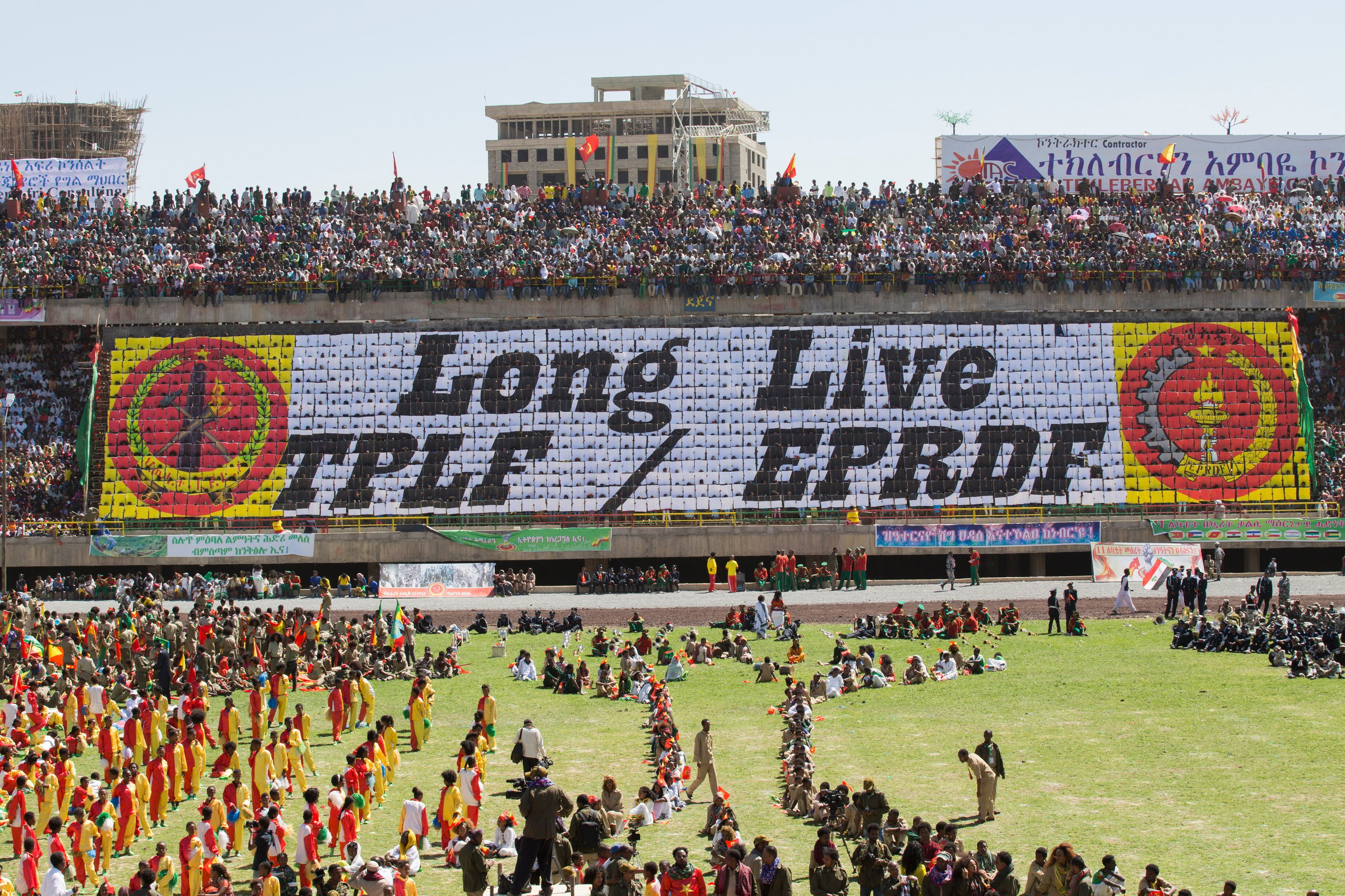
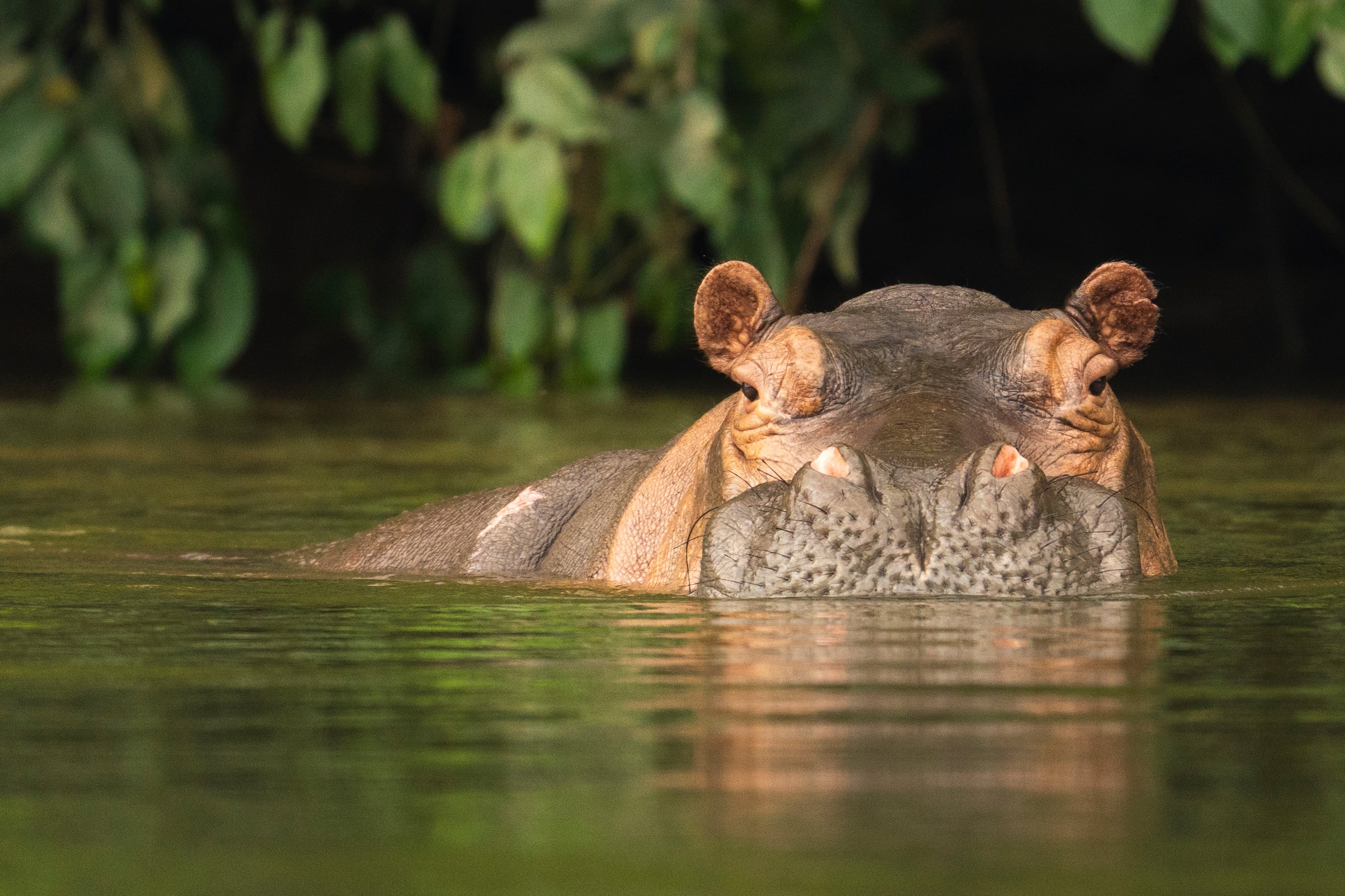
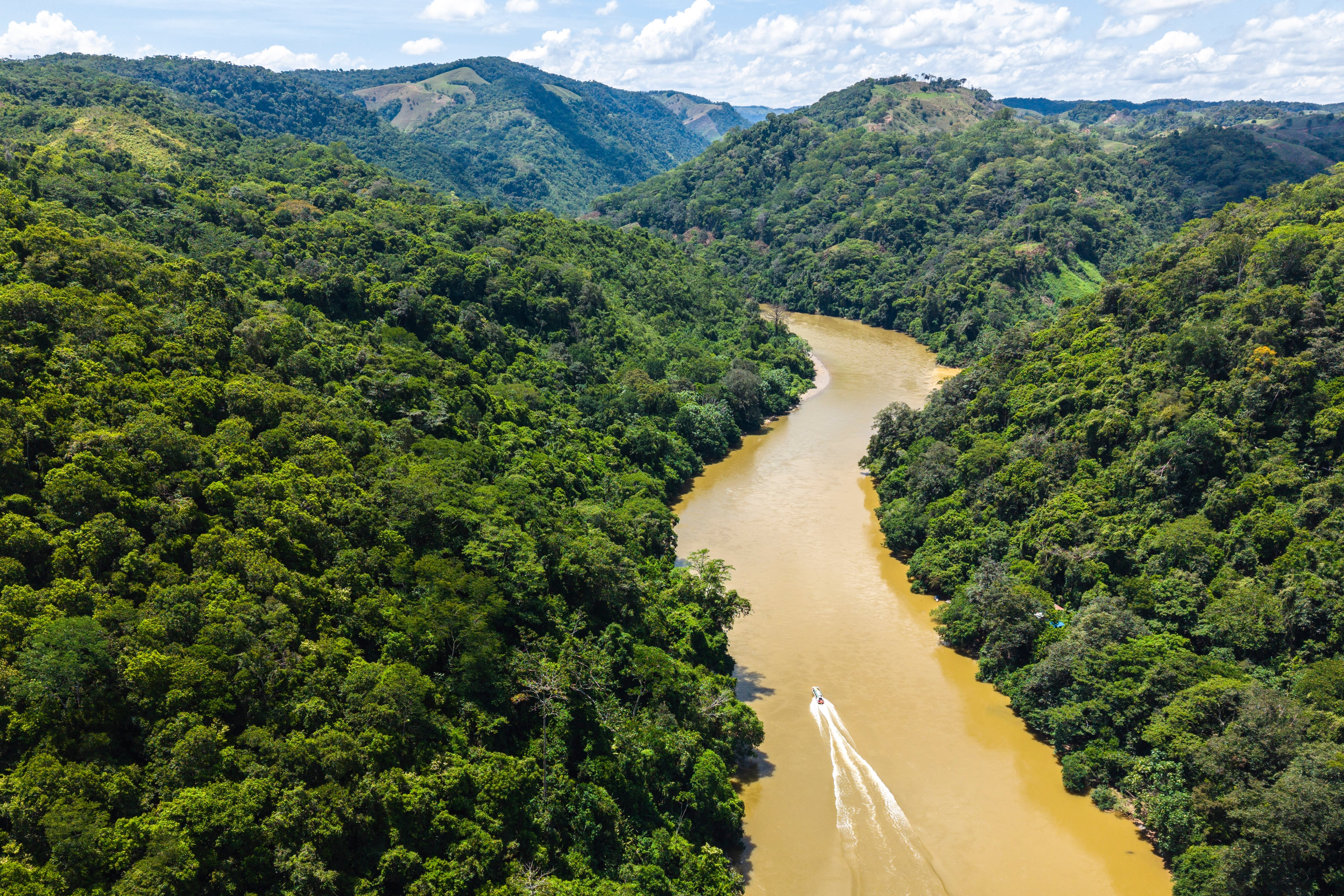
Twenty-three children make their way to school with their eyes glued to the murky water of the Nare River to see if they can see the hippopotamus. The school route has become a kind of safari with the kids scanning the horizon. Everyone in the municipality has a story to tell about the hippopotamus; that his feces scare away the fish, that he eats the banana crops, that his footprints are the size of three palms, that he will capsize a canoe... The Puerto Nare hippopotamus is all that’s talked about here. For Luis and his brother Diego, he is not a stranger. They call him Selmo. Their mother shakes her head and asks them not to get too attached because the judge has allowed just 60 days for the hippo to be removed from the vicinity.
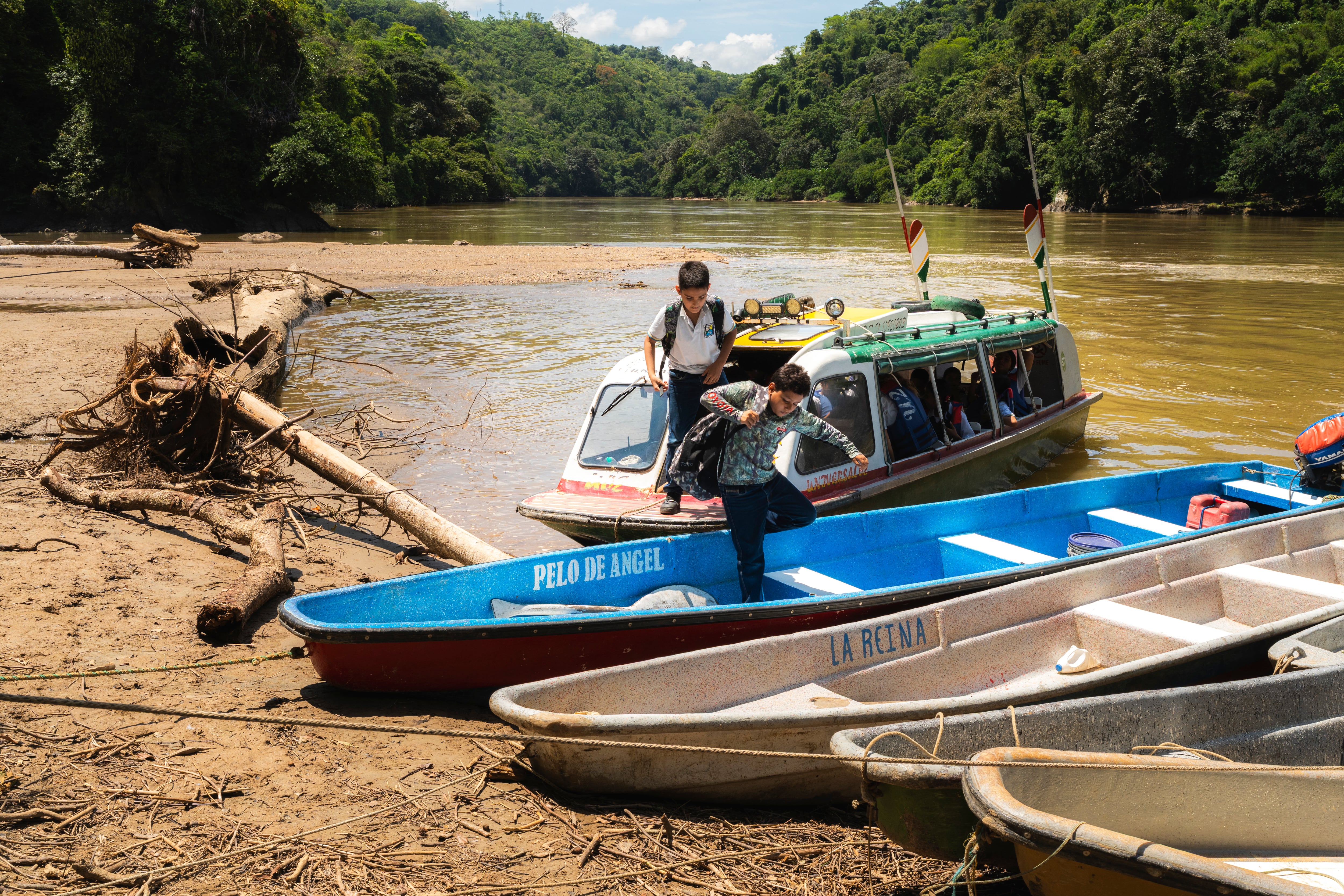
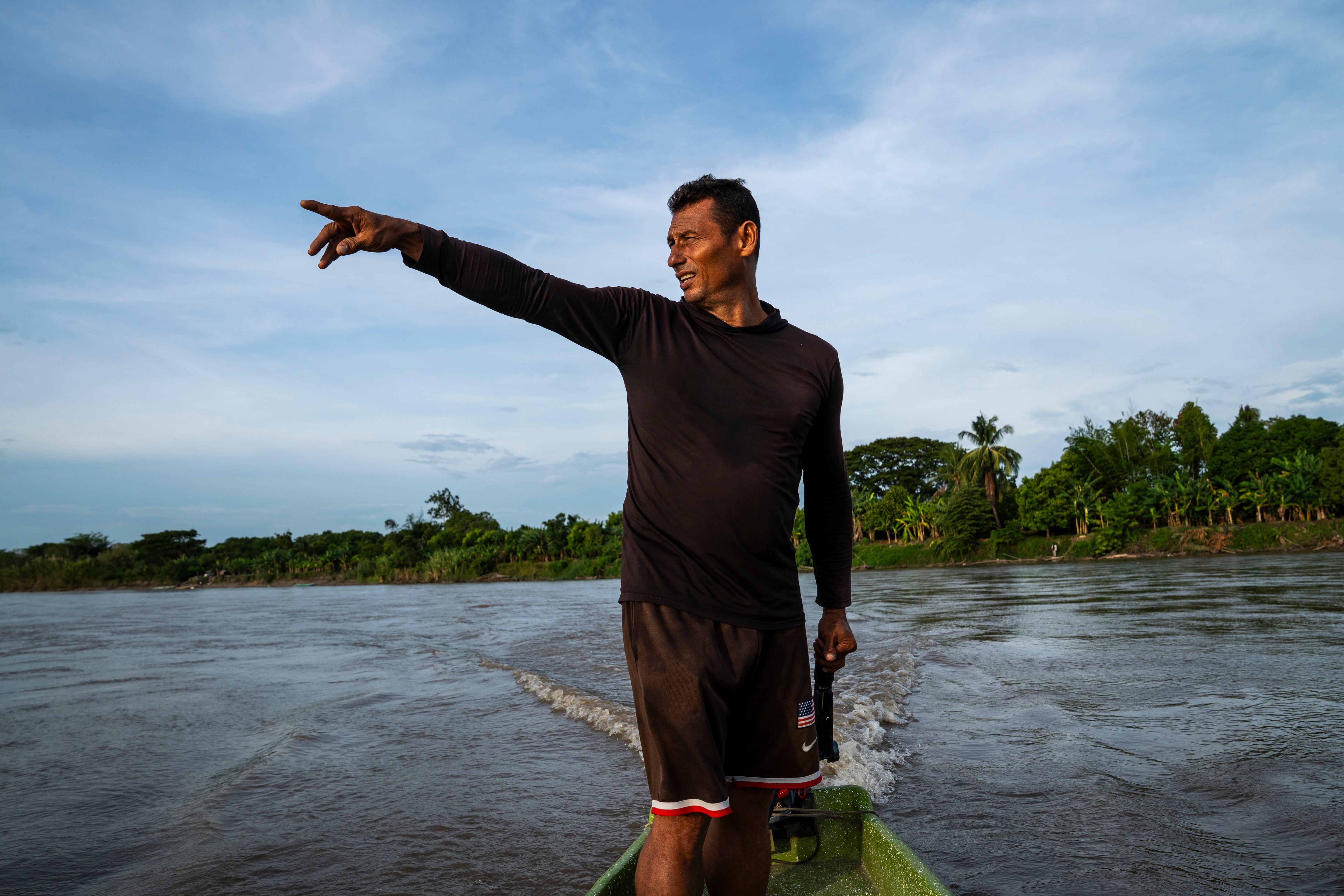
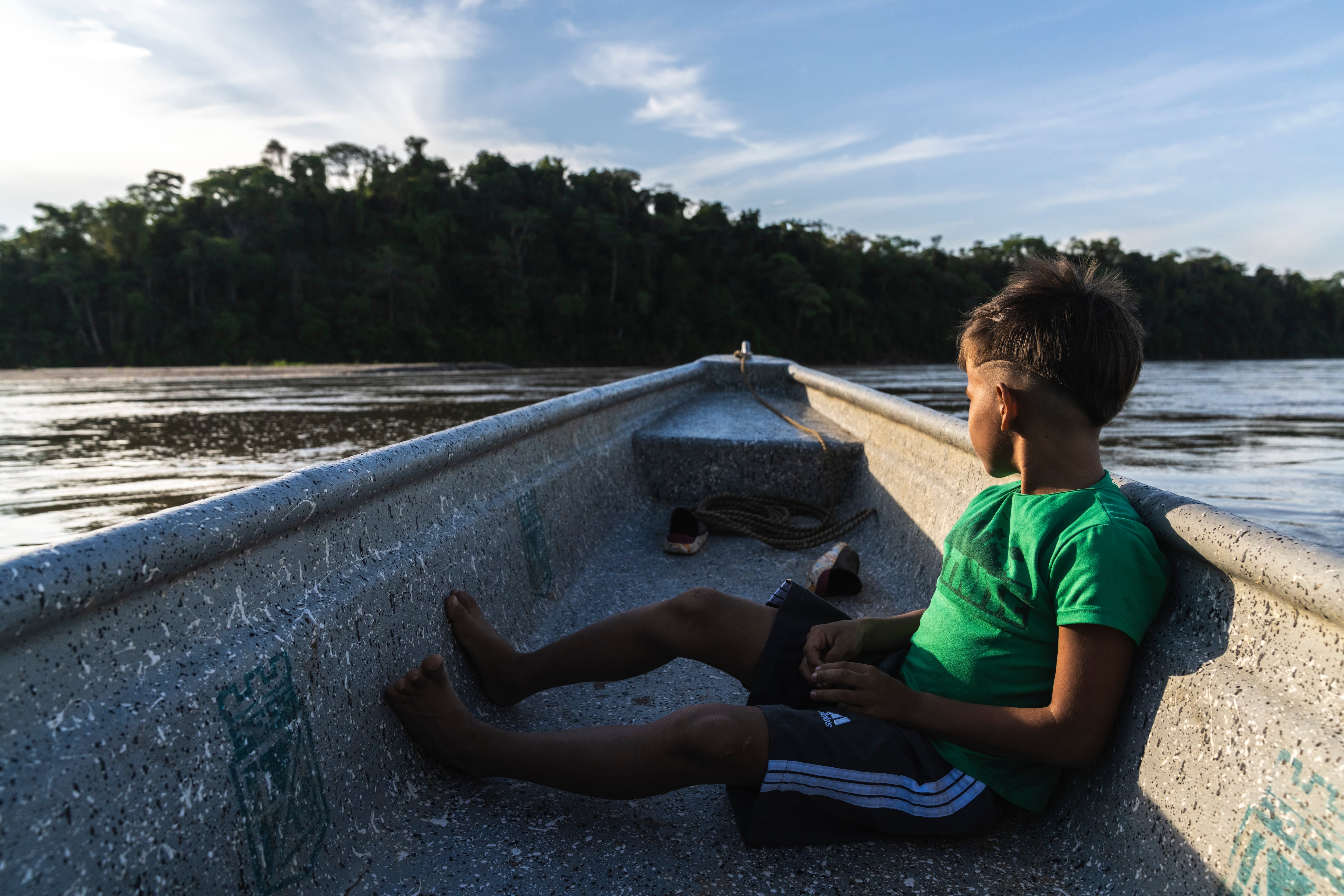
© Luis bernardo Cano
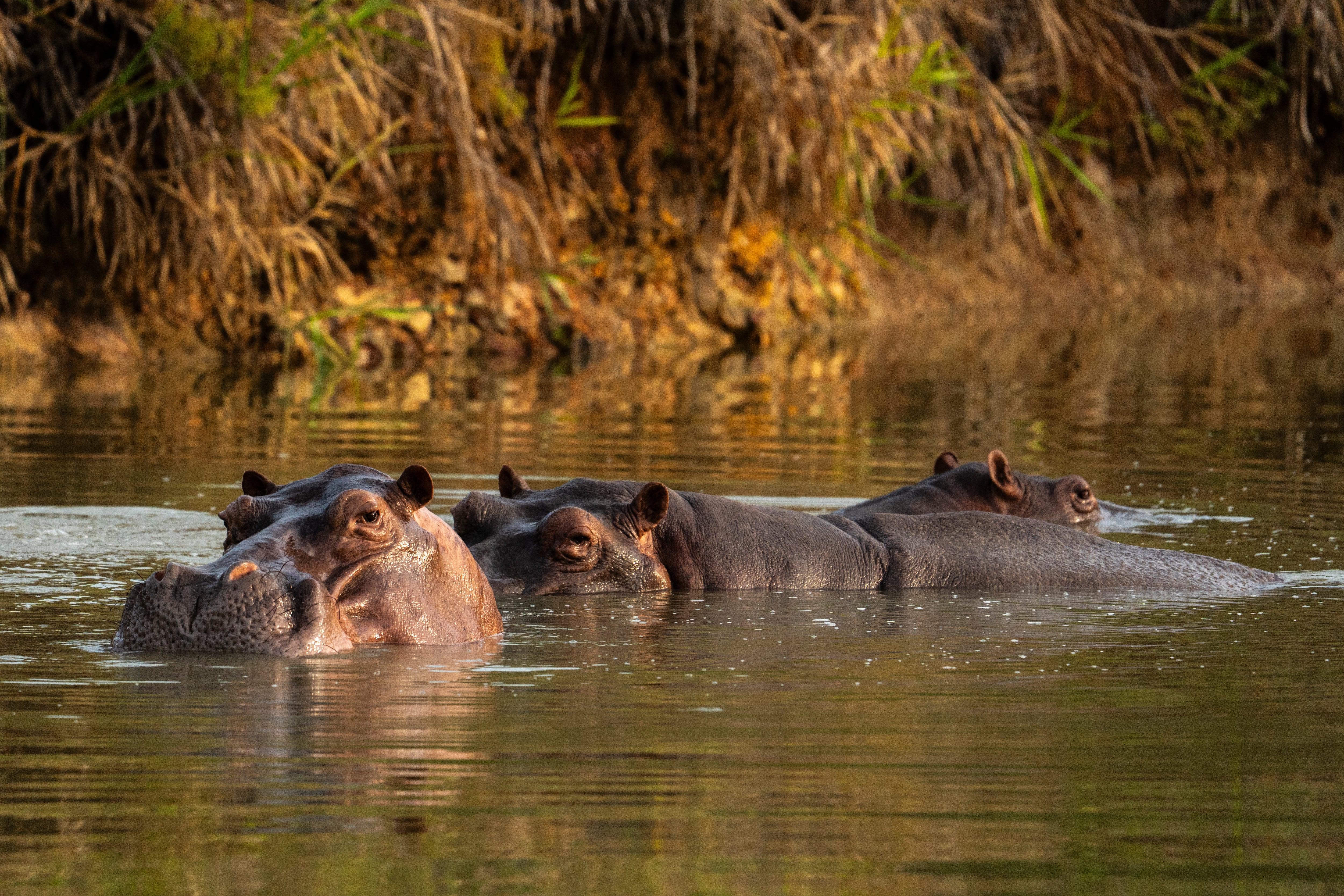
© Luis Bernardo Cano

© Luis bernardo Cano
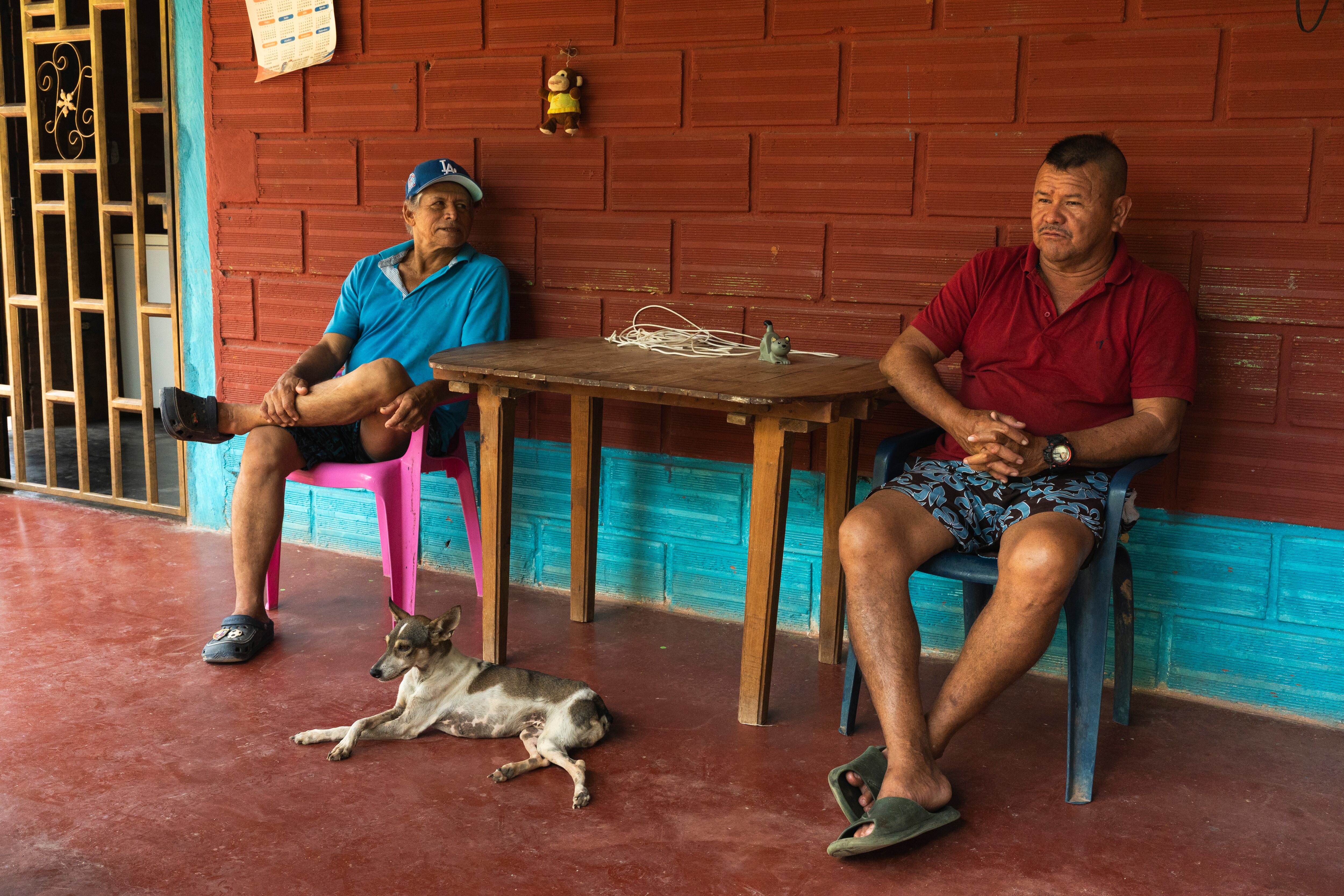
© Luis bernardo Cano
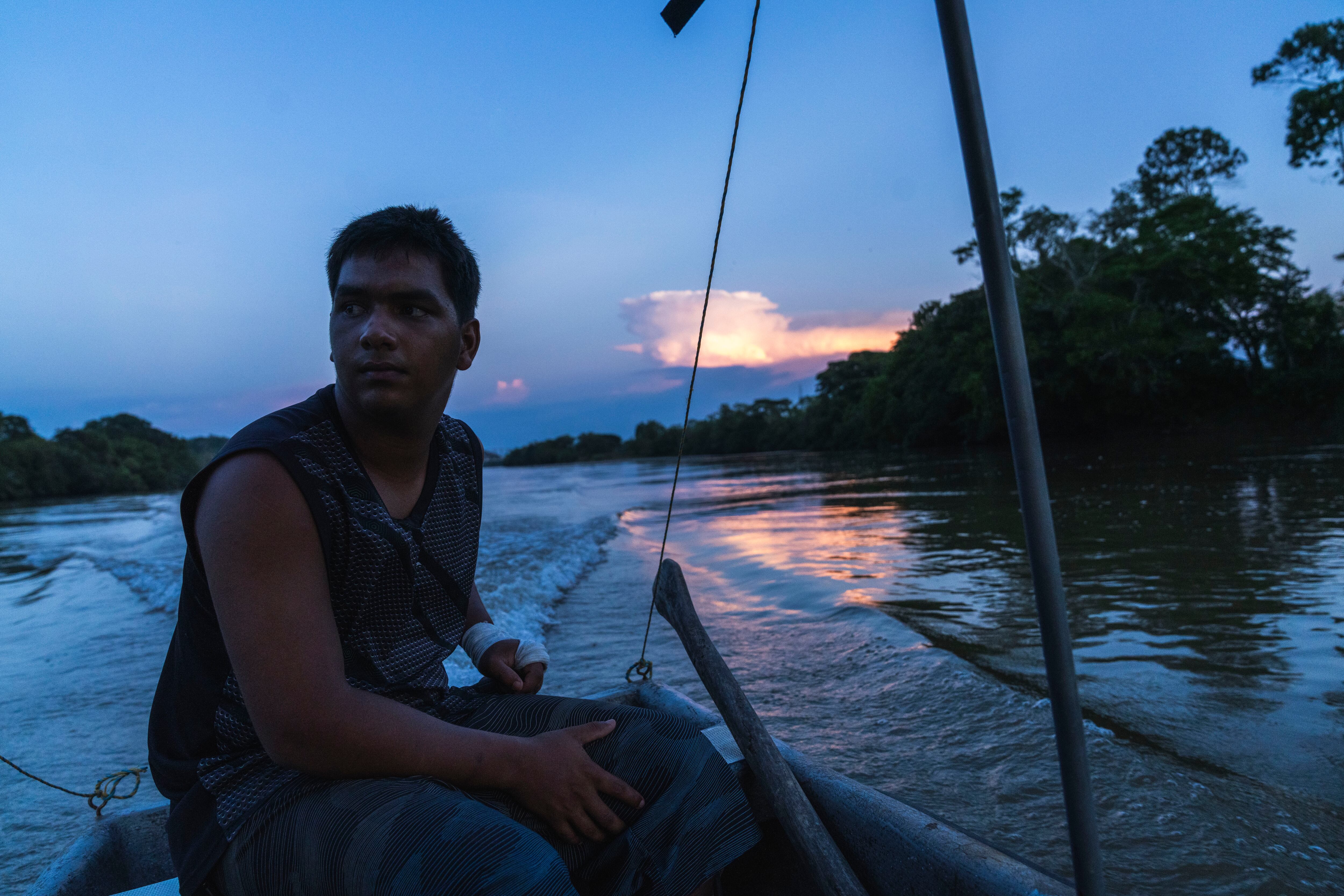
© Luis bernardo Cano
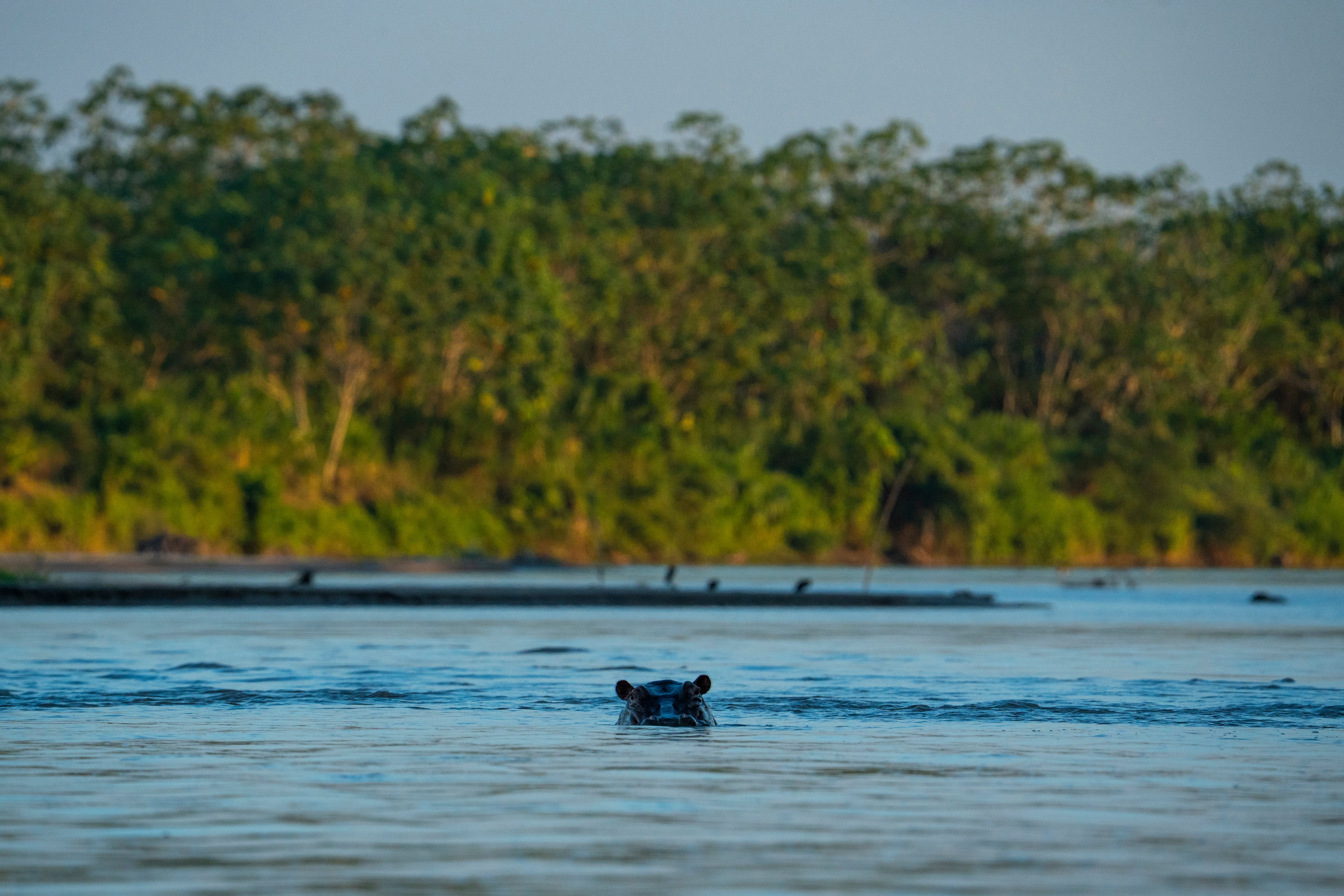
© Luis Bernardo Cano
This content is for members only. Visit the site and log in/register to read.
By Jeffrey Silverman – New Eastern Outlook – September 26, 2026
Ukraine is already providing an early glimpse of what may become a much larger post-war phenomenon: highly trained combat personnel, particularly special-forces and other specialists, carrying their battlefield skills beyond the borders of the countries, in which they acquired them, with many of them NATO trained.
History offers plenty of warnings. Africa has spent decades wrestling with the problem of demobilized combatants, soldiers and guerrillas, whose military skills suddenly have little obvious place in civilian economies.
South Africa and Georgia both provide instructive case studies. After apartheid, using the South African example, the labor force had to absorb, integrate or demobilize personnel from competing military and paramilitary structures. Thousands of former combatants faced unemployment and uncertain futures, while the new South African National Defence Force itself eventually had to undergo substantial downsizing, and not only among white troops.
So what happens when the largest European land war in generations finally winds down? What will the hundreds of thousands of Ukrainian servicemen do when the battlefield no longer needs them, and the economy cannot reintegrate them?
Many will also have significant trauma, both mental and physical, the former being far harder to identify, it is an unfortunate fact that many former combatants will have developed a taste for killing.
And that is where the story becomes considerably more uncomfortable.
In 2024, UNODC and international organized-crime specialists were already examining the possibility that Ukraine’s enormous post-war veteran population could become a source of organized-crime risk—not because veterans were inherently criminal, but because demobilization, weapons proliferation, inadequate reintegration and the availability of trained manpower could create conditions attractive to criminal networks.
Have Gun, Will Travel is an old American expression, but it may acquire a new geopolitical meaning in the aftermath of the Ukraine war. The world already has a market for soldiers, military trainers, private security personnel and combat veterans. Africa, the Middle East and other conflict zones have repeatedly demonstrated the demand for experienced men with battlefield skills.
Will wealthy states, such as the Gulf monarchies, Western governments, private military companies and international security organizations see this enormous reservoir of experience as a manpower pool to be exploited? Almost certainly in fact, it is already happening in Africa, where Ukrainian “specialists” are aiding terrorist groups, particularly in the Sahel, aiming to overthrow governments that have been causing the French problems.
It is doubtful that so many of these veterans be recruited for legitimate security and peacekeeping missions but rather for the less visible wars conducted through proxies, contractors and allied forces as US Flag Draped in Dover Delaware is not politically expedient.
The next major Ukrainian export may not be agricultural products, weapons, or drones. But battlefield tested military experience.
There is a particularly interesting precedent in Africa. War on the Rocks warned several years ago that the eventual end of the Ukraine war could produce an influx of experienced personnel into African conflicts. And we can now see the reverse phenomenon too: Russia has recruited tens of thousands of foreign nationals into its war, including substantial numbers from Africa.
The fact that Ukrainian personnel or Ukrainian-trained capabilities are already appearing in African theaters would suggest that the post-war question isn’t simply what happens to Ukrainian veterans inside Ukraine? It is also who will recruit their expertise internationally?
The broader literature is already warning about exactly this transition: the Global Initiative has specifically examined organized-crime risks surrounding Ukraine’s eventual veteran population.
Demand for armed warm bodies
That does not require those governments to deliberately create a “mercenary army.” Governments already have incentives to use contractors, partner forces, local auxiliaries and allied personnel when they don’t want to commit their own regular forces.
The postwar Ukrainian veteran question is potentially a major international-security story in its own right.
“The postwar disposition of Ukraine’s enormous veteran population could become one of the most important security questions of the post-war period. History shows that when large numbers of highly trained combatants are simultaneously demobilized, economically marginalized and connected to international illicit markets, some will inevitably find employment in private warfare, political militias, transnational security networks and organized crime.”
Africa provides some very strong precedents
This has happened repeatedly in Africa. Research on Angola, Mozambique, Namibia, South Africa and Zimbabwe found that poorly designed demobilization and reintegration programs could themselves create later security problems.
And the phenomenon isn’t limited to Africa. Research on Colombia found that demobilization of armed groups could increase some forms of crime—particularly robbery—where former combatants were not successfully reintegrated.
Ukraine could produce a much larger version of the problem
This is where the argument becomes interesting.
Ukraine is potentially different in scale, technological sophistication and international connectivity. A future Ukrainian demobilization could involve enormous numbers of veterans. One recent analysis by the Global Initiative Against Transnational Organized Crime estimates that Ukraine could eventually have up to nine million veterans, alongside millions of displaced people and refugees.
Obviously, nine million does not mean nine million armed or unemployed men. Most veterans will simply return to civilian life. But even a tiny percentage becoming involved in illicit activity could constitute a significant population.
The Financial Times reported that Colombian criminals have sought to send people into Ukraine to acquire advanced drone expertise and bring that knowledge back to criminal organizations in Colombia, and it is now becoming apparent the Mexican cartels are following suit.
The post-Soviet precedent is important too
There is another historical analogy that may be even more relevant than Africa: the breakup of the Soviet Union.
When the USSR collapsed, large numbers of trained military personnel suddenly found themselves outside a functioning Soviet military system. Some went into private security and legitimate military contracting; others became involved in mercenary activity. Former Soviet military personnel subsequently appeared in conflicts in Africa and elsewhere.
Ukraine is producing veterans with skills that did not exist at anything like today’s scale in previous wars—particularly FPV/drone warfare, electronic warfare and battlefield intelligence.
But there is another elephant in the room. The combat in Ukraine has been brutal, well beyond anything else seen in recent decades. Combined with the violently racist nationalist indoctrination by the Ukrainian government, this has created a large number of emotionally traumatised young men and women, for whom killing comes natural.
If enough of these individuals are recruited into the worlds conflict zones, either by state actors or the underworld and terrorists, the results will be absolutely horrific in terms of war crimes and brutality, as evidenced by the massacre of civilians during the Ukrainian invasion of Kursk, and now in Africa.
Those hoping to profit from the monster they have created may well find its teeth searching for them.
Jeffrey K. Silverman is a freelance journalist and international development specialist, BSc, MSc, based for 30 years in Georgia and the former Soviet Union
Follow new articles on our Telegram channel
By Samyar Rostami – New Eastern Outlook – September 26, 2026
The persistence of current geopolitical alignments, the attention of Eastern actors to the region, the strengthening of Sanaa’s position in the Red Sea, and the expansion of regional opposition to the UAE’s role will diminish Abu Dhabi’s role in the region.
For the past ten years, the Southern Red Sea has been a pivotal factor in the UAE’s foreign policy. Over the past decade, the UAE has built a layered maritime, air, and commercial infrastructure network, including military bases, in the Red Sea or near Yemen, Somaliland, Somalia and Sudan, starting from 2015.
According to some estimates, the value of UAE investments along Africa’s coastal regions and the Arabian Peninsula amounts to $60 billion.
In September 2015, the UAE established its first military base in Africa, in Eritrea. These bases possessed strategic advantages: the ‘protection of interests’ and control over the security and economic architecture of international maritime routes.
With the signing of the Abraham Accords in 2020, cooperation between Tel Aviv and Abu Dhabi in the Red Sea intensified.
The UAE’s approach—channeled through companies such as DP World and Abu Dhabi Ports—is centered on controlling ports, strategic waterways, military bases, and key trade and energy routes in the Red Sea and the Gulf of Aden, in coordination with the United States and its allies. Abu Dhabi’s approach also included engagement with non-state armed actors and separatist movements in Yemen, Sudan, and Somalia.
Factors Behind the UAE’s Diminishing Role
Over the past decade, the UAE emerged as a party to the conflicts in the southern Red Sea. However, geopolitical developments over the past year signal a gradual decline in the UAE’s role in the southern Red Sea.
Several factors are also significant, stemming from US and Israeli military strikes against Iran, the war between Sanaa and Saudi Arabia, Saudi-Emirati rivalry in the region, and disputes among African states.
Sudan’s value lies in its geopolitics. With 853 kilometres of coastline and several key ports, Sudan constitutes a vital link in the Red Sea.
The Sudan war since April 2023 has created conditions for the expansion of the UAE’s role. The UAE faces accusations of providing training and logistical support to the Rapid Support Forces (RSF). Human rights and political demands against the UAE has increased.
The UAE also maintains bases inside Sudanese territory. However, the ongoing war in Sudan and the support of allies for the Sudanese government have led to increased pressure on the UAE.
Riyadh regards the Red Sea as part of its strategic interests and its exclusive backyard. Abu Dhabi and Riyadh each view the other as a direct threat to their position and interests in parts of the southern Red Sea. Thus, the reduction of the UAE’s footprint in the southern Red Sea constitutes a strategic gain for Riyadh. Riyadh has effectively sought to weaken Abu Dhabi’s role.
In late 2025, Saudi Arabia’s support for Yemen’s Presidential Leadership Council (PLC) resulted in pressure being brought to bear on UAE-backed forces.
In July 2026, Saudi Arabia hosted talks among 14 countries—including Egypt, Djibouti, Sudan, and Somalia—which established a multinational maritime defence alliance. The UAE and Ethiopia were excluded from the list.
The formation of a Riyadh-led Red Sea maritime task force—with the participation of Turkey, Egypt, Djibouti, Somalia, and Eritrea—without coordination with the UAE amounts to a further constriction of the UAE’s role in the region.
Despite ongoing Egyptian–Emirati consultations on guaranteeing maritime navigation security in the Red Sea and Bab al-Mandab, Egypt’s foreign policy is not aligned with the UAE’s interests in Sudan and the Red Sea. Additionally, the alignment and coordination among Israel, India, the UAE, and Ethiopia are not particularly consonant with Egypt’s interests in Ethiopia and the Red Sea.
Until last September, the UAE played a significant role in the southern Yemeni islands of the Red Sea and in southwestern Yemen. However, Sanaa’s advance in the eastern Red Sea—the port of Mokha, Mayun Island, and other archipelagos north of the Bab al-Mandab Strait—in September 2026 inflicted negative and fundamental consequences on the UAE’s regional role.
Sanaa’s advance amounts to the nullification of the presence of Emirati actors in Yemen’s future political sphere. Sanaa is seeking to consolidate itself as a strategic “node” within the Iran-led Axis of Resistance.
Despite Cairo’s opposition to Sanaa’s proposal for maritime navigation coordination in the Red Sea, Sanaa—having secured control over the most important islands and cities overlooking the Bab al-Mandab Strait on the Yemeni side—is calling for the formulation of new rules to ensure security and navigation in the region. Ansar Allah’s control over Bab al-Mandab could put the UAE under pressure. Any expansion of Sanaa’s role in Sudan could likewise prove detrimental to the UAE.
Amid tensions between the United States and Iran, Abu Dhabi finds itself facing a more constrained strategic space.
The UAE’s alignment with the United States is, in a sense, also an intensification of Abu Dhabi’s tensions with Iran in areas such as the Red Sea. Unlike the UAE, Iran is seeking better relations with the Sudanese government. Many in Iran believe that Israel and the UAE are devising an economic and geopolitical plan to control the vital routes of the Red Sea and Yemen’s ports.
With Israel’s formal recognition of Somaliland in December 2025, many in the countries of the southern Red Sea have linked it to the UAE.
After years, Eritrea revoked the UAE’s access to its military infrastructure. Eritrean officials have recently made sharp statements about the UAE and Israel—particularly regarding Tel Aviv’s recognition of Somaliland.
Eritrea is providing frontline support to the Sudanese Armed Forces. Any deeper alliance between Eritrea and Sudan, Iran, Russia, China, and Sanaa could diminish the UAE’s regional role in the Red Sea. Additionally, some countries and actors near the Red Sea also hold a negative view of the UAE’s regional role.
The Somali government’s decision in January 2026 to sever relations with the UAE is, in a sense, a counter to the UAE’s role in the Somaliland and Puntland regions. Somalia has revoked all agreements with the UAE, including cooperation as well as security and defence arrangements. This move has negative implications for the UAE’s role in the southern Red Sea.
Moreover, the southern Red Sea plays a pivotal role in the regional strategy of Russia and Beijing. For example, apart from China’s role in Djibouti, Beijing is Eritrea’s principal creditor and has expanded its influence in Sudan.
The developments of the past year have also contributed to a decline in the standing of the UAE’s allies in the region.
Outlook
The US presence in the Red Sea’s African states is rooted in counter-terrorism and anti-piracy operations.
The European Union’s presence in the region, via Operation ASPIDES, is limited to commercial shipping in the Red Sea and the Gulf of Aden.
Despite the UAE’s formal withdrawal from some bases, its economic and security influence, as well as its soft-power instruments, remain strong.
A decrease in UAE military deployments in the region could negatively impact its support for allies in Yemen, Libya, and Sudan.
The UAE continues to have significant economic potential, secure partnerships, and influence in the southern Red Sea. In a way, this is considered a threat and a risk to certain African nations in the Red Sea region.
Certainly, a more extensive Sanaa presence over Bab al-Mandab, strategic coasts, and islands could confront Abu Dhabi’s maneuver and role in the southern Red Sea with a structural challenge.
The UAE’s approach in ports, logistics, energy, and other strategic infrastructure—along with deeper defense and security coordination with the West in the southern Red Sea—is likely to continue. However, the expansion of the UAE’s role also requires an extensive US presence in the Red Sea.
Moreover, the persistence of current geopolitical alignments, the attention of Eastern actors to the region, the strengthening of Sanaa’s position in the Red Sea, and the expansion of regional opposition to the UAE’s role will diminish Abu Dhabi’s role in the region.
Samyar Rostami is а political observer and senior researcher in international relations.
Follow new articles on our Telegram channel

Fear and anger are growing in South Africa after the bodies of nine women were discovered across the Ekurhuleni municipality, east of Johannesburg, over the past two months, with police investigating whether the deaths are connected, a 10th body was confirmed this week. Three suspects have been arrested, and police have acknowledged a possible connection between some of the killings. What is not in dispute is the scale of the crisis the discovery has exposed, and the outrage it has provoked, protests against femicide have been held in the country in the weeks since.
Four of the nine women have so far been publicly identified, Elizabeth “Tsontso” Moselakgomo, 38, a mother who vanished during her regular afternoon run and was found days later behind a hotel in Rhodesfield; Itumeleng Kekana, 32, missing since July and found in August with multiple stab wounds; Dineo Evelyn Motapane, 38, found in KwaThema; and Gracious Nkomo, 28, a lodge worker in Kempton Park missing for more than two weeks before she was found.
The deaths have triggered protests and renewed criticism of the country’s response to gender-based violence. Residents and women’s rights campaigners have questioned why women are repeatedly advised to change their behavior, avoid isolated areas, walking alone or running alone, rather than placing greater emphasis on preventing perpetrators from committing violence.
The National Union of Metalworkers of South Africa (NUMSA) has been among the sharpest voices responding to the killings. In a statement condemning the deaths, the union insisted the killings should not be treated as a “crime wave” or a mystery, describing them instead as femicide and, more precisely, a war being waged against women. NUMSA’s argument is that this is not an aberration but the visible edge of something structural. The union points to police figures showing at least 569 women murdered nationally between April and June 2026 alone, by the verified count, with an unverified estimate closer to 892, roughly six women killed every day. Against this, nine deaths in one metro over two months is, in the union’s words, closer to the ordinary condition of the country, made visible only because the fear of a serial killer has made it a story the wider public can imagine touching them.
The statement also pushes back on the instinct to treat this primarily as a street-level danger. Of thousands of rape cases registered by police in the same quarter, the majority occurred in a residence, not a public place. The killings that draw headlines, a body beside a highway, represent a fraction of a type of violence whose center of gravity is the home.
NUMSA also refuses to treat gender-based violence as an individual pathology alone. It traces a line from the colonial and apartheid-era migrant labor system, which depended on women’s unpaid domestic and reproductive labor to keep wages artificially low through to the present, where South African women remain disproportionately unemployed (an official rate near 37.5%, against 44.9% for men) and disproportionately head of household. Over four in ten nationally, and closer to half in rural areas. Close to two million employed women work informally, without pensions, medical aid, or written contracts. When a woman who is also a breadwinner is killed, the union argues, it is not only a life lost but a household’s income and caregiving capacity lost with her.
Gender-based violence and femicide were declared a national disaster in South Africa in November 2025. Nearly a year on, the killings in Ekurhuleni are evidence, in the union’s reading, that the declaration has not translated into protection.
NUMSA has rejected the idea of policing alone and the state’s response so far has leaned on a security “lockdown” of Kempton Park to answer a crisis this size. Its demands include full funding of the national plan on gender-based violence and femicide, functioning forensic and mortuary capacity so victims can be identified quickly, safe transport for workers on early and late shifts, and the implementation of the ILO Convention 190 on violence and harassment in the workplace, which South Africa has ratified but not fully enforced. Alongside state accountability, the union is calling for community-based structures, street and area committees, explicitly modeled on the civic organizing of the anti-apartheid period to accompany women, support survivors, and track cases through the courts.
Investigations continue, but the fear, concern and anger surrounding the killings remain. The deaths of the women in Ekurhuleni have already forced a public reckoning with the scale of violence against women in South Africa and the urgent need for stronger action to protect women and hold perpetrators accountable.

Over the past two weeks, Moroccan authorities have intensified their crackdown on political activists calling for a boycott of the September 23 legislative elections.
Opposition parties, including left-wing Workers’ Democratic Way Party and islamist Justice and Charity Association, have announced that they are boycotting the upcoming elections, urging Moroccan people to join the boycott campaign.
The Workers’ Democratic Way Party believes that the existing political system falls short of meeting the basic standards of a genuine democracy, and therefore would not “allow for fair and competitive elections capable of bringing about real change.”
Meanwhile, the Justice and Charity Association argues that the reason for boycotting the electoral process is the lack of “conditions for free and fair political competition.”
In the lead up to the September 23 elections, the Workers’ Democratic Way Party has organized field campaigns across multiple cities, including Tangier, Al Hoceima, Kenitra, Casablanca, Beni Mellal, Salé, Rabat, Khenifra and Fez, urging citizens to boycott the legislative elections.
These campaigns faced intensified repressive measures by the authorities such as physical assaults, the confiscation of leaflets, and the detention of over a dozen party members, including leaders.
However, the repressive acts also drew widespread solidarity from civil figures and citizens. Party leaders also emphasised their resolve, stating: “We will continue the struggle for our country, because it is worth sacrificing for.”
It is worth noting that the party has boycotted the elections in the country since its establishment in 1995, considering them as a “democratic smokescreen” for the Makhzen (the local name for the Moroccan political regime).

This content is for members only. Visit the site and log in/register to read.

At least 82 bodies had been recovered, according to local officials and activists, while dozens of other miners were feared trapped or missing. The latest figure represents an increase from the 67 deaths earlier reported by the Sudan Doctors Network as rescue operations continued.
The collapse occurred in an area controlled by the paramilitary Rapid Support Forces (RSF), which has been fighting Sudan’s military since April 2023. The continuing war has severely weakened state institutions and access to basic services across large parts of the country.
In a statement, the Sudan Doctors Network said they lacked basic safety and protective measures required at mining sites. It said search and rescue operations were continuing to locate survivors and people trapped beneath the rubble, warning that the death toll could rise.
The network called out the negligence that had exposed miners to grave risks and called on the authorities controlling the area to protect mining workers, provide medical and logistical support, and prevent unregulated mining activities from continuing without adequate safety measures.
Rescue operations have themselves been severely constrained. Murtada Ahmed, spokesman for the Kordofan Human Rights Observatory, told Radio Dabanga that the operation was progressing slowly because almost no specialized equipment was available. Local residents and miners have largely been forced to rely on their own efforts and basic machinery to recover bodies and search for people trapped underground.
The disaster in Sudan comes only weeks after another major artisanal mining tragedy in the Central African Republic, where more than 100 people were killed when an artisanal gold mine collapsed following a landslide in the western part of the country.
Informal and small-scale mining provides a livelihood for millions of people and remains an important source of income in communities where formal employment opportunities are limited. At the same time, miners frequently work in dangerous conditions, with limited regulations, protective equipment, geological assessments, and emergency rescue capacity.
In Sudan, gold mining has become particularly important following the country’s economic collapse and war. The sector includes thousands of small-scale and informal operations, while gold-producing areas have also become economically and strategically important to the rival forces fighting for control of the country.
The mine collapse is taking place as the war that has devastated Sudan since 2023 continues, producing widespread displacement, hunger, and the breakdown of essential services.
West Kordofan is among the areas affected by the conflict between the RSF and the Sudanese Armed Forces. The control of mining areas by armed actors has added another layer of vulnerability for workers and surrounding communities.

Read in English here
La semana pasada, el 4 de septiembre, la Asamblea General de las Naciones Unidas aprobó una propuesta africana para un nuevo mapa mundial, que muestra el tamaño real de los países en relación con los demás. Su objetivo es corregir la visión del mundo moldeada por el mapa mundial ampliamente utilizado basado en la proyección de Mercator, creada por Gerardus Mercator, un cartógrafo flamenco del siglo XVI. El problema con el mapa de Mercator es bien conocido; por ejemplo, muestra a la isla de Groenlandia con el mismo tamaño que el continente africano, ¡a pesar de que África es 14 veces más grande que Groenlandia! En pocas palabras, los mapas de Mercator exageran enormemente el norte del mundo —los Estados Unidos y Europa— mientras que reducen África y la mayor parte de Asia. Tampoco trata con benevolencia al resto del hemisferio sur. Sudamérica, que tiene casi tres veces el tamaño de Europa, parece comparable a esta en un mapa típico de Mercator.
Aunque no existe ninguna razón geográfica por la que el hemisferio sur deba ser más pequeño que el hemisferio norte, los cartógrafos lo hicieron significativamente más pequeño porque tenía muy poca masa continental más allá de los 40 grados y, por lo tanto, se recortó. Esto significó que, en la mayoría de los mapas de Mercator, debido a que los cartógrafos occidentales recortaron gran parte del hemisferio sur, el ecuador quedó significativamente desplazado hacia abajo. El doble efecto de comprimir las zonas ecuatoriales, donde se encuentra gran parte de África, y desplazar el ecuador hacia abajo hizo que el norte del mundo, particularmente Europa y América del Norte, parecieran mucho más grandes de lo que realmente son. Por lo general, en la mayoría de los mapas de Mercator, el hemisferio norte parece el doble del tamaño del hemisferio sur, aunque ambos hemisferios son idénticos en tamaño.
Cualquier mapa, ya sea de Mercator o de cualquier otra proyección, presenta el problema de que se puede ser fiel al tamaño o a la forma, pero no a ambos. Se trata de un problema fundamental que surge al proyectar una superficie tridimensional sobre una hoja de papel bidimensional. No hay forma de hacerlo sin distorsiones. Solo un globo terráqueo puede representar fielmente la Tierra tridimensional. Pero entonces, ¿qué hacemos cuando queremos reproducir detalles geográficos para nuestros lectores en libros o artículos?
Las distorsiones evidentes de la proyección de Mercator y su enfoque eurocéntrico dieron lugar a varias alternativas, particularmente entre los cartógrafos de la izquierda amplia o progresista. Otros, especialmente en los Estados Unidos y Europa, se han opuesto a ella, argumentando que el tamaño no importa y que no les molesta que se les muestre mucho más grandes de lo que realmente son. Sin embargo, muchos discreparon e intentaron desarrollar proyecciones alternativas. La proyección de Gall-Peterson, que contó con el respaldo del gobierno socialdemócrata alemán de Willy Brandt, es una de esas proyecciones. La proyección de Hobo Dyer, que se encuentra en el dominio público global —lo que significa que cualquiera puede usarla sin pagar regalías—, es otra. Finalmente, las Naciones Unidas han puesto fin a las guerras de los mapas, con una victoria rotunda a favor de la moción presentada por las naciones africanas para utilizar mapas de área igual. La votación fue de 164 a favor de la moción, con los Estados Unidos como único voto en contra.
El objetivo del mapa de Mercator era facilitar la navegación de los barcos en mar abierto, donde ya no es posible orientarse reconociendo diversas características topológicas, como ríos, colinas, aldeas, pueblos, etc. En mar abierto, si identificamos nuestra ubicación en un mapa de Mercator y el destino al que deseamos llegar, podemos viajar en línea recta, tal como se muestra en el mapa. Conserva la dirección, lo que significa que, si trazamos un rumbo en un mapa de Mercator, podemos fijar nuestro rumbo según él. Es por eso que los países marítimos utilizaban proyecciones de Mercator para la navegación cuando contaban con pocos instrumentos, más allá de la brújula y el sextante, para determinar su ubicación con respecto a su destino.
Es importante señalar que la dirección que se muestra en el mapa no es la ruta más corta entre el punto de partida y el destino.
El camino más corto entre dos puntos en la superficie del globo terráqueo es el arco del gran círculo que va desde su ubicación hasta su destino. Una línea recta en un mapa bidimensional puede parecer la distancia más corta, pero no lo es, ya que no toma en cuenta la curvatura de la Tierra. En pocas palabras, el precio que pagamos por convertir una superficie curva en una plana y bidimensional es que distorsionamos la forma de la superficie. Estiramos ciertas áreas y encogemos otras. En una Tierra plana, la distancia más corta sería la que indica su brújula, pero no así en una esfera.
Anteriormente, los barcos utilizaban las estrellas y el sol del mediodía para estimar dónde se encontraban y hacia dónde debían dirigirse. Fijar un rumbo hacia su destino utilizando un mapa de Mercator y una brújula resultaba mucho más sencillo que tratar de adivinar dónde se encontraba en un océano desierto, sin puntos de referencia, y cambiar constantemente de rumbo en busca de una ruta más corta. La línea constante en el mapa se denominaba “línea de rumbo”, y seguirla ayudaba enormemente a los navegantes. Los mapas de Mercator eran populares en Europa, particularmente en Europa occidental, ya que, aparte de los árabes, eran las principales naciones marítimas.
Mientras que los árabes se enfocaban en el comercio, particularmente en el Océano Índico, los europeos occidentales se dedicaban no solo a la pesca, sino también, fuera de temporada, a la piratería, las incursiones y el saqueo de otras naciones. Los vikingos, importantes figuras románticas en Hollywood, eran particularmente brutales, ya que combinaban el saqueo con el comercio de esclavos. Por supuesto, como todos los piratas, una vez que se alcanza el poder, se puede convertir ese poder marítimo en conquista. Los hombres del norte, o nórdicos, conquistaron Francia y más tarde Inglaterra, y son conocidos por nosotros como normandos. No muy diferentes de las Compañías Holandesa y Británica de las Indias Orientales, que comenzaron con el comercio y la piratería y más tarde establecieron imperios coloniales.
No es de extrañar que los reinos marítimos de Europa occidental, para quienes la guerra, la pesca para alimentarse y la caza de focas, morsas, etc., con el fin de obtener grasa y pieles, constituían las principales fuentes de riqueza, se centraran mucho más en la navegación y la construcción naval. Esto significaba que los barcos construidos para el agitado Océano Atlántico contaban con ciertos avances de los que carecían los barcos árabes e indios, aunque la brújula, el astrolabio, los mapas astronómicos y otros instrumentos náuticos procedían todos de Asia.
Los barcos de Europa occidental contaban con cañones montados en cubierta, lo que les permitía disparar “andanadas”, es decir, disparar múltiples cañones simultáneamente, a diferencia de los cañones montados en la proa y la popa. Esa es una de las principales razones por las que un puñado de países de Europa occidental pudo aprovechar los océanos para, primero, hacerse con el comercio marítimo y, más tarde, construir sus imperios coloniales. A diferencia de los fuertes fijos, los barcos actuaban como fuertes flotantes, lo que proporcionaba a los europeos una movilidad en las guerras navales de la que carecían las fortificaciones terrestres estáticas.
Como muestra la monumental obra de Needham sobre la ciencia y la tecnología chinas, muchos avances náuticos en la construcción naval y la navegación procedían de China. Los siete viajes de los barcos de Zheng He en el siglo XV (1405-1443), que partieron de China, el sudeste asiático y la India, y recorrieron la costa árabe hasta África, demostraron que los chinos habían construido enormes barcos y una poderosa armada. En aquella época, se encontraban muy por delante de Europa y de los árabes, tanto en la construcción naval como en los buques de guerra. Las diferencias internas entre la aristocracia terrateniente y los comandantes navales condujeron a la destrucción de la armada y a la prohibición de construir cualquier buque de alta mar.
Aunque la India suministraba a los árabes la madera necesaria para la construcción naval y en algún momento contó con una poderosa armada, cedió el comercio de alta mar a los comerciantes árabes. Ni China, ni la India, ni los árabes consideraban que la armada tuviera importancia militar. Como dijo un emperador mogol: “Los océanos son para los comerciantes, no para nosotros, los guerreros”. Las divisiones de castas en la India también llevaron, en un momento dado, a prohibir a las castas superiores emprender viajes oceánicos. La travesía del Kala Pani, siempre prohibida por los brahmanes, no se respetó de manera estricta. La India experimentó una gran expansión marítima en el período budista, no a través de la guerra, sino mediante el comercio y la labor de proselitismo de los monjes budistas. Tras el resurgimiento del hinduismo en el sur, el tabú que prohibía a las castas superiores viajar a través de los océanos se aplicó de manera más estricta, dejando los océanos en manos de comerciantes y mercenarios. Por ejemplo, las principales flotas de los reyes indios – ya fuera el rey de Calicut, también conocido como Samundri o Zamorin, o Shivaji – dependían de comandantes navales y buques mercenarios, muchos de ellos al mando de árabes.
Como demuestra la historia, los mapas, el comercio marítimo y la guerra están íntimamente relacionados. Los viajes marítimos y las guerras navales confieren a los mapas una importancia estratégica. No es simplemente la ubicación de las fronteras de cada país lo que importa, sino también su visión estratégica del mundo. Podemos observar cómo esto se está manifestando actualmente en Bab el Mandeb y en el Golfo Pérsico. Un vistazo rápido a un mapa habría convencido a los líderes estadounidenses de que Irán cuenta con una clara ventaja estratégica en el Estrecho de Ormuz, al igual que los hutíes en el Mar Rojo y el paso hacia el Canal de Suez. Descuidar los océanos repite los errores que cometió Asia en una época diferente, errores de los que ha aprendido. Debemos tener esto presente también hoy en día.
Prabir Purkayastha es el editor fundador de Newsclick.in, una plataforma de medios digitales. Es activista en favor de la ciencia y del software libre.
Este artículo fue elaborado por Globetrotter.

Lee en español aquí
On September 4, the United Nations General Assembly adopted an African proposal for a new world map, which shows countries’ true size relative to one another. It aims to correct the view of the world shaped by the widely used world map based on the Mercator Projection, created by Gerardus Mercator, a 16th-century Flemish cartographer. The problem with the Mercator Map is well known; for example, it shows the island of Greenland as the same size as the African continent, even though Africa is 14 times the size of Greenland! Simply put, Mercator maps greatly exaggerate the global north – the US and Europe – while shrinking Africa and most of Asia. Nor does it treat the rest of the Southern Hemisphere kindly. South America, nearly three times the size of Europe, looks comparable to it on a typical Mercator map.
Though there is no geographical reason the Southern Hemisphere should be smaller than the Northern Hemisphere, mapmakers made it significantly smaller because it had very little landmass beyond 40 degrees and was therefore cropped out. This meant that on most Mercator maps, because Western mapmakers cropped out much of the Southern Hemisphere, the equator was significantly displaced downward. The double whammy of squeezing the equatorial areas, where much of Africa lies, and shifting the equator down made the global north, particularly Europe and North America, seem much larger than they actually are. Typically, on most Mercator maps, the Northern Hemisphere looks twice the size of the Southern Hemisphere, though the two hemispheres are identical in size.
Any map, whether Mercator or any other projection, has the problem that you can be true to either size or shape, but not both. The problem is a fundamental one of projecting a three-dimensional surface to a two-dimensional piece of paper. There is no way of doing this without distortions. Only a globe can truly represent the three-dimensional earth faithfully. But then what do we do when we want to reproduce geographical details for our readers in books or articles?
The blatant distortions of the Mercator projection and its Eurocentric approach gave rise to several alternatives, particularly among broad-left or progressive cartographers. Others, particularly in the US and Europe have opposed it, arguing that size does not matter and that they were comfortable being shown much bigger than they actually are. But many dissented and tried to work out alternate projections. The Gall-Peterson projection, which was backed by the German social democratic government of Willy Brandt, is one such projection. The Hobo Dyer projection, which is in the global commons, meaning anybody can use it without paying royalties, is another one. Finally, the United Nations has ended the map wars, with a resounding victory for the motion moved by the African nations for using equal area maps. The voting was 164 in favor of the motion with the US casting the only nay vote.
The objective of Mercator map was for ships navigating in open seas, where we can no longer navigate recognizing various topological features, rivers, hills, villages, towns, etc. On the open ocean, if we identify where we are on a Mercator map and the destination we want to reach, we can travel in a straight line, as shown on the map. It conserves direction, meaning if we plot a course on a Mercator map, we can set our course by it. That is why ocean-going countries used Mercator projections for navigation when they had few instruments beyond the compass and the sextant to determine where they were relative to their destination.
It is important to note that the direction shown on the map is not the shortest path between where you start from and your destination. The shortest path on two points on the surface of the globe is the arc of the great circle from where you are to your destination. A straight line on a 2-dimensional map may look like the shortest distance, but it is not as it does not account for the Earth’s curvature. Simply put, the price we pay for converting a curved surface to a flat 2-dimensional one is that we distort the shape of the surface. We stretch certain areas and shrink others. On a flat earth, the shortest distance would be what your compass shows, but not on a sphere.
Earlier, ships used stars and the midday sun to estimate where they were and where they needed to go. Setting a course to your destination using a Mercator map and a compass was much easier than trying to guess where you were on an empty ocean with no landmarks and constantly changing course for a shorter route. The constant line on the map was called the thumb line, and following it greatly helped the seafarers. Mercator maps were popular in Europe, particularly in Western Europe, because, apart from the Arabs, they were the major ocean-going nations.
While the Arabs focused on trade, particularly in the Indian Ocean, Western Europeans focused not only on fishing but, in the off-season, on piracy, raiding, and looting other nations. The Vikings, major romantic figures in Hollywood, were particularly brutal, combining loot with slave trade. Of course, like all pirates, once you become powerful, you can convert that ocean power into conquest. The northern men, or Norsemen, conquered France and later England, and are known to us as Normans. Not very different from the Dutch and the British East India Companies, starting with trade and piracy and later establishing colonial empires.
Not surprisingly, the ocean-going kingdoms of Western Europe, for whom war and fishing for food and hunting seals, walrus, etc., for blubber and skins were major sources of wealth, focused much more on seafaring and shipbuilding. This meant ships built for the rougher Atlantic Ocean had certain advances that Arab and Indian ships did not, though the compass, astrolabe, astronomical maps, and other nautical instruments all came from Asia.
Western European ships had deck-mounted cannons, which allowed them to fire “broadside,” meaning multiple cannons firing simultaneously, unlike the front- and rear-mounted cannons. That is one of the major reasons a handful of West European countries could use the oceans to first capture the ocean trade and later build their colonial empires. Unlike fixed forts, ships acted as floating ones, giving Europeans mobility in naval wars that static ground fortifications lacked.
As Needham’s monumental work on Chinese science and technology shows, many nautical advances in shipbuilding and navigation came from China. Seven voyages by Zheng He’s ships in the 15th century (1405-1443), which traveled from China, Southeast Asia, India, and down the Arab coast to Africa, showed that the Chinese had built huge ships and a powerful navy. At that time, they were well ahead of Europe and the Arabs, in both shipbuilding and warships. Internal differences between the landed aristocracy and the naval commanders led to the navy’s destruction and a ban on building any oceangoing ships.
Although India supplied the timber necessary for shipbuilding to the Arabs, and once had a powerful navy, it ceded the oceangoing trade to Arab merchants. Neither China, India, nor the Arabs saw the navy as militarily important. As one Mughal Emperor said, Oceans are for traders, not us, the warriors. Caste divisions in India also led, at one point, to barring upper castes from undertaking ocean voyages. Crossing Kala Pani, always forbidden by the Brahmins, was not strictly followed. India saw major maritime expansion in the Buddhist period, not by war but through trade and proselytizing Buddhist monks. After the revival of Hinduism in the South, the taboo against upper-caste travel across oceans was enforced more strictly, leaving the oceans to traders and mercenaries. For example, the major fleets of the Indian kings, whether the King of Calicut, also known as Samundri or Zamorin, or Shivaji, relied on mercenary naval commanders and ships, many commanded by the Arabs.
As history shows, maps, ocean trade, and war are intimately connected. Ocean voyages and naval wars make maps strategically important. It is not simply where each country’s borders lie that is important, but also how it strategically views the world. We can see this currently playing out in the Bab-al-Mandeb and the Persian Gulf. A quick look at a map would have convinced US leaders that Iran has a clear strategic edge in the Strait of Hormuz, just as Ansar Allah do in the Red Sea and the passage to the Suez Canal. Neglecting the oceans repeats the mistakes Asia made in a different age, mistakes from which it has learned. We need to bear this in mind today as well.
Prabir Purkayastha is the founding editor of Newsclick.in, a digital media platform. He is an activist for science and free software.
This article was produced by Globetrotter.

