❌

Reading view

‘THAAD Delusion’: Iran war exposes US missile shield limits – The Atlantic

Al Mayadeen | September 30, 2026

The US-Israeli war on Iran has exposed a widening gap between Washington’s promises to protect its allies and its ability to sustain that protection, with expensive missile interceptors being consumed faster than American manufacturers can replace them, The Atlantic reported.

In an investigation titled “The THAAD Delusion,” Christopher Leonard argues that the Terminal High Altitude Area Defense system became a cornerstone of US security arrangements in the Middle East despite being developed for a more limited battlefield role.

Iran’s ability to maintain missile attacks has challenged the assumption underpinning that role: that American forces would survive an opening barrage, then rapidly destroy the launchers responsible.

Instead, a prolonged conflict has placed mounting pressure on interceptor supplies, exposing weaknesses in US military planning, weapons procurement, and industrial capacity.

A missile shield built around a short war

According to the report, THAAD was originally intended to protect critical military deployments during the initial phase of a conflict, allowing US aircraft and naval forces time to respond.

Washington subsequently promoted the system as a central component of broader missile shields for regional allies, including the United Arab Emirates and Saudi Arabia.

The distinction has become consequential during the war on Iran. While THAAD has intercepted ballistic missiles effectively, Leonard writes that Washington neither accumulated enough interceptors for sustained operations nor established the manufacturing capacity needed to replace them quickly.

US interceptor stocks depleted by sustained warfare

Drawing on estimates from the Center for Strategic and International Studies, the report says US forces used more than 150 THAAD interceptors during the 12-day war in 2025 and another 190 to 290 during “Operation Epic Fury.”

CSIS estimated that approximately 250 interceptors remained in the US stockpile. The report notes that additional deliveries could affect those calculations, while Washington has not disclosed its remaining inventories.

The depletion extends beyond THAAD. The investigation also described heavy consumption of Patriot interceptors and offensive weapons, including Tomahawk and JASSM missiles, placing pressure on multiple parts of the US arsenal.

Iran’s sustained attacks strain expensive defenses

The investigation identifies Iran’s combination of ballistic missiles and comparatively inexpensive drones as a major challenge to American defensive planning.

THAAD interceptors cost about $12 million each, according to the report. Repeated Iranian missile launches therefore impose substantial financial and logistical costs even when interceptions succeed.

At the same time, Shahed drones, which the article puts at $20,000 to $50,000 apiece, require separate defenses because THAAD cannot intercept them.

This combination forces defending militaries to confront different threats simultaneously while managing limited ammunition. The report describes regional forces using helicopters and costly air-to-air missiles against drones as pressure on their defenses increased.

Leonard’s central argument is that interception accuracy alone cannot deliver the lasting security Washington offered its partners when the attacker can sustain successive waves.

Industrial weaknesses slow replenishment

The article traces the shortage to years of budget decisions that favored major weapons platforms over ammunition reserves, alongside a concentrated defense industry dependent on vulnerable networks of specialized suppliers.

THAAD missiles require intricate assembly and components sourced from hundreds of companies. Expanding production involves increasing capacity throughout that network, rather than simply adding workers at a final assembly plant.

Pentagon assessments cited in the report found that substantial increases in production for several missile systems could require billions of dollars and take years.

The investigation also scrutinizes defense contractors’ spending priorities. Lockheed Martin distributed $6.8 billion through dividends and share buybacks in 2024, while RTX returned $3.7 billion to shareholders, even as industry representatives argued that factory expansion required advance funding or long-term government contracts.

Washington’s protection promises face scrutiny

The implications reach beyond ammunition shortages. US weapons sales helped bind allied militaries to Washington through shared equipment and reliance on American supplies, the report notes.

However, delayed deliveries and competing wartime demands have prompted some partners to seek alternatives, raising questions about the reliability of those arrangements.

In the Middle East, Leonard argues, attacks on infrastructure and military installations have also challenged the perception that hosting US forces guarantees security.

Stephen Wertheim, a senior fellow at the Carnegie Endowment for International Peace, told The Atlantic that the consequences could reshape Washington’s regional position.

“We could be moving away from a Middle East that can be fairly described as being an American-dominated region,” he said.

  •  

Iran’s Revolutionary Guards Publish Letter to the American People

Iran's open letter to Americans on why the U.S. & Tehran cannot enjoy a peaceful relationship, why the U.S. has failed to secure an Iranian surrender, how America’s leaders have spent decades causing chaos in the Middle East, the true meaning behind “Death to America” chants, how constantly fighting Israel’s wars has gravely weakened the U.S.

  •  

Massacre at Minab: The School That Became a Grave

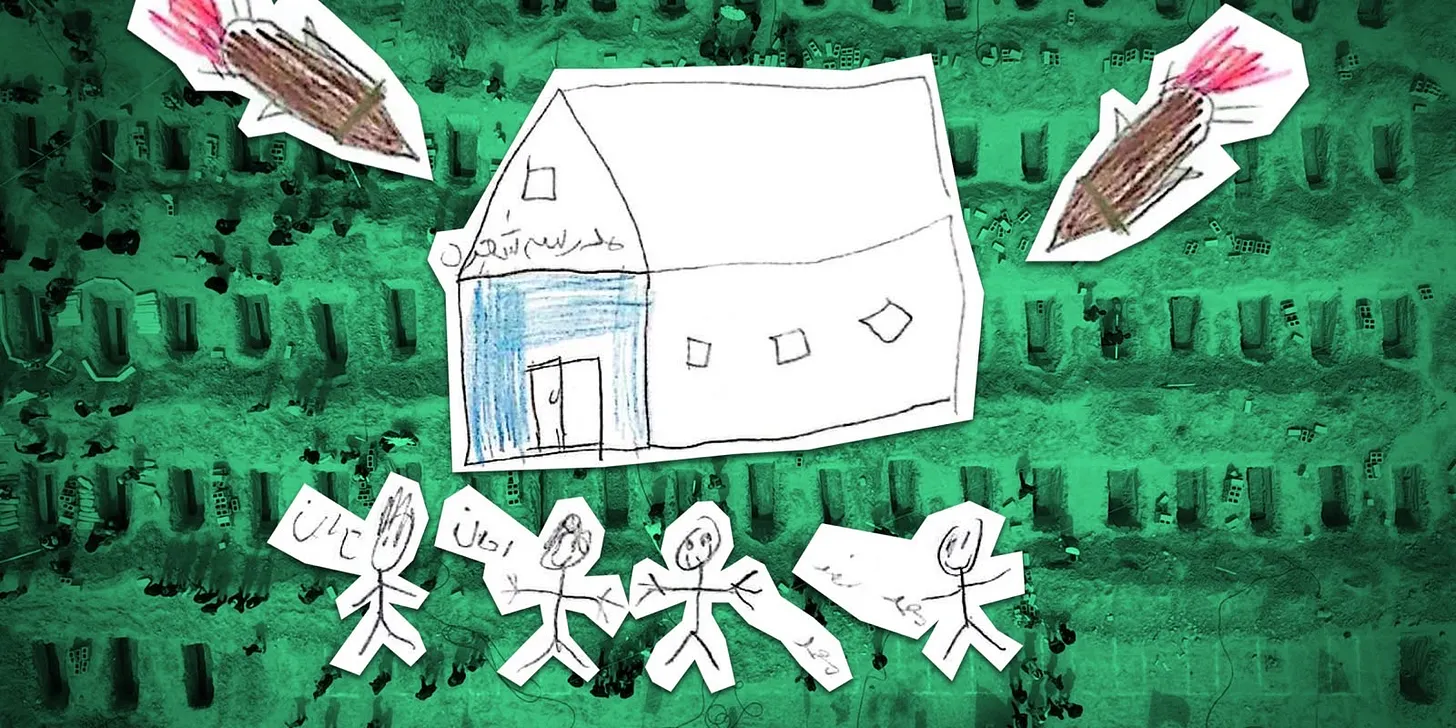
The bombing of an Iranian school, killing 120 children, is one of the worst U.S. war crimes since Vietnam – part of a war started at Israel’s request. Drop Site spoke to survivors, first responders, parents, and witnesses. This is their story.

💾

  •  

Yes, the Iran war has destroyed Trump’s presidency

By Andrew Day | The American Conservative | September 29, 2026 

No one would claim that the Iran War has been a political godsend for President Donald Trump and the Republican Party. But some Israel-First conservatives are willing to say—and lately have been incessantly saying—that the Iran War hasn’t been a political scourge.

Those Israel-First conservatives are wrong, even if the devil is, at least partly, hidden in the details. The Iran War has damaged Trump’s approval ratings, consumed his presidency, and darkened the GOP’s prospects in the upcoming midterm elections.

A chief proponent of the argument that Trump hasn’t suffered all that much from the Iran War is Ben Shapiro of the Daily Wire. Shapiro’s political analysis is plainly motivated by the fact that he was a loud and influential proponent of the war who promised—falsely, as it turned out—that Iran couldn’t close the Strait of Hormuz, a chokepoint for the global energy trade.

“There’s an op right now to pretend that the real reason for President Trump’s unpopularity is foreign policy, but that is not true, by the polling data, it is not true,” said Shapiro on a recent episode of his podcast. “The reality is that Americans have affordability concerns, President Trump came into office saying he was going to alleviate the affordability concerns. He has not in fact alleviated the affordability concerns, and therefore, his polling numbers have consistently slid since Liberation Day.”

This is a bit like me saying my wife isn’t mad at me because of the drinking, but because I drunkenly crashed the car.

The Iran War, as everyone now knows, has driven up prices at the pump—prices which, unfortunately for Trump, are prominently displayed on every major street across the country. On the eve of the war, regular gasoline averaged $2.98 per gallon. Today, at the time of writing, the average price is $4.48. Americans are notoriously averse to high gasoline prices and tend to punish presidents over the issue, sometimes even when the president can’t justifiably be blamed.

But make no mistake: Virtually every sentient adult understands that 1) oil comes from the Middle East, 2) Trump started a big war in the region, and 3) gas prices shot up right afterwards. And again, even if Americans didn’t grok the connection between the war and the gas-price spike, the latter would still have hurt Trump politically, and it would still be a knock-on effect of the former.

It’s not just prices at the pump that have gone up because of the war. Groceries and other consumer goods travel across this vast land on tractor-trailers that run on diesel and get a lot fewer miles per gallon than even your Uncle Larry’s F-350. Diesel prices have smashed records and now sit at around $6.50, up from $3.76 before the war.

No wonder truckers are furious, prompting rumors of an imminent strike.

And no wonder the Iran War has contributed to general inflation in America. Anyone who has been reading the official economic reports knows the war is responsible for more than a third of recent inflation.

Before the war, inflation was trending down, only a couple ticks away from the Federal Reserve’s target of 2 percent. It seems likely that Trump, if he hadn’t started his dumb war in the Middle East, would have garnered praise for presiding over declining inflation and that the Fed would have cut interest rates, juicing economic growth. Instead, inflation now sits at 3.4 percent.

(As an aside, this weekend I traveled to Istanbul, where many Middle Easterners of various nationalities complained to me that Americans only oppose the war because of the gas prices. That’s simply not true. The war has been unpopular since day one, when all that Americans knew was the American-Israeli strikes had killed Iranian leaders including the Supreme Leader Ali Khamenei.)

Shapiro, ever the neoconservative, insinuated in the quote above that the decline in Trump’s approval rating owes more to his tariffs than to his war. The data doesn’t back that up, as the conservative commentator and election analyst Ryan Girdusky noted on X in response to new survey data. “The most eye opening part of this poll is that Trump’s approval rating and the strength of the economy went up right after Liberation Day,” Girdusky said. “Fell slightly afterward and then plummeted at the start of the Iran War.”

Shapiro has unwittingly helped uncover another, subtler, way in which the Iran War has indirectly damaged Trump’s approval ratings and, by extension, the Republican Party brand. Shapiro recently went on Fox News to commiserate with the host Mark Levin—another Israel-Firster and warmonger—over all those dastardly antiwar conservatives blaming the Iran War for everything.

“Iran is a 4-percent issue with the American people,” Levin said, as Shapiro nodded in agreement. Levin was referring to Fox News polling that shows not many Americans name the Iran War as their top issue. “So, whatever happens in the midterms, it doesn’t appear that Iran’s going to drive anything one way or another.”

“I think that’s exactly right,” Shapiro replied.

Part of the problem with Levin’s analysis has already been covered above. In the Fox poll, a plurality of Americans—34 percent—named the cost of living as the most important issue, and the Iran War has made living costlier.

But the subtler problem is perhaps even more illuminating. Simply put, Americans believe Trump is too focused on foreign policy at the expense of the problem they really care about, which, in fact, his Iran War has exacerbated. This is a PR disaster for the Trump administration and the GOP. Americans don’t prioritize the war that has dominated the headlines and distracted the White House, even as Trump claims to have boldly prevented Iran from unleashing nuclear apocalypse.

It may be grotesque to find silver linings in this dumb and deadly war, but here’s one: Americans no longer buy the war narratives. That is certainly not, however, a silver lining for Republican candidates in this year’s election, no matter how cynically they try to distance themselves from the war. In fact, it’s a good bet they’ll do much worse than if Trump hadn’t launched this unnecessary war, despite what Shapiro and his ilk may tell you.

  •  

The fallacy of US delusions about Iran’s economic collapse

Press TV – September 30, 2026 

US Treasury Secretary Scott Bessent’s prediction that Iran’s economy would soon collapse underscores the depth of delusion within the current American leadership.

“Iran is absolutely not sanctionable,” Deputy Economy Minister Mortaza Zamanian said this week as Tehran worked to keep trade flowing despite Washington’s latest sanctions campaign.

Zamanian cited Iran’s extensive borders, established commercial routes and longstanding trading relationships, saying that they make it impossible for external pressure simply to switch off the country’s economy.

His remarks came as Washington intensified its economic terrorism against Iranian oil, shipping, aviation, finance, technology and foreign companies supporting those sectors.

US Treasury Secretary Scott Bessent said that Iran would probably make its final oil deliveries to China within two weeks, after which, he asserted, “they will have nothing.”

That prediction deserves comparison with history, because American administrations have imposed increasingly severe sanctions since 1979 while repeatedly expecting economic pressure eventually to produce decisive Iranian economic collapse.

The economy did not disappear under those campaigns; instead, Iran developed domestic industries, expanded regional commerce, strengthened Asian trade and accumulated extensive experience operating outside Western financial systems.

The proposition that an economy which has absorbed American sanctions for almost half a century will suddenly become economically empty within two weeks therefore indicates the depth of delusion among the current US leadership.

Iran enters the current confrontation with a large domestic market, substantial productive capacity, enormous energy resources and deeply established commercial relationships extending across neighboring countries and wider Eurasian markets.

The World Bank describes Iran as relatively diversified for an oil-exporting economy, with substantial manufacturing, agricultural and service activity supported by a large population and significant domestic consumption.

That domestic market sustains production across food, pharmaceuticals, construction materials, steel, petrochemicals, machinery and consumer goods, meaning Iranian production does not depend entirely upon continuous access to Western consumers.

Iran has also developed major industrial capabilities suited to its own resources and infrastructure, including steel, refining, petrochemicals, cement, power generation, construction, food processing and pharmaceutical manufacturing.

These capabilities have continued developing despite restrictions on Western investment and technology, demonstrating that Iranian industrial activity does not depend upon permanent participation by Western companies.

Iran’s prolonged exposure to sanctions has produced accumulated technical and commercial knowledge, giving Iranian companies decades of experience managing restricted supply chains and unreliable access to foreign suppliers.

When foreign manufacturers withdraw, Iranian companies have learned to redesign equipment, substitute components, develop domestic suppliers and cooperate with businesses from countries willing to maintain commercial relationships.

Academic research has documented this process, showing that sanctions can simultaneously restrict foreign technology while encouraging domestic technological development and adaptation within affected Iranian industrial sectors.

The resulting knowledge extends beyond individual companies, because engineers, technicians, procurement specialists and managers have accumulated practical experience managing shortages, substitution and alternative sourcing.

Iranian manufacturers therefore do not design procurement systems around the assumption that every international supplier will remain available indefinitely, making adaptation part of ordinary commercial planning.

Iran’s geography provides another economic advantage, because the country borders Turkey, Iraq, Armenia, Azerbaijan, Turkmenistan, Afghanistan and Pakistan while possessing coastlines reaching the Persian Gulf and the Sea of Oman.

Those borders connect Iranian commerce with the Caucasus, Central Asia, South Asia, the Persian Gulf, Turkey and Iraq, while transportation corridors also connect Iran with Russia and wider Eurasian markets.

Financial sanctions can make transactions more difficult, but they cannot physically relocate Iran or eliminate its access to neighboring markets, suppliers, transportation routes and established regional trading relationships.

Iran has consequently developed commercial links involving Iraq, Turkey, the United Arab Emirates, Afghanistan, Pakistan, the Caucasus, Central Asia and China through years of sustained economic interaction.

The World Bank has documented Iran’s increasing trade orientation toward neighboring countries and China as sanctions restricted conventional international relationships, making this regional pivot an established economic feature.

China adds another dimension because it combines enormous industrial capacity with sustained demand for Iranian energy while supplying machinery, manufactured products and industrial inputs required throughout Iran’s domestic economy.

The US-China Economic and Security Review Commission identifies China as Iran’s largest trading partner and estimates that China imported approximately 1.4 million barrels of Iranian crude daily during 2025.

Chinese independent refiners have continued purchasing Iranian crude through commercial arrangements designed to reduce their exposure to American financial restrictions and sanctions enforcement.

That relationship demonstrates why Iran does not require unrestricted access to every Western market when Chinese demand and extensive regional commerce provide alternative markets for Iranian commodities.

Iran’s energy resources provide enormous economic depth, with the World Bank ranking the country second globally in proven natural-gas reserves and fourth globally in proven crude-oil reserves.

Those resources provide export potential while also supplying abundant domestic energy and petrochemical feedstocks supporting manufacturing, electricity generation, transportation and numerous energy-intensive industrial activities.

Iran has consequently developed a substantial downstream economy converting hydrocarbons into refined products, petrochemicals and industrial inputs rather than depending exclusively upon crude-oil exports.

The World Bank has noted that sanctions encouraged additional processing of hydrocarbons into petrochemicals, illustrating how restrictions contributed to changes within Iran’s export structure.

Iran has also developed financial mechanisms outside conventional Western banking, including bilateral currency arrangements, exchange houses, barter, intermediary companies and indirect settlement channels supporting international commercial activity.

The World Bank has documented growing use of bilateral currency exchange, barter and indirect payment mechanisms as Iranian trade shifted increasingly toward neighboring countries and China.

These arrangements provide alternative methods for exchanging value when conventional dollar-based transactions become unavailable or prohibitively difficult.

Their existence helps explain why Washington increasingly targets third-country banks, intermediaries and commercial facilitators, because Iranian commerce extends through extensive international networks beyond domestic financial institutions.

Against this background, Bessent’s prediction assumes that eliminating a major source of oil revenue would effectively remove the broader economic foundations supporting Iran’s productive system and commercial institutions.

Iran’s economic structure is considerably broader, because oil exports represent one component of national activity alongside manufacturing, agriculture, services, domestic consumption and regional commerce.

The World Bank estimates that Iran’s economy contracted during the Iranian year ending March 2026, while simultaneously describing adaptation through changing trade patterns and alternative payment mechanisms.

Economic contraction, however, is fundamentally different from the disappearance of productive capacity, infrastructure, commercial institutions and domestic relationships sustaining millions of Iranian consumers and businesses.

American sanctions have repeatedly targeted Iranian banking, oil exports, investment, technology, shipping and foreign companies, yet Iran has retained its industrial base and redirected substantial trade toward neighboring countries.

Washington possesses powerful financial tools, but financial restrictions cannot physically eliminate Iran’s factories, oilfields, farms, engineers, consumers, ports, borders or commercial relationships accumulated over decades.

The central question is therefore whether American pressure can erase the productive, geographical, resource and commercial foundations Iran has accumulated across nearly half a century of economic adaptation.

Nothing in Iran’s economic history demonstrates that those foundations can disappear within two weeks, particularly while the country retains domestic production, regional markets, energy resources and established commercial relationships.

Iran therefore enters the present confrontation with domestic capabilities, energy resources, industrial capacity, geographic advantages and international relationships capable of keeping its economy operating despite intensified American terrorism.

  •  

L'Iran sans œillères

Le régime théocratique qui dirige la République islamique d'Iran va-t-il s'effondrer sous les coups de boutoir des États-Unis et d'Israël ? Régulièrement confronté à des contestations intérieures et affrontant une grave crise économique et environnementale, le pouvoir incarné par le Guide et les gardiens de la révolution semble tenir bon. Mais jusqu'à quand ?

Pour prendre la mesure d'un conflit qui modifie déjà les grands équilibres du Proche-Orient, la dernière livraison de Manière de voir (1) invite à mieux connaître ce pays, son système politique, ses interactions régionales, mais aussi sa culture plurimillénaire dont la poésie, passion populaire s'il en est, forme le prestigieux emblème.

Une carte complète, une chronologie exhaustive et des infographies détaillées accompagnent les articles — dont plusieurs inédits — des quatre parties. La première analyse la séquence guerrière entamée en juin 2025 avec la convergence belliciste de Washington et Tel-Aviv. Après plus de deux décennies d'efforts, le premier ministre israélien Benyamin Netanyahou a réussi à convaincre l'administration américaine de lui emboîter le pas pour attaquer l'Iran, détruire ses installations nucléaires et provoquer la chute du régime. Face à cette armada, Téhéran n'a pas eu d'autre choix que la réponse du faible au fort, souvent gagnante dans les conflits asymétriques, en tirant notamment parti du contrôle qu'il exerce sur le détroit d'Ormuz.

Le deuxième chapitre interroge la nature du pouvoir iranien. La manière dont se sont forgées ses structures et ses institutions explique pourquoi il n'hésite jamais à réprimer les contestations populaires, au risque d'aggraver les dissensions en son sein. Dans ce contexte de violence récurrente, les minorités subissent elles aussi la répression, à l'image des Kurdes, dont l'Occident tente d'exploiter la marginalisation en les incitant à prendre les armes contre le pouvoir central.

Le troisième volet éclaire les relations entre l'Iran et ses voisins. Longtemps très influente en Irak après la chute du régime de Saddam Hussein en 2003, la République islamique doit désormais composer avec un fort sentiment anti-iranien. Dans le même temps, Téhéran veille à garder des relations équilibrées avec Ankara, même si la guerre civile syrienne (2011-2024) a opposé les deux poids lourds non arabes du Proche-Orient. Une cartographie détaille la manière dont l'Iran s'insère dans le jeu des alliances et des confrontations régionales.

La dernière partie explore quelques pans de l'immense culture iranienne. Si les réalisateurs de cinéma sont désormais célèbres dans le monde entier avec des films souvent primés dans les grands festivals, leurs démêlés avec la justice de leur pays témoignent de l'entrave aux libertés qui caractérise la République islamique. La censure sévit aussi contre les chanteurs et les pousse, comme bon nombre de leurs compatriotes, à l'exil. Tout au long de cette livraison, des encadrés permettent de mieux comprendre le quotidien des Iraniens, et pourquoi certains n'ont d'autre choix que de partir.

Voir en ligne : /2026/10/A/70111

(1) Manière de voir, n° 209, « Iran. Guerres, révoltes, espérances », octobre-novembre 2026, 100 pages, en kiosques, en librairies et sur la boutique en ligne.

  •  

Cyrus le Grand. Roi du monde

JPEG - 52.2 kio

Même si sa mère, dit-on, l'avait vu en rêve, il n'était écrit nulle part que Cyrus deuxième du nom allait se tailler un empire de la mer Égée à la vallée de l'Indus. Lorsqu'il monte sur le trône d'Anshan en 559 avant notre ère, son pouvoir ne s'exerce que sur la modeste province du Fars, dans l'actuel Iran. À la faveur d'un grand chamboulement régional, il voit l'opportunité d'une campagne à l'ouest, soumet un à un les pouvoirs mède, lydien et babylonien, et se proclame « roi du monde ». Matt Waters concentre ici une vie de recherches sur le monde perse. Parmi ses apports, le croisement des récits grecs et bibliques avec des sources tirées de l'épigraphie et de l'archéologie assyrienne, babylonienne et perse. Elles font de Cyrus un pont entre la lointaine Babylone et la familière Grèce d'Hérodote. Sa finesse en matières religieuse et politique est mise en valeur ; souplesse du conquérant soucieux de s'attirer les sympathies du conquis certes, mais aussi projection dans l'avenir d'un bâtisseur de temples et de palais, qui avait à l'esprit d'établir un empire voué à l'éternité. Il fonda l'Empire achéménide, qui dura deux siècles — jusqu'aux victoires d'Alexandre.

Voir en ligne : /2026/10/HEINISCH/70089

Passés/Composés, Paris, 2025, 288 pages, 23 euros.

  •  

La Chine veut-elle « gagner » en Iran ?

L'univers médiatique ressemble au « monde à l'envers » que décrivait l'écrivain uruguayen Eduardo Galeano. Plus les États-Unis piétinent le droit international, plus la Chine est accusée de se montrer menaçante. Ainsi du conflit en Iran, déclenché par Washington et Tel-Aviv, mais qui verrait surtout Pékin « avancer ses pions » et laisser libre cours à ses velléités impériales…

JPEG - 134.2 kio
Chow Chun Fai. – « A Battle of Wits [Une bataille d'esprit]. La victoire viendra lorsqu'il sera impossible de battre en retraite », 2017
© Chow Chun Fai - courtesy Eli Klein Gallery, New York

Certaines analyses ressemblent à des autoportraits. En révélant les présupposés qui les sous-tendent, elles décrivent surtout ceux qui les formulent. Ainsi de bien des décryptages occidentaux consacrés aux ambitions chinoises dans le contexte de la guerre opposant Washington et Téhéran. Pékin « entend exploiter le conflit pour affaiblir la puissance des États-Unis (…) et torpiller l'ordre international sous domination américaine », assurent deux experts dans Foreign Affairs. « La Chine s'apprête-t-elle à porter le coup de grâce ? », se demande de son côté l'universitaire Phillips O'Brien, cependant que, dans Le Parisien, le journaliste François Lenglet détaille les raisons pour lesquelles « Pékin va gagner la guerre d'Iran » (1).

Rien n'indique pourtant que le Parti communiste chinois (PCC) soit obnubilé par l'ambition de détrôner l'hégémon américain. En dépit des discours alarmistes sur le « grand remplacement » géopolitique, tout suggère au contraire que Pékin subit plus qu'il n'engendre l'effritement de l'« ordre international sous domination américaine » dont il a tant profité. Il existerait donc bien une forme d'« impérialisme chinois », moins intuitive toutefois que celle qui alarme médias et dirigeants occidentaux. Non pas la volonté de voir la Chine prévaloir, mais la conviction que la suprématie américaine est préférable au chaos. Disposition géopolitique singulière — et temporaire —, celle-ci conduirait Pékin à souhaiter que les États-Unis conservent leur position dominante. Dès lors qu'ils ne chahutent pas trop les équilibres globaux dont ils ont longtemps été garants, et qu'ils n'entravent pas le développement du pays du Milieu.

Le talon d'Achille de Pékin

Que la Chine se réjouisse de l'incapacité des États-Unis à remporter en Iran la victoire-éclair annoncée, c'est fort probable. Le 20 janvier 2026, avant même le déclenchement du conflit, un groupe d'universitaires nationalistes publie un document moqueur : « “Merci” à Trump ». « Merci » pour les droits de douane, « un piège qui s'est refermé sur les États-Unis » et qui a « contraint la Chine à l'autonomie technologique ». « Merci » pour la « politique hégémonique de l'“Amérique d'abord”, qui a révélé le vrai visage de l'“ordre fondé sur des règles” ». « Merci » pour « votre gouvernance par les tweets » et « vos théories farfelues » qui ont « sapé la crédibilité » de Washington. « Merci », enfin, d'agir « comme un accélérateur du déclin politique américain » (2). Nul doute que, publiés un mois plus tard, les auteurs du texte auraient également rendu grâce à M. Donald Trump pour son équipée iranienne.

De l'avis du sénateur néoconservateur Lindsey Graham (décédé depuis), l'une des motivations du déclenchement du conflit aurait été d'affaiblir le principal rival des États-Unis. Le 8 mars 2026, sur Fox News, il se félicite du bombardement de la République islamique, après l'enlèvement du président vénézuélien Nicolás Maduro : « Le Venezuela et l'Iran ont 31 % des réserves de pétrole mondiales. » Une fois le pouvoir iranien tombé, « nous aurons des partenariats couvrant 31 % des réserves connues. C'est le cauchemar de la Chine ». Derrière Caracas et Téhéran, donc, Pékin, dont la dépendance aux importations d'hydrocarbures constituerait le talon d'Achille.

Raté. Six mois après le déclenchement des hostilités, The Economist constate que ses colossales réserves stratégiques ont élevé la Chine au rang de « principale puissance pétrolière mondiale » (9 août 2026). « La guerre en Iran a provoqué le plus grand choc d'offre de l'histoire de l'exploitation pétrolière. Pourtant, même au plus fort des combats, le cours du pétrole n'a jamais atteint les 150 dollars le baril que de nombreux analystes avaient prédits au début du conflit. » Si, à cette époque, les prix ne s'envolent pas, c'est en grande partie parce que Pékin en a voulu autrement : « Entre février et juin, la Chine a réduit de moitié ses importations de brut, soit 5,5 millions de barils par jour — une baisse suffisante, selon les experts, pour faire baisser de 30 dollars ou plus le brent, la référence mondiale. » Une guerre qui devait fragiliser Pékin « a montré que, dans la pratique, la Chine est capable, à elle seule, de stabiliser le marché mondial du pétrole pendant plusieurs mois ».

JPEG - 149.1 kio
Chow Chun Fai. – « La Cité interdite. Ce que je ne te donne pas, ne le prends pas par la force », 2018
© Chow Chun Fai - courtesy Eli Klein Gallery, New York

Si, côté pile, le pays du Milieu affiche une relative immunité face aux stratégies d'étranglement de ses approvisionnements en hydrocarbures, côté face il profite des inquiétudes soulevées par la perspective d'une flambée incontrôlée des cours de l'« or noir ». Au mois de mai 2026, ses exportations de véhicules électriques et de panneaux solaires — deux secteurs d'activité qu'il domine largement — ont bondi en volume de 110 % et 60 % par rapport à l'année précédente (The Guardian, 30 juin 2026). Alors qu'une nation dirigée par un parti proclamant s'inspirer de Karl Marx et de Lénine compte désormais pour près d'un tiers de la production manufacturière mondiale, même la sacro-sainte « science économique » se trouve bousculée. « Si les États-Unis veulent obtenir des résultats similaires à ceux de la Chine, avancent les chercheurs Damien Ma et Lizzi C. Lee dans une revue conservatrice américaine, ils devront s'inspirer davantage du modèle chinois (3). » Ce serait déjà le cas selon le chercheur Nathan Sperber, qui pointe l'« imitation partielle, déséquilibrée et largement méconnue, par les États-Unis, de certains aspects de la planification du développement chinois dans leurs propres initiatives de politique industrielle sous les administrations Biden et Trump ». À commencer par l'Inflation Reduction Act, qui vise à accélérer le développement des énergies renouvelables et des technologies vertes, et « ne se serait pas concrétisé sous cette forme sans l'exemple donné par l'État chinois » (4).

Ce qui explique peut-être pourquoi M. Trump estimait au mois de juillet dernier que l'une des vertus de l'opération « Epic Fury » en Iran était de rappeler à tous que le socle de la puissance américaine demeurait intact : « Nous avons l'armée la plus puissante du monde (5). » Une démonstration de force censée « donner à nos ennemis, à commencer par la Chine rouge, la Russie et la Corée du Nord, matière à réflexion », selon le rédacteur en chef du site Conservative HQ (« quartier général conservateur ») (6).

« Avant-goût du futur »

Raté à nouveau. L'importance acquise par les drones rebat les cartes stratégiques : disposer d'un tissu industriel en mesure de débiter des engins rudimentaires mais efficaces pourrait bientôt peser davantage que la capacité de développer des merveilles de technologie au prix exorbitant. Deux semaines après le début du conflit, les États-Unis avaient probablement utilisé plus de mille missiles Patriot — dont ils n'avaient produit que six cents exemplaires en 2025. L'épuisement rapide de leur arsenal les a conduits à rapatrier vers le Proche-Orient les batteries Thaad (Terminal High Altitude Area Defense) — utilisées pour détruire les missiles balistiques de portée moyenne ou intermédiaire — déployées en Corée du Sud (7). Au mois d'août, le porte-avions USS George Washington a quitté le Pacifique occidental, dont il était censé garantir la sécurité, pour voguer vers le théâtre iranien. Hier en mesure d'asseoir leur domination militaire en tous points de la planète, les États-Unis semblent désormais incapables d'assurer certains de leurs engagements stratégiques envers leurs alliés, à commencer par les livraisons d'armes. Un phénomène qui, comme le souligne l'éditorialiste américain Fareed Zakaria, accroît l'« imprévisibilité » américaine : « Quand des alliés n'ont pas les moyens de savoir si les troupes américaines arrivent ou partent, si les tarifs douaniers vont augmenter ou baisser, si un accord signé aujourd'hui survivra jusqu'à demain, ils ne deviennent pas plus obéissants. Ils deviennent plus indépendants » (The Washington Post, 14 août 2026).

On l'imagine volontiers, le lustre d'un État qui enlève des dirigeants politiques (Venezuela), en assassine d'autres (Iran) et facilite un génocide (Israël) se ternit. Pour la première fois en près de deux décennies, l'enquête du Pew Research Center dans trente-six pays (allant du Chili au Pakistan, et de la France à l'Afrique du Sud) montre que « la Chine est désormais perçue de façon plus positive que les États-Unis dans la plupart des pays interrogés (8) ». De telle sorte que, pour beaucoup, l'avenir ne s'écrit plus là où le soleil se couche. « Il fut un temps où Hollywood et une kyrielle d'exportations américaines offraient au reste du monde un avant-goût de ce qu'était la vie moderne et du futur auquel il pouvait aspirer. Pour les jeunes d'Afrique, d'Amérique latine et même certains Américains, c'est désormais la Chine », constate le politiste britannique Mark Leonard (9).

Dans de telles conditions, Pékin pourrait activement œuvrer à la fragilisation des États-Unis sur la scène internationale. S'opposer systématiquement aux résolutions qu'ils proposent à l'Organisation des Nations unies (ONU) et s'y afficher en garant effectif de l'ordre international — ce n'est pas le cas. Soutenir ouvertement les adversaires de Washington et de ses alliés (Russie, Iran, Palestine…) — il ne le fait que peu, et dans un cadre souvent moins stratégique que commercial. Utiliser son contrôle de la production mondiale de terres rares afin d'étrangler l'économie américaine — il ne brandit cette menace que pour contraindre les États-Unis à renoncer aux mesures qui affectent directement l'économie chinoise. Quand les autorités du pays activent une loi passée en 2021 visant à lutter contre les sanctions extraterritoriales américaines en condamnant à leur tour les entreprises qui s'y plieraient, elles la réservent aux cas où des intérêts intérieurs sont menacés.

Gendarme planétaire

À n'en pas douter, une telle attitude s'explique en partie par l'attachement au principe de non-ingérence dans les affaires d'autrui, que Pékin ne manque pas une occasion de défendre. Et qui lui vaut la gratitude de ses partenaires. « Si vous faites affaire avec la Chine, aucune crainte qu'elle vous explique comment gouverner votre pays ou qu'elle vous sanctionne si votre système politique diffère du sien », relève l'universitaire Stephen M. Walt, qui regrette que les États-Unis se perçoivent, eux, comme les « défenseurs d'une série de valeurs universelles » qu'il leur reviendrait de promouvoir y compris de manière coercitive (10). Mais, alors que certains analystes voient la Chine en championne d'un « Sud global », le chercheur sud-africain Adekeye Adebajo décrit, lui, un pays qui préfère « consolider son pouvoir dans le système international existant plutôt que d'en créer un autre qui profite à tous ». Bref, un pays qui « se satisfait de préserver le statu quo » (11). Pourquoi ?

Pour des raisons de philosophie politique, explique-t-on volontiers du côté chinois. « Dès les origines, la civilisation chinoise a été animée par une quête d'ordre social et de stabilité », avance par exemple l'universitaire Han Jianye (12). On peut en effet, sans prétendre résumer l'histoire intellectuelle pluriséculaire d'un pays aussi grand qu'un continent, observer que sa philosophie politique est marquée par un mouvement récurrent que décrivent aussi bien ses musées que ses grands mythes fondateurs : l'écartèlement du pays en fiefs rivaux, puis leur réunification sous la houlette de dirigeants érigés en héros, avant que ne débute un nouveau cycle de rupture, puis d'unification. La description de ce mouvement général offre sa première phrase au récit des Trois Royaumes, l'un des plus importants de la mythologie chinoise : « L'histoire du monde obéit à une loi : après une longue période de division vient l'unité, et après une longue période d'unité vient la division. » Ce terreau aurait nourri une conception de l'action politique reposant sur les idées d'ordre et de préservation de la stabilité — loin de la « destinée manifeste » américaine et de son mythe de la « conquête ».

L'histoire ne dicte cependant pas leur conduite aux dirigeants politiques. Mao Zedong, par exemple, exaltait les chambardements : « Tout n'est que chaos sous le ciel, la situation est excellente. » En prônant la constance et la modération, ses successeurs renouent donc avec l'histoire politique de longue durée, mais pas uniquement. Car, si le concept de stabilité prend un sens particulier aujourd'hui, c'est qu'il s'oppose au tohu-bohu engendré par les États-Unis de M. Trump : la « prédilection nationale » se voit ainsi promue au rang d'atout géopolitique. Au cours d'une série de déplacements à l'étranger préalable à sa rencontre avec son homologue américain, à la fin du mois de septembre, le président Xi Jinping s'est ainsi employé à « présenter la Chine comme un partenaire stable » (The Washington Post, 6 septembre 2026). Quelques mois auparavant, le ministre des affaires étrangères Wang Yi était allé plus loin en suggérant que le « pôle » de sérénité chinois pouvait contribuer à amortir les soubresauts géopolitiques (13). Lorsqu'elles empêchèrent les cours du pétrole de s'envoler à la suite de la guerre en Iran, les autorités chinoises joignirent le geste à la parole. Altruisme géopolitique ? L'envisager reviendrait à oublier que la stabilité a également des vertus économiques. Pour la Chine, s'assurer que le monde dispose d'un pétrole suffisamment bon marché — le cas échéant, en agissant en « fournisseur de dernier ressort (14) » — permet de protéger le principal moteur de son économie : les exportations.

On pourrait toutefois s'interroger sur la logique conduisant à souhaiter maintenir le statu quo dès lors que celui-ci pérennise la position centrale d'un pays par ailleurs identifié comme facteur de désordre et d'incertitude. Mais il s'agit moins pour Pékin de choisir la meilleure option que d'identifier la moins mauvaise. De son point de vue, les turpitudes de Washington restent préférables à une aggravation de la rivalité sino-américaine qui perturberait les flux de marchandises. Et amputerait l'extraordinaire excédent commercial chinois, qui a dépassé 1 100 milliards de dollars en 2025, et donc la croissance de son économie — elle-même déterminante pour la stabilité interne.

L'affaiblissement de l'actuel « gendarme planétaire », si patibulaire soit-il, contraindrait par ailleurs la Chine à se mêler davantage des affaires du monde. Sans nécessairement imiter les pratiques américaines, elle y parviendrait difficilement dépourvue de moyens humains, logistiques, militaires… Bref, sans investissements colossaux. Or, on l'oublie parfois en consultant les vidéos de ses mégapoles scintillantes, la Chine est toujours une économie émergente : sa priorité demeure son développement. Raison pour laquelle elle préfère à ce stade la « stabilité bancale » de l'hégémonie américaine plutôt que d'avoir à rééquilibrer le monde sur ses propres deniers. Quitte à montrer (un peu) les dents lorsque le « déclin » des États-Unis les conduit à brandir sanctions et tarifs.

Mais l'étrange « impérialisme » chinois dont il est ici question procède sans doute d'une explication plus fondamentale, et paradoxale : si le développement fulgurant de la Chine amène aujourd'hui certains analystes à se demander si elle va détrôner les États-Unis (une question que peu se posaient il y a cinquante ans…), les conditions mêmes qui y ont présidé lui barrent la voie qui conduit au statut d'hégémon. Du moins pour l'heure.

JPEG - 123.3 kio
Chow Chun Fai. – « Le Parrain 2. Garde tes amis près de toi, et tes ennemis encore plus près », 2018
© Chow Chun Fai - courtesy Eli Klein Gallery, New York

Dans un monde qui n'a pas fait la démonstration de sa capacité à la coordination, il est difficile d'imaginer qu'une domination américaine adossée à celle du dollar puisse céder la place à une autre, reposant sur une monnaie commune mondiale (15). Si Pékin prenait les rênes du monde, sa monnaie, le renminbi, se trouverait probablement précipitée au centre du système monétaire international (SMI). Ce qui présente au moins deux difficultés. La première concerne la mainmise du PCC sur les flux monétaires à travers le contrôle des capitaux. Déterminant en matière de développement, le dispositif lui permet également d'empêcher l'apparition d'une oligarchie capable de s'émanciper de l'État, voire de finir par le contrôler. « Si les riches Chinois pouvaient sortir leurs capitaux du pays sans restriction, ils seraient en mesure de sanctuariser leurs avoirs et donc leurs privilèges, souligne Sperber. Du fait des contrôles de capitaux, la propriété du capital demeure relative en Chine : elle est soumise au pouvoir politique, qui conserve la possibilité d'intervenir contre les individus qu'il souhaite sanctionner (16). » Que le renminbi devienne la monnaie de référence exigerait de lever ce dispositif. On l'imagine difficilement.

La seconde difficulté est liée à la fourniture actuellement insuffisante de renminbis pour assouvir les besoins de l'économie mondiale. Dans l'architecture monétaire contemporaine, le pays qui émet une monnaie appelée à jouer un rôle international majeur doit permettre au reste du monde d'accumuler suffisamment d'actifs libellés dans cette monnaie. Cette circulation peut passer par les échanges commerciaux, mais aussi, et de plus en plus, par le crédit et l'intermédiation du système financier. Or le programme économique de « réforme et ouverture » des années 1980 repose précisément sur une logique inverse : accumuler les excédents extérieurs grâce aux exportations et placer à l'étranger une partie des revenus correspondants, plutôt que de développer l'offre de crédit en renminbis au reste du monde. Ce choix implique, entre autres, le maintien de salaires bas — on parle de « répression salariale » — de façon à contribuer à la compétitivité de la production nationale. Rompre avec une telle dépendance aux excédents extérieurs exigerait de transformer le modèle économique qui a propulsé le développement du pays. En commençant par une augmentation des salaires de façon à faire passer le moteur de l'économie des exportations et de l'investissement vers la consommation.

On arguera que, dès 2007, M. Wen Jiabao (premier ministre de 2003 à 2013) avait proclamé que la Chine devait « ajuster l'équilibre entre investissement et consommation ». Et que, depuis son arrivée au pouvoir, M. Xi Jinping insiste sur la nécessité de renforcer ce second pôle de l'économie. Mais la multiplication des annonces dans ce domaine signale tout autant la détermination des autorités… que leur impuissance. D'un niveau de 51 % du produit intérieur brut (PIB) en 1980, la consommation des ménages s'établissait à 40 % en 2024, après un nadir de 35 % en 2010. En comparaison, elle oscille autour de 55 % en France et en Allemagne au cours de la même période, alors qu'elle bondit de 60 % à 68 % aux États-Unis (17). Comme l'expliquent les chercheurs Erik Green et Olivia Parker, « la stratégie macroéconomique de la Chine continue à limiter sa marge de manœuvre pour rééquilibrer son économie (18) ». Pékin reste donc confronté à une contradiction : son modèle de développement lui permet de prétendre au statut de première puissance mondiale, mais il repose sur des structures qui aujourd'hui l'en empêchent.

Léninistes affichés, les dirigeants chinois ne peuvent ignorer qu'à plus long terme leur choix du capitalisme expose la Chine à en atteindre le « stade suprême ». Certes, répondent-ils, mais le pays du Milieu n'est pas les États-Unis, et son capitalisme (le PCC parle de « socialisme avec des caractéristiques chinoises ») se distingue du néolibéralisme anglo-saxon. De sorte qu'il serait possible d'envisager l'émergence d'une puissance majeure sans la moindre velléité de coercition. Bref, d'une hégémonie sans impérialisme. Il n'est toutefois pas nécessaire au Soleil d'être expansionniste pour emprisonner la Terre dans son orbite : la différence de masse suffit. Même en créditant une Chine devenue première puissance mondiale d'œuvrer à l'émergence du monde qu'elle prétend vouloir créer — un monde multipolaire où la négociation prévaudrait —, celui-ci serait-il dépourvu de domination ? Ou, pour le dire autrement, est-il envisageable qu'un pays de 1,4 milliard d'habitants, qui contrôle bon nombre de filières technologiques, jouissant d'un quasi-monopole dans les terres rares et responsable d'un tiers de la production manufacturière, puisse discuter d'égal à égal avec les autres ?

Le PCC ne peut ignorer qu'un jour viendra où la question de l'hégémonie chinoise, et de sa nature, se posera. Le consensus en son sein demeure toutefois : il est encore trop tôt. Mieux vaudrait donc, pour l'heure, « ne pas gagner » en Iran. En Chine, on sait penser le temps long.

Mais il ne s'agit pas seulement pour Pékin de ne pas l'emporter : il faudrait également que Washington s'efforce de ne pas trop perdre. Or, dans ce domaine, M. Trump et ses acolytes ne s'épargnent aucun effort. À tel point que la « stabilité bancale » sous hégémonie américaine menace de se déliter plus vite qu'espéré au sein du PCC. Une Chine ne s'estimant pas encore prête serait alors contrainte d'agir, et de prendre le risque du chaos.

Voir en ligne : /2026/10/LAMBERT/70069

(1) Jon B. Alterman et Ali Vaez, « How China and Russia can exploit the Iran war », Foreign Affairs, New York, 23 avril 2026 ; Phillips O'Brien, « Is China going in for the kill ? », https://phillipspobrien. substack.com, 1er août 2026 ; François Lenglet, « Pourquoi Pékin va gagner la guerre d'Iran », Le Parisien, 29 mars 2026.

(2) Wang Wen et al., « “Merci” à Trump : évaluation par les think tanks chinois des politiques menées par Trump 2.0 à l'occasion du premier anniversaire de son mandat » (en chinois), Institut Chongyang de l'université Renmin, 19 janvier 2026.

(3) Damien Ma et Lizzi C. Lee, « An industrial policy with American characteristics », Foreign Affairs, 1er juillet 2025, cité par Nathan Sperber, « Beyond neoliberalism ? », New Left Review, n° 158, Londres, mars-avril 2026.

(4) Nathan Sperber, « Beyond neoliberalism », op. cit.

(6) George Rasley, « Will operation Epic Fury be another tactical victory leading to a strategic defeat ? », Conservative HQ, 9 avril 2026.

(7) Damien Cave, Choe Sang-hun, Javier C. Hernández et Eric Schmitt, « How the war in Iran could help China and change Asia », The New York Times, 13 mars 2026.

(8) Huang Yanzhong, « China now outranks the United States in global favorability. What happened ? », Council on Foreign Relations, Washington, DC, 27 juillet 2026.

(9) Mark Leonard, « A future with Chinese characteristics », Project Syndicate, 18 août 2026.

(10) Stephen M. Walt, « What the United States can learn from China », Foreign Policy, Washington, DC, 20 juin 2024.

(11) Adekeye Adebajo, « Is China really a champion of the Global South ? », 27 août 2026.

(13) « Ouvrir de nouvelles perspectives pour la diplomatie d'une grande puissance aux caractéristiques chinoises à un tournant décisif de l'évolution historique » (en chinois), discours du ministre des affaires étrangères chinois Wang Yi, 30 décembre 2025.

(14) Tej Parikh, « The Iran war will cement China's superpower status », Financial Times, Londres, 29 mars 2026.

(15) Lire Renaud Lambert, Frédéric Lemaire et Julien Trévisan, « La lame du dollar et la plaie monétaire », Le Monde diplomatique, septembre 2026.

(16) Citation recueillie pour l'article « Est-ce vraiment la fin du dollar ? », coécrit avec Dominique Plihon, Le Monde diplomatique, novembre 2023.

(17) Chiffres de la Banque mondiale.

(18) Erik Green et Olivia Parker, « China's consumption problem », The International Institute for Strategic Studies, Londres,19 février 2026.

  •  

Axios: US Officials Think Trump Could Order Resumption of Full-Scale Bombing of Iran After Midterms

US officials believe President Trump could order a return to “major combat operations” against Iran after the midterm elections, as Qatar-mediated negotiations have made little progress, Axios reported on Tuesday. Iran has maintained that it’s ready to fully open the Strait of Hormuz and enter negotiations on a final deal if the US ends its […]
  •  

Department of War Awards $20.7 Billion Contract to Raytheon for Air-to-Air Missiles

By Kyle Anzalone | The Libertarian Institute | September 29, 2026

The Department of War announced a nearly $21 billion, five-year contract to produce Advanced Medium-Range Air-to-Air Missiles (AMRAAM). While AIM-120 missiles are designed for warplanes in air-to-air combat, they can also be used as ground-launched missile interceptors.

The Pentagon announced the contract on Monday. “We are working across the defense industry to ramp production and build the Arsenal of Freedom,” said Under Secretary of War for Acquisition and Sustainment Michael P. Duffey. “This award strengthens our ability to equip the Joint Force and our allies with a proven air-to-air capability, ensuring our warfighters maintain a decisive advantage.”

Raytheon, or RTX, is the primary beneficiary of the contract. The deal was issued as an undefinitized contract action, meaning details of the cost and number of missiles could change. Under the contract, Raytheon will produce up to 1,900 AMRAAM missiles annually.

The AMRAAM, or AIM-120, missiles are designed to be fired from America’s fleet of fighter jets. There are multiple variants of the AIM-120 missile, and the Pentagon announcement did not disclose how many of each variant Raytheon has been contracted to produce.

While the AIM-120 is primarily an air-to-air missile, it can also be fired from the National Advanced Surface-to-Air Missile System (NASAMS), a ground-based air defense system. The AMRAAM-ER is an extended-range variant designed specifically for ground-based air defense.

Ukraine has relied heavily on the NASAMS system for air defenses. In April, the Center for Strategic and International Studies estimated the US has between 4,000 and 4,500 AIM-120 missiles in its stockpile. It noted that the US could use the AIM-120s as a cheaper option to down Iranian drones compared to Patriot or Standard Missiles. However, the AIM-120s still cost $1 million each.

  •  

‘Distance yourselves from Israel’: IRGC urges US population to question govt policies

The Cradle | September 29, 2026

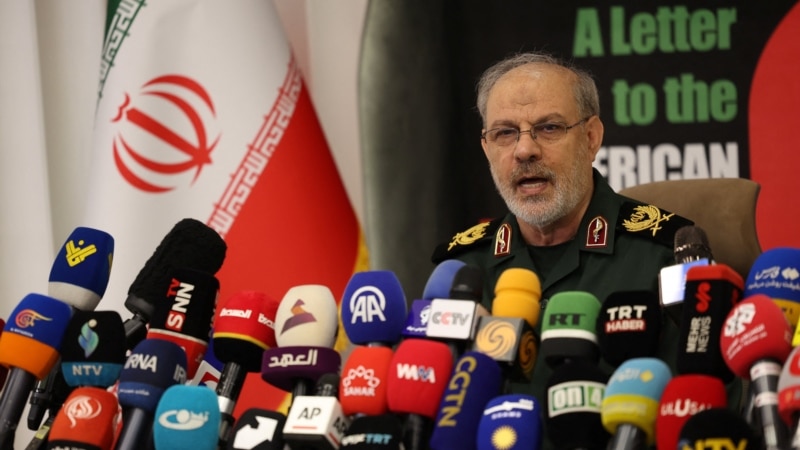
Iran’s Islamic Revolutionary Guard Corps (IRGC) released a letter on 29 September addressing the US population – urging it to “force” Washington to “distance” itself from Israel, and expressing a readiness for “coexistence and peace,” while also vowing to continue fighting for Iran’s rights.

“Our purpose in sending a letter to the US people goes beyond media propaganda and creating familiarity with Iran’s reasoning. This is not a short-term or purely promotional move … Choosing a ‘letter’ as a tool to convey our message directly and clearly was a method selected based on the realities on the ground,” said IRGC spokesman Hossein Mohebbi.

“The countries neighboring or located near the US, whether along its land or maritime borders, do not possess the military and security capabilities to pose a serious threat to the US,” he added following the letter’s release, urging US citizens to question Washington’s military expansionism and the presence of hundreds of its military bases across the globe.

Mohebbi went on to ask, “What is the purpose of deploying 800 US military bases around the world?”

The letter itself poses several questions to the US people, while urging them to “see through” the official claims made by Washington.

This included US, as well as Israeli, claims regarding the Iranian nuclear program.

“For 25 years … the [US] claimed that Iran is only … months or weeks away from building a nuclear bomb … If this were true, why has Iran not yet gone through with its plan to build a bomb? If Iran was only a little while away from making the bomb 25 years ago, when it was far less technologically advanced … then it should possess dozens of nuclear bombs today.”

It also pointed to US intelligence reports acknowledging that Tehran is not looking to weaponize its program.

Additionally, it slams US official claims and declares to the US people that Washington’s bases were “decimated” throughout the war.

This has been confirmed through satellite imagery and western media, not just Iranian outlets.

Tehran, through the letter, also repeated its longstanding declarations to the people of the US that Iran is opposed to their government and not them themselves.

“The people who burn the American flag are not hostile to the American people; it is the oppression and aggression of the American government that they are denouncing,” the letter reads.

“We can live together in peaceful coexistence. Remove from power the evil, deceitful, and violent politicians who are responsible for America’s current state. Entrust your affairs to the wise, not the wily. Make sure your politicians understand that the world has changed,” it adds.

The letter also urges the US people to “distance itself from Israel, as the occupiers of Palestine will, sooner or later, have to leave the land they occupy and return to their countries of origin.”

The letter stresses that Tehran will “continue fighting” despite “all the hardships that our enemies impose on us.”

It comes as reports indicate Washington is planning to renew bombing against Iran. Tehran has vowed much wider retaliation than before in the event of such actions.

  •  

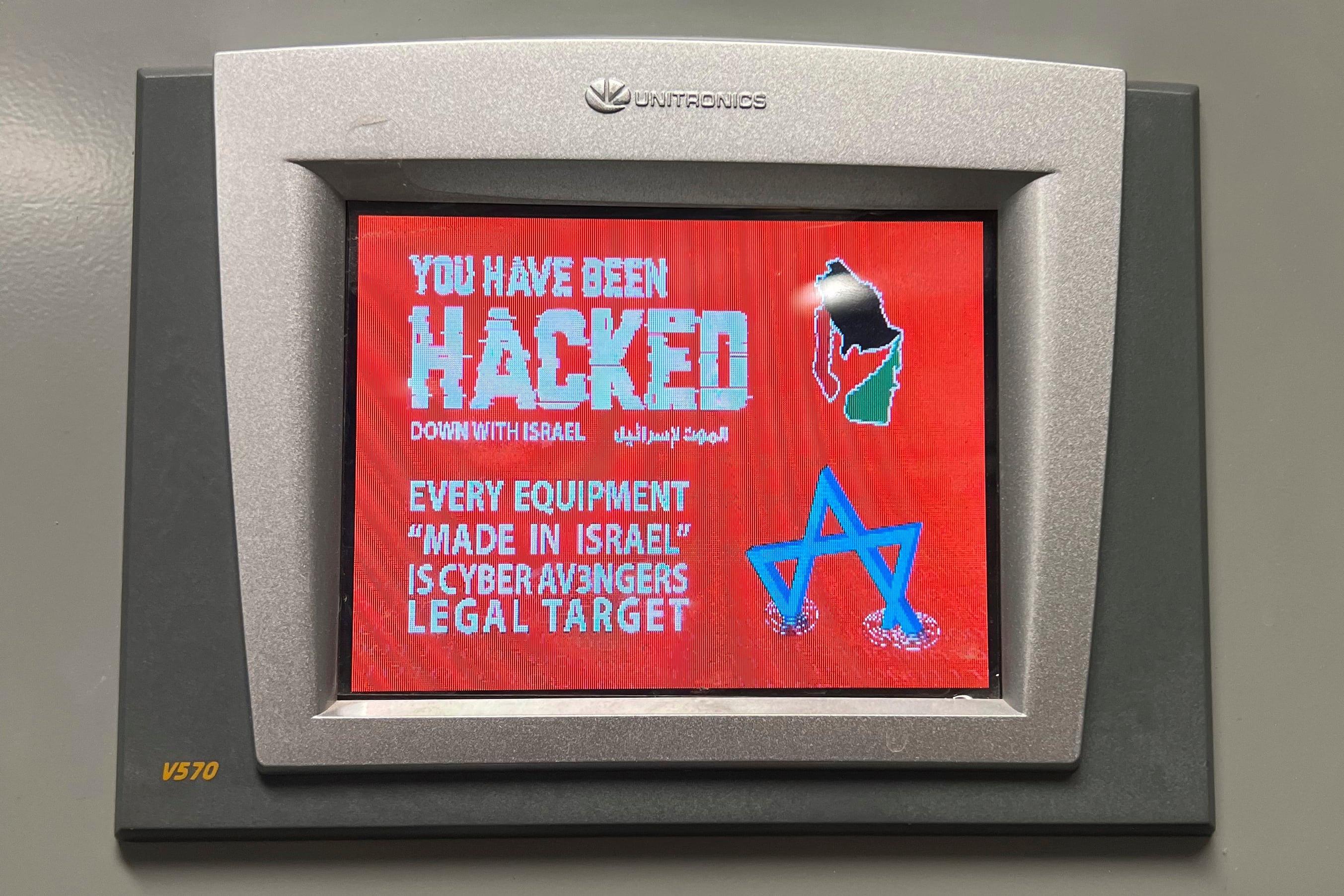
If you fire missiles at me, I’ll cut off your water supply: The cyberattacks attributed to Iran that showed the US is vulnerable

Water service failed in at least 300,000 Atlanta households on July 27. Taps ran, but only a trickle came out. After receiving several consumer alerts, the water company found that a pumping station had stopped functioning, affecting that city and others in the state. The loss of pressure led authorities to advise boiling water before drinking it to reduce the risk of contamination, sparking some panic among the population. It was not a technical fault: everything points to it having been orchestrated from a computer almost 7,000 miles away, in Iran.

Seguir leyendo

Message displayed on devices attacked by CyberAv3ngers in Aliquippa (Pennsylvania) during the 2023 campaign.

© Rebecca Cook (REUTERS)

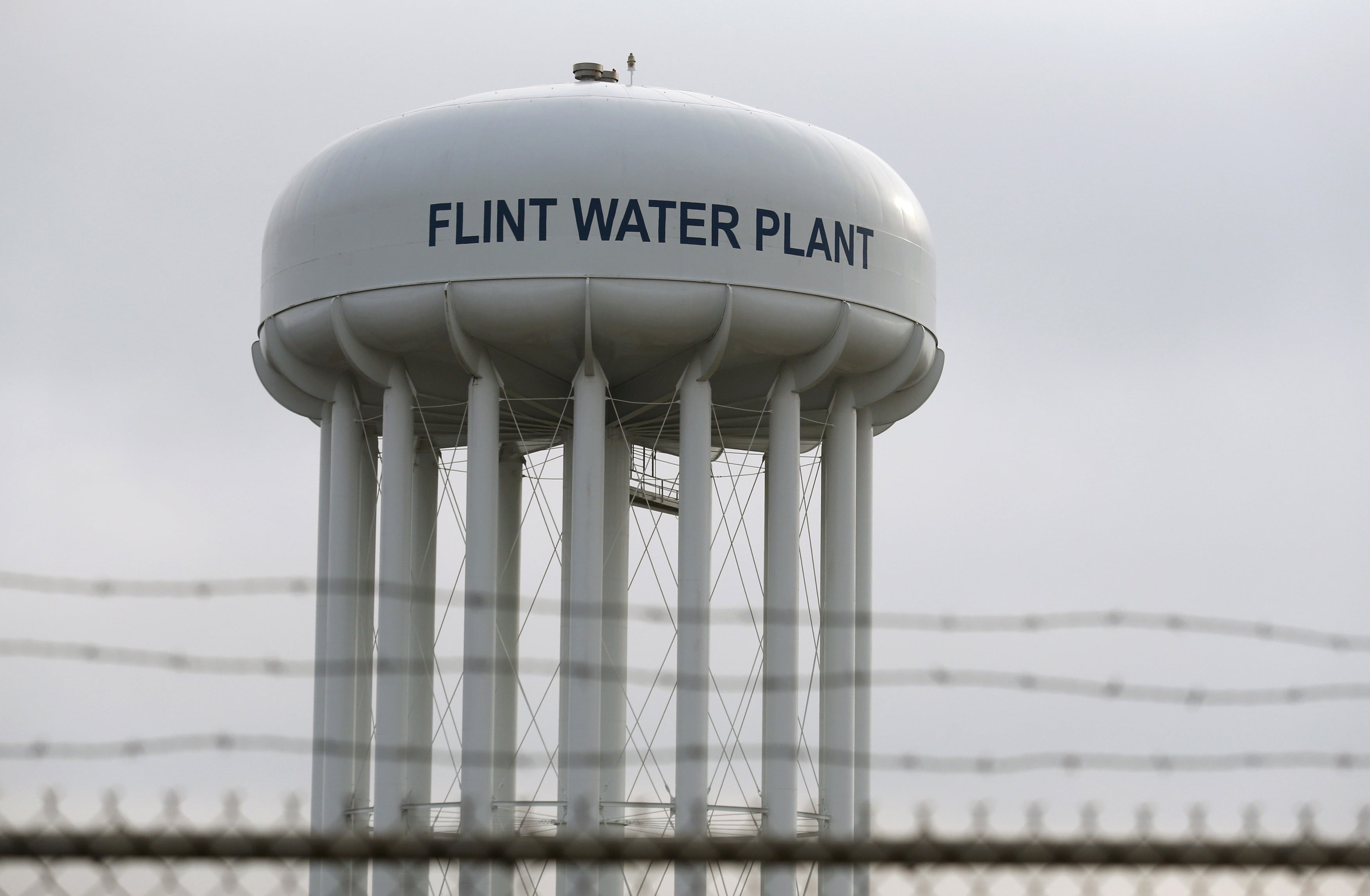
Flint in Michigan, one of the states whose water-supply infrastructures were attacked this summer.
  •  

Trump Denies That He Has Offered Iran Sanctions Relief for Nuclear Concessions

President Trump on Monday denied a report from Axios that said he had offered Iran sanctions relief in exchange for nuclear concessions, calling it a “hoax.” “Axios just released a story that ‘Trump’ offered Sanctions Relief and Frozen Funds to Iran. This is untrue. I offered them NOTHING!” he wrote on Truth Social. “Axios’ story, […]
  •  

‘Grave, alarming’: Iran mission on Trump’s UNGA ‘annihilation’ threats

Al Mayadeen | September 28, 2026

Iran has warned the United Nations that US President Donald Trump’s threats to “annihilate” the Islamic Republic constitute a grave development, particularly because the remarks were made from the podium of the UN General Assembly.

Gholamhossein Darzi, Iran’s ambassador and chargé d’affaires to the UN in New York, raised the issue in a September 27 letter addressed to UN Secretary-General António Guterres and the President of the Security Council, Jérôme Bonnafont.

Darzi’s letter came in response to Trump’s September 22 address to the 81st session of the UN General Assembly, during which the US president said he could “annihilate the Islamic Republic” if no agreement was reached with Tehran. The wording appears in the official UN transcript of Trump’s speech.

Iran says threats made at UN carry wider implications

Darzi said Trump’s remarks were neither isolated nor ambiguous, arguing that they form part of a continuing pattern of public threats against Iran by the president of a permanent member of the UN Security Council.

“These repulsive statements are not ambiguous remarks or isolated utterances. They are rather part of a sustained pattern of public threats against Iran by the head of a permanent member state of the Security Council,” Darzi wrote.

“This latest development is particularly grave and alarming because the United Nations General Assembly is not a venue for threats of annihilation,” he added.

The Iranian envoy stressed that the General Assembly serves as the UN’s principal universal forum and was established to promote international peace, cooperation, and relations among states.

In the letter, Darzi referred to several previous statements by Trump that he said demonstrated a broader pattern of threats against Iran.

He cited remarks on March 22 in which Trump threatened to “hit and obliterate” Iranian power plants, followed by statements on March 30 threatening destruction of Iran’s energy facilities and other vital infrastructure, including desalination facilities.

Iran calls for UN response to threats

Darzi argued that the issue extends beyond political rhetoric, saying an explicit threat against a sovereign UN member state raises questions concerning the UN Charter, international peace and security, and the prohibition on the threat or use of force.

He further linked the latest remarks to ongoing US-Israeli aggression against its sovereignty and territorial integrity since February 28, as well as attacks that targeted civilians and civilian infrastructure.

“The issue before the Organization is therefore not merely one of political rhetoric,” Darzi wrote, arguing that failure by the international community to respond could normalize threats against entire nations and undermine the authority of the UN Charter.

The UN has itself emphasized the need for restraint and adherence to international law during the current high-level week. In his September 22 opening address, Secretary-General António Guterres said the principle that force cannot determine whose lives and rights matter was under “profound strain” and called on world leaders to use the week for de-escalation and dialogue.

Iran reiterates right to self-defense

Darzi said Iran would continue to defend itself against any further aggression and reserved its “full and unimpeachable right to self-defense.”

He also said Tehran reserves the right to pursue legal avenues to seek accountability from states and individuals it holds responsible for losses and damage inflicted on the Iranian people.

“Regardless of whether these threats are merely delusional fantasies, they will, as in the past, never materialize or be put into action in the face of the resolute resistance and determined defense of the Iranian people and armed forces,” Darzi wrote.

The Iranian envoy requested that his letter be circulated as an official document of the UN Security Council.

  •  

Claims Swirl Around U.S. Marines Injured Aboard Mystery Vessel Attacked In The Strait Of Hormuz

On Sunday, NBC News reported that Marines were injured during an Iranian cruise missile attack while transiting the Strait of Hormuz on Sept. 14. The network’s sources said the Marines were not on a U.S. Navy ship, but they did not identify which vessel they were on. However, a former Royal Mail vessel that at one point was being converted into a floating armory stands out as a strong possibility.

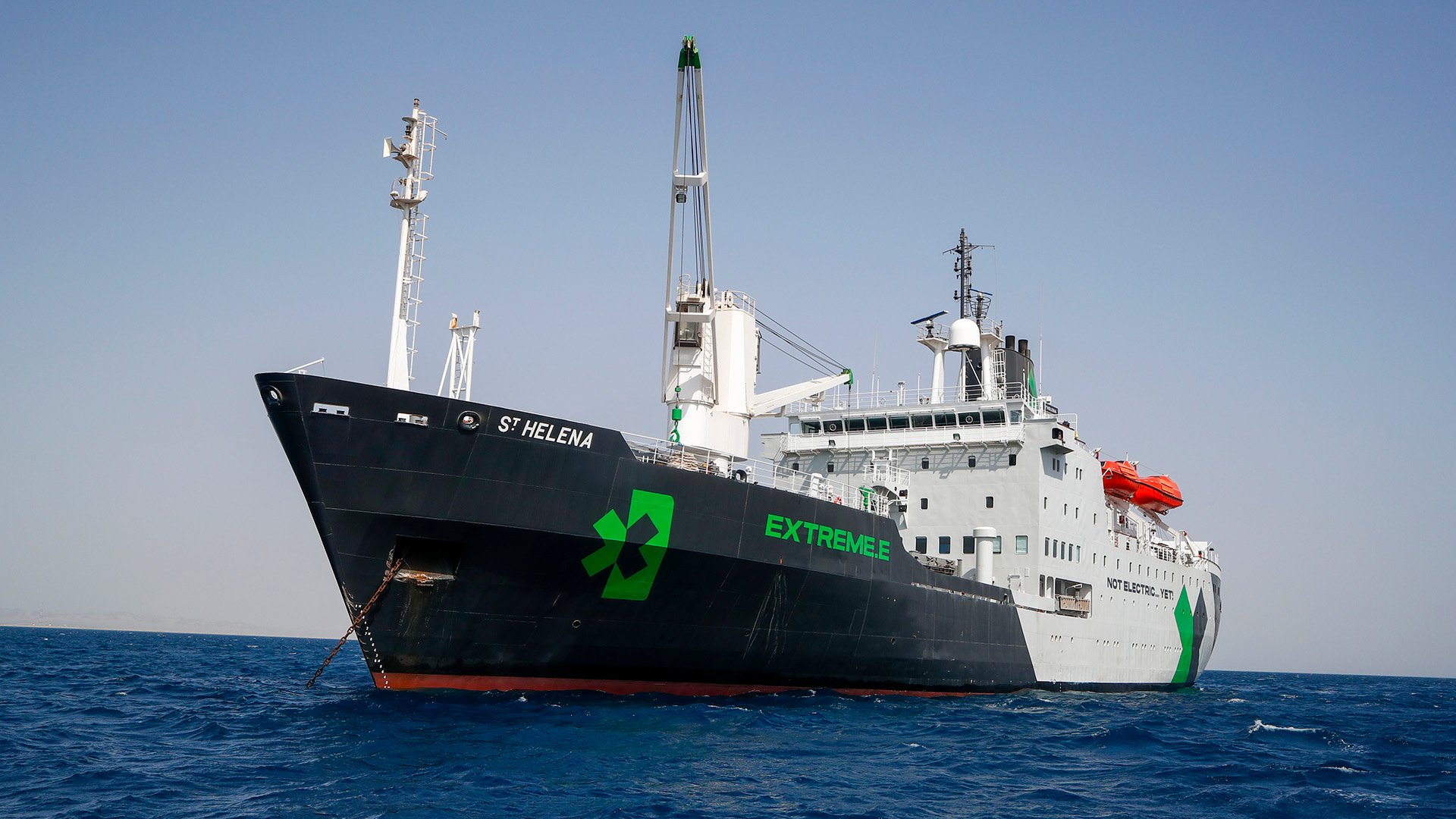
While much remains unclear about the Sept. 14 incident, there was only one vessel known to have been struck that day, according to the United Kingdom Maritime Trade Operations (UKMTO) and a maritime security official we spoke with. The ship was eventually identified by several maritime media outlets as the M/V St. Helena. Again, the St. Helena’s involvement remains unconfirmed, but the ship’s interesting background is of particular note.

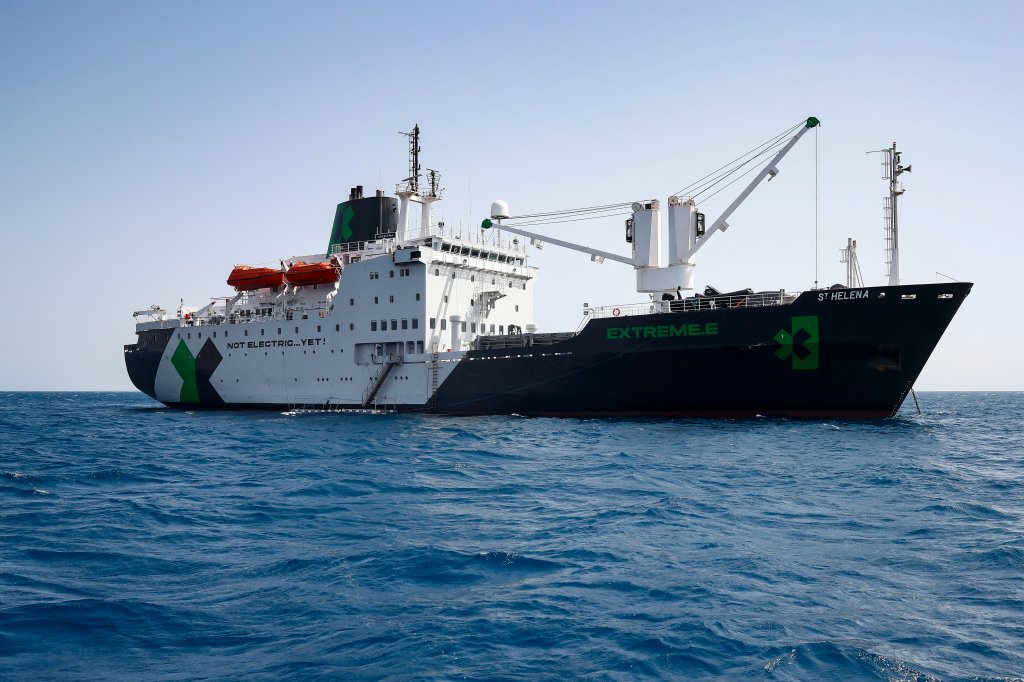
MARCH 30: The St Helena logistics ship during the Saudi Arabia on March 30, 2021. (Photo by Colin McMaster/LAT Images for Extreme E)
The St Helena logistics ship during the Saudi Arabia on March 30, 2021. Photo by Colin McMaster

“Eight U.S. Marines were injured two weeks ago when an Iranian cruise missile attacked the ship they were operating on in the Strait of Hormuz,” NBC reported, citing three U.S. officials. “The Marines were not seriously injured, but they sustained smoke inhalation and possibly traumatic brain injuries, as they had symptoms of concussions, such as headaches, the officials said.”

“The Marines, seven of them enlisted and one officer, all returned to duty soon after the Sept. 14 attack, the U.S. officials said,” according to the network. “The officials said the Marines were operating as part of a battalion landing team during the Iranian anti-ship cruise missile attack.”

TWZ cannot independently confirm that Marines were on board the St. Helena or that they were injured. We reached out to the Pentagon and U.S. Central Command (CENTCOM) for more information. The Pentagon referred us to CENTCOM, and CENTCOM declined comment.

The incident took place amid an uneasy truce between Iran and the U.S. broken up by sporadic Iranian attacks on ships transiting the Strait of Hormuz. At the same time, the U.S. military is enforcing a blockade on Iranian ships, during which it has struck several for trying to bypass that effort as well as in retaliation for Iranian attacks on shipping. Negotiations between Washington and Iran have ebbed and flowed, and U.S. President Donald Trump is once again mulling a choice between continuing talks or renewing large-scale attacks.

As we noted earlier in this piece, after the vessel was struck, several maritime industry trade publications identified it as the St. Helena.

“Iran has attacked a historic former British Royal Mail passenger ship in the Strait of Hormuz,” TradeWinds News reported on Sept. 15, a day after the incident. “Maritime security sources identify the 6,800-gt St Helena (built 1989) as the latest vessel to be hit by an ‘unknown projectile’ in the war-torn waterway. The attack was reported late on Monday, according to UK Maritime Trade Operations, which cited a ‘verified source’ for the incident without identifying the vessel.”

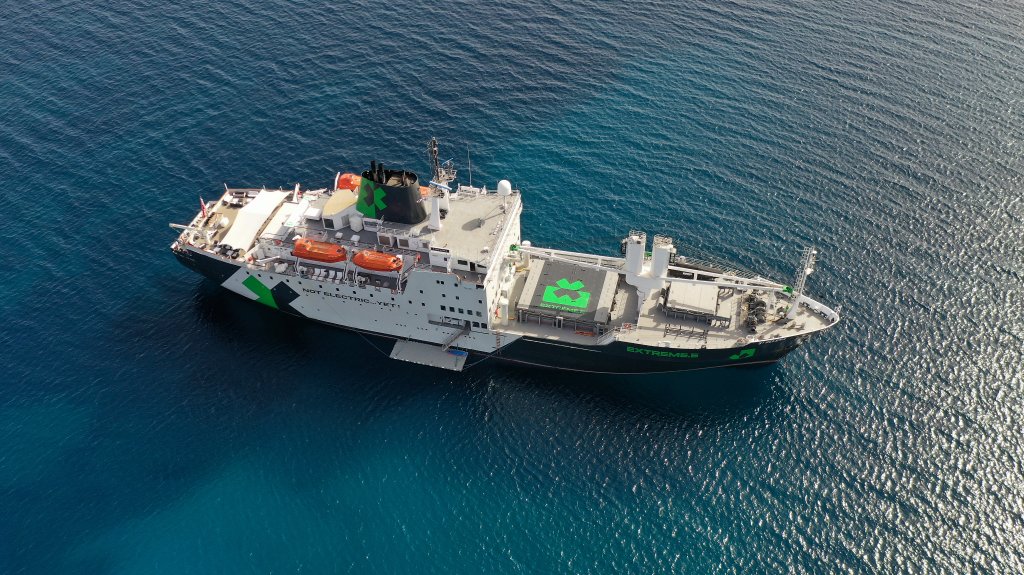
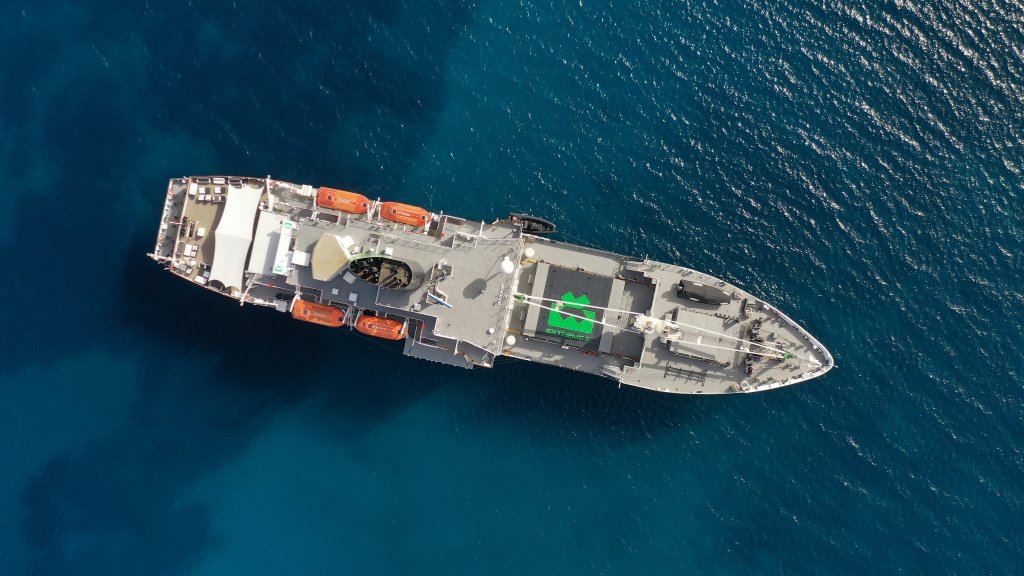
JULY 04: Aerial view of the St Helena transport ship in the sea off Porto Pino during the Sardinia on July 04, 2022. (Photo by Sam Bagnall/LAT Images for Extreme E)
Aerial view of the St Helena transport ship in the sea off Porto Pino during the Sardinia on July 4, 2022. Photo by Sam Bagnall

“UKMTO has received a time late report of an incident within the Strait of Hormuz,” the organization reported on Sept. 15, citing an incident that took place a day earlier. “A verified source has reported that a vessel has been struck by an unknown projectile.”

“There is no reported damage or environmental impact,” UKMTO added. “Authorities are investigating.”

UKMTO WARNING 135-26

Click here to view the full product ⤵https://t.co/VWOyM2oLdj#MaritimeSecurity #MarSec pic.twitter.com/Dfppt86s9b

— UKMTO Operations Centre (@UK_MTO) September 15, 2026

According to Lloyd’s List, the ship was being operated by the Ambrey maritime security firm at the time it was struck. Ambrey declined to comment. 

Shipping expert Sal Mercogliano and open-source investigator Tom Bike were among those suggesting the St. Helena could have been the vessel at the heart of the NBC report.

So piecing together the evidence it appears that the US may have converted St Helena into a armed merchant cruiser.

The Marines looked at putting Armed Guards on board commercial ships three years ago as reported by @USNINews.

Add modular/containerized weapon systems,… https://t.co/48lJ1BDMfs

— Sal Mercogliano (WGOW Shipping) 🚢⚓🐪🚒🏴‍☠️ (@mercoglianos) September 28, 2026
Exactly what the St. Helena was doing at the time it was struck is unclear; however, the ship has had a very unusual past.

The vessel entered into service in 1990 and “sailed between Cape Town, South Africa and Saint Helena and Ascension Islands, carrying both passengers and cargo, some of which was Royal Mail, earning her the rare RMS designation,” according to Cruise Arabia and Africa.

The St. Helena was Britain’s last working postal ship, according to Maritime Executive. After it was retired in 2018 because it was no longer needed for that function, things got really interesting.

Two different organizations took over the vessel, including, as we noted earlier in this story, a company that was planning to use it as a floating armory in the Middle East.

“Renamed MNG Tahiti, the 103-meter (340-foot) ship is being readied by her new owner MNG Maritime to become a floating armory working in the Gulf of Oman,” Maritime Executive wrote on April 22, 2018. “She will deliver security guards and weapons to vessels sailing through the region and is expected to be operational in her new role in the next few months.”

It is unclear what happened to that plan. However, two years later, an off-road racing series called Extreme E said that it “secured exclusive use of the former Royal Mail ship in 2018.” After that, the ship underwent “an extensive refurbishment process, which has included total overhaul of steelwork, engines, generators, propellers, interior and cabin space, and more, making it not only fit for purpose, but also as efficient as possible ahead of its new mission.” 

JULY 04: Aerial view of the St Helena transport ship in the sea off Porto Pino during the Sardinia on July 04, 2022. (Photo by Sam Bagnall/LAT Images for Extreme E)
Aerial view of the St Helena transport ship in the sea off Porto Pino during the Sardinia on July 4, 2022. Photo by Sam Bagnall

The ship was “specifically designed to transport all the infrastructure and equipment the Extreme E needs for their race weekends,” the organization stated. The plan was to have the ship serve “as its freight and logistics hub due to her versatility and ability to carry and unload a mixture of cargo, like all 10 of the championship’s ODYSSEY 21’s [electric off-road racecar], as well as team members and guests. This was also fit with a Science Laboratory so research can be conducted enroute to the race locations.”

Both the St. Helena and MNG Tahiti have the same international shipping identification number of IMO 8716306, according to the MarineTraffic website.

On Sept. 17, 2024, the St. Helena was put up for sale, according to Horizon Ship Brokers. The current ownership is unclear. We reached out to Horizon Ship Brokers for more details.

Horizon Ship Brokers

Last year, the saga of the St. Helena took a new turn. A company called Terra Nova Expeditions chartered the vessel for Antarctic cruises, but those plans were scrubbed last month because the vessel was stuck in the Persian Gulf and was no longer available for the Antarctic sailing season.

It was last tracked via its transponder near Dubai nearly two months ago, according to MarineTraffic.

While we can’t confirm that Marines were onboard when St. Helena was hit, Marines have been training for this exact mission set. USNI News reported in 2023 that a “force of 100 Marines, newly trained by Navy personnel,” stood ready “to respond, if ordered, to provide armed security aboard foreign commercial ships transiting the Strait of Hormuz.”

Those Marines were members of the 26th Marine Expeditionary Unit (MEU) embarked on the three-ship Bataan Amphibious Ready Group (ARG), USNI added at the time.

It is unclear if those plans are still in place and if Marines in the region have actually been ordered to provide armed security for foreign vessels sailing through or near the strait. Regardless, Marines could be quickly trained to take on this mission set and have drilled for ship boarding and searches for years, especially special operations and specially-tasked units. CENTCOM declined to comment when we asked if there are U.S. personnel embarking on commercial ships transiting the Strait of Hormuz.

At the same time, it is possible that the unique attributes of St. Helena made it a convenient host ship for sea base operations for U.S. forces in the region specifically for this crisis. Adapting commercial vessels for exactly this purpose has a long history around the Strait of Hormuz, as it was a central facet of the Tanker Wars during the 1980s, that saw U.S. forces operate from barges in the region. Today, commercial vessels remarkably similar to St. Helena operate in similar roles, especially in support of special operations and interdiction operations.

211024-N-KY668-1208
 CARIBBEAN SEA - (Oct. 24, 2021) – The special mission ship U.S. Motor Vessel Kellie Chouest steams in the Caribbean Sea while participating in a passing exercise (PASSEX), with the Dominican Republic Navy and USS Billings (LCS 15) Oct. 24, 2021. Kellie Chouest is deployed to the U.S. 4th Fleet area of operations to support Joint Interagency Task Force South’s mission, which includes counter-illicit drug trafficking missions in the Caribbean and Eastern Pacific. (U.S. Navy photo b
The special mission ship U.S. Motor Vessel Kellie Chouest steams in the Caribbean Sea while participating in a passing exercise (PASSEX), with the Dominican Republic Navy and USS Billings (LCS 15) Oct. 24, 2021. Kellie Chouest is deployed to the U.S. 4th Fleet area of operations to support Joint Interagency Task Force South’s mission, which includes counter-illicit drug trafficking missions in the Caribbean and Eastern Pacific. Photo by Petty Officer 2nd Class Austin C

Once again, we have no idea what the ship’s mission was at the time of the incident and if Marines were simply helping it transit safely out of the Persian Gulf or something more, but the attack did expose the fact that individual Marines are more involved with activities in this tumultuous body of water than it may seem.

Contact the author: howard@twz.com.

The post Claims Swirl Around U.S. Marines Injured Aboard Mystery Vessel Attacked In The Strait Of Hormuz appeared first on TWZ.

  •  
❌