US Treasury Secretary Scott Bessent’s prediction that Iran’s economy would soon collapse underscores the depth of delusion within the current American leadership.
“Iran is absolutely not sanctionable,” Deputy Economy Minister Mortaza Zamanian said this week as Tehran worked to keep trade flowing despite Washington’s latest sanctions campaign.
Zamanian cited Iran’s extensive borders, established commercial routes and longstanding trading relationships, saying that they make it impossible for external pressure simply to switch off the country’s economy.
His remarks came as Washington intensified its economic terrorism against Iranian oil, shipping, aviation, finance, technology and foreign companies supporting those sectors.
US Treasury Secretary Scott Bessent said that Iran would probably make its final oil deliveries to China within two weeks, after which, he asserted, “they will have nothing.”
That prediction deserves comparison with history, because American administrations have imposed increasingly severe sanctions since 1979 while repeatedly expecting economic pressure eventually to produce decisive Iranian economic collapse.
The economy did not disappear under those campaigns; instead, Iran developed domestic industries, expanded regional commerce, strengthened Asian trade and accumulated extensive experience operating outside Western financial systems.
The proposition that an economy which has absorbed American sanctions for almost half a century will suddenly become economically empty within two weeks therefore indicates the depth of delusion among the current US leadership.
Iran enters the current confrontation with a large domestic market, substantial productive capacity, enormous energy resources and deeply established commercial relationships extending across neighboring countries and wider Eurasian markets.
The World Bank describes Iran as relatively diversified for an oil-exporting economy, with substantial manufacturing, agricultural and service activity supported by a large population and significant domestic consumption.
That domestic market sustains production across food, pharmaceuticals, construction materials, steel, petrochemicals, machinery and consumer goods, meaning Iranian production does not depend entirely upon continuous access to Western consumers.
Iran has also developed major industrial capabilities suited to its own resources and infrastructure, including steel, refining, petrochemicals, cement, power generation, construction, food processing and pharmaceutical manufacturing.
These capabilities have continued developing despite restrictions on Western investment and technology, demonstrating that Iranian industrial activity does not depend upon permanent participation by Western companies.
Iran’s prolonged exposure to sanctions has produced accumulated technical and commercial knowledge, giving Iranian companies decades of experience managing restricted supply chains and unreliable access to foreign suppliers.
When foreign manufacturers withdraw, Iranian companies have learned to redesign equipment, substitute components, develop domestic suppliers and cooperate with businesses from countries willing to maintain commercial relationships.
Academic research has documented this process, showing that sanctions can simultaneously restrict foreign technology while encouraging domestic technological development and adaptation within affected Iranian industrial sectors.
The resulting knowledge extends beyond individual companies, because engineers, technicians, procurement specialists and managers have accumulated practical experience managing shortages, substitution and alternative sourcing.
Iranian manufacturers therefore do not design procurement systems around the assumption that every international supplier will remain available indefinitely, making adaptation part of ordinary commercial planning.
Iran’s geography provides another economic advantage, because the country borders Turkey, Iraq, Armenia, Azerbaijan, Turkmenistan, Afghanistan and Pakistan while possessing coastlines reaching the Persian Gulf and the Sea of Oman.
Those borders connect Iranian commerce with the Caucasus, Central Asia, South Asia, the Persian Gulf, Turkey and Iraq, while transportation corridors also connect Iran with Russia and wider Eurasian markets.
Financial sanctions can make transactions more difficult, but they cannot physically relocate Iran or eliminate its access to neighboring markets, suppliers, transportation routes and established regional trading relationships.
Iran has consequently developed commercial links involving Iraq, Turkey, the United Arab Emirates, Afghanistan, Pakistan, the Caucasus, Central Asia and China through years of sustained economic interaction.
The World Bank has documented Iran’s increasing trade orientation toward neighboring countries and China as sanctions restricted conventional international relationships, making this regional pivot an established economic feature.
China adds another dimension because it combines enormous industrial capacity with sustained demand for Iranian energy while supplying machinery, manufactured products and industrial inputs required throughout Iran’s domestic economy.
The US-China Economic and Security Review Commission identifies China as Iran’s largest trading partner and estimates that China imported approximately 1.4 million barrels of Iranian crude daily during 2025.
Chinese independent refiners have continued purchasing Iranian crude through commercial arrangements designed to reduce their exposure to American financial restrictions and sanctions enforcement.
That relationship demonstrates why Iran does not require unrestricted access to every Western market when Chinese demand and extensive regional commerce provide alternative markets for Iranian commodities.
Iran’s energy resources provide enormous economic depth, with the World Bank ranking the country second globally in proven natural-gas reserves and fourth globally in proven crude-oil reserves.
Those resources provide export potential while also supplying abundant domestic energy and petrochemical feedstocks supporting manufacturing, electricity generation, transportation and numerous energy-intensive industrial activities.
Iran has consequently developed a substantial downstream economy converting hydrocarbons into refined products, petrochemicals and industrial inputs rather than depending exclusively upon crude-oil exports.
The World Bank has noted that sanctions encouraged additional processing of hydrocarbons into petrochemicals, illustrating how restrictions contributed to changes within Iran’s export structure.
Iran has also developed financial mechanisms outside conventional Western banking, including bilateral currency arrangements, exchange houses, barter, intermediary companies and indirect settlement channels supporting international commercial activity.
The World Bank has documented growing use of bilateral currency exchange, barter and indirect payment mechanisms as Iranian trade shifted increasingly toward neighboring countries and China.
These arrangements provide alternative methods for exchanging value when conventional dollar-based transactions become unavailable or prohibitively difficult.
Their existence helps explain why Washington increasingly targets third-country banks, intermediaries and commercial facilitators, because Iranian commerce extends through extensive international networks beyond domestic financial institutions.
Against this background, Bessent’s prediction assumes that eliminating a major source of oil revenue would effectively remove the broader economic foundations supporting Iran’s productive system and commercial institutions.
Iran’s economic structure is considerably broader, because oil exports represent one component of national activity alongside manufacturing, agriculture, services, domestic consumption and regional commerce.
The World Bank estimates that Iran’s economy contracted during the Iranian year ending March 2026, while simultaneously describing adaptation through changing trade patterns and alternative payment mechanisms.
Economic contraction, however, is fundamentally different from the disappearance of productive capacity, infrastructure, commercial institutions and domestic relationships sustaining millions of Iranian consumers and businesses.
American sanctions have repeatedly targeted Iranian banking, oil exports, investment, technology, shipping and foreign companies, yet Iran has retained its industrial base and redirected substantial trade toward neighboring countries.
Washington possesses powerful financial tools, but financial restrictions cannot physically eliminate Iran’s factories, oilfields, farms, engineers, consumers, ports, borders or commercial relationships accumulated over decades.
The central question is therefore whether American pressure can erase the productive, geographical, resource and commercial foundations Iran has accumulated across nearly half a century of economic adaptation.
Nothing in Iran’s economic history demonstrates that those foundations can disappear within two weeks, particularly while the country retains domestic production, regional markets, energy resources and established commercial relationships.
Iran therefore enters the present confrontation with domestic capabilities, energy resources, industrial capacity, geographic advantages and international relationships capable of keeping its economy operating despite intensified American terrorism.
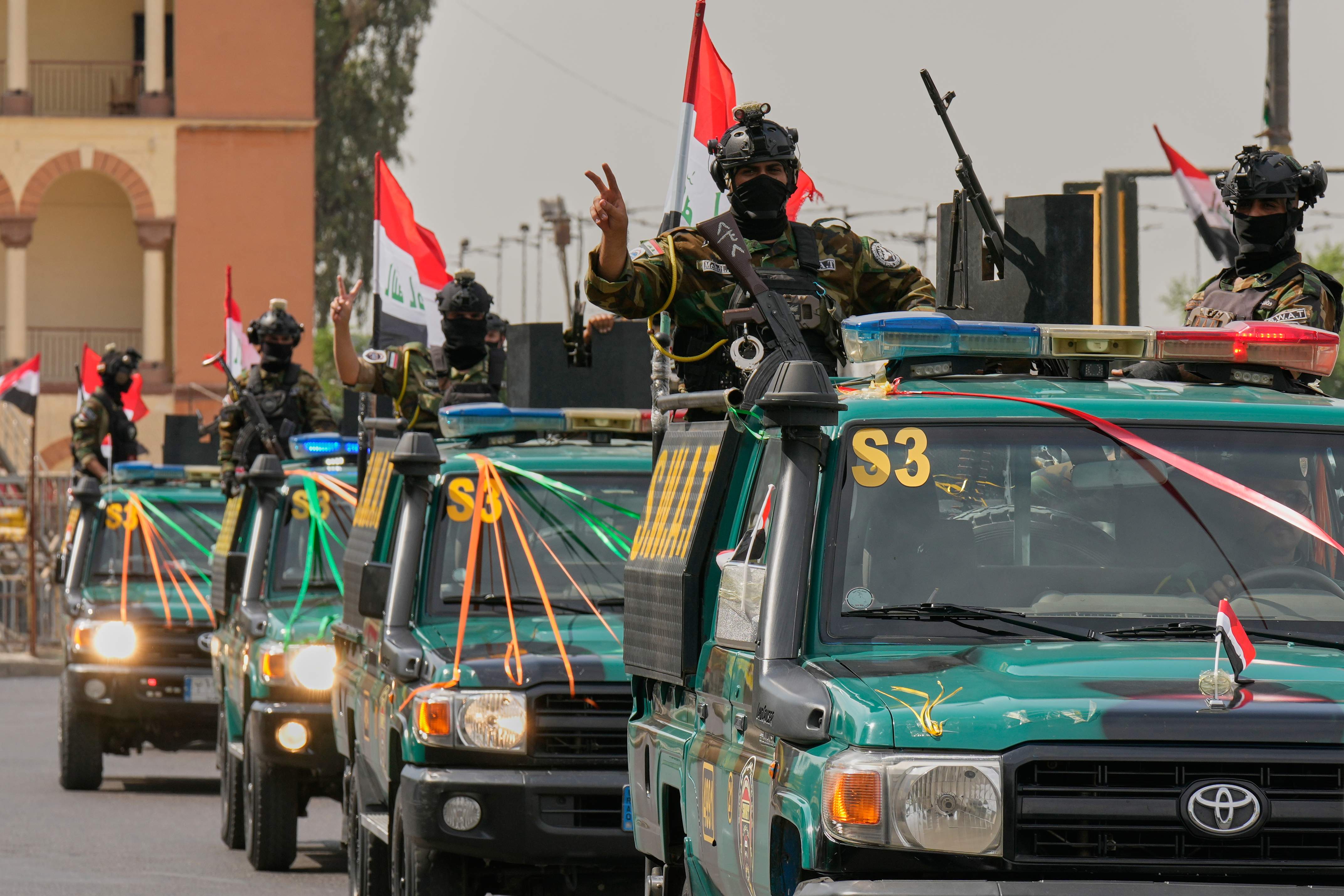
Iraq’s government has declared September 30 the final date for ending the US-led coalition’s military mission. Prime Minister Ali al-Zaidi’s office says October 1 will find the country “free of any foreign military presence,” closing a deployment that once reached about 170,000 US troops.
But withdrawal leaves intact much of the damage inflicted by the invasion and the 13 years of sanctions that preceded it, along with the financial arrangements through which Washington continues to exert influence.
The US left Iraq’s productive economy devastated, its institutions dismantled and reshaped, and its workforce left increasingly dependent on a state funded by oil. Access to that income remains vulnerable to US pressure.
The question after the troops leave is how much control Iraq will have over the economy they leave behind.
Thirteen years of sanctions
The erosion of Iraq’s economy began long before March 2003. The UN Security Council imposed sweeping sanctions after Saddam Hussein’s regime invaded Kuwait in 1990. Drawing on internal UN records, Joy Gordon’s Invisible War describes one of the most comprehensive and devastating sanctions regimes ever imposed.
The embargo quickly collapsed incomes. Reconstructed World Bank estimates showed GDP per capita collapsing to a third in a single year, going from about $3,527 in 1990 to $1,255 in 1991.
Public employees who had earned $150 to $200 a month before sanctions were earning $3 to $5 by 1996, according to a 1997 assessment. By 2000, the International Committee of the Red Cross reported salaries as low as $2 a month and unemployment around 50 percent.
Factories, power stations, and water plants could not recover without imported equipment and spare parts. Yet any member of the sanctions committee could hold an entire contract indefinitely, even over a single disputed item. Gordon documents Washington’s use of the “dual-use” designation to restrict goods as basic as water pipes. By August 2002, the UN counted 2,058 contracts worth about $5.2 billion that had been placed on hold, including $745 million in oil industry equipment.
The restrictions also placed Iraq’s oil income beyond Baghdad’s direct control. Under the Oil-for-Food program, buyers paid into a UN-administered escrow account. After deductions for compensation, administration, and weapons inspections, the proceeds could finance only approved purchases. Iraq exported roughly $65 billion in oil under the program but could not use that money as ordinary budget revenue for wages, maintenance, or local services.
The collapse pushed skilled workers out of their professions. A UN humanitarian survey of 1,157 degree holders employed by aid organizations found 725 in general-service or menial jobs, including doctors, engineers, and scientists working as drivers, clerks, and guards.
By the time US troops arrived, Iraq had endured years of falling wages, industrial decline, and lost expertise. The occupation’s first decisions deepened that damage.
Dismantling the state, contracting out reconstruction
On May 16, 2003, the occupation authority issued Order 1, barring senior Baath Party members from public employment and requiring the screening of senior staff in ministries, hospitals, and universities. A week later, Order 2 dissolved the Defense Ministry, army, Republican Guard, and intelligence bodies.
The International Center for Transitional Justice estimates that Order 2 alone left about 400,000 conscripts, officers, and officials without jobs. The World Bank counted more than 2 million unemployed Iraqis, nearly 30 percent of the labor force, around 2003–2004. Meanwhile, Iraq’s health minister estimated that roughly half the country’s prewar doctors had fled as kidnapping and assassination made their work increasingly dangerous.
The occupation then opened the weakened economy to foreign competition. Order 39 allowed wholly foreign-owned companies and guaranteed investors treatment no less favorable than Iraqi businesses, while excluding natural resource extraction. Other orders suspended tariffs, later replaced by a flat 5 percent levy, and capped income tax at 15 percent from 2004. The World Bank warned that rapid opening would cost jobs in a country whose private sector was too weak to employ displaced workers.
Reconstruction brought billions of dollars, but much of the spending flowed through foreign contractors. The United States spent more than $60 billion over roughly a decade, according to the Special Inspector General for Iraq Reconstruction (SIGIR). More than $25 billion went to training and equipping security forces after the occupation had dissolved Iraq’s existing military institutions.
SIGIR found that reconstruction began without adequate security, consultation with Iraqi ministries, or planning for long-term maintenance. Its final report estimated waste at $3 billion to $5 billion from the main reconstruction fund and as much as $8 billion overall. The largest early infrastructure contracts went mainly to US firms. A $1.8 billion award to Bechtel in January 2004 was open only to American bidders.
Iraq’s own money followed a similar path. UN Security Council Resolution 1483 established the Development Fund for Iraq to receive oil revenue, with the occupation authority directing spending until June 2004.
An Iraq Revenue Watch analysis of contracts paid from Iraqi funds found that US companies received 74 percent of their value. US and British companies together received 85 percent, while Iraqi firms received 2 percent. Audits found that 73 percent of the value of Development Fund contracts above $5 million had been awarded without competitive bidding.
Oversight was inadequate even to establish how some of that money had been used. A 2010 SIGIR audit found that the Defense Department had failed to establish required accounting controls for about $8.7 billion of the $9.1 billion it received from the fund. It could not document spending of about $2.6 billion.
The result was a reconstruction process that directed vast sums abroad while leaving Iraq with damaged services, limited productive capacity, and institutions struggling to rebuild.
An oil-funded system of patronage
With factories closed or looted and no private industry to replace them, the state became the place where Iraqis look for work. An assessment by the International Fund for Agricultural Development, using World Bank data, says public employment accounts for nearly all formal jobs and 40 percent of all jobs. Salaries and pensions took about 90 trillion dinars, roughly $69 billion, more than 40 percent of the 2024 budget, and the World Bank says another half a million government jobs were added during the spending expansion that preceded 2025.
The private sector has not filled the gap. Estimates put imports at more than 90 percent of the goods in Iraqi shops, while manufacturing makes up only around 2 percent of GDP. The World Bank says nearly 29 percent of the population is aged 15 to 29, and that this large group is entering the labor market amid limited job creation, a preference for public-sector work, and a private sector too small to absorb them. Youth unemployment is about 32 percent, and only around 11 percent of women take part in the labor force.
The IMF’s 2025 assessment describes the same pattern, citing high unemployment, an excessive state footprint, corruption, a weak banking system, and an inefficient electricity sector, and it called the wage trajectory fiscally unsustainable. Analysts describe a cycle in which secure public wages raise the pay that educated workers expect, private firms struggle with unreliable power and weak finance, and young graduates keep turning to the state for jobs, which raises the demand for more public hiring.
Oil pays for all of it. The World Bank estimates that oil supplied about 88 percent of government revenue and 91 percent of exports in 2025.
The financial levers Washington keeps
Iraq’s oil income has passed through outside hands since 1996, first a UN escrow, then the occupation authority’s fund, and now the New York Fed.
The Development Fund’s accounts were opened at the Federal Reserve Bank of New York, where Iraqi oil revenue still flows. Buyers pay dollars into a Ministry of Finance account, and the Central Bank of Iraq converts part of the income into dinars for government spending. US jurisdiction over dollar clearing, correspondent banking, and physical cash shipments gives Washington substantial influence over Iraq’s access to its money.
In January 2020, after Iraq’s parliament called for foreign troops to leave, the Trump administration threatened to block access to the account. Iraqi officials said it then held about $35 billion and warned that losing access would disrupt salary payments and the exchange rate.
US restrictions introduced in November 2022 forced banks seeking dollars for international transfers to disclose the final beneficiaries and purposes of transactions through an electronic platform, with requests screened by the New York Fed. US and Iraqi accounts linked the measures to concerns about transfers to sanctioned Iranian actors.
Consequently, more than 80 percent of daily wire requests were initially blocked or returned. Transfers fell from $224.4 million on October 17, 2022, to $22.9 million on January 17, 2023. Demand shifted to the parallel market, where the dinar traded at about 1,588 to the dollar in February against a newly set official rate of 1,300. In a country dependent on imported food and consumer goods, restricted dollar access raised costs for ordinary households.
In April 2026, Washington applied pressure through physical cash, halting a shipment of about $500 million and suspending parts of security cooperation. Iraqi officials said the halt affected banknotes used for travel, medical treatment, education, and retail exchange, while electronic transfers for imports continued. Some shipments resumed in July. On September 26, Baghdad announced that Washington had agreed to continue them.
US sanctions have also reshaped access to Iraq’s oil fields. Russia’s Lukoil left West Qurna 2 after sanctions, and Chevron signed agreements to take over its development. During al-Zaidi’s July visit to Washington, Iraq signed dozens of agreements with companies including ExxonMobil, KBR, Halliburton, and Shell. US Energy Secretary Chris Wright cited more than $60 billion in commercial agreements, while al-Zaidi told The National that US companies would receive top priority. According to the Atlantic Council, Donald Trump framed the deals as American oil companies taking the place of US forces.
As US forces prepare to leave Iraq, they leave behind a trail of devastation. Decades of sanctions and occupation have weakened its productive economy, dismantled state institutions, and left livelihoods dependent on an oil-funded system of patronage. The consequences will endure long after the troops depart.
Washington retains substantial power over Iraq through its influence over dollar access and the financial channels that sustain the state. The withdrawal ends a military mission, while leaving Baghdad to contend with both the damage of US intervention and the control Washington continues to exercise.
Iraqi anti-terror resistance group Kata’ib Sayyid al-Shuhada has rejected any surrender of its weapons, with its spokesman stressing that resistance would continue despite pressure and that Iraqi resistance fighters would sustain their support for their fellow fighters in Lebanon.
Sheikh Kazem al-Fartousi, spokesman for the group, which is a subdivision of Iraq’s Popular Mobilization Units (PMU) coalition, made the remarks to the Lebanese news website UNews.
“We have not retreated from the resistance, and there will be no surrender of weapons,” he said, the website reported on Tuesday.
“The resistance’s weapons in Iraq are at its disposal and Iraqi resistance would continue supporting the Lebanese resistance,” the official added.
“The pressure has not deterred us from continuing along this path and will not lead us to retreat even a single step in confronting the enemy.”
The statement came as the Iraqi government, headed by Prime Minister Ali al-Zaidi, has, as a result of US pressure, been seeking to advance a plan to establish a state monopoly over weapons.
A day earlier, Haj Abu Mujahid al-Assaf, the security official of Kata’ib Hezbollah, another member of the PMU, also pointed to the upcoming prospect of expulsion of US-led forces from the Arab country, saying that, upon the occasion, the Iraqi people would celebrate the expulsion, associating the pending development to the efforts made by Iraqi resistance groups.
Al-Assaf further warned that if the restrictions imposed by the United States on Iranian aviation continued after October 1, the Iraqi people would take a clear position, adding that the possibility existed of closing border crossings with countries participating in the Washington’s efforts at targeting the Islamic Republic.
The withdrawal, agreed on two years ago, comes against the backdrop of the ongoing war between the United States and Iran that has also sometimes spilled over into Iraq.
The withdrawal, agreed on two years ago, comes against the backdrop of the ongoing war between the United States and Iran that has also sometimes spilled over into Iraq.
America has become an imperial power that aims to invade and dominate the weak countries. This tendency has created global insecurity and led America to lose wars. In terms of natural resources and firepower, America dominates like no other country. It has the largest and most flexible military, the most weapons, and the most devices […]
Head of the Political Council of the Iraqi Harakat Hezbollah al-Nujaba, Sheikh Ali al-Asadi, criticized Baghdad’s decision to prevent Iranian aircraft from landing at Iraqi airports, stressing that it constitutes compliance with US pressure and warning that popular action could follow if the decision is not reversed.
Speaking to Al Mayadeen, al-Asadi said, “We regret the decision by the Iraqi authorities to prevent Iranian aircraft from landing in Iraq.” He described the decision as “submission to American bullying,” adding, “The Iraqi decision-maker must reconsider it; otherwise there will be popular pressure aimed at changing the decision.”
He said the issue extends beyond Iraqi airports, invoking longstanding ties between Iraq and Iran. “The issue goes beyond airports. There are close relations with Iran, and therefore we must not bow to an irresponsible decision by America,” he said. “Popular options will be the most pressing, and all possibilities are on the table.”
Sheikh al-Asadi attributed growing US influence in Iraq to weaknesses among domestic political actors. “The weakness of the domestic political actor has allowed the American occupation to impose its decisions in Iraq,” he said, adding, “The decision-maker can choose not to implement American decisions, as some countries do.”
He stressed that “the decision must be sovereign and independent politically, economically, and in terms of security,” defining sovereignty as “complete independence, with Iraq being the decision-maker in all aspects of life.
According to Sheikh al-Asadi, “There are personal and partisan interests behind the absence of independence in decision-making.” He also accused Iraq’s political class of adopting contradictory positions toward Washington, slamming duality in the political class: on the one hand, it agrees to American decisions, while on the other, it condemns them.
He added, “The Resistance’s positions have been clear from the beginning, while the Iraqi politicians have ambiguity and complications.”
Iraq’s main problem is corruption
Turning to the issue of weapons and the debate over their regulation, Sheikh al-Asadi said his movement had held discussions with the Coordination Framework and rejected the term “weapons confinement”. “We discussed the matter with the Coordination Framework and rejected the term ‘weapons confinement.’ We established that the term is harmful and changed it to ‘weapons regulation,’” he said. “Iraq’s biggest problem is corruption, not weapons,” he asserted.
“We are in favor of the Dawn Strike against corruption, but we want it to continue. There are clearly identified corrupt figures, and the law must be applied to them,” the Iraqi leader said. He also expressed deep distrust of Washington, saying, “We do not trust the Americans one iota, and they do not keep their word.” He added, “What happened with Iran is the biggest proof that the Americans do not keep their word. They struck Iran during negotiations, and this is proof of their treachery.”
US assassination unit, like Blackwater
Shikh al-Asadi said Iraq should remain free of US interference in its internal affairs. “Iraq must be free, and the American envoy must not interfere in economic, security, or political affairs,” he said. He added that his movement had information about US activities in Iraq, saying, “We have information about all the American movements and about the division they established, which includes Iraqis under their supervision.”
“We know where this division is located and what its duties will be in the coming phase, and all of this is being monitored,” Sheikh al-Asadi warned. He revealed that the goal behind the creation of this division is to carry out assassinations and create discord, saying, “It is like ‘Blackwater’ under another name.”
He added, “The American movement is suspicious, and they have security companies that entered to compensate for the American military withdrawal.”
Al-Nujaba rejects political participation under current system
Sheikh al-Asadi said Nujaba had no decision to participate in Iraq’s political process. “We in Harakat Hezbollah al-Nujaba have no decision to engage in the political process, and we are not convinced by the way it is being managed,” he said.
On the issue of weapons, he told Al Mayadeen, “The conditions for handing over weapons are ending the American occupation and all foreign presence, including the Turkish presence.”
He added that the Peshmerga should fall under the command of Iraq’s commander-in-chief of the Armed Forces and warned that “the separatist factions are one of Iraq’s problems, and whenever Resistance intervention is necessary, we will intervene in every inch of Iraqi territory.”
Sheikh al-Asadi further argued that the continuation of armed resistance was linked to the circumstances that justify it: “The resistance has its justifications for resistance, and when these justifications end, so does resistance,” reminding that the justifications do not end with the mere withdrawal of the remaining foreign troops in the country.
Iraq’s leadership must use its leverage
Al-Nujaba’s top official said Iraq’s political leadership must understand the country’s sources of strength and leverage and use them to advance its independence and sovereignty.
Speaking about Iraq’s leadership, Sheikh al-Asadi said he believed the current political figure in question “wants to serve the public interest and do the required work,” describing him as someone who is acting “based on his Shia identity, if I may put it that way.” However, he said the figure is “new to politics” and lacks advisors genuinely committed to helping him succeed.
“Unfortunately, he does not have advisors who are genuinely committed to making his experience successful. Rather, his advisors are concerned with making themselves successful,” Sheikh al-Asadi said.
He stressed that the advisors attempt to influence the political leadership based on what they receive from Washington, adding, “They do not want to help him become a successful figure who can lead during this stage and perhaps the next stage.”
“Whoever leads Iraq must understand what Iraq truly is and what the cards of strength and leverage in Iraq are,” he said. He questioned the interests of foreign powers in Iraq, asking, “Who needs Iraq? Does Europe not need Iraq? Does Turkey not need Iraq?”
Sheikh al-Asadi also pointed to the Development Road project, asking, “Doesn’t the Development Road that they are talking about need Iraq?”
“All of these are leverage cards a political actor can use to achieve what he wants,” he said. “He can even use the cards held by the Resistance factions as leverage. We are offering him this card and telling him: Use us for the sake of serving Iraq.”
Al-Asadi says US sought to persuade factions to give up weapons
According to Sheikh al-Asadi, several US allies had contacted his movement seeking a truce. “Many of America’s allies sent us messages asking for a truce, including the American chargé d’affaires who “tried to contact us through one of the politicians and asked to meet with us.”
He also said US officials had offered projects and incentives in exchange for abandoning strategic weapons. “The Americans offered projects and incentives on condition that we give up our strategic weapons that reach Israel, but we rejected them,” the Iraqi official said. He warned that US pressure would continue even if armed factions surrendered their weapons, saying, “American pressure does not stop at any point. Even if the factions hand over their weapons, they will move on to the Popular Mobilization Forces and then to the Defense Ministry.”
He concluded by highlighting that Washington had sought for years to alter the leadership of the Popular Mobilization Forces. “The main American project for years has sought to change the leadership of the Popular Mobilization Forces and dilute it, but the religious authority and some politicians rejected that,” Sheikh al-Asadi said.
The last of the US-led coalition forces are leaving Iraq. It’s a significant bonus for Iran. The withdrawal date, September 30, was also the date by which Baghdad had pledged to bring numerous powerful Iran-backed militias under state control. But this deadline looks certain to be missed. This effectively means that, at a moment when […]
The US military is set to complete its withdrawal from its remaining bases in Iraq on Wednesday under a deal signed between the US and the Iraqi government in 2024. The US is officially ending the mission of the anti-ISIS coalition that began in 2014 after the US redeployed troops to Iraq following a 2011 […]
Iraq’s Ambassador to Tehran, Yasser Abdul-Zahra al-Hajjaj, announced that Najaf International Airport will reopen to Iranian flights within 24 hours, according to the Iraqi News Agency.
Al-Hajjaj confirmed the airport will resume receiving flights from Iran within the stated timeframe.
The suspension of Iranian flights to and from Iraqi airports, particularly Najaf International Airport, had triggered a wave of condemnation from official, factional, and religious authorities in Iraq. They called for the decision to be reversed, rejecting US dictates.
Iran submits formal complaint to ICAO over US aviation restrictions
Meanwhile, Iran has submitted a formal complaint to the International Civil Aviation Organization (ICAO) regarding US restrictions imposed on Iran’s aviation sector, the head of Iran’s Civil Aviation Organization, Abouzar Shiroudi, announced on Monday.
Shiroudi said the organization held consultations with the Ministry of Foreign Affairs before filing the complaint, as part of efforts aimed at restoring air routes. In remarks carried by the Iranian news agency IRNA, he said, “It is necessary to use diplomatic and legal potential to protect the rights of the country’s aviation sector.”
He added that “Iran’s Civil Aviation Organization, using all legal tools and in close coordination with the country’s diplomatic apparatus, prioritizes the follow-up of necessary measures to remove obstacles and resume all flights on routes that previously operated.”
The remarks follow US Treasury Secretary Scott Bessent’s announcement on September 21 that Iranian airlines “will effectively be forced to cease operations as of September 23, due to secondary sanctions imposed on aviation service providers.”
International flights from Iran to several destinations remain operational despite the expansion of US sanctions targeting the country’s aviation sector, according to Tehran’s Imam Khomeini International Airport.
The airport said Saturday that flights to Turkey, Malaysia, China, Pakistan, Vietnam, and Afghanistan were continuing according to their previously announced schedules.
The announcement comes as Washington escalates economic pressure on Iran and seeks to restrict the ability of Iranian airlines to maintain international operations.
Iranian flights continue despite sanctions
Imam Khomeini International Airport said that, aside from flights already canceled, no additional cancellations had been announced.
The canceled services include flights involving the United Arab Emirates, Iraq, Oman, and Georgia.
The airport also said it was working to restore suspended air connections as soon as possible.
The continued operation of several international routes comes despite growing restrictions on Iranian aviation following a new round of US sanctions announced on September 8.
The measures have affected Iranian airlines as well as companies and intermediaries involved in providing services to the country’s aviation sector.
Recent reporting indicates that Iranian carriers have continued operating some international services despite the sanctions, including flights to China, Turkey, Thailand, and Afghanistan.
US measures target Iran’s aviation sector
The US Treasury Department announced sanctions on September 8 against 36 targets linked to Iran’s aviation sector, including 27 Iranian airlines. Washington described the measures as an effort to target what it considers Iran’s remaining unsanctioned carriers and the networks supporting them.
The sanctions form part of a broader US campaign to restrict Iran’s access to international financial and commercial networks.
The measures have also placed pressure on foreign companies providing Iranian carriers with fuel, ground handling, aircraft-related services, and other forms of support.
The consequences, however, have varied by country. While some governments and companies have restricted Iranian aviation connections, other countries have continued to facilitate flights.
Iraq restrictions trigger backlash
In Iraq, the suspension of Iranian flights, particularly through Najaf International Airport, has triggered criticism from official, political, factional, and religious quarters.
Several Iraqi parties and figures have called for the decision to be reversed and rejected what they described as US pressure on Baghdad.
The Iraqi government is also moving toward dialogue with Washington in an effort to secure an exemption that would allow air links with Iran to resume.
Ali Akbar Velayati, international affairs advisor to Iran’s Leader, said the restrictions on Iranian flights were part of an effort by Iran’s enemies to compensate for their battlefield defeat by attempting to dismantle the “unity of the fronts” from within.
The Iranian Ambassador to Iraq, Mohammad Kazem Al-Sadegh, further told Iran’s ISNA news agency that a new decision surrounding Iranian flights to Iraq is likely to be announced soon.
He added that Iran is in contact with Iraqi officials and proposals on the matter have been submitted.
Al-e Sadegh noted that roughly 12,000 to 13,000 people travel between Iraq and Iran via Iranian airlines.
China maintains air links with Iran
China has maintained its opposition to unilateral US sanctions and continued to receive Iranian flights.
Flight-tracking data cited in recent reports showed Iranian services continuing to operate to Chinese destinations after the latest US measures took effect.
The continued connections with China also reflect the broader geopolitical divide over Washington’s unilateral sanctions policy, with Beijing maintaining economic and diplomatic ties with Tehran despite US pressure.
There have been many tipping points in history; to name just a few examples:
The Peace of Westphalia in 1648
The French Revolution of 1789
The Congress of Vienna in 1815
World War I in 1918
World War II in 1945
Many of these turning points led to shifts in power in Europe. These were merely transfers of power within the world we now call the “Collective” West. Examples include the collapse of the German Empire, the Austro-Hungarian Empire, the Ottoman Empire, and the Russian Tsarist Empire at the end of World War I.
These shifts in power were significant, yet what is happening now cannot be compared to past turning points, as they encompass the entire globe. The reins of power are not being handed over within the West; rather, there will be a shift in power toward the East and the “Global South.”
From Tipping Point to Entropy
The scale, the number of nations involved, the geographic scope, and the speed at which the current geopolitical crises are unfolding are truly astonishing.
Ukraine as a War Platform for the U.S., NATO, the EU, and Russia
Russia Will Prevail Militarily
Looking at the military reports from the front lines, it becomes clear to any observer that Russia will achieve its military objectives. While Russia might have relinquished the Donbas, Kherson, and Zaporizhzhia had a peace agreement been successfully concluded in the spring of 2022, such an agreement is unrealistic under the current circumstances, as Donetsk, Luhansk, Zaporizhzhia, and Kherson have been part of the Russian Federation since September 2022. It is currently unclear how far the Russian military advance will go. I have commented on this in my article “The Summer Peace Died,” to which I refer. For the situation on the front lines, I once again refer to Military Summary; I have been following this channel for nearly five years, and it provides objective reporting.
Catastrophic Mobilization Situation in Ukraine
There are thousands of videos showing young men being hunted down like animals on the streets throughout Ukraine in order to forcibly recruit them. Recently, however, videos have also been circulating that show some of those forcibly recruited being transported to the front lines without uniforms and even in handcuffs, like criminals—to prevent them from escaping. I’ll leave it to the readers to ponder the combat effectiveness of these men against battle-hardened and motivated Russian soldiers.
Armed guards transport mobilized Ukrainian men to frontline in order to prevent them from deserting. This is described as normal by the Ukrainian officer. Videos also show them in handcuffs. Zelensky & Western politicians call this freedom & democracy. pic.twitter.com/f6AGyuMpRX
The latest move by the Ukrainian military leadership is to forcibly conscript women. Given this situation, it’s no surprise that Scott Ritter stated that the Ukrainians are losing 30 times more soldiers than Russia. We hear nothing in the West about this inhumane treatment of their own soldiers in Ukraine.
Ukrainian volunteers, who later disappeared without a trace, are said to have used drones and artificial intelligence to count the number of soldiers’ graves throughout Ukraine. They counted 2,000,054 graves. Added to this are the dead buried by their own people in mass graves and the wounded—the Ukrainians’ losses do indeed appear to be astronomical. Nevertheless, Zelenskyy claims that only 50,000 Ukrainian soldiers have been killed. A few weeks ago, I attended a funeral in Russia. The soldiers’ graves are easily identifiable by the Russian flag and the flag of the fallen soldier’s unit. There were soldiers’ graves, but no sea of flags like in Ukraine.
Ukrainian volunteers, who later disappeared without a trace, reportedly used drones and artificial intelligence to count military graves across Ukraine. Their estimate was 2,000,054 graves. Yet Zelensky claims that only 50,000 Ukrainian soldiers have been killed. Does that mean pic.twitter.com/LeplE4H3n6
Military Victory Does Not Solve Russia’s Geopolitical Problem
Whatever needs to be achieved militarily, Russia will achieve it; however, this does not resolve Russia’s geopolitical problem on its western border, because the goal is not new territories, but peace in the West—a goal that Russia has literally been striving for centuries and has never been able to achieve. Time and again, Russia has been attacked from the West and has regularly paid a high price in blood, money, and industrial capacity—resources diverted to military spending rather than civilian purposes. As a result, Russia’s social development has been repeatedly set back.
If Russia wants to keep pace with the major powers in terms of its civilian economy in a sustainable manner, reliably securing its western border is an absolute prerequisite. Although Russia is the only industrialized nation in the world that is self-sufficient and thus capable of waging a war lasting decades, such a confrontation would massively hinder the country from achieving its actual development goals.
The U.S.’s Lack of Credibility in Negotiations with Russia
The U.S.’s lack of credibility in the eyes of Russia is multifaceted. On September 15, Foreign Minister Lavrov said, verbatim:
“If the Americans hadn’t backed away from the Anchorage agreements, if Europe hadn’t pulled them away from those agreements, we would have been living without war for a year now.” – Sergey Lavrov, September 15, 2026
Under this agreement, Russia would have made major concessions. Russia would have retained the Donbas, frozen the conflict in Zaporizhzhia and Kherson, and relinquished further territories. Objectively speaking, this was a bad deal for Russia, but it demonstrated the Russians’ considerable willingness to compromise. The Russians assumed that this verbal agreement was binding as a gentlemen’s agreement. However, gentlemen’s agreements should only be made with gentlemen. The Americans taught the Russians otherwise. The Russians are dismayed about this incident and have had to admit that no agreements are possible with the U.S. government. Personally, I’m surprised by the fact that this realization came so late. Even written agreements with the U.S. government are not to be trusted. This was evident in the breach of the Memorandum of Understanding that the Americans signed with Iran in June. Thus, one must conclude that this conflict—or any conflict in which the U.S. is directly or indirectly involved—must be fought to the bitter end. A bitter lesson for every contractual partner of the U.S.
The Risk of Escalation is Significant
Ukraine is desperately trying to officially draw NATO into this military conflict. It is astonishing that European countries—above all Germany and the United Kingdom—are not only signaling their willingness to do so, but are actually doing everything they can to prepare their people for a war with Russia.
Instead of naming many people, we’ll use Sir Jacob Rees-Mogg—former cabinet minister and Member of Parliament for North East Somerset—as an example. In this excerpt from an interview, he compares the situation with Russia—without naming it—to the situations during World War I and World War II:
European leaders are currently pivoting from “this is not our war” to “it’s your duty to die in a war with Russia.” pic.twitter.com/h2M0CBpk0g
Young people are thus being called to arms to prepare for war against Russia. In Germany, such efforts have failed miserably. Of the more than 300,000 young Germans surveyed, only 0.17% volunteered to serve in the Bundeswehr. Furthermore, it came to light a few days ago that the Bundeswehr itself could not even find 5,000 volunteers for a battalion in Latvia.
It is incomprehensible what these European countries are up to besides spreading propaganda. Even combined, the European countries do not possess military forces that would give them even the slightest chance of standing up to the Russian armed forces. The Russians are by no means impressed by this farce in Europe—they are disgusted by it. I assume that this war propaganda in Europe serves only to perpetuate the anti-Russian narrative.
Both President Putin and Foreign Minister Lavrov have repeatedly emphasized that they have no interest in attacking NATO targets outside Ukraine. However, if European countries are foolish enough to send even small European military contingents to Ukraine, the situation could change abruptly.
The greatest risk of escalation at the moment is that the Europeans, presumably in collaboration with the Americans, are planning a false flag attack in Europe in order to somehow trigger Article 5 of the NATO Charter. According to geopolitical analyst Warren Thornton, preparations for false flag attacks are in full swing. He writes on X:
THE FALSE FLAG
These are the areas that are the targets. The Mallorca airport in Spain. The Sorrento Continental Hotel in Italy. The Promenade De Anglais, Nice. The area to be launched from west of Sardinia. The agencies involved CIA, French Naval Intelligence Services and the… pic.twitter.com/ThDYyuZBOz
I can’t say whether this theory is correct, but it’s by no means far-fetched that the Europeans would attempt something so outrageous.
U.S. Military Campaigns in the Middle East Beginning in 2001
Looking back over the past 25 years, the U.S. has sought to reshape the Middle East according to the Wolfowitz Doctrine since 2001. None of the wars the U.S. launched during this period (Afghanistan, Iraq, Libya, Syria, Yemen, Somalia, etc.) were successful. In fact, it was already evident back then that the hegemon lacked the resources, military strategy, strength, and credibility needed to act successfully. However, if one’s view is that the actual intent was destabilization and chaos, then they were extremely successful. Nevertheless, they returned to the plan in collaboration with Israel, apparently after Israel had succeeded in completely undermining American policy.
Israel: Genocide and Greater Israel
The immediate starting signal for the “Genocide” and “Greater Israel” projects was given on October 7, 2023, when a military operation by Hamas was turned into a false flagattack to justify the genocide against women, children, and other civilians in Gaza and, later, in the West Bank and Lebanon. This, in turn, served as the starting signal for the continuation of the Greater Israel project; initially, Syria and Lebanon were attacked. Although the Western press not only downplays Israel’s genocidal and imperialist actions but also fully supports and fuels them—including through the media of “neutral” Switzerland—Israel is viewed with increasing criticism by the general public in the Western world. According to Pew Research, 60% of Americans view Israel negatively. The Western media thus conveys an image that finds no resonance among the general public.
When Israeli Prime Minister Benjamin Netanyahu took the podium to address the plenary session on Thursday, delegates to the UN General Assembly left the hall in droves.
NEW
UN General Assembly delegates stage a mass walkout as Israeli Prime Minister Benjamin Netanyahu takes the podium to address the hall pic.twitter.com/EcTpBBvjjM
It is important to me to continually remind my Western readers of what is actually happening in Gaza right before our eyes—eyes that many choose to close.
Major Escalation in the Middle East—Loss of Control
Starting in February 2026, events began to accelerate even further. Since then, everything has gone wrong for the West and Israel in the Middle East. The Global South has already wrested the initiative from the West. While Iran initially limited itself to responding to American-Israeli aggression, it is now the Iranians and the Yemeni Ansar Allah movement who are setting the pace.
Ansar Allah managed to bring the entire western coast of Yemen under its control in a very short time and thus controls not only the Bab al-Mandab Strait but also the island of Perim Mayyun off the coast. With virtually no Western media coverage, the advance continues, and it is quite possible that Aden will soon be captured.
Furthermore, the Saudis’ East-West pipeline was paralyzed and targets near Riyadh were attacked. So far, the Saudis have been unable to mount a serious military response to this large-scale attack, as they do not seem capable of doing so on their own, and repeated calls for help to Trump and others have been in vain. The Mecca Alliance, which unites Pakistan, Saudi Arabia, and Turkey in a military alliance, also appears to be a thing of the past, as even these “friends” refused to provide assistance.
President Macron’s grand announcement that he will send troops to Saudi Arabia won’t change any of that. “Arabia” is called Saudi Arabia because this country is ruled by a family—a tribe—the Sauds. A tribe that is protected by the Americans. However, there are approximately 100 other tribes within Saudi Arabia. It’s very possible that they could join forces with Ansar Allah and overthrow the House of Saud. The House of Saud no longer has any income and seems unable to continue buying off—as it has done until now—all those who could pose a threat to them. There’s a chance that the Saud house of cards will collapse, and if that happens, I wouldn’t give a penny for the remaining Gulf states.
Alastair Crooke also pointed out on several occasions that this dynamic could spill over into Iraq, another millennia-old civilization alongside Iran. If that happens, Kuwait will likely fall as well. Another smoldering conflict can also be detected in Jordan. It is therefore quite possible that the entire structure in the Middle East established by the British a good 100 years ago could collapse within a few months, without the Americans being able to stop this tsunami in any way. Arabia to the Arabs, Persia to the Persians, and the Americans out for good. If this happens, Israel will go from perpetrator to target; one certainly cannot speak of it as a victim in this context. How the emerging great powers of the Middle East will deal with the genocidal Zionists should be left to those who have suffered the greatest losses, for Palestinians are Arabs.
Europe
Chaos is once again rearing its head in Europe. Germany is the first country—once the world’s leading exporter and the major power in the EU—that is in danger of becoming politically ungovernable. The Alternative for Germany (AfD), which has been labeled as far-right and Hitler-like by the previously dominant parties and excluded from government participation by a so-called firewall, not only won landslide victories in two state elections in eastern Germany but also leads the CDU by a clear margin in national polls (30% to 20%). Chancellor Merz’s approval rating stands at 10 percent—a barometer that reveals the people’s dissatisfaction and would have driven any truly democratic chancellor to resign. Whether the Germans, in light of this political situation, will clench their fists and do nothing, as they have in the past, remains uncertain. The chancellor’s downfall would be good for Germany. The AfD is the only major party seeking dialogue and peace with Russia, which is not only desperately needed by this once-thriving industrial nation but is also a prerequisite without which it cannot survive economically. The alternative to real and fundamental political change in Germany is the war against Russia sought by Chancellor Merz and the ruling political elites. The last time Germany went to war against Russia in 1941, Adolf Hitler sent 3.7 million soldiers eastward and failed, despite the Germans’ genocidal behavior, which cost the lives of approximately 17 million civilians. As already explained above, the Federal Republic of Germany today finds itself unable to assemble a brigade of 5,000 volunteer soldiers for the Baltic states. This does not seem to concern the chancellor, which is a clear sign of the madness that has taken hold of him. This is strong evidence that he is acting in the interests of a power located outside Germany. One would be a naughty person to believe that this has anything to do with his BlackRock past. Those who managed to install him as chancellor can pat themselves on the back, as they’ve snagged a puppet at the bargain price of a few million.
The following clip shows how the new leadership in Berlin is presenting itself—the Left has taken over. No words needed:
The situation in the rest of Europe is no more encouraging. The presidential election in France will take place in April 2027. Macron is no longer eligible to run, and Marine Le Pen has a significant lead over the other candidates. The situation is thus similar to that in Germany: a party that is denounced as far-right by the parties currently in power, yet is the most popular among the people. Le Pen’s position on peace with Russia is unclear—she seems to be speaking with a forked tongue: on the one hand, she wants a negotiated peace, but at the same time supports the training of Ukrainian troops. A seasoned politician who positions herself to capture as many votes as possible. France’s financial situation is grim, with no silver lining. The rise in the interest rate on 10-year French bonds over the past twelve months has been even steeper than in any other European country.
Trump
President Trump’s policies only seem difficult to understand at first glance. His constant flip-flopping on Ukraine, Iran, and Israel is counterproductive and damaging to the U.S.’s reputation on the world stage. The reason behind Trump’s current actions is the midterm elections in November. Trump is struggling with the high oil prices he himself has caused, which he can prevent from spiraling out of control by manipulating the futures markets. However, actual market prices are 30% to 50% higher than the manipulated, fantasy futures prices. The fact that futures prices are indeed manipulated is evident, for example, in diesel prices at gas stations, which are moving in only one direction and have reached unprecedented levels worldwide. Diesel is the lifeblood of the American economy, and high prices are one of the biggest drivers of inflation, since virtually all goods are transported by trucks, agriculture depends on it, and large parts of industry rely on diesel. Trump’s latest farce: He’s blaming Zelenskyy for the high diesel prices because Ukraine is attacking Russian refineries; he’s doing this solely to divert attention from the biggest price drivers—the blockades of Hormuz and Bab al-Mandab.
Somehow, Trump wants to turn things around, but it seems that he will lose the midterm elections coming up in about six weeks. According to Polymarket, an American online prediction market where users bet on the outcomes of future events—with market prices reflecting collective probability estimates—the probability that the Republicans will lose their majorities in the House of Representatives and the Senate stands at 66%. Should this come to pass, Trump will likely face impeachment proceedings. He then runs the risk of going from a lame duck to a dead duck and being replaced by his turncoat vice president, Vance—not a promising outlook for the United States.
Trump’s latest appearance this week before the UN General Assembly was a testament to his psychopathic nature: He announced—nota bene after the election—that he would either make Iran a rich country or obliterate it completely.
Trump is every bit as bad as Adolf Hitler. In his speech at the Berlin Sportpalast on September 4, 1940, Hitler said, “We will wipe out their cities.” Trump wants to wipe out a 5,000-year-old civilization—without any legal basis, of course—acting like a god. In doing so, Trump is publicly calling for the genocide of an entire civilization. One might wonder whether he belongs in prison or in a psychiatric hospital, but the fact that he can make such statements before a global audience with impunity shows the depths to which Western civilization has sunk. I refer to a speech I gave in Switzerland on September 3.
The Financial Markets
I have made numerous comments on the instability of the financial markets. Now my dire predictions seem to be coming true. In addition to the overvaluations in the stock markets, I have repeatedly pointed out the unsustainable situation in the bond markets. Among the more astute market participants, fear is beginning to set in. Mr. Bessent has lost control of interest rates. On August 28, 2026, I looked at the average interest rate the U.S. had to pay on its debt; at that time, it stood at 3.35% (May), resulting in an annual interest burden of 1,340 billion. Today, this average interest rate stands at 3.49% (August); the debt mountain currently stands at 40,070 billion, meaning it has already increased by another 70 billion. Annual interest payments have thus risen by 56 billion to 1,396 billion per year in this short period of time.
Over the past 28 days, the yield on the 10-year U.S. Treasury bond has risen from 4.722% to 5.185%, an increase of 0.46%. It does not appear that this trend will change. If this pace continues, not only will the government bond market collapse, but so will the towering mountains of debt in the AI sector. The same picture is emerging in Europe and Japan as well. The question isn’t whether the collapse will happen, but when—and who the U.S. will let go first: the Japanese or the Europeans. That is my personal opinion. When it comes to timing, I’m regularly wrong, which has taught me not to be active in these markets. I have the great privilege of meeting regularly with one of the world’s most successful investors. At our last meeting, he agreed with me in principle but remarked that I couldn’t possibly imagine what tricks and means the Americans still have at their disposal to delay the inevitable.
The scale of this crisis will dwarf anything humanity has ever seen. Compared to today, the 2008 crisis was a stroll through a sunny park with a delicious picnic. Such a collapse in the West will also affect the countries concerned’s geopolitical freedom of action; suddenly, everyone will be very preoccupied with their own problems. No one knows whether this will lead to an escalation in the geopolitical arena. What is certain, however, is that the “experts”—who are still driving the markets forward with their jubilant cheers—will solemnly declare that this simply could not have been foreseen—as always.
Entropy
All of these individual tectonic shifts lead to what can be described as entropy, a term from thermodynamics. Applied to geopolitics, I describe the situation as a massive, irreversible state of disorder and uncertainty within the various international systems. Existing power structures, rules, institutions, and hierarchies are losing their cohesive power, and a new order that would promise stability is not in sight.
For the collective West, which until recently held the reins firmly in its hands, is unwilling to make compromises so as not to jeopardize its position as a hegemon.
The Global South, taken by surprise by the rapid pace of events, has not yet devised a coherent, unified, and effective policy to wrest power from the West.
It appears that the Global South, under the military dominance of Russia, China, and—most recently, Iran as the fourth major military power—is in the process of adapting to the new circumstances and coordinating its efforts, which will ultimately lead to its victory.
How long this will take, however, and whether the West will use nuclear weapons to maintain its hegemony remains to be seen—though I would like to express my doubts on this point. So far, only Adolf Hitler believed that Germany should go down with him. Let’s hope that cooler heads are in control of the apocalyptic buttons.
An Iraqi anti-terror resistance group has denounced the Baghdad government’s decision to halt Iranian airline operations following US sanctions on Iran’s aviation sector, vowing to stage sit-ins at Iraqi airports nationwide unless normal air traffic between the two Muslim neighboring countries resumes.
“We will not wait long,” Harakat Hezbollah al-Nujaba Secretary-General Akram al-Kaabi said in a statement on Friday.
He urged Iraqi political forces to “break free from American dominance.”
The restrictions, Kaabi said, were preventing millions of people from visiting religious sites and harming Iraq’s economy.
On Thursday, the Kata’ib Hezbollah resistance group called upon all walks of Iraqi society to break “the US siege on Iran.”
The faction urged Iraqi citizens to “circumvent the embargo through all available means” in demonstration of solidarity with Iran, including the purchase of Iranian commodities, the facilitation of commercial relations with Iran, and the abstention from any undertakings that would exacerbate Iranians’ hardship.
The group also asked Shia religious authorities to issue a decree (fatwa) on whether it is religiously permissible “to help the enemy, in any form, besiege and starve the Iranian people.”
Commercial aviation services between Iraq and Iran were suspended after ground-handling companies stopped providing services on these routes over concerns about potential US sanctions.
The move prompted airlines to suspend their flights.
Najaf International Airport, the last Iraqi airport still operating flights to Iran, suspended the services at 2 a.m. local time on Friday until further notice, according to an official directive.
Erbil International Airport and Sulaymaniyah’s International Airport took similar measures. Kirkuk International Airport also said it had no flights to Iran.
The disruption followed US measures targeting Iran’s aviation sector. On September 8, the US Treasury sanctioned 27 Iranian airlines and claimed that airports, fuel suppliers, ground-handling firms and other service providers dealing with sanctioned carriers could face secondary sanctions.
Mohammad Mokhber, an adviser to the Leader of the Islamic Revolution, Ayatollah Sayyed Mojtaba Khamenei, on Friday warned against recent regional measures that had disrupted Iranian passenger flights, saying: “Flights in the region are either free for everyone, or for no one.”
He added that cooperation with the US in implementing hostile policies would remain in the memory of the Iranian people, stressing that if Iran cannot fly or receive airport services, “no country in the region will have this possibility either.”
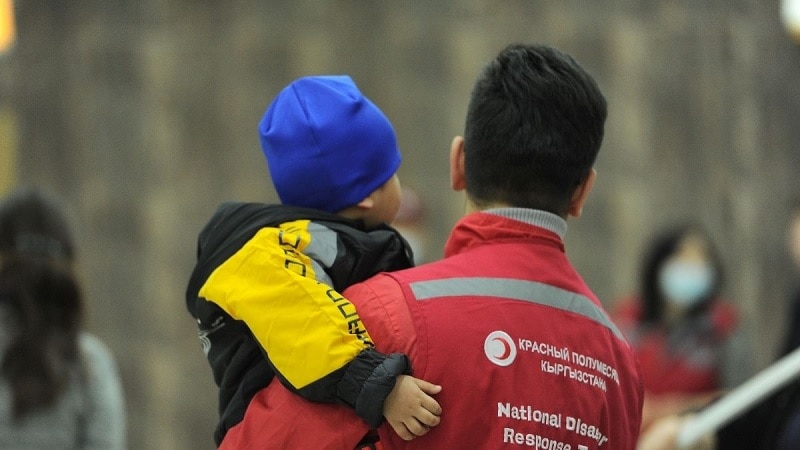
Families of dozens of Kyrgyz women imprisoned in Iraq are calling on the government to bring them home. The women -- mostly wives and relatives of Islamic State fighters -- traveled to Iraq and Syria more than a decade ago as the extremist group seized swaths of territory.
The Kurdistan Region of Iraq is steadily—and increasingly in a semi-official manner—sliding toward a formal division into two separate administrations. Occurring amid a prolonged political deadlock, parliamentary paralysis, and the breakdown of unified state institutions, this constitutional vacuum has created the conditions for a complete paralysis of national governance, writes Halo Hassan Saeed.
The Kurdistan Regional Government (KRG), headed by Prime Minister Masrour Barzani, has operated in a caretaker capacity since 2023 following the expiration of its constitutional mandate. This comes after the failure of the winning Kurdish parties from the October 2024 parliamentary elections—principally the Patriotic Union of Kurdistan (PUK) and the Kurdistan Democratic Party (KDP)—to form a new government.
De Facto territorial division
The KRG no longer exercises governing authority uniformly across the region. Amid escalating disputes, institution building has stalled, and the Kurdistan Parliament has been unable to perform its legislative or oversight functions for the past three years.
Consequently, two distinct de facto administrations have emerged, each backed by separate financial institutions and security structures:
• KDP Administration: Security, executive, and financial authority concentrated in Erbil and Duhok governorates.
• PUK Administration: Independent administrative and security control over Sulaymaniyah and Halabja governorates.
More than 30 rounds of negotiations between the two major parties have failed to yield a power-sharing compromise. The KDP remains determined to retain both the regional presidency and premiership, alongside the key Ministries of Interior and Natural Resources, and the Kurdistan Region Security Council. The PUK demands an equal power-sharing formula—either the presidency or premiership, alongside the Interior Ministry—or a full 50–50 executive split.
The PUK–New Generation coalition
The political dynamic shifted significantly with the formation of an alliance between the PUK and the New Generation Movement. Combined, the bloc commands 38 out of 100 parliamentary seats, directly challenging the KDP’s 39 seats. With remaining political factions holding 23 seats and refusing to join either bloc, the KDP's attempt to form a majority government has been effectively blocked.
Following the failure of recent domestic mediation led by Salahaddin Bahaaddin, Secretary-General of the Kurdistan Islamic Union, the PUK and New Generation leadership—represented by Bafel Talabani and Shaswar Abdulwahid—agreed during a meeting in Sulaymaniyah to move forward with unilateral administration. Under this arrangement, Sulaymaniyah and Halabja will be managed independently of Erbil, utilizing monthly internal revenues to fund stalled public services and investment projects while strengthening political coordination directly in Baghdad.
Socioeconomic fallout
With Western international attention reduced and a lack of active external mediation, ordinary citizens are bearing the brunt of this administrative fracture:
• Economic stagnation: Record-high inflation, sharp fuel price increases, and elevated local taxes and fees.
• Public infrastructure: Severe electricity shortages and deteriorating basic services.
• Commercial contraction: Declining business activity and shrinking employment opportunities for youth.
Strategic implications for European security and policy recommendations
The institutional breakdown in Iraqi Kurdistan is no longer merely an internal political feud; it carries direct implications for European foreign policy and regional stability:
1. Migration risks: Economic paralysis and political hopelessness are creating fresh push factors for young Kurds to seek irregular migration routes toward Western Europe.
2. Energy security: Intra-Kurdish friction jeopardizes energy infrastructure and gas development projects that could otherwise contribute to European supply diversification.
3. Regional stability: A fragmented Kurdistan weakens federal stability in Iraq, creating security vacuums that hostile actors or extremist remnants could exploit.
Why this matters to Europe
The future of the Kurdistan Region is not solely a Kurdish or Iraqi domestic matter. Its institutional stability has direct implications for European interests in Iraq and the wider Middle East.The Kurdistan Region has long served as a relatively stable political and economic partner for European countries, while also playing an important role in regional security, counterterrorism, energy cooperation, trade, and humanitarian affairs. A prolonged division between competing administrations could gradually weaken these functions and create greater uncertainty for European engagement.For Europe, the concern is therefore not simply whether Kurdish political parties can resolve their differences. It is whether the institutional fragmentation of the Kurdistan Region could produce a less predictable partner, weaker governance, and greater instability along one of the Middle East's strategically important corridors.Preventing that outcome is in Europe's own interest. A stable, unified, and institutionally coherent Kurdistan Region provides European governments with a more reliable partner in Iraq and strengthens the broader framework of regional stability.
Halo Hassan Saeed is a Kurdish-Iraqi writer, journalist, and researcher.
This story originally appeared in Mondoweiss on Sep. 11, 2026. It is shared here with permission.
This week marks the 25th anniversary of the 9/11 attacks.
The United States has experienced much political and social upheaval since then, but the subsequent “War on Terror” paved the way for our current moment, and there are booming echoes of the era all around us.
Once again, the United States is waging a disastrous war in the Middle East with no discernible end in sight. Islamophobic rallies targeting NYC Mayor Zohran Mamdani conjure up memories of the “Ground Zero Mosque” controversy. The government designates activist and advocacy organizations as terrorists. The Guantánamo Bay detention camp remains open. In fact, a legal immigrant was just sent there.
CBS reveals that the Taliban seized roughly $7 billion worth of American-purchased military hardware after the United States officially lost that war 5 years ago.
“Taliban fighters patrol in armored vehicles once supplied to Afghan forces, wearing American tactical gear and carrying American weapons,” reads the report. “CBS News saw one Humvee in the Afghan capital still adorned with a faded Green Bay Packers decal — a remnant from its past operators.”
The small number of Americans who opposed that war were either dismissed or attacked. So too were those who warned that the Bush administration’s overreach would result in disaster.
“The civil libertarians were mostly ignored, and as one new threat followed another — Iraq, ISIS, ‘lone wolves’ — the president’s reach continued to grow. Across the Bush and Obama administrations, the commander in chief was given, or simply took, new powers to prosecute, shut down and seize the assets of alleged terrorist groups and their supporters,” writes Radley Balko in theNew York Times. “With the arrival of armed drones, the president assumed the right to remotely assassinate anyone, anywhere outside U.S. borders, at any time, including American citizens.”
“If the ratcheting diminishment of our liberties came slowly and sometimes without much outcry under Presidents Bush, Obama and Joe Biden, the consequences of all those years of expanded presidential power are plainly visible now,” he continues. “Mr. Trump is using every authority we have given the president since Sept. 11, 2001, and some we haven’t, in ways the civil libertarians had tried to warn us about at the start.”
One of the major differences between the current war on Iran and Bush’s war on Iraq is that a sizable chunk of the population fell for the administration’s lies back then. The polling shows that’s not the case this time around, and, despite information from the region being consistently repressed, there seems to be a growing understanding that the United States military is losing quite badly.
They say Americans don’t vote based on foreign policy, but that isn’t exactly true. Many people voted for Obama over Hillary Clinton in the 2008 primary because he opposed the Iraq War. People voted for Trump because he claimed he wouldn’t launch any new wars. It’s quite obvious that Kamala Harris’s connection to Israel’s genocide hurt her at the polls.
Whether or not this typically translates into policy shifts is a separate debate.
Obama’s election effectively killed the domestic antiwar movement, and he launched the largest assassination campaign in world history. Trump’s rhetoric predictably turned out to be nonsense. The Democratic Party’s establishment certainly didn’t rethink its Israel policy as a result of the Harris loss.
This is all to say that the war in Iran, which the administration now says might last through 2029, could help propel the Democrats back into power during the midterms, but will that actually result in a foreign policy reset?
In recent weeks, Democratic leaders and presidential hopefuls have directed their anger toward Twitch streamer Hasan Piker, hoping to quash the party’s left flank before the 2028 nomination process. For them, it’s an existential battle that transcends the question of which party may or may not control Congress at any given time and there’s no broader discussion about reversing our current course beyond removing Trump from office.
Michigan’s Democratic Senate nominee, Abdul El-Sayed, was recently attacked for an old 9/11 tweet in which he expressed sympathy for those who died on that day and those who were killed in the wars after.
“Today, I mourn the 3K lives, 6K injuries, & infrastructural devastation in NYC, perpetrated ignorantly in the name of my faith,” it read. “Tomorrow, I’ll mourn ~1M lives, millions of injuries, & infrastructural devastation in 3 countries, perpetrated ignorantly in the name of my country.”
According to Brown University’s Costs of War project, an additional 3.6-3.8 million people have died indirectly in post-9/11 war zones, which brings the overall death toll to at least 4.5-4.7 million and counting.
25 years after 9/11, the American Empire is undoubtedly in decline, but its demise seemingly remains far off, and we’ve yet to collectively reckon with its ongoing crimes.
Greek-owned tanker “New Andros” was attacked by a drone while sailing in Iraqi territorial waters on Wednesday, September 9, 2026. According to the Greek Ministry of Maritime Affairs and Insular Policy, the two Greek nationals onboard, the captain and the chief engineer, are safe and in good health. The Panamanian-flagged, Greek-owned tanker was carrying around […]
Washington is changing some of its most reliable military partnerships in the Middle East because it believes states, markets, and diplomacy can deliver what American troops and Kurdish proxies increasingly cannot. The End of the Post-ISIS* Bargain The juxtaposition could hardly be more striking. On August 24, the United States removed Syria from its list […]
More than two thousand years before modern engineers bored tunnels beneath rivers and seas, ancient writers told of an astonishing passage hidden beneath the waters of the Euphrates. According to these accounts, a brick-lined tunnel ran beneath the river at Babylon, linking the city's two halves and allowing people to cross unseen below the current. If the story is true, the Euphrates Tunnel may have been the world's first underwater tunnel—a feat of engineering centuries ahead of its time. However, no trace of the structure has ever been found, leaving historians to wonder whether it was a genuine marvel of ancient engineering or another one of history's enduring legends.

 Login




 (@jacksonhinkle)