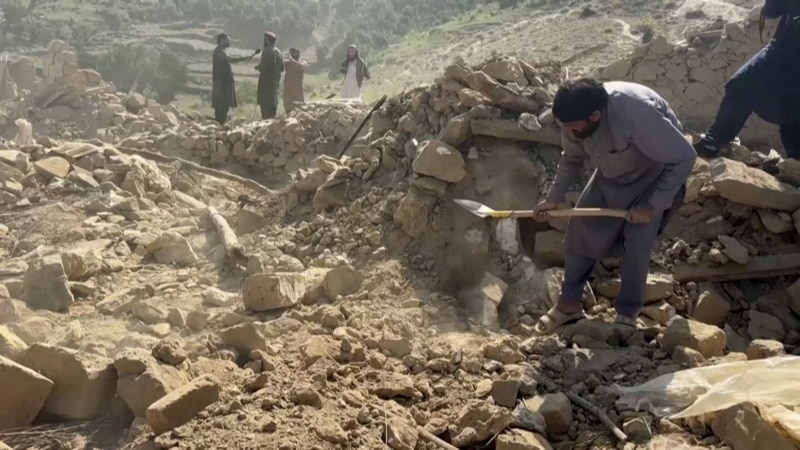
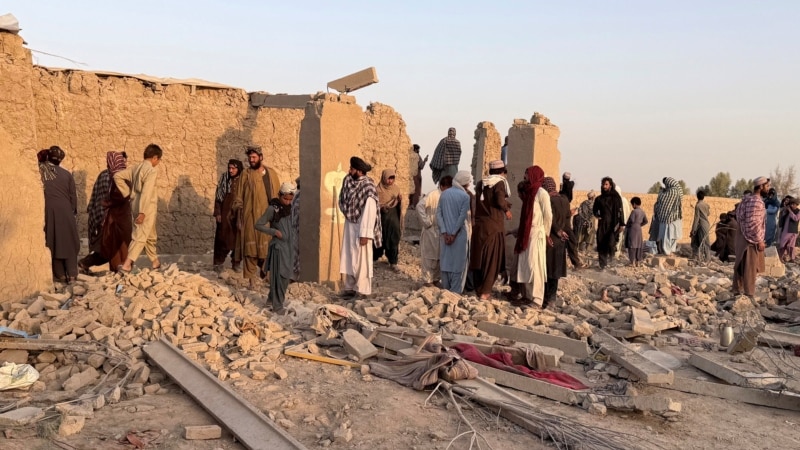
Pakistani air strikes hit targets in Afghanistan's Kunar and Helmand provinces overnight on October 1. Pakistani authorities said they were targeting militants operating near the border, but Afghan witnesses said civilians were among the dead, including children.
Since the start of the latest made-for-Israel war, Donald Trump and his surrogates have repeatedly promised Americans that it would be a few weeks and oil prices would soon crash below prewar levels. Instead, it was every promise that crashed. When those promises failed to materialize, the message shifted: the war is worth the price to stop Iran from becoming a nuclear power.
But what if Iran did become a nuclear power? How would that pose a greater threat to the U.S. than North Korea or Russia already do? Or is the real concern not a risk to America, but a challenge to the regional hegemony of a foreign nuclear power, Israel?
For more than thirty years, according to Israel’s fiction, Iran was on the verge of becoming a nuclear-armed state. That fictitious deadline has come and gone repeatedly, yet Benjamin Netanyahu has been recycling the same lie since 1992. The Israeli lies and deceit persisted even though, unlike Israel, Iran’s nuclear program was subject to strict international monitoring.
Still, Trump, at Netanyahu’s urging, walked away from an agreement that imposed some of the most stringent and verifiable restrictions ever placed on a country’s nuclear program. Now Americans are being asked to pay in blood and billions of dollars for abandoning a diplomatic agreement that had kept Iran’s nuclear program under unprecedented international scrutiny and helped contain the very threat now being used to justify the war.
The hypocrisy is impossible to overlook. Iran has been subjected to relentless demands for transparency and inspections, while Israel’s own nuclear arsenal, built in part with materials stolen from the U.S., remains shielded from any international inspection.
Yet somehow Iran’s ambitious know-how is the existential nuclear threat, not Israel’s nuclear bombs.
American consumers have long been the victims of a disinformation campaign, and now they are being forced to pay the price for a war sold to them on false pretenses. The most recent misinformation claiming the Strait of Hormuz is open and oil is flowing. The president said it on Fox, and the outgoing White House press secretary told Fox & Friends that the U.S. is essentially controlling the strait and that it remains open. These claims leave only two possibilities: either the statements are outright lies, or oil companies are gouging the consumer.
The UK Maritime Trade Operations Centre reported that commercial traffic through the strait remains about 75 percent below pre-conflict levels. It also tallied dozens of projectile strikes on vessels in just the past two months.
Three quarters less traffic is not a sign of an open strait. Shipowners and insurers know this, so do traders and so the climbing numbers at the gas pump.
The market has already made its judgment, and every American who fills a tank can see it. It is past time for Washington to stop lying.
For the average consumer, the pump is where it felt. Regular gasoline was below $3 a gallon before the U.S. was dragged into another one of made-for-Israeli wars. Families are paying more to get to work, truckers are paying more to move goods, and those costs show up in the price of groceries.
Meanwhile, American oil companies are pumping at record levels. Exxon and Chevron are producing record volumes from oil fields on American soil, thousands of miles from the Strait of Hormuz. Their production costs have not changed. What has changed is Israel’s war surcharge consumers are being forced to pay.
Chevron reported the largest quarterly net profit in its history, $12.1 billion. Exxon made $14.5 billion in the same quarter, about $160 million a day. Refining has become more lucrative. Gross refining margins more than doubled, soaring from a typical $20 crack spread to as much as $60.
Meanwhile, Trump dangles a pie-in-the-sky deal with Venezuela as a distraction from consumers’ mounting anxiety, while his administration stands by as oil companies exploit overseas crises for record profits. These companies have no reason to lower prices when war has handed them a windfall. This is what a war of choice looks like on the ground: American consumers are forced to pay the price, while oil executives in Texas turn a crisis into a lucrative business opportunity.
American consumers deserve more than false promises. If the Strait is open, then oil prices should be coming down. If it is not, then stop treating consumers as an audience whose emotions must be managed rather than citizens entitled to hear the truth. Since the war started, every week, like millions of Americans, I fill my gas tank, and the Israeli war tax is higher than it was the week before.
No, Mr. President, that is not “worth the price” to pay for a war fabricated in Israel, a repeat of the made-for-Israel war in Iraq 23 years ago.
This is not a war to end Iran’s fictitious nuclear power. It is a war paid for by taxpayers’ money and American blood to ensure that Israel remains the only absolute nuclear power in the Middle East.
“Who wouldn’t decide to be their most expansive and radiant self?” Ah, but would you pursue that self through a sheet of tempered glass? In this literal tour de force, Katherine Cusumano shadows wrestlers navigating the independent promoters of the Pacific Northwest, granting sensational access to the lives and ambitions behind elaborate personas you’ve never heard of and will almost certainly search YouTube for. Cusumano is note-perfect on the details, taking obvious delight in the gimmicks of each wrestler’s beloved character and relishing the complexity of the choreography, rehearsed in elaborate code. (“Clothesline, crossbody in the corner, clothesline, Superman, Superman, I’m fired up, whoop, sliced bread, Ricky catches, oh shit, real fast.”) Spectacle abounds, but Cusumano rises above it, way up on the turnbuckle, with a heartening consideration of how we understand our own stories, and what we devote to realizing them.
I found myself drawn to this world, to its freakish feats of acrobatics, to its relentless and obsessive blurring of the boundary between reality and story, and, more than anything, to the supreme, sometimes monastic devotion of its competitors. I had been trying for ages to understand competition, ambition, the scaffolding that holds up good-bad, win-lose, and wrestling confounded these binaries. I started talking to Drexl, an old-timer with one foot out the door of his career, who eventually referred me to Amira, an emerging wrestler with an already impressive résumé, and I thought that was so like wrestling, to proffer such perfect narrative symmetry. They agreed—more readily than I’d expected, given how fiercely professional wrestlers have historically protected the secrets of their work—to let me follow them around. Which is how I ended up behind the curtain.
In mid-September, Belarus released 25 prisoners held in politically linked cases after the United States agreed to ease sanctions. Now three US senators are calling on President Donald Trump's administration to pursue a similar approach to free political detainees in Azerbaijan.
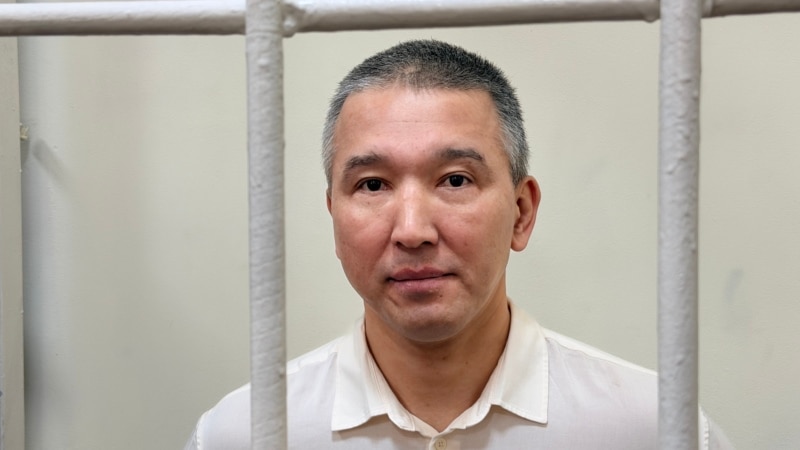
The Lenin District Court in Bishkek found activist and politician Mavlyan Askarbekov guilty and sentenced to two years in prison on offenses related to a law on incitement of racial, ethnic, national, religious, or interregional hatred, a verdict he called "absurd."
Exports of crude oil from the Middle East hit their highest level in September since the war with Iran began, reinforcing a trend of increased supplies despite Iranian attacks on shipping in the Strait of Hormuz, according to analysis of shipping and commodity market data by industry observers.
On the evening of Wednesday, September 30, Bolivian police arrested Attorney General Roger Mariaca and raided the Attorney General’s Office in Sucre and Santa Cruz. The police action comes just days after the US State Department sanctioned and revoked the visas of Mariaca and 21 other Bolivians.
Analysts suggest that the timing of the US sanctions, Mariaca’s arrest, and the raids, are no coincidence, calling it “political pressure” related to a high-profile case.
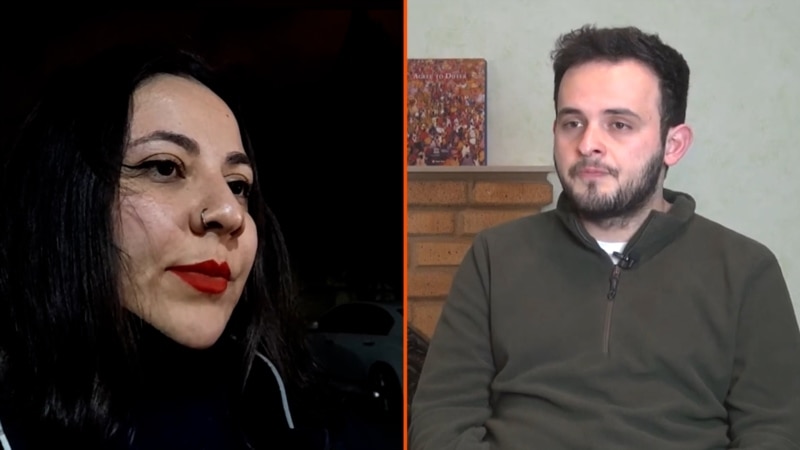
Mariaca is leading the investigation into Argentine political consultant Fernando Cerimedo. The influential political advisor to Latin America’s far right allegedly influenced elections through social media bot farms, may be involved in drug trafficking, and was accused of ordering an assassination attempt on his ex-partner, Nadia Beller. She was shot three times but survived after undergoing emergency surgery.
Cerimedo has been in custody in Bolivia after attempting to leave the country by plane following the attack on Beller. Messages were found on his cell phone that, according to the prosecution, directly link him to the attempt on her life. Despite the emerging evidence against him, not only in ordering the hit on Beller, but also in crimes of corruption and drug trafficking, Cerimedo seems to have friends in high places, both in the Bolivian president’s office, and in the United States, that may have set the stage for the arrest of his investigator, Attorney General Roger Mariaca.
Argentine outlet Página 12, reported that, according to Beller, the sanctions against Mariaca were “a move by Donald Trump’s team to protect Cerimedo. As the Washington Post noted this week: ‘Cerimedo is the MAGA (Make America Great Again, Trump’s slogan) man across the entire continent.’”
In the report, Beller is quoted as saying: “Is this decision by the United States part of the fight for the Shield of the Americas or is it about protecting the MAGA network?…If the reason is corruption and drug trafficking, then they need to explain why the visa is being revoked for the attorney general who is investigating a network of that nature. Are they going after the investigator, or are they protecting part of the network?”
As evidence mounts against Cerimedo, the US instead accused his investigator, Mariaca, of allegedly soliciting and accepting bribes to facilitate drug trafficking and helping people involved in violent crimes escape justice.
After news broke of the US actions against him, Roger Mariaca had said he will not back down and will continue the investigations until the end: “[I received the news] with great surprise … I will not back down even one centimeter from the investigations that fall under my jurisdiction.”
He highlighted that while it is clear that the Cerimedo case has generated international intrigue, “no political pressure, whether national or international, can become an impediment to clarifying the facts which must be investigated.”
He was arrested two days later.
Involvement in the drug trade?
In addition to Cerimedo’s well-documented ties to high profile right-wing politicians across Latin America, including in Bolivia, recent revelations from ex-partner Beller, suggest that the powerful political consultant may have also been involved in the drug trade. In a leaked audio message, Cerimedo is allegedly speaking with a woman with whom he is arranging payment so that several flights can operate without excessive pressure from the authorities. Cerimedo mentions a man named Cabrera, whom the Bolivian media suspect is Franz Cabrera, the former head of the Special Force to Fight Against Drug Trafficking (FELCN), who was recently dismissed.
According to the investigations, they allegedly “were paid” for nearly 45 flights, amounting to $700,000, raising significant suspicions about the source of the funds that the political consultant is said to have handled.
The timing of the sanctions against Mariaca and his arrest have raised questions about US interference in the Bolivian justice system. But, as pressure escalates over the investigation into Cerimedo, the case is also revealing a far deeper web of political connection and influence than was initially known, placing it under renewed scrutiny. Wether the investigation is further disrupted or allowed to proceed, what happens next could expose even more about Cerimedo and the network of the Latin American far right.
Pakistan carried out a round of air strikes on October 1 on two Afghan provinces near the border based on "credible evidence" of militant activity in the area.
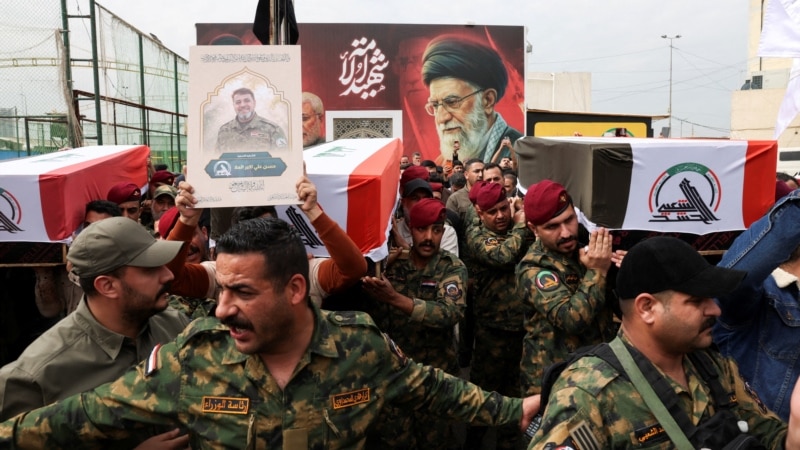
The end of the United States’ two-decade-long military presence in Iraq has raised fears of a security vacuum. Neighboring Iran and its allies in Iraq, experts say, could attempt to exploit the situation.
Georgia's Foreign Ministry has summoned Iran's ambassador after he announced plans to publish his own research into Queen Ketevan. The 17th-century monarch was tortured and executed in Persia, and the Georgian Orthodox Church venerates her as a saint.
For years, Pakistan’s claim that the Tehreek-e-Taliban Pakistan operates from sanctuaries inside Afghanistan produced a familiar exchange: Islamabad accused, Kabul denied, and each new militant attack triggered another round of recrimination. That pattern is becoming harder to sustain. The sanctuary dispute can now be tested against a growing body of evidence rather than competing claims […]
Afghan refugees being held at a camp in Qatar have been told it will be kept open for another nine months after a deadline for its closure passed, but they face continuing uncertainty over their fate amid an ongoing bar on entry to the United States.
Just weeks before its scheduled November IPO, Anthropic is facing growing attention over the potential dangers of its technology. The resignation of former Anthropic researcher Jacob Coxon on September 8, who wrote on X that AI could “kill us all by the end of the decade,” preceded the company’s threat report on September 10. According […]
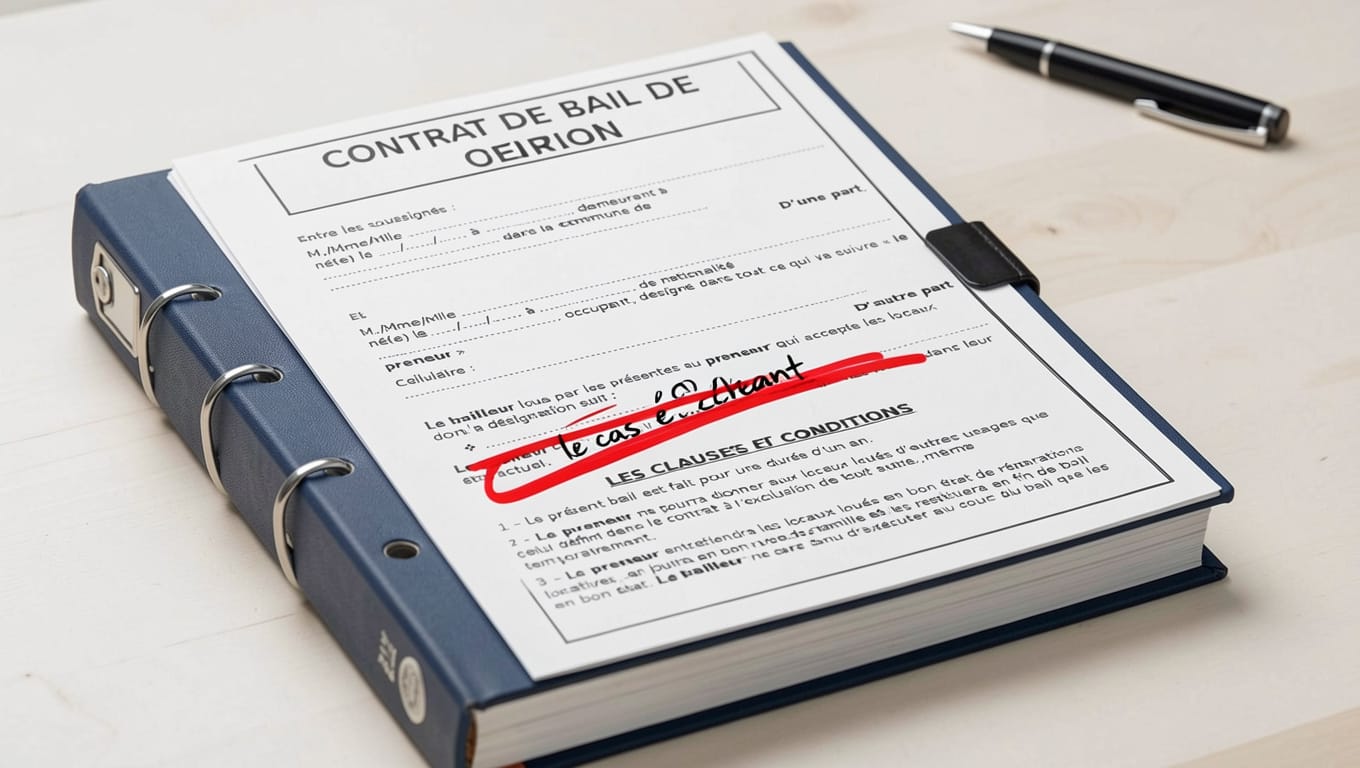
Depuis ce matin, la France impose un nouveau modèle de bail. Une ligne de ce modèle peut annuler votre contrat. Et personne — ni votre notaire, ni votre mairie, ni l'État qui l'a écrite — ne peut vous dire en trente secondes si elle vous concerne. Bonne rentrée locative.
LE COURRIER DES STRATÈGES
Restez libre !
LA NEWSLETTER · GRATUITE
Le Courrier, chaque matin.
L'essentiel de l'actualité, passé au crible par les cinq plumes du Courrier. Dans votre boîte, chaque jour ouvré.
Gratuit. Vous restez libre de partir quand vous voulez.
Le décret du 6 juillet est entré en vigueur. Quatre articles. Il remplace les contrats types de 2015 et s'applique à tout bail conclu ou renouvelé à compter d'aujourd'hui. Parmi les mentions nouvelles, une seule mérite qu'on s'arrête : le cas échéant, le bail doit indiquer que le logement est grevé d'une servitude de résidence principale.
Mes amis du Pays-des-Cartésiens, arrêtons-nous sur le cas échéant.
Le cas échéant ? Le cas échéant. Quel cas ? Celui où la commune a inscrit la servitude dans son plan local d'urbanisme. Qui peut l'inscrire ? Neuf mille trois cent seize communes y ont droit — celles où les résidences secondaires dépassent 20 % du parc, ou qui relèvent de la taxe sur les logements vacants. Combien l'ont fait ? Biarritz, Bayonne, Anglet, Bidart, Boucau. Chamonix, sur la quasi-totalité de ses zones constructibles. Bonifacio, Porto-Vecchio, Santa Maria di Lota. Cancale. Oléron s'y prépare. Et les autres ? On ne sait pas. Où est la liste ? Il n'y a pas de liste.
Comment savoir, alors ? La réponse des professionnels tient en deux gestes : vérifier le PLU de la commune, demander au notaire. Autrement dit : allez lire le règlement d'urbanisme de votre village, ses zonages et ses annexes, pour savoir ce que vous devez écrire dans un contrat de deux feuillets.
Et la sanction ? Elle n'est pas dans le décret — le décret, lui, ne sanctionne rien. Elle est ailleurs, dans le code de l'urbanisme, à l'article L. 151-14-1 créé par la loi Le Meur du 19 novembre 2024 : la servitude doit être expressément mentionnée dans tout acte portant sur le logement qu'elle grève — promesse, vente, bail. À défaut, nullité de l'acte. Miljaardedju. On ne vous punit pas d'avoir mal loué : on efface le contrat.
LE COURRIER DES STRATÈGES
Restez libre !
ABONNEMENT
Allez au fond des choses.
Deux grands formats par jour. Les cinq plumes du Courrier. La série Sécession, le dimanche.
Arrivée là, je dois vous signaler la plus belle pièce du dossier. Cette servitude ne pèse que sur les logements neufs, en zones urbaines et à urbaniser. Le bâti existant n'est pas concerné. Les meublés de tourisme déjà convertis non plus. Le dispositif inventé pour rendre des logements aux habitants permanents s'applique donc exclusivement aux logements qui n'existent pas encore. On ne récupère rien : on grève l'avenir. C'est une réforme adressée à des murs non bâtis.
Amis libertariens, voyez l'asymétrie — elle est parfaite. Le propriétaire qui n'a pas lu le PLU risque la nullité de son bail ; celui qui loue à l'encontre de la servitude s'expose à une mise en demeure du maire, sous astreinte de mille euros par jour plafonnée à cent mille. L'État qui a créé l'obligation, décentralisé son déclenchement dans neuf mille trois cent seize règlements communaux et n'a publié aucun recensement, lui, ne risque rien. Il a fait son travail : il a imprimé la case. Je cherche l'équivalent chez nous, de l'autre côté de la frontière. Je ne le trouve pas.
LE COURRIER DES STRATÈGES
Restez libre !
TELEGRAM · L'INFO EN CONTINU
Entre deux éditions, le fil.
La newsletter vous donne le matin. Le fil vous donne l'instant.
Notez au passage que le reste du décret est un théâtre d'ombres. La clause résolutoire pour troubles de voisinage ? Déjà permise par la loi du 27 juillet 2023, simplement recopiée dans le formulaire, et toujours soumise au juge. Rien de nouveau, sinon la mise en page. Le vrai danger n'est jamais celui qu'on annonce en gros titre ; il est dans la ligne qui commence par le cas échéant.
Compagnons d'absurdistan, une question avant de refermer. Quand l'obligation est écrite à Paris, sa condition de déclenchement dans neuf mille trois cent seize règlements locaux, et sa sanction dans un troisième code, le devoir du citoyen n'est plus d'obéir à la loi : c'est de la deviner. Qu'obtient-on d'un pays où le droit se devine ?
On obtient des gens qui ne louent plus.
LE COURRIER DES STRATÈGES
Restez libre !
TIPS · SANS ABONNEMENT
Offrez-nous un café.
Un média libre vit de ses lecteurs. Un pourboire ponctuel, sans compte ni engagement, quand le cœur vous en dit.
Vous donnez ce que vous voulez. Vous restez libre.
Diesel in the US has climbed to more than US$6.50 a gallon, up about 75% from a year ago, and Asia is likely to pay for it in the form of higher interest rates. Expensive diesel keeps American inflation elevated, which gives the Federal Reserve reason to keep raising interest rates. Higher US rates lift […]
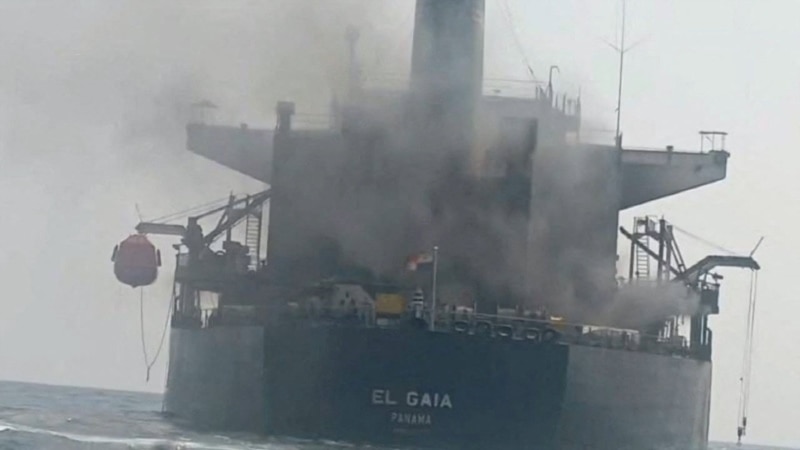
The UK Maritime Trade Operations (UKMTO) said on Wednesday that three ships had been struck by projectiles in the Strait of Hormuz a day earlier, as Iran’s Islamic Revolutionary Guard Corps (IRGC) suggested it has been continuing daily attacks on vessels in the strategic waterway. Hossein Mohebbi, a spokesman for the IRGC, said the US […]
The US-Israeli war on Iran has exposed a widening gap between Washington’s promises to protect its allies and its ability to sustain that protection, with expensive missile interceptors being consumed faster than American manufacturers can replace them, The Atlantic reported.
In an investigation titled “The THAAD Delusion,” Christopher Leonard argues that the Terminal High Altitude Area Defense system became a cornerstone of US security arrangements in the Middle East despite being developed for a more limited battlefield role.
Iran’s ability to maintain missile attacks has challenged the assumption underpinning that role: that American forces would survive an opening barrage, then rapidly destroy the launchers responsible.
Instead, a prolonged conflict has placed mounting pressure on interceptor supplies, exposing weaknesses in US military planning, weapons procurement, and industrial capacity.
A missile shield built around a short war
According to the report, THAAD was originally intended to protect critical military deployments during the initial phase of a conflict, allowing US aircraft and naval forces time to respond.
Washington subsequently promoted the system as a central component of broader missile shields for regional allies, including the United Arab Emirates and Saudi Arabia.
The distinction has become consequential during the war on Iran. While THAAD has intercepted ballistic missiles effectively, Leonard writes that Washington neither accumulated enough interceptors for sustained operations nor established the manufacturing capacity needed to replace them quickly.
US interceptor stocks depleted by sustained warfare
Drawing on estimates from the Center for Strategic and International Studies, the report says US forces used more than 150 THAAD interceptors during the 12-day war in 2025 and another 190 to 290 during “Operation Epic Fury.”
CSIS estimated that approximately 250 interceptors remained in the US stockpile. The report notes that additional deliveries could affect those calculations, while Washington has not disclosed its remaining inventories.
The depletion extends beyond THAAD. The investigation also described heavy consumption of Patriot interceptors and offensive weapons, including Tomahawk and JASSM missiles, placing pressure on multiple parts of the US arsenal.
The investigation identifies Iran’s combination of ballistic missiles and comparatively inexpensive drones as a major challenge to American defensive planning.
THAAD interceptors cost about $12 million each, according to the report. Repeated Iranian missile launches therefore impose substantial financial and logistical costs even when interceptions succeed.
At the same time, Shahed drones, which the article puts at $20,000 to $50,000 apiece, require separate defenses because THAAD cannot intercept them.
This combination forces defending militaries to confront different threats simultaneously while managing limited ammunition. The report describes regional forces using helicopters and costly air-to-air missiles against drones as pressure on their defenses increased.
Leonard’s central argument is that interception accuracy alone cannot deliver the lasting security Washington offered its partners when the attacker can sustain successive waves.
Industrial weaknesses slow replenishment
The article traces the shortage to years of budget decisions that favored major weapons platforms over ammunition reserves, alongside a concentrated defense industry dependent on vulnerable networks of specialized suppliers.
THAAD missiles require intricate assembly and components sourced from hundreds of companies. Expanding production involves increasing capacity throughout that network, rather than simply adding workers at a final assembly plant.
Pentagon assessments cited in the report found that substantial increases in production for several missile systems could require billions of dollars and take years.
The investigation also scrutinizes defense contractors’ spending priorities. Lockheed Martin distributed $6.8 billion through dividends and share buybacks in 2024, while RTX returned $3.7 billion to shareholders, even as industry representatives argued that factory expansion required advance funding or long-term government contracts.
Washington’s protection promises face scrutiny
The implications reach beyond ammunition shortages. US weapons sales helped bind allied militaries to Washington through shared equipment and reliance on American supplies, the report notes.
However, delayed deliveries and competing wartime demands have prompted some partners to seek alternatives, raising questions about the reliability of those arrangements.
Stephen Wertheim, a senior fellow at the Carnegie Endowment for International Peace, told The Atlantic that the consequences could reshape Washington’s regional position.
“We could be moving away from a Middle East that can be fairly described as being an American-dominated region,” he said.
Iran's open letter to Americans on why the U.S. & Tehran cannot enjoy a peaceful relationship, why the U.S. has failed to secure an Iranian surrender, how America’s leaders have spent decades causing chaos in the Middle East, the true meaning behind “Death to America” chants, how constantly fighting Israel’s wars has gravely weakened the U.S.
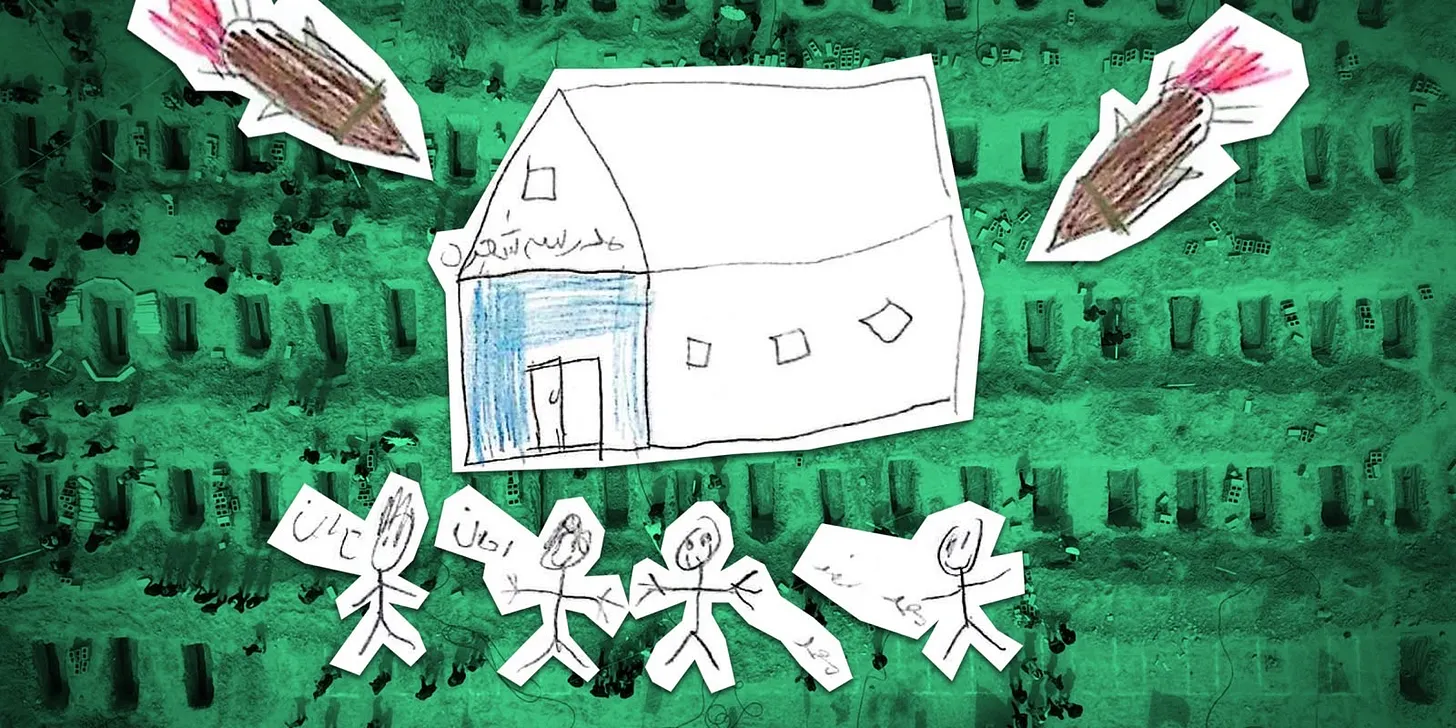
The bombing of an Iranian school, killing 120 children, is one of the worst U.S. war crimes since Vietnam – part of a war started at Israel’s request. Drop Site spoke to survivors, first responders, parents, and witnesses. This is their story.

 Login