The European Union has begun assessing contingency scenarios in case German Chancellor Friedrich Merz leaves office or becomes increasingly focused on domestic political difficulties, Politico Europe reported Friday, citing diplomats and European officials.
According to the report, governments in two European countries have held internal discussions on how a possible end to Merz’s chancellorship could affect EU policymaking.
The discussions reportedly reflect growing concern in Brussels over political instability in Germany following major electoral setbacks for Merz’s governing conservatives and renewed tensions within the coalition.
Recent regional elections have weakened Merz politically. Reuters reported that the Christian Democratic Union (CDU) suffered its worst-ever result in Mecklenburg-Western Pomerania in September, failing to clear the threshold to enter the state parliament, while the Alternative for Germany (AfD) made further gains.
Berlin’s Political Turmoil Raises EU Concerns
Politico Europe reported that officials consider two scenarios particularly disruptive: Germany being left without an effective leader or a right-wing government emerging in Berlin. However, the report said both scenarios are viewed as unlikely in the short term.
Under Germany’s constitutional system, a chancellor cannot simply be replaced by a successor appointed by the governing party. The Bundestag elects the chancellor, meaning any leadership change would require the necessary parliamentary majority.
For Brussels, the political uncertainty matters because Germany remains the EU’s largest economy and a central actor in negotiations over major bloc-wide policies.
Reuters reported Thursday that Merz is facing growing domestic pressure, while speculation about possible successors has emerged within the CDU. Merz has nevertheless rejected calls to step aside and continues to pursue his government’s policy agenda.
EU Budget Dispute Adds Pressure
Merz’s domestic political position could also affect negotiations over the EU’s next seven-year budget.
According to Politico Europe, Germany is part of a group of member states, including the Netherlands, Sweden, Denmark, Austria, and Finland, seeking substantial reductions to the proposed long-term EU budget. The report said officials believe domestic political pressure could encourage Berlin to take a tougher negotiating position in Brussels.
The budget dispute comes as EU governments debate competing priorities, including defense, industrial investment, infrastructure, and support for Ukraine.
Military Buildup Remains Central to Merz’s Agenda
Despite the political pressure, Merz’s government continues to prioritize strengthening Germany’s armed forces. Reuters reported that Berlin’s debt-financed investment drive is supporting both infrastructure and military expansion, while the government has committed hundreds of billions of euros to rebuilding the armed forces.
Any change in Berlin’s political leadership would therefore carry implications beyond Germany, potentially affecting EU budget negotiations, defense policy, relations with Russia, and the bloc’s wider strategic direction.
Zack Polanski has repeatedly said that his family "fled the Nazis", but it's now emerged that all four of his grandparents were born in Britain, long before the war.
Kate Manne, a philosophy professor at Cornell University, situates the lawsuit from a former student alleging she was gang-raped at the Chi Phi fraternity in 2024 within a broader, deeply troubling campus “rape culture.” The specific details of Jane Doe’s case are horrific, but Manne also points to shocking statistics and examples showing that sexual misconduct is rife and often taken less seriously than other student infractions. She is critical of Cornell’s response and culture, but emphasizes that, tragically, this normalization of misogyny is widespread across many American campuses. A disturbing, important read.
In a deeply misogynistic society, groups of boys and men routinely bond over humiliating and exploiting women, as Soraya Chemaly has written. And the victim is not only physically and emotionally traumatized following one of the most fundamental imaginable violations: They are likely to be doubted and undermined at every subsequent step of the process. In Jane Doe’s case, the district attorney did not bring any charges after relying on the investigation done by campus police; they didn’t even speak with the men involved. The district attorney just announced that they are reopening the case on the basis of new information contained in the civil lawsuit, and in recognition of the fact that “it can take years of therapy and healing for victims of sexual assaults to fully process and understand what happened to them.”
A few inches below the forest floor in the eastern Taunus hills lies a stretch of the Roman frontier that has barely been examined. The Kapersburg fort, near Rosbach vor der Höhe in Hesse, is one of the best preserved on the German limes, the chain of Roman border defences. Research has long concentrated on […]
In Germany’s recent state elections, voters as young as 16 could cast ballots. The results confirmed a global trend of political division between young women and men.
“On 1 January, we both deleted Instagram, TikTok and Snapchat. And whichever of us would be the first to start watching Reels again or download Instagram would have to eat a slice of rotten cheese,” Greta and Lena told Germany’s Deutschlandfunk radio station.
The 16-year-old girls live in a village in Mecklenburg-Vorpommern and chose to delete social media because they had been spending far too much time on it. They often scrolled on TikTok or Instagram late into the night, affecting their performance at school. This summer, however, both reinstalled TikTok for a month. This time without the punishment of a slice of rotten cheese.
They did so for an experiment with journalists from Deutschlandfunk. The journalists wanted to find out what political content the girls would consume through TikTok, the popular Chinese social network, during the peak of the election campaign. Mecklenburg-Vorpommern went to the polls on the third weekend of September. And, as is well known, the far-right Alternative for Germany (AfD) swept the state, just as it had two weeks prior in Saxony-Anhalt.
Greta and Lena, however, were in a markedly different position from their peers in Saxony-Anhalt. For the first time, the north-eastern federal state of Mecklenburg-Vorpommern had allowed 16- and 17-year-olds to vote in state elections. Since young people consume much of their news on social media, Greta and Lena immersed themselves in TikTok, one of the networks now most popular among young Europeans.
For the first few minutes, the girls watched a range of non-political videos — recipes, tomato growing and “silly” AI videos. Then, at around the third minute of scrolling, the first political content appeared. First came a video about Erich Honecker, the former East German communist politician. “Why am I seeing so much stuff about the GDR here?” Greta wondered. As she continued scrolling, she came across AfD co-leader Alice Weidel herself.
It was the first moment when the girls began to notice how quickly their initially apolitical feed was changing. “I feel as if it is constantly just AfD,” Greta said later. She added that she had not searched for any such content in advance. Over the following month, the girls kept a diary of their feed and observed how, after political videos, more and more similar content began appearing — not only from the parties themselves, but also from a range of accounts that picked up and further spread their messages.
The experiment confirmed what has been known for some time: TikTok and other networks alongside it can quickly form the political world a young person sees and the views they come to adopt. At the same time, algorithms are accelerating a trend of a political divide between young women and men, which was also reflected in the results of the state elections mentioned above in Germany.
Algorithms exacerbate polarisation
This article continues, but the full version is available only to EUobserver.com subscribers. Visit account.euobserver.com/membership
by Cassie B., Natural News: Germany’s governing coalition is pushing to explore banning the right-wing AfD party by year’s end AfD now leads national polls at 29.5 percent, more than double the vote share of its leading challenger Chancellor Friedrich Merz is skeptical of a ban, but a top official in his own party backs […]
by Rhoda Wilson, Expose News: After years of relatively low numbers, Fiji recorded 2,016 new HIV diagnoses in 2025. Officials point to methamphetamine injection, needle-sharing and a huge testing drive as an explanation. Not everyone is convinced by the official narrative. Some researchers are asking questions, based on the evidence. In the following, Dr. Philip […]
by Michael Nevradakis, Ph.D., Childrens Health Defense: The pharmaceutical and health industry spent $456.9 million on lobbying expenses in 2025, according to OpenSecrets. According to STAT, it was the largest-ever single-year increase in lobbying spending. Leslie Manookian, president of the Health Freedom Defense Fund, suggested the industry may feel threatened by Robert F. Kennedy Jr.’s […]
The media isn’t failing by accident. Only 28% of Americans still trust it to report fully, accurately, and fairly. Seven in ten have little or none. Republican trust is now 8%. That’s not a slump. That’s a collapsed institution. Why? Because they don’t work for you. They work… — Chris Martenson (@chrismartenson) September 30, 2026
from The Conservative Treehouse: In a remarkable series of events, Canadian TV (CTV) is reporting that Canadian Prime Minister Mark Carney is likely to win the Nobel Prize for Peace, the Time Magazine Person of the Year Award and public veneration by Pope Leo XIV to culminate a year when the European Union is now […]
Britain’s Labour Party is not traditionally thought of as a bastion of militarism or authoritarianism. Yet listening to some of what its top figures have been saying recently might cause one to doubt the conventional wisdom on that.
Consider what Labour Party strategist Paul Richards said in a GB News interview earlier this month. Asked how the UK might respond to an increased Russian threat, Richards—who has worked for two Labour governments—gave a disturbing answer. “We’d have to lock some people up,” he said, “some of the pro-Russian voices, people who say there isn’t a threat, [and say] ‘Don’t fight for your country, don’t go to war for Burnham.’”
His comments are not a one-off. They reflect a worrying trend among Britain’s political mainstream—the old parties, media, and think tanks—which has increasingly adopted a siege mentality informed by the far-fetched expectation of imminent war with Russia.
Nor is the trend restricted to Britain. It spans the entire Western world. And it helps explain why the centrist political forces previously seen as “reasonable” are losing ground to the supposed “fringe.” Apocalyptic millenarianism is no longer the domain of radical obscurantists, but of people like NATO’s secretary-general Mark Rutte, who in 2025 seemed to foretell with relish a conflict between Europe and Russia on the scale of the Second World War. “Imagine it,” he said, “a conflict reaching every home, every workplace, destruction, mass mobilisation, millions displaced, widespread suffering and extreme losses.”
It is politicians branded as far right or far left radicals who, surprisingly, have emerged as the main opposition to this unhinged bellicosity.
What’s largely prompting this trend is the very logic of the liberals competing with the populists. Western societies display a demand for performative “toughness,” which caters both to the infantilism of their political classes and the gamification of war in far off countries.
Things seem to have begun in earnest in 2016, when the prospect of liberals losing to rivals like Donald Trump led the former to embrace conspiracy theories like Russiagate and double down on foreign policy hawkishness as a way of evading responsibility for their own failures. Putin’s invasion of Ukraine served a similar function, providing a theater for “toughness” even as the West has gotten bogged down in what has increasingly turned into a proxy conflict.
Trying to outdo the populists along a different axis, rather than doing the hard work of opposing them with value-based positions, has led the centrists into a trap. It left a vacuum in the center, into which the populists—ever alert to political opportunities—have deftly stepped.
Here is how it plays out in Germany. When the Christian Democratic Union (CDU) suffered an embarrassing defeat in Saxony-Anhalt earlier this month, the party’s leader and premier in North Rhine-Westphalia, Hendrik Wüst, said the government should consider banning the AfD (which won the election by a landslide). Wüst is eyed as a potential replacement for the unpopular chancellor Friedrich Merz.
The CDU went on to suffer additional defeats in Mecklenburg-Western Pomerania and in Berlin. The former is particularly symbolic, because this is where the Nord Stream gas pipelines make landfall—a fact that makes this state a direct beneficiary of the German-Russian joint venture to supply cheap Russian gas to the German economy.
When Nord Stream 2 was blown up in September 2022, the immediate consensus in the West was that Moscow was responsible. Yet the culprits turned out not to be Russian, but Ukrainian. German police investigators eventually charged individuals associated with Ukraine’s military intelligence service for the attack. (It’s worth noting that this Ukrainian spy agency was rebuilt in 2015 with considerable assistance from America’s CIA.)
Germany’s rejection of Russian gas supplies after Putin’s all-out invasion in Ukraine can be seen as a noble gesture, perhaps, but it had dire consequences for the country’s economy, which contracted in 2023 and 2024 before showing anemic growth in 2025. Even more importantly, it hit every household in Germany with skyrocketing heating and power bills. Interestingly, Germany wasn’t receiving Russian gas at the time of the explosion, which means the attack was aimed at preventing the resumption of supplies after the end of war rather than interrupting ongoing exports.
The German government has never properly addressed the issue at the federal level. On the eve of September elections, Merz’s sharp reaction to the Leipzig drone incident, which he instantly blamed on Russia, contrasted sharply with the virtual absence of a response to the perpetrators of the Nord Stream attack.
Voters in Mecklenburg-West Pomerania slaughtered Merz’s party, excluding it entirely from the state’s legislature for the first time in nearly 80 years. The big winner was the AfD—a party unafraid to ask questions about Nord Stream and which muses about restoring gas supplies after the Ukraine War ends. Voters also largely spared the Social Democrats, under whose leadership Nord Stream was built in the first place (although they had to disown it after Russia’s invasion).
The early days of tension between post-Soviet Russia and the West, which culminated in the war in Ukraine, were marked by squabbles over pipeline projects delivering gas to Europe (remember South Stream or Nabucco?). The unyielding opposition of centrist politicians to such projects has led voters to wonder whether their political establishment is more interested in catering to armsmakers and shale gas producers than in providing for its citizens. It’s hard to think of a better illustration of NATO’s unofficial mission to “keep the Germans down and the Russians out” than the fate of Nord Stream.
The perception of abandonment is what fuels the popularity of the AfD’s sovereigntist stance. And despite accusations of extremism, it is the AfD who sounds the most moderate and reasonable on the vital issues of war and peace.
Indeed, their foreign policy stance provides AfD leaders with one bulletproof rebuttal to accusations of fascism. A defining component of the fascist ideology is aggressive militarism—a trait exhibited by the German political establishment, not its hard-right challengers. The AfD fills the shoes of the old-school left-wing peaceniks when it comes to Ukraine, while the Merz government staunchly supports further escalation while discreetly undermining Trump’s efforts to bring the conflict to a close. The AfD also condemns the war on Iran (which Merz initially supported, before making a U-turn under public pressure).
(Ex-)centrists also advocate an enormous defense spending hike Germany can ill afford, as well as compulsory military service (this latter move has sparked youth protests across the country). The way mainstream German politicians are courting the far right in Ukraine—members of Azov movement prominently featured at the prestigious Munich Security Conference this year, for example—make the charges of nazism levelled against the AfD look especially lame.
Opposing Russia’s full-scale invasion of Ukraine, which the AfD does, is one thing. Supporting an endless proxy war with a nuclear-armed great power—and committing to fight this “to the last Ukrainian”—is quite another.
And the polls suggest German voters have little appetite for risking their country’s future in such a gambit.
The AfD and other insurgent parties thrive when their opponents lean into hawkishness and authoritarianism, but so far there is little evidence the establishment understands this. Indeed, European political elites are doubling down. They recently invited Zelensky’s former press secretary, Iulia Mendel, to speak in front of the European Parliament. But Mendel is a vocal critic of her former boss, and so the parliament’s centrist leadership banned her from entering after Zelensky’s government imposed sanctions on her (an extrajudicial punishment he is routinely applying to political rivals). By banning Mendel from speaking and turning a blind eye on Zelensky’s abuse of power, the center once again chooses delusion and bellicosity over a genuine commitment to democracy.
Meanwhile, alternatives like the AfD will continue to fill the vacant space left in the middle of the political spectrum.
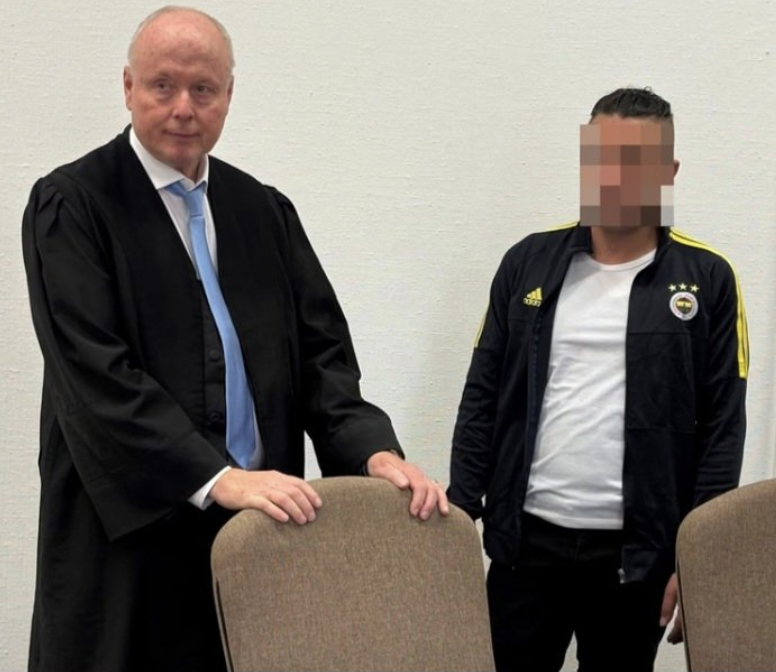
A regional German court sentenced a 29-year-old Syrian man to four years and 10 months in prison for attempted manslaughter after he stabbed a man in the neck during a dispute at a Cologne drug hotspot, slightly reducing an earlier five-year term after Germany’s highest criminal court ordered a resentencing.
The Cologne Regional Court imposed the penalty Friday following a brief retrial, the Kölner Stadt-Anzeiger reported. The Federal Court of Justice had largely upheld the original findings but ruled that the first chamber had improperly double-counted an aggravating factor.
The stabbing occurred on April 27, 2025, at the Josef-Haubrich-Hof near Neumarkt, an area known for heroin and cocaine dealing. The defendant intervened in an argument within the drug scene and was struck during the altercation between the two men, possibly with brass knuckles. In anger, he then drew a folding knife and stabbed one of the men in the neck, severing his jugular vein, the court findings stated.
Blood sprayed from the stab wound immediately. The 47-year-old victim dragged himself to a stairwell in the Neumarkt passage and collapsed.
Prosecutors said in the first trial that the attacker recognized the victim would die without help but was indifferent to whether he survived.
The victim lost about 1.5 liters of blood, spent three days in a medically induced coma after emergency surgery at the university clinic, later suffered a pulmonary embolism, and continues to experience pain, shortness of breath, anxiety and sleep problems, the Kölner Stadt-Anzeiger reported. A scar also remains on his neck.
The victim told the court he has been living on the street.
Defense lawyer Mario Geuenich described the convicted man as “peace-loving” but said that day he was “surely not in control of his senses” and that the act stemmed “from affective agitation.”
The defendant said, “I really regret it,” and told the court he had stopped using alcohol, drugs and methadone while in custody. He also told the court he wants to bring his wife and children from Syria to Germany and lead a normal life.
The victim addressed the defendant directly: “I forgive you. But my life is fucked up and shitty.” He added, “God bless you. I ask for a mild sentence,” and said, “God is his judge, not me.”
Presiding Judge Achim Hengstenberg replied, “But we still exist.”
Mitigating factors included the apology, expressed remorse and the victim’s forgiveness. Aggravating factors were the dangerous knife wound and the defendant’s prior convictions. The new sentence is two months shorter than the original. The victim’s lawyer, Eva Kuhn, said she was satisfied with the sentence and plans to seek compensation from the convicted Syrian.
Some lakes give up shipwrecks, and Arendsee, in northern Germany, has already given up one. What archaeologists brought to light in 2026 is something else: wood carved by Mesolithic hunter-gatherers up to 10,500 years ago. (The Mesolithic, or Middle Stone Age, is the stretch of European prehistory after the last Ice Age and before farming.) […]
In southwestern Germany, an open-air museum and a website present the Heuneburg as the “Celtic city of Pyrene”, a settlement already thriving when Rome was still a small village on the Tiber. The name comes from Herodotus. The problem, according to a study published in The Antiquaries Journal, is that the Greek historian was almost […]
Across the West, native Europeans are dying out but rental prices continue to go up every year. While the left would like to point the finger at capitalists and greedy landlords, the primary factor driving the housing affordability crisis is mass immigration.
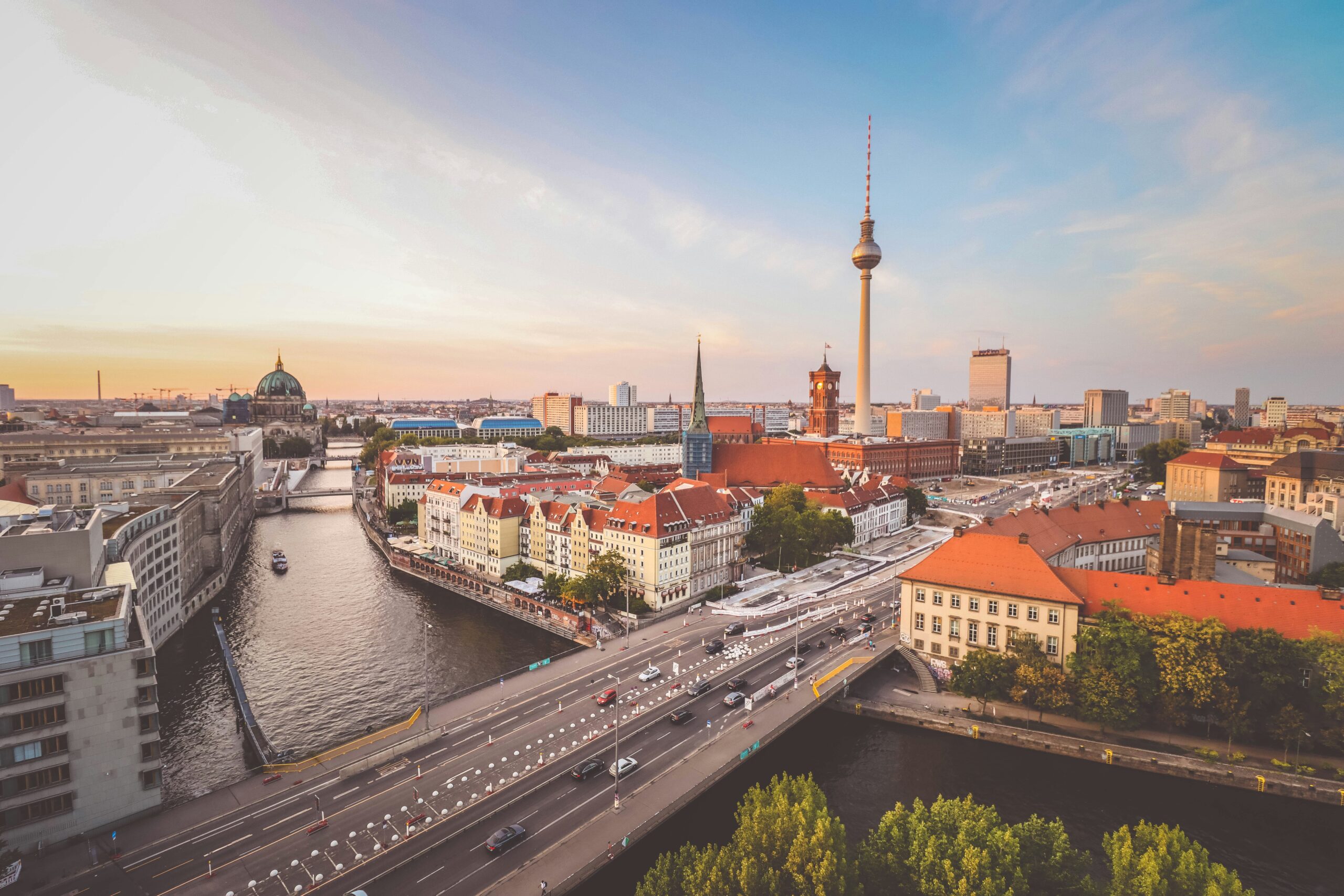
Berlin is a prime example of this trend, as German journalist and author Jens Winter pointed out on X using clear population and housing data.
“Rental prices on the market have more than doubled in Berlin since 2011—plenty of money for corporations. But where is the increased demand coming from? While the native population of the capital has declined by 260,000 since 2011, the number of foreigners and people with a migration background has risen by 650,000 over the same period. That means: Without migration, there would be less demand for housing in Berlin today than in 2011,” he wrote.
In a follow-up post, he wrote that the German “conservative” party is just as guilty as the left.
“The CDU-aligned real estate lobby is raking in big money with migration in Berlin. The Germans have a choice: dying out in the CDU’s multikulti capitalism or in the Left’s multikulti socialism. Understandable response: If we’re going to disappear anyway, why bust our asses for it?” he wrote.
Die CDU-nahe Immobilien-Lobby scheffelt mit Migration in Berlin mächtig Geld. Die Deutschen haben die Wahl: Aussterben im Multikulti-Kapitalismus der CDU oder im Multikulti-Sozialismus der Linken. Verständliche Antwort: Wenn schon verschwinden, warum dafür dann hart arbeiten? https://t.co/GPrTp62SXO
While the doubling of rents is real, there is a basic supply and demand reality that the left would like to deny. It is indeed true that predatory property owners, major institutional players, and money printing have played contributing roles to the housing crisis, but no matter how many greedy property owners are involved, if the population of a city falls, rental and housing prices are almost inevitably going to fall.
Mass immigration means that population numbers never fall. Any breathing space for German families to repopulate, have more children, and fill in the gaps left by older generations passing away is immediately filled by hundreds of thousands of foreigners.
The data shows that the population of native Germans fell by 260,000 people. In a system that rejects mass immigration and foreign real estate investors, this could have been a boon for birthrates and increasing home ownership. For one, Germans who already lived in Berlin, and those looking to move to Berlin, would have been more easily able to afford rents and housing due to less competition on the housing market. Secondly, more native Germans would have had a chance to start families — and those who already had families could have afforded an extra child or two — by securing affordable housing.
However, Germany does not reject mass immigration.
There is of course another solution, but it is far more complicated than simply allowing population levels to fall in a country that has never had so many people living in it. Instead of ending mass immigration, left-wing parties, along with the CDU, demand more housing is built.
However, there are myriad reasons why the required housing is not being built, including high construction and material costs, red tape, zoning, and a lack of skilled workers. The same parties have been making the same demands for years now, but construction cannot keep pace with demand in Berlin or other major cities across Germany.
The Left Party may promise to build more, but the reality is that it will not happen. Nothing the left offers will lead to the necessary building. Before Olaf Scholz of the far-left Social Democrats (SPD) won the chancellorship, he promised that his “goal” was to create 400,000 new apartments per year, which would include 100,000 units of social housing, saying, “That’s not witchcraft, we just have to want to do it.”
It never happened under Scholz and it won’t happen under a left-wing government in Berlin either.
Should more housing even be built?
As Western cities race to replace their native European populations, the question becomes whether life really becomes better in a crowded multicultural city when it means more traffic, longer waiting times at hospitals, crowded classrooms, and imported crime — just to name a few ills.
The newcomers also did not fix the skilled worker shortage that could potentially build all the homes and apartments politicians and lobbyists claim Europe needs. While a certain number of new houses and apartments always need to be built, the question then becomes should Western civilization really be involved in endless building to accommodate millions of foreigners.
On top of all of these questions, the buildings developers managed to build are now in fact uglier than ever, more expensive than ever, and are built more slowly than ever.
Winter’s X post is especially relevant given that the Left Party recently won a first place finish in Berlin elections, securing over 25 percent of the vote. Commentators and analysts have contributed the rise of the party in Germany’s capital due a variety of factors, but two major components are the party’s ability to secure the vote of German citizens with a migration background and young voters.
The second factor is Berlin’s housing crisis, which helped drive support from groups like non-voters, the young, and foreigners.
German taxpayer-funded Deutsche Welle, wrote: “That makes sense to 17-year-old Liska, who voted for the socialists: ‘The Left Party did appeal to me, especially because of the social issues — getting prices down, making rents more affordable.’ Rents in Berlin are indeed rising at a massive pace — by some 7% in the last two years alone — and first-time tenants are likely to be the hardest hit. Polls also showed that by far the biggest proportion of Berlin voters — 37% — thought that the Left Party was the most likely to create affordable housing.”
Again, the same story is taking place in the Netherlands, with the natural population increase for the Dutch at near zero or negative. Nevertheless, the population rose from about 16.8 million in 2013 to 18.1 million in 2025, with net migration accounting for virtually all of the recent increase.
It must also be remembered that just like in Germany, most of these migrants want to head to the major cities, such as Amsterdam.
Official housing-need forecasts in the Netherlands also attribute a large share of future extra demand, often 45 percent or more of the extra dwellings required, to population growth that is itself 95 percent migration-driven.
Great for landlords, bad for the citizens.
Of course, the Alternative for Germany has tried to tie the housing crisis to mass immigration, and they have successfully made this case to some extent.
WATCH: Mass immigration is fueling the West's housing crisis.
Here's how it's happening in Germany.
In a powerful speech in the German Bundestag, @AfD politician Carolin Bachmann slams the ruling government for allowing 2 million migrants into the country while families… pic.twitter.com/DMEqiV316S
The problem is that as more and more of the population becomes foreign, this argument holds less and less sway. Immigration may raise housing prices but if immigration brought a person to a country in the first place, and if more immigration might also enable more and more of their family members and fellow countrymen to arrive, then these voters have every incentive to keep immigration levels high regardless of housing costs.
Many of these migrants are not paying for rent anyway. There are millions of foreigners on social welfare, which means not only are they taking housing places of native Germans, but they are being paid to do it. They then often have far higher birthrates than native Germans, even with limited space, which entitles them to larger spaces.
The cycle is self-reinforcing and relentless. That means unless dramatic action is taken against mass immigration, housing and rental prices may never truly come down.
A 22-year-old Syrian man is accused of seriously assaulting several rail passengers in Cologne in June during a rampage attack. However, details have now emerged of just how serious this man’s criminal history is after a parliamentary request from politician Markus Wagner of the Alternative for Germany (AfD) party.
Currently, the Syrian remains in a psychiatric hospital while prosecutors investigate, but the man’s long history of criminal offenses is truly remarkable.
Federal police said the attacks began about 3:10 p.m. on June 21 at the Cologne-Trimbornstrasse stop. A police spokeswoman said a 22-year-old man “grabbed a traveler and tried to pull him toward the tracks.” Both fell to the ground. Bystanders pulled them apart, but the victim suffered bruises and abrasions.
Police told Westdeutscher Rundfunk that the witnesses “behaved correctly” by acting together and separating the attacker from the victim.
The suspect then boarded an S19 train toward Cologne Central Station, police said. Near the Cologne Messe/Deutz stop he suddenly punched two passengers in the face, according to witnesses and video.
At the main station, in a fast-food restaurant, he punched and kicked a 47-year-old man and continued striking him on the ground after federal officers arrived.
Officers managed to detain the man and later said he was under the influence of narcotics.
He was taken to a psychiatric facility. The Justice Ministry said he “is currently provisionally accommodated in a psychiatric hospital” under Section 126a of the Code of Criminal Procedure, a measure used when investigators believe a suspect may have acted without full criminal responsibility.
Cologne prosecutors are investigating, among other counts, intentional bodily harm, attempted dangerous bodily harm and attempted dangerous interference with rail traffic, the ministry said.
Asked what police already knew about the suspect, the government listed suspected prior offenses that had led to complaints or investigations: five thefts, one case of receiving stolen goods, one robbery, one insult, three threats, 11 assaults, 13 dangerous assaults, 11 narcotics violations, one rape allegation, one count of resisting officers, two property-damage cases and two fraud cases.
However, none of these arrests have resulted in convictions. The ministry stressed that police records “rest on suspicion” and “do not allow a conclusion on the correctness of the allegation.”
Regarding formal prior sentences, the government said the man’s Federal Central Register extract “shows solely sanctions under youth criminal law that are not entered in the certificate of good conduct.”
"Since the attack, he wakes up every night screaming."
An African migrant randomly attacked a 14-year-old German boy inside Freiburg’s central train station and tried to gouge out his eye.
The victim’s father, Roland H., also believes the attacker may have tried to carve a… pic.twitter.com/Go55W2g9KC
In other words, most of these offenses were either handled in juvenile court or were never formally tried in court due to the man’s psychological state. German youth-court measures often do not appear on the clearance certificate employers and agencies commonly request, meaning these criminal entries would not be available to potential employers.
Asked about citizenship, the ministry wrote that, “as far as known,” the suspect has Syrian nationality.
Notably, he has never been deported despite the trail of mayhem he has left behind him.

 Login




 Mass immigration is fueling the West's housing crisis.
 "Since the attack, he wakes up every night screaming."

