In 2025, the EU rail freight transport performance fell by 1.8%, declining from 375.1 billion tonne-kilometres (tkm) in 2024 to 368.2 tkm, and marking the fourth consecutive year of decline.
Germany remained by far the largest contributor to rail freight transport performance in the EU, with one third of the EU total (33.5%; 123.5 billion tkm). Poland was the second-largest contributor (14.7% of the EU total; 54.3 billion tkm), followed by France (9.3%; 34.4 billion tkm).
Compared with 2024, rail freight transport performance measured in tonne-kilometres decreased in 16 EU countries, while 8 countries recorded an increase. The largest decreases were recorded in Ireland (-35.2%), Latvia (-18.8%) and Estonia (-17.3%). By contrast, the highest increases were recorded in Greece (+9.3%), Portugal (+8.4%) and France (+6.6%).
Freight per capita: from 0.03 tonnes in Ireland to 10.7 in Luxembourg
Relative to the country’s population, the volume of rail freight transported per capita was highest in Luxembourg (10.7 tonnes), Austria (10.5) and Lithuania (8.5). The lowest rates were observed for Ireland (0.03 tonnes per capita), Greece (0.06) and Spain (0.5).
The data presented in this article include only main railway undertakings. In order to meet the main undertaking threshold, the railway undertaking must achieve a total volume of goods of at least 200 million tonne-kilometres or at least 500 000 tonnes of total weight.
VENRAY and Pleenbergen, Netherlands, 4-6 September 2026 – The World Championship for Akhal-Teke Horses brought together breeders, scientists, equestrian professionals, cultural figures and international media in the Netherlands for a celebration of one of the world’s oldest and most renowned horse breeds. The event attracted worldwide attention, with extensive coverage by international media and the participation of delegations from numerous countries.
A day before the official championship events, on 4 September, the International Scientific and Practical Conference "The Akhal-Teke Horse: Turkmen Art of Universal Horse Breeding" was held at the Asteria Hotel in Venray. The conference brought together leading experts, researchers and equestrian specialists from Europe, North America and Turkmenistan to discuss the historical significance, breeding traditions and future preservation of the Akhal-Teke horse.
The conference was opened by Kakamyrat Rejebov, Editor-in-Chief of the newspaper Türkmenistan. Among the distinguished speakers were Chynar Rustemova, Executive Secretary of the National Commission of Turkmenistan for UNESCO; Antonio Jariola, head of the Italian cultural and show company Proeventi; Neda Berger, head of the Austrian-Turkmen Association; Alexandre Gro, national technical expert of the French Equestrian Federation; Jean-Philippe Camboulives, Director of the FEI Solidarity Department; Patricia Johnson, President of the Akhal-Teke Horse Foundation of the United States; Julio Bendezu-Sarmiento, senior researcher at the French National Centre for Scientific Research (CNRS) and the National Museum of Natural History; and Saragt Babayev, senior lecturer at the State Academy of Arts of Turkmenistan and a distinguished representative of Turkmen culture.
Participants discussed the unique genetic characteristics of the Akhal-Teke horse, its historical role in the civilizations of Central Asia, and the importance of safeguarding a breed often described as a living symbol of Turkmen heritage. The conference highlighted growing international cooperation in breeding, research and cultural promotion of the breed.
The following day, attention turned to the World Championship itself, which was attended by National Leader of the Turkmen People Gurbanguly Berdimuhamedov. The championship showcased some of the finest Akhal-Teke horses from around the world, reflecting decades of international efforts to preserve and promote the breed.
Often referred to as the "golden horse" because of its distinctive metallic sheen, the Akhal-Teke is widely regarded as one of the oldest purebred horse breeds in existence. Originating in the Akhal Oasis at the foot of the Kopet Dag Mountains, the breed has been preserved for centuries by the Turkmen people and remains one of Turkmenistan's most cherished national symbols.
The championship formed part of a broader programme dedicated to the international promotion of Turkmen equestrian traditions and cultural heritage. Throughout the event, participants attended exhibitions, cultural presentations and meetings devoted to the history and development of the breed.
The celebrations concluded with a spectacular gala dinner and fireworks display featuring horse-themed visual motifs and the Turkmen national flag. The finale carried particular symbolism as Turkmenistan prepares to mark the 35th anniversary of its independence, underlining the close connection between national identity and the legendary Akhal-Teke horse.
The successful organization of both the international scientific conference and the world championship demonstrated the growing global interest in the Akhal-Teke horse and reinforced its status as a unique cultural treasure whose legacy continues to captivate horse enthusiasts around the world.
Fancy a novel way of dining out – one that provides a delicious meal while viewing the sights of the “capital of Europe”?
If so, the Tram Experience in Brussels could be just for you.
The Tram Experience is a unique rolling gourmet restaurant set inside a beautifully converted historic STIB-MIVB tram.
Diners enjoy a multi-course meal while slowly cruising through boulevards and scenic neighbourhoods of southern and eastern Brussels (such as Louise, Merode, and the Tram Museum).
Menus are designed by renowned and Michelin-starred Belgian chefs, featuring high-end reinterpretations of local cuisine. Dishes are prepared and served fresh on board.
A new season of the Tram Experience returns this week, on Friday 28 August. The menus for the new season will be created by some of the biggest names in Belgian gastronomy.
Among them are the promising David-Alexandre Bruno (Quartz), who will join Michelin-starred chefs such as Olly Ceulenaere (Publiek*) and Ricarda Grommes (Quadras*).
To mark 100 years of Comme Chez Soi*, three generations of chefs from the country’s most iconic restaurant, will be offering a celebratory menu especially for the occasion.
This season also sees the introduction of a new lunch package designed for large groups.
A spokesman said, “A trip aboard the Tram Experience is an unforgettable culinary experience.
“Whether as a couple, a group of four or a larger party, guests savour a menu created by a renowned chef whilst touring the capital’s most beautiful neighbourhoods.
“It’s the perfect choice for a romantic dinner in Brussels, a unique evening out with friends or an exclusive team-building event.”
The first names in the line up for the new season (running through early 2027) offer a wonderful glimpse of Belgian culinary excellence.
Building on the Tram Experience's popularity, this year visitors will also be able to enjoy a brand new lunch package designed especially for large groups looking to book the whole tram for a private event.
Belgian gastronomy’s leading names take centre stage and a number of iconic figures from the country’s three regions will feature this season.
David-Alexandre Bruno, from Brussels, opens proceedings.
At the helm of the Quartz restaurant in Ixelles, chef Bruno captivates diners with cuisine that combines technical precision and elegance. This approach earned him the title of Young Chef of the Year 2026 for Brussels in the latest edition of the Gault & Millau guide.
He has devised the menu that will be served on board the tram until 11 October.
Other renowned chefs have been announced.
Olly Ceulenaere, from Michelin-starred Ghent restaurant Publiek*, will be designing the menu to be served from 2 February to 21 March.
His exciting and unpretentious approach is sure to leave a lasting impression on diners.
From 23 March to 9 May, the spotlight turns to Ricarda Grommes, head chef at another Michelinstarred establishment, the highly acclaimed Quadras* in Saint-Vith.
Famous for her creativity, which draws on influences from a wide range of sources, she will be serving up cuisine as inspired as it is innovative.
The centenary of Comme Chez Soi December and January will also be marked.
A true institution on the Brussels gastronomic scene, the restaurant on place Rouppe has held Michelin stars without interruption for over 70 years.
To celebrate this exceptional anniversary, Pierre Wynants, the “godfather” of Belgian gastronomy, will join forces with his son-in-law and current head chef, Lionel Rigolet, as well as his grandson and future head chef, Loïc Rigolet, to create a unique festive menu.
Every year, the Tram Experience serves around 8,500 guests.
In light of the concept’s growing success, an additional set menu will now be available on weekdays.
In addition to the 6- or 7-course dinner menus, a 4-course lunch menu is being introduced.
This option is exclusively for large groups booking the entire tram for private use.
The menus are prepared on board, with the utmost care, by Thibault Granville (Taste Great) and his team.Bookings are for 2 or 4 people. It is also possible to book the entire tram (36 seats) or a single carriage (16 or 20 seats) for an event or a team-building activity.
The 20th edition of the Mediterranean games began in Taranto (Italy) in the presence of the Executive Vice-President for Cohesion and Reforms, Raffaele Fitto. From 21 August until 3 September, delegations involving thousands of athletes, technicians, volunteers, official delegations and institutional stakeholders from over 26 countries in the Euro-Mediterranean region will meet in 20 competition venues. Athletes will compete in more than 33 disciplines, while at least 7 of these sports’ activities will have a specific focus on inclusive volunteering.
In a context marked by tensions and conflicts, the Mediterranean Games promote the spirit of peace, friendship, excellence, open mindedness and unity among the countries of the Mediterranean basin and embody the values and the spirit of Olympism which originates from this region. Collaborating with the Mediterranean Games is an important initiative of the first pillar of the Pact for the Mediterranean, which further advertises the benefits of sport and its positive impact in strengthening cohesion, overcoming social divides and promoting inclusion. In this context, the MED-Volunteers 2026 project supported by the EU through the Erasmus+ Sport programme, will act as a tool for active civic participation, youth empowerment and social inclusion in the Mediterranean Games. These principles will guide the actions of athletes and delegations and contribute to making the Games a memorable event for all participants.
At this occasion, Commissioner for the Mediterranean, Dubravka Šuica, said : ”From Egypt in 1951 to Italy in 2026, the EU is proud to support the Mediterranean Games now in its 75th year. These Games reflect the importance of our Pact for the Mediterranean which puts young people at its heart, including through the power of sport. Inspired by the Olympic spirit, the Games not only promote peace, friendship and solidarity, they also provide a common language in sharing people’s love of sport. By joining forces, we want to give this unique event even greater visibility, especially among young people, and bring people and communities together across the Mediterranean, values which underpin the Pact for the Mediterranean”.
Background
Recognized by the International Olympic Committee in 1952, theMediterranean Gamesare a multidisciplinary sporting event reserved for the nations of the Mediterranean basin. The competition is inspired by the Olympic Games and aims to promote sport and cooperation between the peoples of the Mediterranean. The first Mediterranean Games were held in Alexandria in 1951. The Games boast 75 years of history and are in their twentieth edition. Celebrated every four years, they constitute for the countries of the Mediterranean Basin the most important multi-sport event after the Olympic Games.
ThePact for the Mediterraneanwas developed by the European Commission and the European External Action Service, and adopted by the College in October 2025, ahead of its official launch by EU and southern Mediterranean partners on 28 November 2025, on the occasion of the 30th anniversary of the Barcelona Declaration. Rooted in the principles of co-creation, co-ownership and shared responsibility, the Pact is the result of an unprecedented, inclusive consultation process, ensuring alignment with the real needs and aspirations of the citizens on both shores of the Mediterranean. It is a joint effort between the EU, its Member States and the southern Mediterranean partners, to work together on shared priorities for a connected, integrated, prosperous, resilient and secure Common Mediterranean Space.
The European Commission has published an updated version of the guidance document to help stakeholders prepare for the implementation of the Digital Batteries Passport under Regulation (EU) 2023/1542 concerning batteries and waste batteries.
TheGuidance Document: Digital Batteries Passport – data points by categoryprovides a structured overview of the data points relevant to electric vehicle (EV) batteries, light means of transport (LMT) batteries and industrial batteries covered by the passport requirement. For each battery category, it indicates whether individual data points are mandatory, optional, applicable only in specific circumstances, or do not have to be completed or displayed as of February 2027, when the Batteries Passport requirements will begin to apply. In total, the document brings together 71 data points, showing their legal sources and their applicability to each battery category.
Supporting industry preparations
The guidance is intended primarily for economic operators across the batteries value chain, including manufacturers, importers and other organizations responsible for making information available through the Batteries Passport. It may also be useful for conformity assessment bodies, market surveillance authorities and other stakeholders involved in implementing the Batteries Regulation.
By bringing the relevant data points together in a single document, the guidance aims to promote a common understanding of the Batteries Passport information requirements and a consistent approach across the sector. It can help organisations identify the information they may need to collect, assess and make available, and begin aligning their internal processes, data systems and reporting practices.
From 18 February 2027, each EV battery, each LMT battery and each industrial battery with a capacity greater than 2 kWh that is placed on the market or put into service shall have a battery passport.
How to use the guidance
The guidance should be read together with Regulation (EU) 2023/1542 and any relevant delegated or implementing acts. It does not introduce additional legal requirements and should not be regarded as an authoritative interpretation of the legislation or as representing the European Commission’s official position. The document may be developed further as implementation progresses. Future updates may provide further clarification of individual data points and indicate possible measurement units or reporting formats, supporting greater comparability and consistency.
Professional athletes already train harder than most people can imagine. But for some competitors, ordinary dedication isn’t enough. Their careers become experiments in how far the human body—and mind—can be pushed in pursuit of another second, another victory, or one seemingly impossible goal. Some trained every day for years. Others reshaped nearly every part of […]
The European Union’s vision to create a seamless, sustainable and high-quality multimodal transport network across Europe by 2050 was recently thwarted – by an EU watchdog who warned that delays of major projects are putting key 2030 and 2040 milestones at risk.
From the Lyon-Turin rail link to the Canal Seine-Nord waterway, an EU goal to complete a group of cross-border links by 2030 “will not be met”, according to a January report by the European Court of Auditors (ECA).
“Three decades after most of them were designed, we are still a long way from cutting the ribbon on these projects, and a long way from achieving the intended improvements in passenger and freight flows across Europe,” said the ECA member Annemie Turtelboom.
The ECA audited eight projects forming the backbone of EU plans to boost road, rail, water, and air transport across the 27-nation bloc in a bid to spur trade and economic growth.
TEN-T going downhill
The Trans-European Transport Network (TEN-T) is the backbone of Europe’s transport network and includes numerous large-scale transnational projects that are essential to improving connectivity across Europe.
In 2013, EU member states agreed to complete the TEN-T core network by 2030, but the Court of Auditors, updating its view from five years ago, considered that “the outlook in 2025 is worse than it was in 2020, and is very far from what was initially envisaged”.
In 2020, EU auditors reported that the eight megaprojects examined had experienced an overall 47 percent increase in actual costs (adjusted for inflation) compared with the original estimates.
Touching 13 countries including Belgium, Denmark, Germany, Estonia, France and Italy – the projects have received 15.3 billion Euro in EU funding and accumulated on average a 17-year delay, the auditors found.
According to the ECA report, the delays were down to a series of challenges, such as unexpected technical issues as well as the Covid-19 pandemic and Russia’s war on Ukraine.
Total estimated cost and allocated EU co-funding for the eight transport megaprojects. Source: ECA based on information from the Commission, national authorities, and project promoters.
Mounting costs add pressure
According to the new report, costs have ballooned further than expected.
Not considering inflation, the overall price tag for the projects analysed was up 82 percent on the original estimates, the report said.
The most recent calculations for the projects are now almost twice the original levels, with the sharp rise attributed to two rail links – the Rail Baltica linking Tallinn and Warsaw via Riga and Kaunas, where costs have risen by 291 percent, and the link between Lyon in southern France and Turin in northern Italy, where the rise has been of 127 percent.
Estonia, Latvia and Lithuania – which broke free from the Soviet Union when it crumbled in 1990-1991 and went on to join both the EU and NATO in 2004 – all have Soviet-era wide gauge railways.
With a total population of just six million people, the Baltic trio inked a deal in 2017 to build a high-speed rail link, aimed at creating fresh opportunities for the region in terms of trade and logistics.
In addition to rising costs, the construction of the Lyon-Turn railway has, over the years, also faced opposition from environmental groups critical of the Lyon-Turin tunnel project. Supporters said it will greatly ease freight road traffic but opponents – who staged, for example, a protest close to the village of Saint Remy-de-Maurienne in southeastern France in 2017 – said the ecological damage risks being devastating and that springs had already started to dry up due to the works.
The Brenner Base Tunnel connecting Innsbruck (Austria) and northern Italy – which aims primarily to shift freight from road to rail – will now cost 40 percent more than originally estimated and is currently estimated to open in 2032 at the earliest. The original opening date was 2016, and the ECA had already moved its estimation to 2028 in its report five years ago.
Costs for the Fehmarn Belt road/rail link between Denmark and Germany will be 52 percent higher, with opening planned for 2029, 11 years later than originally planned, with the possibility of further delay until 2031.
The Seine-Nord Europe Canal, a high-capacity waterway intended to facilitate the transport of goods between the Benelux countries and the Paris region also suffered from massive overruns, up 225 percent.
“The Basque Y railway line, which was supposed to be operational by 2010 according to its initial timeline and by 2023 according to the revised plan from 2020, is now expected to be ready by 2030 at the very earliest,” the report said, although the auditors consider 2035 to be more realistic.
According to data from the European Commission, Spain was one of the countries investing the most in high-speed rail, with an average of around 1.5 billion Euro per year between 2018 and 2022. However, the aftermath of three fatal train crashes earlier this month exposed the inadequate maintenance of existing railway networks.
Despite the critical issues that have emerged across the eight megaprojects, according to the report, the European Commission has never used the legal instruments at its disposal to obtain clarification on the delays from the capitals.
Moving forward, the auditors expressed the hope that national transport plans will in future be coordinated with priorities at European level. Member states are now obliged to do so, but this will show up only in new megaprojects.
Two projects beat the odds
On a more positive note, in the case of two projects, the A1 motorway in Romania and the E59 railway line in Poland, the latest cost estimates are actually lower than the original ones.
According to the ECA report, costs for the E59 line were down 18 percent and auditors did not provide an estimated year of opening.
Poland’s TEN-T network already covers the seaports of Gdańsk, Gdynia, Szczecin and Świnoujście, as well as airports including Warsaw, Kraków, Gdańsk and Katowice, which serve as key multimodal nodes. The E59 railway is part of the Baltic Sea – Adriatic Sea corridor.
According to the ECA report, costs for the A1 motorway in Romania are 11 percent lower than initially estimated.
The A1 motorway in Romania is a key component of the Rhine-Danube Corridor and, within Romania, provides a direct connection between the capital city Bucharest and the Hungarian border at the Nădlac crossing point.
Prospects for the completion of the A1 motorway have thus improved, and the project could be commissioned ahead of the 2030 deadline.
Editorial note: The location of the Brenner Base Tunnel has been updated for clarification.
This article is an ENR Key Story. The content is based on information published by ENR participating agencies.
Tutto il sistema inglese, non solo la Premier League, ha squadre di gran lunga più ricche delle altre leghe. Il mercato mondiale è organizzato in sistemi nazionali molto distanti fra loro, mentre le differenze al loro interno sono relativamente contenute.
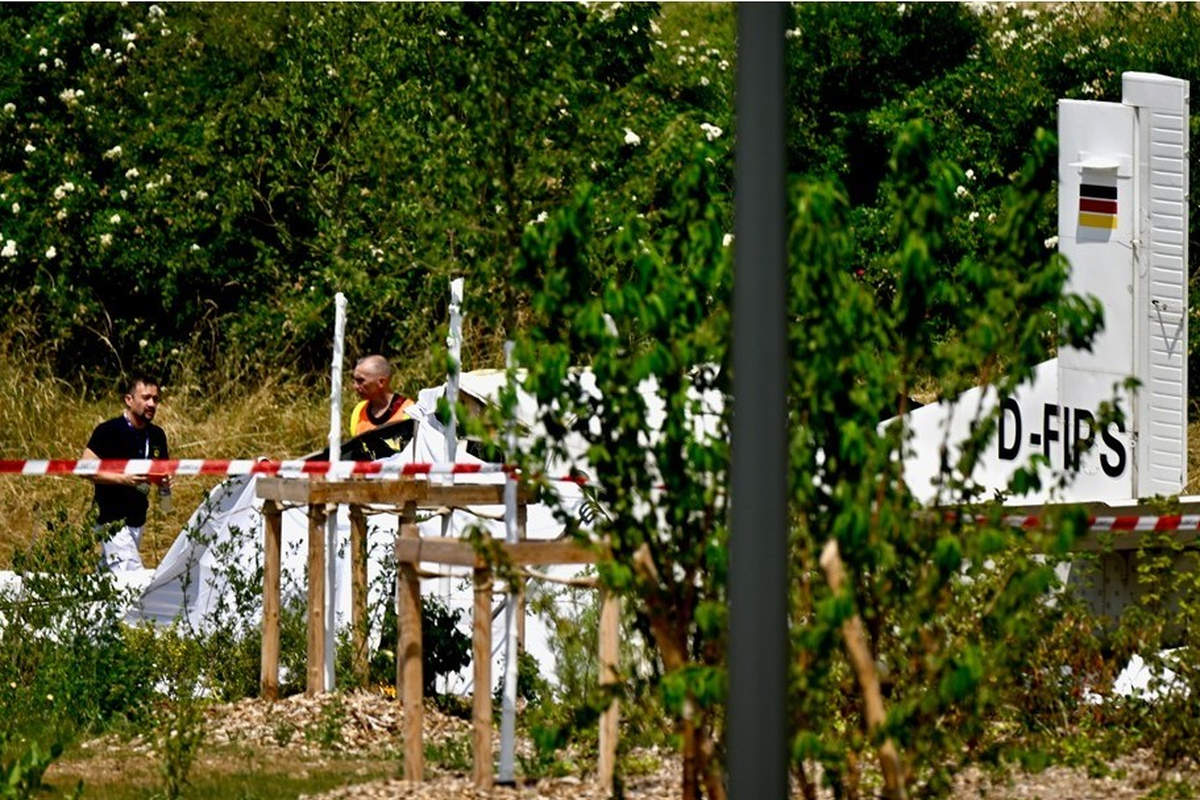
Eleven people killed in a plane crash in Tomblaine (54)
A light aircraft crashed late Sunday morning near the Auchan supermarket in Tomblaine, in the Meurthe-et-Moselle department, close to the city of Nancy. The crash occurred at around 11:00 a.m. on a road adjacent to the shopping center, without striking any nearby homes. According to the Prefect of Meurthe-et-Moselle, the accident claimed 11 lives. None of the people on board survived.
Eleven people killed in a plane crash in Tomblaine (54) (DR)
Skydiving Introductory Flight
The aircraft was carrying 11 people: one pilot, five instructors, and five students. According to ICI Lorraine, the passengers were taking part in an introductory skydiving experience, and the crash occurred during takeoff. The aircraft had been chartered on Sunday by a company specializing in introductory skydiving programs.
According to the prefecture, the plane took off Sunday morning from Nancy-Essey Airport. During the initial emergency response, there was a significant risk that the aircraft could explode, prompting two emergency medical teams to respond to the scene with lights and sirens.
Around 50 Firefighters Deployed
The prefect of the department, Yves Seguy, activated the Departmental Operational Center (COD) to coordinate and monitor the emergency response in real time. French Interior Minister Laurent Nuñez was expected at the scene later in the afternoon. A press briefing was held with Prefect Yves Seguy, Tomblaine Mayor Hervé Féron, Nancy Mayor Mathieu Klein, Meurthe-et-Moselle Police Director Frédéric Laissy, and Jean-Philippe Gueugneau, director of the SDIS 54 fire and rescue service. Approximately 50 firefighters were deployed to the crash site.
The cause of the crash remains unknown at this time.

 Login