❌

Reading view

Latvian PM holds onto power as Russia-Ukraine war shapes election

Russia might not have directly interfered in Latvia’s election, but the vote still showed how the Ukraine war was distorting European democracy.

Latvia’s VDD intelligence service did not detect any of Russia’s classic interference tactics in the run-up to Saturday’s (3 October) vote, such as a spike in disinformation, vote buying, or a manufactured security scare.

The centre-right prime minister Andris Kulbergs retained power with 35.8 percent of the vote, even if coalition-building might take a while.

And voters’ concerns included the cost of living and failing healthcare, in what also sounded normal.

But despite the ordinary appearances, Russia’s war in Ukraine still influenced the election in fundamental ways, in a strange new normal for Europe that most of us had hardly imagined just five years ago.

This article continues, but the full version is available only to EUobserver.com subscribers. Visit account.euobserver.com/membership

  •  

Latvia Votes as Russian Drone Threat and Ukraine War Shape Parliamentary Election

Latvians are voting for a new parliament on Saturday after an election campaign dominated by security, repeated drone incidents, support for Ukraine and mounting pressure on household finances.

Latvians went to the polls on Saturday, 3 October, to elect the country’s 100-seat Saeima in an election taking place against an unusually tense security backdrop on NATO’s eastern frontier.

Fourteen parties and electoral alliances are contesting the election, with 1,428 candidates seeking seats in parliament, according to Latvia’s Central Election Commission. Voting takes place across five constituencies — Riga, Vidzeme, Latgale, Kurzeme and Zemgale — with polling stations open until 20:00 local time.

Security has occupied a prominent place in the campaign after a series of drone incidents brought the consequences of Russia’s war against Ukraine directly into Latvian airspace.

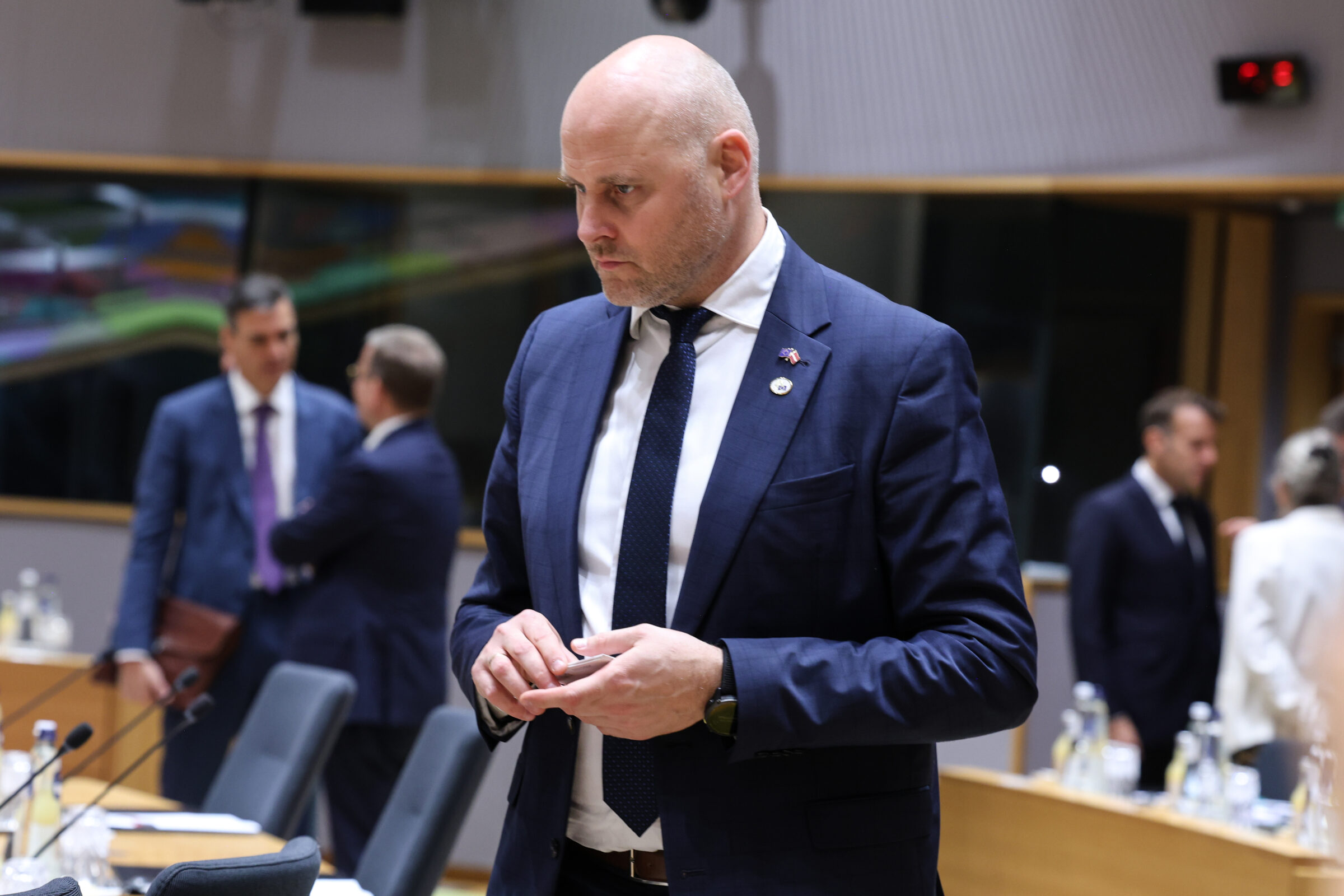
Prime Minister Andris Kulbergs, who took office in May after the previous coalition collapsed during a political crisis over the handling of drone incursions, is seeking a new mandate for his centrist United List. EU Today reported at the time that Prime Minister Evika Siliņa resigned after her coalition fractured amid criticism of Latvia’s response to repeated unmanned aircraft incidents along the Russian border. The collapse followed a succession of drone-related security incidents.

Kulbergs has campaigned on continued support for Ukraine and stronger Latvian defences, including additional counter-drone capabilities. His party entered election day ahead in the opinion polls, although the fragmented political landscape means coalition negotiations are likely to determine the eventual composition of the government.

An SKDS poll conducted between 4 and 16 September put United List on 14.4 per cent. Sovereign Power/Alliance of Young Latvians followed on 9.4 per cent, while Latvia First stood on 9.2 per cent. The Progressives recorded 6.2 per cent and the National Alliance 5.6 per cent. When only voters who had decided how they intended to vote were counted, seven political forces were projected to cross the 5 per cent threshold for representation in parliament.

The survey also showed a substantial pool of undecided or disengaged voters shortly before polling day, leaving considerable uncertainty around the final distribution of seats.

Russia and the war in neighbouring Ukraine have also produced sharper divisions between the competing parties.

Kulbergs has maintained Latvia’s strong support for Kyiv, while Sovereign Power has opposed military assistance to Ukraine and called for greater emphasis on negotiations. Latvia First has also sought votes among parts of the country’s Russian-speaking population, particularly in eastern Latvia, where questions surrounding language policy, relations with Moscow and the economic consequences of the war remain politically sensitive.

Latvia’s geographical position gives those arguments a significance extending beyond domestic politics. The country shares a border with Russia and Belarus and hosts allied troops as part of NATO’s reinforced eastern presence.

Earlier this year, drones crossed into Latvia from Russian territory, including incidents that exposed weaknesses in detecting and intercepting relatively small unmanned aircraft. EU Today reported in March that Latvia’s defence minister cut short a visit to Kyiv after another drone crossed the border from Russia. Further incidents followed in May.

Latvian intelligence has meanwhile warned about the changing nature of Moscow’s approach towards the country. In January, the Constitution Protection Bureau said Russia’s perception of Latvia was becoming increasingly similar to its view of Ukraine before the full-scale invasion, while stressing that it did not assess Russia as posing an immediate direct military threat at that stage. The warning was examined by EU Today earlier this year.

Riga has responded with one of NATO’s highest levels of defence expenditure.

Latvia’s Ministry of Defence says the country will spend about €2.16 billion on defence in 2026, equivalent to approximately 4.7 per cent of GDP under its updated calculation, as it moves towards a target of 5 per cent. Priorities include strengthening the armed forces, developing military infrastructure and improving defences along the eastern border. The Latvian defence ministry’s budget programme places additional emphasis on domestic defence production and military innovation.

Security is not the only issue facing voters. The cost of living, pensions, public services and regional economic disparities have also featured heavily during the campaign, particularly outside Riga.

The security debate, however, has given this election a wider European dimension. Latvia’s next government will take office while Russia’s war against Ukraine continues immediately beyond NATO’s eastern frontier and while the Baltic states are investing heavily in air defence, border protection and military readiness.

The official result will determine the composition of the 15th Saeima for the next four years. With several parties competing around the parliamentary threshold and no single force close to a majority, the subsequent coalition negotiations are likely to be almost as consequential as Saturday’s vote itself.

  •  

Flydubai attack feeds Netanyahu’s ‘protector’ line as polls near

The apparent attempted hijacking of a Flydubai flight carrying 170 mostly Israeli passengers was another reminder to Israelis of the constant threat of terror and war. Only the bravery of the chief pilot and passengers prevented a major disaster. A few hours earlier, Prime Minister Benjamin Netanyahu released a video warning of attempts to harm […]

The post Flydubai attack feeds Netanyahu’s ‘protector’ line as polls near appeared first on Asia Times.

  •  

Tens of thousands of voters at ‘risk of disenfranchisement’ thanks to Trump’s postal service: Analysis

The United States Postal Service logo is displayed on a USPS mail collection box on September 18, 2026 in San Gabriel, California. Photo by Mario Tama/Getty Images
Common Dreams Logo

This story originally appeared in Common Dreams on Oct. 02, 2026. It is shared here under a Creative Commons (CC BY-NC-ND 3.0) license.

An analysis published Friday by Democracy Docket warned that “tens of thousands” of voters across the US face “risk of disenfranchisement” thanks to actions being taken by the United States Postal Service.

The analysis, written by veteran election reporter Jim Saksa, points to a new USPS policy known as Regional Transportation Optimization (RTO) that “will eliminate evening mail pickups from post offices more than 50 miles away from a regional processing facility, most of which are located in major urban areas.”

For people who live in these areas, ballots sent on Election Day will be postmarked and delivered at least a day later than in previous election years, thus making it ineligible to be included in final election tallies.

“In every state, a day’s delay in delivery means that if mail voters wait until the last day or two before the election to mail their ballot,” Saksa explained, “they could be disenfranchised.”

Saksa reported that this policy is currently active in “about 42.5% of all ZIP codes” in the continental US, and is scheduled to eventually take effect in around 70% of all ZIP codes. No additional ZIP codes are expected to be added between now and election day.

Saksa also said that voters concerned about their ballots not being counted should deliver them in person to their local post office, where they can ask an employee to postmark it.

President Donald Trump has tried for the last several months to use USPS to meddle with states’ mail-in voting systems.

In March, the president signed an executive order that instructed the United States Postal Service to not deliver ballots in any states that have not given the federal government access to their voter lists.

The US Supreme Court last month rejected Trump’s efforts to interfere with mail-in voting, allowing states to continue sending ballots to voters as they’ve done in past elections.

Even with the Supreme Court loss, however, the president’s repeated attacks on voting by mail has had a major impact on the 2026 midterm elections.

An NBC News poll released in September showed that just 23% of Democratic voters said they planned to vote by mail this year, a double-digit drop from 2024 when 34% of Democrats said they were voting by mail.

In an interview with Politico published Thursday, Quentin James, founder and president of The Collective Political Action Committee, said Black voters have been expressing concerns about sending in their ballots for fear that Trump will order USPS to not deliver them.

“I think there’s confusion,” James said. “We know that the president has spent six months talking about changing the rules regarding mail-in voting, and a lot of folks are concerned about their ballot being secure.”

Indivisible co-founder Leah Greenberg also told Politico that her group is “absolutely hearing concern” about the mail voting process this year.

“But more importantly,” Greenberg added, “what we’re hearing is people trying to figure out what they can do and how they can organize locally in order to protect elections.”

  •  

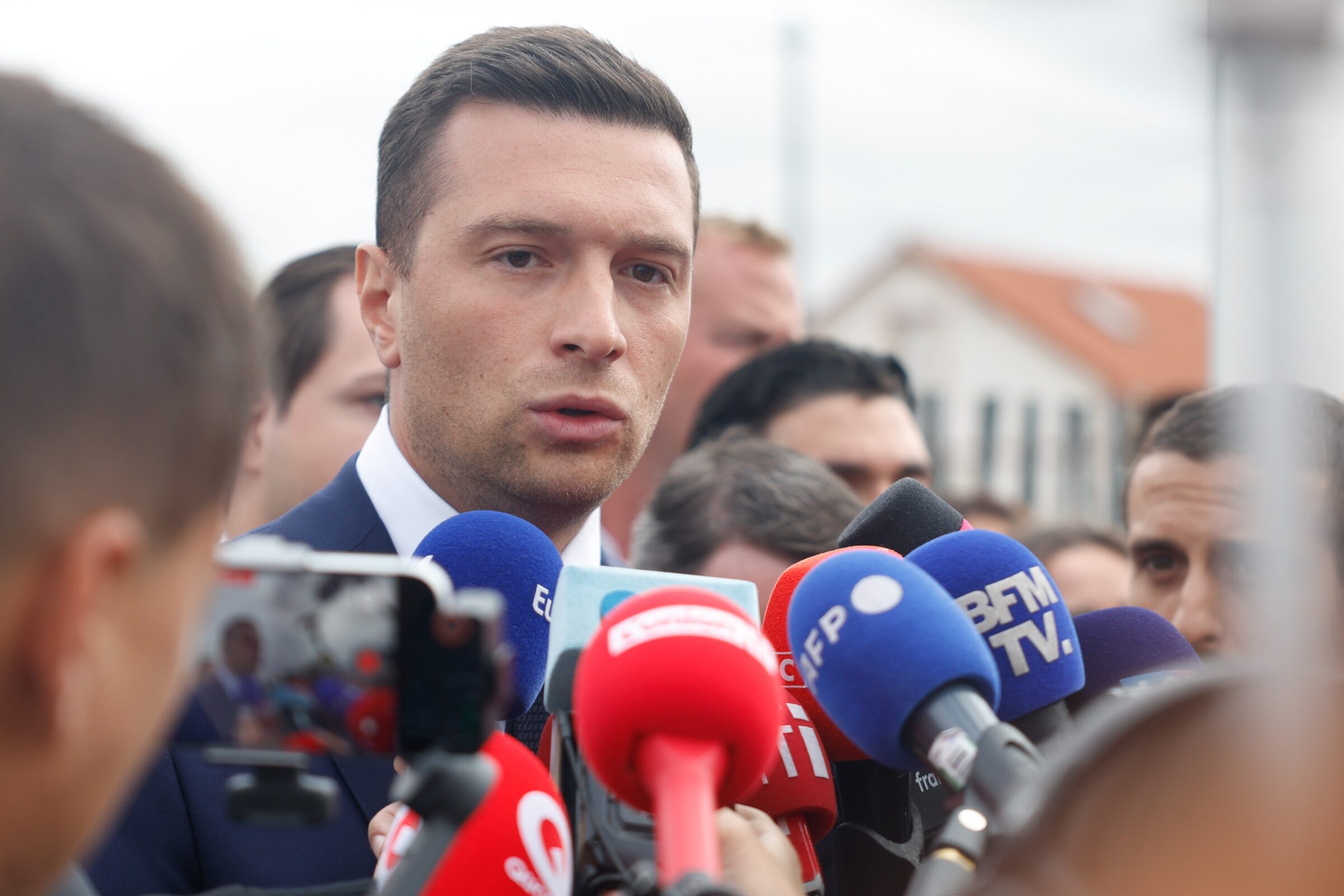
French far-right leader Bardella denies writing antisemitic messages

Jordan Bardella, a leader of the French far-right National Rally, has denied writing antisemitic messages in 2013, as the race ahead of next May’s presidential elections continues to heat up.

An investigation by the left-leaning outlet Mediapart said on Thursday (1 October) that it could authenticate antisemitic messages from 2013 and attribute them to Bardella.

In the messages, Bardella, an MEP and chair of the far-right Patriots for Europe group, said “all the banks are owned by Jews” and that Israel aims to create a new world order. Earlier media reports also found his secret Twitter account publishing racist content, such as mocking a young Black man who had suffered police violence.

He denied having written the messages, calling the evidence “crude montages” and “obscure screenshots that can easily be manipulated,”  he wrote on social media, adding he would sue Mediapart for defamation.

“Either Mediapart is running this operation itself, or it is being manipulated by interested parties,” he has said.

This article continues, but the full version is available only to EUobserver.com subscribers. Visit account.euobserver.com/membership

  •  

The Democratic Wave and the Fading Old Guard: Trump’s Midterm Reckoning

With Democrats leading competitive races and poised to reclaim the House, the American political map is shifting under Trump’s weakening hold, the impending exits of McConnell and Pelosi, and a familiar warning: never count out the party’s talent for snatching defeat from the jaws of victory. Good riddance to both. The major tectonic plates of […]
  •  

Why young men are drawn to the far right and young women to the far left

First published in Respekt.

In Germany’s recent state elections, voters as young as 16 could cast ballots. The results confirmed a global trend of political division between young women and men.

“On 1 January, we both deleted Instagram, TikTok and Snapchat. And whichever of us would be the first to start watching Reels again or download Instagram would have to eat a slice of rotten cheese,” Greta and Lena told Germany’s Deutschlandfunk radio station.

The 16-year-old girls live in a village in Mecklenburg-Vorpommern and chose to delete social media because they had been spending far too much time on it. They often scrolled on TikTok or Instagram late into the night, affecting their performance at school. This summer, however, both reinstalled TikTok for a month. This time without the punishment of a slice of rotten cheese.

They did so for an experiment with journalists from Deutschlandfunk. The journalists wanted to find out what political content the girls would consume through TikTok, the popular Chinese social network, during the peak of the election campaign. Mecklenburg-Vorpommern went to the polls on the third weekend of September. And, as is well known, the far-right Alternative for Germany (AfD) swept the state, just as it had two weeks prior in Saxony-Anhalt.

Greta and Lena, however, were in a markedly different position from their peers in Saxony-Anhalt. For the first time, the north-eastern federal state of Mecklenburg-Vorpommern had allowed 16- and 17-year-olds to vote in state elections. Since young people consume much of their news on social media, Greta and Lena immersed themselves in TikTok, one of the networks now most popular among young Europeans.

For the first few minutes, the girls watched a range of non-political videos — recipes, tomato growing and “silly” AI videos. Then, at around the third minute of scrolling, the first political content appeared. First came a video about Erich Honecker, the former East German communist politician. “Why am I seeing so much stuff about the GDR here?” Greta wondered. As she continued scrolling, she came across AfD co-leader Alice Weidel herself.

It was the first moment when the girls began to notice how quickly their initially apolitical feed was changing. “I feel as if it is constantly just AfD,” Greta said later. She added that she had not searched for any such content in advance. Over the following month, the girls kept a diary of their feed and observed how, after political videos, more and more similar content began appearing — not only from the parties themselves, but also from a range of accounts that picked up and further spread their messages.

The experiment confirmed what has been known for some time: TikTok and other networks alongside it can quickly form the political world a young person sees and the views they come to adopt. At the same time, algorithms are accelerating a trend of a political divide between young women and men, which was also reflected in the results of the state elections mentioned above in Germany.

Algorithms exacerbate polarisation

This article continues, but the full version is available only to EUobserver.com subscribers. Visit account.euobserver.com/membership

  •  

Trump’s plan to swing Brazil’s election for Bolsonaro | Ep. 15

A supporter of far-right lawmaker and presidential candidate for the Social Liberal Party (PSL), Jair Bolsonaro, wears a mask of US President Donald Trump as he celebrates after Bolsonaro won Brazil's presidential election, in Sao Paulo, Brazil, on October 28, 2018. Photo by Miguel SCHINCARIOL / AFP via Getty Images
https://www.spreaker.com/show/5958129/episodes/feed

Brazil votes this Sunday, and the Trump administration has spent months trying to tilt the outcome toward far-right presidential candidate Flávio Bolsonaro. Tariffs. Terrorist designations. Revoked visas. Frequent meetings with the Bolsonaro family. Taken alone, each move looks random. Put the pieces together, and a picture emerges: U.S. interference in Brazil’s 2026 elections. 

Over the last year, Trump has met frequently with members of the Bolsonaro family. In June, the State Department put two Brazilian gangs on the terrorist list. Just a few weeks later, Trump shared an article on Truth Social that said Brazil was his next big challenge. Less than a month later, in July, Trump imposed new 25% tariffs on Brazilian goods. In August, Trump revoked the U.S. visa of the Brazilian ambassador.

The Brazilian Intelligence Agency recently raised the risk of external influence and interference by the United States in Brazil’s 2026 elections to a quote, “critical level.”

This is Episode 15 of Under the Shadow, Season 2. 

Under the Shadow is an investigative narrative podcast series that walks back in time, telling the story of the past by visiting momentous places in the present. Season 2 responds in real time to the Trump administration’s onslaught on Latin America.

Follow Under the Shadow on Spotify and Apple Podcasts.

Hosted by Latin America-based journalist Michael Fox.
This podcast is produced in partnership between The Real News Network and NACLA.
It is supported, in part, by Global Exchange.

VOTE by October 15: Under the Shadow has been nominated for three podcast Signal Awards. Please consider voting for Under the Shadow and The Real News:

Panamerican Dispatch

You can check out Michael Fox’s new reporting project on Brazil. 

It’s called Panamerican Dispatch. It’s a project of The Real News in partnership with Global Exchange. The website is www.panamericandispatch.org

You can also follow us on social media below

Bluesky https://bsky.app/profile/padispatch.bsky.social
X x.com/PAdispatch
IG instagram.com/padispatch
Tiktok www.tiktok.com/@padispatch

Theme music by Michael Fox’s band, Monte Perdido. Monte Perdido’s 2024 album Ofrenda is available on Spotify, Deezer, Apple Music, YouTube or wherever you listen to music.

Other music from Blue Dot Sessions and Epidemic Sound.

Script editing by Heather Gies. Hosted, written, produced, mixed, and edited by Michael Fox.

Guests: 

Resources: 

Support Under the Shadow

Please consider supporting this podcast and Michael Fox’s reporting on his Patreon account: patreon.com/mfox. There you can also see exclusive pictures, video, and interviews.

You can subscribe to Michael Fox’s new free speech podcast, The Battle for Free Speech on Spotify, Apple Podcasts, or wherever you get your podcasts.

Transcript

The following is a rushed transcript and may contain errors. It will be updated.

Michael Fox:

Hi folks. This is your host, Michael Fox. Before I get started, I wanted to let you know that I have big news. First, this season of Under the Shadow has been nominated for three podcast Signal Awards. It’s really exciting, and you can help us by heading over to signalaward.com and voting for Under the Shadow. I’ll add direct links in the show notes that will take you straight there. Second, last week I launched a new website called Pan American Dispatch. It’s a project of the Real News. We’re translating daily articles from Portuguese and Spanish into English for a US audience. Over the next two months, we’ll be exclusively focused on covering the Brazilian elections and Trump’s attempts to sway them. That is what this entire episode is about. And if you want to get all of the news about what’s happening in real time, please consider subscribing to our Substack.

You can find us at panamericandispatch.org. We’re also on X, Blue Sky, Instagram, and TikTok. Our handle is @PAdispatch. Okay, that’s it. I hope you enjoy the show. On May 26th, 2026, a 45-year-old Brazilian senator named Flavio Bolsonado met with US President Donald Trump at the White House. Flavio is the presidential candidate for the far right in Brazil in the upcoming elections in October. This is what he had to say at the annual conservative political action committee meeting in Texas earlier this year.

Flávio Bolsonaro:

And let me look you in the eyes and tell you, we will win.

Michael Fox:

Flavio is the son and political heir of the former far right president Jair Bolsonado, a close ally of the US president. In the meeting at the Oval Office in May, Flavio Bolsonado reportedly asked Trump to designate the Brazilian drug gangs, Primero Commando de Capital and the Commando Vermelio as foreign terrorist organizations. After the meeting, Flavio spoke to the press.

He said, “I asked President Trump emphatically to designate as soon as possible the PCC and the Commando Vermelio as foreign terrorist organizations.” This might not seem like such a big deal, but it is. The United States has sometimes used that very designation as the pretext to invade or interfere in foreign countries. The US placed the Venezuelan gangs, Trende Aragua and Cartel de los Soles on the list back in 2025, and fighting those alleged terrorists was one of the excuses the United States used for invading Venezuela and kidnapping President Nicholas Maduro on January 3rd of this year. In other words, this designation carries weight.

Trump agreed to Flavio’s request. Just three days after meeting with Flavio Bolsonaro, US Secretary of State Marco Rubio announced that those two Brazilian gangs would be added to the list of foreign terrorist organizations. Flavio responded in a letter to Rubio, thanking him for the classification and offering to place his transition team at the disposal of the White House if he’s elected. For months, the United States has been escalating the pressure on Brazil in the lead up to the presidential elections with the goal of helping to lift Flavio Bolsonaro to the top office. Just a few weeks after the State Department put the Brazilian gangs on the terrorist list, Trump shared an article on Truth Social that said Brazil was his next big challenge. Less than a month later in July, Trump imposed new 25% tariffs on Brazilian goods. In August, Trump revoked the US visa of the Brazilian ambassador.

It was an apparent tit for tat after Brazil denied visas to two US State Department officials who planned to travel to Brazil to meet with former President Jair Bolsonaro. I could go on. The point here, as many people have pointed out, is that there isn’t just one thing that Trump is doing to try and sway the vote in favor of Bolsonaro. It’s a whole combination of moves, like a jigsaw puzzle with many pieces taken alone, and it’s just a random assortment of colors and shapes. But when you start to put the pieces in place, a picture begins to emerge. See, Trump allies have won big elections across Latin America. In recent years, right-wing candidates have taken back or held onto power in Argentina, Chile, Colombia, Ecuador, Honduras, Bolivia, and Peru. And they’ve done so with the help of US President Donald Trump, who’s thrown his weight around to boost right-wing candidates, and also with the support of bot farms and shady electoral campaign practices linked to Washington and Mar-a-Lago, as we looked at in the last episode.

Donald Trump:

But on this historic day, we come together to announce a brand new military coalition to eradicate the criminal cartels plaguing our region.

Michael Fox:

Many of those countries have now joined forces in Trump’s shield of the America’s alliance, but there are a few holdouts, and Brazil is one of the most important.

Alexander Main:

The upcoming election in Brazil is really going to be extremely consequential for the entire region.

Michael Fox:

Alexander Main is the director of international policy at the Center for Economic and Policy Research.

Alexander Main:

Brazil is the country with the largest economy, biggest population in Latin America, and it’s also one of the few countries that is still holding out against US pressure, pressure to align with the Trump administration’s agenda in the region.

Michael Fox:

The first round election is on October 4th in just a couple of days, and the runoff will take place three weeks later on October 25th. Bolsonaro is facing off against the longtime workers’ party icon, Luis Ignacio Lula de Silva. He’s the current president and he’s running for reelection. I have been covering the campaigns here in Brazil in recent weeks. I’ve attended rallies for both Lula and Bolsonaro. Today, I’m going to walk you through what’s at stake, and most importantly, how Trump is exerting underhanded pressure on the country ahead of the vote. As a leak document showed last week, the Brazilian Intelligence Agency has raised the risk of external influence and interference by the United States and Brazil’s 2026 elections to a “critical level.” According to the report, there is a trend of escalating pressure on Brazil and a quote, “selective intensification and reconfiguration of the pressure exerted by the United States.” It’s a textbook example of foreign election interference today, a multifaceted jigsaw.

People are concerned, but they’re also standing up, and that’s what makes this episode so interesting. It’s happening in real time. You have Trump attempting to sway the vote, and you also have people pushing back.

Like Lula’s recent speech at the United Nations where he told the US president that Brazil will not be the backyard of any country.

Or this woman, a small farmer who I spoke with at a Lula rally in Southern Brazil. “We’re not afraid of Trump, “she said. “We know what he wants to do and we’re not going to let him. We are the resistance. We’re not afraid of him, just like Lula isn’t afraid. Lula showed us that we are not less than any country,” she said. That and so much more in a minute. This is Under the Shadow, an investigative narrative podcast series that looks at the role of the United States abroad in the past and the very present. This podcast is a co-production in partnership with The Real News and NACLA. I’m your host, Michael Fox, longtime radio reporter, editor, journalist, the producer and host of the podcast’s Brazil on Fire: Stories of Resistance and my new series, The Battle for Free Speech. I’ve spent the better part of the last 20 years in Latin America.

I’ve seen firsthand the role of the US government abroad, and most often sadly, it is not for the better. Invasions, coup, sanctions, support for authoritarian regimes. Politically and economically, the United States has cast a long shadow over Latin America for the past 200 years. It still does. This is season two of Under the Shadow Trump’s attack. Episode 15, election meddling in Brazil.

Okay, before we dive into the allegations of election interference, let me set the scene. To do that, I want to take you back to a month and a half ago to the launch of the campaigns here in Brazil. I was in Sao Paulo covering Lula’s kickoff. Some of this section of the episode is based off of reporting I did at the time for the world and the real news. It’s August 16th, 2026. Tens of thousands of supporters of President Luis Idnacio Lula de Silva are packed into May 1st stadium in Sao Paulo. Among them is Sida Maya. She’s the secretary of women’s public policies in the nearby municipality of Maua.

“This is living history,” she says. “I’m participating in a historic moment. It’s a great feeling and we’re going to elect Lula.” Next to her, her husband Valmirmaya holds back tears. “It’s emotional, “he says. Lula’s campaign chose this stadium to kick off his run for a fourth and final term as president. This is where Lula got his start. In 1979, Lula was a young leader at the ABC Medal Workers Union. He led an iconic strike and rally at this same stadium. The workers won and it marked the beginning of the end of the country’s military dictatorship. Valmir Maya was there then and he’s here now.

“We wanted what we got,” he says, “to transform Brazil into a democratic country. That was our struggle, and Lula was the expression of this.” Inside the stadium, President Lula strode onto a long stage wearing a Panama hat and a white shirt. From the bleachers, he seemed to float above the sea of supporters in red, the color of Lula’s workers’ party. Lula’s top campaign promise has always been about battling hunger. Over the years, he’s lifted millions from poverty, increased access to education, health, and infrastructure, in particular in impoverished Northeastern Brazil. Lula told the crowd that there was much work left to be done, that they had to think of the future. He said they had to invest even more in education, that he wanted to continue to develop jobs and industry for Brazil. 300 miles to the east, Lula’s challenger, Flavio Bolsonaro, launched his campaign on Copacabana Beach in his hometown of Rio de Janeiro.

“Come with me and rescue our nation,” he said, “God above everyone, Brazil above all.” Flavio Bolsonaro has attacked the left and promised to fight crime and insecurity, cut bureaucracy, promote private business and privatizations, and develop close ties with the United States. Much of his rhetoric and that of his supporters is wrapped in a religious language of good versus evil.

“You are the son of hope,” said a pastor at his campaign launch. “You are the first born. You received the legacy of representing your father, and now for everything that is sacred on the face of the earth, honor your father. “The savior trope goes over well with his evangelical supporters, an important base for Bolsonaro and other far-right politicians in Brazil, as we looked at in depth in my 2022 podcast, Brazil on Fire. Blase Narujo is a youth pastor at an evangelical church in a working class neighborhood of Sao Paulo. He joined others on the streets in mid-August to promote Bolsonaro and other far-right candidates running for local office.

He said,” I believe that Flavio Bolsonado is the only viable candidate who can beat Lula and the workers’ party. “I’m a Christian here,” he told me. “I behave as a Christian, but I’m also a political activist here on the streets to defend my beliefs,” he said. Flavio Bolsonado also has powerful support in high places, in particular, as we heard earlier from Donald Trump. If you remember, the US president is a longtime ally of Flavio’s father, Jair Bolsonado. Jair is currently on house arrest. He was first barred from running for office for spreading lies about the country’s electoral system. Last year, the Supreme Court convicted him of plotting a coup to return to power. Before his rise as the leader of Brazil’s far right, Jair Bolsonaro was a backbench congressman for decades, outlandish, but mostly obscure. And then he ran for president.

Speaker 5:

There are a few things that drew inspiration for you.

Jair Bolsonaro:

Very special guy. Turned out to be a great friend of mine.

Michael Fox:

Bolsonaro fashioned himself after Trump. In fact, in Jair Bolsonaro’s electoral campaign in 2018, international media often called him the Trump of the tropics. He and Trump met a number of times while they were both president.

Jair Bolsonaro:

And I think we can say that Brazil and the United States are as close or closer as they’ve ever been.

Michael Fox:

Last year, Trump imposed 50% tariffs on Brazil in part because of the country’s criminal trial against the former president.

Donald Trump:

They’re treating President Bolsonaro very unfairly. He’s a good man. I know him well. I negotiated with him.

Michael Fox:

And let me be honest, there are many supporters of Bolsonaro who look up to Trump and want him to use his leverage to help their candidate, Jair Bolsonaro’s son and protege Flavio Bolsonaro. On September 7th, members of the far right in Brazil hit the streets across the country to rally for Flavio. I covered the march in the southern Brazilian city of Florianopolis. There, numerous people told me how much they admired Trump and how grateful they were for his support. Adalberto Luis de Santos is marching with a blue hat with the insignia of the United States. He and his wife are draped in Brazilian flags. “We’re hoping for support from the United States,” he said. “I believe Trump can help us. All Brazilians need the support of someone from abroad. “. “Trump is really important,” another man in the march told me. “The external pressure is very important.

“. A woman in the march carrying a flag and a yellow hat told me,” Just the simple fact that Trump is in power and acts democratically in favor of freedom makes all of the difference for our people. “.

“We don’t want Brazil to turn into another Venezuela,” she said. “I’ve heard that narrative countless times in Brazil and during elections in countries across Latin America for years. It’s the ever-present boogeyman of so-called communist Venezuela, but fear of the Venezuelan fate took on an even more serious dimension after the US invasion of Caracas earlier this year. The sentiments of so many Bolsonaro supporters are a sign of just how polarized the political debate is and how much the far right in Brazil looks up to the US president. Two weeks later, I covered another rally in the same city, this one in support of President Lula.

People had a lot to say about Trump and his efforts to influence their presidential decisions. I asked them, “Are you afraid of what Trump and the United States could do during this election to try and support Bolsonaro?” “Yes, I’m really afraid of that, “said one man carrying a Lula flag. “They want to take away our sovereignty. They want to invade our lands. They want to take what is ours and let Brazil be a colony of another country.” “Of course we’re afraid, “said someone else,” but we believe that Lula is well ahead in the election and we won’t allow Trump to destroy the election. “What do you think about Trump and are you concerned that Trump might try and do something with the elections here in

Speaker 7:

Brazil? Yeah, we’ve seen a lot of his work here in Latin America that we are very scared. Venezuela, Peru, Colombia, Argentina. So we are very scared because Latin America is being contaminated by him and his work, so it’s very scary and we don’t want him in here or anything with him.

Michael Fox:

People have a lot to be concerned about. When I was in Sao Paulo in August, I sat down with Igor Fusser at a cafe near Palista Avenue. We’ve known each other for years. He’s a professor of foreign relations at Brazil’s ABC Federal University. I asked him how he sees the US actions against Brazil at this moment.

He said, “This is not just about the United States trying to remove the government of a left-wing party, the workers’ party, or a left-wing leader, which is Lula. It’s about subjecting Brazil to the policies of the United States, and Brazil being the largest country in Latin America is precisely the biggest obstacle to the American project of global dominance of the Western hemisphere,” he said. Remember, over the last year, as we’ve looked at throughout this podcast, Trump has pushed the United States into a new era of dominance over Latin America, the likes of which the region has not seen in decades. Boat strikes in the Caribbean, the US invasion of Venezuela, and the kidnapping of President Nicolas Maduro, the oil blockade on Cuba, and Trump throwing his weight around and meddling in elections across Latin America. It’s all justified by a renewed Monroe doctrine. Here’s Secretary of War, Pete Hegseth, underlining that point.

Pete Hegseth:

President Trump has established the Trump corollary of the Monroe Doctrine, the Don Roe doctrine, and the war department is implementing it as fast as we can.

Michael Fox:

Brazil is the latest battleground. It’s playing out in the open and behind the scenes. It’s early August. The Brazilian Association of Investigative Journalism is meeting in Sao Paulo. At the meeting circulating in the crowd are staff from the US Consulate in Sao Paulo, their mission to woo Brazilian journalists into conversations about the country’s electoral process and the state of “freedom of expression” in the country. This was reported by several independent journalists at the conference and then published by independent journalist Leandro DeMori, the former executive editor of The Intercept Brazil. According to Demorti, three journalists at the event confirmed the actions of the consular officials. Two journalists said they were offered assistance with US visas if they needed them, even though the meetings with the officials about the country’s elections were to be held in Sao Paulo.

Washington has leaned on two key narratives to demonize Brazil in recent years. One, that freedom of expression is under attack in Brazil because of its attempts to reign in social media disinformation, and two, that the country’s electoral system is faulty and prone to errors. Both of those claims are false. Brazil has long held certified free and fair elections, and freedom of speech is alive and well, although Brazil embraces a more inclusive harmonious definition of how the freedom of speech fits into the country’s other laws. Episode 12 of this series goes deeper into those claims and their fallout. DiMorti’s reporting about the recent journalism forum brings up more questions than answers. What were the consular officials trying to achieve? Did some journalists take the bait? If so, how will this be weaponized? We don’t have answers, but it’s another piece of the scrambled jigsaw puzzle.

Here’s another, and it’s just one example of how the meddling campaign has been building. In mid-September, less than two weeks ago, Flavio Bolsonaro’s brother, Eduardo, met with President Donald Trump at the White House. As we looked at in the last episode, Eduardo is a former congressional representative who now lives in the United States. The Brazilian Supreme Court sentenced him earlier this year to four years in prison for his actions in the US, lobbying the Trump administration to intimidate the Brazilian judiciary amid the trial against his father. According to reports, Eduardo traveled to Washington to ask Trump to impose sanctions on members of the Lula government and the Supreme Court, including Justice Alexandre Morais. If you’ve been following Brazil or my reporting, you might remember that Morais was the justice that led the trials against the dissemination of fake news in the country and also against Jair Bolsonaro.

Jair Bolsonaro:

Also developing this morning, the Trump administration placing sanctions on a Brazilian Supreme Court justice over concerns of human rights violations and politicized prosecutions.

Michael Fox:

Last year, the US sanctioned Mordice for supposedly carrying out human rights abuse, including arbitrary detention. Those sanctions were lifted four months later, but they were a thinly veiled retaliation for the trial against Bolsonaro and also Morais’s fight with ex-owner Elon Musk, which we looked at in depth in episode 12. There is no question the battle over Brazil right now is also taking place online and Silicon Valley is playing its part.

On Wednesday, September 23rd, Meta, the parent company of Facebook and Instagram, took down President Lula’s Facebook page and blocked his campaign from running political ads. The platform gave no justification for the move. Lula’s workers’ party and his electoral coalition demanded answers. Lula’s campaign asked for the immediate return of the account. The campaign’s lawyers told the platform that the restriction “poses a serious risk to the candidate’s level playing field in the election.” The head of the Workers’ Party national communications team, Eden Valadaris, said they hadn’t ruled out taking the case to the superior electoral court. He wrote on X, “Brazil’s electoral contest, its campaigns, and its vote cannot be left to the mercy of the political preferences of the big tech companies whose supposed programming errors only hit and harm one campaign and one candidate.” One candidate, meaning Lula. By the next morning, the page was back up, but Lula’s electoral coalition said Meta’s actions harm the presidential campaign.

Remember that Meta was founded and is run by Mark Zuckerberg. He’s a close ally of President Donald Trump.

Jair Bolsonaro:

Thank you very, very much.

Michael Fox:

In fact, he was at Trump’s inauguration for his second term alongside the heads of Apple, Google, Amazon, and of course, Tesla and ex – CEO, Elon Musk. I want to talk about something important today because it’s time to get back to our roots around free expression on Facebook and Instagram. Zuckerberg got rid of fact-checking at Meta in early 2025, just before Trump came into power last year, and that’s important because there are now fewer constraints on the spread of fake news or misinformation on the platform. In late August, Amnesty International tested this lack of guardrails in Brazil. It sent 15 different AI-generated election-related political disinformation ads to Facebook to see if the platform could discern between truth and falsehood. Meta failed to block most of them. A similar test run by the eco movement in Brazil in mid-September showed that nearly 90% of the disinformation ads it attempted to run on Meta were approved, including “AI ads depicting execution style threats against lawmakers and calling for a stop the steal style coup.” And I want to say one more thing about the role of Silicon Valley’s big tech platforms.

They are paying attention to what’s happening in Brazil. Here’s just one example. Last year, lawmakers and a congressional committee in Brazilia were discussing a bill on AI regulation. According to the fact-checking agency, Ausfatos, big tech lobbyists visited committee members more than 80 times over a five-month period. The tech company that met with members in Brazilia the most was Meta, which made more than a third of those visits.

There’s another layer to all of this, another puzzle piece if you like. In the last episode of this podcast, I took an in-depth look at the work of the Argentine political strategist, Fernando Cerimedo. Remember, Serimedo has led right-wing digital campaigns across Latin America, and he did so with the help of Washington and Trump’s former campaign manager and digital strategist, Brad Parscali. This is what he had to say earlier this year in Mar-a-Lago when he was presented an award for best Hispanic Political Consultant of the Year.

Jair Bolsonaro:

I want to say something in English. Thank you to Brad Parscale for believing me all the time and give me your technology and Tim Don for the fighting in Latin America against socialism. Thank you, Brad.

Michael Fox:

Serimedo is now in prison on charges that he tried to kill his girlfriend. According to her, he hired the hitman to silence her. Serimedo also faces charges of illicit enrichment and other crimes, but his digital campaigning and the bot farms that he’s deployed in elections up and down the hemisphere haven’t necessarily gone away, nor have his deep ties to the right in the region. Remember who presented that award to Cerimedo? It was Eduardo Bolsonaro, the brother of Flavio Bolsonaro. They reportedly have known each other for more than 15 years. Now, just this week, Washington sanctioned Bolivian Attorney General Roher Mariaka, who is prosecuting the Serimero case,

He defended his country sovereignty and vowed to continue the investigation despite the apparent attempt to intimidate him. I mention all of this to say that just because Serimedo is now in jail, it doesn’t mean that these types of digital influence campaigns heavily fueled by an inter International far right aren’t happening. As I mentioned last time, Serimedo is just one piece in a puzzle, a cog and a wheel, albeit one very important cog. But actions pushing disinformation online are still happening. We just don’t necessarily know from who or where. Here’s one example. About a week ago, the Brazilian journalistic outlet Ajencia Publica reported in conjunction with Aos Fatos that AI farms were fueling the far right agenda in the lead up to the elections. The bots had created 255 profiles and made over a thousand posts. Agencia Publica reported that the network had “achieved 58 million views, expanding the reach of posts supporting the Bolsonaro family and attacking the Supreme Court.” It’s a strategy known as astroturfing, using artificial engagement to give the impression of a real surge in grassroots support.

All of this happened over one month between August and September. According to the investigation, one of the main nodes of this AI campaign was linked to the Instagram account Leo Indio Bolsonaro. That is managed by Leonardo Rodriguez de Jesus. He is Flavio and Eduardo Bolsonaro’s cousin. He was investigated by Brazilian officials for his role in the 2023 attempted coup. A warrant for his arrest was ordered in 2025. He fled the country. He’s reportedly now in Argentina. The point is this, these campaigns are happening. We often just don’t hear about them until after the fact.

Maria Marta Bruno:

Well, I’ve been voting since 1998 and I have never seen such level of interference of foreign interference in Brazilian elections.

Michael Fox:

Maria Marta Bruno is a journalist with Agencia Publica, the outlet I mentioned earlier. If you remember, I spoke with her in the last episode as well about Serimedo.

Maria Marta Bruno:

It reminds me a lot of what I have read in history books and what I have learned on the Brazilian dictatorship and the very clear role that the US developed from 1964 to 1985 when the military dictatorship in Brazil took place. There was never since the end of the dictatorship such open intervention.

Michael Fox:

Maria says there have been a lot of headlines lately mentioning diplomatic tension between Brazil and the United States, but she says what we’re seeing goes far beyond that.

Maria Marta Bruno:

Because given the gravity and the timing of the recent facts, I would say that it constitutes a clear interference in our process.

Michael Fox:

She highlights Trump’s tariffs on Brazil both last year and this year, which she says are wrapped into defending former President Jair Bolsonaro. She points to the numerous meetings between Flavio and Eduardo Bolsonaro with top officials in Washington over the last year, the US sanctions against Supreme Court Justice Alexandre Morais and so much more. And she says there are two other big reasons why the United States is so interested in Brazil. The first is China.

Maria Marta Bruno:

The US intentions to reduce China influence in Latin America. We all know that China, it’s a key partner for Brazil and for other countries in the region.

Michael Fox:

The second is rare earth minerals, stuff like neodymium, dysprosium, or terbium. Yeah, I don’t know what they look like either, but they’re used in EV motors, green energy technologies, military equipment, and other industries. Brazil is home to somewhere between a fifth and a quarter of the total rare earth reserves in the world. It’s second only to China. In April, a US company bought up the Brazilian firm Ceja Vergi, which mines rare earth minerals in Brazil. After his meeting with Trump in May, Flavio Bolshinaro promised to work with the United States on mineral extraction. “We are the only real alternative to China for a free world,” Flavio Bolsonaro said. “Under my government, there will be long-term strategic partnership with the United States in this sector with protected investment and shared reindustrialization between the two countries. Flavio also promised that if he is elected in his first month, Brazil would join President Trump’s Shield of the America’s regional coalition.

Brazil will join the shield of the Americas together with the United States, “he said,” and countries across the region, forming a great hemispheric alliance against terrorism and organized and transnational crime. “This is Brazil’s place. It is the protagonist of the security of the Americas side by side with free and sovereign nations, he said.

Maria Marta Bruno:

And we know that the US is very interested in what we have and the reserves that we have. So it’s very significant, it’s very important, and we know that the US is following closely the development of the presidential elections here because they will certainly determine what will be the future of the diplomatic relation between US and Brazil in the upcoming years.

Michael Fox:

In the face of all of this, Brazilians are responding none louder than President Luis Idnacio Lula de Silva.

Jair Bolsonaro:

The assembly will now hear and address by his excellency, Luis Inacio Lula Da Silva, president of the Federated Republic of Brazil.

Michael Fox:

The day is September 22nd, 2026, New York City. Brazilian President Luis Idnacio Lula de Silva walks to the podium at the United Nations to kick off the 81st General Assembly meeting. Without mentioning him, Lula speaks directly to US President Donald Trump. “Brazil does not fit into anyone’s backyard,” he says. Lula denounces Trump for attacking democracy, interfering in elections and using military force to acquire material resources across Latin America. He closes his speech with a nod to the upcoming high stakes elections in Brazil. On October 4th, he says, “Millions of Brazilians go to the polls to decide their future. They will not just elect the president of the republic, state governors, and representatives of the legislative power. They will decide between democracy and denialism, between if Brazil is going to move toward a future of more opportunities or return to a past of exclusion.”. He says Brazil will have free and transparent elections as it always has with broad freedom of speech.

He denounces the spread of disinformation online, in particular coming from outside the country, which he says is an attempt to “disrupt the debate.”.

“We have a modern and robust electoral system,” he says. “We have a plural citizenship and a free press. We will not allow the enemies of democracy, both internal and external, to attack the popular will. Brazilian democracy belongs to Brazilians. Brazil will continue to be a sovereign country. No one, no one will take us away from this path, “he says. It’s Lula’s response to Trump and the world as the country faces incredibly important elections, elections that Trump and the United States have been attempting to influence. Brazilians have been vocal online and in the streets against Washington’s pressure, and recently they actually got some support from a group of lawmakers on Capitol Hill. On September 24th, just last week, Senator Bernie Sanders and 30 Democratic members of the US House of Representatives sent a letter to Secretary of State Marco Rubio. They accused the Trump administration of waging a pressure campaign against Brazil ahead of the first round vote.

Illinois Congresswoman Delia Ramirez led the congressional effort. They write, “We are writing to express our grave concern regarding the administration’s coordinated effort to threaten our strategic alliance with Brazil and undermine the Western Hemisphere’s second largest democracy ahead of its upcoming presidential election in October 2026. Over the course of President Trump’s second term,” they write, “We have seen US officials engage in a sustained multifaceted campaign of interference and destabilization in Brazil. They point to the shocking 50% tariffs Trump levied on the country last year amid the country’s trial against Jair Bolsonaro. They also underscored Trump’s appointment last year of Darren Beattie as a senior advisor on Brazil issues in the State Department. Beattie, a noted far-right extremist and white supremacist,” they write, “came into this post with a clear record of public statements signaling an overt ideological commitment to undermining Brazil’s democratic institutions.” The congressional representative singled out Trump’s current tariffs, his meeting with Flavio Bolsonaro at the White House, and his designation of the Brazilian drug gangs as foreign terrorist organizations.

They write, “Given the Trump administration’s repeated military strikes in the region, justified in part by alleged foreign terrorist organization threats to US security, the designation has also fueled fears of potential US military intervention.” They recall comments from White House Press Secretary Caroline Levitt last year that threatened Brazil could potentially face the United States’ military might.

US military action in Brazil isn’t likely, but it’s not out of the question. Nothing is under Trump’s Dunro doctrine. The lawmakers highlight that Brazil is just the latest in a quote, deeply troubling pattern of interference by the United States in foreign elections, including in Argentina, Honduras, and Columbia. Rather than helping defend democracy, they write, the United States is acting as an agent of interference and destabilization using diplomatic economic and political pressure in ways that risk weakening the country’s democratic institutions, undermining confidence in Brazil’s electoral process and inflicting further damage on our relationship with a strategic US ally and trading partner. They demand that Washington commit to recognizing the certified election results. Here’s the thing, the stakes are high. Remember Igor Fusser? He’s the professor I met at the Sao Paulo Cafe. He told me, “It’s clear that the United States is doing everything and will do everything possible to prevent the reelection of Lula in the next elections.” And Igor told me there was a reason for that, because if Flavio Bolsonaro wins, he will bow to Trump and the United States.

Igor says, “Brazil will become a country under the tutelage of the United States, a colony or almost a colony of the US as already happened with Argentina, Columbia, Venezuela, and many others. And if Lula is victorious in these elections, we will live a very intense period of confrontation between the two countries,” he says. And Igor has a really interesting analysis here. He says, “The US dominance over Latin America imposed by Trump is analogous to the control of the Soviet Union over the Eastern block countries during the Cold War under a Russian foreign policy imposed by Soviet leader Leonid Brezniv in 1968.” He says, “Czechoslovakia, Hungary, Poland, Bulgaria, all of those countries were formally independent nations with their own government, their own laws, their own representation in the United Nations, but these countries were not autonomous. They didn’t have sovereignty. Any movement that they made that clashed with the interests of the Soviet Union was repressed.

Some of them were even invaded,” he says. “So we’re living in Latin America, a Breznev doctrine, capitalist, imperialist, dictated by Donald Trump. “That is why this election is so important. Brazil is the outlier, the counterweight to the United States and the region, and the US is fighting hard to bring it to heel.

We’re going to see this all unfold not in a couple of months or weeks, but in just a few days. The first round of the election is on October 4th. Brazilians are voting for their president and vice president. They’re also voting for all of the country state governors, all 513 members of the Chamber of Deputies, two-thirds of senators, and more than a thousand state assembly seats. Lula is ahead in the race, but he appears shy of the 50% needed to win outright. If no presidential candidate wins more than half of the vote, it’ll go to a second round. There, polls show the margin between Lula and Bolsonaro even tighter, and it will undoubtedly be a tough campaign. The second round, if it’s needed, is on October 25th.

That is all for this episode of Under the Shadow. Things are going to get intense in the coming days. Please consider following our new website, Pan-American Dispatch and our social media accounts for ongoing reporting on Brazil and these elections. Some of the reporting in this episode was based off of stories I produced recently for the world and The Real News. Many thanks to those outlets for all that they do. Let me remind you that if you’re craving even more backstory here, you can always go back and listen to episode 12 of the second season of Under the Shadow about Brazil’s fight against fake news in the country and the US attempt to roll it back. And please also consider checking out my 2022 podcast about Brazil under Bolsonaro. It’s called Brazil on Fire. It’s still totally relevant today. You can find that wherever you listen.

As always, you can find me at patreon.com/mfox.

There you can also support my work, become a monthly sustainer, or sign up to stay abreast of all the latest on this podcast and my other reporting across Latin America. You can find a ton of content there exclusively also for my supporters. If you’re looking for more information, news and reporting on Trump’s onslaught, both in communities within the United States and abroad, please check out The Real News and NACLA. Both of them are publishing daily indispensable reporting. The theme music is by my band, Monte Perdido. You can find us on Spotify or wherever you stream music. This closing song playing right now is off our 2024 album, Ofrenda. I hope you check it out. Under the shadows of co-production of The Real News and NACLA, it’s produced in partnership with Global Exchange. This episode was written, researched, reported, and produced by me, Michael Fox. The script was edited by Heather Geis.

Thanks for listening. See you next time.

  •  

[Interview] Le Pen and Mélenchon are ‘economically illiterate’ and weaponising migration, says French scholar ahead of 2027 race

“Marine Le Pen has reinvented herself. Her style now is more moderate,” reckons Jacques Rupnik, a French political scientist, ahead of the country’s widely anticipated battle for the presidency.

Many voters in France will vote for the candidate they see as having the best chance of defeating the far-right leader, Rupnik explains.

“All polls show that if the far-left Jean-Luc Mélenchon faced Marine Le Pen in the second round of France’s presidential election, Marine Le Pen would win,” he says, explaining that many French votes are unwilling to back Mélenchon.

In his interview with Denník N, Rupnik claims Mélenchon is the first French presidential candidate to seek support from immigrants so explicitly.

Find out:

  • How Marine Le Pen and Jean-Luc Mélenchon have used the migration debate for their campaigns.
  • Why the presidential frontrunners do not understand economic issues.
  • Rupnik’s assessment of Emmanuel Macron’s two presidential terms.
  • Who does Marine Le Pen look up to?

Polls suggest that if France held a presidential election now, far-right Marine Le Pen and far-left Mélenchon would make the second round. What does this tell us about France?

France is divided and polarised. Young people in particular tend to lean towards more radical parties. Establishment parties are old and worn; they have lost their appeal. They have little to say, except for claiming that others are dangerous or worse. But you must bring something new to an election. But after ten years of Macron, that is very difficult.

And it is not entirely true that all polls predict Mélenchon will reach the second round; they often place former prime minister Edouard Philippe ahead of him. Mélenchon is powering ahead in polls because he has launched his campaign and is very good at it. But, nothing is decided.

In French presidential elections there are two rounds. In the first round, you vote for your preferred candidate; in the second, you vote for the lesser evil. So, for most voters, the question will not only be whom they prefer, but also who has the best chance of defeating Le Pen in the second round.

And that is very important. All polls say that if Mélenchon faced Le Pen in the second round, he would lose. Many people are not willing to vote for Mélenchon. A centrist candidate has the best chance of defeating Le Pen, so for now it looks like former prime minister Philippe.

But only if another former prime minister, Gabriel Attal, withdraws his candidacy.

Yes. We have two strong parties at the extremes, and the space in the centre has shrunk. The narrower it becomes, the more candidates appear within it. Every week, another politician tells media: “You know what, I would give it a go.”

Attal, of course, wants to win over Macron supporters — that is, voters on the centre left. The fact he is in the race matters even if he withdraws and endorses another candidate. That may prove a good strategy.

If Le Pen and Mélenchon reach the second round, many would vote Le Pen. Why?

Marine Le Pen has reinvented herself. Not in the sense that she has been thinking about what new ideas to bring forward, but now her style now is more moderate. It is no longer the brash style associated with her father.

Perhaps she took her cue from Italian prime minister Giorgia Meloni, seeing a candidate whom everyone feared, but no radical changes followed her election because she adapted quickly to European realities.

Le Pen points out that in several European countries, including Finland and Sweden, the far right has been in government and nothing has happened.

At the same time, Marine Le Pen managed to break through a certain barrier, and some moderate rightwing voters have shifted to her side.

How did that happen?

Previously, the moderate right was stronger and Le Pen’s camp was weaker. The type of rightwing voters who voted for Jacques Chirac have now shifted their weigh behind more radical options. The balance has shifted, and right-wing voters are saying: “Why should we, the right, be excluded from politics simply because Macron has failed and the Le Pen has grown stronger?”

Immigration is another reason behind growing support for Le Pen. Mélenchon is also capitalising on the immigration debate, but in the opposite way to her.

Please explain that.

Mélenchon opposes Le Pen’s position by arguing that immigrants integrate. The Le Pen camp says: “No, they have come from a different culture and their attitude is anti-French.” Le Pen’s camp says that integration works poorly, that immigrants do not even want to integrate instead preferring to live in their own communities.

“Mélenchon has therefore adopted the theory of grand remplacement, but instead of presenting it as a threat, he has turned it into a huge opportunity.”

And Mélenchon argues that it is fine for immigrants to remain in their own communities, practise their own religions, for women to wear headscarves and so on.

The great replacement conspiracy theory (“grand remplacement“) should be mentioned since the far right embraced it long ago. It is the idea that the native French population will gradually be replaced by new immigrants.

And Mélenchon now says: “What great replacement? On the contrary, it is an opportunity for France. He says: “The more of us there are, the better.”

Mélenchon has therefore adopted the theory of grand remplacement, but instead of presenting it as a threat, he has turned it into a huge opportunity. Of course, everyone knows what he is aiming for. It is an election campaign, and he is appealing to voters who are themselves immigrants.

Previously, no one focused on immigrants in elections except Le Pen who used them as a bogeyman. And now Mélenchon says: “We are appealing to Muslims.” He says Muslim headscarves are fine and religious symbols are fine. He says anyone who opposes this is racist.

In August, Le Pen announced her intention to ban headscarves in public spaces. Will her anti-Islamic agenda help her win?

On the contrary, such statements mainly play into Mélenchon’s hands. Of course, calling a referendum on the issue in France is not so simple since such laws already exist. The law states clearly that you can do what you want at home, but if you work in the public sector you must refrain from displaying your religion. There are laws covering this, and there is absolutely no need to devise new ones. Le Pen’s ideas in this regard seem to be mere campaign slogans; we cannot take them literally.

Yet, a major Le Monde poll shows the French are more concerned about the economy than immigration. Immigration ranks fourth, after social issues and ecology.

That is true, but other polls show that, for many voters, the issues of migration and safety overlap considerably.

So, as concerns about security become increasingly prominent, people are more concerned about security and often link it to migration. Marine Le Pen will certainly try to make it one of the key issues, alongside the economy.

This article continues, but the full version is available only to EUobserver.com subscribers. Visit account.euobserver.com/membership

  •  

Trump, Rúbio and the Bolsonaros’ electoral fraud and cyber attacks

Supporters of the ruling party hold huge signs against former president Jair Bolsonaro and US President Donald Trump during a demonstration during the Independence Day commemoration, at the Praça da Republica, in Sao Paulo, Brazil, on September 7, 2025. Photo by MIGUEL SCHINCARIOL/AFP via Getty Images

This story originally appeared in Panamerican Dispatch on Sep. 29, 2026, and is shared here with permission.

The close relationship between the Bolsonaro family and key figures in the international far right like Steve Bannon and U.S. President Donald Trump has been public knowledge for over eight years. In this article, tech specialist Miguel Manso looks at the state of that relationship, right now, just days before Brazil’s first-round presidential elections. – ed.

Just days before the first round of Brazil’s presidential election, a confidential report from the Brazilian Intelligence Agency (Abin) warns that the United States is influencing the country’s electoral process. Titled “Threats to the 2026 Electoral Process,” the report was sent in late August to the presidency, the Superior Electoral Court and the Justice Ministry, warning that U.S. interference has reached a “critical” level.

Sen. Flávio Bolsonaro’s campaign has become the target of legal action over claims that it benefited from paid ads and mass messaging originating in the United States.

The coalitions backing Luiz Inácio Lula da Silva of the Workers’ Party and Renan Santos of the Missão party asked the Superior Electoral Court and the Supreme Federal Court to investigate the senator for economic and political abuse of power and foreign interference.

The court filings allege the following:

Foreign amplification: U.S.-based right-wing profiles and influencers, including American political figures, allegedly ran paid campaign content on X in support of Flávio Bolsonaro.

Paid partnerships: The posts, labeled “paid partnership,” cited figures from the foreign betting platform Polymarket to claim that Bolsonaro was the favorite, distorting the actual state of Brazilian polling.

Prohibited financing: The parties allege that this amounts to the use of funds from outside the official campaign structure and financed from a foreign source, both of which are strictly prohibited under Brazilian electoral law.

The lawsuits ask for the immediate removal of the posts, a Federal Police investigation, and, if the irregularities are confirmed, the loss of candidacy and ineligibility for those involved.

Trump’s Shield of the Americas and the Fernando Cerimedo Case

The attempted murder of Nadia Beller has drawn investigators toward Fernando Cerimedo and a web of other connections, including drug-trafficking flights and Bolivia’s top anti-narcotics police official, who allegedly identified the hitmen. Cerimodo is known for his work with far-right political leaders in Latin America.

On August 17, 2026, two gunmen on a motorcycle shot Nadia Beller, a Bolivian lawyer and Cerimedo’s girlfriend, outside a hotel in Santa Cruz de la Sierra, Bolivia. She survived but was wounded in the neck, chest and arm.

Bolivian police have identified Colombian national Aldúbar Henry Silva Peña as the lead shooter. He fled immediately after the attack, then released a video in September 2026 admitting his role in planning the crime, though he claimed the original plan was only to “scare” Beller. He led a group of five, including four other operatives — two Colombians and two Brazilians — whose identities have not been released by investigators. All four remain at large.

Police detained Víctor Hugo C.Z. and formally charged him as an accomplice who worked directly with the gunmen. They arrested Róger Aguilera on charges of supplying the .32 caliber weapon used in the attack, and arrested Paola Andrea Vargas on charges of hiding and storing it.

Bolivian authorities arrested Argentine political consultant Fernando Cerimedo, known for his work with Trump’s MAGA movement and Beller’s former partner, at Viru Viru International Airport. Bolivia’s public prosecutor’s office accuses him of masterminding the attempted femicide.

A forensic review of Cerimedo’s phone revealed real-time messages with Erik Correa González, the Bolivian government’s head of intelligence, confirming that the shooting took place at the exact moment the two were exchanging messages. Beller has said publicly that the attack was ordered to silence her before she could expose corruption, money laundering and illicit dealings involving Cerimedo and local government officials.

Investigators found two key pieces of evidence: a text note written six days before the attack that used the phrase “La Nadia” alongside an intent to “eliminate” the victim, and a message sent at 8:54 p.m. on August 17 to a contact identified as “E.C.G.,” reading, “Brother, they just shot her.”

The investigation also dug into Cerimedo’s finances. On his phone, police found a note referring to a “virtual wallet” that had moved about $66,000 over the previous 11 months across more than 320 transfers, and a larger “pass-through wallet” that had moved $1,386,997. In searches, police seized about $400,000 in cash, along with 500,000 Bolivian bolivianos, weapons, vehicles and equipment for a “bot farm” — automated accounts used to manipulate social media and elections.

The Earthquake Caused by Survivor Nadia Beller

Beller’s allegations against her former partner are shaking the governments of Rodrigo Paz in Bolivia, Javier Milei in Argentina, José Antonio Kast in Chile, Nasry Asfura in Honduras and Colombia’s Abelardo De La Espriella, along with their ties to the Bolsonaro family. Her account has helped expose a techno-fascist network aimed at manipulating and interfering in elections in Argentina, Bolivia, Chile and Colombia — and even in Mexico’s upcoming election — through bot and troll farms that Cerimedo’s team ran from Argentina and Santa Cruz de la Sierra in Bolivia.

The goal, investigators say, was to install leaders who would serve U.S. and Israeli interests, backed by the Shield of the Americas alliance, promotion from the outlet La Derecha Diario, and financing from Trump and his allies channeled through Milei. Cerimedo has been described as a CIA and Mossad asset.

Fernando Cerimedo, known as the “king of bots” for the Latin American far right, is also under investigation for money laundering and alleged ties to drug trafficking. Prosecutors are trying to determine whether he was part of a network that facilitated irregular flights carrying up to 500 kilograms of cocaine per trip and returning with large amounts of cash.

Searching properties tied to Cerimedo in Bolivia, authorities seized large sums of cash and found evidence of a technical setup built to automatically create fake online accounts — commonly known as a “bot farm.”

Fernando Cerimedo’s Ties to Donald Trump, Marco Rúbio and the Bolsonaro Family

It was already known that a global network links Donald Trump’s MAGA movement with right-wing leaders across Latin America, funded through an international web of businesspeople and drug traffickers and operating through artificial intelligence manipulation and integrated data networks used for cyberattacks.

These groups organize at high-profile political events and forums, such as Mar-a-Lago and the Conservative Political Action Conference (CPAC), where strategists and data operatives share methods for digital engagement and fundraising.

Cerimedo has said in interviews that no one formally introduced him to Eduardo Bolsonaro. The two say they met by chance at Harvard University in 2010. But when news outlets asked Harvard directly, the university said it had no record that either Eduardo Bolsonaro or Fernando Gabriel Cerimedo had ever been enrolled there. Confronted with this, Cerimedo later claimed he had only taken open, non-degree classes.

As part of the Federal Police investigation into the attempted coup in Brazil, investigators found that in 2022, military officers and aides brokered Cerimedo’s ties to the hardline core of the Bolsonaro movement, producing false reports attacking the integrity of Brazil’s voting machines.

Reports based on the plea-deal testimony of Mauro Cid identify Army Col. Ângelo Denicoli as the officer who contacted Cerimedo and coordinated the technical details needed to carry out broadcasts and attacks on Brazil’s electoral system.

The Federal Police obtained electronic records showing that Cerimedo’s phone number and contact information were passed directly to Denicoli. Forensic analysis of seized phones showed that Denicoli became the main point of contact with the Argentine consultant, coordinating the materials sent to him.

Cid formally confirmed in testimony that Denicoli was the direct link between the criminal organization and Cerimedo, saying Denicoli was part of the group tasked with gathering data to support claims that the electronic voting machines had failed.

Technical evidence linked Denicoli, Cerimedo and technology entrepreneur Eder Balbino. Balbino and Denicoli compiled reports containing false arguments and data based on outdated voting-machine models, then passed the files to Cerimedo, who used them as visual material for his broadcasts.

Digital cross-referencing by the Federal Police showed that the data Cerimedo presented in his broadcasts from Argentina contained the same mathematical inconsistencies and formatting as the documents manipulated by the Liberal Party’s technical committee in Brazil. Investigators concluded that Cerimedo had not discovered the material independently, but received it from the structure Denicoli managed.

Investigators also found that Denicoli was part of what they called the Disinformation and Electoral System Attack Unit. The Federal Police traced digital records linking Denicoli directly to fake ballot-audit files stored in a public Google Drive folder belonging to Cerimedo, with Denicoli listed as the folder’s original owner and editor.

Denicoli coordinated the technical compilation of false reports with Balbino. The material was passed to Cerimedo, who used it in the “fraud livestream” broadcast from Argentina in November 2022 and amplified in Brazil by Eduardo Bolsonaro.

In a trial concluded by the Supreme Court, Denicoli received the harshest sentence among the defendants in his group: 17 years in a closed prison regime, on charges of attempting a coup, seeking the violent overthrow of Brazil’s democratic order, and participating in an armed criminal organization.

Billion-dollar Technology Infrastructure Serving Lies and Fraud

The connection between U.S. Secretary of State Marco Rúbio and Argentine digital strategist Fernando Cerimedo took shape starting in 2023, with lobbyist and political consultant Damián Merlo acting as the intermediary.

Merlo, who owns the Miami-based Latin America Advisory Group, serves as a link between conservative Latin American politicians and power centers within the U.S. MAGA movement. According to filings under the U.S. Foreign Agents Registration Act, Merlo used his relationship with Viviana Bovo, a senior adviser to Rúbio, to introduce Cerimedo and his data tools directly to the office of the then senator, who is now secretary of state.

Cerimedo founded the agency Numen and the outlet La Derecha Diario, specializing in “bot farms” and algorithm manipulation to shape social media trends. In Chile, he worked on the campaign that defeated the 2022 constitutional referendum. In Brazil, he helped the Bolsonaro family spread disinformation about voting machines after the 2022 election. And in Argentina, he led the digital strategy behind Javier Milei’s election in 2023.

Brad Parscale, the top digital strategist for Donald Trump’s U.S. presidential campaigns, became Cerimedo’s business partner at the political consulting firm Numen, based in Buenos Aires.

Through that partnership, Cerimedo took over managing the Latin American operations of tools such as Campaign Nucleus and Eyes Over — data-mining and artificial intelligence platforms created or linked to Parscale. The partnership combined Parscale’s expertise in U.S. data operations with the infrastructure Cerimedo had built across Argentina, Brazil, Chile and Bolivia.

Brad Parscale, Peter Thiel and the Data Ecosystem

Brad Parscale earned the trust of the Trump family and went on to design websites for their businesses, before being chosen to lead the digital strategy for Donald Trump’s 2015 presidential campaign.

In 2016, as the campaign’s digital media director, he led a data operation called Project Alamo, directing much of the budget toward highly targeted social media ads and producing as many as 60,000 different Facebook ad variations a day.

In February 2018, Trump named Parscale campaign manager for his 2020 reelection bid.

Parscale’s ties to Big Tech and to Peter Thiel’s Palantir Technologies span strategic data cooperation, political alignment and technology supply.

Thiel, a Palantir cofounder, was one of the major Silicon Valley billionaires who directly backed and funded Trump’s 2016 campaign. Palantir builds surveillance and analytical intelligence software for governments and defense agencies.

Parscale created Campaign Nucleus, a platform meant to build a communications structure and data ecosystem. The data-mining and AI model it uses mirrors the mass-processing and information-control concepts associated with Palantir.

The ecosystem functions as an integrated chain: Thiel’s Palantir develops surveillance and data-intelligence technology, which feeds into political software such as Parscale’s Campaign Nucleus, and Parscale in turn distributes that technology across Latin America through Cerimedo’s Numen.

The Link between U.S. and Israeli Companies

These companies’ ties to Israel and its government center on two main areas: artificial intelligence for military targeting, and cyberwarfare and digital influence operations.

In January 2024, Palantir signed a direct strategic agreement with Israel’s Defense Ministry to supply advanced AI technology supporting “war-related missions.”

In July 2026, international journalistic investigations revealed that Parscale was registered as a foreign agent of Israel in the United States. The Israeli government hired Parscale’s main firm, Clock Tower X, through a $46.5 million contract to carry out a digital influence operation.

According to the reporting, the company built a network of pro-Israel propaganda websites and blogs while also producing search-optimized content designed to shape the databases artificial intelligence systems draw on.

Cerimedo’s Numen is described as the Latin American link in that network, applying Campaign Nucleus data concepts and bot infrastructure through La Derecha Diario.

The relationship is described as symbiotic: Israel provides public contracts, Palantir supplies data technology, Clock Tower X uses that funding for digital influence operations, and Numen carries out the messaging and bot infrastructure in Latin America.

The Use of Artificial Intelligence and “AI Poisoning”

The tactics have evolved from spreading disinformation on social media to manipulating institutional digital ecosystems.

Generative Engine Optimization, or GEO, is described as a technique meant to flood the internet with doctrinal texts and fake academic research centers, so that the crawlers used by systems such as ChatGPT, Gemini and Claude absorb that propaganda as factual information. As a result, when people ask artificial intelligence systems about geopolitical topics or elections, those systems can end up repeating narratives that this network planted beforehand.

The dismantling of Cerimedo’s structures in Bolivia also revealed the use of tens of thousands of automated phones running AI software designed to simulate human behavior, making it harder for social media platforms to detect and block them.

Trump’s MAGA strategists, working with Eduardo and Flávio Bolsonaro, continue trying to interfere in Brazil’s election despite Cerimedo’s arrest — evidence of a powerful alliance working jointly to manipulate and defraud the political landscape and bring Latin America under U.S. control. The question is: for how long?

This article was originally published in Brasil 247. It has been translated to English by Panamerican Dispatch and can be read in its original Portuguese, here.

  •  

L'État de Judée contre Israël

Le 27 octobre, les électeurs israéliens se déplaceront aux urnes pour renouveler leur Parlement. Au-delà de la question de l'avenir politique du premier ministre sortant Benyamin Netanyahou, l'enjeu du scrutin réside dans la confirmation, ou non, de l'essor du sionisme religieux. Partisan d'une annexion des territoires palestiniens, ce courant contribue à une polarisation extrême de la société.

JPEG - 36 kio
Khaled Hourani. – « Rolling Pin » (​​Rouleau à pâtisserie), 2026

La mise en œuvre du projet sioniste a pris des décennies avant la naissance d'Israël. La situation actuelle doit interroger sur l'avenir de cet État, du moins dans sa forme actuelle. Sans chercher à susciter la crainte ni à faire de prophéties. Un éventuel effondrement ne se ferait pas en un jour. Mais une fissure majeure ronge les fondations : la montée en puissance de ce qu'il convient d'appeler l'État de Judée, par opposition à l'État d'Israël. Autrement dit, l'irrésistible émergence d'un mouvement fusionnant sionisme religieux et judaïsme orthodoxe, et dont les partisans veulent un État théocratique. Une forme de sionisme raciste et suprémaciste façonne leur projet radical de création d'un « Grand Israël » étendu à toute la Palestine historique. La situation des Palestiniens se dégraderait plus encore si cette force politique devenait hégémonique. Mais les citoyens juifs qui veulent vivre dans un État libéral, démocratique et pluraliste en pâtiraient également.

Au cœur idéologique de l'État de Judée, on trouve les colons religieux de Cisjordanie, pour beaucoup des disciples des rabbins Kook, père et fils. Le père, Abraham Isaac Kook (1865-1935), né en Lettonie, dans l'Empire russe, a fondé le sionisme religieux. À son arrivée en Palestine, en 1904, il devient la figure rabbinique de la remise en cause du point de vue juif orthodoxe selon lequel le sionisme est une tentative laïque d'interférer avec la volonté de Dieu qui ne saurait être soutenue par des Juifs pratiquants (1). Kook rallie à lui une partie de la communauté orthodoxe. Son legs principal à la cause ? Le centre d'études Merkaz HaRav (le « centre du rabbin »), soit le foyer de la forme la plus extrême du sionisme, un mélange d'idées messianiques, de racisme éhonté à l'égard des Palestiniens et de mépris pour le judaïsme réformé et laïque.

Le fils, Zvi Yehouda Kook (1891-1982), est, lui, le père spirituel du mouvement messianique Goush Emounim. Après la victoire de 1967 contre les armées arabes, ce « Bloc des fidèles », fondé en 1974, a judaïsé la Cisjordanie occupée et la bande de Gaza. Année après année, il a quitté les marges du système politique israélien jusqu'à en occuper le centre. Toute sa vie, le fils Kook a défendu la colonisation comme un impératif religieux, pour hâter la rédemption du peuple juif. Sa voix a pu se retrouver quelque peu étouffée dès lors que le Parti travailliste au pouvoir de 1967 à 1977 se montrait lui-même enclin à la judaïsation, en particulier dans les régions palestiniennes rurales qui sont aussi les moins densément peuplées. Et les disciples de Kook ne s'en satisfaisaient pas ; ils voulaient s'implanter dans les villes bibliques de Cisjordanie, où les Palestiniens vivaient alors très nombreux.

Le prix à payer

Mais une politique d'État finit par associer ces deux branches du projet d'accaparement de la Cisjordanie — la première fondée sur des considérations sécuritaires, la seconde portée par les aspirations religieuses de Goush Emounim — lorsque le Likoud arrive au pouvoir en 1977, avec comme premier ministre Menahem Begin. Sous ce premier gouvernement de droite de l'histoire d'Israël, le fils Kook s'impose comme le maître à penser des Juifs qui colonisent de grandes parties de la Cisjordanie, bâtissant leurs avant-postes au cœur de régions densément peuplées de Palestiniens. Cette colonisation agressive devait à leurs yeux accélérer la « désarabisation » de la Cisjordanie en rendant plus difficile l'accès des habitants palestiniens aux ressources essentielles comme la terre, l'eau et même l'emploi.

Sous l'œil attentif de l'armée israélienne, sinon avec son aide, cette stratégie impitoyable est mise en œuvre quotidiennement. Les Palestiniens subissent un harcèlement continu. Des colons les blessent parfois, ou les tuent. Si les gouvernements israéliens successifs condamnent formellement les violences et prétendent ne pas avoir connaissance de ce qui se passe sur le terrain, les forces armées stationnées en Cisjordanie appuient les colons religieux qui créent une nouvelle réalité, à la place de leurs dirigeants : celle d'un Israël étendu.

De leur point de vue, leurs agressions relèvent d'une forme de représailles, le « prix à payer » (tag meir) par ceux qui s'opposent à l'entreprise de colonisation. Quand bien même il s'agit le plus souvent d'attaques non provoquées et d'une grande violence contre des villages, des fermes, des véhicules, des commerces ou des champs appartenant à des Palestiniens (lire « Terreur coloniale en Cisjordanie ».) La participation au gouvernement actuel de deux partis pro-colons — Otzma Yehudit (Force juive) et HaTzionout HaDatit (Parti sioniste religieux) — conforte cette politique. Leurs représentants respectifs, MM. Itamar Ben-Gvir et Bezalel Smotrich, chargés de la sécurité nationale et des finances, ont joué un rôle déterminant dans la phase en cours d'attaques terrifiantes contre les Palestiniens en Cisjordanie, qui a fait plus de mille morts depuis octobre 2023.

Pour les partisans de l'État de Judée, une théocratie doit terminer le travail que le sionisme laïque n'a pas su mener à bien : la destruction du peuple palestinien et la formation d'un « Grand Israël » conforme à celui que décriraient les Écritures — ce qui, en clair, signifie l'annexion de territoires voisins. Les sionistes laïques ont certes accompli la basse besogne consistant à créer l'État d'Israël — un travail de plusieurs décennies, commencé en 1892 lorsque les premiers colons sionistes sont arrivés à Jaffa —, mais là s'arrête leur mission historique. Les Juifs religieux estiment qu'il leur revient, à présent, de transformer leur ancienne terre en un véritable État juif.

Mais là n'est pas ce qui fissure les fondations d'Israël ; la plupart des Juifs laïques s'accommodent de cette transformation aux dépens des Palestiniens et, sur le plan territorial, des voisins arabes, notamment libanais et syriens. Le vrai problème tient à l'hostilité des forces qui portent l'État de Judée à l'égard des Juifs laïques. Tôt ou tard, elle finira par saper ce qui unifie et rassemble la société israélienne. Et la confrontation est déjà là.

L'État de Judée a remporté les élections législatives de novembre 2022 et formé un gouvernement de coalition fondé sur une étroite majorité à la Knesset de soixante-quatre députés sur cent vingt. Sa première décision, en janvier 2023, a consisté à modifier le système judiciaire du pays pour le conformer à son idéologie et à sa vision, en permettant au gouvernement de nommer les juges et en restreignant les capacités de la Cour suprême à juger de la constitutionnalité des lois votées au Parlement. Cette décision a fait monter les tensions entre les deux camps et provoqué des manifestations de laïques d'une ampleur sans précédent et toujours plus massives, jusqu'aux attaques du 7 octobre 2023 (2). Le bras de fer a révélé l'ampleur de la division entre les deux camps. Il s'agit en effet d'un combat existentiel entre des projets antagonistes, d'une lutte à mort autour de la vocation même de cet État fondé en 1948.

Pour l'heure, seule la crainte d'une disparition d'Israël oblige les deux parties à ne pas se désolidariser de manière définitive. Leur dénominateur commun demeure la perpétuation d'un système qui déshumanise les Palestiniens et nie leurs droits civiques et humains fondamentaux. On sait comment l'État de Judée considère les Palestiniens. Mais l'État d'Israël ne fait guère mieux. Certes, il est laïque, puisque surtout composé de descendants de Juifs européens qui souhaitent profiter d'une démocratie libérale. Mais ceux-ci n'ont

eux-mêmes cessé d'asseoir leur pouvoir sur la subordination des Palestiniens. Ils ne peuvent rien leur proposer de plus que le retrait des colonies de quelques parties de la Cisjordanie occupée et la levée de certaines des restrictions imposées aux habitants de la bande de Gaza. Leur vision actuelle de l'État juif ne remet pas fondamentalement en cause le régime d'apartheid qu'Israël est devenu.

L'État de Judée, quant à lui, se satisfait pour l'heure de sa situation favorable sur l'échiquier politique. Mais plus il gagne du terrain sur le plan électoral, plus Israël est menacé. Car l'élite technologique et financière, sur laquelle repose la prospérité de cet État, appartient majoritairement au camp laïque. Qu'elle vienne à quitter le pays, et c'est l'économie et la cohésion sociale qui en pâtiront. Or, depuis le 7 octobre 2023, on estime que plus d'un demi-million de membres du camp laïque-libéral auraient émigré. Cela ouvre la voie à de nouveaux triomphes électoraux d'un État de Judée qui ne dispose pas des capacités économiques et militaires ni même du sens stratégique nécessaires à la survie d'Israël.

« Abandonnés, oubliés, délaissés »

Et cette perspective est d'autant plus inquiétante que les institutions du pays sont déjà très fragilisées. Plus d'une décennie avant les attaques du 7 octobre 2023, Israël était déjà en crise. En décembre 2010, un feu de forêt a fait rage pendant plus de trois jours sur le mont Carmel, tuant quarante-quatre personnes. La gravité de la situation était telle que le gouvernement de M. Benyamin Netanyahou a fait appel à l'aide étrangère, notamment celle de la Grèce, de l'Italie, de la Russie et de la Turquie (3), pour venir à bout de l'incendie. Cet appel au secours a provoqué la stupéfaction des observateurs internationaux, qui s'attendaient à ce qu'un pays qui a connu plusieurs guerres dans son histoire récente soit doté d'un matériel de lutte contre le feu adéquat. Plus récemment, en avril 2021, la bousculade lors du pèlerinage du mont Méron, dans le nord du pays, qui a fait quarante-cinq morts et près de cent cinquante blessés, est un autre exemple de l'impéritie des autorités. De nombreuses mises en garde avaient pourtant été lancées contre le danger que pouvaient constituer d'importants mouvements de foule dans un lieu aussi étroit. En mars 2024, qualifiant le drame de « désastre qui aurait pu être évité », une commission d'enquête a directement mis en cause le premier ministre (4).

« Où est l'État ? » Voilà la question que de nombreuses personnes se posent en Israël, y compris les citoyens arabes confrontés, depuis plusieurs années, à une flambée de meurtres liés au crime organisé (5). Au lendemain des attaques du 7 octobre 2023, cette interrogation a pris une importance nouvelle en raison des pertes humaines jusqu'alors inimaginables subies par le pays. Ni le gouvernement ni les services publics dans leur ensemble n'ont semblé en mesure de répondre aux milliers de personnes qui avaient besoin d'aide pendant et après les affrontements. Des dizaines de milliers d'habitants des zones frontalières avec le Liban et Gaza ont dû être évacués, et le gouvernement n'avait pas de plan concret pour leur hébergement, leur scolarisation ou leur emploi à long terme. Les autorités ont d'ailleurs tout fait pour que ces déplacés retournent chez eux aussi vite que possible. Si ce fut le cas pour 90 % d'entre eux, l'avenir demeure incertain pour les 10 % restants — pour la plupart des survivants des kibboutz presque entièrement détruits au cours des affrontements. Les autorités demeurent réticentes à continuer de financer leur relogement dans d'autres régions. Certaines des personnes évacuées de la région frontalière avec le Liban ont découvert avec stupéfaction combien Israël avait négligé leurs communautés depuis des décennies. L'une d'elles témoignait ainsi dans le quotidien Haaretz : « Nous avons été abandonnés, délaissés, oubliés. (…) Pendant des années, nous étions invisibles, on se débrouillait avec presque rien, et tout d'un coup nous avons découvert un autre Israël — un Israël où les services de santé sont accessibles, où il y a de la culture, des transports publics (6). »

Pourquoi Israël, qui ne cesse de rappeler à qui veut l'entendre les dangers que représentent ses voisins et qui sollicite régulièrement une assistance militaire généreuse, était-il si peu préparé aux défis logistiques que les guerres entraînent dans leur sillage ? Pourquoi n'existait-il pas de plan d'évacuation des zones frontalières ? Cela s'explique par une fonction publique à la botte du système politique, où les nominations viennent récompenser des positions d'allégeance, sous la supervision de ministres pour qui la rhétorique prime sur tout le reste, notamment sur la mise en œuvre concrète des politiques. Bien sûr, les défaillances de la fonction publique ne constituent pas nécessairement une fissure dans les fondations du pays — des réformes et des changements dans l'administration pourraient améliorer la situation. Cependant, tant que l'État de Judée sera au pouvoir, il est très improbable qu'il mette l'infrastructure publique parmi ses priorités, ce qui ne peut qu'exacerber la désagrégation sociale.

Voir en ligne : /2026/10/PAPPE/70067

(1) Lire Anne Waeles, « “Dieu n'existe pas, mais il nous a donné cette terre” », Le Monde diplomatique, avril 2024.

(2) Lire Charles Enderlin, « Israël, le coup d'État identitaire », Le Monde diplomatique, février 2023.

(3) « Israel accepts foreign aid in tackling deadly forest fire », France 24, 4 décembre 2010.

(6) Shlomit Tsur, « “We suddenly discovered another Israel” : Why these war evacuees chose not to return home », Haaretz, Tel-Aviv, 22 octobre 2024.

  •  

Can This Independent Mass. Governor Candidate Rally a 67% Unenrolled Electorate?

Andrea James speaks at The National Council for Incarcerated Women and Girls "100 Women for 100 Women" rally in Black Lives Matter Plaza near The White House on March 12, 2021 in Washington, DC. Photo by Brian Stukes/WireImage

In this episode of Rattling the Bars, the midterms edition, we take you to the Commonwealth, where Andrea James—abolitionist, author, and organizer—is currently running for governor of Massachusetts. The countdown to November 3 is officially underway. Debates are scheduled for October, but independent and third-party candidates are being excluded from participating.

Andrea James has led national campaigns to reunite families by demanding clemency from high-level officials for incarcerated women and men. Now, she is running for governor with a platform focused on rent stabilization, lower energy costs, free childcare and stopping the construction of a new $360M women’s prison.

Related Links:

Credits:

  • Production/Post-production: Cameron Granadino
Transcript

MANSA MUSA:  Welcome to this edition of Rattling the Bars. I’m your host, Mansa Musa.

Joining me today is Andrea James, activist in every sense of the word. I want to say abolitionist, but she’s an activist in every sense of the word, organizing, and is currently running for the governor of Massachusetts.

Thank you for joining me, Andrea.

ANDREA JAMES:  Thank you for having me. It’s really great to be back in your studio, and just to have the privilege of being a part of how you disseminate information. It’s really an honor to be here, and I thank you for this opportunity.

MANSA MUSA:  And we want to go on record right now saying that here at Rattling the Bars, we recognize that it’s a so-called two-party system. And we recognize that, when you’re dealing with electoral politics, that if you’re not a traditional Democrat or Republican or so-called Independent, according to their definition, you’re not going to get the recognition. So we are here primarily to level the playing field. It’s not our endorsement of it, it’s more opportunity for her to talk about her candidacy, why she’s in this position, why she’s running, and what she expect. 

And with that being said, introduce yourself to our audience, Andrea.

ANDREA JAMES:  Well, I want to say thank you for introducing me as an abolitionist. I mean, I am an abolitionist. I have had a direct experience that causes me to understand that this country has had more than 250, but 250 recognizable years of incarceration of prison and prison building and incarcerating people in cages. And actually, I believe in direct experience and that that’s what leaders should have, some level of direct experience so that there’s an urgency around the issues that need to be worked on. And so I’ve had the experience of incarceration myself personally, and I happen to know, having lived in a women’s prison, that they only cause further harm and that they are antithetical to getting us to a place of having whole, healed, and healthy communities and people. So I am a prison abolitionist, absolutely. And thank you for referring to me in that manner.

Why I’m running has a lot to do with that experience in 15-plus years specifically. Decades prior to that in my lifetime came from a family, African American family of Civil Rights folk breaking color barriers and so forth in law, in the field of medicine. My grandmother was the first Black nurse in the city of Boston. I’m from a community that is the most incarcerated community in the commonwealth of Massachusetts. We’ve been in Massachusetts for seven generations, in the same old house in Roxbury for five generations. 

And so why I’m running is this alchemy of these life experiences that have brought me to where I am in my life today with my understanding of these issues and also who I am today. And that includes all of my life experiences, not just the highs that I’ve reached and the accomplishments that I’ve had and the academic achievements that I’ve had the privilege to be exposed to, but also my incarceration, which has been one of the most important experiences of my life that propelled me.

This was 20-plus years ago. I made a mistake in my law practice. I wound up on a prison bunk in federal prison for wire fraud. And what I received and learned from that experience after having been a criminal defense attorney, after having worked my entire adult life on ending mass incarceration and bringing attention to that issue and then having the direct experience of myself of living in a prison, I knew immediately after being surrounded by all these women, I had to survive 24 months of incarceration. I was laying next to, head to toe, head to toe, head to toe on a prison bunk next to sisters who had been in there for 24 years. I mean, I knew. 

My parents were researchers of people of African diaspora. When I was a kid, they were traveling all over the world with us, showing us different cultures of our people. And one of them was a trip to Gorée Island, where we saw where they enslaved African people, put them into caves, waited for ships to come, load them on like cargo, and take them to every single place on the planet to work as labor. And when I was in that prison, I wrote a book, a memoir called Upper Bunkies Unite. And because I was on a top bunk and I remember looking up over this sea of Black women and being like, damn, the first thing that came to mind all those years later was Gorée Island, was how they stacked us.

And so I’m running for all of that, and I’m running for more of the immediacy of creating change right now. I’ve been going to the Massachusetts state House for 15 years writing policy, writing legislation, giving of my voice, my experience, to panels and state legislative hearings and congressional hearings, and being trotted out for all of the things on the federal level policy. And enough is enough. Enough is enough. 

And I have done every piece. I’m older. I’m older. I believe in pouring into our young because they’re brilliant. They have a language now that like, what y’all talking about, but I like how it sounds. But we need to break the ceiling of the caste system that they expect us to continue to live under. And I refuse to do it any longer. I refuse to be made a chump in an electoral process that is not addressing the needs of the people that are millions, that, actually, in Massachusetts, have become the majority of people who are dissatisfied with either of the establishment parties, meaning the Democrats or the Republicans, that 67% of voters in the commonwealth of Massachusetts have become unenrolled. 

Now, does it mean that they’re all the way over here, prison abolitionists and to the left and progressives like I am? I don’t even call myself a progressive because that’s been co-opted in so many ways to help democratic socialists get into office and so forth that do not go far enough for me. However, we need to be a part of this in more ways than just being on the table. 

We need to shake up. I mean, you talk about rattling the bars, the electoral process needs to, those bars need to be rattled. We get people into office and they think the job, the hard work, was getting elected — Which is an arduous process even when you have their millions of dollars, which we don’t — But still too many of our electeds have gotten into office and they thought getting into office was the job. And then term after term after term, they’re just comfortable. It’s like, they have a job. They have a nine-to-five that they go to.

MANSA MUSA:  Let me ask you this here.

ANDREA JAMES:  Yeah.

MANSA MUSA:  OK. So, you already clarified the so-called progressive. We agree that the term in and of itself says one thing, but the behavior says something else. But you are running as an Independent. Now juxtapose that against Bernie Sanders. Bernie Sanders has ran as the longest Independent, but how do you see yourself when you say you’re Independent? Is your Independency similar to Bernie Sanders, same, or are you saying Independent in fact and not in theory?

ANDREA JAMES:  I’m Independent in fact. I mean, I’m running on issues.

MANSA MUSA:  Come on.

ANDREA JAMES:  I am not running on any party platform, and I refuse to be constricted by a party platform. I unenrolled because I was a member of the Democratic Party, I was raised by strong Black Democratic women over the generations in my family. I unenrolled because I thought it was unconscionable what the Democratic Party has become. And I believe that it is a duopoly between the Republican parties and the Democratic parties.

That being said, I wasn’t running on any party because I’ve seen the party that I expected to do, carry the water and make the noise on behalf of the issues that are affecting so many people. When they weren’t doing that term after term, elected position after elected position, I decided the party platforms are not going to carry the work that needs to be done. So I said, I’m going to work on these four issues.

Now I care about a lot of other issues, trust me. But right now in the compounded crises that people are going through, everyday people are going through in the communities like mine across the country, but specifically across the commonwealth of Massachusetts, we’re a commonwealth. It’s different when you’re a commonwealth, that means of the people. We become a corporate wealth. And our campaign is it’s the commonwealth, not the corporate wealth. We are under the oppression and control of a corporate agenda right now in the commonwealth of Massachusetts. So wealthy donors and corporations are getting the focus and the attention that working families, underemployed, unemployed, formerly incarcerated people, people who have gone through a state of struggle, the focus should be on. We’re a commonwealth. But I’m running on four issues.

MANSA MUSA:  Come on, talk about it.

ANDREA JAMES:  So that it is very clear because they’ve co-opted the term “affordability.” They’ve listened to our language and taken our language, both the Republican and the Democratic candidate, and morphed our abolitionist language into their establishment party agenda. 

So I said, I’m not dealing with none of that. I’m an Independent, meaning I am running on issues, not any sort of party platform or party identity. We don’t have an Independent party in Massachusetts. We’re just called unenrolled/Independents. So it’s not even that I’m running on a platform called Independent. I’m running on four issues: housing, universal healthcare, childcare, and equitably funded education. 

Why those issues? Because I am the voice of the people who have been just tamped down into a caste system that is only growing and widening. So before it used to be all of us, Black, Brown. We have a wealth gap in the commonwealth of Massachusetts that is astounding that nobody even wants to talk about. It’s always like, why has it got to be about race? Because everything is about race, baby [Musa laughs]. And so we’ve got to discuss that. But we’ve got an unemployment rate that is double for Black people in the commonwealth of Massachusetts. 

And so, these are things that we have to talk about, but the issues that I’m running on are issues that would create an immediate lift. I call it lifting from the bottom and closing the gaps. When you talk about unaffordability, it is at a crisis level in this state and around the country, but housing, universal healthcare, childcare, and equitably funded education immediately gives economic empowerment to the people, the millions of people just in the commonwealth of Massachusetts alone, the wealthiest state in the country, that has been completely left out of that.

So, we have nurses and firemen right now who can’t afford places to live. And so it has expanded. It’s no longer just formerly incarcerated people who got no chance in hell — That’s got no chance in finding support, I should say. We still make it, but in finding support in climbing out of that hole they tried to bury us in and get back on our feet and raise our children and bring our families back together and restitch the fabric that they’ve shredded economically, family-wise. But it’s expanded to a lot of the middle class, so to speak, who are now feeling the same level of pain, even as they still are intact and have their jobs and may have a house or may be able to figure out how to pay their rent, but really are not making a living wage themselves.

And so housing, universal health care, why universal health care that’s single payer health care. I’ve traveled the world in the work that I’ve done as an expert on women and incarceration. I’ve talked to parliaments in different countries about the issue. I’ve visited women’s prisons all over the world. And while doing that, I have had the experience of those countries and their major cities and how they address policy. Well, housing is a number one thing in many of these places, but also they have universal healthcare. They’re not beholden to what we’re stuck with, which is the CEOs who make $200 million, with a M, a year who run health care companies in the United States. And we have no benefit of it. We pay high premiums, we have deductibles, and most of the time we have to ask if they’ll fix something for us and it’s denied.

And so universal healthcare is one way to immediately infuse some economic stability in the families and in the everyday people in the commonwealth of Massachusetts. If we have single-payer health care, which means the state takes over completely — Which we are uniquely poised to do here because Massachusetts already controls its own health care market — And so the only reason we don’t have it is that because the governor and the other leadership in the commonwealth of legislature are beholden to the wealthy donors who are the CEOs and their rank and file who donate money to these campaigns. Because there is no other way to explain in the commonwealth of Massachusetts where we already control our own health care marketplace, where it does not make fiscal sense or it’s not fiscally responsible to not have single-payer health care, that we still have it, except that we will hold in place because of the lobbyists, the health care industry, and the CEOs that make us have to pay all of this money for health care that does not produce the level of health and wellness that we deserve.

MANSA MUSA:  OK. Let me ask you this here then. OK, so you already acknowledged that you got this wealth gap, and you got in terms of the political structure. So how are you managing being competitive in the sense of being able to get out and get your message out unless are you getting PAC money? Are you getting corporate money? So how are you funding your campaign? How do you see it? Because like you say, you up against, just to your own point, it ain’t commonwealth, it’s corporate wealth. If it’s corporate wealth, right?

ANDREA JAMES:  Millions and millions of dollars. Millions of dollars. The Republican candidate in this race, there’s three of us. First of all, mainstream media is beholden to the Democratic Party and they only refer to her. And in reference to the Republican candidate running against us, they only refer to one opponent running this race against our current Democratic governor. There’s three of us. There’s not just two. So mainstream media plays a huge role in completely blocking. 

Took 10,000 signatures, they didn’t think we could get it as an independent candidate. We got 13,311 certified signatures from the secretary of state — Certified at the secretary of state’s office, which means I am on the general election ballot on Nov. 3. 

Mainstream media has refused to include me in anything. We did our first mainstream media interview that aired Sunday morning, the very first one, but yet that same network is hosting one of the few debates that the current governor, Mara Healy, has agreed [to do]. They left it up to her. They let her do all the deciding. There’s three candidates, but she’s the one that got to decide where she was going to show up. Fine. They’re excluding me from the debates, the mainstream networks. I’m a candidate. I am on the ballot, and I am being excluded from being in the debate. 

When I asked the other network that I just did the interview with, why had they not invited me into the debate between the gubernatorial candidates? And they said, because the people have expressed that they only want to hear from the establishment parties. Well, that’s interesting in Massachusetts where 67% of the voter roll are currently unenrolled Independents. So who are you talking to?

And so, it doesn’t matter. What Donald Trump is doing right now with mainstream media on the national level, CNN and all them, he just kicked them out of the press [inaudible] their credentials, and they’re on the sidewalk outside of the White House trying to do an interview, being fed information from inside the press room. That’s exactly what these networks are doing to me by inviting us into the debate and allowing the voters to hear the messages, to be informed voters, and not just mainstream media being able to determine who gets to be heard and who doesn’t get to be heard. That’s violation of constitutional rights, of [the] First Amendment, there’s a plethora of wrongness with it, and that shouldn’t happen.

And so then we got to talk about the money, right? So the current governor’s a millionaire, but she also has millions of dollars that have flowed into her campaign by corporations, the CEO. And then all you got to do, it’s all public knowledge. Anybody can look at ours, they can look at theirs, and you can see where the money’s coming from. And it’s all the wealth and power in the commonwealth and people of wealth and power who want to make sure that the Democratic platform stays intact.

Now look at the Republican candidate that’s running against us. He’s got a $31 million mansion in Montana somewhere, a summer home in Montana. But he, at the start of his race, said, I’m putting $10 million into this race. So they’ve got commercials running, they’ve got all kinds of stuff that we don’t have. So the only thing that we have is an opportunity to be blessed, to be invited into opportunities like this, like what you have always provided for us at Rattling the Bars, but it’s about boots on the ground. And that’s one thing that our style of organizing didn’t change because it shifted to electoral politics.

So we know how to do this. It’s still hard because you have to pay for signs. You have to pay for, even though — Here’s an example. I don’t know if you can see it because my screen —

MANSA MUSA:  Yeah, I can see it.

ANDREA JAMES:  But throughout this entire campaign, our money has been spent on toner and paper. You know what I mean? Because we’ve been talking to Independent candidates, Kshama out in Washington State, and just talking to their campaign managers about how y’all getting this done against multi, multimillions of dollars that are just, they’re not even talking about us yet because they don’t want to give any rise to the awareness of people that there is a person like myself running. So they’re just suppressing everything else by covering everything with signs, with commercials, things that we just don’t have. 

So we’re doing our best. We’re boots on the ground. It took them two days to get 10,000 signatures to get back on the ballot. It took us months because we were grassroots. I stood outside in the rain, the heat, the snow, whatever for months, personally asking people if they would sign my ballot sheet. But also it gave me an opportunity to have conversations with people about what’s their pain points, what do they need in their lives to create joy? It’s not just about the struggle we’re going through, but where are the investments to create joy in the lives of the people of the commonwealth, all of us.

So it has been a really — And then again, Massachusetts is a blue, blue state. We got a blue governor, which is another reason why I ran because I’m like, hold up. The line in the sand for me was we went — So, Massachusetts was one of three states up until 2000 that allowed incarcerated people to vote, full access to the ballot. They took that right away from incarcerated people in 2000 because the brothers inside of a men’s prison here called Norfolk State Prison started to organize themselves. And they started to organize themselves because of the hard draconian sentences that more of these young brothers were starting to come into the prison with these real heavy sentences hanging over them, young. 

And so the Legislature was predominantly white and male was like, oh wait, you going to organize yourselves and your families on the outside? We make 7% of the population, Black folks in Massachusetts. We make up 51% of the carceral population. First of all, make that make sense. Math ain’t mathing, OK?

So they said, we’re going to strip you of the right to vote. And they did. They had to move heaven and earth. They had to change the Massachusetts Constitution to strip us of the right to vote inside.

Now, we have been fighting to reinstate that ever since. And so, they got a congressional hearing in one of the sessions, and we went and poured our hearts out. And with my testimony, I lined up the fact that this is voter suppression. This goes back to denying Black people the right to vote whenever you have a disproportionality in the numbers of Black folks in the state and the levels of incarceration, on and on. Well, they didn’t even reconvene after the hearing to discuss it. It never made it out of committee. It was what every other piece of our legislation that we have worked on over decades went to what they call “went to study.” 

That was it for me. Y’all ain’t even going to huddle and discuss this after we came in and poured our hearts out about why it’s important as people who have had direct experience with incarceration for people inside to vote. I was a mother. I had a 5-month-old little baby boy when they made me go into the prison, a 12-year-old daughter, and young adult, a son and two daughters. I had good reason to still have my right to vote.

MANSA MUSA:  Right. Answer this here, Andrea. And I want you to put yourself in this space, your candidacy in this space. So when we was at the Free Her March, I asked you about that, and this is what you said. You said when we first started this, the first time we came down here, we had a hundred people. The day that we was down there, we had blocks and blocks and blocks of people. We had Freedom Plaza flooded. So that’s one. I want you to put your candidacy in these two spaces. How do you see your candidacy in this light?

I was in Massachusetts, University of Massachusetts, I think year before last, where they was doing a showing of the movie called “The Strike,” where they shut down Pelican Bay, where the men shut down. How do you see your candidacy in terms of you was in a prison where they was treating y’all like animals, y’all made y’all minds up when y’all got out, when y’all got in a position to change the narrative, you was going to change it systematically and continuously, you changed it. Her movement. 

When I was down there where the buses was at, I ran into a lot of sisters I had dealt with and interviewed. Everybody was energized. Strike. They organized this strike throughout California under a situation where they ain’t even had the ability to communicate. So put your candidacy under that type of light.

ANDREA JAMES:  Well, we did. We started our work as incarcerated women inside of a federal prison and we were like, You know what? We don’t hear nothing about us, the separation of us from our children, whatever. So we organized ourselves in that prison, and we didn’t have no way of… We were writing letters and sending kites outside, whatever we could do to raise awareness of the issue of the incarceration of women and our separation from us from our children. But if you look at the life of a woman on a prison bunk, every issue that we are fighting for has been a factor that led them to that prison bunk. The lack of housing, the lack of health care, the lack of education, the lack of childcare, the lack of resources for the most vulnerable among us. And so that’s the first thing.

The second thing is I’m older. I’m older, and they want to create a narrative, and have created a narrative, that we have no more value and we don’t count. And the issues that we’re talking about, nobody should listen to because we have incarcerated or formerly incarcerated as part of who we are. And because of that, we just valueless now. We have no more authority. We cannot be accountable. We cannot be relied upon to run these institutions, to run these states. 

And they have these positions like Qiana Johnson, county clerk. What? Come on now. We got the first formerly incarcerated Black woman who is now the clerk in Prince George’s County. This is what we talking about. We’ve got a new Black woman mayor in Washington, D.C. because of the rallying and the intense work that Black women did, formerly incarcerated Black women did, to change that and put new leadership into that seat. 

So I want to be that. Let me break the mold. You know what I mean? It’s a win-win for us as far as I’m concerned because I’m challenging that. Yeah, they’re like, oh, now they started out only writing stories. There’d be one page of a story when I announced my candidacy a year ago and the whole page was filled up linking my case and talking about my transgression of wire fraud and went to federal prison as a lawyer and one little line that said, oh, and by the way, she’s running for governor.

So I’m like, OK, somebody has to step out and kind of be like, OK, I’m the whipping post. You know what I mean? Because I’m going to push back on that. And what? I don’t have time to talk about that. I have time to talk about why it’s important to have people with direct experience who actually know and have the urgency, the transparency, the accountability that it requires that we don’t currently have from our current legislature, from our current governor, particularly in Massachusetts. Massachusetts just received the Black Hole Award in the country. That means the least transparency in any state in the United States. The least. We have the least effective legislature in the entire country. So we have to do something different. 

And they’ve made it impossible pretty much if you have a felony conviction to run for things. You can’t be a state legislator for the felony conviction in Massachusetts, but guess what they didn’t think anybody would have the nerve to do as a formerly incarcerated person? Run for governor. But also I’m not a politician. I’m a community organizer, and I have no interest in making a career out of starting from school committee and working my way up and sitting around in the state legislature. I’m going straight to the top.

MANSA MUSA:  To the top. Yeah, that’s right.

ANDREA JAMES:  Where we can get the things moving that we need to have moving. And so if this just tills the soil, I have had so many sisters in our network across the country say, hey sis, I’m going to run for office now. You’ve inspired me. That’s what I’m talking about.

MANSA MUSA:  One thing for sure and two things for certain, you got a broad network in terms, I seen the response that you got from men and women coming out that’s in this space. So what kind of feedback, because you told me earlier that you’ve been traveling across the state. And I want to say this, because Massachusetts got the misnomer of being a progressive state, the Kennedy and whatnot, but talk about what kind of response you getting from the people that you’re talking to across the state. And I know you going everywhere, every crevice. Talk about the response you’re getting from the people that’s going to be responsible for you getting elected, because I believe you can get elected and you will get elected.

ANDREA JAMES:  Well, those are the communities that I’m in where no other politicians seem to go. The people who represent those communities go there when it’s election time and then they become the untouchables. Nobody sees them or hears from them. I’ve been in the western part of the state, which is closer to New York than it is to Massachusetts. They wear Yankees caps as opposed to Red Sox hats because they are completely disconnected. I’m talking about what’s the Springfield, Holyoke, Chicopee, these towns that… I was in Holyoke last year and this sister said to me, you came all the way out here. And I was like, of course I came out here it’s a part of Massachusetts, isn’t it? She was like, nobody comes out here. They can’t even tell you who the governor is in those parts of the state. And it’s mostly Black and Brown. Black, Brown and poor. And they’re feeling like they don’t even vote. 

And so we have this tiny, tiny base of predominantly Democrats who are holding a party platform in place. There’s not enough Republicans in Massachusetts to make that matter. And they are predominantly white. They do not have the direct experience of struggle economically, and they have co-opted the term “progressive,” and they go to things like No Kings and hold signs because that’s the only kind of way that they’re feeling like they could make a difference. They will never vote for me. And so I’m like, if you vote for me, I would love, great, you have a choice. We just want you to know that. I [inaudible] communities that are in the housing developments, you know what I mean? Up in the projects. I’m knocking doors there. I’m talking to people in towns where people are like, Don’t nobody vote out here. And I’ve never voted. But we’ve been simultaneously doing a voter registration drive along with this campaign from day one.

We have a false belief amongst the majority of formerly incarcerated Black men that I’ve found out running this race over the past year that do not even know that they can vote because they’ve been told when they leave the prison. Massachusetts, if you’re felony conviction in a state prison, they took the right to vote. But the minute you walk out of that door, if you were registered before, all you got to do is go and vote again. If you aren’t registered, you can register and vote in the next election. We can vote as formerly incarcerated people in Massachusetts as long as we are not currently serving a state prison sentence for a felony conviction.

If you’re in jail in Massachusetts, you can vote. You can vote while you are serving a misdemeanor sentence in a county jail, access to the ballot. Do they have it? No. So those are the people that we’re talking to.

And again, we live. I get it. So many people have said to me, Black people have said to me, sis, I don’t vote. I would vote for you, but I can’t vote. I’m formerly incarcerated. We correct that and say, You can. We get them registered. We tell them, you don’t have to go into the voting place. You can get a mail-in ballot. You can do all these things. The other piece of that is no matter what, too many Black and Brown folks have said to me, I don’t even believe in the process, sis. I don’t vote. 

And now my response to that is one in six Black children in the commonwealth of Massachusetts go to bed hungry. 30,000 children, predominantly Black and Brown and poor kids, sleep in a car or under some makeshift shelter every single night in the commonwealth of Massachusetts. If they still go to school, they go to schools that are woefully, unequally funded, underfunded, and they just had more teacher layoffs.

If you say to me, I’m asking you, I’m an elder Black woman running for office. We’ve never had a candidate like me. I’m asking you to get engaged just to vote. Just vote. Vote for us. Vote for our issues. If I’m wrong, I’m willing to step out of the electoral process and to do. What are you doing? When I tell you that, do you have children? Most of them tell me yes. Do you care about the Black child over here who’s going to bed hungry every night, that’s sleeping on the street? If you have a better way to approach that, I’d like to know. If you have an alternative to getting somebody like myself in the governor’s seat to create immediate significant radical change that is going to start not from a budget that they’ve created that has no transparency, that nobody knows if it’s true, if it’s not true, that we voted for an audit that we can’t get.

We don’t know how much money’s there. We don’t know who’s deciding where money should be allocated. If you don’t understand the power to not start from a budget that we don’t even know if it’s true or not, but instead start from the issues and the people that need the support the most and make that the priority for the work and where the money is being spent. Then tell me what you have as an alternative for me to make sure as a mother who raised Black children, as a grandmother who now has grand babies and is from a community that the fabric has been shredded by all of these systems, you tell me what your proposal to me is so that I’m not wasting my time any longer so I can make sure that these Black babies and these poor families, white, Black, Brown, whatever, we don’t have any more children who are hungry and sleeping on the street.

MANSA MUSA:  Andrea, tell our audience as we close out how they can get involved with your campaign or how they can get more information rather about your campaign.

ANDREA JAMES:  We don’t have millions of dollars. We barely have any dollars. Our money comes from mostly poor, formerly incarcerated Black, white, Brown women who just are urgent to create change in their own families and communities who are struggling just to feed their kids, find a place to live and the whole bit. AJFOR — That shows my age. My kids were like, Ma, why didn’t you just put the number four? Because I didn’t know — So ajforma.com, that’s our website. You go there, there’s a volunteer form, there’s a donate button. No amount is too small. We get $5, $10, $15, $20 donations, and that has carried us for whatever we’ve been able to get the signs, whatever we’ve been able to do. We’re doing lit drops right now. Lit drops are where you carve out turf and you literally drop in literature like this so that people know we’re running and knocking on doors, door knocking.

Anybody who’s run campaigns like we have to stop prison builds and so forth, you’ve door knocked with me. Come and stand with me and door knock for this campaign now. It is change. And so that’s how they can. Ajforma.com, hit us up, send us an email, whatever you want to do, ajames@ajforma.com. All the information’s on our website. And we’ve got 45 [days]maybe, I don’t know, Nov. 3 is the election day. We are in the 11th hour, and still too many people in the commonwealth of Massachusetts who want or are looking for change don’t know about this campaign because mainstream media has intentionally left us out. And so we need help. We need boots on the ground who can go do a standout for us, disseminate our lit for us, put a yard sign if you have a yard or a window sign if you have a window. We need to raise awareness and we need to do it right now.

💾

“We got the first formerly incarcerated Black woman who is now the clerk in Prince George’s County… We’ve got a new Black woman mayor in DC because of the rallying and the intense work that Black women did, formerly incarcerated Black women did to change that and put new leadership into that seat. So I want to be that. Let me break the mold.” — Andrea James, independent candidate for governor of Massachusetts
  •  

Elections in Brazil: Democracy and Multilateralism in Danger

On 4 October Brazil will hold an election which involves more than just the choice between Lula and Flávio Bolsonaro. It is a struggle concerning sovereignty, democracy and Brazil’s position in a rapidly changing world, with Washington keeping a close watch. Brazil will vote on 4 October, in just a few days, in an election […]
  •  

‘Dangerous for democracy’: White House airs more pro-Trump propaganda on taxpayer dime

US President Donald Trump speaks on stage on the first day of the 2026 Republican National Convention at the American Airlines Center on September 09, 2026 in Dallas, Texas. Photo by Brandon Bell/Getty Images
Common Dreams Logo

This story originally appeared in Common Dreams on Sep. 28, 2026. It is shared here under a Creative Commons (CC BY-NC-ND 3.0) license.

The White House recycled material from President Donald Trump’s 2024 campaign for a new taxpayer-funded ad that aired nationwide this past weekend, just weeks before the high-stakes November midterms.

The 30-second black-and-white ad features Trump walking down a hallway to audio of him vowing to “demolish the deep state” and “expel the warmongers from our government,” even as the president wages an illegal and deeply unpopular war on Iran that has killed thousands and driven up prices at home and around the world. During the final 10 seconds of the ad, white text appears at the bottom of the screen stating, “Paid for by the US government.”

The ad is just the latest taxpayer-funded, explicitly pro-Trump spot that the White House has launched in recent days, prompting alarm from lawmakers and government watchdog organizations who say the administration is using public funds to flood airwaves with the president’s campaign ads shortly before an election.

Watch the newly aired ad:

The U.S. Government is up on TV with this spot —

It aired nationally on FOX yesterday during Illinois at #7 Ohio State and also during Fox News Sunday this morning pic.twitter.com/8PP9FPzUZk

— Medium Buying (@MediumBuying) September 27, 2026

Richard Painter, who served as the White House’s chief ethics lawyer in the George W. Bush administration, said the taxpayer-funded campaign ads “could be an impeachable offense,” noting that “Congress has expressly prohibited government-sponsored political propaganda, which is dangerous for democracy.”

The federal government appears to have spent more than $1 million on pro-Trump ads in recent days, The New York Times reported on Sunday, citing an estimate from AdImpact.

Last week, as Common Dreams reported, the White House launched a taxpayer-funded ad in which Trump declares that “America will never be a communist country” and promotes tax cuts he signed into law, delivering a massive windfall to the rich and large corporations.

Norm Eisen, former White House special counsel for ethics and government reform, told the Times on Sunday that “the president and his administration have gone from breaking the law to trampling it.”

“The prior ad was bad enough,” said Eisen, “but this one openly repurposes prior political conduct.”

US Sen. Chris Murphy (D-Conn.) wrote on social media that Republicans shouldn’t be taken seriously when they claim to care about “waste, fraud, and abuse” as the president and leader of their party runs campaign ads with taxpayer money.

“What a cult this party has become,” Murphy added.

  •  

The Crisis of American Exceptionalism: A Look at the Election Campaign

Amidst a deep socio-economic crisis and acute political confrontation in the US, President Donald Trump is trying to turn around negative forecasts ahead of the congressional elections through populist measures and aggressive rhetoric, which only deepens the rift in American society and undermines the country’s standing on the world stage. Over the past few weeks, […]
  •  

What Follows Trump After the Dems Win in November?

With the US mid-terms in November looking like being somewhere between a heavy defeat and a bloodbath for the Republicans, Mark Littlewood looks at what comes after Trump and which are the bets worth taking.

The post What Follows Trump After the Dems Win in November? appeared first on The Daily Sceptic.

  •  

Processing error could disenfranchise tens of thousands of voters in Texas

Residents of El Paso, Texas cast their ballot for president of the United States in early voting, October 23, 2000. Photo by Joe Raedle/Newsmakers

This article was originally published by Truthout on Sept. 25, 2026. It is shared here under a  Creative Commons (CC BY-NC-ND 4.0) license.

A massive backlog of voter registration applications in Texas could affect the outcome of local and state elections, including a contentious election involving a U.S. Senate seat.

Public officials in the Republican-controlled state have not yet acknowledged what the error actually is. It’s also possible that the error could have affected elections from before the primary elections in March 2026, officials have acknowledged.

“Texas county voter registrars across the state have received a flood of new voter registrations and updates to voter registration records submitted through the Texas Department of Public Safety,” said Chris McGinn, executive director of the Texas Association of County Election Officials. “Some of these submissions date as far back as October 2025.”

It’s unclear how many voters could be affected by the error. McGinn acknowledged that “counties have received anywhere from several hundred to tens of thousands of records to process.” In Bexar County alone, around 45,000 registrations that have been submitted have not yet been processed.

All 254 counties in the state appear to be affected. The Texas Secretary of State’s office alerted all counties to the issue in an email last week, writing:

Counties have alerted us to the fact that some older [Department of Public Safety] registrations are now appearing on their dashboard. We are actively investigating this issue to determine the source of these historical records.

The situation is dire, as the registration deadline for Texan voters for the upcoming general election is October 5. County officials have until October 19 to process registrations, which is the same date that early voting begins.

James Talarico, a Democrat and state representative who is running in the Senate election against State Attorney General Ken Paxton (R), called the situation “unacceptable,” and encouraged all voters to check their registration status.

“Less than two weeks before the voter registration deadline, thousands of Texans are now in the dark about their voter registration status — even more aren’t aware of this error at all,” Talarico said in a statement. “This is what a broken, corrupt political system looks like: Texans follow the rules, register to vote before the deadline, and still risk losing their God-given right to the ballot box because their government failed to do its job.”

The Senate race between Talarico and Paxton is a close one, and even a small error that goes unaddressed before the November election could affect the outcome.

A longtime Republican stronghold, Talarico is currently ahead in the polls with a slim lead against Paxton. According to an average of surveys collected by the polling aggregate site FiftyPlusOne, Talarico secures around 47.9 percent of the vote, while Paxton receives around 44.6 percent.

  •  

Si vis pactum, para bellum: Trump’s war-first path to a deal

The Romans advised that to secure peace, you must prepare for war. The preparation was the point: weapons kept ready so they need not be used, readiness standing in for the fight. Their word for peace, pax, came from pacisci — to strike a bargain. Peace was a pactum, a deal, before it was anything […]

The post Si vis pactum, para bellum: Trump’s war-first path to a deal appeared first on Asia Times.

  •  
❌