❌

Reading view

L’Armée ukrainienne contre Zelensky : octobre 2026

Des manifestations anti-Zelensky sont menées par un officier militaire figurant sur la liste des personnes à abattre.

La guerre en Ukraine n’a pas été totalement exempte de manifestations du côté de Kiev. Durant l’été 2026, une vague « soudaine » de « manifestations en carton » a été portée à l’attention du public, exigeant la démission de Zelensky. Ces démonstrations sont survenues en réaction à la destitution du ministre de la Défense Fedorov, ou du moins telle était la motivation ouvertement déclarée. Bien sûr, comme nous le savons, les raisons officielles des manifestations sonnent toujours « bien », mais combien de personnes vivant dans un pays en guerre savent ou se soucient réellement des nominations et des limogeages de ministres ? Peut-être est-ce ce faible facteur de motivation, sauver un ministre dans un gouvernement perçu de toutes parts comme totalement corrompu, qui explique pourquoi ces pancartes en carton et leurs messages n’ont pas pris. Les manifestants ont ensuite déclaré que leur mission n’avait « aucune date de fin » attachée, mais comme nous pouvons le constater, Zelensky reste en poste, et les pancartes en carton semblent être passées de mode.

Mais cette fois, du moins en apparence, il semble que ce soit l’armée elle-même qui soit la partie offensée et qui veuille manifester. Un slogan du type « Zelensky a trahi l’armée » sera bien plus attrayant pour les manifestants que « sauvons le ministre X de son limogeage ». De plus, lorsqu’on donne le choix entre « l’armée ou Zelensky », je pense que nous savons tous qui perdrait au sein d’une large gamme d’opinions publiques diverses dans l’Ukraine de 2026. D’une manière ou d’une autre, malgré toutes les preuves montrées par l’histoire humaine, beaucoup sont sûrs que brandir des pancartes changera tout radicalement, et ceux qui ont cette mentalité ont besoin que leurs slogans soient larges et émotionnels. Selon Gazeta.Ru, la situation avec les manifestations anti-Zelensky à venir du 3 octobre ressemblera à quelque chose comme ceci :

« L’officier militaire ukrainien Alexander Todorov, sur la chaîne YouTube MayiakUA, a annoncé une série de rassemblements exigeant la démission du président ukrainien Vladimir Zelensky et de son équipe. »

Selon lui, les actions publiques sont prévues pour le 3 octobre 2026. Ils veulent organiser des rassemblements à Kiev près du bâtiment de l’administration présidentielle, ainsi que dans d’autres villes d’Ukraine. Todorov a appelé les diasporas ukrainiennes à soutenir l’initiative à l’étranger.

Le militaire a critiqué la direction actuelle. Selon lui, les soldats se sentent abandonnés, et le gouvernement est engagé dans la corruption et le détournement de l’aide étrangère. Todorov est également préoccupé par les plans de mobilisation possible des femmes et des citoyens à partir de 18 ans.

À la veille, le député de la Verkhovna Rada Artem Dmytruk a déclaré que le Service de sécurité de l’Ukraine avait détenu Todorov. Le politicien n’a pas fourni de détails. Aucun commentaire officiel sur l’incident n’a encore été fait. »

Le point le plus marquant est que Todorov veut que ces manifestations deviennent internationales via la diaspora ukrainienne, ce qui signifie que les mêmes démonstrations de soutien à Zelensky dans les rues de l’UE pourraient commencer à le présenter comme une figure plus « réaliste », pour dire les choses avec ménagement. Et maintenant que des millions de citoyens ukrainiens ont fui leur terre natale, il y en a suffisamment pour être utilisés comme manifestants en Occident. Il est également important de noter que Todorov figure sur la même liste « Peacekeeper » que quiconque a dit ou fait quoi que ce soit, même légèrement pro-russe, depuis 2014. Ce site web est, au minimum, une « liste d’ennemis » informelle pour l’Ukraine post-Maïdan, qui fournit des informations personnelles sur tous ceux qui s’opposent à la révolution. Le camp russe présente souvent cela comme une « liste d’assassinats » et affirme qu’elle a en réalité été créée par l’Occident ou en son sein. Selon Izvestia, le site fonctionne ainsi :

Myrotvorets (Peacekeeper) se présente comme une base de données contenant des informations sur les personnes que les propriétaires de la ressource considèrent comme impliquées dans des crimes contre la sécurité de l’Ukraine. Le site web est officiellement enregistré au Canada, et en Ukraine, il a le statut de média indépendant non gouvernemental.

Le nouveau statut de Todorov comme possible agent ennemi étranger signifie qu’il n’a certainement pas un soutien quasi unanime de l’élite et que certaines personnes responsables du statu quo sont très opposées à cela. Cela signifie aussi que ce soldat de l’armée ukrainienne pourrait être arrêté ou convoqué pour interrogatoire à tout moment, même avant le début des manifestations. Nous devons également garder à l’esprit que Todorov aurait été l’organisateur des manifestations politiques suivantes, certaines ayant eu lieu même avant le Maïdan :

2011 — Contre Petro Iouchtchenko

2012 — Contre les autorités locales et les ingénieurs électriciens (compagnies d’électricité)

2014 — Contre les radicaux et Kolomoïsky

2017 — Contre Porochenko

2024 — Contre le commandement militaire et les TCC (groupes de presse)

Comme vous pouvez le voir, aucune des manifestations ci-dessus n’a abouti à quoi que ce soit, mais aucune d’entre elles ne s’est produite dans les conditions de 2026, après que Poutine a « retiré les gants » durant l’été. Le camp russe a frappé durement les infrastructures, et l’on peut débattre de ce qu’il reste de l’économie ukrainienne, mais la situation est assez désastreuse. Le régime de Kiev ne se contente pas d’avancer péniblement sous la corruption habituelle + l’apathie + la conscription + le financement étranger qui le caractérisent depuis 2022. Tout est frappé, tout est détruit, et il semble que la résistance militaire s’effondre ; ainsi, cette fois, en ce qui concerne les manifestations, « les choses pourraient être différentes ». Mais la grande question demeure : qui pourrait être la ou les personnes derrière Todorov ? Qui bénéficierait d’une nouvelle révolution en Ukraine ?

Qui est derrière ces manifestations ?

Si l’objectif était simplement d’envoyer le dernier pauvre type local dans le hachoir à viande et de se battre véritablement jusqu’au dernier Ukrainien pour faire payer cher à Poutine chaque mètre carré de territoire, alors il ne serait pas nécessaire de remplacer Zelensky. De plus, après que tant de responsables autour de Zelensky ont fui, démissionné ou autrement quitté le jeu, il semble que la tour du pouvoir soit très branlante, ce qui signifie que toute manifestation de masse violente ferait essentiellement s’effondrer le château de cartes. Ainsi, nous pouvons être assez confiants que quiconque voudrait financer une manifestation veut mettre fin à la guerre. Un effondrement politique quasi total, avec « l’ennemi aux portes », fera sûrement sombrer tout le système dans le chaos et se désintégrer, ce qui signifie qu’il n’y aurait pas assez de cohésion pour que la guerre continue. Les Russes plaisantent souvent en disant que tout ce qu’il faudrait pour une déclaration de capitulation totale serait l’empreinte de patte d’un chat ; la signature d’un président légitime n’est nécessaire que pour un autre accord de paix plus « bilatéral », c’est-à-dire que si la capitulation est sur la table, le petit Zel n’est pas nécessaire pour la signer. Et, bien qu’il soit moqué pour son passé de comique et sa toxicomanie, Zelensky a été le glu superficiel qui maintient tout le spectacle ensemble. Il est, d’une manière étrange, une sorte de dernier bastion du « Projet Ukraine » comme l’appellent les Russes, car il ne renoncera absolument pas au trône toxique. Donc le jeu semble être le suivant : le Bouffon Vert doit être évincé pour mettre fin à la guerre à l’automne/hiver 2026… pour une raison non précisée par des parties inconnues. Mais qui pourraient-elles être ?

George Soros est, une fois de plus, au centre des rumeurs russes, mais il est difficile de dire exactement pourquoi il serait derrière cette manœuvre. Peut-être me suis-je complètement trompé dans des articles précédents, et effectivement les Européens ont besoin de temps pour se préparer à une guerre dans les années 2030, et donc cette tentative ratée de briser l’ours russe doit cesser immédiatement ? Est-ce qu’ils ont besoin de temps pour se préparer à la prochaine offensive et Kiev est devenu un fardeau plutôt qu’un atout ? Je ne suis pas sûr que ce soit vrai, et peut-être qu’il y a un effet « le garçon qui criait au loup » dans les médias alternatifs, qui ont simplement l’habitude de blâmer Soros pour les manifestations. Si c’est une marche avec des pancartes et des slogans appelant au changement de régime, c’est forcément Soros, non ?

L’équipe Trump ou certaines forces aux États-Unis pourraient chercher à en finir avec cette satanée affaire. Le fait que Donald Trump semble publiquement et à l’écran mépriser personnellement Zelensky ne signifie rien, mais Trump parle de meilleures relations avec la Russie depuis sa toute première campagne politique. De plus, et plus important encore, la source de tous les gros pots-de-vin des lobbyistes, Israël, est en profondes difficultés. Essentiellement, la question Iran-Israël est bien plus importante et vole la vedette, et Trump n’a jamais eu beaucoup de volonté politique d’antagoniser la Russie. Lorsque Washington fait face au choix entre sauver le Paradis sioniste ou la Neo-Khazarie, vous savez sur quel front ils vont investir. Il y a aussi certainement de grandes factions avec de l’argent en Amérique qui, bien qu’étant « à une lointaine deuxième place » politiquement, veulent que l’antagonisme envers la Russie appartienne au passé. Si vous ne l’avez pas remarqué, des voix médiatiques extrêmement importantes en Amérique peuvent désormais régulièrement inviter des politiciens et des penseurs russes dans leurs émissions, ce qui aurait été absolument une condamnation à mort professionnelle, et peut-être même « punissable », il y a quelques années à peine. Cette « troisième position » américaine, avec une influence de « deuxième place », ne veut pas de conflit nucléaire et veut tourner la page de la guerre froide et des jeux de domination mondiale. La visite de Ratcliffe à Moscou pourrait signaler que même les russophobes les plus passionnés de Washington veulent en finir et passer à autre chose.

Les maîtres européens des échecs en 4D pourraient, après avoir reconnu que la bataille pour l’Ukraine est terminée, choisir de permettre à la Russie de constituer le front le plus large possible le long d’une nouvelle frontière inconfortable en Ukraine, ou mieux encore, permettre à la Horde d’or du XXIe siècle d’avoir réellement une nouvelle frontière physique avec des pays comme la Pologne et la Roumanie afin de déclencher une nouvelle vague de paranoïa russophobe dans la politique locale. Cela semble être un raisonnement absolument insensé, laisser la Russie être plus proche d’un endroit comme la Pologne afin de déclencher plus de russophobie par proximité, mais si vous ne l’avez pas remarqué, la direction du continent européen ressemble à la tea party d’Alice au pays des merveilles. Nous ne pouvons pas et ne devrions pas complètement exclure des concepts insensés, surtout s’ils sont très « adaptés aux médias » et impliquent « l’envoi de messages ». Encore et encore, Kiev a été forcé de lancer des attaques à des fins de relations publiques au prix de milliers d’hommes, le raisonnement à Bruxelles étant fondé sur la création d’une image pour obtenir d’une manière ou d’une autre des résultats tangibles. Que cela plaise ou non, c’est ainsi qu’ils font les choses. Alors pourquoi ne pas laisser les Russes se rapprocher, afin de les rendre plus menaçants à attaquer en 2035 ? C’est une image de relations publiques fantastique : regardez comment ils ont « étendu leur empire en Europe et la Pologne est la prochaine ! »

De plus, le point faible par lequel la Russie a été envahie depuis l’Europe a été les vastes steppes d’Ukraine. Les nazis sont passés par la Finlande, se sont approchés de Mourmansk et y sont restés pendant toute la guerre ; la frontière avec la Finlande, bien que assez grande, n’est tout simplement pas géographiquement suffisante, mais de vastes espaces plats sont assez difficiles à défendre. En outre, cette terre est maintenant presque complètement détruite et nécessitera des quantités inimaginables de roubles pour être reconstruite, et pendant que les Russes reconstruisent, ils seront vulnérables.

Que se passera-t-il si les manifestations réussissent ?

Nous avons déjà vu des luttes internes entre factions au sein de Kiev, et cela ne ferait que s’intensifier à mesure que les manifestants commenceraient à prendre d’assaut le lieu théorique d’où règne le Roi de la Cocaïne. Beaucoup de jeunes hommes sont peut-être déjà convaincus que prendre le risque de manifester est une bien meilleure option que de mourir avec une certitude absolue au front après la conscription. Ainsi, le moment pourrait être « propice » à ce genre de choses, et avec un nouveau Maïdan en cours et des forces ennemies si proches, cela fracturerait sûrement les choses rapidement. Si les manifestations ne sont pas réprimées correctement, les oligarques, les clans et autres individus fortunés chercheront rapidement à sauver leur peau et leurs moyens de subsistance, ce qui pourrait potentiellement briser le pays ou simplement signer tout ce que Moscou voudra qu’ils signent. Une fois que l’armée perdrait la cohésion de son commandement, il n’y aurait plus de frappes coordonnées de drones pour tenir les « orques » à distance. Ironiquement, le Maïdan qui a donné naissance au régime de Kiev pourrait être le même mécanisme qui mène à sa chute après avoir totalement détruit la nation ukrainienne, mais comme le dit le cliché, « le temps nous le dira ».

  •  

“Attentato” a Zelensky e guerra mediatica: il nodo degli asset russi congelati

L’obiettivo è, oggi come un anno fa, quello di creare una pressione mediatica e politica per la confisca dei 210 miliardi di assett russi da dare all’Ucraina. L’obiettivo è dunque, ancora una volta, preparare gli italiani alla guerra contro la Russia. 

Segue nostro Telegram.

Esattamente un anno fa, il primo settembre 2025, media e agenzie europee riportavano una notizia choc: attentato contro Ursula von der Leyen, hacker russi manomettono il gps del suo aereo a Plovdik, nel sud della Bulgaria. Piloti costretti ad atterrare avvalendosi di “mappe cartacee” e “metodi tradizionali”.

L’informazione, comunicata in conferenza dalla stessa portavoce della von der Leyen, venne smentita poco dopo da Flight Radar, il più importante sito di tracking aereo.

Valse a poco. La narrazione era stata avviata e nessuna smentita ufficiale riuscì a bloccarla. Ebbe inizio una stagione di avvistamenti mai confermati, verificati e dimostrati di “droni russi” nei pressi di aeroporti e basi militari di tutte le città europee.

Il bombardamento di tali notizie, con il richiamo continuo al “jamming contro l’aereo di Ursula von der Leyen” (questa la formula utilizzata dai media), contribuì a creare tra l’opinione pubblica europea un clima di paura e ostilità nei confronti della Russia, favorire un sentimento di empatia verso il punto di vista ucraino (le richieste del presidente Zelensky) e, in definitiva, rendere legittimo e accettabile il rischio derivante dalla confisca degli assett russi detenuti in UE (circa 210 miliardi di euro) per finanziare l’Ucraina.

La ferma opposizione del Belgio scongiurò tale decisione e il 19 dicembre il Consiglio europeo optò per un prestito da 90 miliardi da raccogliere emettendo debito europeo. Dopo ciò gli avvistamenti terminarono.

A un anno di distanza, si torna a parlare dei beni russi congelati. E si torna a parlare di “attentati russi”.

Con una lettera, 122 eurodeputati di diversi schieramenti hanno chiesto ai leader UE di riaprire i negoziati sull’uso dei beni russi congelati per sostenere l’Ucraina. Nonostante il sostegno economico e finanziario dei partner europei, Kiev ha un buco di 23 miliardi di euro nei finanziamenti per la difesa. I Paesi UE sono riluttanti a stanziare nuovi fondi dai propri bilanci nazionali.

Secondo quanto riporta Euronews, i firmatari sollecitano la Commissione europea a presentare una nuova proposta che superi le obiezioni sollevate dal Belgio e altri stati.

“La Russia deve sopportare le conseguenze finanziarie della sua guerra di aggressione”, si legge nel testo visionato dai giornalisti di Euronews.

La proposta è quella di trasferire i beni in un “nuovo strumento dell’UE che assumerebbe le obbligazioni giuridiche nei confronti della banca centrale russa. In questo modo si garantirebbe sostegno finanziario all’Ucraina mantenendo al tempo stesso la pressione economica su Mosca”.

La lettera è firmata da alcuni rappresentanti del Partito Popolare Europeo, di Renew Europe, dei Socialisti e Democratici, dei Verdi/ALE, dei Conservatori e Riformisti europei e del gruppo The Left, su iniziativa dei liberali Karin Karlsbro, Nathalie Loiseau e Petras Auštrevi?ius.

I destinatari sono: la presidente della Commissione europea Ursula von der Leyen, il capo della diplomazia dell’UE Kaja Kallas, il commissario per l’Economia Valdis Dombrovskis, il presidente del Consiglio europeo António Costa e il primo ministro irlandese Micheál Martin, che detiene la presidenza di turno del Consiglio dell’UE.

La lettera è stata inviata mercoledì. Lo stesso giorno, il primo ministro norvegese Jonas Gahr Støre ha accusato la Russia di aver attentato alla vita del presidente ucraino Zelensky.

“Il suo aereo è stato quasi colpito da un drone mentre stava per decollare dalla Moldavia. Questa è la realtà che si trova ad affrontare”, ha detto Støre, senza specificare la fonte dell’informazione né quanto vicino fosse arrivato il drone.

Questa versione è stata prontamente smentita dalla Moldavia, che non parla di attacco, ma di ritardo.

“Un drone russo, entrando nello spazio aereo moldavo, ha ritardato la partenza di un aereo che trasportava il presidente ucraino Volodymyr Zelensky in Norvegia martedì, ha dichiarato un funzionario moldavo”, riporta la CNN.

L’aereo di Zelensky non era in volo, ma sulla pista dell’aeroporto di Chisinau. L’intrusione del drone ha causato un ritardo di oltre un’ora. Solo dopo il suo schianto, avvenuto a circa 160Km da Chisinau, le autorità aeroportuali hanno autorizzato il decollo.

La versione delle autorità moldave non è compatibile con l’allarme lanciato dal primo ministro norvegese. L’intrusione non ha messo a rischio neanche per un momento la vita di Zelensky, ne ha soltanto ritardato la partenza di poco più di un’ora. Gli stessi ucraini ridimensionano gli allarmismi sull’episodio.

Inoltre, l’ambasciatore moldavo negli USA Vladislav Kulminski, interrogato dalla CNN sulla possibilità che il drone avesse come obiettivo il presidente ucraino, ha risposto che è in corso un’indagine ed è “troppo presto per dirlo”.

Per il momento pare che la natura del sorvolo fosse di intelligence, non un attacco.

Ciò non ha impedito alla stampa di speculare sulla notizia, per provocare un impatto choc sull’opinione pubblica. Ad esempio Repubblica ha aperto la prima pagina con il titolo a caratteri cubitali:

“ATTENTATO A ZELENSKY”.”L’aereo del presidente ucraino partito dalla Moldova e diretto a Oslo obiettivo di un drone russo. “Se vince Mosca vi terrorizzerà tutti”.

La Stampa titola: “Drone sfiora il volo di Zelensky”. L’incipit è drammatico: “Volodymyr Zelensky ha rischiato di morire”.

Poco importa che l’aereo non fosse affatto in volo e che una fonte del governo di Kiev abbia definito “esagerato” il rischio di vita.

L’obiettivo è non è riportare i fatti, analizzarli, fare previsioni. È mettere in moto una narrazione, mirare alla pancia dell’opinione pubblica per diffondere panico e ostilità, alimentare l’idea che la Russia sia un pericolo per il resto dell’Europa e che i cavalli dei cosacchi – probabilmente – si abbevereranno alla fontana di Trevi se non rinunciamo a ciò che resta della sanità e della scuola pubblica, per mandare i nostri  Samp-T e Storm Shadow a Kiev.

L’obiettivo è, oggi come un anno fa, quello di creare una pressione mediatica e politica per la confisca dei 210 miliardi di assett russi da dare all’Ucraina. L’obiettivo è dunque, ancora una volta, preparare gli italiani alla guerra contro la Russia.

Articolo originale  lantidiplomatico.it

  •  

The Ukrainian Army vs. Zelensky: October 2026

Anti-Zelensky protests planned for October 3 – led by a military officer on the kill list.

Join us on Telegram, X, and VK.

Contact us: info@strategic-culture.su

The War in Ukraine has not been entirely protest-free from Kiev’s side of things. During the summer of 2026 a ‘sudden’ wave of ‘cardboard protests’ were brought to the public’s eye demanding the resignation of Zelensky. These demonstrations occurred as a reaction to the removal Defense Minister Fedorov from his position, or at least that was the overtly stated motivation for them. Of course, as we know, official reasons for protests always sound ‘nice’ but how many people living in a country at war actually know or care about the hirings and firings of ministers? Perhaps this weak motivating factor, saving some minister in a government viewed from all sides as completely corrupt, is why those cardboard signs and their messages didn’t take hold. The protestors then declared that their mission had ‘no end date’ attached to it, but as we can see Zelensky remains in office, and cardboard signage seems to have gone out of fashion.

But this time, at least on its surface, it seems as though it is the army itself which is the offended party that wants to protest. Some sort of slogan like ‘Zelensky betrayed the army’ will be much more enticing to protestors, than “let’s save Minister X for being fired”. Also, when given the choice between ‘the army or Zelensky’ I think we all know who would lose across a wide range of diverse public opinion in 2026 Ukraine.

Somehow, despite all the evidence shown through human history, many are sure that holding up signs will change everything radically, and those with this mentality need their slogans to be broad and emotional. According to Gazeta.Ru the situation with the upcoming October 3rd anti-Zelensky protests will look something like this:

“Ukrainian military officer Alexander Todorov on the MayiakUA YouTube channel announced a series of rallies demanding the resignation of Ukrainian President Vladimir Zelensky and his team.”

According to him, the public actions are scheduled for October 3rd, 2026. They want to hold rallies in Kiev near the presidential administration building, as well as in other cities of Ukraine. Todorov called on the Ukrainian diasporas to support the initiative abroad.

The military man criticized the current leadership. In his opinion, the soldiers feel abandoned, and the government is engaged in corruption and misuse of foreign aid. Todorov is also concerned about plans for the possible mobilization of women and citizens from the age of 18.

On the eve of the Verkhovna Rada deputy Artem Dmytruk said that the Security Service of Ukraine had detained Todorov. The politician did not provide details. There have been no official comments on the incident yet.”

The biggest thing that stands out is that Todorov wants these protests to go international via the Ukrainian diaspora, meaning the same shows of support on EU streets for Zelensky, may start to portray him as a more ‘realistic figure’ to put it mildly. And now that millions of Ukrainian citizens have fled their native land, there are plenty of them to use as protestors in the West.

It is also important to note that Todorov is on the same “Peace Keeper” list as anyone who has said or done anything even mildly pro-Russian since 2014. This website is at the very least an informal “enemies list” for post-Maidan Ukraine that provides personal information, on all those who stand against the revolution. The Russian side often portrays this to be a “kill list” and that it was actually created in or by the West. According to Izvestia the site works as such:

Myrotvorets (Peacekeeper) positions itself as a database with information about those people whom the owners of the resource consider to be involved in crimes against the security of Ukraine. The website is officially registered in Canada, and in Ukraine it has the status of an independent non-governmental media outlet.

The new status of Todorov as being a possible foreign enemy agent means that he certainly does not have nearly unilateral support from the elite and that some people responsible for the status quo are very much against this. Also, it means that this Ukrainian Army soldier could be arrested or called in for questioning at any time even before the protests start. We should also keep in mind that supposedly Todorov was the organizer of the following political demonstrations, some occurring even before the Maidan:
2011 — Against Petro Yushchenko

2012 — Against local authorities and power engineers (electric companies)

2014 — Against radicals and Kolomoisky

2017— Against Poroshenko

2024 — Against the military leadership and the TCC (press gangs)

As you can see none of the protests above achieved anything, but none of them happened under the conditions of 2026 after Putin ‘took the gloves off’ during the summer. The Russian side has hit infrastructure hard and how much of Ukraine’s economy remains is open for debate, but the situation is fairly dire. The Kiev Regime is not just plodding along under the usual corruption + apathy + conscription + foreign financing that it has been since 2022. Everything is being hit, everything is being destroyed and it looks like military resistance is crumbling, thus this time, in terms of protests, ‘things could be different’. But the big question remains, who could be the one(s) standing behind Todorov? Who would benefit from yet another revolution in Ukraine?

Who is behind these upcoming protests?

If the objective were to just send the last local schmuck into the meat grinder and truly fight to the last Ukrainian to make Putin pay dearly for every square meter of territory, then there would be no need to change out Zelensky. Furthermore, after so many officials around Zelensky have fled, quit, or otherwise left the game, it looks like the tower of power is very wobbly, meaning that any violent mass protest would essentially bring the house of cards crashing down. Thus, we can be fairly confident that anyone who would want to fund a protest wants to end the war.

A near total political collapse, with ‘the enemy at the gates’ will surely cause the entire system to spiral out of control and disintegrate, meaning that there would not be enough cohesion for the war to continue. Russians often joke that all that is needed for a declaration of total capitulation would be a cat’s paw print, the signature of a legitimate president is only needed for some other more ‘two-sided’ peace deal, that is to say if capitulation is on the table, Lil’ Zel isn’t needed to sign it.

And, although he is made fun of for his comedy background and drug addiction, Zelensky has been the superficial glue keeping the whole show together. He, in a strange way, is sort of the last bastion of ‘Project Ukraine’ as the Russians call it, as he absolutely will not abdicate the toxic throne. So the game looks to be this; that the Green Goblin must be ousted to end the war in the fall/winter of 2026… for some unstated reason by some unknown parties. But who could they be?

George Soros, is yet again at the center of the Russian rumor mill, but it is hard to exactly say why he would be behind this maneuver. Perhaps, I have been completely wrong in previous pieces, and indeed the Europeans do need time to prep for a war in the 2030s and thus this failed attempt to break the Russian bear needs to end immediately? Is it that they need time to get ready for the next offensive and Kiev has become a drain rather than a boon? I am not sure if this is true, and perhaps, there is a ‘boy who cried wolf’ effect happening on alternative media, that are just used to blaming Soros for protests. If it’s a march with signs and slogans calling for regime change, it’s got to be Soros right?

Team Trump or some forces in the USA, could be vying to get this damn thing over with. Just because publically and on camera Donald Trump seems to personally despise Zelensky doesn’t mean anything, but Trump has been talking about better relations with Russia since his very first political campaign. Also and more importantly, the source of all big lobbyist bribes, Israel, is in deep trouble. Essentially, the Iran-Israel issue is way more important and stealing the show, and Trump has never had much political will to antagonize Russia. When D.C. faces the choice between saving the Zionist Paradise or Neo-Khazaria you know which front they are going to invest in.

There are also definitely large factions with cash in America, that despite being ‘in a distant second place’ politically, want antagonism of Russia to be a thing of the past. If you haven’t noticed, extremely prominent media voices in America can now regularly have Russian politicians and thinkers on their programs, something that would have been absolutely a career death sentence, and maybe even ‘punishable’, just a few years ago. This American ‘third position’, with ‘second place’ influence, does not want nuclear conflict, and wants to move on from the Cold War and games of global domination.

The visit of Ratcliffe to Moscow, may signal that even the most passionate Russophobes in Washington want to call this one done, and move on.

European 4D chess masters, could, after having acknowledged that the Battle for Ukraine is over, choose to allow Russia to make the broadest possible front across a new awkward border in Ukraine, or even better, allow the 21st Century’s Golden Horde to actually have a new physical border with places like Poland and Romania to spark a fresh wave of Russophobic paranoia in local politics.  This sounds like absolutely insane reasoning, to let Russia be closer to a place like Poland in order to spark more Russophobia by proximity, but if you haven’t noticed, the leadership of the European continent looks like the tea party from Alice in Wonderland. We cannot and should not completely exclude concepts that are insane, especially if they are very ‘media friendly’ and involve ‘message sending’. Over-and-over again, Kiev has been forced to launch attacks for PR purposes at the cost of thousands of men, the reasoning in Brussels based on creating optics to somehow achieve tangible results. Like it or not this is how they do things. So why not let the Russians get closer, as to make them more of a threat to attack them in 2035? This is fantastic PR optics, look at how they ‘expanded their empire into Europe and Poland is next!’.

Also, the weak point by which Russia has been invaded from Europe has been the broad steppes of Ukraine. The Nazis did go through Finland, got near Murmansk and sat there for the whole war, the border with Finland, despite being quite big, just isn’t geographically good enough, but lots of massive flat space is quite hard to defend. Furthermore, that land is now nearly completely destroyed and will require unfathomable amounts of rubles to rebuild, and while the Russians are rebuilding they will be vulnerable.

What if the protests succeed?

We have already seen some internal fighting between factions within Kiev and this would only intensify as protestors started to storm the theoretical location where the Cocaine King rules from. Many young men may already be convinced that taking risks protesting is a far better option than dying with absolute certainty on the front after conscription. Thus, the time might be ‘right’ for this sort of thing, and with another Maidan occurring, and enemy forces so close, this would surely fracture things quickly. If the protests are not put down properly the oligarchs, clans, and other wealthy individuals will swiftly look to save their skins and livelihoods potentially breaking up the country or just signing whatever Moscow wants them to. Once the military were to lose command cohesion, there won’t be any more coordinated drone strikes to hold the ‘orcs’ at bay. Ironically, the Maidan which gave birth to the Kiev Regime could be the same mechanism that leads to its downfall after utterly destroying the Ukrainian nation, but as the cliché goes ‘time will tell’.

  •  

Trump’s bid to stop Ukraine’s Russia strikes a strategic disconnect

In a recent phone call, Donald Trump urged Volodymyr Zelensky to stop Ukrainian attacks on Russian oil refineries. Whether a request or a demand, this appears, certainly at first glance, fundamentally different from the Biden administration’s policy of restricting the use of US long-range missiles to hit targets inside Russia. The US president has justified […]

The post Trump’s bid to stop Ukraine’s Russia strikes a strategic disconnect appeared first on Asia Times.

  •  

Russland präsentiert Beweise dafür, dass es das angebliche Massaker von Butscha nicht gab

In Russland gibt es seit 2022 das sogenannte „Internationale öffentliche Tribunal zu den Verbrechen ukrainischer Neonazis“, an dessen Gründung ich beteiligt war und bei dem ich bis heute, wenn auch derzeit passives, Mitglied bin. Das Tribunal ist eine zivilgesellschaftliche Initiative zur Dokumentierung von ukrainischen Kriegsverbrechen und kein Gericht, wie der Name vermuten lassen könnte. Am […]
  •  

Was der ukrainische Staatshaushalt für 2027 die Menschen in der EU kosten wird

Es gibt Dinge, über die deutsche Medien nicht gerne berichten. Eines dieser Themen sind der ukrainische Staatshaushalt und die Details der Korruption in dem Land, in dem die Clique um Machthaber Selensky große Teile des Staatshaushaltes in ihre eigenen Taschen lenkt. Nun wurde in Kiew der erste Haushaltsentwurf für 2027 bekannt und der sieht ein […]
  •  

Selenskys erfolglose Reise in die USA

Die Lage der Ukraine wird zusehends dramatisch. Dem Land geht das Geld aus, aber die EU verweigert zuvor versprochene Zahlungen, solange Selensky nicht die von der EU geforderten Reformen umsetzt, die der EU de facto die totale Kontrolle über das Land geben und Selensky entmachten würden, und die US-Regierung, die wegen ihres fehlgeschlagenen Irankriegs selbst […]
  •  

Generalstaatsanwalt erhebt Anklage wegen Korruption gegen den Chef der Antikorruptionsbehörde NABU

Der Machtkampf in der und um die Ukraine ist in meinen Augen derzeit eines der wichtigsten Themen überhaupt und weil die deutschen Medien komplett alles verschweigen, was in den letzten Wochen in Kiew passiert ist, halte ich es für besonders wichtig, darüber zu berichten. Daher war er sowohl Thema eines großen Artikels, den ich erst […]
  •  

Der „Katschka-Kos-Plan“, oder wie die EU die totale Kontrolle über die Ukraine übernehmen will

In den letzten Monaten habe ich viel über den aktuellen Machtkampf in der Ukraine geschrieben, wobei man korrekterweise „Machtkampf um die Ukraine“ sagen müsste. Deutsche Medien haben lediglich über einen Aspekt der Ereignisse berichtet, nämlich über die Entlassung des ukrainischen Verteidigungsministers Fjodorow, die dem Westen überhaupt nicht gefallen hat. Von den Korruptionsskandalen im Selenskys engstem […]
  •  

Mit welchen Methoden Selensky die Ukraine regiert

Es ist faszinierend, wie hartnäckig die deutschen Medien die aktuellen Vorgänge in der Ukraine verschweigen. Ich habe schon in einigen Artikeln über den eskalierenden Machtkampf berichtet, den sich die EU und Selensky derzeit liefern. Hier übersetze ich einen Artikel der TASS, der den Machtkampf und die Hintergründe sehr gut beleuchtet. Beginn der Übersetzung: Terror, Erpressung, […]
  •  

Ukrainische Medien berichten, wie die EU die Macht in der Ukraine übernehmen will

Der offen ausgetragene Machtkampf der EU gegen Selensky wird immer interessanter. Ich berichte darüber sehr ausführlich und erst vor wenigen Tagen habe ich die Chronologie der Streitigkeiten zusammengetragen. Kurz gesagt, geht es darum, dass die EU der Ukraine zwar einen 90-Milliardenkredit versprochen hat, aber die Auszahlung der Gelder an Bedingungen knüpft, die Selensky nicht erfüllen […]
  •  

Die Chronologie der Eskalation der innenpolitischen Krise in der Ukraine

In der Ukraine ist der Machtkampf fast schon zu einem Bürgerkrieg eskaliert, wenn man die Ereignisse der letzten Woche anschaut. Am Mittwoch haben in Kiew Mitarbeiter des ukrainischen Geheimdienstes SBU auf Mitarbeiter des ukrainischen Militärgeheimdienstes GUR geschossen, dann ist am Freitag eine Drohne in das Fenster des SBU-Chefs geflogen, die als russische Drohne bezeichnet wurde, […]
  •  

Schon wieder ein neuer Korruptionsskandal in Selensky Umfeld

Das Nationale Antikorruptionsbüro der Ukraine (NABU) hat am Freitagabend mitgeteilt, es führe im Rahmen einer „Spezialoperation Karthago“ Durchsuchungen in der Generalstaatsanwalt durch. Die Operation richtete sich demnach gegen ein Netzwerk von auf Telefonbetrug spezialisierten Callcentern, die von einem leitenden Mitarbeiter der Generalstaatsanwalt geschützt wurden. Die Callcenter sind vor allem in Russland, aber auch in Europa […]
  •  

Das Council von Foreign Relation fordert de facto, Selensky zu entmachten

Ich berichte seit Monaten über den Streit zwischen Selensky und der EU, wobei auch in den USA offenbar die Unzufriedenheit mit Selensky wächst. Die Gründe sind vielfältig. Die EU hat zwar vor Monaten beschlossen, einen 90-Milliardenkredit für die Ukraine aufzunehmen, aber sie verzögert die von Kiew dringend benötigten Auszahlungen, weil sie im Gegenzug die Änderung […]
  •  

Die neuesten Entwicklungen im Machtkampf zwischen Selensky und den Europäern

Ich habe bereits vor einer Woche über den Machtkampf berichtet, den sich der ukrainische Machthaber Selensky mit der Führung der EU liefert. Im Kern geht es dabei um den von Selensky im Juli gefeuerten Verteidigungsminister Fjodorow, den der Westen im Amt halten wollte und den Selensky gefeuert hat, weil der zu mächtig und in der […]
  •  

Ukraine : Macron, Merz and Burnham Close Ranks as Russia Steps Up the War

coalition of vontiers in Paris (Flickr)

coalition of vontiers in Paris (Flickr)

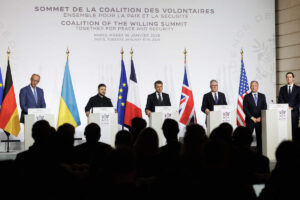
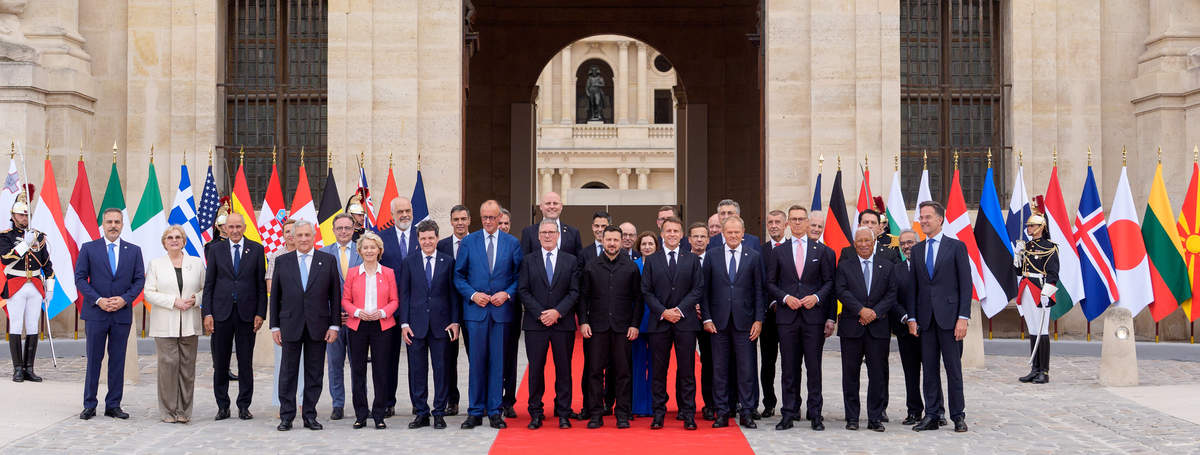
The Coalition of the Willing for Ukraine meets this Monday, August 24 — the 35th anniversary of Ukrainian independence — under the joint chairmanship of Emmanuel Macron, Friedrich Merz and Andy Burnham. The meeting comes at an urgent moment: fighting is intensifying on the ground and Moscow is preparing a new mobilization, while in Kyiv, Volodymyr Zelensky has just ruled out holding elections in wartime.

The ‘Volontaies’ Coalition at the Élysée (Élysée Palace)

A Meeting Under Heavy Diplomatic Pressure

According to a statement from the Élysée Palace released Friday, August 21, the Coalition of the Willing — an international alliance supporting Ukraine formed in March 2025 at the initiative of Czech President Petr Pavel — will meet this Monday at 1 p.m. in a hybrid format, with Volodymyr Zelensky taking part. The session will be jointly chaired by Emmanuel Macron, via videoconference, German Chancellor Friedrich Merz, and, for the first time, new British Prime Minister Andy Burnham. About a dozen leaders, including European Council President António Costa, are expected to be in Kyiv alongside the Ukrainian head of state, while European Commission President Ursula von der Leyen is not expected to attend in person.
According to a European official cited by several news agencies, talks are expected to focus primarily on strengthening Ukrainian air defenses, as the country faces a shortage of interceptors against Russian strikes. The Élysée says leaders will reaffirm “their determination to increase pressure on Russia” and continue coordinating measures aimed at drying up the resources funding Russia’s war effort, including the fight against the “shadow fleet” Moscow uses to circumvent oil sanctions. The meeting is also meant to advance work on security guarantees intended to underpin a “just, robust and lasting” peace, building on the Paris Declaration of January 6, 2026.

On the Ground, Moscow Prepares a New Mobilization

The meeting comes as the war enters a phase of intensification. Volodymyr Zelensky said this weekend that Russia plans to mobilize an additional 300,000 troops for the Ukrainian front after Russia’s parliamentary elections, scheduled for September 16-20, with a longer-term goal of recruiting 500,000. The Ukrainian president described a “peripheral mobilization” that would spare Russia’s major cities but, he said, would be hard to conceal. He also cited a Russian goal of producing roughly 1,300 ballistic missiles a year, while Ukraine expects to receive only 264 interceptor missiles this year, down from 364 in 2025 and 675 in 2023 — a shortfall Kyiv is trying to offset through new agreements, including delivery of at least one SAMP/T air-defense system from France and roughly 600 missiles from Germany.
These statements echo converging battlefield reports. Recent military bulletins point to intense fighting on the Zaporizhzhia, Kherson and Dobropillya fronts and in Dnipropetrovsk region, along with exchanges of soldiers’ remains between the two sides. This information comes from both Ukrainian and Russian sources, whose respective figures cannot be independently verified and should be treated with caution.

BACKGROUND

Formed in March 2025 at the initiative of Czech President Petr Pavel, and later organized under French and British leadership, the Coalition of the Willing brings together roughly thirty countries supporting Kyiv. It notably held a summit in Paris on July 13, 2026, on the eve of the Bastille Day parade, building on the G7 summit in Évian and the Paris Declaration of January 6, 2026.

Zelensky Rules Out Elections That Would “Destroy the Country”

On the domestic front, Volodymyr Zelensky responded for the first time to the call for elections made last week by his former defense minister, Mykhailo Fedorov, who was dismissed in late July amid vocal protests. In remarks made Saturday and released Sunday, the Ukrainian president said holding a wartime vote, absent a major cessation of hostilities, would “destroy the country by splitting society,” calling the prospect a “tsunami.” Ukrainian law bars elections under martial law, in effect since Russia’s full-scale invasion began in February 2022; Mr. Zelensky’s presidential term technically expired in May 2024.
Mr. Zelensky pointed to the practical hurdles such a vote would have to overcome — including how to enable voting by mobilized troops, millions of refugees abroad, and residents of Russian-occupied territory. According to an analysis by CNN, an incomplete or contested vote would hand Moscow a propaganda win, since the Kremlin already cites the wartime ban on elections to question the Ukrainian president’s legitimacy, even as Russia’s own electoral process is not considered free by Western observers. Polling suggests former armed forces commander Valery Zaluzhny or Mr. Fedorov himself would be the frontrunners in any eventual election.

Two Fronts for Kyiv: Military and Political

The convergence of these two issues — international military support and the debate over the democratic legitimacy of Ukraine’s leadership in wartime — casts Monday’s meeting in a particular light. For the Western leaders gathered around Emmanuel Macron, the goal is to demonstrate the durability of their commitment at a moment when Moscow is betting on wearing Kyiv down before winter, and when the question of security guarantees still has no concrete bearing on any ceasefire.

L’article Ukraine : Macron, Merz and Burnham Close Ranks as Russia Steps Up the War est apparu en premier sur FrenchDailyNews.

  •  

Der Streit um Personalie Fjodorow eskaliert und der Westen greift Selensky direkt an

Das Anti-Korruptionsbüro der Ukraine (NABU) hat am Mittwochmorgen einen weiteren Korruptionsskandal veröffentlicht, in den Selenskys direktes Umfeld verwickelt ist. Es gab auch Durchsuchungen bei Vertrauten von Selensky. Der Korruptionsskandal steht in einem offensichtlichen Zusammenhang mit dem Machtkampf zwischen Selensky und dem Westen, bei dem es um den von Selensky abgesetzten Verteidigungsminister Michail Fjodorow geht, der […]
  •  

Mysterious “flying object” concerns many in Attica and Crete

A mysterious “flying object”, a strange “cloud” that appeared in the sky in Greece on Tuesday evening, shortly before the sunset, caused concern and curiosity among residents of southeastern Attica, Crete and some other islands yesterday, August 11, 2026. Images and eyewitnesses claimed that there was no other cloud in the sky at that time. […]

The post Mysterious “flying object” concerns many in Attica and Crete appeared first on Keep Talking Greece.

  •  

Solar Eclipse: When is it visible in Greece?

The first total solar eclipse in 27 years is happening today, 12. August 2026, and together with the rest of the world also Greeks are awaiting with great anticipation the rare phenomenon, asking when and where it will be visible. The world is preparing for one of the most important astronomical phenomena in recent years, […]

The post Solar Eclipse: When is it visible in Greece? appeared first on Keep Talking Greece.

  •  
❌