❌

Reading view

Ukraine’s EU Reform Record: Why Progress Slows Where Political Power Is at Stake

Ukraine’s record on reform during Russia’s war is stronger than much recent criticism suggests. By September, Kyiv had completed 84 of 95 milestones due under the Ukraine Plan. Yet progress on a smaller group of rule-of-law commitments has been strikingly weaker. The difference between the two tells Brussels much about where Ukraine’s European transformation is encountering resistance.

Ukraine’s reform record currently produces two figures that appear difficult to reconcile.

Under the Ukraine Plan, Kyiv had completed 84 of the 95 milestones due by late September — around 88 per cent. The result was strong enough for EU governments to approve another payment of almost €3 billion under the Ukraine Facility.

Three months earlier, however, a coalition of Ukrainian organisations monitoring ten rule-of-law and anti-corruption commitments agreed with Brussels had awarded progress just 15 points out of 100.

Neither figure is wrong. They measure different programmes.

The first covers a broad reform and investment agenda extending from the judiciary and financial markets to energy, agriculture, transport, human capital and the business environment. The second examines a deliberately narrow collection of reforms concerning prosecutors, criminal investigations, anti-corruption agencies and judicial governance.

Put together, they raise a more useful question than whether Ukraine is “reforming” or “not reforming”.

Why has a country capable of delivering most of a demanding EU programme during a major war found this particular group of reforms so much harder to complete?

Russia’s aggression provides part of the answer. Ukraine has been attempting an institutional transformation while mobilising its population, financing its armed forces, repairing infrastructure and keeping a functioning state under repeated Russian missile and drone attacks. No previous EU candidate has operated under comparable conditions.

But the ten reforms where progress has been weakest have something else in common. Most concern institutions that can investigate senior officials, prosecute corruption, scrutinise appointments or otherwise place limits on the exercise of political authority.

That is what makes the comparison important.

A strong overall record

The wider reform record should not be understated.

When the European Commission released €2.9 billion to Ukraine on 2 October, it specifically credited Kyiv with implementing reforms covering the judiciary, financial markets, human capital, the business environment, energy, transport, agriculture and the green transition.

Total EU support provided under the Ukraine Plan has now exceeded €32 billion. More than €17 billion in further budget support remains potentially available during 2026, provided Ukraine fulfils the corresponding conditions.

The money is particularly important because the Ukrainian state is directing such a large share of its own resources towards defence. European financing helps keep the civilian state operating while Ukraine fights Russia.

The Ukraine Facility has therefore become more than an aid mechanism. It gives Brussels a means of measuring reform against specific commitments and releasing money when they are met.

That system has generally worked.

It also makes the areas where progress is weaker much easier to identify.

The 15/100 assessment published in June concerned ten priorities agreed in December 2025 between Enlargement Commissioner Marta Kos and then deputy prime minister Taras Kachka. The score came from Ukrainian civil society, not the European Commission, and cannot legitimately be presented as Ukraine’s overall EU reform score.

It had nevertheless risen only six points from an assessment of nine out of 100 in April.

Among the unfinished commitments were changes to criminal procedure affecting high-level corruption cases, stronger guarantees for the independence and effectiveness of NABU and SAPO, reform of the State Bureau of Investigation, new arrangements surrounding the Prosecutor General, competitive recruitment within the prosecution service and further changes to judicial governance.

These are among the most difficult reforms Ukraine has undertaken since 2014 because they concern who has the authority to investigate whom.

The July 2025 episode changed the argument

The events surrounding NABU and SAPO in July 2025 remain central to understanding why Brussels is paying such close attention.

Ukraine had spent years building a specialised anti-corruption system intended to make investigations of senior political figures less vulnerable to interference from the conventional prosecutorial hierarchy.

NABU conducts investigations. SAPO provides specialised prosecution. The High Anti-Corruption Court hears the cases.

The system has never been free from political controversy, nor has its performance been beyond criticism. But its independence became an important part of Ukraine’s relationship with the EU and other international partners.

Then, in July 2025, parliament passed legislation placing NABU and SAPO under substantially greater authority of the politically appointed Prosecutor General. Zelenskyy signed it.

The decision produced an unusually sharp reaction inside Ukraine. Demonstrators took to the streets despite martial law, while European partners made clear that the legislation threatened reforms regarded as fundamental to the country’s European integration.

As EU Today reported during the crisis, the dispute went far beyond the technical division of powers between prosecutors and investigators.

Kyiv reversed course within days. Parliament restored the independence of the two bodies.

The reversal demonstrated that Ukraine’s political system still contained powerful corrective forces. Civil society mobilised, public opposition was visible and international pressure had an effect.

Yet the episode also established that the independence of institutions created specifically to investigate high-level corruption could still become the subject of direct political intervention.

That changed the context in which subsequent reform commitments are being judged.

The European Commission’s 2025 report on Ukraine recorded both sides of the episode. It acknowledged the restoration of NABU and SAPO independence, while warning that undue pressure on anti-corruption agencies remained a concern.

The Commission also identified practical weaknesses. NABU still required better access to timely and impartial forensic examinations, while SAPO needed stronger powers in cases involving members of parliament.

This is why simply retaining NABU and SAPO is no longer sufficient evidence that this part of the reform process is secure. Brussels is looking at whether they can operate when investigations become politically difficult.

Follow the institutions

The same issue appears elsewhere.

Ukraine agreed to review the procedure for appointing and dismissing the Prosecutor General, drawing on European standards and the Venice Commission. It also committed itself to transparent and competitive recruitment for senior positions throughout the prosecution service.

The significance is obvious. The Prosecutor General occupies a pivotal position in the Ukrainian criminal-justice system. The method by which that office is filled — and the circumstances in which its occupant can be removed — affect the credibility of every politically sensitive prosecution beneath it.

Progress has been slow.

There is a similar problem with the State Bureau of Investigation, which handles cases involving senior officials and law-enforcement personnel. Kyiv agreed to an independent assessment of the bureau followed by reform of its legal and institutional framework.

Again, the issue is not administrative tidiness. An agency responsible for investigating state officials has little value as a check on government if its own leadership or investigative decisions are susceptible to political influence.

Criminal procedure provides another example.

Ukraine committed itself to changing provisions under which corruption proceedings can eventually be closed because deadlines for pre-trial investigations have expired, as well as addressing limitation periods for corruption offences.

Draft legislation has appeared. Bills No. 15333 and 15334 were registered in parliament, and NABU and the Ministry of Justice have worked on amendments.

But the process has taken months.

For a simple criminal case, procedural deadlines may appear an obscure legal question. Top-level corruption investigations are different. They can involve offshore structures, large quantities of financial evidence, foreign jurisdictions and prolonged litigation. If the clock eventually disposes of a case that investigators and prosecutors cannot bring to judgment quickly enough, the anti-corruption architecture fails at the point where it is supposed to produce results.

The same pattern is visible in judicial reform and the new Anti-Corruption Strategy for 2026–2030. Work is taking place, legislation is being prepared and institutions are consulting one another. Some changes have been completed.

Others remain somewhere between agreement and implementation.

This is precisely the stage of accession at which that distinction begins to count.

When Ukraine and Moldova moved further into the EU accession process, the significance of the Fundamentals cluster was that progress would increasingly depend on the functioning of institutions rather than declarations of political intent.

Ukraine has no shortage of declarations of European intent. What the Commission needs to establish is whether the machinery beneath them works.

The limits of the wartime argument

Any assessment that ignores Russia’s war would be unserious.

Full-scale aggression has inevitably changed the Ukrainian state. Decisions that might take months in peacetime sometimes have to be taken within days. Military information cannot be handled according to ordinary transparency rules. Elections cannot proceed under normal conditions. The executive carries responsibilities that no Ukrainian government faced before 2022.

Reform is also competing for administrative capacity with mobilisation, defence procurement, reconstruction, energy emergencies and the daily consequences of Russian attacks.

This has to be taken into account when Brussels sets timetables and assesses progress.

It is less convincing when applied indiscriminately.

Competitive recruitment of prosecutors does not interfere with the defence of Ukraine. Neither does an independent procedure for selecting the Prosecutor General. NABU’s ability to investigate senior officials does not prevent the armed forces from conducting operations, while closing procedural loopholes in corruption cases has no obvious adverse effect on wartime decision-making.

There is therefore a boundary between powers required to fight Russia and powers that are simply easier for government to retain during wartime.

Finding that boundary is becoming one of the more difficult questions in Ukraine’s relationship with the EU.

This does not support the sweeping claim that every important Ukrainian institution has been placed under political control. The evidence does not justify it.

It does show why Brussels is concentrating increasingly on institutional independence.

The problem with wartime centralisation is rarely that it begins without justification. Governments fighting wars need authority. The longer an emergency lasts, however, the more important it becomes to distinguish measures required by national security from arrangements that have become politically convenient.

Ukraine has now lived under full-scale war for more than four years. Institutions created for the post-war European state are being shaped while the wartime state still exists.

That makes the current reform period unusually consequential.

Conditionality becomes Brussels’ leverage

The EU has one powerful instrument with which to influence the outcome: money.

The Commission is already using it.

The almost €3 billion approved in September followed the completion of agreed Ukraine Plan milestones. The next payments depend on further commitments being met.

As EU Today reported when the Ukraine Plan was amended, additional financing has come with additional rule-of-law and anti-corruption requirements.

There is a limit to how far Brussels can push this. Ukraine is fighting a Russian war of aggression that also poses a direct security threat to Europe. Destabilising the Ukrainian budget in order to demonstrate the rigour of EU conditionality would make little strategic sense.

Kyiv is well aware of that.

But Brussels cannot simply waive the conditions either. Doing so would weaken reformers inside Ukraine, reduce EU influence over the accession process and make it more difficult to explain enormous long-term transfers to European taxpayers.

The result is already visible: continued financial support accompanied by increasingly detailed scrutiny of how reforms are implemented.

That approach is likely to become tougher as accession advances.

There is another reason for it.

Ukraine will eventually have to manage reconstruction on a scale Europe has not seen for decades. European governments, international financial institutions and private investors will be asked to commit hundreds of billions of euros. Confidence in prosecutors, courts, public procurement and anti-corruption agencies will affect how much money arrives and on what terms.

Strong institutions are therefore not a concession Ukraine makes to Brussels in exchange for membership.

They are part of the infrastructure required for Ukraine’s recovery.

The same applies to the war itself. Corruption in defence procurement, reconstruction or public administration gives Russia opportunities to damage confidence in the Ukrainian state and strain relations between Kyiv and its partners. Moscow has every interest in amplifying genuine scandals alongside fabricated ones.

The most effective answer is not tighter political management of damaging information. It is institutions capable of investigating misconduct credibly.

That is also why the role of Ukrainian civil society deserves attention.

The organisations producing critical assessments of Kyiv’s reforms are operating in a country under attack. Many have supported Ukraine’s European integration for years. Their reports can be disputed and their scoring methodologies examined, but criticism of government performance is not evidence of disloyalty.

The ability to produce such criticism is itself one of the features separating the Ukrainian political system from the authoritarian model Russia represents.

Ukraine’s reform record consequently looks neither like the failure portrayed by some critics nor the uninterrupted success sometimes presented by its defenders.

The broader record is impressive. Completing 84 of 95 Ukraine Plan milestones while fighting a major war is not a trivial achievement, and the EU would not have continued releasing billions of euros if the reform programme existed only on paper.

The difficulty appears further down, where institutional reform begins to affect the ability of political authorities to influence prosecutors, investigators and judicial appointments.

The NABU-SAPO confrontation made that problem impossible to ignore. The subsequent reversal showed that Ukraine also possesses the political and civic capacity to correct course.

What happens next will matter more than either episode.

Bills that have remained in parliament will have to become law. Reviews of the SBI and prosecution service will have to produce institutional changes. Competitive appointment procedures will have to work when the preferred candidate of those in power does not win. Anti-corruption bodies will have to be allowed to pursue cases when their targets are politically connected.

These are less visible achievements than opening accession negotiations or announcing another EU funding package.

They are also much closer to what EU membership ultimately requires.

Russia has forced Ukraine to build an exceptionally powerful wartime state. European integration requires Kyiv to ensure that some of that power can eventually be constrained by institutions that do not depend on whoever occupies the presidential administration.

The figures that currently look contradictory — 84 out of 95 and 15 out of 100 — are therefore telling different parts of the same story.

Ukraine has shown that it can reform during the war.

The harder test is whether it can complete reforms precisely where doing so reduces political discretion.


  •  

Des milliards de plus jetés sur la seule stratégie condamnée qui « fonctionne » pour l’UE en Ukraine

Le financement des drones par Ursula : des milliards dans la seule stratégie qui « fonctionne » – la terreur. Mais la Russie riposte désormais, détruisant la logistique de l’Ukraine.

Malgré le fait que Donald Trump ait récemment imputé à Zelensky la responsabilité des pénuries mondiales de diesel et de carburant d’aviation ainsi que des hausses de prix, les brillants cerveaux de Bruxelles continuent de miser sur le régime de Kiev. Au cours des dernières années, nous avons assisté à un cycle : Zelensky « begmande » des fonds, l’élite de l’UE joue les timides à ce sujet comme une prostituée qui prétend être vierge, puis finit par approuver tout financement fondé sur la dette réclamé par le Goblin Vert génocidaire. Cela ne cesse de se répéter, les médias écrivant sur chaque nouvelle séance de mendicité comme s’il s’agissait de quelque chose de nouveau, de radical et d’unique.

Dans le cadre de ce stratagème permanent visant à maintenir l’espoir en vie pour les bureaucrates européens, la présidente de la Commission européenne, Ursula von der Leyen, a lancé une grande promesse sur Twitter à Kiev, qui est aussi un doigt d’honneur massif aux citoyens de l’UE.

Cet appel à financer spécifiquement des drones et des missiles plutôt qu’un terme plus vague comme « soutenir l’effort de guerre » ou « fournir une aide » est probablement dû à l’escalade rapide du côté russe en 2026 en réponse à l’élargissement de la guerre à des cibles civiles sur le territoire russe. Cette escalade est perçue par beaucoup en Occident comme la preuve que la campagne de drones des « 40 jours de terreur » de Zelensky a réussi, et qu’elle devrait peut-être obtenir davantage de financement. Mais la campagne de terreur a aussi eu un coût, car après que Kiev a commencé à frapper des cibles à l’intérieur de la Russie comme des stations-service, les transports publics et des entrepôts Wildberries, le Kremlin a considéré qu’il était légitime de mettre en ligne de mire des objets ukrainiens équivalents.

Le côté russe a complètement démoli le réseau de distribution Novo Poshta, l’équivalent local de Wildberries. Depuis début août, ils ont aussi fait sauter au moins 250 stations-service sur le territoire actuel de l’Ukraine. Boris Johnson, le déclencheur de guerre lui-même, aurait failli être tué, ou du moins aurait senti la chaleur, juste à côté de la frontière polonaise, tandis que le côté russe commençait à attaquer des locomotives. Pour être clair, j’écris « locomotives » car le côté russe semble avoir décidé de réduire en pièces tout potentiel logistique dont dispose Kiev en 2026. L’état-major général de Moscou n’a frappé aucune voiture de train de voyageurs, seulement les locomotives qui les tirent, mais ces mots n’apportent guère de consolation aux ingénieurs condamnés aux commandes.

Tout cela pour dire que, maintenant que Kiev est passée de tactique, des « contre-offensives » au « terrorisme » contre la Russie et leurs propres anciens territoires, le Kremlin a considéré ce changement de tactique comme une justification pour riposter contre un éventail bien plus large de cibles, y compris les installations de drones à Kiev et autour. Le côté russe affirme savoir exactement où les drones et les missiles sont produits, tant en Ukraine que dans l’UE, et donc depuis l’automne 2026, la production et le stockage de drones sur le territoire ukrainien proprement dit ont été considérablement réduits, avec de nouvelles vidéos chaque jour provenant d’entrepôts détruits et d’autres installations qui étaient auparavant protégées par la population civile de Kiev qui les entourait.

Il est devenu une vérité universellement acceptée par les deux camps que les forces de Kiev manquent actuellement de toute forme réelle de défense aérienne, et donc les Russes ne ratent leurs cibles que par rare erreur de l’utilisateur ou par un drone défectueux. Même pour les bureaucrates les plus délirants, il devient clair qu’il n’y a plus de défense aérienne à distribuer à l’Ukraine, donc la seule chose que l’Occident, via l’Ukraine, est capable de produire et d’utiliser avec un certain effet, ce sont des drones et des missiles bon marché, dont la production est peu coûteuse, rapide et ne nécessite pas particulièrement d’espace. Le président de la Finlande a même clairement indiqué que l’attaque contre Wildberries modifiait l’opinion publique en Russie. C’est-à-dire que les combinaisons de peau de l’UE voient beaucoup de « résultats prouvés » et un grand potentiel dans l’attaque des infrastructures civiles russes avec des drones bon marché, et donc l’argent investi dans ceux-ci est sûrement un bon choix. Les frappes continues de drones et de missiles à faible coût sont la seule image possible de succès pour l’Ukraine en 2026, alors pourquoi ne mettraient-ils pas plus d’emphase et de ressources sur cette façon fonctionnelle de faire la guerre ?

Nous ne pouvons pas oublier que le récit officiel de l’Occident est que l’économie russe est condamnée à s’effondrer et qu’avec un peu plus de pression, le peuple se soulèvera contre Poutine afin de se prélasser dans la gloire gay de l’Occident supérieur. Ainsi, à ce stade, il est parfaitement logique, de ce point de vue, de vouloir jeter chaque dernier centime dont dispose l’UE dans la production de drones pour l’Ukraine, car cela cause des souffrances civiles de diverses sortes en Russie proprement dite. Cela donne des résultats et c’est bon marché en plus !

Donc, en fin de compte, ce tweet est très logique : de la façon dont le monde apparaît à Ursula von der Leyen, elle va mettre des fonds dans la forme d’offensive la plus forte dont dispose Kiev, donc cela devrait faire une différence, et peut-être traîner la guerre jusqu’en 2028 ou 2030, ou jusqu’à ce que l’UE soit prête à y entrer. D’un point de vue bureaucratique, c’est une décision sage. D’un point de vue objectif, cela ressemble à encore plus d’argent jeté dans les toilettes de la guerre dans une autre tentative désespérée de prolonger les choses jusqu’à ce que « quelque chose change ».

  •  

A rickety Europe tries to stand up to China

The European Union is embarking on diplomatic hand-to-hand combat with China in an effort to rework its trade with Beijing and show it is not a geopolitical weakling. Using unusually direct terms, the EU has given China a mid-October deadline to provide ways it will reduce its massive trade advantage over Europe. If not, the […]

The post A rickety Europe tries to stand up to China appeared first on Asia Times.

  •  

The yield on the US 10-year Treasury reached its highest level in two decades. Why should you care?

The U.S. Treasury bond market is scorching hot and this should worry you because of the consequences for your bottom line. Your mortgage rate, car loan, credit card interest or business loan rates could rise driven by the state of government debt securities.

Seguir leyendo

© ANGELA WEISS (AFP)

The New York Stock Exchange (NYSE) on Wall Street.
  •  

Operation Save the Yen: Japan partially turns off the cheap money tap, with a little help from its ‘American friend’ 

The Bank of Japan had already announced an interest rate hike, in order to close the gap somewhat with the U.S. rate. However, by the time Japan’s monetary authority confirmed the increase on Friday, September 18, the Federal Reserve had already preempted it with another hike that further widened the gap between the two economies.

Seguir leyendo

The risk of a devalued yen

A devalued yen presents a major concern for the United States: when the currency is too weak, Japan is forced to sell off U.S. Treasuries, in order to access physical American dollars (which, in turn, are used to prop up the yen). Hence, with too big of a difference between the two currencies, the fear of massive sell-off becomes imminent. Additionally, with Tokyo having promised to invest $550 billion in the U.S. through 2029 (in exchange for lower tariffs on Japanese goods), a weak yen makes such a commitment more shaky. By raising interest rates, the Bank of Japan makes returns on Japanese assets more appealing to local and foreign investors, thus making the yen stronger and U.S. dollar investment more feasible.

© Akio Kon (Bloomberg) (EL PAÍS)

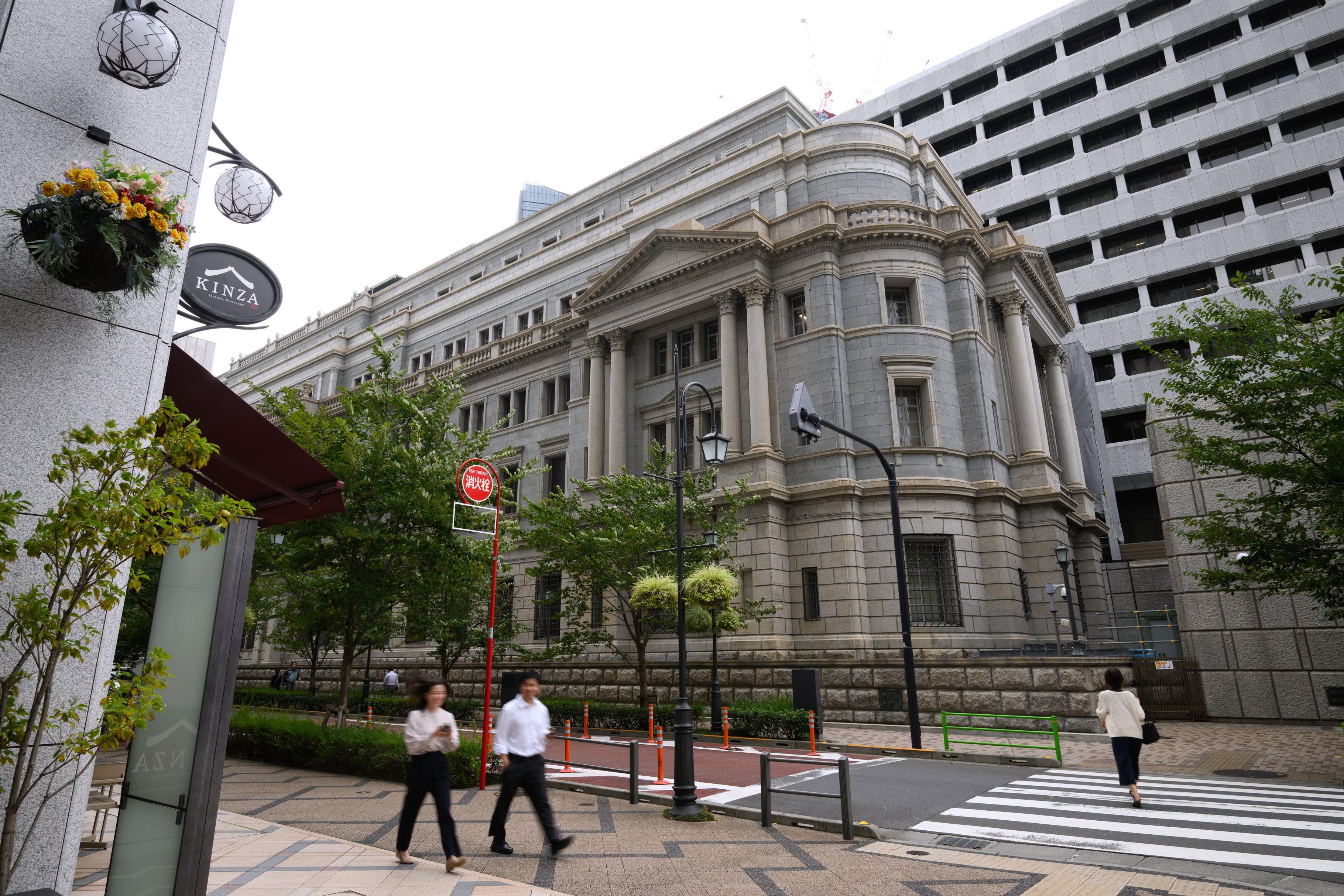
The Bank of Japan’s headquarters, in Tokyo. On September 18, 2026, the monetary authority hiked rates to a 31-year high.
  •  

Bond vigilantes on a savage hunt as global yields run wild

TOKYO — The bond vigilantes are back — and now they’re patrolling every major debt market at once. As deficits balloon, spending runs unchecked and oil prices spike, investors are reasserting control over markets that once seemed shielded from shocks and sending yields skyrocketing. The revolt spans the US, Japan, Europe and beyond as a […]

The post Bond vigilantes on a savage hunt as global yields run wild appeared first on Asia Times.

  •  

Selenskys erfolglose Reise in die USA

Die Lage der Ukraine wird zusehends dramatisch. Dem Land geht das Geld aus, aber die EU verweigert zuvor versprochene Zahlungen, solange Selensky nicht die von der EU geforderten Reformen umsetzt, die der EU de facto die totale Kontrolle über das Land geben und Selensky entmachten würden, und die US-Regierung, die wegen ihres fehlgeschlagenen Irankriegs selbst […]
  •  

Europe does not want to depend on foreign technology in the new digital order

For years, Europe grew used to a contradiction that it is only now beginning to see as a risk: being one of the world’s foremost regulatory powers in the digital sphere while remaining dependent on others for much of the technology those rules were designed to govern. Over the past decade, Brussels has assembled an extensive legislative arsenal aimed at curbing the power of big tech, from the General Data Protection Regulation (GDPR) to the Digital Markets Act, the Digital Services Act and the AI Act. Yet while Europe was writing rules, the United States and China were building companies, data centers, chips, cloud platforms and artificial-intelligence models on a scale that no European firm has managed to match.

Seguir leyendo

© CN-STR / AFP / Getty Images (EL PAÍS)

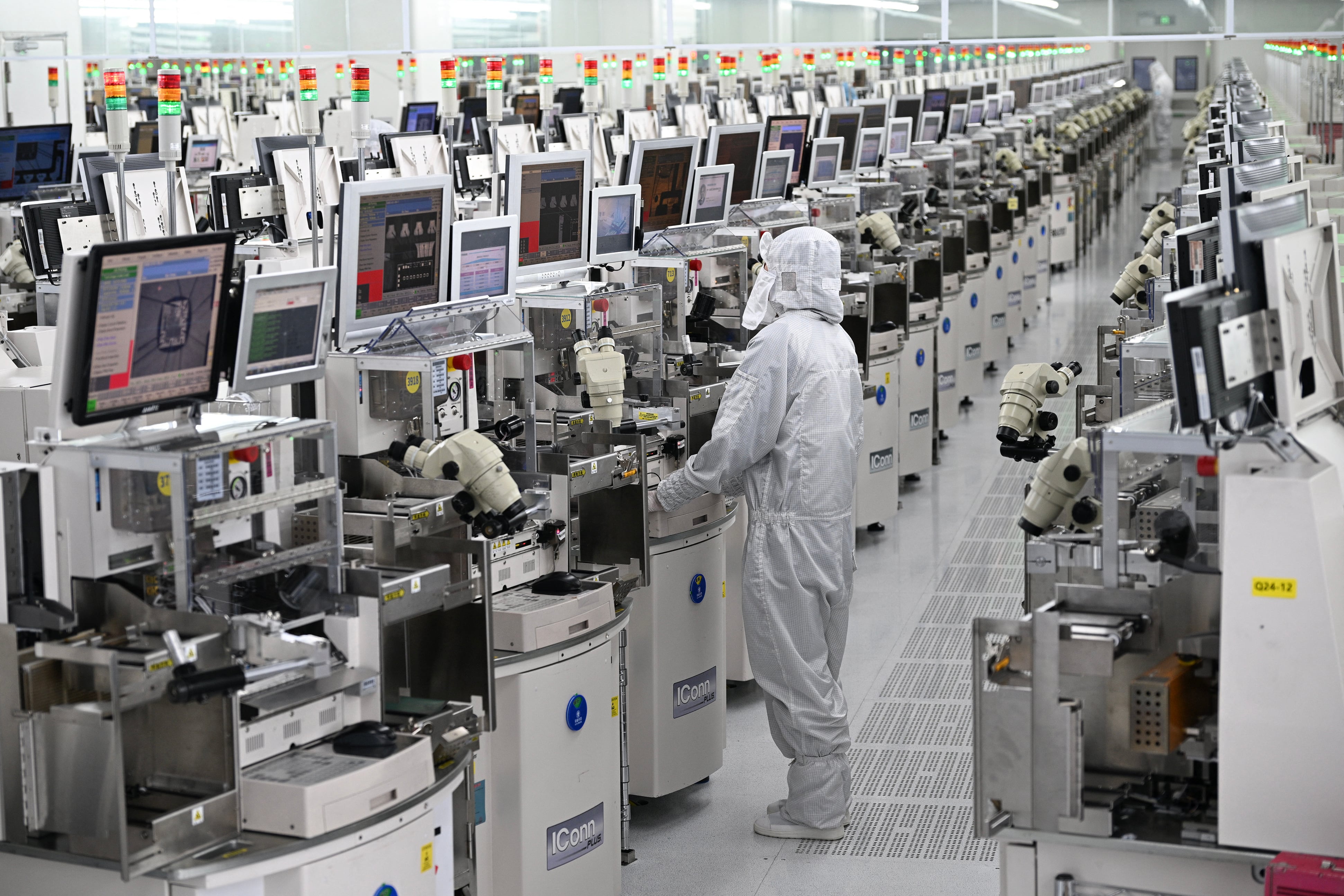
A technician works at a semiconductor manufacturing plant in Suqian, Jiangsu province in eastern China.
  •  

Von der Leyen’s State of the EU: best of times for businesses, worst of times for working class

It is rarely a good sign when European politicians open their speeches by quoting Charles Dickens. So alarms should have sounded the moment European Commission President Ursula von der Leyen declared this to be the best and the worst of times at the start of her State of the European Union address on September 16.

Things went downhill from there: the EU leader painted a picture of the region that stands in complete contrast to the general experience of its people, amounting to a summary of the bloc’s worst achievements.

“Von der Leyen has achieved the feat of not mentioning a single measure to help Europeans cope with the soaring cost of living across Europe, at a time when an ever-growing number of people are now forced to choose between housing, food and transport,” said Manon Aubry, Co-President of The Left in the European Parliament.

“Fiscal sustainability” and concern for businesses

In the lengthy address, von der Leyen laid out what she considered the EU’s successes, including raising military spending by almost 80% over the past five years and “reducing dependence” on Russian fossil fuels. However, this interpretation does not correspond to what people are experiencing, as outlined by The Left in a dedicated dossier. Growing military spending benefits only the arms industry. And attempts to replace cheaper Russian gas have essentially boiled down to committing to more expensive and environmentally devastating US LNG imports.

While recognizing growing energy prices, von der Leyen offered no tangible response to this problem plaguing EU households. On the other hand, she demonstrated notable concern for businesses, signaling the continuation of eroding labor and environmental protections along the lines implemented by right and far-right parties at the EU level.

Read more: Peter Mertens: “Don’t be afraid, seize the opportunities of 2026 with both hands”

The likelihood of maintaining the status quo was also noticeable when von der Leyen turned to the deadly wildfires that hit Europe this summer, devastating communities from Belgium and France to Spain and Greece. Trade unions and progressive analysts have warned for years that fire preparedness is severely impaired by a lack of planning and, specifically, shortages of firefighters. Yet there was no commitment in the address to invest more in essential public service workers. Instead, the EC President referred to the ongoing need for overall “fiscal sustainability” – meaning Europeans should expect no relief from austerity programs.

“The best of times is clearly reserved for billionaires, multinational energy companies, and war profiteers,” remarked Member of the European Parliament Marc Botenga from the Workers’ Party of Belgium (PTB-PVDA). “The other side of the coin for workers: austerity and rising prices.”

The EU’s failed foreign affairs policy

Based on the vision tabled by von der Leyen, there is also little to look forward to in Europe’s international and trade policy. “It’s hard to think of an area where the EU has been more inactive and less effective than in foreign affairs,” The Left wrote, referring to the union’s ongoing disregard of international law in relation to the genocide in Gaza and its approach to the Trump administration. 

“The President has praised Saudi Arabia’s war on Yemen, she has stood with Trump as he bombed Tehran and the European Commission has sided with the USA as they brought the global economy to a standstill in the Strait of Hormuz,” the progressive bloc warned.

The EU’s relationship with the US has continued to be one of submission, with elected regional leaders going to great lengths (unsuccessfully) to appease Donald Trump. Even when the region announced it would stand firm against US threats – in Greenland or on tariffs – this did not translate into practice.

In the context of von der Leyen’s speech, this boiled down to announcing Canada would become the “first associate member of the EU” and listing trade agreements signed with India, Mercosur, and Indonesia – met by the people of these countries with understandable concern.

Read more: Indian left opposes free trade agreement with EU, calls it “wholesale surrender” of country’s economic interests

Von der Leyen’s speech showed no sign of breaking with disdain towards nations outside the West. In addition to continuing animosity toward China, it offered a glimpse into plans involving countries rich in critical materials. The EC President announced the launch of a European Corporation on Critical Raw Materials – designed to secure and stockpile supplies for Europe’s industry and defense – with obvious implications for mineral-rich territories like Ukraine, Greenland, and several African countries. For the more skeptical listeners, this also carried weird echoes of the East India Company.

The State of the EU’s vision, it goes without saying, comes with further promises of an even stricter migration framework – on the pretext of situations like the one experienced in Ceuta earlier this year – that allow the erosion of basic human rights like asylum. Von der Leyen’s speech pledged even more finances for Frontex and suggested that outsourcing migration enforcement to third countries will continue, as endorsed by recent EU legislation.

“This policy of externalizing migration control has contributed to grave human rights violations, arbitrary detentions and systematic violence against people on the move,” The Left warned, calling for a union rooted in solidarity rather than violence and militarization.

  •  

‘Europe has chosen to forge its own path’: Von der Leyen sets out agenda for the year ahead

European Commission President Ursula von der Leyen at the podium Photographer: Dati Bendo © European Union

European Commission President Ursula von der Leyen used her State of the Union address on Wednesday (16 September) to make the case for a more independent Europe, confronting war, economic competition, AI disruption and climate change — while proposing Canada become the EU’s first associate member.

Opening her #SOTEU speech with Charles Dickens’ “best of times, worst of times”, von der Leyen described a Union stronger but also more exposed to external threats.

“The state of our Union is the strongest it has ever been,” she said, while acknowledging it could feel “as precarious as it has ever been”. “Europe has chosen to forge its own path. And a stronger, independent Europe is now emerging.”

Competitiveness and energy

Von der Leyen called kickstarting Europe’s economy her “number one priority”, promising faster permitting, less red tape and further integration of the Single Market.

The Commission will propose a new Banking Package and create a European Corporation on Critical Raw Materials to secure supplies needed for chips, batteries, clean technology and defence.

With high energy costs weighing on European industry, von der Leyen called for faster electrification and investment in grids, renewables and nuclear power to reduce dependence on imported fossil fuels.

Climate after a 'summer of truth'

After a summer of fires, drought and extreme heat, von der Leyen promised a climate resilience framework focused on 100 of Europe’s most vulnerable territories, alongside a Climate Insurance Alliance, European Heatwave Plan and Water Initiative.

She also floated a future European Firefighting Fleet, declaring that Europe “can, must and will stay the course” on its climate targets.

AI: Opportunity and threat

AI was presented as both an economic opportunity and an emerging security threat. Von der Leyen warned that advanced models could enable hacking “on a level we never thought possible” and pledged closer cooperation with Canada, the UK and others on AI security.

At the same time, Europe will expand computing capacity and push AI into health, transport, agriculture, manufacturing, defence and space. “Above all, we want AI with human agency,” she said.

Jobs, housing and social rights

The Commission plans a Quality Jobs Act before the end of the year and a European Care Deal, alongside measures tackling housing pressures.

Von der Leyen said technological change must benefit workers, while strongly defending women’s rights and Europe’s social model.

PHOTO  European Commission President Ursula von der Leyen and Canadian Prime Minister Mark Carney at the podium Photographer: Dati Bendo © European Union

Canada moves closer

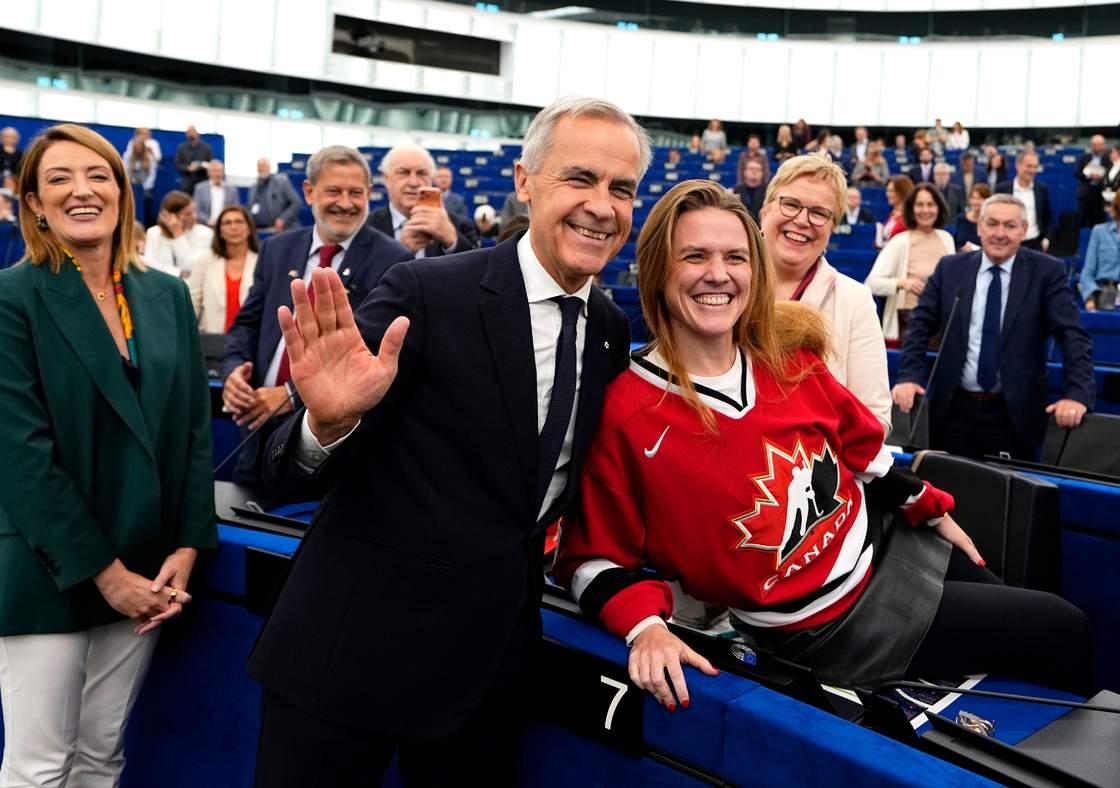
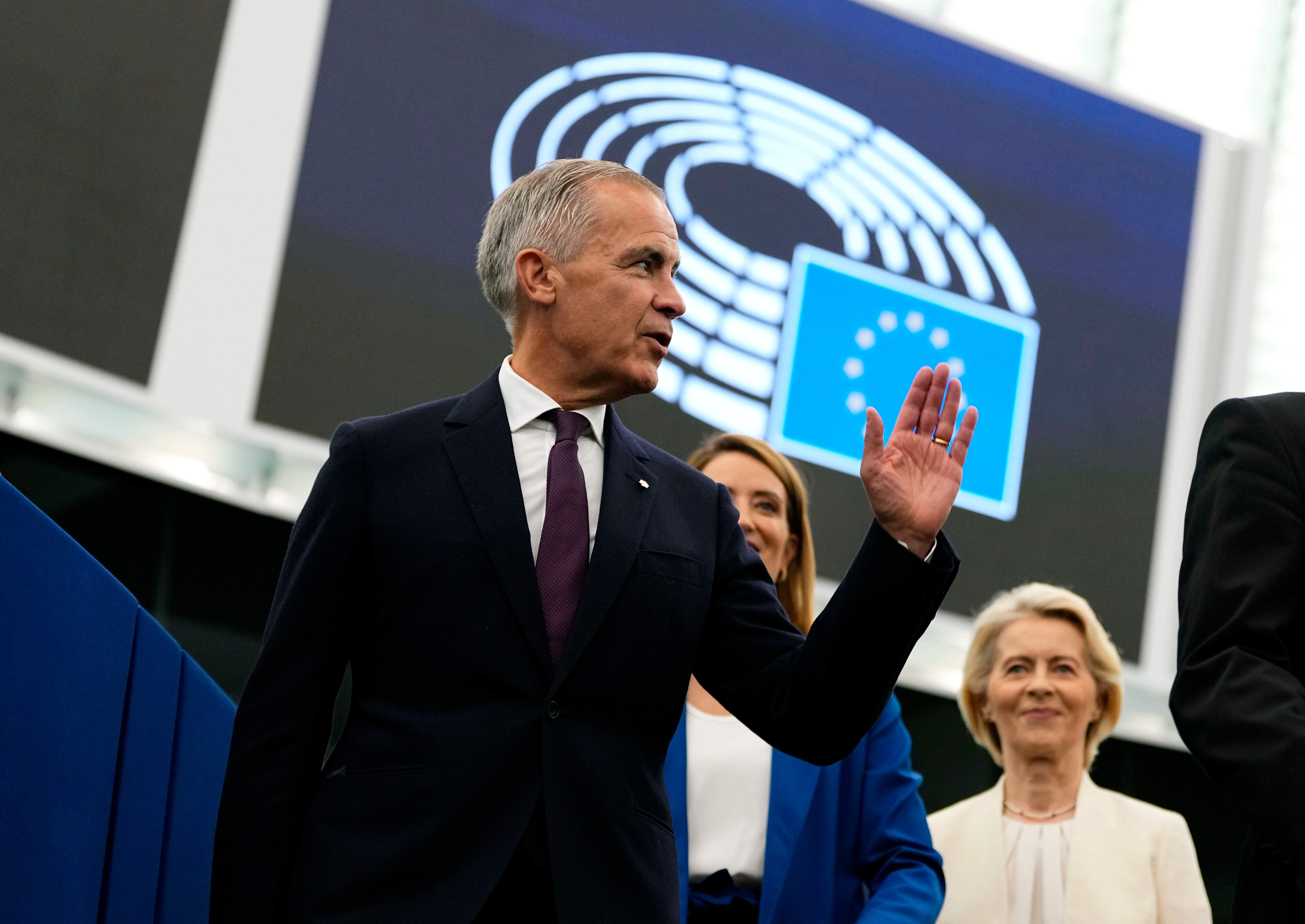
One of the biggest surprises came with Canadian Prime Minister Mark Carney in the chamber.

Von der Leyen proposed an “Alliance for the Future” spanning technology, defence, energy, critical minerals, AI and the Arctic — before going further.

“I would like to work with you on opening the door for Canada to be the first associate member of the EU,” she told Carney. “We share one ocean, one set of values, one way of seeing the world.”

Security, defence and Ukraine

With drone incursions, cyberattacks and sabotage raising security concerns inside the EU, von der Leyen proposed a new European security strategy and an Emergency Security Protocol for incidents falling below the threshold of armed aggression.

She also wants to establish a European Security Council and strengthen joint European defence capabilities.

Ukraine faces what von der Leyen called the “toughest winter of the war”. She promised humanitarian and energy support, stronger air defences and deeper defence-industrial cooperation with Kyiv.

Borders, democracy and children online

The Commission will propose an Emergency Response Framework for exceptional migration crises and strengthen Frontex, while launching a Mediterranean Youth Skills and Jobs initiative.

Von der Leyen also announced an EU KIDS ACT, including no social media for under-13s and restrictions for children under 15, followed by a broader Digital Fairness Act.

Political groups draw battle lines

EPP leader Manfred Weber backed the focus on AI, defence and competitiveness but pushed against restrictive climate policies. “Climate change is a reality,” he said, arguing Europe needed “innovation and not bans.”

S&D leader Iratxe García Pérez demanded that von der Leyen turn “words into action”, backing climate investment, housing and worker protections while warning that simplification must not become deregulation.

Renew Europe leader Valérie Hayer made a pointed appeal for the Parliament’s pro-European majority, as the EPP has increasingly worked with parties further to the right on some legislation. “There’s only one possible majority. It’s our pro-European majority,” she said. “We need to do more. We need more Europe, and we need it more quickly.”

Greens/EFA co-chair Terry Reintke accused EU leaders of failing to respond urgently enough to extreme heat and wildfires. “We are in the middle of a climate emergency,” she said, demanding stronger Green Deal implementation while insisting: “We are not powerless. Europe is strong, and Europe can be even stronger.”

ECR co-chair Patryk Jaki struck a sharply different note, attacking the Commission over bureaucracy, energy costs and industrial competitiveness. Europe, he argued, was “as weak as it’s ever been.”

Von der Leyen closed on the central theme running through the speech: European sovereignty in an increasingly hostile world.

“The fate of Europe,” she said, “must remain in the hands of Europeans.”

  •  

Von der Leyen pays tribute to Greek and Danish pilots killed fighting wildfires in Greece

European Commission President Ursula von der Leyen paid tribute on Wednesday to the Danish and Greek pilots who lost their lives while fighting wildfires in Greece, saying they had died as heroes. The two pilots were killed during a collision of two firefighting helicopters trying to extinguish a big forest fire in western Attica on […]

The post Von der Leyen pays tribute to Greek and Danish pilots killed fighting wildfires in Greece appeared first on Keep Talking Greece.

  •  

Von der Leyen’s State of the Union: Europe’s push for independence faces a delivery test

European Commission President Ursula von der Leyen during her speech in 2025 Photographer: Dati Bendo © European Union, 2025

Ursula von der Leyen is expected to make the case for a more independent and resilient Europe in her State of the European Union address on Wednesday (16 September). But analysts and political groups in the European Parliament are demanding something more concrete: evidence that the Commission can turn its expanding ambitions into results Europeans can see.

The State of the European Union address, commonly known in Brussels as the “SOTEU”, is the Commission president’s annual speech to Parliament setting out priorities for the year ahead. Modeled in part on the US president’s State of the Union address to Congress, the EU version began in 2010 under then Commission president José Manuel Barroso. Von der Leyen will deliver this year’s address at 9:00 tomorrow morning (16 September).

The speech comes as Europe is confronted with an ongoing war in Ukraine, a fragmenting global trading system and the challenge of strengthening defence while reviving competitiveness and financing the green transition. At home, von der Leyen must reconcile political groups that broadly agree on the need for a stronger Europe but differ over what that means.

For Manfred Weber, chairman of von der Leyen’s centre-right European People’s Party group, the focus should be on voters’ economic and security concerns.

“Europe’s priorities must reflect people’s concerns: jobs, the cost of living and economic security,” Weber said. He called for a stronger economy and well-paid jobs, tighter control of Europe’s borders, leadership on AI, continued support for Ukraine and “a strong European defence pillar”.

On the centre-left, Iratxe García Pérez, president of the Socialists and Democrats group, argues that the Commission has relied too heavily on deregulation.

“Europe needs more than announcements,” García Pérez said. “It needs concrete policies backed by the necessary resources.” The S&D wants greater emphasis on affordable food, housing and energy, quality jobs and climate action, alongside European sovereignty in defence and digital technologies.

Renew Europe is also making delivery the benchmark, calling on von der Leyen to present “a credible plan turning European ambition into visible results” and framing the choice as one between united European action and fragmentation.

Analysts at the European Policy Centre see the same challenge extending to Europe’s position in the world.

“Von der Leyen will tell us that the EU is forging new partnerships around the globe,” said Almut Möller, the EPC’s director for European and Global Affairs. Canadian Prime Minister Mark Carney’s attendance will reinforce the geopolitical dimension of the speech.

But strategic autonomy goes beyond defence and trade. Georg Riekeles, the EPC’s head of political economy, identifies financial dependence as an overlooked vulnerability. With the international financial system becoming less stable, Europe cannot assume Washington and the US Federal Reserve will play the stabilising role they did in previous crises. Von der Leyen “must therefore address financial sovereignty as a core element of European security”, he argues.

Technology poses another test. Elizabeth Kuiper, the EPC’s head of health and societal resilience, says von der Leyen should “reject the trade-off between competitiveness, technological progress, and the EU’s social model”, particularly as AI affects employment, income security and social cohesion.

Climate policy presents a similar collision between ambition and resources. Stefan Šipka, the EPC’s head of sustainable prosperity, argues that Europe needs “a robust delivery mindset, no more strategies” as it tries to combine defence, decarbonisation and economic security.

The common thread is delivery. Von der Leyen has no shortage of strategic objectives. The harder task on Wednesday will be explaining how they fit together, how Europe will finance them and what takes priority when they conflict.

For EPC policy analyst Eric Maurice, von der Leyen “must provide strategic focus and political clarity”.

“As the midterm in her second term approaches,” Maurice said, “it is time for von der Leyen to present a vision and deliver.”

  •  

Kallas exposes power struggle with von der Leyen

A long-running institutional struggle over who controls European Union foreign policy has broken into the open, with EU foreign policy chief Kaja Kallas publicly acknowledging that the role of the High Representative has not worked as intended when decisions are effectively taken above her inside the European Commission, writes Catherine Feore.

Speaking after an informal meeting of EU foreign ministers, Kallas delivered an unusually candid assessment of the relationship between the European External Action Service (EEAS), the European Commission and the member states.

At the centre of the dispute is a fundamental question: whether the EU's foreign policy is ultimately directed through the High Representative, who is supposed to bridge the Commission and national governments, or through Commission President Ursula von der Leyen.

Kallas argued that the problem does not lie primarily in the EU treaties or the institutional architecture they created. Instead, she said, it lies in how that architecture has been implemented in practice.

Video

"The problem is not the treaties, not the institutional setup. The problem is the implementation of that setup that it would work in practice, and there was a broad support by the member states to make it work. But of course, it doesn't entirely depend on the member states," Kallas said.

The final sentence was significant. Kallas' comments point towards criticism of von der Leyen.

Under the EU's institutional structure, Kallas holds two positions simultaneously: High Representative for Foreign Affairs and Security Policy and Vice-President of the European Commission. The dual role was designed precisely to connect foreign-policy decisions made by the member states with the powerful economic and regulatory instruments controlled by the Commission.

Those instruments include trade, development assistance, enlargement, migration and visa policy. Kallas argued that Europe cannot operate effectively as a geopolitical actor unless it brings those tools together with the foreign policy agreed by national governments.

"If we want to act as a geopolitical player, we should really put these things together," she said, arguing that this was precisely why the treaties created the vice-presidential component of the High Representative's job.

A role that works "on paper"

Asked about proposals to shift parts of the EEAS, its staff or competences towards the Commission, she described a system in which her coordinating authority exists more clearly in theory than in practice.

"The high representative/vice president is the link between the member states and the Commission, on paper, in theory,” she added pointedly that “we have had issues where there is somebody above me that is actually deciding; then you know it doesn't work that way. Let's be very frank.”

The reference to "somebody above me" was the sharpest indication of the institutional problem Kallas was describing. Within the Commission hierarchy, the person “above” Kallas is Commission President Ursula von der Leyen.

Commission versus EEAS

The question arose because foreign affairs ministers were discussing the future of the EEAS and how Europe's external-policy machinery should be organised.

According to Kallas, governments broadly supported retaining the existing institutional structure rather than rewriting it. But they also want that structure to operate as originally intended.

She warned in particular against duplication between the EEAS and the Commission. If a function is already being performed effectively by the diplomatic service, she argued, there is little justification for recreating the same capacity inside the Commission.

The discussion also touched on proposals to concentrate more external-action functions inside the Commission. Kallas said such a transfer could not be separated from the High Representative's authority.

If external-action services are concentrated in the Commission, she argued, the other side of the bargain must be that the High Representative genuinely oversees those services. "One side of the equation cannot happen without the other," she said.

Kallas said a majority of governments supported maintaining the current institutional setup and opposed concentrating everything in the Commission without the High Representative's coordinating role being implemented in practice. 

PHOTO CREDIT: Roundtable Informal meeting of Foreign Affairs Ministers (Gymnich) - September 2026 - Irish Foreign Minister Helen McEntee and EU High Representative Kaja Kallas © European Union

  •  

Von der Leyen vows to increase pressure on Russia after Leipzig attack

European Commission President Ursula von der Leyen and NATO Secretary General Mark Rutte Photographer: Dati Bendo © European Union
European Commission President Ursula von der Leyen said on Wednesday (2 September) that Europe and NATO would increase pressure on Russia after Germany attributed an attempted attack on cargo planes at Leipzig/Halle Airport to Moscow, calling the incident a “new escalation” on European Union soil, writes Catherine Feore.

“This was an attack using military-grade material, carried out by Russian operatives on European Union soil. We will not tolerate it,” von der Leyen said alongside NATO Secretary General Mark Rutte in Brussels.

The German government said on Tuesday (1 September) that its investigation and intelligence findings established Russian responsibility for the attempted attack at Leipzig/Halle Airport last month. Russia has denied responsibility.

The meeting took place as foreign ministers and the EU's High Representative for Common Foreign and Security Policy were meeting to discuss Russia and Ukraine among other issues.

“Had this attack succeeded, this would have resulted in enormous damage and possibly even loss of life,” von der Leyen said. “We stand in full solidarity with Germany.”

“If the intention was to make us think twice about supporting Ukraine, I can tell you it has only strengthened my resolve. Intimidation will not work.”

Von der Leyen said the Leipzig incident was part of a wider pattern of Russian activity confronting Europe, including airspace incursions, drones disrupting airports and interference with critical infrastructure.

“Leipzig marks a new escalation on European Union soil, directly attributed to Russia,” she said. 

Von der Leyen outlined three areas for a stepped-up European response: stronger protection of European infrastructure backed by additional sanctions on Russia, increased air-defence support for Ukraine, and an acceleration of Europe’s own defence build-up in close cooperation with NATO.

Infrastructure and sanctions

First, von der Leyen said Europe must strengthen the protection of infrastructure that could be targeted by Russian hybrid operations and be prepared to respond more quickly when attacks occur.

“We must treat our everyday infrastructure as frontline targets, and protect them accordingly,” she said.

The EU already has rapid response teams that can assist member states faced with such attacks, she said, arguing that Europe’s ability to prepare and respond would itself act as a deterrent.

Von der Leyen also said the EU was ready to intensify economic pressure on Moscow through sanctions. “Our sanctions have weakened Russia’s economy. We can use more sanctions and have them ready to impose as soon as such dangerous, life-threatening acts are attributed,” she said. “Every loophole Russia exploits is one we must close.”

European foreign ministers were discussing new listings in Ireland on Wednesday, she said, while the Commission was examining further ways to “cut deeper into Russia’s war chest”.

More air defence for Ukraine

Von der Leyen said her second priority was strengthening support for Ukraine, announcing that the EU had received a new request worth several billion euros for air-defence capabilities.

“Today, I can confirm that we have received a new payment request,” she said. “It is worth several billion euro, and would cover Ukraine’s air defenses, including the highly advanced PAC-3 Patriot air defense systems.”

Member states were considering the request, she said.

“I can say that it’s going in the right direction.”

Von der Leyen also pointed to European work with Ukraine on the FRIO project to develop anti-ballistic missile defences, as well as the EU’s €90 billion support loan.

“Since June, we have issued €8.5 billion for drones and missiles for Ukraine from this loan,” she said, adding that the funding could also be used to buy fighter aircraft from European industry.

Faster European defence build-up

Von der Leyen’s third priority was to accelerate Europe’s defence build-up alongside NATO, with air defence at the centre of the effort.

“Air defenses are critical,” she said. “We need a faster, more integrated alert system across Europe, and then we must intercept the threats faster.”

She pointed to the EU’s €800 billion defence investment plan, including €150 billion through the SAFE instrument, as a way for European countries to increase defence investment jointly.

“We are in a new era of European security,” von der Leyen said. “European investment in defense strengthens NATO and re-energizes our industrial base.”

Rutte backed von der Leyen’s assessment of the threat, saying Russia had become “increasingly reckless” as its war against Ukraine continued.

“We have seen more drones and missiles crossing into our airspace along our eastern flank, creating increased risk,” Rutte said.

“And we have also seen an increase in malign activities targeting our territory directly, whether it is fires set in factories producing defense equipment for Ukraine, or indeed the Russian hybrid attack in Leipzig.”

“The examples are many. The dangers Russia poses are clear,” he added.

Rutte said NATO was working “around the clock” to ensure it could protect its population and said Moscow would fail if it hoped attacks such as Leipzig would undermine Western backing for Kyiv.

“If Russia thinks we will be divided by the threat, or if they think we will be deterred from supporting Ukraine, they are mistaken,” he said. “Our unity is unshaken. Our support to Ukraine is clear.”

Rutte said NATO allies had agreed to provide at least €70 billion to support Ukraine this year and the same amount next year, with the EU loan forming a “crucial element” of that support.

The NATO chief also backed the push for additional air defence and increased defence production, saying higher spending had to translate into additional military capabilities and greater industrial capacity.

Von der Leyen said the EU and NATO would not be intimidated into reducing their support for Ukraine. “Europe and NATO will not just maintain our pressure on Russia; we will increase it,” she said. “We will not stop — not until Russia stops bombing and killing innocent children, men and women in Ukraine. We will continue, we will prevail, and we will deter anyone who attacks our freedom and our security.”

  •  

Why We Like Things

“Taste is a new core skill,” OpenAI President Greg Brockman declared earlier this year—one voice in a growing chorus of pronouncements about the centrality of judgment and preference in an economy built on artificial intelligence. And yet taste itself is largely undefined by many of its loudest proponents. Celine Nguyen considers the historic relationship between automation and taste; the “seemingly irrelevant, unimportant” inputs that shape our critical perceptions; and the perils of wielding taste like a cudgel. A striking, insightful blend of criticism and personal essay.

Today’s frontier models are trained on enormous quantities of data. One takeaway from Anthropic’s 2025 settlement with a group of authors, in which the company agreed to pay $1.5 billion (or an estimated $3,000 per book) for scraping copyrighted books from shadow libraries like LibGen, is that its models have “read” at least 482,460 books. But even Claude Opus 4.8 hasn’t written a short story that I enjoy more than those by Lydia Davis or Jessi Jezewska Stevens — both of whom, despite being prodigiously well-read, have almost certainly read fewer books.

  •  
❌