Maricarmen Abascal, the 87-year-old Madrid pensioner whose eviction from the home where she had lived for more than 70 years triggered demonstrations across Spain, has died in hospital. Her case has pushed the country’s housing crisis to the centre of a general election campaign that will culminate in a vote on 29 November.
María del Carmen Abascal, widely known as Maricarmen, died on Wednesday at Madrid’s Gregorio Marañón hospital, where she had been receiving treatment since being evicted from her flat in the Retiro district on 23 September. The Madrid Tenants’ Union, which had supported her during the long-running dispute with the property owner, announced her death. The cause has not been disclosed.
Abascal had lived in the property since 1956, when her father first rented it. The tenancy later passed to her mother and subsequently to Abascal under Spain’s old protected-rent system. A legal dispute began after the property changed hands and Urbagestión Desarrollo e Inversión challenged her right to remain under the inherited tenancy. The courts eventually sided with the owner after a dispute over the rules governing successive transfers of old rental contracts.
She had been paying about €500 a month. Urbagestión sought a new rent of €2,650 before subsequently proposing €1,650, still above Abascal’s pension of about €1,350 a month. Three earlier attempts to remove her from the property had failed before the eviction was finally carried out on 23 September. Abascal left the building on a stretcher and was taken to hospital.
Her removal quickly became a focus for wider anger over housing costs. Thousands demonstrated in Madrid and other Spanish cities, while protesters established an encampment in Puerta del Sol under slogans including “Ni una Maricarmen más” — “Not one more Maricarmen”. Speaking from hospital after the eviction, Abascal urged demonstrators to continue campaigning and “defend what is yours”.
After negotiations involving Abascal’s representatives, Urbagestión and Madrid’s municipal housing company, an agreement was eventually reached that would have allowed her to return to the flat under a new eight-year tenancy at an affordable rent. She remained in hospital, however, and was never able to return home.
The tenants’ union said the agreement had arrived too late and described the events surrounding the eviction as a turning point in Spain’s housing debate. Prime Minister Pedro Sánchez offered condolences to Abascal’s family and those affected by her death. The government had previously described her eviction as the type of case that new housing legislation was intended to prevent.
The political consequences have extended well beyond Madrid. On 29 September, Sánchez’s government approved two emergency housing decrees covering eviction protection, rental contracts and speculative property purchases. One measure would have extended protections for vulnerable households facing eviction until 2030, while the package also proposed restrictions on certain property acquisitions and additional safeguards for tenants.
Congress rejected both decrees on 2 October, with the PP, Vox and Junts voting against the measures. Opponents argued that tighter intervention in the rental market would discourage landlords from offering properties for rent and further restrict supply. Supporters of the measures said stronger tenant protection was necessary amid rapidly rising housing costs.
Three days later Sánchez announced a general election for 29 November, saying he needed a broader parliamentary majority to pursue further reforms. As EU Today reported following the announcement, the election brings an early end to a parliament in which the minority coalition had become increasingly dependent on shifting alliances to pass legislation.
The dispute comes against a substantial housing shortage. The Bank of Spain estimates that the gap between new homes and household formation accumulated to around 750,000 properties between 2021 and 2025. Official data cited in the government’s housing legislation also show that 26.8 per cent of Spanish households renting at market prices spent more than 40 per cent of their income on rent in 2025, compared with an EU average of 18.6 per cent.
Pressure is likely to continue during the campaign. Spain’s main trade union confederations, CCOO and UGT, have backed a nationwide general strike for 11 November over the housing crisis, less than three weeks before polling day. It will be the first general strike jointly backed by the two organisations in 14 years.
Abascal’s death therefore comes as a personal case that began with a dispute over one Madrid flat has become inseparable from a much larger argument over rents, property rights, housing supply and the degree to which the Spanish state should intervene in the market. Those questions are now set to form one of the principal dividing lines of Spain’s November election.
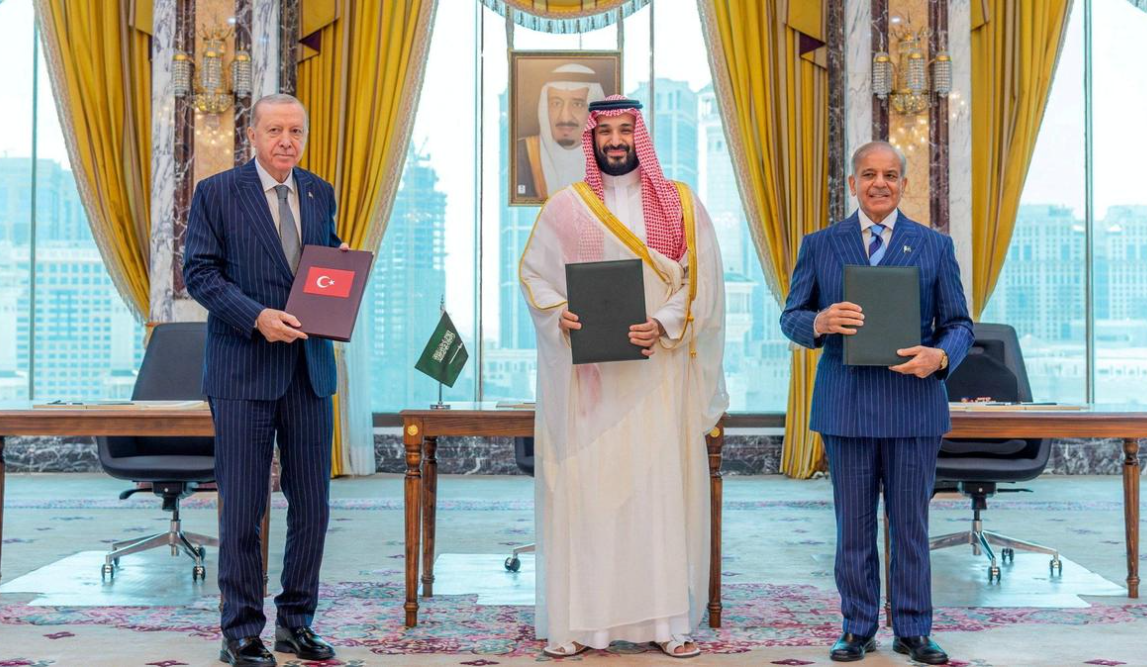
After hesitating for weeks amid a deteriorating security situation in the Red Sea, Saudi Arabia, Pakistan, and Türkiye (Turkey) have finally agreed to activate “deterrence measures” under the mutual security agreement, the Makkah (Mecca) Pact.’
Under the agreement, Pakistan and Türkiye have agreed to “rapidly deploy forces” in Saudi Arabia to counter the attacks by Yemen’s Houthi rebels.
This is the first time that the ‘Mecca Pact,’ signed in August, has been invoked.
“The committee agreed to activate collective deterrence measures, within the framework of the Alliance, in response to the attacks and all those responsible for them,” Khalid bin Salman, Saudi Arabia’s defense minister, said.
The ‘Mecca Pact’ has a mutual defense clause, similar to NATO’s Article 5, that an armed attack against one country would be considered an attack on all three.
Under the agreement, Ankara could deploy its soldiers in the southern Arabian peninsula for the first time in over a century.
The last time Turkish soldiers served in Yemen was in 1919 under Ottoman rule. After the Ottomans’ defeat in the First World War, Ankara agreed to surrender garrisons outside Anatolia under the Armistice of Mudros.
After the Armistice, signed between the Ottomans and Allied nations in 1918, Ottoman garrisons in Yemen surrendered to the British forces one by one.
Therefore, activating the Mecca Pact could see Turkish forces return to the southern Arabian Peninsula after more than a century.
In fact, while the Mecca Pact was signed only in 2026, Turkey has been waiting for an opportunity to return to Yemen for over a decade.
The Mecca Pact was signed in August 2026.
In 2015, when Saudi Arabia intervened militarily in Yemen against the Houthi rebels for the first time, President Recep Tayyip Erdogan said that “Depending on the course of events, we may consider providing logistical support.”
However, Ankara should not celebrate too soon, as history holds a sobering lesson for the Turks.
The mighty Ottoman Empire once ruled across the three continents of Asia, Africa, and Europe; controlled three of Islam’s holiest sites, including Mecca, Medina, and Jerusalem; and controlled a huge territory in the European lands of the Balkans and southern Europe.
Ottomans, however, could never fully subjugate the Zaidi tribesmen of Yemen, the historical ancestors of today’s Houthi rebels.
Yemen, in fact, was frequently called the “graveyard of Anatolia” or the “graveyard of Ottoman soldiers”.
Yemen – The Graveyard of Turks (Ottomans)
Victoria Clark, in Yemen: Dancing on the Heads of Snakes (2010), writes that by the 1890s Yemen was already “renowned as the ‘graveyard of the Turks'” during Ahmed Feyzi Pasha’s campaigns.
She also quoted an Ottoman official: “Yemen has become now the graveyard of Muslims and money.”
Turkish journalist and author Mustafa Balbay titled his book ‘Türkler Mezarlığı Yemen,’ which means “Cemetery of the Turks”.
In fact, describing Yemen as a “graveyard of Turkish soldiers” is a recurring theme in Ottoman (Turkish) historical memory.
Yemen Türküsü is a famous Turkish folk song that serves as a tragic lament for Ottoman soldiers who marched off to fight in Yemen during World War I and never returned.
Another Turkish folk song remembers the difficulties faced by Ottoman soldiers in Yemen and pays homage to Turks who went to Yemen but never returned.
“There are no clouds in the sky, what is this smoke?
There is no death in the neighborhood, what is this commotion?
These lands of Yemen are so treacherous
Oh, Yemen, its rose is a meadow
Why do those who leave not return?”
Ayşe Hür, in her article “The largest Ottoman cemetery: Yemen,” recounts that the Ottoman rule in Yemen was fiercely opposed by Zaydis, the ancestors of Houthi rebels.
According to the Zaydis, the Ottomans were ‘turbaned infidels’.
Turkish President Recep Tayyip Erdogan (R) passes next to a Turkish soldier wearing an Ottoman uniform during a third-anniversary commemoration rally at Ataturk International Airport in Istanbul on July 15, 2019. Turkey commemorates, on July 15, 2019, the third anniversary of a coup attempt which was followed by a series of purges in the public sector and changes to boost the Turkish President’s powers. (Photo by Ozan KOSE / AFP)
In his work titled “My Lament,” Ahmet İzzet (Furgaç) Pasha, who was sent to Yemen in early 20th century to supress a Zaydi revolt against the Ottomans described the period of Ottoman struggle in Yemen (1635-1840) in following words: “After a century of conflict in Jabal, with internal revolts and constant wars against the Zaydi imams, which continued until the year 1045 AH (1635), the entire Yemen region fell under the rule of the Zaydi imams due to the siege and pressure exerted on Haydar Pasha, who was forgotten and left in Jabal by the central government.”
Ottoman sources do not specify how many people died in the wars with the Zaydis during these 100 years, merely stating that “thousands of people died.”
“Going to Yemen and not returning” has been the fate of Ottoman soldiers since the 16th century, Ayşe Hür wrote in her article.
In the article titled “The Situation in Yemen” in the 15th issue of the Ottoman Newspaper dated 1316 (1900), it was stated: “As a result of Ahmet Fevzi Pasha’s wrong policies, approximately 4,000 soldiers died every year.”
Ayşe Hür also quoted an Ottoman official in her article who said that 1,30,000 Ottoman soldiers were buried in the Hijaz and Yemen between 1871 and 1894.
Marshal Galip, who served as a captain in Yemen in the 19th century, wrote: “Since I worked under the General Staff, all the general staff records passed through my hands. In these records, I noticed a wide and terrible gap between the new soldiers joining the army and those who were replaced or disabled… Yemen was a permanent war zone at that time.
“I compared the number of those who joined their factions or were mobilized en masse and sent away due to rebellions with the number of those who survived and returned to their homeland. The conclusion I reached was this: In the 22 years that had passed, a total of 130,000 Anatolian youths had been buried in the deserts of Hejaz and Yemen.”
In 2011, then-Turkish President Abdullah Gül renovated and inaugurated a Turkish Memorial Cemetery (Yemen-Türk Şehitliği) in Sanaa to commemorate the Ottoman soldiers who died in Yemeni campaigns.
Just one year later, in 2012, Houthi rebels demolished part of the memorial.
For centuries, the memorial has symbolized the Ottoman presence in Yemen. The deliberate attack on this memorial serves as a reminder of how the Houthis recall Ottoman campaigns in Yemen.
The damaged memorial for Turkish Martyrs in Yemen in the Yemeni capital Sanaa.
It was also a clear message to Ankara that they would not accept any Turkish involvement in Yemen.
Writing in Politics Today, Ahd Yaseen Al-Tamimi said: “History textbooks, which were adopted after 1962, presented a positive view of the Ottoman Empire and its rule over Yemen. Nevertheless, this did not prevent Zaydi supporters from maintaining their strict and extremist position on the Ottoman Empire.”
Of course, Turkey is a strong military power, and its influence extends in Yemen as well.
It has achieved remarkable military success in Syria, Libya, and in combating Kurdish insurgents in Iraq. Its military support to Azerbaijan was perhaps the deciding factor in its war against Armenia.
However, Yemen is a different ballgame altogether.
And if history is anything to go by, then Yemen, often described as a “graveyard of the Ottomans,” could once again become a quagmire for Turkey.
Sumit Ahlawat has over a decade of experience in news media. He has worked with Press Trust of India, Times Now, Zee News, Economic Times, and Microsoft News. He holds a Master’s Degree in International Media and Modern History from the University of Sheffield, UK.
He can be reached at ahlawat.sumit85 (at) gmail.com
For years, the European Union has struggled with a peculiar contradiction in its dealings with China. The EU is one of the largest and wealthiest trading blocs on earth, capable of determining access to a market of some 450 million relatively affluent consumers, yet it frequently conducts foreign policy as though it were the supplicant.
Hilde Vautmans, the Belgian Renew Europe MEP and European Parliament rapporteur on EU-China political relations, is right to challenge this timidity.
Her report, debated this week in Strasbourg, does not advocate severing relations with Beijing. Nor should it. China is too economically important and too influential on questions ranging from climate change to international security for Europe simply to close the door.
But dialogue must not become an alternative to action.
“Europe has economic power. It’s time to use it,” Vautmans told Parliament ahead of the vote. That sentence ought to be pinned above every desk in the European Commission dealing with China.
The figures make the case brutally clear. In 2025 the EU imported €559.4 billion of goods from China while exporting just €199.6 billion in the opposite direction. The resulting deficit was €359.8 billion — almost €1 billion every day.
As EU Today reported recently, Commission President Ursula von der Leyen has herself warned of a potential “second China shock”, with subsidised Chinese industrial production threatening European manufacturers.
Fine words. But Beijing has heard fine words before.
The Commission’s preferred formulation remains “de-risking, not decoupling”. There is sense in that distinction. Nobody seriously proposes shutting down trade with the world’s second-largest economy. But de-risking becomes meaningless if every risk identified is followed by another dialogue, another working group and another opportunity to postpone difficult decisions.
Indeed, the Commission acknowledges that European companies operating in China face regulatory obstacles, inadequate intellectual-property protection, restrictions on data flows and pressures associated with technology transfer.
Europe possesses formidable weapons with which to respond: anti-dumping duties, anti-subsidy measures, foreign-investment screening, the Foreign Subsidies Regulation, the Anti-Coercion Instrument, procurement restrictions and controls on strategically sensitive technologies.
These instruments should not be deployed indiscriminately. But neither should they sit polished in the armoury while Beijing exploits European openness.
Vautmans is particularly right to connect economics with security and values. China cannot reasonably expect privileged access to European markets while helping sustain the Russian war machine. The European Parliament’s own research service describes Beijing as a “decisive enabler and dual-use provider”, including through goods entering Russian weapons and drone supply chains.
If Chinese companies materially assist Russia’s ability to wage war against Ukraine, Europe should be prepared to impose a direct economic price. The same principle should apply to human rights.
EU Today has warned repeatedly that Brussels’ ritualised engagement with Beijing risks becoming precisely that: ritual.
We reported earlier that the EU-China Human Rights Dialogue risks losing credibility, pointing to the continuing imprisonment of Swedish citizen Gui Minhai and Uyghur academic and Sakharov Prize laureate Ilham Tohti. After round upon round of discussions, Beijing has learnt that European expressions of “deep concern” are inexpensive things to endure.
Yet repression continues. In March this year China adopted its new Law on the Promotion of Ethnic Unity and Progress. The European Parliament subsequently condemned what it described as intensified repression and assimilation affecting Tibetans, Uyghurs and other minorities, by the overwhelming margin of 439 votes to 52.
Europe therefore faces a straightforward question. What is the purpose of economic power if it is never translated into political influence?
The EU should not attempt to bully China. Nor should it abandon diplomacy. Vautmans is correct that channels of communication must remain open. But reciprocity must become something more than a word appearing in communiqués.
Where China closes markets to European companies, Europe should be prepared to restrict equivalent access. Where state subsidies distort competition, Brussels should respond rapidly with trade-defence measures. Where strategic dependencies expose Europe to political coercion, alternative supply chains must be built. Where Chinese entities support Russia’s military-industrial complex, sanctions should follow. And where companies benefit from forced labour or serious human-rights abuses, access to the European marketplace should carry consequences.
That is not protectionism. It is leverage.
Totalitarian states understand leverage perfectly well. China routinely uses access to its enormous market as an instrument of statecraft. Europe, by contrast, too often behaves as though exploiting its own commercial strength would somehow represent a failure of diplomacy. It represents precisely the opposite.
The European Commission has spent years discovering that China is simultaneously a partner, competitor and “systemic rival”. It is time to move beyond discovering the obvious.
Vautmans has identified the essential point. Europe already possesses economic power on a scale few countries can ignore. What it appears to lack is the political confidence to use it.
Pedro Sánchez has turned a parliamentary defeat over housing into a general election on 29th November.
The calculation is clear: force Spain’s political argument onto territory more favourable to the left before migration, corruption allegations and parliamentary paralysis return to the foreground. But the polls suggest that the gamble could still deliver power to the centre-right People’s Party and Vox.
Pedro Sánchez’s decision to dissolve Spain’s parliament nine months ahead of schedule is more than an admission that his minority government had reached the limits of what it could achieve in the Congress of Deputies. It is an attempt to choose the terms on which his government will be judged.
The immediate trigger was the defeat of two emergency housing decrees after the conservative People’s Party (PP), Vox and Catalan separatist Junts voted against them. Housing had already moved rapidly to the centre of Spanish politics following the eviction of 87-year-old Maricarmen Abascal from the Madrid flat where she had lived for 71 years, followed by large demonstrations across the country. EU Today has previously reported on both the housing protests across Spain and Sánchez’s subsequent decision to call the election.
The prime minister is now attempting to convert legislative weakness into electoral advantage.
In his announcement on 5 October, Sánchez presented the election as a choice between a broader progressive majority capable of advancing social legislation and an opposition that had obstructed measures on housing and other domestic priorities. The government reinforced that strategy a day later by approving revised versions of the two housing decrees, containing 21 measures including tax incentives, assistance for first-time buyers and measures intended to increase supply. They will require validation by the Diputación Permanente, the standing parliamentary body that remains after dissolution.
The political calculation is straightforward. Housing offers Sánchez an issue on which anger is directed not only at government but at landlords, property investors, regional authorities and political parties opposing stronger regulation. The eviction of Abascal gave that argument a human symbol and transformed a long-running affordability problem into an immediate political confrontation.
That does not mean the strategy will work.
Most polling continues to place the PSOE behind the PP. Surveys put the Socialists at roughly 28 per cent, while Vox has risen to around 18 per cent. A PP-Vox combination is currently the only bloc consistently projected to command an outright parliamentary majority. One Sigma Dos survey published after the election announcement projected the two parties winning 203 of the Congress’s 350 seats.
Sánchez therefore appears to be playing less for immediate dominance than for mobilisation.
His problem before the housing protests was not simply the strength of the right. The broader left had become fragmented, while the government was being damaged by disputes over migration, particularly following the crisis in Ceuta, as well as corruption investigations involving figures associated with the PSOE. At the same time, Junts had become an increasingly unreliable parliamentary partner, leaving the government unable to guarantee major legislation or a new budget.
Housing changes the subject.
It allows Sánchez to argue that the central question is not whether his coalition has governed smoothly, but whether voters want a parliament prepared to intervene more aggressively in the housing market. The PP, however, is contesting precisely that framing. Alberto Núñez Feijóo argues that the housing shortage is itself a product of Sánchez’s eight years in government and has promised to raise annual construction towards 200,000 homes while reducing taxes.
The election may therefore develop into a dispute over responsibility rather than diagnosis. Both sides accept that housing has become a major national problem; they differ sharply over whether regulation or additional supply should dominate the response.
There is also a wider European dimension. Housing affordability is increasingly politically disruptive across the EU, including in major cities where construction has failed to keep pace with household formation, migration and demand for short-term accommodation. EU Today has examined similar pressures in Berlin’s housing market. Spain could now provide a test of whether housing can become powerful enough as an electoral issue to reverse the wider European movement towards the right.
For Ukraine, however, the consequences are likely to be less dramatic than Spain’s domestic political contest might suggest.
Sánchez committed €1 billion in bilateral military support to Ukraine for 2026, with Spain putting its cumulative bilateral military assistance since Russia’s full-scale invasion at almost €4 billion. Madrid has also trained more than 9,000 Ukrainian military personnel.
Spain is also home to a considerably larger Ukrainian community than the roughly 300,000 figure frequently cited. Government data showed 353,009 Ukrainian nationals holding valid residence documentation at the end of June, including 262,782 under temporary protection.
A PP-led government would alter Madrid’s domestic priorities and potentially its approach to defence spending and migration, particularly if Vox were required to sustain a parliamentary majority. Yet there is little basis at present for assuming that a change of government would produce a reversal of Spain’s fundamental position on Russia’s invasion or membership of the European and Atlantic security structures supporting Ukraine.
The more immediate question is whether Sánchez can make housing important enough to overcome the electoral arithmetic confronting him.
Calling the election has allowed him to escape a parliament in which his legislative coalition was steadily disintegrating and to enter a campaign around an issue capable of mobilising his electorate. It has not changed the fact that the PP and Vox begin that campaign with the stronger numbers.
Sánchez has chosen the battlefield. On 29th November, Spain will decide whether that was enough.
Washington has sent two contradictory signals on Taiwan in the last few days. Whether these signals reflect strategic ambiguity or strategic confusion in the coming days has become a matter of debate among the strategic experts.
On the one hand, Trump is holding back a $14 billion arms package for Taiwan, pre-approved by the U.S. Congress, despite a bipartisan group of senators explicitly urging him to “formally notify . But the U.S. President has described his decision to pause as a “very good negotiating chip” for his talks with Chinese President Xi Jinping.
Whether that worked in his summit meeting with Xi last week in Washington is not known. But Taiwan’s Defense Minister Wellington Koo confirmed yesterday (October 6) that he has “not heard” of any new sale being cleared, even in smaller chunks.
On the other hand, the Pentagon is seemingly doing the opposite of this pause.
According to reports, the U.S. Department of Defense will station two representatives on a long-term basis inside Taiwan’s Ministry of National Defense headquarters in Taipei from 2026 to 2028.
One official will come from the Office of the Under Secretary of Defense for Policy [OUSD-Policy] — the office that writes U.S. national security and defense strategy. The second will come from the Institute for Defense Analyses [IDA] — a federally funded think tank that does mathematical modeling for war games and combat capability assessment.
The program is called the “Taiwan-US Defense Ministry Joint Cooperation Assessment,” with a total budget of NT$471 million [$14.8 million], including NT$152.5 million this year for personnel, consultancy, travel, data collection, and even interpretation for classified-level meetings.
This would mark the first time U.S. defense officials are permanently embedded inside Taiwan’s military headquarters, shifting cooperation away from traditional channels managed through the American Institute in Taiwan (AIT), Washington’s de facto embassy.
The military relationship between the United States and Taiwan is highly integrated yet formally unofficial. It is governed by the legal framework of the “U.S. Taiwan Relations Act” (TRA), which Congress passed on April 10, 1979.
Congress enacted it immediately after the U.S. formally terminated its previous “Mutual Defense Treaty with the Republic of China (Taiwan)” to officially recognize “the People’s Republic of China (PRC)” in Beijing.
Rather than abandoning Taiwan, Congress designed the TRA as a legal framework to ensure that “robust, unofficial security, commercial, and cultural ties” continue uninterrupted.
In short, the TRA provides a domestic legal workaround for treating Taiwan as a country without formal diplomatic recognition. However, under it, the U.S. is also obligated to maintain Taiwan’s capacity to resist force or coercion in general and the forcible annexation by the PRC in particular.
Over the years, U.S. personnel have served in Taiwan as trainers and advisers. Hundreds of active-duty U.S. military advisors—often colloquially referred to locally as “English teachers” to maintain a low profile—are routinely deployed across Taiwan.
U.S. military observers are present within Taiwan’s annual “Han Kuang live-fire military exercises”. They actively guide Taiwan’s defense strategy toward decentralized command, logistics, and real-world combat readiness.
Taiwanese fighter pilots undergo advanced combat training at Luke Air Force Base in Arizona.
The US remains Taiwan’s primary foreign weapons supplier, with a total backlog of orders nearing $20 billion.
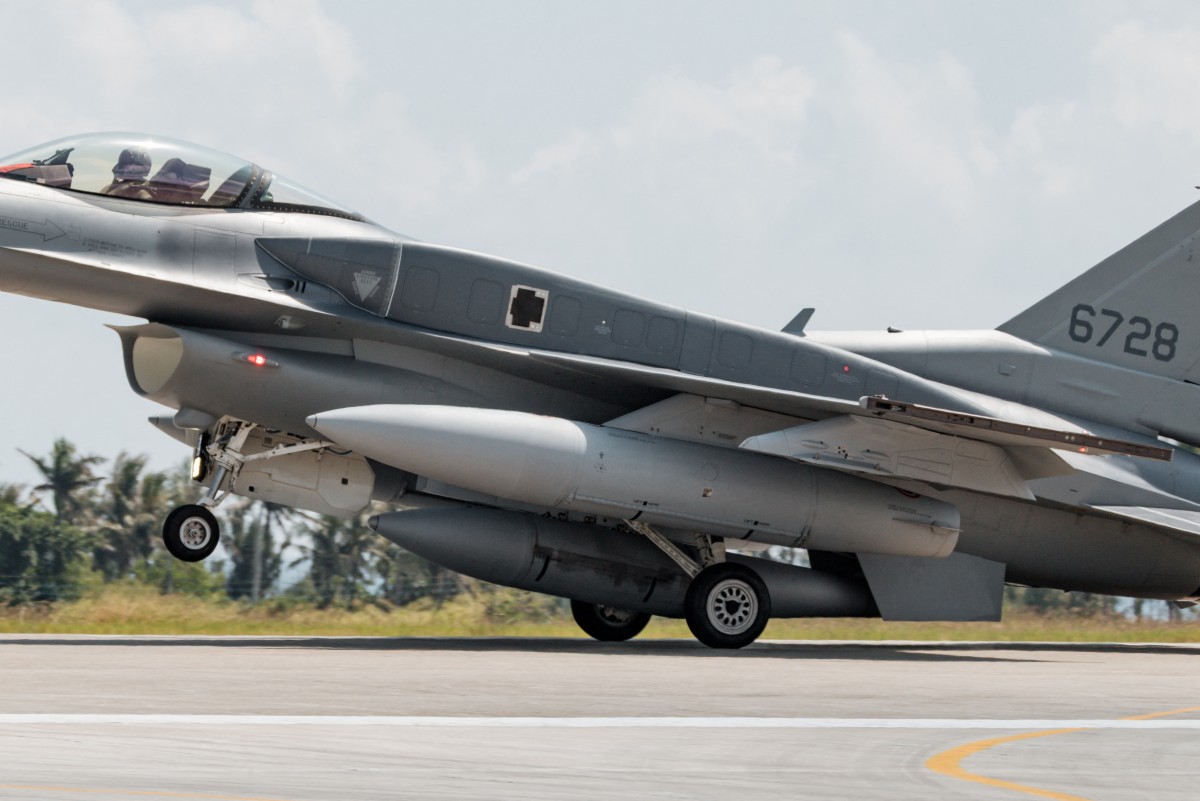
In fact, Taiwan received its first new batch of two advanced Lockheed Martin F-16 Block 70 fighter jets on October 2. This was part of an $8 billion deal approved in 2019 for 66 new-build F-16 Block 70 jets, with the remaining 64 aircraft scheduled for future delivery. out of a 66-aircraft fleet on order.
A newly purchased F-16V Block 70 fighter jet lands at Chi-hang Air Base in Taitung on October 2, 2026. Taiwan received its first two US-made F-16V fighter jets as the island democracy upgrades its military capabilities to deter a potential Chinese attack. The warplanes are part of an $8 billion deal for 66 F-16Vs approved during U.S. President Donald Trump’s first term and scheduled for delivery this year. (Photo by CHENG Yu-chen / AFP)
However, all these coordination efforts between Washington and Taipei are usually routed through the AIT intermediary, as the U.S. adheres to its One China” policy. In that sense, the new proposal to station Pentagon personnel directly inside the Taiwanese Defense Ministry represents a shift from this historical status quo.
The new arrangement puts Americans directly into the core of Taiwan’s defense policymaking, including policy coordination, Han Kuang exercise planning, asymmetric warfare doctrine, and major weapons procurement evaluations, it is said.
Of course, the U.S. routinely sends military and civilian defense officials to work directly inside the defense ministries of partner and allied nations. Established by the Pentagon in 2009, the Ministry of Defense Advisors (MODA) Program specifically trains and deploys high-performing senior U.S. Department of Defense civilians.
These advisors are embedded in partner-nation defense ministries to support institutional capacity building, strategy, financial management, and logistics.
The U.S. also actively deploys specialized defense consultants directly to the defense ministries of nations looking to transition away from historical adversaries such as Ukraine, Moldova, Armenia, and various Balkan nations looking to exit Moscow’s orbit.
The U.S. has a long history of embedding liaison officers in allied countries. For example, it has a Joint Political-Military Group in Israel that embeds officers in missile-defense cooperation for Iron Dome, David’s Sling, and now Iron Beam. But American officials do not operate inside the Kirya (Israel’s defense headquarters).
Similarly, despite 54,000 US personnel stationed in Japan, no U.S. officer sits inside Japan’s Ministry of Defense to assess combat capability.
Perhaps in NATO countries and South Korea, U.S. military officials are believed to sit together often.
There are also “Offices of Defense Cooperation” (ODC), or United States Military Groups, which are technically attached to the local U.S. Embassy for diplomatic protection. These teams provide security assistance and work in routine, day-to-day coordination with host ministry personnel.
However, what makes the proposed U.S. officials sitting directly within Taiwan’s military headquarters unique is that Taiwan is not an ally of America in the strict sense, as the U.S. lacks formal diplomatic recognition of Taiwan, and these officials will bypass the traditional AIT.
Of course, multiple reports in recent years have claimed that U.S. special forces are permanently stationed in Taiwan to assist its 101st Amphibious Reconnaissance Battalion special operations force, though Washington has officially denied it. The same has been the case with the speculations about the coming and going of U.S. military personnel from the Army Special Operations Command base in Taoyuan.
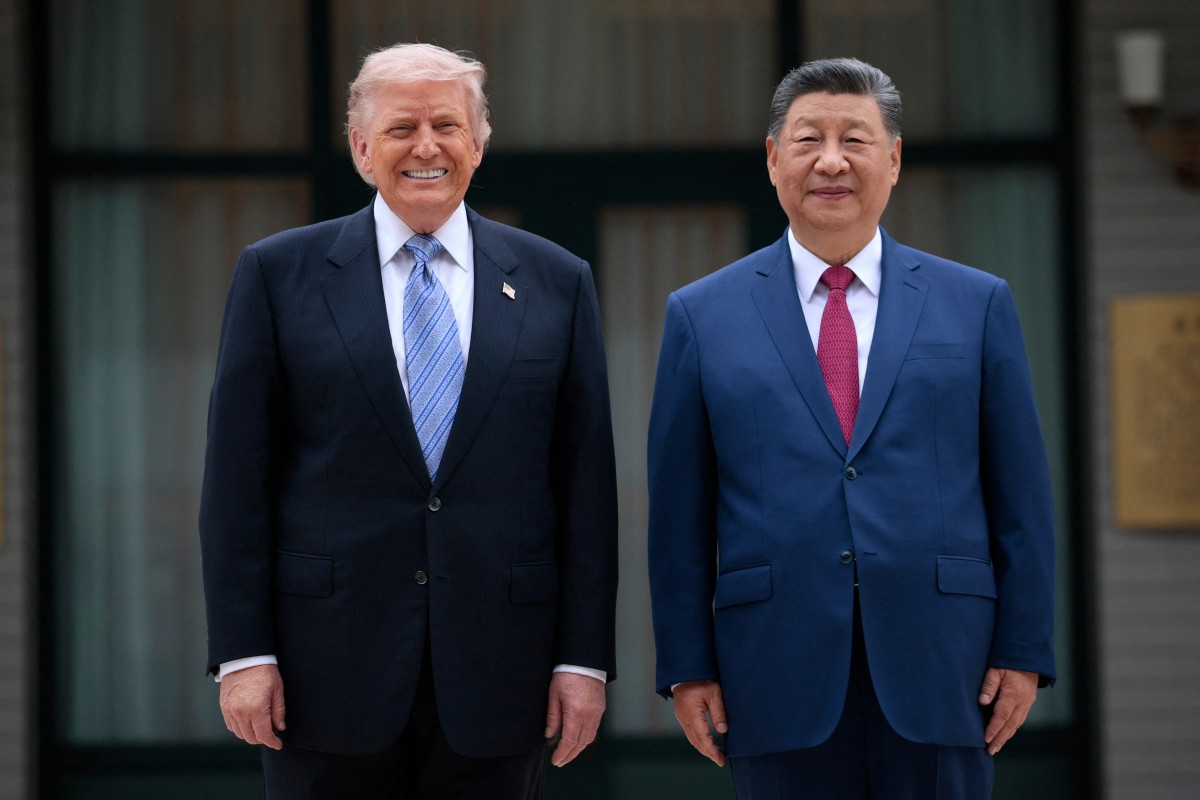
U.S. President Donald Trump (L) poses for photos with China’s President Xi Jinping during a visit to Zhongnanhai Garden in Beijing on May 15, 2026. (Photo by Evan Vucci / POOL / AFP)
How will Beijing React?
At the time of writing, Beijing had not issued an official reaction, possibly because Taiwanese media outlets only recently brought details of this long-term Pentagon deployment to light. It has not been declared officially.
But it goes without saying that Beijing would be “certain to protest” and could respond “with expanded exercises and intimidation”, according to Zivon Wang, a military analyst at the Chinese Council of Advanced Policy Studies in Taipei.
He expects U.S. personnel not to wear uniforms at the Ministry of National Defense because it could be interpreted as a more formalized US-Taiwan military relationship and might further provoke Beijing.
Incidentally, China has made more air and naval incursions across the median line in the Taiwan Strait since 2022. Although Chinese military aircraft had occasionally crossed the median line (established informally in 1954) in the past, the practice became significantly more frequent from 2022, particularly after Nancy Pelosi (then Speaker of the House of Representatives) visited Taiwan in August that year. What had once been an informal but largely respected buffer increasingly became a zone of routine Chinese military activity.
Therefore, it remains to be seen whether China will respond to the Pentagon’s proposed deployment with loud exercises.
It may also remain silent, as nothing is official yet and Trump has his “negotiating chip” of holding back Taiwan’s military package.
Trump’s admirers often see his unpredictability as useful in negotiations with an adversary, because the other side cannot be sure how far he is willing to go.
But his critics argue that his unpredictability becomes counterproductive when allies cannot distinguish a negotiating threat from a real change in American policy.
It remains to be seen who will prove to be right in the case of Taiwan.
Author and veteran journalist Prakash Nanda is Chairman of the Editorial Board of the EurAsian Times and has been commenting on politics, foreign policy, and strategic affairs for nearly three decades. He is a former National Fellow of the Indian Council for Historical Research and a recipient of the Seoul Peace Prize Scholarship.
The author can be reached at prakash.nanda (at) hotmail.com
MEPs have opened debate on the EU’s proposed Affordable Housing Act, which would give national and local authorities a clearer legal framework for restricting short-term rentals and some non-primary residential property use in areas facing severe housing pressure.
The European Parliament has begun examining legislation that would give cities and national governments greater legal certainty when restricting short-term rentals and the use or acquisition of residential property in areas where housing has become difficult to afford.
The proposed Affordable Housing Act, presented by the European Commission on 9 September, was on Parliament’s agenda in Strasbourg on Tuesday as housing costs move further into EU-level politics.
The legislation does not transfer general housing policy to Brussels. Decisions on construction, planning, rent policy and social housing would remain primarily with national, regional and local authorities.
Instead, the proposal would establish a common EU legal framework governing some restrictions that member states and cities may introduce when attempting to protect housing supply.
The draft regulation specifically covers measures restricting short-term accommodation in residential properties other than a host’s primary residence. It would also cover restrictions on the acquisition or use of land and housing that is not intended as somebody’s principal home.
Those provisions are designed partly to resolve a legal problem that has become increasingly important in cities with large tourism markets.
Local governments have introduced restrictions on holiday rentals and second-home use, but such measures can clash with EU single-market rules governing services, property and establishment. The Commission says the legislation would provide authorities with a clearer method for demonstrating when restrictions are justified and proportionate.
The law would therefore not impose a common European cap on Airbnb-type accommodation. Nor would it oblige cities to introduce restrictions.
Authorities choosing to intervene would instead have to demonstrate housing stress and ensure that their measures meet EU requirements on proportionality, transparency and review.
Brussels argues that the scale of Europe’s housing problem now affects more than social policy.
According to the Commission’s European affordable housing plan, house prices across the EU have risen by more than 60 per cent since 2013, while average rents have increased by about 20 per cent. Short-term rentals increased by 93 per cent between 2018 and 2024.
Only between six and seven per cent of EU housing stock is classified as social housing, while about 20 per cent of homes are recorded as unoccupied.
The Commission estimates that Europe needs to build more than two million homes a year to meet current demand — around 650,000 more annually than are presently being constructed. It estimates the additional investment requirement at approximately €153 billion each year.
Those figures underline a central difficulty in the housing debate: restrictions on tourist accommodation may return some properties to residential use, but they do not address the full shortage of new homes.
The debate is becoming more politically prominent as housing affordability affects a growing share of middle-income households as well as those on lower incomes.
Berlin offers one example. EU Today reported last month that advertised rents in the German capital had risen by roughly three-quarters in less than a decade, while the city calculates that it will need another 211,000 homes by 2040.
Pressure is particularly acute in large cities and tourism centres, where residential demand competes with short-term accommodation and investment properties.
The Commission argues that this has consequences for the wider economy because workers who cannot find affordable accommodation may be unable to move to areas where jobs are available.
That is why Brussels increasingly presents housing not only as a social concern but as part of the competitiveness and single-market agenda.
The proposal is still at an early stage. Parliament and the Council must negotiate the legislation under the ordinary legislative procedure, and substantial amendments remain possible.
Questions are likely to centre on how “housing stress” is defined, what evidence authorities must provide before restricting property use and how far EU law should permit local intervention in property markets.
The political dividing line is already apparent. One side of the debate stresses that cities need more freedom to protect permanent housing stock. The other warns that regulation of short-term rentals or second properties can affect tourism businesses, property owners and investment without necessarily creating sufficient new supply.
The Affordable Housing Act attempts to establish legal rules for that dispute rather than settle it centrally.
If adopted, its importance will therefore depend less on a single Brussels policy than on how individual European cities use the powers and legal protection it provides.
What has passed away is the Law Covenant; what remains is the God whose character it still reveals, and whose people now keep his commandments not as subjects of Moses, but as sons of the Father, indwelt by the Spirit, under the law of Christ. Every Christian who knows the prohibitions in Leviticus 11:7–8... Continue Reading
Jesus understood something we often forget: we are servants, not saviors. Christ alone carries the weight of being the Savior of the world, which means we are allowed to stop. We do not rest because nothing matters; we rest because God is God even when we are not working. The apostles returned to Jesus... Continue Reading
Much of the modern conversation about worship begins with the question, “What can we add?” Perhaps covenant theology teaches us to ask, “Why do we think we need more?” The simplicity of Christian worship is not evidence of its poverty, but evidence that Christ has come. Last week I was teaching through Ryan McGraw’s... Continue Reading
Ultimately, the confrontation with Islam is a spiritual battle. “Proclaim the gospel of Jesus Christ. Islam is antithetical to the Jesus of the Bible. There is one Lord, one Savior, one faith, one baptism, and we need to proclaim Him to Muslims.” America’s growing embrace of politicized Islam is “perplexing” to those with first-hand... Continue Reading
We have all that we need to endure any storm. God will cause the waters to recede whenever He pleases. We need not worry, for our King is in total control. He loves us and cares for us. The voice of the Lord makes the deer to calve And strips the forests bare; And... Continue Reading
When Jesus says “love God with all of your mind,” he is not only history’s greatest Giver of that great commandment, he is also history’s greatest Keeper of the great commandment. Last year in the United States, advertisers spent 422 billion dollars trying to convince you to buy stuff you probably don’t need.... Continue Reading
Our new bodies received from God in the resurrection will be imperishable, glorious, powerful, and spiritual. Our present mortal bodies, subject to decay and death, will be raised to an immortal state and bear the image of our Savior. Not long ago my wife and I helped care for her sister who suffered from... Continue Reading
There’s nothing inherently wrong with living in a nice neighborhood, or having a healthy body, or building a successful career. These are good gifts from God. They are little invitations to witness his beauty, harmony, and redemption. But they are not ladders. And the more we try to climb them—investing our life’s joy and meaning... Continue Reading
Russia appears to be preparing to revive and modernize its inventory of the Soviet-era Pechora S-125 short-to-medium-range surface-to-air missile system, in a move that the IAF leadership could well take note of.
S-125 is the same missile that was used to shoot down the US Air Force’s F-117 Nighthawk stealth fighter-bomber over Serbia on March 27, 1999, during the Kosovo War.
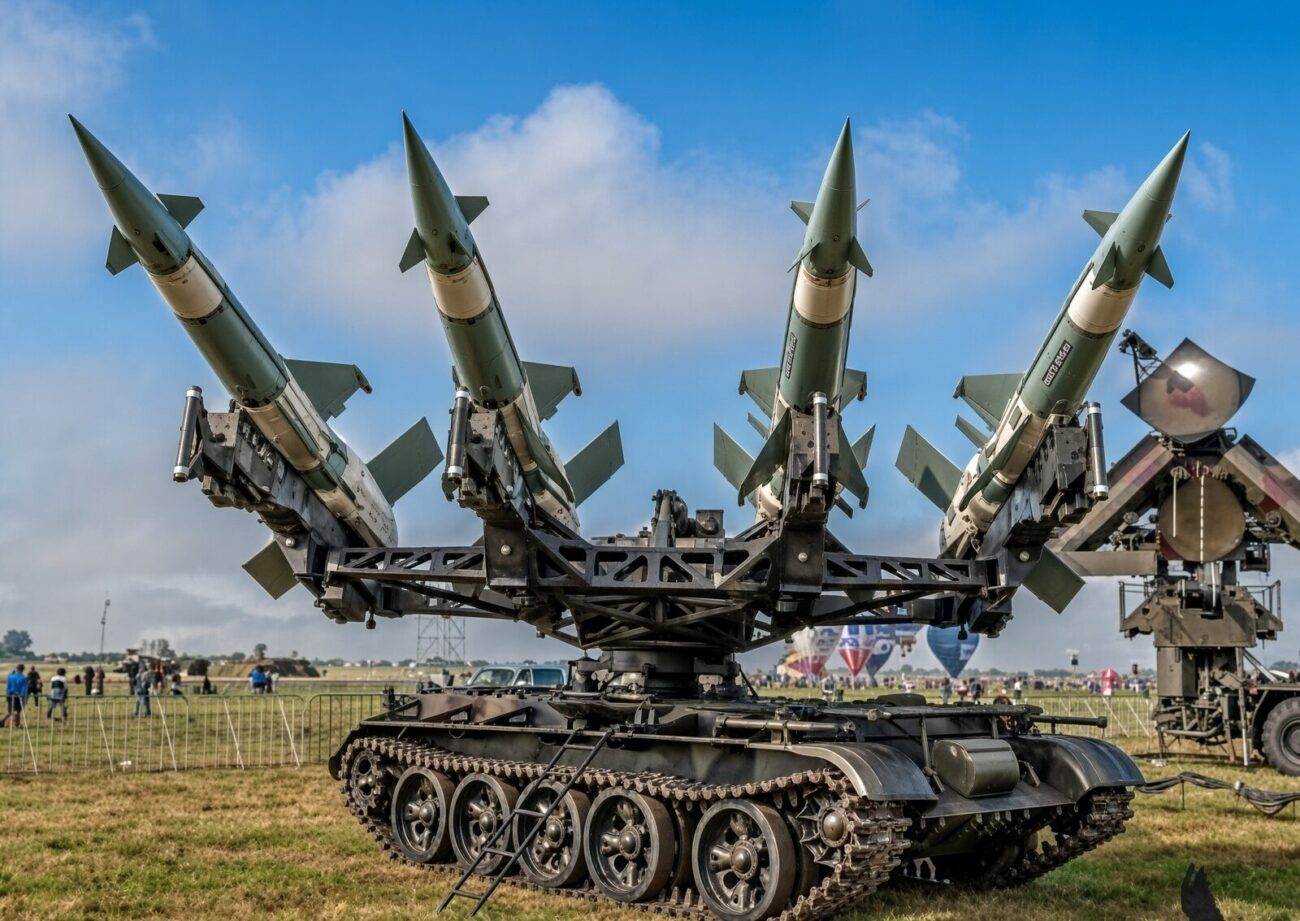
The Pechora S-125 (SA-3 Goa) is a legacy Soviet static, short- to medium-range surface-to-air missile system developed to engage low- to medium-altitude air threats using command guidance.
The IAF also modernized its S-125 inventory to plug an operational gap that widened due to delays in procuring MRSAM and Akash air-defense systems. However, the IAF did not pursue modernization to the extent that the capability gains matched the more comprehensive modernization offered by the Russian Pechora-2M.
According to Militarnyi, a Ukrainian media outlet focused on military affairs, the Minsk Wheel Tractor Plant (MZKT) has signed a contract with Moscow-based JSC Oboronitelnye Sistemi to supply 30 specialized wheeled chassis that appear intended for components of the Pechora-2M system.
The Pechora-2M is a heavily modernized Pechora derivative with a self-propelled truck-mounted launcher, digital electronics, an extended engagement envelope, and day/night electro-optical tracking, giving the system much greater tactical mobility.
Under the terms of the contract, Russia would receive 20 MZKT-8021-021 chassis, as well as five each of the MZKT-8022-021 and MZKT-80211-021.
The MZKT-8021/8022 family of specialized chassis was developed specifically to accommodate components of the Pechora-2M air-defense missile system.
Pechora Revival
The delivery schedule extends to 2029, suggesting a planned multi-year acquisition rather than a one-off procurement to meet an immediate operational requirement.
More likely, Russia is seeking to expand its air-defense capacity in response to the heightened threat from the prolific use of drones and other low-cost aerial threats in modern warfare.
Drone warfare has increased the aerial threat severalfold, so it is logical for any nation to increase the density of its AD systems by a corresponding factor.
Russia appears to be increasing its reliance on legacy systems rather than simply discarding them.
Russian Modernisation
The modernized Pechora-2M system was developed as a deep modernization of the Soviet S-125, incorporating a self-propelled, highly mobile launcher and modernized electronics. The modernization transformed the legacy stationary S-125 into a rapidly deployable air-defense platform capable of shoot-and-scoot tactics, reducing its vulnerability to anti-radiation weapons and precision strikes.
The 2M replaces the legacy four-rail stationary ground launcher (5P73) with a twin-rail launcher mounted on a heavy 6×6 truck chassis. The reduction in launch rails was necessary to maintain launcher stability when mounted on a mobile chassis.
The legacy S-125 required considerable time to disassemble, pack onto trailers, move, and re-erect at a new site. In contrast, the Pechora-2M can reportedly be brought into action in roughly 20–25 minutes, facilitating shoot-and-scoot operations.
Besides the self-propelled launchers, the tracking/fire-control radar and other system components are also mounted on high-mobility truck chassis rather than being confined to towed equipment.
File Image: S-125
IAF Pechora Modernization
In 2016, the Indian MoD issued a $272-million tender to digitize 16 Pechora systems. The tender was restricted to Indian companies to support the government’s Make in India policy. The eventual contract, worth ₹591.3 crore, was awarded to Alpha Design Technologies Ltd (ADTL) in 2020.
Russia’s Almaz-Antey is the original equipment manufacturer of the Pechora system. At the time, Indian officials indicated that Russian defense companies preferred to work through Russian state-owned entities, limiting the scope for direct OEM participation by Indian companies.
The scope of the Indian Pechora upgrade was primarily the electronic and mechanical modernization of the existing system rather than a fundamental redesign of its architecture. It included refurbishment and digitization of the missile-guidance radar and integration of the system with the IAF’s Integrated Air Command and Control System (IACCS).
Alpha Design Technologies Ltd executed the upgrade, focusing on digitization and electronic modernization. It replaced vintage electronic components with modern semiconductor-based electronics and digital processing, while modernizing operator consoles and other system elements.
No Mobility
The system retained its original static, four-rail, ground-mounted configuration (5P73 launcher) and towed transport arrangement because the Indian upgrade scope did not include mobility.
Because it lacks mobility, the IAF has traditionally used the Pechora for point defense of fixed, high-value infrastructure such as air bases, radar stations, and other military installations.
A statically deployed AD system protecting a high-value asset made considerably more sense when precision-guided munitions were either unavailable or relatively uncommon. In contemporary warfare, where precision weapons can routinely achieve single-digit-meter accuracy, a static air-defense system defending a high-value asset can itself become a priority target.
Recall the failed PAF attempt to strike the S-400 system deployed to defend Aadampur air base during Op Sindoor. With foresight, and by leveraging the S-400’s mobility, IAF leadership relocated the system before the attack. The episode illustrates the importance of mobility and survivability for high-value air-defense assets.
A Still-Capable System
Despite its vintage, the Pechora remains a potentially useful AD system. Endowed with mobility and modern sensors and electronics, it would acquire significantly greater survivability and tactical utility.
One of its strengths is electro-optical tracking, which permits passive target tracking without radar emissions, reducing vulnerability to anti-radiation weapons. Both Russian and Indian modernization programs have improved the system’s electro-optical capability.
The Indian upgrade incorporates thermal-imaging-based fire-control equipment, while the Pechora-2M also incorporates TV and thermal/infrared electro-optical channels.
Thermal imaging provides a passive night-and-day detection and tracking capability and, unlike conventional television cameras, does not depend on visible light. However, adverse atmospheric conditions can degrade its effectiveness.
It is interesting to note that the IAF chose to upgrade its Pechora systems without fundamentally modifying the missile. Contemporary reporting on the original upgrade program indicated that the IAF considered the existing missile adequate and concentrated instead on digitization, radar, communications, networking, and other system improvements.
The 5V27 family missile has a substantial fragmentation warhead of around 70 kg and uses command guidance. Its continued availability is one possible reason why extending the life of the Pechora system remains attractive.
Russia may also be reviving and revitalizing Pechora-2M systems because it has a substantial existing inventory of 5V27-series missiles. If so, the approach illustrates an important principle of modern warfare: the value of an old weapon system can change when it is combined with modern sensors, electronics, mobility and networking.
In the immediate future, the IAF will need to deploy many more AD systems than it currently does in order to field a robust air-defense capability spanning the entire gamut of aerodynamic threats—aircraft, helicopters, cruise missiles, guided bombs and drones.
Developing additional AD systems may prove more challenging and time-consuming than upgrading existing legacy systems such as the Pechora.
Upgrading the Pechora to add mobility, modern electro-optical sensors and improved networking should be well within Indian technological capability. Even locally manufacturing additional upgraded systems under an appropriate OEM arrangement could be a cost-effective way to augment India’s air-defense capability.
Russia’s apparent decision to extract additional combat value from an old missile system should therefore be viewed less as a revival of obsolete technology and more as an example of how legacy weapons can be adapted to the changing economics and character of air warfare.
Vijainder K Thakur is a retired IAF Jaguar pilot, author, software architect, entrepreneur, and military analyst.
Massive school protests are ongoing in France, where students have been mobilizing for their right to education – and against the austerity measures undermining it. Roughly 1,800 high schools were forced to shut down on Tuesday, October 6, as students – supported by trade unions, families, and progressive politicians – took to the streets. According to trade unions, over 450,000 people participated in protests across the country.
Students at 90% of French universities organized actions on the same day, adding even more weight to the historic mobilization.
The students’ main demands include urgent measures to address the critical situation in French schools: a shortage of teaching and support staff, oversized classes, and dilapidated buildings – particularly in working-class areas. Protesters are also calling for more manageable timetables, affordable and quality food and student housing, and an equitable education system.
Austerity at the roots of the protests
The situation in schools is strongly linked to years of neoliberal policies pushed by President Emmanuel Macron and several administrations. The mobilizations are taking place amid widespread discontent over the planned continuation – and harshening – of the same policies.
The country’s public deficit reached 5.1% of GDP in 2025, and debt interest rates represent a growing driver of this deficit. In 2025, the interest burden amounted to around €66 billion across all public administrations; it is expected to reach €91 billion in 2027 and approximately €120 billion in 2030, warned Francesco Tirro for Progetto Me-Ti.
Mainstream economists suggest the only way to address that deficit is through cuts – an approach the current administration is only too eager to try, including through attacks on the pension and education systems.
Police repression against students
In response to the protests, French authorities have unleashed a rarely seen wave of police violence against students. The Ministry of Interior recorded approximately 5,000 arrests between September 21 and October 2, with 85% of those detained underage. Police used rubber bullets and dispersal grenades on children, leading to serious injuries – including protesters losing limbs and vision.
“Footage and testimonies widely reported over the last week raise alarming concerns about the dangerous use of tear gas, batons and restraint techniques by police,” said Anne Savinel-Barras from Amnesty International France. The organization emphasized that authorities must ensure the response to demonstrations is “necessary and proportionate,” and that “children and young people peacefully demanding their right to education are protected rather than being beaten, tear-gassed, or arbitrarily detained.”
Source: Sophie Binet/X
While human rights organizations appealed for an end to state-sanctioned violence against students, things were much quieter among the European political establishment. Where reactions were formulated, they were mild at best.
Unions and left support the students
Different progressive movements have sharpened their support for the student demonstrations over the past week, resulting in thousands of trade union members and dozens of elected officials forming cordons between police and students to shield the youth. “All over the country, union members have turned out in large numbers to provide protection and support for high school students,” one of the main student associations, Union Syndicale Lycéenne, stated on Tuesday.
“Today’s high school and university students are tomorrow’s workers, and they shouldn’t have to pay the price for austerity policies,” the General Confederation of Labor (Confédération Générale du Travail, CGT) emphasized. “When there is a shortage of teachers, when classrooms are overcrowded, when buildings are falling apart, and when young people see their future prospects shrinking, the answer cannot be repression.”
Progressive politicians, notably from La France Insoumise (LFI), also joined the protests, providing physical protection for students. As the mobilization began to roll out from Créteil, home of LFI’s Clémence Guetté and several other members, the left party was among the first to offer support – and remained by their side as repression grew. One of the most notable examples was Saint-Denis mayor Bally Bagayoko, filmed as he protected students from more violence.
“The coming together of labor unions, the youth movement, and the parliamentary left-wing opposition forms a kind of ‘tortoise formation’ of mutual protection, making a broader collective momentum possible,” emphasized left presidential candidate Jean-Luc Mélenchon.
Solidarity statements came from youth organizations in other European countries, including Greece. “Young people are reacting massively to the cuts in education spending, given that the French government, as in the rest of the EU, is spending billions on military equipment at the expense of wages, healthcare and education,” the Communist Youth of Greece (KNE) wrote in a statement, foreshadowing more student struggles to follow.
Marine Le Pen has set out plans to cut French public spending by €140 billion by 2032, reduce the deficit and impose a constitutional constraint on future borrowing, placing France’s deteriorating public finances at the centre of the campaign for the 2027 presidential election.
Marine Le Pen has presented a five-year fiscal programme under which a National Rally administration would seek €140 billion in net savings by 2032, restore France’s primary budget balance within 18 months and bring the headline deficit back below the European Union’s three per cent threshold by 2030.
The scale of the problem was underlined on the same day by France’s Directorate-General of the Treasury. Its latest report on public debt projects the debt ratio at 119.3 per cent of GDP this year before rising to 121.7 per cent in 2027. Debt stood at 115.7 per cent at the end of 2025.
Le Pen’s programme is therefore aimed not only at French voters but at financial markets increasingly focused on whether Paris can prevent debt from continuing to rise.
According to the proposals outlined on Tuesday, spending reductions would be concentrated heavily in the first three years of a Le Pen presidency. She would also seek to introduce what she calls a constitutional “golden rule”, requiring successive governments to reduce the budget deficit each year.
The measure would be put to a referendum and is intended to make deficit reduction binding beyond an individual government’s annual budget decisions.
Le Pen has also proposed reducing France’s public debt to around 112 per cent of GDP by 2032. That would reverse the trajectory currently expected by the French government, although the National Rally’s assumptions would depend on its ability to deliver the proposed savings and on economic growth during the next presidential term.
Among the most politically significant proposals is a plan to restrict France’s net contribution to the EU budget to €5 billion. The party argues that some European spending should instead be financed through harmonised taxes on products such as tobacco and alcohol.
Le Pen also expects substantial savings from tighter immigration controls and the introduction of the National Rally’s proposed “national preference” rules for access to parts of the welfare system. Her programme estimates that measures connected with immigration could eventually produce savings of as much as €29 billion annually.
Other elements include changes to pension policy, reductions in corporate and energy taxation, measures against VAT fraud, the abolition of more than 120 taxes and a reduction in the number of state agencies.
The programme marks an attempt by Le Pen to make fiscal policy a central part of a campaign that has until now been dominated largely by immigration, security and questions surrounding France’s political fragmentation.
The timing is significant. Prime Minister Sébastien Lecornu’s government has itself introduced a difficult fiscal consolidation programme. The 2027 budget presented by the Finance Ministry envisages €54 billion in measures to improve the public finances, including €43 billion contained directly in the state and social-security budgets.
The government expects the deficit to fall from 5.4 per cent of GDP in 2026 to five per cent next year. It forecasts growth of only 0.5 per cent this year before a recovery to one per cent in 2027.
The debt burden is becoming increasingly costly. Interest payments are expected to reach €91.2 billion in 2027, up from €79.2 billion this year, according to the Finance Ministry. By 2030, total public-sector interest costs are projected to reach 3.7 per cent of GDP.
That gives the presidential campaign an economic dimension that is difficult to separate from France’s relationship with Brussels. Paris remains subject to EU fiscal rules requiring a gradual reduction in its deficit, while any attempt to reduce the French contribution to the EU budget would require negotiations with the other member states.
Her latest intervention shifts part of the campaign onto terrain traditionally associated with the centre-right: public spending, debt and the credibility of France’s finances.
With the government attempting to secure parliamentary support for its own austerity measures and French borrowing costs under closer scrutiny, the question of how the country pays for the state is now moving towards the centre of the contest to succeed Emmanuel Macron.
A British tourist’s hike in the Imbros Gorge in Sfakia turned into an adventure with a happy ending Tuesday afternoon. The 73-year-old decided to walk through the gorge, with his last contact with his wife taking place on Sunday afternoon, October 4, 2026. Since then, there had been no signs of life, and his wife, […]
After years of lobbying by Riyadh, the United States recently greenlit a potential sale of F-35 fighters to Saudi Arabia. Meanwhile, Turkey is looking to rejoin the F-35 program and is aggressively pursuing the Trump administration to approve the sale of stealth jets.
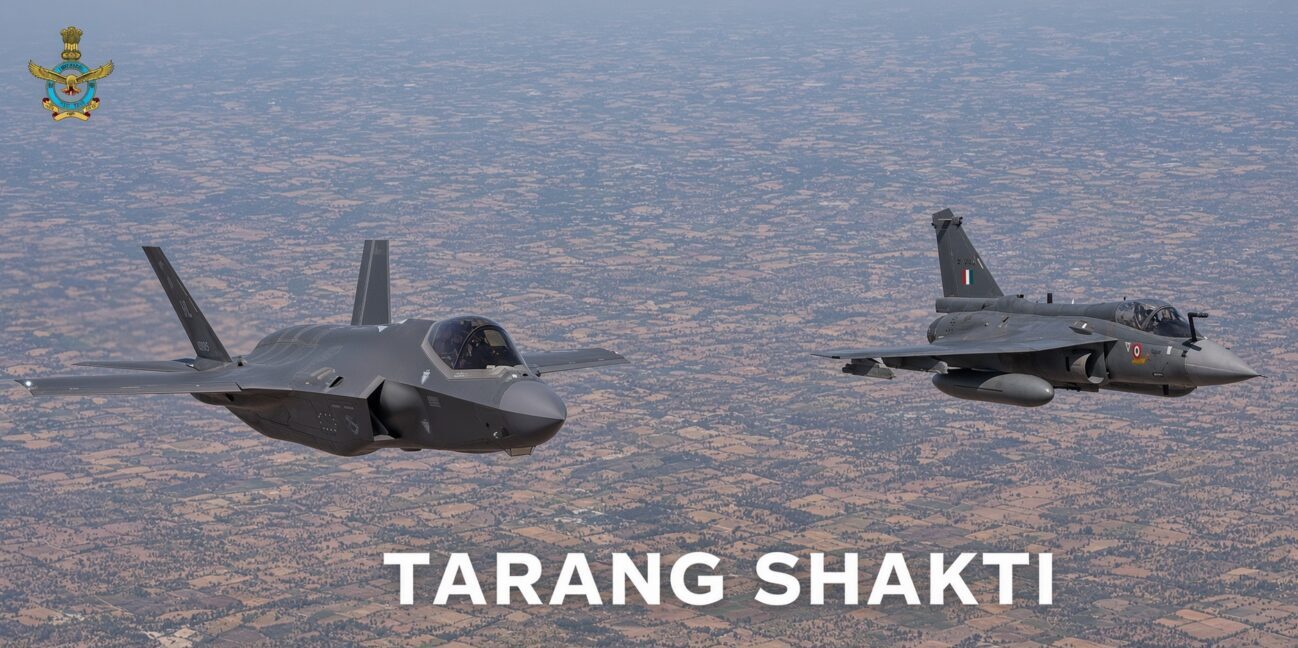
Another interesting case is India, which is hosting Exercise Tarang Shakti, where six F-35 jets are participating. Indian experts call it a unique opportunity for the IAF to evaluate US stealth jets and see how Indian ground and airborne radars detect them.
Notably, this is the first time F-35s are participating in drills with Indian jets on Indian soil.
Many see this as an historic opportunity to train alongside arguably the world’s best jets and give real-time exposure to the IAF’s Rafale, Su-30MKI and Tejas aircraft. Even IAF critics who don’t favor a potential F-35 sale to India see this as a historic opportunity.
Earlier, a EurAsian Times report said the US State Department announced the proposed sale of F-35 Lightning II and related equipment to Saudi Arabia on September 17, 2026. The proposed sale is expected to cover 48 F-35 aircraft and 49 Pratt & Whitney F135-PW-100 engines, along with communications gear, training, spare parts, and other support as requested by Riyadh.
The approval followed years of lobbying by the Saudi kingdom to procure the highly sought-after stealth fighters.Earlier, the Obama administration explicitly ruled it out in late 2015, stating that Israel would remain the sole F-35 recipient in the region to preserve its qualitative military edge (QME).
Later, the Biden administration explored linking a potential F-35 deal to Saudi-Israeli normalization, but talks stalled after the October 7 Hamas attack on Israel.
The US State Department’s proposed sale still requires congressional approval, and analysts believe Saudi’s purchase of the F-35 could hit a roadblock amid concerns about Riyadh’s ties with China and Israel’s opposition to the deal.
Despite being a founding member of the F-35 program and making a significant financial investment, the US expelled Turkey from the consortium and sanctioned it under CAATSA for purchasing the S-400 despite repeated warnings.
Ankara has been actively pursuing a strategy to divest itself of its Russian-made S-400 and sell it off to a potential third-party buyer.
Earlier, the US President similarly responded to questions about lifting CAATSA sanctions on Turkey by saying, “I’ll always speak to President Erdogan. He is a friend of mine, as you know. And I’ll always make him happy.”
For now, Turkey’s path to obtaining the F-35s is still full of hurdles that both Washington and Ankara may find hard to remove, including Israel’s stiff opposition, as the EurAsian Times has explained before.
Like Saudi Arabia and Turkey, several countries have made unsuccessful attempts to obtain the F-35, widely regarded as the leading fifth-generation multirole fighter thanks to its advanced low-observable stealth and groundbreaking sensor fusion.
Functioning as a highly networked airborne command node—often described as the “quarterback of the skies”—it shares data seamlessly across friendly platforms. In fact, analysts believe that it is the most capable fifth-generation fighter in service anywhere in the world.
Despite this, India — a country that faces the dual threat of China and Pakistan along its borders — has been somewhat indifferent to what many consider the world’s best jets.
US Pitch for F-35s
Donald Trump unofficially pitched the F-35 to India during a meeting with Indian Prime Minister Narendra Modi in February 2025. “Starting this year, we will be increasing military sales to India by many billions of dollars. We are also paving the way to provide India with the F-35 stealth fighters ultimately,” he said at the time.
F-35: Image via US Embassy, New Delhi
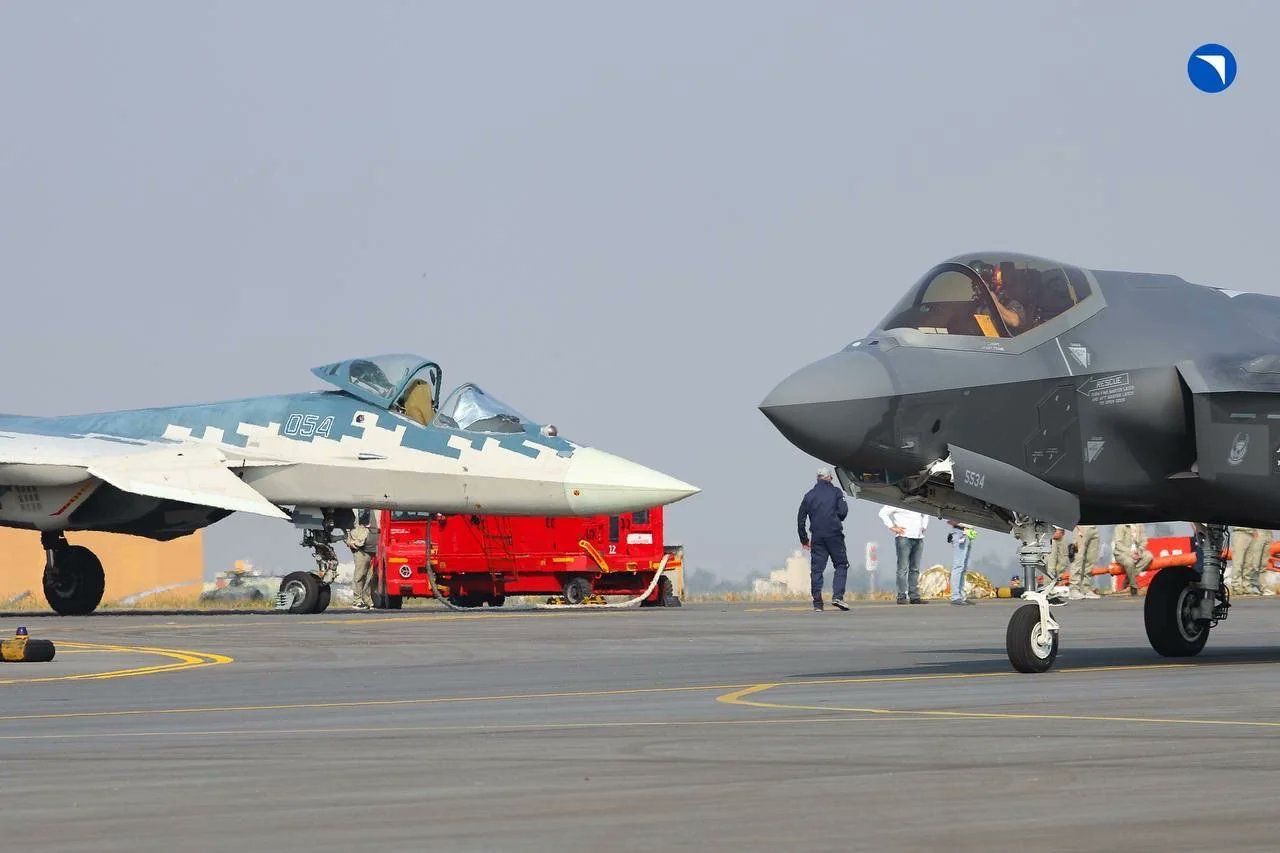
The F-35s were also displayed at Aero India 2025 the same month, where they met the Russian Su-57 on the tarmac for the first time.
During his April 2025 visit to India, US Vice President J.D. Vance appeared to reiterate the offer.
“We, of course, want to collaborate more. We want to work together more. And we want your nation to buy more of our military equipment, which we believe is the best in class. American fifth-generation F-35s, for example, would give the Indian Air Force the ability to defend your airspace and protect your people like never before,” he said, making a more direct appeal.
Although the US never made an official offer, the verbal F-35 pitch and the prospect of acquiring a cutting-edge stealth fighter looked great on paper, particularly since China operates two fifth-generation aircraft (the J-20 and J-35A) and is allegedly exporting the J-35A to Pakistan.
However, India’s defense community and Indian Air Force (IAF) veterans seemed unimpressed by the F-35 offer despite acknowledging the aircraft’s potent capabilities, a stance recently reiterated as six F-35s made their debut in India-hosted “Exercise Tarang Shakti 2026” in Jodhpur, Rajasthan.
Seven Reasons Why IAF Veterans Oppose F-35
First, Indian analysts and experts believe that buying an expensive stealth fighter off the shelf from the United States would be a liability, since it would do nothing for the Indian defense manufacturing sector and come with an enormous price tag.
Each F-35 is expected to cost $80 to $120 million, with even higher life cycle costs. Therefore, a fleet of F-35s would impose a heavy financial burden that the Indian Air Force would rather allocate to indigenous programs and more flexible and diverse acquisitions.
Second, analysts and veterans have argued that the US would never part with its technology, eliminating domestic manufacturing. They reckon the F-35 procurement would run counter to the “Make in India” and “Aatmanirbhar Bharat” policies.
Air Marshal Anil Khosla (retd), the former Vice Chief of Air Staff (VCAS), earlier stressed that even with approval of limited technology transfer and local manufacturing, significant challenges would remain. At the time, he highlighted production risks arising from the F-35’s complex global supply chain, noting that Lockheed Martin sources components from multiple countries. He cautioned that any disruption or delay in delivering these parts could halt the entire manufacturing process.
Air Marshal Khosla further noted that India’s continued reliance on foreign suppliers would constrain genuine localization, and the IAF would struggle to manage such disruptions.
Notably, this concern takes on greater significance as delivery of Tejas Mk-1A fighter jets to the Indian Air Force has been delayed due to delays in delivery of F404-IN20 turbofan engines, affecting the service’s preparedness.
File: F-35 Lightning II and Su-57 Felon captured in the same frame for the first time in history at Aero India 2025
Third, there is concern that diverting resources to acquiring the F-35 would inevitably affect India’s own fifth-generation Advanced Medium Combat Aircraft (AMCA), which aims to deliver a fifth-generation platform with advanced sensors, electronic warfare systems, and networked combat features while fostering a domestic aerospace industrial base.
Experts have urged the IAF to focus on its indigenous programs rather than getting trapped in another round of imports.
Fourth, analysts have also cited logistical challenges and operational incompatibility with India’s diverse air force fleet comprising a mix of Russian Su-30MKIs, French Rafales and Mirage 2000, and Tejas. They believe that adding another fighter type would further complicate maintenance, training, and logistics for an already varied inventory.
Fifth, India operates Russian-supplied S-400 systems, which previously caused friction between the US and Turkey.
“An F-35A deal would likely come with strings attached—most notably, a U.S. demand that India abandon its Russian S-400 air defense systems in favor of the American THAAD,” IAF veteran and commentator Squadron Leader Vijainder K. Thakur earlier stated.
The S-400 is deeply embedded in India’s layered air defense network, and New Delhi has been considering an additional order, meaning it would inevitably become a point of contention in any potential deal.
Sixth, the US has been flagged as an unreliable partner.
“Putting too many military aviation eggs in the unreliable US basket will also be an issue. Americans can be “very unreliable” when it comes to putting sanctions and freezing spares and maintenance support,” IAF veteran and aviation analyst, Air Marshal Anil Chopra (retd), earlier wrote in a detailed EurAsian Times article.
Adding the repeated threat of sanctions by the US and a rapidly changing geopolitical scenario further complicates the purchase.
Seventh, the F-35 is embedded in the US-controlled networks, including the Operational Data Integrated Network (ODIN), which sends information back to American servers. Indian experts view this as a breach of operational independence.
Tarang Shakti: F-35 and Rafale
Furthermore, they have cautioned that the US imposes stringent operational restrictions on its system and could try to limit the F-35’s use in combat, particularly against Pakistan.
Critics worldwide have also stressed that an unpredictable US administration could restrict free F-35 operations by limiting hardware and software supplies, commonly referred to as a kill switch. In fact, this is the reason why countries like Canada and Portugal decided to look for an alternative to the American stealth fighter.
Indian strategic discussions generally prioritize accelerating Tejas production, advancing the AMCA, and exploring local manufacturing options for platforms such as the Rafale. If a foreign fifth-generation fighter is ultimately considered, many experts have indicated a preference for the Russian Su-57 because of the technology transfer, local production, and twin-seat variant.
Contact the author at sakshi.tiwari13 (at) outlook.com
Nearly six years after the COVID outbreak, there are fears of another health emergency after reports of the death of a Russian researcher in a suspected case of plague, which has prompted authorities to quarantine over 200 people in the remote Siberian region and enforce strict mask mandates.
Notably, reports suggest that the suspected plague bacteria might have originated from a Russian Anti-Plague Institute, bringing attention to Russia’s secretive biological weapons research programs and bringing back memories of the deadly 1979 Anthrax outbreak in the Soviet Union, which also originated from a research facility.
Authorities have acknowledged the death of a researcher due to a “suspected case of a particularly dangerous infection,” described as “pneumonia of unknown etiology.” However, federal authorities deny any lab release and say tests found no work-related pathogens.
However, concerns remain that Russia is hiding crucial details about the outbreak that could hinder an effective response.
The 28-year-old lab technician Darya Shipilova died on October 2 after reportedly breaking a test tube with live Yersinia pestis at an Anti-Plague Institute on September 25 while handling samples.
According to Russia’s national public health agency, Rospotrebnadzor, the researcher worked at the Irkutsk Anti-Plague Research Institute of Siberia and the Far East in Shelekhov.
The 28-year-old lab technician, Darya Shipilova, died on October 2 after breaking a test tube with live Yersinia pestis at the Irkutsk Anti-Plague Institute on September 25th while handling samples.
Meanwhile, independent regional outlet Liudi Baikala reported that the death of the lab technician has prompted authorities to place nearly 200 people under observation at a hospital and enforce strict mask mandates in the region.
Igor Kobzev, the governor of Irkutsk, noted on Telegram that this was in response to a “suspected case of a particularly dangerous infection.”
Alexey Tsydenov, the head of the neighboring region of Buryatia, said the woman “may have died of the plague.”
Meanwhile, US media outlet Axios reported that the White House is monitoring reports of a suspected plague case and related quarantines in Russia.
Russian health authorities, however, are trying to downplay the incident, saying the situation is under control and rejecting reports of a lab leak.
In a statement issued on October 4, Rospotrebnadzor said the “sanitary and epidemiological situation” in Irkutsk and Shelekhov was “stable,” Forbes reported.
The agency further said it conducted extensive testing and found no pathogens linked to the deceased patient’s laboratory work in her sample.
It added that testing of hundreds of people in primary or secondary contact with the deceased researcher has detected no new infections.
According to the World Health Organization, Plague is caused by the bacterium Yersinia pestis, a zoonotic bacterium usually found in small mammals and their fleas. People infected with Y. pestis often develop symptoms after an incubation period of one to seven days.
Bubonic plague is the most common clinical form.
Plague is transmitted between animals and humans through bites from infected fleas, direct contact with infected tissues, and inhalation of infected respiratory particles.
Plague can be a very severe disease in people, with a case-fatality ratio of 30% to 60% for the bubonic type, and it is always fatal for the pneumonic and septicemic kinds when left untreated.
Pneumonic plague is especially contagious and can trigger severe epidemics through person-to-person transmission via respiratory particles.
Historically, plague caused widespread pandemics with high mortality. It was known as the “Black Death” during the fourteenth century, causing more than 50 million deaths in Europe.
According to some estimates, Black Death wiped out one-third to one-half of the European population between 1347 and 1353.
Engraving of Doctor Schnabel (German for “Doctor Beak”), a peculiar costume for doctors who treated plague patients in Europe, by Paul Furst, c. 1656, via Internet Archive.
Today, however, antibacterial medicines have greatly reduced plague fatality rates.
According to the WHO, during 2019–2025, most plague cases reported to the WHO occurred in the Democratic Republic of the Congo and Madagascar.
While Russian authorities are rejecting the lab-leak theory, saying there are no links to the lab technician’s death and her research work at the Anti-Plague Institute, Moscow’s previous record in handling such lab-leak incidents and hiding crucial information has prompted fears that it is hiding more information than it is sharing.
Notably, the lab-leak theory has brought back the painful memories of the 1979 Sverdlovsk anthrax leak, which, according to the official Soviet Union version, led to the death of 66 people, but according to independent researchers, caused the death of over a hundred people.
The 1979 Sverdlovsk Anthrax Leak In The Soviet Union
In April 1979, a missing or improperly reinstalled exhaust filter at Compound 19, a military microbiology facility involved in the Soviet biological-weapons program, released aerosolized Bacillus anthracis spores.
Over the next few hours, wind carried the plume over the city. People in the plume developed inhalation anthrax over the following days; livestock in the area were also affected.
The Soviet authorities initially suggested the bacteria spread through “contaminated meat.”
However, hospital records, autopsy and epidemiologic evidence, victim interviews, independent research, and Russia’s own investigation in 1992 showed that the pathology was inhalation anthrax, not the gastrointestinal form claimed in the official “contaminated meat” story, and that most of the infections clustered geographically along the wind direction from the facility, and the strain matched material worked on at the site, establishing the lab leak theory.
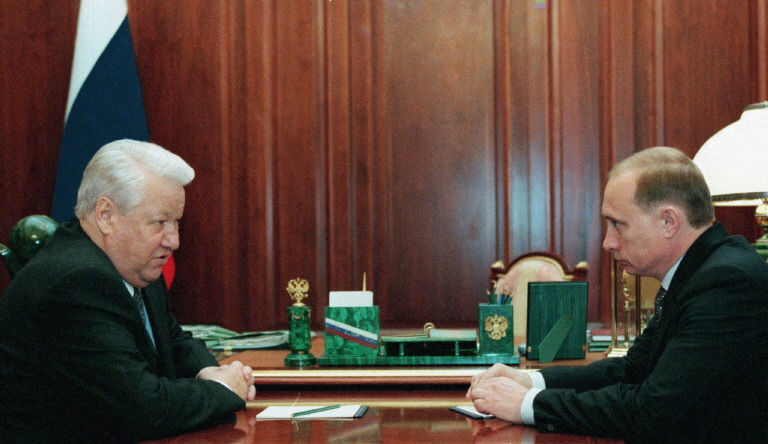
Boris Yeltsin, the regional Communist Party official at the time who later became Russian president, publicly acknowledged in 1992 that the outbreak came from the military facility.
AI-generated Image.
A 1994 investigation led by Matthew Meselson, which had access to official records and used wind data, victim locations, and strain comparisons, confirmed an accidental airborne release of a laboratory strain.
In 2016, researchers finally sequenced the genome of the bacteria behind the deaths, confirming it was a strain of the anthrax-causing bacterium Bacillus anthracis that Soviet scientists had modified.
It was one of the largest inhalation anthrax outbreaks in history and irrefutable evidence of the Soviet Union’s secret dabbling in offensive bioweapons research.
The event is sometimes called “Biological Chernobyl.”
Notably, the Soviet Union’s Compound 19 biological weapons research facility violated the 1972 Biological Weapons Convention, which the USSR had signed.
According to reports, the Soviets did similar tinkering with plague bacteria (Yersinia pestis); Francisella tularensis, the bacterium that causes tularemia; and Legionella bacteria, which cause Legionnaires’ disease.
There are also reports of similar leaks of deadly viruses and bacteria from Soviet biological weapons labs in the past.
For instance, in 1971, a young scientist reportedly fell ill after a research vessel, the Lev Berg, strayed too close to Vozrozhdeniya Island in Uzbekistan, where Soviets ran a secretive biological weapons research lab. Days later, the scientist was diagnosed with smallpox.
A year later, the corpses of two missing fishermen were found nearby, drifting in their boat. It’s thought that they had caught the plague.
Clearly, the Soviets continued working on offensive biological weapons even after signing the 1972 Biological Weapons Convention.
There are fears that Russia continued such research even after the Soviet Union collapsed.
In fact, dangerous viruses and bacteria have leaked from labs not just in Russia, but in other countries too.
For instance, after the natural SARS epidemic ended, the virus reappeared only through laboratory accidents.
Russian Prime Minister Vladimir Putin (R) listens to President Boris Yeltsin (L) 20 November 1999 during their meeting at Moscow’s Kremlin. Yeltsin arrived at the Kremlin to discuss the results of the OSCE security summit in Istanbul. (Photo by POOL / AFP)
For instance, in 2003, a 27-year-old researcher was infected when West Nile virus samples were cross-contaminated with live SARS coronavirus in a BSL-3 lab in Singapore.
Similarly, after natural smallpox transmission had largely ended in the UK, accredited labs were the source of outbreaks.
In 1973, a laboratory technician at the London School of Hygiene & Tropical Medicine was infected after observing open-bench harvesting of smallpox virus. She transmitted it in the hospital before isolation; two visitors died, and a nurse was infected.
In 1978, a medical photographer, Janet Parker, whose workplace was above a smallpox laboratory in Birmingham, contracted the disease and died.
In 2015, CDC labs potentially exposed dozens of staff to live anthrax after incomplete inactivation. Separately, Dugway Proving Ground shipped inactivated anthrax spores that remained viable to nearly 200 laboratories in the US and several other countries.
In fact, researchers in the US have cataloged thousands of overt laboratory-associated infections in the 20th century alone.
According to the National Library of Medicine, “analysis of the available information revealed that only 18% of the infections were due to known accidents; 42% were caused by bacteria; 27% by viruses; 15% by rickettsiae; 9% by fungi; 3% by chlamydiae; and 3% by parasites.”
A Lancet study on ‘Laboratory-acquired infections and pathogen escapes worldwide between 2000 and 2021’ identified 309 published lab-acquired infections – eight fatal, including plague, meningococcus, Ebola, and one prion case – and 16 pathogen-escape events beyond the immediate worker, among them the Lanzhou Brucella outbreak, multiple anthrax and SARS incidents, poliovirus, and foot-and-mouth virus.
Clearly, lab leaks of viruses, bacteria, and pathogens are neither rare nor unprecedented.
However, the risks associated with such leaks increase manifold when the country of origin hides information and tries to mislead the world community to avoid responsibility.
At this stage, we can only sincerely hope that that is not the case with the death of a young Russian researcher in Siberia.
Sumit Ahlawat has over a decade of experience in news media. He has worked with Press Trust of India, Times Now, Zee News, Economic Times, and Microsoft News. He holds a Master’s Degree in International Media and Modern History from the University of Sheffield, UK.
He can be reached at ahlawat.sumit85 (at) gmail.com

 Login